Scrum in Wonderland Implementing Scrum in Government CoastNerds Group Presentation September 2010
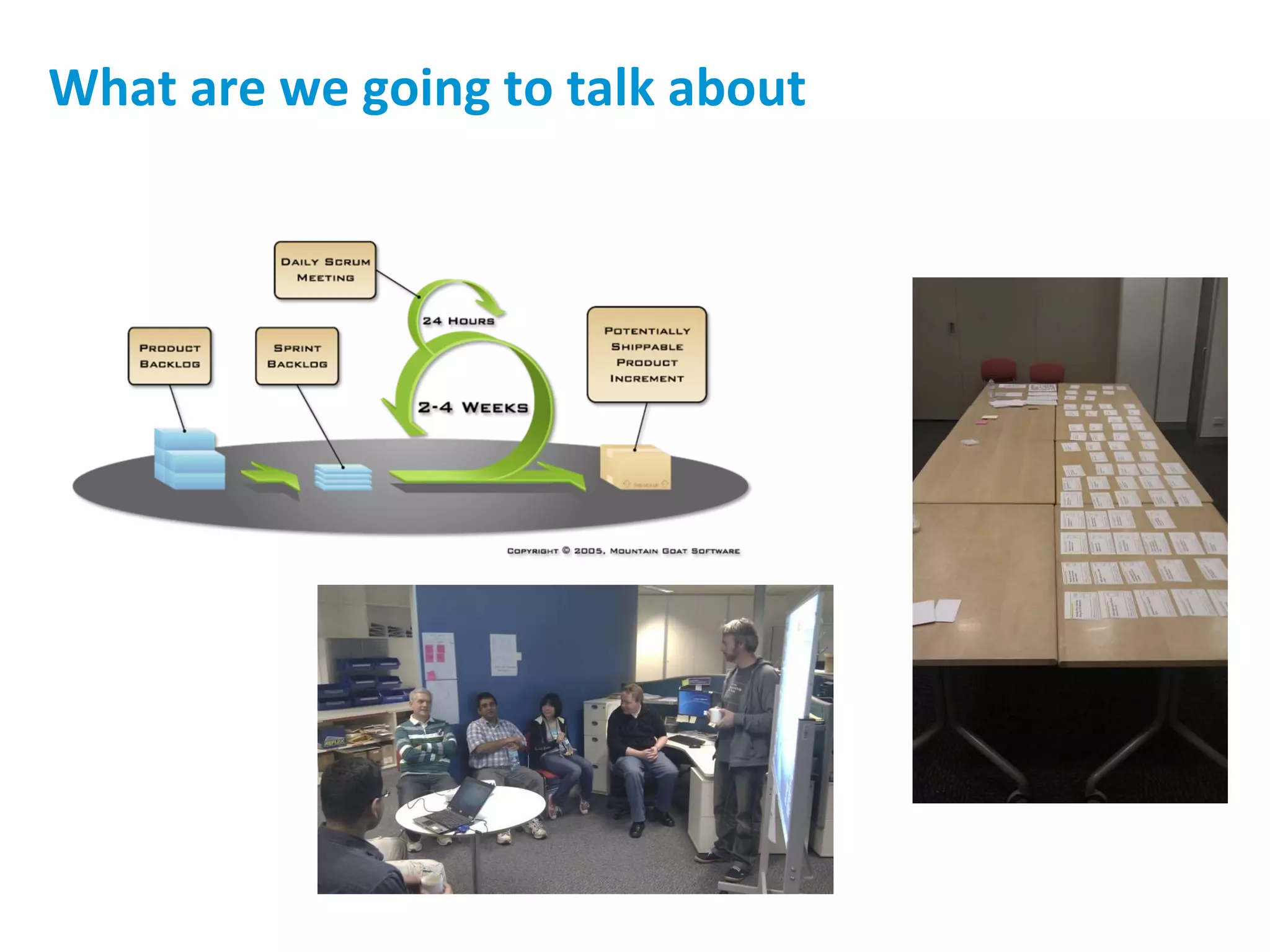
What are we going to talk about
Waterfall
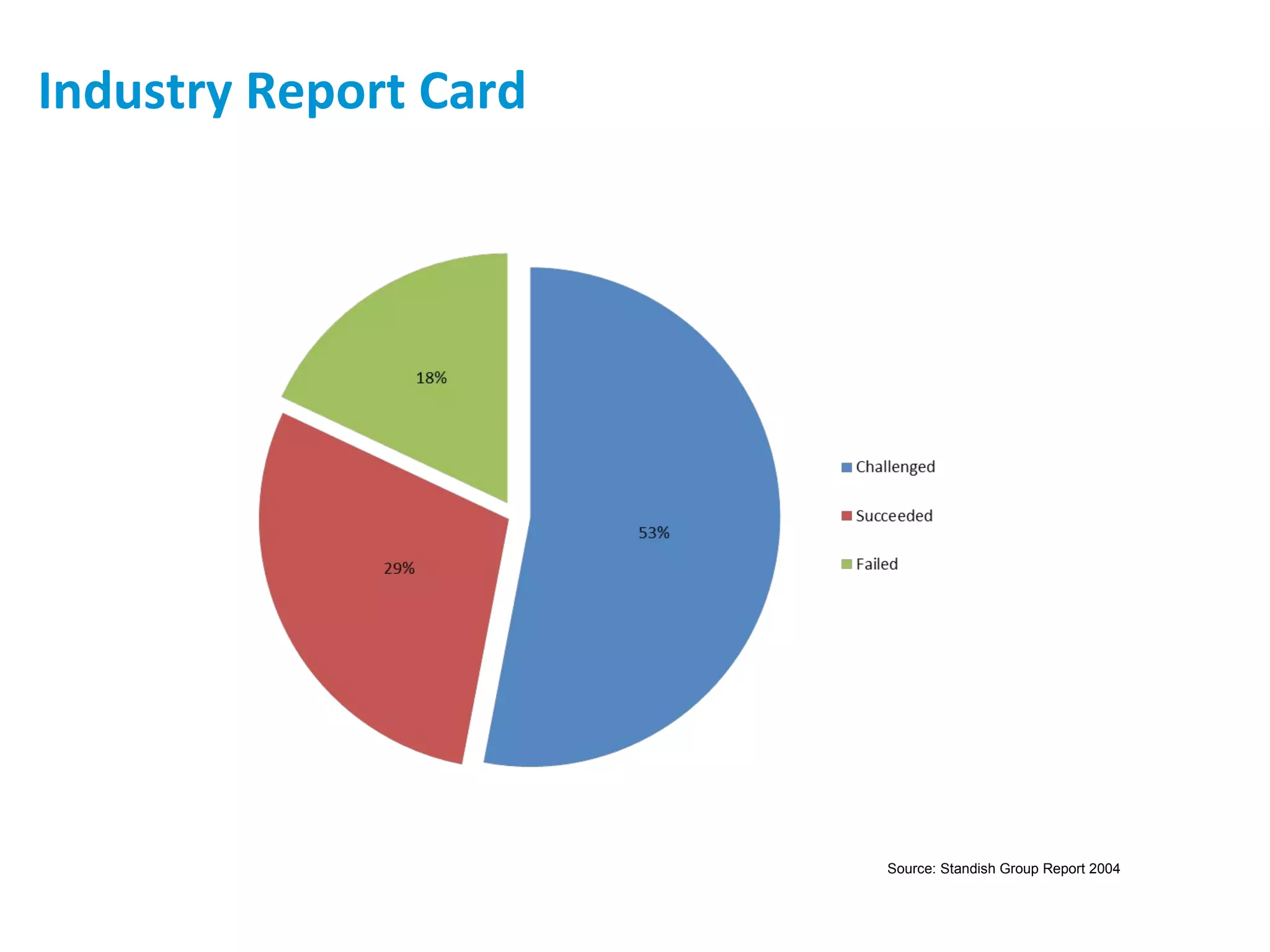
Industry Report Card Source: Standish Group Report 2004
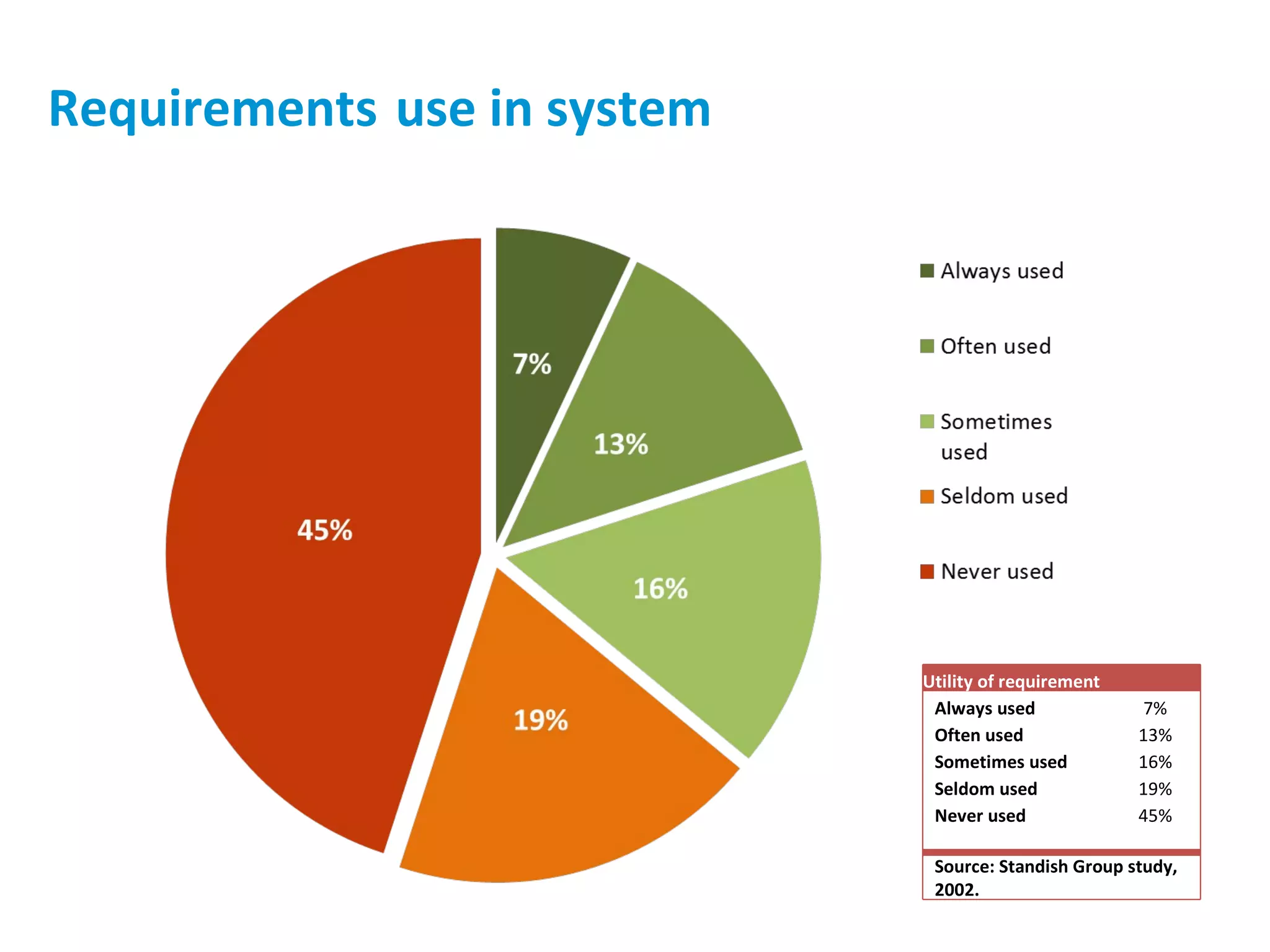
Requirements   use in system Utility of requirement Always used 7% Often used 13% Sometimes used 16% Seldom used 19% Never used 45% Source: Standish Group study, 2002.
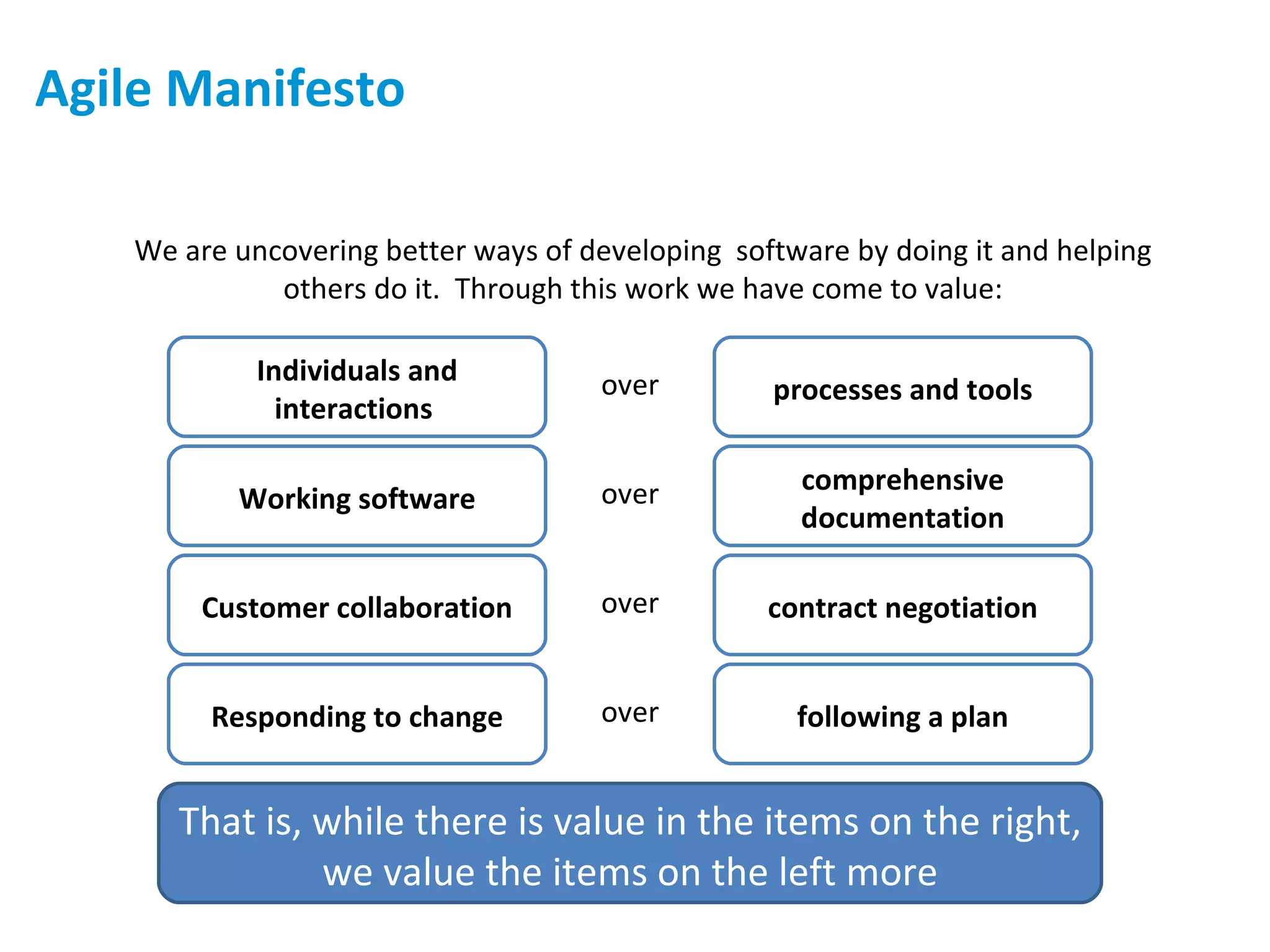
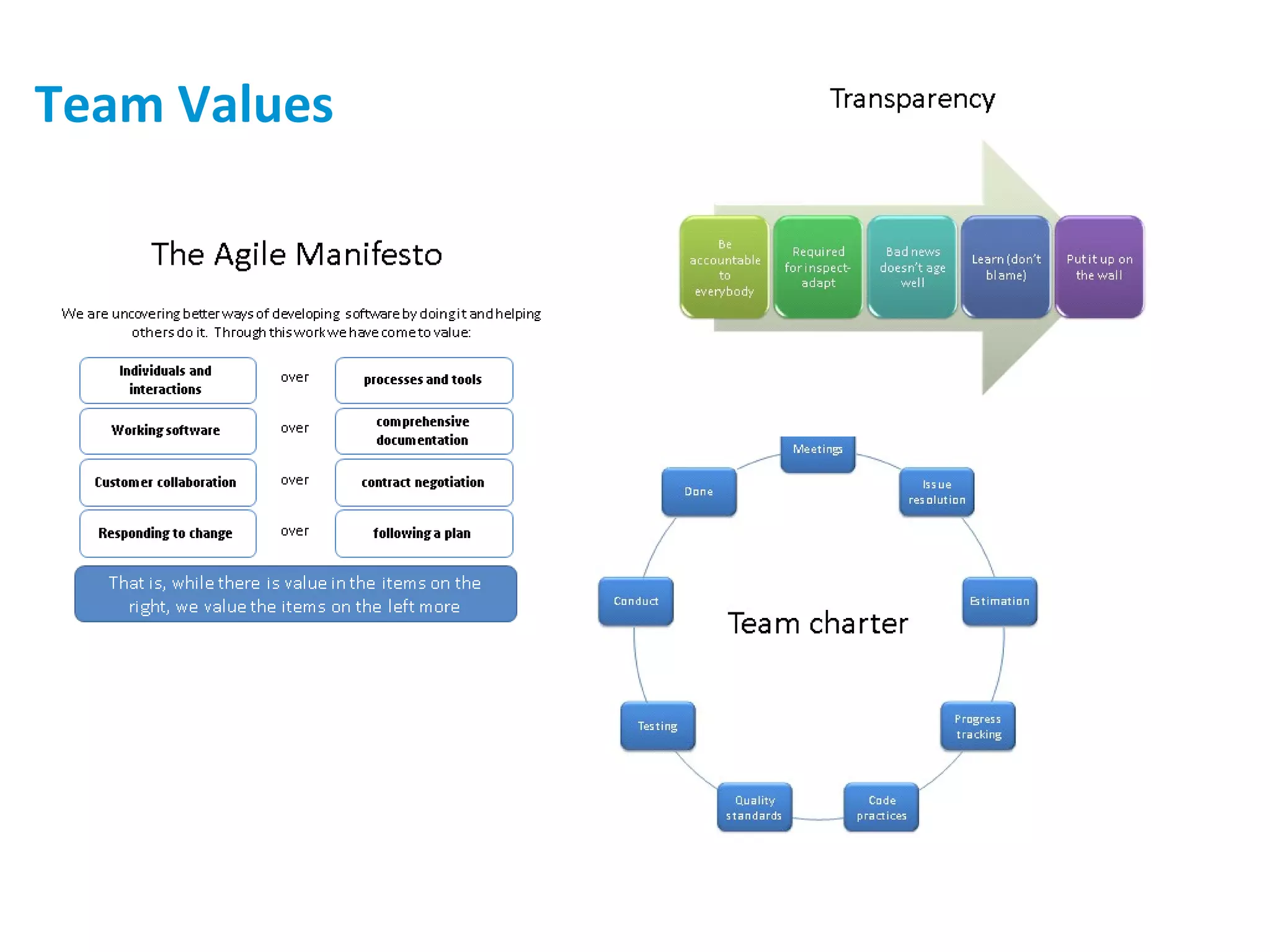
Agile Manifesto Individuals and interactions  That is, while there is value in the items on the right, we value the items on the left more We are uncovering better ways of developing  software by doing it and helping others do it.  Through this work we have come to value: processes and tools Working software comprehensive documentation Customer collaboration contract negotiation Responding to change following a plan over over over over
Scrum
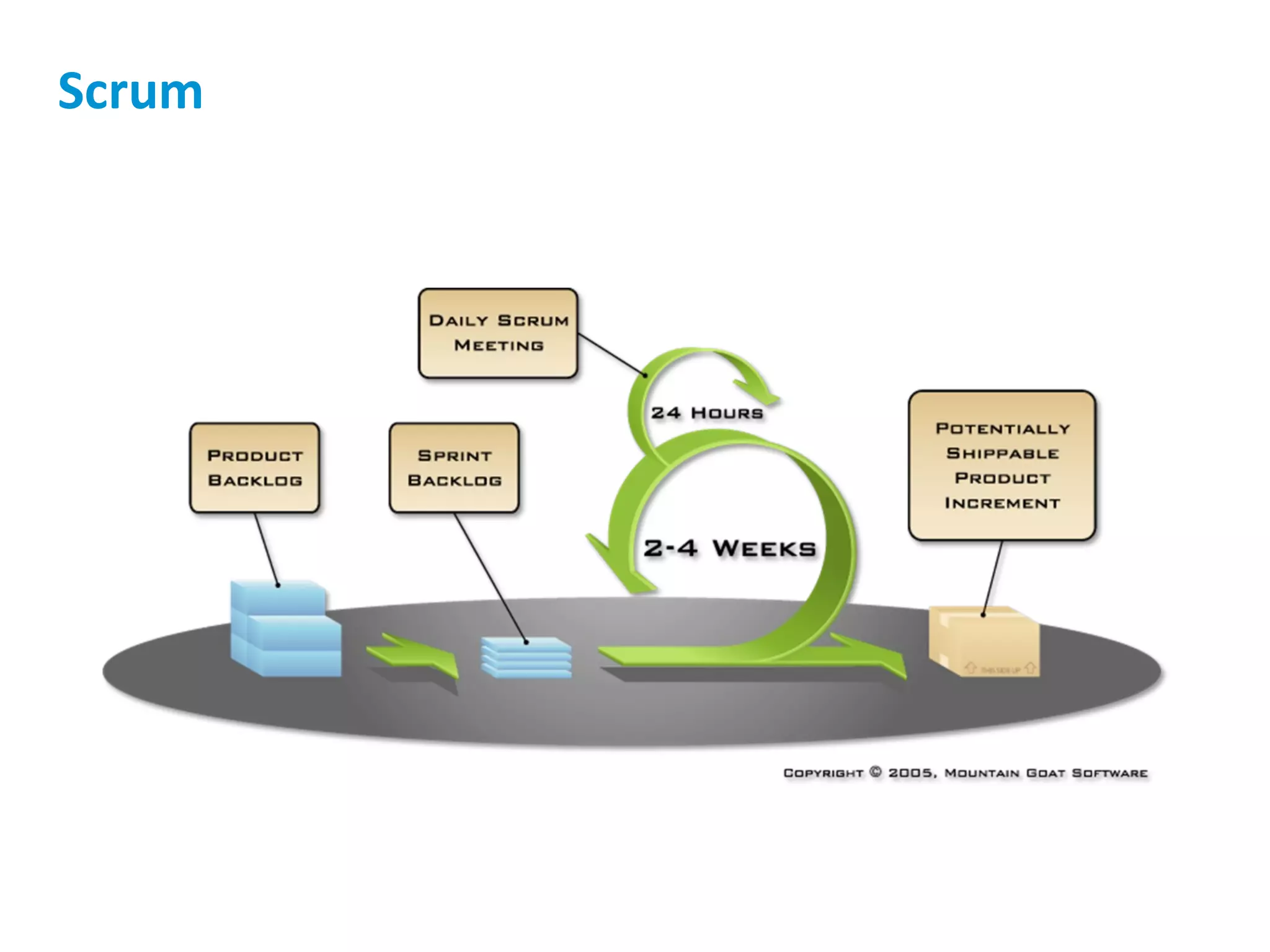
Scrum
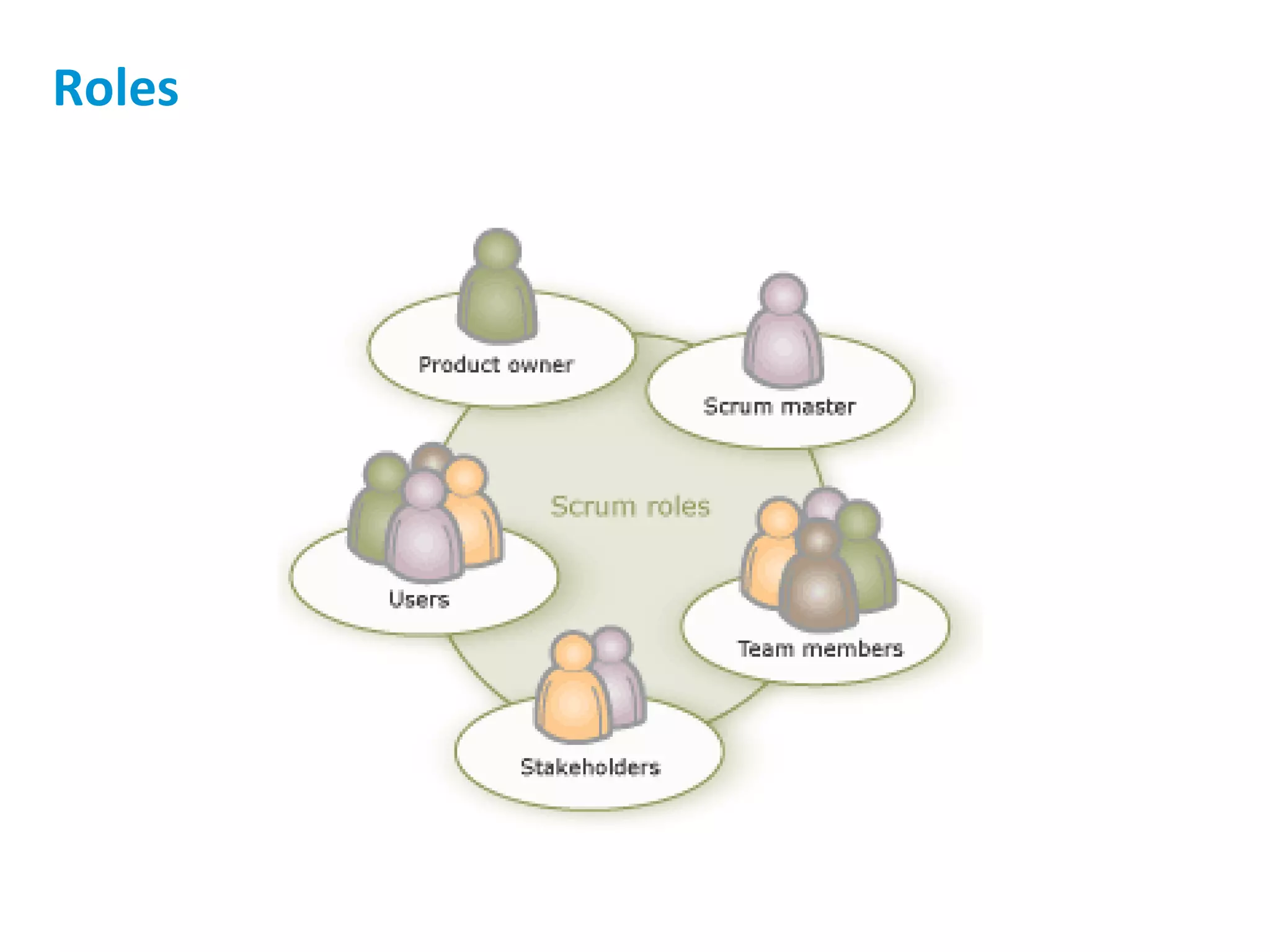
Roles
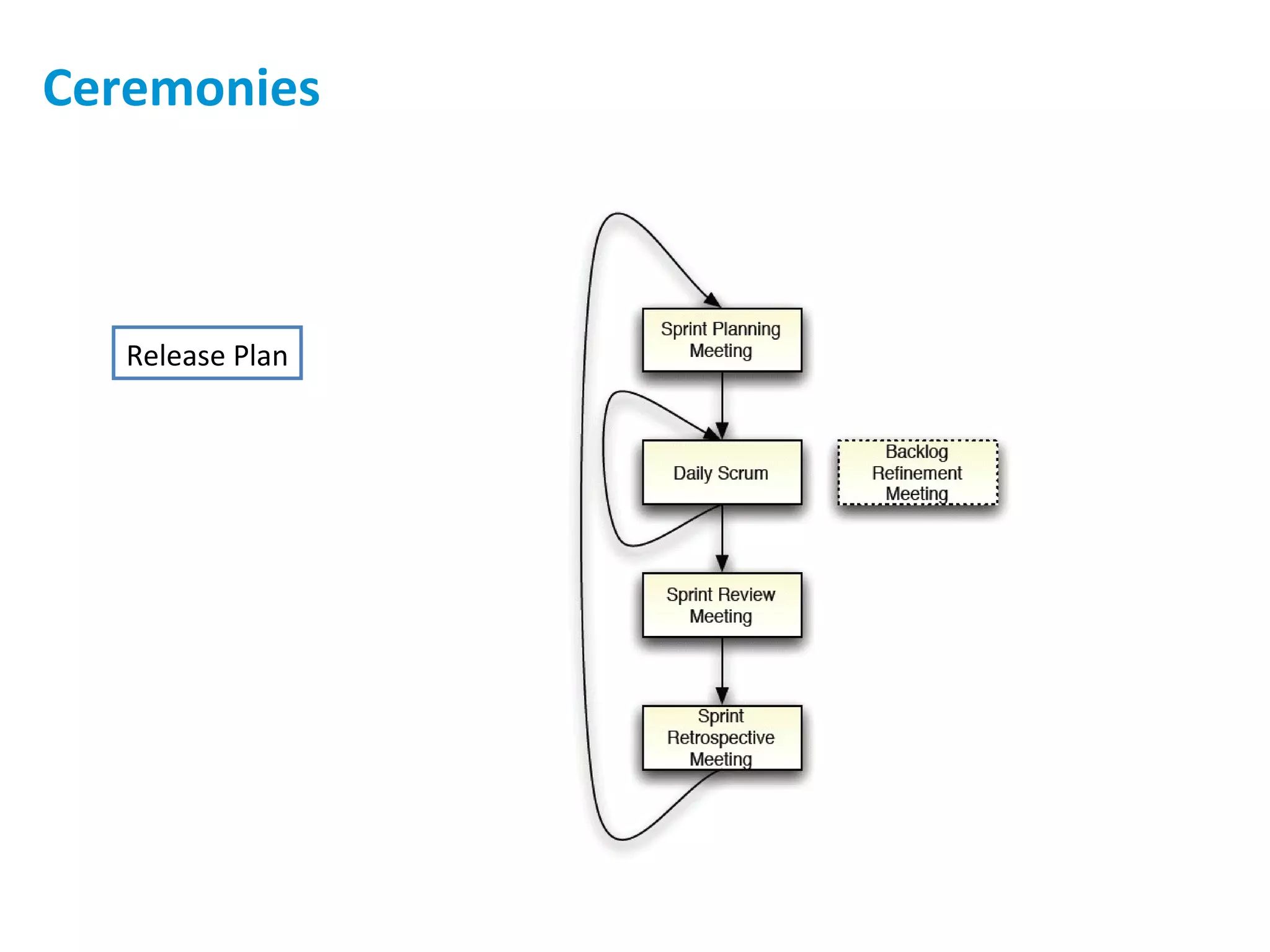
Ceremonies
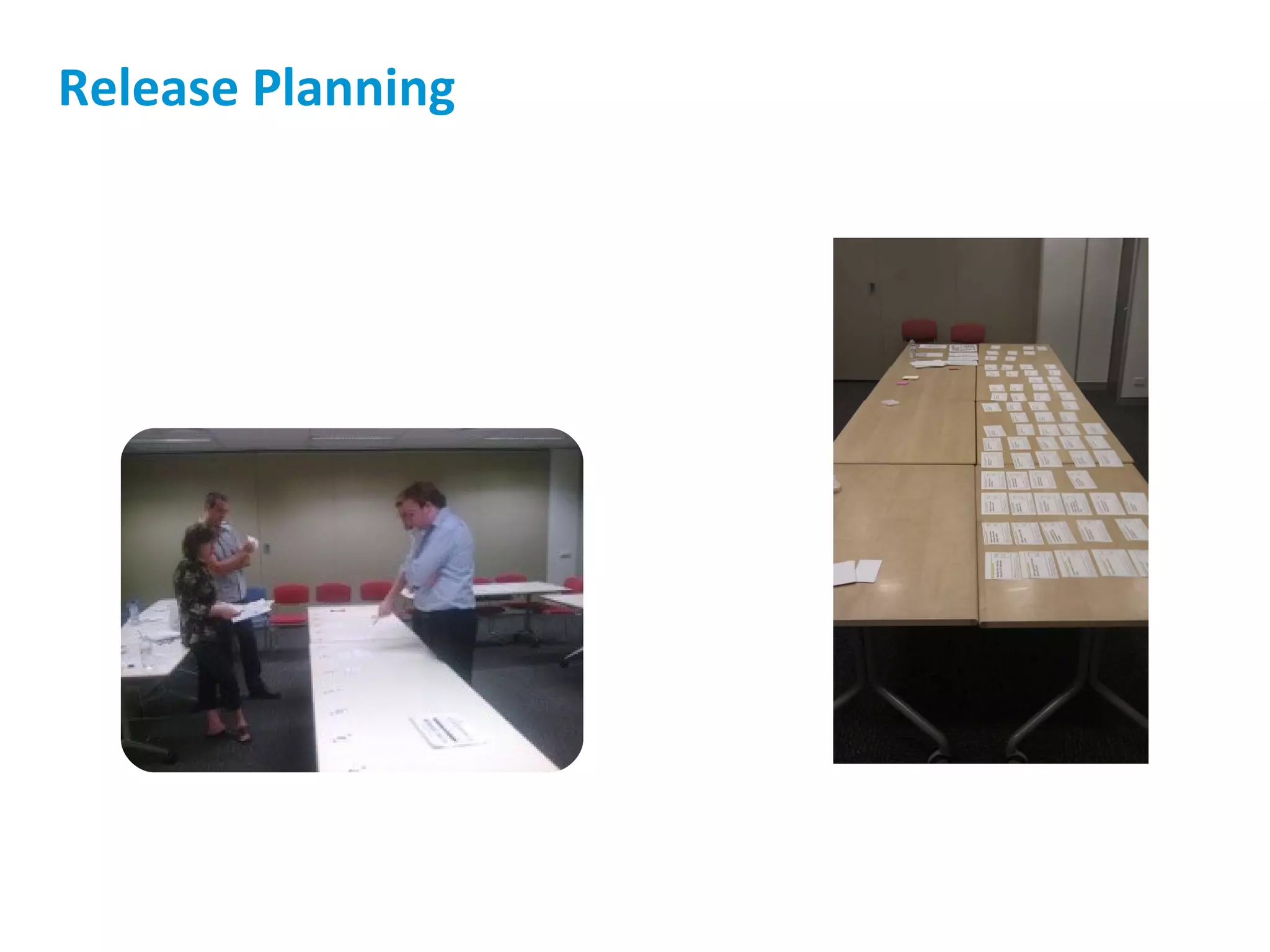
Release Planning
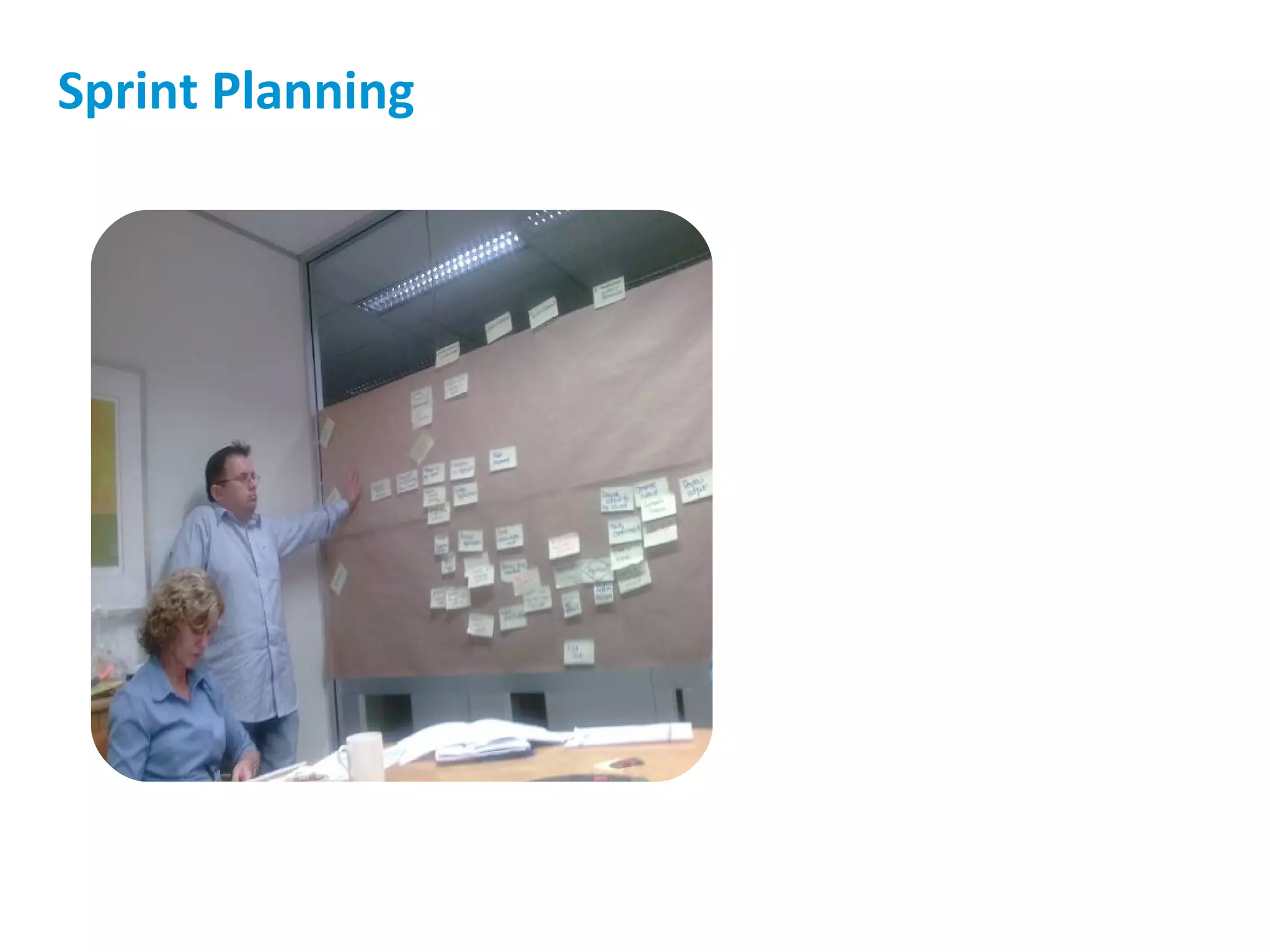
Sprint Planning
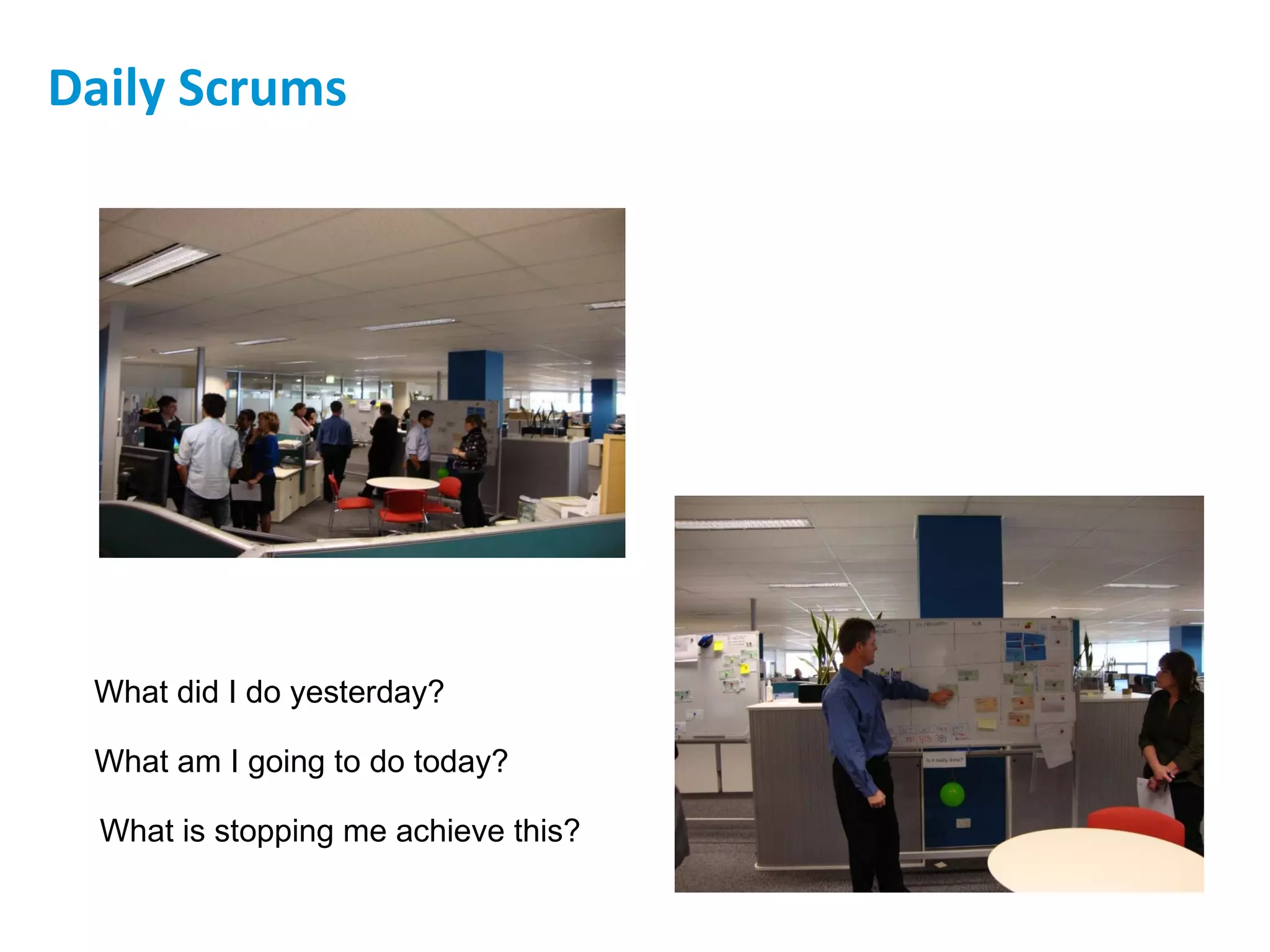
Daily Scrums What did I do yesterday? What am I going to do today? What is stopping me achieve this?
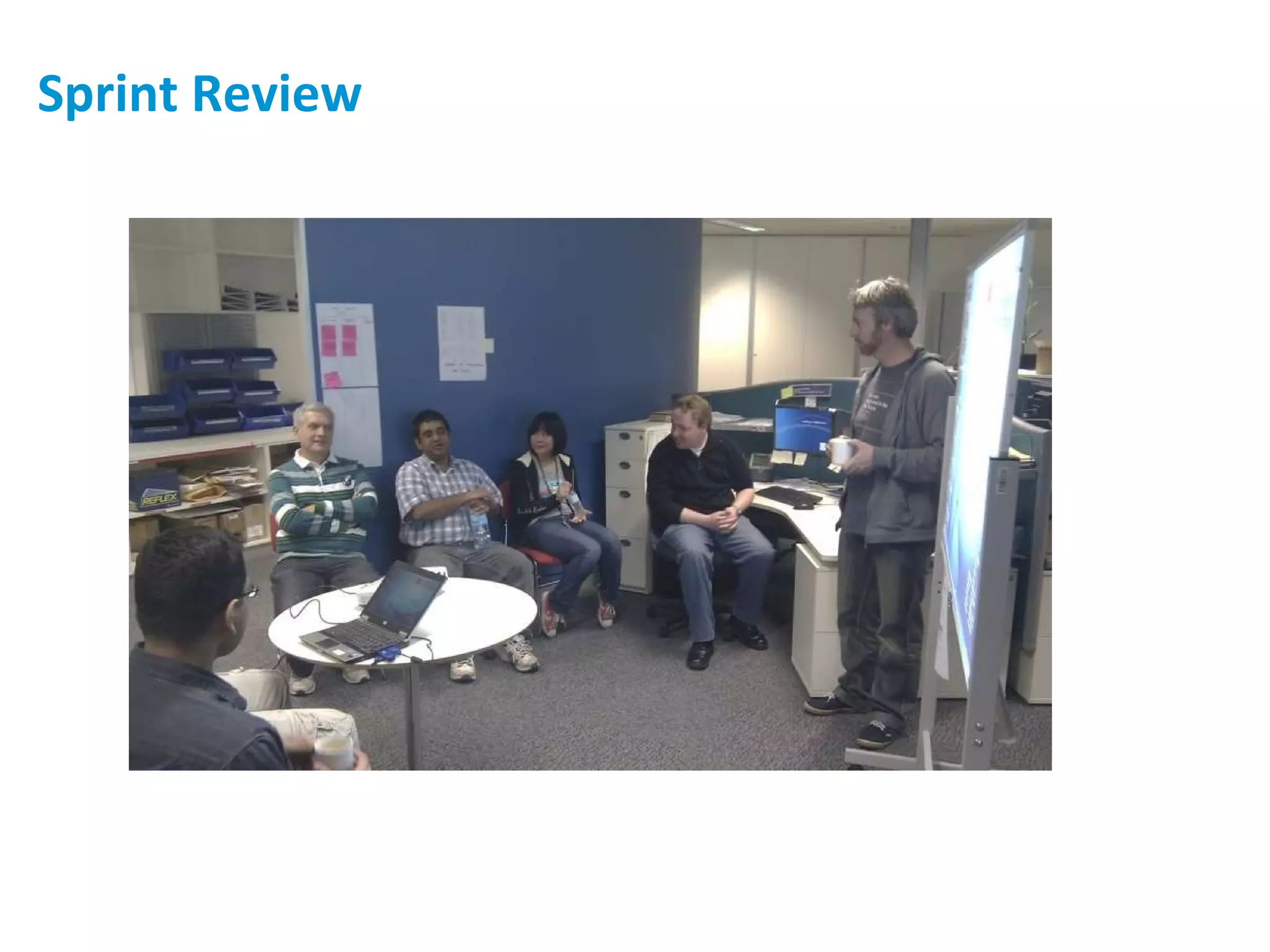
Sprint Review
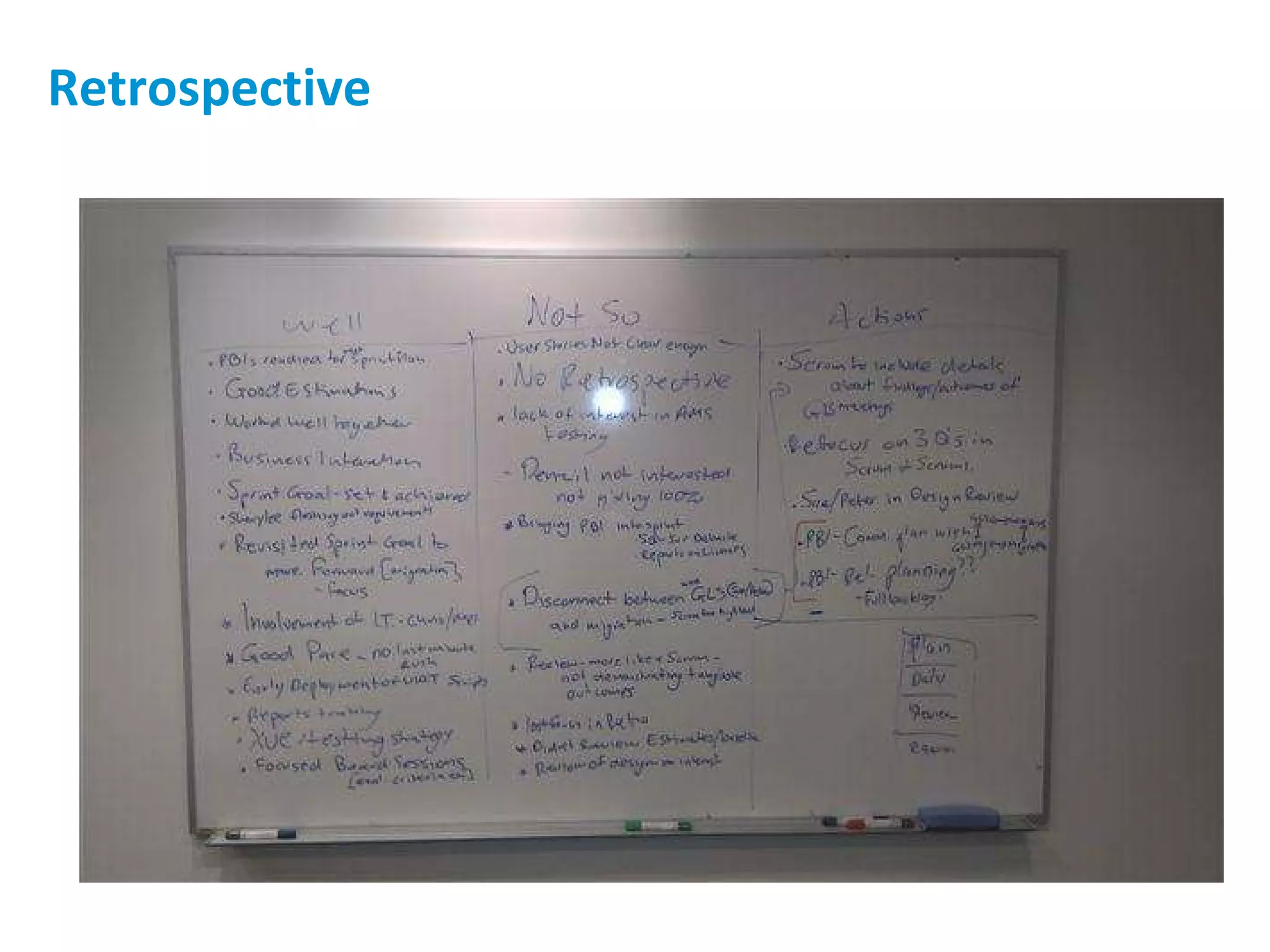
Retrospective
Ceremonies Release Plan
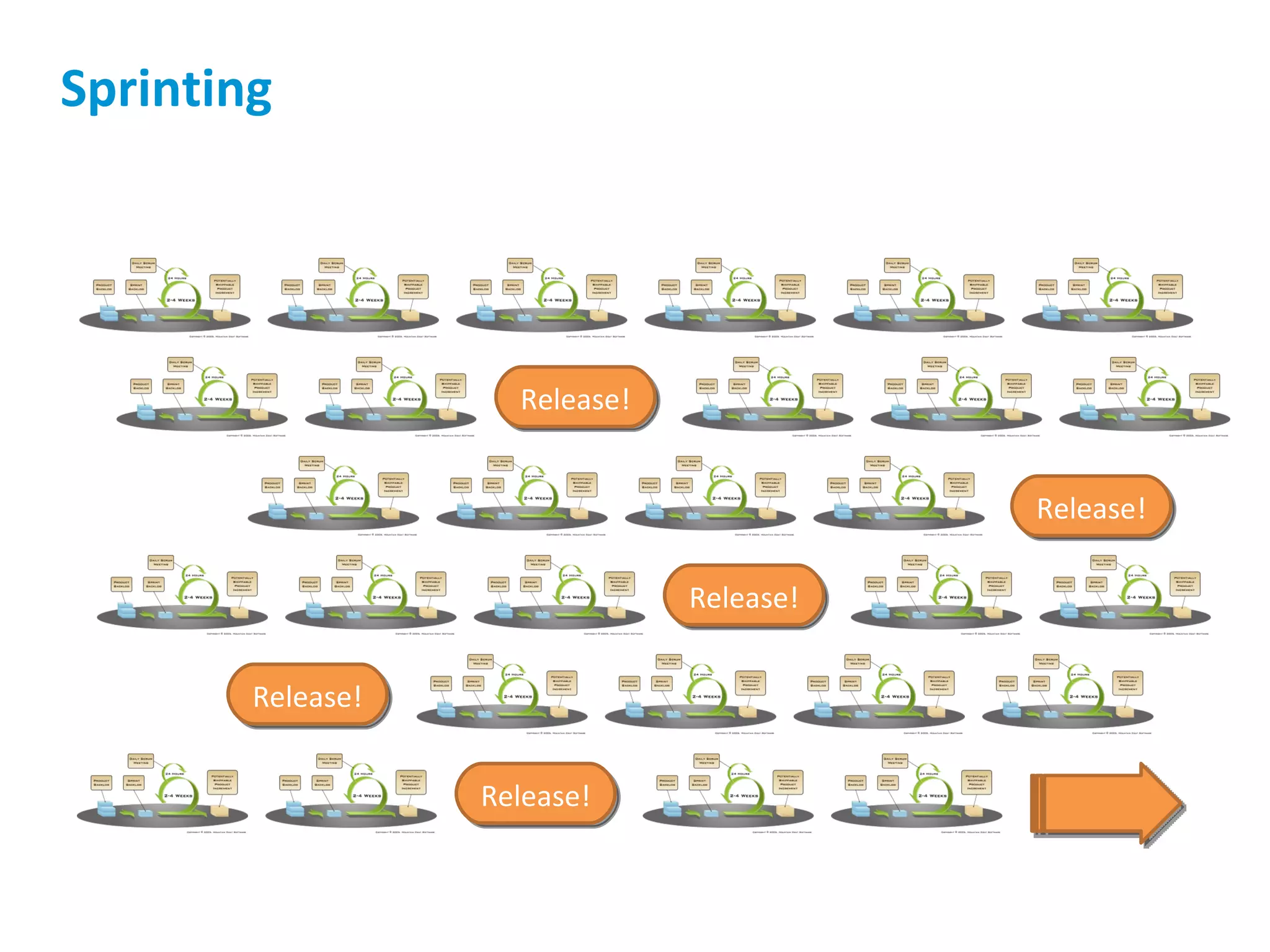
Release! Release! Release! Release! Release! Sprinting
Artifacts
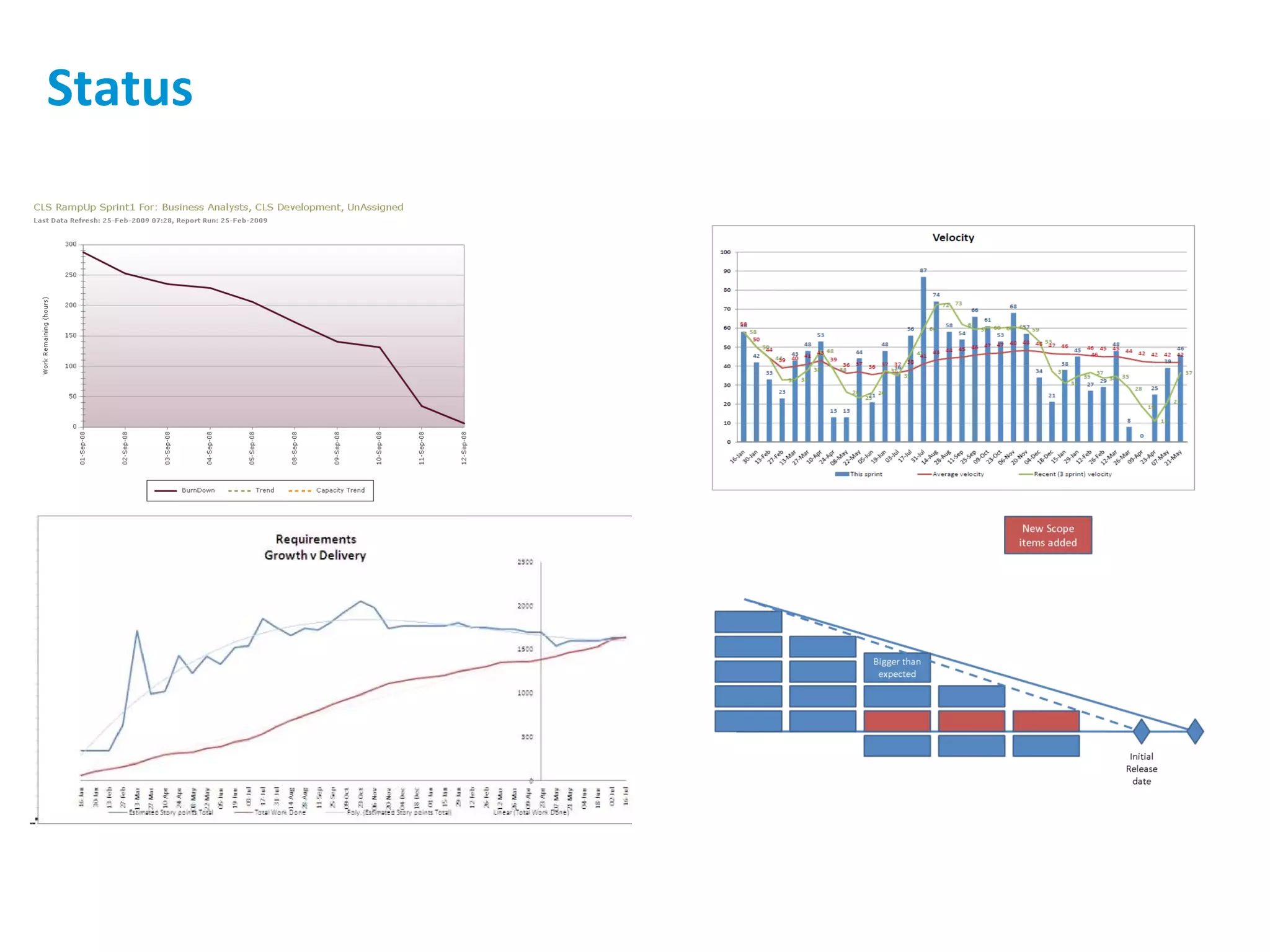
Status
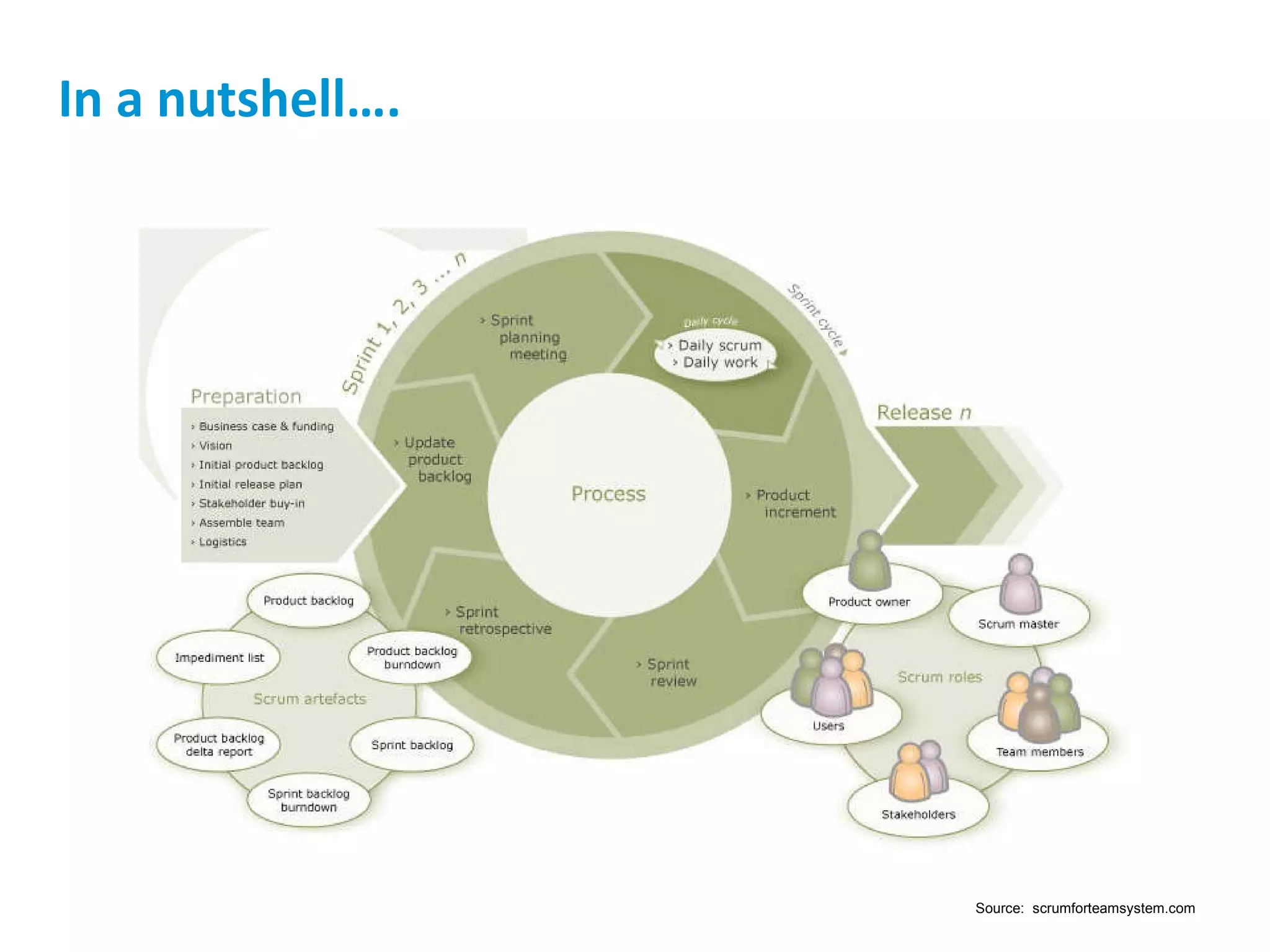
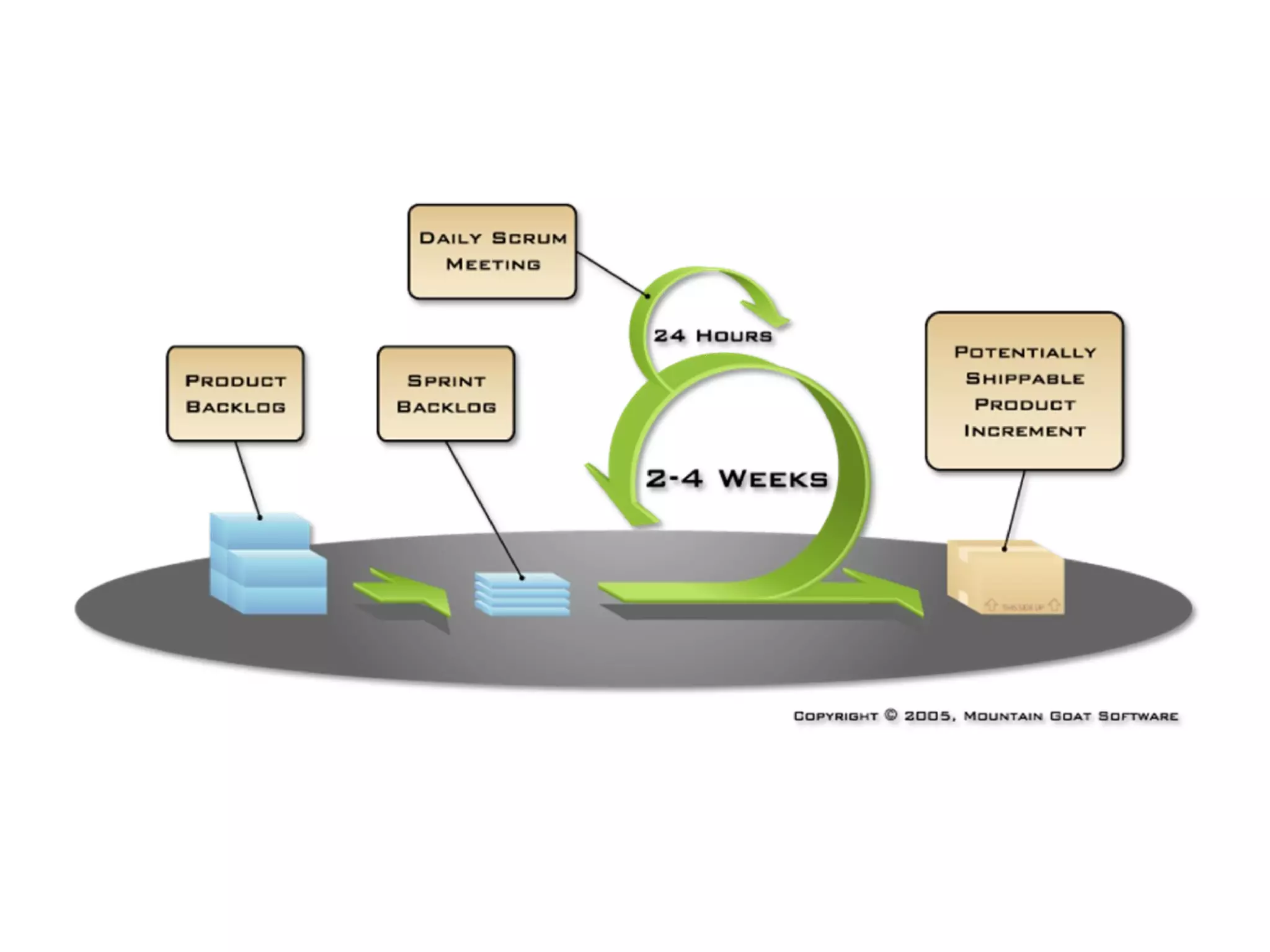
In a nutshell…. Source:  scrumforteamsystem.com
The Project
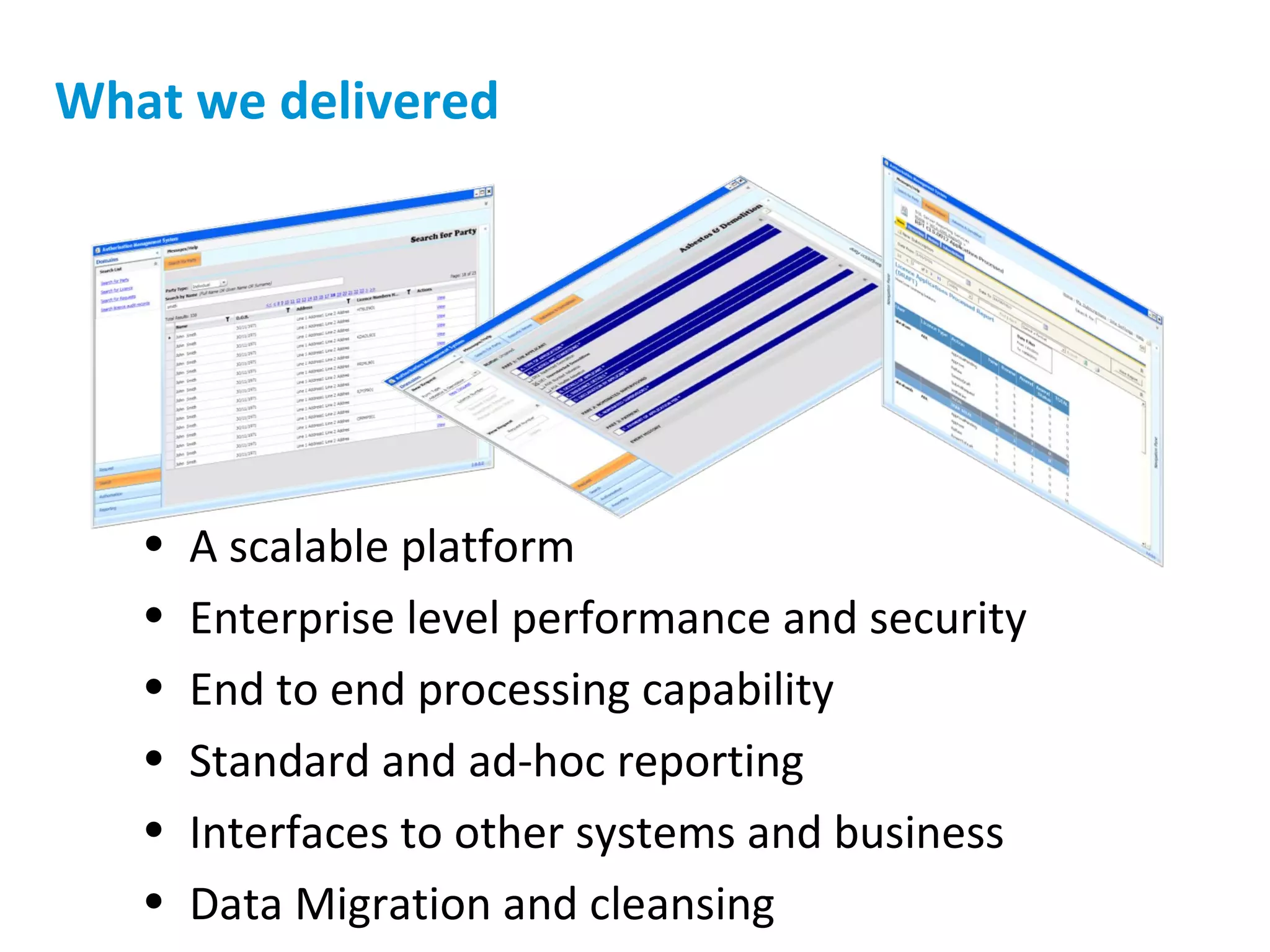
What we delivered A scalable platform Enterprise level performance and security End to end processing capability Standard and ad-hoc reporting Interfaces to other systems and business Data Migration and cleansing
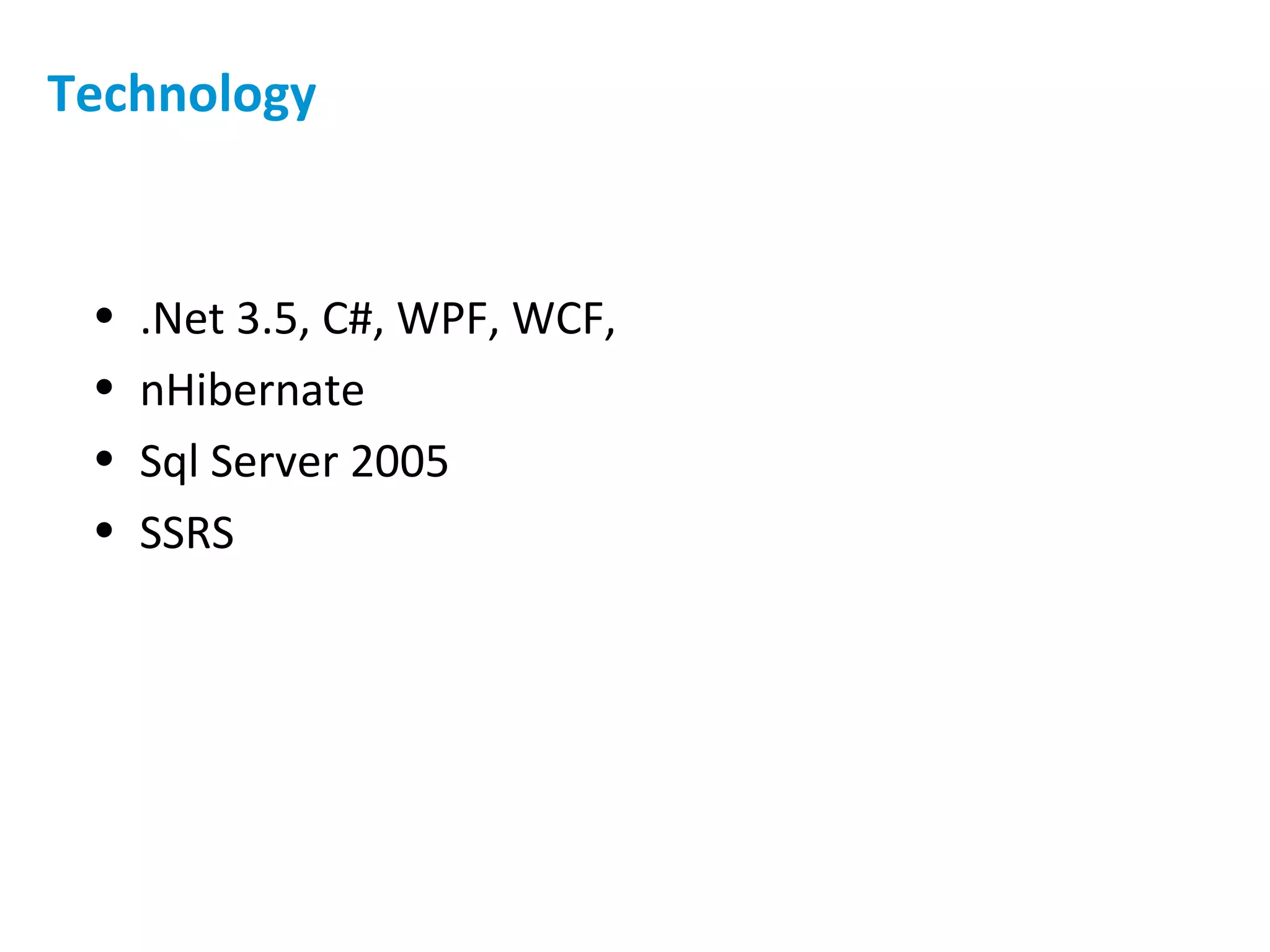
Technology .Net 3.5, C#, WPF, WCF,  nHibernate Sql Server 2005 SSRS
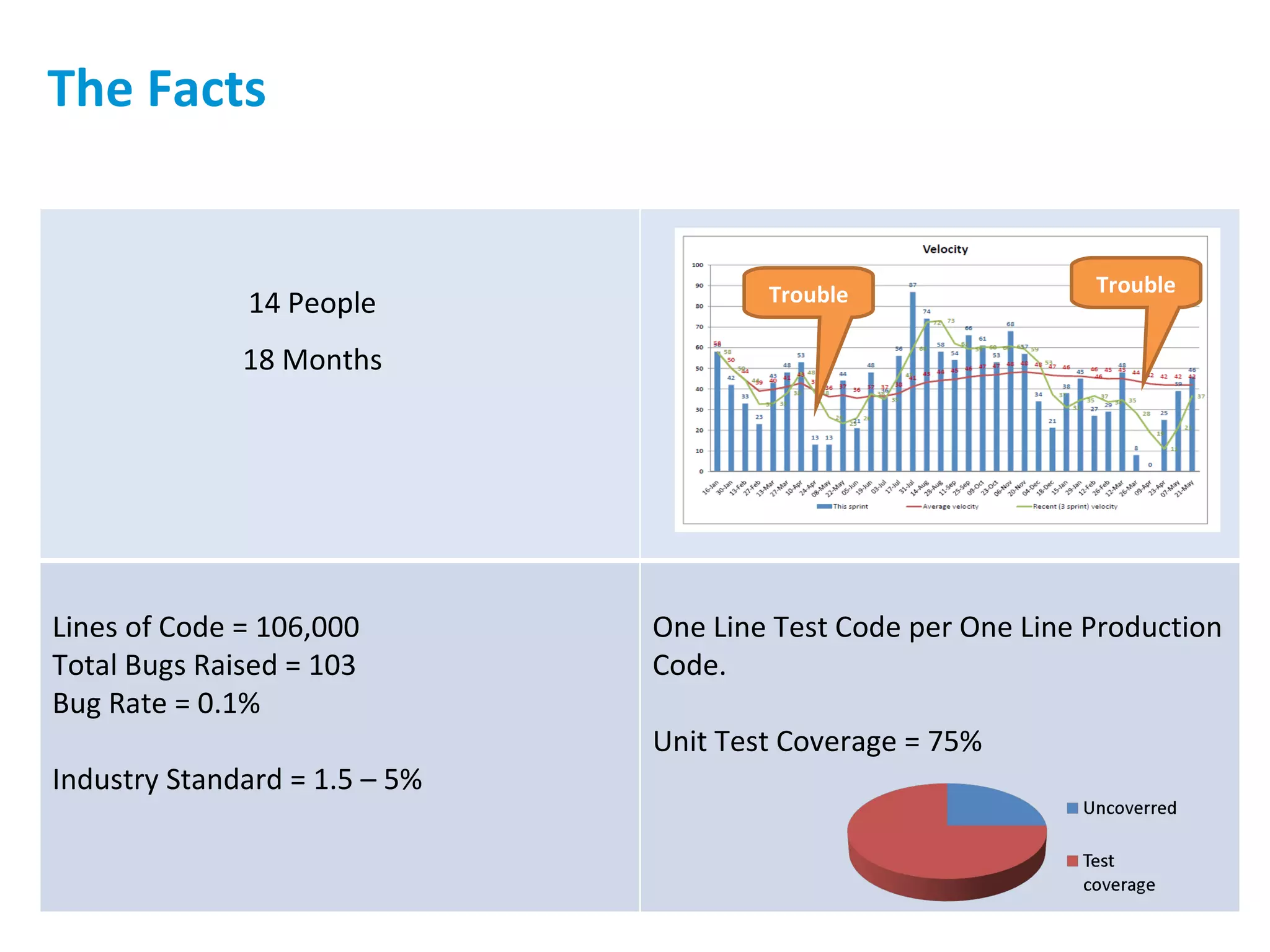
The Facts Trouble Trouble Lines of Code = 106,000 Total Bugs Raised = 103 Bug Rate = 0.1% Industry Standard = 1.5 – 5% One Line Test Code per One Line Production Code. Unit Test Coverage = 75% 14 People 18 Months
Team Values
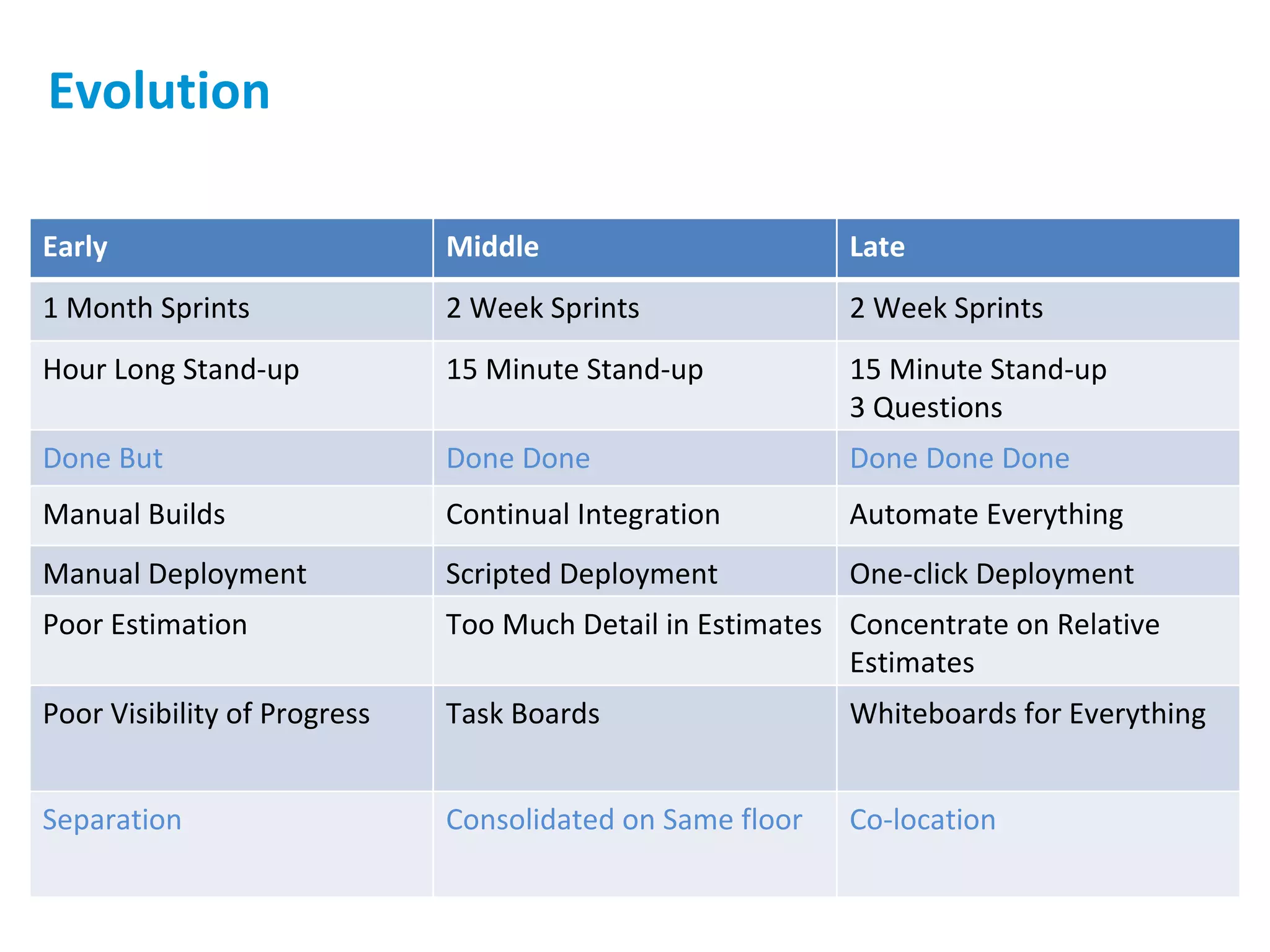
Evolution Early Middle Late 1 Month Sprints 2 Week Sprints 2 Week Sprints Hour Long Stand-up 15 Minute Stand-up 15 Minute Stand-up 3 Questions Done But Done Done Done Done Done Manual Builds Continual Integration Automate Everything Manual Deployment Scripted Deployment One-click Deployment Poor Estimation Too Much Detail in Estimates Concentrate on Relative Estimates Poor Visibility of Progress Task Boards  Whiteboards for Everything Separation Consolidated on Same floor Co-location
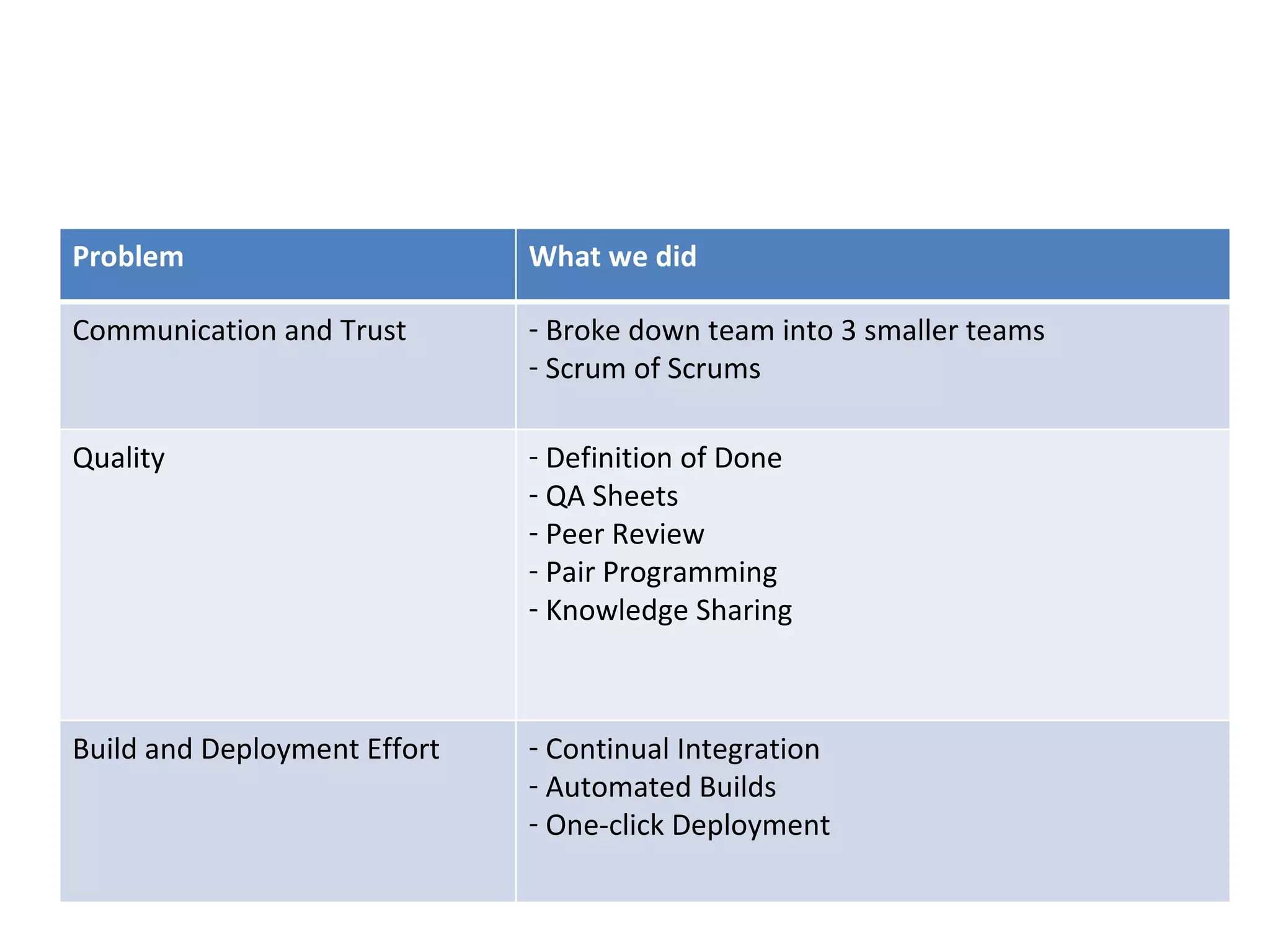
Problem What we did Communication and Trust Broke down team into 3 smaller teams Scrum of Scrums Quality Definition of Done QA Sheets Peer Review Pair Programming Knowledge Sharing Build and Deployment Effort Continual Integration Automated Builds One-click Deployment
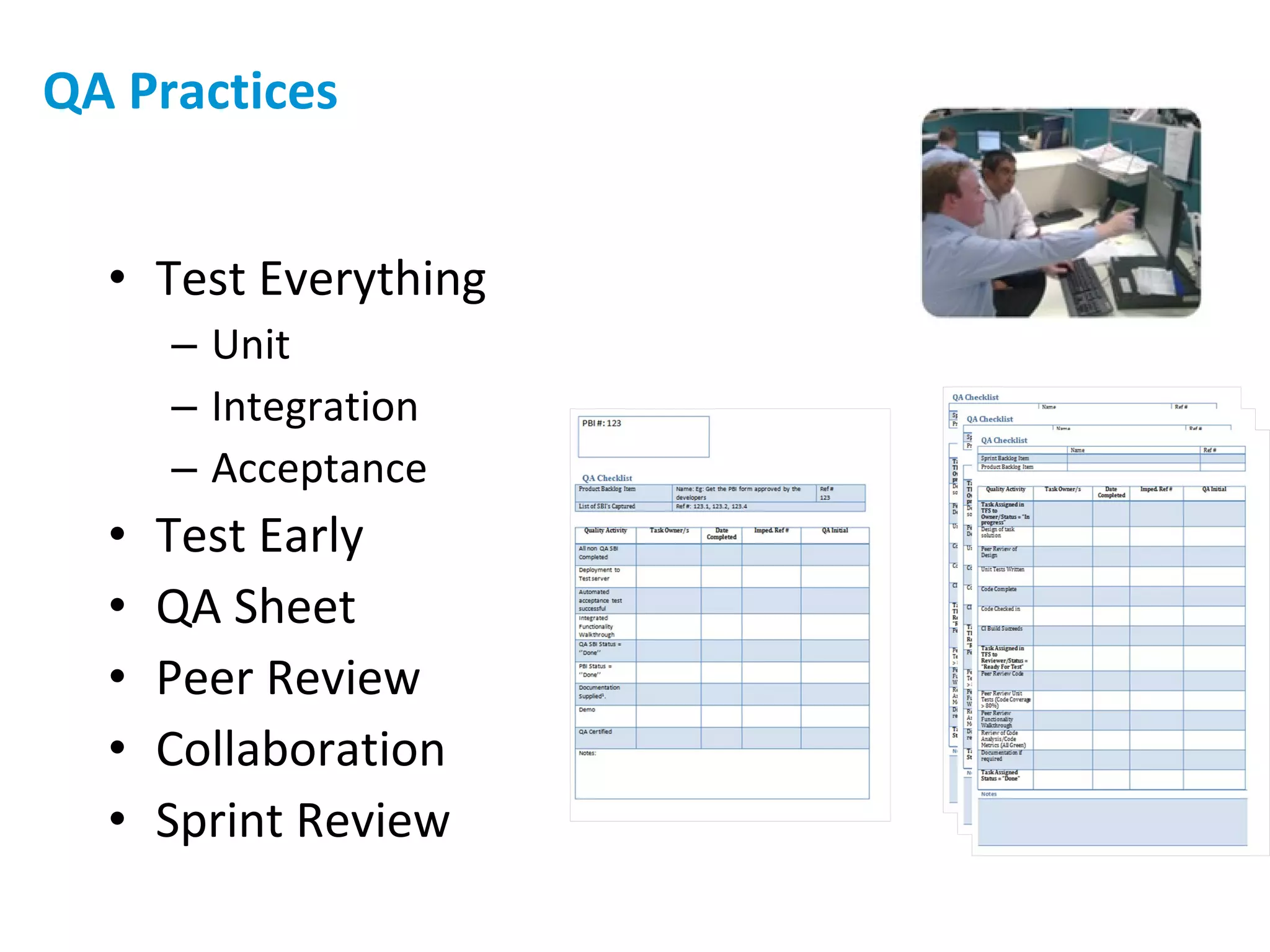
Test Everything Unit Integration Acceptance Test Early QA Sheet Peer Review Collaboration Sprint Review QA Practices
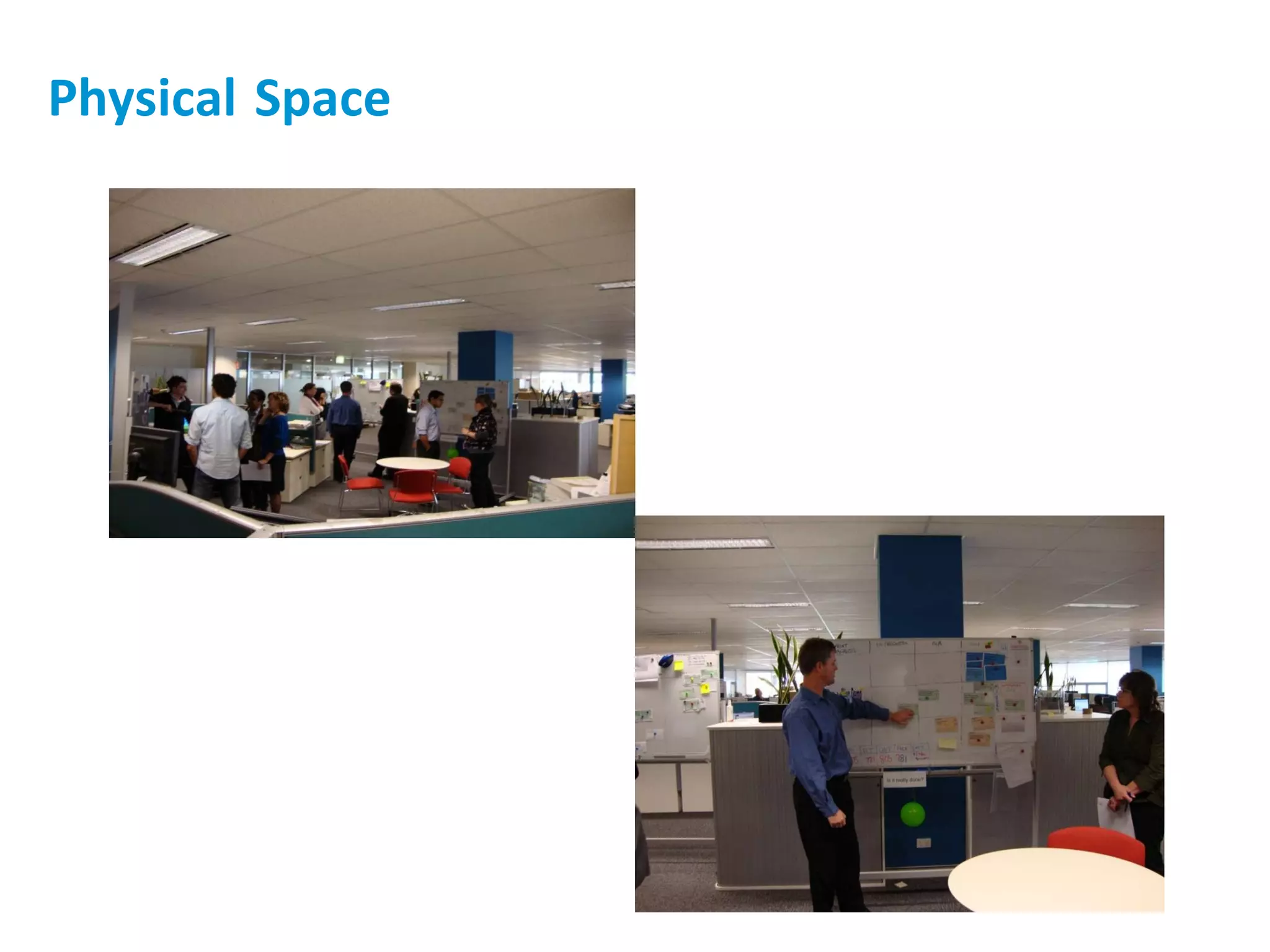
Physical   Space
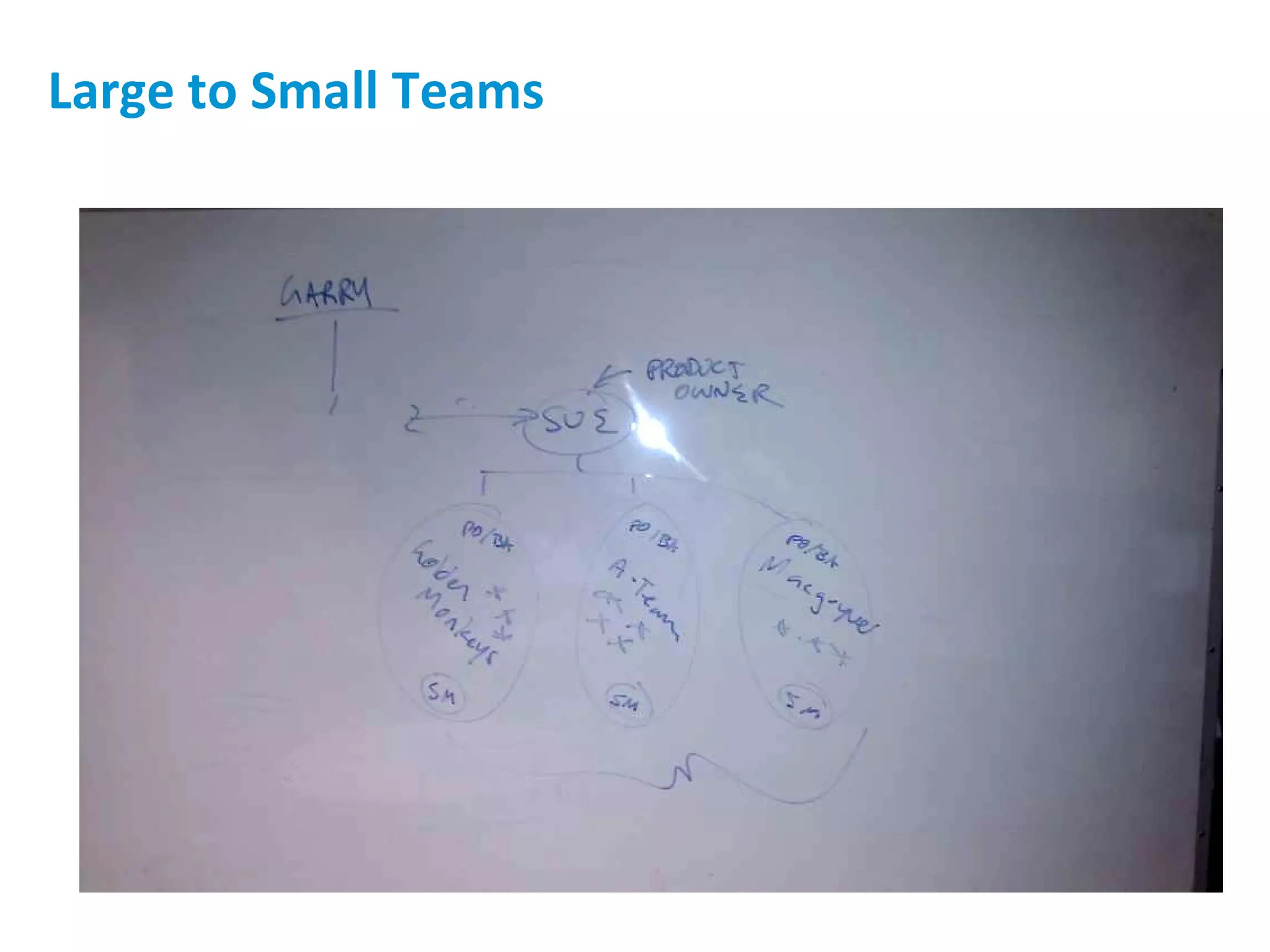
Large to Small Teams
Further Improvements Commit to less but get it all done Automated UI Tests Managing Technical Debt Product Backlog Less Process overhead and paperwork
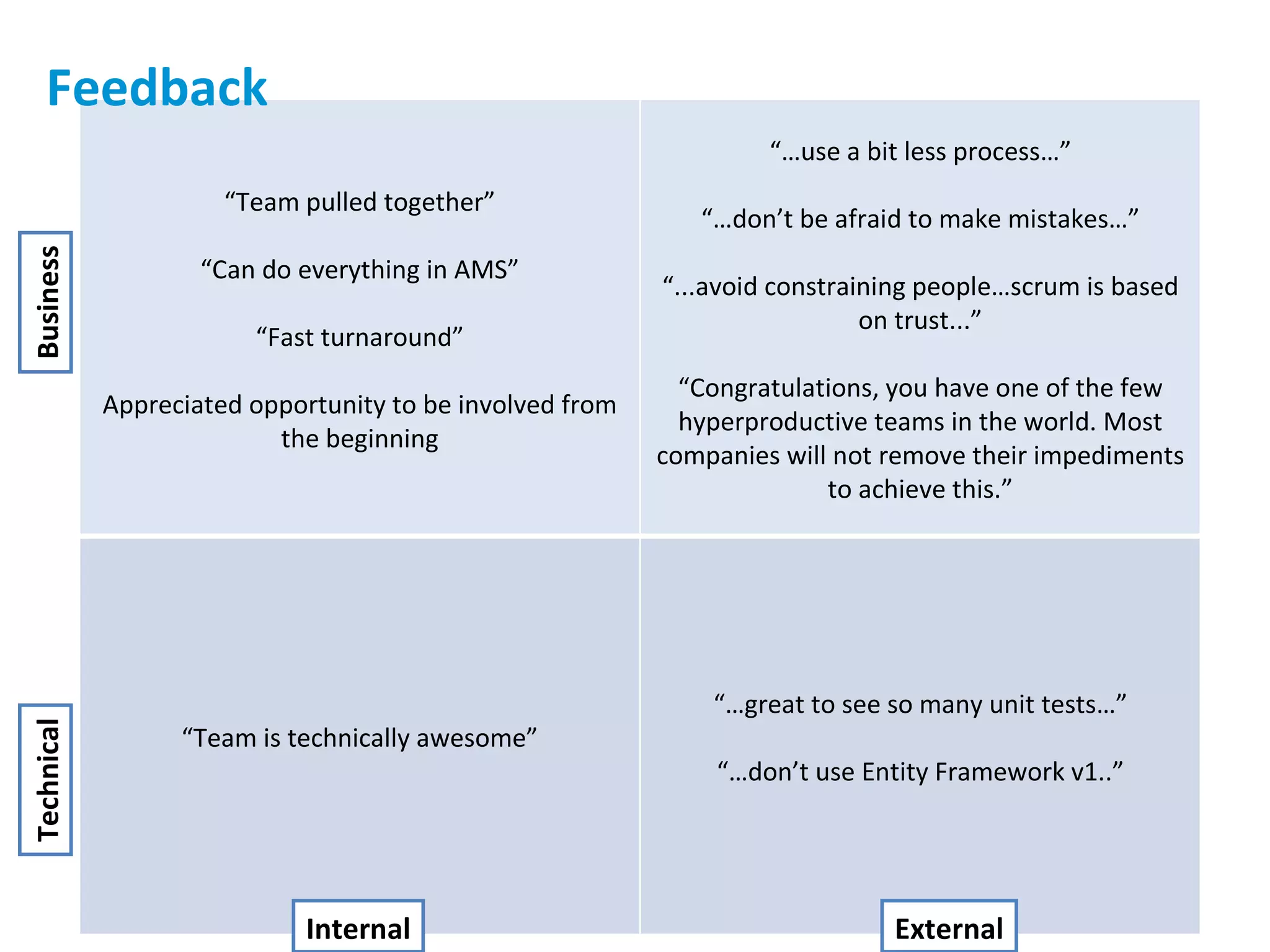
Feedback Business Technical Internal External “ Team pulled together” “ Can do everything in AMS” “ Fast turnaround” Appreciated opportunity to be involved from the beginning “… use a bit less process…” “… don’t be afraid to make mistakes…” “ ...avoid constraining people…scrum is based on trust...” “ Congratulations, you have one of the few hyperproductive teams in the world. Most companies will not remove their impediments to achieve this.” “ Team is technically awesome” “… great to see so many unit tests…” “… don’t use Entity Framework v1..”
..Finally… Be ready for cultural change New levels of trust and transparency Collaboration Continual Improvement
 

Scrum in Wonderland

  • 1.
    Scrum in WonderlandImplementing Scrum in Government CoastNerds Group Presentation September 2010
  • 2.
    What are wegoing to talk about
  • 3.
  • 4.
    Industry Report CardSource: Standish Group Report 2004
  • 5.
    Requirements use in system Utility of requirement Always used 7% Often used 13% Sometimes used 16% Seldom used 19% Never used 45% Source: Standish Group study, 2002.
  • 6.
    Agile Manifesto Individualsand interactions That is, while there is value in the items on the right, we value the items on the left more We are uncovering better ways of developing software by doing it and helping others do it. Through this work we have come to value: processes and tools Working software comprehensive documentation Customer collaboration contract negotiation Responding to change following a plan over over over over
  • 7.
  • 8.
  • 9.
  • 10.
  • 11.
  • 12.
  • 13.
    Daily Scrums Whatdid I do yesterday? What am I going to do today? What is stopping me achieve this?
  • 14.
  • 15.
  • 16.
  • 17.
    Release! Release! Release!Release! Release! Sprinting
  • 18.
  • 19.
  • 20.
    In a nutshell….Source: scrumforteamsystem.com
  • 21.
  • 22.
    What we deliveredA scalable platform Enterprise level performance and security End to end processing capability Standard and ad-hoc reporting Interfaces to other systems and business Data Migration and cleansing
  • 23.
    Technology .Net 3.5,C#, WPF, WCF, nHibernate Sql Server 2005 SSRS
  • 24.
    The Facts TroubleTrouble Lines of Code = 106,000 Total Bugs Raised = 103 Bug Rate = 0.1% Industry Standard = 1.5 – 5% One Line Test Code per One Line Production Code. Unit Test Coverage = 75% 14 People 18 Months
  • 25.
  • 26.
    Evolution Early MiddleLate 1 Month Sprints 2 Week Sprints 2 Week Sprints Hour Long Stand-up 15 Minute Stand-up 15 Minute Stand-up 3 Questions Done But Done Done Done Done Done Manual Builds Continual Integration Automate Everything Manual Deployment Scripted Deployment One-click Deployment Poor Estimation Too Much Detail in Estimates Concentrate on Relative Estimates Poor Visibility of Progress Task Boards Whiteboards for Everything Separation Consolidated on Same floor Co-location
  • 27.
    Problem What wedid Communication and Trust Broke down team into 3 smaller teams Scrum of Scrums Quality Definition of Done QA Sheets Peer Review Pair Programming Knowledge Sharing Build and Deployment Effort Continual Integration Automated Builds One-click Deployment
  • 28.
    Test Everything UnitIntegration Acceptance Test Early QA Sheet Peer Review Collaboration Sprint Review QA Practices
  • 29.
    Physical Space
  • 30.
  • 31.
    Further Improvements Committo less but get it all done Automated UI Tests Managing Technical Debt Product Backlog Less Process overhead and paperwork
  • 32.
    Feedback Business TechnicalInternal External “ Team pulled together” “ Can do everything in AMS” “ Fast turnaround” Appreciated opportunity to be involved from the beginning “… use a bit less process…” “… don’t be afraid to make mistakes…” “ ...avoid constraining people…scrum is based on trust...” “ Congratulations, you have one of the few hyperproductive teams in the world. Most companies will not remove their impediments to achieve this.” “ Team is technically awesome” “… great to see so many unit tests…” “… don’t use Entity Framework v1..”
  • 33.
    ..Finally… Be readyfor cultural change New levels of trust and transparency Collaboration Continual Improvement
  • 34.

Editor's Notes

  • #2 Why are we here? Who are we? The process worked Share our experience and knowledge We had fun
  • #3 Scrum Overview Our Experience over 18 months.
  • #4 Planning Analysis Design Implement Test Support
  • #7 Kent Beck Mike Beedle Arie van Bennekum Alistair Cockburn Ward Cunningham Martin Fowler James Grenning Jim Highsmith Andrew Hunt Ron Jeffries Jon Kern Brian Marick Robert C. Martin Steve Mellor Ken Schwaber Jeff Sutherland Dave Thomas
  • #9 Light weight framework for managing agile projects Concentrate on outcome over activities Force communication Identify issues early Continual Delivery – Motivation Described by Roles, Artifacts and Cermonies
  • #10 Product Owner Responsible for return on investment Customer advocate ROI Product vision Release planning Balances multiple stakeholder views Responsible for requirements and prioritisation Backlog Scrum Master Remove impediments Coach team members and Product owners in their role Facilitate discussions Look for improvement opportunities and tell them to the team Team Ideal size 7 +- 2 Self organising Cross functional – Generalising specialists
  • #14 Same time Same place Pigs and Chickens
  • #15 Product Focused Team, PO, Stakeholder, The World is invited. What team committed to What team achieved Live demonstration Walk through each PBI Feedback -> converted to Product Backlog Items for prioritisation Gain acceptance from Product Owner Any new work
  • #16 Processed Focused What we did well What we didn’t do so well What can we try
  • #19 Product Backlog Item: User Stories As a, I want, so that Acceptance criteria Estimation Priority Non Functional Requirements Try to map to business value Sprint Backlog Item Tasks to meet PBI
  • #20 Estimates? Sprint Burn Down Velocity Product Burn up Release BurnDown
  • #23 Search Business reports Ad-hoc reports Audit and history reports Scalable platform for further expansion
  • #26 Not just the process that got things done The team values We workshopped them
  • #30 Task Board Visibility Co-located Osmosis Workshops in Team Area Short, Focused and Immediate
  • #31 Better Communications Improved Focus Trust and Communication Scrum of Scrums
  • #32 Commitment Over committed Inconsistent Delivery Tech Debt: Aim to not incur any Payback early Reduce unexpected road blocks Product Backlog Groom continuously One source of truth Reduce administrative overhead