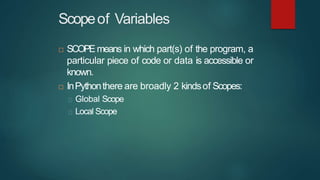
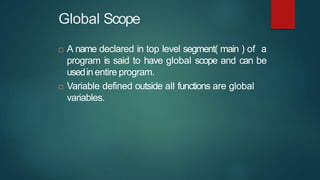
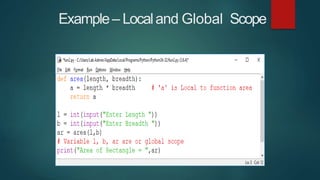
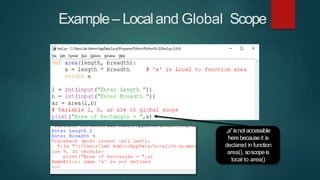
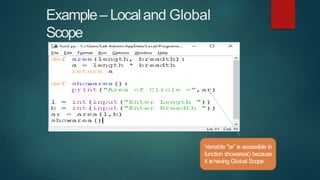
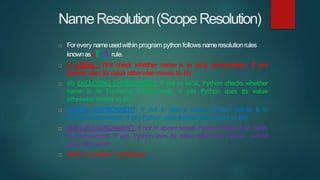
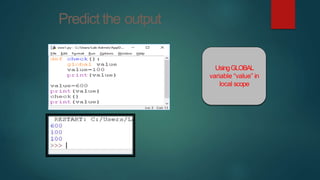
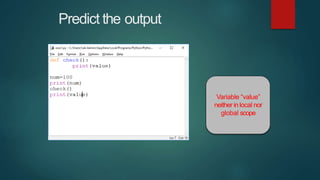
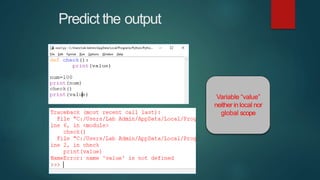
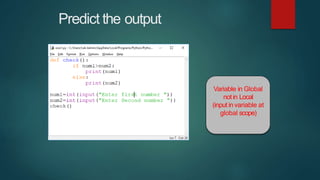
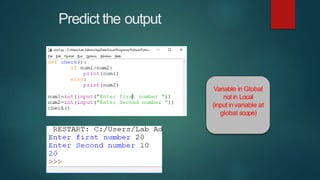
The document discusses scopes in Python programs. There are two types of scopes: global scope and local scope. Variables declared outside of functions have global scope and can be accessed anywhere in the program. Variables declared inside a function have local scope and can only be accessed within that function. The LEGB rule determines where Python looks for variable names - it first checks the local, then enclosing, then global, and finally built-in scopes. The lifetime of a variable is the period during which it exists in memory - global variables exist for the entire program runtime while local variables only exist while the function is executing.






![[OOP - Lec 19] Static Member Functions](https://cdn.slidesharecdn.com/ss_thumbnails/lecture-19staticmemberfunctions-160705095235-thumbnail.jpg?width=640&height=640&fit=bounds)


