11/27/2020
1
SCIENCE 7
Types of Solutions
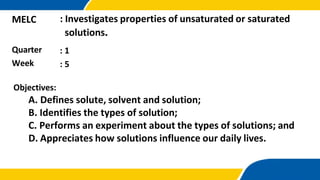
MELC : Investigates properties of unsaturated or saturated
solutions.
Quarter
Week
: 1
: 5
Objectives:
A. Defines solute, solvent and solution;
B. Identifies the types of solution;
C. Performs an experiment about the types of solutions; and
D. Appreciates how solutions influence our daily lives.
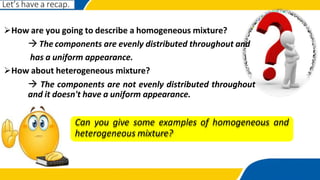
Let’s have a recap.
How are you going to describe a homogeneous mixture?
 The components are evenly distributed throughout and
has a uniform appearance.
How about heterogeneous mixture?
 The components are not evenly distributed throughout
and it doesn't have a uniform appearance.
Can you give some examples of homogeneous and
heterogeneous mixture?
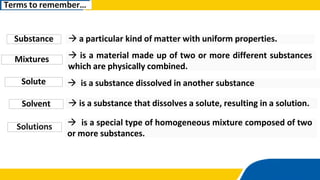
Solute  is a substance dissolved in another substance
Solvent  is a substance that dissolves a solute, resulting in a solution.
Terms to remember…
Solutions  is a special type of homogeneous mixture composed of two
or more substances.
Substance  a particular kind of matter with uniform properties.
Mixtures  is a material made up of two or more different substances
which are physically combined.
Questions:
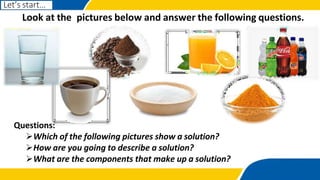
Which of the following pictures show a solution?
How are you going to describe a solution?
What are the components that make up a solution?
Look at the pictures below and answer the following questions.
Let’s start…
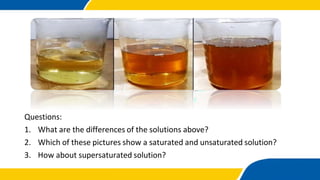
Questions:
1. What are the differences of the solutions above?
2. Which of these pictures show a saturated and unsaturated solution?
3. How about supersaturated solution?
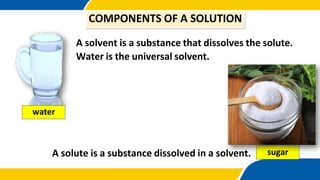
A solvent is a substance that dissolves the solute.
Water is the universal solvent.
A solute is a substance dissolved in a solvent.
COMPONENTS OF A SOLUTION
water
sugar
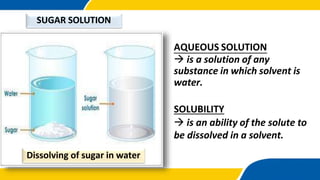
AQUEOUS SOLUTION
 is a solution of any
substance in which solvent is
water.
SUGAR SOLUTION
SOLUBILITY
 is an ability of the solute to
be dissolved in a solvent.
Dissolving of sugar in water
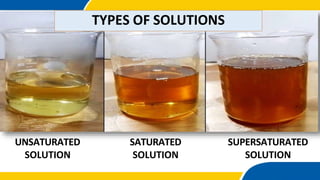
TYPES OF SOLUTIONS
UNSATURATED
SOLUTION
SATURATED
SOLUTION
SUPERSATURATED
SOLUTION
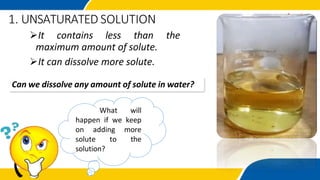
1. UNSATURATED SOLUTION
It contains less than the
maximum amount of solute.
It can dissolve more solute.
Can we dissolve any amount of solute in water?
What will
happen if we keep
on adding more
solute to the
solution?
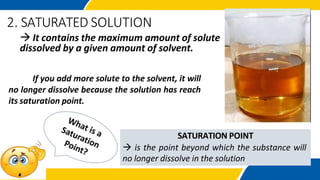
2. SATURATED SOLUTION
 It contains the maximum amount of solute
dissolved by a given amount of solvent.
If you add more solute to the solvent, it will
no longer dissolve because the solution has reach
its saturation point.
SATURATION POINT
 is the point beyond which the substance will
no longer dissolve in the solution
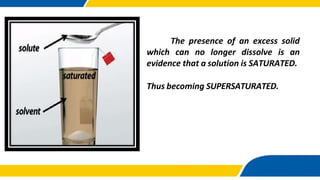
The presence of an excess solid
which can no longer dissolve is an
evidence that a solution is SATURATED.
Thus becoming SUPERSATURATED.
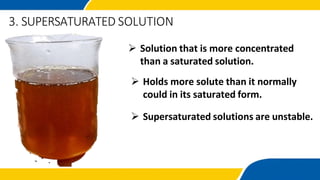
3. SUPERSATURATED SOLUTION
 Solution that is more concentrated
than a saturated solution.
 Holds more solute than it normally
could in its saturated form.
 Supersaturated solutions are unstable.
Let’s wrap it up…
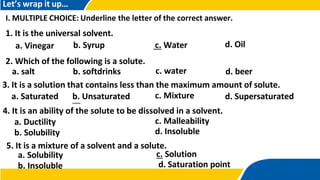
I. MULTIPLE CHOICE: Underline the letter of the correct answer.
1. It is the universal solvent.
a. Vinegar b. Syrup c. Water d. Oil
c. water
2. Which of the following is a solute.
a. salt b. softdrinks d. beer
3. It is a solution that contains less than the maximum amount of solute.
c. Mixture
a. Saturated b. Unsaturated d. Supersaturated
4. It is an ability of the solute to be dissolved in a solvent.
a. Ductility
b. Solubility
c. Malleability
d. Insoluble
5. It is a mixture of a solvent and a solute.
a. Solubility
b. Insoluble
c. Solution
d. Saturation point
ONLINE
Let’s deepen more…
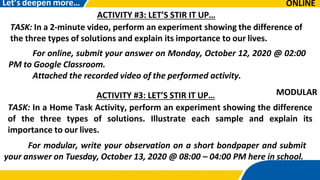
ACTIVITY #3: LET’S STIR IT UP…
TASK: In a 2-minute video, perform an experiment showing the difference of
the three types of solutions and explain its importance to our lives.
For online, submit your answer on Monday, October 12, 2020 @ 02:00
PM to Google Classroom.
Attached the recorded video of the performed activity.
ACTIVITY #3: LET’S STIR IT UP…
TASK: In a Home Task Activity, perform an experiment showing the difference
of the three types of solutions. Illustrate each sample and explain its
importance to our lives.
For modular, write your observation on a short bondpaper and submit
your answer on Tuesday, October 13, 2020 @ 08:00 – 04:00 PM here in school.
MODULAR
October 8, 2020
LET’S STUDY IN ADVANCE…
Please study in advance about SUSPENSIONS and COLLOIDS…
Sir Christian A. Ursabia
Let’s bring it home… ONLINE/MODULAR:
science7q1w5typesofsolutions-201127034648.pptx

science7q1w5typesofsolutions-201127034648.pptx

  • 1.
  • 2.
    MELC : Investigatesproperties of unsaturated or saturated solutions. Quarter Week : 1 : 5 Objectives: A. Defines solute, solvent and solution; B. Identifies the types of solution; C. Performs an experiment about the types of solutions; and D. Appreciates how solutions influence our daily lives.
  • 3.
    Let’s have arecap. How are you going to describe a homogeneous mixture?  The components are evenly distributed throughout and has a uniform appearance. How about heterogeneous mixture?  The components are not evenly distributed throughout and it doesn't have a uniform appearance. Can you give some examples of homogeneous and heterogeneous mixture?
  • 4.
    Solute  isa substance dissolved in another substance Solvent  is a substance that dissolves a solute, resulting in a solution. Terms to remember… Solutions  is a special type of homogeneous mixture composed of two or more substances. Substance  a particular kind of matter with uniform properties. Mixtures  is a material made up of two or more different substances which are physically combined.
  • 5.
    Questions: Which of thefollowing pictures show a solution? How are you going to describe a solution? What are the components that make up a solution? Look at the pictures below and answer the following questions. Let’s start…
  • 6.
    Questions: 1. What arethe differences of the solutions above? 2. Which of these pictures show a saturated and unsaturated solution? 3. How about supersaturated solution?
  • 7.
    A solvent isa substance that dissolves the solute. Water is the universal solvent. A solute is a substance dissolved in a solvent. COMPONENTS OF A SOLUTION water sugar
  • 8.
    AQUEOUS SOLUTION  isa solution of any substance in which solvent is water. SUGAR SOLUTION SOLUBILITY  is an ability of the solute to be dissolved in a solvent. Dissolving of sugar in water
  • 9.
  • 10.
    1. UNSATURATED SOLUTION Itcontains less than the maximum amount of solute. It can dissolve more solute. Can we dissolve any amount of solute in water? What will happen if we keep on adding more solute to the solution?
  • 11.
    2. SATURATED SOLUTION It contains the maximum amount of solute dissolved by a given amount of solvent. If you add more solute to the solvent, it will no longer dissolve because the solution has reach its saturation point. SATURATION POINT  is the point beyond which the substance will no longer dissolve in the solution
  • 12.
    The presence ofan excess solid which can no longer dissolve is an evidence that a solution is SATURATED. Thus becoming SUPERSATURATED.
  • 13.
    3. SUPERSATURATED SOLUTION Solution that is more concentrated than a saturated solution.  Holds more solute than it normally could in its saturated form.  Supersaturated solutions are unstable.
  • 14.
    Let’s wrap itup… I. MULTIPLE CHOICE: Underline the letter of the correct answer. 1. It is the universal solvent. a. Vinegar b. Syrup c. Water d. Oil c. water 2. Which of the following is a solute. a. salt b. softdrinks d. beer 3. It is a solution that contains less than the maximum amount of solute. c. Mixture a. Saturated b. Unsaturated d. Supersaturated 4. It is an ability of the solute to be dissolved in a solvent. a. Ductility b. Solubility c. Malleability d. Insoluble 5. It is a mixture of a solvent and a solute. a. Solubility b. Insoluble c. Solution d. Saturation point
  • 15.
    ONLINE Let’s deepen more… ACTIVITY#3: LET’S STIR IT UP… TASK: In a 2-minute video, perform an experiment showing the difference of the three types of solutions and explain its importance to our lives. For online, submit your answer on Monday, October 12, 2020 @ 02:00 PM to Google Classroom. Attached the recorded video of the performed activity. ACTIVITY #3: LET’S STIR IT UP… TASK: In a Home Task Activity, perform an experiment showing the difference of the three types of solutions. Illustrate each sample and explain its importance to our lives. For modular, write your observation on a short bondpaper and submit your answer on Tuesday, October 13, 2020 @ 08:00 – 04:00 PM here in school. MODULAR
  • 16.
    October 8, 2020 LET’SSTUDY IN ADVANCE… Please study in advance about SUSPENSIONS and COLLOIDS… Sir Christian A. Ursabia Let’s bring it home… ONLINE/MODULAR: