RESEARCH PLAN
FOR SCIENCE FAIR
PROJECT
YOU WILL NEED TO SUBMIT YOUR
RESEARCH PLAN THROUGH THE
SCHOOLOGY ASSIGNMENT.
All Projects must have a
Research Plan
All students must submit
their research plan through
Schoology Assignment.
Research plan must be
submitted by next class
period.
1. Needs to be submitted prior
to experimentation.
2. If changes are made during
experimentation, research plan
can be modified later to reflect
any changes.
Test tubes
Pipettes
Beakers
0%
20%
40%
60%
80%
100%
Monday Tuesday Wednesday
IT’S THE PLAN….
RESEARCH PLAN ELEMENTS
ALL PROJECTS
HYPOTHESIS
EXPERIMENTAL
DATA
CALCULATIONS
a. RATIONALE: Include a brief synopsis of the background that supports your
research problem and explain why this research is important and if
applicable, explain any societal impact of your research.
b. RESEARCH QUESTION(S), HYPOTHESIS(ES), ENGINEERING GOAL(S),
EXPECTED OUTCOMES: How is this based on the rationale described
above?
c. LIST OF MATERIALS: Describe the following in detail
d. PROCEDURE: Detail all procedures and experimental design including
methods for data collection. Describe only your project. Do not include work
done by mentor or others.
e. RISK AND SAFETY: Identify any potential risks and safety precautions
needed.
f. DATA ANALYSIS: Describe the procedures you will use to analyze the
data/results.
g. BIBLIOGRAPHY: List major references (e.g. science journal articles, books,
internet sites) from your literature review. If you plan to use vertebrate
animals, one of these references must be an animal care reference.
A. PARTICIPANTS: describe age range, gender, racial/ethnic composition of participants. Identify
vulnerable populations (minors, pregnant women, prisoners, mentally disabled or economically
disadvantaged).
B. RECRUITMENT: where will you find your participants? How will they be invited to participate?
C. METHODS: what will participants be asked to do? Will you use any surveys, questionnaires or tests? If
yes and not your own, how did you obtain? Did it require permissions? If so, explain. What is the
frequency and length of time involved for each subject?
D. RISK ASSESSMENT: what are the risks or potential discomforts (physical, psychological, time involved,
social, legal, etc.) To participants? How will you minimize risks? List any benefits to society or
participants.
E. PROTECTION OF PRIVACY: will identifiable information (e.G., Names, telephone numbers, birth
dates, email addresses) be collected? Will data be confidential/anonymous? If anonymous, describe
how the data will be collected. If not anonymous, what procedures are in place for safeguarding
confidentiality? Where will data be stored? Who will have access to the data? What will you do with
the data after the study?
F. INFORMED CONSENT PROCESS: describe how you will inform participants about the purpose of the
study, what they will be asked to do, that their participation is voluntary and they have the right to
stop at any time. Include a copy of your informed consent form.
HUMAN
PARTICIPANTS
RESEARCH
PROJECTS:
Additional Items
that need to be
included with
research plan.
A. Discuss potential ALTERNATIVES to vertebrate animal use and
present justification for use of vertebrates.
B. Explain POTENTIAL IMPACT OR CONTRIBUTION of this research.
C. DETAIL ALL PROCEDURES TO BE USED, including methods used to
minimize potential discomfort, distress, pain and injury to the animals
and detailed chemical concentrations and drug dosages.
D. DETAIL ANIMAL NUMBERS, SPECIES, STRAIN, SEX, AGE, SOURCE,
etc., Include justification of the numbers planned.
E. Describe HOUSING AND OVERSIGHT of daily care.
F. Discuss DISPOSITION OF THE ANIMALS at the end of the study
VERTEBRATE
ANIMAL
PROJECTS:
Additional Items
that need to be
included with
research plan.
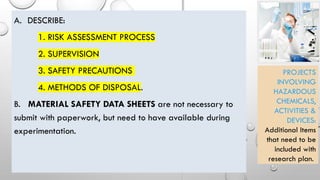
A. DESCRIBE:
1. RISK ASSESSMENT PROCESS
2. SUPERVISION
3. SAFETY PRECAUTIONS
4. METHODS OF DISPOSAL.
B. MATERIAL SAFETY DATA SHEETS are not necessary to
submit with paperwork, but need to have available during
experimentation.
PROJECTS
INVOLVING
HAZARDOUS
CHEMICALS,
ACTIVITIES &
DEVICES:
Additional Items
that need to be
included with
research plan.
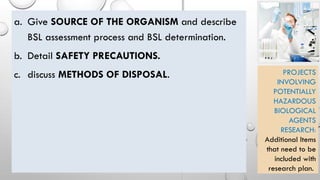
a. Give SOURCE OF THE ORGANISM and describe
BSL assessment process and BSL determination.
b. Detail SAFETY PRECAUTIONS.
c. discuss METHODS OF DISPOSAL. PROJECTS
INVOLVING
POTENTIALLY
HAZARDOUS
BIOLOGICAL
AGENTS
RESEARCH:
Additional Items
that need to be
included with
research plan.
Science Fair research plan for highschool

Science Fair research plan for highschool

  • 1.
    RESEARCH PLAN FOR SCIENCEFAIR PROJECT YOU WILL NEED TO SUBMIT YOUR RESEARCH PLAN THROUGH THE SCHOOLOGY ASSIGNMENT.
  • 2.
    All Projects musthave a Research Plan All students must submit their research plan through Schoology Assignment. Research plan must be submitted by next class period.
  • 3.
    1. Needs tobe submitted prior to experimentation. 2. If changes are made during experimentation, research plan can be modified later to reflect any changes. Test tubes Pipettes Beakers 0% 20% 40% 60% 80% 100% Monday Tuesday Wednesday IT’S THE PLAN….
  • 4.
    RESEARCH PLAN ELEMENTS ALLPROJECTS HYPOTHESIS EXPERIMENTAL DATA CALCULATIONS a. RATIONALE: Include a brief synopsis of the background that supports your research problem and explain why this research is important and if applicable, explain any societal impact of your research. b. RESEARCH QUESTION(S), HYPOTHESIS(ES), ENGINEERING GOAL(S), EXPECTED OUTCOMES: How is this based on the rationale described above? c. LIST OF MATERIALS: Describe the following in detail d. PROCEDURE: Detail all procedures and experimental design including methods for data collection. Describe only your project. Do not include work done by mentor or others. e. RISK AND SAFETY: Identify any potential risks and safety precautions needed. f. DATA ANALYSIS: Describe the procedures you will use to analyze the data/results. g. BIBLIOGRAPHY: List major references (e.g. science journal articles, books, internet sites) from your literature review. If you plan to use vertebrate animals, one of these references must be an animal care reference.
  • 5.
    A. PARTICIPANTS: describeage range, gender, racial/ethnic composition of participants. Identify vulnerable populations (minors, pregnant women, prisoners, mentally disabled or economically disadvantaged). B. RECRUITMENT: where will you find your participants? How will they be invited to participate? C. METHODS: what will participants be asked to do? Will you use any surveys, questionnaires or tests? If yes and not your own, how did you obtain? Did it require permissions? If so, explain. What is the frequency and length of time involved for each subject? D. RISK ASSESSMENT: what are the risks or potential discomforts (physical, psychological, time involved, social, legal, etc.) To participants? How will you minimize risks? List any benefits to society or participants. E. PROTECTION OF PRIVACY: will identifiable information (e.G., Names, telephone numbers, birth dates, email addresses) be collected? Will data be confidential/anonymous? If anonymous, describe how the data will be collected. If not anonymous, what procedures are in place for safeguarding confidentiality? Where will data be stored? Who will have access to the data? What will you do with the data after the study? F. INFORMED CONSENT PROCESS: describe how you will inform participants about the purpose of the study, what they will be asked to do, that their participation is voluntary and they have the right to stop at any time. Include a copy of your informed consent form. HUMAN PARTICIPANTS RESEARCH PROJECTS: Additional Items that need to be included with research plan.
  • 6.
    A. Discuss potentialALTERNATIVES to vertebrate animal use and present justification for use of vertebrates. B. Explain POTENTIAL IMPACT OR CONTRIBUTION of this research. C. DETAIL ALL PROCEDURES TO BE USED, including methods used to minimize potential discomfort, distress, pain and injury to the animals and detailed chemical concentrations and drug dosages. D. DETAIL ANIMAL NUMBERS, SPECIES, STRAIN, SEX, AGE, SOURCE, etc., Include justification of the numbers planned. E. Describe HOUSING AND OVERSIGHT of daily care. F. Discuss DISPOSITION OF THE ANIMALS at the end of the study VERTEBRATE ANIMAL PROJECTS: Additional Items that need to be included with research plan.
  • 7.
    A. DESCRIBE: 1. RISKASSESSMENT PROCESS 2. SUPERVISION 3. SAFETY PRECAUTIONS 4. METHODS OF DISPOSAL. B. MATERIAL SAFETY DATA SHEETS are not necessary to submit with paperwork, but need to have available during experimentation. PROJECTS INVOLVING HAZARDOUS CHEMICALS, ACTIVITIES & DEVICES: Additional Items that need to be included with research plan.
  • 8.
    a. Give SOURCEOF THE ORGANISM and describe BSL assessment process and BSL determination. b. Detail SAFETY PRECAUTIONS. c. discuss METHODS OF DISPOSAL. PROJECTS INVOLVING POTENTIALLY HAZARDOUS BIOLOGICAL AGENTS RESEARCH: Additional Items that need to be included with research plan.