PREPARING A RESEARCH
PROPOSAL
PRESENTATION
BY:POOJA SATHEESH
RESEARCH PROPOSAL
 A research proposal is a document written by a researcher that provides a
detailed description of the proposed program.
 It is like an outline of the entire research process that gives a reader a
summary of the information discussed in a project.
 A plan or suggestion, especially a formal or written one, put forward for
consideration by others
Importance of research proposal
 Helps examine what the researcher intends
to do.
 The research proposal is able to give an
overview of the research project so that
other people understand the scope of the
research, the significance of the research, as
well as your proposed methodology and
chosen research method.
 Increases the likelihood of approval or
financial support.
Identifies the research gaps in existing
literature and refines the research problem.
It evaluates the study’s feasibility,
including ethical considerations, resources,
and potential challenges.
COMPONENTS OF A RESEARCH PROPOSAL
1.Title Page
1.Abstract
2.Introduction
1. Background
2. Problem Statement
3. Research Objectives
4. Research Questions/Hypotheses
5. Significance of the Study
6. Scope and Limitations
3.Literature Review
4.Methodology
1. Research Design
2. Participants
3. Data Collection Methods
4. Data Analysis
5.Results
6.Discussion and Conclusions
7.Ethical Considerations
8.Timeline
9.Budget (if applicable)
10.References.
TITLE PAGE
Title of the study.
 Your name, institutional affiliation, course, and date.
 specific, direct, concise, meaningful and easily understandable;not more than
one or two lines;must accurately represent the objective and indicate the
purpose of the study.
ABSTRACT
 It is a brief summary of approximately 300 words.
 It should include the research question, the rationale for the study, the
hypothesis (if any) and the method
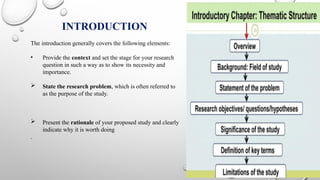
INTRODUCTION
The introduction generally covers the following elements:
• Provide the context and set the stage for your research
question in such a way as to show its necessity and
importance.
 State the research problem, which is often referred to
as the purpose of the study.
 Present the rationale of your proposed study and clearly
indicate why it is worth doing
.
 Briefly describe the major issues and sub-problems to
be addressed by your research.
 Identify the key independent and dependent variables
of your experiment. Alternatively, specify the
phenomenon you want to study .
 State your hypothesis or theory, if any.
 Set the delimitation or boundaries of your proposed
research in order to provide a clear focus.
.
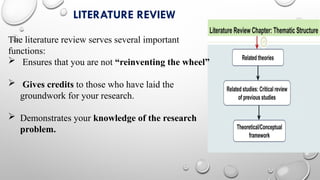
LITERATURE REVIEW
The literature review serves several important
functions:
 Ensures that you are not “reinventing the wheel”
 Gives credits to those who have laid the
groundwork for your research.
 Demonstrates your knowledge of the research
problem.
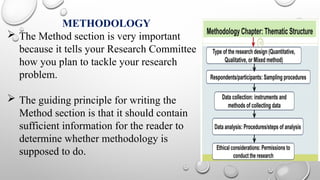
METHODOLOGY
 The Method section is very important
because it tells your Research Committee
how you plan to tackle your research
problem.
 The guiding principle for writing the
Method section is that it should contain
sufficient information for the reader to
determine whether methodology is
supposed to do.
 Design-Is it a questionnaire study or a laboratory
experiment? What kind of design do you choose?
 Subjects or participants - Who will take part in your
study? What kind of sampling procedure do you use?
 Instruments - What kind of measuring instruments or
questionnaires do you use? Why do you choose them?
Are they valid and reliable?
 Procedure - How do you plan to carry out your study?
What activities are involved?How long does it take?
RESULTS
You do not have results at the proposal stage. However, you need to
have some idea about what kind of data you will be collecting, and
what statistical procedures will be used in order to answer your
research question or test you hypothesis.
DISCUSSION
It is important to convince your reader of the potential impact of your
proposed research. You need to communicate a sense of enthusiasm and
confidence without exaggerating the merits of your proposal. That is
why you also need to mention the limitations and weaknesses of the
proposed research, which may be justified by time and financial
constraints as well as by the early developmental stage of your research
area.
ETHICAL/ LEGAL CONSIDERATION
Human research participants need:
 Informed consent
 Voluntary participation
 Restricted use of deception
 Debriefing
 Confidentiality
TIME SCHEDULE/WORK PLAN
 Timeline of the assigned tasks
This includes the step-by-step plan for completing the research,
such as literature review, data collection, analysis, writing, and
revisions.
 Timeline of the resource flow
Describes when and how resources (e.g., funding, personnel,
materials) will be allocated and used during the project.It
ensures that all resources are efficiently distributed across the
research timeline.
BUDGET/ESTIMATED COST BUILT UP
 Cost built up – resource personnel, support staff,
stationery, transport, utilities, house rents, miscellaneous,
etc
It refers to the detailed estimation of all expenses required to
complete the research project. It includes costs for personnel,
materials, transportation, utilities, equipment, and any other
necessary items. This ensures the research is financially
feasible and resources are allocated appropriately.
ORGANIZATION OF THE
REPORT/CHAPTER OUTLINE
 Outline of the dissertation/report
 Four major parts of the report: introductory,
findings and discussion, summary, and
conclusion.
BIBLIOGRAPHY/REFERENCES
 Related documents to be consulted/studies
 Follow technicalities in writing
bibliography/references
 To be presented in alphabetic order
 To be presented in classified manner viz.,
manuscripts, books, journals, commission
reports, newspapers, etc
CONCLUSION
 State about the feasibility of the proposed
research/study.
 Upcoming challenges
 Upcoming treats, difficulties, hindrances
 Make a conclusive remark
RESEARCH METHODOLOGY.research proposal pptx

RESEARCH METHODOLOGY.research proposal pptx

  • 1.
  • 2.
    RESEARCH PROPOSAL  Aresearch proposal is a document written by a researcher that provides a detailed description of the proposed program.  It is like an outline of the entire research process that gives a reader a summary of the information discussed in a project.  A plan or suggestion, especially a formal or written one, put forward for consideration by others
  • 3.
    Importance of researchproposal  Helps examine what the researcher intends to do.  The research proposal is able to give an overview of the research project so that other people understand the scope of the research, the significance of the research, as well as your proposed methodology and chosen research method.  Increases the likelihood of approval or financial support.
  • 4.
    Identifies the researchgaps in existing literature and refines the research problem. It evaluates the study’s feasibility, including ethical considerations, resources, and potential challenges.
  • 5.
    COMPONENTS OF ARESEARCH PROPOSAL 1.Title Page 1.Abstract 2.Introduction 1. Background 2. Problem Statement 3. Research Objectives 4. Research Questions/Hypotheses 5. Significance of the Study 6. Scope and Limitations 3.Literature Review 4.Methodology 1. Research Design 2. Participants 3. Data Collection Methods 4. Data Analysis 5.Results 6.Discussion and Conclusions 7.Ethical Considerations 8.Timeline 9.Budget (if applicable) 10.References.
  • 6.
    TITLE PAGE Title ofthe study.  Your name, institutional affiliation, course, and date.  specific, direct, concise, meaningful and easily understandable;not more than one or two lines;must accurately represent the objective and indicate the purpose of the study. ABSTRACT  It is a brief summary of approximately 300 words.  It should include the research question, the rationale for the study, the hypothesis (if any) and the method
  • 7.
    INTRODUCTION The introduction generallycovers the following elements: • Provide the context and set the stage for your research question in such a way as to show its necessity and importance.  State the research problem, which is often referred to as the purpose of the study.  Present the rationale of your proposed study and clearly indicate why it is worth doing .
  • 8.
     Briefly describethe major issues and sub-problems to be addressed by your research.  Identify the key independent and dependent variables of your experiment. Alternatively, specify the phenomenon you want to study .  State your hypothesis or theory, if any.  Set the delimitation or boundaries of your proposed research in order to provide a clear focus. .
  • 9.
    LITERATURE REVIEW The literaturereview serves several important functions:  Ensures that you are not “reinventing the wheel”  Gives credits to those who have laid the groundwork for your research.  Demonstrates your knowledge of the research problem.
  • 10.
    METHODOLOGY  The Methodsection is very important because it tells your Research Committee how you plan to tackle your research problem.  The guiding principle for writing the Method section is that it should contain sufficient information for the reader to determine whether methodology is supposed to do.
  • 11.
     Design-Is ita questionnaire study or a laboratory experiment? What kind of design do you choose?  Subjects or participants - Who will take part in your study? What kind of sampling procedure do you use?  Instruments - What kind of measuring instruments or questionnaires do you use? Why do you choose them? Are they valid and reliable?  Procedure - How do you plan to carry out your study? What activities are involved?How long does it take?
  • 12.
    RESULTS You do nothave results at the proposal stage. However, you need to have some idea about what kind of data you will be collecting, and what statistical procedures will be used in order to answer your research question or test you hypothesis. DISCUSSION It is important to convince your reader of the potential impact of your proposed research. You need to communicate a sense of enthusiasm and confidence without exaggerating the merits of your proposal. That is why you also need to mention the limitations and weaknesses of the proposed research, which may be justified by time and financial constraints as well as by the early developmental stage of your research area.
  • 13.
    ETHICAL/ LEGAL CONSIDERATION Humanresearch participants need:  Informed consent  Voluntary participation  Restricted use of deception  Debriefing  Confidentiality
  • 14.
    TIME SCHEDULE/WORK PLAN Timeline of the assigned tasks This includes the step-by-step plan for completing the research, such as literature review, data collection, analysis, writing, and revisions.  Timeline of the resource flow Describes when and how resources (e.g., funding, personnel, materials) will be allocated and used during the project.It ensures that all resources are efficiently distributed across the research timeline.
  • 15.
    BUDGET/ESTIMATED COST BUILTUP  Cost built up – resource personnel, support staff, stationery, transport, utilities, house rents, miscellaneous, etc It refers to the detailed estimation of all expenses required to complete the research project. It includes costs for personnel, materials, transportation, utilities, equipment, and any other necessary items. This ensures the research is financially feasible and resources are allocated appropriately.
  • 16.
    ORGANIZATION OF THE REPORT/CHAPTEROUTLINE  Outline of the dissertation/report  Four major parts of the report: introductory, findings and discussion, summary, and conclusion.
  • 17.
    BIBLIOGRAPHY/REFERENCES  Related documentsto be consulted/studies  Follow technicalities in writing bibliography/references  To be presented in alphabetic order  To be presented in classified manner viz., manuscripts, books, journals, commission reports, newspapers, etc
  • 18.
    CONCLUSION  State aboutthe feasibility of the proposed research/study.  Upcoming challenges  Upcoming treats, difficulties, hindrances  Make a conclusive remark