Science Corner!
     Day 5
Scientist of the Day


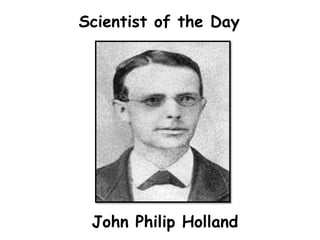
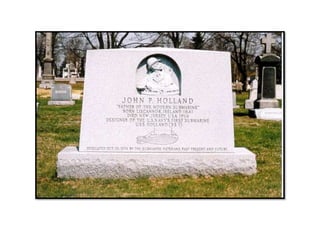
 John Philip Holland
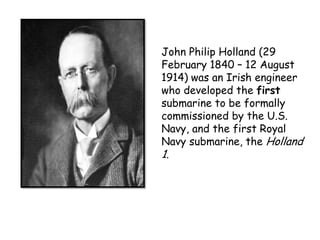
John Philip Holland (29
February 1840 – 12 August
1914) was an Irish engineer
who developed the first
submarine to be formally
commissioned by the U.S.
Navy, and the first Royal
Navy submarine, the Holland
1.
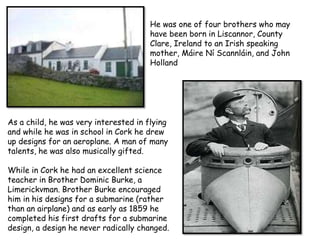
He was one of four brothers who may
                                       have been born in Liscannor, County
                                       Clare, Ireland to an Irish speaking
                                       mother, Máire Ní Scannláin, and John
                                       Holland


As a child, he was very interested in flying
and while he was in school in Cork he drew
up designs for an aeroplane. A man of many
talents, he was also musically gifted.

While in Cork he had an excellent science
teacher in Brother Dominic Burke, a
Limerickvman. Brother Burke encouraged
him in his designs for a submarine (rather
than an airplane) and as early as 1859 he
completed his first drafts for a submarine
design, a design he never radically changed.
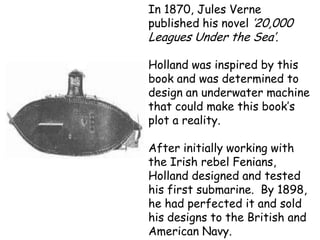
In 1870, Jules Verne
published his novel ’20,000
Leagues Under the Sea’.

Holland was inspired by this
book and was determined to
design an underwater machine
that could make this book’s
plot a reality.

After initially working with
the Irish rebel Fenians,
Holland designed and tested
his first submarine. By 1898,
he had perfected it and sold
his designs to the British and
American Navy.
Weather Facts
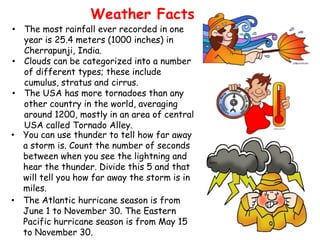
• The most rainfall ever recorded in one
  year is 25.4 meters (1000 inches) in
  Cherrapunji, India.
• Clouds can be categorized into a number
  of different types; these include
  cumulus, stratus and cirrus.
• The USA has more tornadoes than any
  other country in the world, averaging
  around 1200, mostly in an area of central
  USA called Tornado Alley.
• You can use thunder to tell how far away
  a storm is. Count the number of seconds
  between when you see the lightning and
  hear the thunder. Divide this 5 and that
  will tell you how far away the storm is in
  miles.
• The Atlantic hurricane season is from
  June 1 to November 30. The Eastern
  Pacific hurricane season is from May 15
  to November 30.
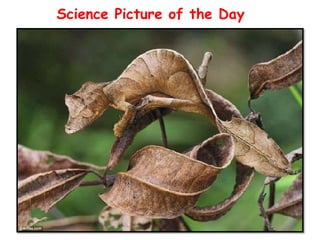
Science Picture of the Day
So – just a bunch of wet leaves for the picture
today…

No! Take a look again! It’s a chameleon in camouflage
as a leaf!

Camouflage are the colours or patterns that help an
animal to ‘hide’ in their surroundings. Most animal
species in the world have developed camouflage that
helps them find food and avoid being attacked by a
predator e.g. the white fox in the North Pole.

Chameleons (like the one on the picture) are able to
change their skin to adapt to wherever they are e.g.
up a tree, in the middle of leaves etc.,

Science Corner, Day 5

  • 1.
  • 2.
    Scientist of theDay John Philip Holland
  • 3.
    John Philip Holland(29 February 1840 – 12 August 1914) was an Irish engineer who developed the first submarine to be formally commissioned by the U.S. Navy, and the first Royal Navy submarine, the Holland 1.
  • 4.
    He was oneof four brothers who may have been born in Liscannor, County Clare, Ireland to an Irish speaking mother, Máire Ní Scannláin, and John Holland As a child, he was very interested in flying and while he was in school in Cork he drew up designs for an aeroplane. A man of many talents, he was also musically gifted. While in Cork he had an excellent science teacher in Brother Dominic Burke, a Limerickvman. Brother Burke encouraged him in his designs for a submarine (rather than an airplane) and as early as 1859 he completed his first drafts for a submarine design, a design he never radically changed.
  • 5.
    In 1870, JulesVerne published his novel ’20,000 Leagues Under the Sea’. Holland was inspired by this book and was determined to design an underwater machine that could make this book’s plot a reality. After initially working with the Irish rebel Fenians, Holland designed and tested his first submarine. By 1898, he had perfected it and sold his designs to the British and American Navy.
  • 8.
    Weather Facts • Themost rainfall ever recorded in one year is 25.4 meters (1000 inches) in Cherrapunji, India. • Clouds can be categorized into a number of different types; these include cumulus, stratus and cirrus. • The USA has more tornadoes than any other country in the world, averaging around 1200, mostly in an area of central USA called Tornado Alley. • You can use thunder to tell how far away a storm is. Count the number of seconds between when you see the lightning and hear the thunder. Divide this 5 and that will tell you how far away the storm is in miles. • The Atlantic hurricane season is from June 1 to November 30. The Eastern Pacific hurricane season is from May 15 to November 30.
  • 10.
  • 11.
    So – justa bunch of wet leaves for the picture today… No! Take a look again! It’s a chameleon in camouflage as a leaf! Camouflage are the colours or patterns that help an animal to ‘hide’ in their surroundings. Most animal species in the world have developed camouflage that helps them find food and avoid being attacked by a predator e.g. the white fox in the North Pole. Chameleons (like the one on the picture) are able to change their skin to adapt to wherever they are e.g. up a tree, in the middle of leaves etc.,