Science Corner!
Day 1
Scientist of the Day

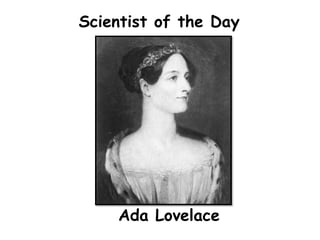
Ada Lovelace
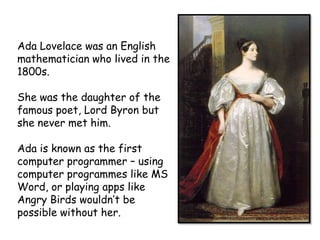
Ada Lovelace was an English
mathematician who lived in the
1800s.

She was the daughter of the
famous poet, Lord Byron but
she never met him.
Ada is known as the first
computer programmer – using
computer programmes like MS
Word, or playing apps like
Angry Birds wouldn’t be
possible without her.
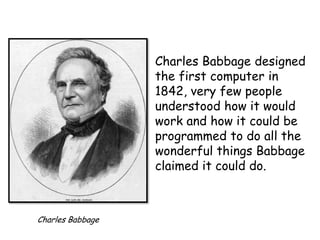
Charles Babbage designed
the first computer in
1842, very few people
understood how it would
work and how it could be
programmed to do all the
wonderful things Babbage
claimed it could do.

Charles Babbage
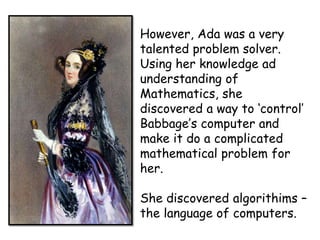
However, Ada was a very
talented problem solver.
Using her knowledge ad
understanding of
Mathematics, she
discovered a way to ‘control’
Babbage’s computer and
make it do a complicated
mathematical problem for
her.

She discovered algorithims –
the language of computers.
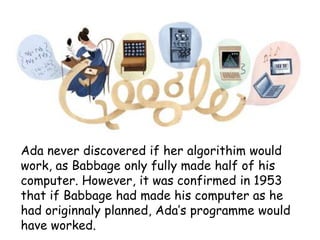
Ada never discovered if her algorithim would
work, as Babbage only fully made half of his
computer. However, it was confirmed in 1953
that if Babbage had made his computer as he
had originnaly planned, Ada’s programme would
have worked.
Animal Facts
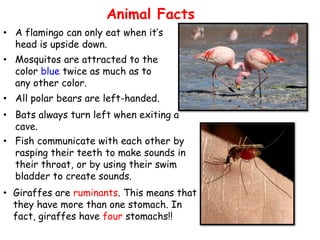
• A flamingo can only eat when it’s
head is upside down.
• Mosquitos are attracted to the
color blue twice as much as to
any other color.
• All polar bears are left-handed.
• Bats always turn left when exiting a
cave.
• Fish communicate with each other by
rasping their teeth to make sounds in
their throat, or by using their swim
bladder to create sounds.
• Giraffes are ruminants. This means that
they have more than one stomach. In
fact, giraffes have four stomachs!!
Science Picture of the Day
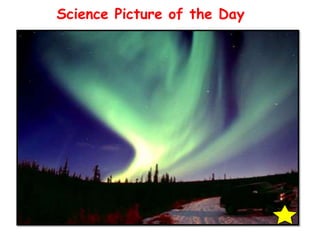
Explanation - Aurora Borealis
Molten iron swirls deep within the Earth, creating a
magnetic field around the planet. If you imagine that
there is a giant bar magnet inside the Earth, the ends are
where the magnetic north and south (or positive and
negative) poles would be.
When solar winds bombard the Earth with ions, these
charged particles move along the magnetic field lines
toward the magnetic poles. When these particles strike
our atmosphere, they erupt in spectacular displays of
light, what we call the auroras.
An Eskimo tale tells us that the lights are sprits in the
sky playing catch with a walrus skull. Another legend
describes the lights as flaming torches carried by
travelers to the afterlife.
Science Picture of the Day
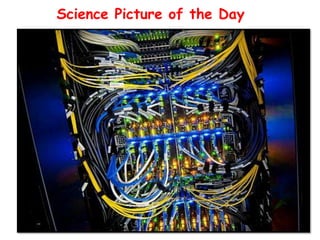
Explanation – Super Computer Gordon

Located at the San Diego Supercomputer Center,
Gordon is a completely new kind of
supercomputer that uses massive amounts of
flash memory (like the memory used in memory
sticks etc.,) to retrieve randomly organized data.
This new and unique type of programming
employed by Gordon is used by scientists whose
research requires the mining, searching and/or
creating of large databases for immediate or
later use. Databases Gordon could be used for
include mapping genomes, stock markets, and
population information.

Science Corner, Day 1

  • 1.
  • 2.
    Scientist of theDay Ada Lovelace
  • 3.
    Ada Lovelace wasan English mathematician who lived in the 1800s. She was the daughter of the famous poet, Lord Byron but she never met him. Ada is known as the first computer programmer – using computer programmes like MS Word, or playing apps like Angry Birds wouldn’t be possible without her.
  • 4.
    Charles Babbage designed thefirst computer in 1842, very few people understood how it would work and how it could be programmed to do all the wonderful things Babbage claimed it could do. Charles Babbage
  • 5.
    However, Ada wasa very talented problem solver. Using her knowledge ad understanding of Mathematics, she discovered a way to ‘control’ Babbage’s computer and make it do a complicated mathematical problem for her. She discovered algorithims – the language of computers.
  • 6.
    Ada never discoveredif her algorithim would work, as Babbage only fully made half of his computer. However, it was confirmed in 1953 that if Babbage had made his computer as he had originnaly planned, Ada’s programme would have worked.
  • 7.
    Animal Facts • Aflamingo can only eat when it’s head is upside down. • Mosquitos are attracted to the color blue twice as much as to any other color. • All polar bears are left-handed. • Bats always turn left when exiting a cave. • Fish communicate with each other by rasping their teeth to make sounds in their throat, or by using their swim bladder to create sounds. • Giraffes are ruminants. This means that they have more than one stomach. In fact, giraffes have four stomachs!!
  • 8.
  • 9.
    Explanation - AuroraBorealis Molten iron swirls deep within the Earth, creating a magnetic field around the planet. If you imagine that there is a giant bar magnet inside the Earth, the ends are where the magnetic north and south (or positive and negative) poles would be. When solar winds bombard the Earth with ions, these charged particles move along the magnetic field lines toward the magnetic poles. When these particles strike our atmosphere, they erupt in spectacular displays of light, what we call the auroras. An Eskimo tale tells us that the lights are sprits in the sky playing catch with a walrus skull. Another legend describes the lights as flaming torches carried by travelers to the afterlife.
  • 10.
  • 11.
    Explanation – SuperComputer Gordon Located at the San Diego Supercomputer Center, Gordon is a completely new kind of supercomputer that uses massive amounts of flash memory (like the memory used in memory sticks etc.,) to retrieve randomly organized data. This new and unique type of programming employed by Gordon is used by scientists whose research requires the mining, searching and/or creating of large databases for immediate or later use. Databases Gordon could be used for include mapping genomes, stock markets, and population information.

Editor's Notes

  • #9 Aurora borealis: Molten iron swirling deep within the Earth creates a magnetic field around the planet. If you can imagine a giant bar magnet inside the Earth, the ends are where the magnetic north and south (or positive and negative) poles would be.When solar winds bombard the Earth with ions, these charged particles move along the magnetic field lines toward the magnetic poles. When these particles strike our atmosphere, they erupt in spectacular displays of light, what we call the auroras.An Eskimo tale tells us that the lights are sprits in the sky playing catch with a walrus skull. Another legend describes the lights as flaming torches carried by travelers to the afterlife. http://video.nationalgeographic.com/video/news/environment-news/norway-aurora-borealis-vin/