Effects of Caffeine on Muscular Endurance
Blake Leisenring
KIN 4023 Biomechanical Analysis
Department of Kinesiology and Leisure Studies
Dr. Terry DeWitt
Abstract
The purpose of the study was to determine
if caffeine causes a performance
improvement in maximal bench press
repetitions.
Caffeine is ingested by athletes and the
physically active around the world because
of its effects on alertness and mental acuity.
Research also suggests that caffeine can
moderate fatigue and boost exertion, thus,
leading to overall performance
enhancements during endurance-based
aerobic exercise. This research project
tested these claims specifically associated
with a maximum repetition bench press test.
Objectives
Hypotheses
Caffeine will have a positive effect on
muscular endurance resulting in participants
performing a higher number of bench press
repetitions.
Goals
- Determine if caffeine has a positive
effect on maximum repetition bench
press performance .
- Determine if caffeine has a negative
effect on maximum repetition bench
press performance.
- Determine if caffeine has no effect on
maximum repetition bench press
performance.
Methods
Results
Conclusion
References
1. Duncan, M. J.; & Oxford, S. W. (2009). Effect of
Caffeine on Sport-Specific Endurance
Performance: A Systematic Review. Journal of
Strength and Conditioning Research (Lippincott
Williams & Wilkins), 23 (1), 315 – 324
2. Duncan, M. J.; & Oxford, Samuel W (2011). The
Effect of Caffeine Ingestion on Mood State and
Bench Press Performance to Failure. Journal of
Strength & Conditioning Research (Lippincott
Williams & Wilkins), 25 (1), 178–185
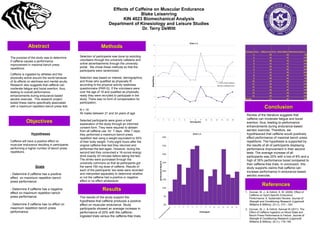
The results of the study support the
hypothesis that caffeine produces a positive
effect on muscular endurance. Study
participants showed an average increase in
performance of 20% with the caffeine-
ingested trials versus the caffeine-free trials.
Selection of participants was done by soliciting
volunteers through the university cafeteria and
online advertisements through the university
portal. We chose these methods so that the
participants were randomized.
Selection was based on interest, demographics,
and those who qualified as physically fit
according to the physical activity readiness
questionnaire (PAR-Q). If the volunteers were
over the age of 18 and qualified as physically
ready they were recruited to participate in the
study. There was no form of compensation for
participation.
N = 15
All males between 21 and 24 years of age.
Selected participants were given a brief
explanation of the study through an informed
consent form. They were required to abstain
from all caffeine use for 7 days. After 7 days,
they performed a maximum bench press
repetition test using a weight equivalent to 50%
of their body weight. Forty-eight hours after the
original caffeine-free test they returned and
performed the test again. However, during the
second test they consumed a 16-ounce energy
drink exactly 20 minutes before taking the test.
The drinks were purchased through the
university commons so that all participants got
the same 160 mg dose of caffeine. Results of
each of the participants’ two tests were recorded
and interpreted separately to determine whether
or not the caffeine had a positive or negative
effect or no effect whatsoever.
Review of the literature suggests that
caffeine can moderate fatigue and boost
exertion, thus, leading to performance
enhancements during endurance-based
aerobic exercise. Therefore, we
hypothesized that caffeine would positively
effect performance of maximal bench press
repetitions. The hypothesis is supported by
the results of all of participants displaying
performance improvement in their second
tests. The average increase of all
participants was 20% with a low of 8% and a
high of 35% performance boost compared to
their caffeine-free trials. In conclusion, this
study supports claims that caffeine can
increase performance in endurance-based
aerobic exercise.
Participant Trial 1 - Caffeine Free Trial 2 - With Caffeine Performance Boost %
1 39 42 8%
2 41 47 15%
3 38 47 24%
4 51 57 12%
5 45 55 22%
6 36 48 33%
7 31 42 35%
8 33 40 21%
9 60 65 8%
10 42 49 17%
11 39 47 21%
12 33 37 12%
13 30 40 33%
14 45 53 18%
15 50 58 16%
Average 41 48 20%
0
20
40
60
80
100
120
140
1 2 3 4 5 6 7 8 9 10 11 12 13 14 15
Repetitions
Participants
Chart 1.1
Trial 2 With Caffeine
Trial 1 Caffeine Free
0%
5%
10%
15%
20%
25%
30%
35%
40%
performanceBoost%
Participant
Chart 1.2

Scholars day poster

  • 1.
    Effects of Caffeineon Muscular Endurance Blake Leisenring KIN 4023 Biomechanical Analysis Department of Kinesiology and Leisure Studies Dr. Terry DeWitt Abstract The purpose of the study was to determine if caffeine causes a performance improvement in maximal bench press repetitions. Caffeine is ingested by athletes and the physically active around the world because of its effects on alertness and mental acuity. Research also suggests that caffeine can moderate fatigue and boost exertion, thus, leading to overall performance enhancements during endurance-based aerobic exercise. This research project tested these claims specifically associated with a maximum repetition bench press test. Objectives Hypotheses Caffeine will have a positive effect on muscular endurance resulting in participants performing a higher number of bench press repetitions. Goals - Determine if caffeine has a positive effect on maximum repetition bench press performance . - Determine if caffeine has a negative effect on maximum repetition bench press performance. - Determine if caffeine has no effect on maximum repetition bench press performance. Methods Results Conclusion References 1. Duncan, M. J.; & Oxford, S. W. (2009). Effect of Caffeine on Sport-Specific Endurance Performance: A Systematic Review. Journal of Strength and Conditioning Research (Lippincott Williams & Wilkins), 23 (1), 315 – 324 2. Duncan, M. J.; & Oxford, Samuel W (2011). The Effect of Caffeine Ingestion on Mood State and Bench Press Performance to Failure. Journal of Strength & Conditioning Research (Lippincott Williams & Wilkins), 25 (1), 178–185 The results of the study support the hypothesis that caffeine produces a positive effect on muscular endurance. Study participants showed an average increase in performance of 20% with the caffeine- ingested trials versus the caffeine-free trials. Selection of participants was done by soliciting volunteers through the university cafeteria and online advertisements through the university portal. We chose these methods so that the participants were randomized. Selection was based on interest, demographics, and those who qualified as physically fit according to the physical activity readiness questionnaire (PAR-Q). If the volunteers were over the age of 18 and qualified as physically ready they were recruited to participate in the study. There was no form of compensation for participation. N = 15 All males between 21 and 24 years of age. Selected participants were given a brief explanation of the study through an informed consent form. They were required to abstain from all caffeine use for 7 days. After 7 days, they performed a maximum bench press repetition test using a weight equivalent to 50% of their body weight. Forty-eight hours after the original caffeine-free test they returned and performed the test again. However, during the second test they consumed a 16-ounce energy drink exactly 20 minutes before taking the test. The drinks were purchased through the university commons so that all participants got the same 160 mg dose of caffeine. Results of each of the participants’ two tests were recorded and interpreted separately to determine whether or not the caffeine had a positive or negative effect or no effect whatsoever. Review of the literature suggests that caffeine can moderate fatigue and boost exertion, thus, leading to performance enhancements during endurance-based aerobic exercise. Therefore, we hypothesized that caffeine would positively effect performance of maximal bench press repetitions. The hypothesis is supported by the results of all of participants displaying performance improvement in their second tests. The average increase of all participants was 20% with a low of 8% and a high of 35% performance boost compared to their caffeine-free trials. In conclusion, this study supports claims that caffeine can increase performance in endurance-based aerobic exercise. Participant Trial 1 - Caffeine Free Trial 2 - With Caffeine Performance Boost % 1 39 42 8% 2 41 47 15% 3 38 47 24% 4 51 57 12% 5 45 55 22% 6 36 48 33% 7 31 42 35% 8 33 40 21% 9 60 65 8% 10 42 49 17% 11 39 47 21% 12 33 37 12% 13 30 40 33% 14 45 53 18% 15 50 58 16% Average 41 48 20% 0 20 40 60 80 100 120 140 1 2 3 4 5 6 7 8 9 10 11 12 13 14 15 Repetitions Participants Chart 1.1 Trial 2 With Caffeine Trial 1 Caffeine Free 0% 5% 10% 15% 20% 25% 30% 35% 40% performanceBoost% Participant Chart 1.2