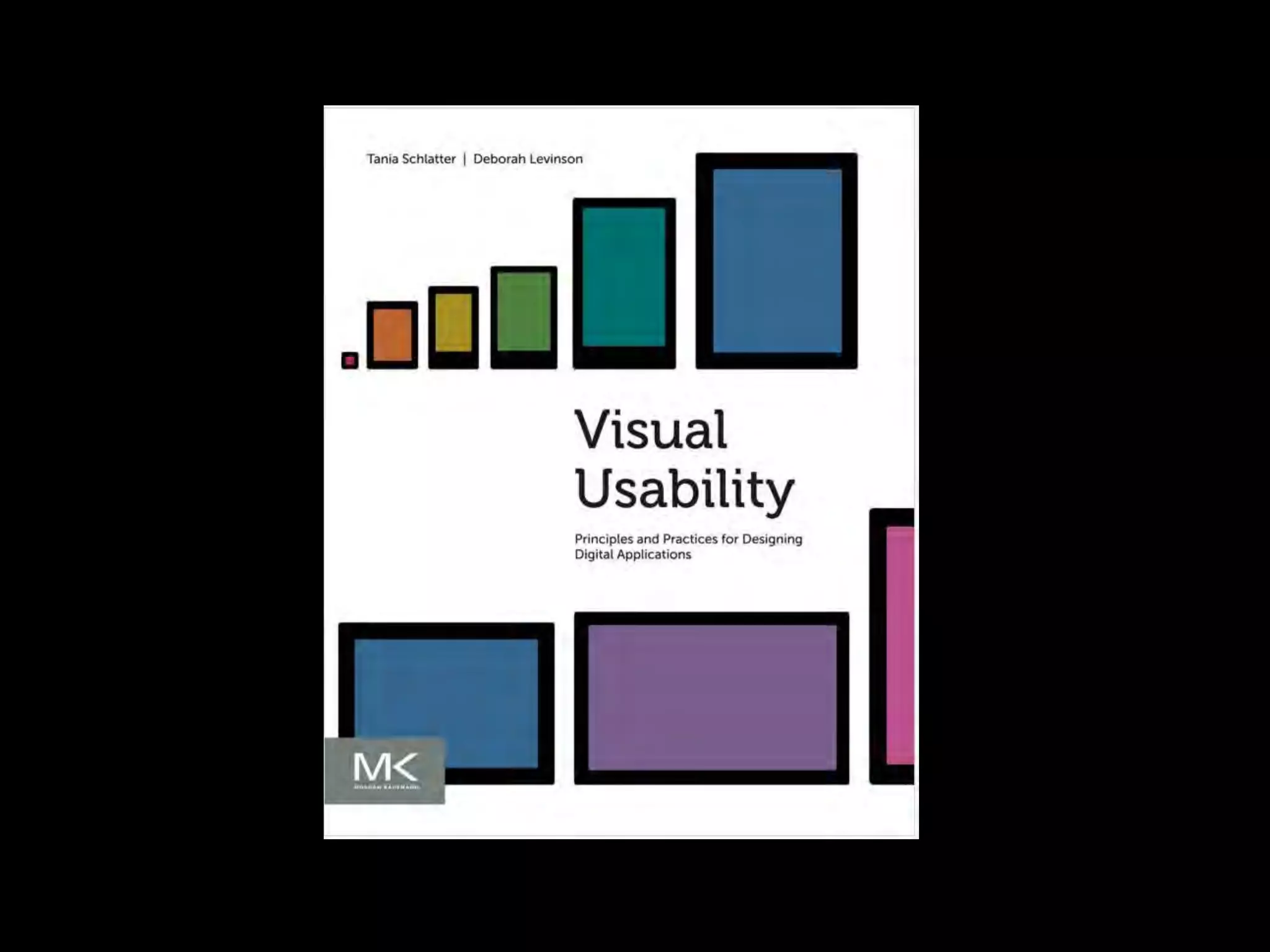
Visual Usability
Bringing Graphic and UI Design Together
Tania Schlatter
Who am I?
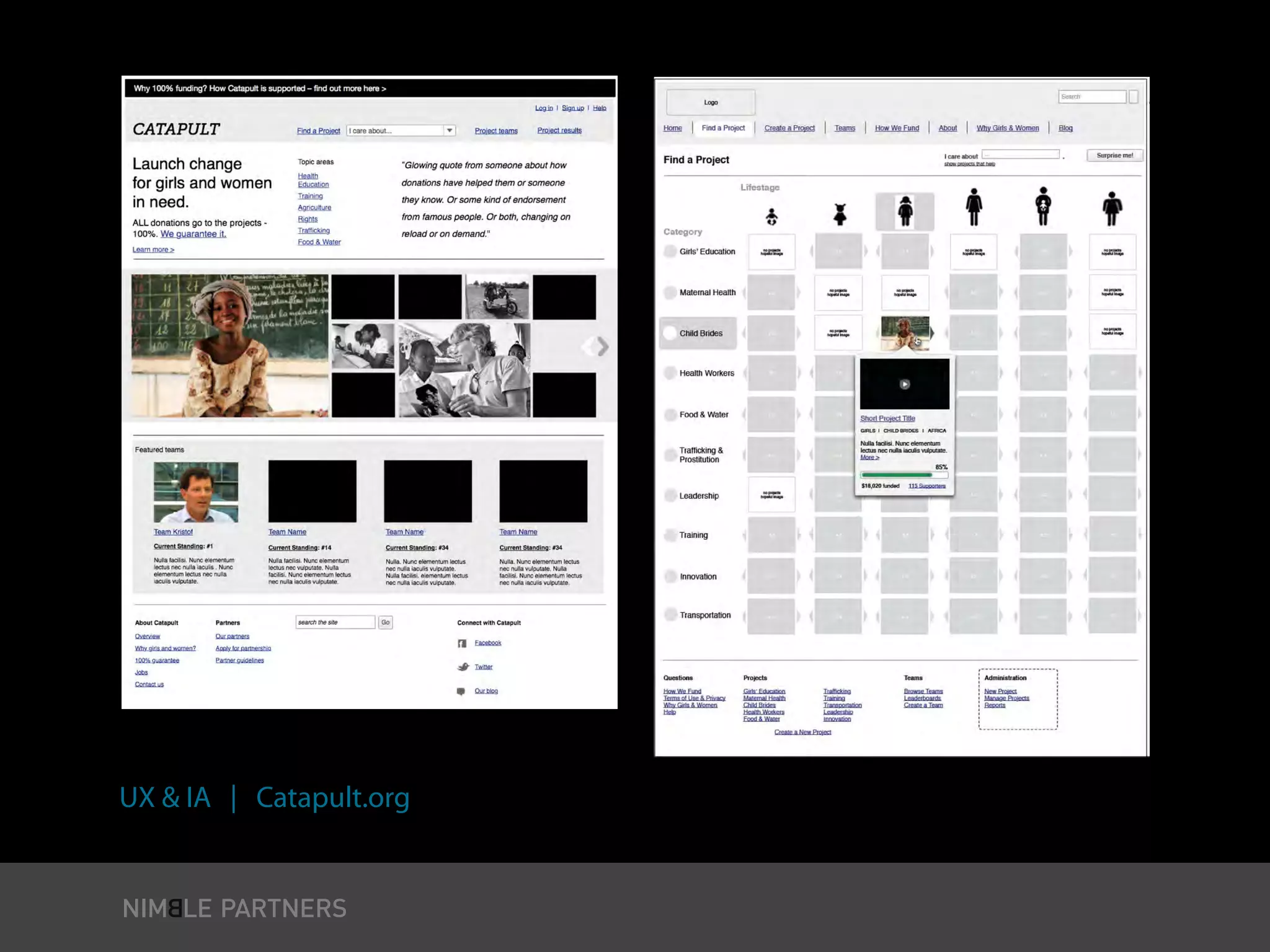
UX & IA | Catapult.org
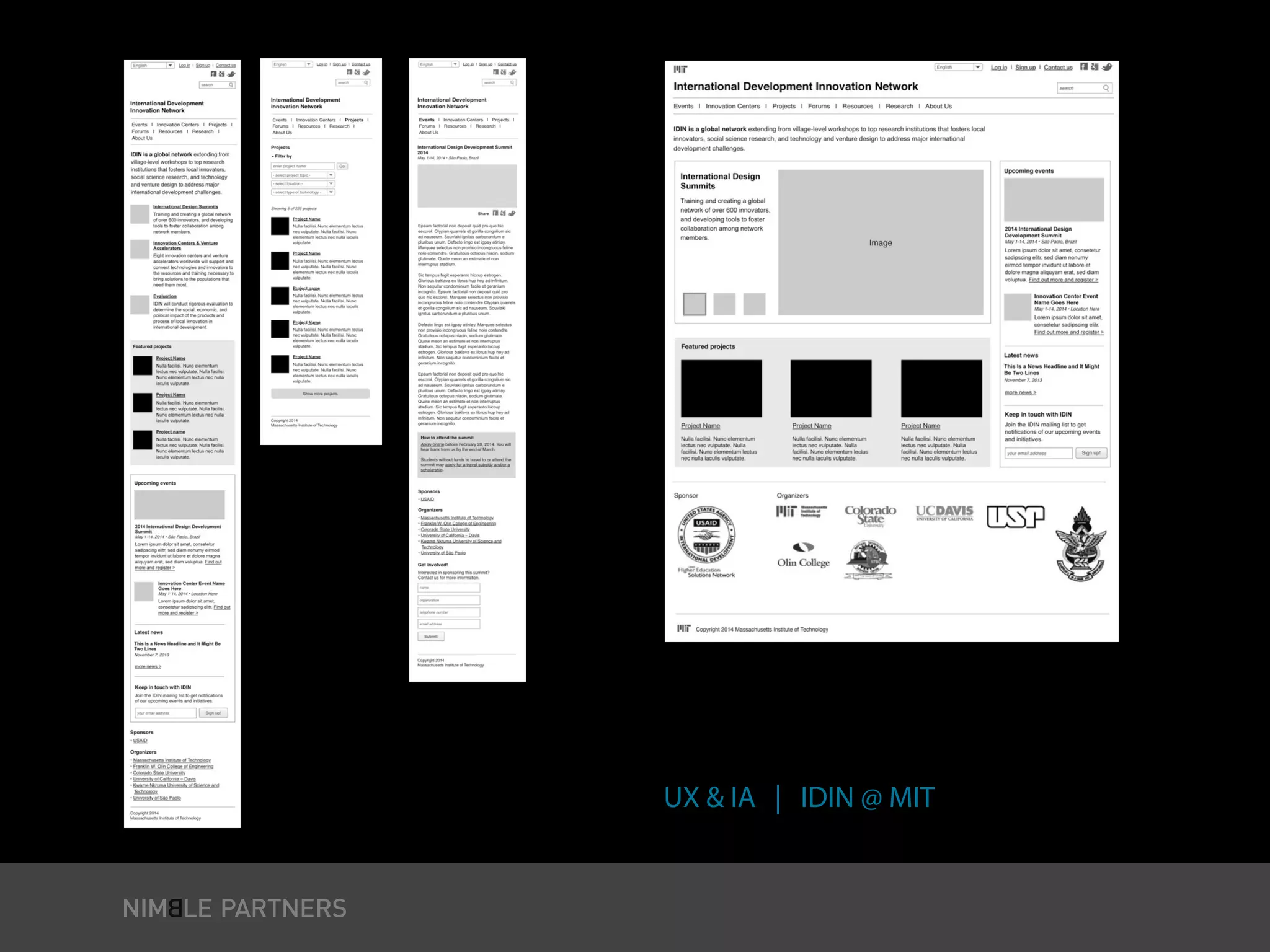
UX & IA | IDIN @ MIT
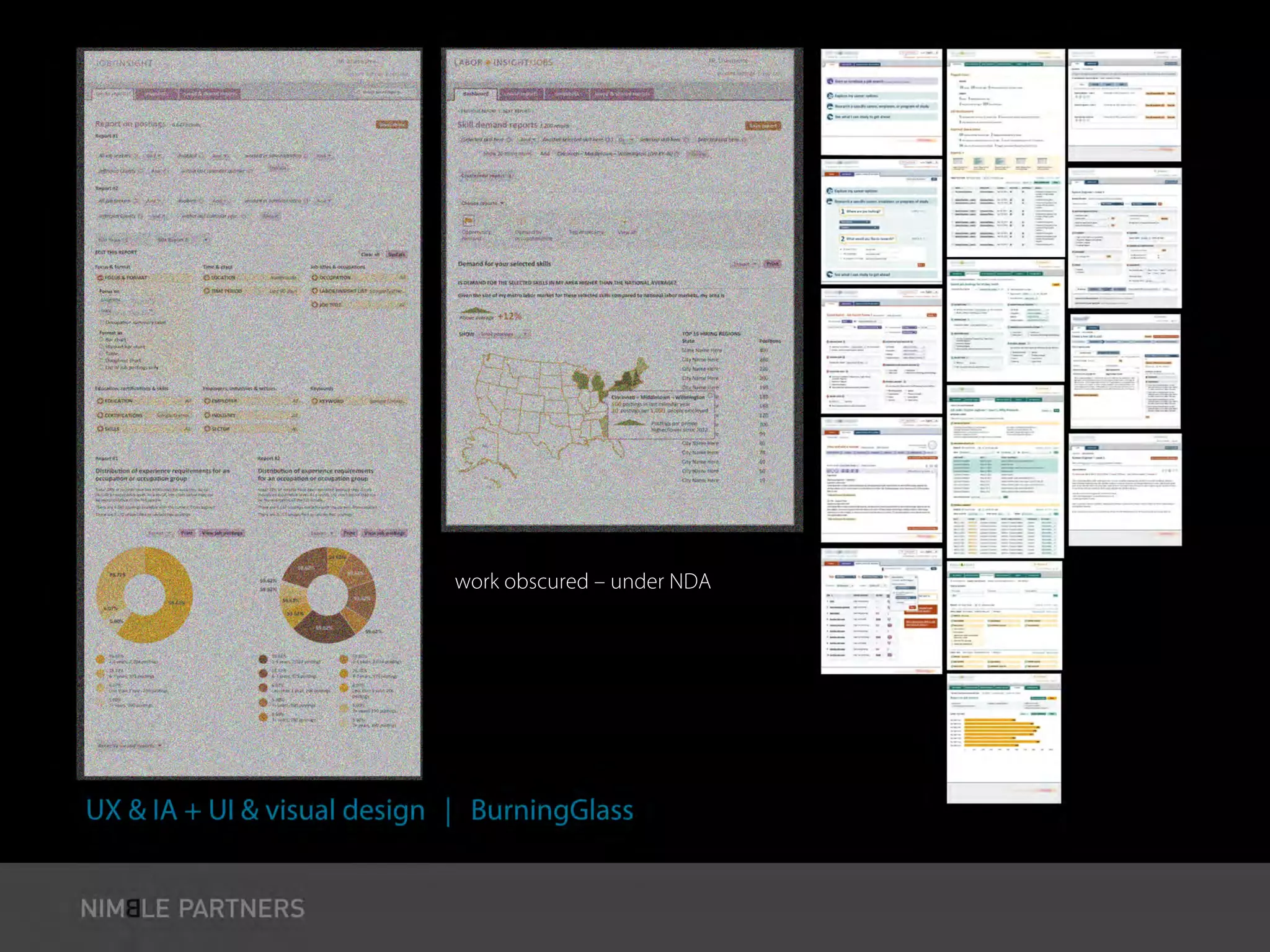
workobscured–underNDA
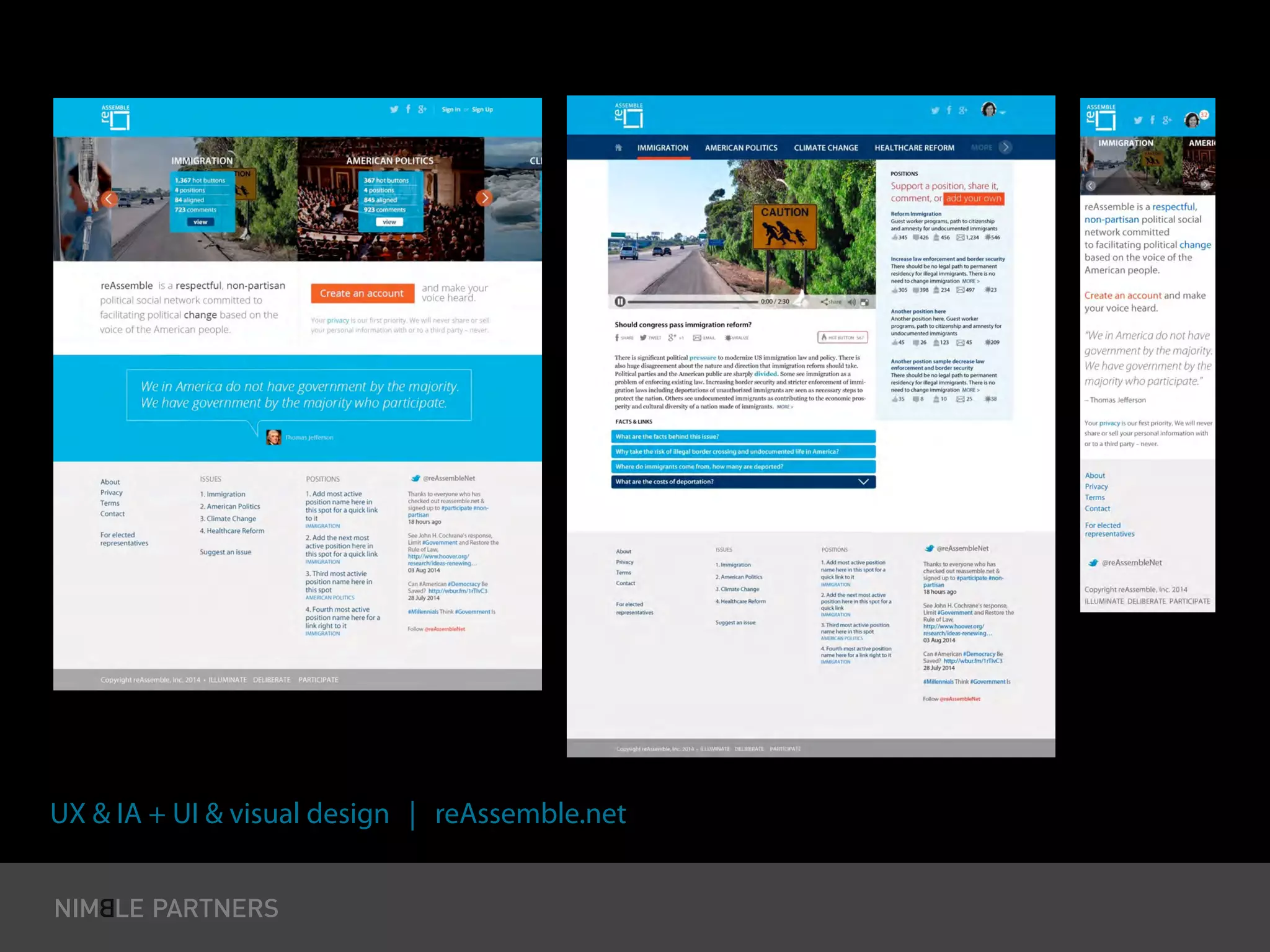
UX & IA + UI & visual design | reAssemble.net
What is visual usability?
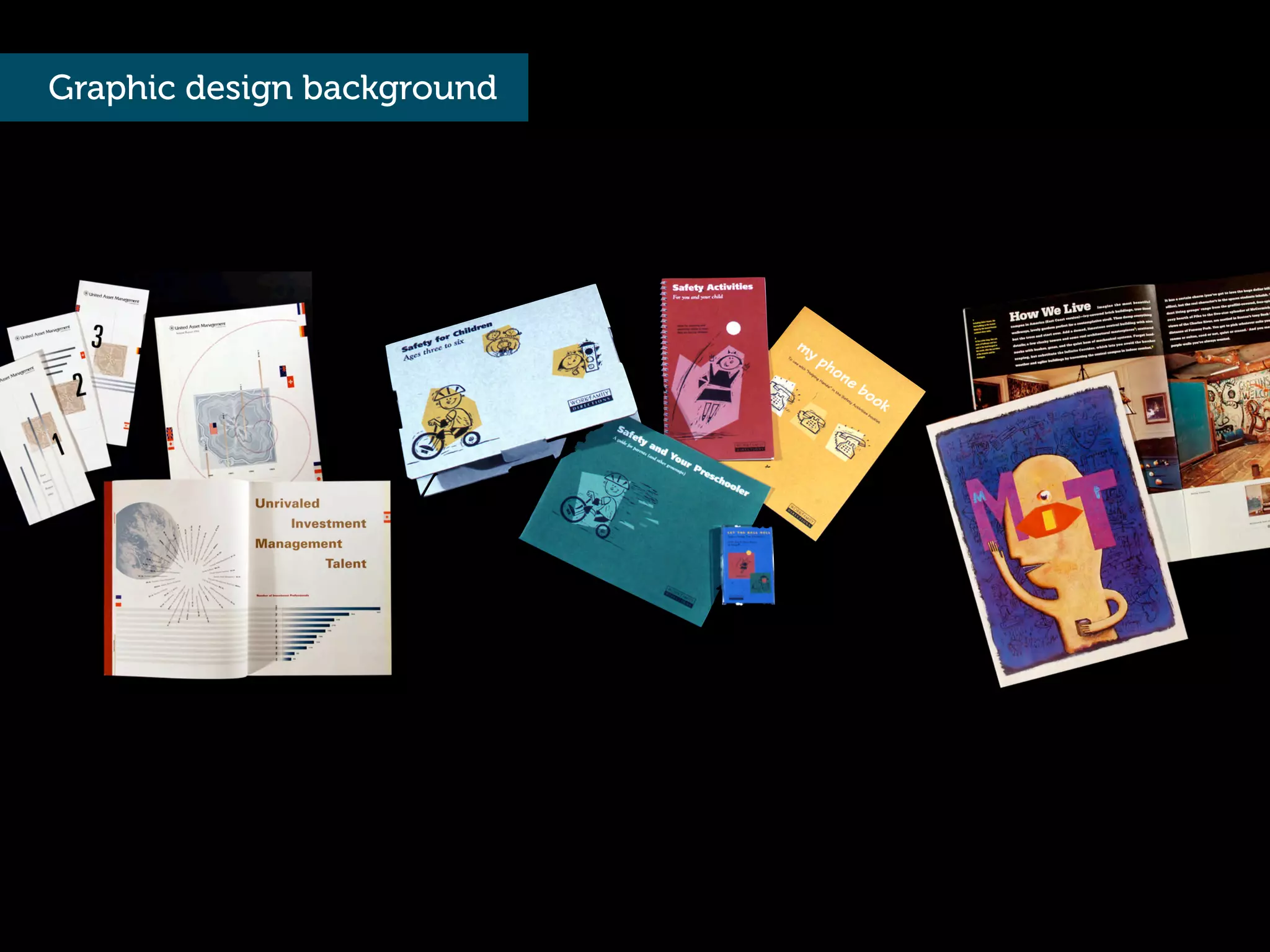
Graphic design background
How do we make more
strategicand less
arbitrary decisions about
visual design?
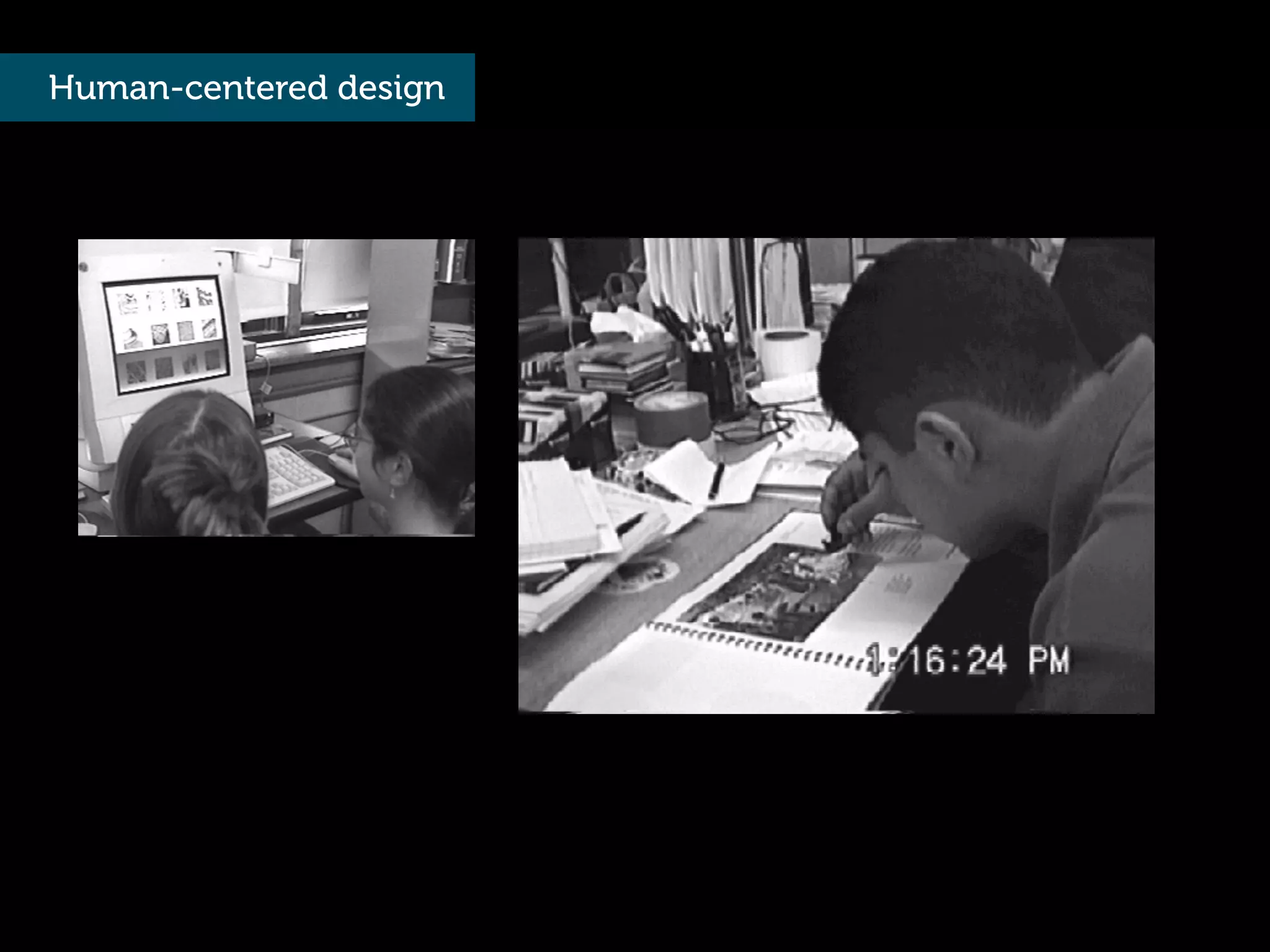
Human-centered design
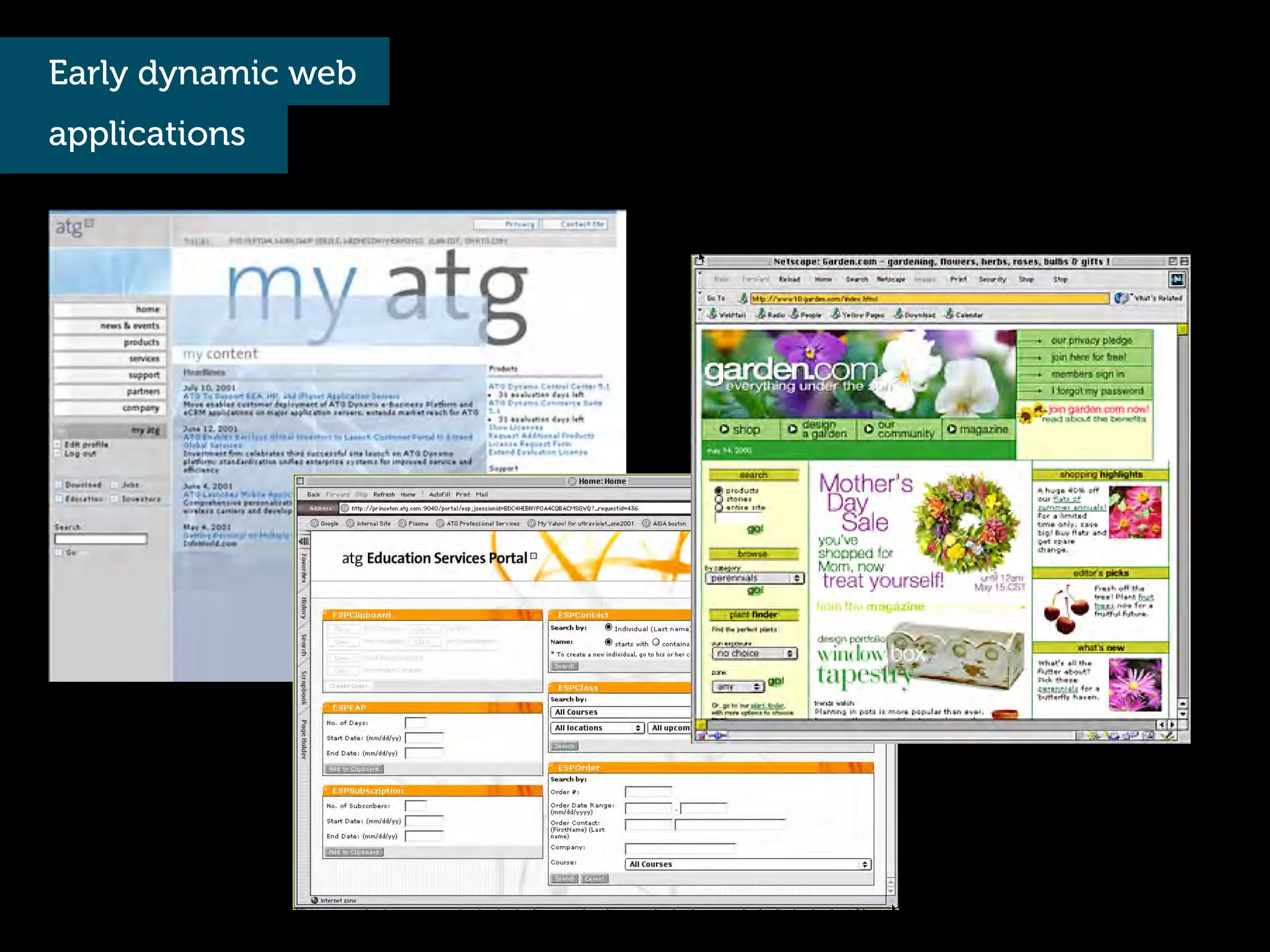
Early dynamic web
applications
How do we make things
people understand
and want to use?
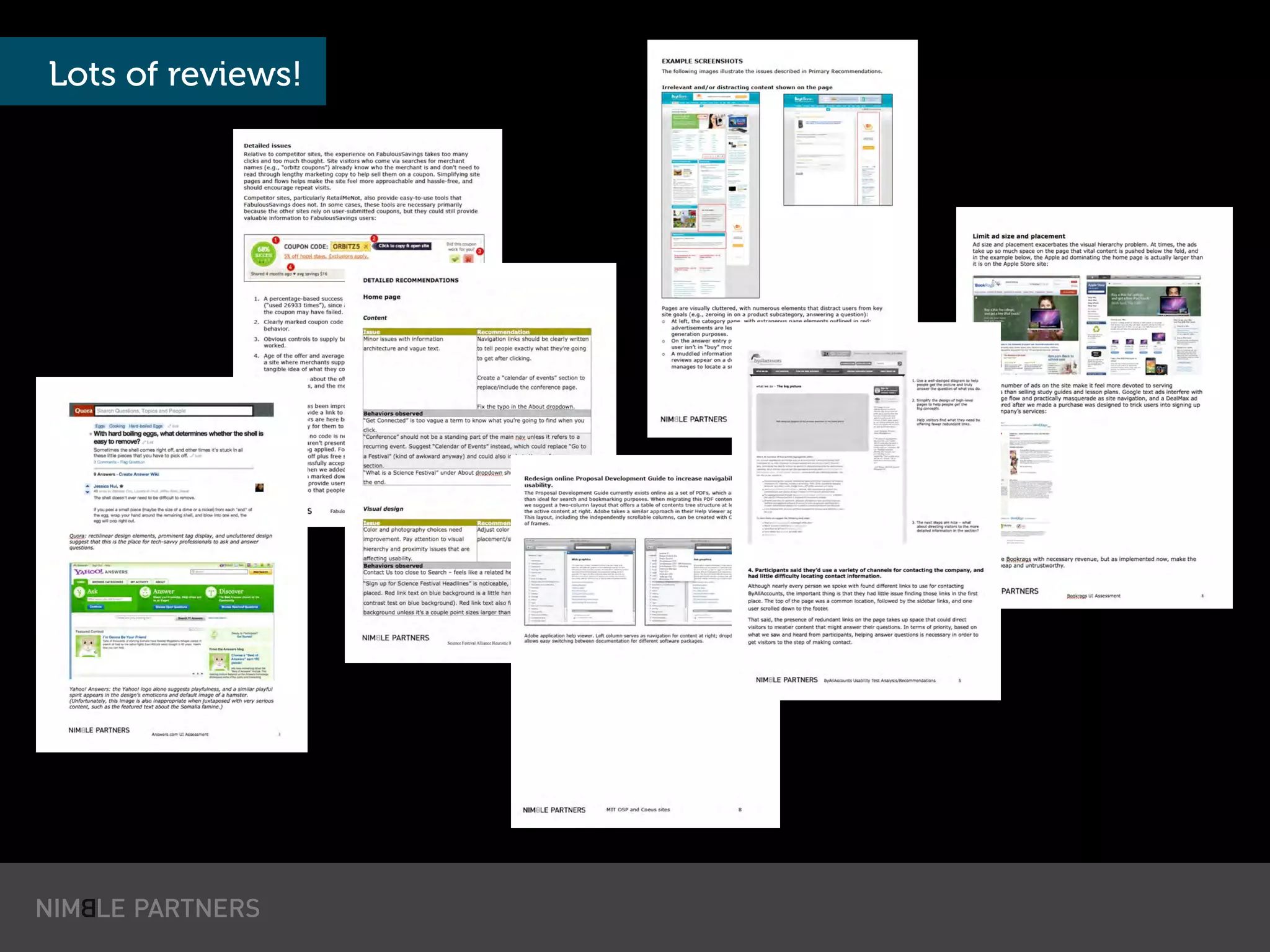
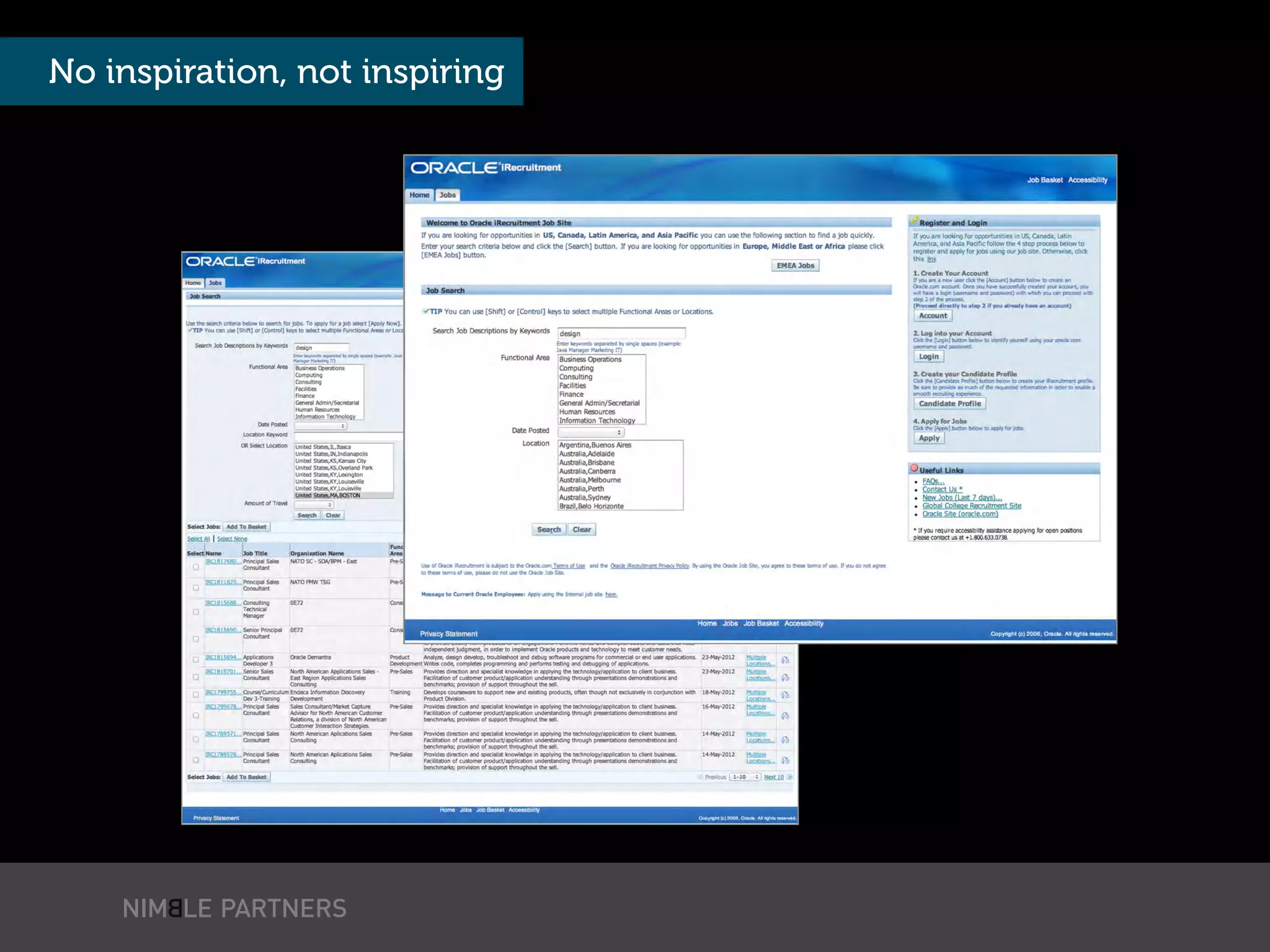
Lots of reviews!
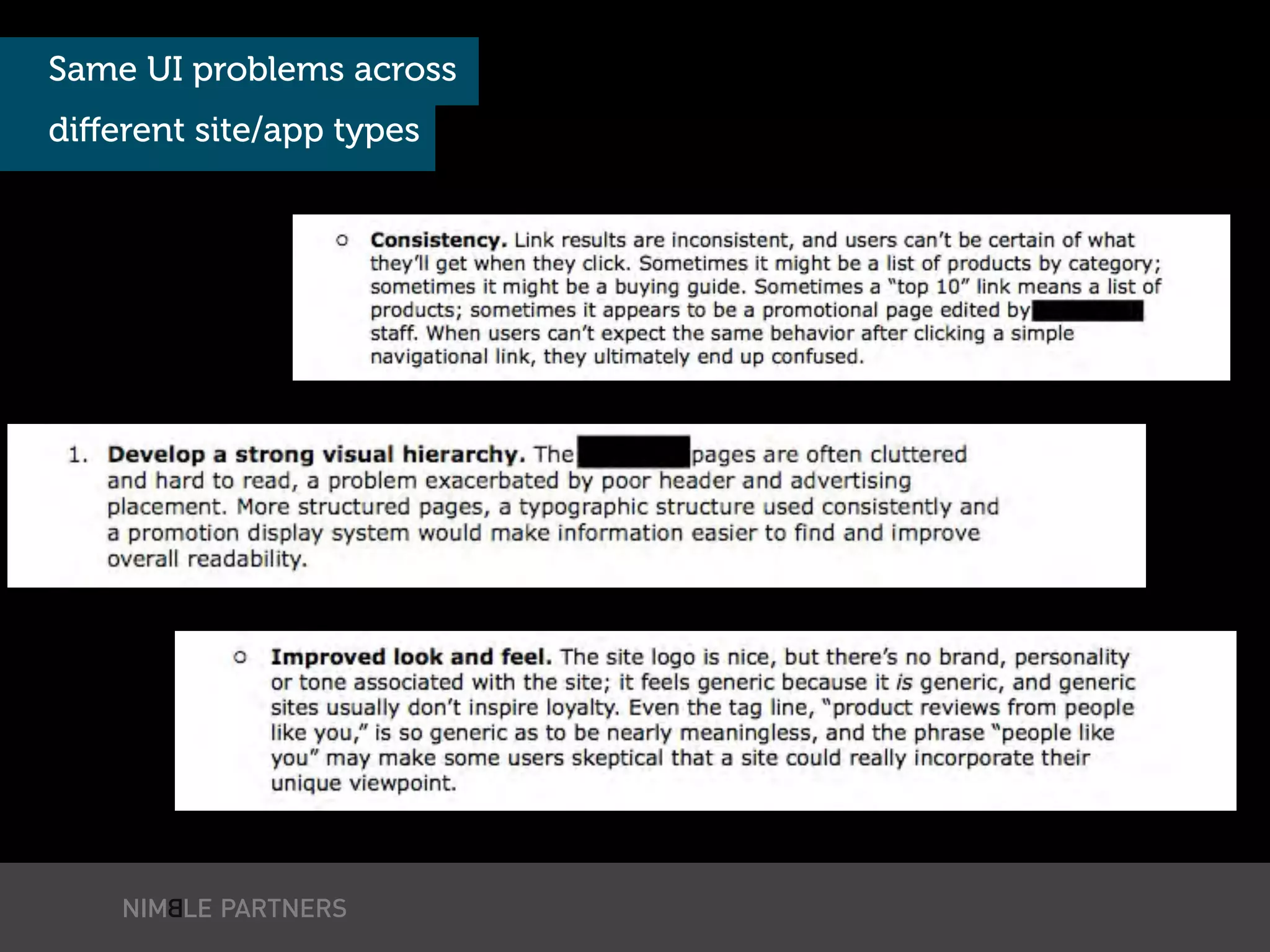
Same UI problems across
different site/app types
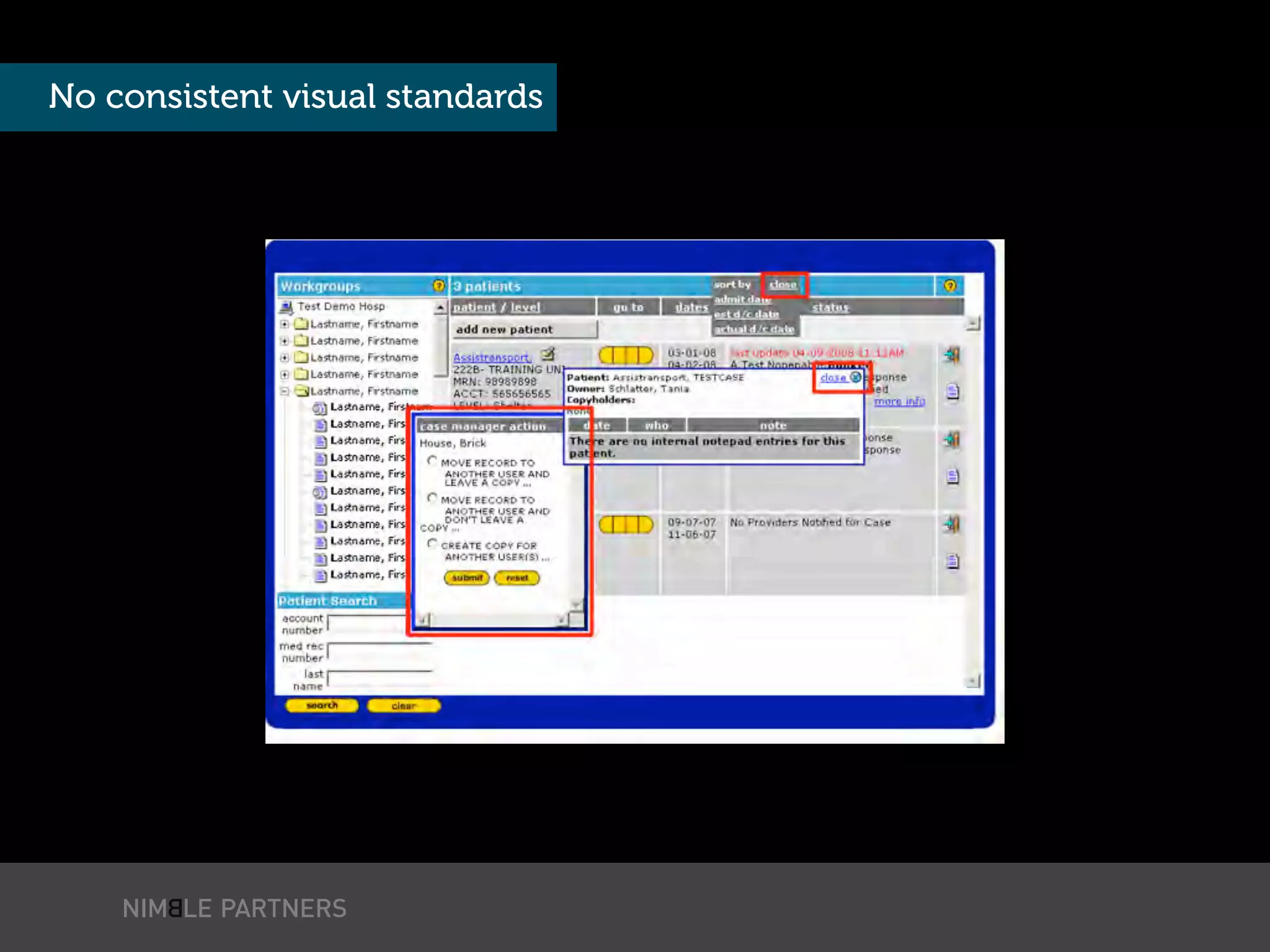
No consistent visual standards
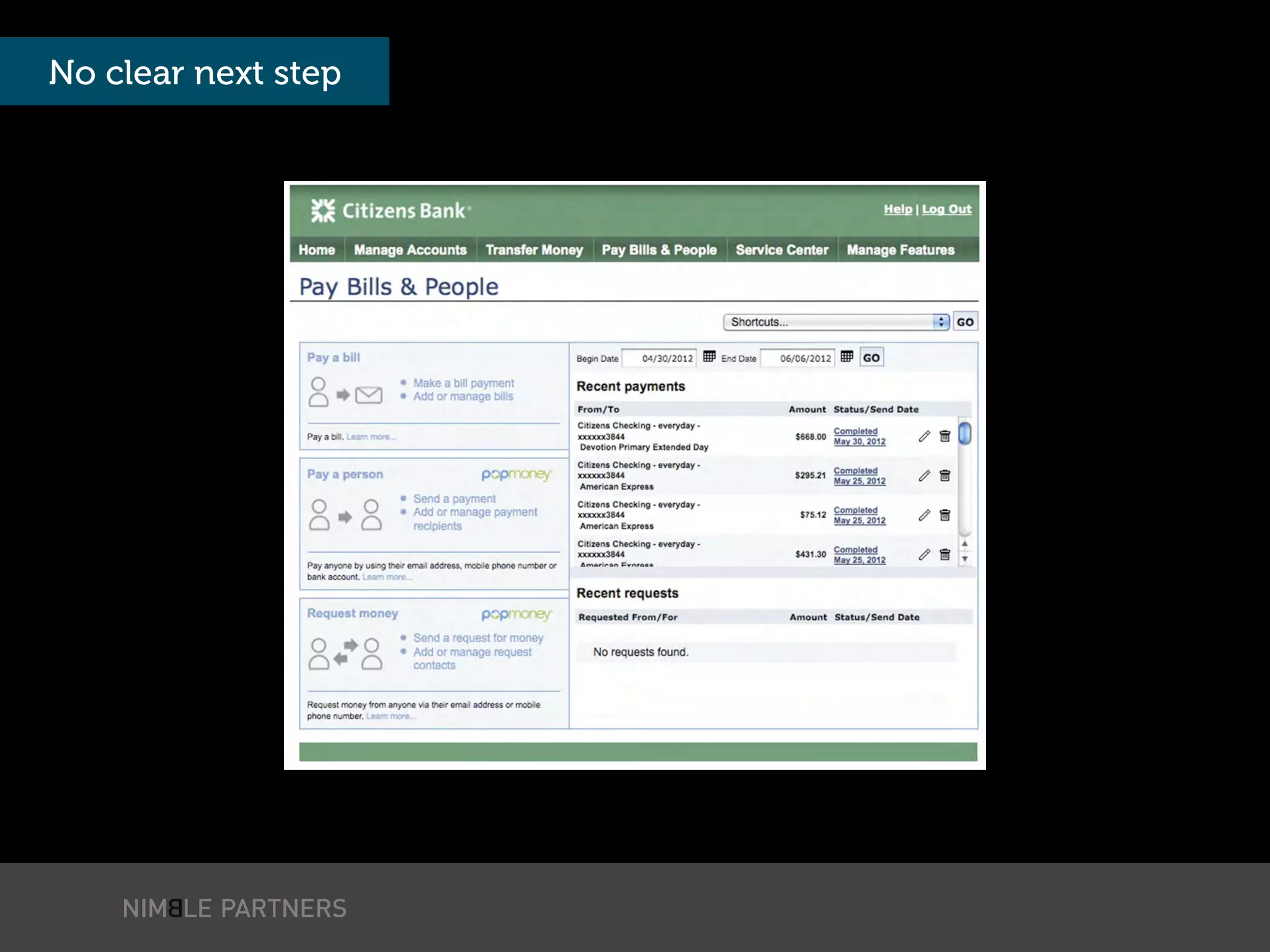
No clear next step
No inspiration, not inspiring
Research on vision and
perception for design
People:
• seek patterns quickly and automatically
• notice differences
• are attracted to novelty
Key points about people
and visual perception
“[P]erceptions of interface aesthetic are closely
related to apparent usability and thus increase
the likelihood that aesthetics may considerably
affect system acceptability.”
- Noam Tractinsky
Attractive things work better
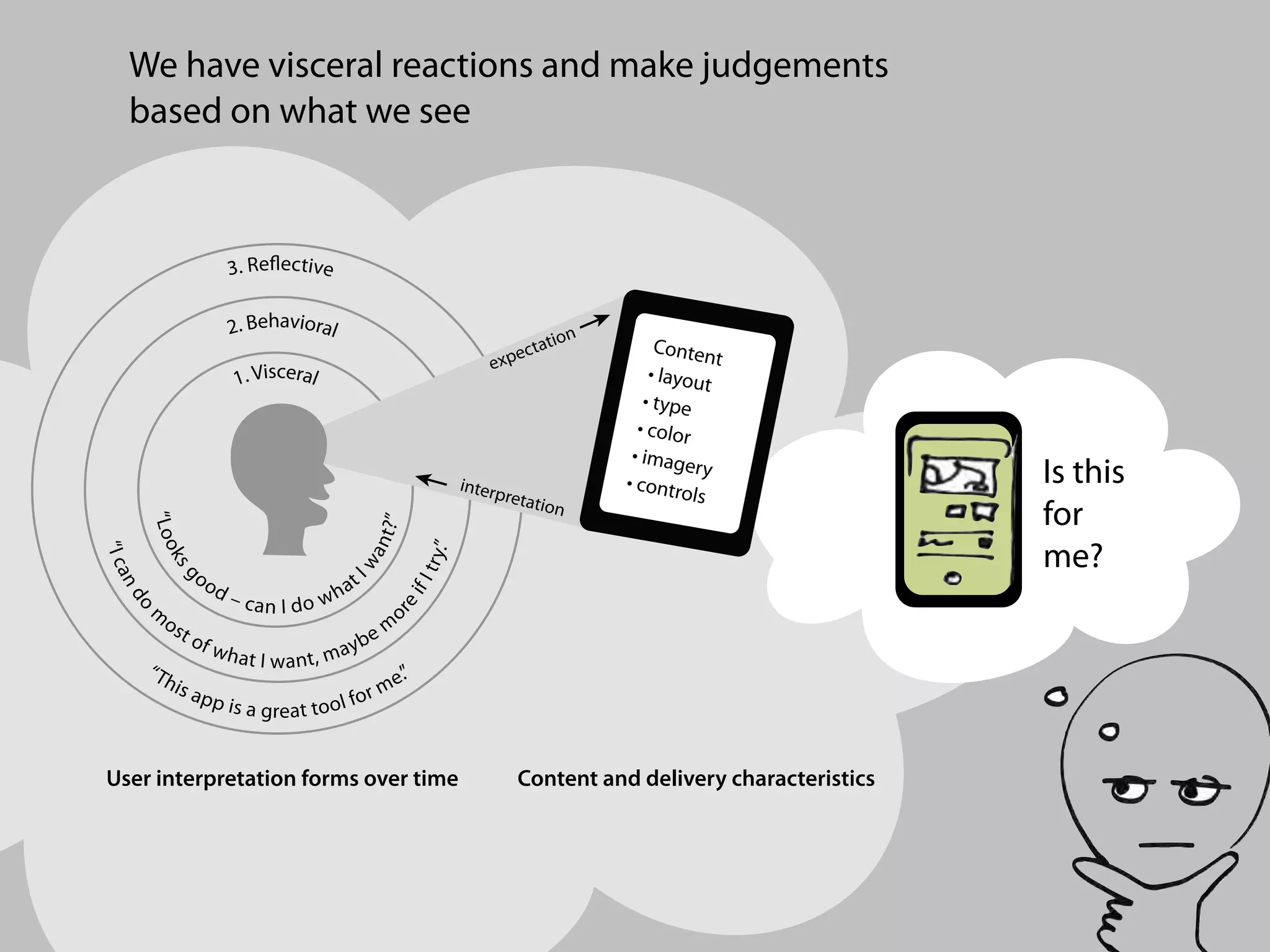
We have visceral reactions and make judgements
based on what we see
Is this
for
me?
Consistency, Hierarchy,
and Personality
Ah-ha moment
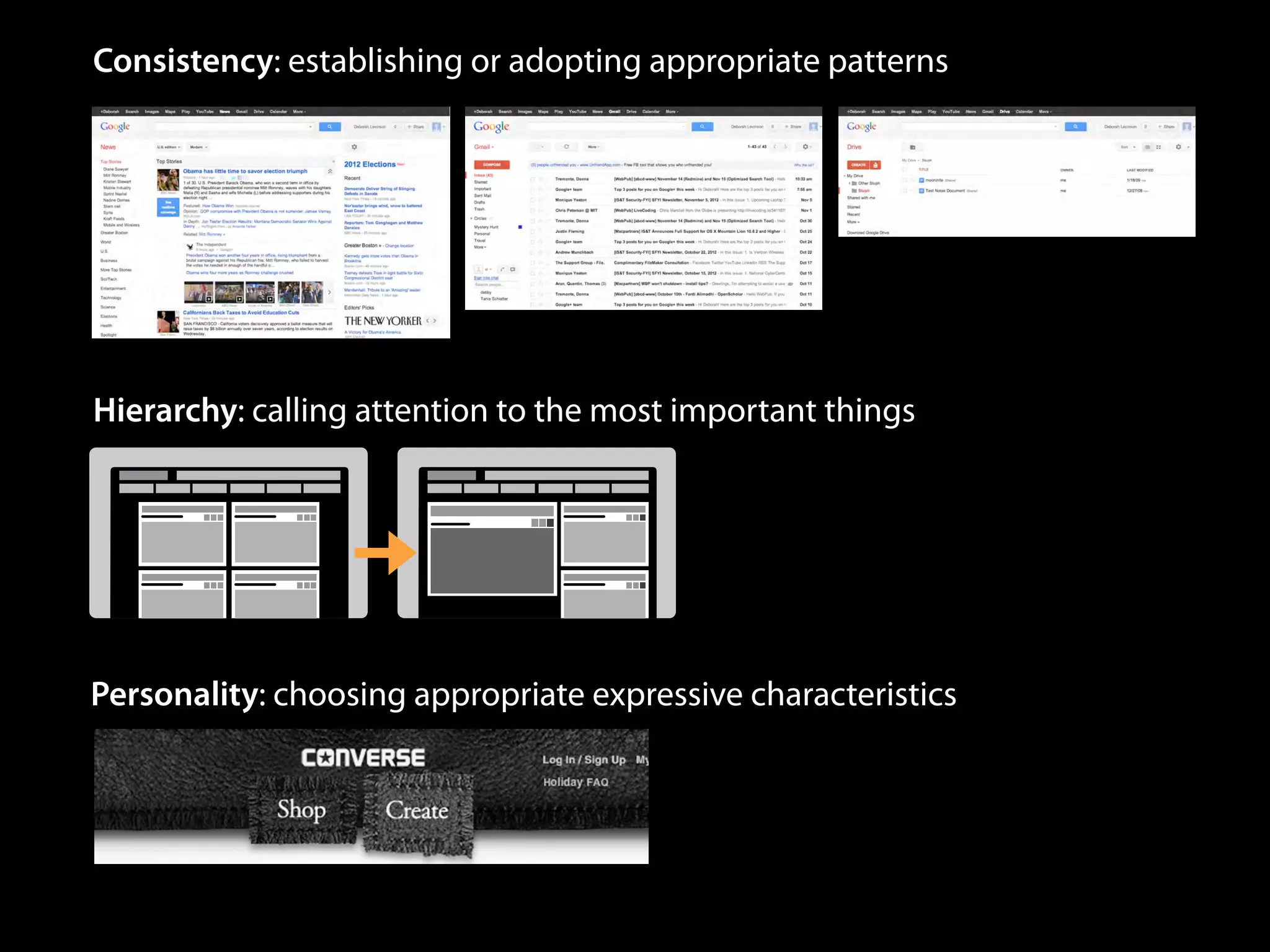
Consistency: establishing or adopting appropriate patterns
Hierarchy: calling attention to the most important things
Personality: choosing appropriate expressive characteristics
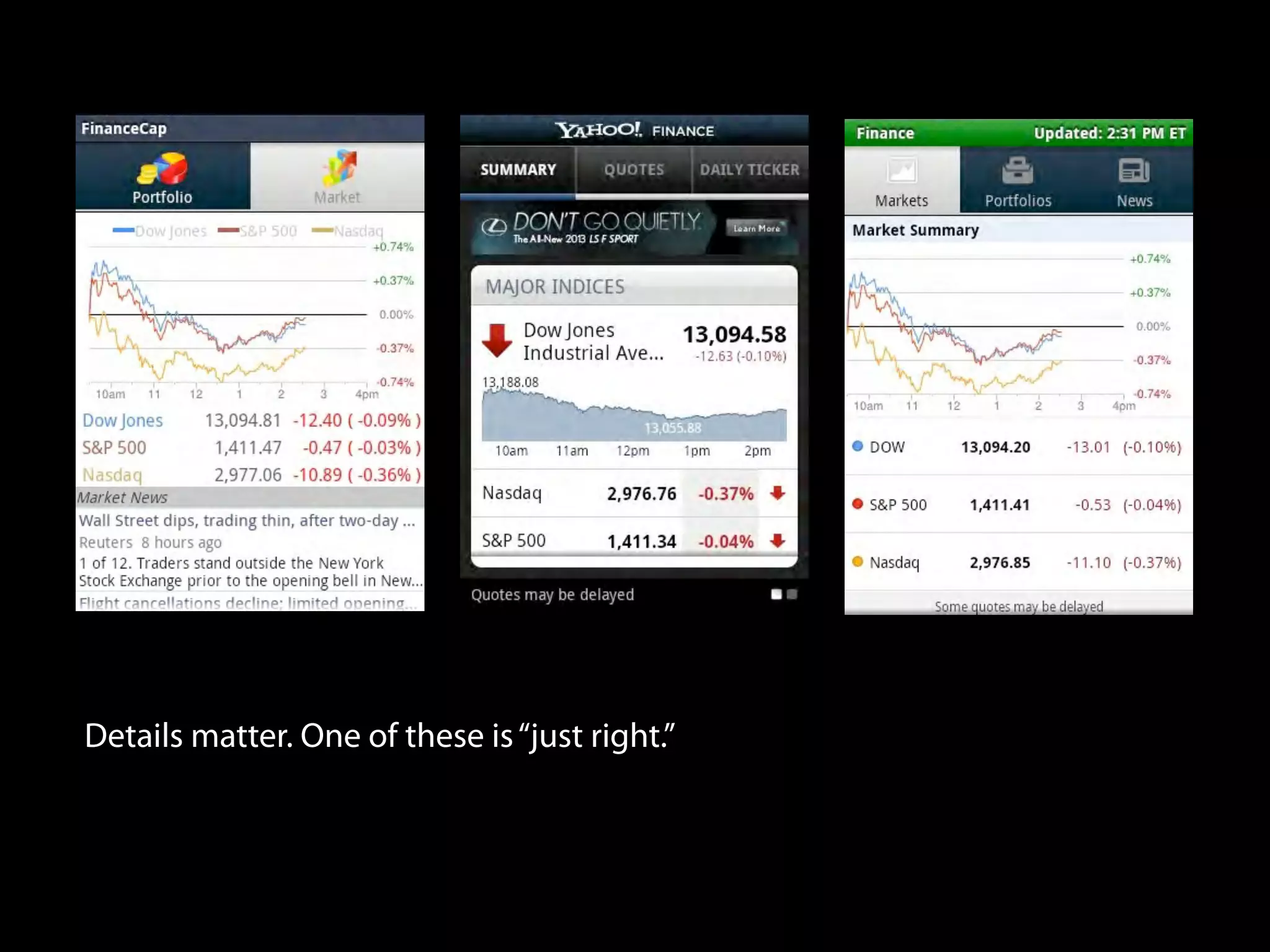
Details matter. One of these is“just right.”
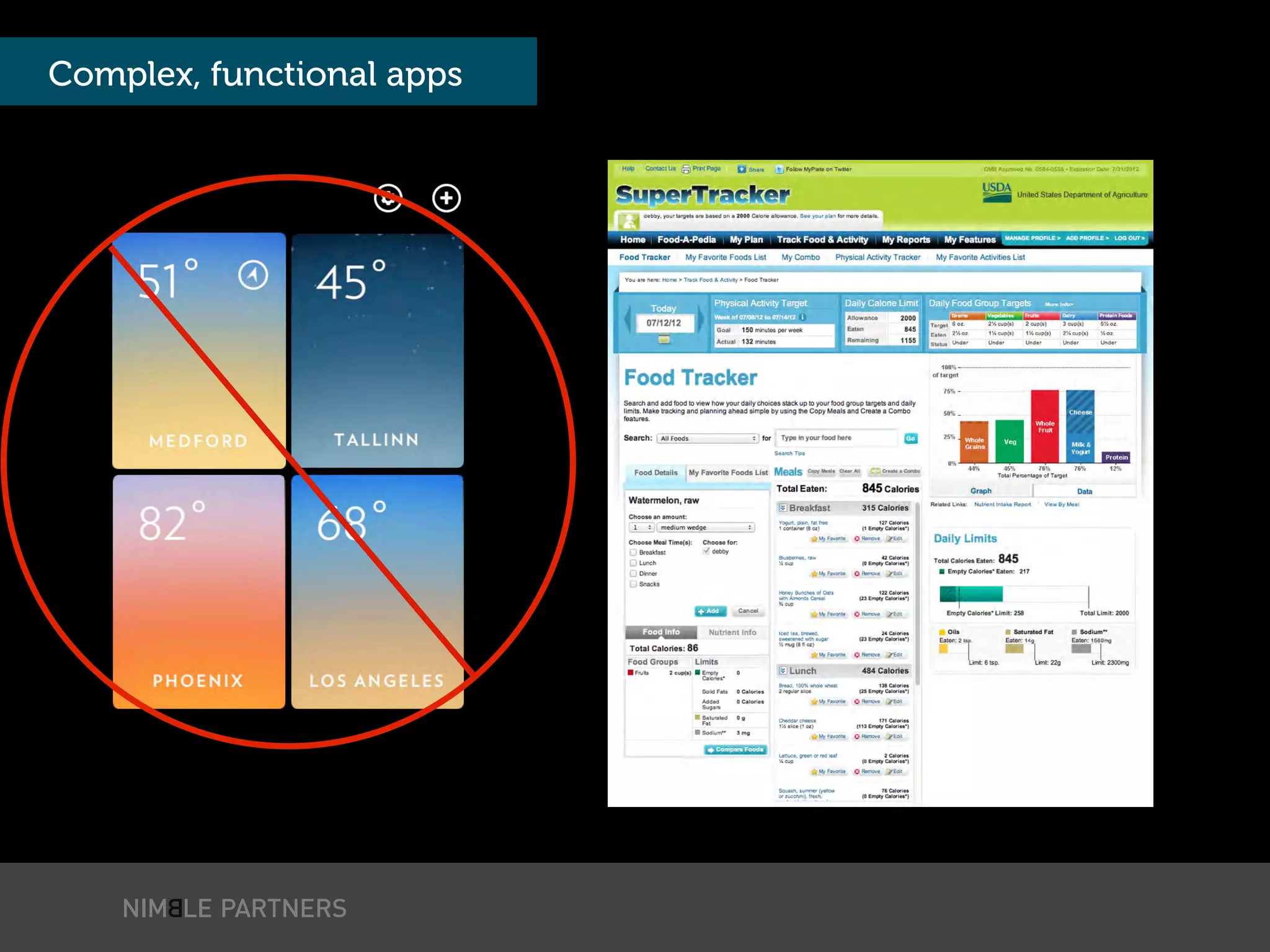
Complex, functional apps
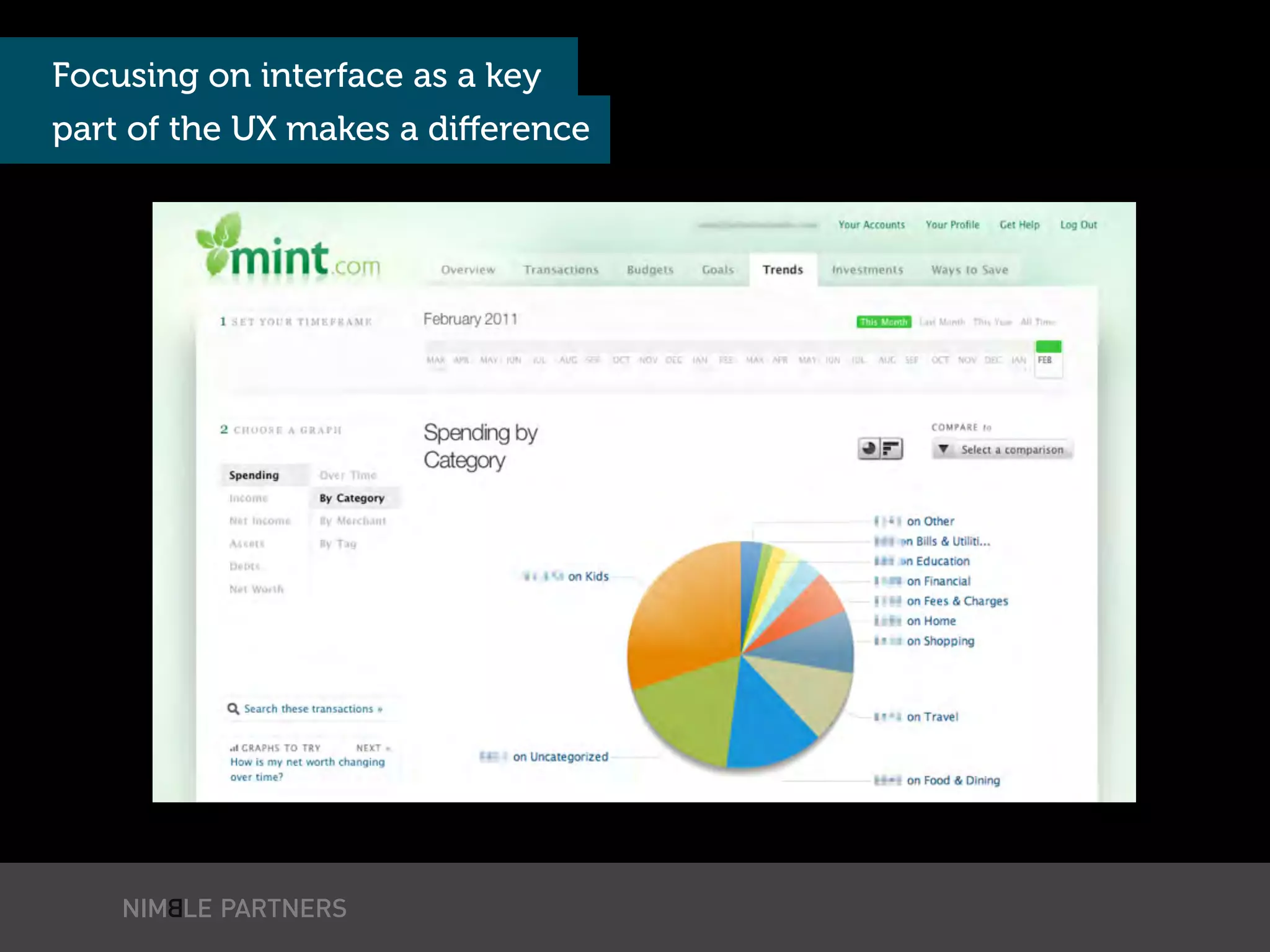
Focusing on interface as a key
part of the UX makes a difference
What’s the big deal?
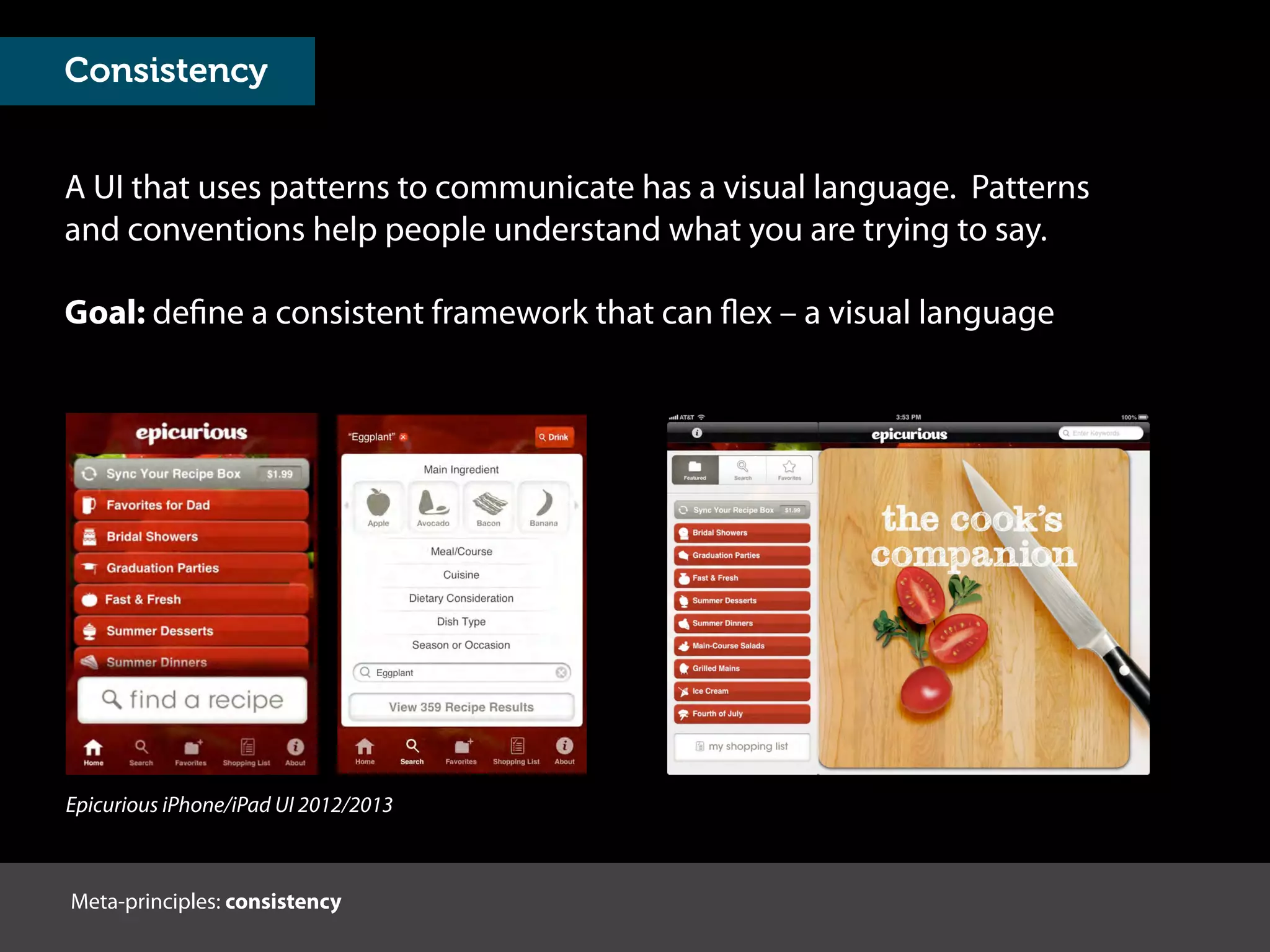
A UI that uses patterns to communicate has a visual language. Patterns
and conventions help people understand what you are trying to say.
Meta-principles: consistency
Goal: define a consistent framework that can flex – a visual language
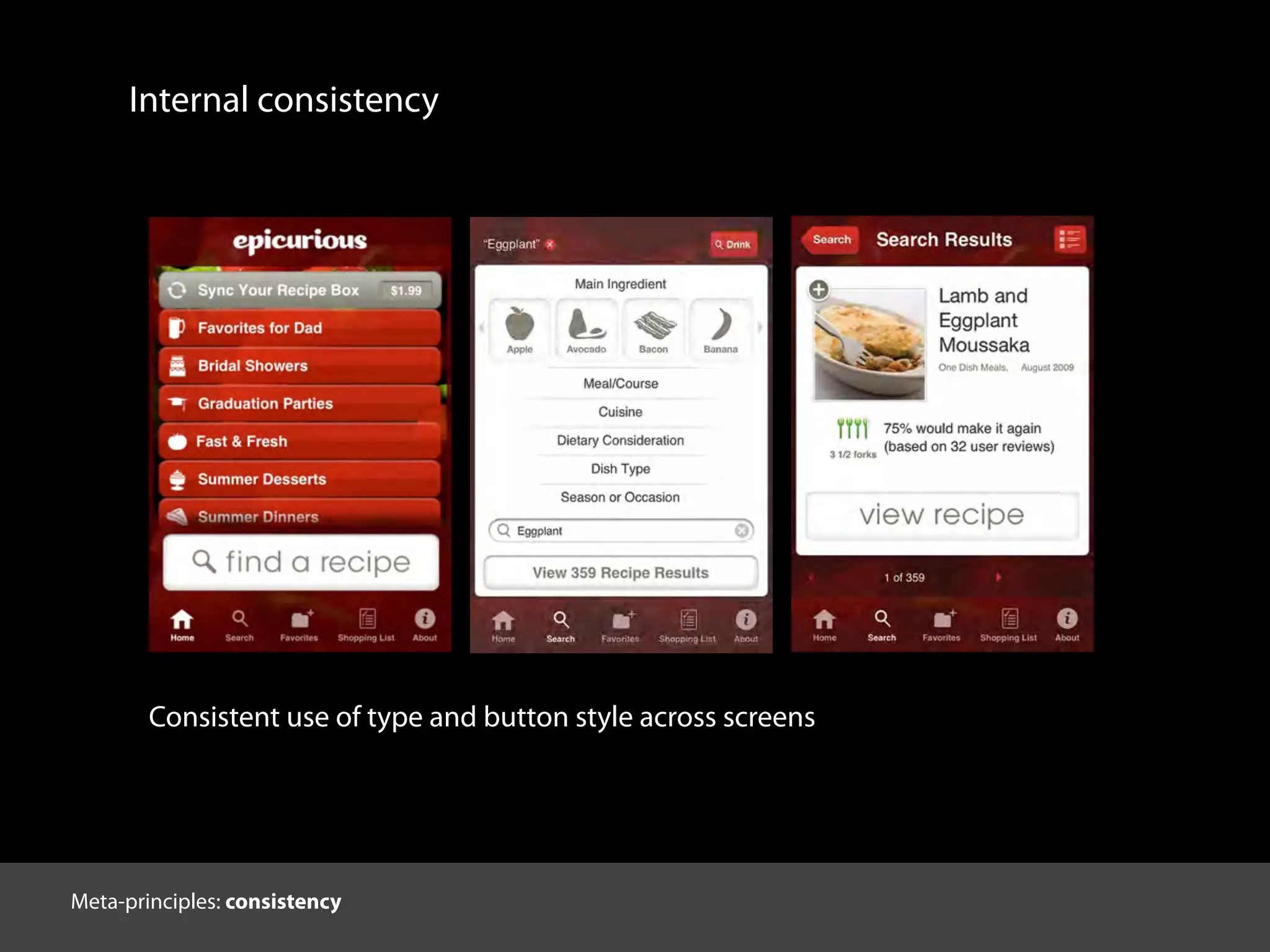
Epicurious iPhone/iPad UI 2012/2013
Consistency
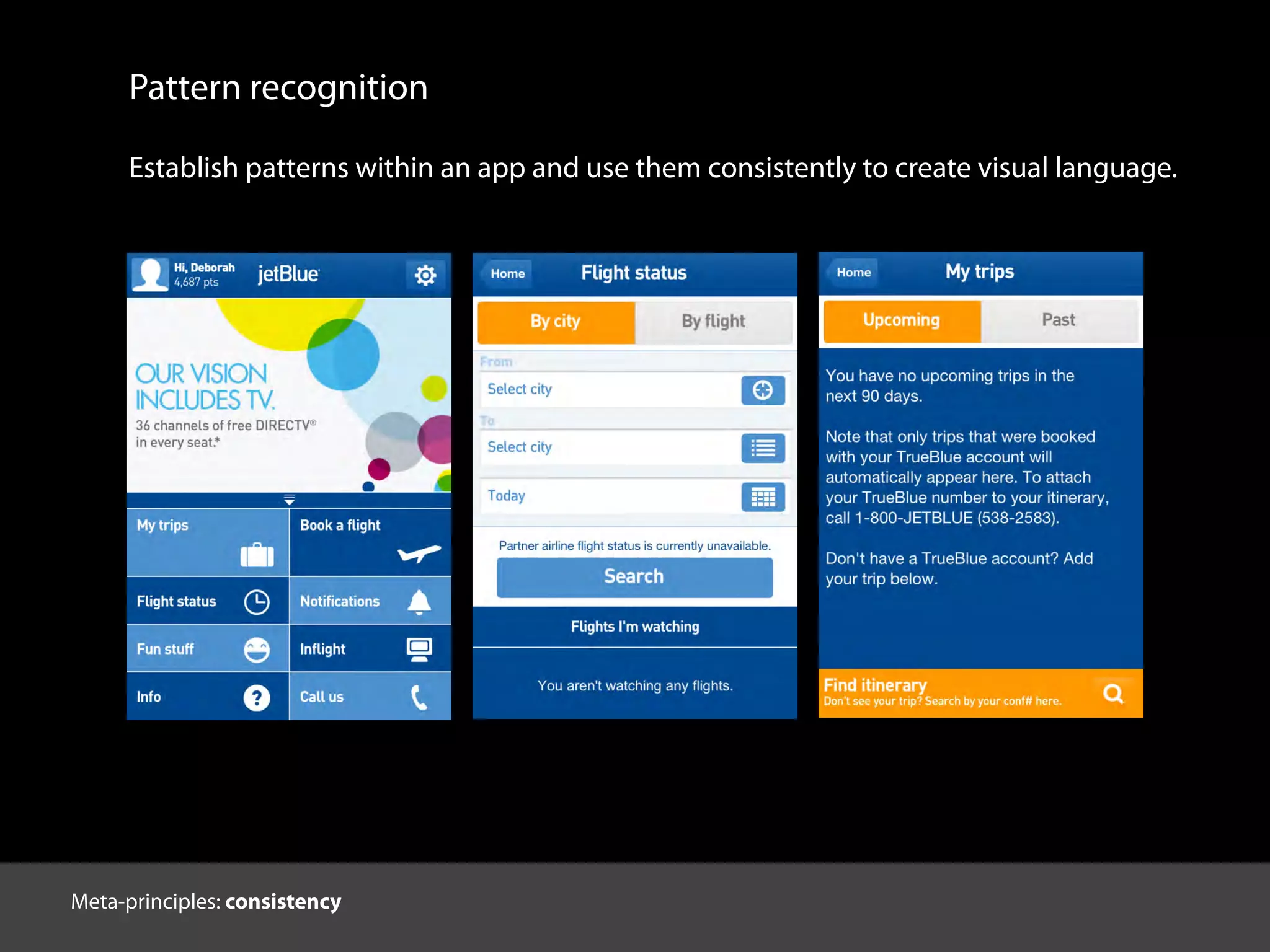
Pattern recognition
Establish patterns within an app and use them consistently to create visual language.
Meta-principles: consistency
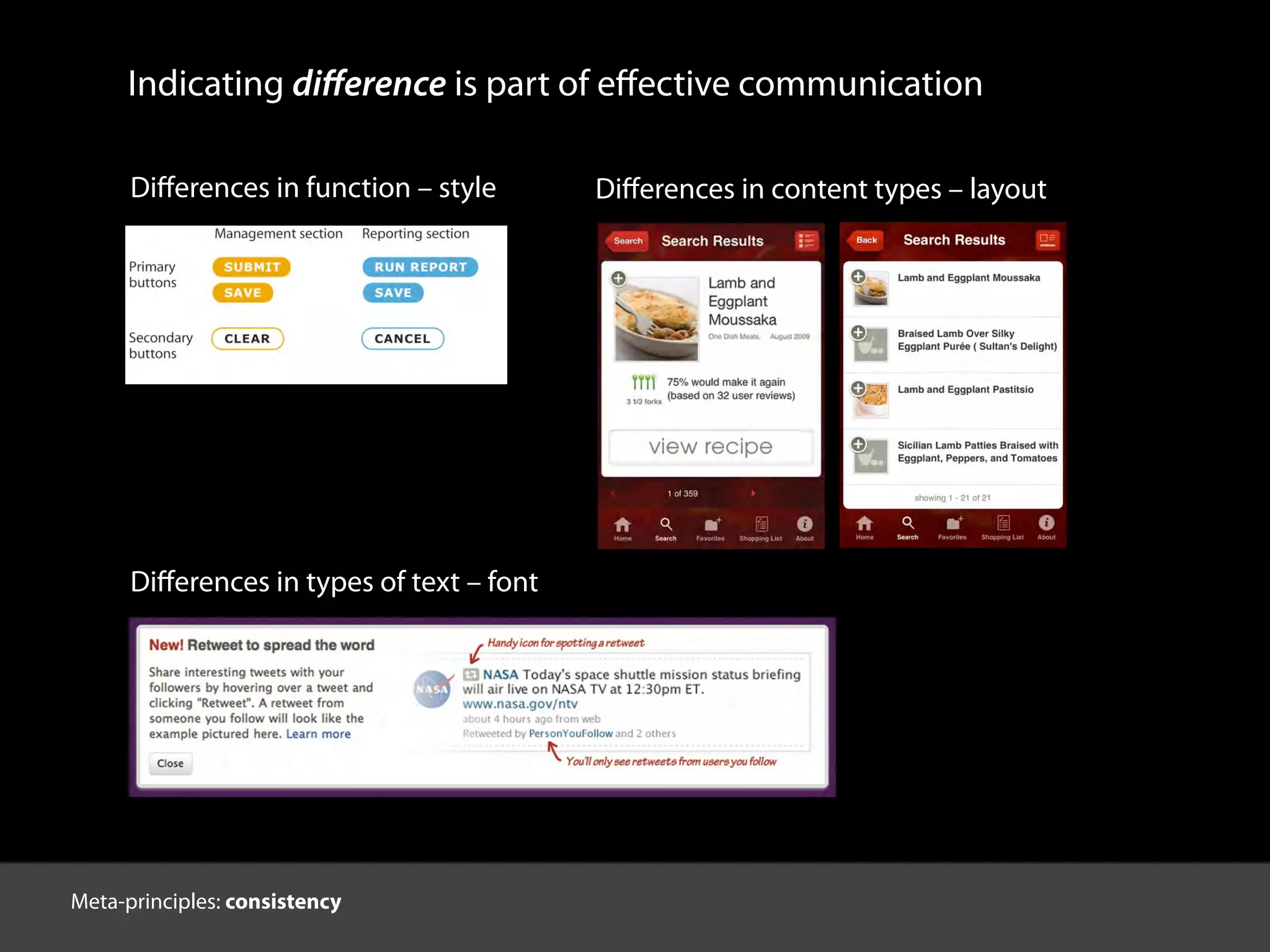
Differences in function – style
Differences in types of text – font
Differences in content types – layout
Indicating difference is part of effective communication
Meta-principles: consistency
Internal consistency
Consistent use of type and button style across screens
Meta-principles: consistency
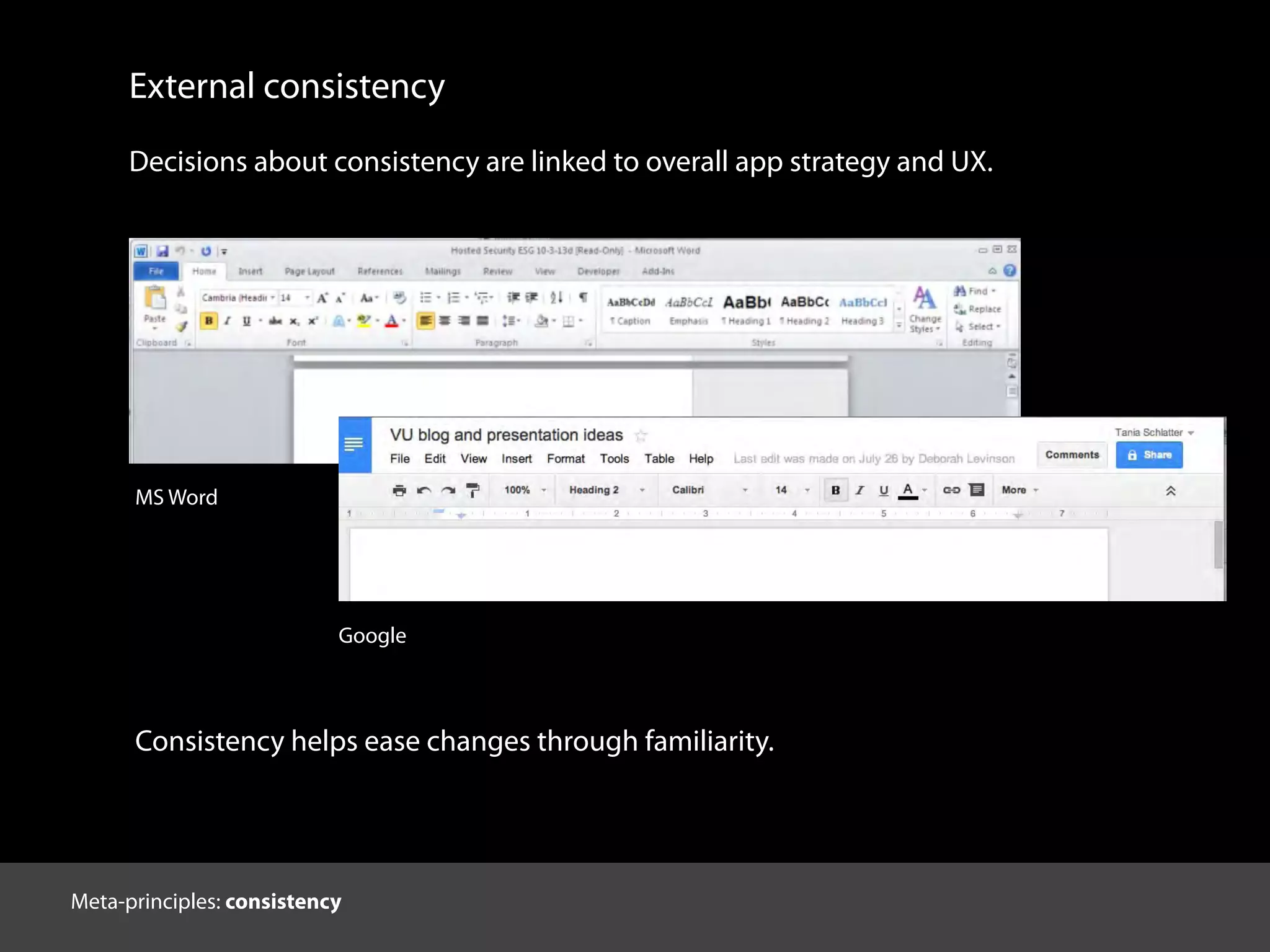
External consistency
Decisions about consistency are linked to overall app strategy and UX.
MS Word
Google
Consistency helps ease changes through familiarity.
Meta-principles: consistency
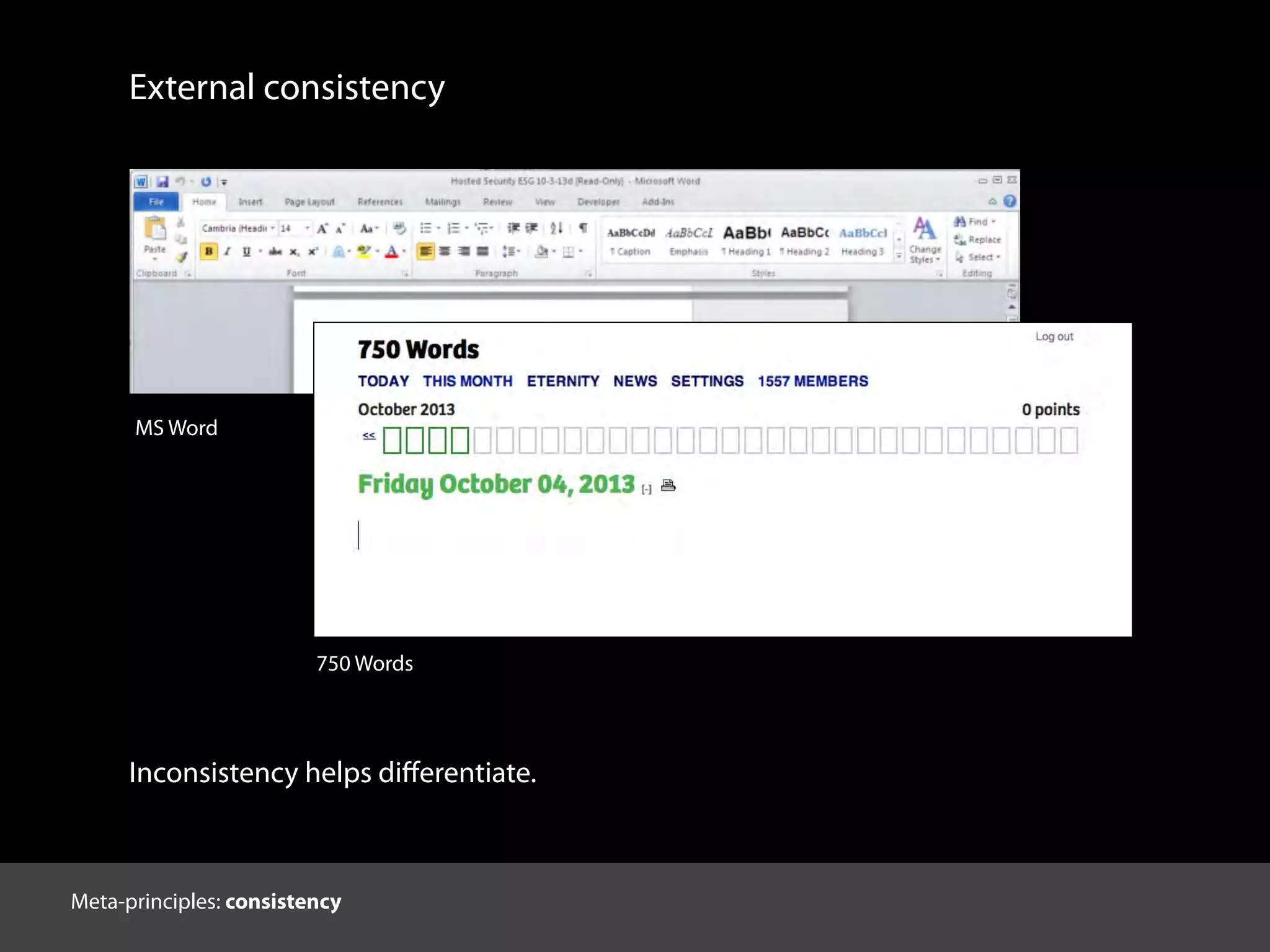
External consistency
Inconsistency helps differentiate.
MS Word
750 Words
Meta-principles: consistency
If your users share similar characteristics and are
familiar with an existing app, why not make
everything consistent?
Why not just copy
another app?
Why not just use the
iOS or Android
standards?
Meta-principles: consistency
Defaults are a good starting point.
Appropriate visual cues are needed to create a
visual hierarchy.
A distinct personality inspires affinity.
Meta-principles
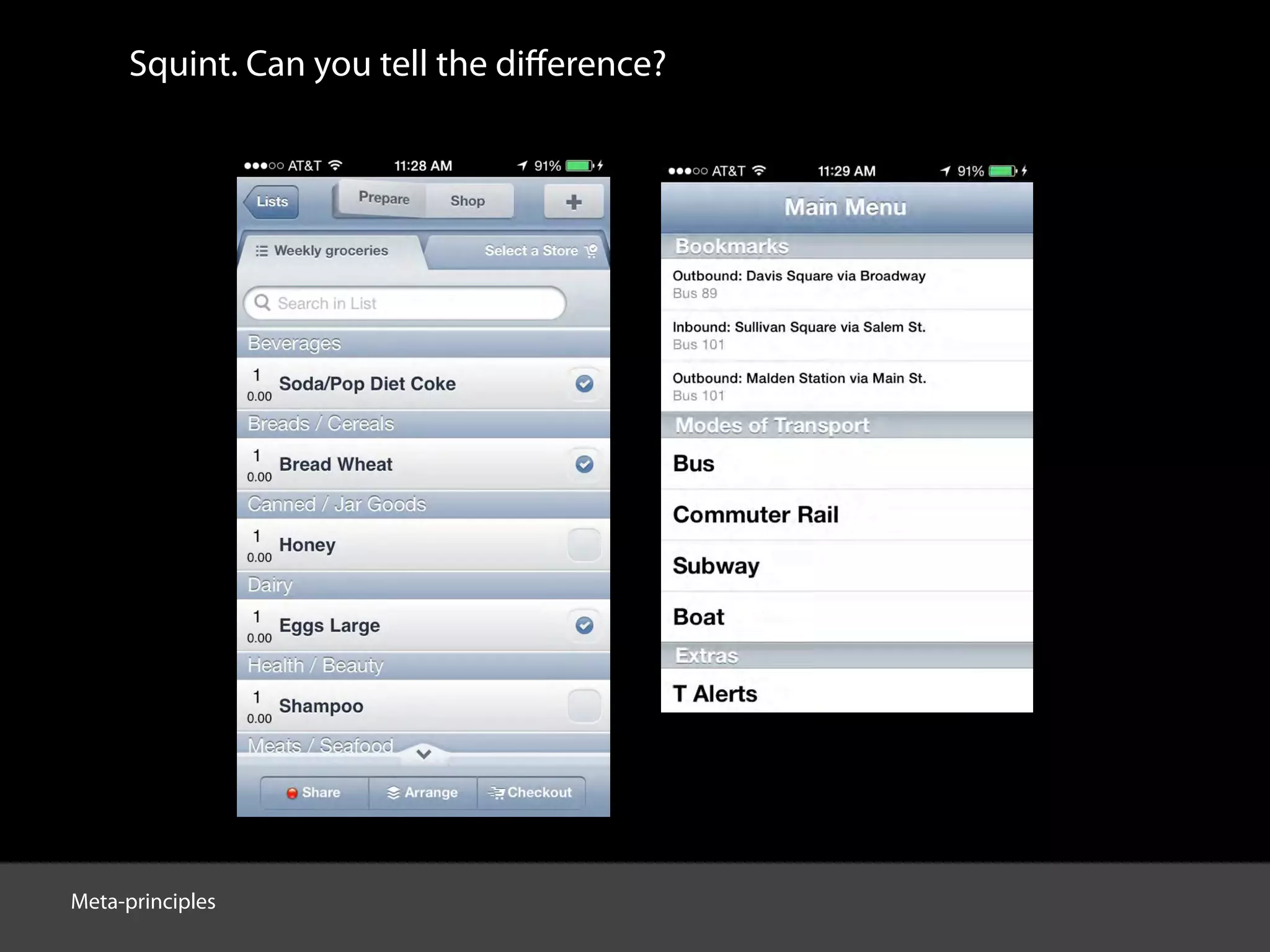
Squint. Can you tell the difference?
Meta-principles
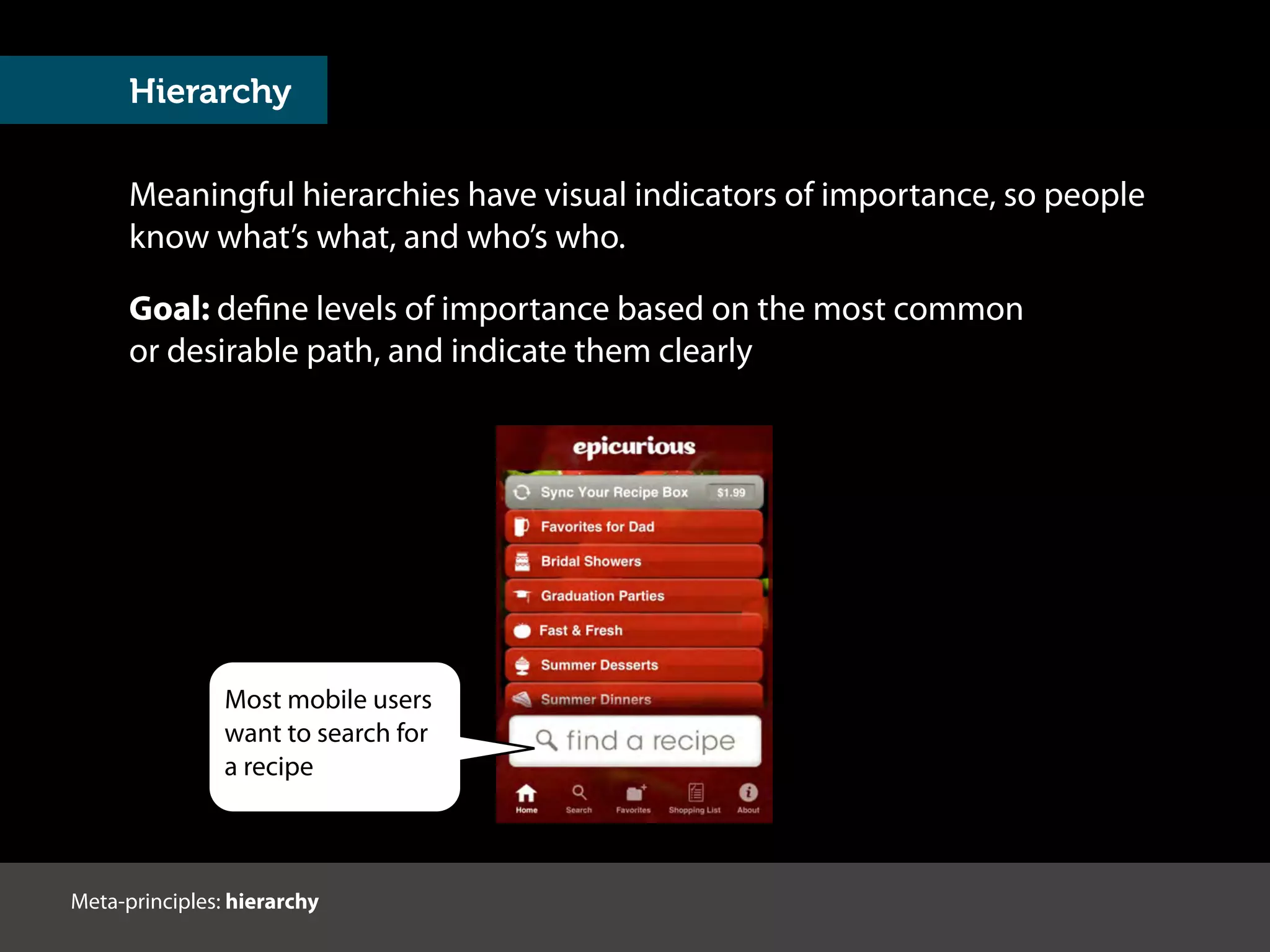
Meaningful hierarchies have visual indicators of importance, so people
know what’s what, and who’s who.
Goal: define levels of importance based on the most common
or desirable path, and indicate them clearly
Most mobile users
want to search for
a recipe
Hierarchy
Meta-principles: hierarchy
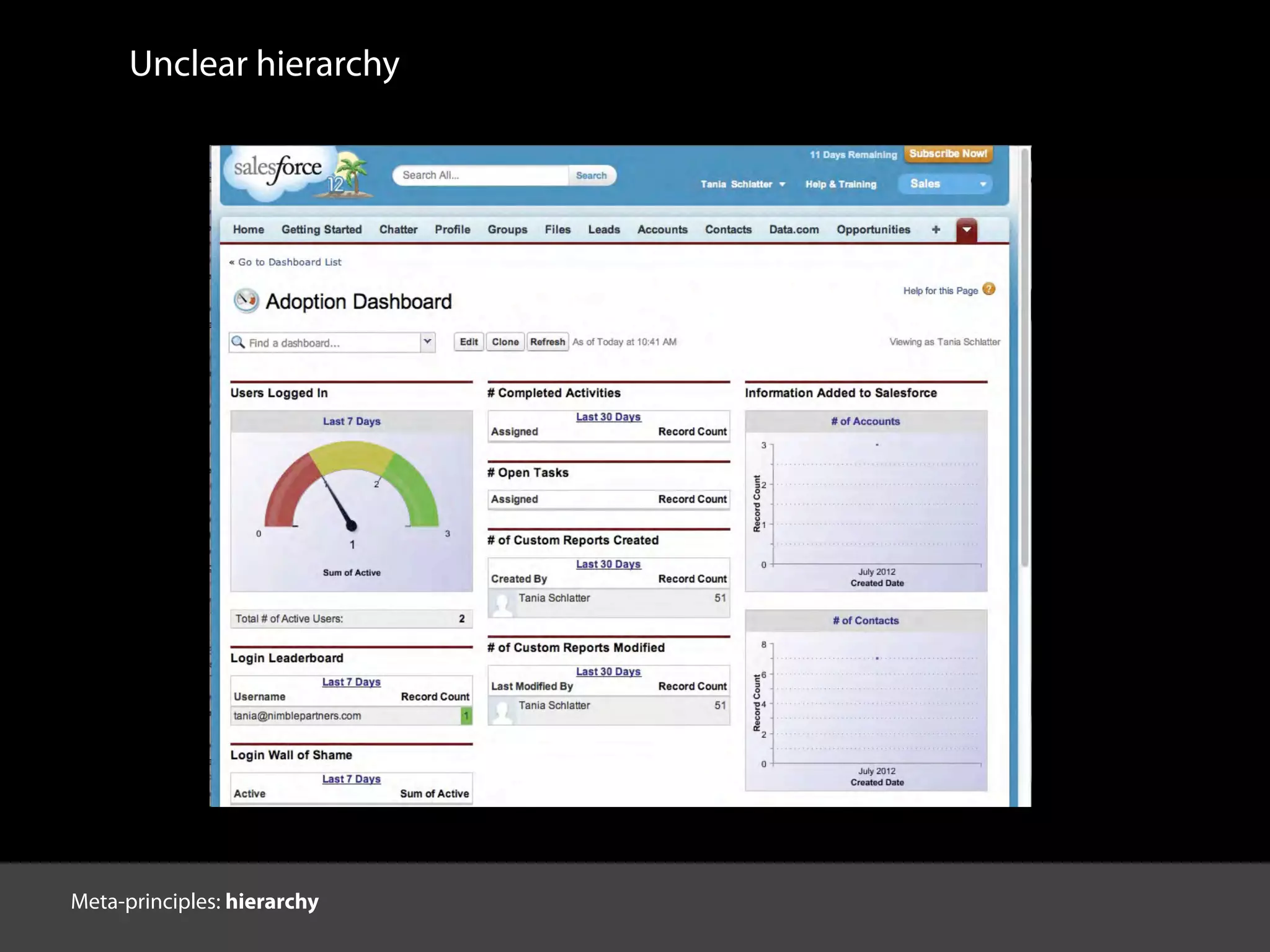
Unclear hierarchy
Meta-principles: hierarchy
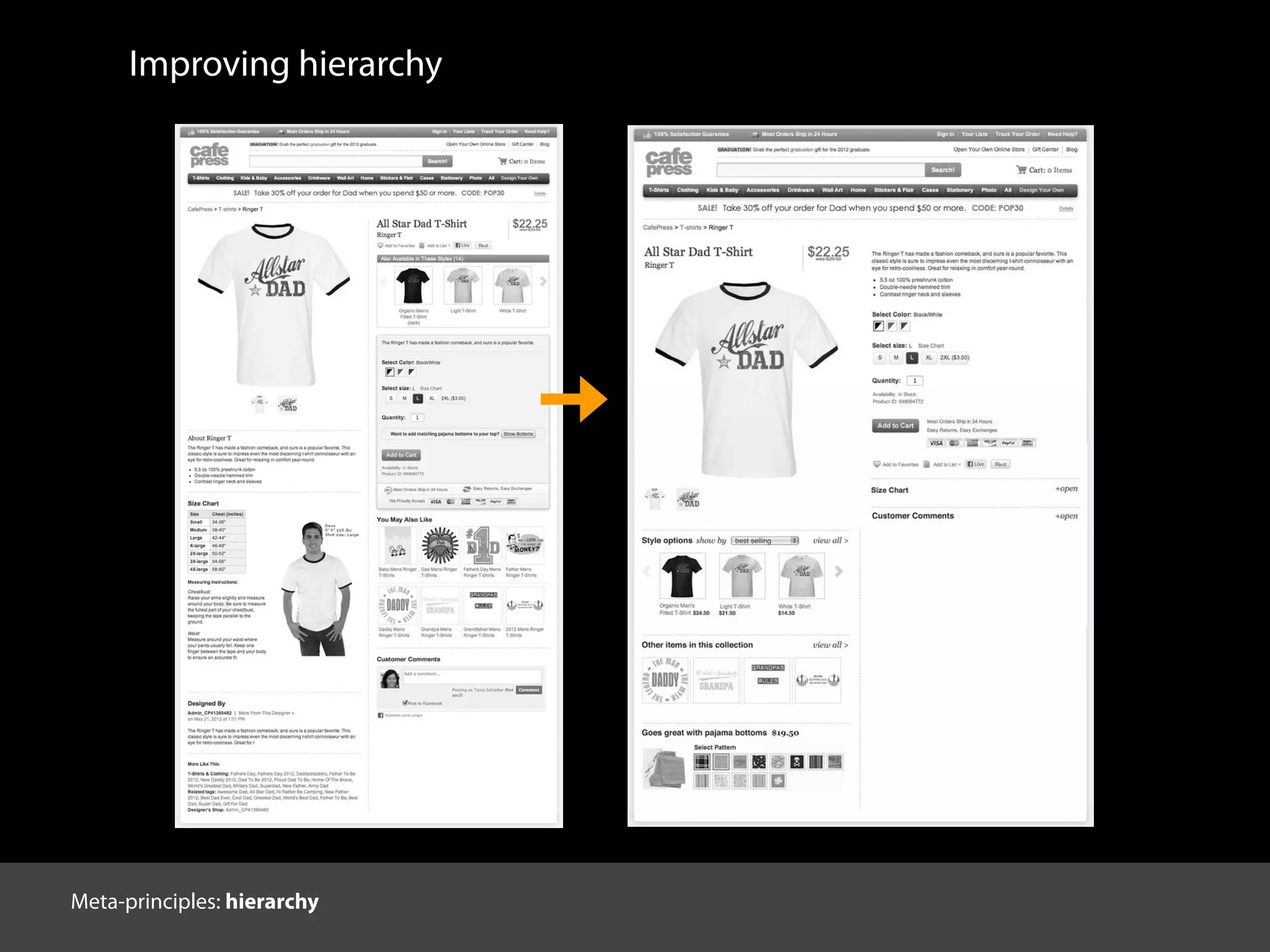
Improving hierarchy
Meta-principles: hierarchy
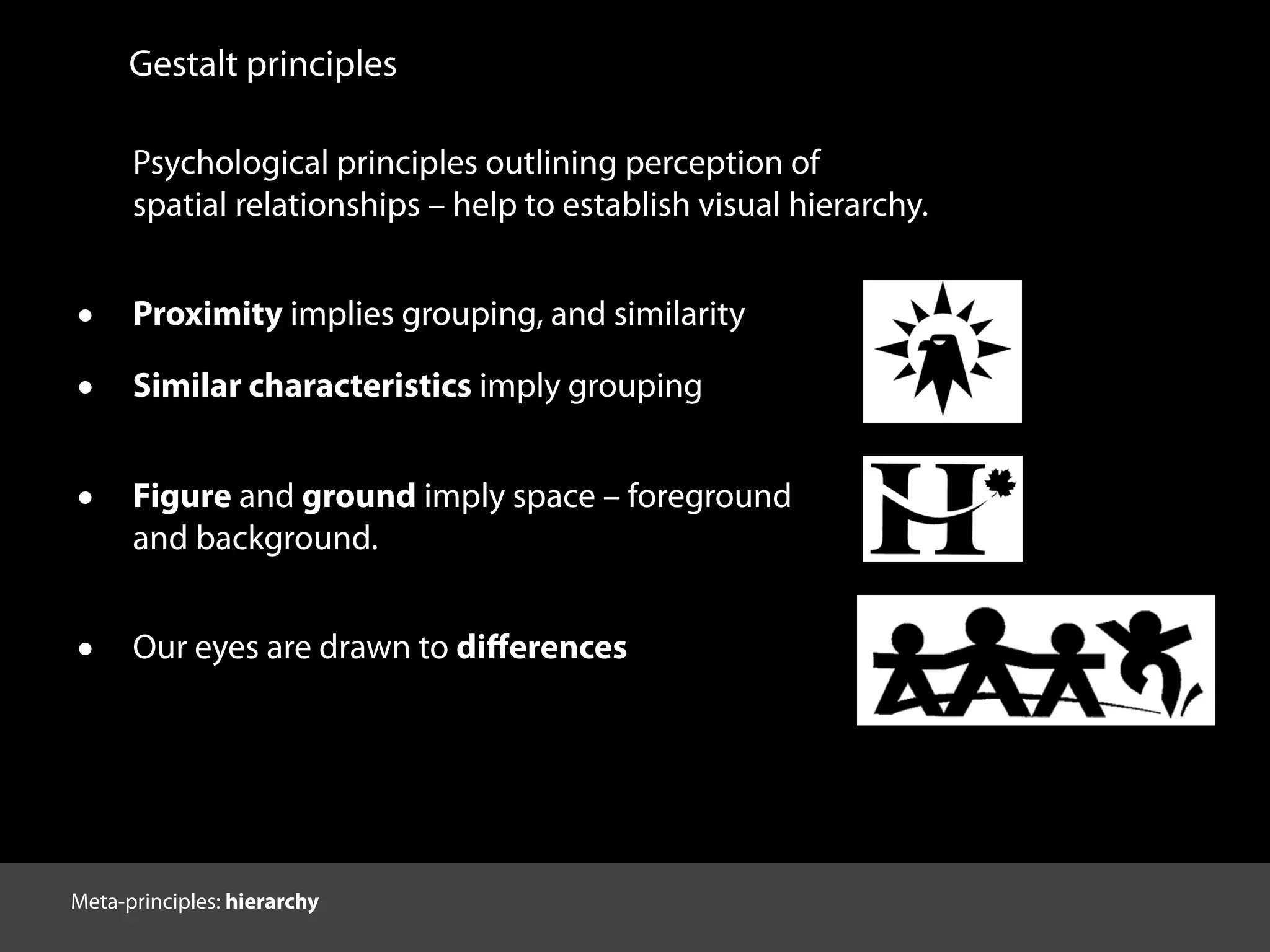
Gestalt principles
Psychological principles outlining perception of
spatial relationships – help to establish visual hierarchy.
• Proximity implies grouping, and similarity
• Similar characteristics imply grouping
• Figure and ground imply space – foreground
and background.
• Our eyes are drawn to differences
http://graphicdesign.spokanefalls.edu/tutorials/process/gestaltprinciples/gestaltprinc.htm
Meta-principles: hierarchy
Gestalt principles
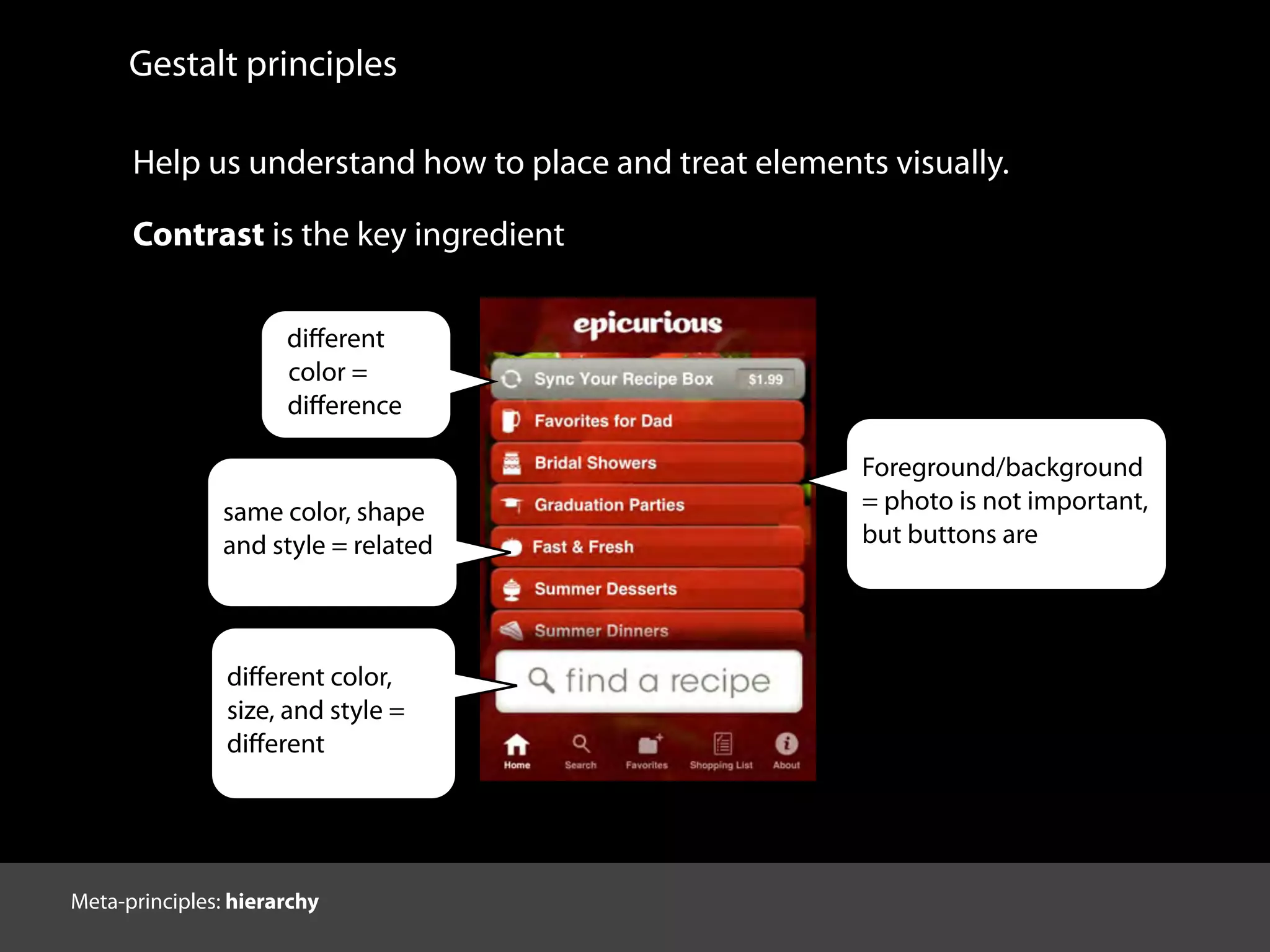
Help us understand how to place and treat elements visually.
Contrast is the key ingredient
same color, shape
and style = related
different
color =
difference
different color,
size, and style =
different
Foreground/background
= photo is not important,
but buttons are
Meta-principles: hierarchy
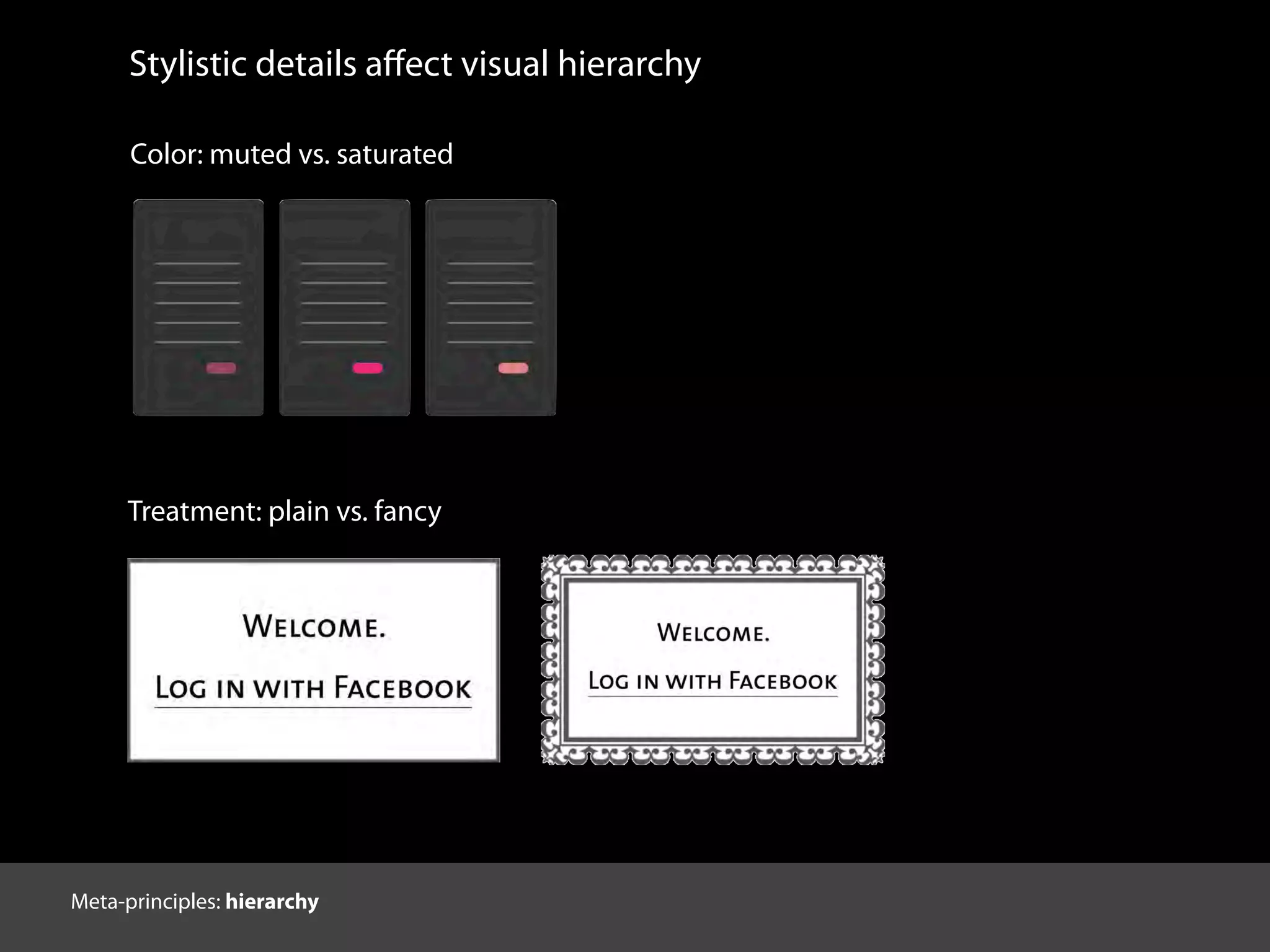
Color: muted vs. saturated
Treatment: plain vs. fancy
Stylistic details affect visual hierarchy
Meta-principles: hierarchy
The more types of elements you have, the
harder it is to establish a clear hierarchy.
Complexity adds to the challenge
Meta-principles: hierarchy
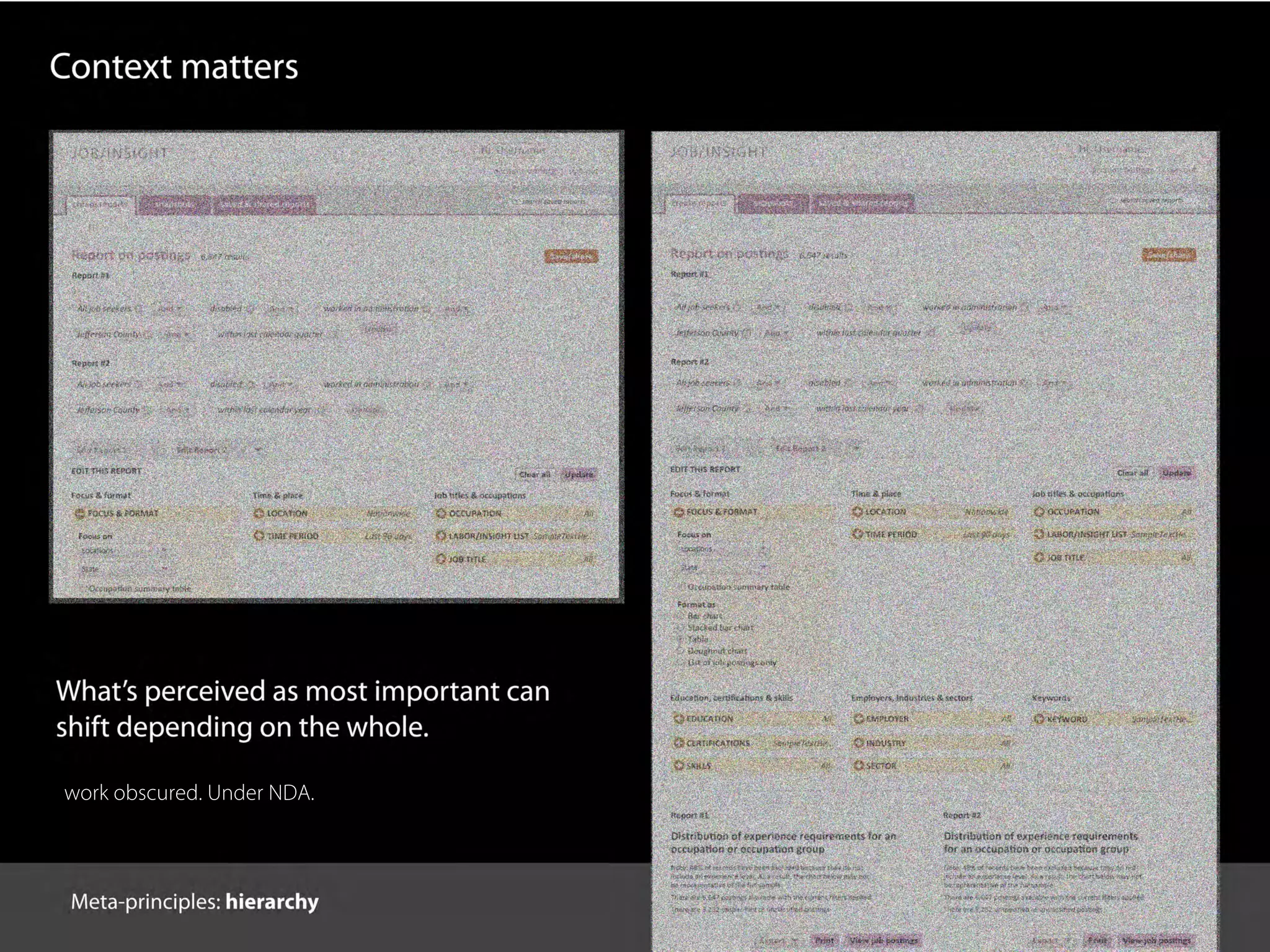
workobscured.UnderNDA.
Does style really
matter?
People just want to
catch their bus.
Personality
Visual characteristics affect interpretation.
Goal: characteristics that communicate appropriate difference
Meta-principles: personality
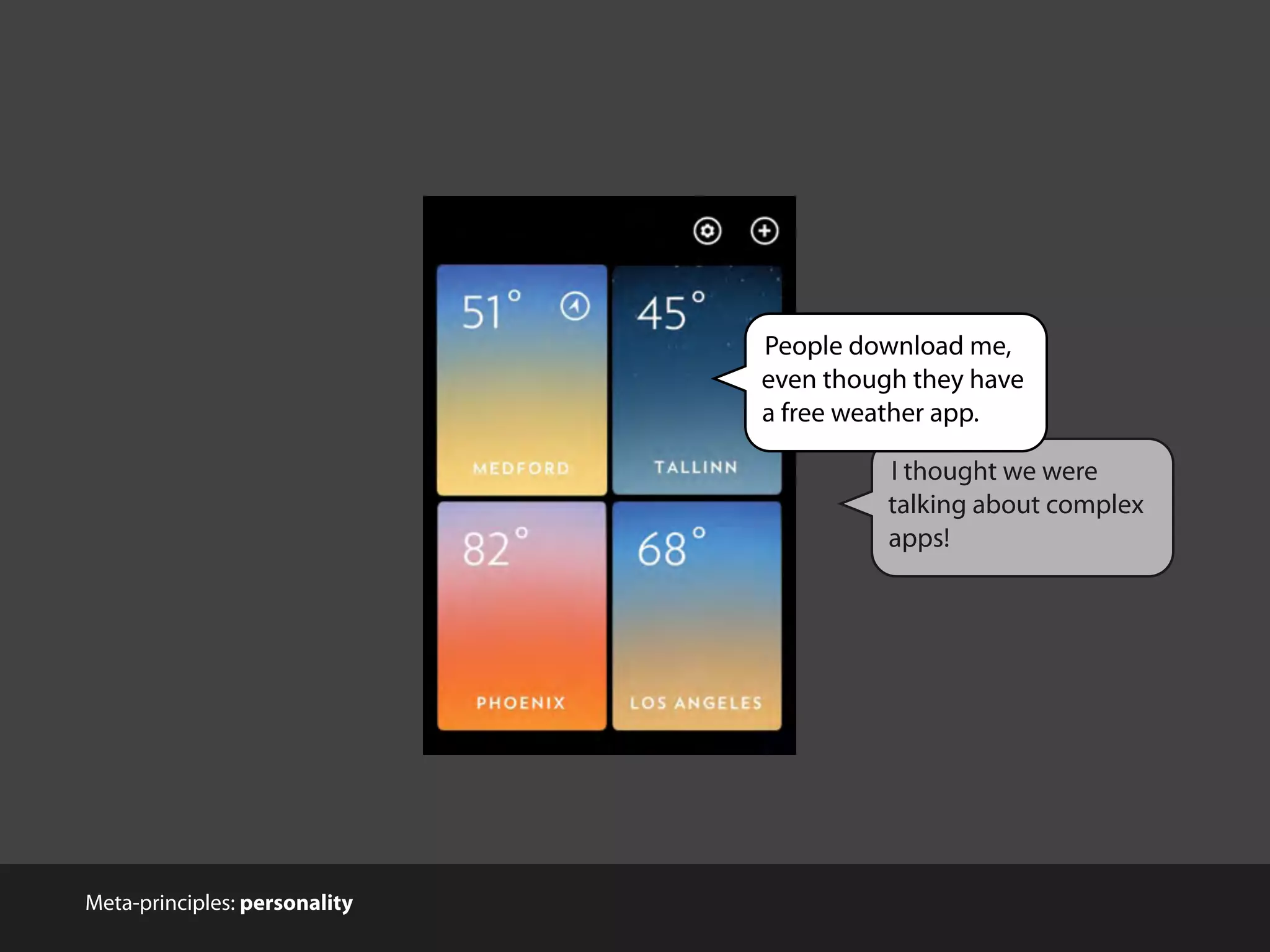
I thought we were
talking about complex
apps!
People download me,
even though they have
a free weather app.
Meta-principles: personality
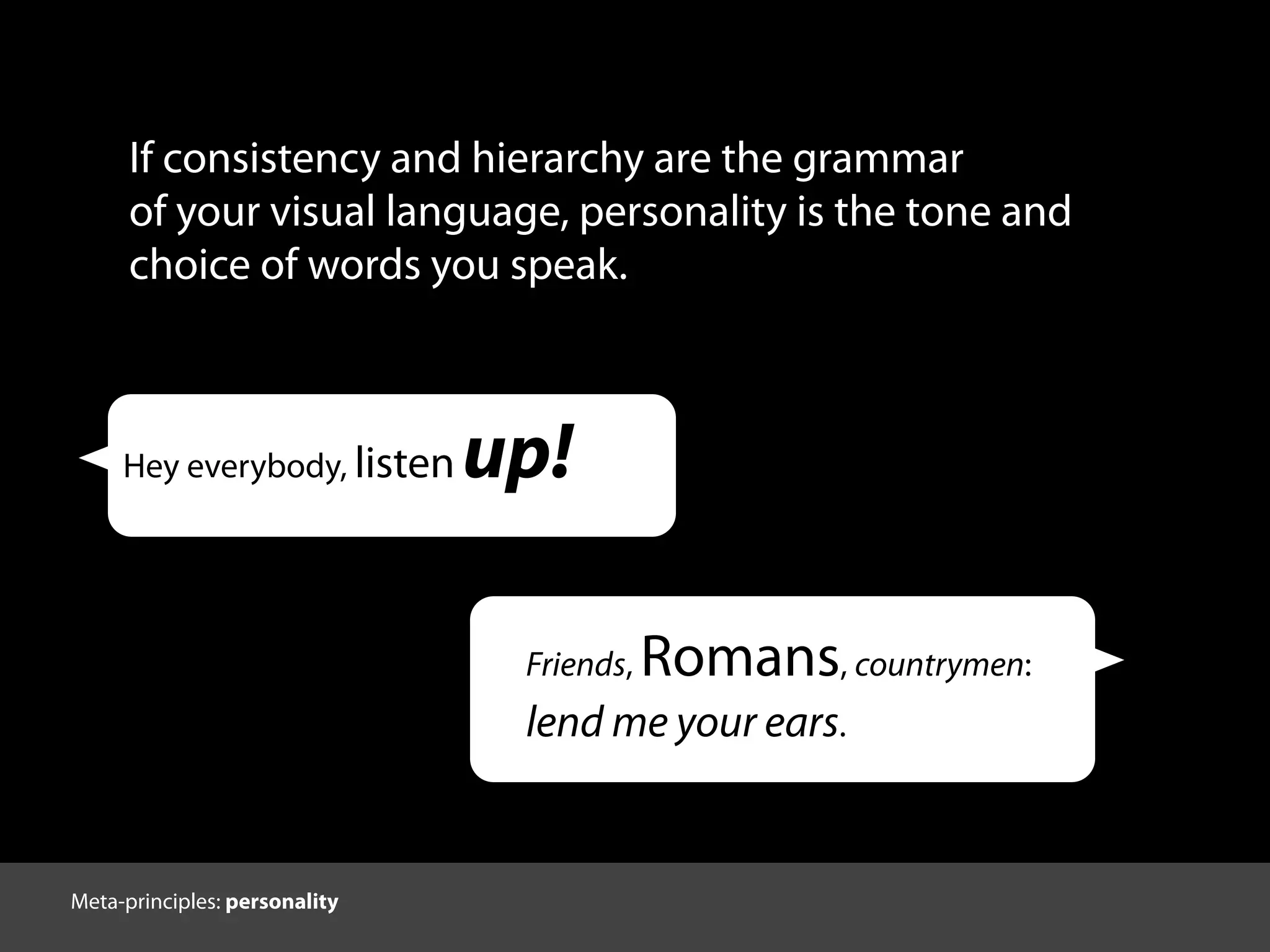
If consistency and hierarchy are the grammar
of your visual language, personality is the tone and
choice of words you speak.
Hey everybody, listen up!
Friends, Romans, countrymen:
lend me your ears.
Meta-principles: personality
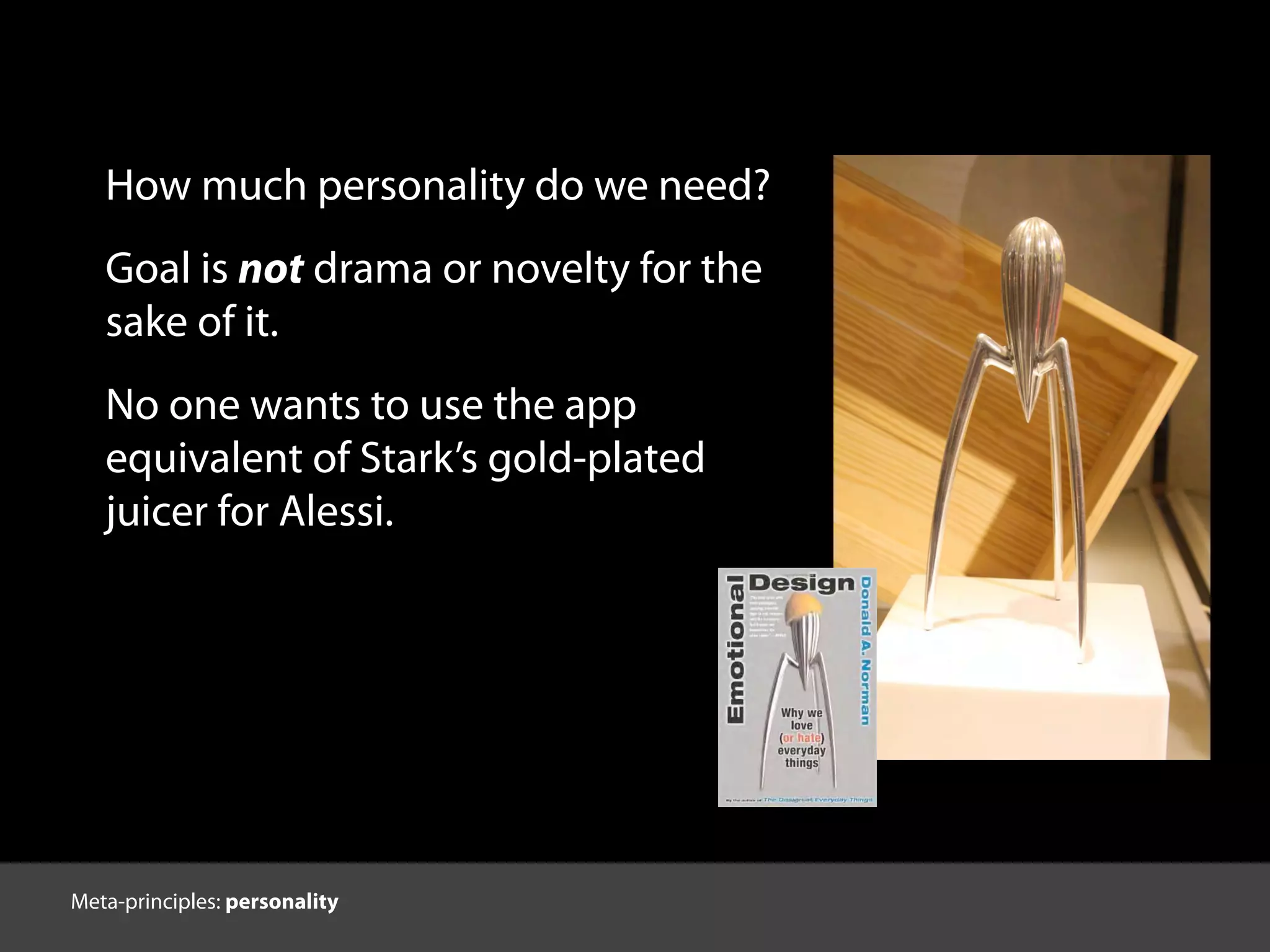
How much personality do we need?
Goal is not drama or novelty for the
sake of it.
No one wants to use the app
equivalent of Stark’s gold-plated
juicer for Alessi.
http://www.flickr.com/photos/dickyfeng/6254476990/
Meta-principles: personality
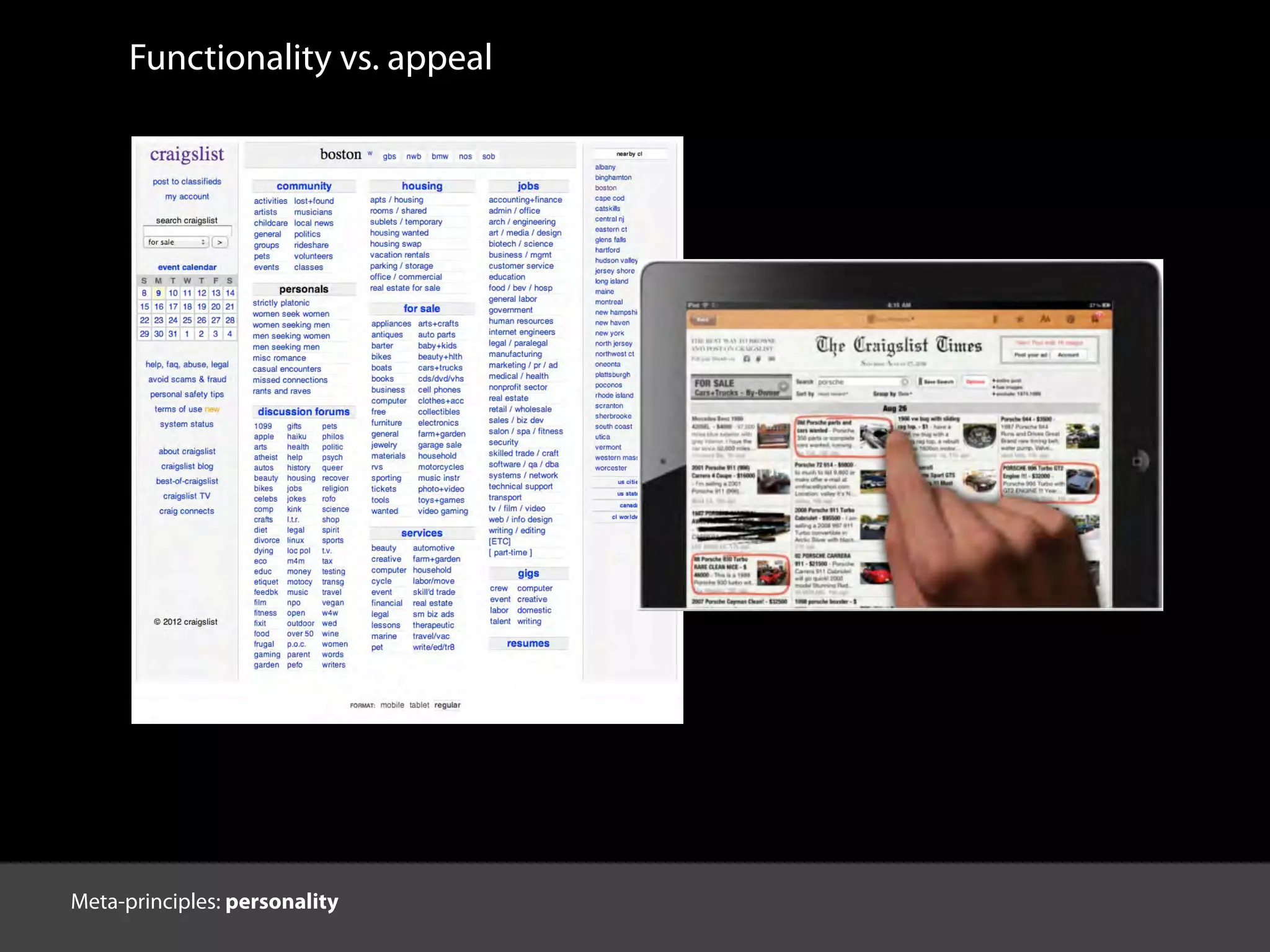
Functionality vs. appeal
Meta-principles: personality
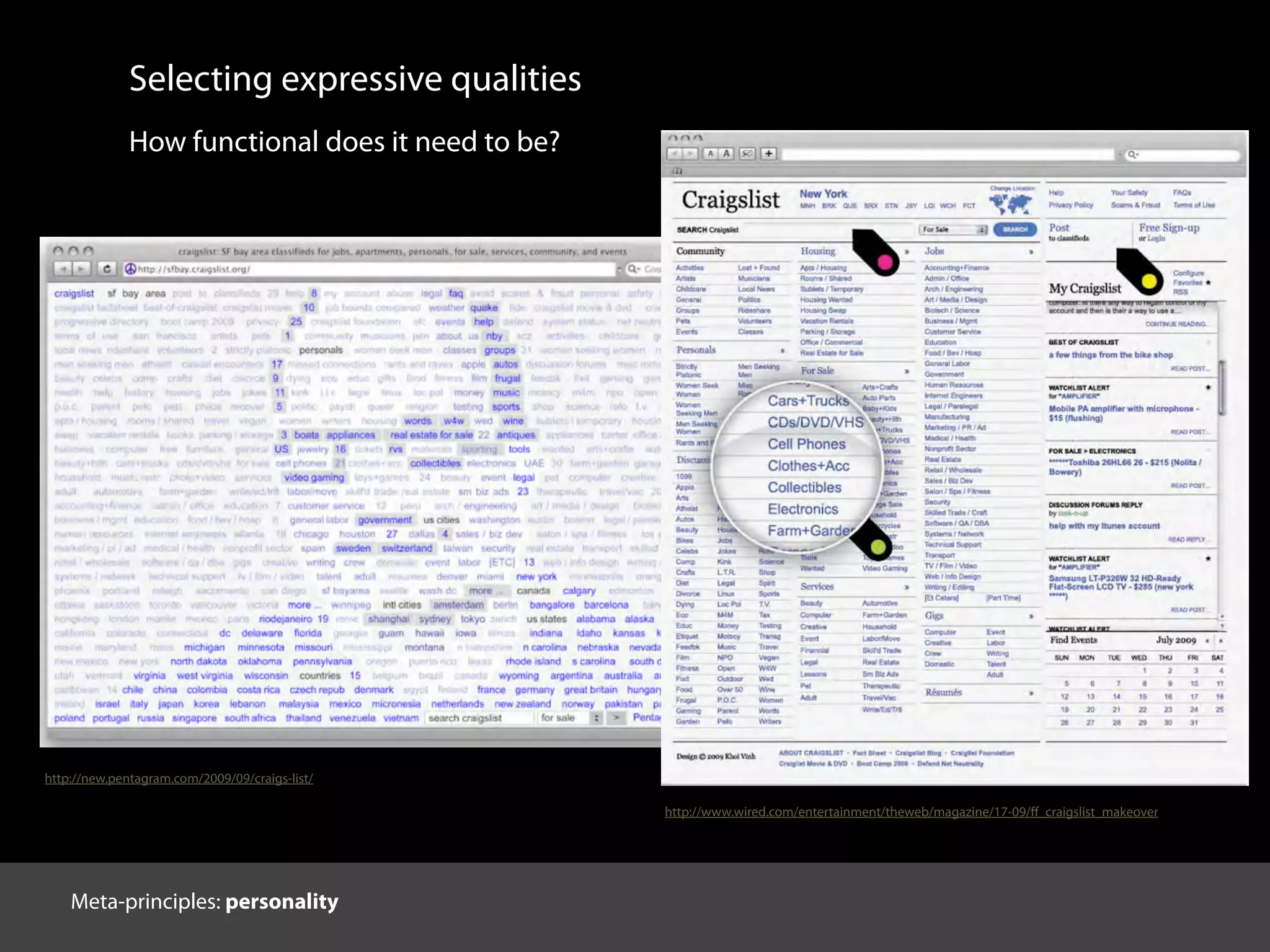
How functional does it need to be?
http://www.wired.com/entertainment/theweb/magazine/17-09/ff_craigslist_makeover
Selecting expressive qualities
http://new.pentagram.com/2009/09/craigs-list/
Meta-principles: personality
How to apply in practice?
Thoughtful decisions about expression and differentiation
grounded in:
1. users and context
• brain: how people see and understand
• individual: age, demographics, experiences, expectations
• situation: device, setting, goals
2. what is being communicated by whom
• content: what is being represented
• sender: who the information & interactions are from
Criteria for decisions about personalitySuperTracker
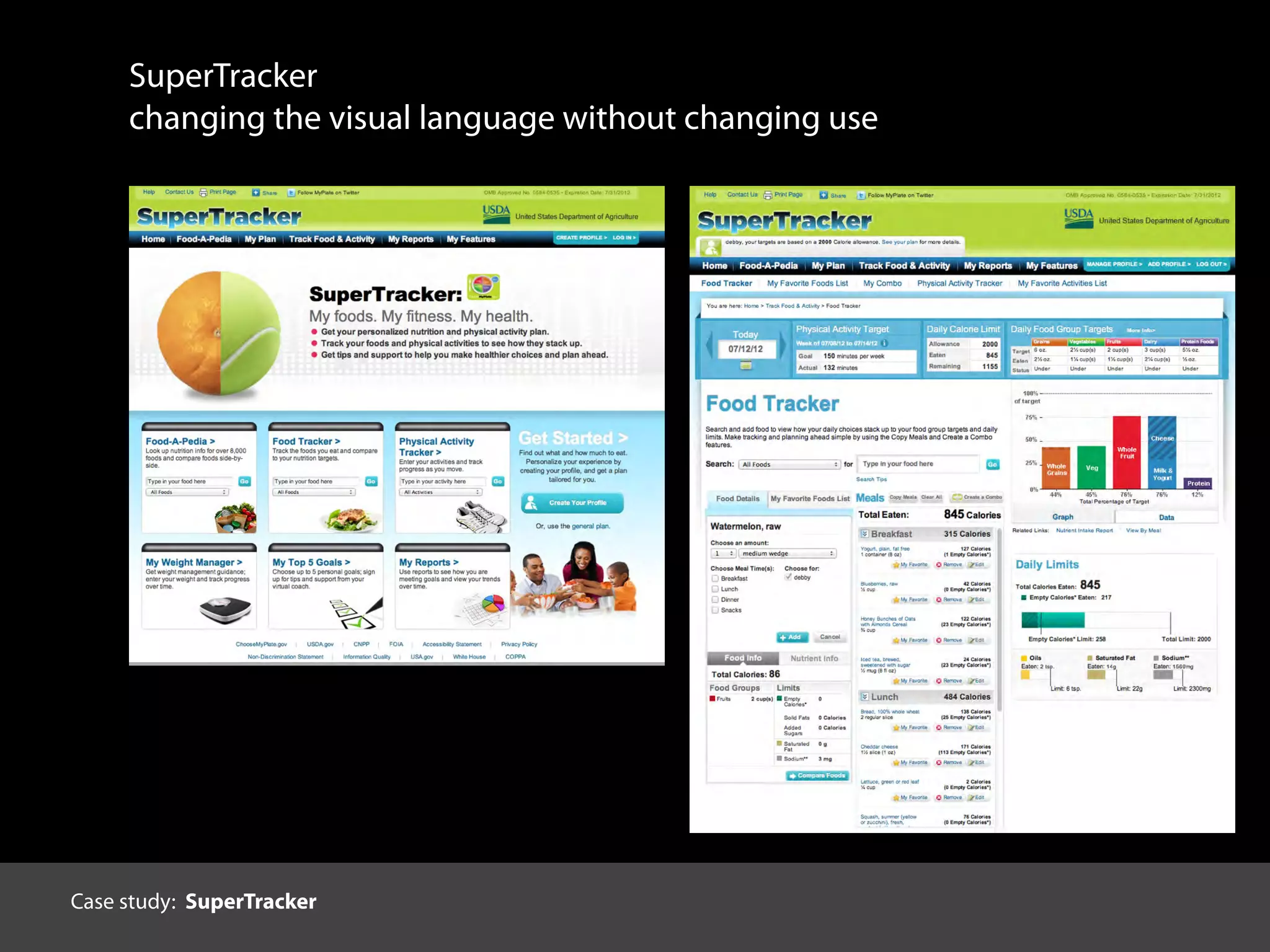
changing the visual language without changing use
Case study: SuperTracker
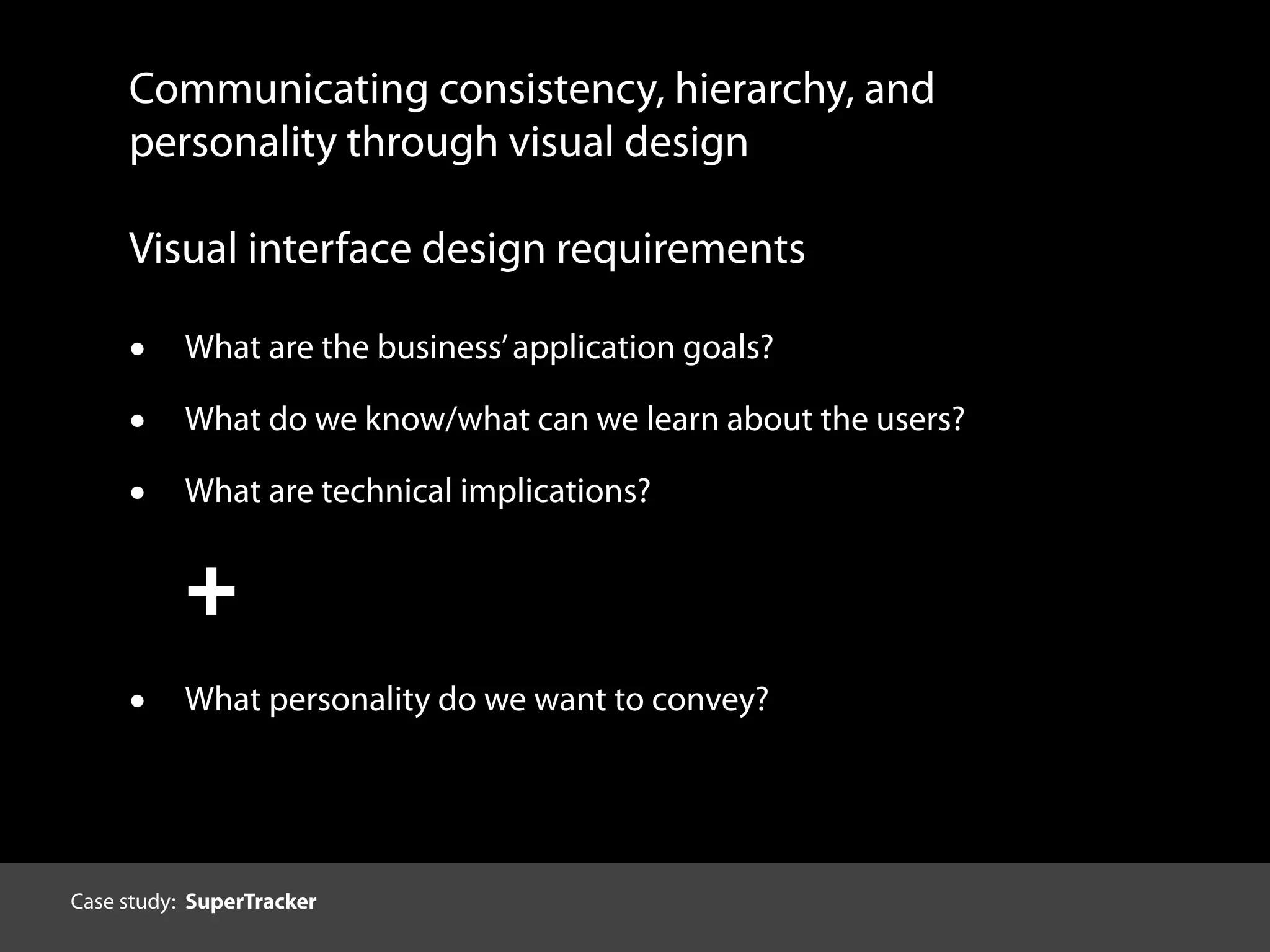
Communicating consistency, hierarchy, and
personality through visual design
Visual interface design requirements
• What are the business’application goals?
• What do we know/what can we learn about the users?
• What are technical implications?
+
• What personality do we want to convey?
Case study: SuperTracker
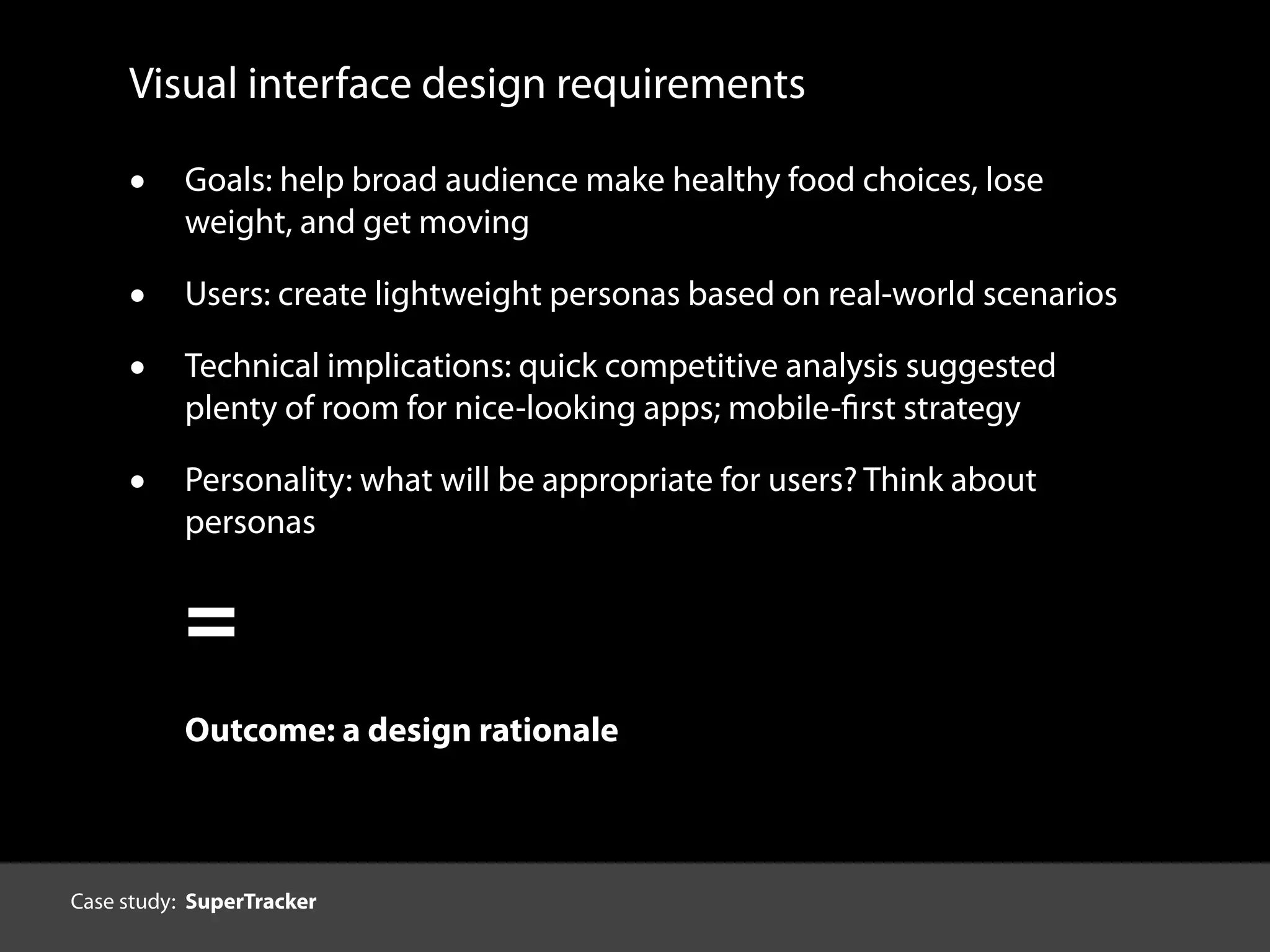
Visual interface design requirements
• Goals: help broad audience make healthy food choices, lose
weight, and get moving
• Users: create lightweight personas based on real-world scenarios
• Technical implications: quick competitive analysis suggested
plenty of room for nice-looking apps; mobile-first strategy
• Personality: what will be appropriate for users? Think about
personas
=
Outcome: a design rationale
Case study: SuperTracker
Thoughtful decisions about expression and differentiation
grounded in:
1. users and context
• brain: how people see and understand
• individual: age, demographics, experiences, expectations
• situation: device, setting, goals
2. what is being communicated by whom
• content: what is being represented
• sender: who the information & interactions are from
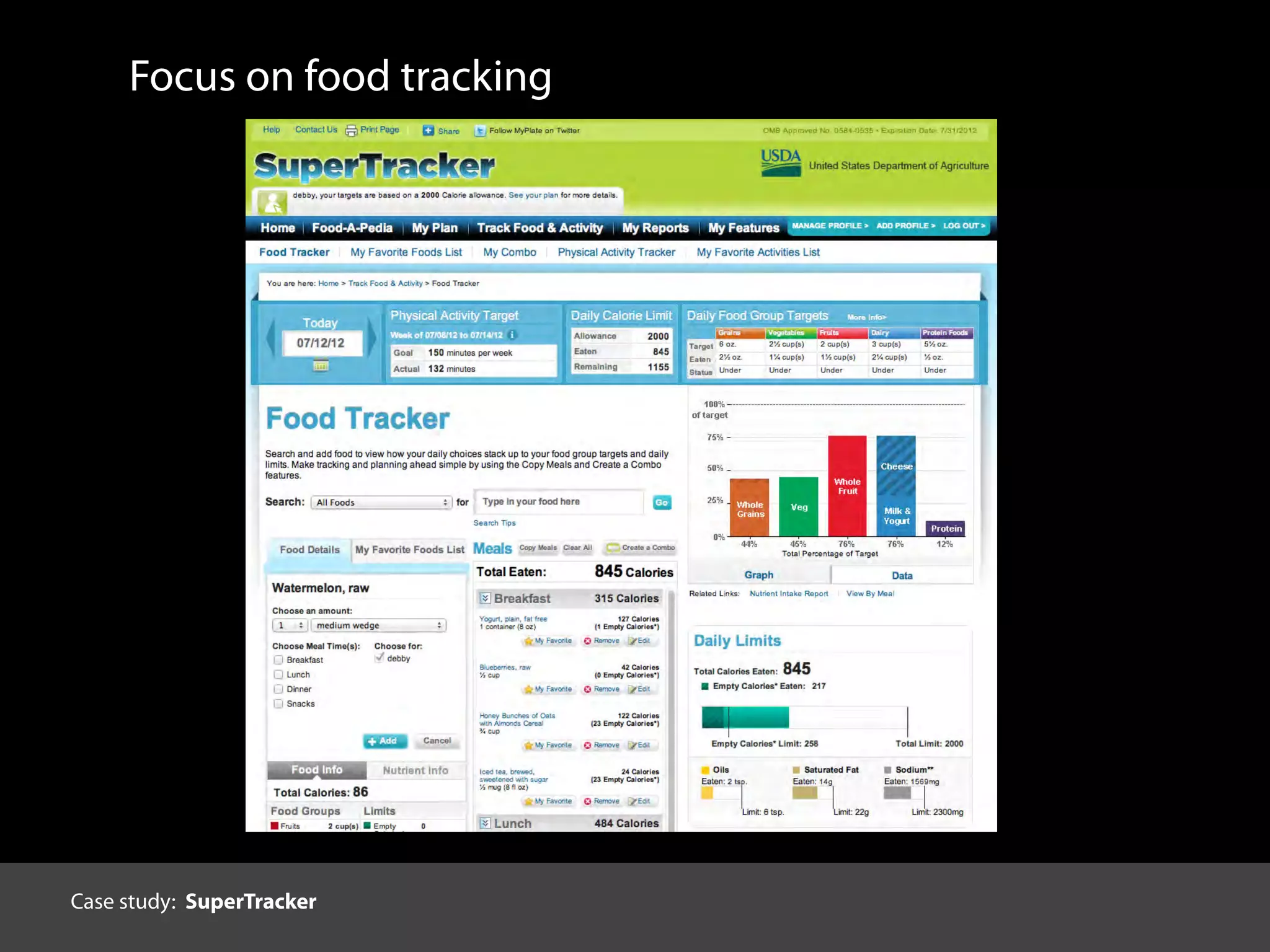
Criteria for decisions about personalityFocus on food tracking
Case study: SuperTracker
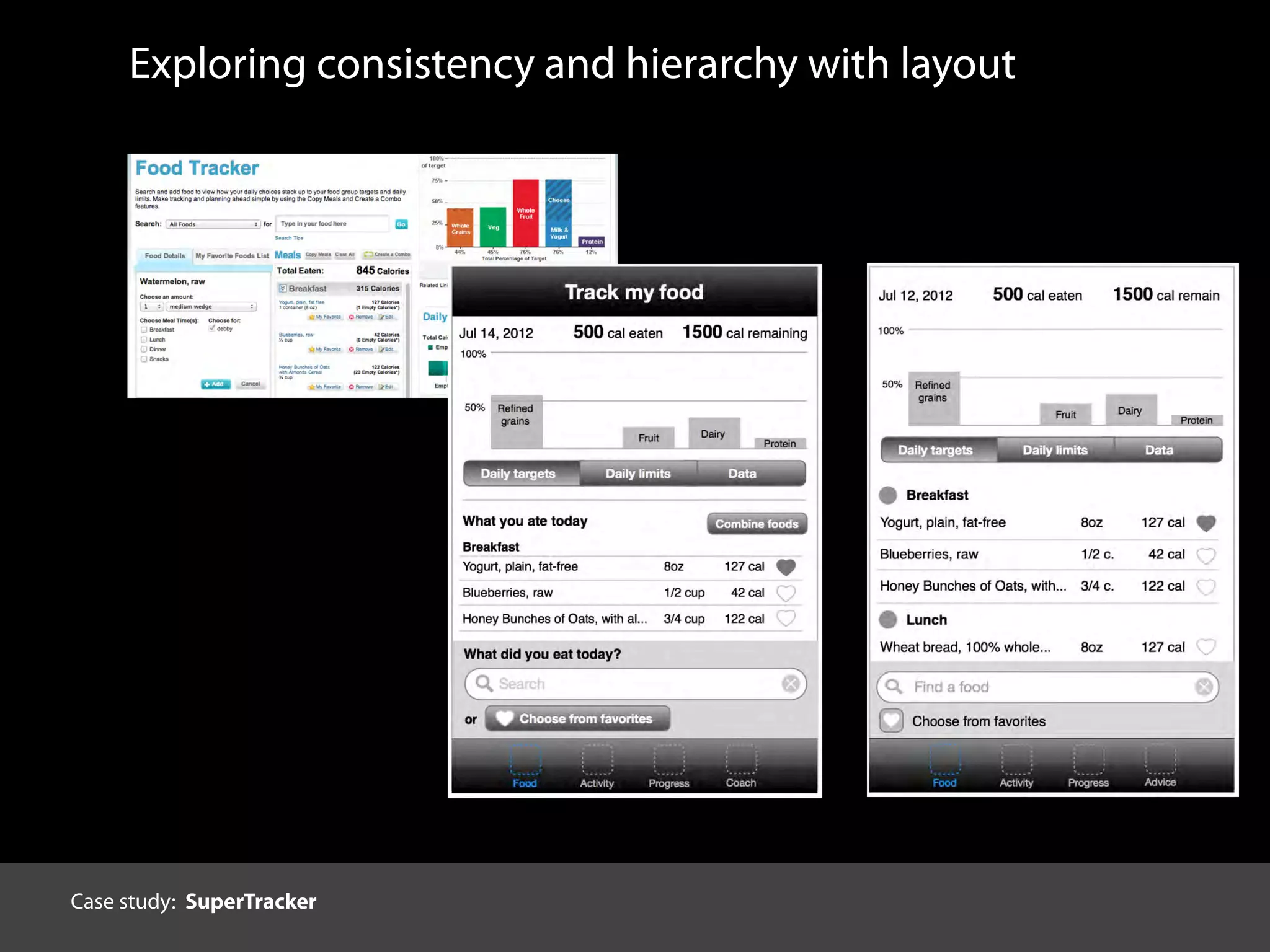
Exploring consistency and hierarchy with layout
Case study: SuperTracker
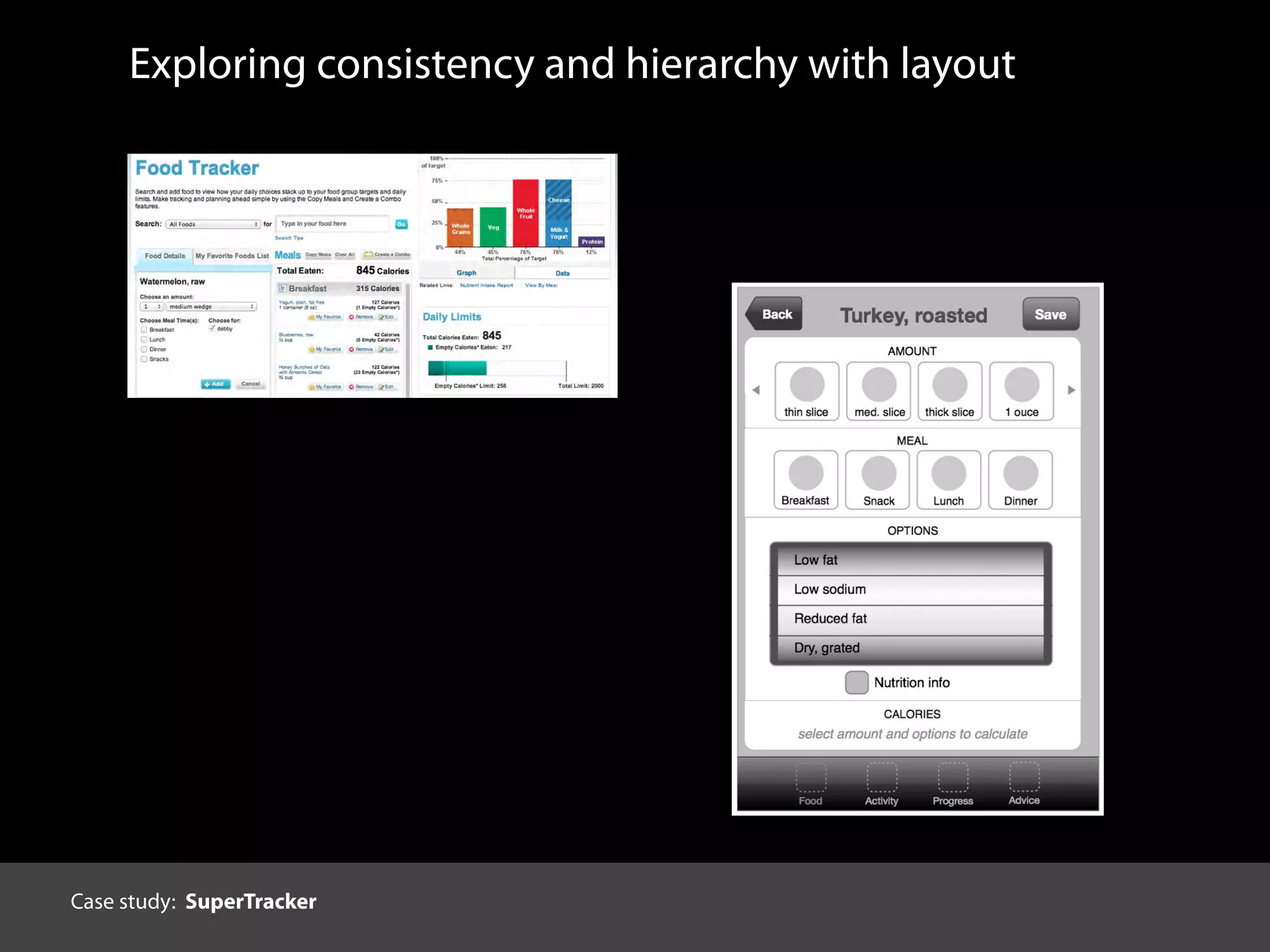
Exploring consistency and hierarchy with layout
Case study: SuperTracker
Exploring layout with wireframes
Case study: SuperTracker
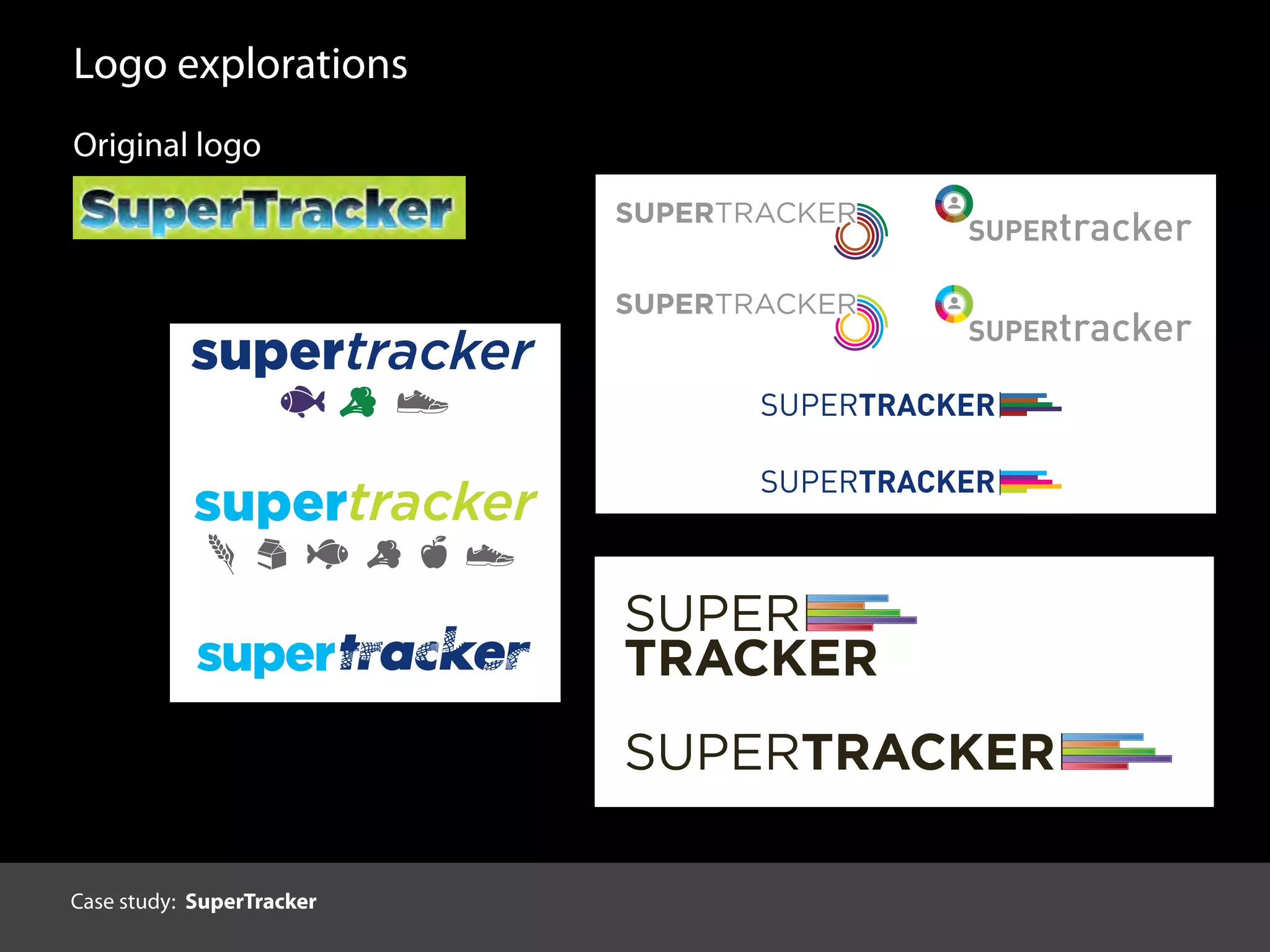
Logo explorations
SUPER
TRACKER
SUPERTRACKER
3.
Original logo
supertracker
supertracker
trackersuper
1. SUPERTRACKER
SUPERTRACKER
SUPERtracker
SUPERtracker
SUPERTRACKER
SUPERTRACKER
2.
Case study: SuperTracker
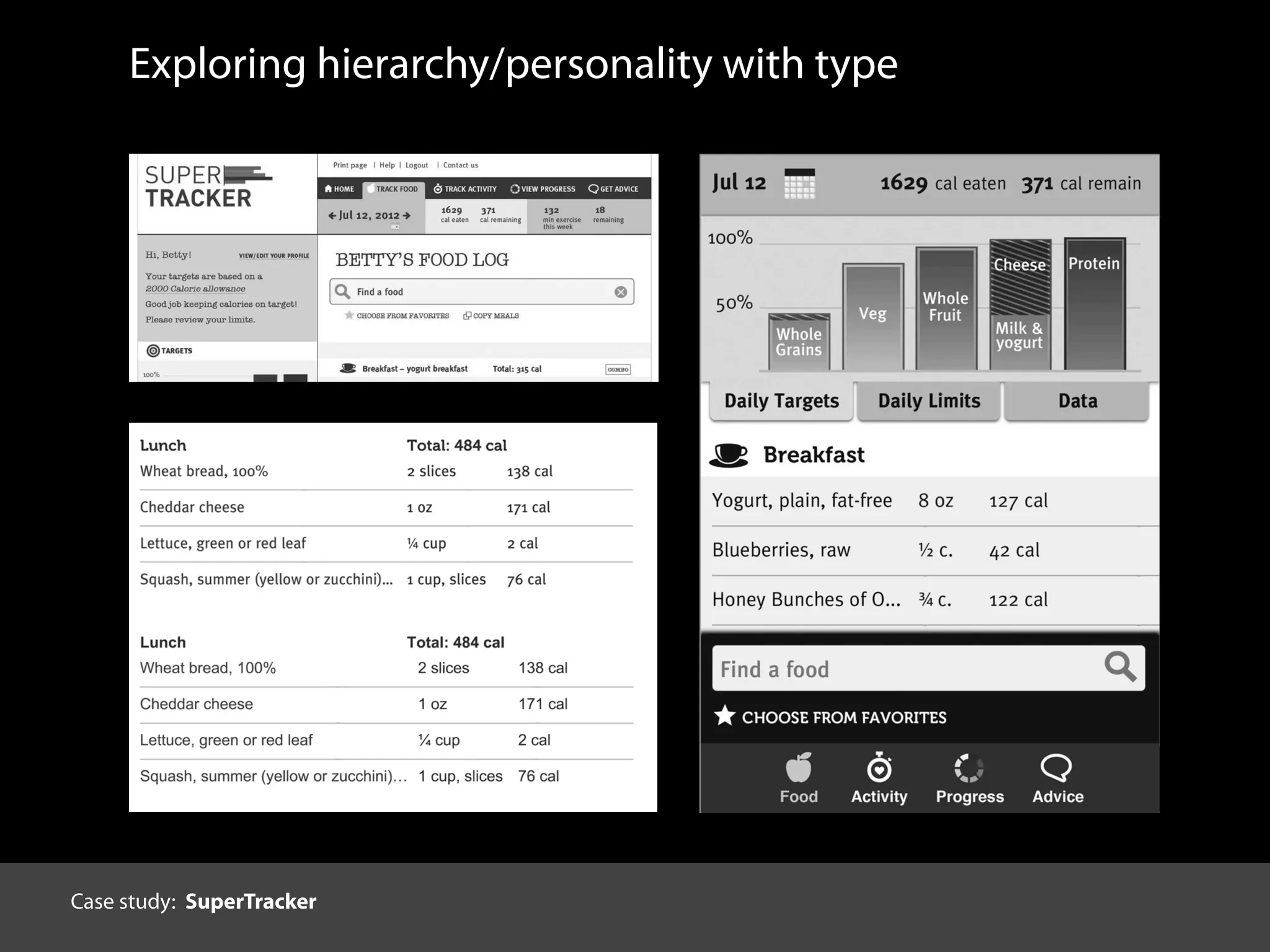
Exploring hierarchy/personality with type
Case study: SuperTracker
Exploring consistency, hierarchy, and personality
with color
Three requirements: approachability, adherence to standards, accessibility
Case study: SuperTracker
Exploring personality with imagery
Final icons
Case study: SuperTracker
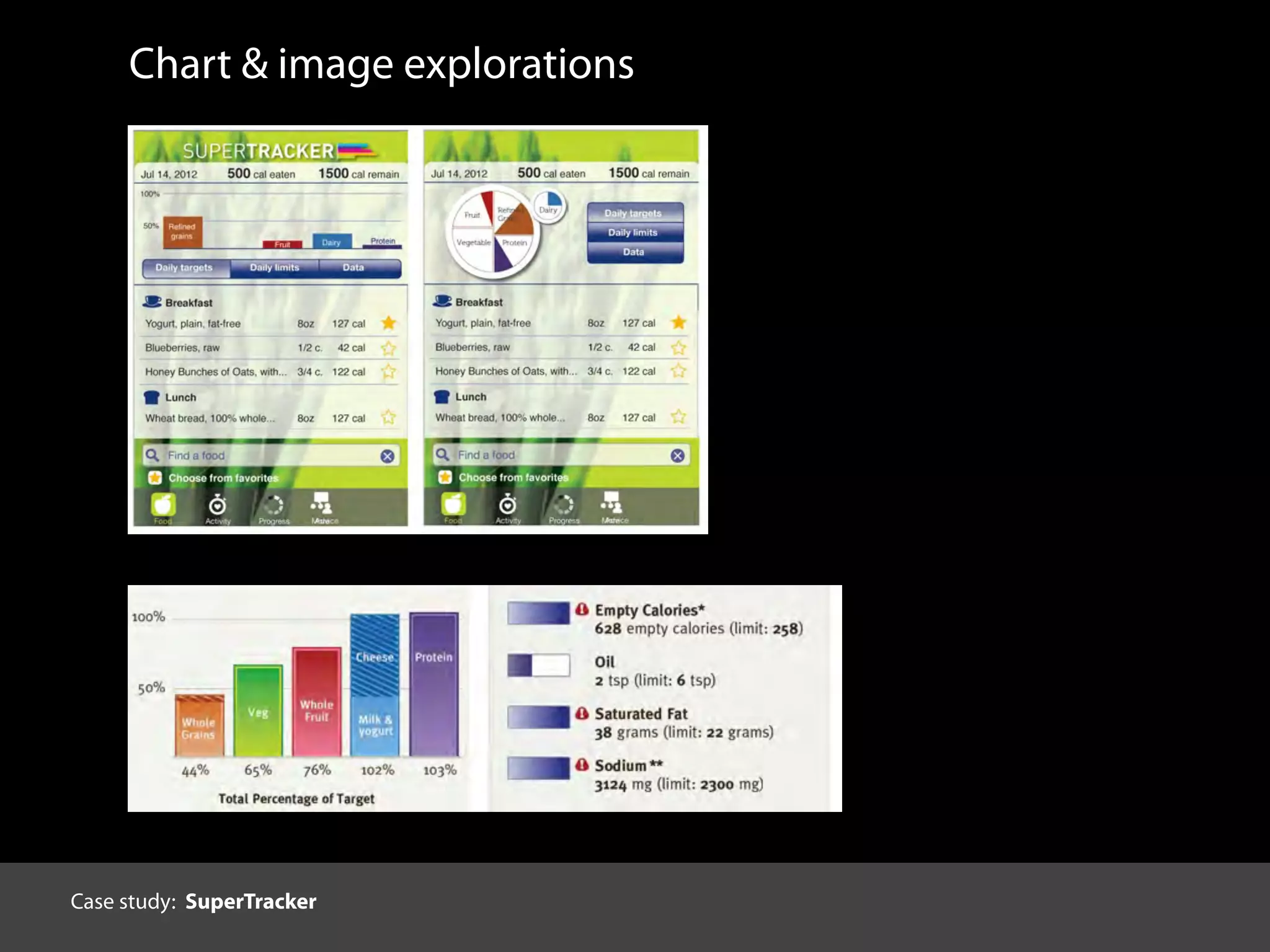
Chart & image explorations
Final charts
Case study: SuperTracker
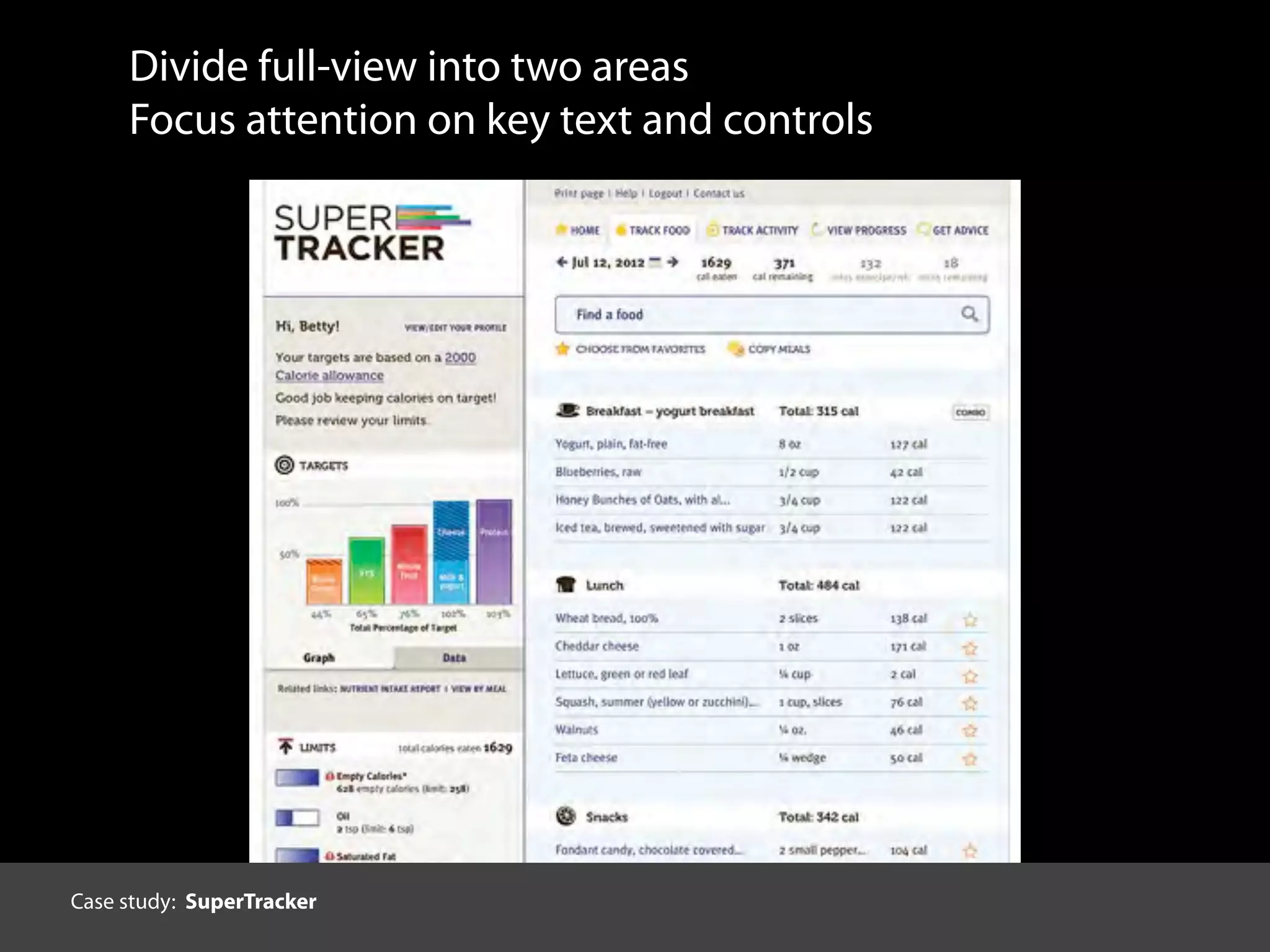
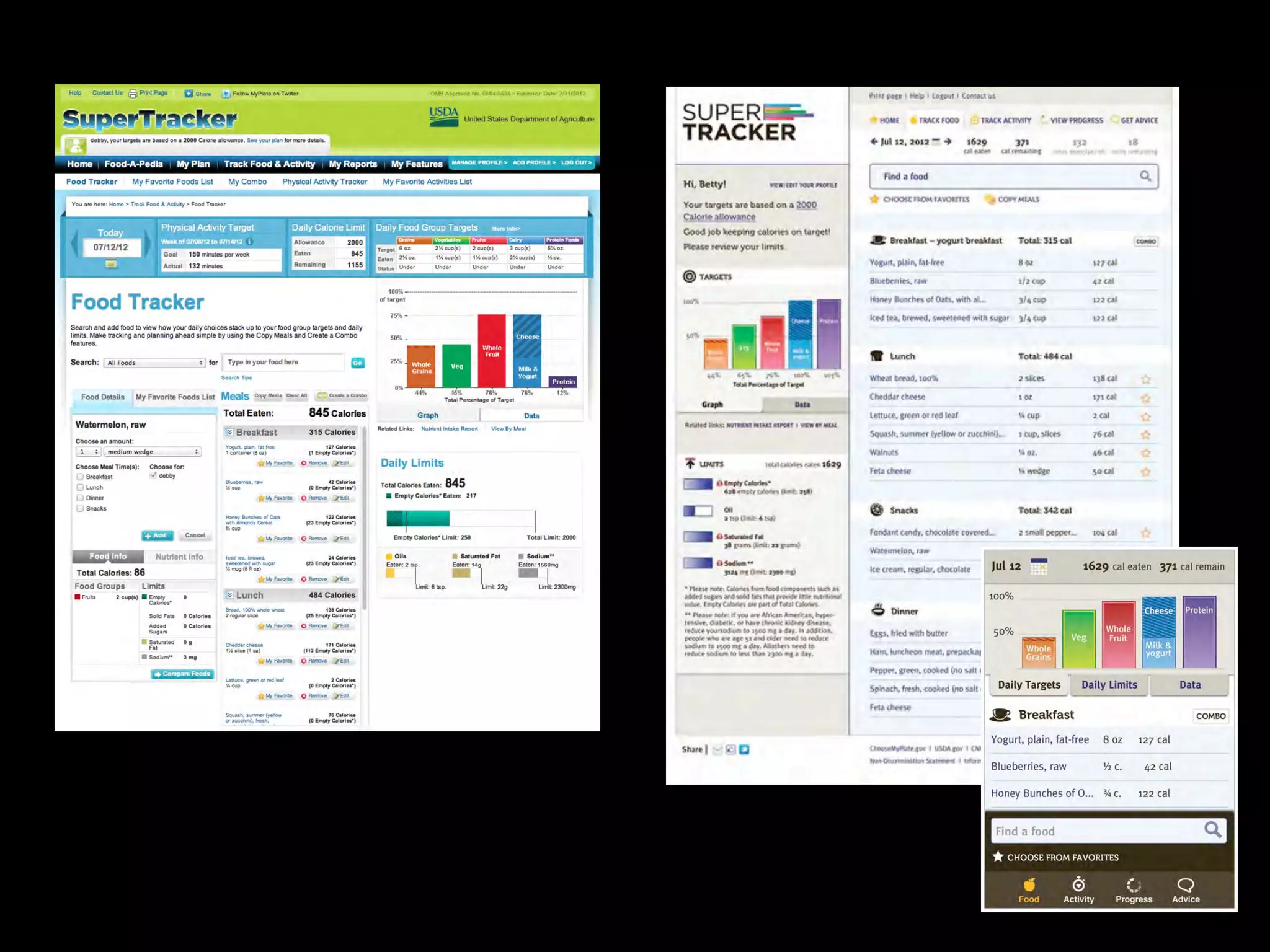
Divide full-view into two areas
Focus attention on key text and controls
Case study: SuperTracker
Thank you!
Tania Schlatter
tania@nimblepartners.com
@taniaschlatter
@visualusability

Tania Schlatter – Visual Usability

  • 1.
    Visual Usability Bringing Graphicand UI Design Together Tania Schlatter
  • 2.
  • 3.
    UX & IA| Catapult.org
  • 4.
    UX & IA| IDIN @ MIT
  • 5.
  • 6.
    UX & IA+ UI & visual design | reAssemble.net
  • 7.
    What is visualusability?
  • 9.
  • 10.
    How do wemake more strategicand less arbitrary decisions about visual design?
  • 11.
  • 12.
  • 13.
    How do wemake things people understand and want to use?
  • 14.
  • 15.
    Same UI problemsacross different site/app types
  • 16.
  • 17.
  • 18.
  • 19.
    Research on visionand perception for design
  • 20.
    People: • seek patternsquickly and automatically • notice differences • are attracted to novelty Key points about people and visual perception
  • 21.
    “[P]erceptions of interfaceaesthetic are closely related to apparent usability and thus increase the likelihood that aesthetics may considerably affect system acceptability.” - Noam Tractinsky Attractive things work better
  • 22.
    We have visceralreactions and make judgements based on what we see Is this for me?
  • 23.
  • 24.
    Consistency: establishing oradopting appropriate patterns Hierarchy: calling attention to the most important things Personality: choosing appropriate expressive characteristics
  • 25.
    Details matter. Oneof these is“just right.”
  • 26.
  • 27.
    Focusing on interfaceas a key part of the UX makes a difference
  • 28.
  • 29.
    A UI thatuses patterns to communicate has a visual language. Patterns and conventions help people understand what you are trying to say. Meta-principles: consistency Goal: define a consistent framework that can flex – a visual language Epicurious iPhone/iPad UI 2012/2013 Consistency
  • 30.
    Pattern recognition Establish patternswithin an app and use them consistently to create visual language. Meta-principles: consistency
  • 31.
    Differences in function– style Differences in types of text – font Differences in content types – layout Indicating difference is part of effective communication Meta-principles: consistency
  • 32.
    Internal consistency Consistent useof type and button style across screens Meta-principles: consistency
  • 33.
    External consistency Decisions aboutconsistency are linked to overall app strategy and UX. MS Word Google Consistency helps ease changes through familiarity. Meta-principles: consistency
  • 34.
    External consistency Inconsistency helpsdifferentiate. MS Word 750 Words Meta-principles: consistency
  • 35.
    If your usersshare similar characteristics and are familiar with an existing app, why not make everything consistent? Why not just copy another app? Why not just use the iOS or Android standards? Meta-principles: consistency
  • 36.
    Defaults are agood starting point. Appropriate visual cues are needed to create a visual hierarchy. A distinct personality inspires affinity. Meta-principles
  • 37.
    Squint. Can youtell the difference? Meta-principles
  • 38.
    Meaningful hierarchies havevisual indicators of importance, so people know what’s what, and who’s who. Goal: define levels of importance based on the most common or desirable path, and indicate them clearly Most mobile users want to search for a recipe Hierarchy Meta-principles: hierarchy
  • 39.
  • 40.
  • 41.
    Gestalt principles Psychological principlesoutlining perception of spatial relationships – help to establish visual hierarchy. • Proximity implies grouping, and similarity • Similar characteristics imply grouping • Figure and ground imply space – foreground and background. • Our eyes are drawn to differences http://graphicdesign.spokanefalls.edu/tutorials/process/gestaltprinciples/gestaltprinc.htm Meta-principles: hierarchy
  • 42.
    Gestalt principles Help usunderstand how to place and treat elements visually. Contrast is the key ingredient same color, shape and style = related different color = difference different color, size, and style = different Foreground/background = photo is not important, but buttons are Meta-principles: hierarchy
  • 43.
    Color: muted vs.saturated Treatment: plain vs. fancy Stylistic details affect visual hierarchy Meta-principles: hierarchy
  • 44.
    The more typesof elements you have, the harder it is to establish a clear hierarchy. Complexity adds to the challenge Meta-principles: hierarchy
  • 45.
  • 46.
    Does style really matter? Peoplejust want to catch their bus. Personality Visual characteristics affect interpretation. Goal: characteristics that communicate appropriate difference Meta-principles: personality
  • 47.
    I thought wewere talking about complex apps! People download me, even though they have a free weather app. Meta-principles: personality
  • 48.
    If consistency andhierarchy are the grammar of your visual language, personality is the tone and choice of words you speak. Hey everybody, listen up! Friends, Romans, countrymen: lend me your ears. Meta-principles: personality
  • 49.
    How much personalitydo we need? Goal is not drama or novelty for the sake of it. No one wants to use the app equivalent of Stark’s gold-plated juicer for Alessi. http://www.flickr.com/photos/dickyfeng/6254476990/ Meta-principles: personality
  • 50.
  • 51.
    How functional doesit need to be? http://www.wired.com/entertainment/theweb/magazine/17-09/ff_craigslist_makeover Selecting expressive qualities http://new.pentagram.com/2009/09/craigs-list/ Meta-principles: personality
  • 52.
    How to applyin practice?
  • 53.
    Thoughtful decisions aboutexpression and differentiation grounded in: 1. users and context • brain: how people see and understand • individual: age, demographics, experiences, expectations • situation: device, setting, goals 2. what is being communicated by whom • content: what is being represented • sender: who the information & interactions are from Criteria for decisions about personalitySuperTracker changing the visual language without changing use Case study: SuperTracker
  • 54.
    Communicating consistency, hierarchy,and personality through visual design Visual interface design requirements • What are the business’application goals? • What do we know/what can we learn about the users? • What are technical implications? + • What personality do we want to convey? Case study: SuperTracker
  • 55.
    Visual interface designrequirements • Goals: help broad audience make healthy food choices, lose weight, and get moving • Users: create lightweight personas based on real-world scenarios • Technical implications: quick competitive analysis suggested plenty of room for nice-looking apps; mobile-first strategy • Personality: what will be appropriate for users? Think about personas = Outcome: a design rationale Case study: SuperTracker
  • 56.
    Thoughtful decisions aboutexpression and differentiation grounded in: 1. users and context • brain: how people see and understand • individual: age, demographics, experiences, expectations • situation: device, setting, goals 2. what is being communicated by whom • content: what is being represented • sender: who the information & interactions are from Criteria for decisions about personalityFocus on food tracking Case study: SuperTracker
  • 57.
    Exploring consistency andhierarchy with layout Case study: SuperTracker
  • 58.
    Exploring consistency andhierarchy with layout Case study: SuperTracker
  • 59.
    Exploring layout withwireframes Case study: SuperTracker
  • 60.
    Logo explorations SUPER TRACKER SUPERTRACKER 3. Original logo supertracker supertracker trackersuper 1.SUPERTRACKER SUPERTRACKER SUPERtracker SUPERtracker SUPERTRACKER SUPERTRACKER 2. Case study: SuperTracker
  • 61.
    Exploring hierarchy/personality withtype Case study: SuperTracker
  • 62.
    Exploring consistency, hierarchy,and personality with color Three requirements: approachability, adherence to standards, accessibility Case study: SuperTracker
  • 63.
    Exploring personality withimagery Final icons Case study: SuperTracker
  • 64.
    Chart & imageexplorations Final charts Case study: SuperTracker
  • 65.
    Divide full-view intotwo areas Focus attention on key text and controls Case study: SuperTracker
  • 67.