SCANDAL AND 
SENSATION 
The mythologizing of a dispute: Scandal in the Eighteenth Century
WHAT dire Offence from am'rous Causes springs, 
What mighty Contests rise from trivial Things, 
I sing -- This Verse to C---, Muse! is due; 
This, ev'n Belinda may vouchfafe to view: 
Slight is the Subject, but not so the Praise, 
If She inspire, and He approve my Lays. 
Say what strange Motive, Goddess! cou'd compel 
A well-bred Lord t'assault a gentle Belle? 
Oh say what stranger Cause, yet unexplor'd, 
Cou'd make a gentle Belle reject a Lord? 
And dwells such Rage in softest Bosoms then? 
And lodge such daring Souls in Little Men? 
Alexander Pope, The Rape of the Lock (1714)
BACKGROUND 
 Arabella Fermor (called Belinda in the poem) and Lord Petre (Sir 
Plume) 
 Scandal when he cut off a lock of her hair 
 Let to feud between the two families 
 John Caryll asked Pope to write about it to reconnect the families 
 Had the opposite effect
Scandal and Sensation 
ITEMS FOR THE 
EXHIBITION
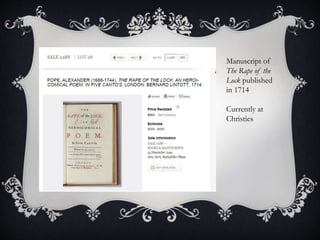
Manuscript of 
The Rape of the 
Lock published 
in 1714 
Currently at 
Christies
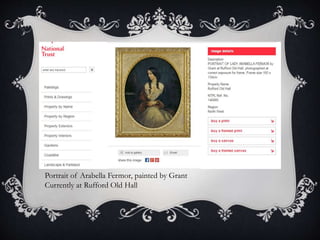
Portrait of Arabella Fermor, painted by Grant 
Currently at Rufford Old Hall
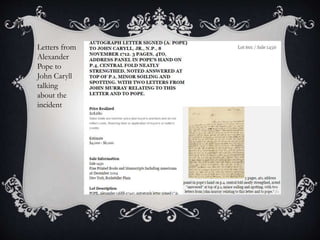
Letters from 
Alexander 
Pope to 
John Caryll 
talking 
about the 
incident
THE NARRATIVE OF THE 
PROJECT 
 The whole idea behind this project is to look at the idea of what a scandal was 
in the Eighteenth Century 
 Using The Rape of the Lock and Alexander Pope’s approach to this scandal as a 
kind of ‘scandal case study’ 
 Using the letter and manuscript as evidence of the distinction between the ‘real’ 
occurrence and the heavily dramatized account 
 Thinking about the study of ‘scandal’ and the elite in the Eighteenth Century 
and how this single event fits into this study
AREAS TO RESEARCH 
 Studies of Alexander Pope and The Rape of the Lock 
 Studies of Scandal in the Eighteenth Century 
 Studies of Alexander Pope’s correspondence 
 Art history surrounding Eighteenth-Century portraits 
 Book history and the proliferation of The Rape of the Lock in its 
first full edition
INTERDISCIPLINARY 
 This research is interdisciplinary as it looks at a variety of sources 
– paint, poetry, and a selection of letters 
 Literary studies and cultural history are the main discipline areas 
studied, although art history comes into play with the painting and 
book history is important when considering the original print edition

Scandal and sensation

  • 1.
    SCANDAL AND SENSATION The mythologizing of a dispute: Scandal in the Eighteenth Century
  • 2.
    WHAT dire Offencefrom am'rous Causes springs, What mighty Contests rise from trivial Things, I sing -- This Verse to C---, Muse! is due; This, ev'n Belinda may vouchfafe to view: Slight is the Subject, but not so the Praise, If She inspire, and He approve my Lays. Say what strange Motive, Goddess! cou'd compel A well-bred Lord t'assault a gentle Belle? Oh say what stranger Cause, yet unexplor'd, Cou'd make a gentle Belle reject a Lord? And dwells such Rage in softest Bosoms then? And lodge such daring Souls in Little Men? Alexander Pope, The Rape of the Lock (1714)
  • 3.
    BACKGROUND  ArabellaFermor (called Belinda in the poem) and Lord Petre (Sir Plume)  Scandal when he cut off a lock of her hair  Let to feud between the two families  John Caryll asked Pope to write about it to reconnect the families  Had the opposite effect
  • 4.
    Scandal and Sensation ITEMS FOR THE EXHIBITION
  • 5.
    Manuscript of TheRape of the Lock published in 1714 Currently at Christies
  • 6.
    Portrait of ArabellaFermor, painted by Grant Currently at Rufford Old Hall
  • 7.
    Letters from Alexander Pope to John Caryll talking about the incident
  • 8.
    THE NARRATIVE OFTHE PROJECT  The whole idea behind this project is to look at the idea of what a scandal was in the Eighteenth Century  Using The Rape of the Lock and Alexander Pope’s approach to this scandal as a kind of ‘scandal case study’  Using the letter and manuscript as evidence of the distinction between the ‘real’ occurrence and the heavily dramatized account  Thinking about the study of ‘scandal’ and the elite in the Eighteenth Century and how this single event fits into this study
  • 9.
    AREAS TO RESEARCH  Studies of Alexander Pope and The Rape of the Lock  Studies of Scandal in the Eighteenth Century  Studies of Alexander Pope’s correspondence  Art history surrounding Eighteenth-Century portraits  Book history and the proliferation of The Rape of the Lock in its first full edition
  • 10.
    INTERDISCIPLINARY  Thisresearch is interdisciplinary as it looks at a variety of sources – paint, poetry, and a selection of letters  Literary studies and cultural history are the main discipline areas studied, although art history comes into play with the painting and book history is important when considering the original print edition