Appearance
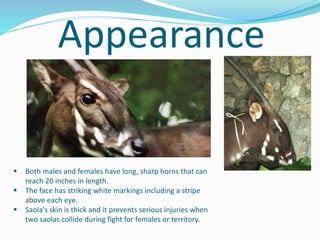
 Both males and females have long, sharp horns that can
reach 20 inches in length.
 The face has striking white markings including a stripe
above each eye.
 Saola's skin is thick and it prevents serious injuries when
two saolas collide during fight for females or territory.
Habitat
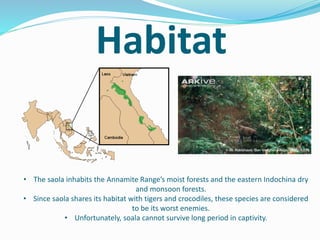
• The saola inhabits the Annamite Range’s moist forests and the eastern Indochina dry
and monsoon forests.
• Since saola shares its habitat with tigers and crocodiles, these species are considered
to be its worst enemies.
• Unfortunately, soala cannot survive long period in captivity.
Diet
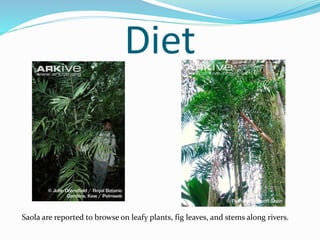
Saola are reported to browse on leafy plants, fig leaves, and stems along rivers.
Threats
The main threats to the saola are hunting and fragmentation of its range
through habitat loss:
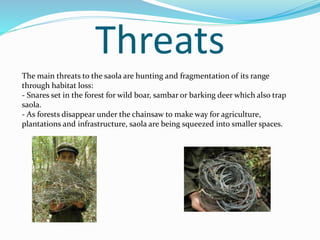
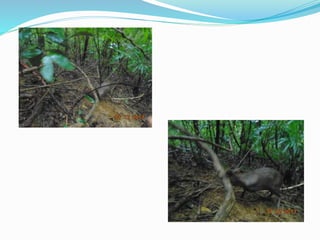
- Snares set in the forest for wild boar, sambar or barking deer which also trap
saola.
- As forests disappear under the chainsaw to make way for agriculture,
plantations and infrastructure, saola are being squeezed into smaller spaces.
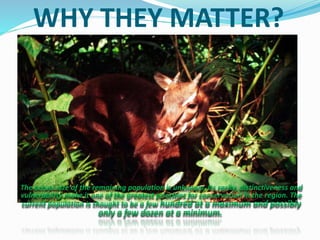
Saola are also hunted for the horns which have become prized trophies.
WHY THEY MATTER?
The actual size of the remaining population is unknown. Its rarity, distinctiveness and
vulnerability make it one of the greatest priorities for conservation in the region. The
current population is thought to be a few hundred at a maximum and possibly
only a few dozen at a minimum.

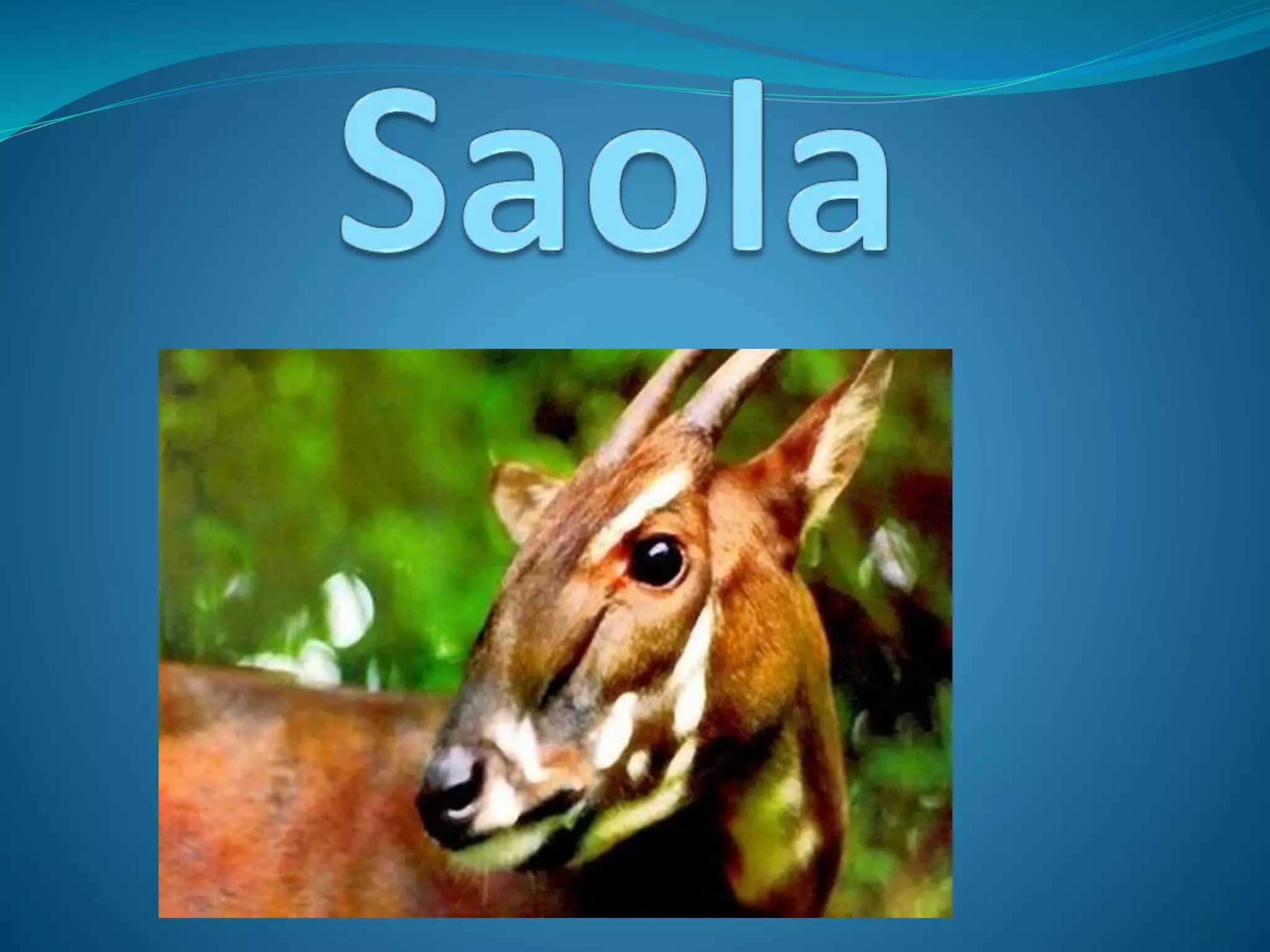
Saola

  • 2.
    Appearance  Both malesand females have long, sharp horns that can reach 20 inches in length.  The face has striking white markings including a stripe above each eye.  Saola's skin is thick and it prevents serious injuries when two saolas collide during fight for females or territory.
  • 3.
    Habitat • The saolainhabits the Annamite Range’s moist forests and the eastern Indochina dry and monsoon forests. • Since saola shares its habitat with tigers and crocodiles, these species are considered to be its worst enemies. • Unfortunately, soala cannot survive long period in captivity.
  • 4.
    Diet Saola are reportedto browse on leafy plants, fig leaves, and stems along rivers.
  • 5.
    Threats The main threatsto the saola are hunting and fragmentation of its range through habitat loss: - Snares set in the forest for wild boar, sambar or barking deer which also trap saola. - As forests disappear under the chainsaw to make way for agriculture, plantations and infrastructure, saola are being squeezed into smaller spaces.
  • 7.
    Saola are alsohunted for the horns which have become prized trophies.
  • 8.
    WHY THEY MATTER? Theactual size of the remaining population is unknown. Its rarity, distinctiveness and vulnerability make it one of the greatest priorities for conservation in the region. The current population is thought to be a few hundred at a maximum and possibly only a few dozen at a minimum.