Water, Sanitation and Hygiene
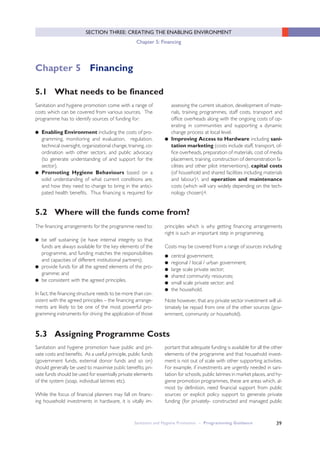
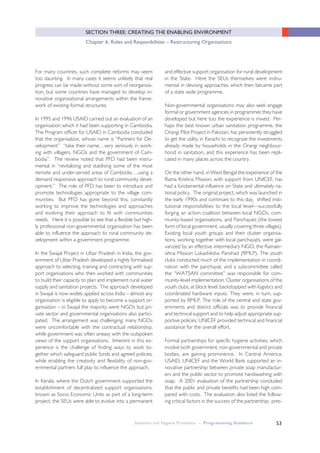
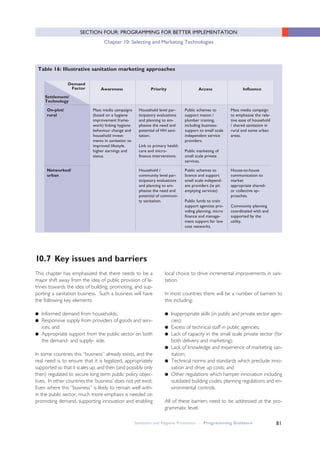
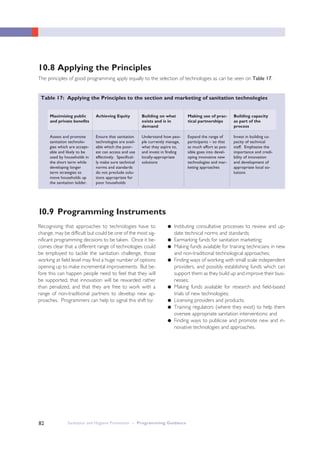
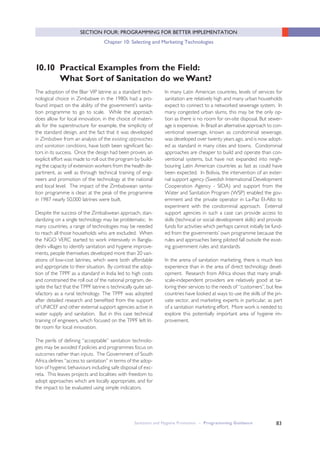
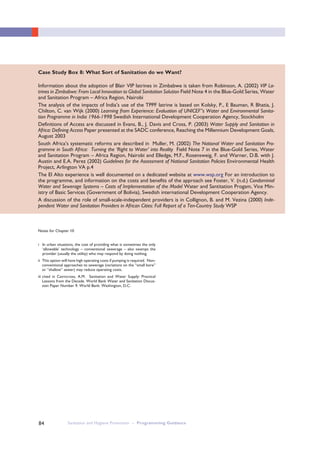
SanitationandHygienePromotion–ProgrammingGuidance
Sanitation and
Hygiene Promotion
Programming Guidance
ISBN 92 4 159303 2
This document was jointly produced by the following organisations:
London School of Hygiene & Tropical Medicine (LSHTM)
Keppel Street, London WC1E 7HT, United Kingdom
Tel: +44 20 7636 8636 Fax: +44 20 7436 5389
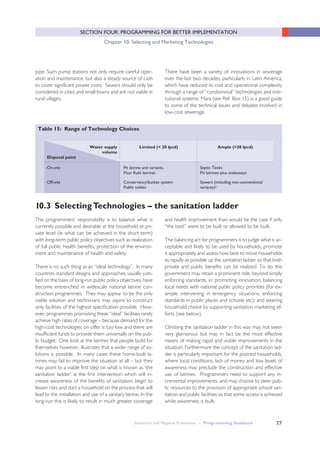
Website: www.lshtm.ac.uk
Pan American Health Organization (PAHO)
Pan American Sanitary Bureau,
Regional Office of the World Health Organization
525 Twenty-third Street, N.W.Washington, D.C. 20037, United States of America
Tel: +1 202 974 3000 Fax: +1 202 974 3663
Website: www.paho.org
United Nations Children Fund (UNICEF)
Water, Environment and Sanitation Programme Division
3 UN Plaza, New York, NY 10017, United States of America
Tel: +1 212 824 6307; +1 212 326 7371 Fax: +1 212 824 6480
Website: www.unicef.org
U.S.Agency for International Development (USAID)
Bureau for Global Health, Infectious Diseases Division
Environmental Health Team, USAID/GH/HIDN/ID
Ronald Reagan Building,Washington, DC 20523-1000, United States of America
Tel: +1 202 712 0000 Fax: +1 202 216 3524
Websites: www.usaid.gov www.ehproject.org
Water, Engineering and Development Centre (WEDC)
Loughborough University, Leicestershire LE11 3TU, United Kingdom
Tel: +44 1509 222885 Fax: +44 1509 211079
E-mail: wedc@lboro.ac.uk Website: www.wedc.ac.uk
Water and Sanitation Program (WSP)
1818 H Street, N.W.,Washington, D.C. 20433, United States of America
Tel: +1 202 473 9785 Fax: +1 202 522 3313, 522 3228
E-mail: info@wsp.org Website: www.wsp.org
Water Supply and Sanitation Collaborative Council (WSSCC)
International Environment House, 9 Chemin des Anémones,
1219 Châtelaine, Geneva, Switzerland
Tel: +41 22 917 8657 Fax: +41 22 917 8084
E-mail: wsscc@who.int Website: www.wsscc.org
World Health Organisation (WHO)
Avenue Appia 20, 1211 Geneva 27, Switzerland
Tel: +41 22 791 2111 Fax: +41 22 791 3111
Email: info@who.int Website: www.who.int
WHO
Dedication
This volume is dedicated to the memory of Dr. John H.Austin of USAID (1929-2004)
in recognition of his contributions to the water supply, sanitation and hygiene sector in
a career spanning over six decades working in all corners of the globe.
Sanitation and
Hygiene Promotion
Programming Guidance
Sanitation and Hygiene Promotion – Programming Guidance
WHO Library Cataloguing-in-Publication Data
Sanitation and hygiene promotion: programming guidance.
1. Sanitation 2. Hygiene 3. Water supply 4. Health promotion 5. Program development 6.
Guidelines
I. Water Supply and Sanitation Collaborative Council.
ISBN 92 4 159303 2 (NLM classification: WA 670)
© Water Supply and Sanitation Collaborative Council and World Health Organization, 2005
All rights reserved.
This publication can be obtained from:
Water Supply and Sanitation Collaborative Council, International Environment House,
9 Chemin des Anémones, 1219 Châtelaine, Geneva, Switzerland
(tel: + 41 22 917 8657, fax: + 41 22 917 8084, email: wsscc@who.int)
WHO Press, World Health Organization,
20 Avenue Appia, 1211 Geneva 27, Switzerland
(tel: +41 22 791 2476; fax: +41 22 791 4857; email: bookorders@who.int).
Requests for permission to reproduce or translate this publication – whether for sale or for noncom-
mercial distribution – should be addressed to the Water Supply and Sanitation Collaborative Council.
The designations employed and the presentation of the material in this publication do not imply the
expression of any opinion whatsoever on the part of WSSCC or WHO concerning the legal status of
any country, territory, city or area or of its authorities, or concerning the delimitation of its frontiers or
boundaries. Dotted lines on maps represent approximate border lines for which there may not yet be
full agreement.
All reasonable precautions have been taken by WSSCC and WHO to verify the information contained
in this publication. However, the published material is being distributed without warranty of any kind,
either express or implied. The responsibility for the interpretation and use of the material lies with the
reader. In no event shall the WSSCC or WHO be liable for damages arising from its use.
Designed by MediaCompany Berlin
Printed in Geneva
Contributions
The development of this document was led by a team consisting of John Austin (USAID), Lizette Burgers (UNICEF),
Sandy Cairncross (LSHTM), Andrew Cotton (WEDC / WELL), Val Curtis (LSHTM), Barbara Evans (consultant), Ger-
ardo Galvis (PAHO/CEPIS), Pete Kolsky (WSP), Eddy Perez (EHP), Fred Rosensweig (EHP) and Darren Saywell
(WSSCC). It was produced under the overall direction of Gourisankar Ghosh of WSSCC and John Borrazzo of USAID.
Detailed comments and inputs were provided by Len Abrams (World Bank), Adam Biran (LSHTM), Clarissa Brockle-
hurst (consultant), Jennifer Davis (MIT), Jennifer Francis (GWA), Eckhard Kleinau (EHP), Eugene Larbi (TREND), Shona
McKenzie (consultant), Brian Reed (WEDC / WELL), Kevin Samson (WEDC / WELL), Ines Restrepo (CINARA), Car-
oline van den Berg (World Bank), Christine van Wijk-Sijbesma (IRC, on behalf of Gender Water Alliance), Minne Ven-
ter Hildebrand (Umgeni Water) and Merri Weinger (USAID). A draft was circulated and discussed at the SADC Water,
Sanitation and Hygiene Meeting (Gaborone August 7 - 11, 2003).
The document was prepared by Barbara Evans. Substantial text contributions were made by Fred Rosensweig (Chap-
ter 3), Eckhard Kleinau (Chapter 7) and Pete Kolsky (Chapter 10). Design and production was managed by Sören Bauer,
WSSCC.
The 1997 UNICEF Handbook which forms the basis for some sections of this document was prepared by a consult-
ant team consisting of Jake Pfohl (principle author), Isabel Blackett and Clifford Wang. Additional inputs and comments
were provided by Steve Esrey, TV Luong, and Gourisankar Ghosh (UNICEF), John Austin and John Borrazzo (USAID),
Eddy Perez, Diane Bendahmane, Betsy Reddaway and Darlene Summers (EHP / USAID), Mayling Simpson-Herbert
(WHO). Review was provided by Massee Bateman and Fred Rosensweig (EHP / USAID), Sandy Cairncross (LSHTM)
and members of the UNICEF Sanitation Working Group.
Feedback
Sanitation and Hygiene Promotion are amongst the most challenging development sectors in which to work. This is
partly because effective sanitation requires the development of public policy in an arena which is intensely private and
where results are only achieved when the household makes appropriate choices. Because of the complexity of the sec-
tor, and in light of the relatively small body of public policy experience, it is inevitable that the current document will
represent a work in progress. Hopefully with the new interest in the sector, there will be new ideas and experiences
to reflect on in the coming few years. Where readers feel that the current document can be usefully updated, changed
or amended in any way to reflect such experience they are encouraged to contact:
Water Supply and Sanitation Collaborative Council (WSSCC)
International Environment House, 9 Chemin des Anémones,
1219 Châtelaine, Geneva, Switzerland
Tel: + 41 22 917 8657
Fax: + 41 22 917 8084
Email: info@who.int
Website: www.who.int
ISanitation and Hygiene Promotion – Programming Guidance
II
Table of Contents
A Note to the Reader . . . . . . . . . . . . . . . . . . . . . . . . . . . . . . . . . . . . . . . . . . . . . . . . . . . . . . . . . . . . . . . . . . . . . . . . . . . . . 1
SECTION ONE SANITATION AND HYGIENE PROMOTION – GENERAL PRINCIPLES . . . . . . . . . . . . . . . . .6
Chapter 1 The Basics . . . . . . . . . . . . . . . . . . . . . . . . . . . . . . . . . . . . . . . . . . . . . . . . . . . . . . . . . . . . . . . . . . . . . . . . . .6
1.1 More than 2 billion people lack access to hygienic means of personal sanitation . . . . . . . . . . .6
1.2 Increased access to Sanitation and Better Hygienic Practices
Have Significant Positive Impacts . . . . . . . . . . . . . . . . . . . . . . . . . . . . . . . . . . . . . . . . . . . . . . . . . . .7
1.3 Improved Access to Hardware and Changes in Behaviour
at the Household are Critical Interventions . . . . . . . . . . . . . . . . . . . . . . . . . . . . . . . . . . . . . . . . .10
1.4 Lessons for effective sanitation and hygiene promotion programming:
Supporting investments and behaviour changes within the household . . . . . . . . . . . . . . . . . . .12
1.5 The Role of Government – some principles . . . . . . . . . . . . . . . . . . . . . . . . . . . . . . . . . . . . . . . .15
SECTION TWO THE PROCESS OF CHANGE . . . . . . . . . . . . . . . . . . . . . . . . . . . . . . . . . . . . . . . . . . . . . . . . . . . . .18
Chapter 2 Getting Started . . . . . . . . . . . . . . . . . . . . . . . . . . . . . . . . . . . . . . . . . . . . . . . . . . . . . . . . . . . . . . . . . . . . .18
2.1 Changing the way services are delivered . . . . . . . . . . . . . . . . . . . . . . . . . . . . . . . . . . . . . . . . . . . .18
2.2 Contextual Factors – selecting the right approach . . . . . . . . . . . . . . . . . . . . . . . . . . . . . . . . . . .21
2.3 Before You Start - Building political will . . . . . . . . . . . . . . . . . . . . . . . . . . . . . . . . . . . . . . . . . . . .23
2.4 When You Start – Generating a Vision . . . . . . . . . . . . . . . . . . . . . . . . . . . . . . . . . . . . . . . . . . . . .24
2.5 Ideas for Process . . . . . . . . . . . . . . . . . . . . . . . . . . . . . . . . . . . . . . . . . . . . . . . . . . . . . . . . . . . . . . .24
2.6 Applying the Principles . . . . . . . . . . . . . . . . . . . . . . . . . . . . . . . . . . . . . . . . . . . . . . . . . . . . . . . . . .25
2.7 Identifying and implementing solutions . . . . . . . . . . . . . . . . . . . . . . . . . . . . . . . . . . . . . . . . . . . . .25
2.8 Practical Examples from the Field: How did they organize the programming process? . . . . .27
SECTION THREE CREATING THE ENABLING ENVIRONMENT . . . . . . . . . . . . . . . . . . . . . . . . . . . . . . . . . . . . .30
Chapter 3 Sanitation and Hygiene Promotion Policies . . . . . . . . . . . . . . . . . . . . . . . . . . . . . . . . . . . . . . . . . . . . .30
3.1 The Policy Context . . . . . . . . . . . . . . . . . . . . . . . . . . . . . . . . . . . . . . . . . . . . . . . . . . . . . . . . . . . . .30
3.2 Signaling Public Policy Objectives . . . . . . . . . . . . . . . . . . . . . . . . . . . . . . . . . . . . . . . . . . . . . . . . . .31
3.3 Locating Policy . . . . . . . . . . . . . . . . . . . . . . . . . . . . . . . . . . . . . . . . . . . . . . . . . . . . . . . . . . . . . . . . .32
3.4 Building on what exists . . . . . . . . . . . . . . . . . . . . . . . . . . . . . . . . . . . . . . . . . . . . . . . . . . . . . . . . . .32
3.5 Applying the Principles . . . . . . . . . . . . . . . . . . . . . . . . . . . . . . . . . . . . . . . . . . . . . . . . . . . . . . . . . .32
3.6 Programming Instruments . . . . . . . . . . . . . . . . . . . . . . . . . . . . . . . . . . . . . . . . . . . . . . . . . . . . . . . .33
3.7 Practical Examples from the Field: What policy changes should we make? . . . . . . . . . . . . . . .33
Chapter 4 Allocating Resources Strategically . . . . . . . . . . . . . . . . . . . . . . . . . . . . . . . . . . . . . . . . . . . . . . . . . . . . .35
4.1 Focusing on objectives . . . . . . . . . . . . . . . . . . . . . . . . . . . . . . . . . . . . . . . . . . . . . . . . . . . . . . . . . . .35
4.2 The need for transparent rules . . . . . . . . . . . . . . . . . . . . . . . . . . . . . . . . . . . . . . . . . . . . . . . . . . . .37
4.3 Applying the Principles . . . . . . . . . . . . . . . . . . . . . . . . . . . . . . . . . . . . . . . . . . . . . . . . . . . . . . . . . .38
4.4 Programming Instruments . . . . . . . . . . . . . . . . . . . . . . . . . . . . . . . . . . . . . . . . . . . . . . . . . . . . . . . .38
Chapter 5 Financing . . . . . . . . . . . . . . . . . . . . . . . . . . . . . . . . . . . . . . . . . . . . . . . . . . . . . . . . . . . . . . . . . . . . . . . . . .39
5.1 What needs to be financed? . . . . . . . . . . . . . . . . . . . . . . . . . . . . . . . . . . . . . . . . . . . . . . . . . . . . . .39
5.2 Where will the funds come from? . . . . . . . . . . . . . . . . . . . . . . . . . . . . . . . . . . . . . . . . . . . . . . . . .39
5.3 Assigning Programme Costs . . . . . . . . . . . . . . . . . . . . . . . . . . . . . . . . . . . . . . . . . . . . . . . . . . . . . .39
5.4 Household self-financing – sanitation . . . . . . . . . . . . . . . . . . . . . . . . . . . . . . . . . . . . . . . . . . . . . . .41
5.5 Subsidies for sanitation . . . . . . . . . . . . . . . . . . . . . . . . . . . . . . . . . . . . . . . . . . . . . . . . . . . . . . . . . .41
5.6 Supporting self-financing through micro-finance . . . . . . . . . . . . . . . . . . . . . . . . . . . . . . . . . . . . . .42
5.7 Generating revenue for sanitation and hygiene promotion . . . . . . . . . . . . . . . . . . . . . . . . . . . .43
5.8 Financial instruments to promote reform . . . . . . . . . . . . . . . . . . . . . . . . . . . . . . . . . . . . . . . . . . .43
5.9 Applying the Principles . . . . . . . . . . . . . . . . . . . . . . . . . . . . . . . . . . . . . . . . . . . . . . . . . . . . . . . . . .44
5.10 Programming Instruments . . . . . . . . . . . . . . . . . . . . . . . . . . . . . . . . . . . . . . . . . . . . . . . . . . . . . . .44
5.11 Practical Examples from the Field: How will we pay for the programme? . . . . . . . . . . . . . .44
Sanitation and Hygiene Promotion – Programming Guidance
III
Chapter 6 Roles and Responsibilities – Restructuring Organisations . . . . . . . . . . . . . . . . . . . . . . . . . . . . . . . . . .48
6.1 Who is going to deliver your Programme? . . . . . . . . . . . . . . . . . . . . . . . . . . . . . . . . . . . . . . . . . .48
6.2 What will define successful organisations in your Programme? . . . . . . . . . . . . . . . . . . . . . . . . .48
6.3 Allocation of Responsibilities . . . . . . . . . . . . . . . . . . . . . . . . . . . . . . . . . . . . . . . . . . . . . . . . . . . . .49
6.4 Capacity Building Approaches . . . . . . . . . . . . . . . . . . . . . . . . . . . . . . . . . . . . . . . . . . . . . . . . . . . .49
6.5 Managing the Change Process . . . . . . . . . . . . . . . . . . . . . . . . . . . . . . . . . . . . . . . . . . . . . . . . . . . .50
6.6 Applying the Principles . . . . . . . . . . . . . . . . . . . . . . . . . . . . . . . . . . . . . . . . . . . . . . . . . . . . . . . . . .50
6.7 Programming Instruments . . . . . . . . . . . . . . . . . . . . . . . . . . . . . . . . . . . . . . . . . . . . . . . . . . . . . . . .50
6.8 Practical Examples from the Field: Who’s going to deliver our programme? . . . . . . . . . . . . . .52
Chapter 7 Monitoring and Evaluation . . . . . . . . . . . . . . . . . . . . . . . . . . . . . . . . . . . . . . . . . . . . . . . . . . . . . . . . . . .56
7.1 Thinking about Monitoring and Evaluation . . . . . . . . . . . . . . . . . . . . . . . . . . . . . . . . . . . . . . . . . .56
7.2 What is Monitoring and Evaluation? . . . . . . . . . . . . . . . . . . . . . . . . . . . . . . . . . . . . . . . . . . . . . . . .56
7.3 What to Monitor and Evaluate? . . . . . . . . . . . . . . . . . . . . . . . . . . . . . . . . . . . . . . . . . . . . . . . . . . .57
7.4 How to do the Monitoring and Evaluation? . . . . . . . . . . . . . . . . . . . . . . . . . . . . . . . . . . . . . . . . .59
7.5 Applying the Principles . . . . . . . . . . . . . . . . . . . . . . . . . . . . . . . . . . . . . . . . . . . . . . . . . . . . . . . . . .60
7.6 Programming Instruments . . . . . . . . . . . . . . . . . . . . . . . . . . . . . . . . . . . . . . . . . . . . . . . . . . . . . . . .60
7.7 Practical Examples from the Field: How will we know
whether our programme is working? . . . . . . . . . . . . . . . . . . . . . . . . . . . . . . . . . . . . . . . . . . . . . . .61
SECTION FOUR PROGRAMMING FOR BETTER IMPLEMENTATION . . . . . . . . . . . . . . . . . . . . . . . . . . . . . . . .63
Chapter 8 Working with Communities and Households . . . . . . . . . . . . . . . . . . . . . . . . . . . . . . . . . . . . . . . . . . .63
8.1 The different roles for communities and households . . . . . . . . . . . . . . . . . . . . . . . . . . . . . . . . .63
8.2 Building capacity at the community level . . . . . . . . . . . . . . . . . . . . . . . . . . . . . . . . . . . . . . . . . . . .64
8.3 Communicating Effectively . . . . . . . . . . . . . . . . . . . . . . . . . . . . . . . . . . . . . . . . . . . . . . . . . . . . . . .64
8.4 Selecting Community Level Tools . . . . . . . . . . . . . . . . . . . . . . . . . . . . . . . . . . . . . . . . . . . . . . . . .65
8.5 The Tools . . . . . . . . . . . . . . . . . . . . . . . . . . . . . . . . . . . . . . . . . . . . . . . . . . . . . . . . . . . . . . . . . . . . .65
8.6 Scaling Up . . . . . . . . . . . . . . . . . . . . . . . . . . . . . . . . . . . . . . . . . . . . . . . . . . . . . . . . . . . . . . . . . . . . .66
8.7 Programming Instruments . . . . . . . . . . . . . . . . . . . . . . . . . . . . . . . . . . . . . . . . . . . . . . . . . . . . . . . .67
8.8 Practical Examples from the Field: What will the community do? . . . . . . . . . . . . . . . . . . . . . .68
Chapter 9 Hygiene Promotion . . . . . . . . . . . . . . . . . . . . . . . . . . . . . . . . . . . . . . . . . . . . . . . . . . . . . . . . . . . . . . . . .70
9.1 Introduction . . . . . . . . . . . . . . . . . . . . . . . . . . . . . . . . . . . . . . . . . . . . . . . . . . . . . . . . . . . . . . . . . . .70
9.2 Making Sure Hygiene Promotion Works . . . . . . . . . . . . . . . . . . . . . . . . . . . . . . . . . . . . . . . . . . .70
9.3 Applying the Principles . . . . . . . . . . . . . . . . . . . . . . . . . . . . . . . . . . . . . . . . . . . . . . . . . . . . . . . . . .71
9.4 Programming Instruments . . . . . . . . . . . . . . . . . . . . . . . . . . . . . . . . . . . . . . . . . . . . . . . . . . . . . . . .72
9.5 Practical Examples from the Field: How will we promote hygienic behaviours? . . . . . . . . . . .72
Chapter 10 Selecting and Marketing Technologies . . . . . . . . . . . . . . . . . . . . . . . . . . . . . . . . . . . . . . . . . . . . . . . . .74
10.1 Introduction . . . . . . . . . . . . . . . . . . . . . . . . . . . . . . . . . . . . . . . . . . . . . . . . . . . . . . . . . . . . . . . . . .74
10.2 Making Sure that Technology Works . . . . . . . . . . . . . . . . . . . . . . . . . . . . . . . . . . . . . . . . . . . . .74
10.3 Selecting Technologies – the sanitation ladder . . . . . . . . . . . . . . . . . . . . . . . . . . . . . . . . . . . . .77
10.4 Other Factors – community management . . . . . . . . . . . . . . . . . . . . . . . . . . . . . . . . . . . . . . . . .78
10.5 Building Capacity . . . . . . . . . . . . . . . . . . . . . . . . . . . . . . . . . . . . . . . . . . . . . . . . . . . . . . . . . . . . . .78
10.6 Sanitation Marketing . . . . . . . . . . . . . . . . . . . . . . . . . . . . . . . . . . . . . . . . . . . . . . . . . . . . . . . . . . .79
10.7 Key issues and barriers . . . . . . . . . . . . . . . . . . . . . . . . . . . . . . . . . . . . . . . . . . . . . . . . . . . . . . . . .81
10.8 Applying the Principles . . . . . . . . . . . . . . . . . . . . . . . . . . . . . . . . . . . . . . . . . . . . . . . . . . . . . . . . .82
10.9 Programming Instruments . . . . . . . . . . . . . . . . . . . . . . . . . . . . . . . . . . . . . . . . . . . . . . . . . . . . . . .82
10.10 Practical Examples from the Field: What Sort of Sanitation do we Want? . . . . . . . . . . . . .83
Sanitation and Hygiene Promotion – Programming Guidance
Sanitation and Hygiene Promotion – Programming GuidanceIV
List of Figures
Figure i: The Hygiene Improvement Framework . . . . . . . . . . . . . . . . . . . . . . . . . . . . . . . . . . . . . . . . . . . . . 2
Figure ii: Navigation Guide – The Programming Process . . . . . . . . . . . . . . . . . . . . . . . . . . . . . . . . . . . . . . 4
Figure 1: The F-diagram of disease transmission and control . . . . . . . . . . . . . . . . . . . . . . . . . . . . . . . . . . 10
Figure 2: Additional transmission pathways due to poorly-managed sanitation . . . . . . . . . . . . . . . . . . . 10
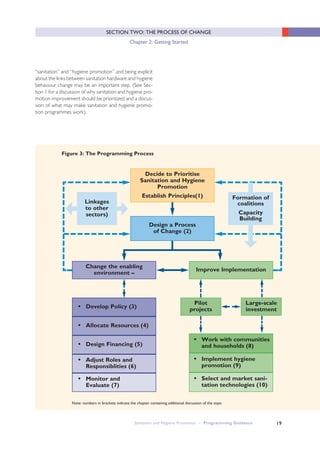
Figure 3: The Programming Process . . . . . . . . . . . . . . . . . . . . . . . . . . . . . . . . . . . . . . . . . . . . . . . . . . . . . . . 19
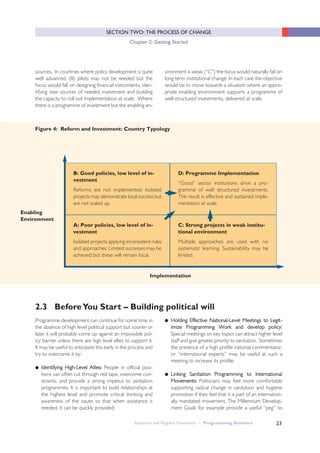
Figure 4: Reform and Investment: Country Typology . . . . . . . . . . . . . . . . . . . . . . . . . . . . . . . . . . . . . . . . . 23
Figure 5: Household demand in the context of service delivery . . . . . . . . . . . . . . . . . . . . . . . . . . . . . . . . 80
List ofTables
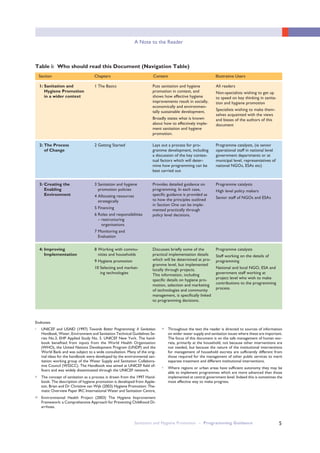
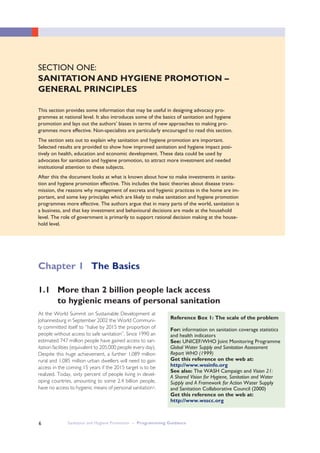
Table i: Who should read this Document (Navigation Table) . . . . . . . . . . . . . . . . . . . . . . . . . . . . . . . . .5
Table 1: Impacts of Improved water supply, sanitation and hygiene on morbidity
and mortality for six common diseases: evidence from 144 studies . . . . . . . . . . . . . . . . . . . . . 8
Table 2: Growth Rate of per capita Income 1995-1994 by income (GDP)
and infant mortality rate, 1965 . . . . . . . . . . . . . . . . . . . . . . . . . . . . . . . . . . . . . . . . . . . . . . . . . . . . 9
Table 3: Applying the Principles to the Change Process . . . . . . . . . . . . . . . . . . . . . . . . . . . . . . . . . . . . . 26
Table 4: Applying the Principles to Policy Development . . . . . . . . . . . . . . . . . . . . . . . . . . . . . . . . . . . . . 33
Table 5: Applying the Principles to Resource Allocation . . . . . . . . . . . . . . . . . . . . . . . . . . . . . . . . . . . . . 38
Table 6: Illustrative Financing Models . . . . . . . . . . . . . . . . . . . . . . . . . . . . . . . . . . . . . . . . . . . . . . . . . . . . 40
Table 7: Subsidy Mechanisms . . . . . . . . . . . . . . . . . . . . . . . . . . . . . . . . . . . . . . . . . . . . . . . . . . . . . . . . . . . 42
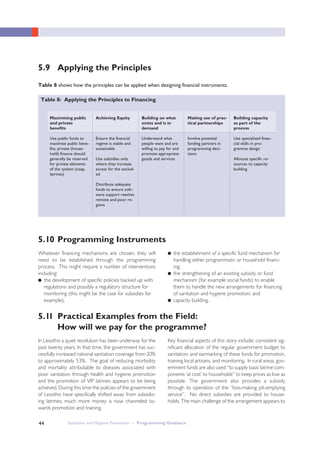
Table 8: Applying the Principles to Financing . . . . . . . . . . . . . . . . . . . . . . . . . . . . . . . . . . . . . . . . . . . . . . 44
Table 9: Applying the Principles to Organisational Restructuring . . . . . . . . . . . . . . . . . . . . . . . . . . . . . . 50
Table 10: Uses of Monitoring and Evaluation . . . . . . . . . . . . . . . . . . . . . . . . . . . . . . . . . . . . . . . . . . . . . . . 57
Table 11: Indicative Programme Performance Monitoring Plan
for Sanitation and Hygiene Promotion . . . . . . . . . . . . . . . . . . . . . . . . . . . . . . . . . . . . . . . . . . . . 58
Table 12: Some Tools for Monitoring and Evaluation . . . . . . . . . . . . . . . . . . . . . . . . . . . . . . . . . . . . . . . . 59
Table 13: Applying the Principles to Monitoring and Evaluation . . . . . . . . . . . . . . . . . . . . . . . . . . . . . . . 60
Table 14: Applying the Principles to Hygiene Promotion . . . . . . . . . . . . . . . . . . . . . . . . . . . . . . . . . . . . . 71
Table 15: Range of Technology Choices . . . . . . . . . . . . . . . . . . . . . . . . . . . . . . . . . . . . . . . . . . . . . . . . . . . 77
Table 16: Illustrative sanitation marketing approaches . . . . . . . . . . . . . . . . . . . . . . . . . . . . . . . . . . . . . . . . 81
Table 17: Applying the Principles to the section and marketing of sanitation technologies . . . . . . . . . 82
Sanitation and Hygiene Promotion – Programming Guidance V
List of Reference Boxes
Reference Box 1: The scale of the problem . . . . . . . . . . . . . . . . . . . . . . . . . . . . . . . . . . . . . . . . . . . . . . . . 6
Reference Box 2: Impacts of Improved Sanitation and Hygiene Promotion . . . . . . . . . . . . . . . . . . . . . . 9
Reference Box 3: “Hygiene” and “Sanitation” . . . . . . . . . . . . . . . . . . . . . . . . . . . . . . . . . . . . . . . . . . . . . 11
Reference Box 4: Lessons learned . . . . . . . . . . . . . . . . . . . . . . . . . . . . . . . . . . . . . . . . . . . . . . . . . . . . 13-14
Reference Box 5: Principles . . . . . . . . . . . . . . . . . . . . . . . . . . . . . . . . . . . . . . . . . . . . . . . . . . . . . . . . . . . . . 16
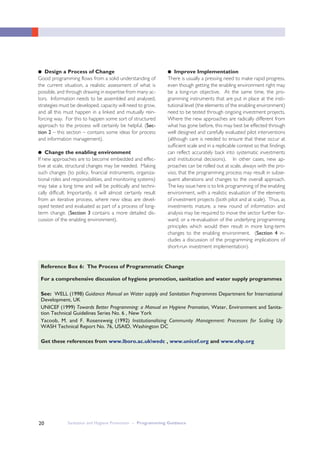
Reference Box 6: The Process of Programmatic Change . . . . . . . . . . . . . . . . . . . . . . . . . . . . . . . . . . . . 20
Reference Box 7: The Programming Process . . . . . . . . . . . . . . . . . . . . . . . . . . . . . . . . . . . . . . . . . . . . . . 26
Reference Box 8: Sanitation policies . . . . . . . . . . . . . . . . . . . . . . . . . . . . . . . . . . . . . . . . . . . . . . . . . . . . . 32
Reference Box 9: Needs and demands . . . . . . . . . . . . . . . . . . . . . . . . . . . . . . . . . . . . . . . . . . . . . . . . . . . 37
Reference Box 10: Financial instruments . . . . . . . . . . . . . . . . . . . . . . . . . . . . . . . . . . . . . . . . . . . . . . . . . . . 43
Reference Box 11: Organizational roles and responsibilities . . . . . . . . . . . . . . . . . . . . . . . . . . . . . . . . 51-52
Reference Box 12: Monitoring and evaluation . . . . . . . . . . . . . . . . . . . . . . . . . . . . . . . . . . . . . . . . . . . . . . 60
Reference Box 13: Communications approaches . . . . . . . . . . . . . . . . . . . . . . . . . . . . . . . . . . . . . . . . . . . 67
Reference Box 14: Hygiene promotion . . . . . . . . . . . . . . . . . . . . . . . . . . . . . . . . . . . . . . . . . . . . . . . . . . . . 71
Reference Box 15: Sanitation technologies . . . . . . . . . . . . . . . . . . . . . . . . . . . . . . . . . . . . . . . . . . . . . . . . . 79
List of Case Study Boxes
Case Study Box 1: Do We Need a Programme? . . . . . . . . . . . . . . . . . . . . . . . . . . . . . . . . . . . . . . . . . . . . 29
Case Study Box 2: What Policy Changes should we make? . . . . . . . . . . . . . . . . . . . . . . . . . . . . . . . . . . . 34
Case Study Box 3: How will we pay for the programme? . . . . . . . . . . . . . . . . . . . . . . . . . . . . . . . . . . . . . 46
Case Study Box 4: Who’s Going to Deliver our Program? . . . . . . . . . . . . . . . . . . . . . . . . . . . . . . . . . . . . 55
Case Study Box 5: How will we know whether our programme is working? . . . . . . . . . . . . . . . . . . . . . 62
Case Study Box 6: How shall we work with communities and households? . . . . . . . . . . . . . . . . . . . . . . 69
Case Study Box 7: How will we promote hygienic behaviours? . . . . . . . . . . . . . . . . . . . . . . . . . . . . . . . . 73
Case Study Box 8: What Sort of Sanitation do we Want? . . . . . . . . . . . . . . . . . . . . . . . . . . . . . . . . . . . . 84
Advocacy: is a continuous and adaptive process of
gathering, organizing and formulating information into ar-
guments to be communicated through various interper-
sonal and media channels, with a view to raising re-
sources or gaining political and social leadership accept-
ance and commitment for a development programme,
thereby preparing a society for acceptance of the pro-
grammei.
Civil Society: individuals and organisations who are
not part of the government apparatus including but not
limited to community organisations and informal groups,
non-governmental organisations, voluntary agencies,
small scale independent providers, private sector, media
organisations and professional bodies.
Ecological Sanitation: sanitation whose design builds
on the concept of protecting ecosystems, and which
treats excreta as a valuable resource to be recycled.
Empowerment: is a process of facilitating and enabling
people to acquire skills, knowledge and confidence to
make responsible choices and implement them; it helps
create settings that facilitate autonomous functioning.
Enabling Environment: Policies, financial instruments,
formal organisations, community organisations and part-
nerships which together support and promote needed
changes in hygiene practices and access to technology.
Environmental Sanitation: a range of interventions
designed to improve the management of excreta, sullage,
drainage and solid waste.
Excreta: faeces and urine.
Sanitation and Hygiene Promotion – Programming GuidanceVI
Gender Equity: the process of being fair to women and
men. To ensure fairness measures must be often available
to compensate for historical and social disadvantages that
prevent women and men from otherwise operating on a
level playing field. Equity leads to equalityii.
Groundwater: water found below ground level in the
sub-soil.
Groundwater Table: the level at which the subsoil is
saturated.
Hygiene Promotion: a planned approach to pre-
venting diarrhoeal diseases through the widespread
adoption of safe hygiene practices. It begins with and is
built on what local people know, do and wantiii.
Off-site sanitation: system of sanitation where exc-
reta are removed from the plot occupied by the dwelling
and its immediate surroundings.
On-site sanitation: system of sanitation where the
means of collection, storage and treatment (where this
exists) are contained within the plot occupied by the
dwelling and its immediate surroundings.
Pit Latrine: latrine with a pit for collection and de-
composition of excreta and from which liquid infiltrates
into the surrounding soil.
Pour-flush Latrine: latrine that depends for its oper-
ation of small quantities of water, poured from a con-
tainer by hand, to flush away faeces from the point of
defecation.
Glossary
The following glossary provides the reader with guidance about what is
meant by various terms used in this document. The list is not intended to
be exhaustive, nor the definitions definitive, rather this list is designed to
help the reader to understand what is intended in the current text. Where
the definition is taken from a published reference, this is noted.
Sanitation and Hygiene Promotion – Programming Guidance VII
Private Benefits: benefits (of hygiene improvements)
which accrue to the household or individual (for exam-
ple savings in the household budget for health-related
expenses).
Private Sector: individuals, companies or organisations
who provide goods and services relating to hygiene im-
provements on a commercial basis for profit.
Programming: the establishment of a set of rules and
conventions under which all sanitation and hygiene pro-
motion projects and investments can be made, such that
they all work towards and agreed long-term vision for im-
proved health and dignity for the entire population.
Public Benefits: benefits (of hygiene improvements)
which accrue to society as a whole (for example, im-
provements to the health of the population at large re-
sulting from a significant proportion of individuals adopt-
ing hygienic behaviours such as hand washing).
Public Policy: decisions enshrined in laws, regulations
and policy documents which express the will of govern-
ment towards public concerns such as sanitation and hy-
giene promotion.
Sanitation: interventions (usually construction of facil-
ities such as latrines) that improve the management of
excreta.
Septic Tank: a tank or container, normally with one
inlet and one outlet, that retains sewage and reduces its
strength by settlement and anaerobic digestion.
Sewer: a pipe or other conduit that carries wastewater
from more than one property.
Sewerage: a system of interconnected sewers.
Small-scale Independent Provider: individual,
company or voluntary/non-profit organisation providing
goods or services relating to hygiene improvement op-
erating independently of the system of public provision.
Social Mobilisation: is a process bringing together all
feasible social partners and allies to identify needs and
raise awareness of, and demand for, a particular devel-
opment objective.
Sullage: dirty water that has been used for washing,
cooking, washing clothes, pots, pans etc)
Ventilated Improved Pit Latrine: pit latrine with a
screened vent pipe and darkened interior to the super-
structure which is designed to keep flies out and minimise
smell.
i UNICEF, WHO, USAID, BASICS (2000) Communication Handbook for Polio Eradication and Routine EPI: UNICEF, New York
ii Lidonde, R., D. de Jong, N. Barot, B. Shamsun Nahar, N. Maharaj, H. Derbyshire (2000) Advocacy Manual for Gender and Water Ambassadors Gender
and Water Alliance, Delft
iii UNICEF (1999) A Manual on Hygiene Promotion UNICEF, New York
Endnotes
VIII Sanitation and Hygiene Promotion – Programming GuidanceVIII
List of Abbreviations
APL Adaptable Program Loan
BASICS II Basic Support for Institutionalizing Child Survival
CHC Community Health Clubs
DWAF Department for Water Affairs and Forestry
EHP Environmental Health Project
ESA External Support Agency
GWA Gender Water Alliance
HIF Hygiene Improvement Framework
HIPC Highly Indebted Poor Countries
IDWSS International Decade for Water Supply and Sanitation
IRC International Water and Sanitation Centre
ITN International Training Network
lpcd Litres per capita per day
LSHTM London School of Hygiene and Tropical Medicine
MDG Millennium Development Goal
MPA Methodology for Participatory Assessment
MTEF Medium Term Expenditure Framework
NGO Non-governmental Organisation
PEAP Poverty Eradication Action Plan
PHAST Participatory Hygiene and Sanitation Transformation
PLA Participatory Learning and Action
PRA Participatory Rural Appraisal
PRSC Poverty Reduction Support Credit
PRSP Poverty Reduction Strategy Paper
RSM Rural Sanitary Mart
SADC Southern African Development Community
SECAL Sector Adjustment Loan
SIM Sector Investment and Maintenance Loan
SWAp Sector Wide Approach
TOM Technician for Operation and Maintenance
TPPF Twin-Pit Pour Flush (Latrine)
UNDP United Nations Development Program
UNICEF United Nations Childrens Fund
USAID United States Agency for International Development
VIP Ventilated Improved Pit (Latrine)
WASH Water, Sanitation and Hygiene for All; global advocacy campaign of WSSCC
WEDC Water, Engineering and Development Centre, University of Loughborough
WELL Water and Environmental Health at London and Loughborough
WHO World Health Organisation
WSP Water and Sanitation Program
WSSCC Water Supply and Sanitation Collaborative Council
1
A Note to the Reader
At the World Summit on Sustainable Development at
Johannesburg in September 2002 the World Communi-
ty committed itself to “halve by 2015 the proportion of
people without access to safe sanitation”. Since 1990 an
estimated 747 million people have gained access to san-
itation facilities (equivalent to 205,000 people every day).
Despite this huge achievement, a further 1,089 million
rural and 1,085 million urban dwellers will need to gain
access in the coming 15 years if the 2015 target is to be
realized.
Many governments are now asking what they can do to
systematically respond to the challenges laid down in
Johannesburg.
The Water Supply and Sanitation Collaborative Council
(WSSCC), in partnership with the United States Agency
for International Development (USAID), the United Na-
tions Children’s Fund (UNICEF), the Environmental
Health Project (EHP), the World Bank and the Water
and Sanitation Program (WSP) have agreed to collabo-
rate on the production of a new updated document
which can provide the sort of practical guidance which is
being requested. Much of the material presented here is
based strongly on an earlier UNICEF Handbooki but the
text has been revised, updated and shortened, with new
material added based on both recent experience and
feedback from users of the earlier handbook.
International Commitments to Sanitation
What is this document about?
This document is about Sanitation
and Hygiene Promotion
It is about setting in place a process whereby people
(women, children and men) effect and sustain a
hygienic and healthy environment for them-
selves. They do this by erecting barriers to prevent
transmission of disease agents (broadly by means of san-
itation) and by reducing the main risky hygiene practices
and conditions which they face (usually the main focus of
hygiene promotion)ii.
Safe disposal of excreta and hygienic behaviours are es-
sential for the dignity, status and wellbeing of every per-
son, be they rich or poor, irrespective of whether they
live in rural areas, small towns or urban centres.
The primary direct impact of sanitation and hygiene pro-
motion is on health, and of all health impacts, the most
significant is probably the prevention of diarrhoeal dis-
ease. Primary barriers to diarrhoeal and other water-
related disease transmission include both physical infra-
structure (amongst which household sanitation is impor-
tant), and hygienic practices (washing of hands with soap
or a local substitute after contamination with excreta).
Experience has shown that sustained improvements in
access to sanitation and sustained changes in hygienic be-
haviours require an appropriate enabling environment
(of policy, organisations, finance, management and ac-
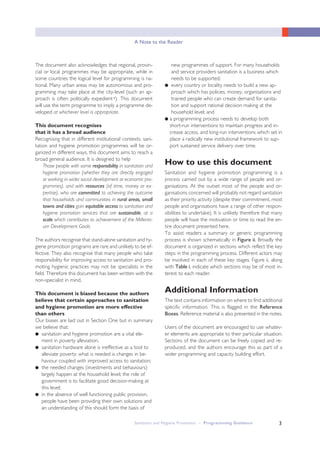
countability). The Hygiene Improvement Framework is a
conceptual model developed by USAID to help pro-
grammers visualize the relationship between these three
elements (see Figure i)iii.
Sanitation and Hygiene Promotion – Programming Guidance 1
Sanitation and Hygiene Promotion – Programming Guidance2
Figure i: The Hygiene Improvement Framework
Hygiene
Diarrheal Disease Prevention
The Hygiene Improvement Framework (HIF) states
hygiene improvement (and hence health benefits to so-
ciety) arise when three things are in place:
● hygiene promotion;
● improved access to hardware for water supply,
sanitation and hygiene; and
● an enabling environment.
This document focuses on a selection of the interven-
tions identified by the HIF (improved sanitation at the
household level, access to soap, hygiene promotion and
the enabling environment), while recognizing that others
(such as improved water supply, solid waste manage-
ment, better drainage, school sanitation and so on) are
also important if the health benefits of sanitation and
hygiene promotion are to be realizediv.
Access to
Hardware
Water supply systems
Improved sanitation facilities
Household technologies and
materials
● Soap
● Safe water containers
● Effective water treatment
Hygiene
Promotion
Communication
Social mobilization
Community participation
Social marketing
Advocacy
Enabling
Environment
Policy improvement
Institutional strengthening
Community organization
Financing and cost recovery
Crosssector & PP partner-
ships
This document talks about developing a programme for
more effective investment in sanitation and hygiene pro-
motion. It is not about developing projects and it does
not give blue-print solutions for project-level interven-
tions. Rather it lays out a process for long term change
which may encompass institutional transformation of the
policy and organizational arrangements for provision of
goods and services. It argues that the objective of policy
makers should be to:
establish a consistent set of rules under which all sani-
tation and hygiene promotion projects and investments
can be made, such that they all work towards an agreed
long-term vision for improved health and dignity for the
entire population.
This document recognises that sanitation and
hygiene promotion may happen within broad-
er poverty alleviation strategies
The document recognizes that in many countries and re-
gions, sanitation and hygiene promotion may well be
planned and managed within a broader social develop-
ment agenda, by local governments, national ministries or
by specialized agencies. However, it argues that specific
attention needs to be paid to the promotion of hygien-
ic behaviours and to improving access to sanitation hard-
ware as a key element of poverty reduction efforts. This
document is intended as a resource for anybody work-
ing with this aim in mind.
This document is about Programming
3
A Note to the Reader
The document also acknowledges that regional, provin-
cial or local programmes may be appropriate, while in
some countries the logical level for programming is na-
tional. Many urban areas may be autonomous and pro-
gramming may take place at the city-level (such an ap-
proach is often politically expedientv). This document
will use the term programme to imply a programme de-
veloped at whichever level is appropriate.
This document recognises
that it has a broad audience
Recognising that in different institutional contexts, sani-
tation and hygiene promotion programmes will be or-
ganized in different ways, this document aims to reach a
broad general audience. It is designed to help
Those people with some responsibility in sanitation and
hygiene promotion (whether they are directly engaged
or working in wider social development or economic pro-
grammes), and with resources (of time, money or ex-
pertise), who are committed to achieving the outcome
that households and communities in rural areas, small
towns and cities gain equitable access to sanitation and
hygiene promotion services that are sustainable, at a
scale which contributes to achievement of the Millenni-
um Development Goals
The authors recognise that stand-alone sanitation and hy-
giene promotion programs are rare and unlikely to be ef-
fective. They also recognise that many people who take
responsibility for improving access to sanitation and pro-
moting hygienic practices may not be specialists in the
field. Therefore this document has been written with the
non-specialist in mind.
This document is biased because the authors
believe that certain approaches to sanitation
and hygiene promotion are more effective
than others
Our biases are laid out in Section One but in summary
we believe that:
● sanitation and hygiene promotion are a vital ele-
ment in poverty alleviation;
● sanitation hardware alone is ineffective as a tool to
alleviate poverty; what is needed is changes in be-
haviour coupled with improved access to sanitation;
● the needed changes (investments and behaviours)
largely happen at the household level; the role of
government is to facilitate good decision-making at
this level;
● in the absence of well functioning public provision,
people have been providing their own solutions and
an understanding of this should form the basis of
new programmes of support. For many households
and service providers sanitation is a business which
needs to be supported;
● every country or locality needs to build a new ap-
proach which has policies, money, organisations and
trained people who can create demand for sanita-
tion and support rational decision making at the
household level; and
● a programming process needs to develop both
short-run interventions to maintain progress and in-
crease access, and long-run interventions which set in
place a radically new institutional framework to sup-
port sustained service delivery over time.
How to use this document
Sanitation and hygiene promotion programming is a
process carried out by a wide range of people and or-
ganisations. At the outset most of the people and or-
ganisations concerned will probably not regard sanitation
as their priority activity (despite their commitment, most
people and organisations have a range of other respon-
sibilities to undertake). It is unlikely therefore that many
people will have the motivation or time to read the en-
tire document presented here.
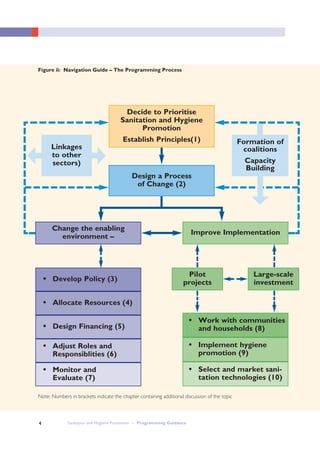
To assist readers a summary or generic programming
process is shown schematically in Figure ii. Broadly the
document is organized in sections which reflect the key
steps in the programming process. Different actors may
be involved in each of these key stages. Figure ii, along
with Table i, indicate which sections may be of most in-
terest to each reader.
Additional Information
The text contains information on where to find additional
specific information. This is flagged in the Reference
Boxes. Reference material is also presented in the notes.
Users of the document are encouraged to use whatev-
er elements are appropriate to their particular situation.
Sections of the document can be freely copied and re-
produced, and the authors encourage this as part of a
wider programming and capacity building effort.
Sanitation and Hygiene Promotion – Programming Guidance
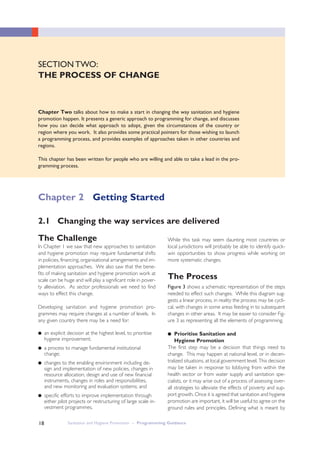
Decide to Prioritise
Sanitation and Hygiene
Promotion
Establish Principles(1)
Design a Process
of Change (2)
Change the enabling
environment –
●●
Develop Policy (3)
●●
Allocate Resources (4)
●●
Design Financing (5)
●●
Adjust Roles and
Responsiblities (6)
●●
Monitor and
Evaluate (7)
Improve Implementation
Pilot
projects
●●
Work with communities
and households (8)
●●
Implement hygiene
promotion (9)
●●
Select and market sani-
tation technologies (10)
Large-scale
investment
Formation of
coalitions
Capacity
Building
Linkages
to other
sectors)
Figure ii: Navigation Guide – The Programming Process
Sanitation and Hygiene Promotion – Programming Guidance4
Note: Numbers in brackets indicate the chapter containing additional discussion of the topic
i UNICEF and USAID (1997) Towards Better Programming: A Sanitation
Handbook, Water, Environment and Sanitation Technical Guidelines Se-
ries No.3, EHP Applied Study No. 5. UNICEF New York. The hand-
book benefited from inputs from the World Health Organisation
(WHO), the United Nations Development Program (UNDP) and the
World Bank and was subject to a wide consultation. Many of the orig-
inal ideas for the handbook were developed by the environmental san-
itation working group of the Water Supply and Sanitation Collabora-
tive Council (WSSCC). The Handbook was aimed at UNICEF field of-
ficers and was widely disseminated through the UNICEF network.
ii The concept of sanitation as a process is drawn from the 1997 Hand-
book. The description of hygiene promotion is developed from Apple-
ton, Brian and Dr Christine van Wijk (2003) Hygiene Promotion: The-
matic Overview Paper IRC International Water and Sanitation Centre,
iii Environmental Health Project (2003) The Hygiene Improvement
Framework: a Comprehensive Approach for Preventing Childhood Di-
arrhoea.
iv Throughout the text the reader is directed to sources of information
on wider water supply and sanitation issues where these are important.
The focus of this document is on the safe management of human exc-
reta, primarily at the household, not because other interventions are
not needed, but because the nature of the institutional interventions
for management of household excreta are sufficiently different from
those required for the management of other public services to merit
separate treatment and different institutional interventions.
v Where regions or urban areas have sufficient autonomy they may be
able to implement programmes which are more advanced than those
implemented at central government level. Indeed this is sometimes the
most effective way to make progress.
1: Sanitation and
Hygiene Promotion
in a wider context
1 The Basics
Section Chapters Content Illustrative Users
Table i: Who should read this Document (Navigation Table)
Puts sanitation and hygiene
promotion in context, and
shows how effective hygiene
improvements result in socially,
economically and environmen-
tally sustainable development.
Broadly states what is known
about how to effectively imple-
ment sanitation and hygiene
promotion.
All readers
Non-specialists wishing to get up
to speed on key thinking in sanita-
tion and hygiene promotion
Specialists wishing to make them-
selves acquainted with the views
and biases of the authors of this
document
2: The Process
of Change
2 Getting Started Lays out a process for pro-
gramme development, including
a discussion of the key contex-
tual factors which will deter-
mine how programming can be
best carried out
Programme catalysts, (ie senior
operational staff in national level
government departments or at
municipal level, representatives of
national NGOs, ESAs etc)
3: Creating the
Enabling
Environment
3 Sanitation and hygiene
promotion policies
4 Allocating resources
strategically
5 Financing
6 Roles and responsibilities
– restructuring
organisations
7 Monitoring and
Evaluation
Provides detailed guidance on
programming. In each case,
specific guidance is provided as
to how the principles outlined
in Section One can be imple-
mented practically through
policy level decisions.
Programme catalysts
High level policy makers
Senior staff of NGOs and ESAs
4: Improving
Implementation
8 Working with commu-
nities and households
9 Hygiene promotion
10 Selecting and market-
ing technologies
Discusses briefly some of the
practical implementation details
which will be determined at pro-
gramme level, but implemented
locally through projects.
This information, including
specific details on hygiene pro-
motion, selection and marketing
of technologies and community
management, is specifically linked
to programming decisions.
Programme catalysts
Staff working on the details of
programming
National and local NGO, ESA and
government staff working at
project level who wish to make
contributions to the programming
process.
Endnotes
Sanitation and Hygiene Promotion – Programming Guidance 5
A Note to the Reader
Sanitation and Hygiene Promotion – Programming Guidance6
At the World Summit on Sustainable Development at
Johannesburg in September 2002 the World Communi-
ty committed itself to “halve by 2015 the proportion of
people without access to safe sanitation”. Since 1990 an
estimated 747 million people have gained access to san-
itation facilities (equivalent to 205,000 people every day).
Despite this huge achievement, a further 1,089 million
rural and 1,085 million urban dwellers will need to gain
access in the coming 15 years if the 2015 target is to be
realized. Today, sixty percent of people living in devel-
oping countries, amounting to some 2.4 billion people,
have no access to hygienic means of personal sanitationi.
SECTION ONE:
SANITATION AND HYGIENE PROMOTION –
GENERAL PRINCIPLES
This section provides some information that may be useful in designing advocacy pro-
grammes at national level. It also introduces some of the basics of sanitation and hygiene
promotion and lays out the authors’ biases in terms of new approaches to making pro-
grammes more effective. Non-specialists are particularly encouraged to read this section.
The section sets out to explain why sanitation and hygiene promotion are important.
Selected results are provided to show how improved sanitation and hygiene impact posi-
tively on health, education and economic development. These data could be used by
advocates for sanitation and hygiene promotion, to attract more investment and needed
institutional attention to these subjects.
After this the document looks at what is known about how to make investments in sanita-
tion and hygiene promotion effective. This includes the basic theories about disease trans-
mission, the reasons why management of excreta and hygienic practices in the home are im-
portant, and some key principles which are likely to make sanitation and hygiene promotion
programmes more effective. The authors argue that in many parts of the world, sanitation is
a business, and that key investment and behavioural decisions are made at the household
level. The role of government is primarily to support rational decision making at the house-
hold level.
Reference Box 1: The scale of the problem
For: information on sanitation coverage statistics
and health indicators
See: UNICEF/WHO Joint Monitoring Programme
Global Water Supply and Sanitation Assessment
Report WHO (1999)
Get this reference on the web at:
http://www.wssinfo.org
See also: The WASH Campaign and Vision 21:
A Shared Vision for Hygiene, Sanitation and Water
Supply and A Framework for Action Water Supply
and Sanitation Collaborative Council (2000)
Get this reference on the web at:
http://www.wsscc.org
1.1 More than 2 billion people lack access
to hygienic means of personal sanitation
Chapter 1 The Basics
Sanitation and Hygiene Promotion – Programming Guidance 7
SECTION ONE: SANITATION AND HYGIENE PROMOTION – GENERAL PRINCIPLES
Chapter 1: The Basics
The water supply and sanitation sector has long recog-
nized the importance of investing more effectively to
bring services to poor people around the world. A doc-
ument known as “Vision 21” lays out some specific col-
lective learning from the sector and emphasizes that
progress is possible provided governments and civil so-
ciety can work together and recognize both the social
and economic aspects of water supply and sanitation ser-
vicesii. What is needed now is for these lessons to be
implemented within wider poverty reduction pro-
grammes throughout the world.
The Water Supply and Sanitation Collaborative Council
has provided the rallying point and has spearheaded a
campaign to get sanitation and hygiene promotion onto
the world’s political map. The Campaign, known as
“WASH” is a global initiative which has had a huge im-
pact on the level of awareness of the international com-
munity to issues of hygiene and household health.
In every country, advocates for sanitation and hygiene
promotion now need to find locally-generated informa-
tion to make the case for more and better investments.
Often, there is a need to show policy-makers what san-
itation and hygiene promotion really can achieve. In many
rural areas, a good way of doing this for example, is to
develop “latrine acquisition curves” – by asking house-
holds when they first had a latrine and started using it.
From this data it is possible to plot a curve showing the
cumulative % of households in any given community who
use a latrine over time. Similar investigations can provide
information about use of a wider range of sanitation in-
terventions, the use of soap, beliefs about hygiene and so
on. Such exercises generate important information about
how and why people adopt (or fail to adopt) sanitary be-
haviours (in this case using a latrine). Even more impor-
tantly they get officials into the habit of visiting house-
holds and asking questions about hygiene. This is vitally
important because most people are reluctant to talk
about sanitation and hygiene practices, and often remain
unaware of what is really happening on the ground.
Before reaching this stage, sanitation “champions” may
need to use more generalized data about the positive im-
pacts of sanitation and hygiene behaviours, in order to
stimulate interest in the subject. Some of the startling
facts about sanitation and hygiene promotion are pre-
sented below. Additional sources of information are in in
Reference Box 2.
Sanitation, Hygiene Promotion and health:
● WHO data on the burden of disease shows that “ap-
proximately 3.1% of deaths (1.7 million) and 3.7% of
disability-adjusted-life-years (DALYs) (54.2 million)
worldwide are attributable to unsafe water, sanitation
and hygiene.” In Africa and developing countries in
South East Asia 4–8% of all disease burden is attrib-
utable to these factors. Over 99.8% of all the deaths
attributable to these factors occur in developing coun-
tries and 90% are deaths of childreniii.
● A 1993 WHO/SEARO meeting of health specialists
gave safe excreta disposal, especially by diseased peo-
ple and children, and more water for personal hygiene,
especially handwashing, and protecting water quality, in
that order as the most influential factors on reducing
morbidity and mortality of diarrhoeal disease.
● A 1991 review of 144 studies linking sanitation and
water supply with health, clearly states that the “role
[of water quality] in diarrhoeal disease control [is] less
important than that of sanitation and hygiene”iv. The
study identified six classes of disease where the posi-
tive health impacts of water supply, sanitation and hy-
giene have been demonstrated (Table 1).
● A 1986 study emphasizes the importance of sanitation
specifically, as compared to stand-alone water supply
interventions. Seventy-seven percent of the studies
which looked at sanitation alone, and seventy-five per-
cent of those which considered sanitation and water
supply, demonstrated positive health benefits, com-
pared with 48 percent of those which considered
water supply alonev.
● A recent report states that “adding hygiene promotion
is particularly efficient and effective in reducing mor-
bidity and mortality from child diarrhoea” and goes on
to cite a 1996 study which gave a cost of USD21 per
disability-adjusted life year saved, against costs of USD
24 for oral rehydration therapy and USD15–35 for
expanded immunizationvi.
1.2 Increased access to Sanitation and Better Hygienic
Practices Have Significant Positive Impacts
8
Sanitation, Hygiene Promotion and Education
● Children in the age range of 5 –14 are particularly
prone to infections of round worm and whip wormvii
and there is evidence that this, along with guinea worm
and other water-related diseases, including diarrhoea,
result in significant absences from schoolviii
● School exclusions have a gendered aspect; girls who
are unable to access clean, safe and separate toilets
and handwashing facilities, may disproportionately
drop out of school at puberty, or even earlier.
● Nokes et. al. (1992) found that helminth reduction
programmes in schools can have a dramatic impact on
health and learning among school children.
● The 1993 World Development Report estimated that
maternal education was highly significant in reducing in-
fant mortality and cites data for thirteen African coun-
tries between 1975 and 1985 which show that a 10
percent increase in female literacy rates reduced child
mortality by 10 percent.
Sanitation, Hygiene Promotion
and Economic development
● WHO analysis shows a strong link between lower ini-
tial infant mortality rates and higher economic growth.
Table 2 shows growth rates in a selection of several
dozen developing countries over the period
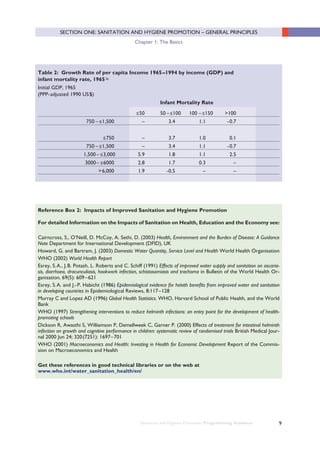
1965–1994. The table shows that for any given initial
income interval, economic growth is higher in coun-
tries with lower initial infant mortality rates.
● WHO estimates that a 10 year increase in average life
expectancy at birth translates into a rise of 0.3 – 0.4%
in economic growth per year.
● Appleton and van Wijk (2003) state that “Peru’s 1991
cholera epidemic is estimated to have cost the na-
tional economy as much as US$1billion in health costs,
tourism and production losses. [In India] outbreaks of
plague in 1994 meant a loss of two billion dollars due
to import restrictions. On top of that came the loss
from thousands of cancelled holidays and public health
costs.”
● The WHO Commission on Macroeconomics and
Health cites research showing a strong correlation be-
tween high infant mortality and subsequent state col-
lapse.
Table 1: Impacts of Improved water supply, sanitation and hygiene on morbidity and mortality
for six common diseases: evidence from 144 studies (after Esrey et.al 1991)
Expected reduction in morbidity and mortality
from improved water supply and sanitation (%)
All studies Methodologically more rigorous studies
N Median % Range % N Median % Range %
Ascariasis 11 28 0–83 4 29 15– 83
Diarrhoeal disease 49 22 0–100 19 26 0–68
Morbidity 3 65 43–79 – – –
Mortality
Dracunculiasis 7 76 37–98 2 78 75–81
Hookworm infection 9 4 0–100 1 4 –
Schistosomiasis 4 73 59–87 3 77 59–87
Trachoma 13 50 0–91 7 27 0 –79
Child Mortality 9 60 0–82 6 55 20–82
Sanitation and Hygiene Promotion – Programming Guidance
9Sanitation and Hygiene Promotion Programming Guidance
Table 2: Growth Rate of per capita Income 1965–1994 by income (GDP) and
infant mortality rate, 1965 ix
Initial GDP, 1965
(PPP-adjusted 1990 US$)
Infant Mortality Rate
<50 50 –<100 100 –<150 >100
750 – <1,500 – 3.4 1.1 -0.7
<750 – 3.7 1.0 0.1
750 – <1,500 – 3.4 1.1 -0.7
1,500 – <3,000 5.9 1.8 1.1 2.5
3000– <6000 2.8 1.7 0.3 –
>6,000 1.9 -0.5 – –
For detailed Information on the Impacts of Sanitation on Health, Education and the Economy see:
Cairncross, S., O’Neill, D. McCoy, A. Sethi, D. (2003) Health, Environment and the Burden of Disease: A Guidance
Note Department for International Development (DFID), UK
Howard, G. and Bartram, J. (2003) Domestic Water Quantity, Service Level and Health World Health Organisation
WHO (2002) World Health Report
Esrey, S.A., J.B. Potash, L. Roberts and C. Schiff (1991) Effects of improved water supply and sanitation on ascaria-
sis, diarrhoea, dracunculiasis, hookwork infection, schistosomiasis and trachoma in Bulletin of the World Health Or-
ganisation, 69(5): 609–621
Esrey, S.A. and J.-P. Habicht (1986) Epidemiological evidence for helath benefits from improved water and sanitation
in developing countries in Epidemiological Reviews, 8:117–128
Murray C and Lopez AD (1996) Global Health Statistics. WHO, Harvard School of Public Health, and the World
Bank
WHO (1997) Strengthening interventions to reduce helminth infections: an entry point for the development of health-
promoting schools
Dickson R, Awasthi S, Williamson P, Demellweek C, Garner P. (2000) Effects of treatment for intestinal helminth
infection on growth and cognitive performance in children: systematic review of randomised trials British Medical Jour-
nal 2000 Jun 24; 320(7251): 1697–701
WHO (2001) Macroeconomics and Health: Investing in Health for Economic Development Report of the Commis-
sion on Macroeconomics and Health
Get these references in good technical libraries or on the web at
www.who.int/water_sanitation_health/en/
Reference Box 2: Impacts of Improved Sanitation and Hygiene Promotion
SECTION ONE: SANITATION AND HYGIENE PROMOTION – GENERAL PRINCIPLES
Chapter 1: The Basics
10
Most of the diseases which result in diarrhea are spread
by pathogens (disease-causing organisms) found in
human excreta (faeces and urine.) The faecal-oral mech-
anism, in which some of the faeces of an infected indi-
vidual are transmitted to the mouth of a new host
through one of a variety of routes, is by far the most
significant transmission mechanism: it accounts for most
diarrhoea and a large proportion of intestinal worm in-
fections. This mechanism works through a variety of
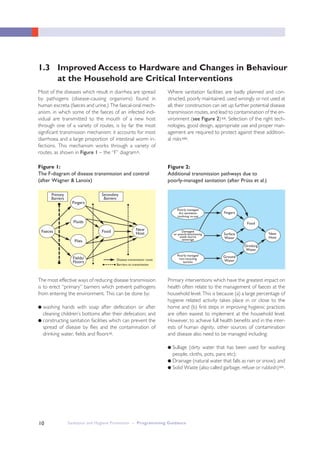
routes, as shown in Figure 1 – the “F” diagramx.
1.3 Improved Access to Hardware and Changes in Behaviour
at the Household are Critical Interventions
The most effective ways of reducing disease transmission
is to erect “primary” barriers which prevent pathogens
from entering the environment. This can be done by:
● washing hands with soap after defecation or after
cleaning children’s bottoms after their defecation; and
● constructing sanitation facilities which can prevent the
spread of disease by flies and the contamination of
drinking water, fields and floorsxi.
Figure 1:
The F-diagram of disease transmission and control
(after Wagner & Lanoix)
Figure 2:
Additional transmission pathways due to
poorly-managed sanitation (after Prüss et al.)
Primary interventions which have the greatest impact on
health often relate to the management of faeces at the
household level. This is because (a) a large percentage of
hygiene related activity takes place in or close to the
home and (b) first steps in improving hygienic practices
are often easiest to implement at the household level.
However, to achieve full health benefits and in the inter-
ests of human dignity, other sources of contamination
and disease also need to be managed including:
● Sullage (dirty water that has been used for washing
people, cloths, pots, pans etc);
● Drainage (natural water that falls as rain or snow); and
● Solid Waste (also called garbage, refuse or rubbish)xiv.
Where sanitation facilities are badly planned and con-
structed, poorly maintained, used wrongly or not used at
all, their construction can set up further potential disease
transmission routes, and lead to contamination of the en-
vironment (see Figure 2)xii. Selection of the right tech-
nologies, good design, appropriate use and proper man-
agement are required to protect against these addition-
al risksxiii.
Sanitation and Hygiene Promotion – Programming Guidance
Primary
Barriers
Secondary
Barriers
Faeces
Fingers
Fluids
Flies
Fields/
Floors
Food New
Host
Disease transmission route
Barriers to transmission
Damaged
or poorly-functioning
water-borne
sewerage
Fingers
Food
New
Host
Drinking
Water
Surface
Water
Ground
Water
Poorly managed
non-recycling
latrines
Poorly managed
dry sanitation
involving re-use
11
For a comprehensive introduction to hygiene improvement, and links to additional references
See: Appleton, Brian and Dr Christine van Wijk (2003) Hygiene Promotion: Thematic Overview Paper IRC Inter-
national Water and Sanitation Centre
Get this reference on the web at: http://www.irc.nl
See also: Environmental Health Project (2003)
The Hygiene Improvement Framework: a Comprehensive Approach for Preventing Childhood Diarrhoea
Get this reference on the web at: http://www.ehp.org
For a discussion of the cost-effectiveness of targeting various risky practices in hygiene promo-
tion
See: Curtis, Valarie, Sandy Cairncross and Raymond Yonli (2000) Domestic hygiene and diarrhea: pinpointing the
problem Tropical Medicine and International Health, volume 5 no 1 pp 22–32 January 2000.
For an introduction to the basics of sanitation in developing country contexts
See: Cairncross, S. and R. Feachem (1993) Environmental health engineering in the tropics: an introductory text.
(2nd edition) John Wiley & Sons: Chichester.
Get these references from: good technical libraries or bookshops
For further information on school sanitation
See: UNICEF School SanitationWebsite on the web at: http://www.unicef.org
For further information on sanitation in emergencies
See: Wisner, B., and J. Adams (Ed) Environmental Health in Emergencies and Disasters: A Practical Guide WHO,
Geneva
Thomson. M.C., Disease Prevention through Vector Control, Guidelines for Relief Organisations Oxfam Practical
Health Guide No. 10, Oxfam, UK
Ferron, S., J. Morgan and M. O’Reilly (2000) Hygiene Promotion: A practical Manual for Relief and Development In-
termediate Technology Publications on behalf of CARE International
Harvey, P., S. Baghri and R. Reed (2002) Emergency Sanitation WEDC, Loughborough University, UK
Get these references on the web at: www.who.int/water_sanitation_health/hygiene/
emergencies/emergencies2002/en or in good bookshops stocking IT publications
Reference Box 3: “Hygiene” and “Sanitation”
All these sources of contamination must be managed in
all the locations where they are generated.
Thus a full-scale programme to improve hygiene would
need to address the management of excreta, sullage,
drainage and solid waste at:
● Households (both formal and informal);
● Schools;
● Semi-public places (such as hospitals);
● Public places (such as markets, bus stations etc); and
● Refugee communities.
Sanitation and hygiene promotion would also have to be
geared up in many cases to handle “emergency” situa-
tions. Such emergencies could relate to the outbreak of
epidemic disease (such as cholera) or to a physical event
such as a hurricane or earthquake.
Although environmental sanitation in its broadest sense
is important, this document will focus on programming
for the better management of faeces at the household
level. Reference to other areas of intervention will be
made where this provides useful guidance for the reader.
Sanitation and Hygiene Promotion – Programming Guidance
SECTION ONE: SANITATION AND HYGIENE PROMOTION – GENERAL PRINCIPLES
Chapter 1: The Basics
Sanitation and Hygiene Promotion – Programming Guidance12
Public investments in sanitation and hygiene promotion
are at a very low level but what is probably more im-
portant is that much of the money is being spent inef-
fectively (see Reference Box 4).
Despite low levels of investment, households continue to
provide themselves with means of sanitary disposal of
excreta. The available data suggest that, particularly
where public agencies are failing, people have been find-
ing their own solutions and in many countries small-scale
entrepreneurs have stepped into the market to provide
services. While many of these solutions are not perfect,
they show that households have the potential to invest
responsibly and make changes in personal hygienic prac-
tices (see Reference Box 4).
Lesson One: the role of government may often need
to shift away from direct service provision towards: cre-
ating supportive arrangements for households to make
decisions; promoting demand for sanitatoin; promoting
behaviour change; and stimulating systems of local sup-
ply and management which provide better facilities for
management of wastes at the household level xv.
In most European countries, investments in early sanita-
tion systems were heavily supported by private interests
or governments, anxious to maintain the health of the
workforce, particularly in industrial urban centres. This led
to a “supply-driven” culture amongst public health offi-
1.4 Lessons for effective sanitation and hygiene promotion
programming: Supporting investments and behaviour
changes within the household
cials and technicians which persists to this day. In addi-
tion, in countries which have long enjoyed the benefits
of near total coverage of household facilities, attention
has moved on to focus on the management of the ex-
ternal environment. This is why the emphasis in public
health engineering education in many countries is on
wastewater collection, treatment and disposal. This em-
phasis has tended to skew investments in sanitation in de-
veloping countries towards these more expensive ele-
ments of the sanitation system, to the detriment of the
development of appropriate approaches to the manage-
ment of wastes at household and local level (see Refer-
ence Box 4).
Lesson Two: Where coverage is low, governments
may need to switch priorities back towards increasing
access to services and changing behaviours at the
household level, and reduce expenditure on costly retic-
ulated systems and wastewater treatment facilities.
The real challenge for many countries and localities may
be to work out how household investments and changes
in behaviour can best be supported. Such household
changes need to become more effective, and importantly
begin to occur at scale so that coverage does finally start
to increase in line with needs. Programmers need to start
to see sanitation as a business, which can effectively be
run outside government and move beyond latrine build-
ing programmes.
13
Levels of Investment
● WHO/UNICEF estimates that the overall level of effective investment in sanita-
tion may have to increase by as much as 28% in urban areas and by 400% in rural
areas in order to achieve the 2015 target. This suggests annual investment rates al-
most double those which were achieved in the nineties. The Global Water Part-
nership estimates that the needed investments are even higher, when municipal
wastewater and industrial effluent are also included, along with the costs of oper-
ating and maintaining existing infrastructure (an increase from US$22 billion to
US$ 117 billion annually)xvi.
● In 2000 WHO/UNICEF estimated that in Africa only 12% of the money invested
in water supply and sanitation went specifically to fund sanitation. In Asia the figure
was higher at 15%, while Latin America and the Caribbean spent 38 % on sanita-
tion.
This higher figure probably reflects more expensive levels of service commonly
provided in countries in the Latin American region and the lower levels of self-
provision (see below).
Quality of Investment
● Figures compiled from OECD/ DAC data by the USAID Development Information
Service show 52% (US$52 billion) of donor aid in the overall water sector went
to support “large system” water supply and sanitation over the period 1995–2000
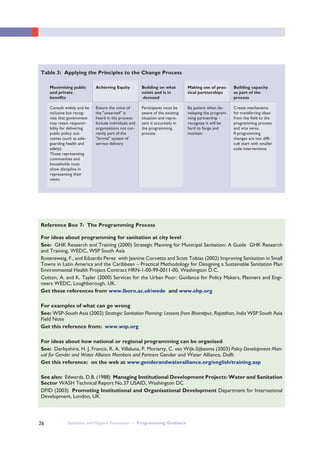
as compared to 6% to “small systems” water supply and sanitation. It is reasonable
to assume that in general “large” water supply and sanitation schemes do not in-
clude community or household management, suggesting a persisting bias towards
top-down supply-driven schemes. There is some evidence that this is beginning to
change. A 2000 review of World Bank funding for sanitation observed that expen-
diture on software (non-construction activities including community development,
hygiene promotion etc) “increased markedly in the nineties” jumping from 6% to
14% of total costs for projects prepared after 1994xvii.
● A 1995 review of global evaluations of sanitation programmesxviii found that in-
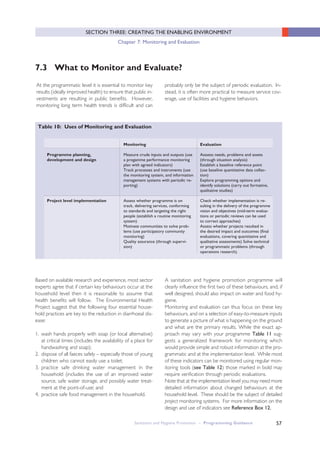
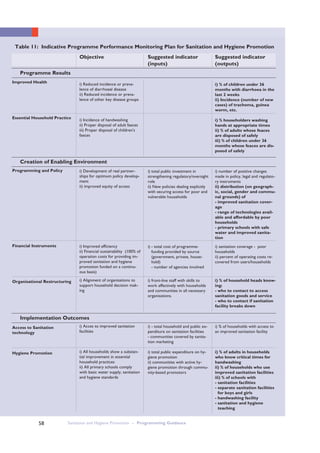
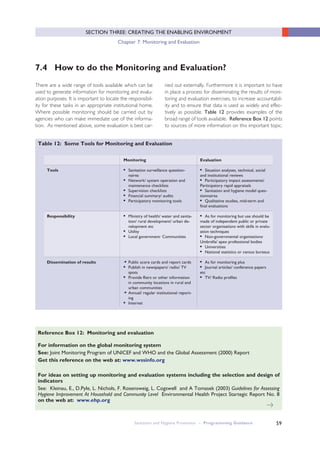
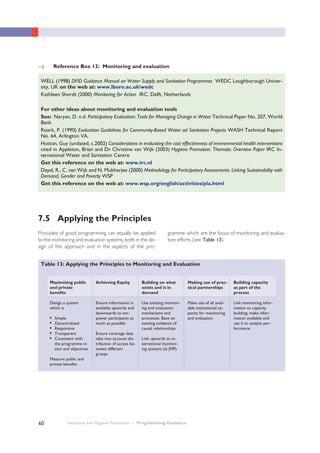
vestment in sanitation has been inadequate and often misdirected, due in part to a
lack of perceivable demand and also in part to the fact that most development in-
stitutions are not geared to respond to a demand-led approach. To quote the
study: “Most decision-makers are not clear about an overall strategy for sanitation pro-
gramming, have not reached a consensus on the definition of sanitation, and differ on the
optimal role for governments, NGOs, communities, the private sector, and donors in pro-
gramme implementation.”
● The review specifically found that: programmes lacked strategies for addressing hy-
giene and sanitation behaviour change and were often narrowly focused on latrine
construction; there was often an emphasis on specific technologies; there was little
data on the economics and financing of sanitation; and coordination between sani-
tation and water supply was challenging because demand for water generally out-
paced demand for sanitation. However, good links had sometimes been established
with the health and education sectors.
● Interestingly the review found that programmes implemented by NGOs or the pri-
vate sector with communities, sometimes in collaboration with government, were
more likely to succeed than programmes implemented by government alone.
Reference Box 4: Lessons learned
>
Sanitation and Hygiene Promotion – Programming Guidance
SECTION ONE: SANITATION AND HYGIENE PROMOTION – GENERAL PRINCIPLES
Chapter 1: The Basics
Sanitation and Hygiene Promotion – Programming Guidance14
Self-Provision
● A striking aspect of many of the better known of the sanitation success stories is the
absence of large scale public funding. The Orangi Pilot Project in Karachi Pakistan,
mobilized communities to invest in sewers, while in Midnapore West Bengal India,
households were supported to invest in on-plot latrinesxix. The common feature of
these two well-known cases was that, while external funding was used to support
technical innovation, participatory research, hygiene education and social marketing,
direct funding of hardware was not included; households were responsible for the local
investment themselves.
● Recent research in India indicates that of the household sanitation which does exist
only a tiny proportion has been financed by governments. In the six years from 1985/86
to 1991/92 the government of India constructed 2.26 million latrines in rural areas,
raising coverage from 0.5% to 2.7% overall. In 1988/89 the 44th
round of the National
Sample Survey found that just under 11% of the rural population had a latrine, suggest-
ing that as many as 8% of rural households across the country had invested their own
money and used small private providers to construct latrinesxx. Research in Africa
confirms that the role of the small scale private sector in sanitation provision is signifi-
cantxxi. Importantly, many households already invest in sanitation facilities themselves,
outside of government or donor funded programmes.
For a summary of lessons learned in hygiene, sanitation and water supply since
the early 1980s
See: Cairncross, A.M. Sanitation and Water Supply: Practical Lessons from the Decade. World
Bank Water and Sanitation Discussion Paper Number 9. World Bank: Washington, D.C.
Bendahmane, D (Ed.) Lessons Learned In Water, Sanitation and Health: Thirteen years of
Experience in Developing Countries USAID, Water and Sanitation for Health Project
(WASH) (1993)
La Fond, A. (1995) A Review of Sanitation Program Evaluations in Developing Countries
Environmental Health Project and UNICEF, EHP Activity Report no. 5, Arlington VA.
Water Supply and Sanitation Collaborative Council (2000) Vision 21: A Shared Vision for
Hygiene, Sanitation and Water Supply and A Framework for Action Water Supply and
Sanitation Collaborative Council, Geneva
WELL (1998) Guidance Manual on Water and Sanitation Programmes WEDC Loughborough
University, UK
Luong, T.V. (1996) Reflections on the Sanitation and Hygiene programme in Bangladesh
UNICEF, Water and Sanitation for Health Project (WASH) Technical Report No. 86,
Arlington VA.
Get these references from: good technical libraries,
and on the web at www.ehp.org, www.whelpdesk.org, www.wsscc.org, www.unicef.org
and www.lboro.ac.uk/wedc
For information on the nature and scale of small-scale independent service
providers in sanitation and hygiene promotion
See: Collignon, B. and M. Vezina (2000) Independent Water and Sanitation Providers in
African Cities: Full Report of a Ten-Country Study WSP
Solo, T.M. (2003) Independent Water Entrepreneurs in Latin America: The Other Private Sector
in Water Services WSP
Get these references from: http://www.wsp.org
Reference Box 4: Lessons learned
>
15
Much of the evidence presented above suggests that in-
vestments and decisions made at the household level are
critical to achieve improved sanitary conditions. Howev-
er, improved access to sanitation, and better hygienic
practices have benefits that reach beyond the immediate
household to the entire population. A reduction in in-
fection and disease among some part of the population
will reduce the risk of infection in others. The construc-
tion of a sanitation system may also have negative health
externalities especially where inappropriate designs are
used or maintenance is poor. Poorly maintained silt traps
and uncovered sewers, for example, can act as breeding
grounds for disease vectors such as mosquitoes.
These external health implications are the reason why in-
vestments in sanitation and hygiene promotion are often
seen as a “public” responsibility. These and other “pub-
lic good” aspects of sanitation, such as safety and envi-
ronmental protection, remain the responsibility of socie-
ty as a whole. Governments need to establish incentives
that enable individual household choices to achieve public
policy objectives and to uphold and regulate principles and
policies for the public good. They may also continue to
finance investments in shared infrastructure (such as
trunk sewers and wastewater treatment facilities) and
support interventions which raise household demand for
sanitation, promote improved hygienic practices, and fa-
cilitate service providers to deliver appropriate services.
Principle One: The role of government is to balance
public and private benefits of sanitation to ensure in-
creased access at the household level while safeguard-
ing society’s wider interests.
Having established that there is a “public” benefit to
achieving high levels of coverage of sanitation and hy-
gienic practices, it is surprising to find that access to san-
itation is patchy and that this is a persistent problem even
in areas where overall coverage is improving. Data for
Latin America (a region where many countries have
already achieved impressive overall coverage) for exam-
ple show a consistent bias against rural and poor popu-
lationsxxii. Where segments of the population consis-
tently fail to access better sanitation facilities and im-
proved hygienic practices, health benefits to the
population as a whole are likely to be limited.
There is however, an even stronger case to be made, in
the interests of justice, that such inequities be addressed
1.5 The Role of Government – some principles
by sanitation and hygiene promotion programmes. The
burden of poor hygiene falls more heavily upon poor
populations who tend to have a higher dependency on
daily-wage labour, and few financial reserves to manage
periods of ill health or the costs of treatment for sick fam-
ily members. Inherent biases in sanitation coverage
against women- and children-headed households further
deepen their poverty and may lock them into cycles of
ill health and dependency. Addressing the needs and as-
pirations of these segments of the population may be the
most challenging aspect of programming for govern-
ments, but is probably also the most important.
Principle Two: Many groups are excluded from the
benfits of traditional ‘sanitation’ programmes. The role
of government is to balance the interests of different
groups in society and redirect resources to those who
are systematically excluded
It is often tempting to start a new programme from
scratch identifying “ideal” solutions (either technical or in-
stitutional). In reality existing practices, habits and cus-
toms are probably an important part of the solution. Dis-
regarding them risks failure; they are unlikely to be easi-
ly changed or abandoned, and in failing to respect them
programmers may already be alienating potential part-
ners and communitiesxxiii. The first rule must always be
to look hard at what currently exists and plan to build and
improve from there. Once there is understanding of cur-
rent practices, it will be easier to map out a path to im-
prove the situation.
Principle Three: It is no good selling (or even giving)
people something that they don’t want. The role of gov-
ernment is to identify and support what already exists.
Recognising that people are already investing in sanitation
and changing their behaviours also means recognizing
that many actors are already involved. In many cases
(particularly in urban areas) sanitation services are al-
ready provided by a mix of small scale entrepreneurs,
government departments, NGOs, community groups
and individuals while many of the same actors, along with
soap manufacturers, schools and health workers may al-
ready be engaged in trying to change behaviours. All of
these actors may have something to contribute to the
design of a new programme for sanitation and hygiene
promotion.
Sanitation and Hygiene Promotion – Programming Guidance
SECTION ONE: SANITATION AND HYGIENE PROMOTION – GENERAL PRINCIPLES
Chapter 1: The Basics
Sanitation and Hygiene Promotion – Programming Guidance16
Partnerships are hard to forge and even harder to main-
tain and strong leadership will be needed. Government
can play a key role in drawing in multiple actors to solve
problems and design a new programme.
Principle Four: Many actors may have knowledge and
experience which can inform a sanitation and hygiene
promotion programme. The role of government is to
identify and forge partnerships with any organisation or
individual who can be part of the solution.
All of the above suggests that major changes are need-
ed in the way in which hygiene improvement services are
formally supported. The role of many actors is likely to
change, and significant reorganization may be needed.
Importantly, in the longer term, changes may result in sig-
nificant reductions in the numbers of staff employed in
government agencies; a shift in the skills required; a
recognition of a greater role for new actors (perhaps the
small scale private sector, civil society, local government);
and a change in the way decisions are taken and action
is effected. Crucially there will need to be a serious in-
crease in the accountability of all service providers to-
wards the household.
Principle Five: New approaches may result in a shift
of power and resources. It is the role of government to
promote and support this shift including finding re-
sources to build capacity and support institutional
change.
For a thorough discussion of the relationship between water supply and sanitation programming
and equity
See: van Wijk-Sijbesma, C. (1998) Gender in Water Resources Management, Water Supply and Sanitation: Roles
and Realities Revisited. (especially chapters 5, 6 and 7). Technical Paper Series No. 33-E, IRC, Delft
Get this reference on the web at: www.irc.nl/products/publications/title.php?file=tp33e
For ideas on how partnerships work in the water and sanitation sector
See: Caplan, K., S. Heap, A. Nicol, J. Plummer, S. Simpson, J. Weiser (2001) Flexibility by Design: Lessons
from Multi-sector Partnerships in Water and Sanitation Projects BPD Water and Sanitation Cluster, London.
Get this reference from: Building partnerships for Development at www.bpd.org.uk
See also: Janelle Plummer (2002) Focusing Partnerships – A Sourcebook for Municipal Capacity Building in Public-
Private Partnerships Earthscan Publications Ltd, London
Saadé C.,M. Bateman, D.B. Bendahmane The Story of a Successful Public-Private Partnership in Central America:
Handwashing for Diarrheal Disease Prevention USAID, BASICS, EHP, UNICEF, The World Bank Group
Get these references from: good technical libraries
Reference Box 5: Principles
17
i UNICEF/WHO Joint Monitoring Programme (2000) Global Water
Supply and Sanitation Assessment 2000 Report
ii Water Supply and Sanitation Collaborative Council (2000) Vision 21:
A Shared Vision for Hygiene, Sanitation and Water Supply and A Frame-
work for Action Water Supply and Sanitation Collaborative Council,
Geneva
iii WHO (2002) World Health Report
iv Esrey, S.A., J.B. Potash, L. Roberts and C. Schiff (1991) Effects of im-
proved water supply and sanitation on ascariasis, diarrhoea, dracunculia-
sis, hookwork infection, schistosomiasis and trachoma in Bulletin of the
World Health Organisation, 69(5): 609–621
v Esrey, S.A. and J.-P. Habicht (1986) Epidemiological evidence for helath
benefits from improved water and sanitation in developing countries in Epi-
demiological Reviews, 8: 117–128
vi Murray C and Lopez AD (1996) Global Health Statistics. WHO,
Harvard School of Public Health, and the World Bank
vii WHO (1997) Strengthening interventions to reduce helminth infections:
an entry point for the development of health-promoting schools
viii Nokes C, Grantham-McGregor S. M., Sawyer A.W., Cooper E. S.,
Bundy D.A.(1992) Parasitic helminth infection and cognitive function in
school children Proc R Soc Lond B Biol Sci. 1992 Feb 22; 247(1319):
pp 77–81
ix WHO (2001) Macroeconomics and Health: Investing in Health for Eco-
nomic Development Report of the Commission on Macroeconomics
and Health
x Wagner, E.G. and J.N. Lanoix, (1958). Excreta disposal for rural areas
and small communities. WHO:Geneva.
xi Earth floors contaminated with children’s wastes are favourable for
the development of intestinal worm eggs.
xii Prüss, A., Kay, D., Fewtrell, L., and Bartram, J. (2002) Estimating the
Burden of Disease from Water, Sanitation and Hygiene at a Global Level
Environmental Health Perspectives Vol 110, No 5 pp 537–42
xiii the reader is directed to Chapter 13 for a fuller discussion of tech-
nology choice.
xiv Modified from Pickford J. (1995) Low Cost Sanitation: A Survey of Prac-
tical Experience Intermediate technology Publications, London.
xv This is true even in congested urban areas where “networked” solu-
tions such as sewers may be used. People at the household level will
still need to invest in household facilities (toilets, taps, connections to
sewers) and change behaviours, the challenge here is to respond to
this household action, and provide the wider “network” actions need-
ed to support them.
xvi UNICEF/WHO (2000) ibid. GWP estimates were assembled from
data presented in Global Water Partnership (2000) Towards Water Se-
curity: A Framework for Action, and Briscoe, J. (1999) The Financing of
Hydropower, Irrigation and Water Supply Infrastructure in Developing
Countries, cited in Winpenny, J. Financing Water for All: Report of the
World Panel on Financing Water Infrastructure World Water Council,
3rd World Water Forum, Global Water Partnership
xvii Word Bank (2000) The State of Wastewater and Sanitation at the World
Bank in Investing in Sanitation: World Bank Water Supply and Sani-
tation Forum, Staff Day April 5, 2000.
xviii La Fond, A. (1995) A Review of Sanitation Program Evaluations in Devel-
oping Countries Environmental Health Project and UNICEF, EHP Ac-
tivity Report no. 5, Arlington VA.
xix Hasan, A. (1997) Working with Government: The Story of OPPs collabo-
ration with state agencies for replicating its Low Cost Sanitation Programme
City Press, Karachi; UNICEF (1994) Sanitation, the Medinipur Story, In-
tensive Sanitation Project, UNICEF-Calcutta, India; Ramasubban, K.S.,
and B. B. Samanta (1994) Integrated Sanitation Project, Medinipur,
UNICEF, India
xx Kolsky, P., E Bauman, R Bhatia, J. Chilton, C. van Wijk (2000) Learn-
ing from Experience: Evalutaiton of UNICEF’s Water and Environmental
Sanitation Programme in India 1966 –1998 Swedish International De-
velopment Cooperation Agency, Stockholm
xxi Collignon, B. and M. Vezina (2000) Independent Water and Sanitation
Providers in African Cities: Full Report of a Ten-Country Study WSP
xxii For the Latin America region as a whole, it is estimated that 30,000
people every day are gaining access to some form of improved sani-
tation (of these 20,000 are connecting to sewerage). Despite this im-
pressive record, 103 million people still lack access to any form of san-
itation, and of these a disproportionate number (66 million) live in
rural areas. (Gerardo Galvis, PAHO, presentation to WaterWeek
2003, World Bank, Washington DC).
xxiii Examples of ill-designed sanitary facilities falling into disrepair abound.
See for example Pickford, J. (1995) ibid. pp 23–34
Notes for Chapter One:
Sanitation and Hygiene Promotion – Programming Guidance
SECTION ONE: SANITATION AND HYGIENE PROMOTION – GENERAL PRINCIPLES
Chapter 1: The Basics
Sanitation and Hygiene Promotion – Programming Guidance18
SECTION TWO:
THE PROCESS OF CHANGE
Chapter Two talks about how to make a start in changing the way sanitation and hygiene
promotion happen. It presents a generic approach to programming for change, and discusses
how you can decide what approach to adopt, given the circumstances of the country or
region where you work. It also provides some practical pointers for those wishing to launch
a programming process, and provides examples of approaches taken in other countries and
regions.
This chapter has been written for people who are willing and able to take a lead in the pro-
gramming process.
The Challenge
In Chapter 1 we saw that new approaches to sanitation
and hygiene promotion may require fundamental shifts
in policies, financing, organisational arrangements and im-
plementation approaches. We also saw that the bene-
fits of making sanitation and hygiene promotion work at
scale can be huge and will play a significant role in pover-
ty alleviation. As sector professionals we need to find
ways to effect this change.
Developing sanitation and hygiene promotion pro-
grammes may require changes at a number of levels. In
any given country there may be a need for:
● an explicit decision at the highest level, to prioritise
hygiene improvement;
● a process to manage fundamental institutional
change;
● changes to the enabling environment including de-
sign and implementation of new policies, changes in
resource allocation, design and use of new financial
instruments, changes in roles and responsibilities,
and new monitoring and evaluation systems; and
● specific efforts to improve implementation through
either pilot projects or restructuring of large scale in-
vestment programmes.
2.1 Changing the way services are delivered
While this task may seem daunting most countries or
local jurisdictions will probably be able to identify quick-
win opportunities to show progress while working on
more systematic changes.
The Process
Figure 3 shows a schematic representation of the steps
needed to effect such changes. While this diagram sug-
gests a linear process, in reality the process may be cycli-
cal, with changes in some areas feeding in to subsequent
changes in other areas. It may be easier to consider Fig-
ure 3 as representing all the elements of programming.
●● Prioritise Sanitation and
Hygiene Promotion
The first step may be a decision that things need to
change. This may happen at national level, or in decen-
tralized situations, at local government level. This decision
may be taken in response to lobbying from within the
health sector or from water supply and sanitation spe-
cialists, or it may arise out of a process of assessing over-
all strategies to alleviate the effects of poverty and sup-
port growth. Once it is agreed that sanitation and hygiene
promotion are important, it will be useful to agree on the
ground rules and principles. Defining what is meant by
Chapter 2 Getting Started
19
“sanitation” and “hygiene promotion” and being explicit
about the links between sanitation hardware and hygiene
behaviour change may be an important step. (See Sec-
tion 1 for a discussion of why sanitation and hygiene pro-
motion improvement should be prioritized and a discus-
sion of what may make sanitation and hygiene promo-
tion programmes work).
Decide to Prioritise
Sanitation and Hygiene
Promotion
Establish Principles(1)
Design a Process
of Change (2)
Change the enabling
environment –
●●
Develop Policy (3)
●●
Allocate Resources (4)
●●
Design Financing (5)
●●
Adjust Roles and
Responsiblities (6)
●●
Monitor and
Evaluate (7)
Improve Implementation
Pilot
projects
●●
Work with communities
and households (8)
●●
Implement hygiene
promotion (9)
●●
Select and market sani-
tation technologies (10)
Large-scale
investment
Formation of
coalitions
Capacity
Building
Linkages
to other
sectors)
Figure 3: The Programming Process
Note: numbers in brackets indicate the chapter containing additional discussion of the topic
Sanitation and Hygiene Promotion – Programming Guidance
SECTION TWO: THE PROCESS OF CHANGE
Chapter 2: Getting Started
Sanitation and Hygiene Promotion – Programming Guidance20
●● Design a Process of Change
Good programming flows from a solid understanding of
the current situation, a realistic assessment of what is
possible, and through drawing in expertise from many ac-
tors. Information needs to be assembled and analysed,
strategies must be developed, capacity will need to grow,
and all this must happen in a linked and mutually rein-
forcing way. For this to happen some sort of structured
approach to the process will certainly be helpful. (Sec-
tion 2 – this section – contains some ideas for process
and information management).
●● Change the enabling environment
If new approaches are to become embedded and effec-
tive at scale, structural changes may be needed. Making
such changes (to policy, financial instruments, organiza-
tional roles and responsibilities, and monitoring systems)
may take a long time and will be politically and techni-
cally difficult. Importantly, it will almost certainly result
from an iterative process, where new ideas are devel-
oped tested and evaluated as part of a process of long-
term change. (Section 3 contains a more detailed dis-
cussion of the enabling environment).
●● Improve Implementation
There is usually a pressing need to make rapid progress,
even though getting the enabling environment right may
be a long-run objective. At the same time, the pro-
gramming instruments that are put in place at the insti-
tutional level (the elements of the enabling environment)
need to be tested through ongoing investment projects.
Where the new approaches are radically different from
what has gone before, this may best be effected through
well designed and carefully evaluated pilot interventions
(although care is needed to ensure that these occur at
sufficient scale and in a replicable context so that findings
can reflect accurately back into systematic investments
and institutional decisions). In other cases, new ap-
proaches can be rolled out at scale, always with the pro-
viso, that the programming process may result in subse-
quent alterations and changes to the overall approach.
The key issue here is to link programming of the enabling
environment, with a realistic evaluation of the elements
of investment projects (both pilot and at scale). Thus, as
investments mature, a new round of information and
analysis may be required to move the sector further for-
ward, or a re-evaluation of the underlying programming
principles which would then result in more long-term
changes to the enabling environment. (Section 4 in-
cludes a discussion of the programming implications of
short-run investment implementation).
For a comprehensive discussion of hygiene promotion, sanitation and water supply programmes
See: WELL (1998) Guidance Manual on Water supply and Sanitation Programmes Department for International
Development, UK
UNICEF (1999) Towards Better Programming: a Manual on Hygiene Promotion, Water, Environment and Sanita-
tion Technical Guidelines Series No. 6 , New York
Yacoob, M. and F. Rosensweig (1992) Institutionalising Community Management: Processes for Scaling Up
WASH Technical Report No. 76, USAID, Washington DC
Get these references from www.lboro.ac.ukwedc , www.unicef.org and www.ehp.org
Reference Box 6: The Process of Programmatic Change
21
2.2 Contextual Factors – selecting the right approach
Different countries / regions / municipalities will find dif-
ferent programming approaches more or less appropri-
ate depending on the context. Those leading the process
may need to assess the situation prior to launching a
programming process.
●● Decentralisation / Government structures
The level of decentralization and the structure of na-
tional/ regional and municipal or local government will
determine how programming should be organised. In
countries where both responsibilities and resources are
decentralized local government will play a central role in
the process and local coalitions will be the most impor-
tant vehicle for change. A few key policy decisions may
still need to be taken at national level (for example set-
ting of fiscal and trade policies that influence the ability of
local manufacturers to produce appropriate goods and
services, environmental legislation, legislation for private
sector participation in hygiene improvement, safety stan-
dards, approaches to technical education, organizational
change in national agencies etc). Where programming
happens at the local level it may be advisable to design a
process than enables local actors to influence regional or
national policy.
Where government is centralized decision making may
be easier, but turning programming decisions into effec-
tive local action may be more challenging. One approach
might be to work in limited geographical area initially, to
develop new ideas and build local capacity before scal-
ing up to a national level programme.
Where multiple actors are involved (as they often will
be), the challenge is to draw in the appropriate actors
from a range of disciplines/ ministries without creating in-
stitutional stasis. Here a lead or champion agency may
need to take responsibility to oversee the process.
Where possible the choice of agency should not pre-
clude radical new approaches (using the national utility
to lead the process may limit the ability to debate break-
ing up that organisation into smaller units for example).
The key idea is to keep the process as simple as possible
while at the same time ensuring the real participation of
the key actors at the lowest (most local) level possible.
●● Institutional Confidence
The degree to which households and individuals have
confidence in the institutions which support the delivery
of goods and services is important. This “confidence”
often relates to the maturity of the institutions con-
cerned. In some situations for example, water and san-
itation utilities may have a good track record of deliver-
ing appropriate services at reasonable cost. In this situ-
ation, there may be strong confidence from households
(even those awaiting connections to the sanitation sys-
tem) that the utility can take responsible decisions on
their behalf. Similarly the delivery of health and hygiene
messages by that utility may be quite effective. The
biggest risk in this situation is to pockets of the popula-
tion are persistently unable to access services. Program-
mers may need to focus very explicitly on these exclud-
ed groups and draw in a range of non-conventional part-
ners who may be better able to serve them than the
traditional utilities.
In other situations the track record of public agencies
may be very poor, with low coverage, poor sustainabili-
ty, high costs and high perceived levels of corruption.
The legal and regulatory regime may be very weak. In
this situation, households may not have confidence in a
programming process which does not provide them with
a specific mechanism to make their voice heard Rec-
ommendations coming from a process seen to be dom-
inated by these organisations may be discounted by
those not involved in the process. In such cases, in the
interests both of justice and of finding workable solutions,
programming needs to provide specific mechanisms for
inclusion.
● Technical and cultural issues / consumer ex-
pectations
Related to the maturity and confidence of the institutions,
is the technical situation. This has two dimensions; the
physical conditions which determine what technologies
might work; and the expectations of consumers.
Technology choice may be constrained by a number of
factors including: availability of water and congestion –
which determines the availability and location of space for
treatment facilities. (A more detailed discussion of physi-
cal conditions and technology choice is in Chapter 13.)
Consumer expectations also affect technology choice.
In countries which already have high levels of coverage
with flush toilets and (for urban areas) sewers, house-
holds may aspire to advanced systems and be willing to
Sanitation and Hygiene Promotion – Programming Guidance
SECTION TWO: THE PROCESS OF CHANGE
Chapter 2: Getting Started
Sanitation and Hygiene Promotion – Programming Guidance22
cover some at least of the costs. In other situations
where there is limited experience with sanitation, incre-
mental improvements starting with simple systems, may
be more appropriate and a greater emphasis on hygiene
promotion may be needed. Different regions of the
same country may adopt different technologies (perhaps
small bore sewers in congested slums, Ventilated Im-
proved Pit Latrines in rural areas etc).
The probable technological choices to be made will in-
fluence decisions about how to organize the program-
ming process, because it will determine what types of or-
ganisations need to be most heavily involved. In regions
where there is high demand and the resources to pay for
networked solutions the role of sanitation “utilities” may
be central, whereas where on-site systems are likely to
predominate, the small scale private sector, NGOs and
health extensionists may play a more central role.
●● Resources
The availability and structure of finances is important be-
cause it determines who should be involved in decision
making. In countries/localities without adequate financial
resources of their own, potential funding partners need
to be involved as early as possible to ensure that they too
have ownership of the ideas and approaches in the pro-
gramme.
Where human resources are weak, and additional peo-
ple or new skills are required, professional bodies, train-
ing and educational organisations and other sector agen-
cies who may provide skilled staff will be central to the
programming process.
●● Environment and Vulnerability
In countries or regions prone to natural disasters such as
hurricanes and earthquakes, the ability to respond quick-
ly with appropriate hygiene and sanitation interventions
may be one of the most significant contributions to
health; this may determine some of the organisational de-
cisions to be taken. Pulling in key players such as disas-
ter response agencies, international NGOs and ESAs
may be critical.
Vulnerability of this sort can also have a strong influence
on the type of technical approaches used (large sewered
sanitation systems may be more vulnerable for example
in earthquake prone areas, than smaller decentralized or
on-plot systems). These in turn may also dictate the most
appropriate organizational approaches to hygiene im-
provement.
Society’s attitude to the wider environment will also in-
fluence programming. In countries and regions where
household coverage of sanitation is relatively high, focus
may fall on the need to protect vulnerable ecosystems
from poor quality sanitation interventions. Attention
must then be paid to preventing:
● over-regulation leading to spiraling costs and stifled
investment
● environmental regulation which is unrealistic or can
easily be ignored.
In countries and regions where the protection of the wider
environment is a priority, environmental agencies need to
be drawn into the programming process, to build their ca-
pacity to regulate in an effective and constructive manner.
In regions where coverage is very low, it may be more ap-
propriate to focus initially in solving access problems first,
and only draw in wider environmental agencies later.
●● Rural areas, small towns and urban com-
munities
The degree of urbanisation, and the nature of commu-
nities (in terms of their physical economic and social char-
acteristics, geographical distribution and linkages) will in-
fluence both the focus and the outcome of the pro-
gramming process.
Approaches to sanitation vary widely according to the
density and size of communities, while approaches to hy-
giene promotion will vary according to how cohesive
communities are and whether a “traditional” or a more
“urban” culture dominates. The structure of local gov-
ernment will play a key role in determining how pro-
gramming can best be organized for each type of com-
munity. The approach to programming must be in-
formed by the range of circumstances under which
people live and the reach of the proposed programme.
●● Status of the Sector
Some countries already have excellent policies but lack
the right institutional context to turn them into reality.
Others have excellent projects but fail to scale them up
because of the existence of inappropriate policies and
the wrong institutional context.
For countries with poor policies and low levels of in-
vestment (“A” in Figure 4) change may start with the de-
velopment of some critical pilots to demonstrate new
approaches, and an advocacy effort for the sector to at-
tract additional investment from domestic or external
23
SECTION TWO: THE PROCESS OF CHANGE
Chapter 2: Getting Started
Figure 4: Reform and Investment: Country Typology
sources. In countries where policy development is quite
well advanced, (B) pilots may not be needed but the
focus would fall on designing financial instruments, iden-
tifying new sources of needed investment and building
the capacity to roll out implementation at scale. Where
there is a programme of investment but the enabling en-
vironment is weak (“C”) the focus would naturally fall on
long term institutional change. In each case the objective
would be to move towards a situation where an appro-
priate enabling environment supports a programme of
well-structured investments, delivered at scale.
A: Poor policies, low level of in-
vestment
Isolated projects applying inconsistent rules
and approaches. Limited successes may be
achieved but these will remain local.
B: Good policies, low level of in-
vestment
Reforms are not implemented. Isolated
projects may demonstrate local success but
are not scaled up.
C: Strong projects in weak institu-
tional environment
Multiple approaches are used with no
systematic learning. Sustainability may be
limited.
D: Programme Implementation
“Good” sector institutions drive a pro-
gramme of well structured investments.
The result is effective and sustained imple-
mentation at scale.
Enabling
Environment
Implementation
2.3 BeforeYou Start – Building political will
Programme development can continue for some time in
the absence of high level political support but sooner or
later it will probably come up against an impossible pol-
icy barrier unless there are high level allies to support it.
It may be useful to anticipate this early in the process and
try to overcome it by:
● IIddeennttiiffyyiinngg HHiigghh--LLeevveell AAlllliieess:: People in official posi-
tions can often cut through red tape, overcome con-
straints, and provide a strong impetus to sanitation
programmes. It is important to build relationships at
the highest level and promote critical thinking and
awareness of the issues so that when assistance is
needed, it can be quickly provided;
● HHoollddiinngg EEffffeeccttiivvee NNaattiioonnaall--LLeevveell MMeeeettiinnggss ttoo LLeeggiitt--
iimmiizzee PPrrooggrraammmmiinngg WWoorrkk aanndd ddeevveelloopp ppoolliiccyy::
Special meetings on key topics can attract higher level
staff and give greater priority to sanitation. Sometimes
the presence of a high profile national commentator,
or “international experts” may be useful at such a
meeting to increase its profile;
● LLiinnkkiinngg SSaanniittaattiioonn PPrrooggrraammmmiinngg ttoo IInntteerrnnaattiioonnaall
MMoovveemmeennttss:: Politicians may feel more comfortable
supporting radical change in sanitation and hygiene
promotion if they feel that it is part of an internation-
ally mandated movement. The Millennium Develop-
ment Goals for example provide a useful “peg” to
Sanitation and Hygiene Promotion – Programming Guidance
Sanitation and Hygiene Promotion – Programming Guidance24
show that efforts in sanitation are highly valued by the
international community. Linking national program-
mes to regional bodies may also provide needed pro-
file for national champions; and
● LLiinnkkiinngg SSaanniittaattiioonn ttoo EExxiissttiinngg PPuubblliicc HHeeaalltthh PPrriioorriittiieess
aanndd CCuullttuurraall NNoorrmmss:: Identifying health problems that
are already recognized as national crises, and showing
their relationship to sanitation can generate a lot of
public and policy level support. Similarly, emphasizing
the strong links between hygienic behaviours and cul-
tural traditions or religious beliefs can increase the
level of support from traditional and religious leaders,
and will probably result in better solutions which are
more acceptable at the local level.
2.4 WhenYou Start – Generating aVision
Vision is important, it provides a pointer for what the sec-
tor is collectively trying to achieve. At the very least it
provides a “reality check” for programmers working on
the details of policy, programmes or projects. If what is
proposed does not contribute to the agreed vision it is
probably not right.
Visioning is all about taking a bold stand and aiming for
an ambitious target. To define a broad vision it may be
useful to start by describing where the sector should be
in the coming period:
● Where does the sector want to be in the next five, ten
and fifteen years.
Then consider the current situation broadly to help iden-
tify the constraints to achieving this vision:
● Why is this vision not achievable today? What are the
constraints to people accessing sanitation and hygiene
promotion services? Who is excluded and who benefits
from current financial, institutional and social arrange-
ments?
This should then point to some key areas where addi-
tional information is needed:
● What are the main features of sanitation and hygiene
promotion currently? Broadly who is responsible for what,
who is entitled to what? how is service being delivered?
Who is being excluded? How is the sector financed? Is
more money needed? How are people coping? Is there
political will to improve the situation?
2.5 Ideas for Process
Facilitation
A skilled facilitator can assist the policy development
process by building rapport and trust, listening to peo-
ple’s priorities and concerns and identifying the motiva-
tions of each actor. The facilitator can then assist in bring-
ing institutions together and assisting in the organisation
of dialogue. In some cases the facilitator may also help
individuals and organisations to express their positions
more effectively, and may also be able to bolster capac-
ity. A facilitator (individual or organisation) should be
widely respected and considered as far as possible a
“neutral player” in the process. It may be best to avoid
using the existing lead agency or a major donor to play
this role as this may limit the effectiveness of the process
when it comes to discussing significant institutional
changes.
Creating fora for information exchange and
decision making
For partners to participate effectively in decision making,
information exchange and capacity building need to be
part of the programming process. Probably the most ef-
fective way of achieving this is to design a series of events
that allow participants to share information and debate
possible developments in an interactive environment.
Creating this environment may be challenging at first, and
it may be necessary to start with smaller groups working
together to build confidence before bringing larger
groups together. (For example it may be advantageous
for community group leaders to work together to de-
velop a common position before they have to interact
with government staff).
Sanitation and Hygiene Promotion – Programming Guidance 25
SECTION TWO: THE PROCESS OF CHANGE
Chapter 2: Getting Started
Forming national-level working groups
The recommendations of an informal coalition may be
insufficient to effect major institutional change and it is
therefore worth considering establishing a formal work-
ing group which can act as the vehicle through which sec-
tor recommendations are translated into policy change.
These groups need to be inclusive and find ways to draw
in experience from the local level while interacting at the
policy level.
Building special interest groups
Building coalitions of specific groups, such as NGOs,
community-based organisations (CBOs), private sector
agencies, or individuals with specific technical skills, is an
important option as part of this programming process.
Apex or umbrella groups can emerge from such coali-
tions to strengthen the work of member agencies and
build capacity over time. As such, small working coalitions
can start up during the programming process itself, ded-
icated to specific tasks such as studies, field tests, infor-
mation sharing, participatory investigations, etc. This then
helps both to set the stage for these groups’ broader in-
volvement in implementation stages and to build partner
commitment along the way.
Conducting Consultations among NGOs,
Government, and the Private Sector
Where NGOs or small scale entrepreneurs are interact-
ing with government for the first time in a planning arena,
it will be important to develop mutual trust and over-
come resistance at high levels. The experience of Gov-
ernment, NGOs and the private sector must be shared
so that each comes to be seen as a national resource and
part of the solution rather than part of the problem. It
may be necessary to facilitate a large number of smaller
meetings between groups so that discussions can be held
in a non-threatening environment and leaders can de-
velop better understanding before being asked to re-
spond and comment in large public fora.
Making a start even if progress seems difficult
Creating a coherent national/ regional or municipal pro-
gram for sanitation and hygiene promotion may seem to
be a daunting task. However, where it seems that real
progress cannot be made it is important to remember
that even small changes can have a big influence in the
long run. If major change is not possible today, it may be
possible to pull together small successes and create some
momentum and pressure for change. Where institutions
are so heavily entrenched that it seems they will never
change, success at the local level can help maintain opti-
mism and will also continue to make a very real differ-
ence in the lives of those households which are directly
affected.
Reference Box 7 contains pointers towards more ideas
for process.
2.6 Applying the Principles
Those leading the process retain responsibility to ensure
that it delivers on public policy priorities, including en-
suring that wider societal interests are protected and that
the poor and disadvantaged are adequately represented
in the process. Table 3 sums up how governments and
their partners can do this.
2.7 Identifying and implementing solutions
The rest of this document discusses in more detail what
a Sanitation and Hygiene promotion Program might ac-
tually contain. It is important to note that there are no
blue-print solutions to be offered, and the development
of new ideas and solutions will continue to be an itera-
tive process, with new ideas being continually tested and
reviewed. The identification and implementation of so-
lutions in effect becomes the starting point for a renewed
programming process.
Sanitation and Hygiene Promotion – Programming Guidance26
Table 3: Applying the Principles to the Change Process
Maximising public
and private
benefits
Consult widely and be
inclusive but recog-
nize that government
may retain responsi-
bility for delivering
public policy out-
comes (such as safe-
guarding health and
safety).
Those representing
communities and
households must
show discipline in
representing their
views.
Achieving Equity
Ensure the voice of
the "unserved" is
heard in the process-
Include individuals and
organisations not cur-
rently part of the
"formal" system of
service delivery
Building on what
exists and is in
demand
Participants must be
aware of the existing
situation and repre-
sent it accurately in
the programming
process
Making use of prac-
tical partnerships
Be patient when de-
veloping the program-
ming partnership -
recognize it will be
hard to forge and
maintain
Building capacity
as part of the
process
Create mechanisms
for transferring ideas
from the field to the
programming process
and vice versa.
If programming
changes are too diffi-
cult start with smaller
scale interventions
For ideas about programming for sanitation at city level
See: GHK Research and Training (2000) Strategic Planning for Municipal Sanitation: A Guide GHK Research
and Training, WEDC, WSP South Asia
Rosensweig, F., and Eduardo Perez with Jeanine Corvetto and Scott Tobias (2002) Improving Sanitation in Small
Towns in Latin America and the Caribbean – Practical Methodology for Designing a Sustainable Sanitation Plan
Environmental Health Project Contract HRN-1-00-99-0011-00, Washington D.C.
Cotton, A. and K. Tayler (2000) Services for the Urban Poor: Guidance for Policy Makers, Planners and Engi-
neers WEDC, Loughborough, UK.
Get these references from www.lboro.ac.ukwede and www.ehp.org
For examples of what can go wrong
See: WSP-South Asia (2002) Strategic Sanitation Planning: Lessons from Bharatpur, Rajasthan, India WSP South Asia
Field Note
Get this reference from: www.wsp.org
For ideas about how national or regional programming can be organised
See: Derbyshire, H. J. Francis, R. A. Villaluna, P. Moriarty, C. van Wijk-Sijbesma (2003) Policy Development Man-
ual for Gender and Water Alliance Members and Partners Gender and Water Alliance, Delft
Get this reference: on the web at www.genderandwateralliance.org/english/training.asp
See also: Edwards, D.B. (1988) Managing Institutional Development Projects: Water and Sanitation
Sector WASH Technical Report No.37 USAID, Washington DC
DFID (2003) Promoting Institutional and Organisational Development Department for International
Development, London, UK
Reference Box 7: The Programming Process
27
SECTION TWO: THE PROCESS OF CHANGE
Chapter 2: Getting Started
Sanitation and Hygiene Promotion – Programming Guidance
2.8 Practical Examples from the Field:
How did they organize the programming process?
In 1994 the government of the Republic of South Africa
was very clear that it did indeed need a programme to
rapidly improve delivery of water supply and sanitation.
The precise circumstances of South Africa at that time
were undoubtedly unique, but this does not take away
from the achievement of the new administration, in de-
livering a coherent programme which included policy de-
velopment, new financial arrangements, organisational
transformation, decentralization to local government bod-
ies and implementation of an intensive capital works pro-
gramme. The programming process was led by the De-
partment of Water Affairs and Forestry, which itself stands
to be completely reorganized in the long-run. In tandem
with the long-term programming process, DWAF has also
been able to deliver on a significant and intensive capital
works programme through a variety of organizational
partners and a range of institutional arrangements. To
give some idea of the scale of this programme the allo-
cation in 2002 was over US$ 230 million, although a ma-
jority of these funds were spent on water supply.
Another country which has been able to put together a
comprehensive national programme for water supply
and sanitation is Uganda. In 1998 the government of
Uganda began to reform the water supply and sanitation
sector in response to its own Poverty Eradication Action
Plan (PEAP). Policies enshrined in the PEAP are based
on three key approaches; decentralization, privatization
and poverty alleviation. The interesting thing about
Uganda’s programming process is that it is so firmly root-
ed in an overall poverty-alleviation strategy. This enables
planners and sector specialists alike to find innovative
ways of working across sectors which have traditionally
been separated. The proposed reforms are based on a
suite of studies which looked at rural, urban water sup-
ply and sanitation, water for production and water re-
sources management. These studies were important
tools both for analysis and for building consensus. The
other key element is the move towards a sector-wide ap-
proach (SWAp) which replaces existing project-based
approaches with a sector-wide programme involving co-
ordinated funding of water and sanitation provision
through government budgets.
The Ugandan model of participatory programming for
poverty alleviation is now being replicated in a number
of countries currently participating in the Debt Relief
process (as part of the initiative for Heavily Indebted
Poor Countries (HIPC)). In most cases this results in the
development of a Poverty Reduction Strategy Paper
(PRSP) which lays out the policy, institutional, financial
and implementation details of poverty alleviation pro-
grammes at the national and local level. This type of na-
tional level programming is attractive but can be chal-
lenging. Recent research by the Water and Sanitation
Programme in countries in Africa who have participated
in the HIPC process, found that very few had succeeded
in linking people’s strong identification of water supply
and sanitation as priority needs at the local level, with
corresponding institutional and financial commitments in
the PRSP. This suggests that sector specialists have failed
to step in to help national government (usually led by
Planning and Finance ministries) articulate pragmatic ap-
proaches to improving water supply and sanitation cov-
erage.
While South Africa and Uganda took a systematic stand
to develop new programmes for (in these cases) water
supply and sanitation service delivery, other countries
and regions have experienced programming ‘from the
bottom up’ as it were. In 1997 the state of Kerala in India
saw five of the fourteen district panchayats (local gov-
ernment administrations) launch panchayat-managed
programmes for total sanitation. In 1998 this translated
into a state-wide program called “clean Kerala”. In the
same year the People’s Planning Campaign saw 1793
sanitation projects, with a total value of INR 303 million
(US$ 459,000), identified by 990 local panchayats in local
meetings. The impetus for this massive shift in empha-
sis on the part of the state government, came, in part,
from the experience of an externally–funded communi-
ty-managed sanitation programme. The Indo-Dutch
project had tried out a range of strategies and identified
an effective local management model which built on the
strengths of the local panchayats. Visible successes of the
program (which helped 85,000 households construct la-
trines between 1991 and 1996) resulted in the uptake of
the approach across the state. Importantly latrine con-
struction was only one (small) part of the approach
which also built capacity and provided intense support
for hygiene behaviour change.
Success at the level of the project does not, however,
guarantee that projects can be scaled up to program-
Sanitation and Hygiene Promotion – Programming Guidance28
matic levels. In Jamaica, USAID supported a local NGO,
the Construction Resource and Development Centre to
implement a sanitation program in two peri-urban com-
munities in Montego Bay. Despite implementing an ef-
fective, comprehensive community-based project and
successfully supporting more than 600 households in the
construction and use of sanitary solutions for excreta dis-
posal, so far, the approach has not been replicated or
brought to scale in Montego Bay. The positive experi-
ence of the project, which was able to offer land title to
those households willing to invest in sanitation, has not
led to a change in housing policy in Montego Bay. This is
perhaps partly due to the fact that the project took place
outside the ordinary remit of the local administration
which “never became a stakeholder in this process”.
Organisational approaches which build capacity to lobby
for and effect programming change have also been used.
In 1982, as part of the International Decade for Water
Supply and Sanitation, UNDP sponsored a series of na-
tional consultations of NGOs in the South Asian region.
In Bangladesh, the national consultation was one of the
first vehicles for NGO-government dialogue on water
and sanitation. As a result, the NGO community decid-
ed to launch the NGO Forum on Water and Sanitation,
which over several years developed as a service agency
and apex body. It now has over 600 partners, mostly
NGOs and community-based organisations, with some
private organisations. Collectively the NGO Forum
members have more than 38,000 people engaged in hy-
giene improvement work. Initially the forum provided
training, materials, and technical assistance and helped
link NGOs to donors, including UNICEF and the gov-
ernment. The NGO Forum continues to play an impor-
tant role in strengthening the quality and quantity of ef-
fort in community water and sanitation.
Another spin-off from the International Decade for Water
Supply and Sanitation was the formation of the Interna-
tional Training Network which brought together national
training centres, each of which had received both financial
and technical support from a variety of agencies. The ITN
centres did not grow into a network as extensive as the
one originally envisaged by their supporters, but a number
of the ITNs have become major resource centres and key
participants in the global effort to promote hygiene im-
provements. They remain important and active advocates
for appropriate approaches to sanitation and water sup-
ply, and are active in linking developing country decision
makers with new ideas and capacity.
Programmes which grow from the development of ap-
propriate technical approaches have also had success in
a number of cases. The National Sanitation Programme
in Mozambique took off when detailed analysis of con-
straints led to a realization that peri-urban households
were willing to build and use latrines but needed assis-
tance to be able to afford, and safely construct, the slab.
In Zimbabwe, the development of a locally-appropriate
latrine model (the so-called “Blair” latrine, or Ventilated
Improved Pit Latrine) enabled the government of Zim-
babwe to roll out a national programme which has had
impressive results. This type of technology-led pro-
gramming can be risky however; a 2002 evaluation in
India found that a similar approach which led to the gov-
ernment of India standardizing the Twin-Pit Pour Flush la-
trine constrained the sanitation programme in India for
many years, because the model was too expensive and
too complex for many poor households to make effec-
tive use of it.
Nonetheless India has seen a number of ambitious na-
tional efforts to roll out programmes for water supply and
sanitation in rural areas. The most recent national push
grew from a major pilot project in the state of Uttar
Pradesh. The Uttar Pradesh Rural Water and Environ-
mental Sanitation Project (known as “Swajal”) used inno-
vative institutional arrangements, developed from experi-
ence with an earlier pilot project in Nepal known as “Jak-
pas” to reach more than 1000 villages. While Swajal had
many unique features, was housed in a specialized project
management unit, and benefited from financial and tech-
nical support from the World Bank, the government of
India was nonetheless able to convert lessons from Swa-
jal, for use in the national programme. This happened be-
cause government was able to develop an understanding
of the elements of the project which had been effective,
and it resulted in a shift in national policies, financing ap-
proaches and institutional arrangements. Supporting this
effort were a number of semi-formal capacity-building and
networking initiatives including a rural water supply and
sanitation forum, known as “Jal Manthan” and a sector-
wide newsletter entitled “Jalvaani” both of which created
space for information sharing and debate.
No country would wish to have to replicate the political
upheaval of the new South Africa, simply to put in place
bold development programmes, but South Africa and
Uganda both provide a powerful reminder that solid and
visionary political leadership can overcome what may
seem like an insurmountable challenge. Where this lead-
29
SECTION TWO: THE PROCESS OF CHANGE
Chapter 2: Getting Started
ership is lacking it may also sometimes be possible to
work “from the bottom up” and use local success to
drive programmatic change as happened in Kerala. How-
ever, whichever path is taken, it is essential to understand
the intensely political nature of all development, and en-
sure that the process is led by, or at the very least has
the tacit support of, legitimate local stakeholders who can
realistically play a part in driving forward programmes and
their implementation.
Sanitation and Hygiene Promotion – Programming Guidance
Case Study Box 1: Do We Need a Programme?
The section on South Africa’s Reforms was based on:
Muller, M. (2002) The National Water and Sanitation Programme in South Africa: Turning the ‘Right to Water’ into
Reality Field Note 7 in the Blue-Gold Series, Water and Sanitation Program – Africa Region, Nairobi
Elledge, M.F., Rosensweig, F. and Warner, D.B. with J. Austin and E.A. Perez (2002) Guidelines for the Assess-
ment of National Sanitation Policies Environmental Health Project, Arlington VA p.4
Information on Uganda’s Reform Programme came from:
Robinson, A. (2002) Water and Sanitation Sector Reform in Uganda: Government Led Transformation Field Note 3
in the Blue-Gold Series, Water and Sanitation Program – Africa Region, Nairobi
Elledge, M.F., Rosensweig, F. and Warner, D.B. with J. Austin and E.A. Perez (2002) Guidelines for the Assess-
ment of National Sanitation Policies Environmental Health Project, Arlington VA p.5
The description of the origins of the Clean Kerala Campaign is in:
Van Wijk-Sijbesma, C. (2003) Scaling Up Community-managed water supply and sanitation projects in India
presentation to the IDPAD Water Seminar, IHE, Delft, The Netherlands, May 12-13, 2003.
An assessment of the Montego Bay Project is described in:
Environmental Health Project (2003) the Hygiene Improvement Framework: a Comprehensive Approach to Pre-
venting Childhood Diarrhoea USAID Washington DC
Information about the International Training Network is on the web at:
www.ihe.nl/vmp/articles/projects/PRO-ICB-ITN-PH.html
www.wsp.org/english/partnerships/itn.html
The National Sanitation Programme in Mozambique is described in:
Colin, J. (2002) The National Sanitation Programme in Mozambique: Pioneering Peri-Urban Sanitation Field Note 9
in the Blue-Gold Series, Water and Sanitation Program – Africa Region, Nairobi
and in Saywell, D. (1999) Sanitation Programmes Revisited WELL Study Task No: 161 WELL – Water and Envi-
ronmental Sanitation – London and Loughborough, London.
Information about the use of VIP latrines in Zimbabwe is taken from:
Robinson, A. (2002) VIP Latrines in Zimbabwe: From Local Innovation to Global Sanitation Solution Field Note 4 in
the Blue-Gold Series, Water and Sanitation Program – Africa Region, Nairobi
The Swajal Pilot Project is described in various publications:
A useful starting point is WSP-SA (2001) Community Contracting in Rural Water Supply and Sanitation: The Swa-
jal Project, India Water and Sanitation Program.
Further information on the government of India’s rural water supply and sanitation programme is available
with the Rajiv Gandhi National Drinking Water Mission on the web at www.rural.nic.in/rgndw.htm. Back
numbers of Jal Manthan and Jalvaani can be found on the web at www.wsp.org
30
SECTION THREE:
CREATINGTHE ENABLING ENVIRONMENT
Changing the enabling environment so that investments in sanitation and hygiene promotion are consis-
tently more effective, is a challenging task. In many countries or regions, the sort of high-level changes
which are required (in policies, financial instruments, organizational arrangements and so on) may require
changes to legal and regulatory instruments. Even if this is not required, for such changes to be translated
into reality they have to be widely owned and accepted. For this reason such systematic changes may have
to develop slowly. Programmers may have to find pragmatic ways of making progress on the ground in the
meantime.
This section discusses the sorts of changes which might be needed in the long run to secure consistent and
effective sanitation and hygiene promotion programmes. Chapter 3 talks about changes in policies which
may be needed to facilitate a new role for government and the inclusion of new actors in sanitation in hy-
giene promotion. Chapter 4 discusses how to make decisions about allocating resources between re-
gions and between activities. Chapter 5 discusses what is known, and what you need to know, to design
and roll out new financial instruments which can promote effective sanitation and hygiene promotion.
Chapter 6 talks about appropriate arrangements for delivering services in terms of roles and responsi-
bilities for different types of activity. Chapter 7 discusses the requirements for monitoring and evaluat-
ing sanitation and hygiene promotion at the programmatic level.
This section should be read selectively by people who are involved in making long-term changes to the way
sanitation and hygiene promotion are carried out. Many readers will of course be considering the subject
within the context of wider poverty alleviation strategies, so the ideas and recommendations included here
should be read in the context of other changes you may be making to the delivery of social services.
Policies are defined as the set of procedures, rules, and
allocation mechanisms that provide the basis for pro-
grammes and services. They set priorities and provide the
framework within which resources are allocated for their
implementation. Policies are implemented through four
types of instruments:
● laws that provide the overall framework;
● regulations in such areas as design standards, tariffs,
discharge standards, practices of service providers,
building codes, planning regulations and contracts;
● economic incentives such as subsidies and fines
for poor practices; and
● assignment of rights and responsibilities for in-
stitutions to develop and implement programs.
More details on the development of economic incentives
and assignment of rights and responsibilities can be found
in CChhaapptteerrss 55,, 66 aanndd 77..
In order to work out whether changes are needed to the
policy framework, programmers need to provide an-
swers to the following core questions:
● Are existing policies adequate?
● Will they result in the implementation of the vision for
sanitation and hygiene promotion?
● How are these policies translated into programmes?
● How effective are these programmes in improving
services?
3.1 The Policy Context
Chapter 3 Sanitation and Hygiene Policies
Sanitation and Hygiene Promotion – Programming Guidance
31
SECTION THREE: CREATING THE ENABLING ENVIRONMENT
Chapter 3: Sanitation and Hygiene Promotion Policies
The policy framework provides the instruments (guid-
ance, positive incentives and penalties) which turn pub-
lic priorities into reality. Policy may deal with:
● Targeting of Resources (see CChhaapptteerrss 66 aanndd 99):
Policies can be used to signal where resources are to
be spent (which aspects of sanitation and hygiene pro-
motion are to be funded, to what levels) and which
communities should be targeted.
● Equity: Policy statements, laws and budgetary alloca-
tions can be used to steer resources to specific social
groups or geographic areas. They can also support an
equitable programming process by enabling the partic-
ipation of marginalized groups or organisations (it could
for example, require that public consultations on hy-
giene issues are always attended by an umbrella body
which represents the interests of indigenous people).
● Levels of service (see CChhaapptteerr 1100)): Appropriate in-
terventions may range from hygiene promotion alone,
through the provision of simple sanitation systems, to
improved levels of service including indoor flush toi-
lets. School sanitation and hygiene promotion will be
a key element in most programmes. Policy can signal
(a) what levels of service are acceptable (ie are there
minimum health, safety and environmental standards
which need to be maintained?); and (b) what activi-
ties will be promoted (through the provision of sub-
sidy perhaps, or support to specific providers). Levels
of service decisions are usually reflected in technical
norms and standards used by engineers, in building
codes, planning regulations and in allocations of fund-
ing (see above). Historically, technical standards have
tended to prohibit anything but the “highest” levels of
service which stifles innovation and prices most
households out. This may need urgent review.
Adopting standards which focus on outcomes rather
than those that specify inputs (ie defining safe separa-
tion of faeces from human contact, rather than dis-
cussing bricks and mortar) may help to promote in-
novation and enable flexibility if the situation changes
(due to emergencies, influx of refugees, change in
school populations etc) See Section 4.7 for examples
of where this has happened in practice.
● Health considerations: The policy framework
needs to provide for the full range of interventions
(access to technology, promotion of hygienic behav-
3.2 Signaling Public Policy Objectives
iours and the enabling environment) which will enable
households to improve their health status. Policy
statements and even laws may be particularly useful
in providing incentives for hygiene promotion to take
a more prominent role over “traditional” latrine con-
struction or ahead of curative health care.
● Environmental considerations: Sanitation is in-
creasingly seen as a key issue in environmental pro-
tection. Improper disposal of human wastes can pol-
lute water bodies, groundwater, and land surfaces and
affect the quality of life for those living in the area. In
addition, the economic impact of environmental
degradation on tourism, fisheries, and other industries
sensitive to pollution is a growing problem. Policies
may be needed to address environmental protection,
but these should be placed in the context of priori-
ties (care is needed to ensure that environmental reg-
ulations do not inadvertently preclude incremental
progress in household sanitation for example).
● Financial considerations (see CChhaapptteerr 66): Policies
may be needed to provide guidance on who will pay
for what. This is particularly important where there is
a shift away from a traditional ‘subsidised latrine’ ap-
proach – but will also be necessary where a particular
revenue stream is to be allocated to financing aspects
of the programme. Whether or not such allocations
need to be enshrined in law depends on the context.
● Institutional roles and responsibilities (see
CChhaapptteerr 77): Policies, or at the least, a high level poli-
cy discussion may be needed to ensure that roles and
responsibilities are clearly defined (a) between public
agencies; and (b) between public and private/civil so-
ciety agencies. A policy forum may also be able to
provide effective interagency coordination. Impor-
tantly policy change may be needed to enable small
scale independent providers, non-governmental or-
ganisations and other civil society groups to effective-
ly play a role in promoting and implementing house-
hold level and community sanitation and hygiene
promotion activities. Some of these organisations
may need legal recognition in policy. The develop-
ment of institutional policy must also consider how or-
ganisations charged with given responsibilities will im-
plement them, and how their capacity may need to
be strengthened. Again, explicit attention must be
paid to how organisations are to be funded.
Sanitation and Hygiene Promotion – Programming Guidance
Sanitation and Hygiene Promotion – Programming Guidance32
Very few countries currently have explicit stand-alone
“sanitation and hygiene promotion policies”. Recent re-
search by USAID and EHP found only three examples
(Nepal, Republic of South Africa and Uganda) where
such a policy could be said to exist. Such a unified poli-
cy may not be required in every case. Well known ex-
amples of successful programmes often pull in expertise
from the health, education, water supply and sanitation,
and social development fields, and make use of staff from
a range of organisations. Policy dialogue could thus take
place in a number of ways through:
● the development of a single unifying policy framework
around which all organisations can develop their ap-
propriate approaches and inputs (as for example in
South Africa);
● the inclusion of sanitation within a wider poverty-re-
duction and economic development framework (as
for example in Uganda, and at the local level in the city
of Johannesburg); or
● through inclusion of aspects of sanitation and hygiene
promotion in policy relating to all relevant sectors (in-
cluding health, education, housing, urban and rural de-
velopment etc).
While it is not possible to define for every situation how
policy should be framed, a useful principle might be to
minimize policy at every level, to ensure that, wherever
possible, responsibility is delegated downwards (to local
governments, communities and ultimately households).
In some cases, however, the existence of policy at a
“higher” level may be a useful incentive to improve per-
formance (examples might include national regulation for
protection of the environment, and regulatory oversight
of private sector providers provided at a level higher than
where the day-to-day contractual relationship with the
public sector is managed).
3.3 Locating Policy
3.4 Building on what exists
The legality of the policy framework is a key determinant
of its legitimacy. Policies must therefore be rooted in the
conventions of local laws, legislative acts, decrees, regu-
lations, and official guidelines. For this reason information
about existing legal conventions is essential to the devel-
opment of effective policies (see RReeffeerreennccee BBooxx 88).
Policy development also needs to be based on a good
understanding of: the basic situation (population, cover-
age, investments; health status); institutional contexts (in-
cluding the performance of service providers); how peo-
ple are currently accessing services; what works (even on
the small scale locally); and what has potential to be
scaled up.
Importantly, there is no point in developing policies that
are beyond the capacity of the current institutional set
up. This returns us to the theme of a cyclical process –
Policy development as a process can provide opportuni-
ties to analyse and debate what works at the implemen-
tation level. When approaches are recognised as part of
the long-run solution to the sanitation and hygiene pro-
For: approaches to assessing current policy
See: Elledge, Myles F., Fred Rosensweig and Den-
nis B. Warner with John Austin and Eduardo A.
Perez (2002) Guidelines for the Assessment of Na-
tional Sanitation Policies Environmental Health Pro-
ject Contract HRN-1-00-99-0011-00, Washington
D.C.
Get this reference from: Environmental
Health Project at www.ehp.org
Reference Box 8: Sanitation policies
3.5 Applying the Principles
motion challenge they can be converted into policy.
Those leading the policy development process can en-
sure that the principles of good programming are applied
both in the process and in the outcome (see TTaabbllee 44)
policy is needed to improve current performance in the
short run, and to create incentives to strengthen the over-
all institutional context in the longer run.
Table 4: Applying the Principles to Policy Development
Maximising public
and private
benefits
Use policy to signal
● Targeting of
resources·
● Levels of service·
● Health aspects·
● Environmental
priorities·
● Financial
approaches
● Institutional roles
and responsibilities
Achieving Equity
Use policy instru-
ments to steer re-
sources to areas
which have been
neglected
Provide protection
for marginalized
groups of individuals
within organisations
or for marginalized
organisations
Building on what
exists and is in
demand
Root policy on good
understanding of the
existing legal frame-
work, institutional
context and existing
practices
Align policy with ap-
propriate financial and
institutional instru-
ments
Making use of prac-
tical partnerships
Make efforts to link
policy upwards (to
gain political support)
and downwards (to
gain acceptance and
implement on the
ground)
Building capacity
as part of the
process
Consider policies
which will build ca-
pacity, and use policy
development as part
of the capacity build-
ing effort
33
SECTION THREE: CREATING THE ENABLING ENVIRONMENT
Chapter 3: Sanitation and Hygiene Promotion Policies
Policy reform takes time. Strong political support will
accelerate the timeframe, but policy change is a long-
run objective of programming. Where possible, pro-
grammers should maintain support for efforts to make
practical progress on the ground in parallel with the
policy development process. This can be achieved
through:
3.6 Programming Instruments
● creating space and ‘waivers’ of existing regulations to
enable localized innovation and testing of new ideas;
● policy-related evaluations of pilots and investment
projects;
● establishing technical working groups to review tech-
nical norms and standards, building codes, profession-
al training etc; and
● capacity building for regulators.
The government of Bangladesh has long been commit-
ted to improving the sanitation situation in the country.
However recent research by WaterAID, showed that
while subsidies (the core plank of government sanitation
policy) gave people the “opportunity” to construct la-
trines they did nothing to generate the “capacity” to do
so. In contrast the Bangladeshi NGO Village Education
and Resource Centre (VERC) has shown that commu-
nities acting together can take steps to significantly im-
prove their sanitation situationi . Villages where VERC has
worked have developed a whole range of new ap-
proaches to solving sanitation problems, including the
development of more than 20 new models for low-cost
latrines. These achievements took place with almost no
policy direction at all, almost as if the absence of any pol-
icy constraint, coupled with the commitment of VERC to
find solutions to the problem, unlocked communities’
3.7 Practical Examples from the Field:
What policy changes should we make?
ability to solve a problem for themselves. Analysis of this
story might lead one to think that no policy is sometimes
better than some policy. Another interpretation is that
the most useful policy changes would relate to a redi-
rection of some public funds from subsidies, to support
to participatory planning, and an evaluation of whether
technical norms and standards could be reorganized to
generate incentives for technicians to add their expert-
ise to local efforts to develop new latrine models.
The critical nature of technical norms and standards in
determining sanitation outcomes is very clear. In India the
widespread adoption of the Twin-Pit Pour Flush Latrine
(with its associated high cost and high level of subsidy)
may have been the single biggest constraint on scaling up
access to rural sanitation in the past 15 years. By contrast,
in La Paz-El Alto, Bolivia, the efforts of the private oper-
Sanitation and Hygiene Promotion – Programming Guidance
Sanitation and Hygiene Promotion – Programming Guidance34
ator of the water and sanitation network, with support
from the Swedish International Development Coopera-
tion Agency (SIDA) and the Water and Sanitation Pro-
gram (WSP) resulted in the development of the condo-
minial approach to sewered sanitation in the poorest
neighbourhoods of the city (The approach was pio-
neered in Brazil, and this project was an important step
in its replication as it was expanded into Bolivia for the
first time). This experience enabled sanitation to be pro-
vided to indigenous groups who had hitherto been ex-
cluded from service provision, and resulted in adoption
of the low-cost technology as a standard for the utility
for all income groups. The specific provision of funds
from SIDA to support WSP in technical training and ad-
vocacy of the approach, resulted in a change in the na-
tional norms and standards, which have enabled condo-
minial sanitation to be rolled out in other municipalities.
Outside technical norms and standards, housing and
planning policy probably ranks highly in terms of influ-
encing sanitation outcomes. Where access to sanita-
tion is bound up with land title (or lack of it) some
poor populations are consistently excluded. On the
other hand where land title is positively linked to
household investment incentives to improve sanitation
may result. In Burkina Faso, eligible communities can
gain land title if they construct latrines inside their
houses while in Montego Bay, Jamaica, USAID had con-
siderable success in generating demand for household
sanitation in poor neighbourhoods by providing the in-
centive of land title.
At the highest level though, a thorough review and over-
haul of sanitation and hygiene promotion policy has been
rare. Interestingly, in a review of 22 African countries,
WSP found that only two (South Africa and Democrat-
ic Republic of Congo) included hygienic practices in their
definition of access to “improved sanitation”, an indica-
tor in its own right that policies are not yet dealing with
hygiene improvement as a whole in many cases.
Notes for Chapter 3:
i One of the core tools of the approach is the use of participatory exercises
which explicitly look at how and where people defecate. A public transect
walk which sees the whole community walking through the village identify-
ing where each household defecates, the so-called “walk of shame”, has be-
come the “most important motivating tool, and in almost every case results
in the setting up of the first community meeting to discuss solutions”.
Case Study Box 2: What Policy Changes should we make?
The analysis of the impacts of India’s use of the TPPF latrine is based on Kolsky, P., E Bauman, R Bhatia,
J. Chilton, C. van Wijk (2000) Learning from Experience: Evaluation of UNICEF”s Water and Environmental San-
itation Programme in India 1966-1998 Swedish International Development Cooperation Agency, Stockholm
South Africa’s systematic reforms are described in Muller, M. (2002) The National Water and Sanitation Pro-
gramme in South Africa: Turning the ‘Right to Water’ into Reality Field Note 7 in the Blue-Gold Series, Water
and Sanitation Program – Africa Region, Nairobi and Elledge, M.F., Rosensweig, F. and Warner, D.B. with J.
Austin
and E.A. Perez (2002) Guidelines for the Assessment of National Sanitation Policies Environmental Health Project,
Arlington VA p.4
Information on Uganda’s Reform Programme can be found in Robinson, A. (2002) Water and Sanitation Sec-
tor Reform in Uganda: Government Led Transformation Field Note 3 in the Blue-Gold Series, Water and Sanitation
Program – Africa Region, Nairobi and Elledge, M.F., Rosensweig, F. and Warner, D.B. with J. Austin and E.A.
Perez (2002) Guidelines for the Assessment of National Sanitation Policies Environmental Health Project, Ar-
lington VA p.5
The El Alto experience is described in Foster, V. (n.d.) Condominial Water and Sewerage Systems – Costs of Im-
plementation of the Model Water and Sanitation Program, Vice Ministry of Basic Services (Government of Bo-
livia), Swedish International Development Cooperation Agency
The review of definitions of access can be found in Water and Sanitation Program – Africa (2003) Water Sup-
ply and Sanitation in Africa: How to Measure Progress toward the Millennium Development Goals? Paper present-
ed to SADC Meeting on Water Supply, Sanitation and Hygiene, Gaborone, Botswana August 4-7 2003
35
SECTION THREE: CREATING THE ENABLING ENVIRONMENT
Chapter 4: Allocating Resources Strategically
Sanitation and Hygiene Promotion – Programming Guidance
Introduction
In a world of limited resources it is necessary to develop
an approach to sanitation and hygiene promotion which
yields the maximum possible health benefit. The vision
and objectives of the programme need to be matched
with financial and human resources. This invariably means
setting boundaries and steering resources to specific
areas or activities. The following decisions need to be
taken:
1. What resources will be made available for
sanitation and hygiene promotion?
Allocations of funds and people to sanitation and hygiene
promotion are usually made within a wider process of
budgeting (for social programmes in general, or from a
water supply and sanitation sector budget for example).
To secure the needed resources for sanitation and hy-
giene promotion you will need to:
● work out roughly how much money and how many
people are needed to meet the objectives of the pro-
gramme; and
● be prepared to make, and repeatedly prove, the case
for sanitation and hygiene promotion as a significant
contribution to the achievement of overall poverty re-
duction goals.
To strengthen your case it may be useful to be able to
explain how resources will be spent when allocated, and
also to show what sort of coverage you could achieve
with different levels of budgetary allocation.
2. What is the balance of activities to be
funded?
Where funds are used to leverage household in-
vestment (ie where public funds are to support house-
hold investments rather than substitute for them) rates
of coverage may increase significantly. A smaller propor-
tion of public resources will now be spent on construc-
tion of hardware and subsidies for household latrines. In-
stead public funds may increasingly be used to market
sanitation, promote hygienic behaviours and support
small-scale independent providers. The disadvantage of
this approach, from a political perspective is that the di-
rect link between funds and coverage will become less
clear. To ensure that politicians (who control funding de-
cisions) remain comfortable with the approach, house-
hold investments in sanitation must be closely monitored,
and selected investments in trunk infrastructure and fa-
cilities in schools and public places should continue to be
made. This will enable politicians to demonstrate that
their funding decisions are yielding tangible results.
Resource allocations should also keep pace with institu-
tional capacity. Getting more sanitation facilities in
schools is critical for example, but in some cases policies
and experience in the Department of Education may
constrain progress and mean that investments made
today may be wasted as facilities fall into disrepair. In
such a case some resources must be allocated to the
long-term goal of changing the Department’s approach
to school sanitation while resource allocations for con-
struction of facilities are progressively increased over
time. Similarly, if funds are to be diverted towards hy-
giene promotion, and if the best vehicle for this is the De-
partment of Health, allocations should only be made in
line with the human resources available in the depart-
ment to go out and deliver hygiene promotion activities.
A step-by-step approach may be needed so that in-
creased financial resources can be matched with grow-
ing human capacity.
3. Will the program target specific regions
and if so which?
Where resources are stretched, it may be appropriate to
work, at least in the short term, in selected regions or lo-
cations. Greater health benefits may accrue from a more
geographically focused programme.
Piloting: Focused programmes may be justified if new
approaches need to be tested and demonstrated ahead
of wholesale institutional change. This “pilot” approach
may help to “shift gears” and increase the speed of
progress in the sector but may well conflict with equity
concerns in the short term. Identifying areas where the
chances of success are high is hard. Allowing the infor-
mal sector and civil society to lead the process may work
in some contexts along with the use of formal indicators
such as:
● existence of community organisations/ past experi-
ence of collective interventions etc;
4.1 Focusing on objectives
Chapter 4 Allocating Resources Strategically
Sanitation and Hygiene Promotion – Programming Guidance36
● presence of well-trained outreach workers who can
extend their interventions effectively to include hy-
giene promotion and sanitation marketing;
● pre-existence of sanitation practices and technologies
which can be effectively scaled up;
● existence of small scale independent providers; and
● potential for simple small-scale interventions to
achieve benefits (such as selecting areas where on-
plot latrines are a potential solution rather than ad-
dressing areas which require networked solutions).
Equity and Targeting: It is already known that de-
mand for sanitation hardware is low – that is one reason
why coverage is so poor. But it is also clear that where
demand exists provision may follow rapidly through the
efforts of households themselves and the small scale pri-
vate sector.
For these reasons, while available public subsidy for san-
itation could probably be steered towards those areas of
highest demand, a much more pressing issue in most
countries is probably to work towards stimulation of de-
mand in areas of greatest need. This means that both hy-
giene promotion, sanitation marketing and support for
the enabling environment, should be targeted towards
those areas.
The real problem then comes in assessing which areas fall
into this category. A number of approaches can be used
including targeting communities/ households with:
● poorest health status as indicated by incidence of epi-
demic disease such as cholera;
● poorest overall health status as indicated by formal as-
sessments using internationally agreed indicators;
● lowest access as assessed through formal empirical
research into numbers and use of latrines, incidence
of hygienic behaviours etc;
● highest incidence of poverty (as defined by agreed na-
tional norms and assessed nationally or regionally); or
● highest incidence of other proxy indicators of pover-
ty and/or poor access, such as low ownership of cap-
ital assets, poor school attendance, or incidence of
women- and children-headed households.
Equity may also demand that support is specifically tar-
geted towards those households/communities more af-
fected by a specific health/poverty related situation –
such as Acquired Immune Deficiency Syndrome (AIDS).
More ideas about assessing needs and demands can be
found in Reference Box 9.
4. Will the program target specific types of
communities and if so which?
Depending on the institutional and demographic shape
of the country, it may sometimes be appropriate to pro-
gramme specifically for rural, small town or urban situa-
tions. Better programming may result from different ap-
proaches being used for each type of community. On the
other hand, it may be that better coverage could be
achieved at lower costs if elements at least of the pro-
gram (some aspects of hygiene promotion and sanitation
marketing for example) were developed for use nation-
ally or across an entire region.
Targeting can also be used to reach communities who
are persistently excluded. Good information about cov-
erage in rural, small town and urban areas may indicate
a need to focus on one of these for example.
5. Will the program target specific segments
of society and if so which?
Some countries and regions may take a specific policy de-
cision that public funds should be steered exclusively, or
substantially, towards a specific segment of society. It is
not uncommon for countries to have a policy of target-
ing the poorest, indigenous groups or specifically of those
without access to a minimum level of service. It is some-
times difficult and costly to identify target communities,
in which case proxy indicators (such as targeting sub re-
gions where the incidence of poverty is high) may have
to be used. Sometimes the rich and powerful are able
to subvert such targeting, so if this approach is to be
taken, explicit notice must be taken of how targeting is
to be monitored and what incentives might be needed
to secure funds for the stated objectives.
37
SECTION THREE: CREATING THE ENABLING ENVIRONMENT
Chapter 4: Allocating Resources Strategically
4.2 The need for transparent rules
One of the most important mechanisms for establishing
and maintaining trust between partners is to ensure that,
where money is being allocated, there is a clear and
transparent process and a set of known rules. Whatev-
er programming decisions are taken all partners should
be confident that (a) decisions about the rules for re-
source allocation had a sound basis (even if the individ-
uals disagree with the final decision); (b) resources are
being allocated on the basis of these rules; and (c) both
the initial decision and the ongoing allocation of re-
sources are carried out within an institutional arrange-
ment which precludes collusion and encourages the op-
timum use of resources in the public interest.
In many cases political reality may dictate the allocation
of resources. This may mean that resources have to be
shared equally between competing regions, or that more
resources must be steered towards areas of greater
poverty. In such cases, where the case for resources al-
location is not specifically technical, it is important to be
as up-front as possible; most organisations and individu-
als will accept that political processes are an important
part of the institutional landscape.
Sanitation and Hygiene Promotion – Programming Guidance
For a discussion of demand in the context of water supply and sanitation projects
See: Katz, T. and Sara, J. (1997) Making Rural Water Supply Sustainable: recommendations from a Global Study
UNDP-World Bank Water and Sanitation Program
Get this reference at: whelpdesk@worldbank.org
For a discussion of the challenges of assessing and responding to needs and demands
See: Cairncross, S. and Kinnear, J. (1992) Elasticity of Demand for Water in Khartoum, Sudan, Social Science and
Medicine, 34 (2): pp183-189
Dayal, R., C. van Wijk and N. Mukherjee (2000) Methodology for Participatory Assessments: Linking Sustainability with
Demand, Gender and Poverty WSP on the web at www.wsp.org
Coates, S., Sansom, K.R., Kayaga, S., Chary, S., Narendaer, A., and Njiru, C. (2003) Serving all Urban Consumers –
a Marketing Approach to Water Services in Low and Middle-income countries. Volume 3 PREPP, WEDC, Loughbor-
ough University, UK. on the web at www.lboro.ac.ukwedc
Whittington, D. (1998) Administering Contingent Valuation Surveys in Developing Countries World Development
26(1): pp21-30
Whittington, D. (2002) Improving the Performance of Contoingent Valuation Studies in Ddeveloping Countries Envi-
ronmental and Resource Economics 22 (1-2): pp323-367
Willing to Pay but Unwilling to Charge: Do Willingness to Pay Studies Make a Difference? WSP Water and Sanitation
Program – South Asia Field Note (1999) on the web at www.wsp.org
Wedgewood, A. and K. Samson (2003) Willingness-to-pay Surveys – A Streamlined Approach: Guidance notes for
small town water services WEDC, Loughborough, UK. on the web at www.lboro.ac.ukwedc
Reference Box 9: Needs and demands
Sanitation and Hygiene Promotion – Programming Guidance38
4.3 Applying the Principles
4.4 Programming Instruments
TTaabbllee 55 sums up the principles as they apply to resource allocation.
Table 5: Applying the Principles to Resource Allocation
Maximising public
and private
benefits
Use public funds to
leverage, rather than
substitute household
investment
Leverage expendi-
tures across a range
of social sectors
Achieving Equity
Consider targeting re-
sources towards ex-
cluded populations
and specific activities
that support the ex-
cluded within commu-
nities
Building on what
exists and is in
demand
Invest in information
gathering
Test ideas first when
information base is
weak
Steer resources to
areas where there is
institutional capacity
to spend
Making use of prac-
tical partnerships
Ensure clear and
transparent processes
for allocation of funds
Establish water-tight
processes for tracking
expenditures
Communicate financ-
ing decisions unam-
biguously
Building capacity
as part of the
process
Use resource alloca-
tion to signal new ap-
proaches and build
confidence in them
Once decisions are made on what balance of resources
will be steered towards activities, regions, communities
and segments of society, what sort of instruments can the
programme use to ensure that the programme aims are
achieved? Clearly, this depends to some extent on the
way in which programmes are to be financed and how
organisations are to be structured but some possible in-
struments would include:
● Setting up targeted regional programmes or projects
– setting aside funds specifically to be spent by local
jurisdictions or by national agencies for designated re-
gions;
● setting rules for externally funded interventions which
encourage funding to specific regions or in support of
agreed programming priorities;
● establishing demand-responsive funds which regions/
urban centres or agencies could apply to use, where
the rules of the fund reflect specifically the program-
ming allocation priorities;
● creating (financial) incentives for staff of agencies to
work in specific regions or communities; and
● setting aside funds to provide financial or other sup-
port to non-governmental organisations and the small
scale private sector where these organisations seek to
build their capacity in agreed programming priority
areas
39
SECTION THREE: CREATING THE ENABLING ENVIRONMENT
Chapter 5: Financing
5.2 Where will the funds come from?
Sanitation and hygiene promotion come with a range of
costs which can be covered from various sources. The
programme has to identify sources of funding for:
● Enabling Environment including the costs of pro-
gramming, monitoring and evaluation, regulation,
technical oversight, organizational change, training, co-
ordination with other sectors, and public advocacy
(to generate understanding of and support for the
sector).
● Promoting Hygiene Behaviours based on a
solid understanding of what current conditions are,
and how they need to change to bring in the antici-
pated health benefits. Thus financing is required for
assessing the current situation, development of mate-
rials, training programmes, staff costs, transport and
office overheads along with the ongoing costs of op-
erating in communities and supporting a dynamic
change process at local level.
● Improving Access to Hardware including sani-
tation marketing (costs include staff, transport, of-
fice overheads, preparation of materials, cost of media
placement, training, construction of demonstration fa-
cilities and other pilot interventions), capital costs
(of household and shared facilities including materials
and labour)i, and operation and maintenance
costs (which will vary widely depending on the tech-
nology chosen)ii.
The financing arrangements for the programme need to:
● be self sustaining (ie have internal integrity so that
funds are always available for the key elements of the
programme, and funding matches the responsibilities
and capacities of different institutional partners);
● provide funds for all the agreed elements of the pro-
gramme; and
● be consistent with the agreed principles.
In fact, the financing structure needs to be more than con-
sistent with the agreed principles – the financing arrange-
ments are likely to be one of the most powerful pro-
gramming instruments for driving the application of those
principles which is why getting financing arrangements
right is such an important step in programming.
Costs may be covered from a range of sources including:
● central government;
● regional / local / urban government;
● large scale private sector;
● shared community resources;
● small scale private sector; and
● the household.
Note however, that any private sector investment will ul-
timately be repaid from one of the other sources (gov-
ernment, community or household).
Sanitation and Hygiene Promotion – Programming Guidance
5.1 What needs to be financed
Chapter 5 Financing
Sanitation and hygiene promotion have public and pri-
vate costs and benefits. As a useful principle, public funds
(government funds, external donor funds and so on)
should generally be used to maximise public benefits; pri-
vate funds should be used for essentially private elements
of the system (soap, individual latrines etc).
While the focus of financial planners may fall on financ-
ing household investments in hardware, it is vitally im-
portant that adequate funding is available for all the other
elements of the programme and that household invest-
ment is not out of scale with other supporting activities.
For example, if investments are urgently needed in sani-
tation for schools, public latrines in market places, and hy-
giene promotion programmes, these are areas which, al-
most by definition, need financial support from public
sources or explicit policy support to generate private
funding (for privately- constructed and managed public
5.3 Assigning Programme Costs
Sanitation and Hygiene Promotion – Programming Guidance40
TTaabbllee 66 illustrates four financing models, not to suggest that these are the only approaches but rather to show how a
range of solutions may be employed in different cases.
Table 6: Illustrative Financing Models
Role
Enabling
Environment
Hygiene
Promotion
Sanitation
Marketing
Capital costs
Operation and
maintenance
Urban, higher
levels of subsidy
to utility and
household
National government
Urban government
Urban government
Utility, repaid by
urban government
Utility with grants for
trunk services,
Household for house-
hold services
Urban, no house-
hold subsidy
Urban government
Urban government
Utility, repaid by
household
Utility, repaid by
household
Utility with grant for
waste water treat-
ment, Household for
all other
Rural, household
subsidy
National government
Local / regional gov-
ernment
Local / regional gov-
ernment
Household and local
government
Household
Rural, no house-
hold subsidy
National government
Local / regional gov-
ernment
Local / regional gov-
ernment
Household
Household
It is important to note here, that even the “no subsidy”
model comes with significant public costs in the shape of
administration, regulation, monitoring and evaluation and
so on. The public benefits of sanitation and hygiene
promotion (and the corresponding public cost if no ac-
tion is taken) mean that, whatever financial regime is
adopted, government retains significant responsibilities
and attendant costs.
latrines for example). Only once the financial structure
of the whole programme has been established, will it be
possible to judge whether financial support to household
investments are appropriate or can be provided from
available sources.
In particular it is worth considering how grant and con-
cessionary funding (available domestically or through ex-
ternal support mechanisms) can be most effectively har-
nessed to support the programme within the context of
wider poverty-reduction goals. The ultimate scale and
nature of the programme should be decided on this basis
and not in isolation.
Broadly costs might be allocated as follows:
● Enabling Environment
These costs would normally be covered from national
government budgets, except in cases where federated
states or autonomous urban areas take full responsibili-
ty for programmes and have the financial means (through
local taxation) to support these costs.
● Promoting Hygiene Behaviours
Because hygiene promotion has a strong “public good”
element, it would normally be part of the supporting role
of the programme and be covered from government
sources at the appropriate level. This is a good area for
targeting soft or grant-funding from external sources
since these costs are unlikely to be recovered from users.
● Improving Access to Hardware
● Sanitation marketing costs may be covered from
government sources or from the private sectoriii.
● The financing of capital costs of sanitation hard-
ware has traditionally been the significant element
in many sanitation programmes. What is argued
here is that this is counterproductive and in most
cases sanitation hardware should be the responsi-
bility of households. However this places a re-
sponsibility on programmers to support and pro-
mote goods and services which are appropriate.
A further discussion of subsidies is included in
Section 6.5iv.
● In most cases households would be expected to
cover operation and maintenance costsv.
41
SECTION THREE: CREATING THE ENABLING ENVIRONMENT
Chapter 5: Financing
5.4 Household self-financing – sanitation
5.5 Subsidies for sanitation
Where demand is sufficiently high, households may be
willing to meet the full capital and operational costs of
sanitation. Formal willingness-to-pay surveys can provide
information about this, but they are expensive and diffi-
cult to administer. As a first step, informal discussion, and
participatory evaluations can be used to confirm whether
self-financing is viable. Some proxy-indicators of appro-
priate levels of willingness-to-pay include:
● ownership of consumer durables of equivalent value;
● high percentage of private house ownership;
● extremely poor sanitary conditions, linked to high lev-
els of dissatisfaction; and
Relying on household investments for hardware inter-
ventions can be problematic where:
● demand is low (due to conflicting demands on house-
hold resources, high levels of poverty or low levels of
awareness);
● household action will have limited effect due to con-
gested conditions (often in urban areas this problem
is exacerbated because the only viable technical op-
tion is piped sewerage of some sort); or
● there is a high percentage of rented accommodation
– householders may be unwilling to invest in a house
which is not their own, owners may be unwilling to
invest where tenants are readily available to rent poor
quality housing.
In such cases subsidies may be advocated to jump-start
latent demand or in the interests of equity – to encour-
age increased access for targeted segments of society.
Many “sanitation” programmes have provided capital
cost subsidies which were either available universally (this
is always the case for piped sewerage for example), avail-
able through means- testing which linked subsidies to
“poverty”, or linked to specific levels of service. These
programmes have consistently exhibited a set of prob-
lems including:
● lack of financial sustainability; a policy which states that
certain, usually poor, people are entitled to free or re-
duced cost services, is meaningless if there are inade-
quate public funds to support it;
● general awareness of health problems and the links
with poor sanitation.
Where households are expected to finance sanitation
the message must be clearly articulated and unambigu-
ously applied. Many households may be reluctant to
make the needed investments if they believe that (a) for-
mer subsidy programmes are still operating; (b) subsidies
are likely to be reinstated; (c) alternative agencies may
provide subsidies; or (d) subsidies can be made available
if pressure is brought to bear through local politicians.
● the relationship between poverty and access is more
complex than programmers imagine - there may be
many reasons why people do not access services -
cost may not be the most important. In this situation
subsidies may not increase access;
● subsidised facilities built during a pilot phase may ac-
tually suppress demand as other households wait and
see if a subsidy will also come their way;
● subsidies often create expectations that cannot be
fulfilled in surrounding areas and among other income
groups;
● the use of subsidies for construction of “standard” fa-
cilities distorts the market and suppresses innovations
that might bring down costs;
● substandard construction of “subsidized” latrines may
suppress demand;
● subsidies aimed at helping the poorest sometimes as-
sociate a certain technology with poverty and the
need for assistance further distorting demand;
● means-testing for subsidies is expensive and ex-
tremely difficult; and
● requesting a down payment or contribution to assess
demand before a subsidy is released may exclude the
poorest households.
If subsidies are to be used, programmers need to think
carefully and select a subsidy mechanism which is likely
to (a) achieve the intended policy outcome; (b) reach the
intended target group; (c) be financially sustainable; and
(d) be implemented in a clear and transparent manner.
Sanitation and Hygiene Promotion – Programming Guidance
Sanitation and Hygiene Promotion – Programming Guidance42
The following general principles should always be ap-
plied:
● in the public interest use subsidies to maximise health
benefits and increase access specifically to groups who
are persistently excluded;
● subsidise the lowest possible level of service to max-
imise spread and avoid distortions to the market.
Leave room for households to make incremental im-
provements over time;
● base subsidies on solid and rigorous information
about what types of service people want and are will-
ing-to-pay for, what is the affordability for the target
group, and what can be scaled up in the long term.
The range of sanitation subsidy instruments are summa-
rized in TTaabbllee 77 and discussed further in the notes sec-
tion6.
Table 7: Subsidy Mechanisms
Mechanism
Subsidies for latrine construction
Social subsidies
Consumption subsidies through
the tariff (Urban networks)
Access subsidies through the tariff
(urban networks)
Strengths
Direct link between input and output-
Targets those households without ac-
cess
Lower per-latrine costs. May support
latent local suppliers
Uses existing tariff collection and pay-
ment system
Addresses access problem directly and
may be better targeted
Weaknesses
Expensive and complex
Overdesign and high costs
Inadequate funds to complete latrines
Stifles innovation and the local market
Prone to corruption
Limited reach
Targeting may be poor
Requires national social policy frame-
work
Poor targeting (does not reach the un-
connected)
May not overcome access barriers
Does not support in-house costs
Usually links water and sanitation - may
not reach some households who re-
quire sanitation alone.
5.6 Supporting self-financing through micro-finance
The alternative to subsidies is the provision of appropri-
ate financing services – commonly credit, but also ex-
tending to savings, insurance and so on. Many micro-fi-
nance programmes have failed in the past. This is often
because financial services were provided by organisations
which lacked the appropriate financial skills and failed to
offer an appropriate mix of services, or failed to establish
their own financial integrity. In addition, provision of fi-
nancial services can be very difficult in situations where:
● inflation has been or still is very high;
● interest rates are high;
● it is uncommon to borrow money for capital goods;
● legal/ regulatory controls limit the activities of small
scale specialist credit agencies or prohibit lending for
“non-productive assets”; or
● many ad hoc financial obligations make planned
household expenditures very difficult for low-income
households.
If micro-finance is likely to be an important element of
the programme then it is important to consider the fol-
lowing possible programming interventions:
● policy / legal / regulatory changes to encourage small
scale financial service providers;
● capacity building for financial service providers to as-
sist with a move into infrastructure service provision
43
SECTION THREE: CREATING THE ENABLING ENVIRONMENT
Chapter 5: Financing
5.7 Generating revenue for sanitation
and hygiene promotion
5.8 Financial instruments to promote reform
● capacity building for non-governmental organisations
working in infrastructure to assist with a move into
micro-finance;
● provision of seed funds, partial or full guarantees or
other financial instruments to encourage on-lending
to small scale borrowers;
Moving away from the household as the focus of financ-
ing, it may still be possible to use cross-subsidy or other
mechanisms to generate some revenue which can be
used to support hygiene promotion and sanitation in-
vestments. Examples of possible tools include:
● levying a surcharge on water bills to finance new con-
nections to sanitation networks, or hygiene promo-
tion activities;
Financial instruments can also be used to promote re-
forms which are needed to improve the enabling envi-
ronment. This can be done, for example, by making funds
available in a way that creates incentives for local juris-
dictions to change policies and innovate. Examples of
these types of instruments include:
● conditional grants (either tied to specific sectors and
activities, or granted on a discretionary basis) from
higher to lower-tiers of government or departments;
● conditional grants linked to demonstrated improve-
ments in performance;
● social investment funds/ special projects, independ-
ently managed and able to provide grants to commu-
nities in response to demand;
● community development funds, focused on creating
social capital in the poorest communities with opera-
tional costs covered through fund income;
● institutional-reform-linked challenge fundsvii, to meet
the transactions costs of institutional reform;
● sector-wide frameworks within which poverty reduc-
tion is linked to overall sector finance strategies – in-
cluding: the sector-wide approach (SWAp) and Medi-
um Term Expenditure Framework (MTEF) which are
linked to debt relief; investment lending (from devel-
opment Banks) for sector investment and maintenance
(SIM) and adaptable program lending (APL); and ad-
justment lending through sector adjustment loans
(SECAL) or poverty-reduction support credit (PRSC).
● cross subsidizing from richer households paying for
sewered connections, to provide funds for on-site and
lower costs public services; and
● building costs of extension of sanitation and hygiene
promotion services into general utility tariff structures.
● pro-active use of concessionary development funds
from External Support Agencies to finance or guar-
antee micro-finance services.
Sanitation and Hygiene Promotion – Programming Guidance
For more details on some of the available
financial instruments
See: Mehta, M., (2003) Meeting the Financing
Challenge for Water Supply and Sanitation: Incen-
tives to Promote Reforms, Leveraging Resources
and Improve Targeting World Bank, WSP Water
and Sanitation Program
New Designs for Water and Sanitation Transac-
tions: Making Private Sector Participation work for
the Poor WSP Water and Sanitation Program,
PPIAF (2002)
Varley, R.C.G. (1995) Financial Services and En-
vironmental Health: Household Credit for Water
and Sanitation EHP Applied Study No.2, Arling-
ton VA.
Credit Connections: Meeting the Infrastructure
Needs of the Informal Sector through microfinance
in urban India. Issues Paper and Field Notes,
WSP Water and Sanitation Program South Asia
Get these references on the web from:
www.wsp.org or www.whelpdesk.org
Reference Box 10: Financial instruments
Sanitation and Hygiene Promotion – Programming Guidance44
5.9 Applying the Principles
5.10 Programming Instruments
5.11 Practical Examples from the Field:
How will we pay for the programme?
Table 8 shows how the principles can be applied when designing financial instruments.
Whatever financing mechanisms are chosen, they will
need to be established through the programming
process. This might require a number of interventions
including:
● the development of specific policies backed up with
regulations and possibly a regulatory structure for
monitoring (this might be the case for subsidies for
example);
In Lesotho a quiet revolution has been underway for the
past twenty years. In that time, the government has suc-
cessfully increased national sanitation coverage from 20%
to approximately 53%. The goal of reducing morbidity
and mortality attributable to diseases associated with
poor sanitation through health and hygiene promotion
and the promotion of VIP latrines appears to be being
achieved. During this time the policies of the government
of Lesotho have specifically shifted away from subsidiz-
ing latrines; much more money is now channeled to-
wards promotion and training.
Table 8: Applying the Principles to Financing
Maximising public
and private
benefits
Use public funds to
maximise public bene-
fits; private (house-
hold) finance should
generally be reserved
for private elements
of the system (soap,
latrines)
Achieving Equity
Ensure the financial
regime is stable and
sustainable
Use subsidies only
where they increase
access for the exclud-
ed
Distribute adequate
funds to ensure soft-
ware support reaches
remote and poor re-
gions
Building on what
exists and is in
demand
Understand what
people want and are
willing to pay for and
promote appropriate
goods and services
Making use of prac-
tical partnerships
Involve potential
funding partners in
programming deci-
sions
Building capacity
as part of the
process
Use specialized finan-
cial skills in pro-
gramme design
Allocate specific re-
sources to capacity
building
● the establishment of a specific fund mechanism for
handling either programmatic or household financ-
ing;
● the strengthening of an existing subsidy or fund
mechanism (for example social funds) to enable
them to handle the new arrangements for financing
of sanitation and hygiene promotion; and
● capacity building.
Key financial aspects of this story include; consistent sig-
nificant allocation of the regular government budget to
sanitation; and earmarking of these funds for promotion,
training local artisans, and monitoring. In rural areas, gov-
ernment funds are also used “to supply basic latrine com-
ponents ‘at cost’ to households” to keep prices as low as
possible. The government also provides a subsidy
through its operation of the “loss-making pit-emptying
service”. No direct subsidies are provided to house-
holds. The main challenge of the arrangement appears to
45
SECTION THREE: CREATING THE ENABLING ENVIRONMENT
Chapter 5: Financing
Sanitation and Hygiene Promotion – Programming Guidance
be that the sanitation budget is mainstreamed at district
level in the health budget – which means sanitation com-
petes with curative care for allocation of funds and many
decision makers view the latter as a priority. The sanita-
tion budget has therefore experienced a decline over re-
cent years. In addition the government separately pro-
vides a 50% subsidy to the school sanitation programme.
The total investments made by households is estimated
to be in the range of 3 to 6 times the government con-
tribution.
In Mozambique the success of the National Sanitation
Programme has been attributable in part to the ability
and willingness of external support agencies to provide
funds for the subsidized provision of the domed latrine
slab. A 1999 review of the program estimated that donor
funds accounted for a little over 50% of the costs of the
programme with users contributing a little less than 40%
and the government less than 10%. Nonetheless, the
ability of the programme to deliver the direct subsidy in
a transparent manner and without massive overhead
costs, appear to have resulted in a fairly cost-effective
transfer of resources to households. Furthermore, the
subsidies appear to have been effective because they
were specifically linked to the delivery of the component
of hygiene improvement whose cost was the major bar-
rier to many households accessing latrines at all. This un-
derstanding, developed through thorough research at
the outset of the programme resulted in a well-designed
and targeted subsidy, and consequently an effective pro-
gramme delivered at scale.
By contrast, the high cost of twin-pit pour flush latrines,
adopted as a standard technology in India, resulted in the
need for a massive subsidy programme. This resulted in
“fundamental difficulties of sustainability, bureaucracy and
suppression of any real demand for sanitation”.
Micro finance (both credit, savings and insurance) can
play a part in supporting household investment in sanita-
tion where there is demand. Micro finance providers in
India have conventionally been excluded from providing
credit for infrastructure which is not deemed to be a pro-
ductive asset. Recent efforts by micro finance providers
and the government with support from the World Bank
have resulted in a realignment of policies and incentives
so that provision of services can become more effective.
In the isolated cases where investments in household
sanitation have been documented, the productive value
of the increased safety and convenience afforded by a
household latrine are reported to be significant, particu-
larly for those employed in the informal economy.
In South Africa the long-term reform process has been
supported by a consistent allocation of government
funds for capital works (mostly, it must be said, expend-
ed on water supply). This ability of the government to
support investments in parallel with a programming
process has had a significant positive effect on the level
of support for reform. Investment funds can be used to
support reform in other ways too; in India the govern-
ment is establishing a city challenge fund which will be
available to support the activities of cities undertaking dif-
ficult local reforms and reorganizing service delivery
arrangements. Where public funds are scarce, internal
cross subsidies are sometimes used to support sanitation;
Burkina Faso applies an internal cross subsidy in the form
of a sanitation surcharge on the water bill of all connect-
ed water consumers, the resultant resources are ear-
marked to provide sanitation to excluded populations.
Sanitation and Hygiene Promotion – Programming Guidance46
Case Study Box 3: How will we pay for the programme?
The description of the financing arrangements in Lesotho comes from Pearson, I. (2002) The National Sanita-
tion Programme in Lesotho: How Political Leadership Achieved Long-Term Results Field Note 5 in the Blue-Gold Se-
ries, Water and Sanitation Program – Africa Region, Nairobi
The National Sanitation Programme in Mozambique is described in: Colin, J. (2002) The National Sanitation Pro-
gramme in Mozambique: Pioneering Peri-Urban Sanitation Field Note 9 in the Blue-Gold Series, Water and Sani-
tation Program – Africa Region, Nairobi and in Saywell, D. (1999) Sanitation Programmes Revisited WELL Study
Task No: 161 WELL – Water and Environmental Sanitation – London and Loughborough, London.
The analysis of the impacts of India’s use of the TPPF latrine is based on Kolsky, P., E Bauman, R Bhatia, J.
Chilton, C. van Wijk (2000) Learning from Experience: Evalutaiton of UNICEF”s Water and Environmental Sanita-
tion Programme in India 1966-1998 Swedish International Development Cooperation Agency, Stockholm
More information on microfinance for infrastructure can be found in World Bank (forthcoming) Sustainable
Private Financing of Community Infrastructure in India Report to the Government of India, World Bank, DFID. Ex-
amples from India are in WSP-South Asia (2000) Credit Connections: Meeting the Infrastructure Needs of the In-
formal Sector through microfinance in urban India. Issues Paper and Field Notes, WSP Water and Sanitation Pro-
gram South Asia
Reference is made to the city challenge fund in Mehta, M., (2003) Meeting the Financing Challenge for Water Sup-
ply and Sanitation: Incentives to Promote Reforms, Leveraging Resources and Improve Targeting World Bank, WSP
Water and Sanitation Program
For more information on South Africa’s Reforms see Muller, M. (2002) The National Water and Sanitation Pro-
gramme in South Africa: Turning the ‘Right to Water’ into Reality Field Note 7 in the Blue-Gold Series, Water
and Sanitation Program – Africa Region, Nairobi and Elledge, M.F., Rosensweig, F. and Warner, D.B. with J.
Austin and E.A. Perez (2002) Guidelines for the Assessment of National Sanitation Policies Environmental Health
Project, Arlington VA p.4
The sanitation surcharge in Burkina Faso is described in Ouedraougo, A.J., and Kolsky, P. (2002) Partnership
amd Innovation for on-site sanitation in Ouagadougou, Burkina Faso Waterlines, Vol21, No2, pp9-11, October
2002
47
SECTION THREE: CREATING THE ENABLING ENVIRONMENT
Chapter 5: Financing
Notes on Chapter 5:
i Capital costs for construction may be limited in rural areas to house-
hold level facilities (although some investment in shared facilities, and
for the treatment and disposal of wastewater may be required). In
urban areas, in addition to household investments there may be sub-
stantial costs associated with connecting to a sewerage network or in
formal collection and management of pit and septic tank waste. Labour
and materials may be more expensive and attract greater overheads
if contractors are involved in construction. Where waste water treat-
ment and disposal is included costs will rise significantly.
ii For simple rural schemes operation and maintenance costs may be
relatively low but they will rise in urban areas and where shared facil-
ities are constructed. In extreme cases with pumped sewerage, costs
are likely to be prohibitively high.
iii In urban areas where there is an autonomous utility the costs of mar-
keting sanitation to all consumers are likely to be covered from the
utility budget (public or private). In those rural areas where the po-
tential for local small scale provision is high, these costs may also ulti-
mately be covered by small scales businesses which stand to recoup
them through the sale of sanitary goods. In the short term some sup-
porting funding or credit may be needed from government to help pri-
vate sector providers launch sanitation marketing efforts. Where
there is no private sector with the requisite skills and where non-pri-
vate sector solutions are to be used, then these costs will probably be
part of government support to the programme.
iv Note that in urban areas, there is almost always an element of sub-
sidy, particularly where networked solutions are used. Even in West-
ern Europe no cities fully recover the costs of wastewater treatment
from consumers.
v In rural areas or urban areas with on-site solutions this is easy to or-
ganize through direct payment for pit emptying if it is required. In urban
areas the situation may become more complicated with some ele-
ments of the costs being recovered directly (for example where house-
holds pay a fee for emptying of septic tanks or pits), some through the
tariff (where households have water connections as well as sanitary
services they may pay a surcharge on the water bill for sanitation) and
some being subsidized (for example by grant payments from govern-
ment to a utility which is operating a sewerage system.)
vi Types of Sanitation Subsidy
Subsidies for latrine construction
Direct Subsidies for latrine construction have been provided for many
years in many countries. In this approach, public funds are usually made
available to households to cover all or part of the cost of construction
of a “standard” latrine. The funds may be delivered to the household
in advance, in installments during construction, or in arrears. Alter-
natively, the household can apply for a latrine which is then built under
the direct supervision of government engineers with no money han-
dled by the householder at all. These subsidy arrangements are char-
acterized by a number of problems. They tend to be: expensive and
complex to administer (usually a government engineer needs to certi-
fy each latrine, often more than once);prone to cost related problems
– standard designs may be over-designed and over-priced, or under-
priced because standard rates used in the estimate may be outdated;
and unresponsive to the bulk of demand, because costs are too high,
or because there is insufficient capacity to respond.
Nonetheless they have proved popular because they deliver a quan-
tifiable product and, particularly in rural areas, are one of the only ways
in which many technical departments of government have been able to
respond to the sanitation challenge.
Social subsidies
In a very few cases, social subsidies based on overall poverty indica-
tors are available to the poorest households. These can then be spent
on whatever services are most needed by the household. These sys-
tems (of which Chile has the best known example) have lower per capi-
ta costs than dedicated sanitation subsidy schemes and do not distort
the market for sanitation goods and services in the same way, as house-
holds are free to purchase whatever they require on the open market.
However, such a system is only feasible if there is a national policy
framework in place across all the social sectors.
Subsidised Consumption in Urban Areas
In areas with piped water and sewerage, government subsidies are
commonly delivered via the tariff. In these cases the subsidy on the
use of sanitation is usually achieved by proxy through subsidised con-
sumption of water. The most common form of this is a cross-subsidy
linked to overall water consumption (by means of an increasing block
tariff). This type of approach only benefits those people already con-
nected to the network – which usually excludes the poor. It also con-
tains a number of inherent biases against poor households who may
use less water and thus benefit from a lower proportion of the sub-
sidy, and against poor households who share connections and who may
therefore end up paying at the higher rate. It also does little or noth-
ing to help households with the costs of in-house facilities (taps and
toilets) which are needed if private health benefits are to be realized.
Subsidised access to piped networks
More interesting approaches have been developed in some cases, to
support new customers connecting to the water and sewerage net-
work in urban areas. Historically, the real costs of connecting to urban
water and sewerage networks were not borne by consumers. In con-
trast much or all of the technical costs of connecting may now be trans-
ferred to new consumers. This is unfair and contains a strong bias
against the poor who are usually the ones who are not yet connected
to the network. In view of this, some utilities are attempting to struc-
ture subsidies by increasing the general tariff and removing or reduc-
ing the one-off connection fees associated with joining the network.
This is an important step forward, recognizing as it does, that poverty
and lack of access often go hand in hand.
vii A challenge fund, usually provided by central government, provides fi-
nancial support to local administrations who show a willingness to re-
form themselves in line with certain agreed general principles. The
funds would usually be used to finance the actual process of institu-
tional reform – including working out what needs to be done, and mak-
ing the necessary policy, financial and organizational changes.
Sanitation and Hygiene Promotion – Programming Guidance
Sanitation and Hygiene Promotion – Programming Guidance48
6.2 What will define successful organisations
in your Programme?
With the right skills and well organized arrangements the
vision of an effective sanitation and hygiene promotion
programme can become a reality on the ground. Work-
ing out which organisations should be involved, what
they should do, and what support is needed to develop
human resources is a critical and exciting part of pro-
gramming for change.
New organizational arrangements need to be:
● consistent with your chosen vision and principles;
● designed to make best use of government, NGOs, the
private sector, and grassroots organisations;
● organised in a way which supports rather than sub-
verts community-level institutions and promotes
household decision making;
● staffed and funded adequately to deliver the agreed
programme; and
● consistent with the political organisation of the coun-
try, particularly the level of decentralization.
Building the right institutional arrangements is one of the
most critical steps in programme development but it is
usually the most difficult. Costly and difficult institutional
reorganizations should only be undertaken as a last re-
sort. Much of what you need probably already exists.
Programmers need to ask themselves:
● are there front-line units who can deliver elements of
the programme?; and
● are there agencies/organisations who can support
these units and provide the needed enabling environ-
ment within which they can function?
The human resources you need may be found in a wide
variety of places including:
● government agencies: including water and sanita-
tion agencies, health departments, education depart-
ments, environmental agencies, rural development
teams, urban planning departments, local government.
Human resources may be available at all levels of gov-
ernment from the national down to the local level;
● civil society: households themselves, NGOs (work-
ing in water supply , sanitation, social development,
health, education etc), community based groups, self-
help groups, local/community government, micro-fi-
nance organisations etc; and
● private sector - small scale private providers, soap
companies, building contractors, advertising agencies,
media etc.
However, much of what exists may not be geared up to
reflect the principles of good sanitation and hygiene pro-
motion. Key aspects of many organisations may need to
change; the challenge is to find effective ways to make
this happen. Some of the characteristics of the new
breed of organisations include:
A focus on equity
Organisations working locally, require specific skills and
personnel to be able to focus on household needs and
reach all segments of society (women and men, youth
and the elderly, different ethnic groups, those with access
to services and those without). One of the key and press-
ing needs in many organisations is to realign responsibil-
ities and build capacity so that the currently excluded seg-
ments can become the focus of interventions.
This lack of local level skill, is mirrored within organisa-
tions, where ironically it is often staff with precisely the
profile to address these concerns, who are marginalized
because of their professional profile, or on the grounds
of gender or age. It is crucial that the gendered nature
of sanitation and hygiene promotion is acknowledged
6.1 Who is going to deliver your Programme?
Chapter 6 Roles and Responsibilities –
Restructuring Organisations
49
SECTION THREE: CREATING THE ENABLING ENVIRONMENT
Chapter 6: Roles and Responibilities – Restructuring Organisations
6.3 Allocation of Responsibilities
6.4 Capacity Building Approaches
and action is taken to change the orientation of tradition-
al organisations, so that they can effectively work with the
groups who most need their support.
A focus on working in partnership
It takes more than a single organisation to support sanita-
tion and hygiene promotion. A huge number of people
need to start to act in a different way, which requires a
massive realignment of the incentives which drive them.
This discussion is about more than “inter agency coordi-
nation”, it is about creating an interlinked web of people
all of whom are acting in response to the needs and de-
mands of households.
Accountability and Performance
For this partnership to work the vision should be for in-
stitutions which have:
● clear and distinct organizational responsibilities;
● adequate accountability (checks and balances) to safe-
guard resources and ensure effectiveness; and
● incentives to perform.
Examples of novel arrangements that emphasize a role
for a range of partners do exist although few have ex-
tended to national level. There is no “blue-print” solution
but the following broad allocations of responsibility are
currently a popular approach:
● National government: facilitation of programming,
policy development, creation of facilitative laws and
regulations, publication of verified national data on
coverage and progress, financing for technical assis-
tance to small scale providers, community groups etc;
● Regional / local government: management of
hygiene promotion and community development ac-
tivities (which may be carried out by in-house staff or
outsourced), monitoring of technical issues, licensing
of small scale providers, certification of community
support organisations, coordination of local monitor-
ing and collation of data for planning purposes, etc;
● Urban government: provision and management
of trunk services and facilities in some cases (either di-
rectly or through a utility), management of wastes, li-
censing of small scale providers, oversight of credit
providers, technical assistance to communities etc
● NGOs: technical support to communities, delivery of
hygiene promotion and community development sup-
port, provision of credit services, oversight of progress
through participatory monitoring and evaluation etc;
● Small Scale Private Providers: sale and delivery
of sanitation goods and services, contribution to plan-
ning and programming activities, may also provide
credit directly or through dedicated credit providers
etc;
● Communities; participatory planning, identification
of appropriate local institutions for management of
resources and facilities, assessment and negotiation of
local demands, management of internal cross subsidies
if needed etc;
● Households; key investment decision making, fi-
nancing and management of facilities, hygiene behav-
iours and outcomes.
It has already been stated that capacity should be built in
the process of organisational change. While some ca-
pacity building occurs because of structural changes to
organisations themselves, specific support can be pro-
vided through two broad approaches. The first is train-
ing to build individual skills, and the second could be
termed organizational capacity building and would in-
clude such interventions as strategic planning, manage-
ment development, strengthening of systems and pro-
cedures (e.g. information and financial systems), devel-
opment of technical approaches and methodologies, re-
structuring, and staff developmenti.
Capacity building can be particularly challenging when re-
sponsibilities are decentralized. You may need to allo-
cate a large percentage of resources and effort to
strengthen the performance of front-line teams if you
want the new vision of sanitation and hygiene promotion
to become a reality.
Sanitation and Hygiene Promotion – Programming Guidance
Sanitation and Hygiene Promotion – Programming Guidance50
Organisational change can be costly, time consuming and,
if handled badly, deeply dispiriting for staff and the gen-
eral public alike. While managers in the private sector
can take unilateral decisions and act rapidly, this is rarely
possible in the public sector. Change may have to occur
within the context of complex public- service rules and
regulations. Organisational changes may only be possi-
ble once wider policy/ legal changes have been made.
Most commentators agree that the best approach to or-
ganizational change involves eight broad steps: establish-
ing a sense of urgency, forming a guiding coalition, creat-
ing a vision, empowering others to act on the vision,
planning and creating short-term successes, consolidating
improvements; and institutionalizing new approaches.
This list echoes the programming process discussed in
Section Two and suggests that reshaping organisations
should be seen as an integral part of the new sanitation
and hygiene promotion programme.
Different countries and contexts will demand different
approaches, but you may consider some of the follow-
ing tools:
● formal working groups at the highest level which main-
tain transparency, ensure people feel represented and
to lend legitimacy to the process;
● specialized sub-committees to represent specific in-
terest groups (organized around services or interest
groups); and
● wide consultation.
6.5 Managing the Change Process
The principles of good programming can be used ot guide both the process and the outcome of organizational re-
structuring as shown in Table 9.
6.6 Applying the Principles
6.7 Programming Instruments
Table 9: Applying the Principles to Organisational Restructuring
Maximising public
and private
benefits
Reflect the central im-
portance of house-
hold decision making
Invest in capacity
building at local levels.
Build capacity of regu-
lators and others set-
ting public policy
Achieving Equity
Build capacity within
organisations to en-
gage with all segments
of society
Change the orienta-
tion of traditional or-
ganisations to reflect
the gendered nature
of sanitation and hy-
giene promotion
Building on what
exists and is in
demand
Understand the exist-
ing institutional land-
scape
Look at non-tradition-
al actors (small scale
independent pro-
viders, voluntary or-
ganisations etc) while
analyzing organisa-
tions
Making use of prac-
tical partnerships
Establish organisations
which have: clear re-
sponsibilities; ade-
quate accountability;
and incentives to per-
form.
Building capacity
as part of the
process
Invest in capacity
building and managing
the change process.
Allocate resources
for this up front
Organisational restructuring will rarely take place for san-
itation and hygiene promotion alone. Ideally it should
occur within a wider review of how social sector support
in general is delivered. It may be appropriate to wait for
a wider social development catalyst (such as the prepara-
tion of a Poverty Reduction Strategy Paper for example).
Once it is clear that organizational restructuring is re-
quired a number of long term programming instruments
could be brought to bear including:
● Restructuring of organizational profiles of public agen-
cies, through proactive hiring and redundancies, to
gradually shift the balance of skills;
● Realignment of resources and priorities in training or-
51
SECTION THREE: CREATING THE ENABLING ENVIRONMENT
Chapter 6: Roles and Responibilities – Restructuring Organisations
ganisations (schools and higher education) to change
the balance of skills entering the workforce;
● Provision of incentives (usually financial) to encourage
staff of public agencies to move into specific regions,
or into the private sector, in response to program-
matic priorities;
● Provision of incentives to encourage innovation and
local level coordination between agencies;
● Hiring of specific management skills to support a shift
in the approach to service provision;
● Financial and other technical support to build the ca-
pacity of potential programme partners (public sector,
small scale private sector, NGOs etc);
● Explicit provision of funds (usually from central gov-
ernment) to support the above restructuring inter-
ventions;
● Capacity building of existing organisations specifically
to increase their effectiveness in sanitation and hy-
giene promotion (for example, training water supply
regulators to work more effectively in sanitation, twin-
ning utilities in different regions of the country so that
lessons learned in one region can be effectively passed
on); and
● Linking as many staff as possible to participatory pro-
gramming activities so that capacity can be built in a
shared environment of learning and change.
For ideas on a range of approaches to organizing the sector and managing
organizational change
See: Blokland M., Lilian Saade and Meine Pieter van Dijk (2003) Institutional
Arrangements for Municipal Wastewater and Sanitation - case studies from Argentina,
India, Mexico, Philippines, South Africa, Switzerland and Zambia, Institutional and
Management Options Working Group, Water Supply and Sanitation Collaborative
Council
Brocklehurst, C. (Ed) New Designs for Water and Sanitation Transactions: Making the Pri-
vate Sector Work for the Poor, WSP Water and Sanitation Program, PPIAF (2002)
Clayton, A., (1999) Contracts or Partnerships: Working Through Local NGOs in Ghana and
Nepal ,
WaterAID, London
Cullivan, D.E. et al (1988) Guidelines for Institutional Assessment for Water and Wastewater
Institutions, WASH Technical Report No. 37, USAID, Washington.
Edwards D.B. (1988) Managing Institutional Development Projects: Water and Sanitation Sec-
tor, WASH Technical Report 49, USAID, Washington.
Macdonald, M., Sprenger, E., Dubel, I. (1997) Gender and organizational change: bridging the
gap between policy and practice. Royal Tropical Institute, The Netherlands
Saadé, C., Massee Bateman, Diane B. Bendahmane (2001) The Story of a Successful Public-
Private Partnership in Central America: Handwashing for Diarrheal Disease Prevention USAID,
BASICS II, EHP, UNICEF, The World Bank Group
Sansom, K.R., Franceys, R., Njiru, C., Kayaga S., Coates S. and Chary S., J. (2003 - forth-
coming), Serving all urban consumers – a marketing approach to water services in low and mid-
dle income countries. Volume 1 - guidance notes for government’s enabling role, WEDC,
Loughborough University, UK.
Sansom, K.R., Franceys, R., Njiru, C., Kayaga S., Coates S. and Chary S., J. (2003 - forth-
coming), Serving all urban consumers – a marketing approach to water services in low and mid-
dle income countries. Volume 2 - guidance notes for managers, WEDC, Loughborough
University, UK.
Subramanian, A., Jagannathan, N.V.& Meinzen-Dick, R. (eds) (1997) User organizations
for sustainable water services (World Bank Technical Paper 354). World Bank,
Washington, DC.
Reference Box 11: Organizational roles and responsibilities
Sanitation and Hygiene Promotion – Programming Guidance
>
Sanitation and Hygiene Promotion – Programming Guidance52
WELL (1998) DFID Guidance Manual on Water and sanitation Programmes, WEDC,
Loughborough University, UK.
Yacoob M. and Rosensweig F., (1992) Institutionalising Community Management: Processes
for Scaling Up, WASH Technical Report No. 76, USAID, Washington.
Get these references on the web from:
www.wsp.org or www.whelpdesk.org and good technical libraries
For more details on how to manage organizational change effectively
See: Cockman P., Evans B. and Reynolds P. (1999), Consulting for real people – a client-
centred approach for change agents and leaders, McGraw Hill, UK
DFID (2003) Promoting institutional and organisational development, Department for In-
ternational Development, London, UK
Edwards D.B. (1988) Managing Institutional Development Projects: Water and Sanitation
Sector, WASH Technical Report 49, USAID, Washington.
Edward D.B., Rosensweig F., and Salt E. (1993) Designing and implementing decentralisa-
tion programs in the water and sanitation sector, WASH Technical Report 49, USAID,
Washington.
Ideas for a Change (1997) Part 1: Strategic processes – how are you managing organisation-
al change? Part 2: Organisational diagnosis – how well do you read your organisation? Olive
Publications, Durban, South Africa
Russell-Jones, N. (1995) The managing change pocketbook. Management Pocketbooks
Ltd, Alresford, Hants
Senior B. (2002) Organisational Change, second edition, Pearson Education Limited (), UK
Get these references from:
good technical libraries and on the web at www.lboro.ac.uk and www.dfid.gov.uk
Examples of root-and-branch restructuring are rare,
largely because such changes are politically difficult, tech-
nically challenging and can also be expensive in the short
term. Many governments would hesitate before insti-
tuting a complete overhaul of service delivery arrange-
ments. However, such reforms can yield impressive re-
sults, and there have been successful examples. In Chile
for example, the government carried out a complete
overhaul of water supply and sanitation service delivery
arrangements for urban areas which paved the way for
privatization which occurred about ten years after the re-
structuring. In Nicaragua, reforms have also been made
in the way both water supply and sanitation are over-
seen. There is a concensus that while Nicaragua did a
very good job of addressing planning and regulatory func-
tions, service delivery remains a problem.
6.8 Practical Examples from the Field:
Who’s going to deliver our programme?
>
53
SECTION THREE: CREATING THE ENABLING ENVIRONMENT
Chapter 6: Roles and Responibilities – Restructuring Organisations
For many countries, such complete reforms may seem
too daunting. In many cases it seems unlikely that real
progress can be made without some sort of reorganiza-
tion, but some countries have managed to develop in-
novative organizational arrangements within the frame-
work of existing formal structures.
In 1995 and 1996 USAID carried out an evaluation of an
organisation which it had been supporting in Cambodia.
The Program officer for USAID in Cambodia concluded
that the organisation, whose name is “Partners for De-
velopment” “take their name…very seriously in work-
ing with villagers, NGOs and the government of Cam-
bodia”. The review noted that PFD had been instru-
mental in “revitalizing and stablising some of the most
remote and under-served areas of Cambodia….using a
demand responsive approach to rural community devel-
opment.” The role of PFD has been to introduce and
promote technologies appropriate to the village com-
munities. But PFD has gone beyond this, constantly
working to improve the technologies and approaches
and evolving their approach to fit with communities
needs. Here it is possible to see that a flexible but high-
ly professional non-governmental organisation has been
able to influence the approach to rural community de-
velopment within a government programme.
In the Swajal Project in Uttar Pradesh in India, the gov-
ernment of Uttar Pradesh developed a highly formalised
approach to selecting, training and contracting with sup-
port organisations who then worked with communities
to build their capacity to plan and implement rural water
supply and sanitation projects. The approach developed
in Swajal is now widely applied across India – almost any
organisation is eligible to apply to become a support or-
ganisation – in Swajal the majority were NGOs but pri-
vate sector and governmental organisations also partici-
pated. The arrangement was challenging; many NGOs
were uncomfortable with the contractual relationship,
while government was often uneasy with the outspoken
views of the support organisations. Inherent in this ex-
perience is the challenge of finding ways to work to-
gether which safeguard public funds and agreed policies,
while enabling the creativity and flexibility of non-gov-
ernmental partners full play to influence the approach.
In Kerala, where the Dutch government supported the
establishment of decentralized support organisations,
known as Socio Economic Units as part of a long-term
project, the SEUs were able to evolve into a permanent
and effective support organisation for rural development
in the State. Here the SEUs themselves were instru-
mental in devising approaches which then became part
of a state wide programme.
Non-governmental organisations may also seek engage
formal or government agencies in programmes they have
developed but here too the experience is mixed. Per-
haps the best known urban sanitation programme, the
Orangi Pilot Project in Pakistan, has persistently struggled
to get the utility in Karachi to recognize the investments
already made by households in the Orangi neighbour-
hood in sanitation, and this experience has been repli-
cated in many places across the country.
On the other hand, in West Bengal the experience of the
Rama Krishna Mission, with support from UNICEF, has
had a fundamental influence on State and ultimately na-
tional policy. The original project, which was launched in
the early 1990s and continues to this day, shifted insti-
tutional responsibilities to the local level—successfully
forging an action coalition between local NGOs, com-
munity-based organisations, and Panchayats (the lowest
form of local government, usually covering three villages).
Existing local youth groups and their cluster organisa-
tions, working together with local panchayats, were gal-
vanized by an effective intermediary NGO, the Ramakr-
ishna Mission Lokashiksha Parishad (RMLP). The youth
clubs conducted much of the implementation in coordi-
nation with the panchayat, and a subcommittee called
the “WATSAN committee” was responsible for com-
munity-level implementation. Cluster organisations of the
youth clubs, at block level, backstopped with logistics and
coordinated hardware inputs. They were, in turn, sup-
ported by RMLP. The role of the central and state gov-
ernments and district officials was to provide financial
and technical support and to help adjust appropriate sup-
portive policies. UNICEF provided technical and financial
assistance for the overall effort.
Formal partnerships for specific hygiene activities, which
involve both government, non-governmental and private
bodies, are gaining prominence. In Central America,
USAID, UNICEF and the World Bank supported an in-
novative partnership between private soap manufactur-
ers and the public sector to promote handwashing with
soap. A 2001 evaluation of the partnership concluded
that the public and private benefits had been high com-
pared with costs. The evaluation also listed the follow-
ing critical factors in the success of the partnership; pres-
Sanitation and Hygiene Promotion – Programming Guidance
Sanitation and Hygiene Promotion – Programming Guidance54
ence of an experienced and neutral catalyst; a good
cause; a clear road map; solid market research; public
health backing; clear allocation of roles, responsibilities
and expectations; joint decision making; sequencing
which enabled timely progress to be made.
Working with private sector providers of goods and serv-
ices is challenging however. The main problems seem to
revolve around finding mechanisms to support private
providers (for example, masons, pit emptying contrac-
tors, vendors of soap and other hardware) which do not
stifle the private sector market. A 2000 evaluation of
UNICEF’s water supply and sanitation programmes in
India noted that support to the Rural Sanitary Marts (a
“one-stop” retail outlet which sells sanitation construction
materials and hygiene products) was “an intuitively at-
tractive idea” as it linked service provision to a revenue
stream and would seem to reduce the need for public
subsidy. However, progress in setting up RSMs was slow
(between 1994 and 1999 UNICEF established only 558
RSMs in various states). Many of these subsequently went
out of business or barely managed to break–even. The
problem seems to have been that early successes with the
approach were not analysed in sufficient detail to deter-
mine the critical features of success. UNICEF’s experi-
ence with RSMs globally is extremely important for coun-
tries seeking ways to work with and support small scale
entrepreneurs in the hygiene improvement business.
In Honduras the government decided to reorganize the
public utility to develop a flexible and responsive ap-
proach to supporting rural water supply and sanitation at
community level. The “TOM” program established mo-
bile “Technician in Operation and Maintenance” posi-
tions, based in regional offices of the national utility.
These regional offices have substantial authority to make
decisions. Based on the “circuit rider” model of the USA,
the mobile technicians have been able to provide con-
sistent support to communities seeking to manage their
own systems and the arrangement has been operating
successfully since 1995. The arrangement was first pi-
loted for two years in one department, and this is a use-
ful lesson in how to test and then roll out innovative or-
ganizational arrangements.
Most of these experiences show us that in any pro-
gramme which relies on multiple organisations to deliv-
er a coordinated array of goods and services, the quality
of the partnerships between them may be at least as im-
portant as their individual performance in determining
the outcome.
55
SECTION THREE: CREATING THE ENABLING ENVIRONMENT
Chapter 6: Roles and Responibilities – Restructuring Organisations
Case Study Box 4: Who’s Going to Deliver our Program?
The reforms in Chile are described in detail in Bitrán, G.A. and Valenzuela E.P. (2003) Water Services in Chile:
Comparing Public and Private Performance World Bank Private Sector and Infrastructure Network, Public Poli-
cy for the Private Sector Note No. 255
The reforms in Nicaragua are described in Walker, I. and Velásquez, M. (1999) Regional Analysis of Decentrali-
sation of Water Supply and Sanitation Services in Central America and the Dominican Republic Environmental Health
Project Activity Report No. 65, Washington D.C.
More information on Partners for Development can be found in Environmental Health Project (2002) North-
east Cambodia Community Water and Health Educational Program, USAID Grant No. 442-G-97-00008-0, Final Eval-
uation.
The Swajal Pilot Project is described in various publications. A useful starting point is WSP-SA (2001) Com-
munity Contracting in Rural Water Supply and Sanitation: The Swajal Project, India Water and Sanitation Program.
Further information on the government of India’s rural water supply and sanitation programme is available
with the Rajiv Gandhi National Drinking Water Mission on the web at www.rural.nic.in/rgndw.htm . The
SEUs in Kerala are described in Van Wijk-Sijbesma, C. (2003) Scaling Up Community-managed water supply
and sanitation projects in India presentation to the IDPAD Water Seminar, IHE, Delft, The Netherlands, May
12-13, 2003
The Midnapore experience has been written up in many places, but an interesting perspective from the mid
1990s can be found in UNICEF (1994) Sanitation, the Medinipur Story, Intensive Sanitation Project, UNICEF-
Calcutta, India, and Ramasubban, K.S., and B.B. Samanta (1994) Integrated Sanitation Project, Medinipur, UNICEF,
India.
The handwashing partnership in Central America is described in detail in Saadé, C., Massee Bateman, Diane
B. Bendahmane (2001) The Story of a Successful Public-Private Partnership in Central America: Handwashing for Di-
arrheal Disease Prevention USAID, BASICS II, EHP, UNICEF, The World Bank Group
The experience of RSMs in India is described in Kolsky, P., E Bauman, R Bhatia, J. Chilton, C. van Wijk (2000)
Learning from Experience: Evalutaiton of UNICEF”s Water and Environmental Sanitation Programme in India 1966-
1998 Swedish International Development Cooperation Agency, Stockholm
The institutional arrangements in Honduras are described in Fragano, F.,C. Linares, H. Lockwood, D. Rivera,
A. Trevett, G. Yepes (2001)Case Studies on Decentralisation of Water Supply and Sanitation Services in Latin Amer-
ica Environmental Health Project Strategic Paper No. 1, Washington D.C.
Notes for Chapter 6
i Training approaches might include:
● Formation and strengthening of training networks – these might
involve numerous disciplines and attract participation from pub-
lic, private and civil society organisations, or alternatively they
may be more focused, providing a “safe space” for colleagues to
work together to build internal capacity;
● Twinning and/or secondment of staff – to facilitate practical shar-
ing of experience and build up mutual understanding of how dif-
ferent partners work; and
● Formal in-service and continuing education – one of the real con-
straints in many public sector agencies and in NGOs is that staff
are so focused on working at field level that they are not able to
keep up with new ideas and find time to think about how they
might undertake their jobs more effectively. Creating a culture
of inquiry is challenging, particularly where organisations have a
tradition of top-down command and control, but the capacity to
question how things are done can be built. It may be best to
launch efforts at a formal level – responding to the prevailing cul-
ture of the organisation, if successful, the process can move on
to become more acquisitive over time.
Sanitation and Hygiene Promotion – Programming Guidance
Sanitation and Hygiene Promotion – Programming Guidance56
7.2 What is Monitoring and Evaluation?
Monitoring and evaluation enable programmers to see
whether things are happening on the ground as planned
and whether activities are resulting in the expected out-
comes. Results from both monitoring and evaluation are
needed as inputs to the ongoing programming process.
While evaluations can be handled on a periodic basis,
monitoring systems are needed to generate regular reli-
able datasets which can provide a picture of what is hap-
pening in real time and over time. As a general rule the
monitoring system should be:
● simple – providing just enough information for deci-
sions to be taken;
Monitoring systems provide a rapid and continuous
assessment of what is happening. Monitoring is primarily
needed at the implementation (project) level to show
whether:
● inputs (investments, activities, decisions) are being
made as planned;
● inputs are leading to expected outputs (latrines built,
behaviours changed); and
● inputs are being made within the agreed vision and
rules.
Evaluation provides a more systematic assessment of
whether visions and objectives are being achieved in the
long run in the most effective manner possible. “Forma-
tive” evaluation aims to diagnose problems, and is best
done internally for maximum learning and capacity build-
ing. “Summative” evaluation is aimed at deciding which
outcomes have been achieved (it measures, for example,
whether resources have been spent as intended) and is
an important tool in generating confidence in the pro-
gramme. It is usually best done externally, to increase
credibility.
Neither monitoring nor evaluation are designed to es-
tablish causal links between interventions and outcomes
(proving for example a link between handwashing and
reduced incidence of diarrhoea). This type of causal con-
nection is the subject of research which should be used
as the basis for programme design. Where there are
gaps in the empirical evidence base for sanitation and hy-
giene promotion, specific research may have to be com-
missioned to prove such relationships.
Table 10 sums up the main uses of monitoring and eval-
uation within both programmes and at the project (im-
plementation) level.
● decentralised - operating at the lowest appropriate
level and providing information where it is needed to
make necessary decisions;
● responsive – providing information where it is need-
ed in real time;
● transparent – providing access to information both
upwards and downwards; and
● relevant – based on the vision and objectives of the
programme.
There is some truth in the saying that “what gets moni-
tored, gets done” – the design of the monitoring system
could have a profound effect on how well the pro-
gramme is actually implemented. For this reason key out-
comes and activities must be monitored.
7.1 Thinking about Monitoring and Evaluation
Chapter 7 Monitoring and Evaluation
57
SECTION THREE: CREATING THE ENABLING ENVIRONMENT
Chapter 7: Monitoring and Evaluation
7.3 What to Monitor and Evaluate?
At the programmatic level it is essential to monitor key
results (ideally improved health) to ensure that public in-
vestments are resulting in public benefits. However,
monitoring long term health trends is difficult and can
probably only be the subject of periodic evaluation. In-
stead, it is often more practical to measure service cov-
erage, use of facilities and hygiene behaviors.
Table 10: Uses of Monitoring and Evaluation
Programme planning,
development and design
Project level implementation
Monitoring
Measure crude inputs and outputs (use
a progamme performance monitoring
plan with agreed indicators)
Track processes and instruments (use
the monitoring system, and information
management systems with periodic re-
porting)
Assess whether programme is on
track, delivering services, conforming
to standards and targeting the right
people (establish a routine monitoring
system)
Motivate communities to solve prob-
lems (use participatory community
monitoring)
Quality assurance (through supervi-
sion)
Evaluation
Asssess needs, problems and assets
(through situation analysis)
Establish a baseline reference point
(use baseline quantitative data collec-
tion)
Explore programming options and
identify solutions (carry out formative,
qualitative studies)
Check whether implementation is re-
sulting in the delivery of the programme
vision and objectives (mid-term evalua-
tions or periodic reviews can be used
to correct approaches)
Assess whether projects resulted in
the desired impact and outcomes (final
evaluations, covering quantitative and
qualitative assessments) Solve technical
or programmatic problems (through
operations research).
Based on available research and experience, most sector
experts agree that if certain key behaviours occur at the
household level then it is reasonable to assume that
health benefits will follow. The Environmental Health
Project suggest that the following four essential house-
hold practices are key to the reduction in diarrhoeal dis-
ease:
1. wash hands properly with soap (or local alternative)
at critical times (includes the availability of a place for
handwashing and soap);
2. dispose of all faeces safely – especially those of young
children who cannot easily use a toilet;
3. practice safe drinking water management in the
household (includes the use of an improved water
source, safe water storage, and possibly water treat-
ment at the point-of-use; and
4. practice safe food management in the household.
A sanitation and hygiene promotion programme will
clearly influence the first two of these behaviours, and, if
well designed, should also impact on water and food hy-
giene.
Monitoring and evaluation can thus focus on these key
behaviours, and on a selection of easy-to-measure inputs
to generate a picture of what is happening on the ground
and what are the primary results. While the exact ap-
proach may vary with your programme Table 11 sug-
gests a generalized framework for monitoring which
would provide simple and robust information at the pro-
grammatic and at the implementation level. While most
of these indicators can be monitored using regular mon-
itoring tools (see Table 12) those marked in bold may
require verification through periodic evaluations.
Note that at the implementation level you may need more
detailed information about changed behaviours at the
household level. These should be the subject of detailed
project monitoring systems. For more information on the
design and use of indicators see Reference Box 12.
Sanitation and Hygiene Promotion – Programming Guidance
Sanitation and Hygiene Promotion – Programming Guidance58
Table 11: Indicative Programme Performance Monitoring Plan for Sanitation and Hygiene Promotion
Improved Health
Essential Household Practice
Programming and Policy
Financial Instruments
Organisational Restructuring
Access to Sanitation
technology
Hygiene Promotion
Objective
i) Reduced incidence or preva-
lence of diarrhoeal disease
ii) Reduced incidence or preva-
lence of other key disease groups
i) Incidence of handwashing
ii) Proper disposal of adult faeces
iii) Proper disposal of children's
faeces
i) Development of real partner-
ships for optimum policy develop-
ment
ii) improved equity of access
i) Improved efficiency
ii) Financial sustainability (100% of
operation costs for providing im-
proved sanitation and hygiene
promotion funded on a continu-
ous basis)
i) Alignment of organisations to
support household decision mak-
ing
i) Access to improved sanitation
facilities
i) Acces to improved sanitation
facilities
i) All households show a substan-
tial improvement in essential
household practices
ii) All primary schools comply
with basic water supply, sanitation
and hygiene standards
Suggested indicator
(inputs)
i) total public investment in
strengthening regulatory/oversight
role
ii) New policies dealing explicitly
with securing access for poor and
vulnerable households
i) - total cost of programme-
funding provided by source
(government, private, house-
hold)
- number of agencies involved
i) front-line staff with skills to
work effectively with households
and communities in all necessary
organisations.
i) - total household and public ex-
penditure on sanitation facilities
- communities covered by sanita-
tion marketing
i) total public expenditure on hy-
giene promotion
ii) communities with active hy-
giene promotion through commu-
nity-based promotors
Suggested indicator
(outputs)
i) % of children under 36
months with diarrhoea in the
last 2 weeks
ii) Incidence (number of new
cases) of trachoma, guinea
worm, etc.
i) % householders washing
hands at appropriate times
ii) % of adults whose feaces
are disposed of safely
iii) % of children under 36
months whose feaces are dis-
posed of safely
i) number of positive changes
made in policy, legal and regulato-
ry instruments
ii) distribution (on geograph-
ic, social, gender and commu-
nal grounds) of
- improved sanitation cover-
age
- range of technologies avail-
able and affordable by poor
households
- primary schools with safe
water and improved sanita-
tion
i) sanitation coverage - poor
households
ii) percent of operating costs re-
covered from users/households
i) % of household heads know-
ing:
- who to contact to access
sanitation goods and service
- who to contact if sanitation
facility breaks down
i) % of households with access to
an improved sanitation facility
i) % of adults in households
who know critical times for
handwashing
ii) % of households who use
improved sanitation facilities
iii) % of schools with
- sanitation facilities
- separate sanitation facilities
for boys and girls
- handwashing facility
- sanitation and hygiene
teaching
Implementation Outcomes
Programme Results
Creation of Enabling Environment
59
SECTION THREE: CREATING THE ENABLING ENVIRONMENT
Chapter 7: Monitoring and Evaluation
7.4 How to do the Monitoring and Evaluation?
There are a wide range of tools available which can be
used to generate information for monitoring and evalu-
ation purposes. It is important to locate the responsibil-
ity for these tasks in an appropriate institutional home.
Where possible monitoring should be carried out by
agencies who can make immediate use of the informa-
tion. As mentioned above, some evaluation is best car-
ried out externally. Furthermore it is important to have
in place a process for disseminating the results of moni-
toring and evaluation exercises, to increase accountabil-
ity and to ensure that data is used as widely and effec-
tively as possible. Table 12 provides examples of the
broad range of tools available. Reference Box 12 points
to sources of more information on this important topic.
Table 12: Some Tools for Monitoring and Evaluation
Tools
Responsibility
Dissemination of results
Monitoring
●
Sanitation surveillance question-
naires
●
Network/ system operation and
maintenance checklists
●
Supervision checklists
●
Financial summary/ audits
●
Participatory monitoring tools
●
Ministry of health/ water and sanita-
tion/ rural development/ urban de-
velopment etc
●
Utility
●
Local government· Communities
·●
Public score cards and report cards
●
Publish in newspapers/ radio/ TV
spots
●
Provide fliers or other information
in community locations in rural and
urban communities
·●
Annual/ regular institutional report-
ing
●
Internet
Evaluation
●
Situation analyses, technical, social
and institutional reviews
●
Participatory impact assessments/
Participatory rapid appraisals
●
Sanitation and hygiene model ques-
tionnaires
●
Qualitative studies, mid-term and
final evaluations
●
As for monitoring but use should be
made of independent public or private
sector organisations with skills in evalu-
ation techniques
●
Non-governmental organisations·
Umbrella/ apex professional bodies
●
Universities
●
National statistics or census bureaus
●
As for monitoring plus
●
Journal articles/ conference papers
etc
●
TV/ Radio profiles
Sanitation and Hygiene Promotion – Programming Guidance
For information on the global monitoring system
See: Joint Monitoring Program of UNICEF and WHO and the Global Assessment (2000) Report
Get this reference on the web at: www.wssinfo.org
For ideas on setting up monitoring and evaluation systems including the selection and design of
indicators
See: Kleinau, E., D.Pyle, L. Nichols, F. Rosensweig, L. Cogswell and A Tomasek (2003) Guidelines for Assessing
Hygiene Improvement At Household and Community Level Environmental Health Project Startegic Report No. 8
on the web at: www.ehp.org
Reference Box 12: Monitoring and evaluation
>
Sanitation and Hygiene Promotion – Programming Guidance60
7.5 Applying the Principles
Principles of good programming can equally be applied
to the monitoring and evaluation systems, both in the de-
sign of the approach and in the aspects of the pro-
gramme which are the focus of monitoring and evalua-
tion efforts (see Table 13).
Table 13: Applying the Principles to Monitoring and Evaluation
Maximising public
and private
benefits
Design a system
which is
●
Simple
●
Decentralised
●
Responsive
●
Transparent
●
Consistent with
the programme vi-
sion and objectives
Measure public and
private benefits
Achieving Equity
Ensure information is
available upwards and
downwards to em-
power participants as
much as possible
Ensure coverage data
take into account dis-
tribution of access be-
tween different
groups
Building on what
exists and is in
demand
Use existing monitor-
ing and evaluation
mechanisms and
processes. Base on
existing evidence of
causal relationships
Link upwards to in-
ternational monitor-
ing systems (ie JMP)
Making use of prac-
tical partnerships
Make use of all avail-
able institutional ca-
pacity for monitoring
and evaluation
Building capacity
as part of the
process
Link monitoring infor-
mation to capacity
building; make infor-
mation available and
use it to analyse per-
formance
WELL (1998) DFID Guidance Manual on Water Supply and Sanitation Programmes WEDC Loughborough Univer-
sity, UK on the web at: www.lboro.ac.ukwedc
Kathleen Shordt (2000) Monitoring for Action IRC, Delft, Netherlands
For other ideas about monitoring and evaluation tools
See: Naryan, D. n.d. Participatory Evaluation: Tools for Managing Change in Water Technical Paper No. 207, World
Bank
Roark, P. (1990) Evaluation Guidelines for Community-Based Water ad Sanitation Projects WASH Technical Report
No. 64, Arlington VA.
Hutton, Guy (undated, c.2002) Considerations in evaluating the cost effectiveness of environmental health interventions
cited in Appleton, Brian and Dr Christine van Wijk (2003) Hygiene Promotion: Thematic Overview Paper IRC In-
ternational Water and Sanitation Centre
Get this reference on the web at: www.irc.nl
Dayal, R., C. van Wijk and N. Mukherjee (2000) Methodology for Participatory Assessments: Linking Sustainability with
Demand, Gender and Poverty WSP
Get this reference on the web at: www.wsp.org/english/activities/pla.html
Reference Box 12: Monitoring and evaluation>
61
SECTION THREE: CREATING THE ENABLING ENVIRONMENT
Chapter 7: Monitoring and Evaluation
7.6 Programming Instruments
The most important programming decisions relating to
monitoring and evaluation are probably allocating ade-
quate resources, elevating status to an M&E system, and
credible technical competencies. Programmers need to
decide early on in the programming process:
● Who will be responsible for M&E;
● What will be monitored and at what scale;
● How will M&E be funded; and
● How and when will the information be used in the
programming process.
Key to the success of monitoring and evaluation are sys-
tematic planning and implementation. This means that
these activities such the development of a performance
monitoring plan, a baseline and impact data collection,
and the development of a monitoring system are includ-
ed in the program strategy and work plans including the
necessary human and financial resources.
7.7 Practical Examples from the Field: How will we know
whether our programme is working?
Monitoring systems are only as good as the information
they contain. Because of this, simple and relevant indi-
cators must be identified and adapted for each situation,
drawing as much as possible on existing indicators. This
increases the ability to compare findings within a coun-
try and over time. A recent evaluation of definitions of
“access” to “improved sanitation” in sub-saharan Africa
found that there was little consistency between defini-
tions used in different countries or with the definitions
contained in the Joint Monitoring Program (JMP). On re-
flection this is not surprising, as national definitions will fall
in line with national approaches to investment and with
local cultural and social norms. So for example, while the
JMP does not include “traditional latrines” in its definition
of improved sanitation, some African countries feel that
this is a good first step on the sanitation ladder, and count
households with access to a traditional latrine as covered.
Data collected can be used in many ways for making pro-
gram decisions. Two environmental health assessments
conducted by Save the Children and EHP in 2001 and
2002 in the West Bank of Palestine found serious con-
tamination of drinking water with thermotolerant fecal
coliform bacteria. The quality was much worse for water
delivered by tanker than for other sources. These find-
ings led to program interventions that focus on the
chemical treatment of tanker water and cisterns used by
households to store water.
Formative research and household surveys in the DR
Congo suggested that soap was widely available to
households in rural and urban areas, but that handwash-
ing behaviors were largely inadequate. Sanitation facili-
ties were present, but mostly unusable. The SANRU
program decided to start hygiene promotion by inte-
grating behavior change for handwashing into an existing
Primary Health Care program and to address sanitation
at a later point until the resources to improve sanitation
facilities were available.
While definitions of access and coverage must be
worked out in each case, these must be translated into
simple formats to enable information to be collected
consistently and reliably. In Honduras for example, the
M&E system for water supply defines four categories of
system:
A – in full working order
B – possibly not working but actions of the Mobile Main-
tenance Technician could easily bring it up to “A”
C – possibly not working and requires investments which
are within the economic capacity of the community
D – not working-substantial investment required prob-
ably beyond the economic capacity of the commu-
nity.
This simple typology enables the mobile technicians who
visit them periodically to easily keep account of the sta-
tus of all the systems under their remit thus rapidly build-
ing up a national picture of who is covered with functional
systems. The beauty of this approach is that it is simple;
allows for continuous real-time monitoring, takes into ac-
count the condition of the system, not just whether it was
originally constructed; and makes use of the existing op-
Sanitation and Hygiene Promotion – Programming Guidance
Sanitation and Hygiene Promotion – Programming Guidance62
eration and maintenance arrangement to collect data
rather than setting up a separate M&E function.
Getting hold of information on sanitation coverage and
hygienic practices is likely to be much more challenging
than getting information on water supply. A study in
three countries in East Asia used participatory techniques
to uncover a range of inherent biases hidden beneath
generalized coverage statistics. Nonetheless, with care-
ful design, a few key indicators can almost certainly be de-
vised in most cases to generate manageable information
for monitoring programmatic outcomes.
Case Study Box 5: How will we know whether our programme is working?
The Joint Monitoring Programme of UNICEF and WHO provides some guidance on what is to be monitored,
and also gives access to global information on progress towards the Millennium Development Goals. It can
be found on the web at www.wssinfor.org.
Definitions of Access are discussed in Evans, B. and J. Davis (2003) Water Supply and Sanitation in Africa: Defin-
ing Access Paper presented at the SADC conference, Reaching the Millennium Development Goals
Experiences from the West Bank and DR Congo are summarised in the following two documents which also
provide links to other resources: Camp Dresser McKee (2003) West Bank Village Water and Sanitation Pro-
gram: Findings from Environmental Health Assessments Environmental Health Project Brief No. 17, July 2003
and Camp Dresser McKee (2003) Improving Urban Environmental Health in Democratic Republic of Congo Envi-
ronmental Health Project Brief No. 16, June 2003.
The institutional arrangements in Honduras are described in Fragano, F.,C. Linares, H. Lockwood, D. Rivera,
A. Trevett, G. Yepes (2001) Case Studies on Decentralisation of Water Supply and Sanitation Services in Latin Amer-
ica Environmental Health Project Strategic Paper No. 1, Washington D.C.
Sanitation experiences in East Asia are described in Mukherjee, N. (2001) Achieving Sustained Sanitation for the
Poor: Policy and Strategy Lessons from Participatory Assessments in Cambodia, Indonesia and Vietnam Water and
Sanitation Program for East Asia and the Pacific
Notes for Chapter 7:
i Additional monitoring indicators dealing with access to water and other
sanitary facilities can be added, to provide a more comprehensive pic-
ture of progress towards wider hygiene improvement goals (see Klein-
au et.al. (2003) for detailed ideas on how to establish a full scale mon-
itoring system at both project and programme level).
Sanitation and Hygiene Promotion – Programming Guidance 63
SECTION FOUR:
PROGRAMMING FOR
BETTER IMPLEMENTATION
This section focuses on the challenges of working with communities and households, hygiene pro-
motion and selection and marketing of sanitation technologies. The practical implications of
adopting a new approach which focuses on household behaviour change and investment, are sig-
nificant and will be briefly reviewed here. It is not the intention of this section to provide detailed
guidance on project level implementation but rather to highlight where the realities of working
at the local level with households and communities, can impact on programmatic decisions. By
reviewing what is now known about working effectively at this level the recommendations of Sec-
tion Three can be seen in their right context.
Chapter 8 discusses the implications of the new approach in terms of how front-line units need
to interact with both households and communities. The types of tools and resources they need
to do this effectively are briefly discussed. Chapter 9 briefly introduces some approaches to
Hygiene Promotion – what is currently known about how to make it effective and how to or-
ganize it so that it achieves the maximum possible impact are also covered. Chapter 10 talks
about how to select and market technologies. For detailed implementation guidance the reader
is directed to other sources; the information presented here is intended as an introduction for
those professionals who do not have experience or knowledge about what has been learned
about effecting sanitation and hygiene promotion and also to stimulate sector professionals to
think about the wider programming implications of what is known in the field.
The shift away from public construction of latrines to a
more complete approach to sanitation and hygiene pro-
motion places the household at the centre of decision
making. But it also implies a strong role for the commu-
nity in planning and management of interventions. While
many of the needed changes will happen at the house-
hold level, in some contexts some decisions and actions
may need to be taken collectively by the community.
Such shared action may relate to:
● local decision making about the most appropriate
range of sanitation solutions (communities may need
to decide whether they are willing and able to man-
age shared facilities or whether they can all afford to
invest in private household facilities);
● local management and oversight of the household ac-
tions as they relate to the communal environment
(preventing discharge of household excreta in public
places for example);
● management of solid wastes, sullage and storm water
drainage;
● management and financing for operation and mainte-
nance of facilities which impact on the shared envi-
ronment (this may include operation of shared facili-
ties such as drains, but might also include a shared
commitment to support maintenance and operation
8.1 The different roles for communities and households
Chapter 8 Working with Communities
and Households
Sanitation and Hygiene Promotion – Programming Guidance64
of household facilities such as latrines); and
● organisation of joint action to lobby service providers
to perform at the margins of the community (for ex-
ample, creating pressure for a utility service provider
to operate and manage trunk sewers in an urban con-
text, or lobbying for public support to regional oper-
ation and maintenance service providers).
There are a range of approaches to management of
shared or community facilities including:
● direct community management through elected or
appointed committees or other groups;
● delegated management to a trained member or mem-
bers of the community;
● delegated management to a professional voluntary,
private or public service provider.
Depending on the context (including whether the com-
munity exists in a rural or urban environment, and the
type of technologies which are feasible) each communi-
ty needs to work out the best way to approach issues of
shared responsibility.
8.2 Building capacity at the community level
While there are often clear advantages to collective com-
munity action in sanitation and hygiene promotion, it is
often challenging to provide the right sort of support to
enable communities to reach their full potential in these
new roles. As well as the need to build up specific skills
(such as planning or book-keeping), communities may
need support to overcome entrenched biases and inter-
nal conflicts, or they may need support as they begin to
engage with other local institutions (such as local gov-
ernment bodies, field units of technical agencies, bankers,
shop keepers, private suppliers of goods and services
etc). Capacity building needs at this level will vary enor-
mously, but will need to be addressed (planned for, fi-
nanced, staffed and implemented), if collective action is
to be successful.
8.3 Communicating Effectively
To achieve the vision of placing communities and house-
holds at the centre of behavour change, service providers
and other support agencies have primarily to become ex-
pert at communication. Programmers may consider that
the objective of working with the community is to:
● promote changes in hygiene behaviours;
● market and deliver sanitation technologies; and
● build systems of community management.
However, communities and households may have differ-
ence perspectives, and see a sanitation and hygiene pro-
motion programme as an opportunity to engage with a
wider social development process. It may often be
preferable to organize work in the community in this
way, so that a range of social objectives can be achieved
by the community, with the proper priority placed on
each.
Communication also has to be two-way because each of
the areas of intervention above involve decisions to
change how things are done within the house and with-
in the community. Facilitators of hygiene improvement
will not be able influence these decisions without a thor-
ough understanding of the environment and contexts
within which they will be taken. Households and com-
munities have much to offer programmers in terms of
providing the keys which enable changes to take place
through joint effort.
Sanitation and Hygiene Promotion – Programming Guidance 65
SECTION FOUR: PROGRAMMING FOR BETTER IMPLEMENTATION
Chapter 8: Working with Communities and Households
8.5 TheTools
Having identified the available resources and agreed on
the objectives of community level interventions, gener-
ic tools and approaches can be selected and modified for
use in the specific context under consideration. The
tools commonly used in the water supply and sanitation
sector include a full range from participatory planning
and monitoring through to advertising and the use of
mass media (see Reference Box 13).
8.4 Selecting Community LevelTools
The type of community level interventions required will
be determined by a range of factors. These include:
● the types of behaviour that are to be
changed: for example where unhygienic practices
are deeply entrenched in cultural norms a more in-
tensive hygiene promotion programme would be
needed as compared to a situation where personal hy-
giene is good but sanitary facilities are lacking – in this
case more emphasis might be placed on marketing
sanitation goods;
● the magnitude of the problem and levels of
awareness: for example where the situation is very
poor and people are already aware of its impact on
health, there will be more focus on facilitating changed
behaviours, whereas where awareness is low, the
focus will be much more on promoting awareness of
previously unknown risks;
● the nature of the communities (rural/ urban)
and technologies likely to be used: for example
in scattered rural communities where on-site tech-
nologies have been identified as appropriate, there
may be less need for up front mobilization of com-
munity “organisation” for their installation than in
dense urban communities electing to use communal
latrines or condominial sewers. Conversely, in the
first case, more work may be needed to help the com-
munity establish a viable long-term system for pit emp-
tying and management of wastes, than would be
needed in an urban community using condominial
sewers emptying into a working main sewer line;
● the institutional environment: for example
where the small scale private sector is likely to be a
key provider of services, marketing and local support
skills may derive from them, and additional communi-
ty level interventions may not be required. Impor-
tantly, where hygiene promotion is emphasized there
may need to be stronger involvement of health staff
and a shift in roles for staff from technical water sup-
ply and sanitation agencies;
● the skills available amongst field-workers lo-
cally: what skills do field-workers (who may be lo-
cated in government departments, NGOs or local or-
ganisations) already possess, and what skills do they
have the potential to learn;
● the nature of existing local organisations: vil-
lage development committees, savings groups, water
user and tapstand committees, handpump/waterpoint
caretakers and mechanics, agricultural and forestry
groups, population and health committees already
abound, and sometimes their number and demands
tax a community’s time and resources. Some of these
groups could usefully place a priority on hygiene and
sanitation. Linking into existing credit groups may
prove a valuable means to channel credit and subsi-
dies for sanitation—and ensure equity as well as ac-
countability—without creating a separate effort; and
● the availability of funds to support communi-
ty level interventions: resources will ultimately de-
termine what interventions can be used at what in-
tensity for how long. In general local participatory ap-
proaches will have higher costs than remote, mass
media type approaches but are likely to be an essen-
tial element in achieving real change at the household
level.
Participatory Techniquesi
A range of participatory tools/techniques can be used in
hygiene improvement programmes. Commonly used
tools include focus group discussions, neighbourhood so-
cial mapping; transect walks; and household/school hy-
giene self surveys.
Sanitation and Hygiene Promotion – Programming Guidance66
Participatory Rural Appraisal (PRA), is a gener-
alized description for a wide range of techniques espe-
cially aimed at involving community members in decision-
making and self-assessment and in the development of
stakeholder partnerships. PRA evolved through a simpli-
fication of conventional techniques for data collection
and analysis. Community action planning, which requires
active roles by community members, is well served by
PRA techniques such as mapping of local problems and
resources, wealth ranking, and similar tools. The “PRA”
philosophy informs much of the thinking about partici-
patory techniques in the sector and has been translated
into a wide variety of contexts including urban slums.
Many of the elements described above have been refined
for the use of the water supply and sanitation sector and
the three the most commonly used combined ap-
proaches are:
● PHAST (Participatory Hygiene and Sanitation Trans-
formation) which was developed in Eastern and
Southern Africa in the mid-late 1990s. PHAST toolk-
its can be used at the local level to bring about be-
havioural changes in hygiene and sanitation.
● SARAR (Self-esteem, Associative strength, Respon-
sibility, Action planning, and Resourcefulness) stimu-
lates involvement in community-based activities of all
kinds, not only by the more prestigious and articulate
participants (such as community leaders or serious
staff), but also by the less powerful, including the non-
literate community members. SARAR is widely used
in participatory water, hygiene, and sanitation pro-
grammes;
● Methodology for Participatory Appraisal
(MPA) a selection of participatory techniques which
have been refined and assembled for the participato-
ry appraisal of projects and programmes.
Schools and Education systems
Use of schools, parent-teacher associations and children
themselves, are increasingly recognised as powerful tools
in promoting changed behaviours and greater awareness
of hygiene issues. These channels, and specialized tools
to utilize them, can be a key component in a communi-
cation programme.
Mass Media and Advertising
The use of mass media, and straight forward advertising
can also play a role in hygiene improvement. These di-
dactic interventions emphasize transmittal of messages to
promote awareness, market products and transfer
knowledge. When used well these approaches can play
an important role in overall behaviour change but should
usually be used in tandem with more intensive local mar-
keting techniques.
Marketing
Marketing in the water supply and sanitation sectors has
long revolved around “social marketing” – where a range
of tools are used in combination to target specific be-
haviours such as hygienic practices or the use of a par-
ticular technology. Once it is recognized that the most
effective interventions in sanitation may be achieved
through development of a viable sanitation business,
marketing may become a major element of a hygiene im-
provement programme. New approaches which link
commercial marketing of goods and services at the local
level, with national awareness campaigns and hygiene
promotion programmes, may be effective in stimulating
the demand-side of the market. The challenge will of
course be to match this demand-side support with suit-
able approaches to build up the supply-side business to
ensure a ready supply of effective and appropriate goods
and services.
8.6 Scaling Up
Scaling up successful experiences of working with com-
munities is notoriously difficult. By its very nature this
type of work is resource intensive – it requires a range
of specialist skills, time and energy to build up real man-
agement capacity within most communities in a new and
challenging field such as the management of sanitation.
Most practitioners emphasise the need for a slow and
steady approach. This seems to contradict the urgent
need to scale up this type of work and roll it out to an
increasing number of communities. Furthermore, the
task may become progressively harder as the most chal-
lenging (remote, poor, socially divided or technological-
ly challenging) communities are likely to be left to the
last. Programmers can be proactive in ensuring that suc-
Sanitation and Hygiene Promotion – Programming Guidance 67
SECTION FOUR: PROGRAMMING FOR BETTER IMPLEMENTATION
Chapter 8: Working with Communities and Households
cessful pilot experiences are not translated into ineffec-
tive “generic” packages for scaling up by:
● emphasizing and planning for the fact that working at
the community level always requires time;
● ensuring that capacity building of potential front-line
units and partners is built in to every positive experi-
ence so that the number of skilled workers increases
exponentially as time passes;
● working to ensure coherence between efforts in a
range of social sectors so that front line units building
capacity to organize education for example, can also
contribute and reinforce community needs in sanita-
tion management and vice versa; and
● allocating sufficient funds to this important aspect of
sanitation and hygiene promotion.
For: participatory tools and approaches
See: IRC. (1996). The community-managed sanitation programme in Kerala: Learning from experience. IRC, Danida,
SEU Foundation, Kerala.
NGO Forum for Drinking Water and Sanitation. (1996) Social mobilisation for sanitation projects. (Annual Report,
1995-1996.), Dhaka, Bangladesh.
Simpson-Hebert, M., R. Sawyer, and L. Clarke. (1996). The PHAST Initiative. Participatory hygiene and sanitation trans-
formation: A new approach to working with communities. WHO, Geneva, Switzerland.
Sawyer, R., M. Simpson-Herbert, S. Wood (1998). PHAST Step-by-Step Guide: a participatory approach for the con-
trol of diarrhoeal disease. WHO, Geneva, Switzerland.
Srinivasan, L. (1992). Tools for community participation. UNDP/PROWWESS.
Ferron, S., J. Morgan and M. O’Reilly (2000) Hygiene Promotion: A practical Manual for Relief and Development
Intermediate Technology Publications on behalf of CARE International
Reference Box 13: Communications approaches
8.7 Programming Instruments
Selection of communications approaches to community
and household interventions are best made at the local
level in the context of projects and local investments.
However where the skills and knowledge of those or-
ganisations and individuals charged with this interaction
are weak, programmers may be able to influence the sit-
uation through a number of simple programmatic inter-
ventions including:
● Supporting institutional analysis at local level which en-
ables realistic strategies for community intervention to
be developed;
● Carrying out an overall assessment into the local-level
constraints and barriers to hygiene improvement so
that locally-tailored interventions can be designed ap-
propriately based on a solid understanding of the de-
mand side of the “market”;
● Supporting participatory research into the most ap-
propriate field-based tools and approaches;
● Directing funds to training/ research bodies to devel-
op and disseminate locally-specific versions of gener-
ic tools;
● Providing funds for training of field-level generalists in
the specifics of the hygiene improvement programme
approach so that they can use their skills effectively;
and
● Earmarking funds for national/ programmatic level el-
ements of the communications strategy (such as mass
media campaigns etc:
● Developing and disseminating manuals and guidelines
for the development of local strategies;
● Providing adequate public funds at local level to sup-
port participatory planning, local capacity building and
ongoing support to communities;
● Providing frameworks to support community opera-
tion and maintenance and the development of con-
federations of communities who wish to access sup-
port services for sanitation; and
● Funding training and capacity building for (a) commu-
nity development organisations in aspects of hygiene
improvement; and (b) technical service agencies in
community development approaches.
Sanitation and Hygiene Promotion – Programming Guidance68
8.8 Practical Examples from the Field:
What will the community do?
A key challenge for sanitation and hygiene promotion
professionals is to see how activities and community
management organised around hygiene behaviours and
sanitation hardware can and should be linked to existing
community and government structures. In Kerala, a
Dutch-government-supported sanitation programme, re-
sulted in significant improvements in hygiene conditions
in a number of villages. Subsequently the approach was
adopted across the state, through pressure exerted by
village panchayats (local government organisation) on the
state government. The strength of the initial project had
arisen in part because it took explicit notice of existing
structures and provided a clear role for the panchayat
while also taking explicit action to support target groups
in the community, including women who wished to be-
come masons and technicians.
In another Indian project; the Uttar Pradesh Rural Water
and Environmental Sanitation Project (SWAJAL), com-
munities in the mountainous parts of Uttar Pradesh, were
empowered to plan and construct their own water sup-
ply and sanitation systems. Groups from some villages
traveled to the plains to purchase pipes and other ma-
terials, in some cases these journeys were undertaken by
women-members of the Village Water and Sanitation
Committees (VWSC) who had previously never left
their villages. Swajal also published a quarterly magazine
for participating villages which served as a news and com-
munication tool in a dispersed rural area. While the spe-
cific community-empowerment support-mechanisms set
up in Swajal were clearly effective, there were some
problems because the institutional link to local govern-
ment was not clarified. The government of India subse-
quently took a much clearer line while rolling out some
of the lessons from Swajal, in specifying the connection
between VWSCs and Panchayats.
In situations where water supply and sanitation institu-
tions are stronger, it may be more challenging to devel-
op local community-level capacity, unless the capacity of
the utility itself is strengthened in this regard. In El Alto,
Bolivia, a major investment of time and resources went
into supporting the private water company as it devel-
oped the condominial model for sanitation in the city.
Input from a specialized support organisation, the Water
and Sanitation Program, was needed to build capacity for
social mobilization, community contracting, participatory
planning and monitoring, and in general to enable staff to
work more effectively with communities.
In Burkina Faso, the Programme Saniya, used a combina-
tion of local radio and face-to-face domestic visits, cou-
pled with the transmission of messages in a traditional so-
cial event called a djandjoba, to communicate well-craft-
ed hygiene messages to carefully identified target
audiences. In Zimbabwe, ZimAHEAD make use of the
existing structure of Environmental Health Technicians of
the Ministry of Health who establish Community Health
Clubs which become the focus for communication and
capacity building. In Mozambique the National Sanitation
Programme took a low key approach to sanitation mar-
keting, relying on word-of-mouth and the impact of fab-
rication centres located in peri-urban localities to gener-
ate demand. In central America a partnership with pri-
vate soap manufacturers gave governments access to
commercial marketing skills for public health messages.
Key to any successful communication is clearly under-
standing of what is to be communicated (what key prac-
tices shall we try to change?); who is the target audience;
and what are their existing communication habits and
practices. From this type of formative research tailored
communication strategies can grow.
Sanitation and Hygiene Promotion – Programming Guidance 69
SECTION FOUR: PROGRAMMING FOR BETTER IMPLEMENTATION
Chapter 8: Working with Communities and Households
Case Study Box 6: How shall we work with communities and households?
The description of the origins of the Clean Kerala Campaign is inVan Wijk-Sijbesma, C. (2003) Scaling Up Com-
munity-managed water supply and sanitation projects in India presentation to the IDPAD Water Seminar, IHE,
Delft, The Netherlands, May 12-13, 2003
The Swajal Pilot Project is described in various publications. A useful starting point is WSP-SA (2001) Com-
munity Contracting in Rural Water Supply and Sanitation: The Swajal Project, India Water and Sanitation Program
The El Alto experience is well documented on a dedicated website at www.wsp.org
For an introduction to the programme, and information on the costs and benefits of the approach see Foster,
V. (n.d.) Condominial Water and Sewerage Systems – Costs of Implementation of the Model Water and Santitation
Progam, Vice Ministry of Basic Services (Government of Bolivia), Swedish International Development Coop-
eration Agency.
Programme Saniya and ZimAHEAD are described in Sidibe, M. and V. Curtis (2002) Hygiene Promotion in Burk-
ina Faso and Zimbabwe: New Approaches to Behaviour Change Field Note No. 7 in the Blue Gold Series, Water
and Sanitation Program – Africa Region, Nairobi
The handwashing partnership in Central America is described in detail in Saadé, C., Massee Bateman, Diane
B. Bendahmane (2001) The Story of a Successful Public-Private Partnership in Central America: Handwashing for Di-
arrheal Disease Prevention USAID, BASICS II, EHP, UNICEF, The World Bank Group
Notes for Chapter 8
i Much of this section draws on Brian Appleton and van Wijk, Christine
(2003) Hygiene Promotion – Thematic Overview Paper IRC Interna-
tional Water and Sanitation Centre
Sanitation and Hygiene Promotion – Programming Guidance70
9.2 Making Sure Hygiene Promotion Works
Changing hygiene behaviours is a key element and, as we
have seen, may often be the most crucial step in achiev-
ing health gains. Hygiene promotion is all about changing
behaviours. Despite this it is often neglected or margin-
alized in programmes which state that they aim to im-
prove hygiene; many of these programmes place much
greater emphasis on the construction of hardware (often
prioritizing water supply over sanitation). Not only does
this mean that there is insufficient resources available for
effective hygiene promotion, but it also means that the
hardware which is installed may be inappropriate be-
cause it is not planned within an overall “hygiene im-
provement” framework. In some cases these interven-
tions may even make it more difficult for communities
and households to improve hygiene and enjoy real health
benefits. This may happen for example when designs are
inappropriate and facilities cannot be used or where sec-
tions of the community are excluded. To be effective
then, sanitation and hygiene promotion programmes
need to be designed with the hygiene improvement
framework in mind – ensuring adequate resources for all
three elements, and perhaps in some cases, focusing on
hygiene promotion ahead of construction of physical in-
frastructure which may be a secondary, more long term
strategy.
Furthermore, hygiene promotion should be seen as a
major element in the programme requiring not only ad-
equate financial resources, but also the requisite levels of
professional expertise and effort. Too often, engineers
may seek to “add on” a hygiene promotion component
to what is essentially a latrine construction programme,
without due attention to the complexities of making hy-
giene promotion effective. Importantly it is often neg-
lected during the planning phase with insufficient atten-
tion paid to gathering the types of information which are
needed to design really effective behaviour change
strategies. At the other end of the scale, insufficient time
may be made available for the needed changes in be-
haviour to take root. Changes hygienic practices is often
a long term process, and it may not be achieved for ex-
ample within the three year planning horizon of a con-
ventional water supply project, or indeed the common
term for a local political administration.
Much has been learned about making hygiene promotion
effective. Many of the key ideas are summarized in a use-
ful Fact Sheet published by WELLi. These ideas are
summarized below:
● Build on what exists: A hygiene promotion pro-
gramme should be based on a thorough understand-
ing of:
● the most important risky practices which should be
targeted;
● who are primary/ secondary and tertiary audiences
for key messages;
● who can most effectively motivate behaviour
change;
● what may prevent behaviours;
● how can audiences be most effectively reached;
and
● how can the effectiveness of the programme be
measured.
Formative research is one approach which can be used
to develop the hygiene promotion strategy. Formative
research is a pragmatic approach to planning pro-
grammes which has attributes that “make it a particular-
ly useful component of…..sanitation programmes”. The
approach is flexible and allows researchers to devise key
questions which are specific to the community in which
they are working. Answers can be used to develop a plan
of actionii.
● Target a small number of risk practices: The
priorities for hygiene behaviour change are likely to in-
clude handwashing with soap (or a local substitute)
after contact with excreta, and the safe disposal of
adults’ and childrens’ excreta.
● Target specific audiences: audiences may include
mothers, children, older siblings, fathers, opinion lead-
ers, or other groups. An important group is those
9.1 Introduction
Chapter 9 Hygiene Promotion
Sanitation and Hygiene Promotion – Programming Guidance 71
SECTION FOUR: PROGRAMMING FOR BETTER IMPLEMENTATION
Chapter 9: Hygiene Promotion
Table 14: Applying the Principles to Hygiene Promotion
Use hygiene promo-
tion as a two-way
process of communi-
cation to: (i) inform
and influence house-
hold behaviours and
(ii) gauge effective
ways of harnessing
communal effort for
the public good
Support approaches
to hygiene promotion
which empower peo-
ple rather than those
which present elitist
or patronizing mes-
sages
Support information
gathering so that hy-
giene promotion can
be based on a thor-
ough understanding
of: key behaviours to
change; key audi-
ences; key motivators;
ways to change be-
haviours; how to
reach audiences; and
how to measure out-
comes
Expand the range of
participants in hygiene
promotion to ensure
that messages are re-
inforced and delivered
in the long term
Invest in capacity
building to improve
approaches to hy-
giene promotion
Maximising public
and private benefits
Achieving Equity Building on what
exists and is in
demand
Making use of prac-
tical partnerships
Building capacity
as part of the
process
9.3 Applying the Principles
Table 14 shows how the principles of good programming can be applied to decisions about hygiene promotion.
people primarily involved with child care. Audiences
need to be identified in each particular case.
● Identify the motives for changed behaviour:
As mentioned elsewhere, these may have nothing to
do with health. People may be persuaded to wash
their hands so that their neighbours will respect them,
so that their hands smell nice, or for other reasons.
Participatory planning with target groups can be used
to discover local views about disease, and ideas about
the benefits of safer hygiene practices. This can form
the basis for a hygiene promotion strategy.
● Hygiene messages need to be positive: people
learn best when they laugh, and will listen for a longer
time if they are entertained. Programmes which at-
tempt to frighten audiences will probably alienate
them. Furthermore, messages consisting of “dos” and
“don’ts” can be frustrating and demoralizing for the
poor particularly where they urge actions which are
unrealistic for poor familiesiii.
As with all elements of the hygiene improvement pro-
gramme, monitoring will be needed at the local level to
ensure that inputs are delivered and that they result in
the expected outcomes. At the programmatic level, it
will be essential to provide oversight that ensures that hy-
giene promotion is integral to the overall programme,
and that where hygiene promotion activities indicate the
need for additional inputs in terms of hardware these can
follow in a responsive manner (see Reference Box 14).
For: A summary of current thinking on hygiene promotion, and links to other resources and references
See: Appleton, Brian and Dr Christine van Wijk (2003) Hygiene Promotion: Thematic Overview Paper IRC Inter-
national Water and Sanitation Centre
Curtis, V. and B. Kanki (1998) Towards Better Programming: A Manual on Hygiene Promotion Water, Environment
and Sanitation Guidelines Series No. 6 UNICEF
Get thes reference on the web at www.irc.nl and www.unicef.org
For: Summary of seven “key messages” about hygiene which can be easily incorporated into a well-designed ad-
vocacy campaign.
See: Facts for Life UNICEF
Get this reference from: Local UNICEF offices or on the web at http://www.unicef.org/ffl/09/
Reference Box 14: Hygiene promotion
Sanitation and Hygiene Promotion – Programming Guidance72
In most cases the most important programming decision
to be taken will be to allocate adequate resources to hy-
giene promotion, along with the needed institutional
analysis, monitoring and feedback systems. In addition
however, a recognition of the importance of hygiene
promotion, should also be linked to decisions about: al-
locating responsibility for overall programme manage-
ment and project investments; institutional and organiza-
tional arrangements; and coordination mechanisms. Spe-
cific additional actions might include:
● commissioning baselines studies on current hygiene
practices;
● commissioning formative research to determine key
behaviors to focus on;
● developing behavior change strategies including social
marketing, social mobilization, and community-level
education;
● integrating hygiene promotion efforts in Ministry of
Health programs;
● determining roles and responsibilities for carrying out
hygiene programs;
● ongoing monitoring of program effectiveness; and
● training at all levels for program implementation
9.4 Programming Instruments
The Sanitation and Family Education Project was devel-
oped and implemented by CARE Bangladesh, with tech-
nical assistance from the International Centre for Diar-
rhoeal Disease Research (Bangladesh). The SAFE proj-
ect had no hardware component but was designed as a
supplementary or follow-on activity after an earlier cy-
clone relief project which provided tubewells and la-
trines. SAFE worked by targeting a small number of spe-
cific behaviours including: drinking pond or open well
water, improper storage of tubewell water, adding pond
water after cooking, using unhygienic latrines, poor hand-
washing practices and low use of latrines by children
under the age of five. The project area saw a two-thirds
reduction in diarrhea prevalence when compared with
control areas, and a substantial increase in hygienic be-
haviours including handwashing and hygienic latrine use.
What is interesting about the SAFE experience, was that
it operated in an area which had already been targeted
with hardware and showed significant health benefits.
Without the additional push on hygiene promotion, it is
unlikely that the investment in latrines and water supply
would have yielded expected benefits.
In comparison, the Environmental Health Project (EHP)
was able to implement a full range of ‘HIF’ interventions
in Nicaragua during a two –year project which was set
up in the aftermath of Hurricane Mitch. The project pro-
vided: hardware, through water supply and environmen-
tal projects implemented by local NGOs; hygiene pro-
motion, using trained community members and schools
as the two primary mechanisms to deliver messages; and
strengthening of the enabling environment, through ca-
pacity building of local water committees and at the na-
tional level. Here the benefits were substantial and the
advantages of the coordinated approach did not pre-
clude a range of innovative institutional arrangements
and partnerships being established.
In general hygiene promotion is a long-term process,
which links an understanding of the current situation with
a vision of what behaviours can be changed, and how this
can happen. In Zimbabwe, ZimAHEAD have pioneered
the Health Club approach to provide a framework for
this needed long-term change. Community Health Clubs
provide a forum for community-members to learn about
simple and effective ways of improving hygiene in the
house and community, and they also provide the com-
munity with a focus for planning and implementing water
supply and sanitation activities. But perhaps more signif-
icantly the CHCs also provide support for wider eco-
nomic activities, and provide a more interesting and stim-
ulating framework within which the Ministry of Health
Environmental Health Technicians can see long term
structured change occurring in the communities with
which they work. The CHC approach has proved to be
extremely robust, and even with the recent decline in de-
velopment budgets and the loss of funds from external
support agencies, the CHCs have been able to sustain
their activities and keep operating.
9.5 Practical Examples from the Field:
How will we promote hygienic behaviours?
Sanitation and Hygiene Promotion – Programming Guidance 73
SECTION FOUR: PROGRAMMING FOR BETTER IMPLEMENTATION
Chapter 9: Hygiene Promotion
Case Study Box 7: How will we promote hygienic behaviours?
The Community Health Clubs and ZimAHEAD are described in Sidibe, M. and V. Curtis (2002) Hygiene Pro-
motion in Burkina Faso and Zimbabwe: New Approaches to Behaviour Change Field Note No. 7 in the Blue Gold
Series, Water and Sanitation Program – Africa Region, Nairobi. Further discussion of CHCs, along with in-
formation about NORWASP and the EHP project in Nicaragua is available in the case studies in the IRC The-
matic Overview Paper (TOP) available on the web at www.irc.net
VERC’s experience in Bangladesh is discussed in Kar, K. (2003) Subsidy or self respect? Lessons from Bangladesh
id21insights, issue 45 on the web at www.id21.org/insights/insights45
Ensuring a robust structure for hygiene promotion is im-
portant, but, as was the case in Bangladesh, this may be
outside or in parallel with a programme of hardware pro-
vision. Investments in increasing access to hardware, and
promoting hygienic practices need to be coordinated but
can sometimes be successful when they are carried out
by different agencies. In Ghana, the Northern Water
Supply and Sanitation Project (NORWASP) integrated
health and hygiene into water supply and sanitation for
rural communities. A thorough evaluation of baseline
data was carried out before a community-based hygiene
education programme was developed, and this in turn
was first piloted, and evaluated by the community. The
approach drew from PHAST and PLA methods, but was
tailored to local conditions, and made use of a locally-de-
veloped health and hygiene game. Identifying and train-
ing a cadre of committed fieldworkers is crucial, and this
is a key strategy in NORWASP. The project was not
bound to one particular agency, but sought out the best
institutional “homes” for different activities, while pro-
viding an overall coordinating framework.
As well as getting the institutional structure right, hygiene
promotion needs to apply appropriate approaches. In
some contexts for example, shocking messages may
work well; in Zimbabwe, the CHCs use a slogan which
is often “chanted at health club meetings” in the local lan-
guage, which when translated states baldly “don’t share
your shit”. In Bangladesh, VERC carry out village transect
walks during which households discuss where each fam-
ily member defecates, and identify areas in the village
which are regularly soiled with faeces. Such approaches
may not work in other situations, and each case must be
assessed on its own merits.
i This section draws heavily on Appleton, Brian and Dr Christine van
Wijk (2003) Hygiene Promotion: Thematic Overview Paper IRC In-
ternational Water and Sanitation Centre drawing particularly on Ap-
pendix 2. This excellent reference is recommended as a starting point
for more detailed programme planning.
ii Sidibe, M. and V. Curtis (2002) Hygiene Promotion in Burkina Faso and
Zimbabwe: New Approaches to Behaviour Change Field Note No. 7
in the Blue Gold Series, Water and Sanitation Program – Africa Region,
Nairobi
iii Appleton and van Wijk point out that messages such as “wash hands
with soap” or “use more water for washing” may simply make people
more frustrated and disempowered in situations where for example
soap is not commonly used or available or where every drop of water
has to be carried long distances.
Sanitation and Hygiene Promotion – Programming Guidance74
In many parts of the world conventional ‘sanitation’ pro-
grammes have tended to focus on the public provision
of latrines, either through direct construction, or by pro-
viding subsidies based either on a needs-assessment, or
on the completion of a latrine of “acceptable” standard.
In a few regions, where progress in the water supply and
sanitation sector has moved faster, sanitation has been
viewed more as a “utility” issue often with a focus on reg-
ulating to prevent ‘unauthorised’ construction or, in
urban situations, to preserve the exclusive right of the
utility to provide.
Once sanitation is seen within the context of hygiene im-
provement however, it becomes clear that latrines alone
are not very effective, and their provision needs to be
coupled with, and often subordinate to, an increase in
awareness about hygienic practices in general and a
change in the way hygiene is managed locally. Further-
more, even where latrines are clearly urgently needed, di-
rect public provision has been shown to be problematic
in many cases. The sheer scale of the need swamps most
public providersi and this, coupled with suspicions of cor-
ruption and inefficiency in many programmes, suggests
that new approaches need to be tried, in tandem with
an improvement in public provision where this appro-
priate.
Where it exists, the small scale private sector provides
some hope that provision can be scaled up, and made
more effective through local innovation and the ability of
local providers to be more responsive to household de-
mand. Where this small scale business does not exist,
programmers may want to devote some of their effort
and resources towards stimulating and supporting its
growth, to relieve the pressure on public provision. The
potential for this sanitation “business” is easier to under-
stand in rural areas or less congested urban slums, where
on-plot provision makes a straight forward business re-
lationship between the household and the supplier pos-
sible. In congested urban areas where off-plot provision
is needed, this relationship is less clear, and there will al-
most certainly be a responsibility retained by the public
provider or utility. Nonetheless new institutional and
technical approaches mean that there may still be a role
for an intermediary or small scale private provider at the
local level to facilitate the development and management
of and appropriate local network system. For more in-
formation on the basic technology issues of sanitation see
Section 10.2 below.
The key idea here is to move away from the direct pro-
vision of a pre-determined technology, to a situation
where households and communities can choose from a
range of appropriate options, supported by a range of
suppliers who are highly motivated and skilled to provide
them.
10.1 Introduction
Chapter 10 Selecting and Marketing Technologies
10.2 Making Sure thatTechnology Works
Broadly, sanitation technologies fall into four main types
as shown in Table 15. The choice of technology will be
strongly influenced by a range of factors, of which the
two most important are:
● How much used water (wastewater) must be re-
moved from the household?
● Will the disposal of the excreta be on-site or off-site?
Sanitation Technology Choices
(a) Limited water use and on-site disposal (la-
trines)
Many poor people have limited access to water, and do
not enjoy the relative luxury of a household connection.
Water consumption is thus limited to around 20 lpcd or
less, and little wastewater will be generated. On-site toi-
let facilities offer substantial advantages over off-site fa-
cilities in terms of convenience, privacy, and management
(family-owned latrines are in most cases better main-
tained than public ones). Basic pit latrines, pour-flush la-
Sanitation and Hygiene Promotion – Programming Guidance 75
SECTION FOUR: PROGRAMMING FOR BETTER IMPLEMENTATION
Chapter 10: Selecting and Marketing Technologies
trines, or variants of these basic types (e.g. Ecological
Sanitation, VIPs, etc.) are usually the most appropriate
types of technology to consider for on-site disposal of
excreta with little water.
Latrines protect the environment from faecal contami-
nation by isolating excreta in a pit. When the pit is full
after five to ten years, it must be emptied before it can
be used again. Where space permits, a new pit can be
dug, and the contents of the full pit may be left to com-
post. After a year or more of composting, the pathogens
in the waste will have been neutralized, and the contents
may be safely handled. These contents may be used as
agricultural compost. Ventilated Improved Pit (VIP) la-
trines improve on the basic design and limit nuisance
from flies and odours.
Pour-flush latrines are those in which the excreta are
flushed from the defecation area by water, and are par-
ticularly appropriate in cultures where water is used for
anal cleansing. The water may be used to create a water
seal between the wastes in the pit and the outside, thus
eliminating problems with odours, flies and mosquitoes.
Pit latrines are difficult to build in areas of high ground-
water table, or in rocky areas. High groundwater table
not only makes construction difficult, but also raises the
risk of groundwater contamination from the contents of
the latrine These risks can, in most cases, be minimized
if the bottom of the latrine is at least 2 m above the
groundwater table, and the latrine is at least 15 m away
from any well used for drinking water. Finally, sludge man-
agement (i.e. the transport and disposal of the latrine
contents after emptying) should be carefully considered
where space is limited, especially in urban or peri-urban
areas. A variety of ecological (“EcoSan”) toilets exist
which are designed to improve the composting of the la-
trine’s sludge, and thus turn the problem of sludge man-
agement into an opportunity to generate higher value
compost.
(b) Limited water use and off-site disposal
(bucket latrines, public toilets)
Where access to water is limited, and excreta disposal
on-site is not feasible (due to either cost or space con-
straints), bucket latrine systems or public toilets are often
used.
In the bucket system (or “conservancy system” as it is
known in South Asia) excreta are deposited in a bucket
or lined basket that is emptied several times a week by
a “sweeper” who disposes of the waste elsewhere. In
earlier times, elaborate plans were made for the collec-
tion of wastes to “bucket transfer stations” where the
buckets were emptied into larger carts and cleaned prior
to their reuse. The larger carts, in turn, were meant to
transfer the waste to a sanitary disposal site. In current
practice, however, the disposal is almost always to a near-
by drain (eventually leading to drain blockage) or to a pile
of solid waste, exposing rag pickers and children to fae-
cal wastes. The system is generally considered an ex-
tremely unsanitary arrangement, and is officially illegal in
India and a number of other countries. Where field sur-
veys establish the continued existence of this system,
however, sanitation planners need to address two ques-
tions before simply banning it:
1. What more sanitary option can realistically be of-
fered?
2. During the transition period to the more sanitary op-
tion, how can the bucket system be rendered more
hygienic?
Public or shared toilets are a second form of off-site dis-
posal, and indeed, have been promoted in India by
NGOs such as Sulabh International Inc, as an answer to
the defects of the bucket system. Public toilets may in-
volve any number of technological options, from com-
mon pits to sewer system connections. All public toilets,
however, involve a number of difficult institutional ques-
tions, which have previously weighed against its wide-
spread adoption by sanitation professionals.
Management of public toilets is a daunting challenge, al-
though recent experience in South Asia shows that it can
be overcome in some cases. While the responsibility for
(and interest in!) cleaning private toilets clearly rests with
the owner, responsibilities are often less clear-cut for
public or shared toilets. It is often difficult to establish an
effective maintenance regime for a toilet shared among
five or ten families. Government or community run pub-
lic toilets are often in an appalling state (in Europe and
North America as much as anywhere else) because of
the lack of interest and incentive for adequate mainte-
nance.
Sulabh International has developed a public toilet fran-
chising system whereby attendants and managers are re-
imbursed from a small fee for use levied on adult male
customers; women and children can use the toilet for
Sanitation and Hygiene Promotion – Programming Guidance76
free. The fee is sufficient to ensure a reasonable income
for the manager, who has an interest in maintaining a
clean well-run establishment; Sulabh’s monitoring of per-
formance means that s/he risks losing the job if per-
formance slips. While the franchise arrangement works
in a number of settings (e.g. railway or bus stations) it is
unclear that the financial model can work to serve the
urban poor, when competing with “free” open defeca-
tion.
Household toilets, where feasible, are preferable to pub-
lic toilets for 3 main reasons:
● convenience to the household, which encour-
ages use
● clear accountability for cleanliness, which also
encourages use, as the cleanliness is within the con-
trol of the household
● safe disposal of children’s faeces is more likely
with a household toilet. Although a number of public
toilet systems try to encourage use by children, it is
less likely than a household toilet to work, especially
for the disposal of young children’s faeces.
(c) Substantial water use and on-site disposal
(septic tanks, soakaways)
As access to water increases, water use will also increase,
along with the requirement for its safe disposal. Sullage
and grey water are the technical terms for household
wastewater that is not used in toilets; sullage is made up
of bathing water, water used for washing and cooking,
etc. While it is less contaminated than toilet water, it is
incorrect to think of it as “uncontaminated”; water used
for cleaning the clothing and nappies of infants and very
young children, is often heavily contaminated.
Pouring large quantities of sullage into a pit latrine pit is
likely to lead to pit overflow, bad smells, and insect
breeding. This is because latrine contents will quickly
“plug” the soil, and limit the capacity of the soil to ab-
sorb large volumes of sullage. The construction of a sep-
arate soakaway for sullage is far more likely to work. A
soakaway is a large pit or trench filled with boulders
and/or gravel through which sullage may infiltrate into a
larger surface area of soil. By keeping the sullage sepa-
rate from the faecal wastes, the risk of soil plugging is re-
duced, and the soakaway can serve for a much longer
time.
Septic tank systems (with soakaways or drainfields) are
an alternative on-site solution for combined wastewater
disposal. A septic tank is a concrete or masonry box in
which some settling and treatment of faecal solids takes
place; the wastewater leaving the septic tank is relatively
clear and free of solids (although highly contaminated bi-
ologically). Sullage enters the septic tank after the set-
tling of the solids, and the combined flow is discharged
to the soil through a soakaway or drainfield. As the sep-
tic tank removes the faecal solids from the flow, the in-
filtration area of the soakaway is far less likely to become
plugged.
Septic tanks are most commonly used by those with cis-
tern-flush toilets and house connections for water.
While traditionally each household has its own septic
tank, a number of households with individual toilets and
plumbing arrangements can connect to a single septic
tank.
The capacity of both soakaways and septic tank systems
to remove wastewater safely from the plot depends
greatly upon the infiltration capacity of the soil. Soak-
aways and septic tanks work best in sandy soils, and can-
not work well in tight clays. As with pit latrines, there is
a risk of groundwater contamination, and this is particu-
larly great when sullage and excreta are combined.
Sludge builds up in septic tanks as the faecal solids settle,
and must be removed periodically. As with latrine sludge,
the collection and disposal of septic tank sludge requires
attention. Without good sludge management and en-
forcement, the public will be exposed to the effects of
clandestine dumping of sludge into drains and piles of
solid waste.
(d) Substantial water use and off-site disposal
(sewers)
Sewers are common where water is readily available but
suitable land and soil for septic tank systems are not.
Sewers are pipes that carry wastewater (toilet wastes
and sullage) away from the household to a centralized
treatment and disposal point. Sewers are very conven-
ient for the user, requiring a minimum of maintenance.
They are often, however, a relatively expensive solution,
especially if the wastewater is treated (as it should be)
before its ultimate disposal to surface water. Sewers re-
quire a reliable water supply, and sufficient wastewater
to ensure reasonable flushing of the solids through the
system. Large systems, or systems in flat areas, often re-
quire pump or lift stations, to raise the sewage and thus
reduce the depth and excavation costs of downstream
Sanitation and Hygiene Promotion – Programming Guidance 77
SECTION FOUR: PROGRAMMING FOR BETTER IMPLEMENTATION
Chapter 10: Selecting and Marketing Technologies
pipe. Such pump stations not only require careful oper-
ation and maintenance, but also a steady source of cash
to cover significant power costs. Sewers should only be
considered in cities and small towns and are not viable in
rural villages.
There have been a variety of innovations in sewerage
over the last two decades, particularly in Latin America,
which have reduced its cost and operational complexity
through a range of “condominial” technologies and insti-
tutional systems; Mara (see Ref. Box 15) is a good guide
to some of the technical issues and debates involved in
low-cost sewerage.
Table 15: Range of Technology Choices
Off-site Conservancy/bucket system
Public toilets
Sewers (including non-conventional
variants)ii
On-site Pit latrine and variants,
Pour flush latrines
Septic Tanks
Pit latrines plus soakaways
Water supply
volume
Disposal point
Limited (< 20 lpcd) Ample (>20 lpcd)
The programmers’ responsibility is to balance what is
currently possible and desirable at the household or pri-
vate level (ie what can be achieved in the short term)
with long-term public policy objectives such as realization
of full public health benefits, protection of the environ-
ment and maintenance of health and safety.
There is no such thing as an “ideal technology”. In many
countries standard designs and approaches, usually justi-
fied on the basis of long-run public policy objectives, have
become entrenched in widescale national latrine con-
struction programmes. They may appear to be the only
viable solution and technicians may aspire to construct
only facilities of the highest specification possible. How-
ever, programmes promoting these “ideal” facilities rarely
achieve high rates of coverage – because demand for the
high-cost technologies on offer is too low and there are
insufficient funds to provide them universally on the pub-
lic budget. One look at the latrines that people build for
themselves however, illustrates that a wider range of so-
lutions is possible. In many cases these home-built la-
trines may fail to improve the situation at all – but they
may point to a viable first step on what is known as ‘the
sanitation ladder’ ie the first intervention which will in-
crease awareness of the benefits of sanitation, begin to
lessen risks and start a household on the process that will
lead to the installation and use of a sanitary latrine. In the
long-run this is likely to result in much greater coverage
and health improvement than would be the case if only
“the best” were to be built or allowed to be built.
The balancing act for programmers is to judge what is ac-
ceptable and likely to be used by households, promote
it appropriately and assess how best to move households
as rapidly as possible up the sanitation ladder so that both
private and public benefits can be realized. To do this
government may retain a prominent role, beyond simply
enforcing standards, in: promoting innovation; balancing
local needs with national public policy priorities (for ex-
ample intervening in emergency situations, enforcing
standards in public places and schools etc); and steering
household choice by supporting sanitation marketing ef-
forts (see below).
Climbing the sanitation ladder in this way may not seem
very glamorous but may in fact be the most effective
means of making rapid and visible improvements in the
situation. Furthermore the concept of the sanitation lad-
der is particularly important for the poorest households,
where local conditions, lack of money and low levels of
awareness may preclude the construction and effective
use of latrines. Programmers need to support any in-
cremental improvements, and may choose to steer pub-
lic resources to the provision of appropriate school san-
itation and public facilities so that some access is achieved
while awareness is built.
10.3 SelectingTechnologies – the sanitation ladder
Sanitation and Hygiene Promotion – Programming Guidance78
The interaction between technical constraints and orga-
nizational issues is also important. For example if people
have no space but have proved that they can take con-
certed action in some other development sphere then
the possibility of constructing and managing shared facil-
ities should be considered (shared latrines, communal
bathing facilities, condominial sewers etc). Where peo-
ple are willing to give up space in their houses for sani-
tation but are unwilling or unable to collaborate with
their neighbours a different (on-site) solution may be
possible.
For: Details of sanitation technologies and guidelines on choice of technology
See: Pickford, John (1995). Low-cost sanitation. Intermediate Technology Publications: London.
Mara, Duncan (1996). Low-cost urban sanitation. John Wiley & Sons: Chichester.
Cairncross, Sandy and Richard Feachem (1993). Environmental health engineering in the tropics: an introductory text.
(2nd edition) John Wiley & Sons: Chichester.
Get these references from: Good technical libraries or the Water Engineering Development Centre
(WEDC) at www.lboro.ac.uk
Reference Box 15: Sanitation technologies
It is quite obvious that capacity needs to be built amongst
households, communities and even small scale inde-
pendent providers so that they can participate more ef-
fectively in the provision of sanitation facilities that do
achieve health improvements. What may be less obvious,
though, is that there may be a need to build capacity
amongst technical staff also, many of whom may be well
trained in ‘conventional’ sanitation engineering. Unfor-
tunately such conventional training tends to focus on ex-
pensive solutions, often with a heavy emphasis on piped
sewerage (which is inappropriate in rural areas, and may
not work in urban areas with low levels of water supply,
unreliable power and low operating revenues). It may
also place an emphasis on waste water treatment which
(a) is inappropriate where on-site solutions are to be
used; and (b) may be irrelevant where the public health
imperative is to get as many households as possible to
use a latrine as the first step. These staff may lack ex-
pertise in the complex area of ‘making-do’ and finding the
best compromise in a less-than-perfect world. They may
lack the skills to identify the best innovations and, worse,
they may, in good faith, create barriers to the type of in-
cremental improvements which are needed.
10.4 Other Factors – community management
10.5 Building Capacity
Sanitation and Hygiene Promotion – Programming Guidance 79
SECTION FOUR: PROGRAMMING FOR BETTER IMPLEMENTATION
Chapter 10: Selecting and Marketing Technologies
Why do people pay for sanitation?
As the emphasis shifts from “policing” and “providing”
technologies to “marketing sanitation” and ‘promoting in-
novation’ technical roles may shift. Marketing of sanita-
tion as if it were a business is a relatively new idea. Few
countries have forged effective links between private
providers and public agencies. Nonetheless this is may
be infinitely more important, particularly in countries with
vibrant small-scale markets for goods and services, than
the ability of public-sector engineers to design and build
urban sanitation systems.
Because the public interest in sanitation is linked to its
role as a primary barrier of disease prevention health is
often thought to be the principle driver of demand.
However a World Bank surveyiii in the rural Philippines
established the following reasons for satisfaction with
new latrines (in order of priority):
1. Lack of smell and flies;
2. Cleaner surroundings;
3. Privacy;
4. Less embarrassment when friends visit; and
5. Less gastrointestinal disease.
Some may regret that health education has been insuffi-
cient to raise the concern about gastrointestinal disease
to a higher priority. Others, however, will quickly realize
that all of the other reasons are excellent ways to mar-
ket sanitation, and will accordingly review their market-
ing and product development strategy to take such prac-
tical concerns into account.
What influences household demand?
Figure 5 illustrates in a simplified way, the relationship
between household demand and service delivery. It em-
phasizes that, where household demand is a driver for in-
vestment decisions, the role of the public sector (both
on the supply side and in creating an appropriate enabling
environment) remains crucial and may be more chal-
lenging than in traditional “public service delivery” type
approaches.
In order to stimulate or create demand for a service, it is
important in any situation to understand what is driving
demand (or lack of it). Figure 5 suggests four main fac-
tors which will influence the depth and breadth of house-
hold demand for any particular good or service.
These are:
● Awareness: knowing that the goods/services exist
and that they have benefits. For example, knowing
that latrines exist and can be used to store excreta
and knowing that a latrine can improve the health of
children and have a positive impact on household in-
come;
● Priority: deciding that the service is sufficiently im-
portant to merit needed investment For example, de-
ciding to build a latrine rather than construct an addi-
tional room in the house or invest in a bicycle. Prior-
ity may be influenced by access to other priority
services or a range of other factors such as status or
social conventions. Priority may also vary between
members of the households – and it is important to
target demand creation and assessment activities ap-
propriately (for example building a latrine requires a
decision by the member of the household responsi-
ble for major capital investments in the home and
that person should be a key target of a latrine mar-
keting campaign);
● Access: having access to a service provider who will
market and provide the specific service. For example
having a local mason who knows what types of la-
trines can be built, help decide what is the most ap-
propriate and build it; and
● Influence: being able to take effective individual ac-
tion, or being in a position to participate in effective
collective action. For example, having space to build
an on-plot latrine, or being in a location where it is
possible to participate in a condominial sewerage
scheme.
Any sanitation marketing approach probably needs to
address these four areas. While there is little empirical
knowledge to date of how this can be done most effec-
tively some ideas and suggestions are laid out in Table
16 which shows an indicative approach to breaking down
the four barriers listed above.
Sanitation marketing has to become more sophisticated.
It has to move from the current approach which is heav-
ily skewed towards public sector promotion of fixed
ideas, to a more innovative approach which explores the
10.6 Sanitation Marketing
Sanitation and Hygiene Promotion – Programming Guidance80
Financing
Efficient delivery of appropriate goods
and services
Assessment, aggregation &
mediation of demand
Awareness
Policy, regulation
and institutional
Resources
(from households)
Household
Demand for goods and services
Priority Access Influence
Demand side
(private)
Supply side
(public)
Enabling
environment
Figure 5: Household demand in the context of service delivery
potential of the market to provide some of the solutions.
Marketing expertise can be linked to technical expertise
to create the right mix of messages and promotional ap-
proaches which can start to make purchasing and using
a toilet a high-priority choice for households. The chal-
lenge for programmers at the moment is to come up
with such new approaches almost from scratch since
there is so little experience to build on. Ultimately the
challenge is to turn toilets into attractive consumer items
for those with some money to spare, while maintaining
a focus on the supply-side of the market to ensure that
cheap and appropriate versions are accessible by the
poorest households.
Importantly marketing latrines (along with all other
changes in household hygienic practices) is a long-term
undertaking and cannot be achieved in a short time
frame. Programmers need to establish marketing sys-
tems that will have adequate resources to work with
households in the long term to improve their awareness
of sanitation, raise its priority, increase household access
to providers of goods and services, and equip households
to influence those providers as required.
Sanitation and Hygiene Promotion – Programming Guidance 81
SECTION FOUR: PROGRAMMING FOR BETTER IMPLEMENTATION
Chapter 10: Selecting and Marketing Technologies
Table 16: Illustrative sanitation marketing approaches
On-plot/
rural
Mass media campaigns
(based on a hygiene
improvement frame-
work) linking hygiene
behaviour change and
household invest-
ments in sanitation to
improved lifestyle,
higher earnings and
status.
Household level par-
ticipatory evaluations
and planning to em-
phasise the need and
potential of HH sani-
tation.
Link to primary health
care and micro-
finance interventions.
Public schemes to
support mason /
plumber training,
including business-
support to small scale
independent service
providers.
Public marketing of
small scale private
services.
Mass media campaign
to emphasise the rela-
tive ease of household
/ shared sanitation in
rural and some urban
areas.
Demand
Factor
Settlement/
Technology
Awareness Priority Access Influence
Networked/
urban
Household /
community level par-
ticipatory evaluations
and planning to em-
phasise the need and
potential of communi-
ty sanitation.
Public schemes to
licence and support
small scale independ-
ent providers (ie pit
emptying services).
Public funds to train
support agencies pro-
viding planning, micro
finance and manage-
ment support for low
cost networks.
House-to-house
communication to
market
appropriate shared-
or collective ap-
proaches.
Community planning
coordinated with and
supported by the
utility.
This chapter has emphasized that there needs to be a
major shift away from the idea of public provision of la-
trines towards the idea of building, promoting, and sup-
porting a sanitation business. Such a business will have
the following key elements:
● Informed demand from households;
● Responsive supply from providers of goods and serv-
ices; and
● Appropriate support from the public sector on both
the demand- and supply- side.
In some countries this “business” already exists, and the
real need is to ensure that it is legalized, appropriately
supported so that it scales up, and then (and possibly only
then) regulated to secure long term public policy objec-
tives. In other countries the ‘business’ does not yet exist.
Even where this “business” is likely to remain well with-
in the public sector, much more emphasis is needed on
promoting demand, supporting innovation and enabling
local choice to drive incremental improvements in sani-
tation.
In most countries there will be a number of barriers to
this including;
● Inappropriate skills (in public and private sector agen-
cies);
● Excess of technical staff in public agencies;
● Lack of capacity in the small scale private sector (for
both delivery and marketing);
● Lack of knowledge and experience of marketing san-
itation;
● Technical norms and standards which preclude inno-
vation and drive up costs; and
● Other regulations which hamper innovation including
outdated building codes, planning regulations and en-
vironmental controls.
All of these barriers need to be addressed at the pro-
grammatic level.
10.7 Key issues and barriers
Sanitation and Hygiene Promotion – Programming Guidance82
Table 17: Applying the Principles to the section and marketing of sanitation technologies
Assess and promote
sanitation technolo-
gies which are accept-
able and likely to be
used by households in
the short term while
developing longer
term strategies to
move households up
the sanitation ladder.
Ensure that sanitation
technologies are avail-
able which the poor-
est can access and use
effectively. Specifical-
ly make sure technical
norms and standards
do not preclude solu-
tions appropriate for
poor households
Understand how peo-
ple currently manage,
what they aspire to,
and invest in finding
locally-appropriate
solutions
Expand the range of
participants – so that
as much effort as pos-
sible goes into devel-
oping innovative new
technologies and mar-
keting approaches
Invest in building ca-
pacity of technical
staff. Emphasise the
importance and credi-
bility of innovation
and development of
appropriate local so-
lutions
Maximising public
and private benefits
Achieving Equity Building on what
exists and is in
demand
Making use of prac-
tical partnerships
Building capacity
as part of the
process
10.8 Applying the Principles
The principles of good programming apply equally to the selection of technologies as can be seen on Table 17.
Recognising that approaches to technologies have to
change, may be difficult but could be one of the most sig-
nificant programming decisions to be taken. Once it be-
comes clear that a different range of technologies could
be employed to tackle the sanitation challenge, those
working at field level may find a huge number of options
opening up to make incremental improvements. But be-
fore this can happen people need to feel that they will
be supported, that innovation will be rewarded rather
than penalized, and that they are free to work with a
range of non-traditional partners to develop new ap-
proaches. Programmers can help to signal this shift by:
● Instituting consultative processes to review and up-
date technical norms and standards;
● Earmarking funds for sanitation marketing;
● Making funds available for training technicians in new
and non-traditional technological approaches;
● Finding ways of working with small scale independent
providers, and possibly establishing funds which can
support them as they build up and improve their busi-
nesses;
● Making funds available for research and field-based
trials of new technologies;
● Licensing providers and products;
● Training regulators (where they exist) to help them
oversee appropriate sanitation interventions; and
● Finding ways to publicise and promote new and in-
novative technologies and approaches.
10.9 Programming Instruments
Sanitation and Hygiene Promotion – Programming Guidance 83
SECTION FOUR: PROGRAMMING FOR BETTER IMPLEMENTATION
Chapter 10: Selecting and Marketing Technologies
The adoption of the Blair VIP latrine as a standard tech-
nological choice in Zimbabwe in the 1980s had a pro-
found impact on the ability of the government’s sanita-
tion programme to go to scale. While the approach
does allow for local innovation, in the choice of materi-
als for the superstructure for example, the simplicity of
the standard design, and the fact that it was developed
in Zimbabwe from an analysis of the existing approaches
and sanitation conditions, have both been significant fac-
tors in its success. Once the design had been proven, an
explicit effort was made to roll out the program by build-
ing the capacity of extension workers from the health de-
partment, as well as through technical training of engi-
neers and promotion of the technology at the national
and local level. The impact of the Zimbabwean sanita-
tion programme is clear; at the peak of the programme
in 1987 nearly 50,000 latrines were built.
Despite the success of the Zimbabwean approach, stan-
dardizing on a single technology may be problematic. In
many countries, a range of technologies may be needed
to reach all those households who are excluded. When
the NGO VERC started to work intensively in Bangla-
deshi villages to identify sanitation and hygiene improve-
ments, people themselves developed more than 20 vari-
ations of low-cost latrines, which were both affordable
and appropriate to their situation. By contrast the adop-
tion of the TPPF as a standard in India led to high costs
and constrained the roll out of the national program, de-
spite the fact that the TPPF latrine is technically quite sat-
isfactory as a rural technology. The TPPF was adopted
after detailed research and benefited from the support
of UNICEF and other external support agencies active in
water supply and sanitation. But in this case technical
training of engineers, which focused on the TPPF left lit-
tle room for local innovation.
The perils of defining “acceptable” sanitation technolo-
gies may be avoided if policies and programmes focus on
outcomes rather than inputs. The Government of South
Africa defines “access to sanitation” in terms of the adop-
tion of hygienic behaviours including safe disposal of exc-
reta. This leaves projects and localities with freedom to
adopt approaches which are locally appropriate, and for
the impact to be evaluated using simple indicators.
In many Latin American countries, levels of services for
sanitation are relatively high and many urban households
expect to connect to a networked sewerage system. In
many congested urban slums, this may be the only op-
tion as there is no room for on-site disposal. But sewer-
age is expensive. In Brazil an alternative approach to con-
ventional sewerage, known as condominial sewerage,
was developed over twenty years ago, and is now adopt-
ed as standard in many cities and towns. Condominial
approaches are cheaper to build and operate than con-
ventional systems, but have not expanded into neigh-
bouring Latin American countries as fast as could have
been expected. In Bolivia, the intervention of an exter-
nal support agency (Swedish International Development
Cooperation Agency - SIDA) and support from the
Water and Sanitation Program (WSP) enabled the gov-
ernment and the private operator in La-Paz El-Alto to
experiment with the condominial approach. External
support agencies in such a case can provide access to
skills (technical or social development skills) and provide
funds for activities which perhaps cannot initially be fund-
ed from the governments’ own programme because the
rules and approaches being piloted fall outside the exist-
ing government rules and standards.
In the arena of sanitation marketing, there is much less
experience than in the area of direct technology devel-
opment. Research from Africa shows that many small-
scale-independent providers are relatively good at tai-
loring their services to the needs of “customers”, but few
countries have looked at ways to use the skills of the pri-
vate sector, and marketing experts in particular, as part
of a sanitation marketing effort. More work is needed to
explore this potentially important area of hygiene im-
provement.
10.10 Practical Examples from the Field:
What Sort of Sanitation do we Want?
Sanitation and Hygiene Promotion – Programming Guidance84
Case Study Box 8: What Sort of Sanitation do we Want?
Information about the adoption of Blair VIP latrines in Zimbabwe is taken from Robinson, A. (2002) VIP La-
trines in Zimbabwe: From Local Innovation to Global Sanitation Solution Field Note 4 in the Blue-Gold Series, Water
and Sanitation Program – Africa Region, Nairobi
The analysis of the impacts of India’s use of the TPPF latrine is based on Kolsky, P., E Bauman, R Bhatia, J.
Chilton, C. van Wijk (2000) Learning from Experience: Evaluation of UNICEF”s Water and Environmental Sanita-
tion Programme in India 1966-1998 Swedish International Development Cooperation Agency, Stockholm
Definitions of Access are discussed in Evans, B., J. Davis and Cross, P. (2003) Water Supply and Sanitation in
Africa: Defining Access Paper presented at the SADC conference, Reaching the Millennium Development Goals,
August 2003
South Africa’s systematic reforms are described in Muller, M. (2002) The National Water and Sanitation Pro-
gramme in South Africa: Turning the ‘Right to Water’ into Reality Field Note 7 in the Blue-Gold Series, Water
and Sanitation Program – Africa Region, Nairobi and Elledge, M.F., Rosensweig, F. and Warner, D.B. with J.
Austin and E.A. Perez (2002) Guidelines for the Assessment of National Sanitation Policies Environmental Health
Project, Arlington VA p.4
The El Alto experience is well documented on a dedicated website at www.wsp.org For an introduction to
the programme, and information on the costs and benefits of the approach see Foster, V. (n.d.) Condominial
Water and Sewerage Systems – Costs of Implementation of the Model Water and Santitation Progam, Vice Min-
istry of Basic Services (Government of Bolivia), Swedish international Development Cooperation Agency.
A discussion of the role of small-scale-independent providers is in Collignon, B. and M. Vezina (2000) Inde-
pendent Water and Sanitation Providers in African Cities: Full Report of a Ten-Country Study WSP
Notes for Chapter 10
i In urban situations, the cost of providing what is sometimes the only
‘allowable’ technology – conventional sewerage – also swamps the
provider (usually the utility) who may respond by doing nothing.
ii This option will have high operating costs if pumping is required. Non-
conventional approaches to sewerage (variations on the “small bore”
or “shallow” sewer) may reduce operating costs.
iii cited in Cairncross, A.M. Sanitation and Water Supply: Practical
Lessons from the Decade. World Bank Water and Sanitation Discus-
sion Paper Number 9. World Bank: Washington, D.C.
Water, Sanitation and Hygiene
SanitationandHygienePromotion–ProgrammingGuidance
Sanitation and
Hygiene Promotion
Programming Guidance
ISBN 92 4 159303 2
This document was jointly produced by the following organisations:
London School of Hygiene & Tropical Medicine (LSHTM)
Keppel Street, London WC1E 7HT, United Kingdom
Tel: +44 20 7636 8636 Fax: +44 20 7436 5389
Website: www.lshtm.ac.uk
Pan American Health Organization (PAHO)
Pan American Sanitary Bureau,
Regional Office of the World Health Organization
525 Twenty-third Street, N.W.Washington, D.C. 20037, United States of America
Tel: +1 202 974 3000 Fax: +1 202 974 3663
Website: www.paho.org
United Nations Children Fund (UNICEF)
Water, Environment and Sanitation Programme Division
3 UN Plaza, New York, NY 10017, United States of America
Tel: +1 212 824 6307; +1 212 326 7371 Fax: +1 212 824 6480
Website: www.unicef.org
U.S.Agency for International Development (USAID)
Bureau for Global Health, Infectious Diseases Division
Environmental Health Team, USAID/GH/HIDN/ID
Ronald Reagan Building,Washington, DC 20523-1000, United States of America
Tel: +1 202 712 0000 Fax: +1 202 216 3524
Websites: www.usaid.gov www.ehproject.org
Water, Engineering and Development Centre (WEDC)
Loughborough University, Leicestershire LE11 3TU, United Kingdom
Tel: +44 1509 222885 Fax: +44 1509 211079
E-mail: wedc@lboro.ac.uk Website: www.wedc.ac.uk
Water and Sanitation Program (WSP)
1818 H Street, N.W.,Washington, D.C. 20433, United States of America
Tel: +1 202 473 9785 Fax: +1 202 522 3313, 522 3228
E-mail: info@wsp.org Website: www.wsp.org
Water Supply and Sanitation Collaborative Council (WSSCC)
International Environment House, 9 Chemin des Anémones,
1219 Châtelaine, Geneva, Switzerland
Tel: +41 22 917 8657 Fax: +41 22 917 8084
E-mail: wsscc@who.int Website: www.wsscc.org
World Health Organisation (WHO)
Avenue Appia 20, 1211 Geneva 27, Switzerland
Tel: +41 22 791 2111 Fax: +41 22 791 3111
Email: info@who.int Website: www.who.int
WHO

Sanitation and hygiene promotion programming guidance

  • 1.
    Water, Sanitation andHygiene SanitationandHygienePromotion–ProgrammingGuidance Sanitation and Hygiene Promotion Programming Guidance ISBN 92 4 159303 2 This document was jointly produced by the following organisations: London School of Hygiene & Tropical Medicine (LSHTM) Keppel Street, London WC1E 7HT, United Kingdom Tel: +44 20 7636 8636 Fax: +44 20 7436 5389 Website: www.lshtm.ac.uk Pan American Health Organization (PAHO) Pan American Sanitary Bureau, Regional Office of the World Health Organization 525 Twenty-third Street, N.W.Washington, D.C. 20037, United States of America Tel: +1 202 974 3000 Fax: +1 202 974 3663 Website: www.paho.org United Nations Children Fund (UNICEF) Water, Environment and Sanitation Programme Division 3 UN Plaza, New York, NY 10017, United States of America Tel: +1 212 824 6307; +1 212 326 7371 Fax: +1 212 824 6480 Website: www.unicef.org U.S.Agency for International Development (USAID) Bureau for Global Health, Infectious Diseases Division Environmental Health Team, USAID/GH/HIDN/ID Ronald Reagan Building,Washington, DC 20523-1000, United States of America Tel: +1 202 712 0000 Fax: +1 202 216 3524 Websites: www.usaid.gov www.ehproject.org Water, Engineering and Development Centre (WEDC) Loughborough University, Leicestershire LE11 3TU, United Kingdom Tel: +44 1509 222885 Fax: +44 1509 211079 E-mail: wedc@lboro.ac.uk Website: www.wedc.ac.uk Water and Sanitation Program (WSP) 1818 H Street, N.W.,Washington, D.C. 20433, United States of America Tel: +1 202 473 9785 Fax: +1 202 522 3313, 522 3228 E-mail: info@wsp.org Website: www.wsp.org Water Supply and Sanitation Collaborative Council (WSSCC) International Environment House, 9 Chemin des Anémones, 1219 Châtelaine, Geneva, Switzerland Tel: +41 22 917 8657 Fax: +41 22 917 8084 E-mail: wsscc@who.int Website: www.wsscc.org World Health Organisation (WHO) Avenue Appia 20, 1211 Geneva 27, Switzerland Tel: +41 22 791 2111 Fax: +41 22 791 3111 Email: info@who.int Website: www.who.int WHO
  • 2.
    Dedication This volume isdedicated to the memory of Dr. John H.Austin of USAID (1929-2004) in recognition of his contributions to the water supply, sanitation and hygiene sector in a career spanning over six decades working in all corners of the globe.
  • 3.
  • 4.
    Sanitation and HygienePromotion – Programming Guidance WHO Library Cataloguing-in-Publication Data Sanitation and hygiene promotion: programming guidance. 1. Sanitation 2. Hygiene 3. Water supply 4. Health promotion 5. Program development 6. Guidelines I. Water Supply and Sanitation Collaborative Council. ISBN 92 4 159303 2 (NLM classification: WA 670) © Water Supply and Sanitation Collaborative Council and World Health Organization, 2005 All rights reserved. This publication can be obtained from: Water Supply and Sanitation Collaborative Council, International Environment House, 9 Chemin des Anémones, 1219 Châtelaine, Geneva, Switzerland (tel: + 41 22 917 8657, fax: + 41 22 917 8084, email: wsscc@who.int) WHO Press, World Health Organization, 20 Avenue Appia, 1211 Geneva 27, Switzerland (tel: +41 22 791 2476; fax: +41 22 791 4857; email: bookorders@who.int). Requests for permission to reproduce or translate this publication – whether for sale or for noncom- mercial distribution – should be addressed to the Water Supply and Sanitation Collaborative Council. The designations employed and the presentation of the material in this publication do not imply the expression of any opinion whatsoever on the part of WSSCC or WHO concerning the legal status of any country, territory, city or area or of its authorities, or concerning the delimitation of its frontiers or boundaries. Dotted lines on maps represent approximate border lines for which there may not yet be full agreement. All reasonable precautions have been taken by WSSCC and WHO to verify the information contained in this publication. However, the published material is being distributed without warranty of any kind, either express or implied. The responsibility for the interpretation and use of the material lies with the reader. In no event shall the WSSCC or WHO be liable for damages arising from its use. Designed by MediaCompany Berlin Printed in Geneva
  • 5.
    Contributions The development ofthis document was led by a team consisting of John Austin (USAID), Lizette Burgers (UNICEF), Sandy Cairncross (LSHTM), Andrew Cotton (WEDC / WELL), Val Curtis (LSHTM), Barbara Evans (consultant), Ger- ardo Galvis (PAHO/CEPIS), Pete Kolsky (WSP), Eddy Perez (EHP), Fred Rosensweig (EHP) and Darren Saywell (WSSCC). It was produced under the overall direction of Gourisankar Ghosh of WSSCC and John Borrazzo of USAID. Detailed comments and inputs were provided by Len Abrams (World Bank), Adam Biran (LSHTM), Clarissa Brockle- hurst (consultant), Jennifer Davis (MIT), Jennifer Francis (GWA), Eckhard Kleinau (EHP), Eugene Larbi (TREND), Shona McKenzie (consultant), Brian Reed (WEDC / WELL), Kevin Samson (WEDC / WELL), Ines Restrepo (CINARA), Car- oline van den Berg (World Bank), Christine van Wijk-Sijbesma (IRC, on behalf of Gender Water Alliance), Minne Ven- ter Hildebrand (Umgeni Water) and Merri Weinger (USAID). A draft was circulated and discussed at the SADC Water, Sanitation and Hygiene Meeting (Gaborone August 7 - 11, 2003). The document was prepared by Barbara Evans. Substantial text contributions were made by Fred Rosensweig (Chap- ter 3), Eckhard Kleinau (Chapter 7) and Pete Kolsky (Chapter 10). Design and production was managed by Sören Bauer, WSSCC. The 1997 UNICEF Handbook which forms the basis for some sections of this document was prepared by a consult- ant team consisting of Jake Pfohl (principle author), Isabel Blackett and Clifford Wang. Additional inputs and comments were provided by Steve Esrey, TV Luong, and Gourisankar Ghosh (UNICEF), John Austin and John Borrazzo (USAID), Eddy Perez, Diane Bendahmane, Betsy Reddaway and Darlene Summers (EHP / USAID), Mayling Simpson-Herbert (WHO). Review was provided by Massee Bateman and Fred Rosensweig (EHP / USAID), Sandy Cairncross (LSHTM) and members of the UNICEF Sanitation Working Group. Feedback Sanitation and Hygiene Promotion are amongst the most challenging development sectors in which to work. This is partly because effective sanitation requires the development of public policy in an arena which is intensely private and where results are only achieved when the household makes appropriate choices. Because of the complexity of the sec- tor, and in light of the relatively small body of public policy experience, it is inevitable that the current document will represent a work in progress. Hopefully with the new interest in the sector, there will be new ideas and experiences to reflect on in the coming few years. Where readers feel that the current document can be usefully updated, changed or amended in any way to reflect such experience they are encouraged to contact: Water Supply and Sanitation Collaborative Council (WSSCC) International Environment House, 9 Chemin des Anémones, 1219 Châtelaine, Geneva, Switzerland Tel: + 41 22 917 8657 Fax: + 41 22 917 8084 Email: info@who.int Website: www.who.int ISanitation and Hygiene Promotion – Programming Guidance
  • 6.
    II Table of Contents ANote to the Reader . . . . . . . . . . . . . . . . . . . . . . . . . . . . . . . . . . . . . . . . . . . . . . . . . . . . . . . . . . . . . . . . . . . . . . . . . . . . . 1 SECTION ONE SANITATION AND HYGIENE PROMOTION – GENERAL PRINCIPLES . . . . . . . . . . . . . . . . .6 Chapter 1 The Basics . . . . . . . . . . . . . . . . . . . . . . . . . . . . . . . . . . . . . . . . . . . . . . . . . . . . . . . . . . . . . . . . . . . . . . . . . .6 1.1 More than 2 billion people lack access to hygienic means of personal sanitation . . . . . . . . . . .6 1.2 Increased access to Sanitation and Better Hygienic Practices Have Significant Positive Impacts . . . . . . . . . . . . . . . . . . . . . . . . . . . . . . . . . . . . . . . . . . . . . . . . . . .7 1.3 Improved Access to Hardware and Changes in Behaviour at the Household are Critical Interventions . . . . . . . . . . . . . . . . . . . . . . . . . . . . . . . . . . . . . . . . .10 1.4 Lessons for effective sanitation and hygiene promotion programming: Supporting investments and behaviour changes within the household . . . . . . . . . . . . . . . . . . .12 1.5 The Role of Government – some principles . . . . . . . . . . . . . . . . . . . . . . . . . . . . . . . . . . . . . . . .15 SECTION TWO THE PROCESS OF CHANGE . . . . . . . . . . . . . . . . . . . . . . . . . . . . . . . . . . . . . . . . . . . . . . . . . . . . .18 Chapter 2 Getting Started . . . . . . . . . . . . . . . . . . . . . . . . . . . . . . . . . . . . . . . . . . . . . . . . . . . . . . . . . . . . . . . . . . . . .18 2.1 Changing the way services are delivered . . . . . . . . . . . . . . . . . . . . . . . . . . . . . . . . . . . . . . . . . . . .18 2.2 Contextual Factors – selecting the right approach . . . . . . . . . . . . . . . . . . . . . . . . . . . . . . . . . . .21 2.3 Before You Start - Building political will . . . . . . . . . . . . . . . . . . . . . . . . . . . . . . . . . . . . . . . . . . . .23 2.4 When You Start – Generating a Vision . . . . . . . . . . . . . . . . . . . . . . . . . . . . . . . . . . . . . . . . . . . . .24 2.5 Ideas for Process . . . . . . . . . . . . . . . . . . . . . . . . . . . . . . . . . . . . . . . . . . . . . . . . . . . . . . . . . . . . . . .24 2.6 Applying the Principles . . . . . . . . . . . . . . . . . . . . . . . . . . . . . . . . . . . . . . . . . . . . . . . . . . . . . . . . . .25 2.7 Identifying and implementing solutions . . . . . . . . . . . . . . . . . . . . . . . . . . . . . . . . . . . . . . . . . . . . .25 2.8 Practical Examples from the Field: How did they organize the programming process? . . . . .27 SECTION THREE CREATING THE ENABLING ENVIRONMENT . . . . . . . . . . . . . . . . . . . . . . . . . . . . . . . . . . . . .30 Chapter 3 Sanitation and Hygiene Promotion Policies . . . . . . . . . . . . . . . . . . . . . . . . . . . . . . . . . . . . . . . . . . . . .30 3.1 The Policy Context . . . . . . . . . . . . . . . . . . . . . . . . . . . . . . . . . . . . . . . . . . . . . . . . . . . . . . . . . . . . .30 3.2 Signaling Public Policy Objectives . . . . . . . . . . . . . . . . . . . . . . . . . . . . . . . . . . . . . . . . . . . . . . . . . .31 3.3 Locating Policy . . . . . . . . . . . . . . . . . . . . . . . . . . . . . . . . . . . . . . . . . . . . . . . . . . . . . . . . . . . . . . . . .32 3.4 Building on what exists . . . . . . . . . . . . . . . . . . . . . . . . . . . . . . . . . . . . . . . . . . . . . . . . . . . . . . . . . .32 3.5 Applying the Principles . . . . . . . . . . . . . . . . . . . . . . . . . . . . . . . . . . . . . . . . . . . . . . . . . . . . . . . . . .32 3.6 Programming Instruments . . . . . . . . . . . . . . . . . . . . . . . . . . . . . . . . . . . . . . . . . . . . . . . . . . . . . . . .33 3.7 Practical Examples from the Field: What policy changes should we make? . . . . . . . . . . . . . . .33 Chapter 4 Allocating Resources Strategically . . . . . . . . . . . . . . . . . . . . . . . . . . . . . . . . . . . . . . . . . . . . . . . . . . . . .35 4.1 Focusing on objectives . . . . . . . . . . . . . . . . . . . . . . . . . . . . . . . . . . . . . . . . . . . . . . . . . . . . . . . . . . .35 4.2 The need for transparent rules . . . . . . . . . . . . . . . . . . . . . . . . . . . . . . . . . . . . . . . . . . . . . . . . . . . .37 4.3 Applying the Principles . . . . . . . . . . . . . . . . . . . . . . . . . . . . . . . . . . . . . . . . . . . . . . . . . . . . . . . . . .38 4.4 Programming Instruments . . . . . . . . . . . . . . . . . . . . . . . . . . . . . . . . . . . . . . . . . . . . . . . . . . . . . . . .38 Chapter 5 Financing . . . . . . . . . . . . . . . . . . . . . . . . . . . . . . . . . . . . . . . . . . . . . . . . . . . . . . . . . . . . . . . . . . . . . . . . . .39 5.1 What needs to be financed? . . . . . . . . . . . . . . . . . . . . . . . . . . . . . . . . . . . . . . . . . . . . . . . . . . . . . .39 5.2 Where will the funds come from? . . . . . . . . . . . . . . . . . . . . . . . . . . . . . . . . . . . . . . . . . . . . . . . . .39 5.3 Assigning Programme Costs . . . . . . . . . . . . . . . . . . . . . . . . . . . . . . . . . . . . . . . . . . . . . . . . . . . . . .39 5.4 Household self-financing – sanitation . . . . . . . . . . . . . . . . . . . . . . . . . . . . . . . . . . . . . . . . . . . . . . .41 5.5 Subsidies for sanitation . . . . . . . . . . . . . . . . . . . . . . . . . . . . . . . . . . . . . . . . . . . . . . . . . . . . . . . . . .41 5.6 Supporting self-financing through micro-finance . . . . . . . . . . . . . . . . . . . . . . . . . . . . . . . . . . . . . .42 5.7 Generating revenue for sanitation and hygiene promotion . . . . . . . . . . . . . . . . . . . . . . . . . . . .43 5.8 Financial instruments to promote reform . . . . . . . . . . . . . . . . . . . . . . . . . . . . . . . . . . . . . . . . . . .43 5.9 Applying the Principles . . . . . . . . . . . . . . . . . . . . . . . . . . . . . . . . . . . . . . . . . . . . . . . . . . . . . . . . . .44 5.10 Programming Instruments . . . . . . . . . . . . . . . . . . . . . . . . . . . . . . . . . . . . . . . . . . . . . . . . . . . . . . .44 5.11 Practical Examples from the Field: How will we pay for the programme? . . . . . . . . . . . . . .44 Sanitation and Hygiene Promotion – Programming Guidance
  • 7.
    III Chapter 6 Rolesand Responsibilities – Restructuring Organisations . . . . . . . . . . . . . . . . . . . . . . . . . . . . . . . . . .48 6.1 Who is going to deliver your Programme? . . . . . . . . . . . . . . . . . . . . . . . . . . . . . . . . . . . . . . . . . .48 6.2 What will define successful organisations in your Programme? . . . . . . . . . . . . . . . . . . . . . . . . .48 6.3 Allocation of Responsibilities . . . . . . . . . . . . . . . . . . . . . . . . . . . . . . . . . . . . . . . . . . . . . . . . . . . . .49 6.4 Capacity Building Approaches . . . . . . . . . . . . . . . . . . . . . . . . . . . . . . . . . . . . . . . . . . . . . . . . . . . .49 6.5 Managing the Change Process . . . . . . . . . . . . . . . . . . . . . . . . . . . . . . . . . . . . . . . . . . . . . . . . . . . .50 6.6 Applying the Principles . . . . . . . . . . . . . . . . . . . . . . . . . . . . . . . . . . . . . . . . . . . . . . . . . . . . . . . . . .50 6.7 Programming Instruments . . . . . . . . . . . . . . . . . . . . . . . . . . . . . . . . . . . . . . . . . . . . . . . . . . . . . . . .50 6.8 Practical Examples from the Field: Who’s going to deliver our programme? . . . . . . . . . . . . . .52 Chapter 7 Monitoring and Evaluation . . . . . . . . . . . . . . . . . . . . . . . . . . . . . . . . . . . . . . . . . . . . . . . . . . . . . . . . . . .56 7.1 Thinking about Monitoring and Evaluation . . . . . . . . . . . . . . . . . . . . . . . . . . . . . . . . . . . . . . . . . .56 7.2 What is Monitoring and Evaluation? . . . . . . . . . . . . . . . . . . . . . . . . . . . . . . . . . . . . . . . . . . . . . . . .56 7.3 What to Monitor and Evaluate? . . . . . . . . . . . . . . . . . . . . . . . . . . . . . . . . . . . . . . . . . . . . . . . . . . .57 7.4 How to do the Monitoring and Evaluation? . . . . . . . . . . . . . . . . . . . . . . . . . . . . . . . . . . . . . . . . .59 7.5 Applying the Principles . . . . . . . . . . . . . . . . . . . . . . . . . . . . . . . . . . . . . . . . . . . . . . . . . . . . . . . . . .60 7.6 Programming Instruments . . . . . . . . . . . . . . . . . . . . . . . . . . . . . . . . . . . . . . . . . . . . . . . . . . . . . . . .60 7.7 Practical Examples from the Field: How will we know whether our programme is working? . . . . . . . . . . . . . . . . . . . . . . . . . . . . . . . . . . . . . . . . . . . . . . .61 SECTION FOUR PROGRAMMING FOR BETTER IMPLEMENTATION . . . . . . . . . . . . . . . . . . . . . . . . . . . . . . . .63 Chapter 8 Working with Communities and Households . . . . . . . . . . . . . . . . . . . . . . . . . . . . . . . . . . . . . . . . . . .63 8.1 The different roles for communities and households . . . . . . . . . . . . . . . . . . . . . . . . . . . . . . . . .63 8.2 Building capacity at the community level . . . . . . . . . . . . . . . . . . . . . . . . . . . . . . . . . . . . . . . . . . . .64 8.3 Communicating Effectively . . . . . . . . . . . . . . . . . . . . . . . . . . . . . . . . . . . . . . . . . . . . . . . . . . . . . . .64 8.4 Selecting Community Level Tools . . . . . . . . . . . . . . . . . . . . . . . . . . . . . . . . . . . . . . . . . . . . . . . . .65 8.5 The Tools . . . . . . . . . . . . . . . . . . . . . . . . . . . . . . . . . . . . . . . . . . . . . . . . . . . . . . . . . . . . . . . . . . . . .65 8.6 Scaling Up . . . . . . . . . . . . . . . . . . . . . . . . . . . . . . . . . . . . . . . . . . . . . . . . . . . . . . . . . . . . . . . . . . . . .66 8.7 Programming Instruments . . . . . . . . . . . . . . . . . . . . . . . . . . . . . . . . . . . . . . . . . . . . . . . . . . . . . . . .67 8.8 Practical Examples from the Field: What will the community do? . . . . . . . . . . . . . . . . . . . . . .68 Chapter 9 Hygiene Promotion . . . . . . . . . . . . . . . . . . . . . . . . . . . . . . . . . . . . . . . . . . . . . . . . . . . . . . . . . . . . . . . . .70 9.1 Introduction . . . . . . . . . . . . . . . . . . . . . . . . . . . . . . . . . . . . . . . . . . . . . . . . . . . . . . . . . . . . . . . . . . .70 9.2 Making Sure Hygiene Promotion Works . . . . . . . . . . . . . . . . . . . . . . . . . . . . . . . . . . . . . . . . . . .70 9.3 Applying the Principles . . . . . . . . . . . . . . . . . . . . . . . . . . . . . . . . . . . . . . . . . . . . . . . . . . . . . . . . . .71 9.4 Programming Instruments . . . . . . . . . . . . . . . . . . . . . . . . . . . . . . . . . . . . . . . . . . . . . . . . . . . . . . . .72 9.5 Practical Examples from the Field: How will we promote hygienic behaviours? . . . . . . . . . . .72 Chapter 10 Selecting and Marketing Technologies . . . . . . . . . . . . . . . . . . . . . . . . . . . . . . . . . . . . . . . . . . . . . . . . .74 10.1 Introduction . . . . . . . . . . . . . . . . . . . . . . . . . . . . . . . . . . . . . . . . . . . . . . . . . . . . . . . . . . . . . . . . . .74 10.2 Making Sure that Technology Works . . . . . . . . . . . . . . . . . . . . . . . . . . . . . . . . . . . . . . . . . . . . .74 10.3 Selecting Technologies – the sanitation ladder . . . . . . . . . . . . . . . . . . . . . . . . . . . . . . . . . . . . .77 10.4 Other Factors – community management . . . . . . . . . . . . . . . . . . . . . . . . . . . . . . . . . . . . . . . . .78 10.5 Building Capacity . . . . . . . . . . . . . . . . . . . . . . . . . . . . . . . . . . . . . . . . . . . . . . . . . . . . . . . . . . . . . .78 10.6 Sanitation Marketing . . . . . . . . . . . . . . . . . . . . . . . . . . . . . . . . . . . . . . . . . . . . . . . . . . . . . . . . . . .79 10.7 Key issues and barriers . . . . . . . . . . . . . . . . . . . . . . . . . . . . . . . . . . . . . . . . . . . . . . . . . . . . . . . . .81 10.8 Applying the Principles . . . . . . . . . . . . . . . . . . . . . . . . . . . . . . . . . . . . . . . . . . . . . . . . . . . . . . . . .82 10.9 Programming Instruments . . . . . . . . . . . . . . . . . . . . . . . . . . . . . . . . . . . . . . . . . . . . . . . . . . . . . . .82 10.10 Practical Examples from the Field: What Sort of Sanitation do we Want? . . . . . . . . . . . . .83 Sanitation and Hygiene Promotion – Programming Guidance
  • 8.
    Sanitation and HygienePromotion – Programming GuidanceIV List of Figures Figure i: The Hygiene Improvement Framework . . . . . . . . . . . . . . . . . . . . . . . . . . . . . . . . . . . . . . . . . . . . . 2 Figure ii: Navigation Guide – The Programming Process . . . . . . . . . . . . . . . . . . . . . . . . . . . . . . . . . . . . . . 4 Figure 1: The F-diagram of disease transmission and control . . . . . . . . . . . . . . . . . . . . . . . . . . . . . . . . . . 10 Figure 2: Additional transmission pathways due to poorly-managed sanitation . . . . . . . . . . . . . . . . . . . 10 Figure 3: The Programming Process . . . . . . . . . . . . . . . . . . . . . . . . . . . . . . . . . . . . . . . . . . . . . . . . . . . . . . . 19 Figure 4: Reform and Investment: Country Typology . . . . . . . . . . . . . . . . . . . . . . . . . . . . . . . . . . . . . . . . . 23 Figure 5: Household demand in the context of service delivery . . . . . . . . . . . . . . . . . . . . . . . . . . . . . . . . 80 List ofTables Table i: Who should read this Document (Navigation Table) . . . . . . . . . . . . . . . . . . . . . . . . . . . . . . . . .5 Table 1: Impacts of Improved water supply, sanitation and hygiene on morbidity and mortality for six common diseases: evidence from 144 studies . . . . . . . . . . . . . . . . . . . . . 8 Table 2: Growth Rate of per capita Income 1995-1994 by income (GDP) and infant mortality rate, 1965 . . . . . . . . . . . . . . . . . . . . . . . . . . . . . . . . . . . . . . . . . . . . . . . . . . . . 9 Table 3: Applying the Principles to the Change Process . . . . . . . . . . . . . . . . . . . . . . . . . . . . . . . . . . . . . 26 Table 4: Applying the Principles to Policy Development . . . . . . . . . . . . . . . . . . . . . . . . . . . . . . . . . . . . . 33 Table 5: Applying the Principles to Resource Allocation . . . . . . . . . . . . . . . . . . . . . . . . . . . . . . . . . . . . . 38 Table 6: Illustrative Financing Models . . . . . . . . . . . . . . . . . . . . . . . . . . . . . . . . . . . . . . . . . . . . . . . . . . . . 40 Table 7: Subsidy Mechanisms . . . . . . . . . . . . . . . . . . . . . . . . . . . . . . . . . . . . . . . . . . . . . . . . . . . . . . . . . . . 42 Table 8: Applying the Principles to Financing . . . . . . . . . . . . . . . . . . . . . . . . . . . . . . . . . . . . . . . . . . . . . . 44 Table 9: Applying the Principles to Organisational Restructuring . . . . . . . . . . . . . . . . . . . . . . . . . . . . . . 50 Table 10: Uses of Monitoring and Evaluation . . . . . . . . . . . . . . . . . . . . . . . . . . . . . . . . . . . . . . . . . . . . . . . 57 Table 11: Indicative Programme Performance Monitoring Plan for Sanitation and Hygiene Promotion . . . . . . . . . . . . . . . . . . . . . . . . . . . . . . . . . . . . . . . . . . . . 58 Table 12: Some Tools for Monitoring and Evaluation . . . . . . . . . . . . . . . . . . . . . . . . . . . . . . . . . . . . . . . . 59 Table 13: Applying the Principles to Monitoring and Evaluation . . . . . . . . . . . . . . . . . . . . . . . . . . . . . . . 60 Table 14: Applying the Principles to Hygiene Promotion . . . . . . . . . . . . . . . . . . . . . . . . . . . . . . . . . . . . . 71 Table 15: Range of Technology Choices . . . . . . . . . . . . . . . . . . . . . . . . . . . . . . . . . . . . . . . . . . . . . . . . . . . 77 Table 16: Illustrative sanitation marketing approaches . . . . . . . . . . . . . . . . . . . . . . . . . . . . . . . . . . . . . . . . 81 Table 17: Applying the Principles to the section and marketing of sanitation technologies . . . . . . . . . 82
  • 9.
    Sanitation and HygienePromotion – Programming Guidance V List of Reference Boxes Reference Box 1: The scale of the problem . . . . . . . . . . . . . . . . . . . . . . . . . . . . . . . . . . . . . . . . . . . . . . . . 6 Reference Box 2: Impacts of Improved Sanitation and Hygiene Promotion . . . . . . . . . . . . . . . . . . . . . . 9 Reference Box 3: “Hygiene” and “Sanitation” . . . . . . . . . . . . . . . . . . . . . . . . . . . . . . . . . . . . . . . . . . . . . 11 Reference Box 4: Lessons learned . . . . . . . . . . . . . . . . . . . . . . . . . . . . . . . . . . . . . . . . . . . . . . . . . . . . 13-14 Reference Box 5: Principles . . . . . . . . . . . . . . . . . . . . . . . . . . . . . . . . . . . . . . . . . . . . . . . . . . . . . . . . . . . . . 16 Reference Box 6: The Process of Programmatic Change . . . . . . . . . . . . . . . . . . . . . . . . . . . . . . . . . . . . 20 Reference Box 7: The Programming Process . . . . . . . . . . . . . . . . . . . . . . . . . . . . . . . . . . . . . . . . . . . . . . 26 Reference Box 8: Sanitation policies . . . . . . . . . . . . . . . . . . . . . . . . . . . . . . . . . . . . . . . . . . . . . . . . . . . . . 32 Reference Box 9: Needs and demands . . . . . . . . . . . . . . . . . . . . . . . . . . . . . . . . . . . . . . . . . . . . . . . . . . . 37 Reference Box 10: Financial instruments . . . . . . . . . . . . . . . . . . . . . . . . . . . . . . . . . . . . . . . . . . . . . . . . . . . 43 Reference Box 11: Organizational roles and responsibilities . . . . . . . . . . . . . . . . . . . . . . . . . . . . . . . . 51-52 Reference Box 12: Monitoring and evaluation . . . . . . . . . . . . . . . . . . . . . . . . . . . . . . . . . . . . . . . . . . . . . . 60 Reference Box 13: Communications approaches . . . . . . . . . . . . . . . . . . . . . . . . . . . . . . . . . . . . . . . . . . . 67 Reference Box 14: Hygiene promotion . . . . . . . . . . . . . . . . . . . . . . . . . . . . . . . . . . . . . . . . . . . . . . . . . . . . 71 Reference Box 15: Sanitation technologies . . . . . . . . . . . . . . . . . . . . . . . . . . . . . . . . . . . . . . . . . . . . . . . . . 79 List of Case Study Boxes Case Study Box 1: Do We Need a Programme? . . . . . . . . . . . . . . . . . . . . . . . . . . . . . . . . . . . . . . . . . . . . 29 Case Study Box 2: What Policy Changes should we make? . . . . . . . . . . . . . . . . . . . . . . . . . . . . . . . . . . . 34 Case Study Box 3: How will we pay for the programme? . . . . . . . . . . . . . . . . . . . . . . . . . . . . . . . . . . . . . 46 Case Study Box 4: Who’s Going to Deliver our Program? . . . . . . . . . . . . . . . . . . . . . . . . . . . . . . . . . . . . 55 Case Study Box 5: How will we know whether our programme is working? . . . . . . . . . . . . . . . . . . . . . 62 Case Study Box 6: How shall we work with communities and households? . . . . . . . . . . . . . . . . . . . . . . 69 Case Study Box 7: How will we promote hygienic behaviours? . . . . . . . . . . . . . . . . . . . . . . . . . . . . . . . . 73 Case Study Box 8: What Sort of Sanitation do we Want? . . . . . . . . . . . . . . . . . . . . . . . . . . . . . . . . . . . . 84
  • 10.
    Advocacy: is acontinuous and adaptive process of gathering, organizing and formulating information into ar- guments to be communicated through various interper- sonal and media channels, with a view to raising re- sources or gaining political and social leadership accept- ance and commitment for a development programme, thereby preparing a society for acceptance of the pro- grammei. Civil Society: individuals and organisations who are not part of the government apparatus including but not limited to community organisations and informal groups, non-governmental organisations, voluntary agencies, small scale independent providers, private sector, media organisations and professional bodies. Ecological Sanitation: sanitation whose design builds on the concept of protecting ecosystems, and which treats excreta as a valuable resource to be recycled. Empowerment: is a process of facilitating and enabling people to acquire skills, knowledge and confidence to make responsible choices and implement them; it helps create settings that facilitate autonomous functioning. Enabling Environment: Policies, financial instruments, formal organisations, community organisations and part- nerships which together support and promote needed changes in hygiene practices and access to technology. Environmental Sanitation: a range of interventions designed to improve the management of excreta, sullage, drainage and solid waste. Excreta: faeces and urine. Sanitation and Hygiene Promotion – Programming GuidanceVI Gender Equity: the process of being fair to women and men. To ensure fairness measures must be often available to compensate for historical and social disadvantages that prevent women and men from otherwise operating on a level playing field. Equity leads to equalityii. Groundwater: water found below ground level in the sub-soil. Groundwater Table: the level at which the subsoil is saturated. Hygiene Promotion: a planned approach to pre- venting diarrhoeal diseases through the widespread adoption of safe hygiene practices. It begins with and is built on what local people know, do and wantiii. Off-site sanitation: system of sanitation where exc- reta are removed from the plot occupied by the dwelling and its immediate surroundings. On-site sanitation: system of sanitation where the means of collection, storage and treatment (where this exists) are contained within the plot occupied by the dwelling and its immediate surroundings. Pit Latrine: latrine with a pit for collection and de- composition of excreta and from which liquid infiltrates into the surrounding soil. Pour-flush Latrine: latrine that depends for its oper- ation of small quantities of water, poured from a con- tainer by hand, to flush away faeces from the point of defecation. Glossary The following glossary provides the reader with guidance about what is meant by various terms used in this document. The list is not intended to be exhaustive, nor the definitions definitive, rather this list is designed to help the reader to understand what is intended in the current text. Where the definition is taken from a published reference, this is noted.
  • 11.
    Sanitation and HygienePromotion – Programming Guidance VII Private Benefits: benefits (of hygiene improvements) which accrue to the household or individual (for exam- ple savings in the household budget for health-related expenses). Private Sector: individuals, companies or organisations who provide goods and services relating to hygiene im- provements on a commercial basis for profit. Programming: the establishment of a set of rules and conventions under which all sanitation and hygiene pro- motion projects and investments can be made, such that they all work towards and agreed long-term vision for im- proved health and dignity for the entire population. Public Benefits: benefits (of hygiene improvements) which accrue to society as a whole (for example, im- provements to the health of the population at large re- sulting from a significant proportion of individuals adopt- ing hygienic behaviours such as hand washing). Public Policy: decisions enshrined in laws, regulations and policy documents which express the will of govern- ment towards public concerns such as sanitation and hy- giene promotion. Sanitation: interventions (usually construction of facil- ities such as latrines) that improve the management of excreta. Septic Tank: a tank or container, normally with one inlet and one outlet, that retains sewage and reduces its strength by settlement and anaerobic digestion. Sewer: a pipe or other conduit that carries wastewater from more than one property. Sewerage: a system of interconnected sewers. Small-scale Independent Provider: individual, company or voluntary/non-profit organisation providing goods or services relating to hygiene improvement op- erating independently of the system of public provision. Social Mobilisation: is a process bringing together all feasible social partners and allies to identify needs and raise awareness of, and demand for, a particular devel- opment objective. Sullage: dirty water that has been used for washing, cooking, washing clothes, pots, pans etc) Ventilated Improved Pit Latrine: pit latrine with a screened vent pipe and darkened interior to the super- structure which is designed to keep flies out and minimise smell. i UNICEF, WHO, USAID, BASICS (2000) Communication Handbook for Polio Eradication and Routine EPI: UNICEF, New York ii Lidonde, R., D. de Jong, N. Barot, B. Shamsun Nahar, N. Maharaj, H. Derbyshire (2000) Advocacy Manual for Gender and Water Ambassadors Gender and Water Alliance, Delft iii UNICEF (1999) A Manual on Hygiene Promotion UNICEF, New York Endnotes
  • 12.
    VIII Sanitation andHygiene Promotion – Programming GuidanceVIII List of Abbreviations APL Adaptable Program Loan BASICS II Basic Support for Institutionalizing Child Survival CHC Community Health Clubs DWAF Department for Water Affairs and Forestry EHP Environmental Health Project ESA External Support Agency GWA Gender Water Alliance HIF Hygiene Improvement Framework HIPC Highly Indebted Poor Countries IDWSS International Decade for Water Supply and Sanitation IRC International Water and Sanitation Centre ITN International Training Network lpcd Litres per capita per day LSHTM London School of Hygiene and Tropical Medicine MDG Millennium Development Goal MPA Methodology for Participatory Assessment MTEF Medium Term Expenditure Framework NGO Non-governmental Organisation PEAP Poverty Eradication Action Plan PHAST Participatory Hygiene and Sanitation Transformation PLA Participatory Learning and Action PRA Participatory Rural Appraisal PRSC Poverty Reduction Support Credit PRSP Poverty Reduction Strategy Paper RSM Rural Sanitary Mart SADC Southern African Development Community SECAL Sector Adjustment Loan SIM Sector Investment and Maintenance Loan SWAp Sector Wide Approach TOM Technician for Operation and Maintenance TPPF Twin-Pit Pour Flush (Latrine) UNDP United Nations Development Program UNICEF United Nations Childrens Fund USAID United States Agency for International Development VIP Ventilated Improved Pit (Latrine) WASH Water, Sanitation and Hygiene for All; global advocacy campaign of WSSCC WEDC Water, Engineering and Development Centre, University of Loughborough WELL Water and Environmental Health at London and Loughborough WHO World Health Organisation WSP Water and Sanitation Program WSSCC Water Supply and Sanitation Collaborative Council
  • 13.
    1 A Note tothe Reader At the World Summit on Sustainable Development at Johannesburg in September 2002 the World Communi- ty committed itself to “halve by 2015 the proportion of people without access to safe sanitation”. Since 1990 an estimated 747 million people have gained access to san- itation facilities (equivalent to 205,000 people every day). Despite this huge achievement, a further 1,089 million rural and 1,085 million urban dwellers will need to gain access in the coming 15 years if the 2015 target is to be realized. Many governments are now asking what they can do to systematically respond to the challenges laid down in Johannesburg. The Water Supply and Sanitation Collaborative Council (WSSCC), in partnership with the United States Agency for International Development (USAID), the United Na- tions Children’s Fund (UNICEF), the Environmental Health Project (EHP), the World Bank and the Water and Sanitation Program (WSP) have agreed to collabo- rate on the production of a new updated document which can provide the sort of practical guidance which is being requested. Much of the material presented here is based strongly on an earlier UNICEF Handbooki but the text has been revised, updated and shortened, with new material added based on both recent experience and feedback from users of the earlier handbook. International Commitments to Sanitation What is this document about? This document is about Sanitation and Hygiene Promotion It is about setting in place a process whereby people (women, children and men) effect and sustain a hygienic and healthy environment for them- selves. They do this by erecting barriers to prevent transmission of disease agents (broadly by means of san- itation) and by reducing the main risky hygiene practices and conditions which they face (usually the main focus of hygiene promotion)ii. Safe disposal of excreta and hygienic behaviours are es- sential for the dignity, status and wellbeing of every per- son, be they rich or poor, irrespective of whether they live in rural areas, small towns or urban centres. The primary direct impact of sanitation and hygiene pro- motion is on health, and of all health impacts, the most significant is probably the prevention of diarrhoeal dis- ease. Primary barriers to diarrhoeal and other water- related disease transmission include both physical infra- structure (amongst which household sanitation is impor- tant), and hygienic practices (washing of hands with soap or a local substitute after contamination with excreta). Experience has shown that sustained improvements in access to sanitation and sustained changes in hygienic be- haviours require an appropriate enabling environment (of policy, organisations, finance, management and ac- countability). The Hygiene Improvement Framework is a conceptual model developed by USAID to help pro- grammers visualize the relationship between these three elements (see Figure i)iii. Sanitation and Hygiene Promotion – Programming Guidance 1
  • 14.
    Sanitation and HygienePromotion – Programming Guidance2 Figure i: The Hygiene Improvement Framework Hygiene Diarrheal Disease Prevention The Hygiene Improvement Framework (HIF) states hygiene improvement (and hence health benefits to so- ciety) arise when three things are in place: ● hygiene promotion; ● improved access to hardware for water supply, sanitation and hygiene; and ● an enabling environment. This document focuses on a selection of the interven- tions identified by the HIF (improved sanitation at the household level, access to soap, hygiene promotion and the enabling environment), while recognizing that others (such as improved water supply, solid waste manage- ment, better drainage, school sanitation and so on) are also important if the health benefits of sanitation and hygiene promotion are to be realizediv. Access to Hardware Water supply systems Improved sanitation facilities Household technologies and materials ● Soap ● Safe water containers ● Effective water treatment Hygiene Promotion Communication Social mobilization Community participation Social marketing Advocacy Enabling Environment Policy improvement Institutional strengthening Community organization Financing and cost recovery Crosssector & PP partner- ships This document talks about developing a programme for more effective investment in sanitation and hygiene pro- motion. It is not about developing projects and it does not give blue-print solutions for project-level interven- tions. Rather it lays out a process for long term change which may encompass institutional transformation of the policy and organizational arrangements for provision of goods and services. It argues that the objective of policy makers should be to: establish a consistent set of rules under which all sani- tation and hygiene promotion projects and investments can be made, such that they all work towards an agreed long-term vision for improved health and dignity for the entire population. This document recognises that sanitation and hygiene promotion may happen within broad- er poverty alleviation strategies The document recognizes that in many countries and re- gions, sanitation and hygiene promotion may well be planned and managed within a broader social develop- ment agenda, by local governments, national ministries or by specialized agencies. However, it argues that specific attention needs to be paid to the promotion of hygien- ic behaviours and to improving access to sanitation hard- ware as a key element of poverty reduction efforts. This document is intended as a resource for anybody work- ing with this aim in mind. This document is about Programming
  • 15.
    3 A Note tothe Reader The document also acknowledges that regional, provin- cial or local programmes may be appropriate, while in some countries the logical level for programming is na- tional. Many urban areas may be autonomous and pro- gramming may take place at the city-level (such an ap- proach is often politically expedientv). This document will use the term programme to imply a programme de- veloped at whichever level is appropriate. This document recognises that it has a broad audience Recognising that in different institutional contexts, sani- tation and hygiene promotion programmes will be or- ganized in different ways, this document aims to reach a broad general audience. It is designed to help Those people with some responsibility in sanitation and hygiene promotion (whether they are directly engaged or working in wider social development or economic pro- grammes), and with resources (of time, money or ex- pertise), who are committed to achieving the outcome that households and communities in rural areas, small towns and cities gain equitable access to sanitation and hygiene promotion services that are sustainable, at a scale which contributes to achievement of the Millenni- um Development Goals The authors recognise that stand-alone sanitation and hy- giene promotion programs are rare and unlikely to be ef- fective. They also recognise that many people who take responsibility for improving access to sanitation and pro- moting hygienic practices may not be specialists in the field. Therefore this document has been written with the non-specialist in mind. This document is biased because the authors believe that certain approaches to sanitation and hygiene promotion are more effective than others Our biases are laid out in Section One but in summary we believe that: ● sanitation and hygiene promotion are a vital ele- ment in poverty alleviation; ● sanitation hardware alone is ineffective as a tool to alleviate poverty; what is needed is changes in be- haviour coupled with improved access to sanitation; ● the needed changes (investments and behaviours) largely happen at the household level; the role of government is to facilitate good decision-making at this level; ● in the absence of well functioning public provision, people have been providing their own solutions and an understanding of this should form the basis of new programmes of support. For many households and service providers sanitation is a business which needs to be supported; ● every country or locality needs to build a new ap- proach which has policies, money, organisations and trained people who can create demand for sanita- tion and support rational decision making at the household level; and ● a programming process needs to develop both short-run interventions to maintain progress and in- crease access, and long-run interventions which set in place a radically new institutional framework to sup- port sustained service delivery over time. How to use this document Sanitation and hygiene promotion programming is a process carried out by a wide range of people and or- ganisations. At the outset most of the people and or- ganisations concerned will probably not regard sanitation as their priority activity (despite their commitment, most people and organisations have a range of other respon- sibilities to undertake). It is unlikely therefore that many people will have the motivation or time to read the en- tire document presented here. To assist readers a summary or generic programming process is shown schematically in Figure ii. Broadly the document is organized in sections which reflect the key steps in the programming process. Different actors may be involved in each of these key stages. Figure ii, along with Table i, indicate which sections may be of most in- terest to each reader. Additional Information The text contains information on where to find additional specific information. This is flagged in the Reference Boxes. Reference material is also presented in the notes. Users of the document are encouraged to use whatev- er elements are appropriate to their particular situation. Sections of the document can be freely copied and re- produced, and the authors encourage this as part of a wider programming and capacity building effort. Sanitation and Hygiene Promotion – Programming Guidance
  • 16.
    Decide to Prioritise Sanitationand Hygiene Promotion Establish Principles(1) Design a Process of Change (2) Change the enabling environment – ●● Develop Policy (3) ●● Allocate Resources (4) ●● Design Financing (5) ●● Adjust Roles and Responsiblities (6) ●● Monitor and Evaluate (7) Improve Implementation Pilot projects ●● Work with communities and households (8) ●● Implement hygiene promotion (9) ●● Select and market sani- tation technologies (10) Large-scale investment Formation of coalitions Capacity Building Linkages to other sectors) Figure ii: Navigation Guide – The Programming Process Sanitation and Hygiene Promotion – Programming Guidance4 Note: Numbers in brackets indicate the chapter containing additional discussion of the topic
  • 17.
    i UNICEF andUSAID (1997) Towards Better Programming: A Sanitation Handbook, Water, Environment and Sanitation Technical Guidelines Se- ries No.3, EHP Applied Study No. 5. UNICEF New York. The hand- book benefited from inputs from the World Health Organisation (WHO), the United Nations Development Program (UNDP) and the World Bank and was subject to a wide consultation. Many of the orig- inal ideas for the handbook were developed by the environmental san- itation working group of the Water Supply and Sanitation Collabora- tive Council (WSSCC). The Handbook was aimed at UNICEF field of- ficers and was widely disseminated through the UNICEF network. ii The concept of sanitation as a process is drawn from the 1997 Hand- book. The description of hygiene promotion is developed from Apple- ton, Brian and Dr Christine van Wijk (2003) Hygiene Promotion: The- matic Overview Paper IRC International Water and Sanitation Centre, iii Environmental Health Project (2003) The Hygiene Improvement Framework: a Comprehensive Approach for Preventing Childhood Di- arrhoea. iv Throughout the text the reader is directed to sources of information on wider water supply and sanitation issues where these are important. The focus of this document is on the safe management of human exc- reta, primarily at the household, not because other interventions are not needed, but because the nature of the institutional interventions for management of household excreta are sufficiently different from those required for the management of other public services to merit separate treatment and different institutional interventions. v Where regions or urban areas have sufficient autonomy they may be able to implement programmes which are more advanced than those implemented at central government level. Indeed this is sometimes the most effective way to make progress. 1: Sanitation and Hygiene Promotion in a wider context 1 The Basics Section Chapters Content Illustrative Users Table i: Who should read this Document (Navigation Table) Puts sanitation and hygiene promotion in context, and shows how effective hygiene improvements result in socially, economically and environmen- tally sustainable development. Broadly states what is known about how to effectively imple- ment sanitation and hygiene promotion. All readers Non-specialists wishing to get up to speed on key thinking in sanita- tion and hygiene promotion Specialists wishing to make them- selves acquainted with the views and biases of the authors of this document 2: The Process of Change 2 Getting Started Lays out a process for pro- gramme development, including a discussion of the key contex- tual factors which will deter- mine how programming can be best carried out Programme catalysts, (ie senior operational staff in national level government departments or at municipal level, representatives of national NGOs, ESAs etc) 3: Creating the Enabling Environment 3 Sanitation and hygiene promotion policies 4 Allocating resources strategically 5 Financing 6 Roles and responsibilities – restructuring organisations 7 Monitoring and Evaluation Provides detailed guidance on programming. In each case, specific guidance is provided as to how the principles outlined in Section One can be imple- mented practically through policy level decisions. Programme catalysts High level policy makers Senior staff of NGOs and ESAs 4: Improving Implementation 8 Working with commu- nities and households 9 Hygiene promotion 10 Selecting and market- ing technologies Discusses briefly some of the practical implementation details which will be determined at pro- gramme level, but implemented locally through projects. This information, including specific details on hygiene pro- motion, selection and marketing of technologies and community management, is specifically linked to programming decisions. Programme catalysts Staff working on the details of programming National and local NGO, ESA and government staff working at project level who wish to make contributions to the programming process. Endnotes Sanitation and Hygiene Promotion – Programming Guidance 5 A Note to the Reader
  • 18.
    Sanitation and HygienePromotion – Programming Guidance6 At the World Summit on Sustainable Development at Johannesburg in September 2002 the World Communi- ty committed itself to “halve by 2015 the proportion of people without access to safe sanitation”. Since 1990 an estimated 747 million people have gained access to san- itation facilities (equivalent to 205,000 people every day). Despite this huge achievement, a further 1,089 million rural and 1,085 million urban dwellers will need to gain access in the coming 15 years if the 2015 target is to be realized. Today, sixty percent of people living in devel- oping countries, amounting to some 2.4 billion people, have no access to hygienic means of personal sanitationi. SECTION ONE: SANITATION AND HYGIENE PROMOTION – GENERAL PRINCIPLES This section provides some information that may be useful in designing advocacy pro- grammes at national level. It also introduces some of the basics of sanitation and hygiene promotion and lays out the authors’ biases in terms of new approaches to making pro- grammes more effective. Non-specialists are particularly encouraged to read this section. The section sets out to explain why sanitation and hygiene promotion are important. Selected results are provided to show how improved sanitation and hygiene impact posi- tively on health, education and economic development. These data could be used by advocates for sanitation and hygiene promotion, to attract more investment and needed institutional attention to these subjects. After this the document looks at what is known about how to make investments in sanita- tion and hygiene promotion effective. This includes the basic theories about disease trans- mission, the reasons why management of excreta and hygienic practices in the home are im- portant, and some key principles which are likely to make sanitation and hygiene promotion programmes more effective. The authors argue that in many parts of the world, sanitation is a business, and that key investment and behavioural decisions are made at the household level. The role of government is primarily to support rational decision making at the house- hold level. Reference Box 1: The scale of the problem For: information on sanitation coverage statistics and health indicators See: UNICEF/WHO Joint Monitoring Programme Global Water Supply and Sanitation Assessment Report WHO (1999) Get this reference on the web at: http://www.wssinfo.org See also: The WASH Campaign and Vision 21: A Shared Vision for Hygiene, Sanitation and Water Supply and A Framework for Action Water Supply and Sanitation Collaborative Council (2000) Get this reference on the web at: http://www.wsscc.org 1.1 More than 2 billion people lack access to hygienic means of personal sanitation Chapter 1 The Basics
  • 19.
    Sanitation and HygienePromotion – Programming Guidance 7 SECTION ONE: SANITATION AND HYGIENE PROMOTION – GENERAL PRINCIPLES Chapter 1: The Basics The water supply and sanitation sector has long recog- nized the importance of investing more effectively to bring services to poor people around the world. A doc- ument known as “Vision 21” lays out some specific col- lective learning from the sector and emphasizes that progress is possible provided governments and civil so- ciety can work together and recognize both the social and economic aspects of water supply and sanitation ser- vicesii. What is needed now is for these lessons to be implemented within wider poverty reduction pro- grammes throughout the world. The Water Supply and Sanitation Collaborative Council has provided the rallying point and has spearheaded a campaign to get sanitation and hygiene promotion onto the world’s political map. The Campaign, known as “WASH” is a global initiative which has had a huge im- pact on the level of awareness of the international com- munity to issues of hygiene and household health. In every country, advocates for sanitation and hygiene promotion now need to find locally-generated informa- tion to make the case for more and better investments. Often, there is a need to show policy-makers what san- itation and hygiene promotion really can achieve. In many rural areas, a good way of doing this for example, is to develop “latrine acquisition curves” – by asking house- holds when they first had a latrine and started using it. From this data it is possible to plot a curve showing the cumulative % of households in any given community who use a latrine over time. Similar investigations can provide information about use of a wider range of sanitation in- terventions, the use of soap, beliefs about hygiene and so on. Such exercises generate important information about how and why people adopt (or fail to adopt) sanitary be- haviours (in this case using a latrine). Even more impor- tantly they get officials into the habit of visiting house- holds and asking questions about hygiene. This is vitally important because most people are reluctant to talk about sanitation and hygiene practices, and often remain unaware of what is really happening on the ground. Before reaching this stage, sanitation “champions” may need to use more generalized data about the positive im- pacts of sanitation and hygiene behaviours, in order to stimulate interest in the subject. Some of the startling facts about sanitation and hygiene promotion are pre- sented below. Additional sources of information are in in Reference Box 2. Sanitation, Hygiene Promotion and health: ● WHO data on the burden of disease shows that “ap- proximately 3.1% of deaths (1.7 million) and 3.7% of disability-adjusted-life-years (DALYs) (54.2 million) worldwide are attributable to unsafe water, sanitation and hygiene.” In Africa and developing countries in South East Asia 4–8% of all disease burden is attrib- utable to these factors. Over 99.8% of all the deaths attributable to these factors occur in developing coun- tries and 90% are deaths of childreniii. ● A 1993 WHO/SEARO meeting of health specialists gave safe excreta disposal, especially by diseased peo- ple and children, and more water for personal hygiene, especially handwashing, and protecting water quality, in that order as the most influential factors on reducing morbidity and mortality of diarrhoeal disease. ● A 1991 review of 144 studies linking sanitation and water supply with health, clearly states that the “role [of water quality] in diarrhoeal disease control [is] less important than that of sanitation and hygiene”iv. The study identified six classes of disease where the posi- tive health impacts of water supply, sanitation and hy- giene have been demonstrated (Table 1). ● A 1986 study emphasizes the importance of sanitation specifically, as compared to stand-alone water supply interventions. Seventy-seven percent of the studies which looked at sanitation alone, and seventy-five per- cent of those which considered sanitation and water supply, demonstrated positive health benefits, com- pared with 48 percent of those which considered water supply alonev. ● A recent report states that “adding hygiene promotion is particularly efficient and effective in reducing mor- bidity and mortality from child diarrhoea” and goes on to cite a 1996 study which gave a cost of USD21 per disability-adjusted life year saved, against costs of USD 24 for oral rehydration therapy and USD15–35 for expanded immunizationvi. 1.2 Increased access to Sanitation and Better Hygienic Practices Have Significant Positive Impacts
  • 20.
    8 Sanitation, Hygiene Promotionand Education ● Children in the age range of 5 –14 are particularly prone to infections of round worm and whip wormvii and there is evidence that this, along with guinea worm and other water-related diseases, including diarrhoea, result in significant absences from schoolviii ● School exclusions have a gendered aspect; girls who are unable to access clean, safe and separate toilets and handwashing facilities, may disproportionately drop out of school at puberty, or even earlier. ● Nokes et. al. (1992) found that helminth reduction programmes in schools can have a dramatic impact on health and learning among school children. ● The 1993 World Development Report estimated that maternal education was highly significant in reducing in- fant mortality and cites data for thirteen African coun- tries between 1975 and 1985 which show that a 10 percent increase in female literacy rates reduced child mortality by 10 percent. Sanitation, Hygiene Promotion and Economic development ● WHO analysis shows a strong link between lower ini- tial infant mortality rates and higher economic growth. Table 2 shows growth rates in a selection of several dozen developing countries over the period 1965–1994. The table shows that for any given initial income interval, economic growth is higher in coun- tries with lower initial infant mortality rates. ● WHO estimates that a 10 year increase in average life expectancy at birth translates into a rise of 0.3 – 0.4% in economic growth per year. ● Appleton and van Wijk (2003) state that “Peru’s 1991 cholera epidemic is estimated to have cost the na- tional economy as much as US$1billion in health costs, tourism and production losses. [In India] outbreaks of plague in 1994 meant a loss of two billion dollars due to import restrictions. On top of that came the loss from thousands of cancelled holidays and public health costs.” ● The WHO Commission on Macroeconomics and Health cites research showing a strong correlation be- tween high infant mortality and subsequent state col- lapse. Table 1: Impacts of Improved water supply, sanitation and hygiene on morbidity and mortality for six common diseases: evidence from 144 studies (after Esrey et.al 1991) Expected reduction in morbidity and mortality from improved water supply and sanitation (%) All studies Methodologically more rigorous studies N Median % Range % N Median % Range % Ascariasis 11 28 0–83 4 29 15– 83 Diarrhoeal disease 49 22 0–100 19 26 0–68 Morbidity 3 65 43–79 – – – Mortality Dracunculiasis 7 76 37–98 2 78 75–81 Hookworm infection 9 4 0–100 1 4 – Schistosomiasis 4 73 59–87 3 77 59–87 Trachoma 13 50 0–91 7 27 0 –79 Child Mortality 9 60 0–82 6 55 20–82 Sanitation and Hygiene Promotion – Programming Guidance
  • 21.
    9Sanitation and HygienePromotion Programming Guidance Table 2: Growth Rate of per capita Income 1965–1994 by income (GDP) and infant mortality rate, 1965 ix Initial GDP, 1965 (PPP-adjusted 1990 US$) Infant Mortality Rate <50 50 –<100 100 –<150 >100 750 – <1,500 – 3.4 1.1 -0.7 <750 – 3.7 1.0 0.1 750 – <1,500 – 3.4 1.1 -0.7 1,500 – <3,000 5.9 1.8 1.1 2.5 3000– <6000 2.8 1.7 0.3 – >6,000 1.9 -0.5 – – For detailed Information on the Impacts of Sanitation on Health, Education and the Economy see: Cairncross, S., O’Neill, D. McCoy, A. Sethi, D. (2003) Health, Environment and the Burden of Disease: A Guidance Note Department for International Development (DFID), UK Howard, G. and Bartram, J. (2003) Domestic Water Quantity, Service Level and Health World Health Organisation WHO (2002) World Health Report Esrey, S.A., J.B. Potash, L. Roberts and C. Schiff (1991) Effects of improved water supply and sanitation on ascaria- sis, diarrhoea, dracunculiasis, hookwork infection, schistosomiasis and trachoma in Bulletin of the World Health Or- ganisation, 69(5): 609–621 Esrey, S.A. and J.-P. Habicht (1986) Epidemiological evidence for helath benefits from improved water and sanitation in developing countries in Epidemiological Reviews, 8:117–128 Murray C and Lopez AD (1996) Global Health Statistics. WHO, Harvard School of Public Health, and the World Bank WHO (1997) Strengthening interventions to reduce helminth infections: an entry point for the development of health- promoting schools Dickson R, Awasthi S, Williamson P, Demellweek C, Garner P. (2000) Effects of treatment for intestinal helminth infection on growth and cognitive performance in children: systematic review of randomised trials British Medical Jour- nal 2000 Jun 24; 320(7251): 1697–701 WHO (2001) Macroeconomics and Health: Investing in Health for Economic Development Report of the Commis- sion on Macroeconomics and Health Get these references in good technical libraries or on the web at www.who.int/water_sanitation_health/en/ Reference Box 2: Impacts of Improved Sanitation and Hygiene Promotion SECTION ONE: SANITATION AND HYGIENE PROMOTION – GENERAL PRINCIPLES Chapter 1: The Basics
  • 22.
    10 Most of thediseases which result in diarrhea are spread by pathogens (disease-causing organisms) found in human excreta (faeces and urine.) The faecal-oral mech- anism, in which some of the faeces of an infected indi- vidual are transmitted to the mouth of a new host through one of a variety of routes, is by far the most significant transmission mechanism: it accounts for most diarrhoea and a large proportion of intestinal worm in- fections. This mechanism works through a variety of routes, as shown in Figure 1 – the “F” diagramx. 1.3 Improved Access to Hardware and Changes in Behaviour at the Household are Critical Interventions The most effective ways of reducing disease transmission is to erect “primary” barriers which prevent pathogens from entering the environment. This can be done by: ● washing hands with soap after defecation or after cleaning children’s bottoms after their defecation; and ● constructing sanitation facilities which can prevent the spread of disease by flies and the contamination of drinking water, fields and floorsxi. Figure 1: The F-diagram of disease transmission and control (after Wagner & Lanoix) Figure 2: Additional transmission pathways due to poorly-managed sanitation (after Prüss et al.) Primary interventions which have the greatest impact on health often relate to the management of faeces at the household level. This is because (a) a large percentage of hygiene related activity takes place in or close to the home and (b) first steps in improving hygienic practices are often easiest to implement at the household level. However, to achieve full health benefits and in the inter- ests of human dignity, other sources of contamination and disease also need to be managed including: ● Sullage (dirty water that has been used for washing people, cloths, pots, pans etc); ● Drainage (natural water that falls as rain or snow); and ● Solid Waste (also called garbage, refuse or rubbish)xiv. Where sanitation facilities are badly planned and con- structed, poorly maintained, used wrongly or not used at all, their construction can set up further potential disease transmission routes, and lead to contamination of the en- vironment (see Figure 2)xii. Selection of the right tech- nologies, good design, appropriate use and proper man- agement are required to protect against these addition- al risksxiii. Sanitation and Hygiene Promotion – Programming Guidance Primary Barriers Secondary Barriers Faeces Fingers Fluids Flies Fields/ Floors Food New Host Disease transmission route Barriers to transmission Damaged or poorly-functioning water-borne sewerage Fingers Food New Host Drinking Water Surface Water Ground Water Poorly managed non-recycling latrines Poorly managed dry sanitation involving re-use
  • 23.
    11 For a comprehensiveintroduction to hygiene improvement, and links to additional references See: Appleton, Brian and Dr Christine van Wijk (2003) Hygiene Promotion: Thematic Overview Paper IRC Inter- national Water and Sanitation Centre Get this reference on the web at: http://www.irc.nl See also: Environmental Health Project (2003) The Hygiene Improvement Framework: a Comprehensive Approach for Preventing Childhood Diarrhoea Get this reference on the web at: http://www.ehp.org For a discussion of the cost-effectiveness of targeting various risky practices in hygiene promo- tion See: Curtis, Valarie, Sandy Cairncross and Raymond Yonli (2000) Domestic hygiene and diarrhea: pinpointing the problem Tropical Medicine and International Health, volume 5 no 1 pp 22–32 January 2000. For an introduction to the basics of sanitation in developing country contexts See: Cairncross, S. and R. Feachem (1993) Environmental health engineering in the tropics: an introductory text. (2nd edition) John Wiley & Sons: Chichester. Get these references from: good technical libraries or bookshops For further information on school sanitation See: UNICEF School SanitationWebsite on the web at: http://www.unicef.org For further information on sanitation in emergencies See: Wisner, B., and J. Adams (Ed) Environmental Health in Emergencies and Disasters: A Practical Guide WHO, Geneva Thomson. M.C., Disease Prevention through Vector Control, Guidelines for Relief Organisations Oxfam Practical Health Guide No. 10, Oxfam, UK Ferron, S., J. Morgan and M. O’Reilly (2000) Hygiene Promotion: A practical Manual for Relief and Development In- termediate Technology Publications on behalf of CARE International Harvey, P., S. Baghri and R. Reed (2002) Emergency Sanitation WEDC, Loughborough University, UK Get these references on the web at: www.who.int/water_sanitation_health/hygiene/ emergencies/emergencies2002/en or in good bookshops stocking IT publications Reference Box 3: “Hygiene” and “Sanitation” All these sources of contamination must be managed in all the locations where they are generated. Thus a full-scale programme to improve hygiene would need to address the management of excreta, sullage, drainage and solid waste at: ● Households (both formal and informal); ● Schools; ● Semi-public places (such as hospitals); ● Public places (such as markets, bus stations etc); and ● Refugee communities. Sanitation and hygiene promotion would also have to be geared up in many cases to handle “emergency” situa- tions. Such emergencies could relate to the outbreak of epidemic disease (such as cholera) or to a physical event such as a hurricane or earthquake. Although environmental sanitation in its broadest sense is important, this document will focus on programming for the better management of faeces at the household level. Reference to other areas of intervention will be made where this provides useful guidance for the reader. Sanitation and Hygiene Promotion – Programming Guidance SECTION ONE: SANITATION AND HYGIENE PROMOTION – GENERAL PRINCIPLES Chapter 1: The Basics
  • 24.
    Sanitation and HygienePromotion – Programming Guidance12 Public investments in sanitation and hygiene promotion are at a very low level but what is probably more im- portant is that much of the money is being spent inef- fectively (see Reference Box 4). Despite low levels of investment, households continue to provide themselves with means of sanitary disposal of excreta. The available data suggest that, particularly where public agencies are failing, people have been find- ing their own solutions and in many countries small-scale entrepreneurs have stepped into the market to provide services. While many of these solutions are not perfect, they show that households have the potential to invest responsibly and make changes in personal hygienic prac- tices (see Reference Box 4). Lesson One: the role of government may often need to shift away from direct service provision towards: cre- ating supportive arrangements for households to make decisions; promoting demand for sanitatoin; promoting behaviour change; and stimulating systems of local sup- ply and management which provide better facilities for management of wastes at the household level xv. In most European countries, investments in early sanita- tion systems were heavily supported by private interests or governments, anxious to maintain the health of the workforce, particularly in industrial urban centres. This led to a “supply-driven” culture amongst public health offi- 1.4 Lessons for effective sanitation and hygiene promotion programming: Supporting investments and behaviour changes within the household cials and technicians which persists to this day. In addi- tion, in countries which have long enjoyed the benefits of near total coverage of household facilities, attention has moved on to focus on the management of the ex- ternal environment. This is why the emphasis in public health engineering education in many countries is on wastewater collection, treatment and disposal. This em- phasis has tended to skew investments in sanitation in de- veloping countries towards these more expensive ele- ments of the sanitation system, to the detriment of the development of appropriate approaches to the manage- ment of wastes at household and local level (see Refer- ence Box 4). Lesson Two: Where coverage is low, governments may need to switch priorities back towards increasing access to services and changing behaviours at the household level, and reduce expenditure on costly retic- ulated systems and wastewater treatment facilities. The real challenge for many countries and localities may be to work out how household investments and changes in behaviour can best be supported. Such household changes need to become more effective, and importantly begin to occur at scale so that coverage does finally start to increase in line with needs. Programmers need to start to see sanitation as a business, which can effectively be run outside government and move beyond latrine build- ing programmes.
  • 25.
    13 Levels of Investment ●WHO/UNICEF estimates that the overall level of effective investment in sanita- tion may have to increase by as much as 28% in urban areas and by 400% in rural areas in order to achieve the 2015 target. This suggests annual investment rates al- most double those which were achieved in the nineties. The Global Water Part- nership estimates that the needed investments are even higher, when municipal wastewater and industrial effluent are also included, along with the costs of oper- ating and maintaining existing infrastructure (an increase from US$22 billion to US$ 117 billion annually)xvi. ● In 2000 WHO/UNICEF estimated that in Africa only 12% of the money invested in water supply and sanitation went specifically to fund sanitation. In Asia the figure was higher at 15%, while Latin America and the Caribbean spent 38 % on sanita- tion. This higher figure probably reflects more expensive levels of service commonly provided in countries in the Latin American region and the lower levels of self- provision (see below). Quality of Investment ● Figures compiled from OECD/ DAC data by the USAID Development Information Service show 52% (US$52 billion) of donor aid in the overall water sector went to support “large system” water supply and sanitation over the period 1995–2000 as compared to 6% to “small systems” water supply and sanitation. It is reasonable to assume that in general “large” water supply and sanitation schemes do not in- clude community or household management, suggesting a persisting bias towards top-down supply-driven schemes. There is some evidence that this is beginning to change. A 2000 review of World Bank funding for sanitation observed that expen- diture on software (non-construction activities including community development, hygiene promotion etc) “increased markedly in the nineties” jumping from 6% to 14% of total costs for projects prepared after 1994xvii. ● A 1995 review of global evaluations of sanitation programmesxviii found that in- vestment in sanitation has been inadequate and often misdirected, due in part to a lack of perceivable demand and also in part to the fact that most development in- stitutions are not geared to respond to a demand-led approach. To quote the study: “Most decision-makers are not clear about an overall strategy for sanitation pro- gramming, have not reached a consensus on the definition of sanitation, and differ on the optimal role for governments, NGOs, communities, the private sector, and donors in pro- gramme implementation.” ● The review specifically found that: programmes lacked strategies for addressing hy- giene and sanitation behaviour change and were often narrowly focused on latrine construction; there was often an emphasis on specific technologies; there was little data on the economics and financing of sanitation; and coordination between sani- tation and water supply was challenging because demand for water generally out- paced demand for sanitation. However, good links had sometimes been established with the health and education sectors. ● Interestingly the review found that programmes implemented by NGOs or the pri- vate sector with communities, sometimes in collaboration with government, were more likely to succeed than programmes implemented by government alone. Reference Box 4: Lessons learned > Sanitation and Hygiene Promotion – Programming Guidance SECTION ONE: SANITATION AND HYGIENE PROMOTION – GENERAL PRINCIPLES Chapter 1: The Basics
  • 26.
    Sanitation and HygienePromotion – Programming Guidance14 Self-Provision ● A striking aspect of many of the better known of the sanitation success stories is the absence of large scale public funding. The Orangi Pilot Project in Karachi Pakistan, mobilized communities to invest in sewers, while in Midnapore West Bengal India, households were supported to invest in on-plot latrinesxix. The common feature of these two well-known cases was that, while external funding was used to support technical innovation, participatory research, hygiene education and social marketing, direct funding of hardware was not included; households were responsible for the local investment themselves. ● Recent research in India indicates that of the household sanitation which does exist only a tiny proportion has been financed by governments. In the six years from 1985/86 to 1991/92 the government of India constructed 2.26 million latrines in rural areas, raising coverage from 0.5% to 2.7% overall. In 1988/89 the 44th round of the National Sample Survey found that just under 11% of the rural population had a latrine, suggest- ing that as many as 8% of rural households across the country had invested their own money and used small private providers to construct latrinesxx. Research in Africa confirms that the role of the small scale private sector in sanitation provision is signifi- cantxxi. Importantly, many households already invest in sanitation facilities themselves, outside of government or donor funded programmes. For a summary of lessons learned in hygiene, sanitation and water supply since the early 1980s See: Cairncross, A.M. Sanitation and Water Supply: Practical Lessons from the Decade. World Bank Water and Sanitation Discussion Paper Number 9. World Bank: Washington, D.C. Bendahmane, D (Ed.) Lessons Learned In Water, Sanitation and Health: Thirteen years of Experience in Developing Countries USAID, Water and Sanitation for Health Project (WASH) (1993) La Fond, A. (1995) A Review of Sanitation Program Evaluations in Developing Countries Environmental Health Project and UNICEF, EHP Activity Report no. 5, Arlington VA. Water Supply and Sanitation Collaborative Council (2000) Vision 21: A Shared Vision for Hygiene, Sanitation and Water Supply and A Framework for Action Water Supply and Sanitation Collaborative Council, Geneva WELL (1998) Guidance Manual on Water and Sanitation Programmes WEDC Loughborough University, UK Luong, T.V. (1996) Reflections on the Sanitation and Hygiene programme in Bangladesh UNICEF, Water and Sanitation for Health Project (WASH) Technical Report No. 86, Arlington VA. Get these references from: good technical libraries, and on the web at www.ehp.org, www.whelpdesk.org, www.wsscc.org, www.unicef.org and www.lboro.ac.uk/wedc For information on the nature and scale of small-scale independent service providers in sanitation and hygiene promotion See: Collignon, B. and M. Vezina (2000) Independent Water and Sanitation Providers in African Cities: Full Report of a Ten-Country Study WSP Solo, T.M. (2003) Independent Water Entrepreneurs in Latin America: The Other Private Sector in Water Services WSP Get these references from: http://www.wsp.org Reference Box 4: Lessons learned >
  • 27.
    15 Much of theevidence presented above suggests that in- vestments and decisions made at the household level are critical to achieve improved sanitary conditions. Howev- er, improved access to sanitation, and better hygienic practices have benefits that reach beyond the immediate household to the entire population. A reduction in in- fection and disease among some part of the population will reduce the risk of infection in others. The construc- tion of a sanitation system may also have negative health externalities especially where inappropriate designs are used or maintenance is poor. Poorly maintained silt traps and uncovered sewers, for example, can act as breeding grounds for disease vectors such as mosquitoes. These external health implications are the reason why in- vestments in sanitation and hygiene promotion are often seen as a “public” responsibility. These and other “pub- lic good” aspects of sanitation, such as safety and envi- ronmental protection, remain the responsibility of socie- ty as a whole. Governments need to establish incentives that enable individual household choices to achieve public policy objectives and to uphold and regulate principles and policies for the public good. They may also continue to finance investments in shared infrastructure (such as trunk sewers and wastewater treatment facilities) and support interventions which raise household demand for sanitation, promote improved hygienic practices, and fa- cilitate service providers to deliver appropriate services. Principle One: The role of government is to balance public and private benefits of sanitation to ensure in- creased access at the household level while safeguard- ing society’s wider interests. Having established that there is a “public” benefit to achieving high levels of coverage of sanitation and hy- gienic practices, it is surprising to find that access to san- itation is patchy and that this is a persistent problem even in areas where overall coverage is improving. Data for Latin America (a region where many countries have already achieved impressive overall coverage) for exam- ple show a consistent bias against rural and poor popu- lationsxxii. Where segments of the population consis- tently fail to access better sanitation facilities and im- proved hygienic practices, health benefits to the population as a whole are likely to be limited. There is however, an even stronger case to be made, in the interests of justice, that such inequities be addressed 1.5 The Role of Government – some principles by sanitation and hygiene promotion programmes. The burden of poor hygiene falls more heavily upon poor populations who tend to have a higher dependency on daily-wage labour, and few financial reserves to manage periods of ill health or the costs of treatment for sick fam- ily members. Inherent biases in sanitation coverage against women- and children-headed households further deepen their poverty and may lock them into cycles of ill health and dependency. Addressing the needs and as- pirations of these segments of the population may be the most challenging aspect of programming for govern- ments, but is probably also the most important. Principle Two: Many groups are excluded from the benfits of traditional ‘sanitation’ programmes. The role of government is to balance the interests of different groups in society and redirect resources to those who are systematically excluded It is often tempting to start a new programme from scratch identifying “ideal” solutions (either technical or in- stitutional). In reality existing practices, habits and cus- toms are probably an important part of the solution. Dis- regarding them risks failure; they are unlikely to be easi- ly changed or abandoned, and in failing to respect them programmers may already be alienating potential part- ners and communitiesxxiii. The first rule must always be to look hard at what currently exists and plan to build and improve from there. Once there is understanding of cur- rent practices, it will be easier to map out a path to im- prove the situation. Principle Three: It is no good selling (or even giving) people something that they don’t want. The role of gov- ernment is to identify and support what already exists. Recognising that people are already investing in sanitation and changing their behaviours also means recognizing that many actors are already involved. In many cases (particularly in urban areas) sanitation services are al- ready provided by a mix of small scale entrepreneurs, government departments, NGOs, community groups and individuals while many of the same actors, along with soap manufacturers, schools and health workers may al- ready be engaged in trying to change behaviours. All of these actors may have something to contribute to the design of a new programme for sanitation and hygiene promotion. Sanitation and Hygiene Promotion – Programming Guidance SECTION ONE: SANITATION AND HYGIENE PROMOTION – GENERAL PRINCIPLES Chapter 1: The Basics
  • 28.
    Sanitation and HygienePromotion – Programming Guidance16 Partnerships are hard to forge and even harder to main- tain and strong leadership will be needed. Government can play a key role in drawing in multiple actors to solve problems and design a new programme. Principle Four: Many actors may have knowledge and experience which can inform a sanitation and hygiene promotion programme. The role of government is to identify and forge partnerships with any organisation or individual who can be part of the solution. All of the above suggests that major changes are need- ed in the way in which hygiene improvement services are formally supported. The role of many actors is likely to change, and significant reorganization may be needed. Importantly, in the longer term, changes may result in sig- nificant reductions in the numbers of staff employed in government agencies; a shift in the skills required; a recognition of a greater role for new actors (perhaps the small scale private sector, civil society, local government); and a change in the way decisions are taken and action is effected. Crucially there will need to be a serious in- crease in the accountability of all service providers to- wards the household. Principle Five: New approaches may result in a shift of power and resources. It is the role of government to promote and support this shift including finding re- sources to build capacity and support institutional change. For a thorough discussion of the relationship between water supply and sanitation programming and equity See: van Wijk-Sijbesma, C. (1998) Gender in Water Resources Management, Water Supply and Sanitation: Roles and Realities Revisited. (especially chapters 5, 6 and 7). Technical Paper Series No. 33-E, IRC, Delft Get this reference on the web at: www.irc.nl/products/publications/title.php?file=tp33e For ideas on how partnerships work in the water and sanitation sector See: Caplan, K., S. Heap, A. Nicol, J. Plummer, S. Simpson, J. Weiser (2001) Flexibility by Design: Lessons from Multi-sector Partnerships in Water and Sanitation Projects BPD Water and Sanitation Cluster, London. Get this reference from: Building partnerships for Development at www.bpd.org.uk See also: Janelle Plummer (2002) Focusing Partnerships – A Sourcebook for Municipal Capacity Building in Public- Private Partnerships Earthscan Publications Ltd, London Saadé C.,M. Bateman, D.B. Bendahmane The Story of a Successful Public-Private Partnership in Central America: Handwashing for Diarrheal Disease Prevention USAID, BASICS, EHP, UNICEF, The World Bank Group Get these references from: good technical libraries Reference Box 5: Principles
  • 29.
    17 i UNICEF/WHO JointMonitoring Programme (2000) Global Water Supply and Sanitation Assessment 2000 Report ii Water Supply and Sanitation Collaborative Council (2000) Vision 21: A Shared Vision for Hygiene, Sanitation and Water Supply and A Frame- work for Action Water Supply and Sanitation Collaborative Council, Geneva iii WHO (2002) World Health Report iv Esrey, S.A., J.B. Potash, L. Roberts and C. Schiff (1991) Effects of im- proved water supply and sanitation on ascariasis, diarrhoea, dracunculia- sis, hookwork infection, schistosomiasis and trachoma in Bulletin of the World Health Organisation, 69(5): 609–621 v Esrey, S.A. and J.-P. Habicht (1986) Epidemiological evidence for helath benefits from improved water and sanitation in developing countries in Epi- demiological Reviews, 8: 117–128 vi Murray C and Lopez AD (1996) Global Health Statistics. WHO, Harvard School of Public Health, and the World Bank vii WHO (1997) Strengthening interventions to reduce helminth infections: an entry point for the development of health-promoting schools viii Nokes C, Grantham-McGregor S. M., Sawyer A.W., Cooper E. S., Bundy D.A.(1992) Parasitic helminth infection and cognitive function in school children Proc R Soc Lond B Biol Sci. 1992 Feb 22; 247(1319): pp 77–81 ix WHO (2001) Macroeconomics and Health: Investing in Health for Eco- nomic Development Report of the Commission on Macroeconomics and Health x Wagner, E.G. and J.N. Lanoix, (1958). Excreta disposal for rural areas and small communities. WHO:Geneva. xi Earth floors contaminated with children’s wastes are favourable for the development of intestinal worm eggs. xii Prüss, A., Kay, D., Fewtrell, L., and Bartram, J. (2002) Estimating the Burden of Disease from Water, Sanitation and Hygiene at a Global Level Environmental Health Perspectives Vol 110, No 5 pp 537–42 xiii the reader is directed to Chapter 13 for a fuller discussion of tech- nology choice. xiv Modified from Pickford J. (1995) Low Cost Sanitation: A Survey of Prac- tical Experience Intermediate technology Publications, London. xv This is true even in congested urban areas where “networked” solu- tions such as sewers may be used. People at the household level will still need to invest in household facilities (toilets, taps, connections to sewers) and change behaviours, the challenge here is to respond to this household action, and provide the wider “network” actions need- ed to support them. xvi UNICEF/WHO (2000) ibid. GWP estimates were assembled from data presented in Global Water Partnership (2000) Towards Water Se- curity: A Framework for Action, and Briscoe, J. (1999) The Financing of Hydropower, Irrigation and Water Supply Infrastructure in Developing Countries, cited in Winpenny, J. Financing Water for All: Report of the World Panel on Financing Water Infrastructure World Water Council, 3rd World Water Forum, Global Water Partnership xvii Word Bank (2000) The State of Wastewater and Sanitation at the World Bank in Investing in Sanitation: World Bank Water Supply and Sani- tation Forum, Staff Day April 5, 2000. xviii La Fond, A. (1995) A Review of Sanitation Program Evaluations in Devel- oping Countries Environmental Health Project and UNICEF, EHP Ac- tivity Report no. 5, Arlington VA. xix Hasan, A. (1997) Working with Government: The Story of OPPs collabo- ration with state agencies for replicating its Low Cost Sanitation Programme City Press, Karachi; UNICEF (1994) Sanitation, the Medinipur Story, In- tensive Sanitation Project, UNICEF-Calcutta, India; Ramasubban, K.S., and B. B. Samanta (1994) Integrated Sanitation Project, Medinipur, UNICEF, India xx Kolsky, P., E Bauman, R Bhatia, J. Chilton, C. van Wijk (2000) Learn- ing from Experience: Evalutaiton of UNICEF’s Water and Environmental Sanitation Programme in India 1966 –1998 Swedish International De- velopment Cooperation Agency, Stockholm xxi Collignon, B. and M. Vezina (2000) Independent Water and Sanitation Providers in African Cities: Full Report of a Ten-Country Study WSP xxii For the Latin America region as a whole, it is estimated that 30,000 people every day are gaining access to some form of improved sani- tation (of these 20,000 are connecting to sewerage). Despite this im- pressive record, 103 million people still lack access to any form of san- itation, and of these a disproportionate number (66 million) live in rural areas. (Gerardo Galvis, PAHO, presentation to WaterWeek 2003, World Bank, Washington DC). xxiii Examples of ill-designed sanitary facilities falling into disrepair abound. See for example Pickford, J. (1995) ibid. pp 23–34 Notes for Chapter One: Sanitation and Hygiene Promotion – Programming Guidance SECTION ONE: SANITATION AND HYGIENE PROMOTION – GENERAL PRINCIPLES Chapter 1: The Basics
  • 30.
    Sanitation and HygienePromotion – Programming Guidance18 SECTION TWO: THE PROCESS OF CHANGE Chapter Two talks about how to make a start in changing the way sanitation and hygiene promotion happen. It presents a generic approach to programming for change, and discusses how you can decide what approach to adopt, given the circumstances of the country or region where you work. It also provides some practical pointers for those wishing to launch a programming process, and provides examples of approaches taken in other countries and regions. This chapter has been written for people who are willing and able to take a lead in the pro- gramming process. The Challenge In Chapter 1 we saw that new approaches to sanitation and hygiene promotion may require fundamental shifts in policies, financing, organisational arrangements and im- plementation approaches. We also saw that the bene- fits of making sanitation and hygiene promotion work at scale can be huge and will play a significant role in pover- ty alleviation. As sector professionals we need to find ways to effect this change. Developing sanitation and hygiene promotion pro- grammes may require changes at a number of levels. In any given country there may be a need for: ● an explicit decision at the highest level, to prioritise hygiene improvement; ● a process to manage fundamental institutional change; ● changes to the enabling environment including de- sign and implementation of new policies, changes in resource allocation, design and use of new financial instruments, changes in roles and responsibilities, and new monitoring and evaluation systems; and ● specific efforts to improve implementation through either pilot projects or restructuring of large scale in- vestment programmes. 2.1 Changing the way services are delivered While this task may seem daunting most countries or local jurisdictions will probably be able to identify quick- win opportunities to show progress while working on more systematic changes. The Process Figure 3 shows a schematic representation of the steps needed to effect such changes. While this diagram sug- gests a linear process, in reality the process may be cycli- cal, with changes in some areas feeding in to subsequent changes in other areas. It may be easier to consider Fig- ure 3 as representing all the elements of programming. ●● Prioritise Sanitation and Hygiene Promotion The first step may be a decision that things need to change. This may happen at national level, or in decen- tralized situations, at local government level. This decision may be taken in response to lobbying from within the health sector or from water supply and sanitation spe- cialists, or it may arise out of a process of assessing over- all strategies to alleviate the effects of poverty and sup- port growth. Once it is agreed that sanitation and hygiene promotion are important, it will be useful to agree on the ground rules and principles. Defining what is meant by Chapter 2 Getting Started
  • 31.
    19 “sanitation” and “hygienepromotion” and being explicit about the links between sanitation hardware and hygiene behaviour change may be an important step. (See Sec- tion 1 for a discussion of why sanitation and hygiene pro- motion improvement should be prioritized and a discus- sion of what may make sanitation and hygiene promo- tion programmes work). Decide to Prioritise Sanitation and Hygiene Promotion Establish Principles(1) Design a Process of Change (2) Change the enabling environment – ●● Develop Policy (3) ●● Allocate Resources (4) ●● Design Financing (5) ●● Adjust Roles and Responsiblities (6) ●● Monitor and Evaluate (7) Improve Implementation Pilot projects ●● Work with communities and households (8) ●● Implement hygiene promotion (9) ●● Select and market sani- tation technologies (10) Large-scale investment Formation of coalitions Capacity Building Linkages to other sectors) Figure 3: The Programming Process Note: numbers in brackets indicate the chapter containing additional discussion of the topic Sanitation and Hygiene Promotion – Programming Guidance SECTION TWO: THE PROCESS OF CHANGE Chapter 2: Getting Started
  • 32.
    Sanitation and HygienePromotion – Programming Guidance20 ●● Design a Process of Change Good programming flows from a solid understanding of the current situation, a realistic assessment of what is possible, and through drawing in expertise from many ac- tors. Information needs to be assembled and analysed, strategies must be developed, capacity will need to grow, and all this must happen in a linked and mutually rein- forcing way. For this to happen some sort of structured approach to the process will certainly be helpful. (Sec- tion 2 – this section – contains some ideas for process and information management). ●● Change the enabling environment If new approaches are to become embedded and effec- tive at scale, structural changes may be needed. Making such changes (to policy, financial instruments, organiza- tional roles and responsibilities, and monitoring systems) may take a long time and will be politically and techni- cally difficult. Importantly, it will almost certainly result from an iterative process, where new ideas are devel- oped tested and evaluated as part of a process of long- term change. (Section 3 contains a more detailed dis- cussion of the enabling environment). ●● Improve Implementation There is usually a pressing need to make rapid progress, even though getting the enabling environment right may be a long-run objective. At the same time, the pro- gramming instruments that are put in place at the insti- tutional level (the elements of the enabling environment) need to be tested through ongoing investment projects. Where the new approaches are radically different from what has gone before, this may best be effected through well designed and carefully evaluated pilot interventions (although care is needed to ensure that these occur at sufficient scale and in a replicable context so that findings can reflect accurately back into systematic investments and institutional decisions). In other cases, new ap- proaches can be rolled out at scale, always with the pro- viso, that the programming process may result in subse- quent alterations and changes to the overall approach. The key issue here is to link programming of the enabling environment, with a realistic evaluation of the elements of investment projects (both pilot and at scale). Thus, as investments mature, a new round of information and analysis may be required to move the sector further for- ward, or a re-evaluation of the underlying programming principles which would then result in more long-term changes to the enabling environment. (Section 4 in- cludes a discussion of the programming implications of short-run investment implementation). For a comprehensive discussion of hygiene promotion, sanitation and water supply programmes See: WELL (1998) Guidance Manual on Water supply and Sanitation Programmes Department for International Development, UK UNICEF (1999) Towards Better Programming: a Manual on Hygiene Promotion, Water, Environment and Sanita- tion Technical Guidelines Series No. 6 , New York Yacoob, M. and F. Rosensweig (1992) Institutionalising Community Management: Processes for Scaling Up WASH Technical Report No. 76, USAID, Washington DC Get these references from www.lboro.ac.ukwedc , www.unicef.org and www.ehp.org Reference Box 6: The Process of Programmatic Change
  • 33.
    21 2.2 Contextual Factors– selecting the right approach Different countries / regions / municipalities will find dif- ferent programming approaches more or less appropri- ate depending on the context. Those leading the process may need to assess the situation prior to launching a programming process. ●● Decentralisation / Government structures The level of decentralization and the structure of na- tional/ regional and municipal or local government will determine how programming should be organised. In countries where both responsibilities and resources are decentralized local government will play a central role in the process and local coalitions will be the most impor- tant vehicle for change. A few key policy decisions may still need to be taken at national level (for example set- ting of fiscal and trade policies that influence the ability of local manufacturers to produce appropriate goods and services, environmental legislation, legislation for private sector participation in hygiene improvement, safety stan- dards, approaches to technical education, organizational change in national agencies etc). Where programming happens at the local level it may be advisable to design a process than enables local actors to influence regional or national policy. Where government is centralized decision making may be easier, but turning programming decisions into effec- tive local action may be more challenging. One approach might be to work in limited geographical area initially, to develop new ideas and build local capacity before scal- ing up to a national level programme. Where multiple actors are involved (as they often will be), the challenge is to draw in the appropriate actors from a range of disciplines/ ministries without creating in- stitutional stasis. Here a lead or champion agency may need to take responsibility to oversee the process. Where possible the choice of agency should not pre- clude radical new approaches (using the national utility to lead the process may limit the ability to debate break- ing up that organisation into smaller units for example). The key idea is to keep the process as simple as possible while at the same time ensuring the real participation of the key actors at the lowest (most local) level possible. ●● Institutional Confidence The degree to which households and individuals have confidence in the institutions which support the delivery of goods and services is important. This “confidence” often relates to the maturity of the institutions con- cerned. In some situations for example, water and san- itation utilities may have a good track record of deliver- ing appropriate services at reasonable cost. In this situ- ation, there may be strong confidence from households (even those awaiting connections to the sanitation sys- tem) that the utility can take responsible decisions on their behalf. Similarly the delivery of health and hygiene messages by that utility may be quite effective. The biggest risk in this situation is to pockets of the popula- tion are persistently unable to access services. Program- mers may need to focus very explicitly on these exclud- ed groups and draw in a range of non-conventional part- ners who may be better able to serve them than the traditional utilities. In other situations the track record of public agencies may be very poor, with low coverage, poor sustainabili- ty, high costs and high perceived levels of corruption. The legal and regulatory regime may be very weak. In this situation, households may not have confidence in a programming process which does not provide them with a specific mechanism to make their voice heard Rec- ommendations coming from a process seen to be dom- inated by these organisations may be discounted by those not involved in the process. In such cases, in the interests both of justice and of finding workable solutions, programming needs to provide specific mechanisms for inclusion. ● Technical and cultural issues / consumer ex- pectations Related to the maturity and confidence of the institutions, is the technical situation. This has two dimensions; the physical conditions which determine what technologies might work; and the expectations of consumers. Technology choice may be constrained by a number of factors including: availability of water and congestion – which determines the availability and location of space for treatment facilities. (A more detailed discussion of physi- cal conditions and technology choice is in Chapter 13.) Consumer expectations also affect technology choice. In countries which already have high levels of coverage with flush toilets and (for urban areas) sewers, house- holds may aspire to advanced systems and be willing to Sanitation and Hygiene Promotion – Programming Guidance SECTION TWO: THE PROCESS OF CHANGE Chapter 2: Getting Started
  • 34.
    Sanitation and HygienePromotion – Programming Guidance22 cover some at least of the costs. In other situations where there is limited experience with sanitation, incre- mental improvements starting with simple systems, may be more appropriate and a greater emphasis on hygiene promotion may be needed. Different regions of the same country may adopt different technologies (perhaps small bore sewers in congested slums, Ventilated Im- proved Pit Latrines in rural areas etc). The probable technological choices to be made will in- fluence decisions about how to organize the program- ming process, because it will determine what types of or- ganisations need to be most heavily involved. In regions where there is high demand and the resources to pay for networked solutions the role of sanitation “utilities” may be central, whereas where on-site systems are likely to predominate, the small scale private sector, NGOs and health extensionists may play a more central role. ●● Resources The availability and structure of finances is important be- cause it determines who should be involved in decision making. In countries/localities without adequate financial resources of their own, potential funding partners need to be involved as early as possible to ensure that they too have ownership of the ideas and approaches in the pro- gramme. Where human resources are weak, and additional peo- ple or new skills are required, professional bodies, train- ing and educational organisations and other sector agen- cies who may provide skilled staff will be central to the programming process. ●● Environment and Vulnerability In countries or regions prone to natural disasters such as hurricanes and earthquakes, the ability to respond quick- ly with appropriate hygiene and sanitation interventions may be one of the most significant contributions to health; this may determine some of the organisational de- cisions to be taken. Pulling in key players such as disas- ter response agencies, international NGOs and ESAs may be critical. Vulnerability of this sort can also have a strong influence on the type of technical approaches used (large sewered sanitation systems may be more vulnerable for example in earthquake prone areas, than smaller decentralized or on-plot systems). These in turn may also dictate the most appropriate organizational approaches to hygiene im- provement. Society’s attitude to the wider environment will also in- fluence programming. In countries and regions where household coverage of sanitation is relatively high, focus may fall on the need to protect vulnerable ecosystems from poor quality sanitation interventions. Attention must then be paid to preventing: ● over-regulation leading to spiraling costs and stifled investment ● environmental regulation which is unrealistic or can easily be ignored. In countries and regions where the protection of the wider environment is a priority, environmental agencies need to be drawn into the programming process, to build their ca- pacity to regulate in an effective and constructive manner. In regions where coverage is very low, it may be more ap- propriate to focus initially in solving access problems first, and only draw in wider environmental agencies later. ●● Rural areas, small towns and urban com- munities The degree of urbanisation, and the nature of commu- nities (in terms of their physical economic and social char- acteristics, geographical distribution and linkages) will in- fluence both the focus and the outcome of the pro- gramming process. Approaches to sanitation vary widely according to the density and size of communities, while approaches to hy- giene promotion will vary according to how cohesive communities are and whether a “traditional” or a more “urban” culture dominates. The structure of local gov- ernment will play a key role in determining how pro- gramming can best be organized for each type of com- munity. The approach to programming must be in- formed by the range of circumstances under which people live and the reach of the proposed programme. ●● Status of the Sector Some countries already have excellent policies but lack the right institutional context to turn them into reality. Others have excellent projects but fail to scale them up because of the existence of inappropriate policies and the wrong institutional context. For countries with poor policies and low levels of in- vestment (“A” in Figure 4) change may start with the de- velopment of some critical pilots to demonstrate new approaches, and an advocacy effort for the sector to at- tract additional investment from domestic or external
  • 35.
    23 SECTION TWO: THEPROCESS OF CHANGE Chapter 2: Getting Started Figure 4: Reform and Investment: Country Typology sources. In countries where policy development is quite well advanced, (B) pilots may not be needed but the focus would fall on designing financial instruments, iden- tifying new sources of needed investment and building the capacity to roll out implementation at scale. Where there is a programme of investment but the enabling en- vironment is weak (“C”) the focus would naturally fall on long term institutional change. In each case the objective would be to move towards a situation where an appro- priate enabling environment supports a programme of well-structured investments, delivered at scale. A: Poor policies, low level of in- vestment Isolated projects applying inconsistent rules and approaches. Limited successes may be achieved but these will remain local. B: Good policies, low level of in- vestment Reforms are not implemented. Isolated projects may demonstrate local success but are not scaled up. C: Strong projects in weak institu- tional environment Multiple approaches are used with no systematic learning. Sustainability may be limited. D: Programme Implementation “Good” sector institutions drive a pro- gramme of well structured investments. The result is effective and sustained imple- mentation at scale. Enabling Environment Implementation 2.3 BeforeYou Start – Building political will Programme development can continue for some time in the absence of high level political support but sooner or later it will probably come up against an impossible pol- icy barrier unless there are high level allies to support it. It may be useful to anticipate this early in the process and try to overcome it by: ● IIddeennttiiffyyiinngg HHiigghh--LLeevveell AAlllliieess:: People in official posi- tions can often cut through red tape, overcome con- straints, and provide a strong impetus to sanitation programmes. It is important to build relationships at the highest level and promote critical thinking and awareness of the issues so that when assistance is needed, it can be quickly provided; ● HHoollddiinngg EEffffeeccttiivvee NNaattiioonnaall--LLeevveell MMeeeettiinnggss ttoo LLeeggiitt-- iimmiizzee PPrrooggrraammmmiinngg WWoorrkk aanndd ddeevveelloopp ppoolliiccyy:: Special meetings on key topics can attract higher level staff and give greater priority to sanitation. Sometimes the presence of a high profile national commentator, or “international experts” may be useful at such a meeting to increase its profile; ● LLiinnkkiinngg SSaanniittaattiioonn PPrrooggrraammmmiinngg ttoo IInntteerrnnaattiioonnaall MMoovveemmeennttss:: Politicians may feel more comfortable supporting radical change in sanitation and hygiene promotion if they feel that it is part of an internation- ally mandated movement. The Millennium Develop- ment Goals for example provide a useful “peg” to Sanitation and Hygiene Promotion – Programming Guidance
  • 36.
    Sanitation and HygienePromotion – Programming Guidance24 show that efforts in sanitation are highly valued by the international community. Linking national program- mes to regional bodies may also provide needed pro- file for national champions; and ● LLiinnkkiinngg SSaanniittaattiioonn ttoo EExxiissttiinngg PPuubblliicc HHeeaalltthh PPrriioorriittiieess aanndd CCuullttuurraall NNoorrmmss:: Identifying health problems that are already recognized as national crises, and showing their relationship to sanitation can generate a lot of public and policy level support. Similarly, emphasizing the strong links between hygienic behaviours and cul- tural traditions or religious beliefs can increase the level of support from traditional and religious leaders, and will probably result in better solutions which are more acceptable at the local level. 2.4 WhenYou Start – Generating aVision Vision is important, it provides a pointer for what the sec- tor is collectively trying to achieve. At the very least it provides a “reality check” for programmers working on the details of policy, programmes or projects. If what is proposed does not contribute to the agreed vision it is probably not right. Visioning is all about taking a bold stand and aiming for an ambitious target. To define a broad vision it may be useful to start by describing where the sector should be in the coming period: ● Where does the sector want to be in the next five, ten and fifteen years. Then consider the current situation broadly to help iden- tify the constraints to achieving this vision: ● Why is this vision not achievable today? What are the constraints to people accessing sanitation and hygiene promotion services? Who is excluded and who benefits from current financial, institutional and social arrange- ments? This should then point to some key areas where addi- tional information is needed: ● What are the main features of sanitation and hygiene promotion currently? Broadly who is responsible for what, who is entitled to what? how is service being delivered? Who is being excluded? How is the sector financed? Is more money needed? How are people coping? Is there political will to improve the situation? 2.5 Ideas for Process Facilitation A skilled facilitator can assist the policy development process by building rapport and trust, listening to peo- ple’s priorities and concerns and identifying the motiva- tions of each actor. The facilitator can then assist in bring- ing institutions together and assisting in the organisation of dialogue. In some cases the facilitator may also help individuals and organisations to express their positions more effectively, and may also be able to bolster capac- ity. A facilitator (individual or organisation) should be widely respected and considered as far as possible a “neutral player” in the process. It may be best to avoid using the existing lead agency or a major donor to play this role as this may limit the effectiveness of the process when it comes to discussing significant institutional changes. Creating fora for information exchange and decision making For partners to participate effectively in decision making, information exchange and capacity building need to be part of the programming process. Probably the most ef- fective way of achieving this is to design a series of events that allow participants to share information and debate possible developments in an interactive environment. Creating this environment may be challenging at first, and it may be necessary to start with smaller groups working together to build confidence before bringing larger groups together. (For example it may be advantageous for community group leaders to work together to de- velop a common position before they have to interact with government staff).
  • 37.
    Sanitation and HygienePromotion – Programming Guidance 25 SECTION TWO: THE PROCESS OF CHANGE Chapter 2: Getting Started Forming national-level working groups The recommendations of an informal coalition may be insufficient to effect major institutional change and it is therefore worth considering establishing a formal work- ing group which can act as the vehicle through which sec- tor recommendations are translated into policy change. These groups need to be inclusive and find ways to draw in experience from the local level while interacting at the policy level. Building special interest groups Building coalitions of specific groups, such as NGOs, community-based organisations (CBOs), private sector agencies, or individuals with specific technical skills, is an important option as part of this programming process. Apex or umbrella groups can emerge from such coali- tions to strengthen the work of member agencies and build capacity over time. As such, small working coalitions can start up during the programming process itself, ded- icated to specific tasks such as studies, field tests, infor- mation sharing, participatory investigations, etc. This then helps both to set the stage for these groups’ broader in- volvement in implementation stages and to build partner commitment along the way. Conducting Consultations among NGOs, Government, and the Private Sector Where NGOs or small scale entrepreneurs are interact- ing with government for the first time in a planning arena, it will be important to develop mutual trust and over- come resistance at high levels. The experience of Gov- ernment, NGOs and the private sector must be shared so that each comes to be seen as a national resource and part of the solution rather than part of the problem. It may be necessary to facilitate a large number of smaller meetings between groups so that discussions can be held in a non-threatening environment and leaders can de- velop better understanding before being asked to re- spond and comment in large public fora. Making a start even if progress seems difficult Creating a coherent national/ regional or municipal pro- gram for sanitation and hygiene promotion may seem to be a daunting task. However, where it seems that real progress cannot be made it is important to remember that even small changes can have a big influence in the long run. If major change is not possible today, it may be possible to pull together small successes and create some momentum and pressure for change. Where institutions are so heavily entrenched that it seems they will never change, success at the local level can help maintain opti- mism and will also continue to make a very real differ- ence in the lives of those households which are directly affected. Reference Box 7 contains pointers towards more ideas for process. 2.6 Applying the Principles Those leading the process retain responsibility to ensure that it delivers on public policy priorities, including en- suring that wider societal interests are protected and that the poor and disadvantaged are adequately represented in the process. Table 3 sums up how governments and their partners can do this. 2.7 Identifying and implementing solutions The rest of this document discusses in more detail what a Sanitation and Hygiene promotion Program might ac- tually contain. It is important to note that there are no blue-print solutions to be offered, and the development of new ideas and solutions will continue to be an itera- tive process, with new ideas being continually tested and reviewed. The identification and implementation of so- lutions in effect becomes the starting point for a renewed programming process.
  • 38.
    Sanitation and HygienePromotion – Programming Guidance26 Table 3: Applying the Principles to the Change Process Maximising public and private benefits Consult widely and be inclusive but recog- nize that government may retain responsi- bility for delivering public policy out- comes (such as safe- guarding health and safety). Those representing communities and households must show discipline in representing their views. Achieving Equity Ensure the voice of the "unserved" is heard in the process- Include individuals and organisations not cur- rently part of the "formal" system of service delivery Building on what exists and is in demand Participants must be aware of the existing situation and repre- sent it accurately in the programming process Making use of prac- tical partnerships Be patient when de- veloping the program- ming partnership - recognize it will be hard to forge and maintain Building capacity as part of the process Create mechanisms for transferring ideas from the field to the programming process and vice versa. If programming changes are too diffi- cult start with smaller scale interventions For ideas about programming for sanitation at city level See: GHK Research and Training (2000) Strategic Planning for Municipal Sanitation: A Guide GHK Research and Training, WEDC, WSP South Asia Rosensweig, F., and Eduardo Perez with Jeanine Corvetto and Scott Tobias (2002) Improving Sanitation in Small Towns in Latin America and the Caribbean – Practical Methodology for Designing a Sustainable Sanitation Plan Environmental Health Project Contract HRN-1-00-99-0011-00, Washington D.C. Cotton, A. and K. Tayler (2000) Services for the Urban Poor: Guidance for Policy Makers, Planners and Engi- neers WEDC, Loughborough, UK. Get these references from www.lboro.ac.ukwede and www.ehp.org For examples of what can go wrong See: WSP-South Asia (2002) Strategic Sanitation Planning: Lessons from Bharatpur, Rajasthan, India WSP South Asia Field Note Get this reference from: www.wsp.org For ideas about how national or regional programming can be organised See: Derbyshire, H. J. Francis, R. A. Villaluna, P. Moriarty, C. van Wijk-Sijbesma (2003) Policy Development Man- ual for Gender and Water Alliance Members and Partners Gender and Water Alliance, Delft Get this reference: on the web at www.genderandwateralliance.org/english/training.asp See also: Edwards, D.B. (1988) Managing Institutional Development Projects: Water and Sanitation Sector WASH Technical Report No.37 USAID, Washington DC DFID (2003) Promoting Institutional and Organisational Development Department for International Development, London, UK Reference Box 7: The Programming Process
  • 39.
    27 SECTION TWO: THEPROCESS OF CHANGE Chapter 2: Getting Started Sanitation and Hygiene Promotion – Programming Guidance 2.8 Practical Examples from the Field: How did they organize the programming process? In 1994 the government of the Republic of South Africa was very clear that it did indeed need a programme to rapidly improve delivery of water supply and sanitation. The precise circumstances of South Africa at that time were undoubtedly unique, but this does not take away from the achievement of the new administration, in de- livering a coherent programme which included policy de- velopment, new financial arrangements, organisational transformation, decentralization to local government bod- ies and implementation of an intensive capital works pro- gramme. The programming process was led by the De- partment of Water Affairs and Forestry, which itself stands to be completely reorganized in the long-run. In tandem with the long-term programming process, DWAF has also been able to deliver on a significant and intensive capital works programme through a variety of organizational partners and a range of institutional arrangements. To give some idea of the scale of this programme the allo- cation in 2002 was over US$ 230 million, although a ma- jority of these funds were spent on water supply. Another country which has been able to put together a comprehensive national programme for water supply and sanitation is Uganda. In 1998 the government of Uganda began to reform the water supply and sanitation sector in response to its own Poverty Eradication Action Plan (PEAP). Policies enshrined in the PEAP are based on three key approaches; decentralization, privatization and poverty alleviation. The interesting thing about Uganda’s programming process is that it is so firmly root- ed in an overall poverty-alleviation strategy. This enables planners and sector specialists alike to find innovative ways of working across sectors which have traditionally been separated. The proposed reforms are based on a suite of studies which looked at rural, urban water sup- ply and sanitation, water for production and water re- sources management. These studies were important tools both for analysis and for building consensus. The other key element is the move towards a sector-wide ap- proach (SWAp) which replaces existing project-based approaches with a sector-wide programme involving co- ordinated funding of water and sanitation provision through government budgets. The Ugandan model of participatory programming for poverty alleviation is now being replicated in a number of countries currently participating in the Debt Relief process (as part of the initiative for Heavily Indebted Poor Countries (HIPC)). In most cases this results in the development of a Poverty Reduction Strategy Paper (PRSP) which lays out the policy, institutional, financial and implementation details of poverty alleviation pro- grammes at the national and local level. This type of na- tional level programming is attractive but can be chal- lenging. Recent research by the Water and Sanitation Programme in countries in Africa who have participated in the HIPC process, found that very few had succeeded in linking people’s strong identification of water supply and sanitation as priority needs at the local level, with corresponding institutional and financial commitments in the PRSP. This suggests that sector specialists have failed to step in to help national government (usually led by Planning and Finance ministries) articulate pragmatic ap- proaches to improving water supply and sanitation cov- erage. While South Africa and Uganda took a systematic stand to develop new programmes for (in these cases) water supply and sanitation service delivery, other countries and regions have experienced programming ‘from the bottom up’ as it were. In 1997 the state of Kerala in India saw five of the fourteen district panchayats (local gov- ernment administrations) launch panchayat-managed programmes for total sanitation. In 1998 this translated into a state-wide program called “clean Kerala”. In the same year the People’s Planning Campaign saw 1793 sanitation projects, with a total value of INR 303 million (US$ 459,000), identified by 990 local panchayats in local meetings. The impetus for this massive shift in empha- sis on the part of the state government, came, in part, from the experience of an externally–funded communi- ty-managed sanitation programme. The Indo-Dutch project had tried out a range of strategies and identified an effective local management model which built on the strengths of the local panchayats. Visible successes of the program (which helped 85,000 households construct la- trines between 1991 and 1996) resulted in the uptake of the approach across the state. Importantly latrine con- struction was only one (small) part of the approach which also built capacity and provided intense support for hygiene behaviour change. Success at the level of the project does not, however, guarantee that projects can be scaled up to program-
  • 40.
    Sanitation and HygienePromotion – Programming Guidance28 matic levels. In Jamaica, USAID supported a local NGO, the Construction Resource and Development Centre to implement a sanitation program in two peri-urban com- munities in Montego Bay. Despite implementing an ef- fective, comprehensive community-based project and successfully supporting more than 600 households in the construction and use of sanitary solutions for excreta dis- posal, so far, the approach has not been replicated or brought to scale in Montego Bay. The positive experi- ence of the project, which was able to offer land title to those households willing to invest in sanitation, has not led to a change in housing policy in Montego Bay. This is perhaps partly due to the fact that the project took place outside the ordinary remit of the local administration which “never became a stakeholder in this process”. Organisational approaches which build capacity to lobby for and effect programming change have also been used. In 1982, as part of the International Decade for Water Supply and Sanitation, UNDP sponsored a series of na- tional consultations of NGOs in the South Asian region. In Bangladesh, the national consultation was one of the first vehicles for NGO-government dialogue on water and sanitation. As a result, the NGO community decid- ed to launch the NGO Forum on Water and Sanitation, which over several years developed as a service agency and apex body. It now has over 600 partners, mostly NGOs and community-based organisations, with some private organisations. Collectively the NGO Forum members have more than 38,000 people engaged in hy- giene improvement work. Initially the forum provided training, materials, and technical assistance and helped link NGOs to donors, including UNICEF and the gov- ernment. The NGO Forum continues to play an impor- tant role in strengthening the quality and quantity of ef- fort in community water and sanitation. Another spin-off from the International Decade for Water Supply and Sanitation was the formation of the Interna- tional Training Network which brought together national training centres, each of which had received both financial and technical support from a variety of agencies. The ITN centres did not grow into a network as extensive as the one originally envisaged by their supporters, but a number of the ITNs have become major resource centres and key participants in the global effort to promote hygiene im- provements. They remain important and active advocates for appropriate approaches to sanitation and water sup- ply, and are active in linking developing country decision makers with new ideas and capacity. Programmes which grow from the development of ap- propriate technical approaches have also had success in a number of cases. The National Sanitation Programme in Mozambique took off when detailed analysis of con- straints led to a realization that peri-urban households were willing to build and use latrines but needed assis- tance to be able to afford, and safely construct, the slab. In Zimbabwe, the development of a locally-appropriate latrine model (the so-called “Blair” latrine, or Ventilated Improved Pit Latrine) enabled the government of Zim- babwe to roll out a national programme which has had impressive results. This type of technology-led pro- gramming can be risky however; a 2002 evaluation in India found that a similar approach which led to the gov- ernment of India standardizing the Twin-Pit Pour Flush la- trine constrained the sanitation programme in India for many years, because the model was too expensive and too complex for many poor households to make effec- tive use of it. Nonetheless India has seen a number of ambitious na- tional efforts to roll out programmes for water supply and sanitation in rural areas. The most recent national push grew from a major pilot project in the state of Uttar Pradesh. The Uttar Pradesh Rural Water and Environ- mental Sanitation Project (known as “Swajal”) used inno- vative institutional arrangements, developed from experi- ence with an earlier pilot project in Nepal known as “Jak- pas” to reach more than 1000 villages. While Swajal had many unique features, was housed in a specialized project management unit, and benefited from financial and tech- nical support from the World Bank, the government of India was nonetheless able to convert lessons from Swa- jal, for use in the national programme. This happened be- cause government was able to develop an understanding of the elements of the project which had been effective, and it resulted in a shift in national policies, financing ap- proaches and institutional arrangements. Supporting this effort were a number of semi-formal capacity-building and networking initiatives including a rural water supply and sanitation forum, known as “Jal Manthan” and a sector- wide newsletter entitled “Jalvaani” both of which created space for information sharing and debate. No country would wish to have to replicate the political upheaval of the new South Africa, simply to put in place bold development programmes, but South Africa and Uganda both provide a powerful reminder that solid and visionary political leadership can overcome what may seem like an insurmountable challenge. Where this lead-
  • 41.
    29 SECTION TWO: THEPROCESS OF CHANGE Chapter 2: Getting Started ership is lacking it may also sometimes be possible to work “from the bottom up” and use local success to drive programmatic change as happened in Kerala. How- ever, whichever path is taken, it is essential to understand the intensely political nature of all development, and en- sure that the process is led by, or at the very least has the tacit support of, legitimate local stakeholders who can realistically play a part in driving forward programmes and their implementation. Sanitation and Hygiene Promotion – Programming Guidance Case Study Box 1: Do We Need a Programme? The section on South Africa’s Reforms was based on: Muller, M. (2002) The National Water and Sanitation Programme in South Africa: Turning the ‘Right to Water’ into Reality Field Note 7 in the Blue-Gold Series, Water and Sanitation Program – Africa Region, Nairobi Elledge, M.F., Rosensweig, F. and Warner, D.B. with J. Austin and E.A. Perez (2002) Guidelines for the Assess- ment of National Sanitation Policies Environmental Health Project, Arlington VA p.4 Information on Uganda’s Reform Programme came from: Robinson, A. (2002) Water and Sanitation Sector Reform in Uganda: Government Led Transformation Field Note 3 in the Blue-Gold Series, Water and Sanitation Program – Africa Region, Nairobi Elledge, M.F., Rosensweig, F. and Warner, D.B. with J. Austin and E.A. Perez (2002) Guidelines for the Assess- ment of National Sanitation Policies Environmental Health Project, Arlington VA p.5 The description of the origins of the Clean Kerala Campaign is in: Van Wijk-Sijbesma, C. (2003) Scaling Up Community-managed water supply and sanitation projects in India presentation to the IDPAD Water Seminar, IHE, Delft, The Netherlands, May 12-13, 2003. An assessment of the Montego Bay Project is described in: Environmental Health Project (2003) the Hygiene Improvement Framework: a Comprehensive Approach to Pre- venting Childhood Diarrhoea USAID Washington DC Information about the International Training Network is on the web at: www.ihe.nl/vmp/articles/projects/PRO-ICB-ITN-PH.html www.wsp.org/english/partnerships/itn.html The National Sanitation Programme in Mozambique is described in: Colin, J. (2002) The National Sanitation Programme in Mozambique: Pioneering Peri-Urban Sanitation Field Note 9 in the Blue-Gold Series, Water and Sanitation Program – Africa Region, Nairobi and in Saywell, D. (1999) Sanitation Programmes Revisited WELL Study Task No: 161 WELL – Water and Envi- ronmental Sanitation – London and Loughborough, London. Information about the use of VIP latrines in Zimbabwe is taken from: Robinson, A. (2002) VIP Latrines in Zimbabwe: From Local Innovation to Global Sanitation Solution Field Note 4 in the Blue-Gold Series, Water and Sanitation Program – Africa Region, Nairobi The Swajal Pilot Project is described in various publications: A useful starting point is WSP-SA (2001) Community Contracting in Rural Water Supply and Sanitation: The Swa- jal Project, India Water and Sanitation Program. Further information on the government of India’s rural water supply and sanitation programme is available with the Rajiv Gandhi National Drinking Water Mission on the web at www.rural.nic.in/rgndw.htm. Back numbers of Jal Manthan and Jalvaani can be found on the web at www.wsp.org
  • 42.
    30 SECTION THREE: CREATINGTHE ENABLINGENVIRONMENT Changing the enabling environment so that investments in sanitation and hygiene promotion are consis- tently more effective, is a challenging task. In many countries or regions, the sort of high-level changes which are required (in policies, financial instruments, organizational arrangements and so on) may require changes to legal and regulatory instruments. Even if this is not required, for such changes to be translated into reality they have to be widely owned and accepted. For this reason such systematic changes may have to develop slowly. Programmers may have to find pragmatic ways of making progress on the ground in the meantime. This section discusses the sorts of changes which might be needed in the long run to secure consistent and effective sanitation and hygiene promotion programmes. Chapter 3 talks about changes in policies which may be needed to facilitate a new role for government and the inclusion of new actors in sanitation in hy- giene promotion. Chapter 4 discusses how to make decisions about allocating resources between re- gions and between activities. Chapter 5 discusses what is known, and what you need to know, to design and roll out new financial instruments which can promote effective sanitation and hygiene promotion. Chapter 6 talks about appropriate arrangements for delivering services in terms of roles and responsi- bilities for different types of activity. Chapter 7 discusses the requirements for monitoring and evaluat- ing sanitation and hygiene promotion at the programmatic level. This section should be read selectively by people who are involved in making long-term changes to the way sanitation and hygiene promotion are carried out. Many readers will of course be considering the subject within the context of wider poverty alleviation strategies, so the ideas and recommendations included here should be read in the context of other changes you may be making to the delivery of social services. Policies are defined as the set of procedures, rules, and allocation mechanisms that provide the basis for pro- grammes and services. They set priorities and provide the framework within which resources are allocated for their implementation. Policies are implemented through four types of instruments: ● laws that provide the overall framework; ● regulations in such areas as design standards, tariffs, discharge standards, practices of service providers, building codes, planning regulations and contracts; ● economic incentives such as subsidies and fines for poor practices; and ● assignment of rights and responsibilities for in- stitutions to develop and implement programs. More details on the development of economic incentives and assignment of rights and responsibilities can be found in CChhaapptteerrss 55,, 66 aanndd 77.. In order to work out whether changes are needed to the policy framework, programmers need to provide an- swers to the following core questions: ● Are existing policies adequate? ● Will they result in the implementation of the vision for sanitation and hygiene promotion? ● How are these policies translated into programmes? ● How effective are these programmes in improving services? 3.1 The Policy Context Chapter 3 Sanitation and Hygiene Policies Sanitation and Hygiene Promotion – Programming Guidance
  • 43.
    31 SECTION THREE: CREATINGTHE ENABLING ENVIRONMENT Chapter 3: Sanitation and Hygiene Promotion Policies The policy framework provides the instruments (guid- ance, positive incentives and penalties) which turn pub- lic priorities into reality. Policy may deal with: ● Targeting of Resources (see CChhaapptteerrss 66 aanndd 99): Policies can be used to signal where resources are to be spent (which aspects of sanitation and hygiene pro- motion are to be funded, to what levels) and which communities should be targeted. ● Equity: Policy statements, laws and budgetary alloca- tions can be used to steer resources to specific social groups or geographic areas. They can also support an equitable programming process by enabling the partic- ipation of marginalized groups or organisations (it could for example, require that public consultations on hy- giene issues are always attended by an umbrella body which represents the interests of indigenous people). ● Levels of service (see CChhaapptteerr 1100)): Appropriate in- terventions may range from hygiene promotion alone, through the provision of simple sanitation systems, to improved levels of service including indoor flush toi- lets. School sanitation and hygiene promotion will be a key element in most programmes. Policy can signal (a) what levels of service are acceptable (ie are there minimum health, safety and environmental standards which need to be maintained?); and (b) what activi- ties will be promoted (through the provision of sub- sidy perhaps, or support to specific providers). Levels of service decisions are usually reflected in technical norms and standards used by engineers, in building codes, planning regulations and in allocations of fund- ing (see above). Historically, technical standards have tended to prohibit anything but the “highest” levels of service which stifles innovation and prices most households out. This may need urgent review. Adopting standards which focus on outcomes rather than those that specify inputs (ie defining safe separa- tion of faeces from human contact, rather than dis- cussing bricks and mortar) may help to promote in- novation and enable flexibility if the situation changes (due to emergencies, influx of refugees, change in school populations etc) See Section 4.7 for examples of where this has happened in practice. ● Health considerations: The policy framework needs to provide for the full range of interventions (access to technology, promotion of hygienic behav- 3.2 Signaling Public Policy Objectives iours and the enabling environment) which will enable households to improve their health status. Policy statements and even laws may be particularly useful in providing incentives for hygiene promotion to take a more prominent role over “traditional” latrine con- struction or ahead of curative health care. ● Environmental considerations: Sanitation is in- creasingly seen as a key issue in environmental pro- tection. Improper disposal of human wastes can pol- lute water bodies, groundwater, and land surfaces and affect the quality of life for those living in the area. In addition, the economic impact of environmental degradation on tourism, fisheries, and other industries sensitive to pollution is a growing problem. Policies may be needed to address environmental protection, but these should be placed in the context of priori- ties (care is needed to ensure that environmental reg- ulations do not inadvertently preclude incremental progress in household sanitation for example). ● Financial considerations (see CChhaapptteerr 66): Policies may be needed to provide guidance on who will pay for what. This is particularly important where there is a shift away from a traditional ‘subsidised latrine’ ap- proach – but will also be necessary where a particular revenue stream is to be allocated to financing aspects of the programme. Whether or not such allocations need to be enshrined in law depends on the context. ● Institutional roles and responsibilities (see CChhaapptteerr 77): Policies, or at the least, a high level poli- cy discussion may be needed to ensure that roles and responsibilities are clearly defined (a) between public agencies; and (b) between public and private/civil so- ciety agencies. A policy forum may also be able to provide effective interagency coordination. Impor- tantly policy change may be needed to enable small scale independent providers, non-governmental or- ganisations and other civil society groups to effective- ly play a role in promoting and implementing house- hold level and community sanitation and hygiene promotion activities. Some of these organisations may need legal recognition in policy. The develop- ment of institutional policy must also consider how or- ganisations charged with given responsibilities will im- plement them, and how their capacity may need to be strengthened. Again, explicit attention must be paid to how organisations are to be funded. Sanitation and Hygiene Promotion – Programming Guidance
  • 44.
    Sanitation and HygienePromotion – Programming Guidance32 Very few countries currently have explicit stand-alone “sanitation and hygiene promotion policies”. Recent re- search by USAID and EHP found only three examples (Nepal, Republic of South Africa and Uganda) where such a policy could be said to exist. Such a unified poli- cy may not be required in every case. Well known ex- amples of successful programmes often pull in expertise from the health, education, water supply and sanitation, and social development fields, and make use of staff from a range of organisations. Policy dialogue could thus take place in a number of ways through: ● the development of a single unifying policy framework around which all organisations can develop their ap- propriate approaches and inputs (as for example in South Africa); ● the inclusion of sanitation within a wider poverty-re- duction and economic development framework (as for example in Uganda, and at the local level in the city of Johannesburg); or ● through inclusion of aspects of sanitation and hygiene promotion in policy relating to all relevant sectors (in- cluding health, education, housing, urban and rural de- velopment etc). While it is not possible to define for every situation how policy should be framed, a useful principle might be to minimize policy at every level, to ensure that, wherever possible, responsibility is delegated downwards (to local governments, communities and ultimately households). In some cases, however, the existence of policy at a “higher” level may be a useful incentive to improve per- formance (examples might include national regulation for protection of the environment, and regulatory oversight of private sector providers provided at a level higher than where the day-to-day contractual relationship with the public sector is managed). 3.3 Locating Policy 3.4 Building on what exists The legality of the policy framework is a key determinant of its legitimacy. Policies must therefore be rooted in the conventions of local laws, legislative acts, decrees, regu- lations, and official guidelines. For this reason information about existing legal conventions is essential to the devel- opment of effective policies (see RReeffeerreennccee BBooxx 88). Policy development also needs to be based on a good understanding of: the basic situation (population, cover- age, investments; health status); institutional contexts (in- cluding the performance of service providers); how peo- ple are currently accessing services; what works (even on the small scale locally); and what has potential to be scaled up. Importantly, there is no point in developing policies that are beyond the capacity of the current institutional set up. This returns us to the theme of a cyclical process – Policy development as a process can provide opportuni- ties to analyse and debate what works at the implemen- tation level. When approaches are recognised as part of the long-run solution to the sanitation and hygiene pro- For: approaches to assessing current policy See: Elledge, Myles F., Fred Rosensweig and Den- nis B. Warner with John Austin and Eduardo A. Perez (2002) Guidelines for the Assessment of Na- tional Sanitation Policies Environmental Health Pro- ject Contract HRN-1-00-99-0011-00, Washington D.C. Get this reference from: Environmental Health Project at www.ehp.org Reference Box 8: Sanitation policies 3.5 Applying the Principles motion challenge they can be converted into policy. Those leading the policy development process can en- sure that the principles of good programming are applied both in the process and in the outcome (see TTaabbllee 44) policy is needed to improve current performance in the short run, and to create incentives to strengthen the over- all institutional context in the longer run.
  • 45.
    Table 4: Applyingthe Principles to Policy Development Maximising public and private benefits Use policy to signal ● Targeting of resources· ● Levels of service· ● Health aspects· ● Environmental priorities· ● Financial approaches ● Institutional roles and responsibilities Achieving Equity Use policy instru- ments to steer re- sources to areas which have been neglected Provide protection for marginalized groups of individuals within organisations or for marginalized organisations Building on what exists and is in demand Root policy on good understanding of the existing legal frame- work, institutional context and existing practices Align policy with ap- propriate financial and institutional instru- ments Making use of prac- tical partnerships Make efforts to link policy upwards (to gain political support) and downwards (to gain acceptance and implement on the ground) Building capacity as part of the process Consider policies which will build ca- pacity, and use policy development as part of the capacity build- ing effort 33 SECTION THREE: CREATING THE ENABLING ENVIRONMENT Chapter 3: Sanitation and Hygiene Promotion Policies Policy reform takes time. Strong political support will accelerate the timeframe, but policy change is a long- run objective of programming. Where possible, pro- grammers should maintain support for efforts to make practical progress on the ground in parallel with the policy development process. This can be achieved through: 3.6 Programming Instruments ● creating space and ‘waivers’ of existing regulations to enable localized innovation and testing of new ideas; ● policy-related evaluations of pilots and investment projects; ● establishing technical working groups to review tech- nical norms and standards, building codes, profession- al training etc; and ● capacity building for regulators. The government of Bangladesh has long been commit- ted to improving the sanitation situation in the country. However recent research by WaterAID, showed that while subsidies (the core plank of government sanitation policy) gave people the “opportunity” to construct la- trines they did nothing to generate the “capacity” to do so. In contrast the Bangladeshi NGO Village Education and Resource Centre (VERC) has shown that commu- nities acting together can take steps to significantly im- prove their sanitation situationi . Villages where VERC has worked have developed a whole range of new ap- proaches to solving sanitation problems, including the development of more than 20 new models for low-cost latrines. These achievements took place with almost no policy direction at all, almost as if the absence of any pol- icy constraint, coupled with the commitment of VERC to find solutions to the problem, unlocked communities’ 3.7 Practical Examples from the Field: What policy changes should we make? ability to solve a problem for themselves. Analysis of this story might lead one to think that no policy is sometimes better than some policy. Another interpretation is that the most useful policy changes would relate to a redi- rection of some public funds from subsidies, to support to participatory planning, and an evaluation of whether technical norms and standards could be reorganized to generate incentives for technicians to add their expert- ise to local efforts to develop new latrine models. The critical nature of technical norms and standards in determining sanitation outcomes is very clear. In India the widespread adoption of the Twin-Pit Pour Flush Latrine (with its associated high cost and high level of subsidy) may have been the single biggest constraint on scaling up access to rural sanitation in the past 15 years. By contrast, in La Paz-El Alto, Bolivia, the efforts of the private oper- Sanitation and Hygiene Promotion – Programming Guidance
  • 46.
    Sanitation and HygienePromotion – Programming Guidance34 ator of the water and sanitation network, with support from the Swedish International Development Coopera- tion Agency (SIDA) and the Water and Sanitation Pro- gram (WSP) resulted in the development of the condo- minial approach to sewered sanitation in the poorest neighbourhoods of the city (The approach was pio- neered in Brazil, and this project was an important step in its replication as it was expanded into Bolivia for the first time). This experience enabled sanitation to be pro- vided to indigenous groups who had hitherto been ex- cluded from service provision, and resulted in adoption of the low-cost technology as a standard for the utility for all income groups. The specific provision of funds from SIDA to support WSP in technical training and ad- vocacy of the approach, resulted in a change in the na- tional norms and standards, which have enabled condo- minial sanitation to be rolled out in other municipalities. Outside technical norms and standards, housing and planning policy probably ranks highly in terms of influ- encing sanitation outcomes. Where access to sanita- tion is bound up with land title (or lack of it) some poor populations are consistently excluded. On the other hand where land title is positively linked to household investment incentives to improve sanitation may result. In Burkina Faso, eligible communities can gain land title if they construct latrines inside their houses while in Montego Bay, Jamaica, USAID had con- siderable success in generating demand for household sanitation in poor neighbourhoods by providing the in- centive of land title. At the highest level though, a thorough review and over- haul of sanitation and hygiene promotion policy has been rare. Interestingly, in a review of 22 African countries, WSP found that only two (South Africa and Democrat- ic Republic of Congo) included hygienic practices in their definition of access to “improved sanitation”, an indica- tor in its own right that policies are not yet dealing with hygiene improvement as a whole in many cases. Notes for Chapter 3: i One of the core tools of the approach is the use of participatory exercises which explicitly look at how and where people defecate. A public transect walk which sees the whole community walking through the village identify- ing where each household defecates, the so-called “walk of shame”, has be- come the “most important motivating tool, and in almost every case results in the setting up of the first community meeting to discuss solutions”. Case Study Box 2: What Policy Changes should we make? The analysis of the impacts of India’s use of the TPPF latrine is based on Kolsky, P., E Bauman, R Bhatia, J. Chilton, C. van Wijk (2000) Learning from Experience: Evaluation of UNICEF”s Water and Environmental San- itation Programme in India 1966-1998 Swedish International Development Cooperation Agency, Stockholm South Africa’s systematic reforms are described in Muller, M. (2002) The National Water and Sanitation Pro- gramme in South Africa: Turning the ‘Right to Water’ into Reality Field Note 7 in the Blue-Gold Series, Water and Sanitation Program – Africa Region, Nairobi and Elledge, M.F., Rosensweig, F. and Warner, D.B. with J. Austin and E.A. Perez (2002) Guidelines for the Assessment of National Sanitation Policies Environmental Health Project, Arlington VA p.4 Information on Uganda’s Reform Programme can be found in Robinson, A. (2002) Water and Sanitation Sec- tor Reform in Uganda: Government Led Transformation Field Note 3 in the Blue-Gold Series, Water and Sanitation Program – Africa Region, Nairobi and Elledge, M.F., Rosensweig, F. and Warner, D.B. with J. Austin and E.A. Perez (2002) Guidelines for the Assessment of National Sanitation Policies Environmental Health Project, Ar- lington VA p.5 The El Alto experience is described in Foster, V. (n.d.) Condominial Water and Sewerage Systems – Costs of Im- plementation of the Model Water and Sanitation Program, Vice Ministry of Basic Services (Government of Bo- livia), Swedish International Development Cooperation Agency The review of definitions of access can be found in Water and Sanitation Program – Africa (2003) Water Sup- ply and Sanitation in Africa: How to Measure Progress toward the Millennium Development Goals? Paper present- ed to SADC Meeting on Water Supply, Sanitation and Hygiene, Gaborone, Botswana August 4-7 2003
  • 47.
    35 SECTION THREE: CREATINGTHE ENABLING ENVIRONMENT Chapter 4: Allocating Resources Strategically Sanitation and Hygiene Promotion – Programming Guidance Introduction In a world of limited resources it is necessary to develop an approach to sanitation and hygiene promotion which yields the maximum possible health benefit. The vision and objectives of the programme need to be matched with financial and human resources. This invariably means setting boundaries and steering resources to specific areas or activities. The following decisions need to be taken: 1. What resources will be made available for sanitation and hygiene promotion? Allocations of funds and people to sanitation and hygiene promotion are usually made within a wider process of budgeting (for social programmes in general, or from a water supply and sanitation sector budget for example). To secure the needed resources for sanitation and hy- giene promotion you will need to: ● work out roughly how much money and how many people are needed to meet the objectives of the pro- gramme; and ● be prepared to make, and repeatedly prove, the case for sanitation and hygiene promotion as a significant contribution to the achievement of overall poverty re- duction goals. To strengthen your case it may be useful to be able to explain how resources will be spent when allocated, and also to show what sort of coverage you could achieve with different levels of budgetary allocation. 2. What is the balance of activities to be funded? Where funds are used to leverage household in- vestment (ie where public funds are to support house- hold investments rather than substitute for them) rates of coverage may increase significantly. A smaller propor- tion of public resources will now be spent on construc- tion of hardware and subsidies for household latrines. In- stead public funds may increasingly be used to market sanitation, promote hygienic behaviours and support small-scale independent providers. The disadvantage of this approach, from a political perspective is that the di- rect link between funds and coverage will become less clear. To ensure that politicians (who control funding de- cisions) remain comfortable with the approach, house- hold investments in sanitation must be closely monitored, and selected investments in trunk infrastructure and fa- cilities in schools and public places should continue to be made. This will enable politicians to demonstrate that their funding decisions are yielding tangible results. Resource allocations should also keep pace with institu- tional capacity. Getting more sanitation facilities in schools is critical for example, but in some cases policies and experience in the Department of Education may constrain progress and mean that investments made today may be wasted as facilities fall into disrepair. In such a case some resources must be allocated to the long-term goal of changing the Department’s approach to school sanitation while resource allocations for con- struction of facilities are progressively increased over time. Similarly, if funds are to be diverted towards hy- giene promotion, and if the best vehicle for this is the De- partment of Health, allocations should only be made in line with the human resources available in the depart- ment to go out and deliver hygiene promotion activities. A step-by-step approach may be needed so that in- creased financial resources can be matched with grow- ing human capacity. 3. Will the program target specific regions and if so which? Where resources are stretched, it may be appropriate to work, at least in the short term, in selected regions or lo- cations. Greater health benefits may accrue from a more geographically focused programme. Piloting: Focused programmes may be justified if new approaches need to be tested and demonstrated ahead of wholesale institutional change. This “pilot” approach may help to “shift gears” and increase the speed of progress in the sector but may well conflict with equity concerns in the short term. Identifying areas where the chances of success are high is hard. Allowing the infor- mal sector and civil society to lead the process may work in some contexts along with the use of formal indicators such as: ● existence of community organisations/ past experi- ence of collective interventions etc; 4.1 Focusing on objectives Chapter 4 Allocating Resources Strategically
  • 48.
    Sanitation and HygienePromotion – Programming Guidance36 ● presence of well-trained outreach workers who can extend their interventions effectively to include hy- giene promotion and sanitation marketing; ● pre-existence of sanitation practices and technologies which can be effectively scaled up; ● existence of small scale independent providers; and ● potential for simple small-scale interventions to achieve benefits (such as selecting areas where on- plot latrines are a potential solution rather than ad- dressing areas which require networked solutions). Equity and Targeting: It is already known that de- mand for sanitation hardware is low – that is one reason why coverage is so poor. But it is also clear that where demand exists provision may follow rapidly through the efforts of households themselves and the small scale pri- vate sector. For these reasons, while available public subsidy for san- itation could probably be steered towards those areas of highest demand, a much more pressing issue in most countries is probably to work towards stimulation of de- mand in areas of greatest need. This means that both hy- giene promotion, sanitation marketing and support for the enabling environment, should be targeted towards those areas. The real problem then comes in assessing which areas fall into this category. A number of approaches can be used including targeting communities/ households with: ● poorest health status as indicated by incidence of epi- demic disease such as cholera; ● poorest overall health status as indicated by formal as- sessments using internationally agreed indicators; ● lowest access as assessed through formal empirical research into numbers and use of latrines, incidence of hygienic behaviours etc; ● highest incidence of poverty (as defined by agreed na- tional norms and assessed nationally or regionally); or ● highest incidence of other proxy indicators of pover- ty and/or poor access, such as low ownership of cap- ital assets, poor school attendance, or incidence of women- and children-headed households. Equity may also demand that support is specifically tar- geted towards those households/communities more af- fected by a specific health/poverty related situation – such as Acquired Immune Deficiency Syndrome (AIDS). More ideas about assessing needs and demands can be found in Reference Box 9. 4. Will the program target specific types of communities and if so which? Depending on the institutional and demographic shape of the country, it may sometimes be appropriate to pro- gramme specifically for rural, small town or urban situa- tions. Better programming may result from different ap- proaches being used for each type of community. On the other hand, it may be that better coverage could be achieved at lower costs if elements at least of the pro- gram (some aspects of hygiene promotion and sanitation marketing for example) were developed for use nation- ally or across an entire region. Targeting can also be used to reach communities who are persistently excluded. Good information about cov- erage in rural, small town and urban areas may indicate a need to focus on one of these for example. 5. Will the program target specific segments of society and if so which? Some countries and regions may take a specific policy de- cision that public funds should be steered exclusively, or substantially, towards a specific segment of society. It is not uncommon for countries to have a policy of target- ing the poorest, indigenous groups or specifically of those without access to a minimum level of service. It is some- times difficult and costly to identify target communities, in which case proxy indicators (such as targeting sub re- gions where the incidence of poverty is high) may have to be used. Sometimes the rich and powerful are able to subvert such targeting, so if this approach is to be taken, explicit notice must be taken of how targeting is to be monitored and what incentives might be needed to secure funds for the stated objectives.
  • 49.
    37 SECTION THREE: CREATINGTHE ENABLING ENVIRONMENT Chapter 4: Allocating Resources Strategically 4.2 The need for transparent rules One of the most important mechanisms for establishing and maintaining trust between partners is to ensure that, where money is being allocated, there is a clear and transparent process and a set of known rules. Whatev- er programming decisions are taken all partners should be confident that (a) decisions about the rules for re- source allocation had a sound basis (even if the individ- uals disagree with the final decision); (b) resources are being allocated on the basis of these rules; and (c) both the initial decision and the ongoing allocation of re- sources are carried out within an institutional arrange- ment which precludes collusion and encourages the op- timum use of resources in the public interest. In many cases political reality may dictate the allocation of resources. This may mean that resources have to be shared equally between competing regions, or that more resources must be steered towards areas of greater poverty. In such cases, where the case for resources al- location is not specifically technical, it is important to be as up-front as possible; most organisations and individu- als will accept that political processes are an important part of the institutional landscape. Sanitation and Hygiene Promotion – Programming Guidance For a discussion of demand in the context of water supply and sanitation projects See: Katz, T. and Sara, J. (1997) Making Rural Water Supply Sustainable: recommendations from a Global Study UNDP-World Bank Water and Sanitation Program Get this reference at: whelpdesk@worldbank.org For a discussion of the challenges of assessing and responding to needs and demands See: Cairncross, S. and Kinnear, J. (1992) Elasticity of Demand for Water in Khartoum, Sudan, Social Science and Medicine, 34 (2): pp183-189 Dayal, R., C. van Wijk and N. Mukherjee (2000) Methodology for Participatory Assessments: Linking Sustainability with Demand, Gender and Poverty WSP on the web at www.wsp.org Coates, S., Sansom, K.R., Kayaga, S., Chary, S., Narendaer, A., and Njiru, C. (2003) Serving all Urban Consumers – a Marketing Approach to Water Services in Low and Middle-income countries. Volume 3 PREPP, WEDC, Loughbor- ough University, UK. on the web at www.lboro.ac.ukwedc Whittington, D. (1998) Administering Contingent Valuation Surveys in Developing Countries World Development 26(1): pp21-30 Whittington, D. (2002) Improving the Performance of Contoingent Valuation Studies in Ddeveloping Countries Envi- ronmental and Resource Economics 22 (1-2): pp323-367 Willing to Pay but Unwilling to Charge: Do Willingness to Pay Studies Make a Difference? WSP Water and Sanitation Program – South Asia Field Note (1999) on the web at www.wsp.org Wedgewood, A. and K. Samson (2003) Willingness-to-pay Surveys – A Streamlined Approach: Guidance notes for small town water services WEDC, Loughborough, UK. on the web at www.lboro.ac.ukwedc Reference Box 9: Needs and demands
  • 50.
    Sanitation and HygienePromotion – Programming Guidance38 4.3 Applying the Principles 4.4 Programming Instruments TTaabbllee 55 sums up the principles as they apply to resource allocation. Table 5: Applying the Principles to Resource Allocation Maximising public and private benefits Use public funds to leverage, rather than substitute household investment Leverage expendi- tures across a range of social sectors Achieving Equity Consider targeting re- sources towards ex- cluded populations and specific activities that support the ex- cluded within commu- nities Building on what exists and is in demand Invest in information gathering Test ideas first when information base is weak Steer resources to areas where there is institutional capacity to spend Making use of prac- tical partnerships Ensure clear and transparent processes for allocation of funds Establish water-tight processes for tracking expenditures Communicate financ- ing decisions unam- biguously Building capacity as part of the process Use resource alloca- tion to signal new ap- proaches and build confidence in them Once decisions are made on what balance of resources will be steered towards activities, regions, communities and segments of society, what sort of instruments can the programme use to ensure that the programme aims are achieved? Clearly, this depends to some extent on the way in which programmes are to be financed and how organisations are to be structured but some possible in- struments would include: ● Setting up targeted regional programmes or projects – setting aside funds specifically to be spent by local jurisdictions or by national agencies for designated re- gions; ● setting rules for externally funded interventions which encourage funding to specific regions or in support of agreed programming priorities; ● establishing demand-responsive funds which regions/ urban centres or agencies could apply to use, where the rules of the fund reflect specifically the program- ming allocation priorities; ● creating (financial) incentives for staff of agencies to work in specific regions or communities; and ● setting aside funds to provide financial or other sup- port to non-governmental organisations and the small scale private sector where these organisations seek to build their capacity in agreed programming priority areas
  • 51.
    39 SECTION THREE: CREATINGTHE ENABLING ENVIRONMENT Chapter 5: Financing 5.2 Where will the funds come from? Sanitation and hygiene promotion come with a range of costs which can be covered from various sources. The programme has to identify sources of funding for: ● Enabling Environment including the costs of pro- gramming, monitoring and evaluation, regulation, technical oversight, organizational change, training, co- ordination with other sectors, and public advocacy (to generate understanding of and support for the sector). ● Promoting Hygiene Behaviours based on a solid understanding of what current conditions are, and how they need to change to bring in the antici- pated health benefits. Thus financing is required for assessing the current situation, development of mate- rials, training programmes, staff costs, transport and office overheads along with the ongoing costs of op- erating in communities and supporting a dynamic change process at local level. ● Improving Access to Hardware including sani- tation marketing (costs include staff, transport, of- fice overheads, preparation of materials, cost of media placement, training, construction of demonstration fa- cilities and other pilot interventions), capital costs (of household and shared facilities including materials and labour)i, and operation and maintenance costs (which will vary widely depending on the tech- nology chosen)ii. The financing arrangements for the programme need to: ● be self sustaining (ie have internal integrity so that funds are always available for the key elements of the programme, and funding matches the responsibilities and capacities of different institutional partners); ● provide funds for all the agreed elements of the pro- gramme; and ● be consistent with the agreed principles. In fact, the financing structure needs to be more than con- sistent with the agreed principles – the financing arrange- ments are likely to be one of the most powerful pro- gramming instruments for driving the application of those principles which is why getting financing arrangements right is such an important step in programming. Costs may be covered from a range of sources including: ● central government; ● regional / local / urban government; ● large scale private sector; ● shared community resources; ● small scale private sector; and ● the household. Note however, that any private sector investment will ul- timately be repaid from one of the other sources (gov- ernment, community or household). Sanitation and Hygiene Promotion – Programming Guidance 5.1 What needs to be financed Chapter 5 Financing Sanitation and hygiene promotion have public and pri- vate costs and benefits. As a useful principle, public funds (government funds, external donor funds and so on) should generally be used to maximise public benefits; pri- vate funds should be used for essentially private elements of the system (soap, individual latrines etc). While the focus of financial planners may fall on financ- ing household investments in hardware, it is vitally im- portant that adequate funding is available for all the other elements of the programme and that household invest- ment is not out of scale with other supporting activities. For example, if investments are urgently needed in sani- tation for schools, public latrines in market places, and hy- giene promotion programmes, these are areas which, al- most by definition, need financial support from public sources or explicit policy support to generate private funding (for privately- constructed and managed public 5.3 Assigning Programme Costs
  • 52.
    Sanitation and HygienePromotion – Programming Guidance40 TTaabbllee 66 illustrates four financing models, not to suggest that these are the only approaches but rather to show how a range of solutions may be employed in different cases. Table 6: Illustrative Financing Models Role Enabling Environment Hygiene Promotion Sanitation Marketing Capital costs Operation and maintenance Urban, higher levels of subsidy to utility and household National government Urban government Urban government Utility, repaid by urban government Utility with grants for trunk services, Household for house- hold services Urban, no house- hold subsidy Urban government Urban government Utility, repaid by household Utility, repaid by household Utility with grant for waste water treat- ment, Household for all other Rural, household subsidy National government Local / regional gov- ernment Local / regional gov- ernment Household and local government Household Rural, no house- hold subsidy National government Local / regional gov- ernment Local / regional gov- ernment Household Household It is important to note here, that even the “no subsidy” model comes with significant public costs in the shape of administration, regulation, monitoring and evaluation and so on. The public benefits of sanitation and hygiene promotion (and the corresponding public cost if no ac- tion is taken) mean that, whatever financial regime is adopted, government retains significant responsibilities and attendant costs. latrines for example). Only once the financial structure of the whole programme has been established, will it be possible to judge whether financial support to household investments are appropriate or can be provided from available sources. In particular it is worth considering how grant and con- cessionary funding (available domestically or through ex- ternal support mechanisms) can be most effectively har- nessed to support the programme within the context of wider poverty-reduction goals. The ultimate scale and nature of the programme should be decided on this basis and not in isolation. Broadly costs might be allocated as follows: ● Enabling Environment These costs would normally be covered from national government budgets, except in cases where federated states or autonomous urban areas take full responsibili- ty for programmes and have the financial means (through local taxation) to support these costs. ● Promoting Hygiene Behaviours Because hygiene promotion has a strong “public good” element, it would normally be part of the supporting role of the programme and be covered from government sources at the appropriate level. This is a good area for targeting soft or grant-funding from external sources since these costs are unlikely to be recovered from users. ● Improving Access to Hardware ● Sanitation marketing costs may be covered from government sources or from the private sectoriii. ● The financing of capital costs of sanitation hard- ware has traditionally been the significant element in many sanitation programmes. What is argued here is that this is counterproductive and in most cases sanitation hardware should be the responsi- bility of households. However this places a re- sponsibility on programmers to support and pro- mote goods and services which are appropriate. A further discussion of subsidies is included in Section 6.5iv. ● In most cases households would be expected to cover operation and maintenance costsv.
  • 53.
    41 SECTION THREE: CREATINGTHE ENABLING ENVIRONMENT Chapter 5: Financing 5.4 Household self-financing – sanitation 5.5 Subsidies for sanitation Where demand is sufficiently high, households may be willing to meet the full capital and operational costs of sanitation. Formal willingness-to-pay surveys can provide information about this, but they are expensive and diffi- cult to administer. As a first step, informal discussion, and participatory evaluations can be used to confirm whether self-financing is viable. Some proxy-indicators of appro- priate levels of willingness-to-pay include: ● ownership of consumer durables of equivalent value; ● high percentage of private house ownership; ● extremely poor sanitary conditions, linked to high lev- els of dissatisfaction; and Relying on household investments for hardware inter- ventions can be problematic where: ● demand is low (due to conflicting demands on house- hold resources, high levels of poverty or low levels of awareness); ● household action will have limited effect due to con- gested conditions (often in urban areas this problem is exacerbated because the only viable technical op- tion is piped sewerage of some sort); or ● there is a high percentage of rented accommodation – householders may be unwilling to invest in a house which is not their own, owners may be unwilling to invest where tenants are readily available to rent poor quality housing. In such cases subsidies may be advocated to jump-start latent demand or in the interests of equity – to encour- age increased access for targeted segments of society. Many “sanitation” programmes have provided capital cost subsidies which were either available universally (this is always the case for piped sewerage for example), avail- able through means- testing which linked subsidies to “poverty”, or linked to specific levels of service. These programmes have consistently exhibited a set of prob- lems including: ● lack of financial sustainability; a policy which states that certain, usually poor, people are entitled to free or re- duced cost services, is meaningless if there are inade- quate public funds to support it; ● general awareness of health problems and the links with poor sanitation. Where households are expected to finance sanitation the message must be clearly articulated and unambigu- ously applied. Many households may be reluctant to make the needed investments if they believe that (a) for- mer subsidy programmes are still operating; (b) subsidies are likely to be reinstated; (c) alternative agencies may provide subsidies; or (d) subsidies can be made available if pressure is brought to bear through local politicians. ● the relationship between poverty and access is more complex than programmers imagine - there may be many reasons why people do not access services - cost may not be the most important. In this situation subsidies may not increase access; ● subsidised facilities built during a pilot phase may ac- tually suppress demand as other households wait and see if a subsidy will also come their way; ● subsidies often create expectations that cannot be fulfilled in surrounding areas and among other income groups; ● the use of subsidies for construction of “standard” fa- cilities distorts the market and suppresses innovations that might bring down costs; ● substandard construction of “subsidized” latrines may suppress demand; ● subsidies aimed at helping the poorest sometimes as- sociate a certain technology with poverty and the need for assistance further distorting demand; ● means-testing for subsidies is expensive and ex- tremely difficult; and ● requesting a down payment or contribution to assess demand before a subsidy is released may exclude the poorest households. If subsidies are to be used, programmers need to think carefully and select a subsidy mechanism which is likely to (a) achieve the intended policy outcome; (b) reach the intended target group; (c) be financially sustainable; and (d) be implemented in a clear and transparent manner. Sanitation and Hygiene Promotion – Programming Guidance
  • 54.
    Sanitation and HygienePromotion – Programming Guidance42 The following general principles should always be ap- plied: ● in the public interest use subsidies to maximise health benefits and increase access specifically to groups who are persistently excluded; ● subsidise the lowest possible level of service to max- imise spread and avoid distortions to the market. Leave room for households to make incremental im- provements over time; ● base subsidies on solid and rigorous information about what types of service people want and are will- ing-to-pay for, what is the affordability for the target group, and what can be scaled up in the long term. The range of sanitation subsidy instruments are summa- rized in TTaabbllee 77 and discussed further in the notes sec- tion6. Table 7: Subsidy Mechanisms Mechanism Subsidies for latrine construction Social subsidies Consumption subsidies through the tariff (Urban networks) Access subsidies through the tariff (urban networks) Strengths Direct link between input and output- Targets those households without ac- cess Lower per-latrine costs. May support latent local suppliers Uses existing tariff collection and pay- ment system Addresses access problem directly and may be better targeted Weaknesses Expensive and complex Overdesign and high costs Inadequate funds to complete latrines Stifles innovation and the local market Prone to corruption Limited reach Targeting may be poor Requires national social policy frame- work Poor targeting (does not reach the un- connected) May not overcome access barriers Does not support in-house costs Usually links water and sanitation - may not reach some households who re- quire sanitation alone. 5.6 Supporting self-financing through micro-finance The alternative to subsidies is the provision of appropri- ate financing services – commonly credit, but also ex- tending to savings, insurance and so on. Many micro-fi- nance programmes have failed in the past. This is often because financial services were provided by organisations which lacked the appropriate financial skills and failed to offer an appropriate mix of services, or failed to establish their own financial integrity. In addition, provision of fi- nancial services can be very difficult in situations where: ● inflation has been or still is very high; ● interest rates are high; ● it is uncommon to borrow money for capital goods; ● legal/ regulatory controls limit the activities of small scale specialist credit agencies or prohibit lending for “non-productive assets”; or ● many ad hoc financial obligations make planned household expenditures very difficult for low-income households. If micro-finance is likely to be an important element of the programme then it is important to consider the fol- lowing possible programming interventions: ● policy / legal / regulatory changes to encourage small scale financial service providers; ● capacity building for financial service providers to as- sist with a move into infrastructure service provision
  • 55.
    43 SECTION THREE: CREATINGTHE ENABLING ENVIRONMENT Chapter 5: Financing 5.7 Generating revenue for sanitation and hygiene promotion 5.8 Financial instruments to promote reform ● capacity building for non-governmental organisations working in infrastructure to assist with a move into micro-finance; ● provision of seed funds, partial or full guarantees or other financial instruments to encourage on-lending to small scale borrowers; Moving away from the household as the focus of financ- ing, it may still be possible to use cross-subsidy or other mechanisms to generate some revenue which can be used to support hygiene promotion and sanitation in- vestments. Examples of possible tools include: ● levying a surcharge on water bills to finance new con- nections to sanitation networks, or hygiene promo- tion activities; Financial instruments can also be used to promote re- forms which are needed to improve the enabling envi- ronment. This can be done, for example, by making funds available in a way that creates incentives for local juris- dictions to change policies and innovate. Examples of these types of instruments include: ● conditional grants (either tied to specific sectors and activities, or granted on a discretionary basis) from higher to lower-tiers of government or departments; ● conditional grants linked to demonstrated improve- ments in performance; ● social investment funds/ special projects, independ- ently managed and able to provide grants to commu- nities in response to demand; ● community development funds, focused on creating social capital in the poorest communities with opera- tional costs covered through fund income; ● institutional-reform-linked challenge fundsvii, to meet the transactions costs of institutional reform; ● sector-wide frameworks within which poverty reduc- tion is linked to overall sector finance strategies – in- cluding: the sector-wide approach (SWAp) and Medi- um Term Expenditure Framework (MTEF) which are linked to debt relief; investment lending (from devel- opment Banks) for sector investment and maintenance (SIM) and adaptable program lending (APL); and ad- justment lending through sector adjustment loans (SECAL) or poverty-reduction support credit (PRSC). ● cross subsidizing from richer households paying for sewered connections, to provide funds for on-site and lower costs public services; and ● building costs of extension of sanitation and hygiene promotion services into general utility tariff structures. ● pro-active use of concessionary development funds from External Support Agencies to finance or guar- antee micro-finance services. Sanitation and Hygiene Promotion – Programming Guidance For more details on some of the available financial instruments See: Mehta, M., (2003) Meeting the Financing Challenge for Water Supply and Sanitation: Incen- tives to Promote Reforms, Leveraging Resources and Improve Targeting World Bank, WSP Water and Sanitation Program New Designs for Water and Sanitation Transac- tions: Making Private Sector Participation work for the Poor WSP Water and Sanitation Program, PPIAF (2002) Varley, R.C.G. (1995) Financial Services and En- vironmental Health: Household Credit for Water and Sanitation EHP Applied Study No.2, Arling- ton VA. Credit Connections: Meeting the Infrastructure Needs of the Informal Sector through microfinance in urban India. Issues Paper and Field Notes, WSP Water and Sanitation Program South Asia Get these references on the web from: www.wsp.org or www.whelpdesk.org Reference Box 10: Financial instruments
  • 56.
    Sanitation and HygienePromotion – Programming Guidance44 5.9 Applying the Principles 5.10 Programming Instruments 5.11 Practical Examples from the Field: How will we pay for the programme? Table 8 shows how the principles can be applied when designing financial instruments. Whatever financing mechanisms are chosen, they will need to be established through the programming process. This might require a number of interventions including: ● the development of specific policies backed up with regulations and possibly a regulatory structure for monitoring (this might be the case for subsidies for example); In Lesotho a quiet revolution has been underway for the past twenty years. In that time, the government has suc- cessfully increased national sanitation coverage from 20% to approximately 53%. The goal of reducing morbidity and mortality attributable to diseases associated with poor sanitation through health and hygiene promotion and the promotion of VIP latrines appears to be being achieved. During this time the policies of the government of Lesotho have specifically shifted away from subsidiz- ing latrines; much more money is now channeled to- wards promotion and training. Table 8: Applying the Principles to Financing Maximising public and private benefits Use public funds to maximise public bene- fits; private (house- hold) finance should generally be reserved for private elements of the system (soap, latrines) Achieving Equity Ensure the financial regime is stable and sustainable Use subsidies only where they increase access for the exclud- ed Distribute adequate funds to ensure soft- ware support reaches remote and poor re- gions Building on what exists and is in demand Understand what people want and are willing to pay for and promote appropriate goods and services Making use of prac- tical partnerships Involve potential funding partners in programming deci- sions Building capacity as part of the process Use specialized finan- cial skills in pro- gramme design Allocate specific re- sources to capacity building ● the establishment of a specific fund mechanism for handling either programmatic or household financ- ing; ● the strengthening of an existing subsidy or fund mechanism (for example social funds) to enable them to handle the new arrangements for financing of sanitation and hygiene promotion; and ● capacity building. Key financial aspects of this story include; consistent sig- nificant allocation of the regular government budget to sanitation; and earmarking of these funds for promotion, training local artisans, and monitoring. In rural areas, gov- ernment funds are also used “to supply basic latrine com- ponents ‘at cost’ to households” to keep prices as low as possible. The government also provides a subsidy through its operation of the “loss-making pit-emptying service”. No direct subsidies are provided to house- holds. The main challenge of the arrangement appears to
  • 57.
    45 SECTION THREE: CREATINGTHE ENABLING ENVIRONMENT Chapter 5: Financing Sanitation and Hygiene Promotion – Programming Guidance be that the sanitation budget is mainstreamed at district level in the health budget – which means sanitation com- petes with curative care for allocation of funds and many decision makers view the latter as a priority. The sanita- tion budget has therefore experienced a decline over re- cent years. In addition the government separately pro- vides a 50% subsidy to the school sanitation programme. The total investments made by households is estimated to be in the range of 3 to 6 times the government con- tribution. In Mozambique the success of the National Sanitation Programme has been attributable in part to the ability and willingness of external support agencies to provide funds for the subsidized provision of the domed latrine slab. A 1999 review of the program estimated that donor funds accounted for a little over 50% of the costs of the programme with users contributing a little less than 40% and the government less than 10%. Nonetheless, the ability of the programme to deliver the direct subsidy in a transparent manner and without massive overhead costs, appear to have resulted in a fairly cost-effective transfer of resources to households. Furthermore, the subsidies appear to have been effective because they were specifically linked to the delivery of the component of hygiene improvement whose cost was the major bar- rier to many households accessing latrines at all. This un- derstanding, developed through thorough research at the outset of the programme resulted in a well-designed and targeted subsidy, and consequently an effective pro- gramme delivered at scale. By contrast, the high cost of twin-pit pour flush latrines, adopted as a standard technology in India, resulted in the need for a massive subsidy programme. This resulted in “fundamental difficulties of sustainability, bureaucracy and suppression of any real demand for sanitation”. Micro finance (both credit, savings and insurance) can play a part in supporting household investment in sanita- tion where there is demand. Micro finance providers in India have conventionally been excluded from providing credit for infrastructure which is not deemed to be a pro- ductive asset. Recent efforts by micro finance providers and the government with support from the World Bank have resulted in a realignment of policies and incentives so that provision of services can become more effective. In the isolated cases where investments in household sanitation have been documented, the productive value of the increased safety and convenience afforded by a household latrine are reported to be significant, particu- larly for those employed in the informal economy. In South Africa the long-term reform process has been supported by a consistent allocation of government funds for capital works (mostly, it must be said, expend- ed on water supply). This ability of the government to support investments in parallel with a programming process has had a significant positive effect on the level of support for reform. Investment funds can be used to support reform in other ways too; in India the govern- ment is establishing a city challenge fund which will be available to support the activities of cities undertaking dif- ficult local reforms and reorganizing service delivery arrangements. Where public funds are scarce, internal cross subsidies are sometimes used to support sanitation; Burkina Faso applies an internal cross subsidy in the form of a sanitation surcharge on the water bill of all connect- ed water consumers, the resultant resources are ear- marked to provide sanitation to excluded populations.
  • 58.
    Sanitation and HygienePromotion – Programming Guidance46 Case Study Box 3: How will we pay for the programme? The description of the financing arrangements in Lesotho comes from Pearson, I. (2002) The National Sanita- tion Programme in Lesotho: How Political Leadership Achieved Long-Term Results Field Note 5 in the Blue-Gold Se- ries, Water and Sanitation Program – Africa Region, Nairobi The National Sanitation Programme in Mozambique is described in: Colin, J. (2002) The National Sanitation Pro- gramme in Mozambique: Pioneering Peri-Urban Sanitation Field Note 9 in the Blue-Gold Series, Water and Sani- tation Program – Africa Region, Nairobi and in Saywell, D. (1999) Sanitation Programmes Revisited WELL Study Task No: 161 WELL – Water and Environmental Sanitation – London and Loughborough, London. The analysis of the impacts of India’s use of the TPPF latrine is based on Kolsky, P., E Bauman, R Bhatia, J. Chilton, C. van Wijk (2000) Learning from Experience: Evalutaiton of UNICEF”s Water and Environmental Sanita- tion Programme in India 1966-1998 Swedish International Development Cooperation Agency, Stockholm More information on microfinance for infrastructure can be found in World Bank (forthcoming) Sustainable Private Financing of Community Infrastructure in India Report to the Government of India, World Bank, DFID. Ex- amples from India are in WSP-South Asia (2000) Credit Connections: Meeting the Infrastructure Needs of the In- formal Sector through microfinance in urban India. Issues Paper and Field Notes, WSP Water and Sanitation Pro- gram South Asia Reference is made to the city challenge fund in Mehta, M., (2003) Meeting the Financing Challenge for Water Sup- ply and Sanitation: Incentives to Promote Reforms, Leveraging Resources and Improve Targeting World Bank, WSP Water and Sanitation Program For more information on South Africa’s Reforms see Muller, M. (2002) The National Water and Sanitation Pro- gramme in South Africa: Turning the ‘Right to Water’ into Reality Field Note 7 in the Blue-Gold Series, Water and Sanitation Program – Africa Region, Nairobi and Elledge, M.F., Rosensweig, F. and Warner, D.B. with J. Austin and E.A. Perez (2002) Guidelines for the Assessment of National Sanitation Policies Environmental Health Project, Arlington VA p.4 The sanitation surcharge in Burkina Faso is described in Ouedraougo, A.J., and Kolsky, P. (2002) Partnership amd Innovation for on-site sanitation in Ouagadougou, Burkina Faso Waterlines, Vol21, No2, pp9-11, October 2002
  • 59.
    47 SECTION THREE: CREATINGTHE ENABLING ENVIRONMENT Chapter 5: Financing Notes on Chapter 5: i Capital costs for construction may be limited in rural areas to house- hold level facilities (although some investment in shared facilities, and for the treatment and disposal of wastewater may be required). In urban areas, in addition to household investments there may be sub- stantial costs associated with connecting to a sewerage network or in formal collection and management of pit and septic tank waste. Labour and materials may be more expensive and attract greater overheads if contractors are involved in construction. Where waste water treat- ment and disposal is included costs will rise significantly. ii For simple rural schemes operation and maintenance costs may be relatively low but they will rise in urban areas and where shared facil- ities are constructed. In extreme cases with pumped sewerage, costs are likely to be prohibitively high. iii In urban areas where there is an autonomous utility the costs of mar- keting sanitation to all consumers are likely to be covered from the utility budget (public or private). In those rural areas where the po- tential for local small scale provision is high, these costs may also ulti- mately be covered by small scales businesses which stand to recoup them through the sale of sanitary goods. In the short term some sup- porting funding or credit may be needed from government to help pri- vate sector providers launch sanitation marketing efforts. Where there is no private sector with the requisite skills and where non-pri- vate sector solutions are to be used, then these costs will probably be part of government support to the programme. iv Note that in urban areas, there is almost always an element of sub- sidy, particularly where networked solutions are used. Even in West- ern Europe no cities fully recover the costs of wastewater treatment from consumers. v In rural areas or urban areas with on-site solutions this is easy to or- ganize through direct payment for pit emptying if it is required. In urban areas the situation may become more complicated with some ele- ments of the costs being recovered directly (for example where house- holds pay a fee for emptying of septic tanks or pits), some through the tariff (where households have water connections as well as sanitary services they may pay a surcharge on the water bill for sanitation) and some being subsidized (for example by grant payments from govern- ment to a utility which is operating a sewerage system.) vi Types of Sanitation Subsidy Subsidies for latrine construction Direct Subsidies for latrine construction have been provided for many years in many countries. In this approach, public funds are usually made available to households to cover all or part of the cost of construction of a “standard” latrine. The funds may be delivered to the household in advance, in installments during construction, or in arrears. Alter- natively, the household can apply for a latrine which is then built under the direct supervision of government engineers with no money han- dled by the householder at all. These subsidy arrangements are char- acterized by a number of problems. They tend to be: expensive and complex to administer (usually a government engineer needs to certi- fy each latrine, often more than once);prone to cost related problems – standard designs may be over-designed and over-priced, or under- priced because standard rates used in the estimate may be outdated; and unresponsive to the bulk of demand, because costs are too high, or because there is insufficient capacity to respond. Nonetheless they have proved popular because they deliver a quan- tifiable product and, particularly in rural areas, are one of the only ways in which many technical departments of government have been able to respond to the sanitation challenge. Social subsidies In a very few cases, social subsidies based on overall poverty indica- tors are available to the poorest households. These can then be spent on whatever services are most needed by the household. These sys- tems (of which Chile has the best known example) have lower per capi- ta costs than dedicated sanitation subsidy schemes and do not distort the market for sanitation goods and services in the same way, as house- holds are free to purchase whatever they require on the open market. However, such a system is only feasible if there is a national policy framework in place across all the social sectors. Subsidised Consumption in Urban Areas In areas with piped water and sewerage, government subsidies are commonly delivered via the tariff. In these cases the subsidy on the use of sanitation is usually achieved by proxy through subsidised con- sumption of water. The most common form of this is a cross-subsidy linked to overall water consumption (by means of an increasing block tariff). This type of approach only benefits those people already con- nected to the network – which usually excludes the poor. It also con- tains a number of inherent biases against poor households who may use less water and thus benefit from a lower proportion of the sub- sidy, and against poor households who share connections and who may therefore end up paying at the higher rate. It also does little or noth- ing to help households with the costs of in-house facilities (taps and toilets) which are needed if private health benefits are to be realized. Subsidised access to piped networks More interesting approaches have been developed in some cases, to support new customers connecting to the water and sewerage net- work in urban areas. Historically, the real costs of connecting to urban water and sewerage networks were not borne by consumers. In con- trast much or all of the technical costs of connecting may now be trans- ferred to new consumers. This is unfair and contains a strong bias against the poor who are usually the ones who are not yet connected to the network. In view of this, some utilities are attempting to struc- ture subsidies by increasing the general tariff and removing or reduc- ing the one-off connection fees associated with joining the network. This is an important step forward, recognizing as it does, that poverty and lack of access often go hand in hand. vii A challenge fund, usually provided by central government, provides fi- nancial support to local administrations who show a willingness to re- form themselves in line with certain agreed general principles. The funds would usually be used to finance the actual process of institu- tional reform – including working out what needs to be done, and mak- ing the necessary policy, financial and organizational changes. Sanitation and Hygiene Promotion – Programming Guidance
  • 60.
    Sanitation and HygienePromotion – Programming Guidance48 6.2 What will define successful organisations in your Programme? With the right skills and well organized arrangements the vision of an effective sanitation and hygiene promotion programme can become a reality on the ground. Work- ing out which organisations should be involved, what they should do, and what support is needed to develop human resources is a critical and exciting part of pro- gramming for change. New organizational arrangements need to be: ● consistent with your chosen vision and principles; ● designed to make best use of government, NGOs, the private sector, and grassroots organisations; ● organised in a way which supports rather than sub- verts community-level institutions and promotes household decision making; ● staffed and funded adequately to deliver the agreed programme; and ● consistent with the political organisation of the coun- try, particularly the level of decentralization. Building the right institutional arrangements is one of the most critical steps in programme development but it is usually the most difficult. Costly and difficult institutional reorganizations should only be undertaken as a last re- sort. Much of what you need probably already exists. Programmers need to ask themselves: ● are there front-line units who can deliver elements of the programme?; and ● are there agencies/organisations who can support these units and provide the needed enabling environ- ment within which they can function? The human resources you need may be found in a wide variety of places including: ● government agencies: including water and sanita- tion agencies, health departments, education depart- ments, environmental agencies, rural development teams, urban planning departments, local government. Human resources may be available at all levels of gov- ernment from the national down to the local level; ● civil society: households themselves, NGOs (work- ing in water supply , sanitation, social development, health, education etc), community based groups, self- help groups, local/community government, micro-fi- nance organisations etc; and ● private sector - small scale private providers, soap companies, building contractors, advertising agencies, media etc. However, much of what exists may not be geared up to reflect the principles of good sanitation and hygiene pro- motion. Key aspects of many organisations may need to change; the challenge is to find effective ways to make this happen. Some of the characteristics of the new breed of organisations include: A focus on equity Organisations working locally, require specific skills and personnel to be able to focus on household needs and reach all segments of society (women and men, youth and the elderly, different ethnic groups, those with access to services and those without). One of the key and press- ing needs in many organisations is to realign responsibil- ities and build capacity so that the currently excluded seg- ments can become the focus of interventions. This lack of local level skill, is mirrored within organisa- tions, where ironically it is often staff with precisely the profile to address these concerns, who are marginalized because of their professional profile, or on the grounds of gender or age. It is crucial that the gendered nature of sanitation and hygiene promotion is acknowledged 6.1 Who is going to deliver your Programme? Chapter 6 Roles and Responsibilities – Restructuring Organisations
  • 61.
    49 SECTION THREE: CREATINGTHE ENABLING ENVIRONMENT Chapter 6: Roles and Responibilities – Restructuring Organisations 6.3 Allocation of Responsibilities 6.4 Capacity Building Approaches and action is taken to change the orientation of tradition- al organisations, so that they can effectively work with the groups who most need their support. A focus on working in partnership It takes more than a single organisation to support sanita- tion and hygiene promotion. A huge number of people need to start to act in a different way, which requires a massive realignment of the incentives which drive them. This discussion is about more than “inter agency coordi- nation”, it is about creating an interlinked web of people all of whom are acting in response to the needs and de- mands of households. Accountability and Performance For this partnership to work the vision should be for in- stitutions which have: ● clear and distinct organizational responsibilities; ● adequate accountability (checks and balances) to safe- guard resources and ensure effectiveness; and ● incentives to perform. Examples of novel arrangements that emphasize a role for a range of partners do exist although few have ex- tended to national level. There is no “blue-print” solution but the following broad allocations of responsibility are currently a popular approach: ● National government: facilitation of programming, policy development, creation of facilitative laws and regulations, publication of verified national data on coverage and progress, financing for technical assis- tance to small scale providers, community groups etc; ● Regional / local government: management of hygiene promotion and community development ac- tivities (which may be carried out by in-house staff or outsourced), monitoring of technical issues, licensing of small scale providers, certification of community support organisations, coordination of local monitor- ing and collation of data for planning purposes, etc; ● Urban government: provision and management of trunk services and facilities in some cases (either di- rectly or through a utility), management of wastes, li- censing of small scale providers, oversight of credit providers, technical assistance to communities etc ● NGOs: technical support to communities, delivery of hygiene promotion and community development sup- port, provision of credit services, oversight of progress through participatory monitoring and evaluation etc; ● Small Scale Private Providers: sale and delivery of sanitation goods and services, contribution to plan- ning and programming activities, may also provide credit directly or through dedicated credit providers etc; ● Communities; participatory planning, identification of appropriate local institutions for management of resources and facilities, assessment and negotiation of local demands, management of internal cross subsidies if needed etc; ● Households; key investment decision making, fi- nancing and management of facilities, hygiene behav- iours and outcomes. It has already been stated that capacity should be built in the process of organisational change. While some ca- pacity building occurs because of structural changes to organisations themselves, specific support can be pro- vided through two broad approaches. The first is train- ing to build individual skills, and the second could be termed organizational capacity building and would in- clude such interventions as strategic planning, manage- ment development, strengthening of systems and pro- cedures (e.g. information and financial systems), devel- opment of technical approaches and methodologies, re- structuring, and staff developmenti. Capacity building can be particularly challenging when re- sponsibilities are decentralized. You may need to allo- cate a large percentage of resources and effort to strengthen the performance of front-line teams if you want the new vision of sanitation and hygiene promotion to become a reality. Sanitation and Hygiene Promotion – Programming Guidance
  • 62.
    Sanitation and HygienePromotion – Programming Guidance50 Organisational change can be costly, time consuming and, if handled badly, deeply dispiriting for staff and the gen- eral public alike. While managers in the private sector can take unilateral decisions and act rapidly, this is rarely possible in the public sector. Change may have to occur within the context of complex public- service rules and regulations. Organisational changes may only be possi- ble once wider policy/ legal changes have been made. Most commentators agree that the best approach to or- ganizational change involves eight broad steps: establish- ing a sense of urgency, forming a guiding coalition, creat- ing a vision, empowering others to act on the vision, planning and creating short-term successes, consolidating improvements; and institutionalizing new approaches. This list echoes the programming process discussed in Section Two and suggests that reshaping organisations should be seen as an integral part of the new sanitation and hygiene promotion programme. Different countries and contexts will demand different approaches, but you may consider some of the follow- ing tools: ● formal working groups at the highest level which main- tain transparency, ensure people feel represented and to lend legitimacy to the process; ● specialized sub-committees to represent specific in- terest groups (organized around services or interest groups); and ● wide consultation. 6.5 Managing the Change Process The principles of good programming can be used ot guide both the process and the outcome of organizational re- structuring as shown in Table 9. 6.6 Applying the Principles 6.7 Programming Instruments Table 9: Applying the Principles to Organisational Restructuring Maximising public and private benefits Reflect the central im- portance of house- hold decision making Invest in capacity building at local levels. Build capacity of regu- lators and others set- ting public policy Achieving Equity Build capacity within organisations to en- gage with all segments of society Change the orienta- tion of traditional or- ganisations to reflect the gendered nature of sanitation and hy- giene promotion Building on what exists and is in demand Understand the exist- ing institutional land- scape Look at non-tradition- al actors (small scale independent pro- viders, voluntary or- ganisations etc) while analyzing organisa- tions Making use of prac- tical partnerships Establish organisations which have: clear re- sponsibilities; ade- quate accountability; and incentives to per- form. Building capacity as part of the process Invest in capacity building and managing the change process. Allocate resources for this up front Organisational restructuring will rarely take place for san- itation and hygiene promotion alone. Ideally it should occur within a wider review of how social sector support in general is delivered. It may be appropriate to wait for a wider social development catalyst (such as the prepara- tion of a Poverty Reduction Strategy Paper for example). Once it is clear that organizational restructuring is re- quired a number of long term programming instruments could be brought to bear including: ● Restructuring of organizational profiles of public agen- cies, through proactive hiring and redundancies, to gradually shift the balance of skills; ● Realignment of resources and priorities in training or-
  • 63.
    51 SECTION THREE: CREATINGTHE ENABLING ENVIRONMENT Chapter 6: Roles and Responibilities – Restructuring Organisations ganisations (schools and higher education) to change the balance of skills entering the workforce; ● Provision of incentives (usually financial) to encourage staff of public agencies to move into specific regions, or into the private sector, in response to program- matic priorities; ● Provision of incentives to encourage innovation and local level coordination between agencies; ● Hiring of specific management skills to support a shift in the approach to service provision; ● Financial and other technical support to build the ca- pacity of potential programme partners (public sector, small scale private sector, NGOs etc); ● Explicit provision of funds (usually from central gov- ernment) to support the above restructuring inter- ventions; ● Capacity building of existing organisations specifically to increase their effectiveness in sanitation and hy- giene promotion (for example, training water supply regulators to work more effectively in sanitation, twin- ning utilities in different regions of the country so that lessons learned in one region can be effectively passed on); and ● Linking as many staff as possible to participatory pro- gramming activities so that capacity can be built in a shared environment of learning and change. For ideas on a range of approaches to organizing the sector and managing organizational change See: Blokland M., Lilian Saade and Meine Pieter van Dijk (2003) Institutional Arrangements for Municipal Wastewater and Sanitation - case studies from Argentina, India, Mexico, Philippines, South Africa, Switzerland and Zambia, Institutional and Management Options Working Group, Water Supply and Sanitation Collaborative Council Brocklehurst, C. (Ed) New Designs for Water and Sanitation Transactions: Making the Pri- vate Sector Work for the Poor, WSP Water and Sanitation Program, PPIAF (2002) Clayton, A., (1999) Contracts or Partnerships: Working Through Local NGOs in Ghana and Nepal , WaterAID, London Cullivan, D.E. et al (1988) Guidelines for Institutional Assessment for Water and Wastewater Institutions, WASH Technical Report No. 37, USAID, Washington. Edwards D.B. (1988) Managing Institutional Development Projects: Water and Sanitation Sec- tor, WASH Technical Report 49, USAID, Washington. Macdonald, M., Sprenger, E., Dubel, I. (1997) Gender and organizational change: bridging the gap between policy and practice. Royal Tropical Institute, The Netherlands Saadé, C., Massee Bateman, Diane B. Bendahmane (2001) The Story of a Successful Public- Private Partnership in Central America: Handwashing for Diarrheal Disease Prevention USAID, BASICS II, EHP, UNICEF, The World Bank Group Sansom, K.R., Franceys, R., Njiru, C., Kayaga S., Coates S. and Chary S., J. (2003 - forth- coming), Serving all urban consumers – a marketing approach to water services in low and mid- dle income countries. Volume 1 - guidance notes for government’s enabling role, WEDC, Loughborough University, UK. Sansom, K.R., Franceys, R., Njiru, C., Kayaga S., Coates S. and Chary S., J. (2003 - forth- coming), Serving all urban consumers – a marketing approach to water services in low and mid- dle income countries. Volume 2 - guidance notes for managers, WEDC, Loughborough University, UK. Subramanian, A., Jagannathan, N.V.& Meinzen-Dick, R. (eds) (1997) User organizations for sustainable water services (World Bank Technical Paper 354). World Bank, Washington, DC. Reference Box 11: Organizational roles and responsibilities Sanitation and Hygiene Promotion – Programming Guidance >
  • 64.
    Sanitation and HygienePromotion – Programming Guidance52 WELL (1998) DFID Guidance Manual on Water and sanitation Programmes, WEDC, Loughborough University, UK. Yacoob M. and Rosensweig F., (1992) Institutionalising Community Management: Processes for Scaling Up, WASH Technical Report No. 76, USAID, Washington. Get these references on the web from: www.wsp.org or www.whelpdesk.org and good technical libraries For more details on how to manage organizational change effectively See: Cockman P., Evans B. and Reynolds P. (1999), Consulting for real people – a client- centred approach for change agents and leaders, McGraw Hill, UK DFID (2003) Promoting institutional and organisational development, Department for In- ternational Development, London, UK Edwards D.B. (1988) Managing Institutional Development Projects: Water and Sanitation Sector, WASH Technical Report 49, USAID, Washington. Edward D.B., Rosensweig F., and Salt E. (1993) Designing and implementing decentralisa- tion programs in the water and sanitation sector, WASH Technical Report 49, USAID, Washington. Ideas for a Change (1997) Part 1: Strategic processes – how are you managing organisation- al change? Part 2: Organisational diagnosis – how well do you read your organisation? Olive Publications, Durban, South Africa Russell-Jones, N. (1995) The managing change pocketbook. Management Pocketbooks Ltd, Alresford, Hants Senior B. (2002) Organisational Change, second edition, Pearson Education Limited (), UK Get these references from: good technical libraries and on the web at www.lboro.ac.uk and www.dfid.gov.uk Examples of root-and-branch restructuring are rare, largely because such changes are politically difficult, tech- nically challenging and can also be expensive in the short term. Many governments would hesitate before insti- tuting a complete overhaul of service delivery arrange- ments. However, such reforms can yield impressive re- sults, and there have been successful examples. In Chile for example, the government carried out a complete overhaul of water supply and sanitation service delivery arrangements for urban areas which paved the way for privatization which occurred about ten years after the re- structuring. In Nicaragua, reforms have also been made in the way both water supply and sanitation are over- seen. There is a concensus that while Nicaragua did a very good job of addressing planning and regulatory func- tions, service delivery remains a problem. 6.8 Practical Examples from the Field: Who’s going to deliver our programme? >
  • 65.
    53 SECTION THREE: CREATINGTHE ENABLING ENVIRONMENT Chapter 6: Roles and Responibilities – Restructuring Organisations For many countries, such complete reforms may seem too daunting. In many cases it seems unlikely that real progress can be made without some sort of reorganiza- tion, but some countries have managed to develop in- novative organizational arrangements within the frame- work of existing formal structures. In 1995 and 1996 USAID carried out an evaluation of an organisation which it had been supporting in Cambodia. The Program officer for USAID in Cambodia concluded that the organisation, whose name is “Partners for De- velopment” “take their name…very seriously in work- ing with villagers, NGOs and the government of Cam- bodia”. The review noted that PFD had been instru- mental in “revitalizing and stablising some of the most remote and under-served areas of Cambodia….using a demand responsive approach to rural community devel- opment.” The role of PFD has been to introduce and promote technologies appropriate to the village com- munities. But PFD has gone beyond this, constantly working to improve the technologies and approaches and evolving their approach to fit with communities needs. Here it is possible to see that a flexible but high- ly professional non-governmental organisation has been able to influence the approach to rural community de- velopment within a government programme. In the Swajal Project in Uttar Pradesh in India, the gov- ernment of Uttar Pradesh developed a highly formalised approach to selecting, training and contracting with sup- port organisations who then worked with communities to build their capacity to plan and implement rural water supply and sanitation projects. The approach developed in Swajal is now widely applied across India – almost any organisation is eligible to apply to become a support or- ganisation – in Swajal the majority were NGOs but pri- vate sector and governmental organisations also partici- pated. The arrangement was challenging; many NGOs were uncomfortable with the contractual relationship, while government was often uneasy with the outspoken views of the support organisations. Inherent in this ex- perience is the challenge of finding ways to work to- gether which safeguard public funds and agreed policies, while enabling the creativity and flexibility of non-gov- ernmental partners full play to influence the approach. In Kerala, where the Dutch government supported the establishment of decentralized support organisations, known as Socio Economic Units as part of a long-term project, the SEUs were able to evolve into a permanent and effective support organisation for rural development in the State. Here the SEUs themselves were instru- mental in devising approaches which then became part of a state wide programme. Non-governmental organisations may also seek engage formal or government agencies in programmes they have developed but here too the experience is mixed. Per- haps the best known urban sanitation programme, the Orangi Pilot Project in Pakistan, has persistently struggled to get the utility in Karachi to recognize the investments already made by households in the Orangi neighbour- hood in sanitation, and this experience has been repli- cated in many places across the country. On the other hand, in West Bengal the experience of the Rama Krishna Mission, with support from UNICEF, has had a fundamental influence on State and ultimately na- tional policy. The original project, which was launched in the early 1990s and continues to this day, shifted insti- tutional responsibilities to the local level—successfully forging an action coalition between local NGOs, com- munity-based organisations, and Panchayats (the lowest form of local government, usually covering three villages). Existing local youth groups and their cluster organisa- tions, working together with local panchayats, were gal- vanized by an effective intermediary NGO, the Ramakr- ishna Mission Lokashiksha Parishad (RMLP). The youth clubs conducted much of the implementation in coordi- nation with the panchayat, and a subcommittee called the “WATSAN committee” was responsible for com- munity-level implementation. Cluster organisations of the youth clubs, at block level, backstopped with logistics and coordinated hardware inputs. They were, in turn, sup- ported by RMLP. The role of the central and state gov- ernments and district officials was to provide financial and technical support and to help adjust appropriate sup- portive policies. UNICEF provided technical and financial assistance for the overall effort. Formal partnerships for specific hygiene activities, which involve both government, non-governmental and private bodies, are gaining prominence. In Central America, USAID, UNICEF and the World Bank supported an in- novative partnership between private soap manufactur- ers and the public sector to promote handwashing with soap. A 2001 evaluation of the partnership concluded that the public and private benefits had been high com- pared with costs. The evaluation also listed the follow- ing critical factors in the success of the partnership; pres- Sanitation and Hygiene Promotion – Programming Guidance
  • 66.
    Sanitation and HygienePromotion – Programming Guidance54 ence of an experienced and neutral catalyst; a good cause; a clear road map; solid market research; public health backing; clear allocation of roles, responsibilities and expectations; joint decision making; sequencing which enabled timely progress to be made. Working with private sector providers of goods and serv- ices is challenging however. The main problems seem to revolve around finding mechanisms to support private providers (for example, masons, pit emptying contrac- tors, vendors of soap and other hardware) which do not stifle the private sector market. A 2000 evaluation of UNICEF’s water supply and sanitation programmes in India noted that support to the Rural Sanitary Marts (a “one-stop” retail outlet which sells sanitation construction materials and hygiene products) was “an intuitively at- tractive idea” as it linked service provision to a revenue stream and would seem to reduce the need for public subsidy. However, progress in setting up RSMs was slow (between 1994 and 1999 UNICEF established only 558 RSMs in various states). Many of these subsequently went out of business or barely managed to break–even. The problem seems to have been that early successes with the approach were not analysed in sufficient detail to deter- mine the critical features of success. UNICEF’s experi- ence with RSMs globally is extremely important for coun- tries seeking ways to work with and support small scale entrepreneurs in the hygiene improvement business. In Honduras the government decided to reorganize the public utility to develop a flexible and responsive ap- proach to supporting rural water supply and sanitation at community level. The “TOM” program established mo- bile “Technician in Operation and Maintenance” posi- tions, based in regional offices of the national utility. These regional offices have substantial authority to make decisions. Based on the “circuit rider” model of the USA, the mobile technicians have been able to provide con- sistent support to communities seeking to manage their own systems and the arrangement has been operating successfully since 1995. The arrangement was first pi- loted for two years in one department, and this is a use- ful lesson in how to test and then roll out innovative or- ganizational arrangements. Most of these experiences show us that in any pro- gramme which relies on multiple organisations to deliv- er a coordinated array of goods and services, the quality of the partnerships between them may be at least as im- portant as their individual performance in determining the outcome.
  • 67.
    55 SECTION THREE: CREATINGTHE ENABLING ENVIRONMENT Chapter 6: Roles and Responibilities – Restructuring Organisations Case Study Box 4: Who’s Going to Deliver our Program? The reforms in Chile are described in detail in Bitrán, G.A. and Valenzuela E.P. (2003) Water Services in Chile: Comparing Public and Private Performance World Bank Private Sector and Infrastructure Network, Public Poli- cy for the Private Sector Note No. 255 The reforms in Nicaragua are described in Walker, I. and Velásquez, M. (1999) Regional Analysis of Decentrali- sation of Water Supply and Sanitation Services in Central America and the Dominican Republic Environmental Health Project Activity Report No. 65, Washington D.C. More information on Partners for Development can be found in Environmental Health Project (2002) North- east Cambodia Community Water and Health Educational Program, USAID Grant No. 442-G-97-00008-0, Final Eval- uation. The Swajal Pilot Project is described in various publications. A useful starting point is WSP-SA (2001) Com- munity Contracting in Rural Water Supply and Sanitation: The Swajal Project, India Water and Sanitation Program. Further information on the government of India’s rural water supply and sanitation programme is available with the Rajiv Gandhi National Drinking Water Mission on the web at www.rural.nic.in/rgndw.htm . The SEUs in Kerala are described in Van Wijk-Sijbesma, C. (2003) Scaling Up Community-managed water supply and sanitation projects in India presentation to the IDPAD Water Seminar, IHE, Delft, The Netherlands, May 12-13, 2003 The Midnapore experience has been written up in many places, but an interesting perspective from the mid 1990s can be found in UNICEF (1994) Sanitation, the Medinipur Story, Intensive Sanitation Project, UNICEF- Calcutta, India, and Ramasubban, K.S., and B.B. Samanta (1994) Integrated Sanitation Project, Medinipur, UNICEF, India. The handwashing partnership in Central America is described in detail in Saadé, C., Massee Bateman, Diane B. Bendahmane (2001) The Story of a Successful Public-Private Partnership in Central America: Handwashing for Di- arrheal Disease Prevention USAID, BASICS II, EHP, UNICEF, The World Bank Group The experience of RSMs in India is described in Kolsky, P., E Bauman, R Bhatia, J. Chilton, C. van Wijk (2000) Learning from Experience: Evalutaiton of UNICEF”s Water and Environmental Sanitation Programme in India 1966- 1998 Swedish International Development Cooperation Agency, Stockholm The institutional arrangements in Honduras are described in Fragano, F.,C. Linares, H. Lockwood, D. Rivera, A. Trevett, G. Yepes (2001)Case Studies on Decentralisation of Water Supply and Sanitation Services in Latin Amer- ica Environmental Health Project Strategic Paper No. 1, Washington D.C. Notes for Chapter 6 i Training approaches might include: ● Formation and strengthening of training networks – these might involve numerous disciplines and attract participation from pub- lic, private and civil society organisations, or alternatively they may be more focused, providing a “safe space” for colleagues to work together to build internal capacity; ● Twinning and/or secondment of staff – to facilitate practical shar- ing of experience and build up mutual understanding of how dif- ferent partners work; and ● Formal in-service and continuing education – one of the real con- straints in many public sector agencies and in NGOs is that staff are so focused on working at field level that they are not able to keep up with new ideas and find time to think about how they might undertake their jobs more effectively. Creating a culture of inquiry is challenging, particularly where organisations have a tradition of top-down command and control, but the capacity to question how things are done can be built. It may be best to launch efforts at a formal level – responding to the prevailing cul- ture of the organisation, if successful, the process can move on to become more acquisitive over time. Sanitation and Hygiene Promotion – Programming Guidance
  • 68.
    Sanitation and HygienePromotion – Programming Guidance56 7.2 What is Monitoring and Evaluation? Monitoring and evaluation enable programmers to see whether things are happening on the ground as planned and whether activities are resulting in the expected out- comes. Results from both monitoring and evaluation are needed as inputs to the ongoing programming process. While evaluations can be handled on a periodic basis, monitoring systems are needed to generate regular reli- able datasets which can provide a picture of what is hap- pening in real time and over time. As a general rule the monitoring system should be: ● simple – providing just enough information for deci- sions to be taken; Monitoring systems provide a rapid and continuous assessment of what is happening. Monitoring is primarily needed at the implementation (project) level to show whether: ● inputs (investments, activities, decisions) are being made as planned; ● inputs are leading to expected outputs (latrines built, behaviours changed); and ● inputs are being made within the agreed vision and rules. Evaluation provides a more systematic assessment of whether visions and objectives are being achieved in the long run in the most effective manner possible. “Forma- tive” evaluation aims to diagnose problems, and is best done internally for maximum learning and capacity build- ing. “Summative” evaluation is aimed at deciding which outcomes have been achieved (it measures, for example, whether resources have been spent as intended) and is an important tool in generating confidence in the pro- gramme. It is usually best done externally, to increase credibility. Neither monitoring nor evaluation are designed to es- tablish causal links between interventions and outcomes (proving for example a link between handwashing and reduced incidence of diarrhoea). This type of causal con- nection is the subject of research which should be used as the basis for programme design. Where there are gaps in the empirical evidence base for sanitation and hy- giene promotion, specific research may have to be com- missioned to prove such relationships. Table 10 sums up the main uses of monitoring and eval- uation within both programmes and at the project (im- plementation) level. ● decentralised - operating at the lowest appropriate level and providing information where it is needed to make necessary decisions; ● responsive – providing information where it is need- ed in real time; ● transparent – providing access to information both upwards and downwards; and ● relevant – based on the vision and objectives of the programme. There is some truth in the saying that “what gets moni- tored, gets done” – the design of the monitoring system could have a profound effect on how well the pro- gramme is actually implemented. For this reason key out- comes and activities must be monitored. 7.1 Thinking about Monitoring and Evaluation Chapter 7 Monitoring and Evaluation
  • 69.
    57 SECTION THREE: CREATINGTHE ENABLING ENVIRONMENT Chapter 7: Monitoring and Evaluation 7.3 What to Monitor and Evaluate? At the programmatic level it is essential to monitor key results (ideally improved health) to ensure that public in- vestments are resulting in public benefits. However, monitoring long term health trends is difficult and can probably only be the subject of periodic evaluation. In- stead, it is often more practical to measure service cov- erage, use of facilities and hygiene behaviors. Table 10: Uses of Monitoring and Evaluation Programme planning, development and design Project level implementation Monitoring Measure crude inputs and outputs (use a progamme performance monitoring plan with agreed indicators) Track processes and instruments (use the monitoring system, and information management systems with periodic re- porting) Assess whether programme is on track, delivering services, conforming to standards and targeting the right people (establish a routine monitoring system) Motivate communities to solve prob- lems (use participatory community monitoring) Quality assurance (through supervi- sion) Evaluation Asssess needs, problems and assets (through situation analysis) Establish a baseline reference point (use baseline quantitative data collec- tion) Explore programming options and identify solutions (carry out formative, qualitative studies) Check whether implementation is re- sulting in the delivery of the programme vision and objectives (mid-term evalua- tions or periodic reviews can be used to correct approaches) Assess whether projects resulted in the desired impact and outcomes (final evaluations, covering quantitative and qualitative assessments) Solve technical or programmatic problems (through operations research). Based on available research and experience, most sector experts agree that if certain key behaviours occur at the household level then it is reasonable to assume that health benefits will follow. The Environmental Health Project suggest that the following four essential house- hold practices are key to the reduction in diarrhoeal dis- ease: 1. wash hands properly with soap (or local alternative) at critical times (includes the availability of a place for handwashing and soap); 2. dispose of all faeces safely – especially those of young children who cannot easily use a toilet; 3. practice safe drinking water management in the household (includes the use of an improved water source, safe water storage, and possibly water treat- ment at the point-of-use; and 4. practice safe food management in the household. A sanitation and hygiene promotion programme will clearly influence the first two of these behaviours, and, if well designed, should also impact on water and food hy- giene. Monitoring and evaluation can thus focus on these key behaviours, and on a selection of easy-to-measure inputs to generate a picture of what is happening on the ground and what are the primary results. While the exact ap- proach may vary with your programme Table 11 sug- gests a generalized framework for monitoring which would provide simple and robust information at the pro- grammatic and at the implementation level. While most of these indicators can be monitored using regular mon- itoring tools (see Table 12) those marked in bold may require verification through periodic evaluations. Note that at the implementation level you may need more detailed information about changed behaviours at the household level. These should be the subject of detailed project monitoring systems. For more information on the design and use of indicators see Reference Box 12. Sanitation and Hygiene Promotion – Programming Guidance
  • 70.
    Sanitation and HygienePromotion – Programming Guidance58 Table 11: Indicative Programme Performance Monitoring Plan for Sanitation and Hygiene Promotion Improved Health Essential Household Practice Programming and Policy Financial Instruments Organisational Restructuring Access to Sanitation technology Hygiene Promotion Objective i) Reduced incidence or preva- lence of diarrhoeal disease ii) Reduced incidence or preva- lence of other key disease groups i) Incidence of handwashing ii) Proper disposal of adult faeces iii) Proper disposal of children's faeces i) Development of real partner- ships for optimum policy develop- ment ii) improved equity of access i) Improved efficiency ii) Financial sustainability (100% of operation costs for providing im- proved sanitation and hygiene promotion funded on a continu- ous basis) i) Alignment of organisations to support household decision mak- ing i) Access to improved sanitation facilities i) Acces to improved sanitation facilities i) All households show a substan- tial improvement in essential household practices ii) All primary schools comply with basic water supply, sanitation and hygiene standards Suggested indicator (inputs) i) total public investment in strengthening regulatory/oversight role ii) New policies dealing explicitly with securing access for poor and vulnerable households i) - total cost of programme- funding provided by source (government, private, house- hold) - number of agencies involved i) front-line staff with skills to work effectively with households and communities in all necessary organisations. i) - total household and public ex- penditure on sanitation facilities - communities covered by sanita- tion marketing i) total public expenditure on hy- giene promotion ii) communities with active hy- giene promotion through commu- nity-based promotors Suggested indicator (outputs) i) % of children under 36 months with diarrhoea in the last 2 weeks ii) Incidence (number of new cases) of trachoma, guinea worm, etc. i) % householders washing hands at appropriate times ii) % of adults whose feaces are disposed of safely iii) % of children under 36 months whose feaces are dis- posed of safely i) number of positive changes made in policy, legal and regulato- ry instruments ii) distribution (on geograph- ic, social, gender and commu- nal grounds) of - improved sanitation cover- age - range of technologies avail- able and affordable by poor households - primary schools with safe water and improved sanita- tion i) sanitation coverage - poor households ii) percent of operating costs re- covered from users/households i) % of household heads know- ing: - who to contact to access sanitation goods and service - who to contact if sanitation facility breaks down i) % of households with access to an improved sanitation facility i) % of adults in households who know critical times for handwashing ii) % of households who use improved sanitation facilities iii) % of schools with - sanitation facilities - separate sanitation facilities for boys and girls - handwashing facility - sanitation and hygiene teaching Implementation Outcomes Programme Results Creation of Enabling Environment
  • 71.
    59 SECTION THREE: CREATINGTHE ENABLING ENVIRONMENT Chapter 7: Monitoring and Evaluation 7.4 How to do the Monitoring and Evaluation? There are a wide range of tools available which can be used to generate information for monitoring and evalu- ation purposes. It is important to locate the responsibil- ity for these tasks in an appropriate institutional home. Where possible monitoring should be carried out by agencies who can make immediate use of the informa- tion. As mentioned above, some evaluation is best car- ried out externally. Furthermore it is important to have in place a process for disseminating the results of moni- toring and evaluation exercises, to increase accountabil- ity and to ensure that data is used as widely and effec- tively as possible. Table 12 provides examples of the broad range of tools available. Reference Box 12 points to sources of more information on this important topic. Table 12: Some Tools for Monitoring and Evaluation Tools Responsibility Dissemination of results Monitoring ● Sanitation surveillance question- naires ● Network/ system operation and maintenance checklists ● Supervision checklists ● Financial summary/ audits ● Participatory monitoring tools ● Ministry of health/ water and sanita- tion/ rural development/ urban de- velopment etc ● Utility ● Local government· Communities ·● Public score cards and report cards ● Publish in newspapers/ radio/ TV spots ● Provide fliers or other information in community locations in rural and urban communities ·● Annual/ regular institutional report- ing ● Internet Evaluation ● Situation analyses, technical, social and institutional reviews ● Participatory impact assessments/ Participatory rapid appraisals ● Sanitation and hygiene model ques- tionnaires ● Qualitative studies, mid-term and final evaluations ● As for monitoring but use should be made of independent public or private sector organisations with skills in evalu- ation techniques ● Non-governmental organisations· Umbrella/ apex professional bodies ● Universities ● National statistics or census bureaus ● As for monitoring plus ● Journal articles/ conference papers etc ● TV/ Radio profiles Sanitation and Hygiene Promotion – Programming Guidance For information on the global monitoring system See: Joint Monitoring Program of UNICEF and WHO and the Global Assessment (2000) Report Get this reference on the web at: www.wssinfo.org For ideas on setting up monitoring and evaluation systems including the selection and design of indicators See: Kleinau, E., D.Pyle, L. Nichols, F. Rosensweig, L. Cogswell and A Tomasek (2003) Guidelines for Assessing Hygiene Improvement At Household and Community Level Environmental Health Project Startegic Report No. 8 on the web at: www.ehp.org Reference Box 12: Monitoring and evaluation >
  • 72.
    Sanitation and HygienePromotion – Programming Guidance60 7.5 Applying the Principles Principles of good programming can equally be applied to the monitoring and evaluation systems, both in the de- sign of the approach and in the aspects of the pro- gramme which are the focus of monitoring and evalua- tion efforts (see Table 13). Table 13: Applying the Principles to Monitoring and Evaluation Maximising public and private benefits Design a system which is ● Simple ● Decentralised ● Responsive ● Transparent ● Consistent with the programme vi- sion and objectives Measure public and private benefits Achieving Equity Ensure information is available upwards and downwards to em- power participants as much as possible Ensure coverage data take into account dis- tribution of access be- tween different groups Building on what exists and is in demand Use existing monitor- ing and evaluation mechanisms and processes. Base on existing evidence of causal relationships Link upwards to in- ternational monitor- ing systems (ie JMP) Making use of prac- tical partnerships Make use of all avail- able institutional ca- pacity for monitoring and evaluation Building capacity as part of the process Link monitoring infor- mation to capacity building; make infor- mation available and use it to analyse per- formance WELL (1998) DFID Guidance Manual on Water Supply and Sanitation Programmes WEDC Loughborough Univer- sity, UK on the web at: www.lboro.ac.ukwedc Kathleen Shordt (2000) Monitoring for Action IRC, Delft, Netherlands For other ideas about monitoring and evaluation tools See: Naryan, D. n.d. Participatory Evaluation: Tools for Managing Change in Water Technical Paper No. 207, World Bank Roark, P. (1990) Evaluation Guidelines for Community-Based Water ad Sanitation Projects WASH Technical Report No. 64, Arlington VA. Hutton, Guy (undated, c.2002) Considerations in evaluating the cost effectiveness of environmental health interventions cited in Appleton, Brian and Dr Christine van Wijk (2003) Hygiene Promotion: Thematic Overview Paper IRC In- ternational Water and Sanitation Centre Get this reference on the web at: www.irc.nl Dayal, R., C. van Wijk and N. Mukherjee (2000) Methodology for Participatory Assessments: Linking Sustainability with Demand, Gender and Poverty WSP Get this reference on the web at: www.wsp.org/english/activities/pla.html Reference Box 12: Monitoring and evaluation>
  • 73.
    61 SECTION THREE: CREATINGTHE ENABLING ENVIRONMENT Chapter 7: Monitoring and Evaluation 7.6 Programming Instruments The most important programming decisions relating to monitoring and evaluation are probably allocating ade- quate resources, elevating status to an M&E system, and credible technical competencies. Programmers need to decide early on in the programming process: ● Who will be responsible for M&E; ● What will be monitored and at what scale; ● How will M&E be funded; and ● How and when will the information be used in the programming process. Key to the success of monitoring and evaluation are sys- tematic planning and implementation. This means that these activities such the development of a performance monitoring plan, a baseline and impact data collection, and the development of a monitoring system are includ- ed in the program strategy and work plans including the necessary human and financial resources. 7.7 Practical Examples from the Field: How will we know whether our programme is working? Monitoring systems are only as good as the information they contain. Because of this, simple and relevant indi- cators must be identified and adapted for each situation, drawing as much as possible on existing indicators. This increases the ability to compare findings within a coun- try and over time. A recent evaluation of definitions of “access” to “improved sanitation” in sub-saharan Africa found that there was little consistency between defini- tions used in different countries or with the definitions contained in the Joint Monitoring Program (JMP). On re- flection this is not surprising, as national definitions will fall in line with national approaches to investment and with local cultural and social norms. So for example, while the JMP does not include “traditional latrines” in its definition of improved sanitation, some African countries feel that this is a good first step on the sanitation ladder, and count households with access to a traditional latrine as covered. Data collected can be used in many ways for making pro- gram decisions. Two environmental health assessments conducted by Save the Children and EHP in 2001 and 2002 in the West Bank of Palestine found serious con- tamination of drinking water with thermotolerant fecal coliform bacteria. The quality was much worse for water delivered by tanker than for other sources. These find- ings led to program interventions that focus on the chemical treatment of tanker water and cisterns used by households to store water. Formative research and household surveys in the DR Congo suggested that soap was widely available to households in rural and urban areas, but that handwash- ing behaviors were largely inadequate. Sanitation facili- ties were present, but mostly unusable. The SANRU program decided to start hygiene promotion by inte- grating behavior change for handwashing into an existing Primary Health Care program and to address sanitation at a later point until the resources to improve sanitation facilities were available. While definitions of access and coverage must be worked out in each case, these must be translated into simple formats to enable information to be collected consistently and reliably. In Honduras for example, the M&E system for water supply defines four categories of system: A – in full working order B – possibly not working but actions of the Mobile Main- tenance Technician could easily bring it up to “A” C – possibly not working and requires investments which are within the economic capacity of the community D – not working-substantial investment required prob- ably beyond the economic capacity of the commu- nity. This simple typology enables the mobile technicians who visit them periodically to easily keep account of the sta- tus of all the systems under their remit thus rapidly build- ing up a national picture of who is covered with functional systems. The beauty of this approach is that it is simple; allows for continuous real-time monitoring, takes into ac- count the condition of the system, not just whether it was originally constructed; and makes use of the existing op- Sanitation and Hygiene Promotion – Programming Guidance
  • 74.
    Sanitation and HygienePromotion – Programming Guidance62 eration and maintenance arrangement to collect data rather than setting up a separate M&E function. Getting hold of information on sanitation coverage and hygienic practices is likely to be much more challenging than getting information on water supply. A study in three countries in East Asia used participatory techniques to uncover a range of inherent biases hidden beneath generalized coverage statistics. Nonetheless, with care- ful design, a few key indicators can almost certainly be de- vised in most cases to generate manageable information for monitoring programmatic outcomes. Case Study Box 5: How will we know whether our programme is working? The Joint Monitoring Programme of UNICEF and WHO provides some guidance on what is to be monitored, and also gives access to global information on progress towards the Millennium Development Goals. It can be found on the web at www.wssinfor.org. Definitions of Access are discussed in Evans, B. and J. Davis (2003) Water Supply and Sanitation in Africa: Defin- ing Access Paper presented at the SADC conference, Reaching the Millennium Development Goals Experiences from the West Bank and DR Congo are summarised in the following two documents which also provide links to other resources: Camp Dresser McKee (2003) West Bank Village Water and Sanitation Pro- gram: Findings from Environmental Health Assessments Environmental Health Project Brief No. 17, July 2003 and Camp Dresser McKee (2003) Improving Urban Environmental Health in Democratic Republic of Congo Envi- ronmental Health Project Brief No. 16, June 2003. The institutional arrangements in Honduras are described in Fragano, F.,C. Linares, H. Lockwood, D. Rivera, A. Trevett, G. Yepes (2001) Case Studies on Decentralisation of Water Supply and Sanitation Services in Latin Amer- ica Environmental Health Project Strategic Paper No. 1, Washington D.C. Sanitation experiences in East Asia are described in Mukherjee, N. (2001) Achieving Sustained Sanitation for the Poor: Policy and Strategy Lessons from Participatory Assessments in Cambodia, Indonesia and Vietnam Water and Sanitation Program for East Asia and the Pacific Notes for Chapter 7: i Additional monitoring indicators dealing with access to water and other sanitary facilities can be added, to provide a more comprehensive pic- ture of progress towards wider hygiene improvement goals (see Klein- au et.al. (2003) for detailed ideas on how to establish a full scale mon- itoring system at both project and programme level).
  • 75.
    Sanitation and HygienePromotion – Programming Guidance 63 SECTION FOUR: PROGRAMMING FOR BETTER IMPLEMENTATION This section focuses on the challenges of working with communities and households, hygiene pro- motion and selection and marketing of sanitation technologies. The practical implications of adopting a new approach which focuses on household behaviour change and investment, are sig- nificant and will be briefly reviewed here. It is not the intention of this section to provide detailed guidance on project level implementation but rather to highlight where the realities of working at the local level with households and communities, can impact on programmatic decisions. By reviewing what is now known about working effectively at this level the recommendations of Sec- tion Three can be seen in their right context. Chapter 8 discusses the implications of the new approach in terms of how front-line units need to interact with both households and communities. The types of tools and resources they need to do this effectively are briefly discussed. Chapter 9 briefly introduces some approaches to Hygiene Promotion – what is currently known about how to make it effective and how to or- ganize it so that it achieves the maximum possible impact are also covered. Chapter 10 talks about how to select and market technologies. For detailed implementation guidance the reader is directed to other sources; the information presented here is intended as an introduction for those professionals who do not have experience or knowledge about what has been learned about effecting sanitation and hygiene promotion and also to stimulate sector professionals to think about the wider programming implications of what is known in the field. The shift away from public construction of latrines to a more complete approach to sanitation and hygiene pro- motion places the household at the centre of decision making. But it also implies a strong role for the commu- nity in planning and management of interventions. While many of the needed changes will happen at the house- hold level, in some contexts some decisions and actions may need to be taken collectively by the community. Such shared action may relate to: ● local decision making about the most appropriate range of sanitation solutions (communities may need to decide whether they are willing and able to man- age shared facilities or whether they can all afford to invest in private household facilities); ● local management and oversight of the household ac- tions as they relate to the communal environment (preventing discharge of household excreta in public places for example); ● management of solid wastes, sullage and storm water drainage; ● management and financing for operation and mainte- nance of facilities which impact on the shared envi- ronment (this may include operation of shared facili- ties such as drains, but might also include a shared commitment to support maintenance and operation 8.1 The different roles for communities and households Chapter 8 Working with Communities and Households
  • 76.
    Sanitation and HygienePromotion – Programming Guidance64 of household facilities such as latrines); and ● organisation of joint action to lobby service providers to perform at the margins of the community (for ex- ample, creating pressure for a utility service provider to operate and manage trunk sewers in an urban con- text, or lobbying for public support to regional oper- ation and maintenance service providers). There are a range of approaches to management of shared or community facilities including: ● direct community management through elected or appointed committees or other groups; ● delegated management to a trained member or mem- bers of the community; ● delegated management to a professional voluntary, private or public service provider. Depending on the context (including whether the com- munity exists in a rural or urban environment, and the type of technologies which are feasible) each communi- ty needs to work out the best way to approach issues of shared responsibility. 8.2 Building capacity at the community level While there are often clear advantages to collective com- munity action in sanitation and hygiene promotion, it is often challenging to provide the right sort of support to enable communities to reach their full potential in these new roles. As well as the need to build up specific skills (such as planning or book-keeping), communities may need support to overcome entrenched biases and inter- nal conflicts, or they may need support as they begin to engage with other local institutions (such as local gov- ernment bodies, field units of technical agencies, bankers, shop keepers, private suppliers of goods and services etc). Capacity building needs at this level will vary enor- mously, but will need to be addressed (planned for, fi- nanced, staffed and implemented), if collective action is to be successful. 8.3 Communicating Effectively To achieve the vision of placing communities and house- holds at the centre of behavour change, service providers and other support agencies have primarily to become ex- pert at communication. Programmers may consider that the objective of working with the community is to: ● promote changes in hygiene behaviours; ● market and deliver sanitation technologies; and ● build systems of community management. However, communities and households may have differ- ence perspectives, and see a sanitation and hygiene pro- motion programme as an opportunity to engage with a wider social development process. It may often be preferable to organize work in the community in this way, so that a range of social objectives can be achieved by the community, with the proper priority placed on each. Communication also has to be two-way because each of the areas of intervention above involve decisions to change how things are done within the house and with- in the community. Facilitators of hygiene improvement will not be able influence these decisions without a thor- ough understanding of the environment and contexts within which they will be taken. Households and com- munities have much to offer programmers in terms of providing the keys which enable changes to take place through joint effort.
  • 77.
    Sanitation and HygienePromotion – Programming Guidance 65 SECTION FOUR: PROGRAMMING FOR BETTER IMPLEMENTATION Chapter 8: Working with Communities and Households 8.5 TheTools Having identified the available resources and agreed on the objectives of community level interventions, gener- ic tools and approaches can be selected and modified for use in the specific context under consideration. The tools commonly used in the water supply and sanitation sector include a full range from participatory planning and monitoring through to advertising and the use of mass media (see Reference Box 13). 8.4 Selecting Community LevelTools The type of community level interventions required will be determined by a range of factors. These include: ● the types of behaviour that are to be changed: for example where unhygienic practices are deeply entrenched in cultural norms a more in- tensive hygiene promotion programme would be needed as compared to a situation where personal hy- giene is good but sanitary facilities are lacking – in this case more emphasis might be placed on marketing sanitation goods; ● the magnitude of the problem and levels of awareness: for example where the situation is very poor and people are already aware of its impact on health, there will be more focus on facilitating changed behaviours, whereas where awareness is low, the focus will be much more on promoting awareness of previously unknown risks; ● the nature of the communities (rural/ urban) and technologies likely to be used: for example in scattered rural communities where on-site tech- nologies have been identified as appropriate, there may be less need for up front mobilization of com- munity “organisation” for their installation than in dense urban communities electing to use communal latrines or condominial sewers. Conversely, in the first case, more work may be needed to help the com- munity establish a viable long-term system for pit emp- tying and management of wastes, than would be needed in an urban community using condominial sewers emptying into a working main sewer line; ● the institutional environment: for example where the small scale private sector is likely to be a key provider of services, marketing and local support skills may derive from them, and additional communi- ty level interventions may not be required. Impor- tantly, where hygiene promotion is emphasized there may need to be stronger involvement of health staff and a shift in roles for staff from technical water sup- ply and sanitation agencies; ● the skills available amongst field-workers lo- cally: what skills do field-workers (who may be lo- cated in government departments, NGOs or local or- ganisations) already possess, and what skills do they have the potential to learn; ● the nature of existing local organisations: vil- lage development committees, savings groups, water user and tapstand committees, handpump/waterpoint caretakers and mechanics, agricultural and forestry groups, population and health committees already abound, and sometimes their number and demands tax a community’s time and resources. Some of these groups could usefully place a priority on hygiene and sanitation. Linking into existing credit groups may prove a valuable means to channel credit and subsi- dies for sanitation—and ensure equity as well as ac- countability—without creating a separate effort; and ● the availability of funds to support communi- ty level interventions: resources will ultimately de- termine what interventions can be used at what in- tensity for how long. In general local participatory ap- proaches will have higher costs than remote, mass media type approaches but are likely to be an essen- tial element in achieving real change at the household level. Participatory Techniquesi A range of participatory tools/techniques can be used in hygiene improvement programmes. Commonly used tools include focus group discussions, neighbourhood so- cial mapping; transect walks; and household/school hy- giene self surveys.
  • 78.
    Sanitation and HygienePromotion – Programming Guidance66 Participatory Rural Appraisal (PRA), is a gener- alized description for a wide range of techniques espe- cially aimed at involving community members in decision- making and self-assessment and in the development of stakeholder partnerships. PRA evolved through a simpli- fication of conventional techniques for data collection and analysis. Community action planning, which requires active roles by community members, is well served by PRA techniques such as mapping of local problems and resources, wealth ranking, and similar tools. The “PRA” philosophy informs much of the thinking about partici- patory techniques in the sector and has been translated into a wide variety of contexts including urban slums. Many of the elements described above have been refined for the use of the water supply and sanitation sector and the three the most commonly used combined ap- proaches are: ● PHAST (Participatory Hygiene and Sanitation Trans- formation) which was developed in Eastern and Southern Africa in the mid-late 1990s. PHAST toolk- its can be used at the local level to bring about be- havioural changes in hygiene and sanitation. ● SARAR (Self-esteem, Associative strength, Respon- sibility, Action planning, and Resourcefulness) stimu- lates involvement in community-based activities of all kinds, not only by the more prestigious and articulate participants (such as community leaders or serious staff), but also by the less powerful, including the non- literate community members. SARAR is widely used in participatory water, hygiene, and sanitation pro- grammes; ● Methodology for Participatory Appraisal (MPA) a selection of participatory techniques which have been refined and assembled for the participato- ry appraisal of projects and programmes. Schools and Education systems Use of schools, parent-teacher associations and children themselves, are increasingly recognised as powerful tools in promoting changed behaviours and greater awareness of hygiene issues. These channels, and specialized tools to utilize them, can be a key component in a communi- cation programme. Mass Media and Advertising The use of mass media, and straight forward advertising can also play a role in hygiene improvement. These di- dactic interventions emphasize transmittal of messages to promote awareness, market products and transfer knowledge. When used well these approaches can play an important role in overall behaviour change but should usually be used in tandem with more intensive local mar- keting techniques. Marketing Marketing in the water supply and sanitation sectors has long revolved around “social marketing” – where a range of tools are used in combination to target specific be- haviours such as hygienic practices or the use of a par- ticular technology. Once it is recognized that the most effective interventions in sanitation may be achieved through development of a viable sanitation business, marketing may become a major element of a hygiene im- provement programme. New approaches which link commercial marketing of goods and services at the local level, with national awareness campaigns and hygiene promotion programmes, may be effective in stimulating the demand-side of the market. The challenge will of course be to match this demand-side support with suit- able approaches to build up the supply-side business to ensure a ready supply of effective and appropriate goods and services. 8.6 Scaling Up Scaling up successful experiences of working with com- munities is notoriously difficult. By its very nature this type of work is resource intensive – it requires a range of specialist skills, time and energy to build up real man- agement capacity within most communities in a new and challenging field such as the management of sanitation. Most practitioners emphasise the need for a slow and steady approach. This seems to contradict the urgent need to scale up this type of work and roll it out to an increasing number of communities. Furthermore, the task may become progressively harder as the most chal- lenging (remote, poor, socially divided or technological- ly challenging) communities are likely to be left to the last. Programmers can be proactive in ensuring that suc-
  • 79.
    Sanitation and HygienePromotion – Programming Guidance 67 SECTION FOUR: PROGRAMMING FOR BETTER IMPLEMENTATION Chapter 8: Working with Communities and Households cessful pilot experiences are not translated into ineffec- tive “generic” packages for scaling up by: ● emphasizing and planning for the fact that working at the community level always requires time; ● ensuring that capacity building of potential front-line units and partners is built in to every positive experi- ence so that the number of skilled workers increases exponentially as time passes; ● working to ensure coherence between efforts in a range of social sectors so that front line units building capacity to organize education for example, can also contribute and reinforce community needs in sanita- tion management and vice versa; and ● allocating sufficient funds to this important aspect of sanitation and hygiene promotion. For: participatory tools and approaches See: IRC. (1996). The community-managed sanitation programme in Kerala: Learning from experience. IRC, Danida, SEU Foundation, Kerala. NGO Forum for Drinking Water and Sanitation. (1996) Social mobilisation for sanitation projects. (Annual Report, 1995-1996.), Dhaka, Bangladesh. Simpson-Hebert, M., R. Sawyer, and L. Clarke. (1996). The PHAST Initiative. Participatory hygiene and sanitation trans- formation: A new approach to working with communities. WHO, Geneva, Switzerland. Sawyer, R., M. Simpson-Herbert, S. Wood (1998). PHAST Step-by-Step Guide: a participatory approach for the con- trol of diarrhoeal disease. WHO, Geneva, Switzerland. Srinivasan, L. (1992). Tools for community participation. UNDP/PROWWESS. Ferron, S., J. Morgan and M. O’Reilly (2000) Hygiene Promotion: A practical Manual for Relief and Development Intermediate Technology Publications on behalf of CARE International Reference Box 13: Communications approaches 8.7 Programming Instruments Selection of communications approaches to community and household interventions are best made at the local level in the context of projects and local investments. However where the skills and knowledge of those or- ganisations and individuals charged with this interaction are weak, programmers may be able to influence the sit- uation through a number of simple programmatic inter- ventions including: ● Supporting institutional analysis at local level which en- ables realistic strategies for community intervention to be developed; ● Carrying out an overall assessment into the local-level constraints and barriers to hygiene improvement so that locally-tailored interventions can be designed ap- propriately based on a solid understanding of the de- mand side of the “market”; ● Supporting participatory research into the most ap- propriate field-based tools and approaches; ● Directing funds to training/ research bodies to devel- op and disseminate locally-specific versions of gener- ic tools; ● Providing funds for training of field-level generalists in the specifics of the hygiene improvement programme approach so that they can use their skills effectively; and ● Earmarking funds for national/ programmatic level el- ements of the communications strategy (such as mass media campaigns etc: ● Developing and disseminating manuals and guidelines for the development of local strategies; ● Providing adequate public funds at local level to sup- port participatory planning, local capacity building and ongoing support to communities; ● Providing frameworks to support community opera- tion and maintenance and the development of con- federations of communities who wish to access sup- port services for sanitation; and ● Funding training and capacity building for (a) commu- nity development organisations in aspects of hygiene improvement; and (b) technical service agencies in community development approaches.
  • 80.
    Sanitation and HygienePromotion – Programming Guidance68 8.8 Practical Examples from the Field: What will the community do? A key challenge for sanitation and hygiene promotion professionals is to see how activities and community management organised around hygiene behaviours and sanitation hardware can and should be linked to existing community and government structures. In Kerala, a Dutch-government-supported sanitation programme, re- sulted in significant improvements in hygiene conditions in a number of villages. Subsequently the approach was adopted across the state, through pressure exerted by village panchayats (local government organisation) on the state government. The strength of the initial project had arisen in part because it took explicit notice of existing structures and provided a clear role for the panchayat while also taking explicit action to support target groups in the community, including women who wished to be- come masons and technicians. In another Indian project; the Uttar Pradesh Rural Water and Environmental Sanitation Project (SWAJAL), com- munities in the mountainous parts of Uttar Pradesh, were empowered to plan and construct their own water sup- ply and sanitation systems. Groups from some villages traveled to the plains to purchase pipes and other ma- terials, in some cases these journeys were undertaken by women-members of the Village Water and Sanitation Committees (VWSC) who had previously never left their villages. Swajal also published a quarterly magazine for participating villages which served as a news and com- munication tool in a dispersed rural area. While the spe- cific community-empowerment support-mechanisms set up in Swajal were clearly effective, there were some problems because the institutional link to local govern- ment was not clarified. The government of India subse- quently took a much clearer line while rolling out some of the lessons from Swajal, in specifying the connection between VWSCs and Panchayats. In situations where water supply and sanitation institu- tions are stronger, it may be more challenging to devel- op local community-level capacity, unless the capacity of the utility itself is strengthened in this regard. In El Alto, Bolivia, a major investment of time and resources went into supporting the private water company as it devel- oped the condominial model for sanitation in the city. Input from a specialized support organisation, the Water and Sanitation Program, was needed to build capacity for social mobilization, community contracting, participatory planning and monitoring, and in general to enable staff to work more effectively with communities. In Burkina Faso, the Programme Saniya, used a combina- tion of local radio and face-to-face domestic visits, cou- pled with the transmission of messages in a traditional so- cial event called a djandjoba, to communicate well-craft- ed hygiene messages to carefully identified target audiences. In Zimbabwe, ZimAHEAD make use of the existing structure of Environmental Health Technicians of the Ministry of Health who establish Community Health Clubs which become the focus for communication and capacity building. In Mozambique the National Sanitation Programme took a low key approach to sanitation mar- keting, relying on word-of-mouth and the impact of fab- rication centres located in peri-urban localities to gener- ate demand. In central America a partnership with pri- vate soap manufacturers gave governments access to commercial marketing skills for public health messages. Key to any successful communication is clearly under- standing of what is to be communicated (what key prac- tices shall we try to change?); who is the target audience; and what are their existing communication habits and practices. From this type of formative research tailored communication strategies can grow.
  • 81.
    Sanitation and HygienePromotion – Programming Guidance 69 SECTION FOUR: PROGRAMMING FOR BETTER IMPLEMENTATION Chapter 8: Working with Communities and Households Case Study Box 6: How shall we work with communities and households? The description of the origins of the Clean Kerala Campaign is inVan Wijk-Sijbesma, C. (2003) Scaling Up Com- munity-managed water supply and sanitation projects in India presentation to the IDPAD Water Seminar, IHE, Delft, The Netherlands, May 12-13, 2003 The Swajal Pilot Project is described in various publications. A useful starting point is WSP-SA (2001) Com- munity Contracting in Rural Water Supply and Sanitation: The Swajal Project, India Water and Sanitation Program The El Alto experience is well documented on a dedicated website at www.wsp.org For an introduction to the programme, and information on the costs and benefits of the approach see Foster, V. (n.d.) Condominial Water and Sewerage Systems – Costs of Implementation of the Model Water and Santitation Progam, Vice Ministry of Basic Services (Government of Bolivia), Swedish International Development Coop- eration Agency. Programme Saniya and ZimAHEAD are described in Sidibe, M. and V. Curtis (2002) Hygiene Promotion in Burk- ina Faso and Zimbabwe: New Approaches to Behaviour Change Field Note No. 7 in the Blue Gold Series, Water and Sanitation Program – Africa Region, Nairobi The handwashing partnership in Central America is described in detail in Saadé, C., Massee Bateman, Diane B. Bendahmane (2001) The Story of a Successful Public-Private Partnership in Central America: Handwashing for Di- arrheal Disease Prevention USAID, BASICS II, EHP, UNICEF, The World Bank Group Notes for Chapter 8 i Much of this section draws on Brian Appleton and van Wijk, Christine (2003) Hygiene Promotion – Thematic Overview Paper IRC Interna- tional Water and Sanitation Centre
  • 82.
    Sanitation and HygienePromotion – Programming Guidance70 9.2 Making Sure Hygiene Promotion Works Changing hygiene behaviours is a key element and, as we have seen, may often be the most crucial step in achiev- ing health gains. Hygiene promotion is all about changing behaviours. Despite this it is often neglected or margin- alized in programmes which state that they aim to im- prove hygiene; many of these programmes place much greater emphasis on the construction of hardware (often prioritizing water supply over sanitation). Not only does this mean that there is insufficient resources available for effective hygiene promotion, but it also means that the hardware which is installed may be inappropriate be- cause it is not planned within an overall “hygiene im- provement” framework. In some cases these interven- tions may even make it more difficult for communities and households to improve hygiene and enjoy real health benefits. This may happen for example when designs are inappropriate and facilities cannot be used or where sec- tions of the community are excluded. To be effective then, sanitation and hygiene promotion programmes need to be designed with the hygiene improvement framework in mind – ensuring adequate resources for all three elements, and perhaps in some cases, focusing on hygiene promotion ahead of construction of physical in- frastructure which may be a secondary, more long term strategy. Furthermore, hygiene promotion should be seen as a major element in the programme requiring not only ad- equate financial resources, but also the requisite levels of professional expertise and effort. Too often, engineers may seek to “add on” a hygiene promotion component to what is essentially a latrine construction programme, without due attention to the complexities of making hy- giene promotion effective. Importantly it is often neg- lected during the planning phase with insufficient atten- tion paid to gathering the types of information which are needed to design really effective behaviour change strategies. At the other end of the scale, insufficient time may be made available for the needed changes in be- haviour to take root. Changes hygienic practices is often a long term process, and it may not be achieved for ex- ample within the three year planning horizon of a con- ventional water supply project, or indeed the common term for a local political administration. Much has been learned about making hygiene promotion effective. Many of the key ideas are summarized in a use- ful Fact Sheet published by WELLi. These ideas are summarized below: ● Build on what exists: A hygiene promotion pro- gramme should be based on a thorough understand- ing of: ● the most important risky practices which should be targeted; ● who are primary/ secondary and tertiary audiences for key messages; ● who can most effectively motivate behaviour change; ● what may prevent behaviours; ● how can audiences be most effectively reached; and ● how can the effectiveness of the programme be measured. Formative research is one approach which can be used to develop the hygiene promotion strategy. Formative research is a pragmatic approach to planning pro- grammes which has attributes that “make it a particular- ly useful component of…..sanitation programmes”. The approach is flexible and allows researchers to devise key questions which are specific to the community in which they are working. Answers can be used to develop a plan of actionii. ● Target a small number of risk practices: The priorities for hygiene behaviour change are likely to in- clude handwashing with soap (or a local substitute) after contact with excreta, and the safe disposal of adults’ and childrens’ excreta. ● Target specific audiences: audiences may include mothers, children, older siblings, fathers, opinion lead- ers, or other groups. An important group is those 9.1 Introduction Chapter 9 Hygiene Promotion
  • 83.
    Sanitation and HygienePromotion – Programming Guidance 71 SECTION FOUR: PROGRAMMING FOR BETTER IMPLEMENTATION Chapter 9: Hygiene Promotion Table 14: Applying the Principles to Hygiene Promotion Use hygiene promo- tion as a two-way process of communi- cation to: (i) inform and influence house- hold behaviours and (ii) gauge effective ways of harnessing communal effort for the public good Support approaches to hygiene promotion which empower peo- ple rather than those which present elitist or patronizing mes- sages Support information gathering so that hy- giene promotion can be based on a thor- ough understanding of: key behaviours to change; key audi- ences; key motivators; ways to change be- haviours; how to reach audiences; and how to measure out- comes Expand the range of participants in hygiene promotion to ensure that messages are re- inforced and delivered in the long term Invest in capacity building to improve approaches to hy- giene promotion Maximising public and private benefits Achieving Equity Building on what exists and is in demand Making use of prac- tical partnerships Building capacity as part of the process 9.3 Applying the Principles Table 14 shows how the principles of good programming can be applied to decisions about hygiene promotion. people primarily involved with child care. Audiences need to be identified in each particular case. ● Identify the motives for changed behaviour: As mentioned elsewhere, these may have nothing to do with health. People may be persuaded to wash their hands so that their neighbours will respect them, so that their hands smell nice, or for other reasons. Participatory planning with target groups can be used to discover local views about disease, and ideas about the benefits of safer hygiene practices. This can form the basis for a hygiene promotion strategy. ● Hygiene messages need to be positive: people learn best when they laugh, and will listen for a longer time if they are entertained. Programmes which at- tempt to frighten audiences will probably alienate them. Furthermore, messages consisting of “dos” and “don’ts” can be frustrating and demoralizing for the poor particularly where they urge actions which are unrealistic for poor familiesiii. As with all elements of the hygiene improvement pro- gramme, monitoring will be needed at the local level to ensure that inputs are delivered and that they result in the expected outcomes. At the programmatic level, it will be essential to provide oversight that ensures that hy- giene promotion is integral to the overall programme, and that where hygiene promotion activities indicate the need for additional inputs in terms of hardware these can follow in a responsive manner (see Reference Box 14). For: A summary of current thinking on hygiene promotion, and links to other resources and references See: Appleton, Brian and Dr Christine van Wijk (2003) Hygiene Promotion: Thematic Overview Paper IRC Inter- national Water and Sanitation Centre Curtis, V. and B. Kanki (1998) Towards Better Programming: A Manual on Hygiene Promotion Water, Environment and Sanitation Guidelines Series No. 6 UNICEF Get thes reference on the web at www.irc.nl and www.unicef.org For: Summary of seven “key messages” about hygiene which can be easily incorporated into a well-designed ad- vocacy campaign. See: Facts for Life UNICEF Get this reference from: Local UNICEF offices or on the web at http://www.unicef.org/ffl/09/ Reference Box 14: Hygiene promotion
  • 84.
    Sanitation and HygienePromotion – Programming Guidance72 In most cases the most important programming decision to be taken will be to allocate adequate resources to hy- giene promotion, along with the needed institutional analysis, monitoring and feedback systems. In addition however, a recognition of the importance of hygiene promotion, should also be linked to decisions about: al- locating responsibility for overall programme manage- ment and project investments; institutional and organiza- tional arrangements; and coordination mechanisms. Spe- cific additional actions might include: ● commissioning baselines studies on current hygiene practices; ● commissioning formative research to determine key behaviors to focus on; ● developing behavior change strategies including social marketing, social mobilization, and community-level education; ● integrating hygiene promotion efforts in Ministry of Health programs; ● determining roles and responsibilities for carrying out hygiene programs; ● ongoing monitoring of program effectiveness; and ● training at all levels for program implementation 9.4 Programming Instruments The Sanitation and Family Education Project was devel- oped and implemented by CARE Bangladesh, with tech- nical assistance from the International Centre for Diar- rhoeal Disease Research (Bangladesh). The SAFE proj- ect had no hardware component but was designed as a supplementary or follow-on activity after an earlier cy- clone relief project which provided tubewells and la- trines. SAFE worked by targeting a small number of spe- cific behaviours including: drinking pond or open well water, improper storage of tubewell water, adding pond water after cooking, using unhygienic latrines, poor hand- washing practices and low use of latrines by children under the age of five. The project area saw a two-thirds reduction in diarrhea prevalence when compared with control areas, and a substantial increase in hygienic be- haviours including handwashing and hygienic latrine use. What is interesting about the SAFE experience, was that it operated in an area which had already been targeted with hardware and showed significant health benefits. Without the additional push on hygiene promotion, it is unlikely that the investment in latrines and water supply would have yielded expected benefits. In comparison, the Environmental Health Project (EHP) was able to implement a full range of ‘HIF’ interventions in Nicaragua during a two –year project which was set up in the aftermath of Hurricane Mitch. The project pro- vided: hardware, through water supply and environmen- tal projects implemented by local NGOs; hygiene pro- motion, using trained community members and schools as the two primary mechanisms to deliver messages; and strengthening of the enabling environment, through ca- pacity building of local water committees and at the na- tional level. Here the benefits were substantial and the advantages of the coordinated approach did not pre- clude a range of innovative institutional arrangements and partnerships being established. In general hygiene promotion is a long-term process, which links an understanding of the current situation with a vision of what behaviours can be changed, and how this can happen. In Zimbabwe, ZimAHEAD have pioneered the Health Club approach to provide a framework for this needed long-term change. Community Health Clubs provide a forum for community-members to learn about simple and effective ways of improving hygiene in the house and community, and they also provide the com- munity with a focus for planning and implementing water supply and sanitation activities. But perhaps more signif- icantly the CHCs also provide support for wider eco- nomic activities, and provide a more interesting and stim- ulating framework within which the Ministry of Health Environmental Health Technicians can see long term structured change occurring in the communities with which they work. The CHC approach has proved to be extremely robust, and even with the recent decline in de- velopment budgets and the loss of funds from external support agencies, the CHCs have been able to sustain their activities and keep operating. 9.5 Practical Examples from the Field: How will we promote hygienic behaviours?
  • 85.
    Sanitation and HygienePromotion – Programming Guidance 73 SECTION FOUR: PROGRAMMING FOR BETTER IMPLEMENTATION Chapter 9: Hygiene Promotion Case Study Box 7: How will we promote hygienic behaviours? The Community Health Clubs and ZimAHEAD are described in Sidibe, M. and V. Curtis (2002) Hygiene Pro- motion in Burkina Faso and Zimbabwe: New Approaches to Behaviour Change Field Note No. 7 in the Blue Gold Series, Water and Sanitation Program – Africa Region, Nairobi. Further discussion of CHCs, along with in- formation about NORWASP and the EHP project in Nicaragua is available in the case studies in the IRC The- matic Overview Paper (TOP) available on the web at www.irc.net VERC’s experience in Bangladesh is discussed in Kar, K. (2003) Subsidy or self respect? Lessons from Bangladesh id21insights, issue 45 on the web at www.id21.org/insights/insights45 Ensuring a robust structure for hygiene promotion is im- portant, but, as was the case in Bangladesh, this may be outside or in parallel with a programme of hardware pro- vision. Investments in increasing access to hardware, and promoting hygienic practices need to be coordinated but can sometimes be successful when they are carried out by different agencies. In Ghana, the Northern Water Supply and Sanitation Project (NORWASP) integrated health and hygiene into water supply and sanitation for rural communities. A thorough evaluation of baseline data was carried out before a community-based hygiene education programme was developed, and this in turn was first piloted, and evaluated by the community. The approach drew from PHAST and PLA methods, but was tailored to local conditions, and made use of a locally-de- veloped health and hygiene game. Identifying and train- ing a cadre of committed fieldworkers is crucial, and this is a key strategy in NORWASP. The project was not bound to one particular agency, but sought out the best institutional “homes” for different activities, while pro- viding an overall coordinating framework. As well as getting the institutional structure right, hygiene promotion needs to apply appropriate approaches. In some contexts for example, shocking messages may work well; in Zimbabwe, the CHCs use a slogan which is often “chanted at health club meetings” in the local lan- guage, which when translated states baldly “don’t share your shit”. In Bangladesh, VERC carry out village transect walks during which households discuss where each fam- ily member defecates, and identify areas in the village which are regularly soiled with faeces. Such approaches may not work in other situations, and each case must be assessed on its own merits. i This section draws heavily on Appleton, Brian and Dr Christine van Wijk (2003) Hygiene Promotion: Thematic Overview Paper IRC In- ternational Water and Sanitation Centre drawing particularly on Ap- pendix 2. This excellent reference is recommended as a starting point for more detailed programme planning. ii Sidibe, M. and V. Curtis (2002) Hygiene Promotion in Burkina Faso and Zimbabwe: New Approaches to Behaviour Change Field Note No. 7 in the Blue Gold Series, Water and Sanitation Program – Africa Region, Nairobi iii Appleton and van Wijk point out that messages such as “wash hands with soap” or “use more water for washing” may simply make people more frustrated and disempowered in situations where for example soap is not commonly used or available or where every drop of water has to be carried long distances.
  • 86.
    Sanitation and HygienePromotion – Programming Guidance74 In many parts of the world conventional ‘sanitation’ pro- grammes have tended to focus on the public provision of latrines, either through direct construction, or by pro- viding subsidies based either on a needs-assessment, or on the completion of a latrine of “acceptable” standard. In a few regions, where progress in the water supply and sanitation sector has moved faster, sanitation has been viewed more as a “utility” issue often with a focus on reg- ulating to prevent ‘unauthorised’ construction or, in urban situations, to preserve the exclusive right of the utility to provide. Once sanitation is seen within the context of hygiene im- provement however, it becomes clear that latrines alone are not very effective, and their provision needs to be coupled with, and often subordinate to, an increase in awareness about hygienic practices in general and a change in the way hygiene is managed locally. Further- more, even where latrines are clearly urgently needed, di- rect public provision has been shown to be problematic in many cases. The sheer scale of the need swamps most public providersi and this, coupled with suspicions of cor- ruption and inefficiency in many programmes, suggests that new approaches need to be tried, in tandem with an improvement in public provision where this appro- priate. Where it exists, the small scale private sector provides some hope that provision can be scaled up, and made more effective through local innovation and the ability of local providers to be more responsive to household de- mand. Where this small scale business does not exist, programmers may want to devote some of their effort and resources towards stimulating and supporting its growth, to relieve the pressure on public provision. The potential for this sanitation “business” is easier to under- stand in rural areas or less congested urban slums, where on-plot provision makes a straight forward business re- lationship between the household and the supplier pos- sible. In congested urban areas where off-plot provision is needed, this relationship is less clear, and there will al- most certainly be a responsibility retained by the public provider or utility. Nonetheless new institutional and technical approaches mean that there may still be a role for an intermediary or small scale private provider at the local level to facilitate the development and management of and appropriate local network system. For more in- formation on the basic technology issues of sanitation see Section 10.2 below. The key idea here is to move away from the direct pro- vision of a pre-determined technology, to a situation where households and communities can choose from a range of appropriate options, supported by a range of suppliers who are highly motivated and skilled to provide them. 10.1 Introduction Chapter 10 Selecting and Marketing Technologies 10.2 Making Sure thatTechnology Works Broadly, sanitation technologies fall into four main types as shown in Table 15. The choice of technology will be strongly influenced by a range of factors, of which the two most important are: ● How much used water (wastewater) must be re- moved from the household? ● Will the disposal of the excreta be on-site or off-site? Sanitation Technology Choices (a) Limited water use and on-site disposal (la- trines) Many poor people have limited access to water, and do not enjoy the relative luxury of a household connection. Water consumption is thus limited to around 20 lpcd or less, and little wastewater will be generated. On-site toi- let facilities offer substantial advantages over off-site fa- cilities in terms of convenience, privacy, and management (family-owned latrines are in most cases better main- tained than public ones). Basic pit latrines, pour-flush la-
  • 87.
    Sanitation and HygienePromotion – Programming Guidance 75 SECTION FOUR: PROGRAMMING FOR BETTER IMPLEMENTATION Chapter 10: Selecting and Marketing Technologies trines, or variants of these basic types (e.g. Ecological Sanitation, VIPs, etc.) are usually the most appropriate types of technology to consider for on-site disposal of excreta with little water. Latrines protect the environment from faecal contami- nation by isolating excreta in a pit. When the pit is full after five to ten years, it must be emptied before it can be used again. Where space permits, a new pit can be dug, and the contents of the full pit may be left to com- post. After a year or more of composting, the pathogens in the waste will have been neutralized, and the contents may be safely handled. These contents may be used as agricultural compost. Ventilated Improved Pit (VIP) la- trines improve on the basic design and limit nuisance from flies and odours. Pour-flush latrines are those in which the excreta are flushed from the defecation area by water, and are par- ticularly appropriate in cultures where water is used for anal cleansing. The water may be used to create a water seal between the wastes in the pit and the outside, thus eliminating problems with odours, flies and mosquitoes. Pit latrines are difficult to build in areas of high ground- water table, or in rocky areas. High groundwater table not only makes construction difficult, but also raises the risk of groundwater contamination from the contents of the latrine These risks can, in most cases, be minimized if the bottom of the latrine is at least 2 m above the groundwater table, and the latrine is at least 15 m away from any well used for drinking water. Finally, sludge man- agement (i.e. the transport and disposal of the latrine contents after emptying) should be carefully considered where space is limited, especially in urban or peri-urban areas. A variety of ecological (“EcoSan”) toilets exist which are designed to improve the composting of the la- trine’s sludge, and thus turn the problem of sludge man- agement into an opportunity to generate higher value compost. (b) Limited water use and off-site disposal (bucket latrines, public toilets) Where access to water is limited, and excreta disposal on-site is not feasible (due to either cost or space con- straints), bucket latrine systems or public toilets are often used. In the bucket system (or “conservancy system” as it is known in South Asia) excreta are deposited in a bucket or lined basket that is emptied several times a week by a “sweeper” who disposes of the waste elsewhere. In earlier times, elaborate plans were made for the collec- tion of wastes to “bucket transfer stations” where the buckets were emptied into larger carts and cleaned prior to their reuse. The larger carts, in turn, were meant to transfer the waste to a sanitary disposal site. In current practice, however, the disposal is almost always to a near- by drain (eventually leading to drain blockage) or to a pile of solid waste, exposing rag pickers and children to fae- cal wastes. The system is generally considered an ex- tremely unsanitary arrangement, and is officially illegal in India and a number of other countries. Where field sur- veys establish the continued existence of this system, however, sanitation planners need to address two ques- tions before simply banning it: 1. What more sanitary option can realistically be of- fered? 2. During the transition period to the more sanitary op- tion, how can the bucket system be rendered more hygienic? Public or shared toilets are a second form of off-site dis- posal, and indeed, have been promoted in India by NGOs such as Sulabh International Inc, as an answer to the defects of the bucket system. Public toilets may in- volve any number of technological options, from com- mon pits to sewer system connections. All public toilets, however, involve a number of difficult institutional ques- tions, which have previously weighed against its wide- spread adoption by sanitation professionals. Management of public toilets is a daunting challenge, al- though recent experience in South Asia shows that it can be overcome in some cases. While the responsibility for (and interest in!) cleaning private toilets clearly rests with the owner, responsibilities are often less clear-cut for public or shared toilets. It is often difficult to establish an effective maintenance regime for a toilet shared among five or ten families. Government or community run pub- lic toilets are often in an appalling state (in Europe and North America as much as anywhere else) because of the lack of interest and incentive for adequate mainte- nance. Sulabh International has developed a public toilet fran- chising system whereby attendants and managers are re- imbursed from a small fee for use levied on adult male customers; women and children can use the toilet for
  • 88.
    Sanitation and HygienePromotion – Programming Guidance76 free. The fee is sufficient to ensure a reasonable income for the manager, who has an interest in maintaining a clean well-run establishment; Sulabh’s monitoring of per- formance means that s/he risks losing the job if per- formance slips. While the franchise arrangement works in a number of settings (e.g. railway or bus stations) it is unclear that the financial model can work to serve the urban poor, when competing with “free” open defeca- tion. Household toilets, where feasible, are preferable to pub- lic toilets for 3 main reasons: ● convenience to the household, which encour- ages use ● clear accountability for cleanliness, which also encourages use, as the cleanliness is within the con- trol of the household ● safe disposal of children’s faeces is more likely with a household toilet. Although a number of public toilet systems try to encourage use by children, it is less likely than a household toilet to work, especially for the disposal of young children’s faeces. (c) Substantial water use and on-site disposal (septic tanks, soakaways) As access to water increases, water use will also increase, along with the requirement for its safe disposal. Sullage and grey water are the technical terms for household wastewater that is not used in toilets; sullage is made up of bathing water, water used for washing and cooking, etc. While it is less contaminated than toilet water, it is incorrect to think of it as “uncontaminated”; water used for cleaning the clothing and nappies of infants and very young children, is often heavily contaminated. Pouring large quantities of sullage into a pit latrine pit is likely to lead to pit overflow, bad smells, and insect breeding. This is because latrine contents will quickly “plug” the soil, and limit the capacity of the soil to ab- sorb large volumes of sullage. The construction of a sep- arate soakaway for sullage is far more likely to work. A soakaway is a large pit or trench filled with boulders and/or gravel through which sullage may infiltrate into a larger surface area of soil. By keeping the sullage sepa- rate from the faecal wastes, the risk of soil plugging is re- duced, and the soakaway can serve for a much longer time. Septic tank systems (with soakaways or drainfields) are an alternative on-site solution for combined wastewater disposal. A septic tank is a concrete or masonry box in which some settling and treatment of faecal solids takes place; the wastewater leaving the septic tank is relatively clear and free of solids (although highly contaminated bi- ologically). Sullage enters the septic tank after the set- tling of the solids, and the combined flow is discharged to the soil through a soakaway or drainfield. As the sep- tic tank removes the faecal solids from the flow, the in- filtration area of the soakaway is far less likely to become plugged. Septic tanks are most commonly used by those with cis- tern-flush toilets and house connections for water. While traditionally each household has its own septic tank, a number of households with individual toilets and plumbing arrangements can connect to a single septic tank. The capacity of both soakaways and septic tank systems to remove wastewater safely from the plot depends greatly upon the infiltration capacity of the soil. Soak- aways and septic tanks work best in sandy soils, and can- not work well in tight clays. As with pit latrines, there is a risk of groundwater contamination, and this is particu- larly great when sullage and excreta are combined. Sludge builds up in septic tanks as the faecal solids settle, and must be removed periodically. As with latrine sludge, the collection and disposal of septic tank sludge requires attention. Without good sludge management and en- forcement, the public will be exposed to the effects of clandestine dumping of sludge into drains and piles of solid waste. (d) Substantial water use and off-site disposal (sewers) Sewers are common where water is readily available but suitable land and soil for septic tank systems are not. Sewers are pipes that carry wastewater (toilet wastes and sullage) away from the household to a centralized treatment and disposal point. Sewers are very conven- ient for the user, requiring a minimum of maintenance. They are often, however, a relatively expensive solution, especially if the wastewater is treated (as it should be) before its ultimate disposal to surface water. Sewers re- quire a reliable water supply, and sufficient wastewater to ensure reasonable flushing of the solids through the system. Large systems, or systems in flat areas, often re- quire pump or lift stations, to raise the sewage and thus reduce the depth and excavation costs of downstream
  • 89.
    Sanitation and HygienePromotion – Programming Guidance 77 SECTION FOUR: PROGRAMMING FOR BETTER IMPLEMENTATION Chapter 10: Selecting and Marketing Technologies pipe. Such pump stations not only require careful oper- ation and maintenance, but also a steady source of cash to cover significant power costs. Sewers should only be considered in cities and small towns and are not viable in rural villages. There have been a variety of innovations in sewerage over the last two decades, particularly in Latin America, which have reduced its cost and operational complexity through a range of “condominial” technologies and insti- tutional systems; Mara (see Ref. Box 15) is a good guide to some of the technical issues and debates involved in low-cost sewerage. Table 15: Range of Technology Choices Off-site Conservancy/bucket system Public toilets Sewers (including non-conventional variants)ii On-site Pit latrine and variants, Pour flush latrines Septic Tanks Pit latrines plus soakaways Water supply volume Disposal point Limited (< 20 lpcd) Ample (>20 lpcd) The programmers’ responsibility is to balance what is currently possible and desirable at the household or pri- vate level (ie what can be achieved in the short term) with long-term public policy objectives such as realization of full public health benefits, protection of the environ- ment and maintenance of health and safety. There is no such thing as an “ideal technology”. In many countries standard designs and approaches, usually justi- fied on the basis of long-run public policy objectives, have become entrenched in widescale national latrine con- struction programmes. They may appear to be the only viable solution and technicians may aspire to construct only facilities of the highest specification possible. How- ever, programmes promoting these “ideal” facilities rarely achieve high rates of coverage – because demand for the high-cost technologies on offer is too low and there are insufficient funds to provide them universally on the pub- lic budget. One look at the latrines that people build for themselves however, illustrates that a wider range of so- lutions is possible. In many cases these home-built la- trines may fail to improve the situation at all – but they may point to a viable first step on what is known as ‘the sanitation ladder’ ie the first intervention which will in- crease awareness of the benefits of sanitation, begin to lessen risks and start a household on the process that will lead to the installation and use of a sanitary latrine. In the long-run this is likely to result in much greater coverage and health improvement than would be the case if only “the best” were to be built or allowed to be built. The balancing act for programmers is to judge what is ac- ceptable and likely to be used by households, promote it appropriately and assess how best to move households as rapidly as possible up the sanitation ladder so that both private and public benefits can be realized. To do this government may retain a prominent role, beyond simply enforcing standards, in: promoting innovation; balancing local needs with national public policy priorities (for ex- ample intervening in emergency situations, enforcing standards in public places and schools etc); and steering household choice by supporting sanitation marketing ef- forts (see below). Climbing the sanitation ladder in this way may not seem very glamorous but may in fact be the most effective means of making rapid and visible improvements in the situation. Furthermore the concept of the sanitation lad- der is particularly important for the poorest households, where local conditions, lack of money and low levels of awareness may preclude the construction and effective use of latrines. Programmers need to support any in- cremental improvements, and may choose to steer pub- lic resources to the provision of appropriate school san- itation and public facilities so that some access is achieved while awareness is built. 10.3 SelectingTechnologies – the sanitation ladder
  • 90.
    Sanitation and HygienePromotion – Programming Guidance78 The interaction between technical constraints and orga- nizational issues is also important. For example if people have no space but have proved that they can take con- certed action in some other development sphere then the possibility of constructing and managing shared facil- ities should be considered (shared latrines, communal bathing facilities, condominial sewers etc). Where peo- ple are willing to give up space in their houses for sani- tation but are unwilling or unable to collaborate with their neighbours a different (on-site) solution may be possible. For: Details of sanitation technologies and guidelines on choice of technology See: Pickford, John (1995). Low-cost sanitation. Intermediate Technology Publications: London. Mara, Duncan (1996). Low-cost urban sanitation. John Wiley & Sons: Chichester. Cairncross, Sandy and Richard Feachem (1993). Environmental health engineering in the tropics: an introductory text. (2nd edition) John Wiley & Sons: Chichester. Get these references from: Good technical libraries or the Water Engineering Development Centre (WEDC) at www.lboro.ac.uk Reference Box 15: Sanitation technologies It is quite obvious that capacity needs to be built amongst households, communities and even small scale inde- pendent providers so that they can participate more ef- fectively in the provision of sanitation facilities that do achieve health improvements. What may be less obvious, though, is that there may be a need to build capacity amongst technical staff also, many of whom may be well trained in ‘conventional’ sanitation engineering. Unfor- tunately such conventional training tends to focus on ex- pensive solutions, often with a heavy emphasis on piped sewerage (which is inappropriate in rural areas, and may not work in urban areas with low levels of water supply, unreliable power and low operating revenues). It may also place an emphasis on waste water treatment which (a) is inappropriate where on-site solutions are to be used; and (b) may be irrelevant where the public health imperative is to get as many households as possible to use a latrine as the first step. These staff may lack ex- pertise in the complex area of ‘making-do’ and finding the best compromise in a less-than-perfect world. They may lack the skills to identify the best innovations and, worse, they may, in good faith, create barriers to the type of in- cremental improvements which are needed. 10.4 Other Factors – community management 10.5 Building Capacity
  • 91.
    Sanitation and HygienePromotion – Programming Guidance 79 SECTION FOUR: PROGRAMMING FOR BETTER IMPLEMENTATION Chapter 10: Selecting and Marketing Technologies Why do people pay for sanitation? As the emphasis shifts from “policing” and “providing” technologies to “marketing sanitation” and ‘promoting in- novation’ technical roles may shift. Marketing of sanita- tion as if it were a business is a relatively new idea. Few countries have forged effective links between private providers and public agencies. Nonetheless this is may be infinitely more important, particularly in countries with vibrant small-scale markets for goods and services, than the ability of public-sector engineers to design and build urban sanitation systems. Because the public interest in sanitation is linked to its role as a primary barrier of disease prevention health is often thought to be the principle driver of demand. However a World Bank surveyiii in the rural Philippines established the following reasons for satisfaction with new latrines (in order of priority): 1. Lack of smell and flies; 2. Cleaner surroundings; 3. Privacy; 4. Less embarrassment when friends visit; and 5. Less gastrointestinal disease. Some may regret that health education has been insuffi- cient to raise the concern about gastrointestinal disease to a higher priority. Others, however, will quickly realize that all of the other reasons are excellent ways to mar- ket sanitation, and will accordingly review their market- ing and product development strategy to take such prac- tical concerns into account. What influences household demand? Figure 5 illustrates in a simplified way, the relationship between household demand and service delivery. It em- phasizes that, where household demand is a driver for in- vestment decisions, the role of the public sector (both on the supply side and in creating an appropriate enabling environment) remains crucial and may be more chal- lenging than in traditional “public service delivery” type approaches. In order to stimulate or create demand for a service, it is important in any situation to understand what is driving demand (or lack of it). Figure 5 suggests four main fac- tors which will influence the depth and breadth of house- hold demand for any particular good or service. These are: ● Awareness: knowing that the goods/services exist and that they have benefits. For example, knowing that latrines exist and can be used to store excreta and knowing that a latrine can improve the health of children and have a positive impact on household in- come; ● Priority: deciding that the service is sufficiently im- portant to merit needed investment For example, de- ciding to build a latrine rather than construct an addi- tional room in the house or invest in a bicycle. Prior- ity may be influenced by access to other priority services or a range of other factors such as status or social conventions. Priority may also vary between members of the households – and it is important to target demand creation and assessment activities ap- propriately (for example building a latrine requires a decision by the member of the household responsi- ble for major capital investments in the home and that person should be a key target of a latrine mar- keting campaign); ● Access: having access to a service provider who will market and provide the specific service. For example having a local mason who knows what types of la- trines can be built, help decide what is the most ap- propriate and build it; and ● Influence: being able to take effective individual ac- tion, or being in a position to participate in effective collective action. For example, having space to build an on-plot latrine, or being in a location where it is possible to participate in a condominial sewerage scheme. Any sanitation marketing approach probably needs to address these four areas. While there is little empirical knowledge to date of how this can be done most effec- tively some ideas and suggestions are laid out in Table 16 which shows an indicative approach to breaking down the four barriers listed above. Sanitation marketing has to become more sophisticated. It has to move from the current approach which is heav- ily skewed towards public sector promotion of fixed ideas, to a more innovative approach which explores the 10.6 Sanitation Marketing
  • 92.
    Sanitation and HygienePromotion – Programming Guidance80 Financing Efficient delivery of appropriate goods and services Assessment, aggregation & mediation of demand Awareness Policy, regulation and institutional Resources (from households) Household Demand for goods and services Priority Access Influence Demand side (private) Supply side (public) Enabling environment Figure 5: Household demand in the context of service delivery potential of the market to provide some of the solutions. Marketing expertise can be linked to technical expertise to create the right mix of messages and promotional ap- proaches which can start to make purchasing and using a toilet a high-priority choice for households. The chal- lenge for programmers at the moment is to come up with such new approaches almost from scratch since there is so little experience to build on. Ultimately the challenge is to turn toilets into attractive consumer items for those with some money to spare, while maintaining a focus on the supply-side of the market to ensure that cheap and appropriate versions are accessible by the poorest households. Importantly marketing latrines (along with all other changes in household hygienic practices) is a long-term undertaking and cannot be achieved in a short time frame. Programmers need to establish marketing sys- tems that will have adequate resources to work with households in the long term to improve their awareness of sanitation, raise its priority, increase household access to providers of goods and services, and equip households to influence those providers as required.
  • 93.
    Sanitation and HygienePromotion – Programming Guidance 81 SECTION FOUR: PROGRAMMING FOR BETTER IMPLEMENTATION Chapter 10: Selecting and Marketing Technologies Table 16: Illustrative sanitation marketing approaches On-plot/ rural Mass media campaigns (based on a hygiene improvement frame- work) linking hygiene behaviour change and household invest- ments in sanitation to improved lifestyle, higher earnings and status. Household level par- ticipatory evaluations and planning to em- phasise the need and potential of HH sani- tation. Link to primary health care and micro- finance interventions. Public schemes to support mason / plumber training, including business- support to small scale independent service providers. Public marketing of small scale private services. Mass media campaign to emphasise the rela- tive ease of household / shared sanitation in rural and some urban areas. Demand Factor Settlement/ Technology Awareness Priority Access Influence Networked/ urban Household / community level par- ticipatory evaluations and planning to em- phasise the need and potential of communi- ty sanitation. Public schemes to licence and support small scale independ- ent providers (ie pit emptying services). Public funds to train support agencies pro- viding planning, micro finance and manage- ment support for low cost networks. House-to-house communication to market appropriate shared- or collective ap- proaches. Community planning coordinated with and supported by the utility. This chapter has emphasized that there needs to be a major shift away from the idea of public provision of la- trines towards the idea of building, promoting, and sup- porting a sanitation business. Such a business will have the following key elements: ● Informed demand from households; ● Responsive supply from providers of goods and serv- ices; and ● Appropriate support from the public sector on both the demand- and supply- side. In some countries this “business” already exists, and the real need is to ensure that it is legalized, appropriately supported so that it scales up, and then (and possibly only then) regulated to secure long term public policy objec- tives. In other countries the ‘business’ does not yet exist. Even where this “business” is likely to remain well with- in the public sector, much more emphasis is needed on promoting demand, supporting innovation and enabling local choice to drive incremental improvements in sani- tation. In most countries there will be a number of barriers to this including; ● Inappropriate skills (in public and private sector agen- cies); ● Excess of technical staff in public agencies; ● Lack of capacity in the small scale private sector (for both delivery and marketing); ● Lack of knowledge and experience of marketing san- itation; ● Technical norms and standards which preclude inno- vation and drive up costs; and ● Other regulations which hamper innovation including outdated building codes, planning regulations and en- vironmental controls. All of these barriers need to be addressed at the pro- grammatic level. 10.7 Key issues and barriers
  • 94.
    Sanitation and HygienePromotion – Programming Guidance82 Table 17: Applying the Principles to the section and marketing of sanitation technologies Assess and promote sanitation technolo- gies which are accept- able and likely to be used by households in the short term while developing longer term strategies to move households up the sanitation ladder. Ensure that sanitation technologies are avail- able which the poor- est can access and use effectively. Specifical- ly make sure technical norms and standards do not preclude solu- tions appropriate for poor households Understand how peo- ple currently manage, what they aspire to, and invest in finding locally-appropriate solutions Expand the range of participants – so that as much effort as pos- sible goes into devel- oping innovative new technologies and mar- keting approaches Invest in building ca- pacity of technical staff. Emphasise the importance and credi- bility of innovation and development of appropriate local so- lutions Maximising public and private benefits Achieving Equity Building on what exists and is in demand Making use of prac- tical partnerships Building capacity as part of the process 10.8 Applying the Principles The principles of good programming apply equally to the selection of technologies as can be seen on Table 17. Recognising that approaches to technologies have to change, may be difficult but could be one of the most sig- nificant programming decisions to be taken. Once it be- comes clear that a different range of technologies could be employed to tackle the sanitation challenge, those working at field level may find a huge number of options opening up to make incremental improvements. But be- fore this can happen people need to feel that they will be supported, that innovation will be rewarded rather than penalized, and that they are free to work with a range of non-traditional partners to develop new ap- proaches. Programmers can help to signal this shift by: ● Instituting consultative processes to review and up- date technical norms and standards; ● Earmarking funds for sanitation marketing; ● Making funds available for training technicians in new and non-traditional technological approaches; ● Finding ways of working with small scale independent providers, and possibly establishing funds which can support them as they build up and improve their busi- nesses; ● Making funds available for research and field-based trials of new technologies; ● Licensing providers and products; ● Training regulators (where they exist) to help them oversee appropriate sanitation interventions; and ● Finding ways to publicise and promote new and in- novative technologies and approaches. 10.9 Programming Instruments
  • 95.
    Sanitation and HygienePromotion – Programming Guidance 83 SECTION FOUR: PROGRAMMING FOR BETTER IMPLEMENTATION Chapter 10: Selecting and Marketing Technologies The adoption of the Blair VIP latrine as a standard tech- nological choice in Zimbabwe in the 1980s had a pro- found impact on the ability of the government’s sanita- tion programme to go to scale. While the approach does allow for local innovation, in the choice of materi- als for the superstructure for example, the simplicity of the standard design, and the fact that it was developed in Zimbabwe from an analysis of the existing approaches and sanitation conditions, have both been significant fac- tors in its success. Once the design had been proven, an explicit effort was made to roll out the program by build- ing the capacity of extension workers from the health de- partment, as well as through technical training of engi- neers and promotion of the technology at the national and local level. The impact of the Zimbabwean sanita- tion programme is clear; at the peak of the programme in 1987 nearly 50,000 latrines were built. Despite the success of the Zimbabwean approach, stan- dardizing on a single technology may be problematic. In many countries, a range of technologies may be needed to reach all those households who are excluded. When the NGO VERC started to work intensively in Bangla- deshi villages to identify sanitation and hygiene improve- ments, people themselves developed more than 20 vari- ations of low-cost latrines, which were both affordable and appropriate to their situation. By contrast the adop- tion of the TPPF as a standard in India led to high costs and constrained the roll out of the national program, de- spite the fact that the TPPF latrine is technically quite sat- isfactory as a rural technology. The TPPF was adopted after detailed research and benefited from the support of UNICEF and other external support agencies active in water supply and sanitation. But in this case technical training of engineers, which focused on the TPPF left lit- tle room for local innovation. The perils of defining “acceptable” sanitation technolo- gies may be avoided if policies and programmes focus on outcomes rather than inputs. The Government of South Africa defines “access to sanitation” in terms of the adop- tion of hygienic behaviours including safe disposal of exc- reta. This leaves projects and localities with freedom to adopt approaches which are locally appropriate, and for the impact to be evaluated using simple indicators. In many Latin American countries, levels of services for sanitation are relatively high and many urban households expect to connect to a networked sewerage system. In many congested urban slums, this may be the only op- tion as there is no room for on-site disposal. But sewer- age is expensive. In Brazil an alternative approach to con- ventional sewerage, known as condominial sewerage, was developed over twenty years ago, and is now adopt- ed as standard in many cities and towns. Condominial approaches are cheaper to build and operate than con- ventional systems, but have not expanded into neigh- bouring Latin American countries as fast as could have been expected. In Bolivia, the intervention of an exter- nal support agency (Swedish International Development Cooperation Agency - SIDA) and support from the Water and Sanitation Program (WSP) enabled the gov- ernment and the private operator in La-Paz El-Alto to experiment with the condominial approach. External support agencies in such a case can provide access to skills (technical or social development skills) and provide funds for activities which perhaps cannot initially be fund- ed from the governments’ own programme because the rules and approaches being piloted fall outside the exist- ing government rules and standards. In the arena of sanitation marketing, there is much less experience than in the area of direct technology devel- opment. Research from Africa shows that many small- scale-independent providers are relatively good at tai- loring their services to the needs of “customers”, but few countries have looked at ways to use the skills of the pri- vate sector, and marketing experts in particular, as part of a sanitation marketing effort. More work is needed to explore this potentially important area of hygiene im- provement. 10.10 Practical Examples from the Field: What Sort of Sanitation do we Want?
  • 96.
    Sanitation and HygienePromotion – Programming Guidance84 Case Study Box 8: What Sort of Sanitation do we Want? Information about the adoption of Blair VIP latrines in Zimbabwe is taken from Robinson, A. (2002) VIP La- trines in Zimbabwe: From Local Innovation to Global Sanitation Solution Field Note 4 in the Blue-Gold Series, Water and Sanitation Program – Africa Region, Nairobi The analysis of the impacts of India’s use of the TPPF latrine is based on Kolsky, P., E Bauman, R Bhatia, J. Chilton, C. van Wijk (2000) Learning from Experience: Evaluation of UNICEF”s Water and Environmental Sanita- tion Programme in India 1966-1998 Swedish International Development Cooperation Agency, Stockholm Definitions of Access are discussed in Evans, B., J. Davis and Cross, P. (2003) Water Supply and Sanitation in Africa: Defining Access Paper presented at the SADC conference, Reaching the Millennium Development Goals, August 2003 South Africa’s systematic reforms are described in Muller, M. (2002) The National Water and Sanitation Pro- gramme in South Africa: Turning the ‘Right to Water’ into Reality Field Note 7 in the Blue-Gold Series, Water and Sanitation Program – Africa Region, Nairobi and Elledge, M.F., Rosensweig, F. and Warner, D.B. with J. Austin and E.A. Perez (2002) Guidelines for the Assessment of National Sanitation Policies Environmental Health Project, Arlington VA p.4 The El Alto experience is well documented on a dedicated website at www.wsp.org For an introduction to the programme, and information on the costs and benefits of the approach see Foster, V. (n.d.) Condominial Water and Sewerage Systems – Costs of Implementation of the Model Water and Santitation Progam, Vice Min- istry of Basic Services (Government of Bolivia), Swedish international Development Cooperation Agency. A discussion of the role of small-scale-independent providers is in Collignon, B. and M. Vezina (2000) Inde- pendent Water and Sanitation Providers in African Cities: Full Report of a Ten-Country Study WSP Notes for Chapter 10 i In urban situations, the cost of providing what is sometimes the only ‘allowable’ technology – conventional sewerage – also swamps the provider (usually the utility) who may respond by doing nothing. ii This option will have high operating costs if pumping is required. Non- conventional approaches to sewerage (variations on the “small bore” or “shallow” sewer) may reduce operating costs. iii cited in Cairncross, A.M. Sanitation and Water Supply: Practical Lessons from the Decade. World Bank Water and Sanitation Discus- sion Paper Number 9. World Bank: Washington, D.C.
  • 97.
    Water, Sanitation andHygiene SanitationandHygienePromotion–ProgrammingGuidance Sanitation and Hygiene Promotion Programming Guidance ISBN 92 4 159303 2 This document was jointly produced by the following organisations: London School of Hygiene & Tropical Medicine (LSHTM) Keppel Street, London WC1E 7HT, United Kingdom Tel: +44 20 7636 8636 Fax: +44 20 7436 5389 Website: www.lshtm.ac.uk Pan American Health Organization (PAHO) Pan American Sanitary Bureau, Regional Office of the World Health Organization 525 Twenty-third Street, N.W.Washington, D.C. 20037, United States of America Tel: +1 202 974 3000 Fax: +1 202 974 3663 Website: www.paho.org United Nations Children Fund (UNICEF) Water, Environment and Sanitation Programme Division 3 UN Plaza, New York, NY 10017, United States of America Tel: +1 212 824 6307; +1 212 326 7371 Fax: +1 212 824 6480 Website: www.unicef.org U.S.Agency for International Development (USAID) Bureau for Global Health, Infectious Diseases Division Environmental Health Team, USAID/GH/HIDN/ID Ronald Reagan Building,Washington, DC 20523-1000, United States of America Tel: +1 202 712 0000 Fax: +1 202 216 3524 Websites: www.usaid.gov www.ehproject.org Water, Engineering and Development Centre (WEDC) Loughborough University, Leicestershire LE11 3TU, United Kingdom Tel: +44 1509 222885 Fax: +44 1509 211079 E-mail: wedc@lboro.ac.uk Website: www.wedc.ac.uk Water and Sanitation Program (WSP) 1818 H Street, N.W.,Washington, D.C. 20433, United States of America Tel: +1 202 473 9785 Fax: +1 202 522 3313, 522 3228 E-mail: info@wsp.org Website: www.wsp.org Water Supply and Sanitation Collaborative Council (WSSCC) International Environment House, 9 Chemin des Anémones, 1219 Châtelaine, Geneva, Switzerland Tel: +41 22 917 8657 Fax: +41 22 917 8084 E-mail: wsscc@who.int Website: www.wsscc.org World Health Organisation (WHO) Avenue Appia 20, 1211 Geneva 27, Switzerland Tel: +41 22 791 2111 Fax: +41 22 791 3111 Email: info@who.int Website: www.who.int WHO