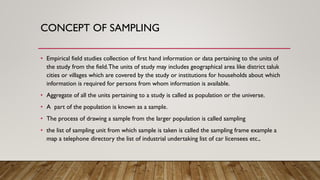
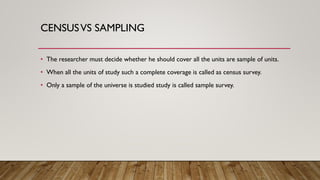
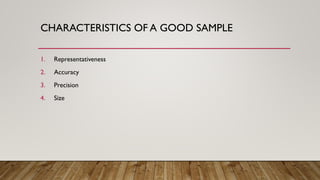
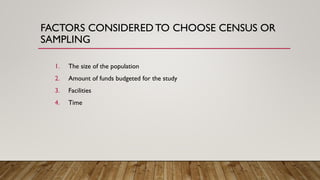
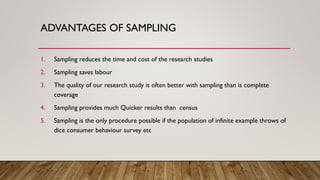
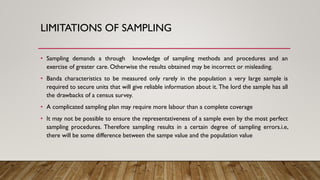
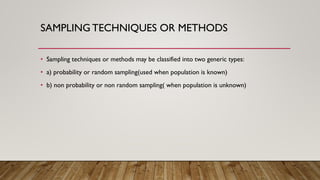
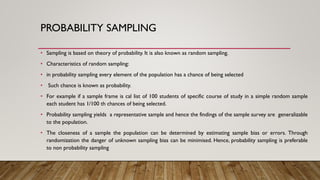
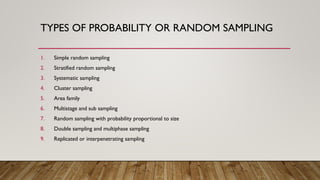
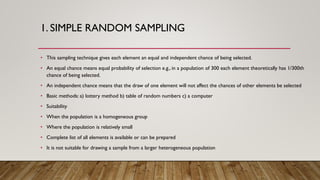
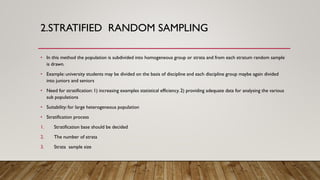
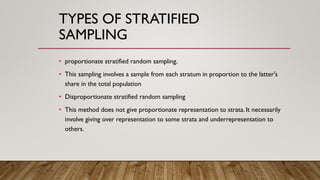
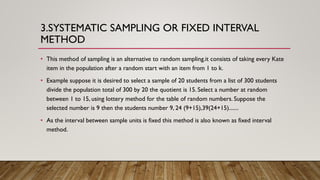
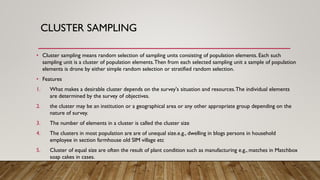
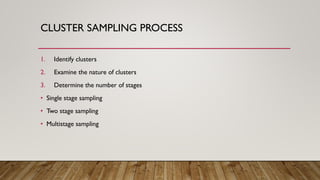
This document discusses different sampling techniques used in research studies. It begins by defining key concepts like population, sample, and sampling frame. It then distinguishes between census and sampling. Some characteristics of a good sample are representativeness, accuracy, precision and size. Factors to consider when choosing between census and sampling include population size, time, funds and facilities available. Advantages of sampling are reduced time, cost and better quality results. Limitations include potential for incorrect results and difficulty ensuring representativeness. Common sampling techniques discussed are probability/random sampling and non-probability sampling, with simple random sampling, stratified sampling, systematic sampling and cluster sampling provided as examples within probability sampling.




![sampling[1].pptx](https://cdn.slidesharecdn.com/ss_thumbnails/sampling1-220819060046-600e7719-thumbnail.jpg?width=640&height=640&fit=bounds)


