SALES
BUDGETING
BY ANIL KUMAR
2
 Sales budget refers to the
estimation of the sales revenue
 sales overheads for a
particular period
DEFINITION
3
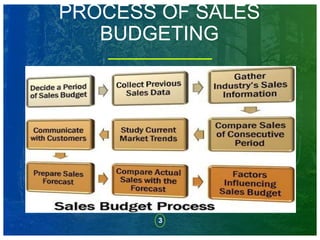
PROCESS OF SALES
BUDGETING
4
Step:- 1 - Decide a Period of Sales
Budget
 Sales budget can be planned
accurately if a specific period is
determined
 It can be made monthly, quarterly
or yearly
5
Step:- 2 - Collect Previous Sales
Data
 Gathering the sales
data or record for the
previous period
 It acts as a base to plan
a sales budget for future
sales
6
Step:- 3 - Gather Industry’s Sales
Information
 Company needs to be updated with the
total sales of the particular industry for a
specific period
 It should be aware of its market share
and the expected growth of the industry
within that period
7
Step:- 4 - Compare Sales of Consecutive
Period
 After collecting the sales records a
comparative analysis is required of the
previous sales periods to predict the
future sales possibilities
8
Step:- 5 - Study Current Market Trends
 Next step is keeping an eye on
the market fluctuations, preference
and trend which helps in
determining a more accurate sales
budget
9
Step:- 6 - Communicate with
Customers
 The customer reviews and
buying habits should be
analyzed
 It helps to preparing a sales
budget
10
Step:- 7 - Prepare Sales
Forecast
 Based on the above data and
analysis regarding past sales,
market trends and customer’s
response, sales for a particular
period is forecast
11
Step:- 8 - Compare Actual Sales with
the Forecast
 Actual sales are compared with
estimated sales
 If considerable difference then
reasons are to be identified
 Corrective steps to be taken
12
Step:- 9 - Factors Influencing Sales
Budget
 It is framed by different factors existing in the
business environment
1. Internal Factors ( production capacity,
promotion, seasonal fluctuations, price
fluctuations etc. )
2. External Factors ( govt. policies, competition in
market, technology development, economic
condition of country etc. )
13
14
 It is the most common method of budgeting
 It is simple and easy to understand
 Incremental budgeting takes last year’s actual
figures and adds or subtracts
 Appropriate to use if the primary cost driver do
not change from year to year
Method:- 1 - Incremental Budgeting
Method
15
 Activity-based budgeting is
a top-down budgeting
 Determines the amount of
inputs required to support the
targets or outputs set by the
company
Method:- 2 - Activity-based
Method
16ADD A FOOTER
 It is really a mindset about making sure that
everything that is included in the budget
delivers value for the business
 Value proposition budgeting aims to avoid
unnecessary expenditures
 It is not as precisely aimed at that goal as our
final budgeting option
Method:- 2 - Value Proposition Budgeting
17
 One of the most commonly used budgeting
methods
 starts with the assumption that all department
budgets are zero and must be rebuilt from
scratch
 Zero-based budgeting is very tight, aiming to
avoid any and all expenditures that are not
considered absolutely essential to the
company’s successful (profitable) operation
 good to use when there is an urgent need for
cost containment
Method:- 4 - Zero-based Budgeting
Method
18

Sales Budgeting

  • 1.
  • 2.
    2  Sales budgetrefers to the estimation of the sales revenue  sales overheads for a particular period DEFINITION
  • 3.
  • 4.
    4 Step:- 1 -Decide a Period of Sales Budget  Sales budget can be planned accurately if a specific period is determined  It can be made monthly, quarterly or yearly
  • 5.
    5 Step:- 2 -Collect Previous Sales Data  Gathering the sales data or record for the previous period  It acts as a base to plan a sales budget for future sales
  • 6.
    6 Step:- 3 -Gather Industry’s Sales Information  Company needs to be updated with the total sales of the particular industry for a specific period  It should be aware of its market share and the expected growth of the industry within that period
  • 7.
    7 Step:- 4 -Compare Sales of Consecutive Period  After collecting the sales records a comparative analysis is required of the previous sales periods to predict the future sales possibilities
  • 8.
    8 Step:- 5 -Study Current Market Trends  Next step is keeping an eye on the market fluctuations, preference and trend which helps in determining a more accurate sales budget
  • 9.
    9 Step:- 6 -Communicate with Customers  The customer reviews and buying habits should be analyzed  It helps to preparing a sales budget
  • 10.
    10 Step:- 7 -Prepare Sales Forecast  Based on the above data and analysis regarding past sales, market trends and customer’s response, sales for a particular period is forecast
  • 11.
    11 Step:- 8 -Compare Actual Sales with the Forecast  Actual sales are compared with estimated sales  If considerable difference then reasons are to be identified  Corrective steps to be taken
  • 12.
    12 Step:- 9 -Factors Influencing Sales Budget  It is framed by different factors existing in the business environment 1. Internal Factors ( production capacity, promotion, seasonal fluctuations, price fluctuations etc. ) 2. External Factors ( govt. policies, competition in market, technology development, economic condition of country etc. )
  • 13.
  • 14.
    14  It isthe most common method of budgeting  It is simple and easy to understand  Incremental budgeting takes last year’s actual figures and adds or subtracts  Appropriate to use if the primary cost driver do not change from year to year Method:- 1 - Incremental Budgeting Method
  • 15.
    15  Activity-based budgetingis a top-down budgeting  Determines the amount of inputs required to support the targets or outputs set by the company Method:- 2 - Activity-based Method
  • 16.
    16ADD A FOOTER It is really a mindset about making sure that everything that is included in the budget delivers value for the business  Value proposition budgeting aims to avoid unnecessary expenditures  It is not as precisely aimed at that goal as our final budgeting option Method:- 2 - Value Proposition Budgeting
  • 17.
    17  One ofthe most commonly used budgeting methods  starts with the assumption that all department budgets are zero and must be rebuilt from scratch  Zero-based budgeting is very tight, aiming to avoid any and all expenditures that are not considered absolutely essential to the company’s successful (profitable) operation  good to use when there is an urgent need for cost containment Method:- 4 - Zero-based Budgeting Method
  • 18.