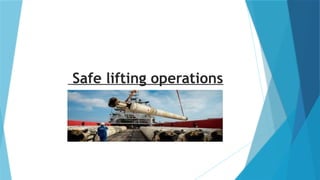
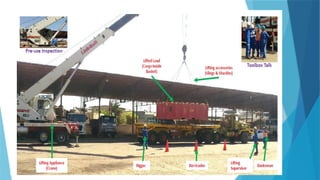
Safe lifting operations
Contents:-
 LOLER 1998
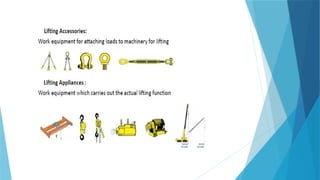
 Lifting Equipment Classification and Definition
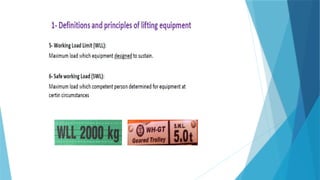
 Safe Working load and Working Load Limit
 Types of lifting operation and requirements
 Risk Assessment
LOLER
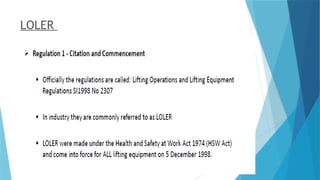
 Officially the regulations are called: Lifting Operations and Lifting Equipment
Regulations SI1998 No 2307
 • LOLER were made under the Health and Safety at Work Act 1974 (HSW Act)
and come into force for ALL lifting equipment on 5 December 1998.
 The LOLER Regulations aim to make working life safer for everyone using and
coming into contact with lifting equipment: employers and employees,
contractors and others
LOLER
 Regulation 1: Citation and Commencement
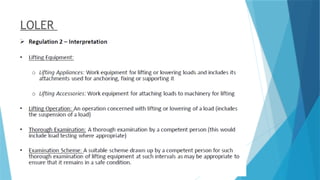
 Regulation 2 :Interpretation
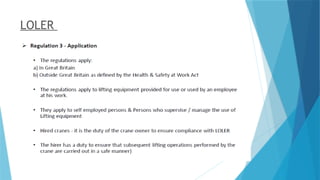
 Regulation 3: Application
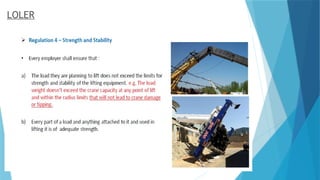
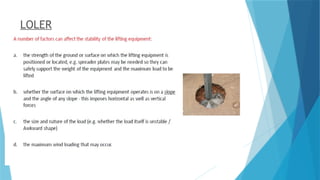
 Regulation 4: Strength and Stability
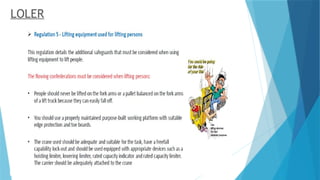
 Regulation 5: Lifting Equipment for Lifting Persons
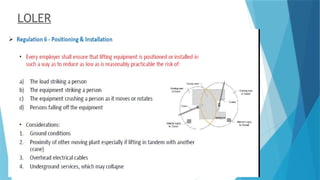
 Regulation 6: Positioning and Installation
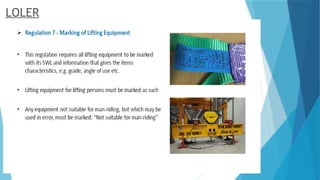
 Regulation 7: Marking of Lifting Equipment
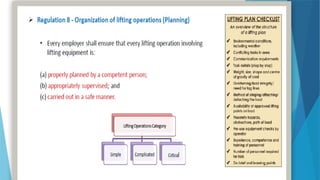
 Regulation 8 :Organization of Lifting Operations
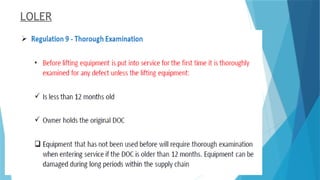
 Regulation 9: Thorough Examination and Inspection
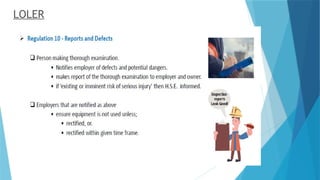
 Regulation 10: Reports and Defects
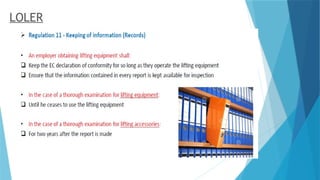
 Regulation 11: Keeping of Information
LOLER
LOLER
LOLER
LOLER
LOLER
LOLER
LOLER
LOLER
LOLER
LOLER
LOLER
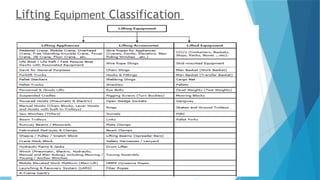
Lifting Equipment Classification
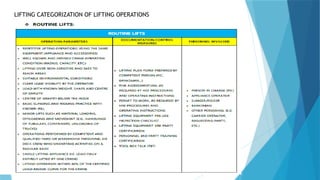
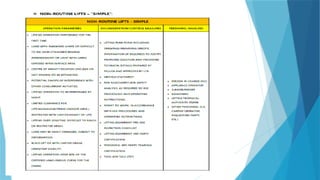
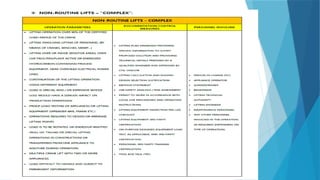
LIFTING CATEGORIZATION OF LIFTING OPERATIONS
Risk Assessment :-
 Risk assessment discuss the all hazardous that cause harm to people
What are the 3 main reasons to assess and manage risk?
 Human harm (Injury and illness)
 Legal Effects ( Duty of care and consequence of unsuitable or insufficient risk
management )
 Economic Effects (Substantial financial costs are related at work )
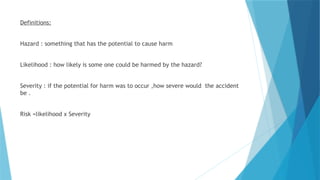
Definitions:
Hazard : something that has the potential to cause harm
Likelihood : how likely is some one could be harmed by the hazard?
Severity : if the potential for harm was to occur ,how severe would the accident
be .
Risk =likelihood x Severity
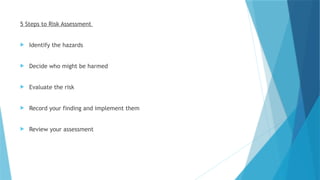
5 Steps to Risk Assessment
 Identify the hazards
 Decide who might be harmed
 Evaluate the risk
 Record your finding and implement them
 Review your assessment

Safe lifting operations Safe lifting operations .pptx

  • 1.
  • 2.
    Contents:-  LOLER 1998 Lifting Equipment Classification and Definition  Safe Working load and Working Load Limit  Types of lifting operation and requirements  Risk Assessment
  • 3.
    LOLER  Officially theregulations are called: Lifting Operations and Lifting Equipment Regulations SI1998 No 2307  • LOLER were made under the Health and Safety at Work Act 1974 (HSW Act) and come into force for ALL lifting equipment on 5 December 1998.  The LOLER Regulations aim to make working life safer for everyone using and coming into contact with lifting equipment: employers and employees, contractors and others
  • 4.
    LOLER  Regulation 1:Citation and Commencement  Regulation 2 :Interpretation  Regulation 3: Application  Regulation 4: Strength and Stability  Regulation 5: Lifting Equipment for Lifting Persons  Regulation 6: Positioning and Installation  Regulation 7: Marking of Lifting Equipment  Regulation 8 :Organization of Lifting Operations  Regulation 9: Thorough Examination and Inspection  Regulation 10: Reports and Defects  Regulation 11: Keeping of Information
  • 5.
  • 6.
  • 7.
  • 8.
  • 9.
  • 10.
  • 11.
  • 12.
  • 16.
  • 17.
  • 18.
  • 19.
  • 23.
    LIFTING CATEGORIZATION OFLIFTING OPERATIONS
  • 26.
    Risk Assessment :- Risk assessment discuss the all hazardous that cause harm to people What are the 3 main reasons to assess and manage risk?  Human harm (Injury and illness)  Legal Effects ( Duty of care and consequence of unsuitable or insufficient risk management )  Economic Effects (Substantial financial costs are related at work )
  • 27.
    Definitions: Hazard : somethingthat has the potential to cause harm Likelihood : how likely is some one could be harmed by the hazard? Severity : if the potential for harm was to occur ,how severe would the accident be . Risk =likelihood x Severity
  • 28.
    5 Steps toRisk Assessment  Identify the hazards  Decide who might be harmed  Evaluate the risk  Record your finding and implement them  Review your assessment