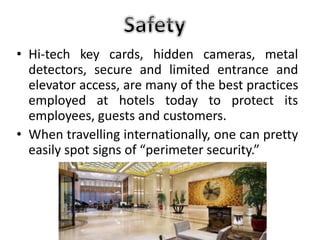
• Hi-tech key cards, hidden cameras, metal
detectors, secure and limited entrance and
elevator access, are many of the best practices
employed at hotels today to protect its
employees, guests and customers.
• When travelling internationally, one can pretty
easily spot signs of “perimeter security.”
• Today, it seems that we are always being recorded,
filmed or otherwise monitored by some device.
• While there are practical limits and legal restraints, a
question often lingers How safe is safe enough
• Hotel owners and managers struggle with balancing
the need for guest security with guest privacy.
• In the event of such a crime or attack
measures are in place to handle Guests
concerns
• Safety and any required evacuations, or other
actions required in an emergency
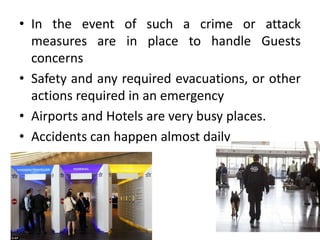
• Airports and Hotels are very busy places.
• Accidents can happen almost daily
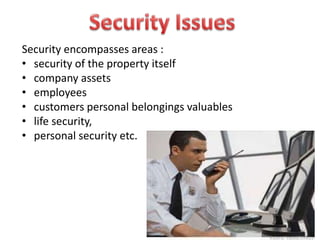
Security encompasses areas :
• security of the property itself
• company assets
• employees
• customers personal belongings valuables
• life security,
• personal security etc.
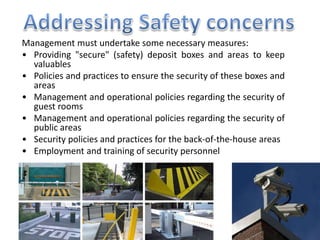
Management must undertake some necessary measures:
• Providing "secure" (safety) deposit boxes and areas to keep
valuables
• Policies and practices to ensure the security of these boxes and
areas
• Management and operational policies regarding the security of
guest rooms
• Management and operational policies regarding the security of
public areas
• Security policies and practices for the back-of-the-house areas
• Employment and training of security personnel
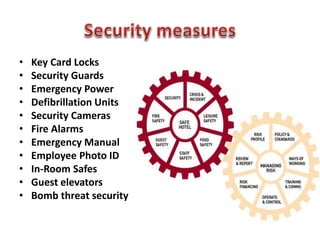
• Key Card Locks
• Security Guards
• Emergency Power
• Defibrillation Units
• Security Cameras
• Fire Alarms
• Emergency Manual
• Employee Photo ID
• In-Room Safes
• Guest elevators
• Bomb threat security
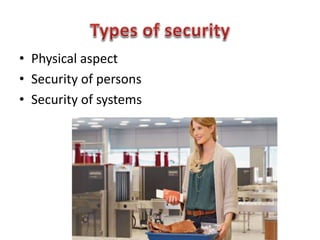
• Physical aspect
• Security of persons
• Security of systems
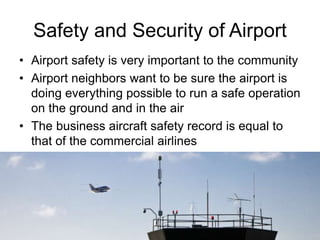
Safety and Security of Airport
• Airport safety is very important to the community
• Airport neighbors want to be sure the airport is
doing everything possible to run a safe operation
on the ground and in the air
• The business aircraft safety record is equal to
that of the commercial airlines
9
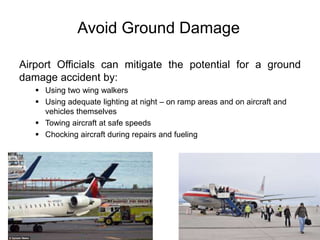
Airport Officials can mitigate the potential for a ground
damage accident by:
 Using two wing walkers
 Using adequate lighting at night – on ramp areas and on aircraft and
vehicles themselves
 Towing aircraft at safe speeds
 Chocking aircraft during repairs and fueling
Avoid Ground Damage
10
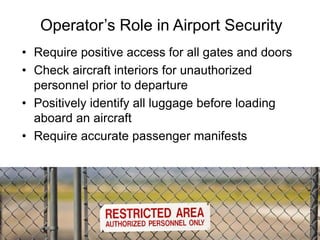
• Require positive access for all gates and doors
• Check aircraft interiors for unauthorized
personnel prior to departure
• Positively identify all luggage before loading
aboard an aircraft
• Require accurate passenger manifests
Operator’s Role in Airport Security
11
Safaty at hotels

Safaty at hotels

  • 2.
    • Hi-tech keycards, hidden cameras, metal detectors, secure and limited entrance and elevator access, are many of the best practices employed at hotels today to protect its employees, guests and customers. • When travelling internationally, one can pretty easily spot signs of “perimeter security.”
  • 3.
    • Today, itseems that we are always being recorded, filmed or otherwise monitored by some device. • While there are practical limits and legal restraints, a question often lingers How safe is safe enough • Hotel owners and managers struggle with balancing the need for guest security with guest privacy.
  • 4.
    • In theevent of such a crime or attack measures are in place to handle Guests concerns • Safety and any required evacuations, or other actions required in an emergency • Airports and Hotels are very busy places. • Accidents can happen almost daily
  • 5.
    Security encompasses areas: • security of the property itself • company assets • employees • customers personal belongings valuables • life security, • personal security etc.
  • 6.
    Management must undertakesome necessary measures: • Providing "secure" (safety) deposit boxes and areas to keep valuables • Policies and practices to ensure the security of these boxes and areas • Management and operational policies regarding the security of guest rooms • Management and operational policies regarding the security of public areas • Security policies and practices for the back-of-the-house areas • Employment and training of security personnel
  • 7.
    • Key CardLocks • Security Guards • Emergency Power • Defibrillation Units • Security Cameras • Fire Alarms • Emergency Manual • Employee Photo ID • In-Room Safes • Guest elevators • Bomb threat security
  • 8.
    • Physical aspect •Security of persons • Security of systems
  • 9.
    Safety and Securityof Airport • Airport safety is very important to the community • Airport neighbors want to be sure the airport is doing everything possible to run a safe operation on the ground and in the air • The business aircraft safety record is equal to that of the commercial airlines 9
  • 10.
    Airport Officials canmitigate the potential for a ground damage accident by:  Using two wing walkers  Using adequate lighting at night – on ramp areas and on aircraft and vehicles themselves  Towing aircraft at safe speeds  Chocking aircraft during repairs and fueling Avoid Ground Damage 10
  • 11.
    • Require positiveaccess for all gates and doors • Check aircraft interiors for unauthorized personnel prior to departure • Positively identify all luggage before loading aboard an aircraft • Require accurate passenger manifests Operator’s Role in Airport Security 11

Editor's Notes

  • #10 Refer to NBAA’s Airports Handbook to compare GA and airline aircraft accident rates over the past decade.