JENNIFER HURTADO JARAMILLO
Master Program in English Didactics
June 2017
Purposes of the
study
Innovatio
n in the
rural area
Competitiv
e students
Oral skills
Confidenc
e trough
Cooperativ
e Learning
Raise
awareness
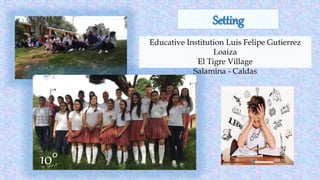
Educative Institution Luis Felipe Gutierrez
Loaiza
El Tigre Village
Salamina - Caldas
10°
1 OBSERVATIO
N
JOURNAL
To collect data about the Researchers’ point of
view according to the participants’ performance
performance during the English classes and the
context of the classroom.
2 SURVEYING SURVEY
To collect data about participants performance and
opinions in terms of personal skills, classes’
appraisals, preferences and expectations.
3 AUDIO
RECORDING
FOCUS
GROUP
Collect data about teachers’ experiences and points
of view around the process of teaching and
learning English in their different setting.
* Group work expectations
* Low level of English
proficiency
* Need for ludic
* Evaluation strategy
weaknesses
* Group work
expectations
* Need for ludic
* Desire for learning
English
* High interest on
speaking
* Preferences on
listening
* Low level of English
proficiency
61%
35%
4%
13%
25%
33%
29%
80%
20%Listening
Reading
speaking
Low
From 1,0 to 2,9
Basic
From 3,0 to 3,9
High
From 4,0 to 4,5
Superior
From 4,6 to 5,0 67%
13%
17%
4%
Writing
CODE COLOR
FREQUECIES
Students’
survey
English teachers’
focus group
Researchers’
Journal
Total
s
Percentag
es
Problems with listening 1 4 4 9 5,8
Speaking difficulties 1 6 4 11 7,1
Desire for learning English 7 3 1 11 7,1
High interest in speaking 5 7 2 14 9,0
Low level of English
proficiency
4
5 8 17 10,9
Preferences in listening 8 6 3 17 10,9
Evaluation strategy
weaknesses
7
4 6 17 10,9
Need for ludic 15 3 8 26 16,7
Speaking
difficultie
s
Low level
of English
proficienc
y
High
interest in
speaking
Desire for
learning
English Need for
ludic
Preferenc
es in
listening
Problems
with
listening
Group
work
expectation
s
Evaluatio
n strategy
weakness
es
Learning
RESEARCH QUESTION
What is the effect of the Cooperative
learning approach in tenth graders’ oral
skills in a rural public school?
RESEARCH OBJECTIVES
To explore the
effect of
cooperative
learning
approach in tenth
graders’ oral
skills a rural
public school
2. To establish the patterns of oral
interaction in an EFL classroom
1. To measure the impact of
cooperative learning approach on
the oral fluency of the students
3. To evaluate the grammatical
accuracy after exposed to
cooperative learning approach
GENERAL Specific
RESEARCH OBJECTIVES
GENERAL Specific
To improve tenth
graders oral skills
by means of
cooperative
learning in a
rural public
school
1. To raise the levels of oral
fluency among the students
2. To better students oral
interaction trough the cooperative
learning approach
3. To raise the students’
confidence in oral performance
under the cooperative learning
approach
COOPERATIVELEARNING
APPROACH
A guidebook for
cooperative
learning: (Dee
Dishon, Pat Wilson
O’Leary, 1989)
Cooperative
learning in the
classroom (Johnson,
David W and
others, 1994)
An overview of
cooperative
learning
(Roger T. and
David W. Johnson
2002)
Making the most of
small groups
(Debbie Diller 2007)
Literacy
workstations-
making center work
(Debbie Diller 2003)
LISTENINGSKILL
Teaching and researching listening
(Michael Rost, 2002)
Teaching listening
and speaking from
the theory to the
practice (Jack C
Richards 2008)
How to teach
English. (Jeremy
Harmer 2008)SPEAKINGSKILL
Teaching and researching speaking
(Rebecca Hughes, 2002)
EFLMETHODOLOGY
Language learning
strategies. (Rebecca
Oxford, 1990)
Teaching by
principles. An
interactive
approach to
language pedagogy
(H. Douglas Brown
Suggested curriculum structure men
(MEN 2016)
Pedagogical principles and guide lines
(MEN 2016)
ACTION RESEARCH
• Creswell (2009)
• Explore human assumptions about a certain
problem in their own setting.
• Inductive analysis of the data.
• The researcher makes the analysis and
interpretation of the meaning of the data.
• The research question emerge from the data
collected
• The written reports use a flexible and
understandable structure.
REFLECT
OBSERVE
ACT
 Six workshops
 2 hours per workshop
 Practice part of the
lesson plan
 6 students per table
 Rotate each 25 minutes
1. Environmental care
2. Agro-industrial
processes
3. Country side traditions
4. Coffee marketing
5. Tourism in the town
6. Popular myths and
legends
LISTENING
TASK
SPEAKING
TASK
LISTENING
TASK
SPEAKING
TASK
• Class observation
• Surveys
• Speaking rubrics
• Measure test
Rotating workstation

Rotating workstation

  • 1.
    JENNIFER HURTADO JARAMILLO MasterProgram in English Didactics June 2017
  • 2.
    Purposes of the study Innovatio nin the rural area Competitiv e students Oral skills Confidenc e trough Cooperativ e Learning Raise awareness
  • 3.
    Educative Institution LuisFelipe Gutierrez Loaiza El Tigre Village Salamina - Caldas 10°
  • 4.
    1 OBSERVATIO N JOURNAL To collectdata about the Researchers’ point of view according to the participants’ performance performance during the English classes and the context of the classroom. 2 SURVEYING SURVEY To collect data about participants performance and opinions in terms of personal skills, classes’ appraisals, preferences and expectations. 3 AUDIO RECORDING FOCUS GROUP Collect data about teachers’ experiences and points of view around the process of teaching and learning English in their different setting.
  • 5.
    * Group workexpectations * Low level of English proficiency * Need for ludic * Evaluation strategy weaknesses * Group work expectations * Need for ludic * Desire for learning English * High interest on speaking * Preferences on listening * Low level of English proficiency
  • 6.
    61% 35% 4% 13% 25% 33% 29% 80% 20%Listening Reading speaking Low From 1,0 to2,9 Basic From 3,0 to 3,9 High From 4,0 to 4,5 Superior From 4,6 to 5,0 67% 13% 17% 4% Writing
  • 7.
    CODE COLOR FREQUECIES Students’ survey English teachers’ focusgroup Researchers’ Journal Total s Percentag es Problems with listening 1 4 4 9 5,8 Speaking difficulties 1 6 4 11 7,1 Desire for learning English 7 3 1 11 7,1 High interest in speaking 5 7 2 14 9,0 Low level of English proficiency 4 5 8 17 10,9 Preferences in listening 8 6 3 17 10,9 Evaluation strategy weaknesses 7 4 6 17 10,9 Need for ludic 15 3 8 26 16,7
  • 8.
    Speaking difficultie s Low level of English proficienc y High interestin speaking Desire for learning English Need for ludic Preferenc es in listening Problems with listening Group work expectation s Evaluatio n strategy weakness es Learning
  • 9.
    RESEARCH QUESTION What isthe effect of the Cooperative learning approach in tenth graders’ oral skills in a rural public school?
  • 10.
    RESEARCH OBJECTIVES To explorethe effect of cooperative learning approach in tenth graders’ oral skills a rural public school 2. To establish the patterns of oral interaction in an EFL classroom 1. To measure the impact of cooperative learning approach on the oral fluency of the students 3. To evaluate the grammatical accuracy after exposed to cooperative learning approach GENERAL Specific
  • 11.
    RESEARCH OBJECTIVES GENERAL Specific Toimprove tenth graders oral skills by means of cooperative learning in a rural public school 1. To raise the levels of oral fluency among the students 2. To better students oral interaction trough the cooperative learning approach 3. To raise the students’ confidence in oral performance under the cooperative learning approach
  • 12.
    COOPERATIVELEARNING APPROACH A guidebook for cooperative learning:(Dee Dishon, Pat Wilson O’Leary, 1989) Cooperative learning in the classroom (Johnson, David W and others, 1994) An overview of cooperative learning (Roger T. and David W. Johnson 2002) Making the most of small groups (Debbie Diller 2007) Literacy workstations- making center work (Debbie Diller 2003) LISTENINGSKILL Teaching and researching listening (Michael Rost, 2002) Teaching listening and speaking from the theory to the practice (Jack C Richards 2008) How to teach English. (Jeremy Harmer 2008)SPEAKINGSKILL Teaching and researching speaking (Rebecca Hughes, 2002) EFLMETHODOLOGY Language learning strategies. (Rebecca Oxford, 1990) Teaching by principles. An interactive approach to language pedagogy (H. Douglas Brown Suggested curriculum structure men (MEN 2016) Pedagogical principles and guide lines (MEN 2016)
  • 13.
    ACTION RESEARCH • Creswell(2009) • Explore human assumptions about a certain problem in their own setting. • Inductive analysis of the data. • The researcher makes the analysis and interpretation of the meaning of the data. • The research question emerge from the data collected • The written reports use a flexible and understandable structure. REFLECT OBSERVE ACT
  • 14.
     Six workshops 2 hours per workshop  Practice part of the lesson plan  6 students per table  Rotate each 25 minutes 1. Environmental care 2. Agro-industrial processes 3. Country side traditions 4. Coffee marketing 5. Tourism in the town 6. Popular myths and legends LISTENING TASK SPEAKING TASK LISTENING TASK SPEAKING TASK
  • 15.
    • Class observation •Surveys • Speaking rubrics • Measure test