ROSES By: Mark Fierle, UCCE MASTER GARDENER
PLANTING Needs good sunlight- 4-8 hours, morning sun is the best Space- 2-3 feet apart in well drained soil Time to plant- just about any time of year in Southern California Use lots of compost/ mulch. Caution- keep mulch a few inches away from plant union to prevent rot Bare root- soak plant roots for a minimum of a few hours- up to 2 days is ok Make a cone at bottom of hole and spread roots over cone. Tamp firm and water to eliminate air holes Tip- slip a small paper bag over plant- keep on for one week Keep bud union above ground
FERTILIZE Use balanced formula- ( 6-10-4 or 4-4-4) Dr Earth or grow power are good brands Start late February/ March- about ½ cup- every six weeks thru October Tip: feed when leaves sprout, not before You can also amend with gypsum and epsom salts
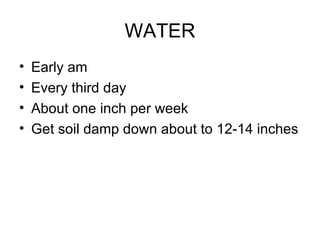
WATER Early am Every third day About one inch per week Get soil damp down about to 12-14 inches
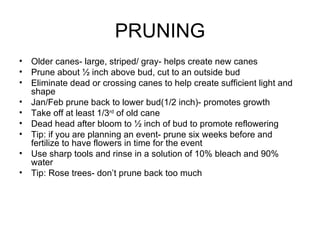
PRUNING Older canes- large, striped/ gray- helps create new canes Prune about ½ inch above bud, cut to an outside bud Eliminate dead or crossing canes to help create sufficient light and shape Jan/Feb prune back to lower bud(1/2 inch)- promotes growth Take off at least 1/3 rd  of old cane Dead head after bloom to ½ inch of bud to promote reflowering Tip: if you are planning an event- prune six weeks before and fertilize to have flowers in time for the event Use sharp tools and rinse in a solution of 10% bleach and 90% water Tip: Rose trees- don’t prune back too much
COMPATIBLE FLOWERS Salvia and daisy like flowers are good
Moving/Replacing Try not to disturb root ball OK every two years or so Over 5-10 years in a pot or ground replace soil  to re-energize. Roses are noted for using up the nutrients
PROBLEMS Shriveling leaves- check watering, use gypsum to help create aeration Ants- use sugar/boric acid solution in a bowl or film capsule- place near rose bush Birds – spray with hose Use neem oil to eliminate bad insects like aphids Yellowing leaves- use chelated iron Other problems like black leaf, mildew and rust- make a solution of one tablespoon vegetable oil, baking soda, non fat milk and balance of water. Place in spray bottle – spray every week until gone. Also remove affected leaves, put in a baggie and properly dispose in trash. Also consult Master Gardener website-www.uccemg.com or call hotline- 714/708-1646

Roses

  • 1.
    ROSES By: MarkFierle, UCCE MASTER GARDENER
  • 2.
    PLANTING Needs goodsunlight- 4-8 hours, morning sun is the best Space- 2-3 feet apart in well drained soil Time to plant- just about any time of year in Southern California Use lots of compost/ mulch. Caution- keep mulch a few inches away from plant union to prevent rot Bare root- soak plant roots for a minimum of a few hours- up to 2 days is ok Make a cone at bottom of hole and spread roots over cone. Tamp firm and water to eliminate air holes Tip- slip a small paper bag over plant- keep on for one week Keep bud union above ground
  • 3.
    FERTILIZE Use balancedformula- ( 6-10-4 or 4-4-4) Dr Earth or grow power are good brands Start late February/ March- about ½ cup- every six weeks thru October Tip: feed when leaves sprout, not before You can also amend with gypsum and epsom salts
  • 4.
    WATER Early amEvery third day About one inch per week Get soil damp down about to 12-14 inches
  • 5.
    PRUNING Older canes-large, striped/ gray- helps create new canes Prune about ½ inch above bud, cut to an outside bud Eliminate dead or crossing canes to help create sufficient light and shape Jan/Feb prune back to lower bud(1/2 inch)- promotes growth Take off at least 1/3 rd of old cane Dead head after bloom to ½ inch of bud to promote reflowering Tip: if you are planning an event- prune six weeks before and fertilize to have flowers in time for the event Use sharp tools and rinse in a solution of 10% bleach and 90% water Tip: Rose trees- don’t prune back too much
  • 6.
    COMPATIBLE FLOWERS Salviaand daisy like flowers are good
  • 7.
    Moving/Replacing Try notto disturb root ball OK every two years or so Over 5-10 years in a pot or ground replace soil to re-energize. Roses are noted for using up the nutrients
  • 8.
    PROBLEMS Shriveling leaves-check watering, use gypsum to help create aeration Ants- use sugar/boric acid solution in a bowl or film capsule- place near rose bush Birds – spray with hose Use neem oil to eliminate bad insects like aphids Yellowing leaves- use chelated iron Other problems like black leaf, mildew and rust- make a solution of one tablespoon vegetable oil, baking soda, non fat milk and balance of water. Place in spray bottle – spray every week until gone. Also remove affected leaves, put in a baggie and properly dispose in trash. Also consult Master Gardener website-www.uccemg.com or call hotline- 714/708-1646