Feedback
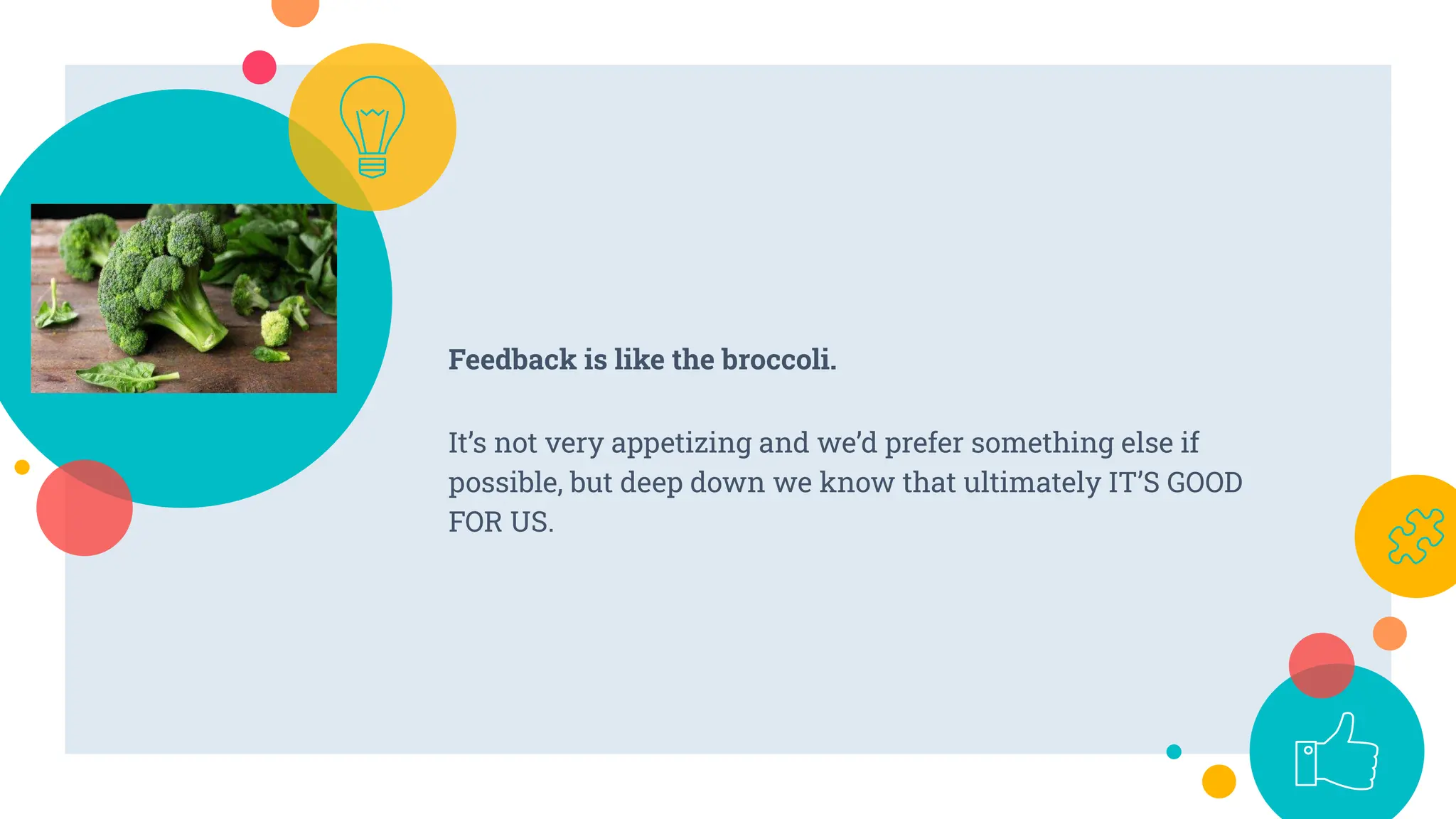
Feedback is like the broccoli.
It’s not very appetizing and we’d prefer something else if
possible, but deep down we know that ultimately IT’S GOOD
FOR US.
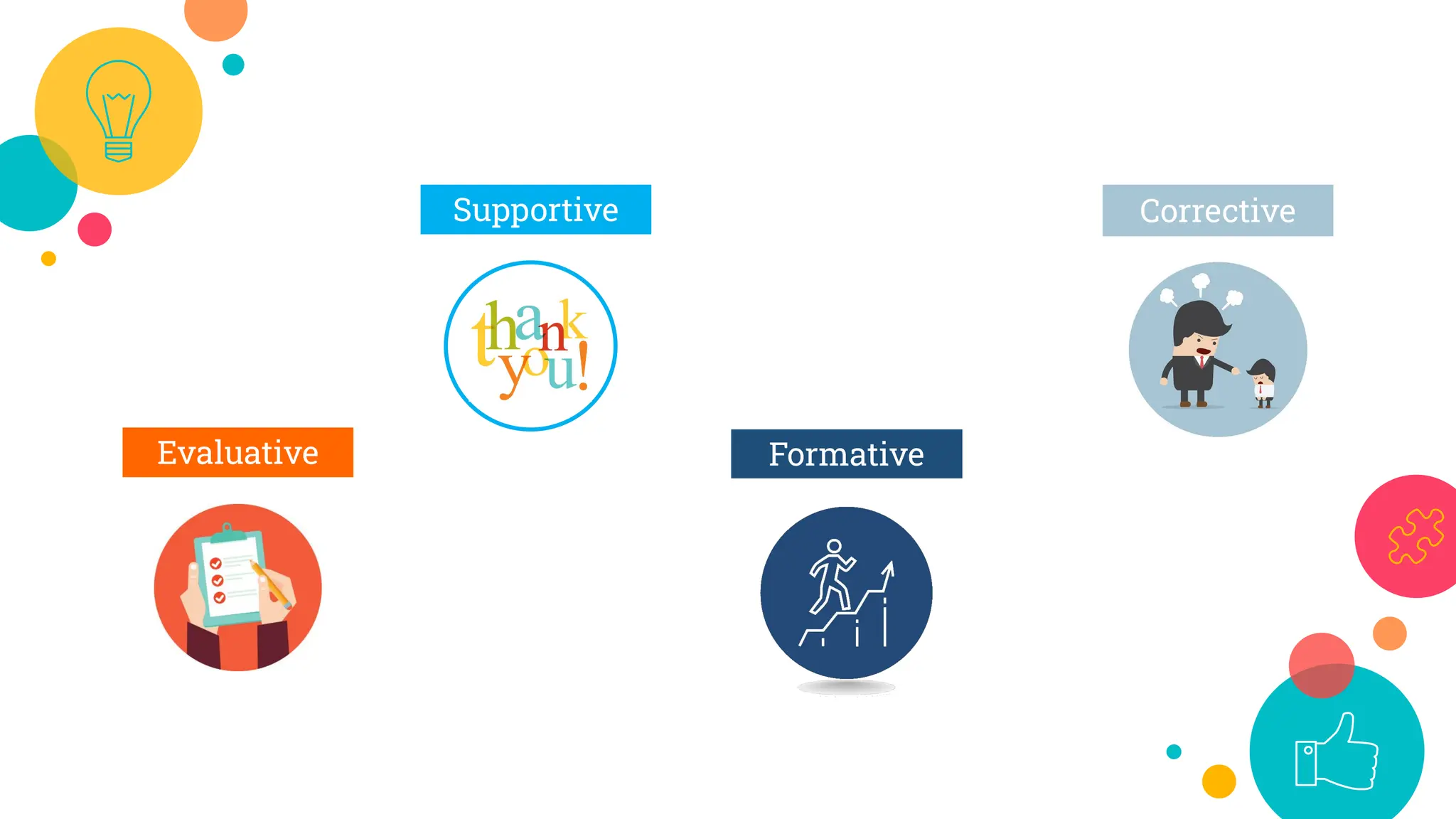
Corrective
Formative
Evaluative
Supportive
Feedback Culture is really important!
Trust
Support
Transparency
Development
Main
instruments
● BOFF
● WRAP
● SLC
● SKS
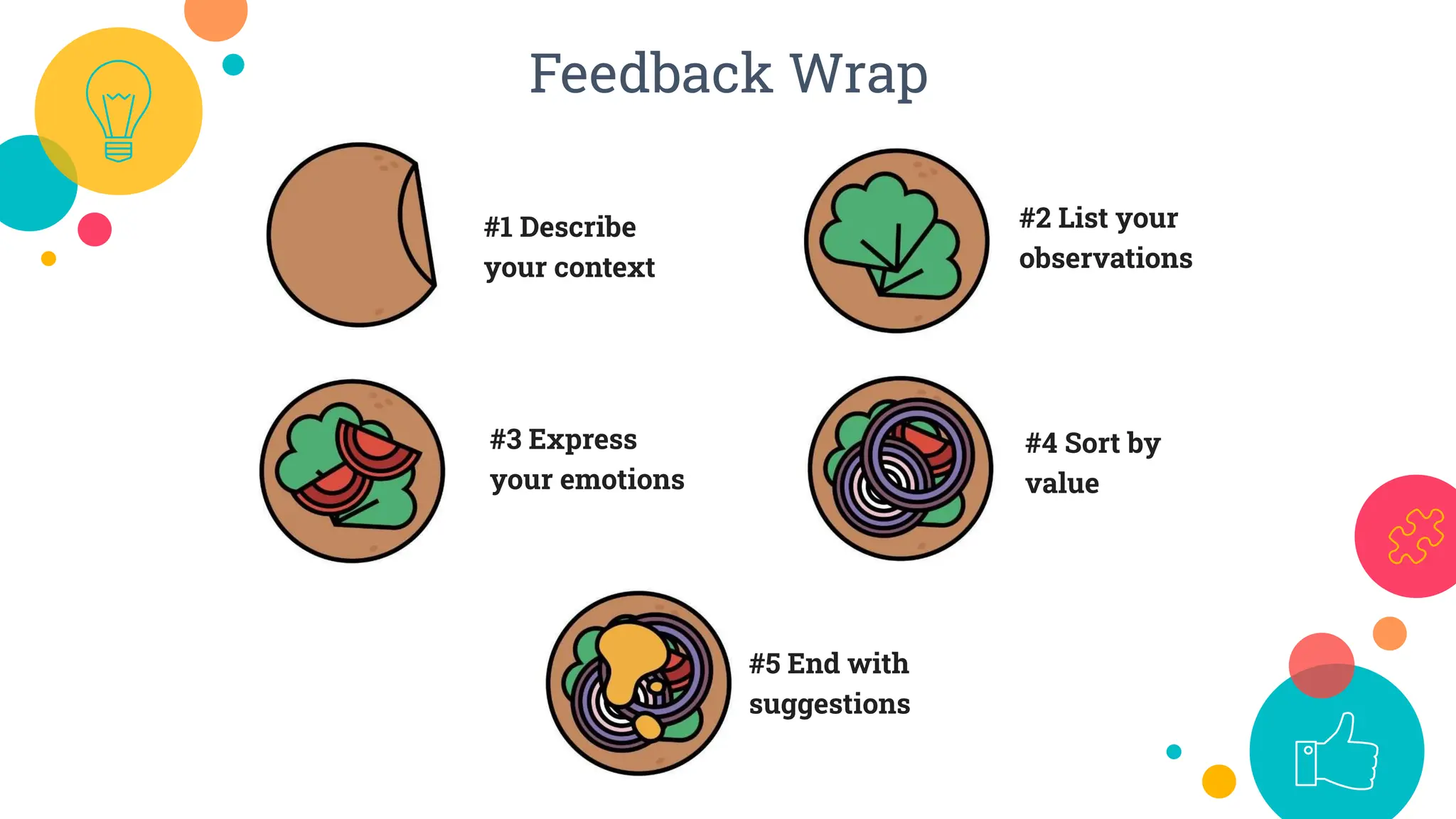
Feedback Wrap
Feedback Wrap
#3 Express
your emotions
#2 List your
observations
#1 Describe
your context
#4 Sort by
value
#5 End with
suggestions
Feedback Wrap
Feedback Wrap
Feedback Wrap
Feedback Wrap
Feedback Wrap
“
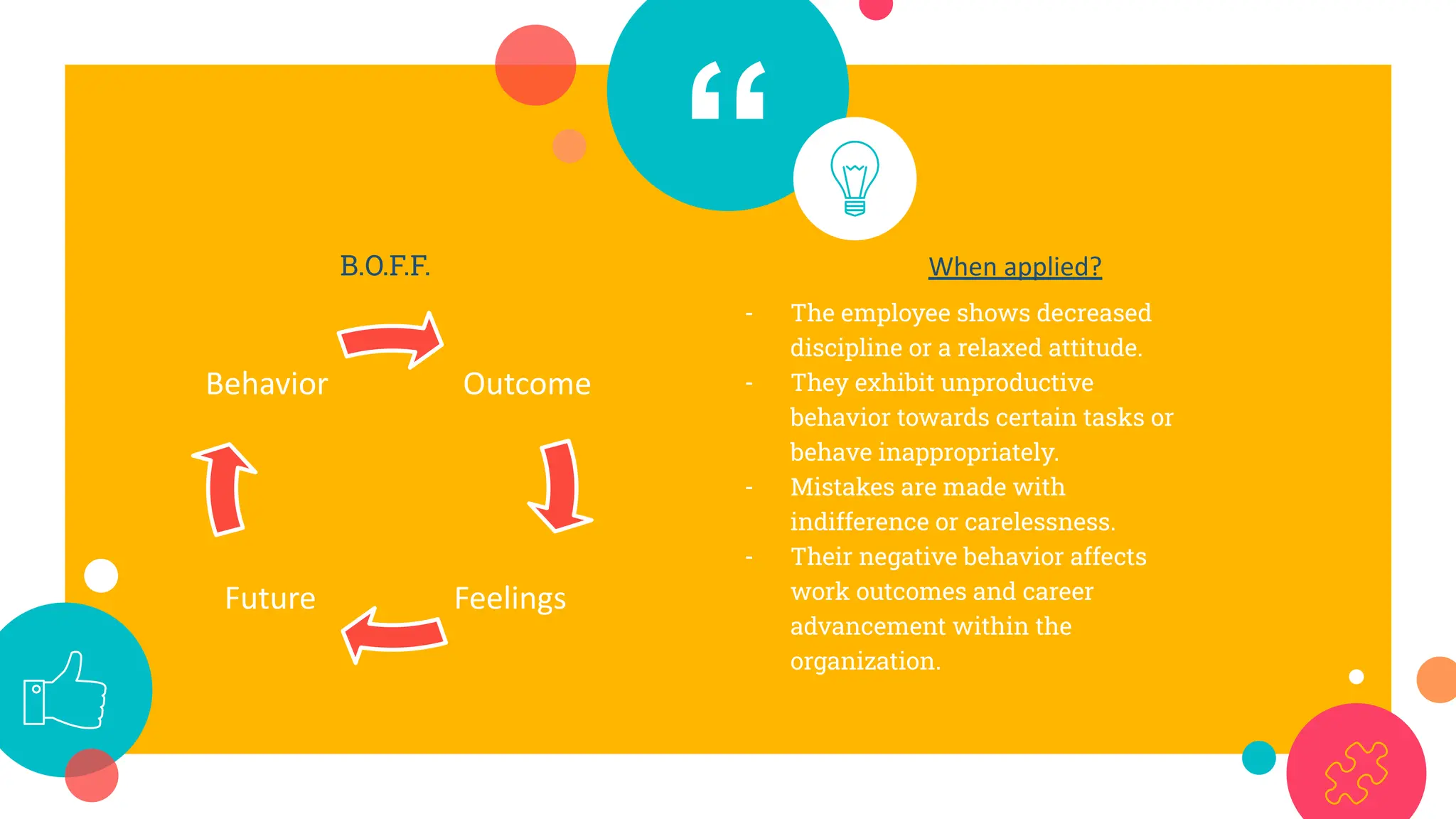
B.O.F.F.
Outcome
Feelings
Future
Behavior
When applied?
- The employee shows decreased
discipline or a relaxed attitude.
- They exhibit unproductive
behavior towards certain tasks or
behave inappropriately.
- Mistakes are made with
indifference or carelessness.
- Their negative behavior affects
work outcomes and career
advancement within the
organization.
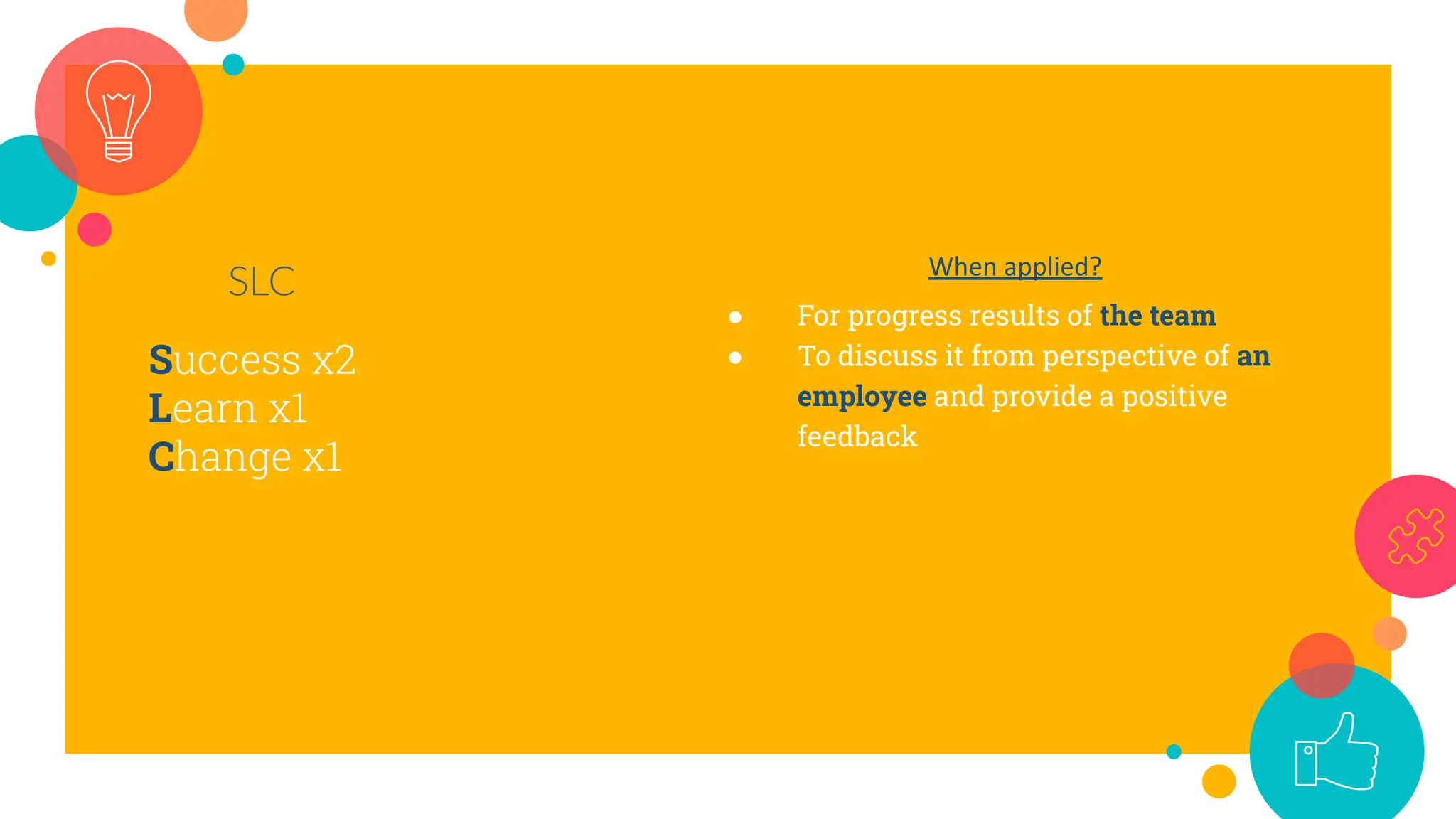
Success x2
Learn x1
Change x1
SLC When applied?
● For progress results of the team
● To discuss it from perspective of an
employee and provide a positive
feedback
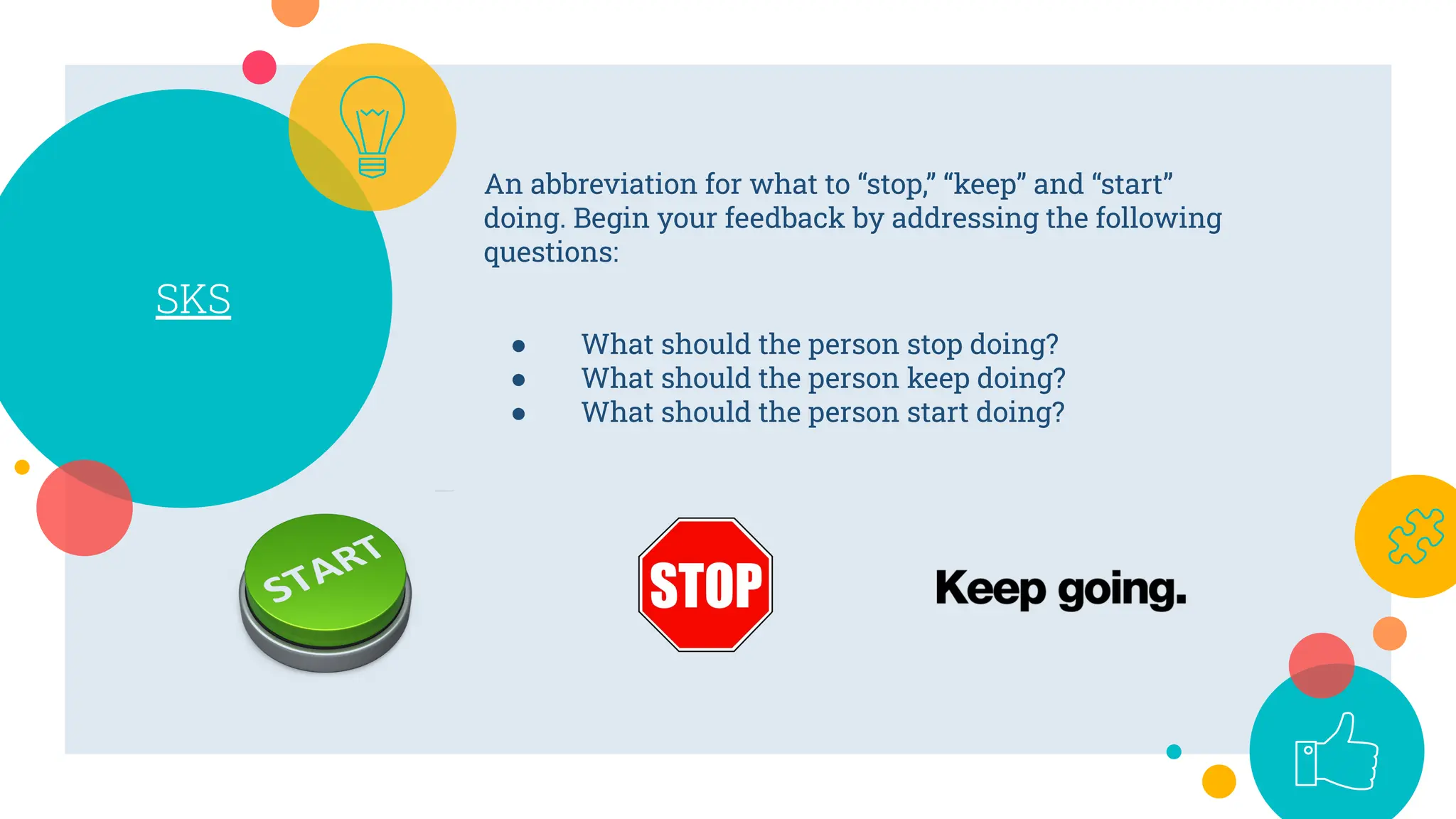
SKS
An abbreviation for what to “stop,” “keep” and “start”
doing. Begin your feedback by addressing the following
questions:
● What should the person stop doing?
● What should the person keep doing?
● What should the person start doing?
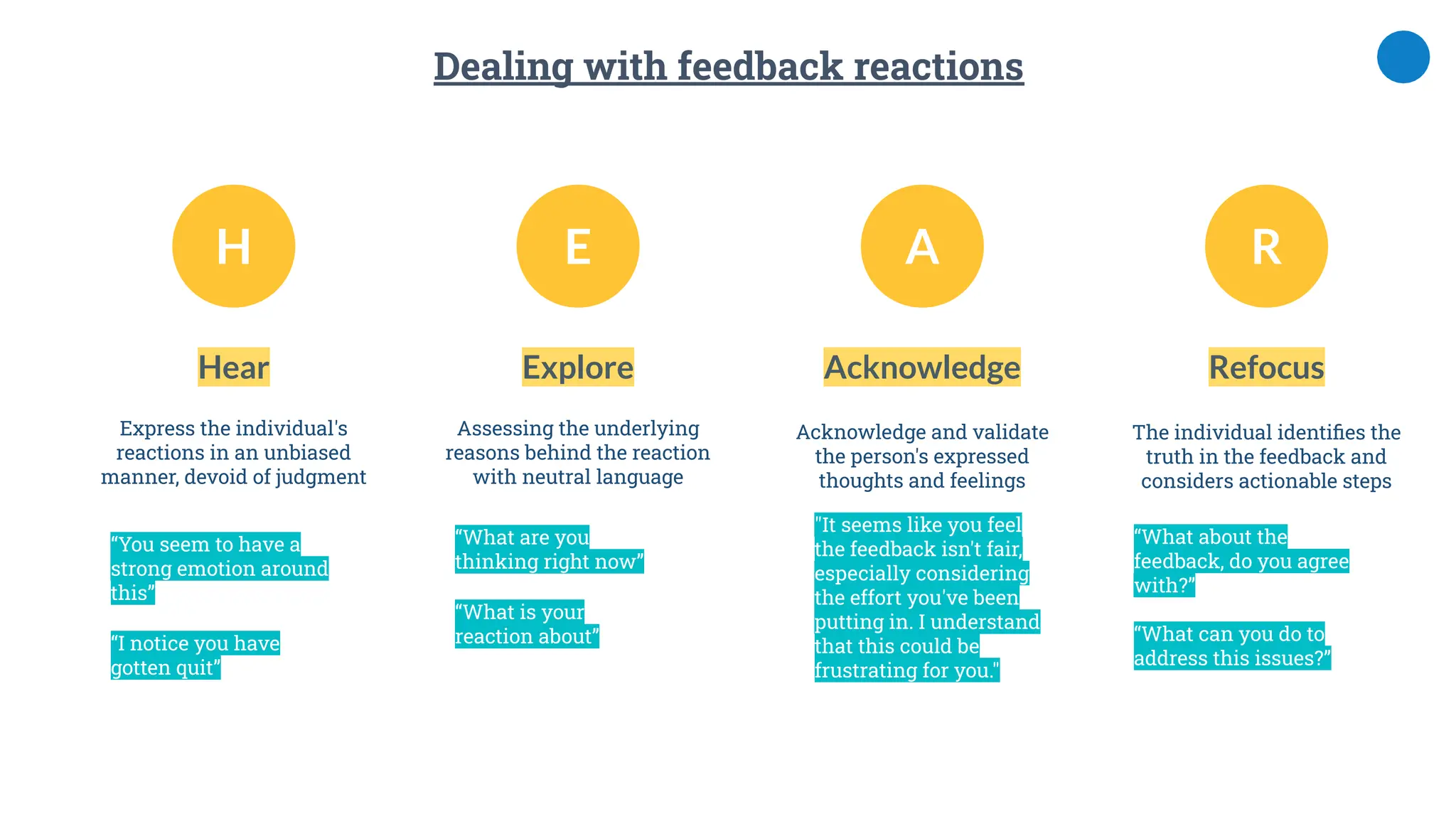
“You seem to have a
strong emotion around
this”
“I notice you have
gotten quit”
“What are you
thinking right now”
“What is your
reaction about”
"It seems like you feel
the feedback isn't fair,
especially considering
the effort you've been
putting in. I understand
that this could be
frustrating for you."
“What about the
feedback, do you agree
with?”
“What can you do to
address this issues?”
Dealing with feedback reactions
H E A R
Hear Explore Acknowledge Refocus
Express the individual's
reactions in an unbiased
manner, devoid of judgment
Assessing the underlying
reasons behind the reaction
with neutral language
The individual identifies the
truth in the feedback and
considers actionable steps
Acknowledge and validate
the person's expressed
thoughts and feelings
● Feedback is about behavior, not a
personality traits!
● Provided with empathy. Feedback-giver should
understand person’s emotions and feedback
impact on them; manage own emotional state.
● Specific. Feedback describes specific examples
of the employee’s behavior and do not evaluate
or assume motives.
● Timely and Ongoing. Feedback refers to a recent
situation, which can still be easily recalled by the
manager and the employee. Feedback should be
ongoing.
• Balanced. Feedback indicates both strengths and
weaknesses in the employee’s work or behavior.
• Point to Positive Behavior. Feedback offers a
description of the behavior that the manager expects
in the future.
• Developmental dialogue. Feedback is intended to
support the employee’s development. Use coaching
approach to encourage employee to develop new
behavior in a feedback situation.
• Feedback value. Point out what is a value from new
behavior.
• Do not overload. Provide feedback about
one-three messages at a time.
Principles of constructive feedback
NVC
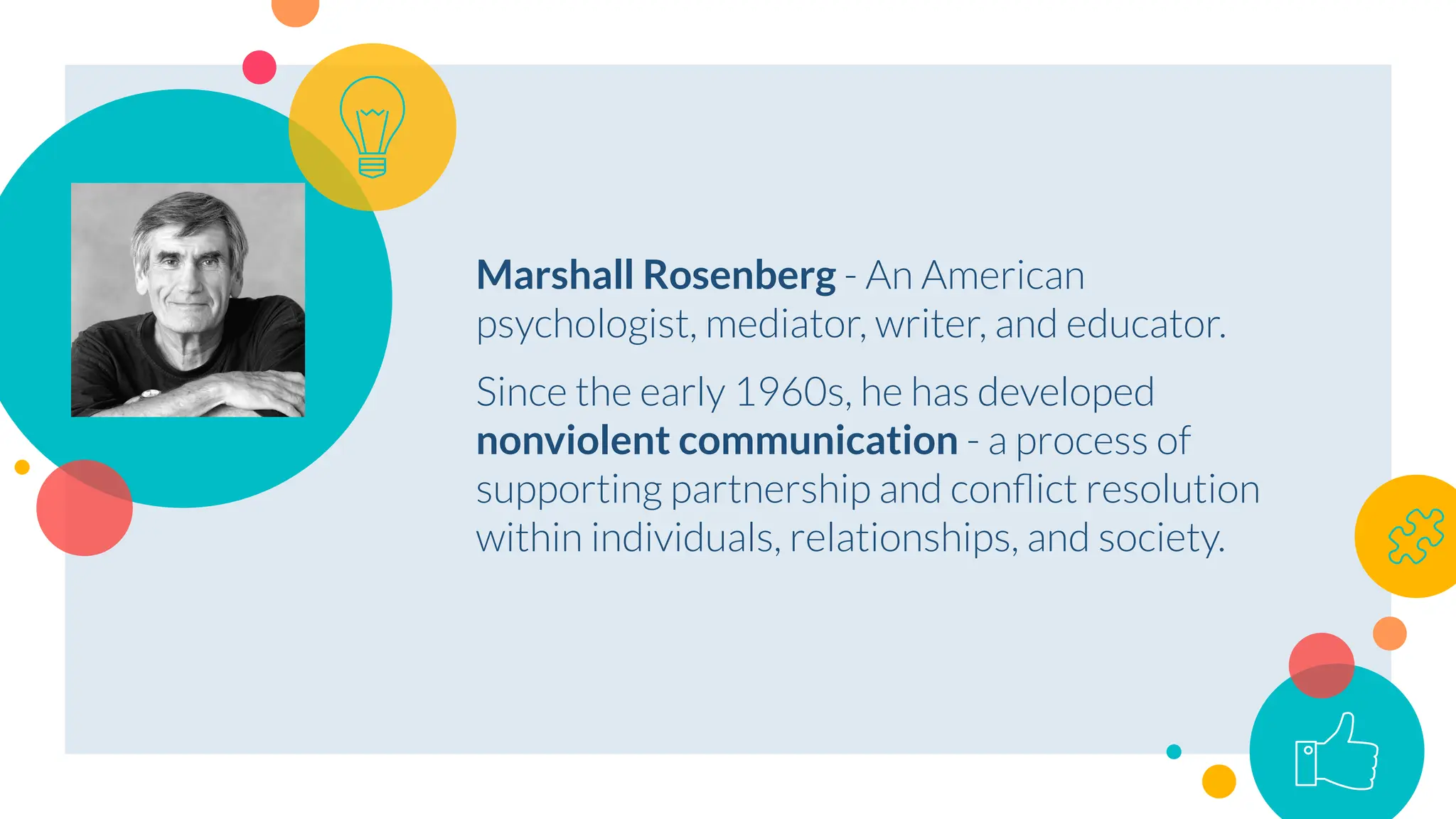
Marshall Rosenberg - An American
psychologist, mediator, writer, and educator.
Since the early 1960s, he has developed
nonviolent communication - a process of
supporting partnership and conflict resolution
within individuals, relationships, and society.
Observation  Fact
Emotions
Needs
Request
You came to the meeting 15 minutes later
than agreed
I feel irritated and sad
I need mutual respect and understanding
Please let me know 1 hour in advance if you
are going to be late
NVC Formula
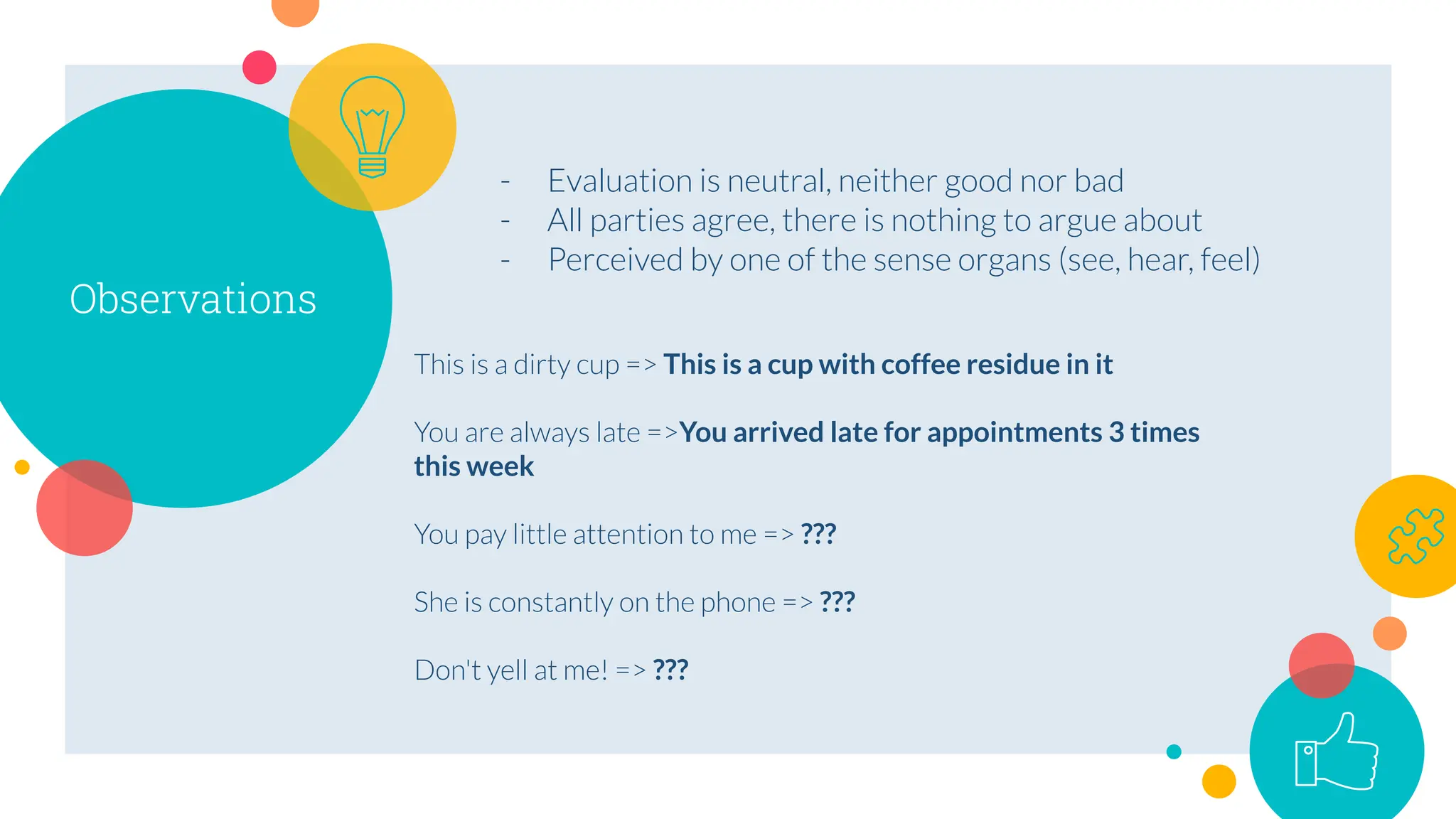
Observations
- Evaluation is neutral, neither good nor bad
- All parties agree, there is nothing to argue about
- Perceived by one of the sense organs (see, hear, feel)
This is a dirty cup => This is a cup with coffee residue in it
You are always late =>You arrived late for appointments 3 times
this week
You pay little attention to me => ???
She is constantly on the phone => ???
Don't yell at me! => ???
Emotions &
needs
- They exist
- The same for everyone
- Neither good nor bad
- Emotions are signals about needs
- Needs do not conflict with each other, but satisfaction
strategies may conflict
Emotions and feelings are always
the responsibility of the person
who feels them
Any words or actions - about needs
Request
Helps the person understand how they can
help you meet your needs
- Сoncrete
- Doable
- Positive wording + intonation
- Not an order - you can refuse
Observation
 Fact
Emotions
Needs
Request
What do you observe that affects
your performance? "When you
see/hear..." (sometimes mentally)
How do you feel about what you
observe?
What is your need that causes this
feeling?
I listen with empathy to what
could help
I express clearly that I live
without using criticism or
accusation
What I observe (see, hear,
imagine, free from evaluation)
that affects my performance?
How I feel about what I observe?
What is my need, what causes
these feelings?
I clearly express a
request/request about what
could help me
I accept with empathy that you
live without hearing
accusations or criticism.
Thanks!
Feedback Form Facebook Linkedin

Roman Humeniuk: Формула ненасильницької комунікації та інші техніки для якісного зворотнього зв'язку (UA)

  • 1.
  • 2.
    Feedback is likethe broccoli. It’s not very appetizing and we’d prefer something else if possible, but deep down we know that ultimately IT’S GOOD FOR US.
  • 3.
  • 4.
    Feedback Culture isreally important! Trust Support Transparency Development
  • 5.
  • 6.
  • 7.
    Feedback Wrap #3 Express youremotions #2 List your observations #1 Describe your context #4 Sort by value #5 End with suggestions
  • 8.
  • 9.
  • 10.
  • 11.
  • 12.
  • 13.
    “ B.O.F.F. Outcome Feelings Future Behavior When applied? - Theemployee shows decreased discipline or a relaxed attitude. - They exhibit unproductive behavior towards certain tasks or behave inappropriately. - Mistakes are made with indifference or carelessness. - Their negative behavior affects work outcomes and career advancement within the organization.
  • 14.
    Success x2 Learn x1 Changex1 SLC When applied? ● For progress results of the team ● To discuss it from perspective of an employee and provide a positive feedback
  • 15.
    SKS An abbreviation forwhat to “stop,” “keep” and “start” doing. Begin your feedback by addressing the following questions: ● What should the person stop doing? ● What should the person keep doing? ● What should the person start doing?
  • 16.
    “You seem tohave a strong emotion around this” “I notice you have gotten quit” “What are you thinking right now” “What is your reaction about” "It seems like you feel the feedback isn't fair, especially considering the effort you've been putting in. I understand that this could be frustrating for you." “What about the feedback, do you agree with?” “What can you do to address this issues?” Dealing with feedback reactions H E A R Hear Explore Acknowledge Refocus Express the individual's reactions in an unbiased manner, devoid of judgment Assessing the underlying reasons behind the reaction with neutral language The individual identifies the truth in the feedback and considers actionable steps Acknowledge and validate the person's expressed thoughts and feelings
  • 17.
    ● Feedback isabout behavior, not a personality traits! ● Provided with empathy. Feedback-giver should understand person’s emotions and feedback impact on them; manage own emotional state. ● Specific. Feedback describes specific examples of the employee’s behavior and do not evaluate or assume motives. ● Timely and Ongoing. Feedback refers to a recent situation, which can still be easily recalled by the manager and the employee. Feedback should be ongoing. • Balanced. Feedback indicates both strengths and weaknesses in the employee’s work or behavior. • Point to Positive Behavior. Feedback offers a description of the behavior that the manager expects in the future. • Developmental dialogue. Feedback is intended to support the employee’s development. Use coaching approach to encourage employee to develop new behavior in a feedback situation. • Feedback value. Point out what is a value from new behavior. • Do not overload. Provide feedback about one-three messages at a time. Principles of constructive feedback
  • 18.
  • 19.
    Marshall Rosenberg -An American psychologist, mediator, writer, and educator. Since the early 1960s, he has developed nonviolent communication - a process of supporting partnership and conflict resolution within individuals, relationships, and society.
  • 20.
    Observation Fact Emotions Needs Request Youcame to the meeting 15 minutes later than agreed I feel irritated and sad I need mutual respect and understanding Please let me know 1 hour in advance if you are going to be late NVC Formula
  • 21.
    Observations - Evaluation isneutral, neither good nor bad - All parties agree, there is nothing to argue about - Perceived by one of the sense organs (see, hear, feel) This is a dirty cup => This is a cup with coffee residue in it You are always late =>You arrived late for appointments 3 times this week You pay little attention to me => ??? She is constantly on the phone => ??? Don't yell at me! => ???
  • 22.
    Emotions & needs - Theyexist - The same for everyone - Neither good nor bad - Emotions are signals about needs - Needs do not conflict with each other, but satisfaction strategies may conflict Emotions and feelings are always the responsibility of the person who feels them Any words or actions - about needs
  • 23.
    Request Helps the personunderstand how they can help you meet your needs - Сoncrete - Doable - Positive wording + intonation - Not an order - you can refuse
  • 24.
    Observation Fact Emotions Needs Request What doyou observe that affects your performance? "When you see/hear..." (sometimes mentally) How do you feel about what you observe? What is your need that causes this feeling? I listen with empathy to what could help I express clearly that I live without using criticism or accusation What I observe (see, hear, imagine, free from evaluation) that affects my performance? How I feel about what I observe? What is my need, what causes these feelings? I clearly express a request/request about what could help me I accept with empathy that you live without hearing accusations or criticism.
  • 25.