
Using Big Data to Improve
Public Transport Performance
Roberto Baldessari
NEC Laboratories Europe
roberto.baldessari@neclab.eu
BigDataEurope Workshop
October 7th, 2015
Palais des Congrès, Bordeaux
2 Using Big Data to Improve Public Transport Performance
NEC’s Transportation Business
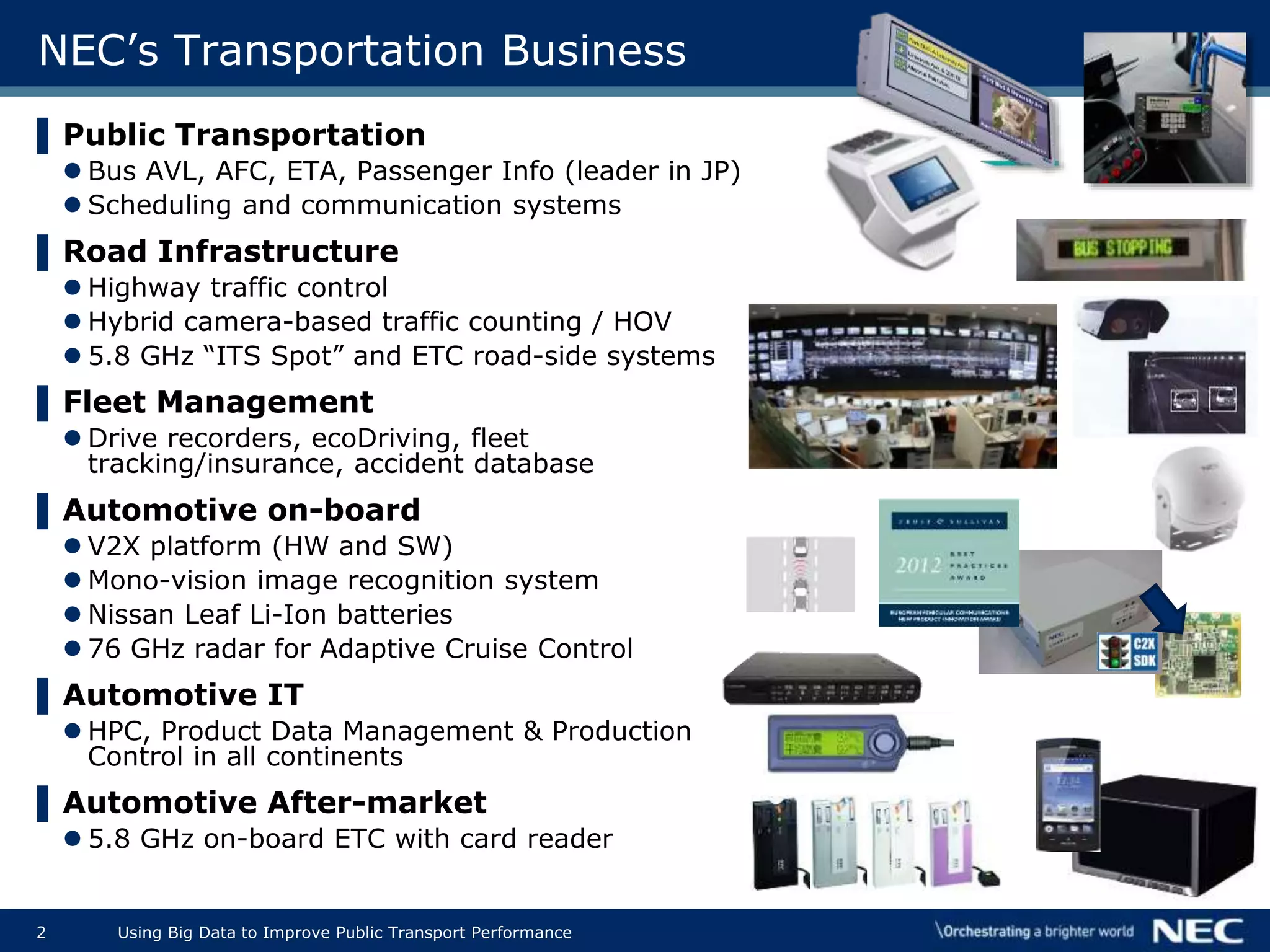
▌Public Transportation
 Bus AVL, AFC, ETA, Passenger Info (leader in JP)
 Scheduling and communication systems
▌Road Infrastructure
 Highway traffic control
 Hybrid camera-based traffic counting / HOV
 5.8 GHz “ITS Spot” and ETC road-side systems
▌Fleet Management
 Drive recorders, ecoDriving, fleet
tracking/insurance, accident database
▌Automotive on-board
 V2X platform (HW and SW)
 Mono-vision image recognition system
 Nissan Leaf Li-Ion batteries
 76 GHz radar for Adaptive Cruise Control
▌Automotive IT
 HPC, Product Data Management & Production
Control in all continents
▌Automotive After-market
 5.8 GHz on-board ETC with card reader
3 Using Big Data to Improve Public Transport Performance
What is “Big Data” for NEC
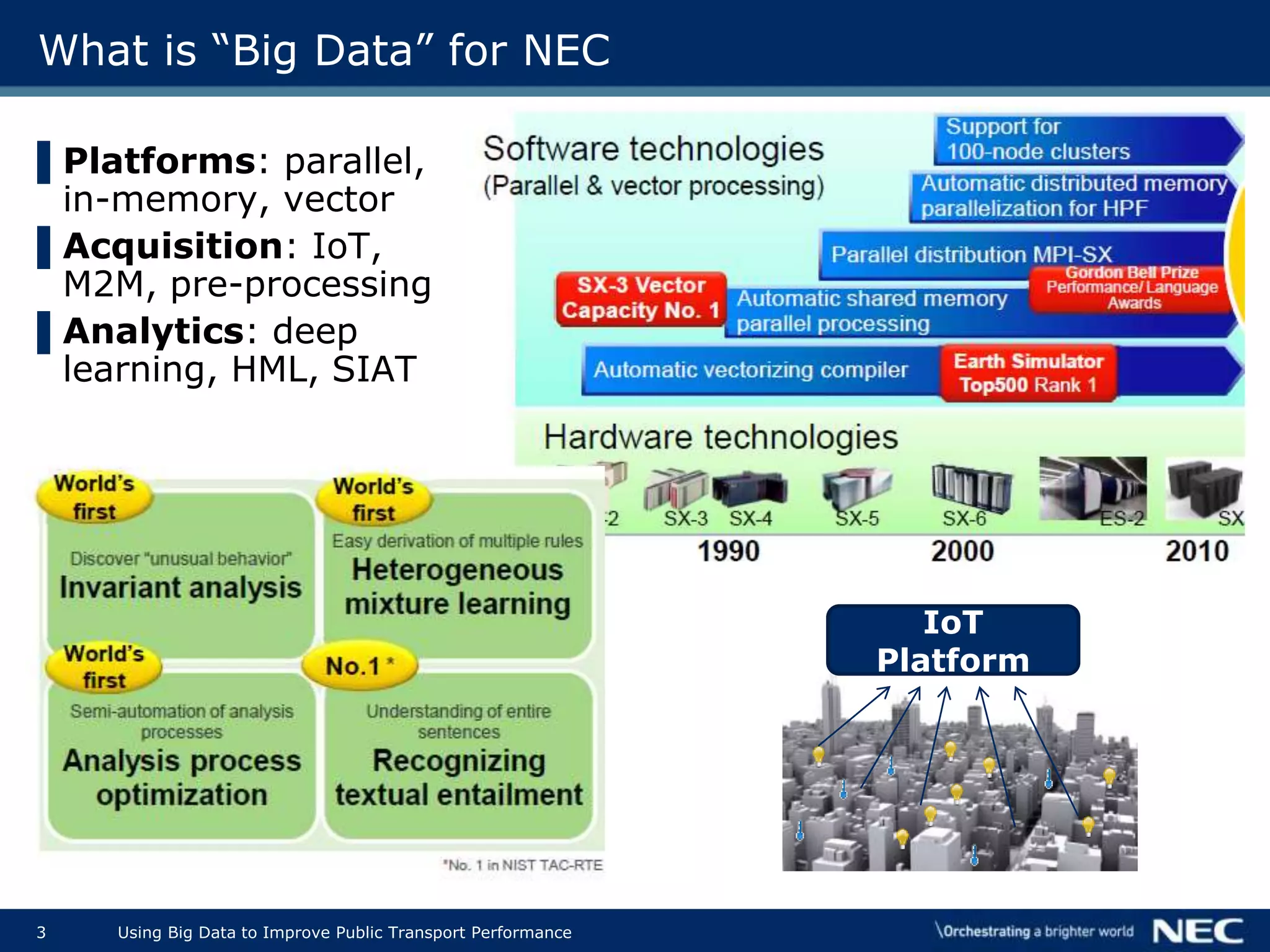
▌Platforms: parallel,
in-memory, vector
▌Acquisition: IoT,
M2M, pre-processing
▌Analytics: deep
learning, HML, SIAT
IoT
Platform
4 Using Big Data to Improve Public Transport Performance
Public Transit – Quality Incentive Contracts
▌Background
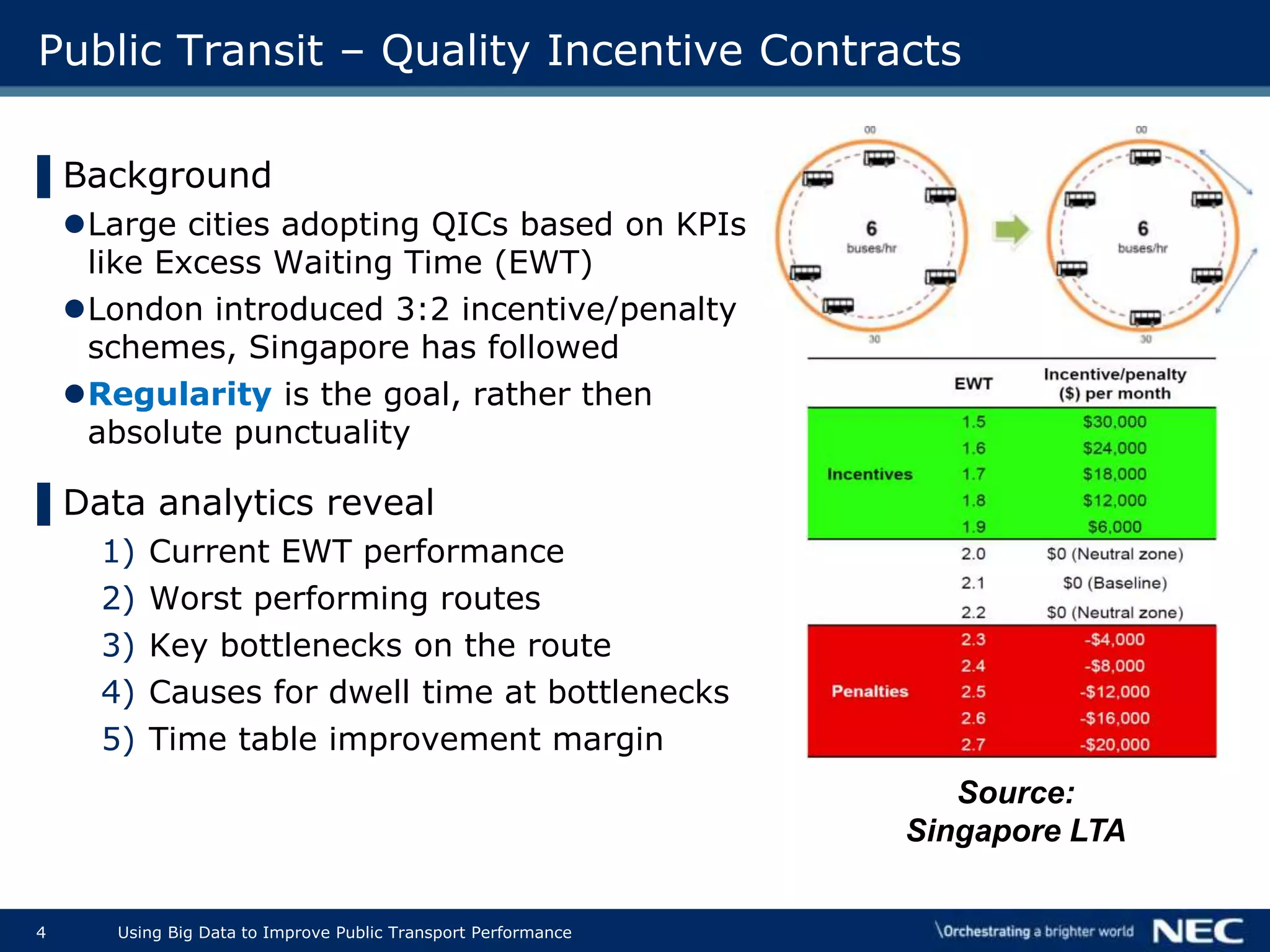
Large cities adopting QICs based on KPIs
like Excess Waiting Time (EWT)
London introduced 3:2 incentive/penalty
schemes, Singapore has followed
Regularity is the goal, rather then
absolute punctuality
▌Data analytics reveal
1) Current EWT performance
2) Worst performing routes
3) Key bottlenecks on the route
4) Causes for dwell time at bottlenecks
5) Time table improvement margin
Source:
Singapore LTA
5 Using Big Data to Improve Public Transport Performance
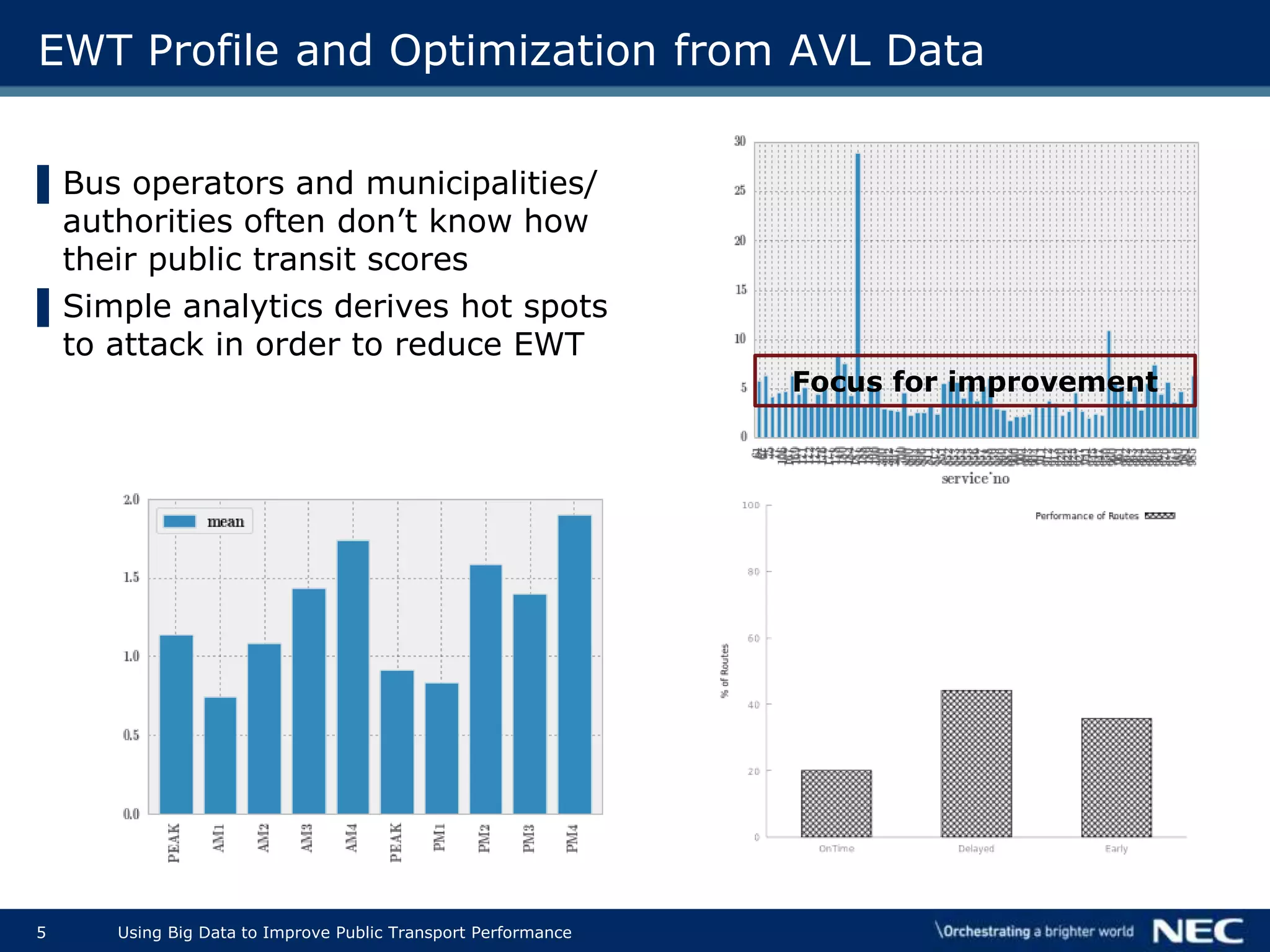
EWT Profile and Optimization from AVL Data
▌Bus operators and municipalities/
authorities often don’t know how
their public transit scores
▌Simple analytics derives hot spots
to attack in order to reduce EWT
Focus for improvement
6 Using Big Data to Improve Public Transport Performance
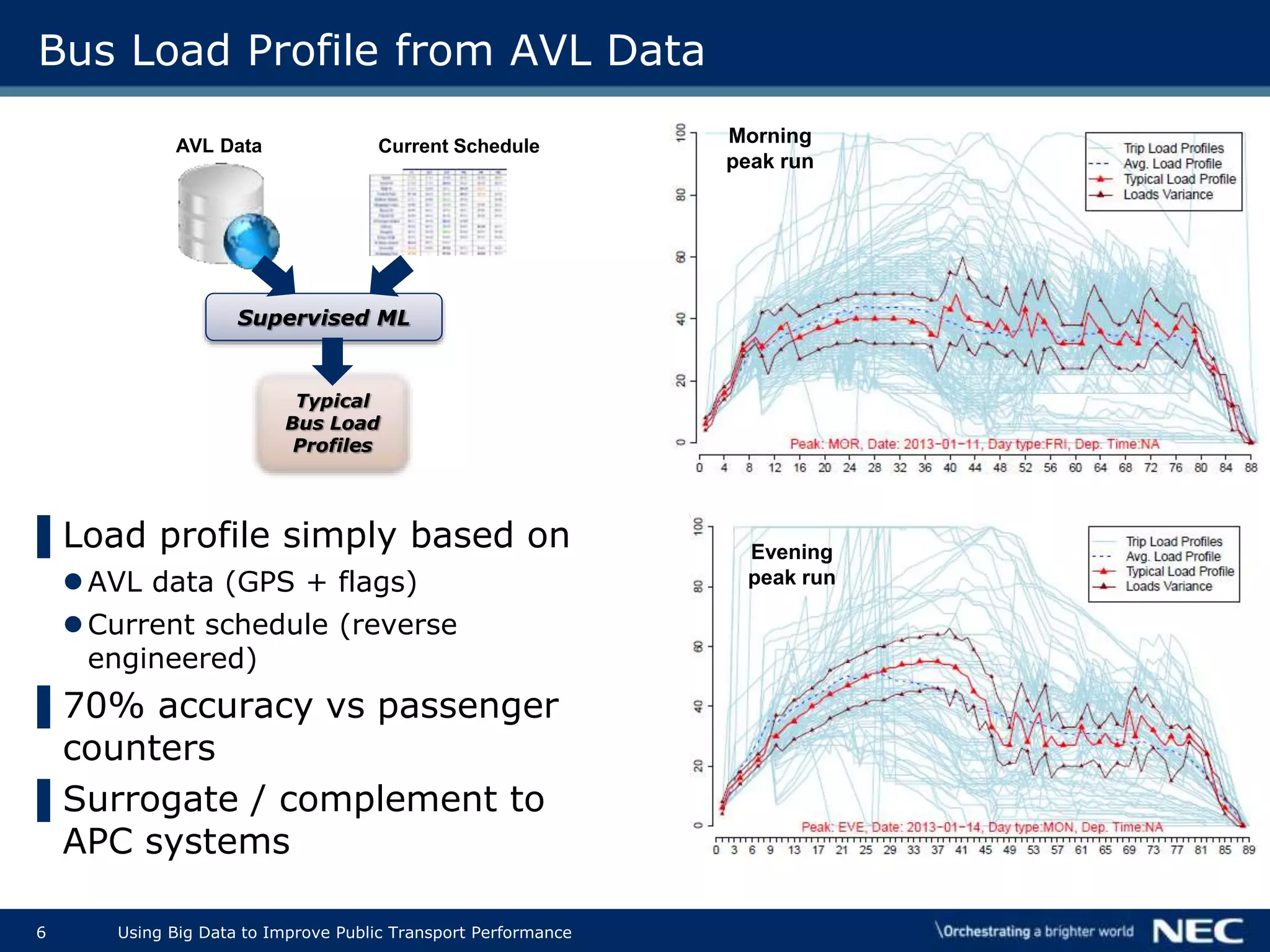
Bus Load Profile from AVL Data
▌Load profile simply based on
AVL data (GPS + flags)
Current schedule (reverse
engineered)
▌70% accuracy vs passenger
counters
▌Surrogate / complement to
APC systems
AVL Data Current Schedule
Supervised ML
Typical
Bus Load
Profiles
Morning
peak run
Evening
peak run
7 Using Big Data to Improve Public Transport Performance
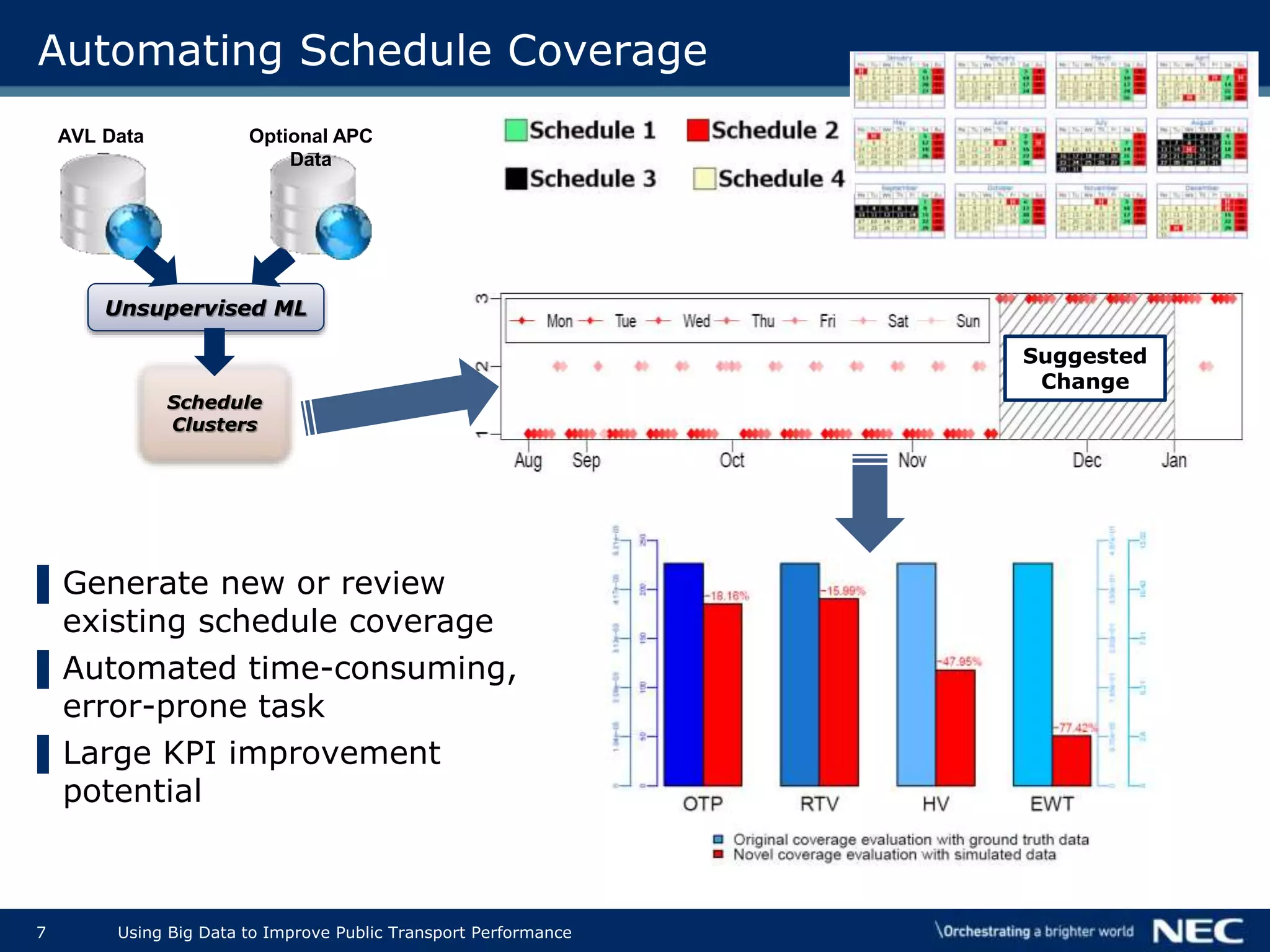
Automating Schedule Coverage
▌Generate new or review
existing schedule coverage
▌Automated time-consuming,
error-prone task
▌Large KPI improvement
potential
AVL Data
Unsupervised ML
Schedule
Clusters
Optional APC
Data
Suggested
Change
8 Using Big Data to Improve Public Transport Performance
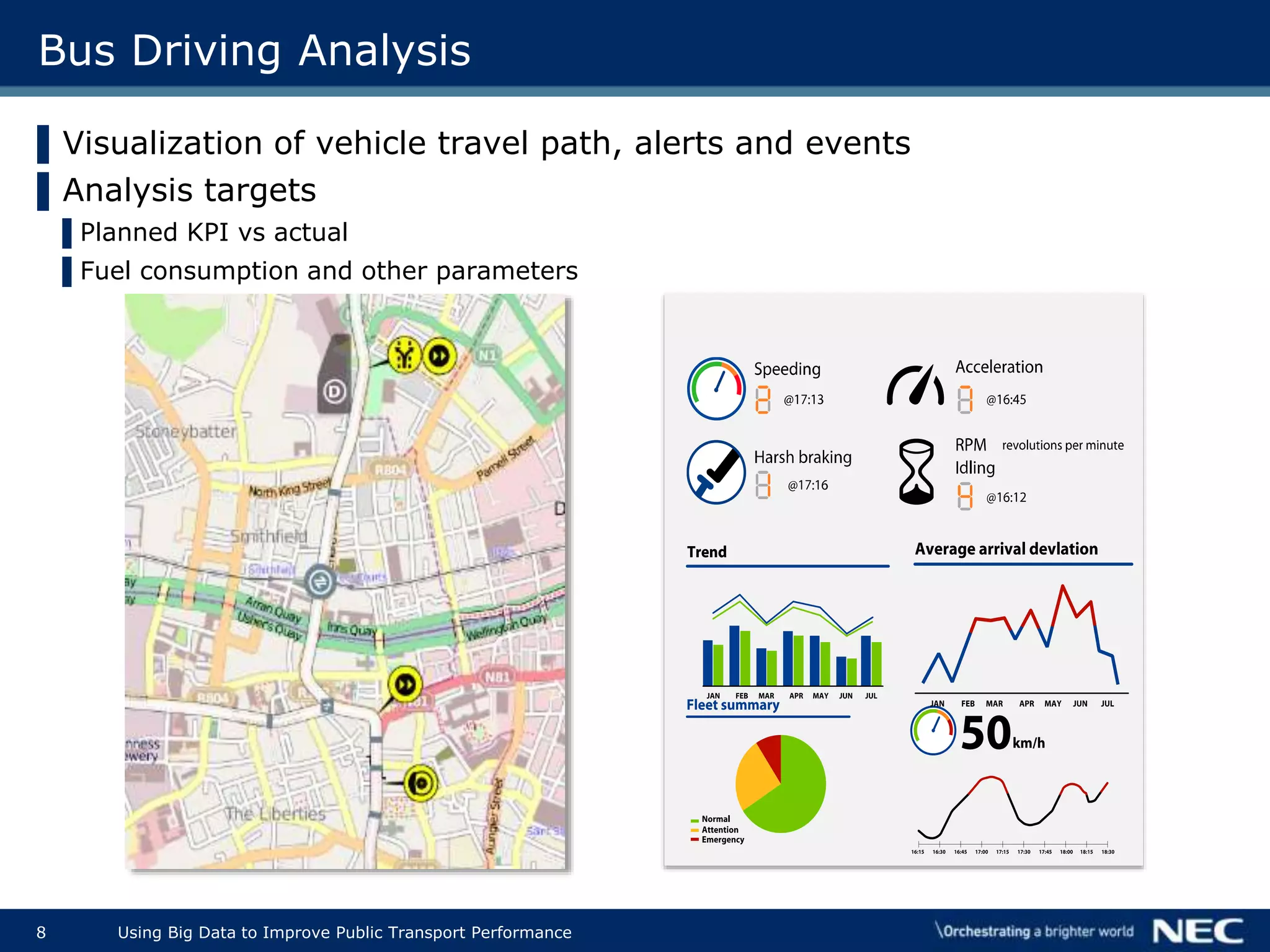
Bus Driving Analysis
▌Visualization of vehicle travel path, alerts and events
▌Analysis targets
▌Planned KPI vs actual
▌Fuel consumption and other parameters
9 Using Big Data to Improve Public Transport Performance
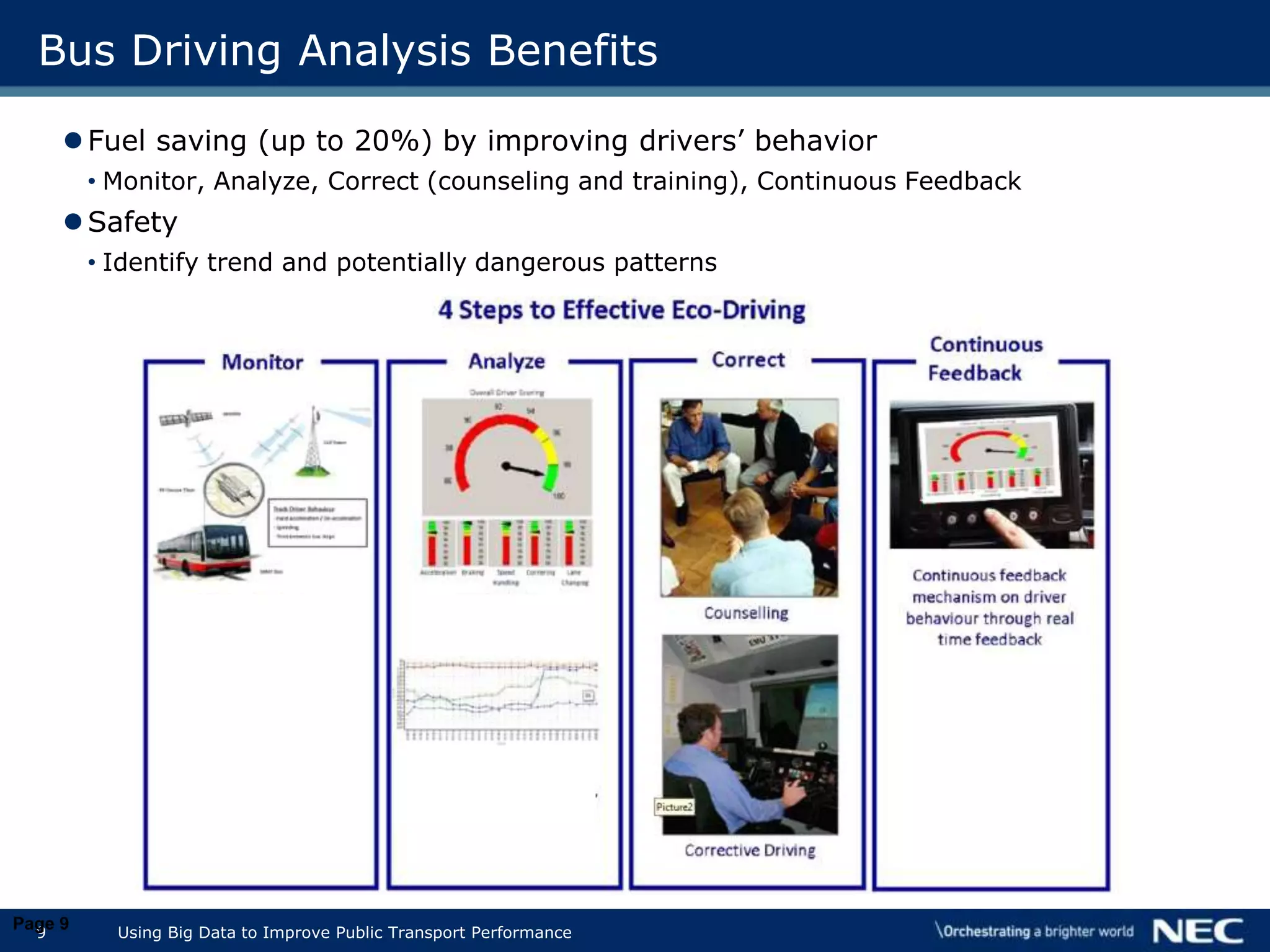
Bus Driving Analysis Benefits
Fuel saving (up to 20%) by improving drivers’ behavior
• Monitor, Analyze, Correct (counseling and training), Continuous Feedback
Safety
• Identify trend and potentially dangerous patterns
Page 9
10 Using Big Data to Improve Public Transport Performance
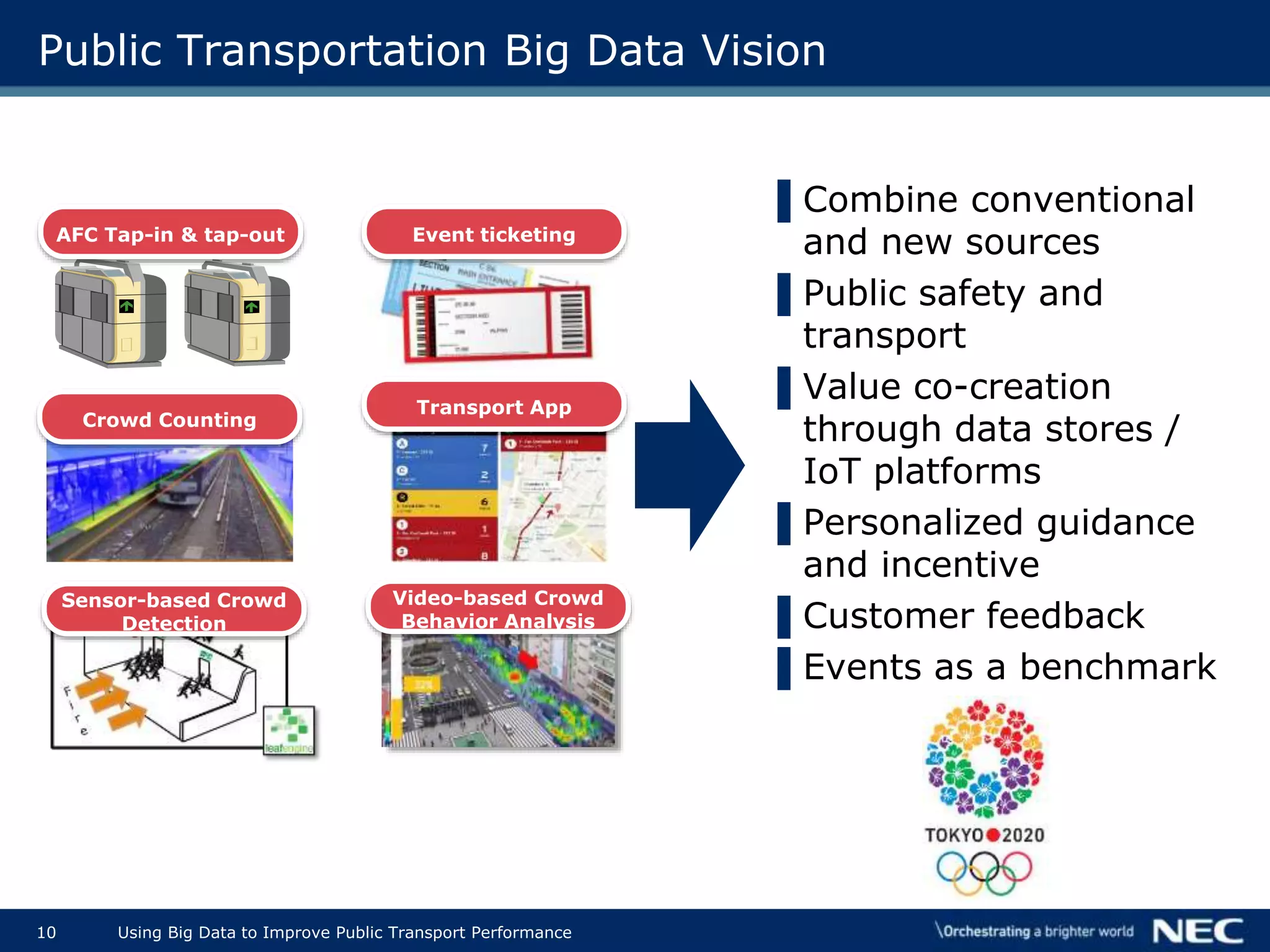
Public Transportation Big Data Vision
▌Combine conventional
and new sources
▌Public safety and
transport
▌Value co-creation
through data stores /
IoT platforms
▌Personalized guidance
and incentive
▌Customer feedback
▌Events as a benchmark
Video-based Crowd
Behavior Analysis
Crowd Counting
AFC Tap-in & tap-out
Sensor-based Crowd
Detection
Event ticketing
Transport App
SC4 Workshop 1: Roberto Baldessari: The use of big data for public transport performance measurement

SC4 Workshop 1: Roberto Baldessari: The use of big data for public transport performance measurement

  • 1.
    Using Big Datato Improve Public Transport Performance Roberto Baldessari NEC Laboratories Europe roberto.baldessari@neclab.eu BigDataEurope Workshop October 7th, 2015 Palais des Congrès, Bordeaux
  • 2.
    2 Using BigData to Improve Public Transport Performance NEC’s Transportation Business ▌Public Transportation  Bus AVL, AFC, ETA, Passenger Info (leader in JP)  Scheduling and communication systems ▌Road Infrastructure  Highway traffic control  Hybrid camera-based traffic counting / HOV  5.8 GHz “ITS Spot” and ETC road-side systems ▌Fleet Management  Drive recorders, ecoDriving, fleet tracking/insurance, accident database ▌Automotive on-board  V2X platform (HW and SW)  Mono-vision image recognition system  Nissan Leaf Li-Ion batteries  76 GHz radar for Adaptive Cruise Control ▌Automotive IT  HPC, Product Data Management & Production Control in all continents ▌Automotive After-market  5.8 GHz on-board ETC with card reader
  • 3.
    3 Using BigData to Improve Public Transport Performance What is “Big Data” for NEC ▌Platforms: parallel, in-memory, vector ▌Acquisition: IoT, M2M, pre-processing ▌Analytics: deep learning, HML, SIAT IoT Platform
  • 4.
    4 Using BigData to Improve Public Transport Performance Public Transit – Quality Incentive Contracts ▌Background Large cities adopting QICs based on KPIs like Excess Waiting Time (EWT) London introduced 3:2 incentive/penalty schemes, Singapore has followed Regularity is the goal, rather then absolute punctuality ▌Data analytics reveal 1) Current EWT performance 2) Worst performing routes 3) Key bottlenecks on the route 4) Causes for dwell time at bottlenecks 5) Time table improvement margin Source: Singapore LTA
  • 5.
    5 Using BigData to Improve Public Transport Performance EWT Profile and Optimization from AVL Data ▌Bus operators and municipalities/ authorities often don’t know how their public transit scores ▌Simple analytics derives hot spots to attack in order to reduce EWT Focus for improvement
  • 6.
    6 Using BigData to Improve Public Transport Performance Bus Load Profile from AVL Data ▌Load profile simply based on AVL data (GPS + flags) Current schedule (reverse engineered) ▌70% accuracy vs passenger counters ▌Surrogate / complement to APC systems AVL Data Current Schedule Supervised ML Typical Bus Load Profiles Morning peak run Evening peak run
  • 7.
    7 Using BigData to Improve Public Transport Performance Automating Schedule Coverage ▌Generate new or review existing schedule coverage ▌Automated time-consuming, error-prone task ▌Large KPI improvement potential AVL Data Unsupervised ML Schedule Clusters Optional APC Data Suggested Change
  • 8.
    8 Using BigData to Improve Public Transport Performance Bus Driving Analysis ▌Visualization of vehicle travel path, alerts and events ▌Analysis targets ▌Planned KPI vs actual ▌Fuel consumption and other parameters
  • 9.
    9 Using BigData to Improve Public Transport Performance Bus Driving Analysis Benefits Fuel saving (up to 20%) by improving drivers’ behavior • Monitor, Analyze, Correct (counseling and training), Continuous Feedback Safety • Identify trend and potentially dangerous patterns Page 9
  • 10.
    10 Using BigData to Improve Public Transport Performance Public Transportation Big Data Vision ▌Combine conventional and new sources ▌Public safety and transport ▌Value co-creation through data stores / IoT platforms ▌Personalized guidance and incentive ▌Customer feedback ▌Events as a benchmark Video-based Crowd Behavior Analysis Crowd Counting AFC Tap-in & tap-out Sensor-based Crowd Detection Event ticketing Transport App