Right to  Information Act &  Library Services Presented By Vivekanand Jain
Contents Introduction Object Public Authorities Fee Time Period Defaults Penalties
The Government of India enacted the Right to Information Act 2005 (RTI Act), marking a watershed in this nation’s democratic development.  It empowers citizens with the right to demand what activities and decisions are being made in their name.
Right to Information means  : Right to seek Information Right to obtain Information Right to inspect information To get Certified copies/ Samples To get Third party information also.
Right to Information India : Implemented since 12 th  Oct. 2005 UK : 1 st  Jan. 2005 Sweden : 1766 USA: 1966 (1996 extended to Elect. Info.)
Object Transparency in Public Administration Prevention of Corruption Public Accountability Practical regime of RTI to all citizens.
Now any citizen can get the  information from Public Authorities without mention any reason. Why ?  … It is for  Good Governance ….
Freedom of expression encompasses the freedom of speech and the corollary right to receive information.  [Indian Constitution, article19,(1)a]  Libraries and Librarians protect and promote these rights by selecting, producing, providing access to, identifying, organizing, providing instruction in the use of, and preserving recorded expression regardless of the format or technology.
Public Library System and RTI In those state where Public Library Act implemented and public library system functioning, the citizens are having the rights to get the information. If they are not getting information in time they may go to court of law. To implement RTI act, there should be Public Library System in each and every state.
What is Good Governance? *E-Governance  = SMART Governance S= Small (Less Staff) M= Moral (Less Corrupt) A= Accountable R= Responsible T= Transparent * (Ref: E-Governance By N. Vittal )
Public Authority Constitutional Bodies Statutory Bodies Public Corporations Public Undertakings NGO’s (receiving financial assistance)
Third Party Information   Seek the permission from Third Party within 10 Days and provide the information in 45 days. Giving Information, if it is in better public interest, then information can be provvided
Types of Information Information : Material (Printed)  Electronic (CD/DVD) For example any -  Circular/ Notice / Record Within the control of Public Authority
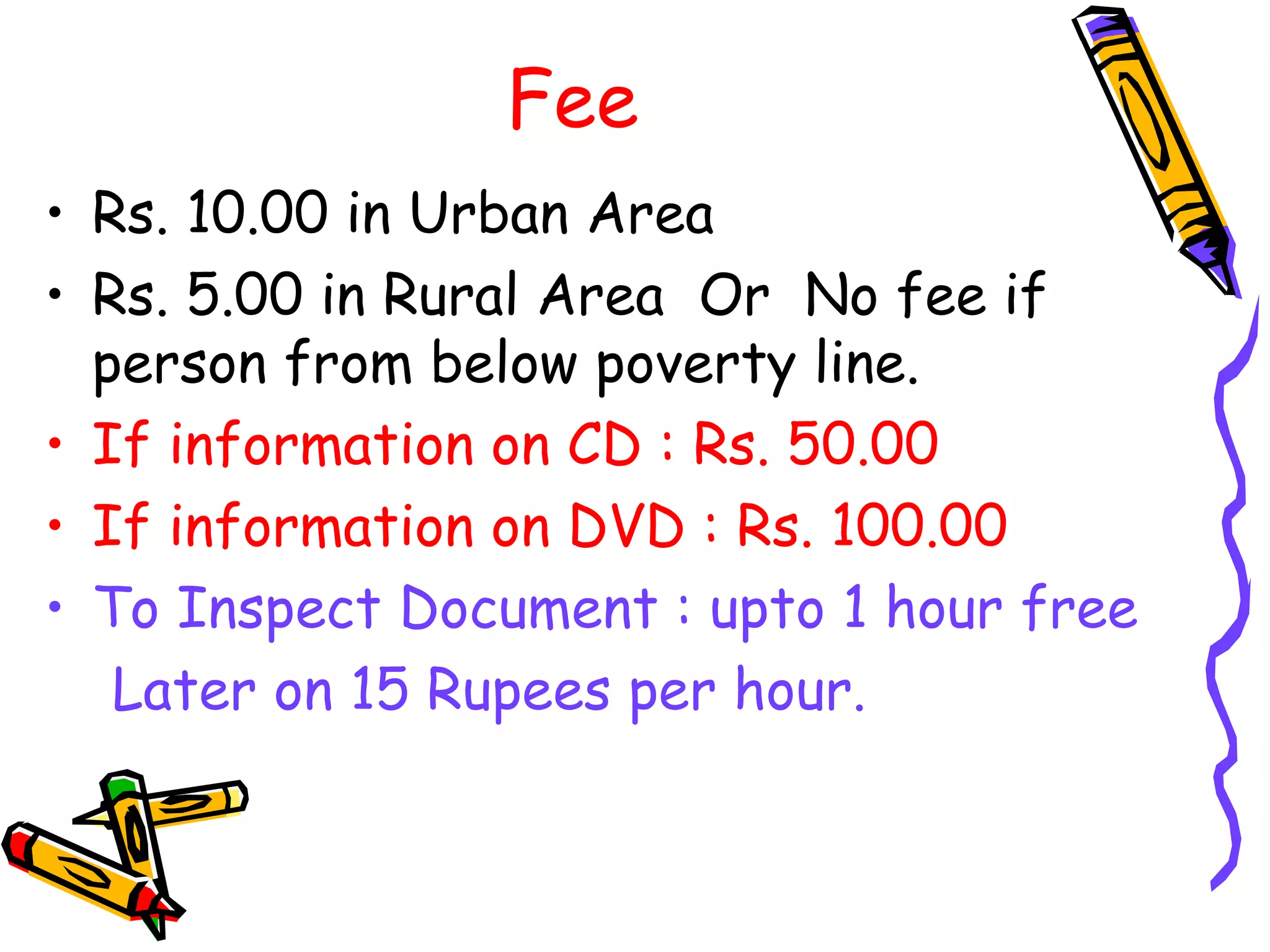
Fee Rs. 10.00 in Urban Area Rs. 5.00 in Rural Area  Or  No fee if person from below poverty line. If information on CD : Rs. 50.00 If information on DVD : Rs. 100.00 To Inspect Document : upto 1 hour free Later on 15 Rupees per hour.
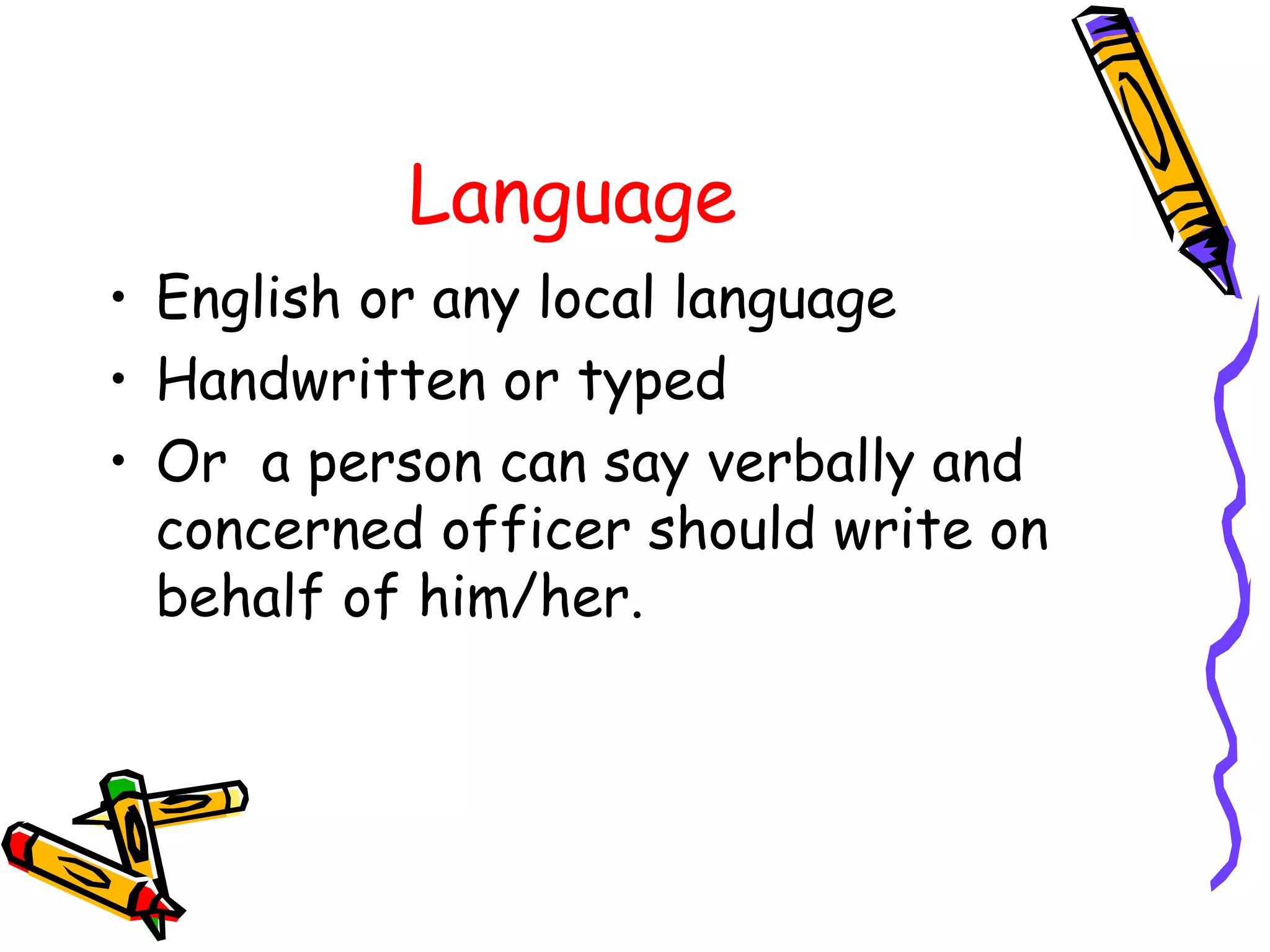
Language English or any local language Handwritten or typed Or  a person can say verbally and concerned officer should write on behalf of him/her.
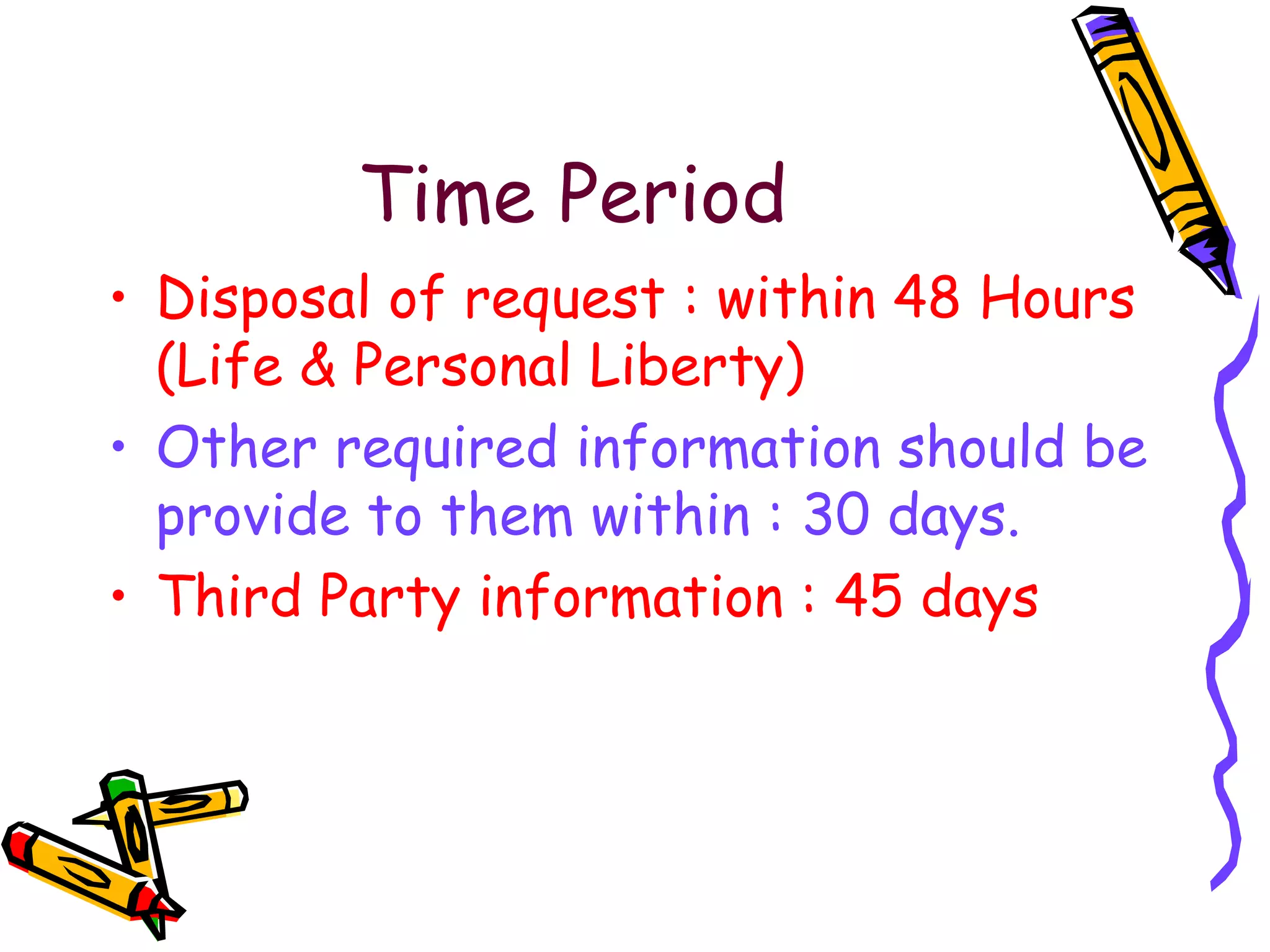
Time   Period Disposal of request : within 48 Hours (Life & Personal Liberty) Other required information should be provide to them within : 30 days. Third Party information : 45 days
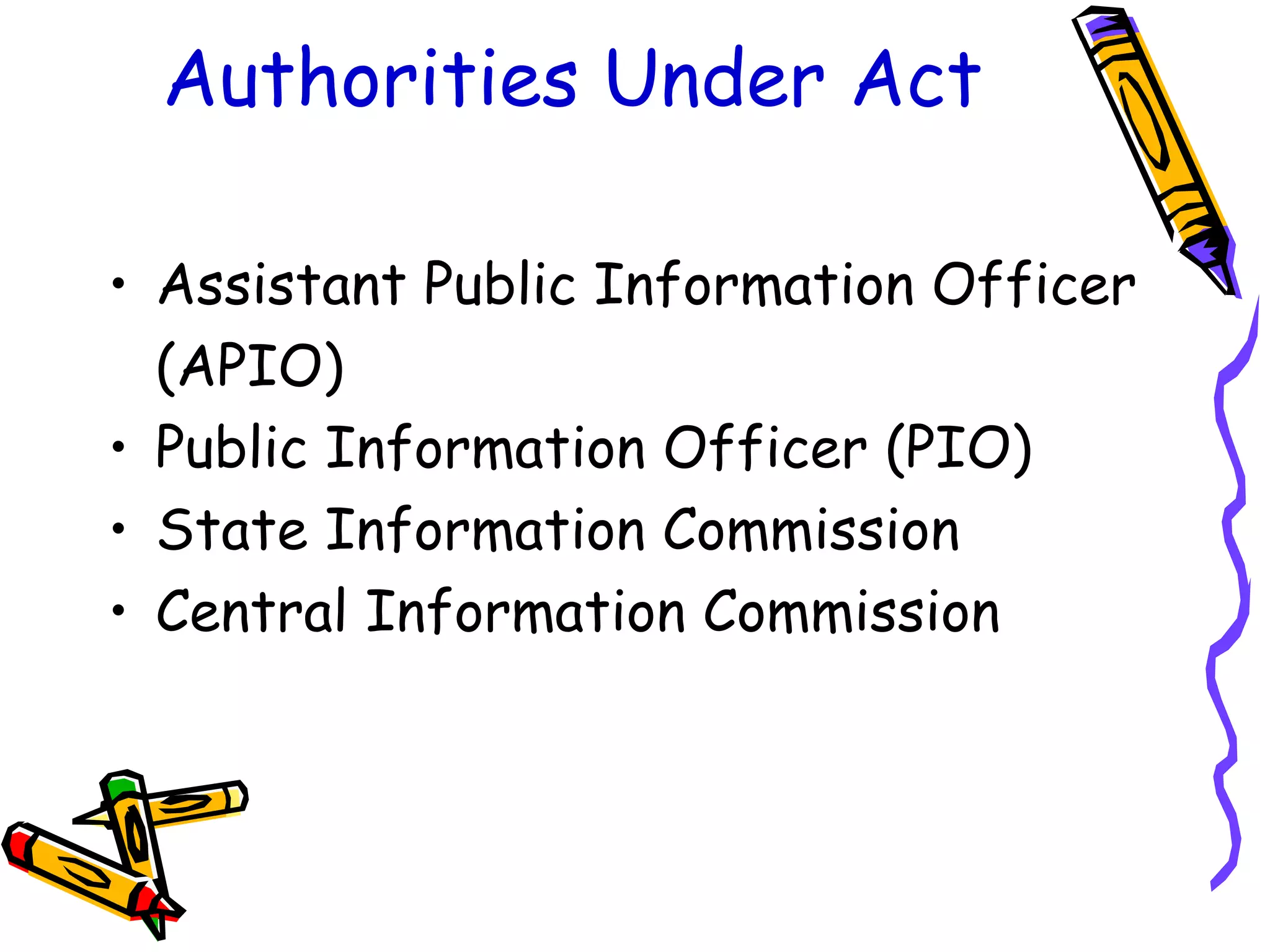
Authorities   Under   Act Assistant Public Information Officer (APIO) Public Information Officer (PIO) State Information Commission Central Information Commission
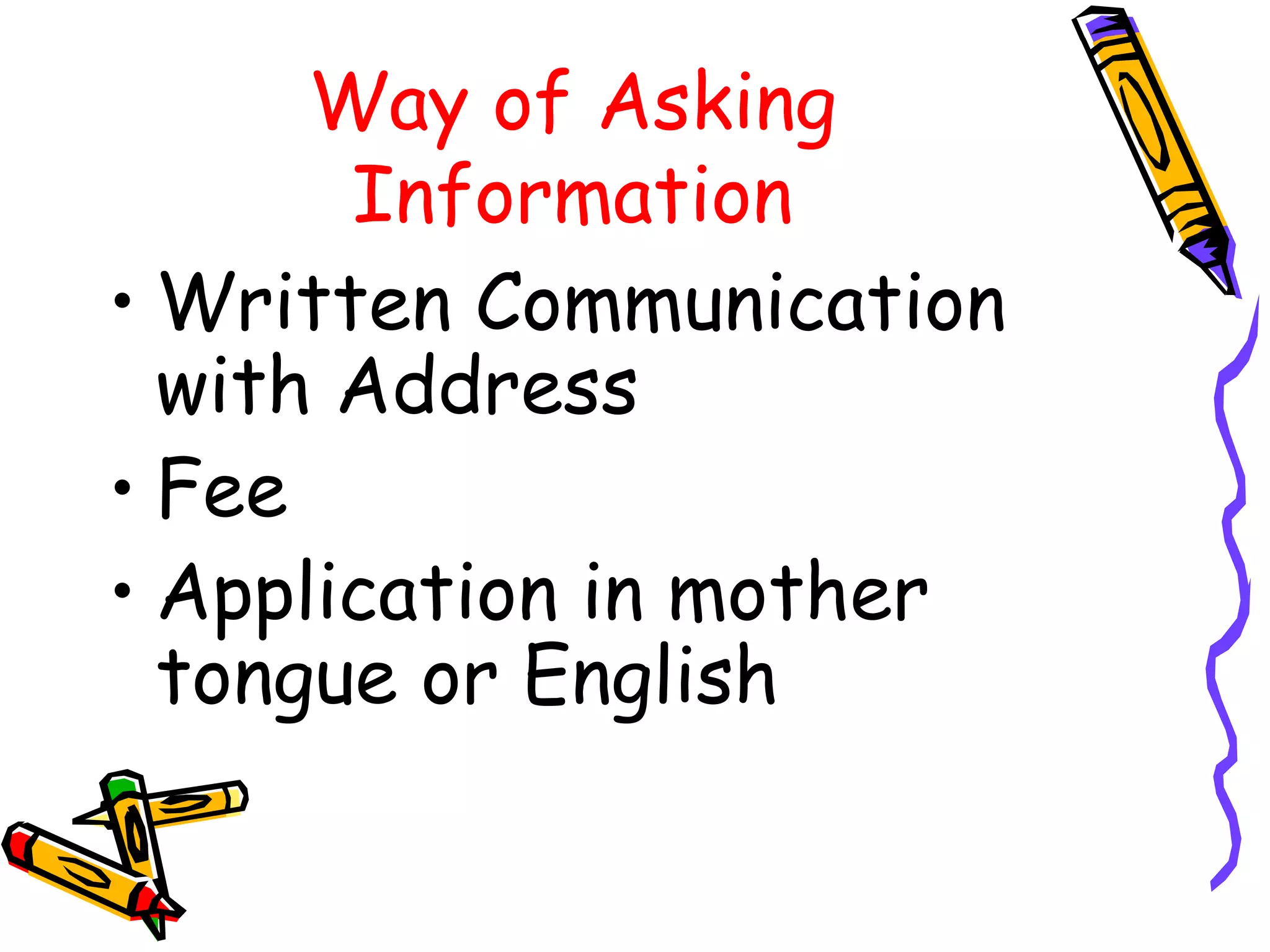
Way of Asking Information Written Communication with Address Fee Application in mother tongue or English
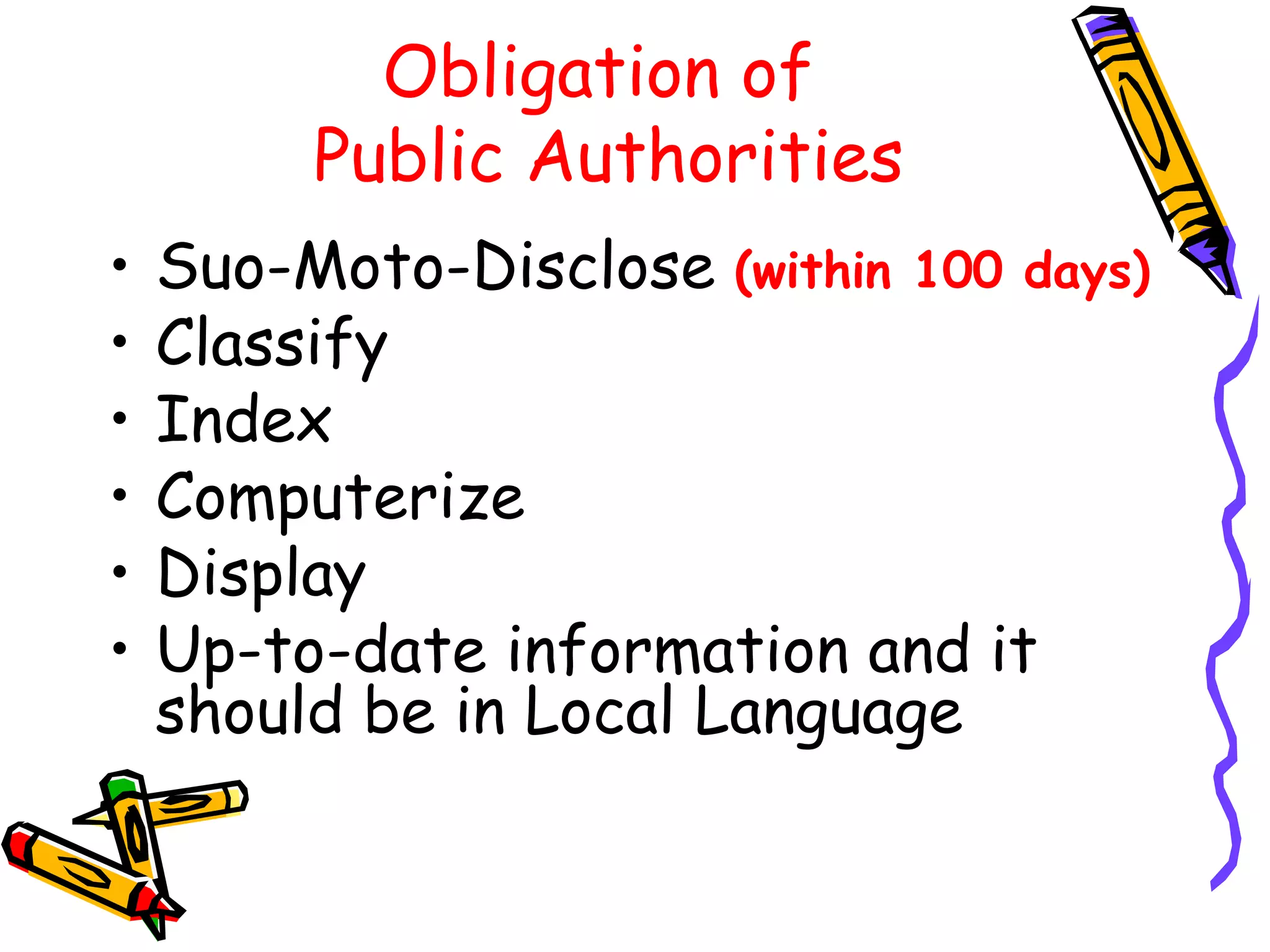
Obligation of  Public Authorities Suo-Moto-Disclose  (within 100 days) Classify Index Computerize Display Up-to-date information and it should be in Local Language
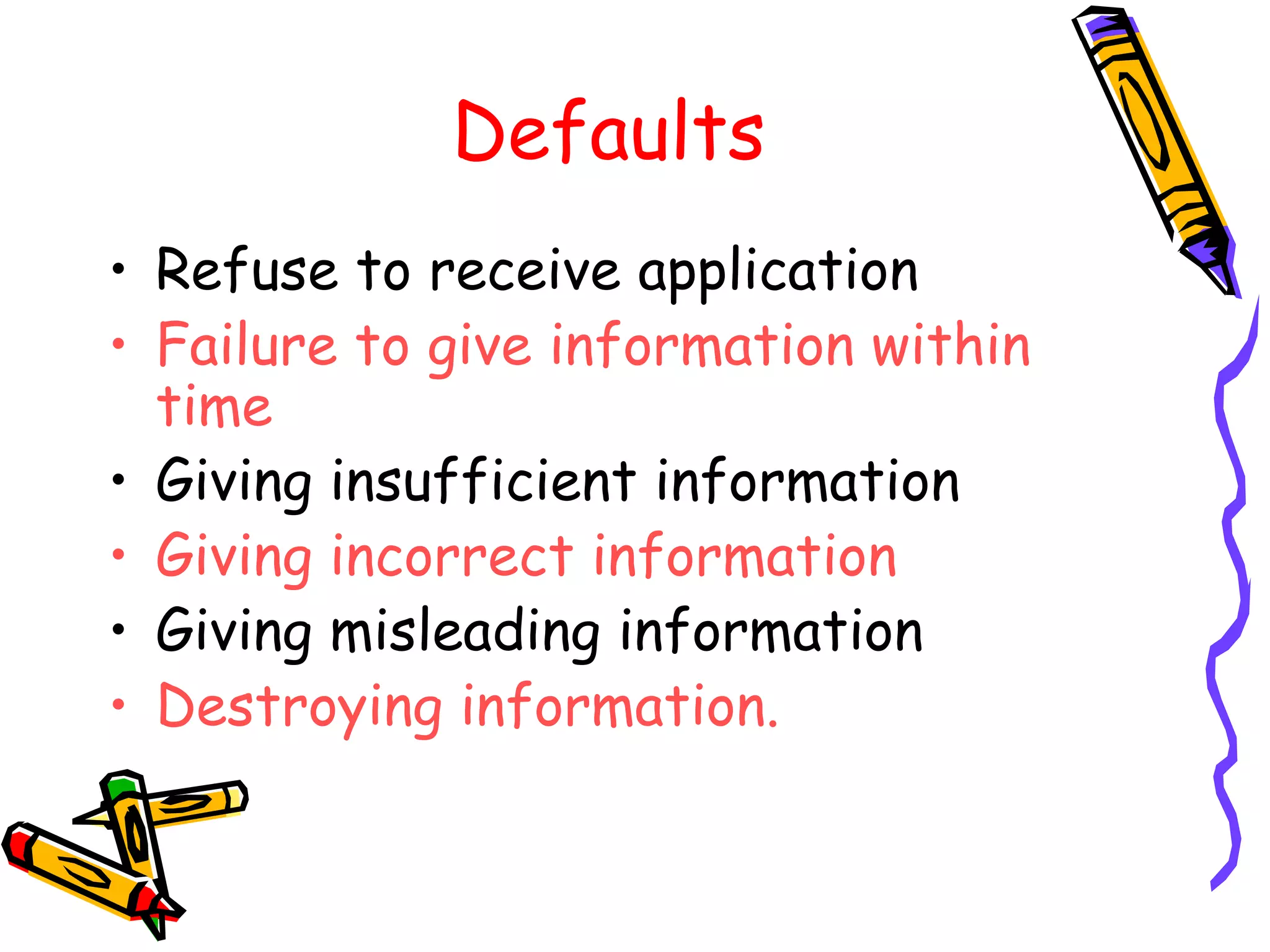
Defaults Refuse to receive application Failure to give information within time Giving insufficient information Giving incorrect information Giving misleading information Destroying information.
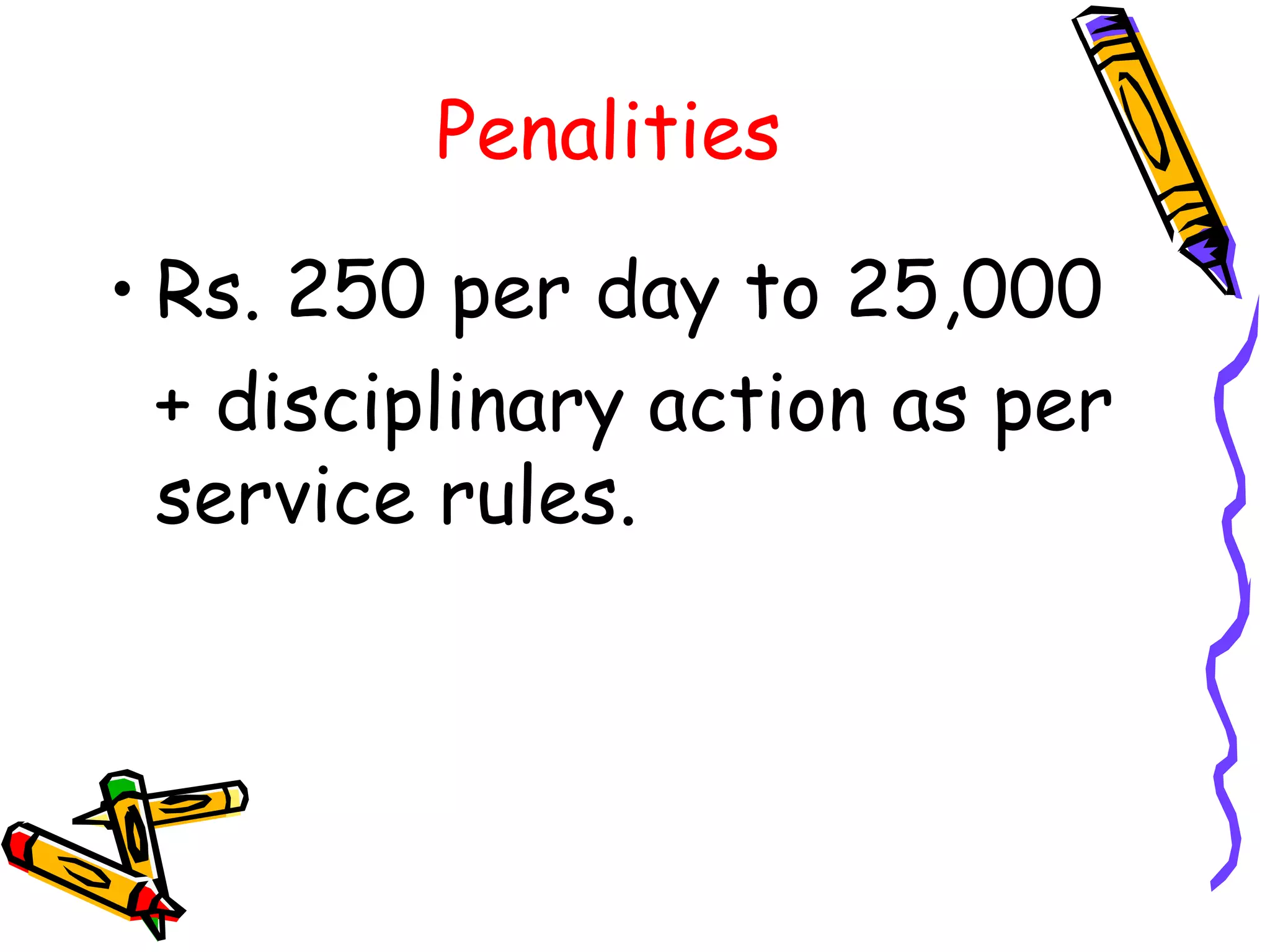
Penalities Rs. 250 per day to 25,000 + disciplinary action as per service rules.
Exemption from disclose under RTI Sovereignty and Integrity of the Nation. Security of the state. 18 institute (CBI, RAW, etc) Right to privacy. Trade secret/ Commercial info./ Seal Tender info. Etc. Time Limit (back upto 20 years)
Arise, Awake and know your Rights. Try to become a real awakened citizen for the benefit of the society and the Nation. Please use your right of the RTI……
Thanks..
For more information - Vivekanand Jain Deputy Librarian Central Library Banaras Hindu University Varanasi – 221005 India Email :  [email_address] Ph. 0542-2367133/ 94505 38093

Right to information act by vivekanand jain

  • 1.
    Right to Information Act & Library Services Presented By Vivekanand Jain
  • 2.
    Contents Introduction ObjectPublic Authorities Fee Time Period Defaults Penalties
  • 3.
    The Government ofIndia enacted the Right to Information Act 2005 (RTI Act), marking a watershed in this nation’s democratic development. It empowers citizens with the right to demand what activities and decisions are being made in their name.
  • 4.
    Right to Informationmeans : Right to seek Information Right to obtain Information Right to inspect information To get Certified copies/ Samples To get Third party information also.
  • 5.
    Right to InformationIndia : Implemented since 12 th Oct. 2005 UK : 1 st Jan. 2005 Sweden : 1766 USA: 1966 (1996 extended to Elect. Info.)
  • 6.
    Object Transparency inPublic Administration Prevention of Corruption Public Accountability Practical regime of RTI to all citizens.
  • 7.
    Now any citizencan get the information from Public Authorities without mention any reason. Why ? … It is for Good Governance ….
  • 8.
    Freedom of expressionencompasses the freedom of speech and the corollary right to receive information. [Indian Constitution, article19,(1)a] Libraries and Librarians protect and promote these rights by selecting, producing, providing access to, identifying, organizing, providing instruction in the use of, and preserving recorded expression regardless of the format or technology.
  • 9.
    Public Library Systemand RTI In those state where Public Library Act implemented and public library system functioning, the citizens are having the rights to get the information. If they are not getting information in time they may go to court of law. To implement RTI act, there should be Public Library System in each and every state.
  • 10.
    What is GoodGovernance? *E-Governance = SMART Governance S= Small (Less Staff) M= Moral (Less Corrupt) A= Accountable R= Responsible T= Transparent * (Ref: E-Governance By N. Vittal )
  • 11.
    Public Authority ConstitutionalBodies Statutory Bodies Public Corporations Public Undertakings NGO’s (receiving financial assistance)
  • 12.
    Third Party Information Seek the permission from Third Party within 10 Days and provide the information in 45 days. Giving Information, if it is in better public interest, then information can be provvided
  • 13.
    Types of InformationInformation : Material (Printed) Electronic (CD/DVD) For example any - Circular/ Notice / Record Within the control of Public Authority
  • 14.
    Fee Rs. 10.00in Urban Area Rs. 5.00 in Rural Area Or No fee if person from below poverty line. If information on CD : Rs. 50.00 If information on DVD : Rs. 100.00 To Inspect Document : upto 1 hour free Later on 15 Rupees per hour.
  • 15.
    Language English orany local language Handwritten or typed Or a person can say verbally and concerned officer should write on behalf of him/her.
  • 16.
    Time Period Disposal of request : within 48 Hours (Life & Personal Liberty) Other required information should be provide to them within : 30 days. Third Party information : 45 days
  • 17.
    Authorities Under Act Assistant Public Information Officer (APIO) Public Information Officer (PIO) State Information Commission Central Information Commission
  • 18.
    Way of AskingInformation Written Communication with Address Fee Application in mother tongue or English
  • 19.
    Obligation of Public Authorities Suo-Moto-Disclose (within 100 days) Classify Index Computerize Display Up-to-date information and it should be in Local Language
  • 20.
    Defaults Refuse toreceive application Failure to give information within time Giving insufficient information Giving incorrect information Giving misleading information Destroying information.
  • 21.
    Penalities Rs. 250per day to 25,000 + disciplinary action as per service rules.
  • 22.
    Exemption from discloseunder RTI Sovereignty and Integrity of the Nation. Security of the state. 18 institute (CBI, RAW, etc) Right to privacy. Trade secret/ Commercial info./ Seal Tender info. Etc. Time Limit (back upto 20 years)
  • 23.
    Arise, Awake andknow your Rights. Try to become a real awakened citizen for the benefit of the society and the Nation. Please use your right of the RTI……
  • 24.
  • 25.
    For more information- Vivekanand Jain Deputy Librarian Central Library Banaras Hindu University Varanasi – 221005 India Email : [email_address] Ph. 0542-2367133/ 94505 38093