RHS Level 2 Certificate
Year 1 Week 2
Plant names and Plant
Life Cycles
Learning Objectives

Plant taxonomy (2)
 State the reasons why a universal system of plant names is
important.
 Describe the use of the terms ‘genus’, ‘species, and ‘cultivar’.
The construction of hybrid names.
 Plant life cycles
 Define the terms: ‘annual’, ‘ephemeral’, ‘biennial’ and ‘perennial’.
 Define the terms: ‘tender’, ‘half-hardy’, and ‘hardy’ in relation to
annuals.
 Define the terms: ‘tender’, ‘half-hardy’, ‘hardy’, ‘herbaceous’ and
‘woody’ in relation to perennials.
 State the meaning of the terms: ‘evergreen’, ‘semi-evergreen’ and
‘deciduous’.
 Describe what is meant by the terms: ‘juvenility’, ‘maturity’ and
‘senescence’ in the development cycle of a plant and state their
horticultural significance
Botanical Names
 Why Latin? A common language that allows clear
identification of individual species.
 Binomial system – Genus and Species.
 Conventions – Genus and species names written in
italics. Cultivar names in roman characters (normal)
and in single quotes.
 Papaver [genus] orientale [species] ‘Patty’s Plum’
[cultivar]
 Hybrids are crosses between genera or species.
Species hybrids indicated by a X in the middle of the
name, bi-generic hybrids by a X at the start.
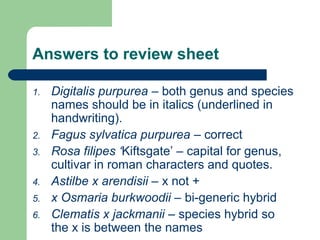
Answers to review sheet
1. Digitalis purpurea – both genus and species
names should be in italics (underlined in
handwriting).
2. Fagus sylvatica purpurea – correct
3. Rosa filipes ‘Kiftsgate’ – capital for genus,
cultivar in roman characters and quotes.
4. Astilbe x arendisii – x not +
5. x Osmaria burkwoodii – bi-generic hybrid
6. Clematis x jackmanii – species hybrid so
the x is between the names
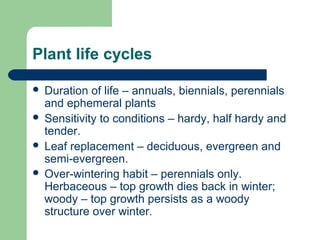
Plant life cycles
 Duration of life – annuals, biennials, perennials
and ephemeral plants
 Sensitivity to conditions – hardy, half hardy and
tender.
 Leaf replacement – deciduous, evergreen and
semi-evergreen.
 Over-wintering habit – perennials only.
Herbaceous – top growth dies back in winter;
woody – top growth persists as a woody
structure over winter.
From germination to maturity
 Juvenility – plant or growth not able to flower
or bear fruitseeds.
 Maturity – plant or growth fully developed
and able to flower and bear fruitseeds.
 Senescence – slow tissue death, the death of
the plant or part of the plant.
 Parts of each plant may be at different stages
of this cycle at the same time!! For example,
the autumn leaf is senescent but the tree on
which it grows may be juvenile.
Why does the development stage
matter?
 Propagation method – juvenile plants will not set
seed; mature growth will not make good material
for cuttings.
 Appearance – juvenile and mature plantsgrowth
may look very different. E.g. Eucalyptus gunnii.
 Planning planting – awareness of life cycle and
its duration allows succession to be planned.
Juvenile plants will not flower – so this affects
planting times for ornamental annuals for
example.
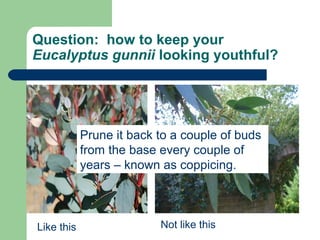
Question: how to keep your
Eucalyptus gunnii looking youthful?
Like this Not like this
Prune it back to a couple of buds
from the base every couple of
years – known as coppicing.
Learning Outcomes
 Plant taxonomy (2)
 State the reasons why a universal system of plant names is
important.
 Describe the use of the terms ‘genus’, ‘species, and ‘cultivar’.
The construction of hybrid names.
 Plant life cycles
 Define the terms: ‘annual’, ‘ephemeral’, ‘biennial’ and ‘perennial’.
 Define the terms: ‘tender’, ‘half-hardy’, and ‘hardy’ in relation to
annuals.
 Define the terms: ‘tender’, ‘half-hardy’, ‘hardy’, ‘herbaceous’ and
‘woody’ in relation to perennials.
 State the meaning of the terms: ‘evergreen’, ‘semi-evergreen’ and
‘deciduous’.
 Describe what is meant by the terms: ‘juvenility’, ‘maturity’ and
‘senescence’ in the development cycle of a plant and state their
horticultural significance
Learning Outcomes
 Plant taxonomy (2)
 State the reasons why a universal system of plant names is
important.
 Describe the use of the terms ‘genus’, ‘species, and ‘cultivar’.
The construction of hybrid names.
 Plant life cycles
 Define the terms: ‘annual’, ‘ephemeral’, ‘biennial’ and ‘perennial’.
 Define the terms: ‘tender’, ‘half-hardy’, and ‘hardy’ in relation to
annuals.
 Define the terms: ‘tender’, ‘half-hardy’, ‘hardy’, ‘herbaceous’ and
‘woody’ in relation to perennials.
 State the meaning of the terms: ‘evergreen’, ‘semi-evergreen’ and
‘deciduous’.
 Describe what is meant by the terms: ‘juvenility’, ‘maturity’ and
‘senescence’ in the development cycle of a plant and state their
horticultural significance

Rhs level 2 year 1 week 2 2013

  • 1.
    RHS Level 2Certificate Year 1 Week 2 Plant names and Plant Life Cycles
  • 2.
    Learning Objectives  Plant taxonomy(2)  State the reasons why a universal system of plant names is important.  Describe the use of the terms ‘genus’, ‘species, and ‘cultivar’. The construction of hybrid names.  Plant life cycles  Define the terms: ‘annual’, ‘ephemeral’, ‘biennial’ and ‘perennial’.  Define the terms: ‘tender’, ‘half-hardy’, and ‘hardy’ in relation to annuals.  Define the terms: ‘tender’, ‘half-hardy’, ‘hardy’, ‘herbaceous’ and ‘woody’ in relation to perennials.  State the meaning of the terms: ‘evergreen’, ‘semi-evergreen’ and ‘deciduous’.  Describe what is meant by the terms: ‘juvenility’, ‘maturity’ and ‘senescence’ in the development cycle of a plant and state their horticultural significance
  • 3.
    Botanical Names  WhyLatin? A common language that allows clear identification of individual species.  Binomial system – Genus and Species.  Conventions – Genus and species names written in italics. Cultivar names in roman characters (normal) and in single quotes.  Papaver [genus] orientale [species] ‘Patty’s Plum’ [cultivar]  Hybrids are crosses between genera or species. Species hybrids indicated by a X in the middle of the name, bi-generic hybrids by a X at the start.
  • 4.
    Answers to reviewsheet 1. Digitalis purpurea – both genus and species names should be in italics (underlined in handwriting). 2. Fagus sylvatica purpurea – correct 3. Rosa filipes ‘Kiftsgate’ – capital for genus, cultivar in roman characters and quotes. 4. Astilbe x arendisii – x not + 5. x Osmaria burkwoodii – bi-generic hybrid 6. Clematis x jackmanii – species hybrid so the x is between the names
  • 5.
    Plant life cycles Duration of life – annuals, biennials, perennials and ephemeral plants  Sensitivity to conditions – hardy, half hardy and tender.  Leaf replacement – deciduous, evergreen and semi-evergreen.  Over-wintering habit – perennials only. Herbaceous – top growth dies back in winter; woody – top growth persists as a woody structure over winter.
  • 6.
    From germination tomaturity  Juvenility – plant or growth not able to flower or bear fruitseeds.  Maturity – plant or growth fully developed and able to flower and bear fruitseeds.  Senescence – slow tissue death, the death of the plant or part of the plant.  Parts of each plant may be at different stages of this cycle at the same time!! For example, the autumn leaf is senescent but the tree on which it grows may be juvenile.
  • 7.
    Why does thedevelopment stage matter?  Propagation method – juvenile plants will not set seed; mature growth will not make good material for cuttings.  Appearance – juvenile and mature plantsgrowth may look very different. E.g. Eucalyptus gunnii.  Planning planting – awareness of life cycle and its duration allows succession to be planned. Juvenile plants will not flower – so this affects planting times for ornamental annuals for example.
  • 8.
    Question: how tokeep your Eucalyptus gunnii looking youthful? Like this Not like this Prune it back to a couple of buds from the base every couple of years – known as coppicing.
  • 9.
    Learning Outcomes  Planttaxonomy (2)  State the reasons why a universal system of plant names is important.  Describe the use of the terms ‘genus’, ‘species, and ‘cultivar’. The construction of hybrid names.  Plant life cycles  Define the terms: ‘annual’, ‘ephemeral’, ‘biennial’ and ‘perennial’.  Define the terms: ‘tender’, ‘half-hardy’, and ‘hardy’ in relation to annuals.  Define the terms: ‘tender’, ‘half-hardy’, ‘hardy’, ‘herbaceous’ and ‘woody’ in relation to perennials.  State the meaning of the terms: ‘evergreen’, ‘semi-evergreen’ and ‘deciduous’.  Describe what is meant by the terms: ‘juvenility’, ‘maturity’ and ‘senescence’ in the development cycle of a plant and state their horticultural significance
  • 10.
    Learning Outcomes  Planttaxonomy (2)  State the reasons why a universal system of plant names is important.  Describe the use of the terms ‘genus’, ‘species, and ‘cultivar’. The construction of hybrid names.  Plant life cycles  Define the terms: ‘annual’, ‘ephemeral’, ‘biennial’ and ‘perennial’.  Define the terms: ‘tender’, ‘half-hardy’, and ‘hardy’ in relation to annuals.  Define the terms: ‘tender’, ‘half-hardy’, ‘hardy’, ‘herbaceous’ and ‘woody’ in relation to perennials.  State the meaning of the terms: ‘evergreen’, ‘semi-evergreen’ and ‘deciduous’.  Describe what is meant by the terms: ‘juvenility’, ‘maturity’ and ‘senescence’ in the development cycle of a plant and state their horticultural significance