For Royal Gorge Public Process
July 21, 2013
Introduce Randy Martin of
Trailscape
Why trails?
The Real Estate Value
Added of Trails
 The parts of the trail
Presentation on use conflict
and the causes of it
How to manage use via
designations
How to manage use via
design
Sample Projects
14 miles Multiuse trail
Susanville Ca. 2009
14 Miles Hiking Primarily Trail,
Genoa 2011
Guest Trail Builder Jamaica,
2009
Sugarbowl, 6 miles design, 2
miles built from Disney to Lake
Mary, 2010
Tahoe Donner, Euer Valley, 2
miles, 2012
Market Studies and
Premium Analysis
Advisory Board Hidden
Falls Regional Park, CA
Frequent Speaker:
California Trail Symposium
California Park and
Recreation Society,
Urban Land Institute
International Trail
Symposium
Professional Trail Builders
Association
Professional Highlights
• Brings people to a
place of interest
• Keeps people away
from sensitive areas
• Meet recreational
needs of people
• Economic benefits
• Public Health
• Introduce people to
the outdoors
When constructing trails, the Land
Trust follows stringent federal and
State standards
Donner Summit Canyon Trail December 4, 2012
Meandering low-gradient
trails
• keep speed down
Grade reversals-
undulations in the tread
 Keep water from running
down tread
• Slows bikes and
minimizes skidding
Grade dips
• Easier to build than a
water bar; therefore more
get built!
• Make them
smooth- no hoof
or tire-catchers!
• Rock-hopper
stones next to it
for hikers?
• Most maintenance on
modern trails occurs
because of the
original design and
layout
• A well-built trail
should need mostly
annual spring
cleaning-not much
more
• Major maintenance
needs after flood
events (maybe)
Sustainable?
Sustainable
GUILTY
HAVING THE
VOLUME UP TOO
LOUD FOR SAFE
TRAIL SHARING
GUILTY
TRAMPLING STREAM
BANKS AND WALKING
SIDE-BY-SIDE ON
SINGLE TRACKS
GUILTY
CUTTING
SWITCHBACKS AND
LEAVING ‘ROAD
APPLES’
GUILTY
NOT YIELDING
TRAIL AND GOING
TOO FAST
Why?
P.S. EXTRA CREDIT IF YOU
KNOW WHAT IS WRONG
WITH THIS SIGN…
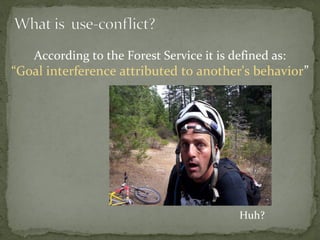
According to the Forest Service it is defined as:
“Goal interference attributed to another's behavior”
Huh?
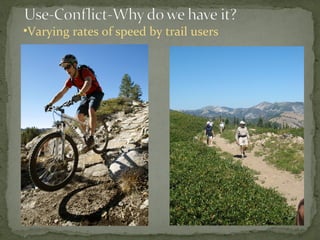
•Varying rates of speed by trail users
Out for a
workout
Thrillseeking
Bird/critter/wild
-flower viewing
Family/Friend
time
Enjoyment of
Nature
Solitude
All of the above can happen here!
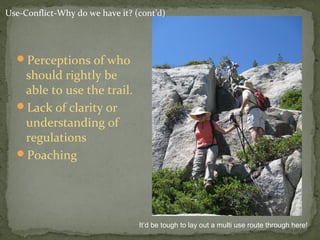
Perceptions of who
should rightly be
able to use the trail.
Lack of clarity or
understanding of
regulations
Poaching
It’d be tough to lay out a multi use route through here!
Use-Conflict-Why do we have it? (cont’d)
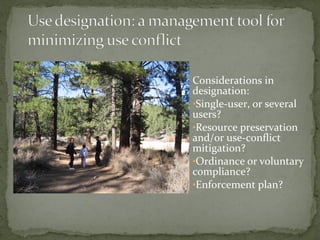
Considerations in
designation:
•Single-user, or several
users?
•Resource preservation
and/or use-conflict
mitigation?
•Ordinance or voluntary
compliance?
•Enforcement plan?
The Good:
Segregates use however
designed
Provides a level of
security against potential
use-conflict
Allows a clear line for
enforcement
Can mitigate erosion by
singling out high impact
users (particularly on older,
non-sustainable trail)
The bad:
Does not necessarily
mitigate user conflict; may
actually cause an increase
in it
More trails to satisfy all
users= redundancy, larger
footprint of impacted area,
greater costs
Tough to enforce
The Good:
Less trails needed= less
impact to watershed
Easier navigation
Use conflict minimized
through design
Larger pool of potential
funders and volunteers for
construction and
maintenance
Easier enforcement
The bad:
Varying rates of speed by
users WILL occur
Design critical to
minimization of use-conflict
Potential for user-group
dominance
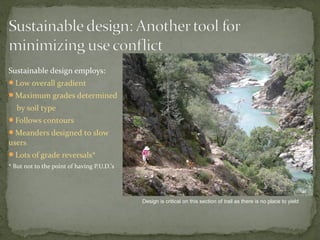
Sustainable design employs:
Low overall gradient
Maximum grades determined
by soil type
Follows contours
Meanders designed to slow
users
Lots of grade reversals*
* But not to the point of having P.U.D.’s
Design is critical on this section of trail as there is no place to yield
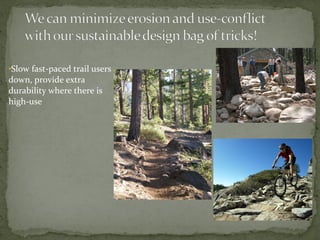
•Slow fast-paced trail users
down, provide extra
durability where there is
high-use
 Multi-use trails in the
backcountry- (the majority
of the trails)
 Single-use on flatter terrain
for accessibility and walking
 Single-use (proposed) trails
for mountain bikes
 Single-use routes (potential)
for safer travel to areas with
steep or exposed access.
See you on the trail!

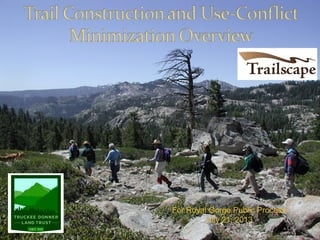
Trail Construction and Use-Conflict Minimization Overview

  • 1.
    For Royal GorgePublic Process July 21, 2013
  • 2.
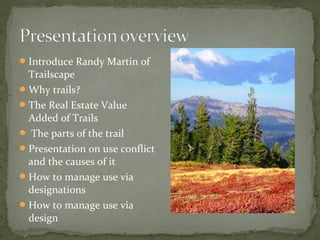
    Introduce Randy Martinof Trailscape Why trails? The Real Estate Value Added of Trails  The parts of the trail Presentation on use conflict and the causes of it How to manage use via designations How to manage use via design
  • 3.
    Sample Projects 14 milesMultiuse trail Susanville Ca. 2009 14 Miles Hiking Primarily Trail, Genoa 2011 Guest Trail Builder Jamaica, 2009 Sugarbowl, 6 miles design, 2 miles built from Disney to Lake Mary, 2010 Tahoe Donner, Euer Valley, 2 miles, 2012 Market Studies and Premium Analysis Advisory Board Hidden Falls Regional Park, CA Frequent Speaker: California Trail Symposium California Park and Recreation Society, Urban Land Institute International Trail Symposium Professional Trail Builders Association Professional Highlights
  • 4.
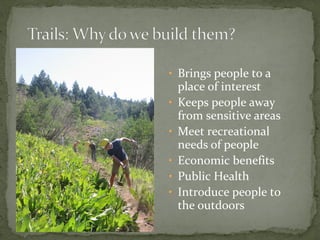
    • Brings peopleto a place of interest • Keeps people away from sensitive areas • Meet recreational needs of people • Economic benefits • Public Health • Introduce people to the outdoors
  • 9.
    When constructing trails,the Land Trust follows stringent federal and State standards
  • 10.
    Donner Summit CanyonTrail December 4, 2012
  • 12.
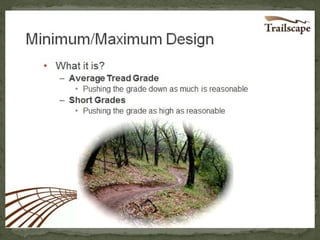
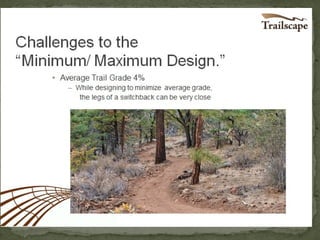
    Meandering low-gradient trails • keepspeed down Grade reversals- undulations in the tread  Keep water from running down tread • Slows bikes and minimizes skidding Grade dips • Easier to build than a water bar; therefore more get built!
  • 13.
    • Make them smooth-no hoof or tire-catchers! • Rock-hopper stones next to it for hikers?
  • 14.
    • Most maintenanceon modern trails occurs because of the original design and layout • A well-built trail should need mostly annual spring cleaning-not much more • Major maintenance needs after flood events (maybe) Sustainable? Sustainable
  • 15.
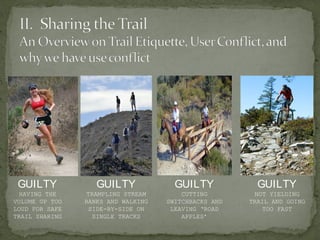
    GUILTY HAVING THE VOLUME UPTOO LOUD FOR SAFE TRAIL SHARING GUILTY TRAMPLING STREAM BANKS AND WALKING SIDE-BY-SIDE ON SINGLE TRACKS GUILTY CUTTING SWITCHBACKS AND LEAVING ‘ROAD APPLES’ GUILTY NOT YIELDING TRAIL AND GOING TOO FAST
  • 16.
    Why? P.S. EXTRA CREDITIF YOU KNOW WHAT IS WRONG WITH THIS SIGN…
  • 17.
    According to theForest Service it is defined as: “Goal interference attributed to another's behavior” Huh?
  • 18.
    •Varying rates ofspeed by trail users
  • 19.
    Out for a workout Thrillseeking Bird/critter/wild -flowerviewing Family/Friend time Enjoyment of Nature Solitude All of the above can happen here!
  • 20.
    Perceptions of who shouldrightly be able to use the trail. Lack of clarity or understanding of regulations Poaching It’d be tough to lay out a multi use route through here! Use-Conflict-Why do we have it? (cont’d)
  • 21.
    Considerations in designation: •Single-user, orseveral users? •Resource preservation and/or use-conflict mitigation? •Ordinance or voluntary compliance? •Enforcement plan?
  • 22.
    The Good: Segregates usehowever designed Provides a level of security against potential use-conflict Allows a clear line for enforcement Can mitigate erosion by singling out high impact users (particularly on older, non-sustainable trail) The bad: Does not necessarily mitigate user conflict; may actually cause an increase in it More trails to satisfy all users= redundancy, larger footprint of impacted area, greater costs Tough to enforce
  • 23.
    The Good: Less trailsneeded= less impact to watershed Easier navigation Use conflict minimized through design Larger pool of potential funders and volunteers for construction and maintenance Easier enforcement The bad: Varying rates of speed by users WILL occur Design critical to minimization of use-conflict Potential for user-group dominance
  • 24.
    Sustainable design employs: Lowoverall gradient Maximum grades determined by soil type Follows contours Meanders designed to slow users Lots of grade reversals* * But not to the point of having P.U.D.’s Design is critical on this section of trail as there is no place to yield
  • 31.
    •Slow fast-paced trailusers down, provide extra durability where there is high-use
  • 32.
     Multi-use trailsin the backcountry- (the majority of the trails)  Single-use on flatter terrain for accessibility and walking  Single-use (proposed) trails for mountain bikes  Single-use routes (potential) for safer travel to areas with steep or exposed access.
  • 33.
    See you onthe trail!

Editor's Notes

  • #11 Erosion consists of two components: disturbance and transport. Horses and hikers: High level of disturbance, low level of transport Bikes: low level of disturbance (unless skidding), high level of transport
  • #13 Water bars are out
  • #15 Construction of sustainable trails allows for more durable trails, less maintenance work Clear drains, “ to daylight” Clear deadfall discreetly Prune brush at an angle Reconstruct tread: maintain backslope and critical edge, restore outslope Grade dips
  • #16 These pictures don’t show the guilty activity
  • #18 It also says that contact between users need not be made The “level of resentment is often lopsided”
  • #21 Even Day/Odd Day use management Ordnance vs. recommendation
  • #23 Can lead to “trail vigilanteism” by empowering the entitled user
  • #24 Check out sawtooth, DLRT from Castle, emigrant to summit for good design Check out Mt. Lala Trail steps, Confluence Trail in Auburn for bad design
  • #25 Road analogy
  • #32 A non-skidding bike is one of the lowest impacts on trails