Retroviridae
• • The Retroviridae are a family of enveloped (+) sense ssRNA viruses that
have been intensely studied because of their association with cancers,
leukemias and the AIDS syndrome
• • The first association of viruses with cancer was in early 1900’s with the
discovery by Ellerman and Bang that leukemia could be transmitted from
one chicken to another by injecting leukemia cell extracts
• • In 1911 Peyton Rous showed that a bacterial free filtrate from solid
tumors of chickens could cause an identical cancer in chickens inoculated
with the filtrate
• • The virus causing the leukemia was subsequently shown to be avian
leukosis virus and the virus causing tumors was designated Rous sarcoma
virus
Conti,
• • Although the discoveries by Ellerman, Bang and Rous were not well
accepted at the time, 60 years later these viruses were designated
retroviruses and Rous won the Nobel Prize for his work in 1963 at the age
of 83
• • In early 1970, Baltimore and Temin independently identified the unusual
enzyme, reverse transcriptase and won the Nobel Prize in 1975 for their
work
• • Their discovery shattered the central dogma of molecular biology which
stated the flow of genetic information was from DNA to RNA
• • In 1989, Bishop and Varmus won the Nobel Prize for elucidating that
retroviral oncogenes are derived from cellular genes and brought us closer
to understanding cancer
Human Immunodeficiency Virus
(HIV)
The human immunodeficiency virus (HIV) infects cells of the immune
system, destroying or impairing their function. Infection with the virus results
in progressive deterioration of the immune system, leading to "immune
deficiency." The immune system is considered deficient when it can no
longer fulfil its role of fighting infection and disease. Infections associated
with severe immunodeficiency are known as "opportunistic infections",
because they take advantage of a weakened immune system.
What is AIDS?
Acquired immunodeficiency syndrome (AIDS) is a term which applies to the
most advanced stages of HIV infection. It is defined by the occurrence of any
of more than 20 opportunistic infections or HIV-related cancers.
Retrovirus Classification
Derivation of Names
• Retro (Latin) - backwards
• Onco (Greek, oncos) - tumor
• Spuma (Latin)-foam
• Lenti (Latin, lentus) - slow
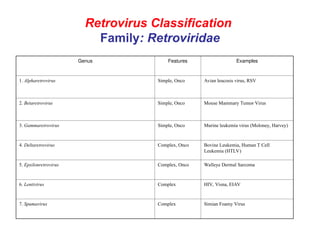
Retrovirus Classification
Family: Retroviridae
Genus Features Examples
1. Alpharetrovirus Simple, Onco Avian leucosis virus, RSV
2. Betaretrovirus Simple, Onco Mouse Mammary Tumor Virus
3. Gammaretrovirus Simple, Onco Murine leukemia virus (Moloney, Harvey)
4. Deltaretrovirus Complex, Onco Bovine Leukemia, Human T Cell
Leukemia (HTLV)
5. Epsilonretrovirus Complex, Onco Walleye Dermal Sarcoma
6. Lentivirus Complex HIV, Visna, EIAV
7. Spumavirus Complex Simian Foamy Virus
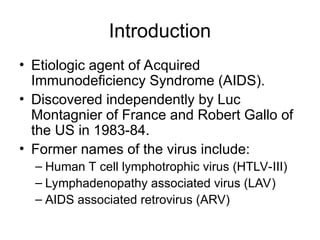
Introduction
• Etiologic agent of Acquired
Immunodeficiency Syndrome (AIDS).
• Discovered independently by Luc
Montagnier of France and Robert Gallo of
the US in 1983-84.
• Former names of the virus include:
– Human T cell lymphotrophic virus (HTLV-III)
– Lymphadenopathy associated virus (LAV)
– AIDS associated retrovirus (ARV)
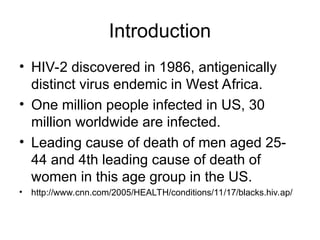
Introduction
• HIV-2 discovered in 1986, antigenically
distinct virus endemic in West Africa.
• One million people infected in US, 30
million worldwide are infected.
• Leading cause of death of men aged 25-
44 and 4th leading cause of death of
women in this age group in the US.
• http://www.cnn.com/2005/HEALTH/conditions/11/17/blacks.hiv.ap/
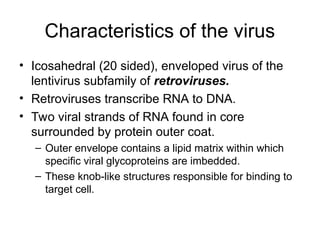
Characteristics of the virus
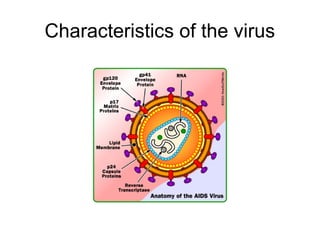
• Icosahedral (20 sided), enveloped virus of the
lentivirus subfamily of retroviruses.
• Retroviruses transcribe RNA to DNA.
• Two viral strands of RNA found in core
surrounded by protein outer coat.
– Outer envelope contains a lipid matrix within which
specific viral glycoproteins are imbedded.
– These knob-like structures responsible for binding to
target cell.
Characteristics of the virus
HIV
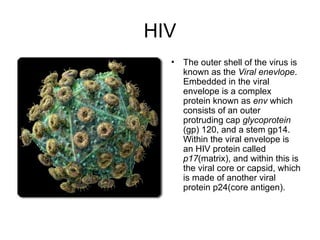
• The outer shell of the virus is
known as the Viral enevlope.
Embedded in the viral
envelope is a complex
protein known as env which
consists of an outer
protruding cap glycoprotein
(gp) 120, and a stem gp14.
Within the viral envelope is
an HIV protein called
p17(matrix), and within this is
the viral core or capsid, which
is made of another viral
protein p24(core antigen).
Structural Genes
• Three main structural genes:
– Group Specific Antigen (Gag)
– Envelope (Env)
– Polymerase (Pol)
Group Specific Antigen (Gag)
• Located in nucelocapsid of virus.
• Icosahedryl capsid surrounds the internal
nucleic acids made up of p24 andp15.
• p17 lies between protein core and
envelope and is embedded in the internal
portion of the envelope.
• Two additional p55 products, p7 and p9,
are nucleic acid binding proteins closely
associated with the RNA.
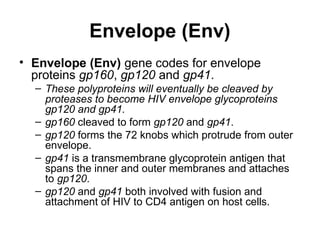
Envelope (Env)
• Envelope (Env) gene codes for envelope
proteins gp160, gp120 and gp41.
– These polyproteins will eventually be cleaved by
proteases to become HIV envelope glycoproteins
gp120 and gp41.
– gp160 cleaved to form gp120 and gp41.
– gp120 forms the 72 knobs which protrude from outer
envelope.
– gp41 is a transmembrane glycoprotein antigen that
spans the inner and outer membranes and attaches
to gp120.
– gp120 and gp41 both involved with fusion and
attachment of HIV to CD4 antigen on host cells.
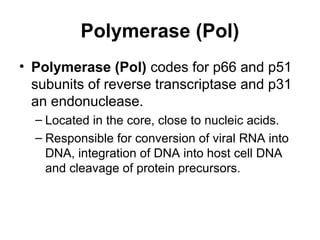
Polymerase (Pol)
• Polymerase (Pol) codes for p66 and p51
subunits of reverse transcriptase and p31
an endonuclease.
– Located in the core, close to nucleic acids.
– Responsible for conversion of viral RNA into
DNA, integration of DNA into host cell DNA
and cleavage of protein precursors.
Viral Replication
• First step, HIV attaches to susceptible host cell.
– Site of attachment is the CD4 antigen found on a
variety of cells
• helper T cells
• macrophages
• monocytes
• B cells
• microglial brain cells
• intestinal cells
– T cells infected later on.
Early Phase HIV Infection
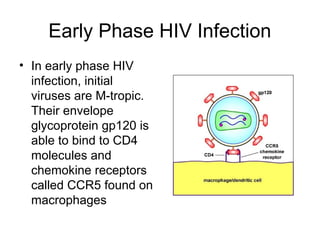
• In early phase HIV
infection, initial
viruses are M-tropic.
Their envelope
glycoprotein gp120 is
able to bind to CD4
molecules and
chemokine receptors
called CCR5 found on
macrophages
http://www.cat.cc.md.us/courses/bio141/lecguide/unit2/viruses/hivad.html
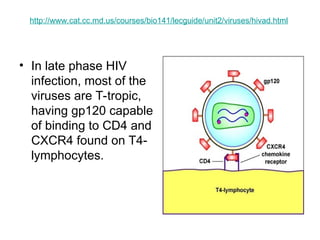
• In late phase HIV
infection, most of the
viruses are T-tropic,
having gp120 capable
of binding to CD4 and
CXCR4 found on T4-
lymphocytes.
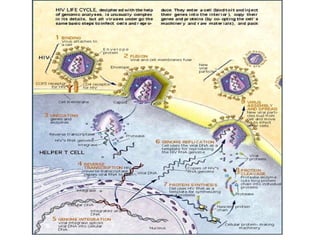
Life Cycle
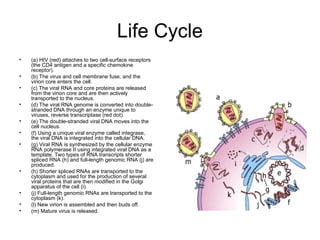
• (a) HIV (red) attaches to two cell-surface receptors
(the CD4 antigen and a specific chemokine
receptor).
• (b) The virus and cell membrane fuse, and the
virion core enters the cell.
• (c) The viral RNA and core proteins are released
from the virion core and are then actively
transported to the nucleus.
• (d) The viral RNA genome is converted into double-
stranded DNA through an enzyme unique to
viruses, reverse transcriptase (red dot).
• (e) The double-stranded viral DNA moves into the
cell nucleus.
• (f) Using a unique viral enzyme called integrase,
the viral DNA is integrated into the cellular DNA.
• (g) Viral RNA is synthesized by the cellular enzyme
RNA polymerase II using integrated viral DNA as a
template. Two types of RNA transcripts shorter
spliced RNA (h) and full-length genomic RNA (j) are
produced.
• (h) Shorter spliced RNAs are transported to the
cytoplasm and used for the production of several
viral proteins that are then modified in the Golgi
apparatus of the cell (i).
• (j) Full-length genomic RNAs are transported to the
cytoplasm (k).
• (l) New virion is assembled and then buds off.
• (m) Mature virus is released.
Viral Replication
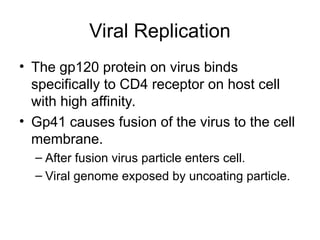
• The gp120 protein on virus binds
specifically to CD4 receptor on host cell
with high affinity.
• Gp41 causes fusion of the virus to the cell
membrane.
– After fusion virus particle enters cell.
– Viral genome exposed by uncoating particle.
Viral Replication
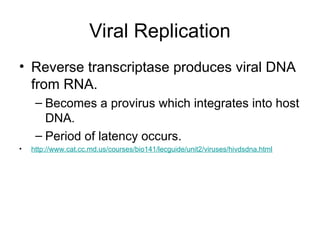
• Reverse transcriptase produces viral DNA
from RNA.
– Becomes a provirus which integrates into host
DNA.
– Period of latency occurs.
• http://www.cat.cc.md.us/courses/bio141/lecguide/unit2/viruses/hivdsdna.html
Viral Replication
• After a period of latency lasting up to 10 years
viral replication is triggered and occurs at high
rate.
• CD4 cell may be destroyed in the process, body
attempts to replace lost CD4 cells, but over the
course of many years body is unable to keep the
count at a safe level.
• Destruction of large numbers of CD4 cause
symptoms of HIV to appear with increased
susceptibility to opportunistic infections, disease
and malignancy.
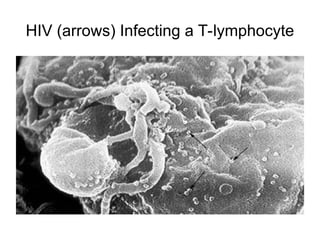
HIV (arrows) Infecting a T-lymphocyte
Viral Replication
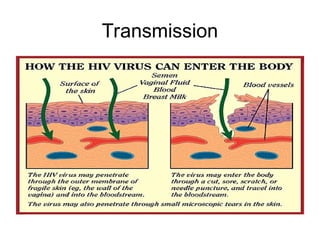
• Methods of transmission:
– Sexual transmission, presence of STD increases
likelihood of transmission.
– Exposure to infected blood or blood products.
– Use of contaminated clotting factors by hemophiliacs.
– Sharing contaminated needles (IV drug users).
– Transplantation of infected tissues or organs.
– Mother to fetus, perinatal transmission variable,
dependent on viral load and mother’s CD 4 count.
Transmission
Primary HIV Syndrome
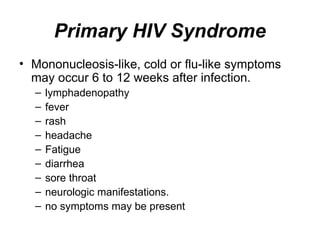
• Mononucleosis-like, cold or flu-like symptoms
may occur 6 to 12 weeks after infection.
– lymphadenopathy
– fever
– rash
– headache
– Fatigue
– diarrhea
– sore throat
– neurologic manifestations.
– no symptoms may be present
Primary HIV Syndrome
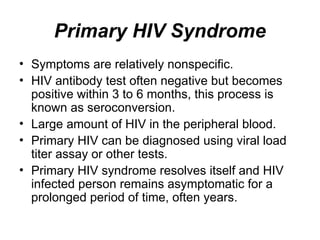
• Symptoms are relatively nonspecific.
• HIV antibody test often negative but becomes
positive within 3 to 6 months, this process is
known as seroconversion.
• Large amount of HIV in the peripheral blood.
• Primary HIV can be diagnosed using viral load
titer assay or other tests.
• Primary HIV syndrome resolves itself and HIV
infected person remains asymptomatic for a
prolonged period of time, often years.
Clinical Latency Period
• HIV continues to reproduce, CD4 count
gradually declines from its normal value of 500-
1200.
• Once CD4 count drops below 500, HIV infected
person at risk for opportunistic infections.
• The following diseases are predictive of the
progression to AIDS:
– persistent herpes-zoster infection (shingles)
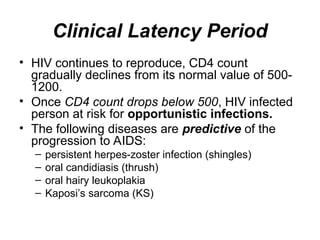
– oral candidiasis (thrush)
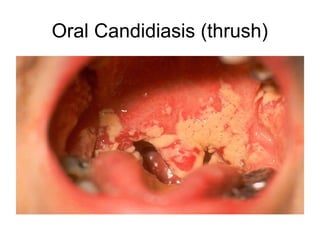
– oral hairy leukoplakia
– Kaposi’s sarcoma (KS)
Oral Candidiasis (thrush)
Oral Hairy Leukoplakia
• Being that HIV reduces immunologic activity, the
intraoral environment is a prime target for chronic
secondary infections and inflammatory processes,
including OHL, which is due to the Epstein-Barr virus
under immunosuppressed conditions
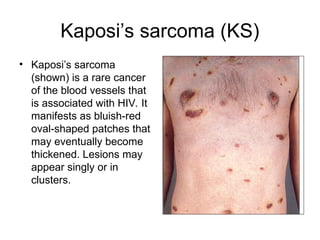
Kaposi’s sarcoma (KS)
• Kaposi’s sarcoma
(shown) is a rare cancer
of the blood vessels that
is associated with HIV. It
manifests as bluish-red
oval-shaped patches that
may eventually become
thickened. Lesions may
appear singly or in
clusters.
AIDS
• CD4 count drops below 200 person is considered to
have advanced HIV disease
• If preventative medications not started the HIV infected
person is now at risk for:
– Pneumocystis carinii pneumonia (PCP)
– cryptococcal meningitis
– toxoplasmosis
• If CD4 count drops below 50:
– Mycobacterium avium
– Cytomegalovirus infections
– lymphoma
– dementia
– Most deaths occur with CD4 counts below 50.
Other Opportunistic Infections
• Respiratory system
– Pneumocystis Carinii Pneumonia (PCP)
– Tuberculosis (TB)
– Kaposi's Sarcoma (KS)
• Gastro-intestinal system
– Cryptosporidiosis
– Candida
– Cytomegolavirus (CMV)
– Isosporiasis
– Kaposi's Sarcoma
• Central/peripheral Nervous system
– Cytomegolavirus
– Toxoplasmosis
– Cryptococcosis
– Non Hodgkin's lymphoma
– Varicella Zoster
– Herpes simplex
• Skin
– Herpes simple
– Kaposi's sarcoma
– Varicella Zoster
Infants with HIV
• Failure to thrive
• Persistent oral candidiasis
• Hepatosplenomegaly
• Lymphadenopathy
• Recurrent diarrhea
• Recurrent bacterial infections
• Abnormal neurologic findings.
Immunologic Manifestations
• Early stage slight depression of CD4
count, few symptoms, temporary.
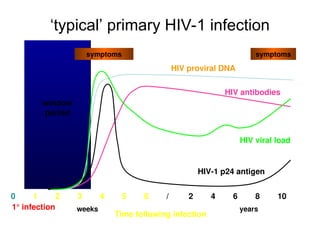
• Window of up to 6 weeks before antibody
is detected, by 6 months 95% positive.
• During window p24 antigen present, acute
viremia and antigenemia.
Immunologic Manifestations
• Antibodies produced to all major antigens.
– First antibodies detected produced against
gag proteins p24 and p55.
– Followed by antibody to p51, p120 and gp41
– As disease progresses antibody levels
decrease.
Immunologic Manifestations
• Immune abnormalities associated with increased
viral replication.
– Decrease in CD4 cells due to virus budding from
cells, fusion of uninfected cells with virally infected
cells and apoptosis.
– B cells have decreased response to antigens possibly
due to blockage of T cell/B cell interaction by binding
of viral proteins to CD4 site.
– CD8 cells initially increase and may remain elevated.
– As HIV infection progresses, CD4 T cells drop
resulting in immunosuppression and susceptibility of
patient to opportunistic infections.
– Death comes due to immuno-incompetence.
Immunologic Manifestations
• Immune abnormalities associated with increased
viral replication.
– Decrease in CD4 cells due to virus budding from
cells, fusion of uninfected cells with virally infected
cells and apoptosis.
– B cells have decreased response to antigens possibly
due to blockage of T cell/B cell interaction by binding
of viral proteins to CD4 site.
– CD8 cells initially increase and may remain elevated.
– As HIV infection progresses, CD4 T cells drop
resulting in immunosuppression and susceptibility of
patient to opportunistic infections.
– Death comes due to immuno-incompetence.
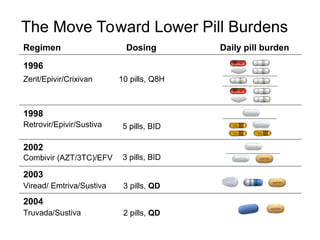
The Move Toward Lower Pill Burdens
Dosing Daily pill burden
Regimen
1996
Zerit/Epivir/Crixivan 10 pills, Q8H
2002
3 pills, BID
Combivir (AZT/3TC)/EFV
1998
Retrovir/Epivir/Sustiva 5 pills, BID
2003
3 pills, QD
Viread/ Emtriva/Sustiva
2004
2 pills, QD
Truvada/Sustiva
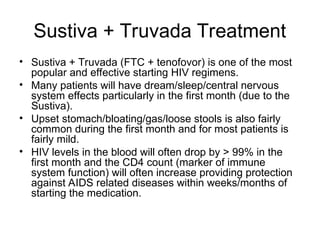
Sustiva + Truvada Treatment
• Sustiva + Truvada (FTC + tenofovor) is one of the most
popular and effective starting HIV regimens.
• Many patients will have dream/sleep/central nervous
system effects particularly in the first month (due to the
Sustiva).
• Upset stomach/bloating/gas/loose stools is also fairly
common during the first month and for most patients is
fairly mild.
• HIV levels in the blood will often drop by > 99% in the
first month and the CD4 count (marker of immune
system function) will often increase providing protection
against AIDS related diseases within weeks/months of
starting the medication.
Truvada
• Truvada is made up of HIV drugs from a
class called nucleoside/nucleotide reverse
transcriptase inhibitors (NRTIs), also
known as “nukes.”
• The NRTIs block reverse transcriptase, a
protein that HIV needs to make more
copies of itself. This may slow down HIV
disease
‘typical’ primary HIV-1 infection
symptoms
HIV-1 p24 antigen
0 1 2 3 4 5 6 / 2 4 6 8 10
weeks years
HIV antibodies
Time following infection
HIV viral load
HIV proviral DNA
symptoms
‘window’
period
1° infection
Laboratory Diagnosis of HIV Infection
• Methods utilized to detect:
– Antibody
– Antigen
– Viral nucleic acid
– Virus in culture
ELISA Testing
• First serological test developed to detect
HIV infection.
– Easy to perform.
– Easily adapted to batch testing.
– Highly sensitive and specific.
• Antibodies detected in ELISA include
those directed against: p24, gp120, gp160
and gp41, detected first in infection and
appear in most individuals
ELISA Testing
• ELISA tests useful for:
– Screening blood products.
– Diagnosing and monitoring patients.
– Determining prevalence of infection.
– Research investigations.
ELISA Testing
• Different types of ELISA techniques used:
– indirect
– competitive
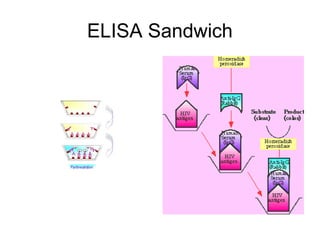
– sandwich
• ELISAs are for screening only, false
positives do occur and may be due to AI
disease, alcoholism, syphilis, and
immunoproliferative diseases.
ELISA Sandwich
Other Screening Tests
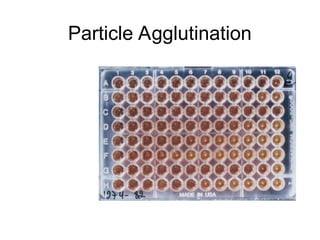
• Agglutination tests using latex particles, gelatin
particles or microbeads are coated with HIV
antigen and will agglutinate in the presence of
antibody.
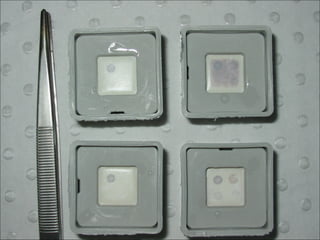
• Dot-Blot Testing utilizes paper or nitrocellulose
impregnated with antigen, patient serum is
filtered through, and anti-antibody is added with
enzyme label, color change is positive.
– A rapid, cost-effective and may become an alternative
to standard ELISA and Western blot testing.
Particle Agglutination
Western Blot
• Most popular confirmatory test.
– Utilizes a lysate prepared from HIV virus.
– The lysate is electrophoresed to separate out the HIV
proteins (antigens).
– The paper is cut into strips and reacted with test sera.
– After incubation and washing anti-antibody tagged
with radioisotope or enzyme is added.
– Specific bands form where antibody has reacted with
different antigens.
– Most critical reagent of test is purest quality HIV
antigen.
– The following antigens must be present: p17, p24,
p31, gp41, p51, p55, p66, gp120 and gp160.
Western Blot
• Antibodies to p24 and p55 appear earliest
but decrease or become undetectable.
• Antibodies to gp31, gp41, gp 120, and
gp160 appear later but are present
throughout all stages of the disease.
Western Blot
• Interpretation of results.
– No bands, negative.
– In order to be interpreted as positive a
minimum of 3 bands directed against the
following antigens must be present: p24, p31,
gp41 or gp120/160.
• CDC criteria require 2 bands of the
following: p24, gp41 or gp120/160.
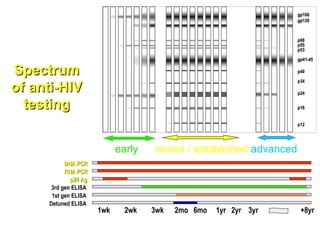
DNA PCR
DNA PCR
RNA PCR
RNA PCR
p24 Ag
p24 Ag
3rd gen ELISA
1st gen ELISA
Detuned ELISA
1wk 2wk 3wk 2mo 6mo 1yr 2yr 3yr +8yr
gp160
gp120
p68
p55
p53
gp41-45
p40
p34
p24
p18
p12
gp160
gp120
p68
p55
p53
gp41-45
p40
p34
p24
p18
p12
gp160
gp120
p68
p55
p53
gp41-45
p40
p34
p24
p18
p12
early recent / established advanced
Spectrum
Spectrum
of anti-HIV
of anti-HIV
testing
testing
Western Blot
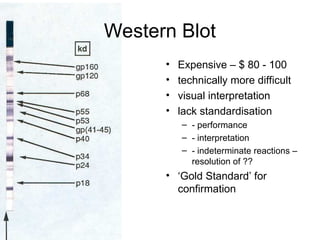
• Expensive – $ 80 - 100
• technically more difficult
• visual interpretation
• lack standardisation
– - performance
– - interpretation
– - indeterminate reactions –
resolution of ??
• ‘Gold Standard’ for
confirmation
Western Blot
• Indeterminate results are those samples that produce
bands but not enough to be positive, may be due to the
following:
– prior blood transfusions, even with non-HIV-1 infected blood
– prior or current infection with syphilis
– prior or current infection with malaria
– autoimmune diseases (e.g., diabetes, Grave’s disease, etc)
– infection with other human retroviruses
– second or subsequent pregnancies in women.
– run an alternate HIV confirmatory assay.
• Quality control of Western Blot is critical and requires
testing with strongly positive, weakly positive and
negative controls.
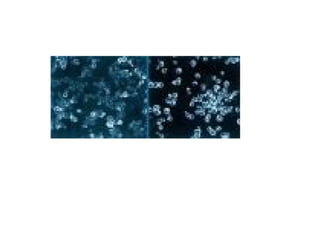
Indirect immunofluorescence
• Can be used to detect both virus and
antibody to it.
• Antibody detected by testing patient serum
against antigen applied to a slide,
incubated, washed and a fluorescent
antibody added.
• Virus is detected by fixing patient cells to
slide, incubating with antibody.
Detection of p24 HIV antigen
• The p24-antigen screening assay is an EIA
performed on serum or plasma.
• P24 antigen only present for short time,
disappears when antibody to p24 appears.
• Anti-HIV-1 bound to membrane, incubated with
patient serum, second anti-HIV-1 antibody
attached to enzyme label is added (sandwich
technique), color change occurs.
• Optical density measured, standard curve
prepared to quantitate results.
Detection of p24 HIV antigen
• Positive confirmed by neutralizing
reaction, preincubate patient sample with
anti- HIV, retest, if p24 present immune
complexes form preventing binding to HIV
antibody on membrane when added.
• Test not recommended for routine
screening as appearance and rate of rise
are unpredictable.
• Sensitivity lower than ELISA.
Detection of p24 HIV antigen
• Most useful for the following:
– early infection suspected in seronegative
patient
– newborns
– CSF
– monitoring disease progress
Polymerase Chain Reaction (PCR)
• Looks for HIV DNA in the WBCs of a person.
• PCR amplifies tiny quantities of the HIV DNA present,
each cycle of PCR results in doubling of the DNA
sequences present.
• The DNA is detected by using radioactive or biotinylated
probes.
• Once DNA is amplified it is placed on nitrocellulose
paper and allowed to react with a radiolabeled probe, a
single stranded DNA fragment unique to HIV, which will
hybridize with the patient’s HIV DNA if present.
• Radioactivity is determined.
Virus isolation
• Virus isolation can be used to definitively
diagnose HIV.
• Best sample is peripheral blood, but can use
CSF, saliva, cervical secretions, semen, tears or
material from organ biopsy.
• Cell growth in culture is stimulated, amplifies
number of cells releasing virus.
• Cultures incubated one month, infection
confirmed by detecting reverse transcriptase or
p24 antigen in supernatant.
Viral Load Tests
• Viral load or viral burden is the quantity of
HIV-RNA that is in the blood.
• RNA is the genetic material of HIV that
contains information to make more virus.
Viral Load Tests
• Viral load tests measure the amount of HIV-RNA
in one milliliter of blood.
• Take 2 measurements 2-3 weeks apart to
determine baseline.
• Repeat every 3-6 months in conjunction with
CD4 counts to monitor viral load ant T-cell count.
• Repeat 4-6 weeks after starting or changing
antiretroviral therapy to determine effect on viral
load.
Testing of Neonates
• Difficult due to presence of maternal IgG
antibodies.
• Use tests to detect IgM or IgA antibodies,
IgM lacks sensitivity, IgA more promising.
• Measurement of p24 antigen.
• PCR testing may be helpful but still not
detecting antigen soon enough: 38 days to
6 months to be positive.
References
• http://www.cat.cc.md.us/courses/bio141/lecguide/unit2/viruses/hivlc.html#translat
• http://pathmicro.med.sc.edu/lecture/HIV3.htm
• http://www.avert.org/hivstages.htm
• http://www.aidsinfo.nih.gov/guidelines/
• http://www.hopkins-aids.edu/publications/pocketguide/pocketgd0105.pdf
• http://www.modares.ac.ir/sci/saman_h/Pages/applications.htm
• http://hivinsite.ucsf.edu/InSite?page=kb-02&doc=kb-02-02-02-02
• http://www.hivandhepatitis.com/recent/test/realtime/061604_f.html
Hepatitis viruses classification
HAV HBV HCV HDV HEV
Transmission Enteral Parenteral Parenteral Parenteral Enteral
Classification Picornavirus Orthohepadn
avirus
Hepacivirus Deltavirus Hepevirus
Genome +ssRNA dsDNA-RT +ssRNA −ssRNA +ssRNA
Antigens
HBsAg,
HBeAg
Core antigen Delta antigen
Incubation
period
20–40 days 45–160 days 15–150 days 30–60 days 15–60 days
Severity/
Chronicity[5]
Mild; acute
Occasionally
severe; 5–
10% chronic
Subclinical;
70% chronic
Exacerbates
symptoms of
HBV; chronic
with HBV
Mild in normal
patients;
severe in
pregnant
women; acute
Vaccine
10 year
protection
3 injections,
lifetime
protection
None
available
None
available
Investigational
(approved in
China)
viral hepatitis
• Hepatitis refers to an inflammation of the liver cells and damage to the liver.
There are different types and causes, but the symptoms can be similar.
• The liver's functions include detoxifying the blood, storing vitamins, and
producing hormones. Hepatitis can disrupt these processes and create severe
health problems throughout the body.
• At least five viruses can cause hepatitis. The three most common are
hepatitis viruses A, B and C. Infection with any of these three can be fatal.
• Other types of hepatitis can result from overconsumption of alcohol or an
autoimmune condition. This article will look at hepatitis A, B, and C. These
are forms of hepatitis transmitted by a virus.
• In the United States, the incidence of hepatitis A has been falling for the last
20 years, but acute hepatitis C has seen an increase of 44 percent between
2011 and 2012.
Types
• The three main types of hepatitis are known as hepatitis A, B, and C. Each is
caused by a different virus. All three types can be acute, lasting for 6 months
or less, and types B and C can be chronic, lasting for longer.
• Each type has different characteristics and is transmitted in different ways,
but symptoms tend to be similar.
• Hepatitis A
• In the United States (U.S.), 1,390 cases of hepatitis A were reported in
2015.
• It is often mild, and most people make a full recovery, after which they
are immune and therefore protected from the virus in the future.
However, if it progresses, symptoms can be severe or life-threatening.
• People in parts of the world with poor sanitation are particularly at risk
of contracting HAV.
• There are safe and effective vaccines that protect against this virus.
Hepatitis B
• Hepatitis B can be transmitted when a person:
• has unprotected sexual intercourse with an infected person
• shares a needle with an infected person, often for illegal drug or
steroid use
• has a tattoo created with unsterilized needles
• is accidentally pricked, for example, health workers dealing with
sharp objects
• shares personal items, such as a toothbrush or razor, with an
infected person
• is bitten by someone who is infected
Conti,
• An infected mother can pass the virus on to her infant when breast-feeding.
• The liver of a person infected with hepatitis B swells. Severe damage can
result.
• HBV infection can become chronic. This can lead to complications, including
scarring of the liver, or cirrhosis. It can also cause a type of cancer known as
hepatocellular carcinoma.
• In 2015, 887,000 deaths worldwide were linked to HBV, mostly as a result of
complications such as these.
• In the U.S., there were 3,370 reported cases of HBV, but the Centers for
Disease Control and Prevention (CDC) estimate that the real figure may be
around 21,900.
• There is not currently a cure for HBV. However, the incidence rate has
dropped in countries where the vaccine is available, and this vaccine is 95
percent effective against the infection.
• There is a safe and effective vaccine that can protect against HBV.
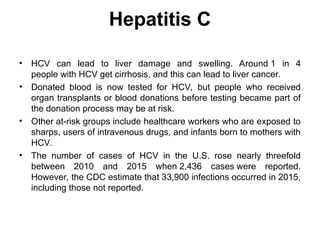
Hepatitis C
• HCV can lead to liver damage and swelling. Around 1 in 4
people with HCV get cirrhosis, and this can lead to liver cancer.
• Donated blood is now tested for HCV, but people who received
organ transplants or blood donations before testing became part of
the donation process may be at risk.
• Other at-risk groups include healthcare workers who are exposed to
sharps, users of intravenous drugs, and infants born to mothers with
HCV.
• The number of cases of HCV in the U.S. rose nearly threefold
between 2010 and 2015 when 2,436 cases were reported.
However, the CDC estimate that 33,900 infections occurred in 2015,
including those not reported.
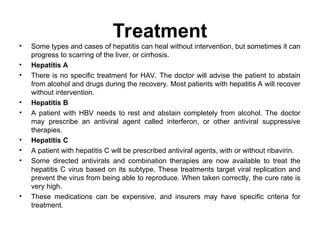
Treatment
• Some types and cases of hepatitis can heal without intervention, but sometimes it can
progress to scarring of the liver, or cirrhosis.
• Hepatitis A
• There is no specific treatment for HAV. The doctor will advise the patient to abstain
from alcohol and drugs during the recovery. Most patients with hepatitis A will recover
without intervention.
• Hepatitis B
• A patient with HBV needs to rest and abstain completely from alcohol. The doctor
may prescribe an antiviral agent called interferon, or other antiviral suppressive
therapies.
• Hepatitis C
• A patient with hepatitis C will be prescribed antiviral agents, with or without ribavirin.
• Some directed antivirals and combination therapies are now available to treat the
hepatitis C virus based on its subtype. These treatments target viral replication and
prevent the virus from being able to reproduce. When taken correctly, the cure rate is
very high.
• These medications can be expensive, and insurers may have specific criteria for
treatment.
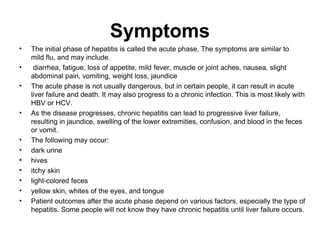
Symptoms
• The initial phase of hepatitis is called the acute phase, The symptoms are similar to
mild flu, and may include.
• diarrhea, fatigue, loss of appetite, mild fever, muscle or joint aches, nausea, slight
abdominal pain, vomiting, weight loss, jaundice
• The acute phase is not usually dangerous, but in certain people, it can result in acute
liver failure and death. It may also progress to a chronic infection. This is most likely with
HBV or HCV.
• As the disease progresses, chronic hepatitis can lead to progressive liver failure,
resulting in jaundice, swelling of the lower extremities, confusion, and blood in the feces
or vomit.
• The following may occur:
• dark urine
• hives
• itchy skin
• light-colored feces
• yellow skin, whites of the eyes, and tongue
• Patient outcomes after the acute phase depend on various factors, especially the type of
hepatitis. Some people will not know they have chronic hepatitis until liver failure occurs.
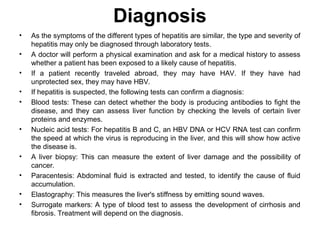
Diagnosis
• As the symptoms of the different types of hepatitis are similar, the type and severity of
hepatitis may only be diagnosed through laboratory tests.
• A doctor will perform a physical examination and ask for a medical history to assess
whether a patient has been exposed to a likely cause of hepatitis.
• If a patient recently traveled abroad, they may have HAV. If they have had
unprotected sex, they may have HBV.
• If hepatitis is suspected, the following tests can confirm a diagnosis:
• Blood tests: These can detect whether the body is producing antibodies to fight the
disease, and they can assess liver function by checking the levels of certain liver
proteins and enzymes.
• Nucleic acid tests: For hepatitis B and C, an HBV DNA or HCV RNA test can confirm
the speed at which the virus is reproducing in the liver, and this will show how active
the disease is.
• A liver biopsy: This can measure the extent of liver damage and the possibility of
cancer.
• Paracentesis: Abdominal fluid is extracted and tested, to identify the cause of fluid
accumulation.
• Elastography: This measures the liver's stiffness by emitting sound waves.
• Surrogate markers: A type of blood test to assess the development of cirrhosis and
fibrosis. Treatment will depend on the diagnosis.

Retroviridae -HIV.ppt presentation power

  • 1.
    Retroviridae • • TheRetroviridae are a family of enveloped (+) sense ssRNA viruses that have been intensely studied because of their association with cancers, leukemias and the AIDS syndrome • • The first association of viruses with cancer was in early 1900’s with the discovery by Ellerman and Bang that leukemia could be transmitted from one chicken to another by injecting leukemia cell extracts • • In 1911 Peyton Rous showed that a bacterial free filtrate from solid tumors of chickens could cause an identical cancer in chickens inoculated with the filtrate • • The virus causing the leukemia was subsequently shown to be avian leukosis virus and the virus causing tumors was designated Rous sarcoma virus
  • 2.
    Conti, • • Althoughthe discoveries by Ellerman, Bang and Rous were not well accepted at the time, 60 years later these viruses were designated retroviruses and Rous won the Nobel Prize for his work in 1963 at the age of 83 • • In early 1970, Baltimore and Temin independently identified the unusual enzyme, reverse transcriptase and won the Nobel Prize in 1975 for their work • • Their discovery shattered the central dogma of molecular biology which stated the flow of genetic information was from DNA to RNA • • In 1989, Bishop and Varmus won the Nobel Prize for elucidating that retroviral oncogenes are derived from cellular genes and brought us closer to understanding cancer
  • 3.
    Human Immunodeficiency Virus (HIV) Thehuman immunodeficiency virus (HIV) infects cells of the immune system, destroying or impairing their function. Infection with the virus results in progressive deterioration of the immune system, leading to "immune deficiency." The immune system is considered deficient when it can no longer fulfil its role of fighting infection and disease. Infections associated with severe immunodeficiency are known as "opportunistic infections", because they take advantage of a weakened immune system. What is AIDS? Acquired immunodeficiency syndrome (AIDS) is a term which applies to the most advanced stages of HIV infection. It is defined by the occurrence of any of more than 20 opportunistic infections or HIV-related cancers.
  • 4.
    Retrovirus Classification Derivation ofNames • Retro (Latin) - backwards • Onco (Greek, oncos) - tumor • Spuma (Latin)-foam • Lenti (Latin, lentus) - slow
  • 5.
    Retrovirus Classification Family: Retroviridae GenusFeatures Examples 1. Alpharetrovirus Simple, Onco Avian leucosis virus, RSV 2. Betaretrovirus Simple, Onco Mouse Mammary Tumor Virus 3. Gammaretrovirus Simple, Onco Murine leukemia virus (Moloney, Harvey) 4. Deltaretrovirus Complex, Onco Bovine Leukemia, Human T Cell Leukemia (HTLV) 5. Epsilonretrovirus Complex, Onco Walleye Dermal Sarcoma 6. Lentivirus Complex HIV, Visna, EIAV 7. Spumavirus Complex Simian Foamy Virus
  • 6.
    Introduction • Etiologic agentof Acquired Immunodeficiency Syndrome (AIDS). • Discovered independently by Luc Montagnier of France and Robert Gallo of the US in 1983-84. • Former names of the virus include: – Human T cell lymphotrophic virus (HTLV-III) – Lymphadenopathy associated virus (LAV) – AIDS associated retrovirus (ARV)
  • 7.
    Introduction • HIV-2 discoveredin 1986, antigenically distinct virus endemic in West Africa. • One million people infected in US, 30 million worldwide are infected. • Leading cause of death of men aged 25- 44 and 4th leading cause of death of women in this age group in the US. • http://www.cnn.com/2005/HEALTH/conditions/11/17/blacks.hiv.ap/
  • 8.
    Characteristics of thevirus • Icosahedral (20 sided), enveloped virus of the lentivirus subfamily of retroviruses. • Retroviruses transcribe RNA to DNA. • Two viral strands of RNA found in core surrounded by protein outer coat. – Outer envelope contains a lipid matrix within which specific viral glycoproteins are imbedded. – These knob-like structures responsible for binding to target cell.
  • 9.
  • 10.
    HIV • The outershell of the virus is known as the Viral enevlope. Embedded in the viral envelope is a complex protein known as env which consists of an outer protruding cap glycoprotein (gp) 120, and a stem gp14. Within the viral envelope is an HIV protein called p17(matrix), and within this is the viral core or capsid, which is made of another viral protein p24(core antigen).
  • 11.
    Structural Genes • Threemain structural genes: – Group Specific Antigen (Gag) – Envelope (Env) – Polymerase (Pol)
  • 12.
    Group Specific Antigen(Gag) • Located in nucelocapsid of virus. • Icosahedryl capsid surrounds the internal nucleic acids made up of p24 andp15. • p17 lies between protein core and envelope and is embedded in the internal portion of the envelope. • Two additional p55 products, p7 and p9, are nucleic acid binding proteins closely associated with the RNA.
  • 13.
    Envelope (Env) • Envelope(Env) gene codes for envelope proteins gp160, gp120 and gp41. – These polyproteins will eventually be cleaved by proteases to become HIV envelope glycoproteins gp120 and gp41. – gp160 cleaved to form gp120 and gp41. – gp120 forms the 72 knobs which protrude from outer envelope. – gp41 is a transmembrane glycoprotein antigen that spans the inner and outer membranes and attaches to gp120. – gp120 and gp41 both involved with fusion and attachment of HIV to CD4 antigen on host cells.
  • 14.
    Polymerase (Pol) • Polymerase(Pol) codes for p66 and p51 subunits of reverse transcriptase and p31 an endonuclease. – Located in the core, close to nucleic acids. – Responsible for conversion of viral RNA into DNA, integration of DNA into host cell DNA and cleavage of protein precursors.
  • 15.
    Viral Replication • Firststep, HIV attaches to susceptible host cell. – Site of attachment is the CD4 antigen found on a variety of cells • helper T cells • macrophages • monocytes • B cells • microglial brain cells • intestinal cells – T cells infected later on.
  • 16.
    Early Phase HIVInfection • In early phase HIV infection, initial viruses are M-tropic. Their envelope glycoprotein gp120 is able to bind to CD4 molecules and chemokine receptors called CCR5 found on macrophages
  • 17.
    http://www.cat.cc.md.us/courses/bio141/lecguide/unit2/viruses/hivad.html • In latephase HIV infection, most of the viruses are T-tropic, having gp120 capable of binding to CD4 and CXCR4 found on T4- lymphocytes.
  • 18.
    Life Cycle • (a)HIV (red) attaches to two cell-surface receptors (the CD4 antigen and a specific chemokine receptor). • (b) The virus and cell membrane fuse, and the virion core enters the cell. • (c) The viral RNA and core proteins are released from the virion core and are then actively transported to the nucleus. • (d) The viral RNA genome is converted into double- stranded DNA through an enzyme unique to viruses, reverse transcriptase (red dot). • (e) The double-stranded viral DNA moves into the cell nucleus. • (f) Using a unique viral enzyme called integrase, the viral DNA is integrated into the cellular DNA. • (g) Viral RNA is synthesized by the cellular enzyme RNA polymerase II using integrated viral DNA as a template. Two types of RNA transcripts shorter spliced RNA (h) and full-length genomic RNA (j) are produced. • (h) Shorter spliced RNAs are transported to the cytoplasm and used for the production of several viral proteins that are then modified in the Golgi apparatus of the cell (i). • (j) Full-length genomic RNAs are transported to the cytoplasm (k). • (l) New virion is assembled and then buds off. • (m) Mature virus is released.
  • 19.
    Viral Replication • Thegp120 protein on virus binds specifically to CD4 receptor on host cell with high affinity. • Gp41 causes fusion of the virus to the cell membrane. – After fusion virus particle enters cell. – Viral genome exposed by uncoating particle.
  • 20.
    Viral Replication • Reversetranscriptase produces viral DNA from RNA. – Becomes a provirus which integrates into host DNA. – Period of latency occurs. • http://www.cat.cc.md.us/courses/bio141/lecguide/unit2/viruses/hivdsdna.html
  • 21.
    Viral Replication • Aftera period of latency lasting up to 10 years viral replication is triggered and occurs at high rate. • CD4 cell may be destroyed in the process, body attempts to replace lost CD4 cells, but over the course of many years body is unable to keep the count at a safe level. • Destruction of large numbers of CD4 cause symptoms of HIV to appear with increased susceptibility to opportunistic infections, disease and malignancy.
  • 23.
    HIV (arrows) Infectinga T-lymphocyte
  • 24.
    Viral Replication • Methodsof transmission: – Sexual transmission, presence of STD increases likelihood of transmission. – Exposure to infected blood or blood products. – Use of contaminated clotting factors by hemophiliacs. – Sharing contaminated needles (IV drug users). – Transplantation of infected tissues or organs. – Mother to fetus, perinatal transmission variable, dependent on viral load and mother’s CD 4 count.
  • 25.
  • 26.
    Primary HIV Syndrome •Mononucleosis-like, cold or flu-like symptoms may occur 6 to 12 weeks after infection. – lymphadenopathy – fever – rash – headache – Fatigue – diarrhea – sore throat – neurologic manifestations. – no symptoms may be present
  • 27.
    Primary HIV Syndrome •Symptoms are relatively nonspecific. • HIV antibody test often negative but becomes positive within 3 to 6 months, this process is known as seroconversion. • Large amount of HIV in the peripheral blood. • Primary HIV can be diagnosed using viral load titer assay or other tests. • Primary HIV syndrome resolves itself and HIV infected person remains asymptomatic for a prolonged period of time, often years.
  • 28.
    Clinical Latency Period •HIV continues to reproduce, CD4 count gradually declines from its normal value of 500- 1200. • Once CD4 count drops below 500, HIV infected person at risk for opportunistic infections. • The following diseases are predictive of the progression to AIDS: – persistent herpes-zoster infection (shingles) – oral candidiasis (thrush) – oral hairy leukoplakia – Kaposi’s sarcoma (KS)
  • 29.
  • 30.
    Oral Hairy Leukoplakia •Being that HIV reduces immunologic activity, the intraoral environment is a prime target for chronic secondary infections and inflammatory processes, including OHL, which is due to the Epstein-Barr virus under immunosuppressed conditions
  • 31.
    Kaposi’s sarcoma (KS) •Kaposi’s sarcoma (shown) is a rare cancer of the blood vessels that is associated with HIV. It manifests as bluish-red oval-shaped patches that may eventually become thickened. Lesions may appear singly or in clusters.
  • 32.
    AIDS • CD4 countdrops below 200 person is considered to have advanced HIV disease • If preventative medications not started the HIV infected person is now at risk for: – Pneumocystis carinii pneumonia (PCP) – cryptococcal meningitis – toxoplasmosis • If CD4 count drops below 50: – Mycobacterium avium – Cytomegalovirus infections – lymphoma – dementia – Most deaths occur with CD4 counts below 50.
  • 33.
    Other Opportunistic Infections •Respiratory system – Pneumocystis Carinii Pneumonia (PCP) – Tuberculosis (TB) – Kaposi's Sarcoma (KS) • Gastro-intestinal system – Cryptosporidiosis – Candida – Cytomegolavirus (CMV) – Isosporiasis – Kaposi's Sarcoma • Central/peripheral Nervous system – Cytomegolavirus – Toxoplasmosis – Cryptococcosis – Non Hodgkin's lymphoma – Varicella Zoster – Herpes simplex • Skin – Herpes simple – Kaposi's sarcoma – Varicella Zoster
  • 34.
    Infants with HIV •Failure to thrive • Persistent oral candidiasis • Hepatosplenomegaly • Lymphadenopathy • Recurrent diarrhea • Recurrent bacterial infections • Abnormal neurologic findings.
  • 35.
    Immunologic Manifestations • Earlystage slight depression of CD4 count, few symptoms, temporary. • Window of up to 6 weeks before antibody is detected, by 6 months 95% positive. • During window p24 antigen present, acute viremia and antigenemia.
  • 36.
    Immunologic Manifestations • Antibodiesproduced to all major antigens. – First antibodies detected produced against gag proteins p24 and p55. – Followed by antibody to p51, p120 and gp41 – As disease progresses antibody levels decrease.
  • 37.
    Immunologic Manifestations • Immuneabnormalities associated with increased viral replication. – Decrease in CD4 cells due to virus budding from cells, fusion of uninfected cells with virally infected cells and apoptosis. – B cells have decreased response to antigens possibly due to blockage of T cell/B cell interaction by binding of viral proteins to CD4 site. – CD8 cells initially increase and may remain elevated. – As HIV infection progresses, CD4 T cells drop resulting in immunosuppression and susceptibility of patient to opportunistic infections. – Death comes due to immuno-incompetence.
  • 38.
    Immunologic Manifestations • Immuneabnormalities associated with increased viral replication. – Decrease in CD4 cells due to virus budding from cells, fusion of uninfected cells with virally infected cells and apoptosis. – B cells have decreased response to antigens possibly due to blockage of T cell/B cell interaction by binding of viral proteins to CD4 site. – CD8 cells initially increase and may remain elevated. – As HIV infection progresses, CD4 T cells drop resulting in immunosuppression and susceptibility of patient to opportunistic infections. – Death comes due to immuno-incompetence.
  • 39.
    The Move TowardLower Pill Burdens Dosing Daily pill burden Regimen 1996 Zerit/Epivir/Crixivan 10 pills, Q8H 2002 3 pills, BID Combivir (AZT/3TC)/EFV 1998 Retrovir/Epivir/Sustiva 5 pills, BID 2003 3 pills, QD Viread/ Emtriva/Sustiva 2004 2 pills, QD Truvada/Sustiva
  • 40.
    Sustiva + TruvadaTreatment • Sustiva + Truvada (FTC + tenofovor) is one of the most popular and effective starting HIV regimens. • Many patients will have dream/sleep/central nervous system effects particularly in the first month (due to the Sustiva). • Upset stomach/bloating/gas/loose stools is also fairly common during the first month and for most patients is fairly mild. • HIV levels in the blood will often drop by > 99% in the first month and the CD4 count (marker of immune system function) will often increase providing protection against AIDS related diseases within weeks/months of starting the medication.
  • 41.
    Truvada • Truvada ismade up of HIV drugs from a class called nucleoside/nucleotide reverse transcriptase inhibitors (NRTIs), also known as “nukes.” • The NRTIs block reverse transcriptase, a protein that HIV needs to make more copies of itself. This may slow down HIV disease
  • 42.
    ‘typical’ primary HIV-1infection symptoms HIV-1 p24 antigen 0 1 2 3 4 5 6 / 2 4 6 8 10 weeks years HIV antibodies Time following infection HIV viral load HIV proviral DNA symptoms ‘window’ period 1° infection
  • 43.
    Laboratory Diagnosis ofHIV Infection • Methods utilized to detect: – Antibody – Antigen – Viral nucleic acid – Virus in culture
  • 44.
    ELISA Testing • Firstserological test developed to detect HIV infection. – Easy to perform. – Easily adapted to batch testing. – Highly sensitive and specific. • Antibodies detected in ELISA include those directed against: p24, gp120, gp160 and gp41, detected first in infection and appear in most individuals
  • 45.
    ELISA Testing • ELISAtests useful for: – Screening blood products. – Diagnosing and monitoring patients. – Determining prevalence of infection. – Research investigations.
  • 46.
    ELISA Testing • Differenttypes of ELISA techniques used: – indirect – competitive – sandwich • ELISAs are for screening only, false positives do occur and may be due to AI disease, alcoholism, syphilis, and immunoproliferative diseases.
  • 47.
  • 48.
    Other Screening Tests •Agglutination tests using latex particles, gelatin particles or microbeads are coated with HIV antigen and will agglutinate in the presence of antibody. • Dot-Blot Testing utilizes paper or nitrocellulose impregnated with antigen, patient serum is filtered through, and anti-antibody is added with enzyme label, color change is positive. – A rapid, cost-effective and may become an alternative to standard ELISA and Western blot testing.
  • 49.
  • 51.
    Western Blot • Mostpopular confirmatory test. – Utilizes a lysate prepared from HIV virus. – The lysate is electrophoresed to separate out the HIV proteins (antigens). – The paper is cut into strips and reacted with test sera. – After incubation and washing anti-antibody tagged with radioisotope or enzyme is added. – Specific bands form where antibody has reacted with different antigens. – Most critical reagent of test is purest quality HIV antigen. – The following antigens must be present: p17, p24, p31, gp41, p51, p55, p66, gp120 and gp160.
  • 52.
    Western Blot • Antibodiesto p24 and p55 appear earliest but decrease or become undetectable. • Antibodies to gp31, gp41, gp 120, and gp160 appear later but are present throughout all stages of the disease.
  • 53.
    Western Blot • Interpretationof results. – No bands, negative. – In order to be interpreted as positive a minimum of 3 bands directed against the following antigens must be present: p24, p31, gp41 or gp120/160. • CDC criteria require 2 bands of the following: p24, gp41 or gp120/160.
  • 54.
    DNA PCR DNA PCR RNAPCR RNA PCR p24 Ag p24 Ag 3rd gen ELISA 1st gen ELISA Detuned ELISA 1wk 2wk 3wk 2mo 6mo 1yr 2yr 3yr +8yr gp160 gp120 p68 p55 p53 gp41-45 p40 p34 p24 p18 p12 gp160 gp120 p68 p55 p53 gp41-45 p40 p34 p24 p18 p12 gp160 gp120 p68 p55 p53 gp41-45 p40 p34 p24 p18 p12 early recent / established advanced Spectrum Spectrum of anti-HIV of anti-HIV testing testing
  • 55.
    Western Blot • Expensive– $ 80 - 100 • technically more difficult • visual interpretation • lack standardisation – - performance – - interpretation – - indeterminate reactions – resolution of ?? • ‘Gold Standard’ for confirmation
  • 56.
    Western Blot • Indeterminateresults are those samples that produce bands but not enough to be positive, may be due to the following: – prior blood transfusions, even with non-HIV-1 infected blood – prior or current infection with syphilis – prior or current infection with malaria – autoimmune diseases (e.g., diabetes, Grave’s disease, etc) – infection with other human retroviruses – second or subsequent pregnancies in women. – run an alternate HIV confirmatory assay. • Quality control of Western Blot is critical and requires testing with strongly positive, weakly positive and negative controls.
  • 57.
    Indirect immunofluorescence • Canbe used to detect both virus and antibody to it. • Antibody detected by testing patient serum against antigen applied to a slide, incubated, washed and a fluorescent antibody added. • Virus is detected by fixing patient cells to slide, incubating with antibody.
  • 59.
    Detection of p24HIV antigen • The p24-antigen screening assay is an EIA performed on serum or plasma. • P24 antigen only present for short time, disappears when antibody to p24 appears. • Anti-HIV-1 bound to membrane, incubated with patient serum, second anti-HIV-1 antibody attached to enzyme label is added (sandwich technique), color change occurs. • Optical density measured, standard curve prepared to quantitate results.
  • 60.
    Detection of p24HIV antigen • Positive confirmed by neutralizing reaction, preincubate patient sample with anti- HIV, retest, if p24 present immune complexes form preventing binding to HIV antibody on membrane when added. • Test not recommended for routine screening as appearance and rate of rise are unpredictable. • Sensitivity lower than ELISA.
  • 61.
    Detection of p24HIV antigen • Most useful for the following: – early infection suspected in seronegative patient – newborns – CSF – monitoring disease progress
  • 62.
    Polymerase Chain Reaction(PCR) • Looks for HIV DNA in the WBCs of a person. • PCR amplifies tiny quantities of the HIV DNA present, each cycle of PCR results in doubling of the DNA sequences present. • The DNA is detected by using radioactive or biotinylated probes. • Once DNA is amplified it is placed on nitrocellulose paper and allowed to react with a radiolabeled probe, a single stranded DNA fragment unique to HIV, which will hybridize with the patient’s HIV DNA if present. • Radioactivity is determined.
  • 63.
    Virus isolation • Virusisolation can be used to definitively diagnose HIV. • Best sample is peripheral blood, but can use CSF, saliva, cervical secretions, semen, tears or material from organ biopsy. • Cell growth in culture is stimulated, amplifies number of cells releasing virus. • Cultures incubated one month, infection confirmed by detecting reverse transcriptase or p24 antigen in supernatant.
  • 64.
    Viral Load Tests •Viral load or viral burden is the quantity of HIV-RNA that is in the blood. • RNA is the genetic material of HIV that contains information to make more virus.
  • 65.
    Viral Load Tests •Viral load tests measure the amount of HIV-RNA in one milliliter of blood. • Take 2 measurements 2-3 weeks apart to determine baseline. • Repeat every 3-6 months in conjunction with CD4 counts to monitor viral load ant T-cell count. • Repeat 4-6 weeks after starting or changing antiretroviral therapy to determine effect on viral load.
  • 66.
    Testing of Neonates •Difficult due to presence of maternal IgG antibodies. • Use tests to detect IgM or IgA antibodies, IgM lacks sensitivity, IgA more promising. • Measurement of p24 antigen. • PCR testing may be helpful but still not detecting antigen soon enough: 38 days to 6 months to be positive.
  • 67.
    References • http://www.cat.cc.md.us/courses/bio141/lecguide/unit2/viruses/hivlc.html#translat • http://pathmicro.med.sc.edu/lecture/HIV3.htm •http://www.avert.org/hivstages.htm • http://www.aidsinfo.nih.gov/guidelines/ • http://www.hopkins-aids.edu/publications/pocketguide/pocketgd0105.pdf • http://www.modares.ac.ir/sci/saman_h/Pages/applications.htm • http://hivinsite.ucsf.edu/InSite?page=kb-02&doc=kb-02-02-02-02 • http://www.hivandhepatitis.com/recent/test/realtime/061604_f.html
  • 68.
    Hepatitis viruses classification HAVHBV HCV HDV HEV Transmission Enteral Parenteral Parenteral Parenteral Enteral Classification Picornavirus Orthohepadn avirus Hepacivirus Deltavirus Hepevirus Genome +ssRNA dsDNA-RT +ssRNA −ssRNA +ssRNA Antigens HBsAg, HBeAg Core antigen Delta antigen Incubation period 20–40 days 45–160 days 15–150 days 30–60 days 15–60 days Severity/ Chronicity[5] Mild; acute Occasionally severe; 5– 10% chronic Subclinical; 70% chronic Exacerbates symptoms of HBV; chronic with HBV Mild in normal patients; severe in pregnant women; acute Vaccine 10 year protection 3 injections, lifetime protection None available None available Investigational (approved in China)
  • 69.
    viral hepatitis • Hepatitisrefers to an inflammation of the liver cells and damage to the liver. There are different types and causes, but the symptoms can be similar. • The liver's functions include detoxifying the blood, storing vitamins, and producing hormones. Hepatitis can disrupt these processes and create severe health problems throughout the body. • At least five viruses can cause hepatitis. The three most common are hepatitis viruses A, B and C. Infection with any of these three can be fatal. • Other types of hepatitis can result from overconsumption of alcohol or an autoimmune condition. This article will look at hepatitis A, B, and C. These are forms of hepatitis transmitted by a virus. • In the United States, the incidence of hepatitis A has been falling for the last 20 years, but acute hepatitis C has seen an increase of 44 percent between 2011 and 2012.
  • 70.
    Types • The threemain types of hepatitis are known as hepatitis A, B, and C. Each is caused by a different virus. All three types can be acute, lasting for 6 months or less, and types B and C can be chronic, lasting for longer. • Each type has different characteristics and is transmitted in different ways, but symptoms tend to be similar. • Hepatitis A • In the United States (U.S.), 1,390 cases of hepatitis A were reported in 2015. • It is often mild, and most people make a full recovery, after which they are immune and therefore protected from the virus in the future. However, if it progresses, symptoms can be severe or life-threatening. • People in parts of the world with poor sanitation are particularly at risk of contracting HAV. • There are safe and effective vaccines that protect against this virus.
  • 71.
    Hepatitis B • HepatitisB can be transmitted when a person: • has unprotected sexual intercourse with an infected person • shares a needle with an infected person, often for illegal drug or steroid use • has a tattoo created with unsterilized needles • is accidentally pricked, for example, health workers dealing with sharp objects • shares personal items, such as a toothbrush or razor, with an infected person • is bitten by someone who is infected
  • 72.
    Conti, • An infectedmother can pass the virus on to her infant when breast-feeding. • The liver of a person infected with hepatitis B swells. Severe damage can result. • HBV infection can become chronic. This can lead to complications, including scarring of the liver, or cirrhosis. It can also cause a type of cancer known as hepatocellular carcinoma. • In 2015, 887,000 deaths worldwide were linked to HBV, mostly as a result of complications such as these. • In the U.S., there were 3,370 reported cases of HBV, but the Centers for Disease Control and Prevention (CDC) estimate that the real figure may be around 21,900. • There is not currently a cure for HBV. However, the incidence rate has dropped in countries where the vaccine is available, and this vaccine is 95 percent effective against the infection. • There is a safe and effective vaccine that can protect against HBV.
  • 73.
    Hepatitis C • HCVcan lead to liver damage and swelling. Around 1 in 4 people with HCV get cirrhosis, and this can lead to liver cancer. • Donated blood is now tested for HCV, but people who received organ transplants or blood donations before testing became part of the donation process may be at risk. • Other at-risk groups include healthcare workers who are exposed to sharps, users of intravenous drugs, and infants born to mothers with HCV. • The number of cases of HCV in the U.S. rose nearly threefold between 2010 and 2015 when 2,436 cases were reported. However, the CDC estimate that 33,900 infections occurred in 2015, including those not reported.
  • 74.
    Treatment • Some typesand cases of hepatitis can heal without intervention, but sometimes it can progress to scarring of the liver, or cirrhosis. • Hepatitis A • There is no specific treatment for HAV. The doctor will advise the patient to abstain from alcohol and drugs during the recovery. Most patients with hepatitis A will recover without intervention. • Hepatitis B • A patient with HBV needs to rest and abstain completely from alcohol. The doctor may prescribe an antiviral agent called interferon, or other antiviral suppressive therapies. • Hepatitis C • A patient with hepatitis C will be prescribed antiviral agents, with or without ribavirin. • Some directed antivirals and combination therapies are now available to treat the hepatitis C virus based on its subtype. These treatments target viral replication and prevent the virus from being able to reproduce. When taken correctly, the cure rate is very high. • These medications can be expensive, and insurers may have specific criteria for treatment.
  • 75.
    Symptoms • The initialphase of hepatitis is called the acute phase, The symptoms are similar to mild flu, and may include. • diarrhea, fatigue, loss of appetite, mild fever, muscle or joint aches, nausea, slight abdominal pain, vomiting, weight loss, jaundice • The acute phase is not usually dangerous, but in certain people, it can result in acute liver failure and death. It may also progress to a chronic infection. This is most likely with HBV or HCV. • As the disease progresses, chronic hepatitis can lead to progressive liver failure, resulting in jaundice, swelling of the lower extremities, confusion, and blood in the feces or vomit. • The following may occur: • dark urine • hives • itchy skin • light-colored feces • yellow skin, whites of the eyes, and tongue • Patient outcomes after the acute phase depend on various factors, especially the type of hepatitis. Some people will not know they have chronic hepatitis until liver failure occurs.
  • 76.
    Diagnosis • As thesymptoms of the different types of hepatitis are similar, the type and severity of hepatitis may only be diagnosed through laboratory tests. • A doctor will perform a physical examination and ask for a medical history to assess whether a patient has been exposed to a likely cause of hepatitis. • If a patient recently traveled abroad, they may have HAV. If they have had unprotected sex, they may have HBV. • If hepatitis is suspected, the following tests can confirm a diagnosis: • Blood tests: These can detect whether the body is producing antibodies to fight the disease, and they can assess liver function by checking the levels of certain liver proteins and enzymes. • Nucleic acid tests: For hepatitis B and C, an HBV DNA or HCV RNA test can confirm the speed at which the virus is reproducing in the liver, and this will show how active the disease is. • A liver biopsy: This can measure the extent of liver damage and the possibility of cancer. • Paracentesis: Abdominal fluid is extracted and tested, to identify the cause of fluid accumulation. • Elastography: This measures the liver's stiffness by emitting sound waves. • Surrogate markers: A type of blood test to assess the development of cirrhosis and fibrosis. Treatment will depend on the diagnosis.