Restoring landscapes - governing place

Scaling up - Applying lessons learned

Cora van Oosten
Wageningen Centre for Development Innovation (CDI)
Wageningen Forest & Nature Conservation Policy Group (FNP)
W
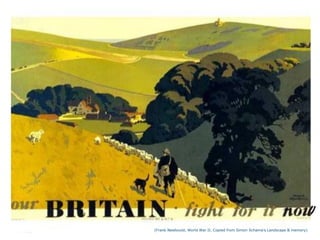
(Frank Newbould, World War II. Copied from Simon Schama’s Landscape & memory)
Disconnection between nature and people


 Natural disaster
 Human intervention

    ● Demographic change
    ● Agricultural production
    ● Direct foreign investment
    ● Urbanization
    ● Mobility
    ● Unsustainable behaviour
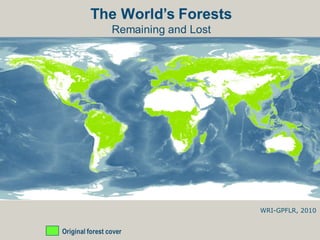
WRI-GPFLR, 2010
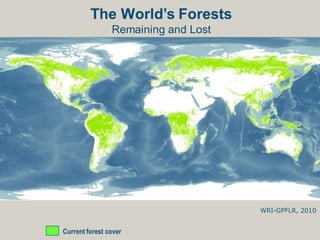
WRI-GPFLR, 2010
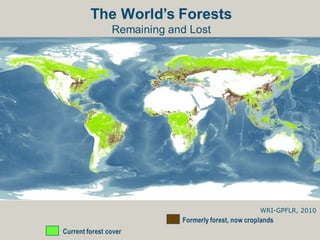
WRI-GPFLR, 2010
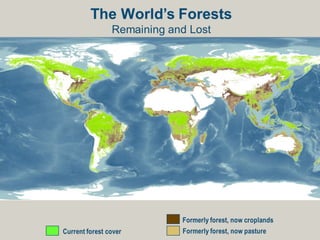
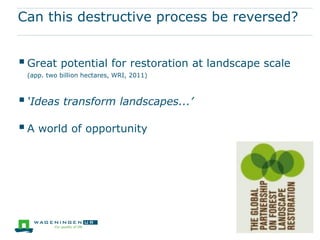
Can this destructive process be reversed?


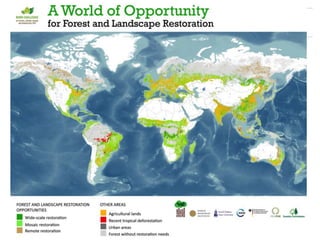
 Great potential for restoration at landscape scale
 (app. two billion hectares, WRI, 2011)


 ‘Ideas transform landscapes...’
 A world of opportunity
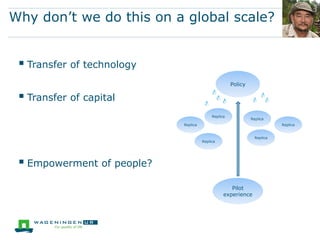
Why don’t we do this on a global scale?


  Transfer of technology
                                                     Policy

  Transfer of capital
                                           Replica
                                                              Replica
                            Replica                                       Replica


                                                                Replica
                                      Replica


  Empowerment of people?
                                                    Pilot
                                                 experience
What we have learned...

 Landscapes are complex spatial units...
 Cultural, historic or aesthetic sceneries (Wikipedia)
 Heterogeneous land forms and land uses (Urban, 1987)
 Pieced together to a landscape-level patchwork (Guilmour, 2008)
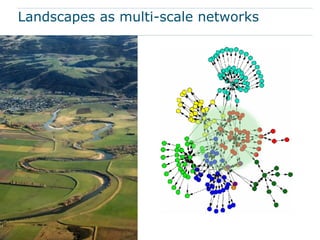
 Crossroad of ecological, economic and social networks, across
  levels and scales   (Görg, 207)

 Despite globalization, place matters (Massey, 2005)
 Sense of belonging, collective identity (Taylor, 2008)
 Strengthened through dialogue, stories, symbols (Turnhout, 2011)
 Collaborative learning & action (Wenger, 2005, Wals, 2010)
Landscapes as multi-scale networks
What we have also learned...

 Landscapes are complex governance units
 Multiple stakeholders, multiple interests
 Conflicting interests, competing claims
 Negotiated decision-making
 Across administrative & political scales
 Few institutions/governance arrangements at landscape level
 Though place matters, scale decides (Swyngedouw, 1997)
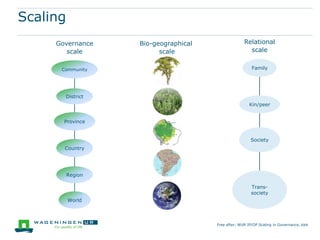
Scaling
     Governance    Bio-geographical                 Relational
        scale            scale                        scale


      Community                                         Family


       District
                                                       Kin/peer


       Province


                                                        Society
       Country


          Region

                                                        Trans-
                                                        society
          World


                                      Free after: WUR IP/OP Scaling in Governance, 2009
Spatialization of governance

 Reconnecting politics to place
 Reconnecting citizenship to place
 Environmental citizenship
 No re-scaling of governance
 ‘Politics of scale’ (Görg, 2007)
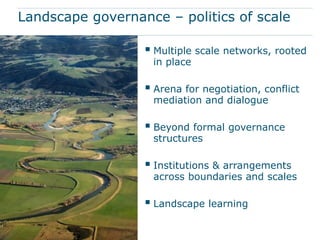
Landscape governance – politics of scale

                   Multiple scale networks, rooted
                   in place

                   Arena for negotiation, conflict
                   mediation and dialogue

                   Beyond formal governance
                   structures

                   Institutions & arrangements
                   across boundaries and scales

                   Landscape learning
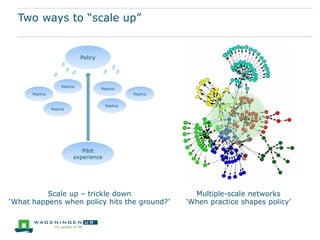
Two ways to “scale up”


                               Policy


                     Replica
                                        Replica
      Replica                                       Replica


                                          Replica
                Replica


                              Pilot
                           experience


          Scale up – trickle down                               Multiple-scale networks
‘What happens when policy hits the ground?’                   ‘When practice shapes policy’
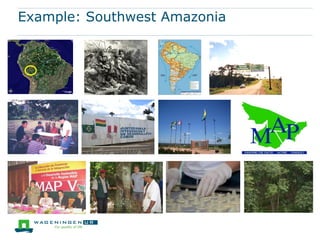
Example: Southwest Amazonia
What we have learned...

 Diverging interests, shared identity, common concern
 Collaborative learning, collective action, ‘making place’
 Landscape institutions & governance arrangements across
  boundaries and scales

 Ability to respond to new economic opportunities
 Technology/capital transfer through collaborative learning
 Restoration as a result
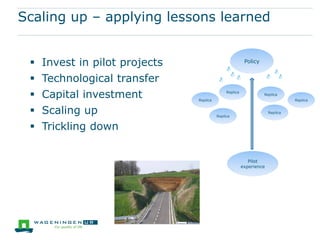
Scaling up – applying lessons learned


  Invest in pilot projects                             Policy


  Technological transfer
  Capital investment         Replica
                                             Replica
                                                                 Replica
                                                                              Replica


  Scaling up                           Replica
                                                                    Replica


  Trickling down


                                                          Pilot
                                                       experience
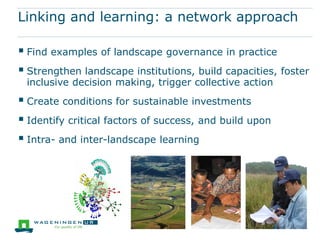
Linking and learning: a network approach

 Find examples of landscape governance in practice
 Strengthen landscape institutions, build capacities, foster
 inclusive decision making, trigger collective action
 Create conditions for sustainable investments
 Identify critical factors of success, and build upon
 Intra- and inter-landscape learning
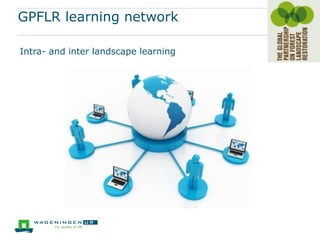
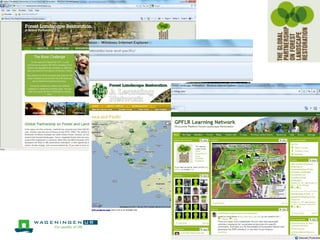
GPFLR learning network

Intra- and inter landscape learning
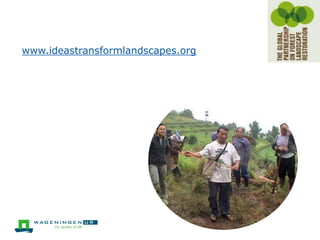
www.ideastransformlandscapes.org

Restoring Landscapes – Governing place

  • 1.
    Restoring landscapes -governing place Scaling up - Applying lessons learned Cora van Oosten Wageningen Centre for Development Innovation (CDI) Wageningen Forest & Nature Conservation Policy Group (FNP)
  • 2.
    W (Frank Newbould, WorldWar II. Copied from Simon Schama’s Landscape & memory)
  • 3.
    Disconnection between natureand people  Natural disaster  Human intervention ● Demographic change ● Agricultural production ● Direct foreign investment ● Urbanization ● Mobility ● Unsustainable behaviour
  • 4.
  • 5.
  • 6.
  • 8.
    Can this destructiveprocess be reversed?  Great potential for restoration at landscape scale (app. two billion hectares, WRI, 2011)  ‘Ideas transform landscapes...’  A world of opportunity
  • 11.
    Why don’t wedo this on a global scale?  Transfer of technology Policy  Transfer of capital Replica Replica Replica Replica Replica Replica  Empowerment of people? Pilot experience
  • 12.
    What we havelearned...  Landscapes are complex spatial units...  Cultural, historic or aesthetic sceneries (Wikipedia)  Heterogeneous land forms and land uses (Urban, 1987)  Pieced together to a landscape-level patchwork (Guilmour, 2008)  Crossroad of ecological, economic and social networks, across levels and scales (Görg, 207)  Despite globalization, place matters (Massey, 2005)  Sense of belonging, collective identity (Taylor, 2008)  Strengthened through dialogue, stories, symbols (Turnhout, 2011)  Collaborative learning & action (Wenger, 2005, Wals, 2010)
  • 13.
  • 14.
    What we havealso learned...  Landscapes are complex governance units  Multiple stakeholders, multiple interests  Conflicting interests, competing claims  Negotiated decision-making  Across administrative & political scales  Few institutions/governance arrangements at landscape level  Though place matters, scale decides (Swyngedouw, 1997)
  • 15.
    Scaling Governance Bio-geographical Relational scale scale scale Community Family District Kin/peer Province Society Country Region Trans- society World Free after: WUR IP/OP Scaling in Governance, 2009
  • 16.
    Spatialization of governance Reconnecting politics to place  Reconnecting citizenship to place  Environmental citizenship  No re-scaling of governance  ‘Politics of scale’ (Görg, 2007)
  • 17.
    Landscape governance –politics of scale  Multiple scale networks, rooted in place  Arena for negotiation, conflict mediation and dialogue  Beyond formal governance structures  Institutions & arrangements across boundaries and scales  Landscape learning
  • 18.
    Two ways to“scale up” Policy Replica Replica Replica Replica Replica Replica Pilot experience Scale up – trickle down Multiple-scale networks ‘What happens when policy hits the ground?’ ‘When practice shapes policy’
  • 19.
  • 20.
    What we havelearned...  Diverging interests, shared identity, common concern  Collaborative learning, collective action, ‘making place’  Landscape institutions & governance arrangements across boundaries and scales  Ability to respond to new economic opportunities  Technology/capital transfer through collaborative learning  Restoration as a result
  • 21.
    Scaling up –applying lessons learned  Invest in pilot projects Policy  Technological transfer  Capital investment Replica Replica Replica Replica  Scaling up Replica Replica  Trickling down Pilot experience
  • 22.
    Linking and learning:a network approach  Find examples of landscape governance in practice  Strengthen landscape institutions, build capacities, foster inclusive decision making, trigger collective action  Create conditions for sustainable investments  Identify critical factors of success, and build upon  Intra- and inter-landscape learning
  • 23.
    GPFLR learning network Intra-and inter landscape learning
  • 25.