




24Microbial Diseases of the Respiratory SystemMICROPARA- RESPIRATORY INFECTIONby Dr Sonnie Talavera
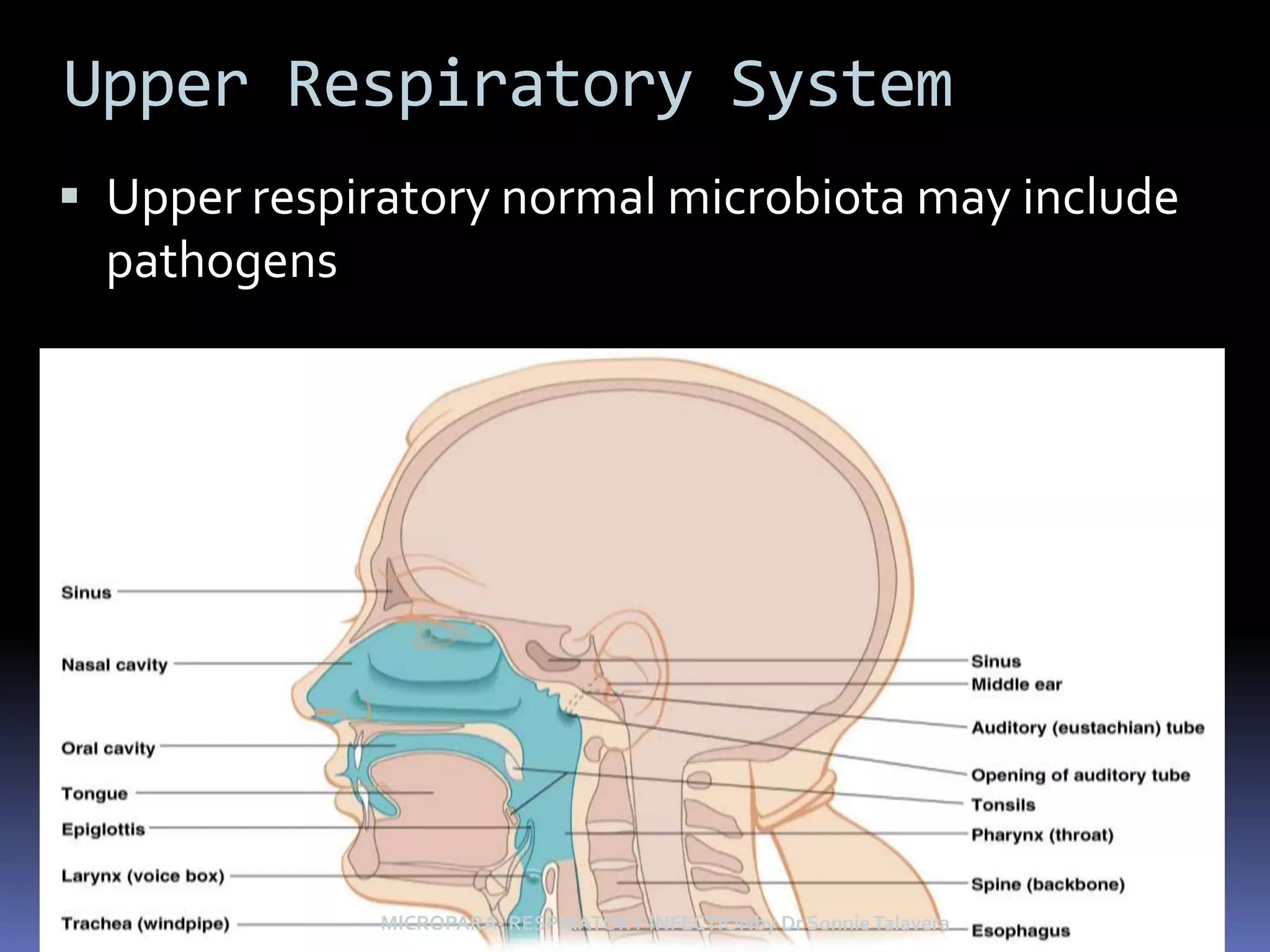
upper respiratory system The consists of the nose, pharynx, and associated structures, such as the middle ear and auditory tubes.Coarse hairs in the noseciliated mucous membranes ( nose and throat )Lymphoid tissue, tonsils, and adenoidsMICROPARA- RESPIRATORY INFECTIONby Dr Sonnie Talavera
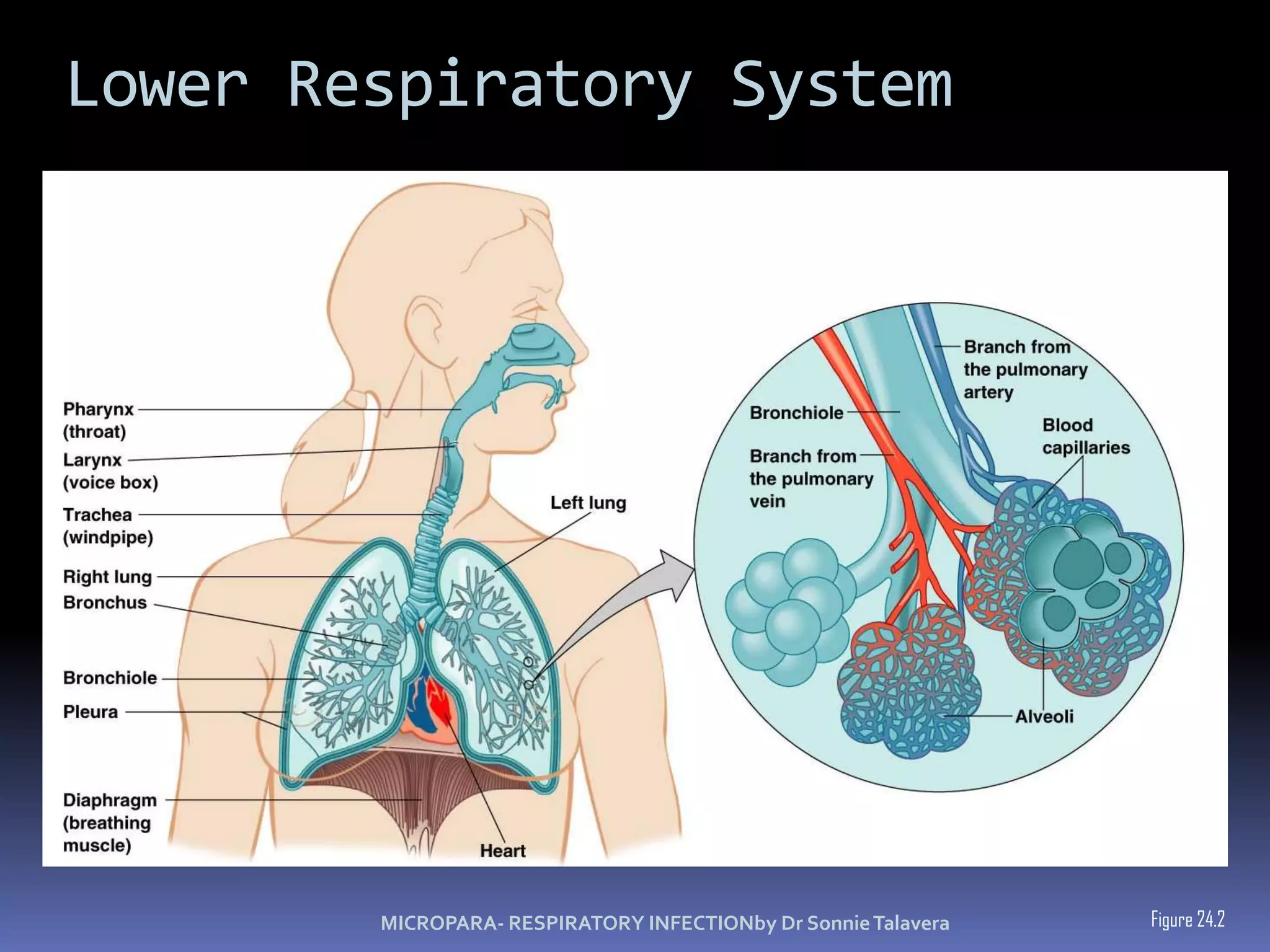
lower respiratory system consists of the larynx, trachea, bronchial tubes, and alveoli.ciliary escalatoralveolar macrophages.Respiratory mucus contains IgA antibodies.MICROPARA- RESPIRATORY INFECTIONby Dr Sonnie Talavera
Normal Microbiota of the Respiratory SystemThe normal microbiota of the nasal cavity and throat can include pathogenic microorganisms.The lower respiratory system is usually sterile because of the action of the ciliary escalator.MICROPARA- RESPIRATORY INFECTIONby Dr Sonnie Talavera
Upper Respiratory SystemUpper respiratory normal microbiota may include pathogensFigure 24.1MICROPARA- RESPIRATORY INFECTIONby Dr Sonnie Talavera
Microbial Diseases of the Upper Respiratory SystemLaryngitis: S. pneumoniae, S. pyogenes, virusesTonsillitis: S. pneumoniae, S. pyogenes, virusesSinusitis: BacteriaEpiglottitis: H. influenzaeHib vaccineMICROPARA- RESPIRATORY INFECTIONby Dr Sonnie Talavera
Microbial Diseases of the Upper Respiratory System These infections may be caused by several bacteria and viruses, often in combination.Most respiratory tract infections are self-limiting.H. influenzae type b can cause epiglottitis.MICROPARA- RESPIRATORY INFECTIONby Dr Sonnie Talavera
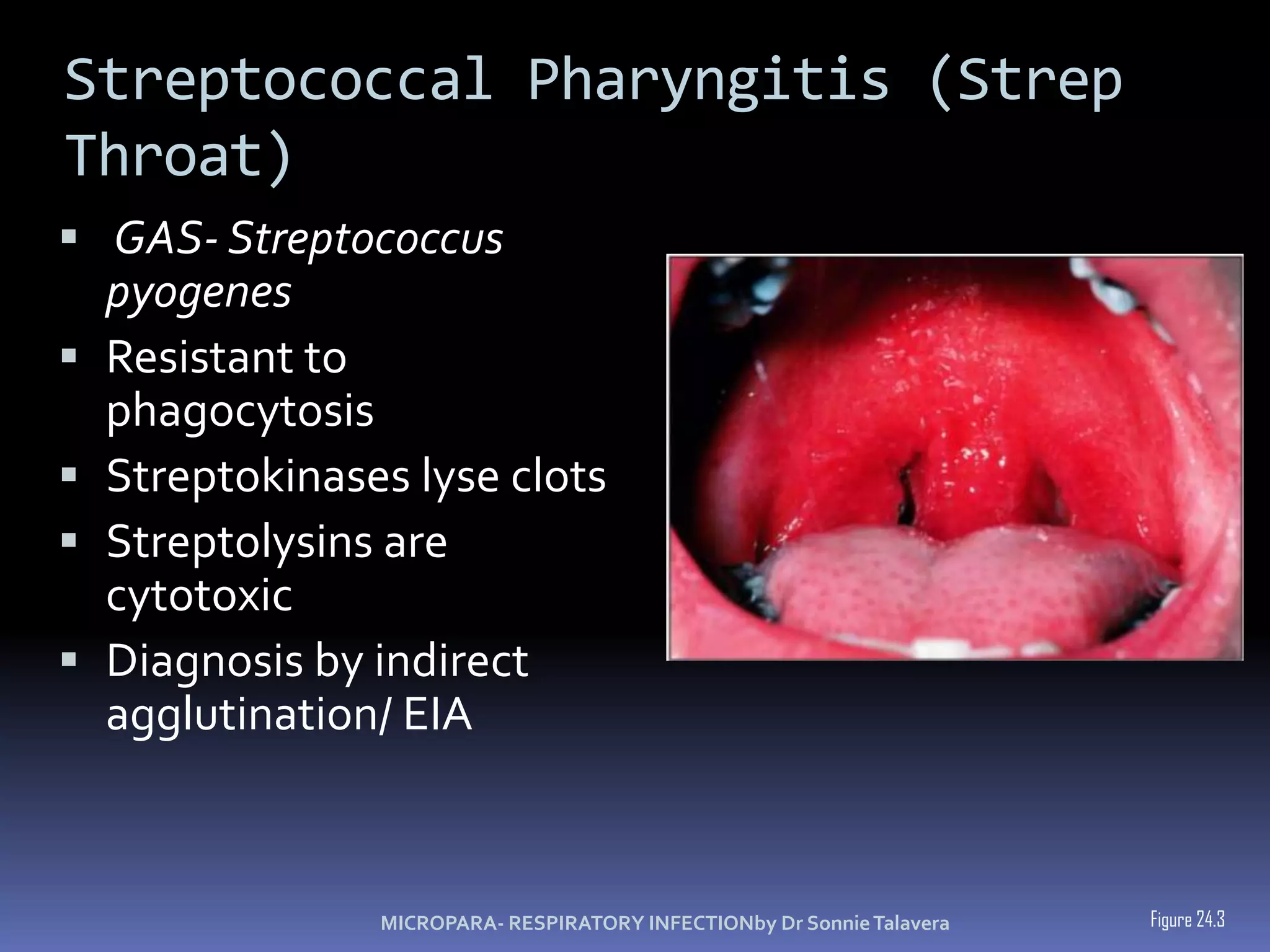
Streptococcal Pharyngitis (Strep Throat) GAS- Streptococcus pyogenesResistant to phagocytosisStreptokinaseslyse clotsStreptolysins are cytotoxicDiagnosis by indirect agglutination/ EIAFigure 24.3MICROPARA- RESPIRATORY INFECTIONby Dr Sonnie Talavera
Streptococcal Pharyngitis (Strep Throat) group A beta-hemolytic streptococci- Streptococcus pyogenes.Symptoms of this infection are inflammation of the mucous membrane and fever; tonsillitis and otitis media may also occur.MICROPARA- RESPIRATORY INFECTIONby Dr Sonnie Talavera
Streptococcal Pharyngitis (Strep Throat) Rapid diagnosis is made by enzyme immunoassays.Penicillin is used to treat streptococcal pharyngitis.Immunity to streptococcal infections is type-specific.Strep throat is usually transmitted by droplets.MICROPARA- RESPIRATORY INFECTIONby Dr Sonnie Talavera
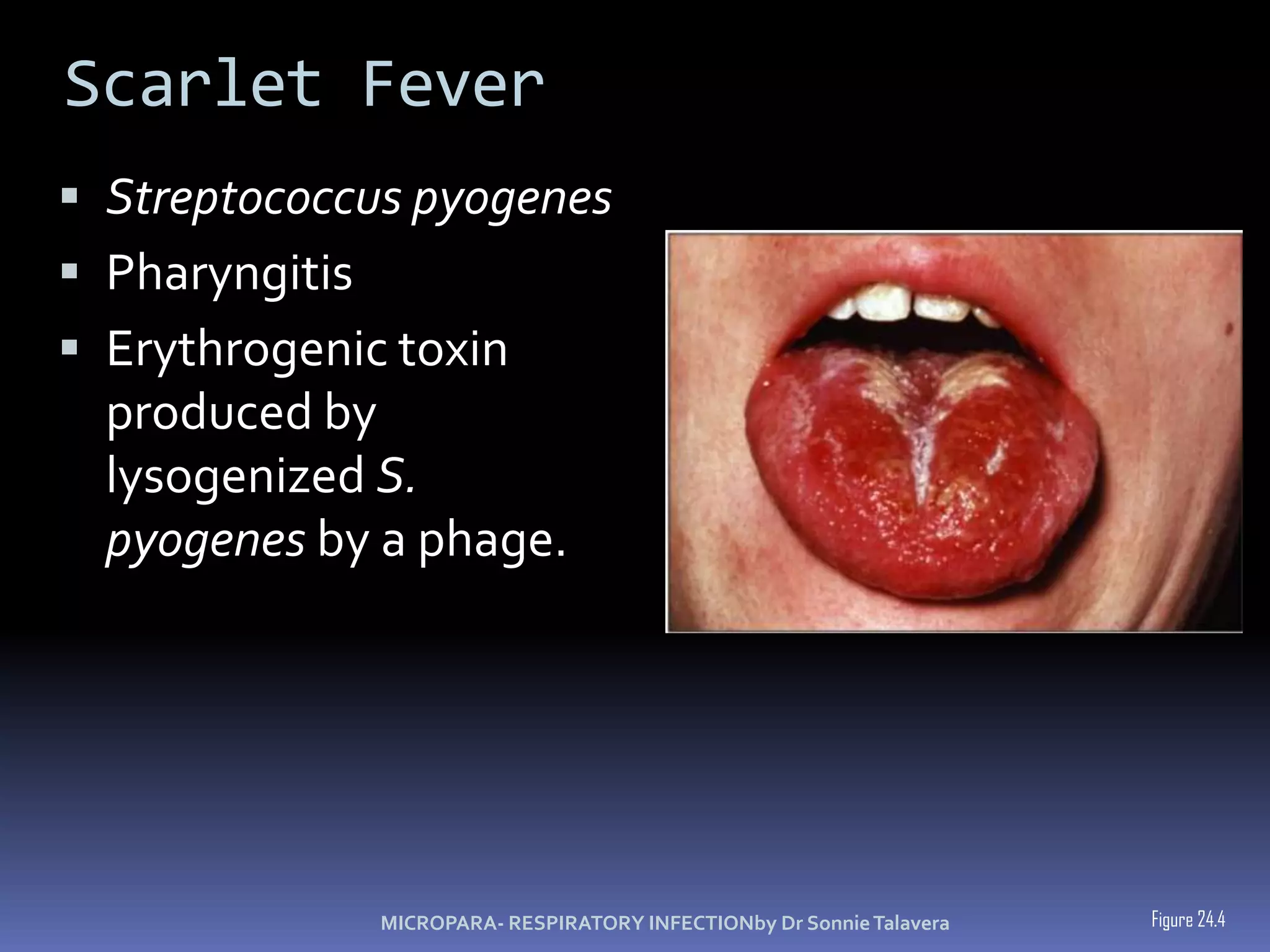
Scarlet FeverStreptococcus pyogenesPharyngitisErythrogenic toxin produced by lysogenizedS. pyogenesby a phage.Figure 24.4MICROPARA- RESPIRATORY INFECTIONby Dr Sonnie Talavera
Scarlet Fever Strep throat, caused by an erythrogenic toxin-producing S. pyogenes, results in scarlet fever.starts general malaise and swelling of neckSymptoms include a red rash, high fever, and a SPOTTED STRABERRY like red, enlarged tongue.MICROPARA- RESPIRATORY INFECTIONby Dr Sonnie Talavera
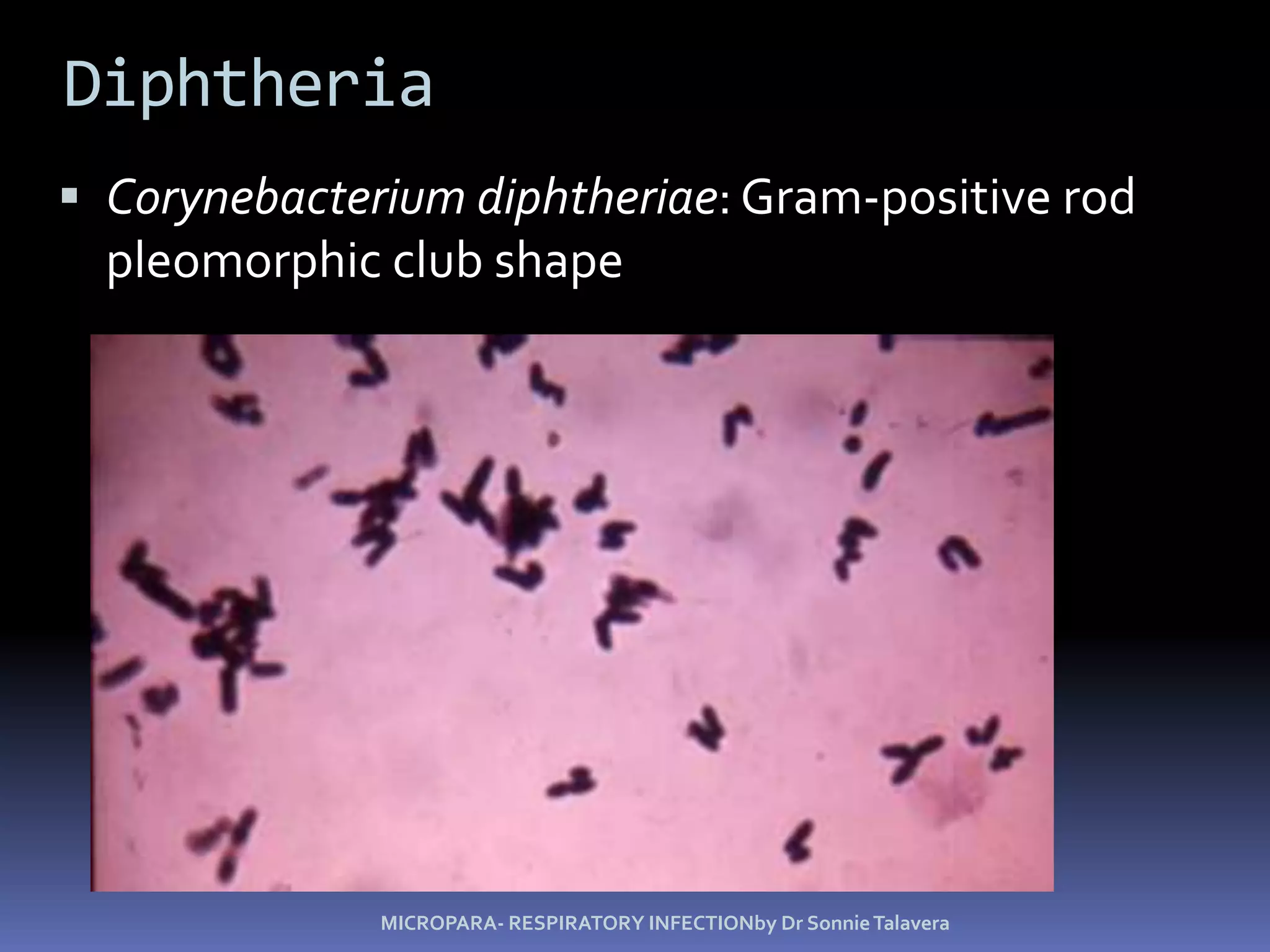
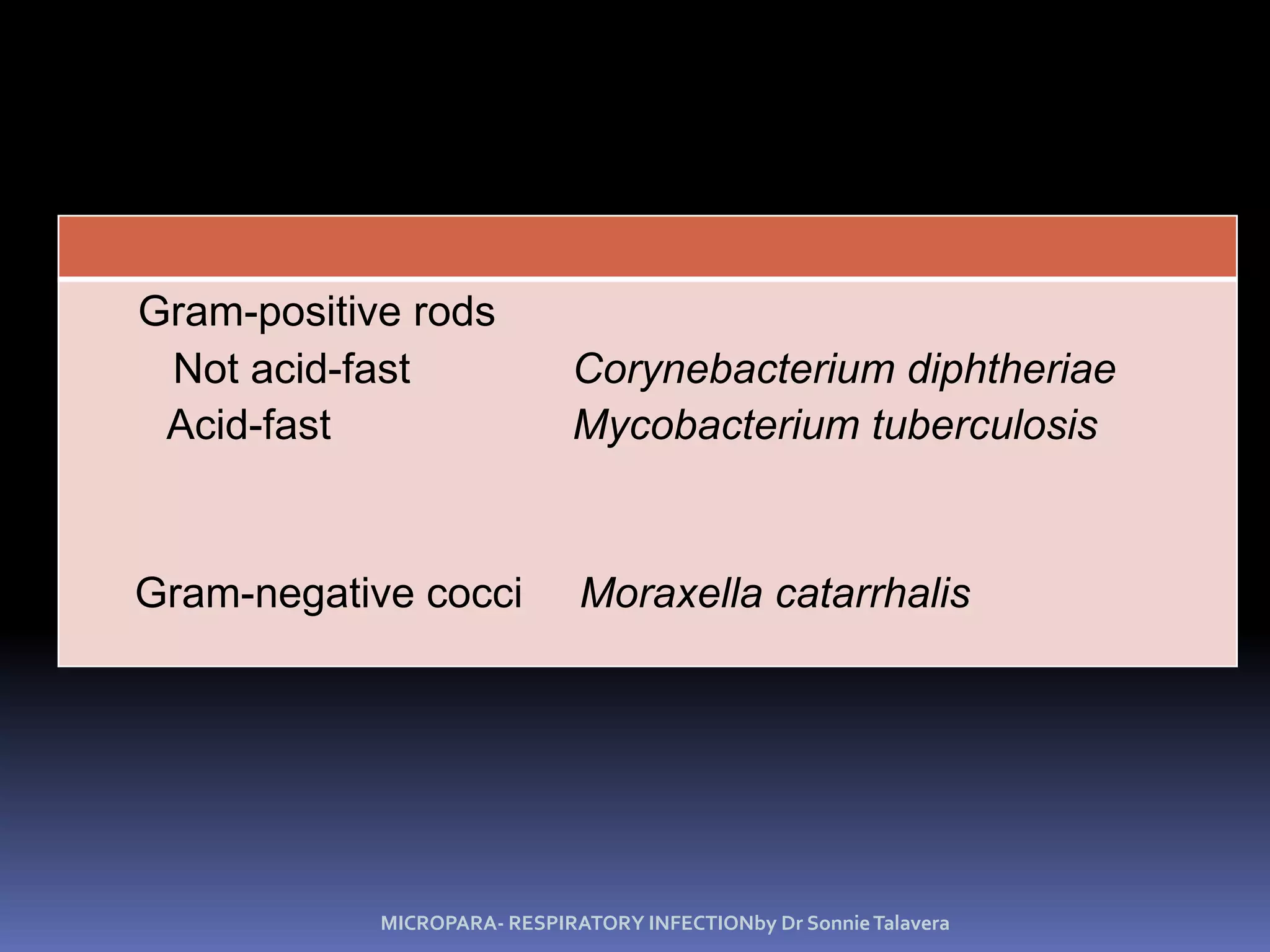
DiphtheriaCorynebacteriumdiphtheriae: Gram-positive rod pleomorphic club shapeMICROPARA- RESPIRATORY INFECTIONby Dr Sonnie Talavera
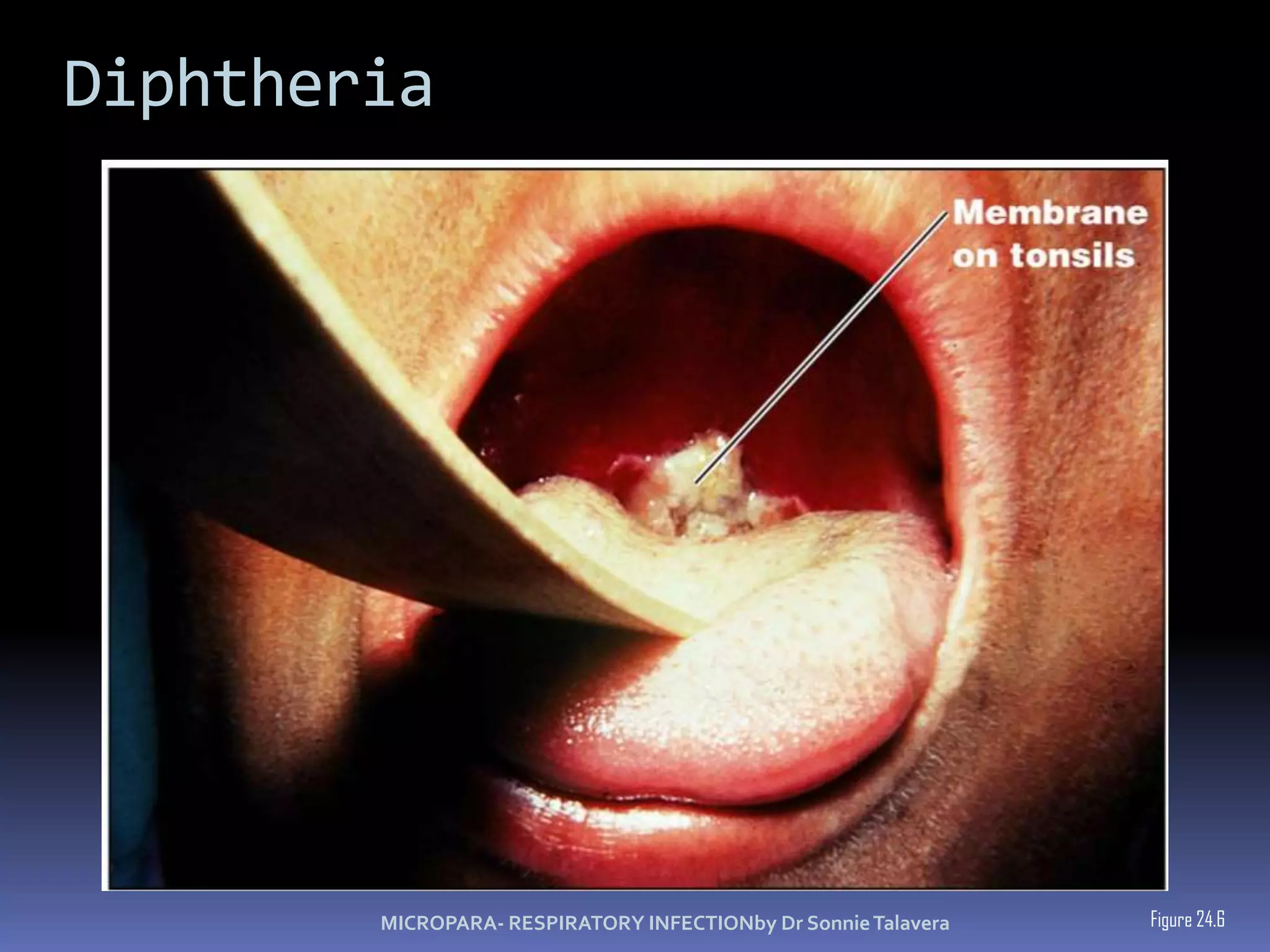
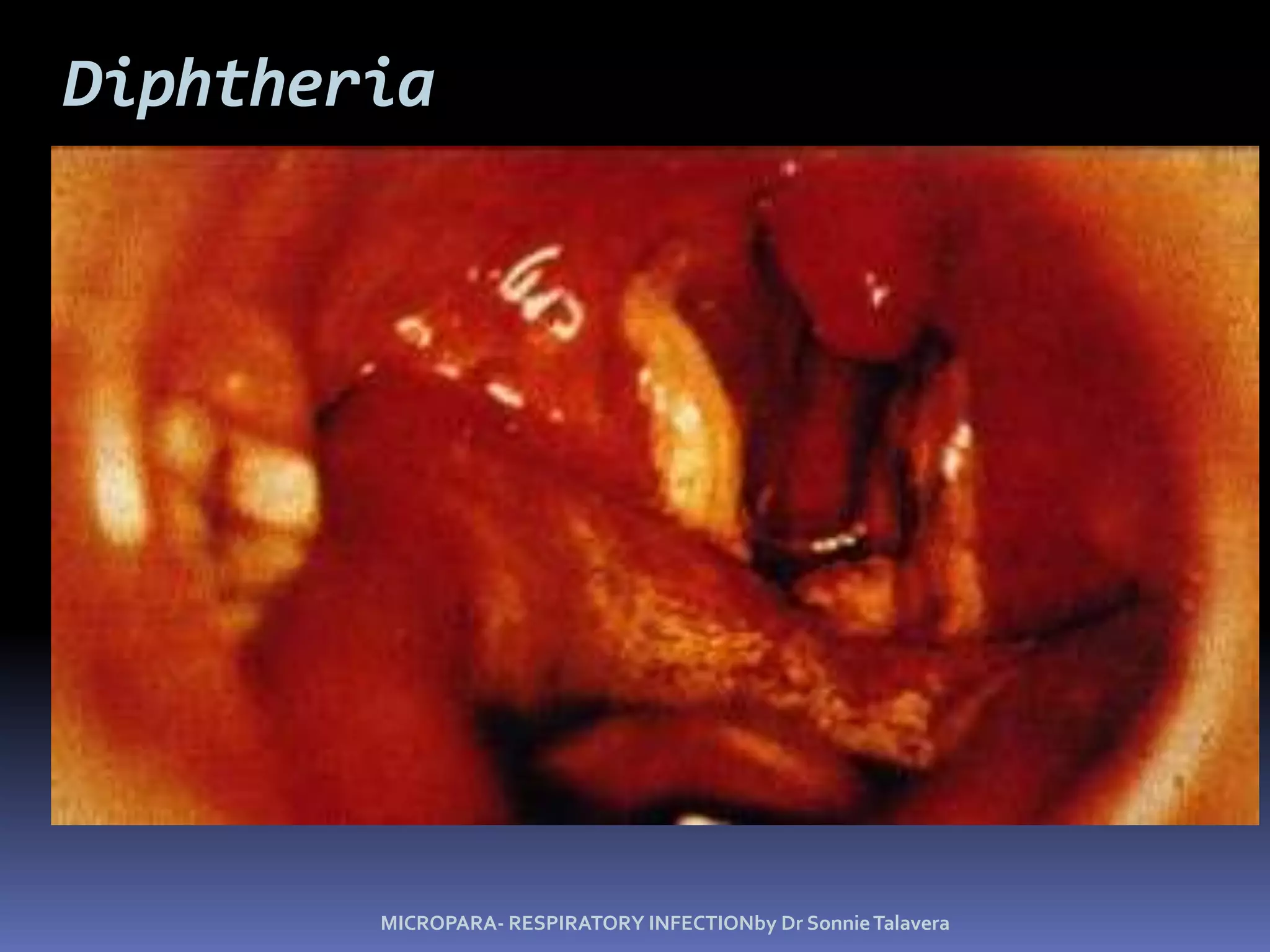
DiphtheriaClinical Start as sore throat and fever followed by general malaise and swelling of neckDiphtheria (leather) tough grayish membrane of fibrin, dead tissue, and bacteriaDiphtheria toxin produced by lysogenizedC. diphtheriae (highly virulent toxin)MICROPARA- RESPIRATORY INFECTIONby Dr Sonnie Talavera
DiphtheriaFigure 24.6MICROPARA- RESPIRATORY INFECTIONby Dr Sonnie Talavera
Diphtheria MICROPARA- RESPIRATORY INFECTIONby Dr Sonnie TalaveraVao day nghe bai nay di ban http://nhattruongquang.0catch.com
DiphtheriaA membrane can block the passage of air.Exotoxin inhibits protein synthesis, and heart, kidney, or nerve damage may result (fatal)minimal dissemination of the exotoxin in the bloodstream.Antitoxin - neutralize the toxinAntibiotics-  Penicillin and Erythromycin can stop growth of the bacteria.MICROPARA- RESPIRATORY INFECTIONby Dr Sonnie Talavera
DiphtheriaPrevented by DTaP and Td vaccine (Diphtheria toxoid)Cutaneous diphtheria: Infected skin wound leads to slow healing ulcerMICROPARA- RESPIRATORY INFECTIONby Dr Sonnie Talavera
MICROPARA- RESPIRATORY INFECTIONby Dr Sonnie Talavera
A  15 y/o male patient have chief complaint of difficulty of breathing with associated  throat pain, difficulty of swallowing and fever. Physical exam reveals inflamed pharyngeal area covered by grayish thick mucus that is adherent. Patient was noted to have an incomplete set of vaccination. Grams staining reveals gram positive bacilli with endospore.MICROPARA- RESPIRATORY INFECTIONby Dr Sonnie Talavera
Corynebacteria (Genus Corynebacterium)Aerobic or facultativelyanaerobic
Small, pleomorphic (club-shaped), gram-positive bacilli short chains (“V” or “Y” configurations) or in clumps resembling “Chinese letters”
Cells contain metachromaticgranules
Lipid-rich cell wall contains meso -diaminopimelicacidOTITIS MEDIAinfection of the middle ear, primarily in infants and young childrenthree manifestationsacute otitis media
chronic otitis media
otitis media with effusionA.  Symptoms - fever, pain in the ear, dulled hearing.
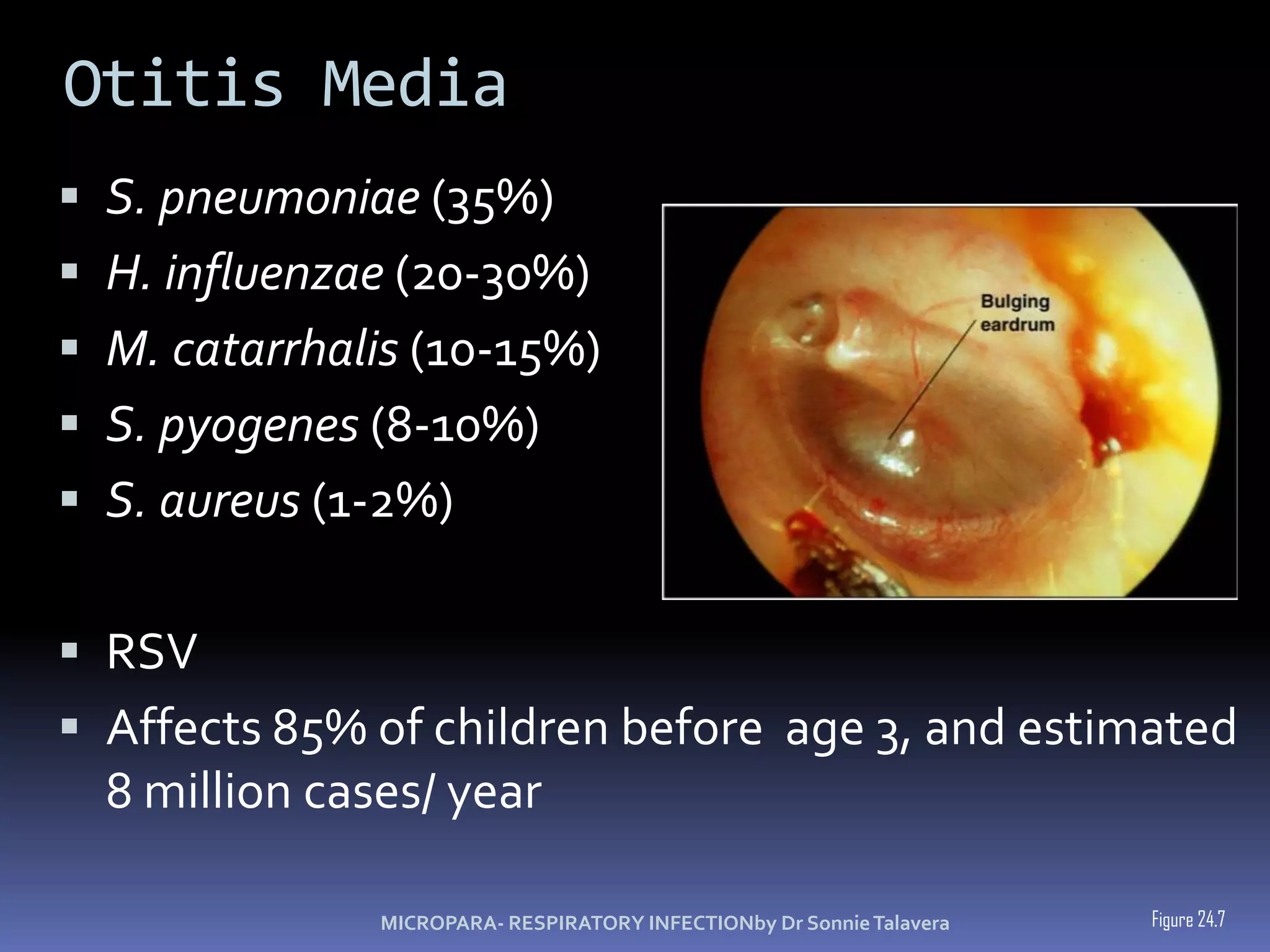
Otitis MediaS. pneumoniae (35%)H. influenzae (20-30%)M. catarrhalis (10-15%)S. pyogenes (8-10%)S. aureus (1-2%)RSVAffects 85% of children before  age 3, and estimated 8 million cases/ yearFigure 24.7MICROPARA- RESPIRATORY INFECTIONby Dr Sonnie Talavera
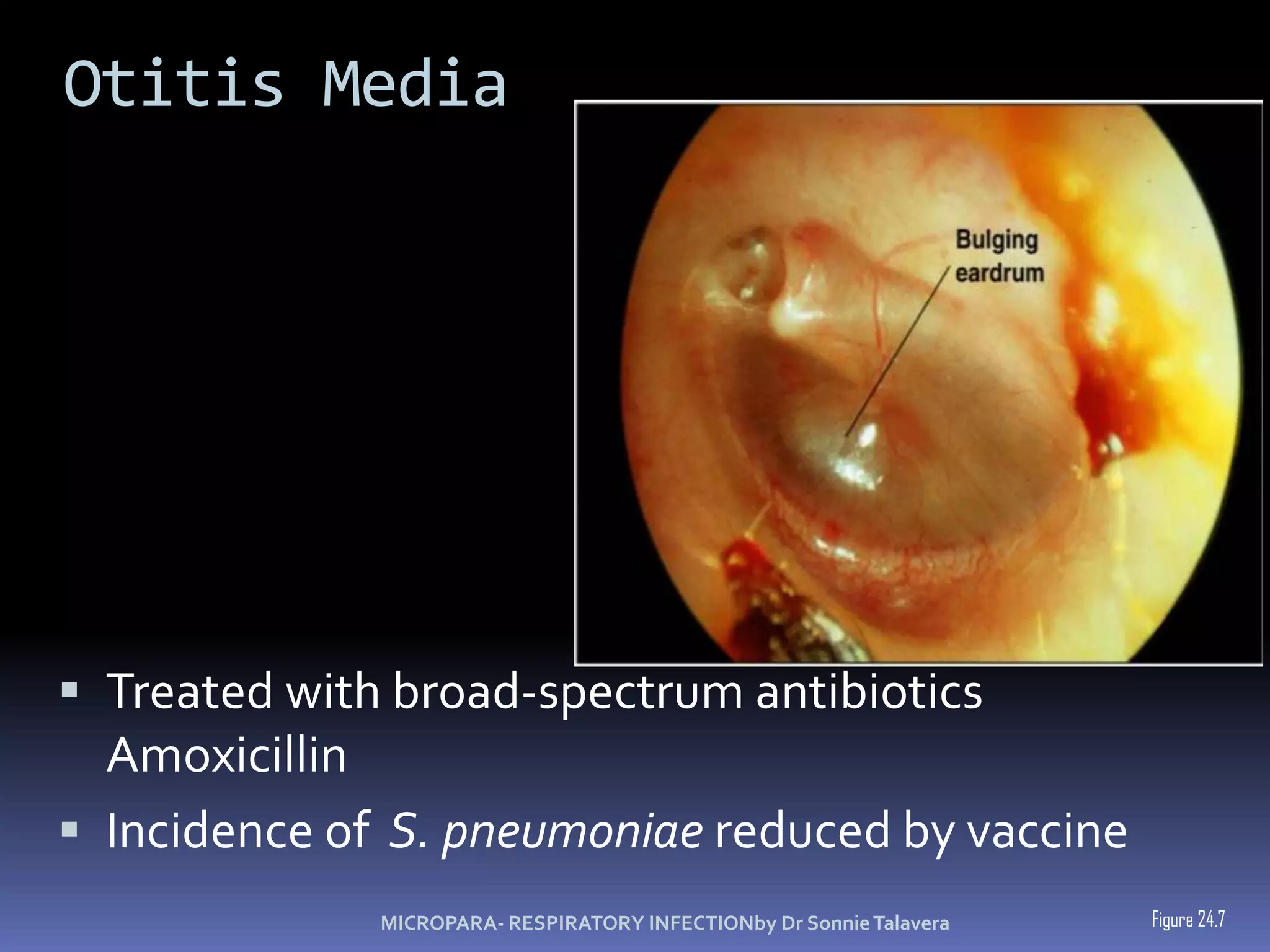
Otitis MediaTreated with broad-spectrum antibiotics Amoxicillin Incidence of  S. pneumoniae reduced by vaccineFigure 24.7MICROPARA- RESPIRATORY INFECTIONby Dr Sonnie Talavera
Otitis Media Earache, or otitis media, can occur as a complication of nose and throat infections.Pus accumulation causes pressure on the eardrum causes inflammation and pain.Often in children because of shorter  and more horizontal eustachian tubeMICROPARA- RESPIRATORY INFECTIONby Dr Sonnie Talavera
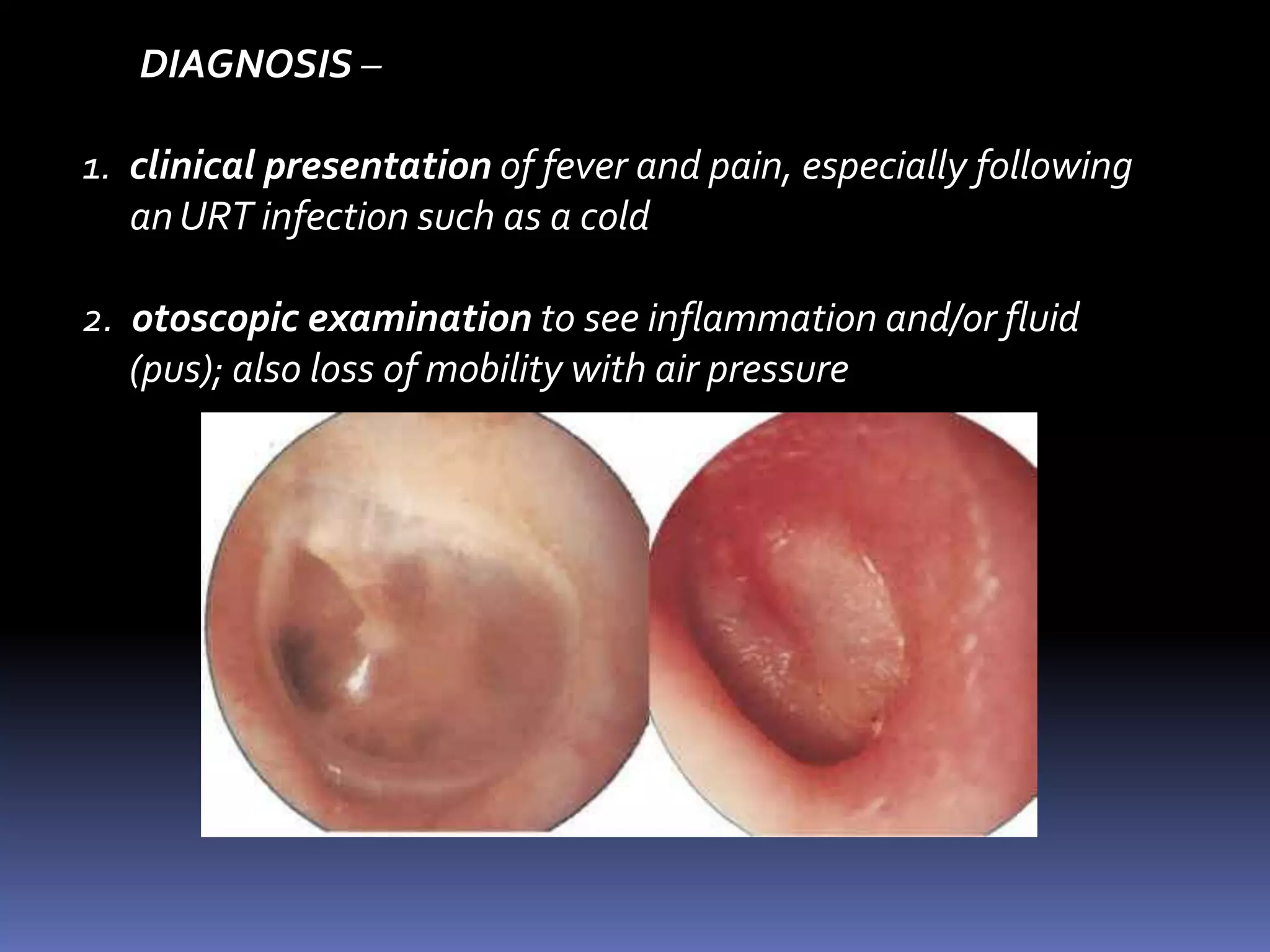
B.  DIAGNOSIS – 	1.  clinical presentation of fever and pain, especially following an URT infection such as a cold	2.  otoscopic examination to see inflammation and/or fluid (pus); also loss of mobility with air pressure
6.  swelling and blockage
cyclic pattern of damage
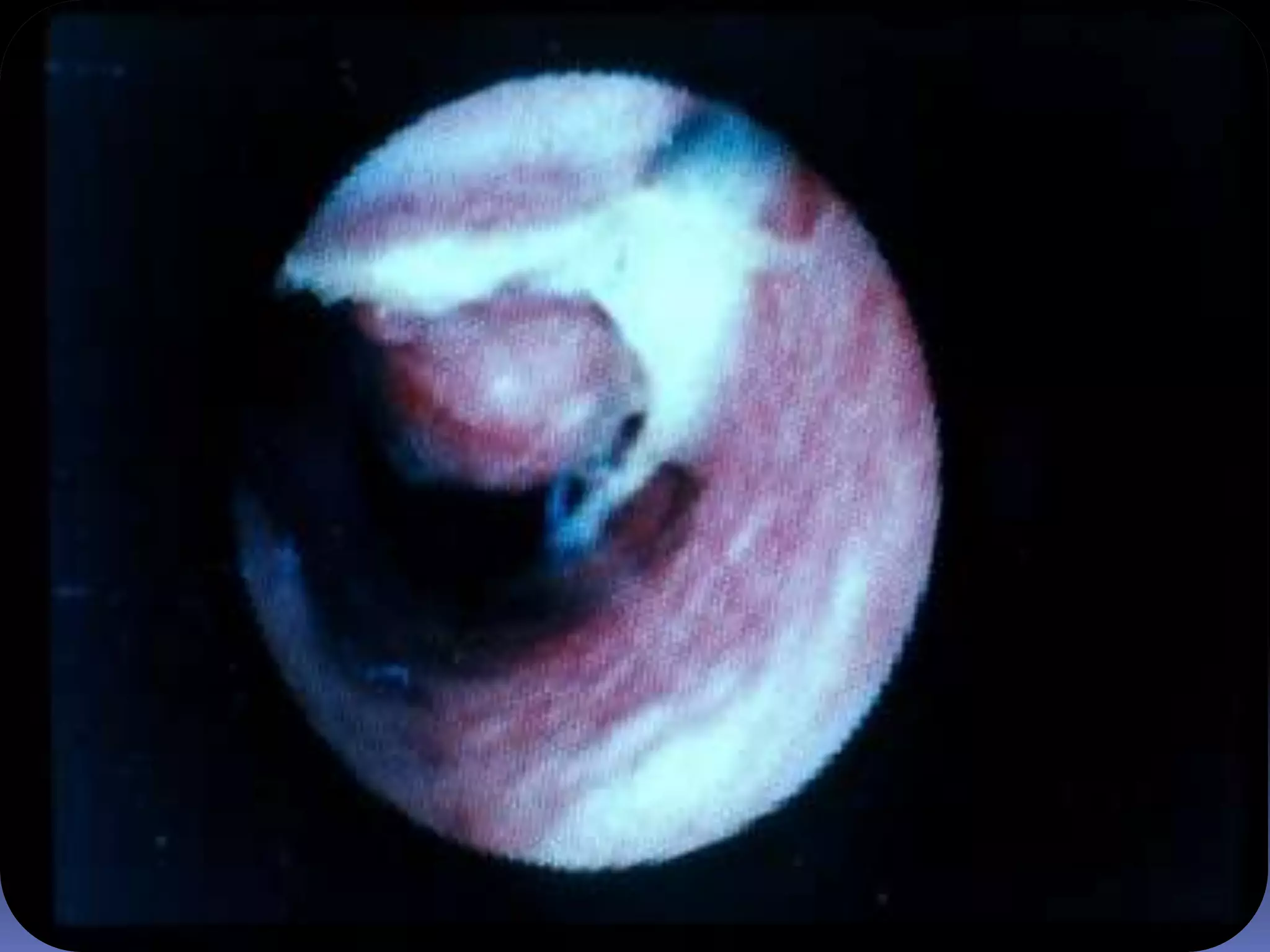
discomfort - pressure and blocked nasal passagesCommon coldRhinoviruses (50%)Coronaviruses (15-20%)MICROPARA- RESPIRATORY INFECTIONby Dr Sonnie Talavera
The Common Cold Any one of approximately 200 different viruses can cause the common cold; rhinoviruses cause about 50% of all colds.Immunity is based on the ration of  Ig A antibodiesMICROPARA- RESPIRATORY INFECTIONby Dr Sonnie Talavera
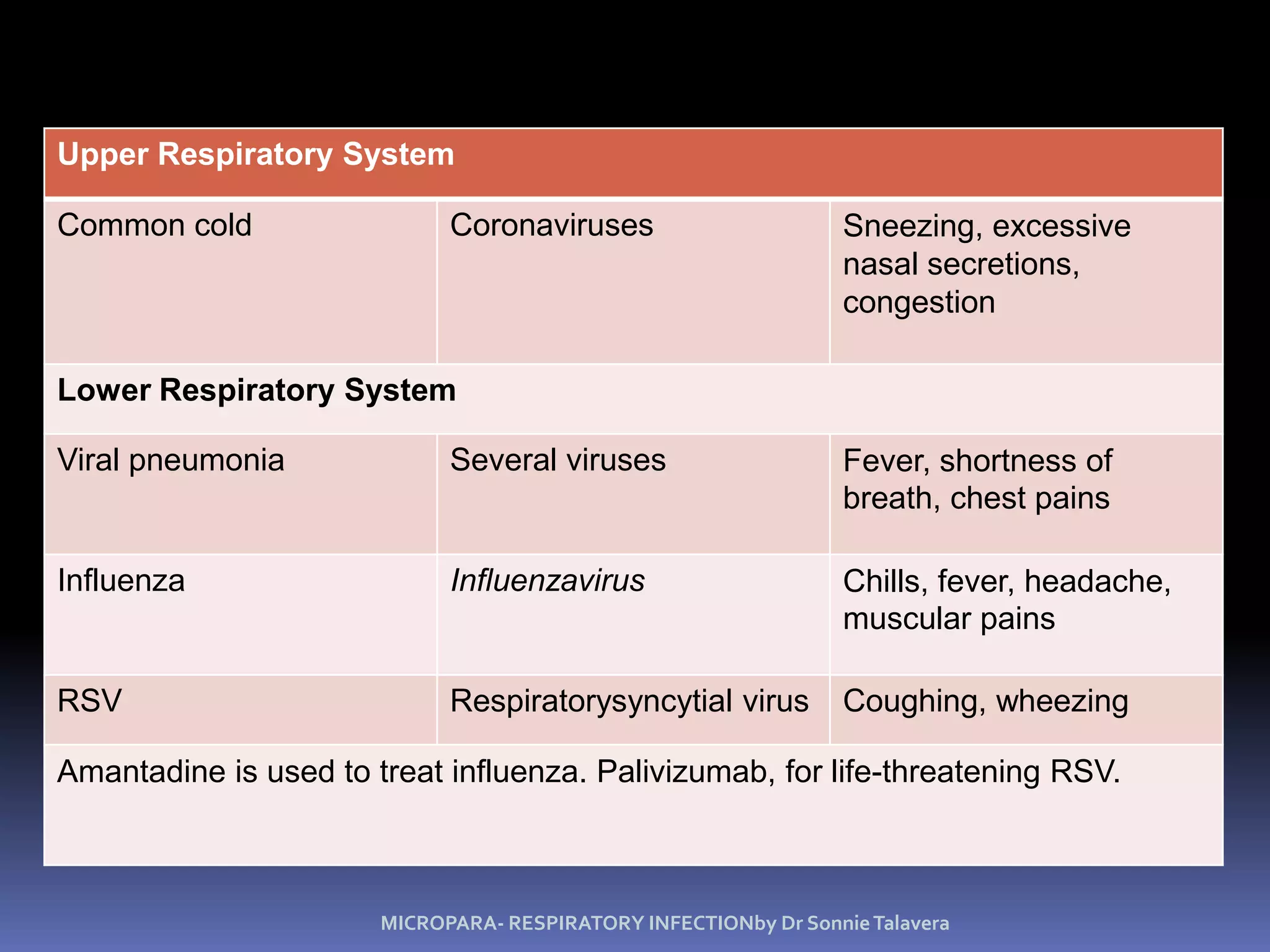
The Common Cold Symptoms Sneezingnasal secretionscongestion.Sinus infections, lower respiratory tract infections, laryngitis, and otitis media can occur as complications of a cold.MICROPARA- RESPIRATORY INFECTIONby Dr Sonnie Talavera
The Common Cold Colds are most often transmitted by indirect contact.Rhinoviruses grow best slightly below body temperature.The incidence of colds increases during cold weatherAntibodies are produced against the specific viruses.MICROPARA- RESPIRATORY INFECTIONby Dr Sonnie Talavera
Microbial Diseases of the Lower Respiratory SystemBacteria, viruses, and fungi causeBronchitisBronchiolitisPneumoniaMICROPARA- RESPIRATORY INFECTIONby Dr Sonnie Talavera
Lower Respiratory SystemThe ciliary escalator keeps the lower respiratory system sterile.Figure 24.2MICROPARA- RESPIRATORY INFECTIONby Dr Sonnie Talavera
Pertussis (Whooping Cough)Bordetellapertussis: Gram-negative coccobacillusCapsuleTracheal cytotoxin of cell wall damaged ciliated cellsPertussistoxin produces systemic diseasePrevented by DTaP vaccine (acellularPertussis cell fragments)Figure 24.8MICROPARA- RESPIRATORY INFECTIONby Dr Sonnie Talavera
Epidemiology of  Bordetellapertussis InfectionMan is only natural host; obligate parasites of man
Disease is highly communicable (highly infectious)
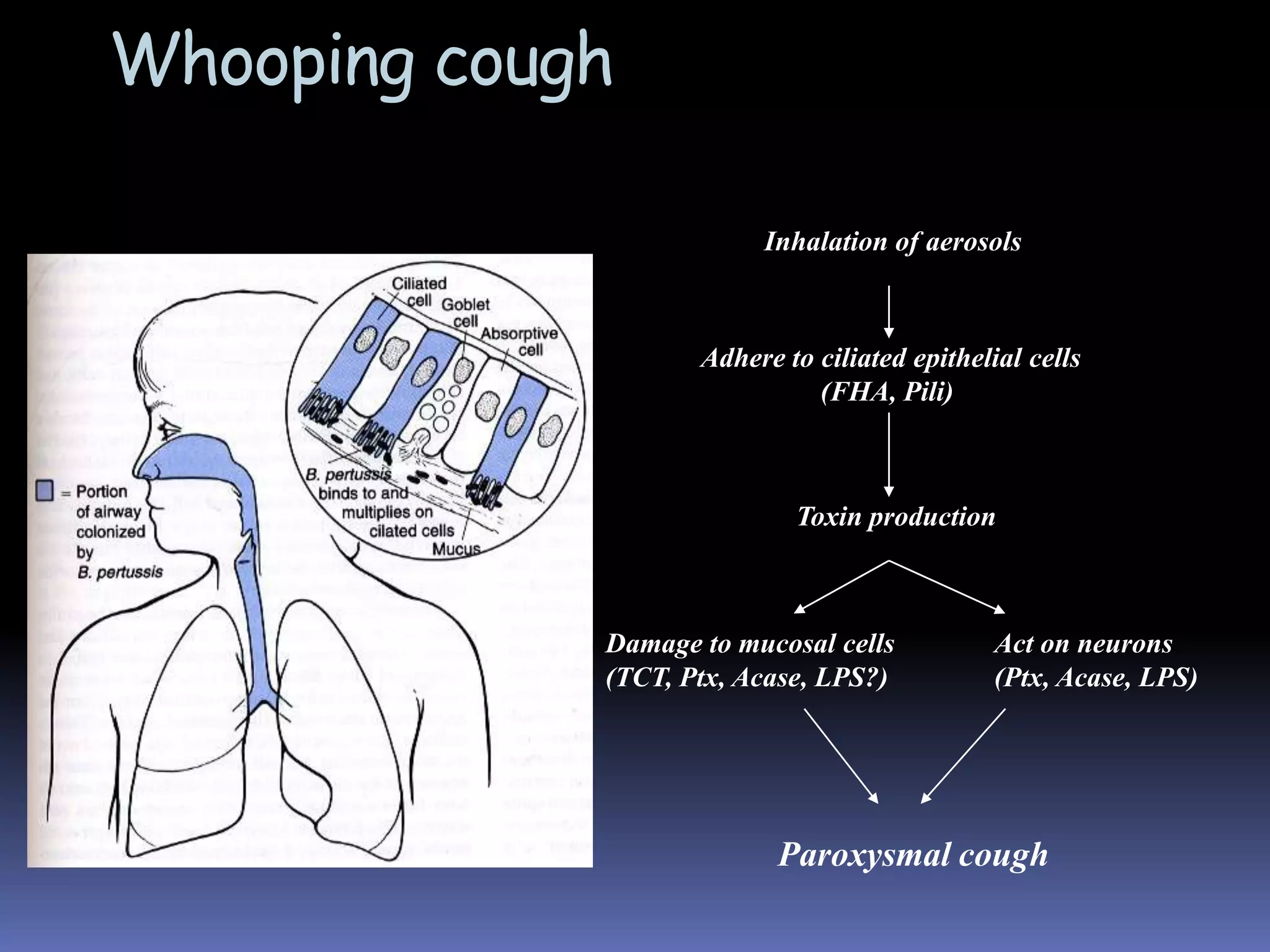
Children under one year at highest risk, but prevalence increasing in older children and adults Whooping coughInhalation of aerosolsAdhere to ciliated epithelial cells                 (FHA, Pili)Toxin productionDamage to mucosal cells(TCT, Ptx, Acase, LPS?)Act on neurons(Ptx, Acase, LPS)Paroxysmal cough
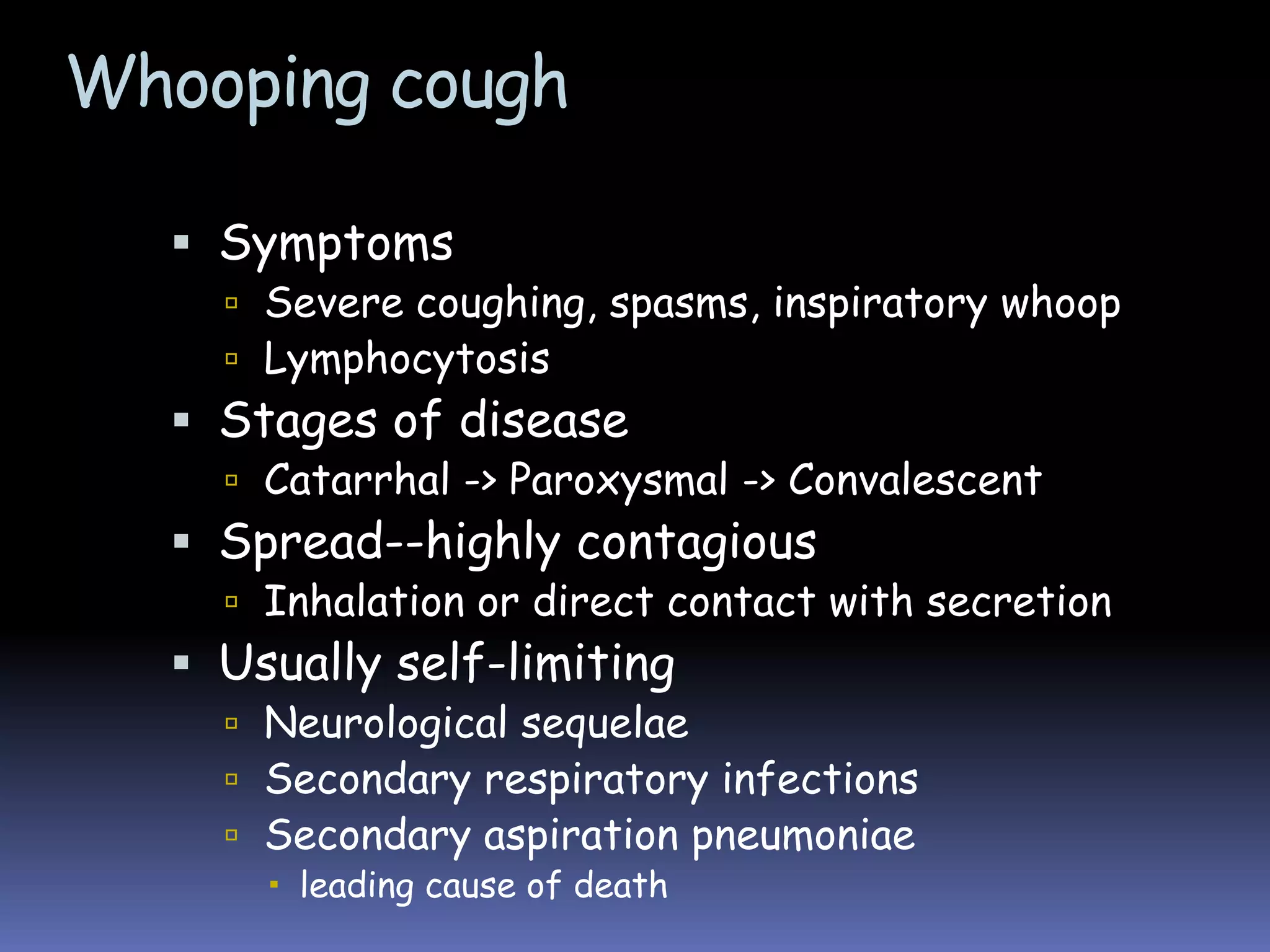
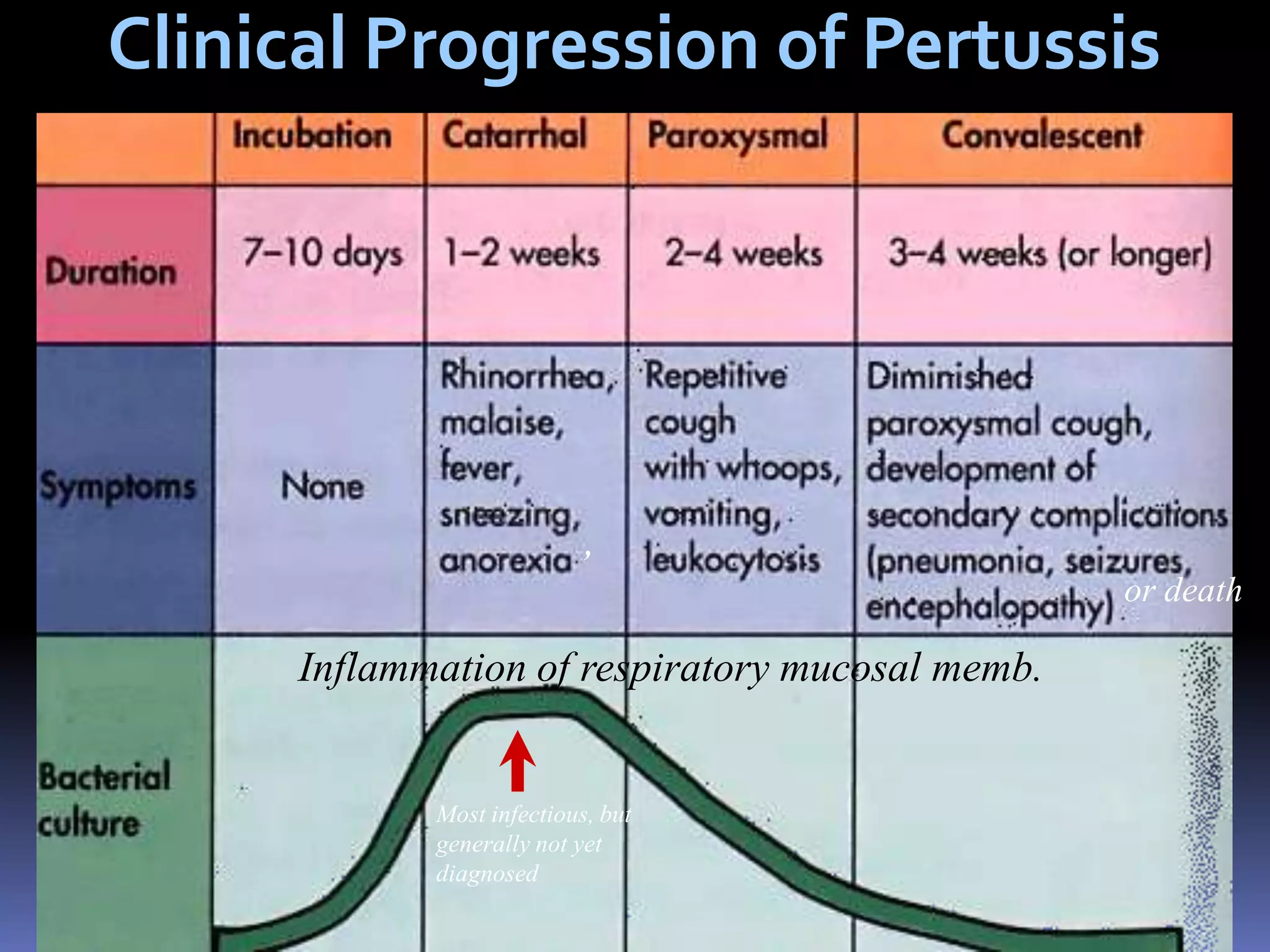
Whooping coughSymptomsSevere coughing, spasms, inspiratory whoop LymphocytosisStages of diseaseCatarrhal -> Paroxysmal -> ConvalescentSpread--highlycontagiousInhalation or direct contact with secretionUsually self-limitingNeurological sequelaeSecondary respiratory infectionsSecondary aspiration pneumoniaeleading cause of death
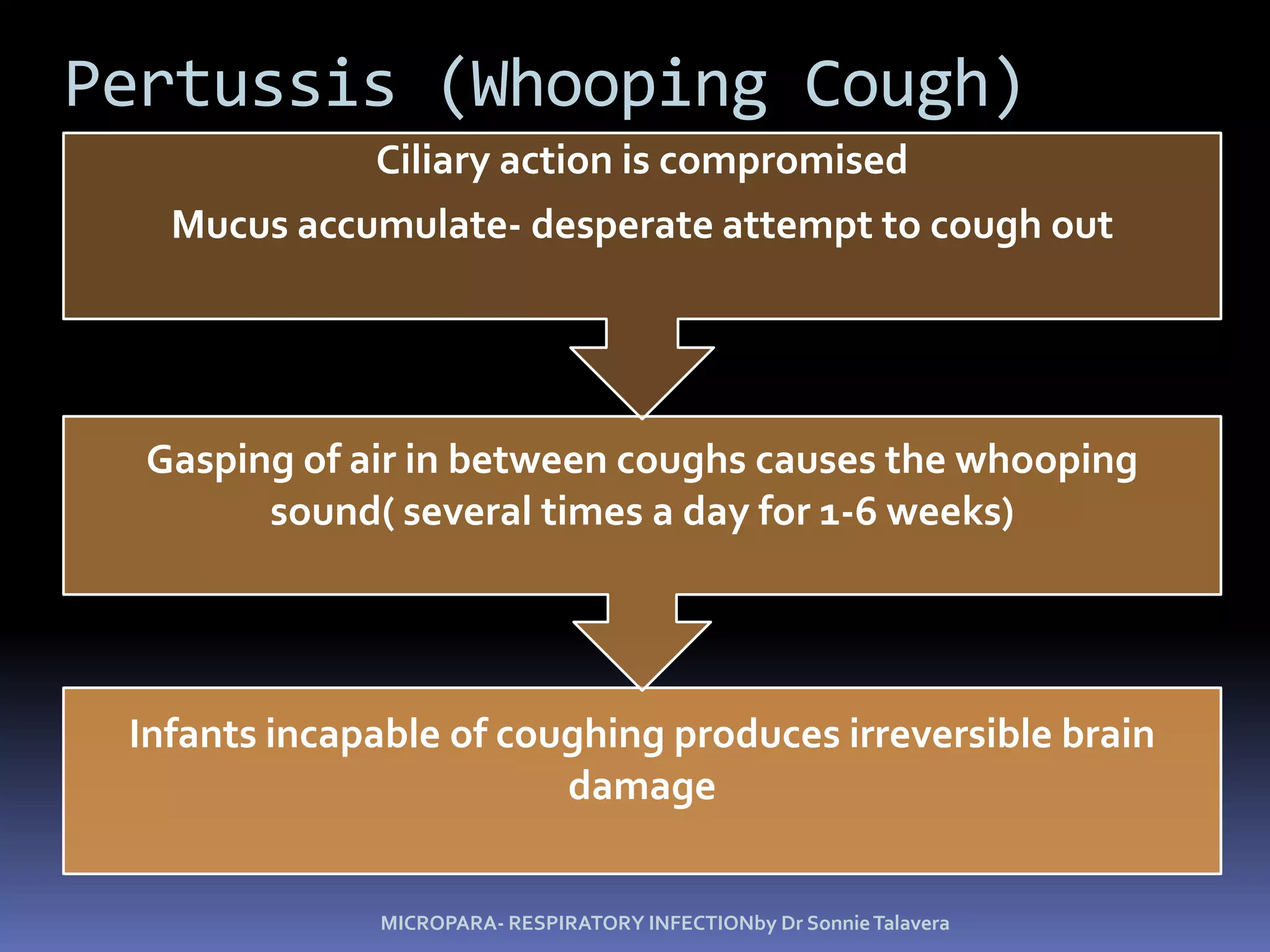
Pertussis (Whooping Cough)MICROPARA- RESPIRATORY INFECTIONby Dr Sonnie Talavera
Pertussis (Whooping Cough).MICROPARA- RESPIRATORY INFECTIONby Dr Sonnie Talavera
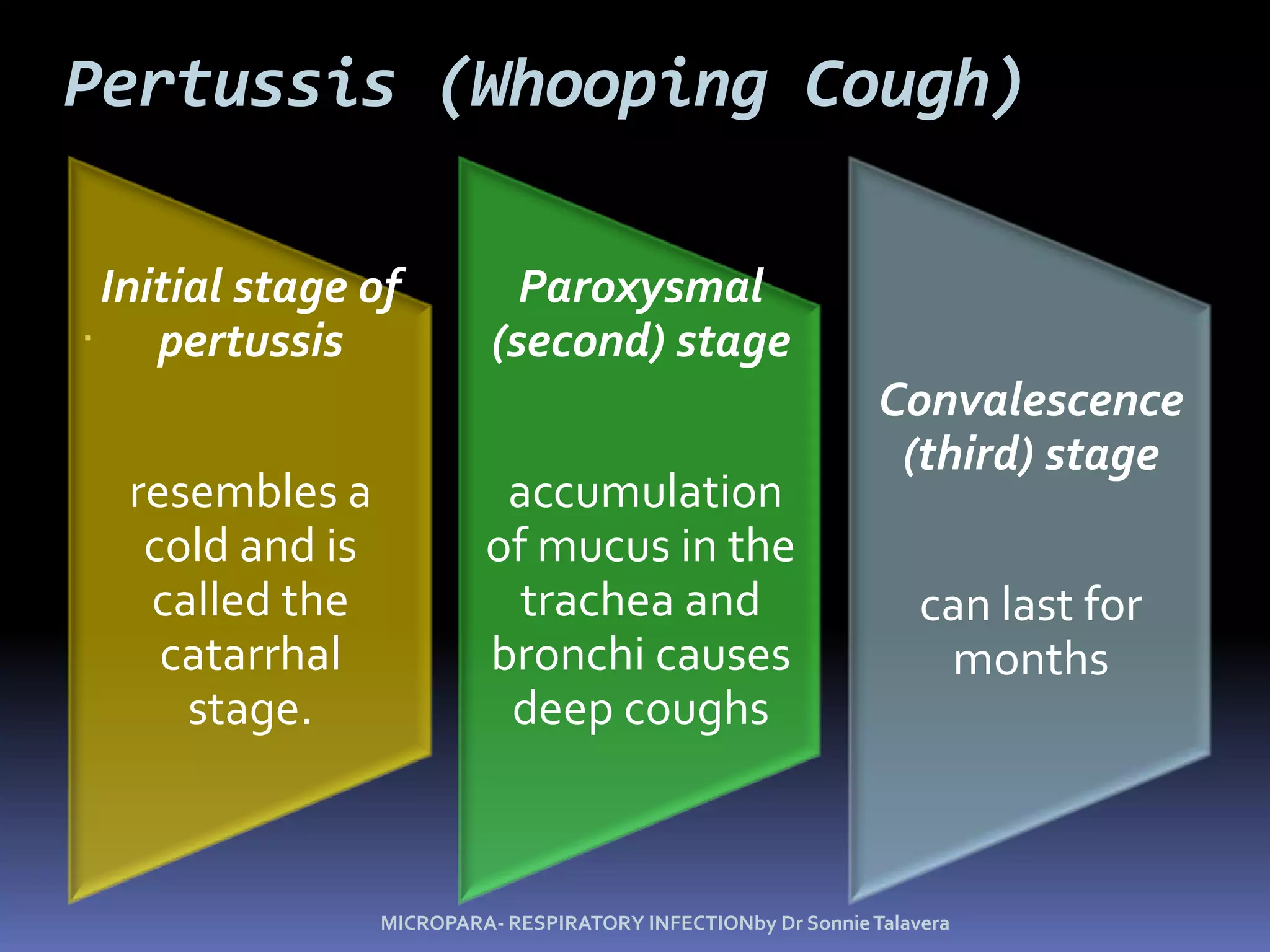
Clinical Progression of Pertussis,or deathInflammation of respiratory mucosal memb.Most infectious, but generally not yet diagnosed
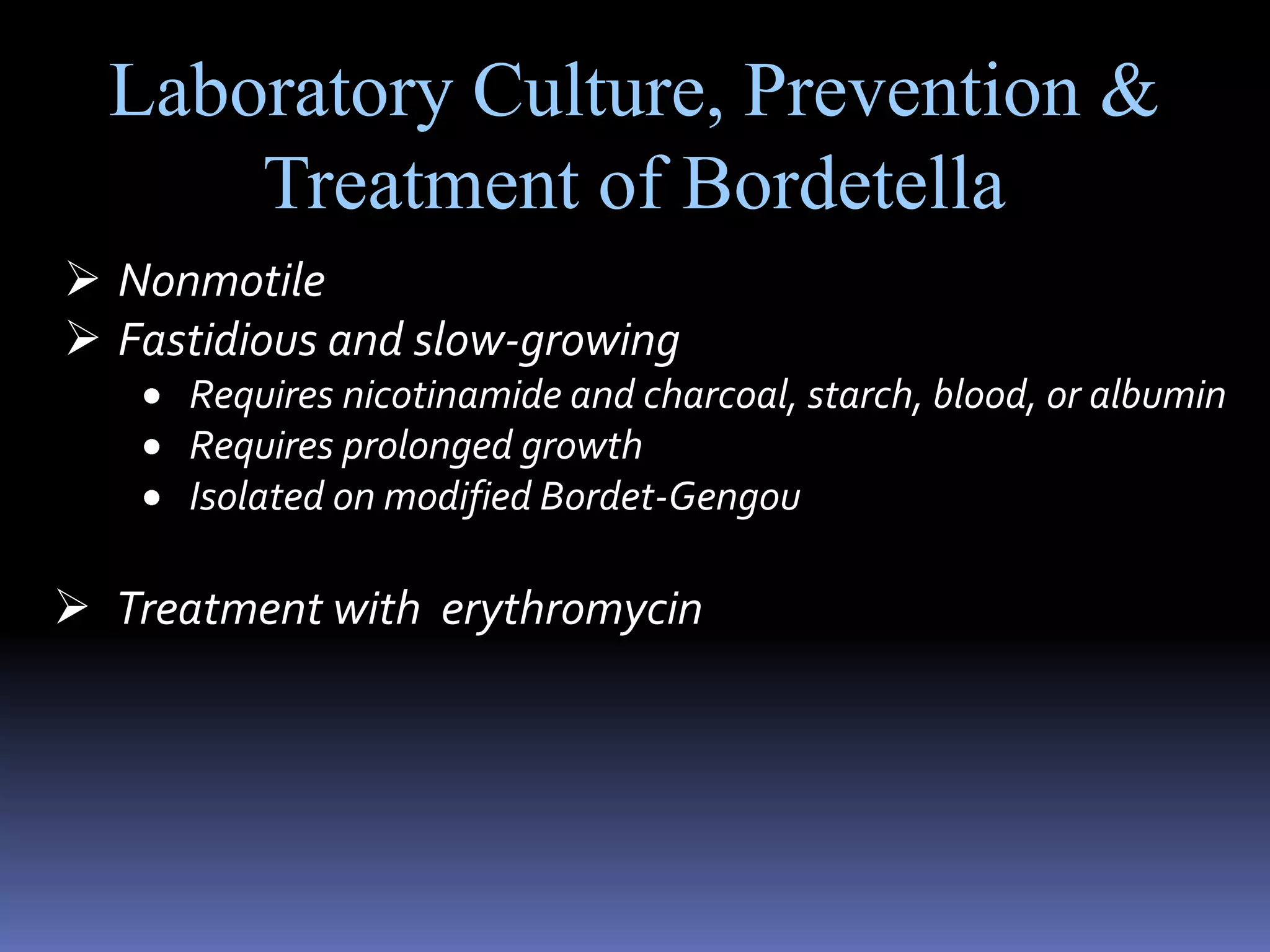
Laboratory Culture, Prevention & Treatment of BordetellaNonmotile
Fastidious and slow-growing
Requires nicotinamide and charcoal, starch, blood, or albumin
Requires prolonged growth
Isolated on modified Bordet-Gengouagar
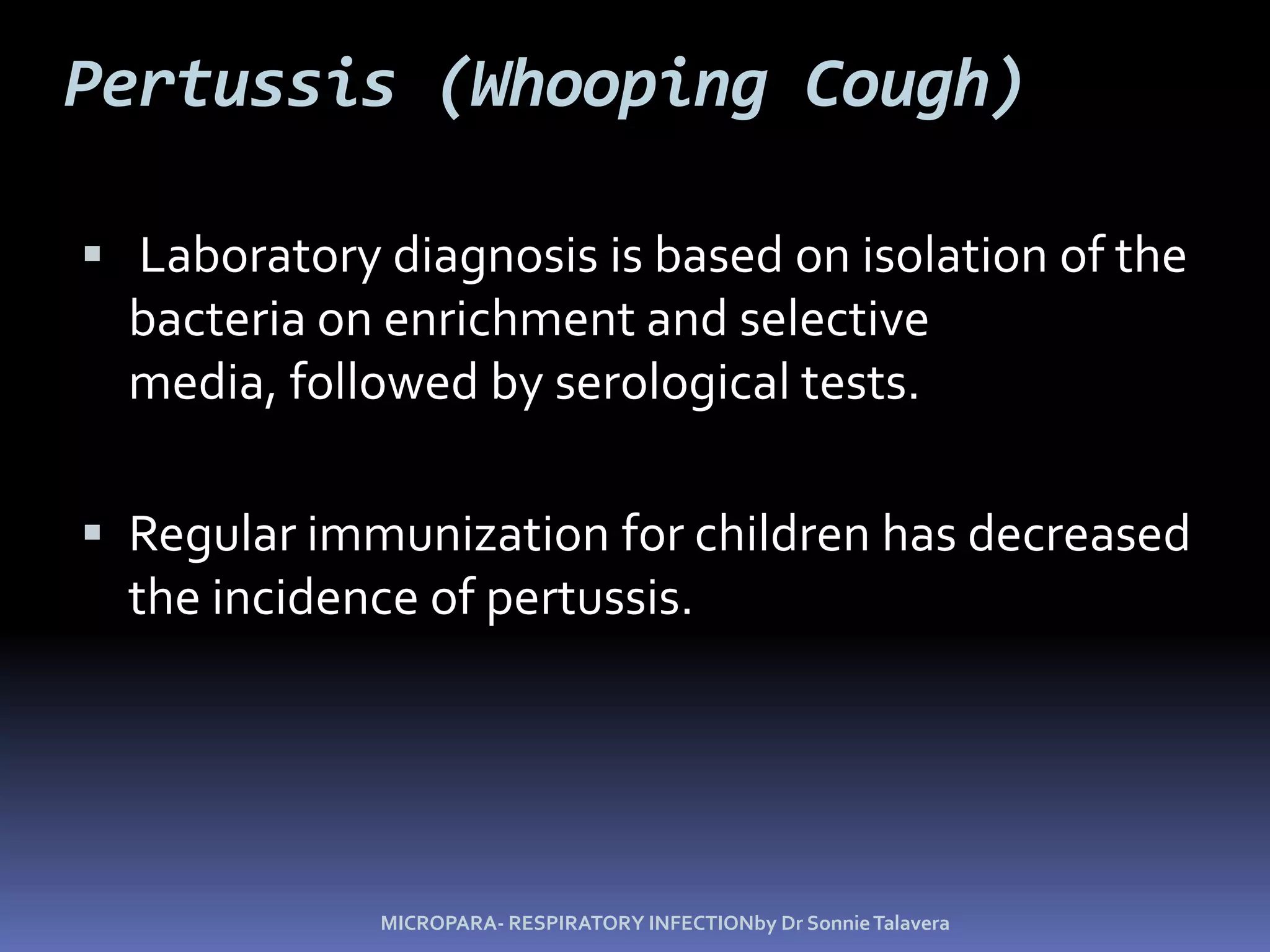
Treatmentwith  erythromycinPertussis (Whooping Cough) Laboratory diagnosis is based on isolation of the bacteria on enrichment and selective media, followed by serological tests.Regular immunization for children has decreased the incidence of pertussis.MICROPARA- RESPIRATORY INFECTIONby Dr Sonnie Talavera
Tuberculosis
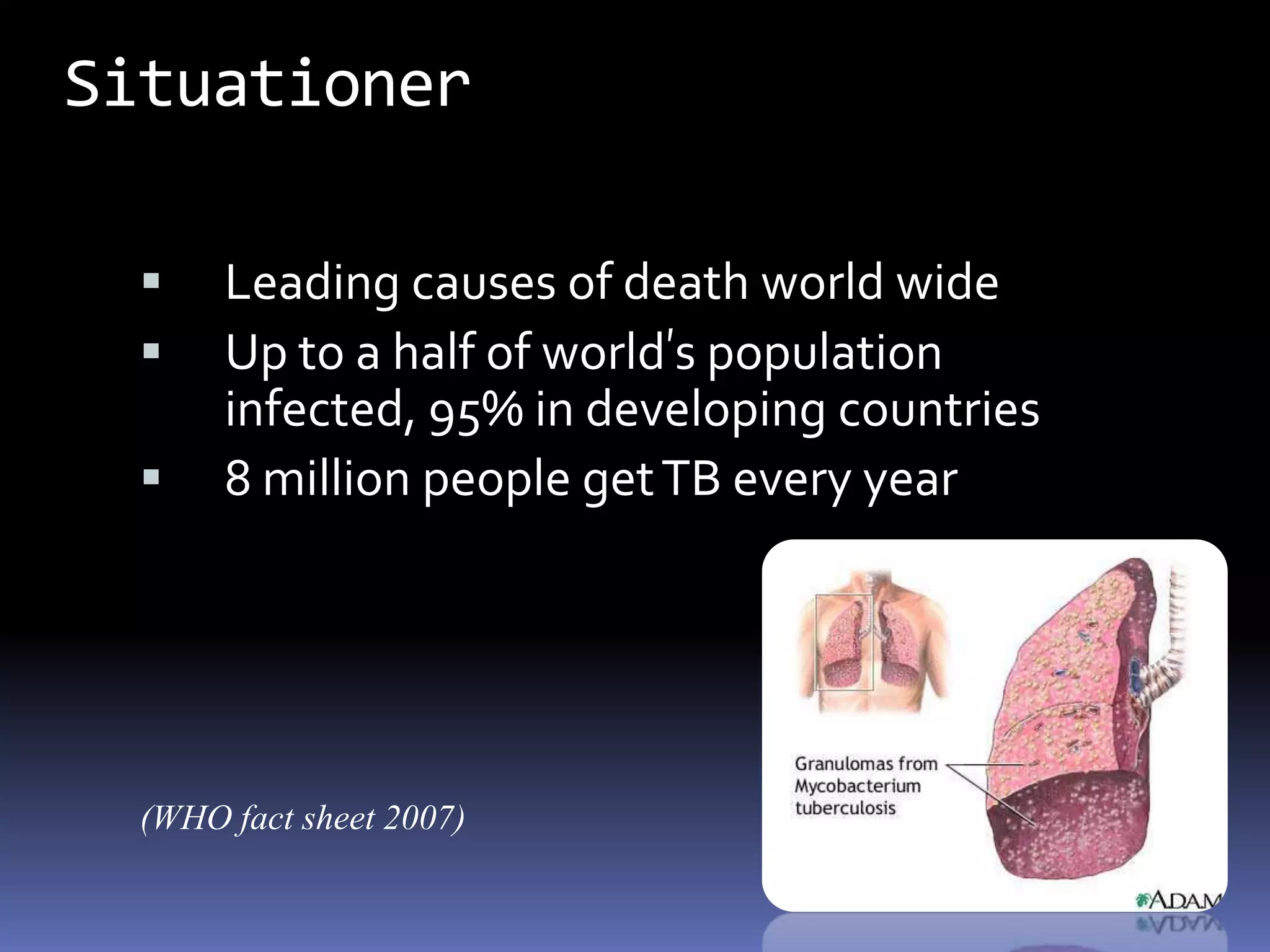
SituationerLeading causes of death world wideUp to a half of world’s population infected, 95% in developing countries8 million people get TB every year(WHO fact sheet 2007)
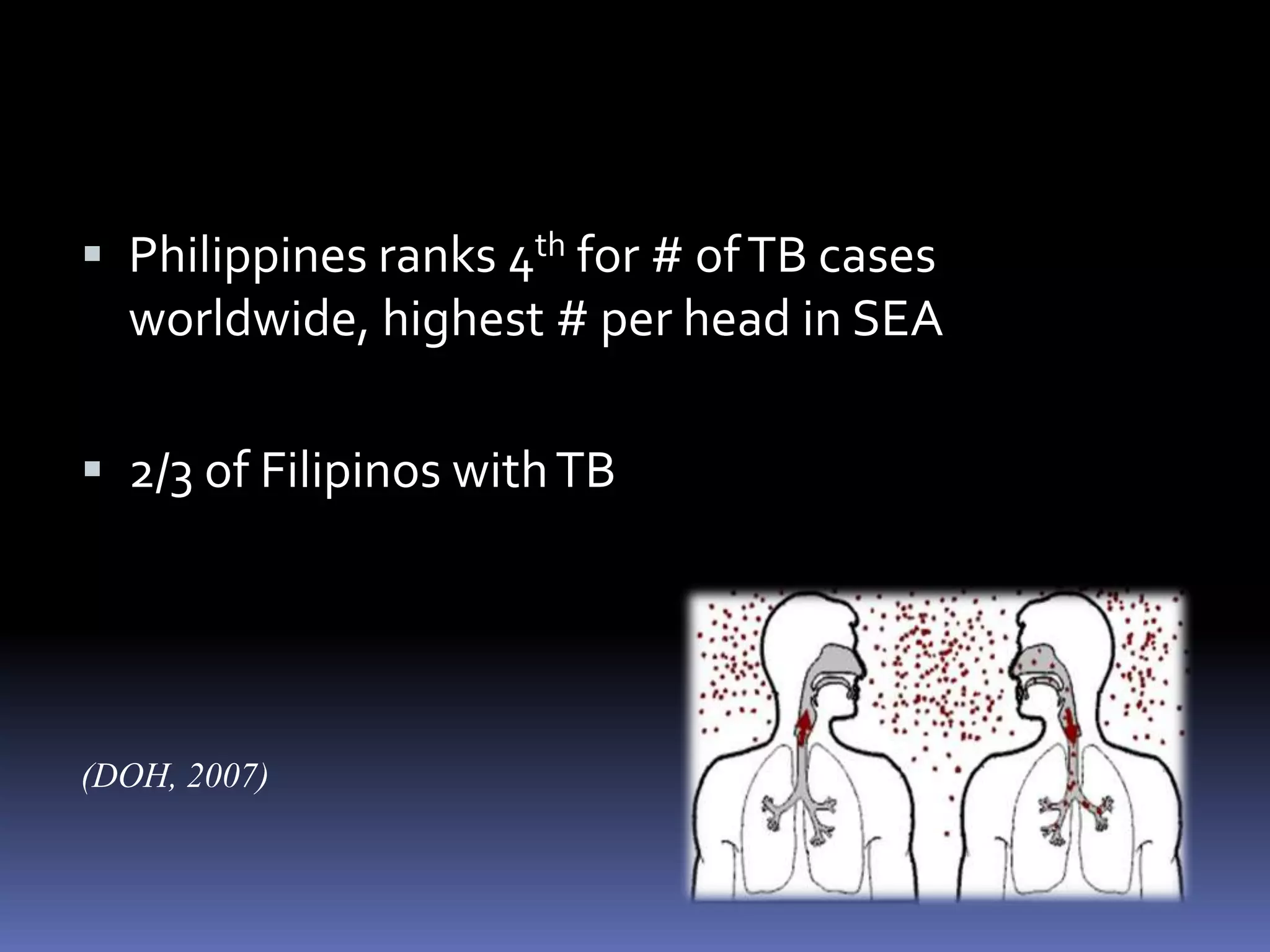
Philippines ranks 4th for # of TB cases worldwide, highest # per head in SEA2/3 of Filipinos with TB(DOH, 2007)
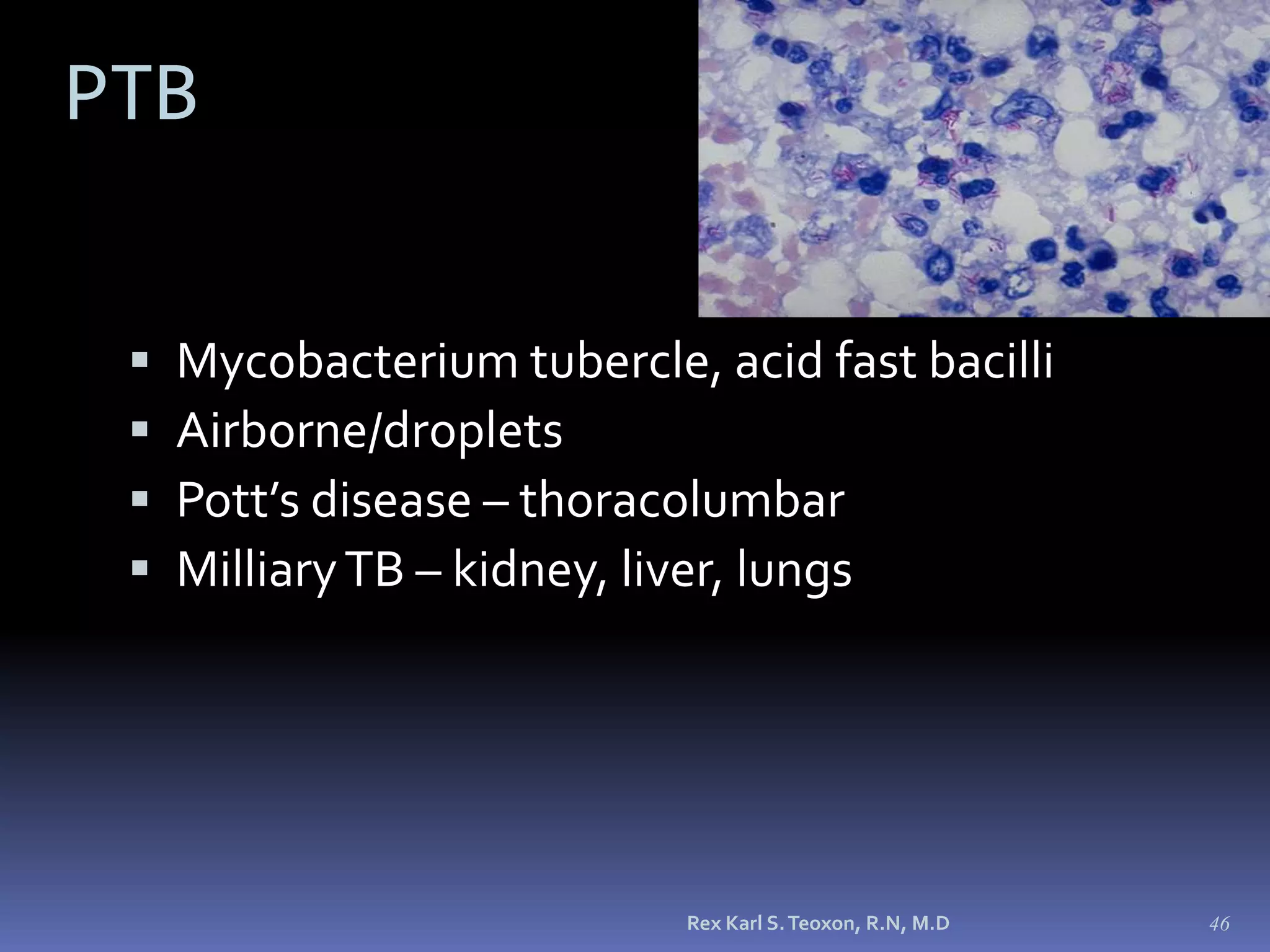
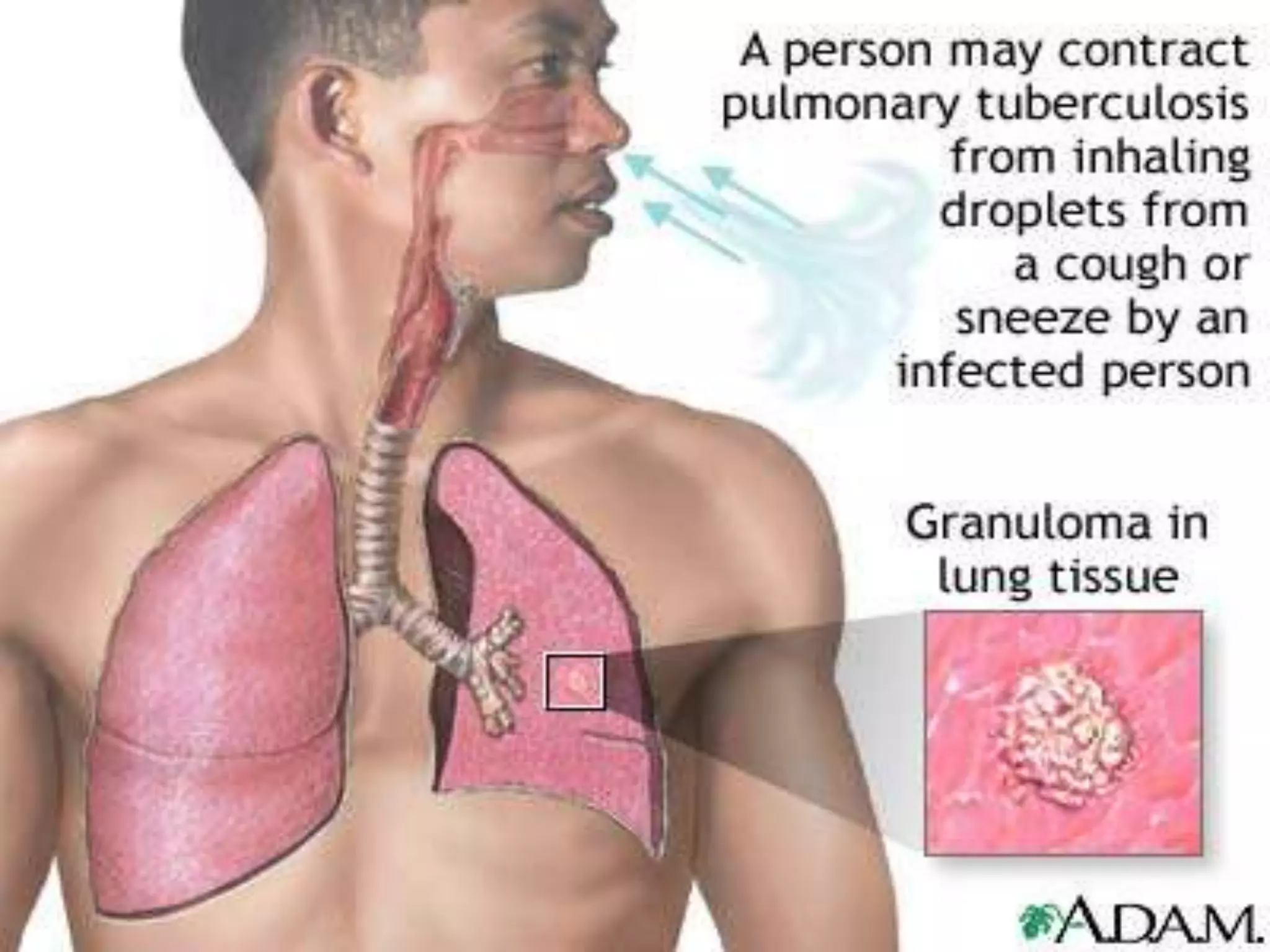
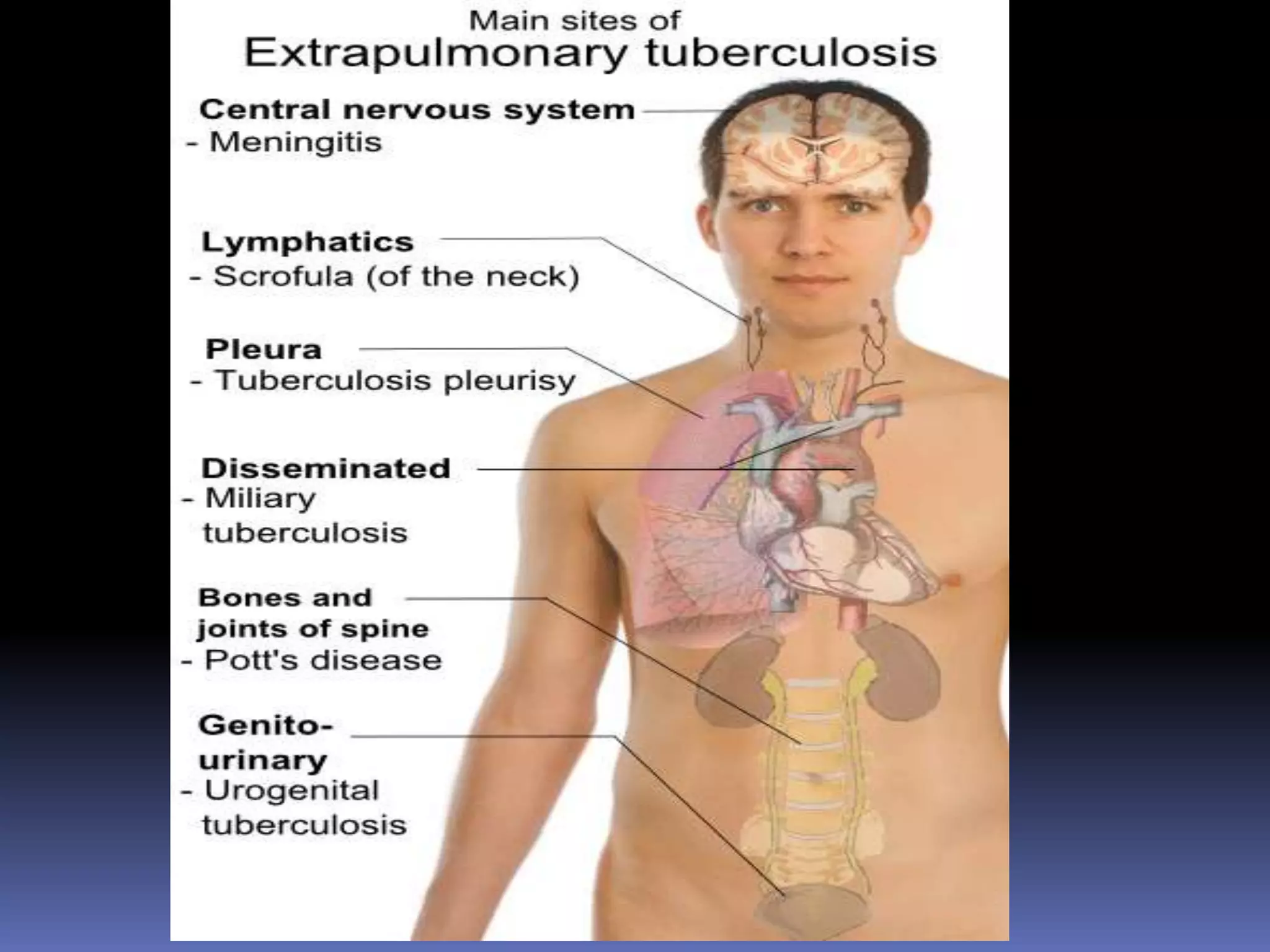
Rex Karl S. Teoxon, R.N, M.D46PTBMycobacterium tubercle, acid fast bacilliAirborne/dropletsPott’s disease – thoracolumbarMilliary TB – kidney, liver, lungs
Rex Karl S. Teoxon, R.N, M.D47
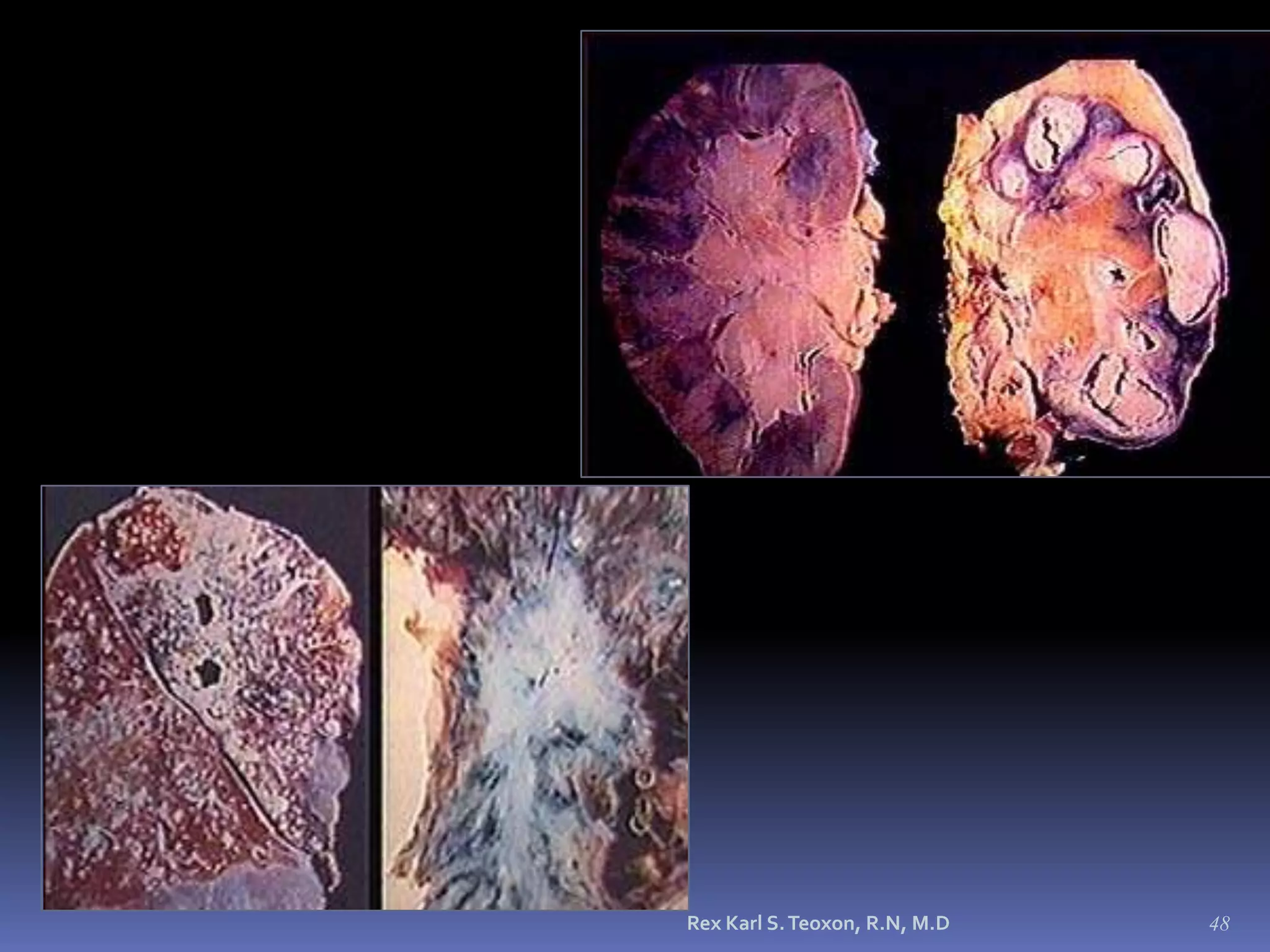
Rex Karl S. Teoxon, R.N, M.D48
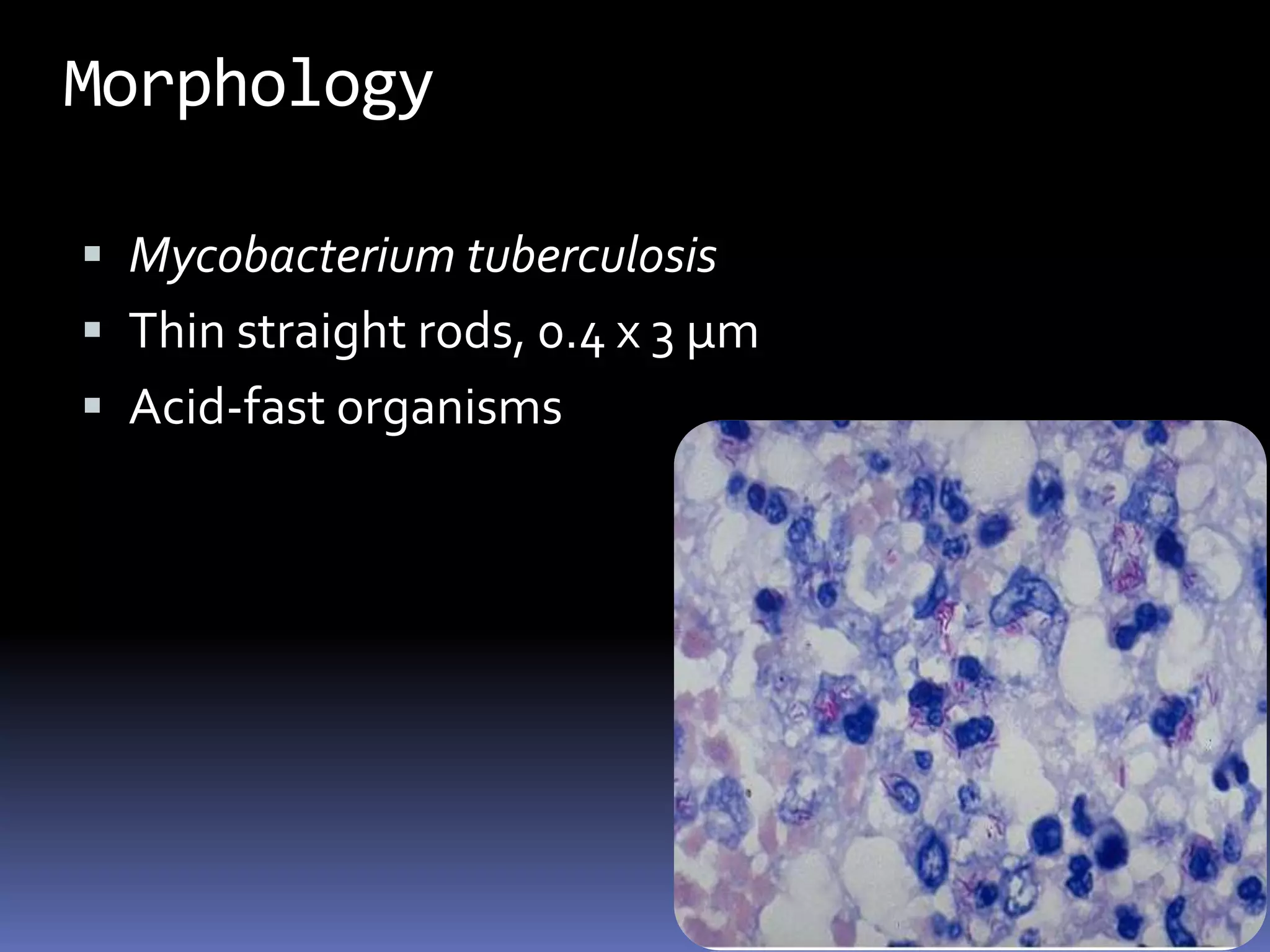
MorphologyMycobacterium tuberculosisThin straight rods, 0.4 x 3 µmAcid-fast organisms
Mycobacterial cell wall componentsLipids (mycolic acids)ProteinsPolysaccharides
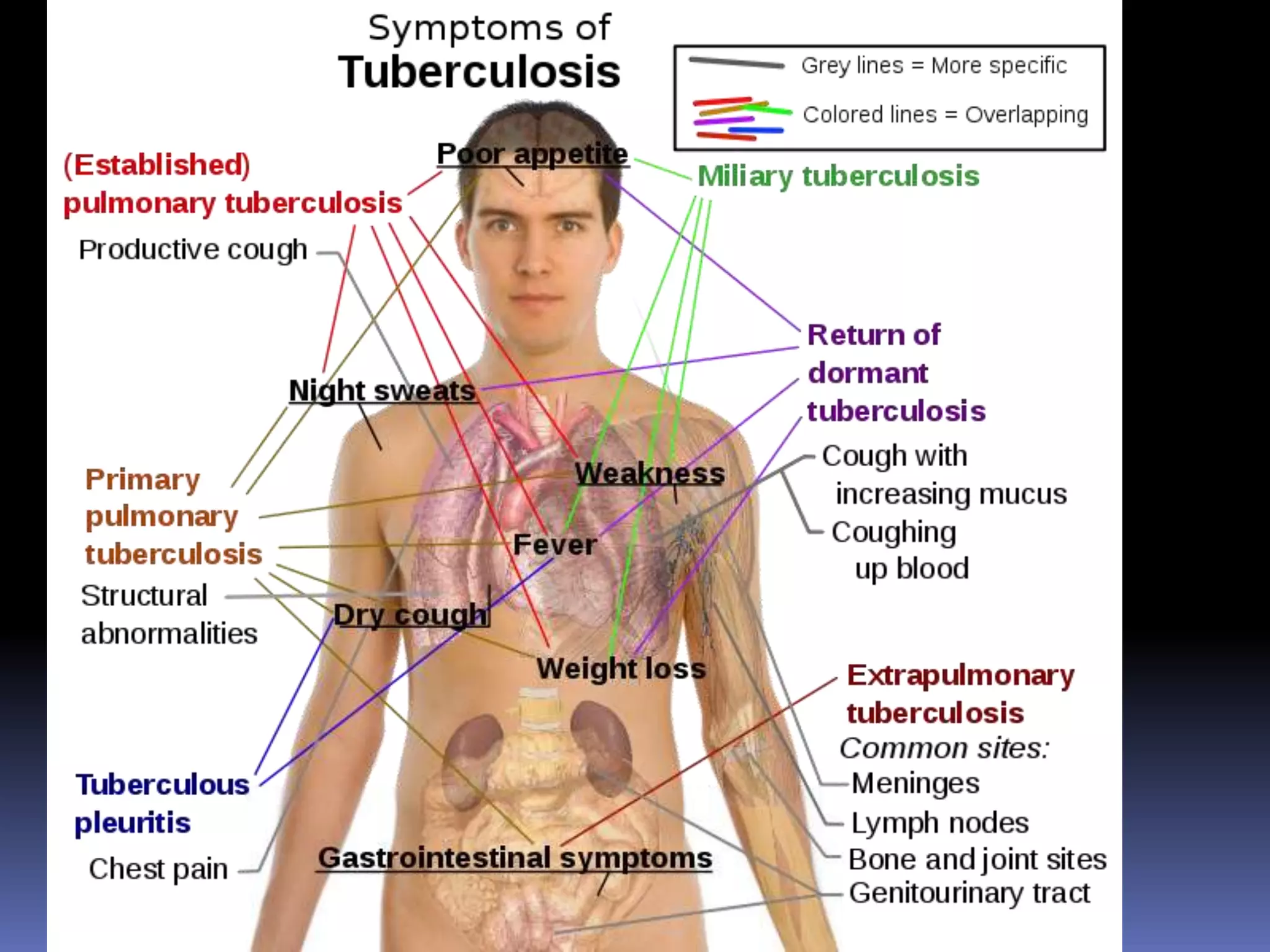
TB symptomsCough with two weeks or moreSputum expectorationFeverSignificant weight lossHemoptysisChest and/or back pains
Rex Karl S. Teoxon, R.N, M.D52SIGNS AND SYMPTOMSWt loss, night sweats, low fever, non productive to productive cough, anorexia, Pleural effusion and hypoxemia, cervical lymphadenopathy
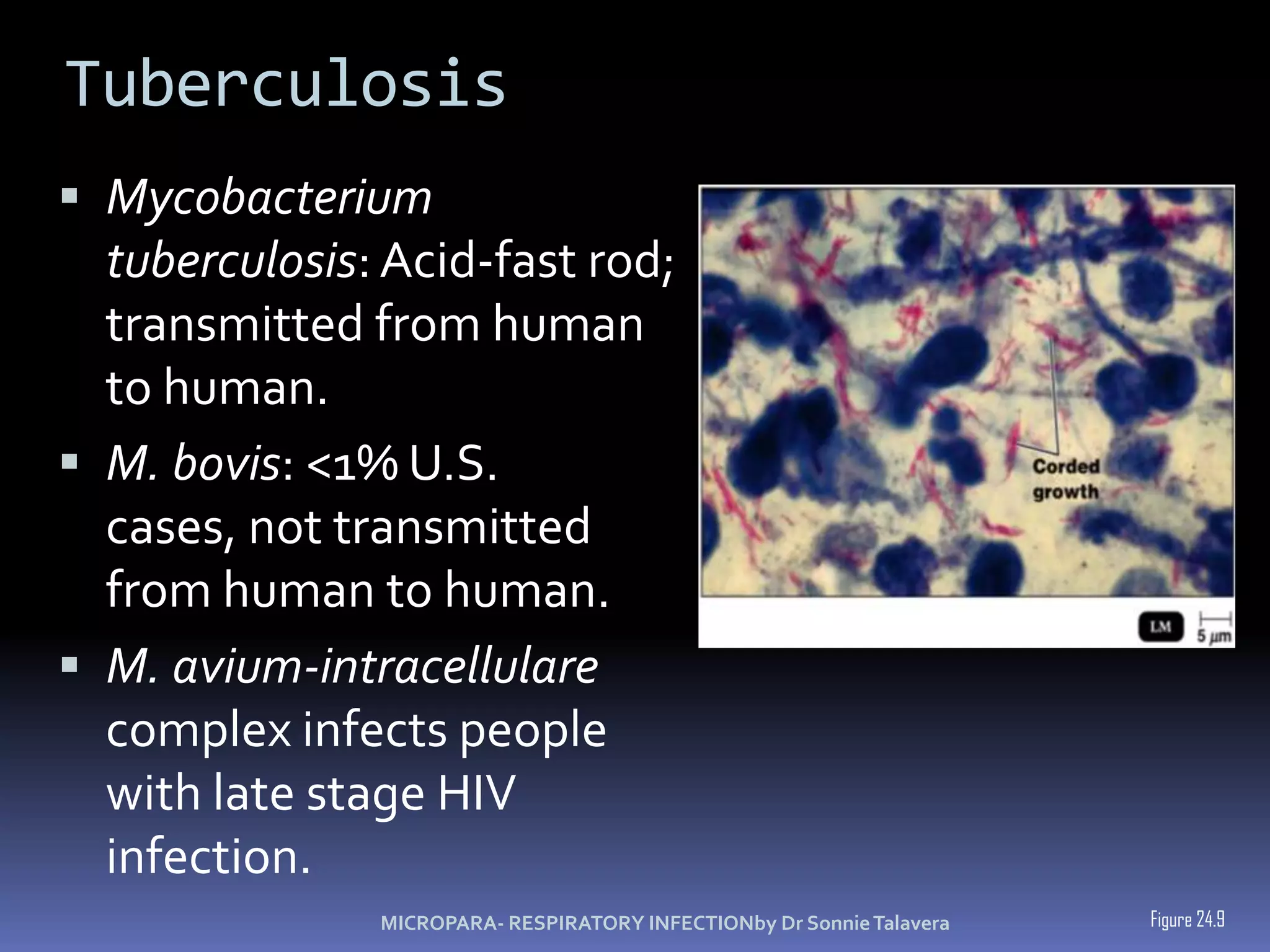
TuberculosisMycobacterium tuberculosis: Acid-fast rod; transmitted from human to human.M. bovis: <1% U.S. cases, not transmitted from human to human.M. avium-intracellulare complex infects people with late stage HIV infection.Figure 24.9MICROPARA- RESPIRATORY INFECTIONby Dr Sonnie Talavera
TuberculosisMycobacterium tuberculosisAcid fast-lipid, waxSlow growth (nutrient permeability)Resist to detergent and common antibioticsA leading cause of death by infectious disease 50% population infected, 3m death/yrReemergence in 1980 (AIDS, homeless, immigrants)DiagnosePPD testChest X-raySputum smear (for acid-fast bacilli)Sputum culture
DiagnosisSputum culture
Slow, 13 hour generation time, takes weeks
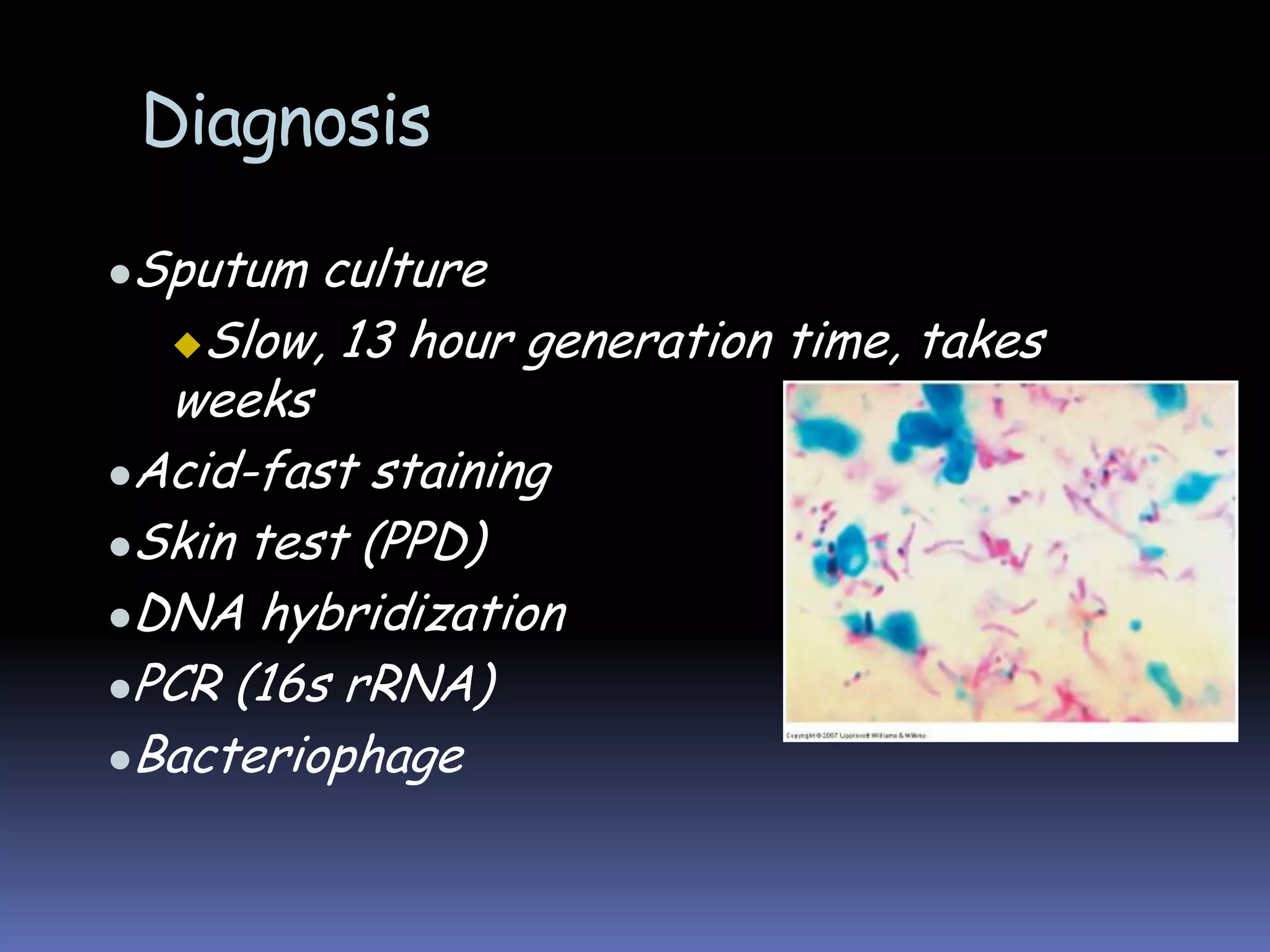
Acid-fast staining
Skin test (PPD)
DNA hybridization
PCR (16s rRNA)
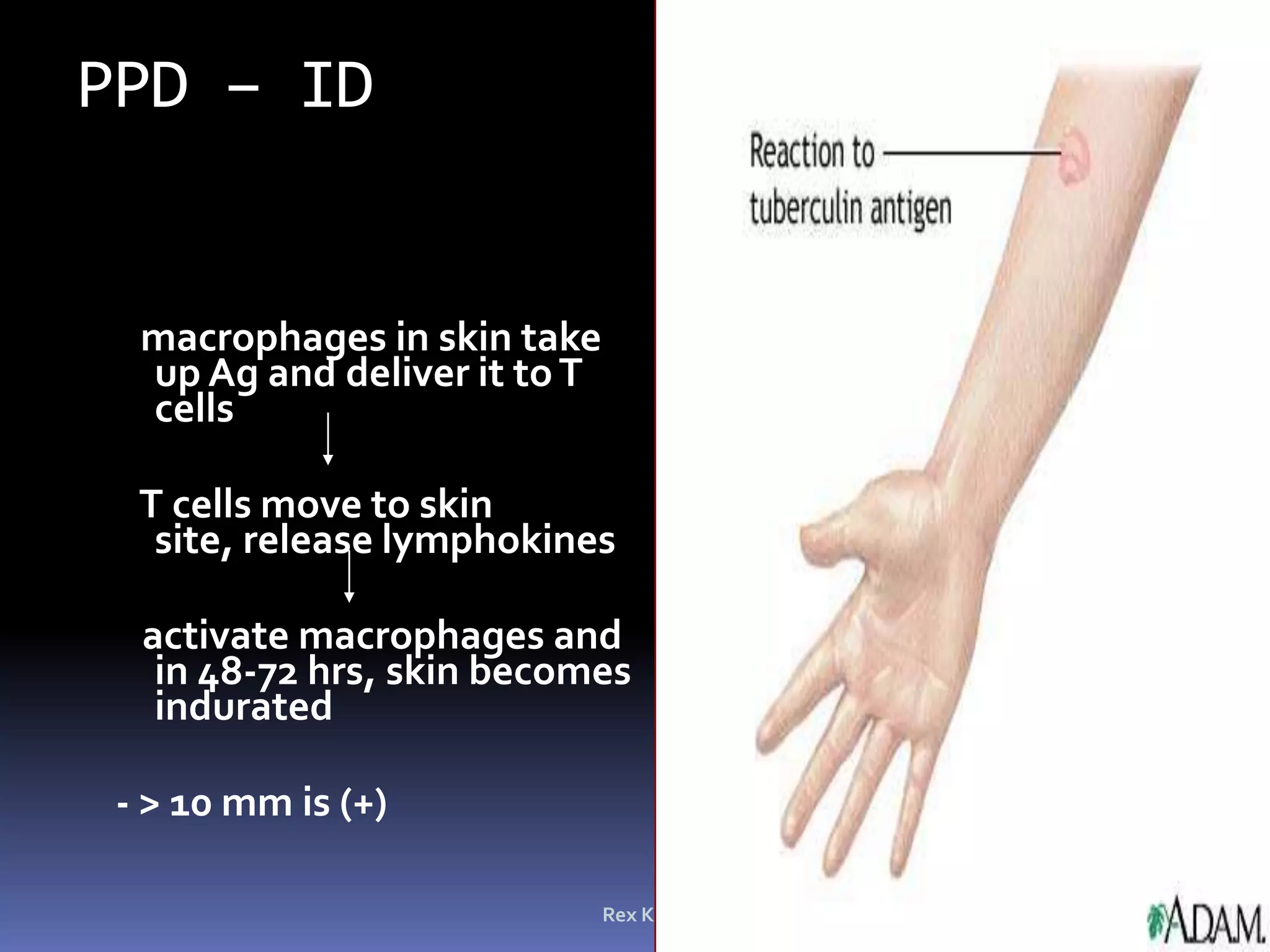
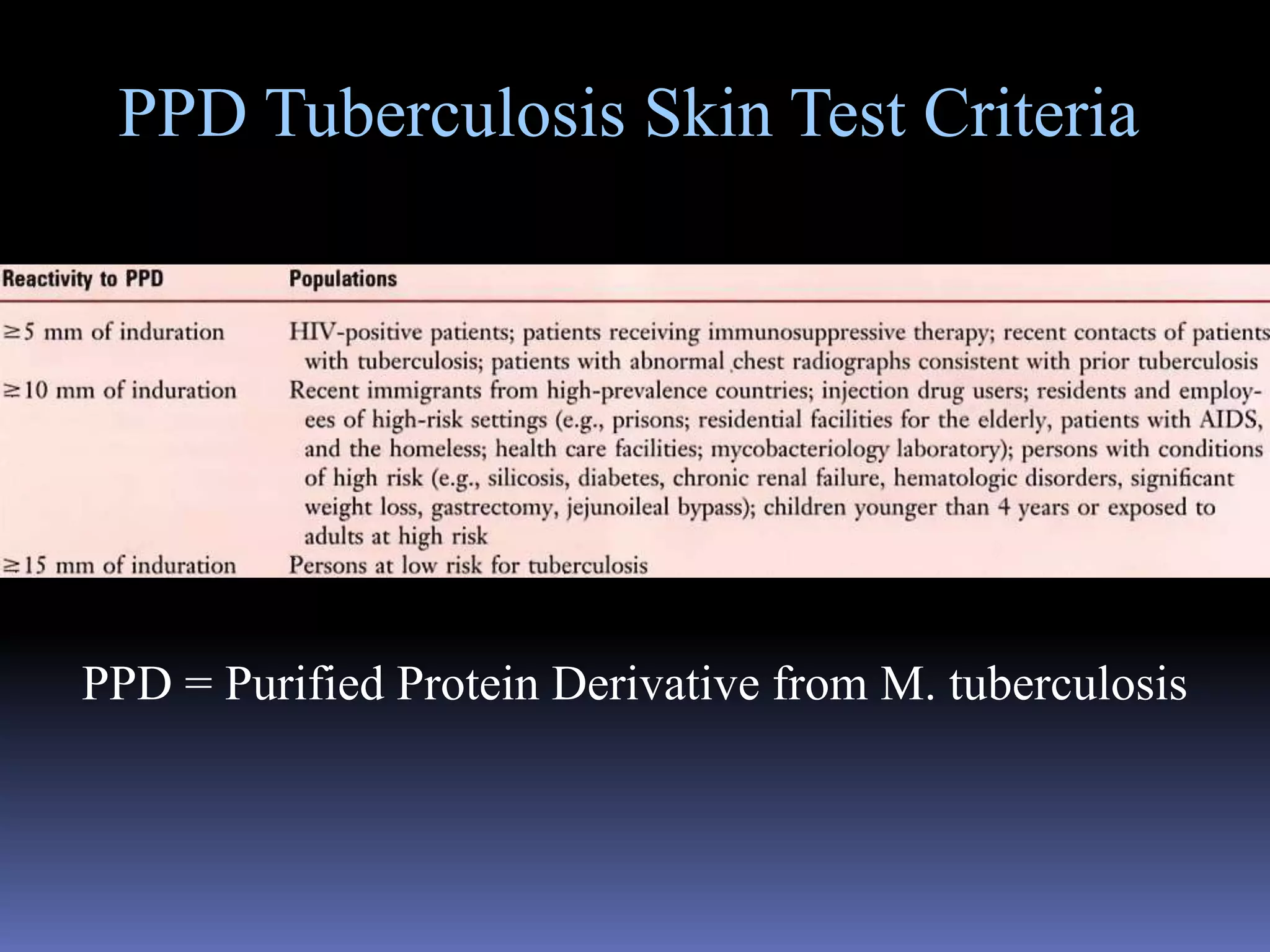
BacteriophageRex Karl S. Teoxon, R.N, M.D56PPD – IDmacrophages in skin take up Ag and deliver it to T cells    T cells move to skin site, release lymphokines     activate macrophages and in 48-72 hrs, skin becomes indurated - > 10 mm is (+)
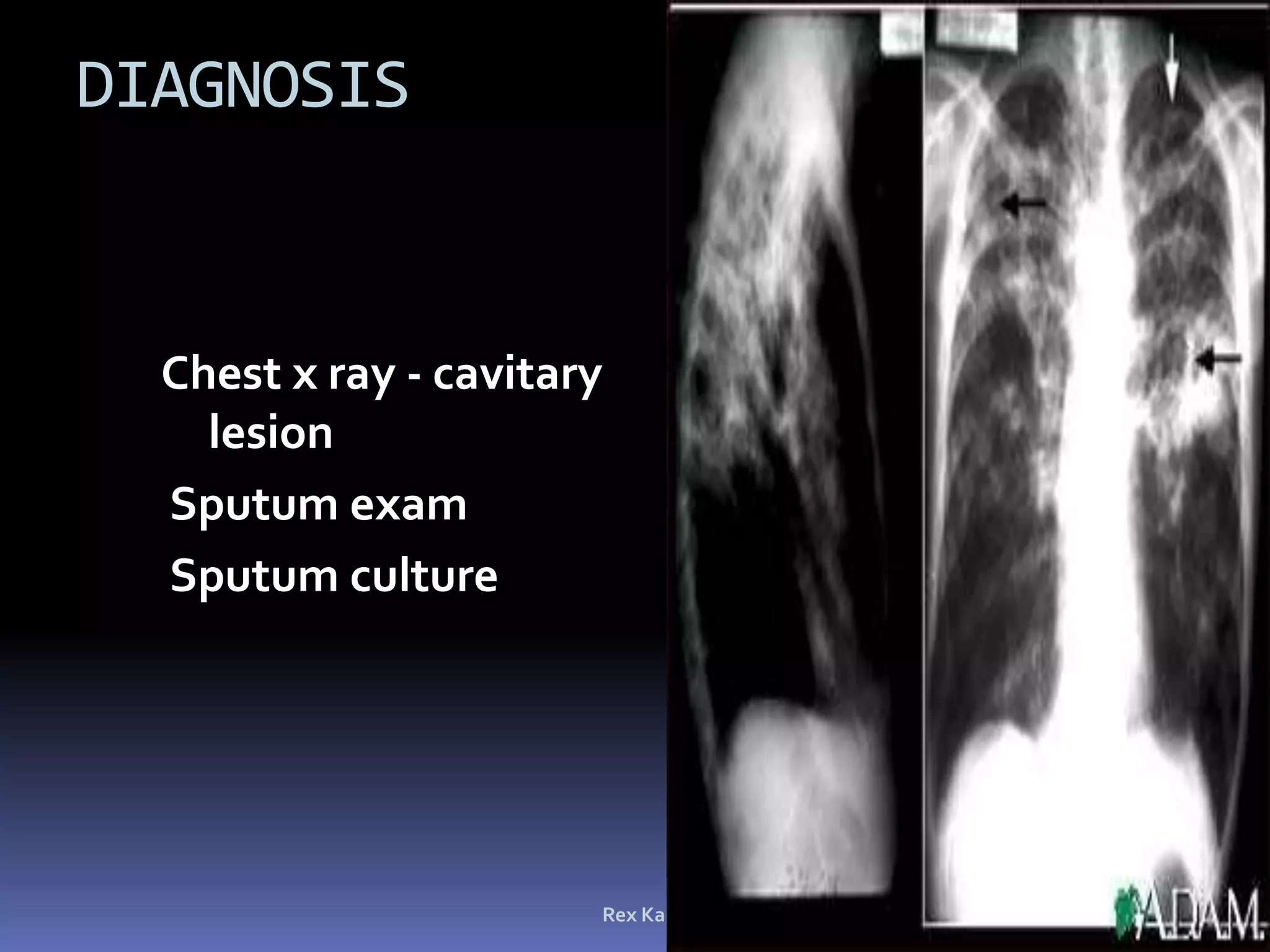
Rex Karl S. Teoxon, R.N, M.D57DIAGNOSISChest x ray - cavitary lesion Sputum exam Sputum culture
Stages of diseasePrimary infectionAsymptomatic to flu-like3-5% develop TBTubercle (granulomatous response)Reactivation (active TB) Years later, 10% experienceLRT disease (pneumonia)Disseminated miliary TBAlmost everywhereAIDS and antibiotic resistance
Stages of pathogenesisEncounter - respiratory dropletEntry - direct inhalation into LRT (ID=10)SPREAD - alveoli, but can spread throughout body seeding many tissuesMultiplicationGrows in phagosome of macrophageStrict aerobeVery slow in culture (24 hr doubling time)Evade defenses Inhibits phagolysosomal fusion
Tuberculosis Tuberculosis is caused by Mycobacterium tuberculosis.Large amounts of lipids in the cell wall account for the bacterium’s acid-fast characteristic as well as its resistance to dryingnd disinfectants.MICROPARA- RESPIRATORY INFECTIONby Dr Sonnie Talavera
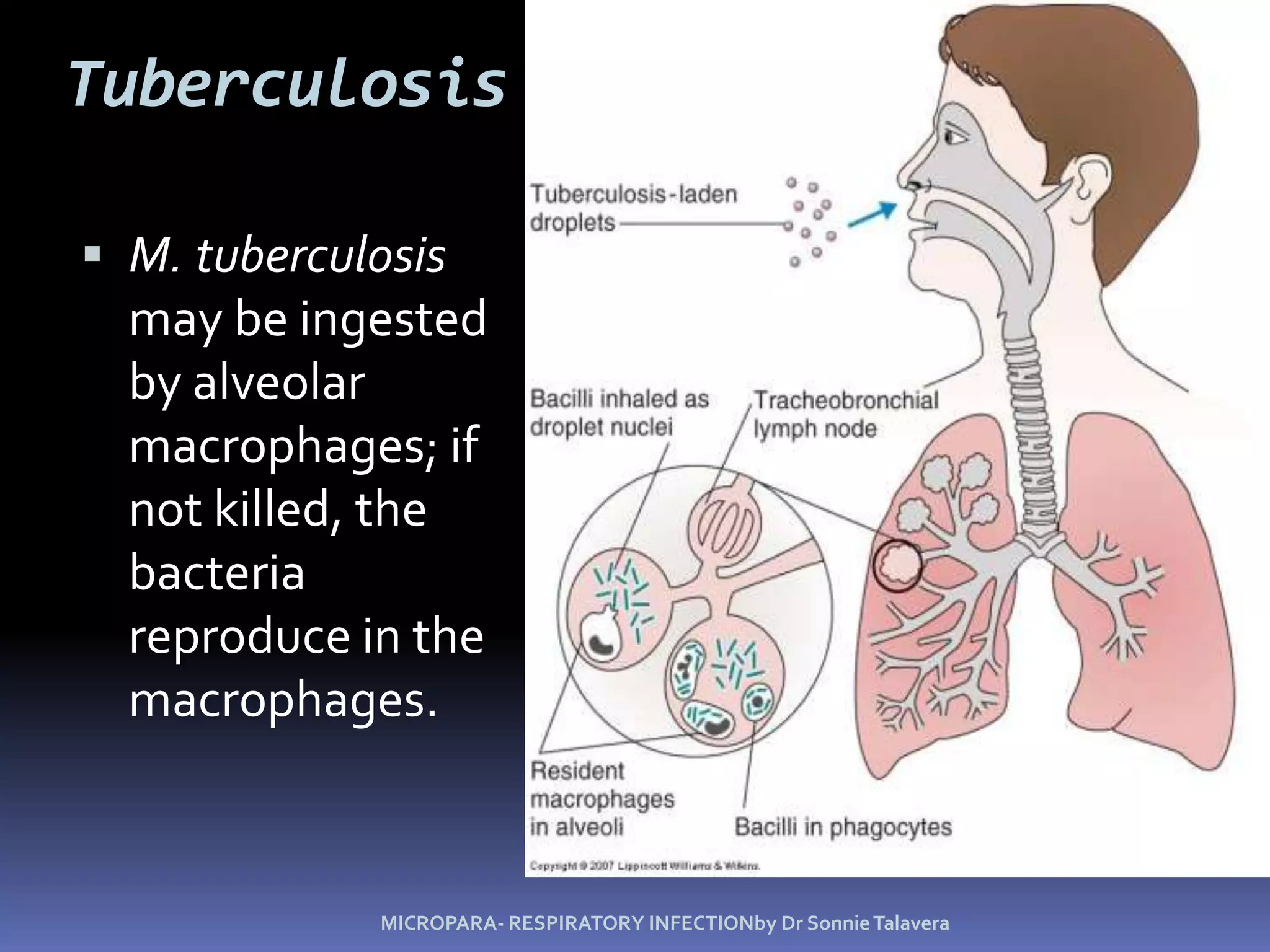
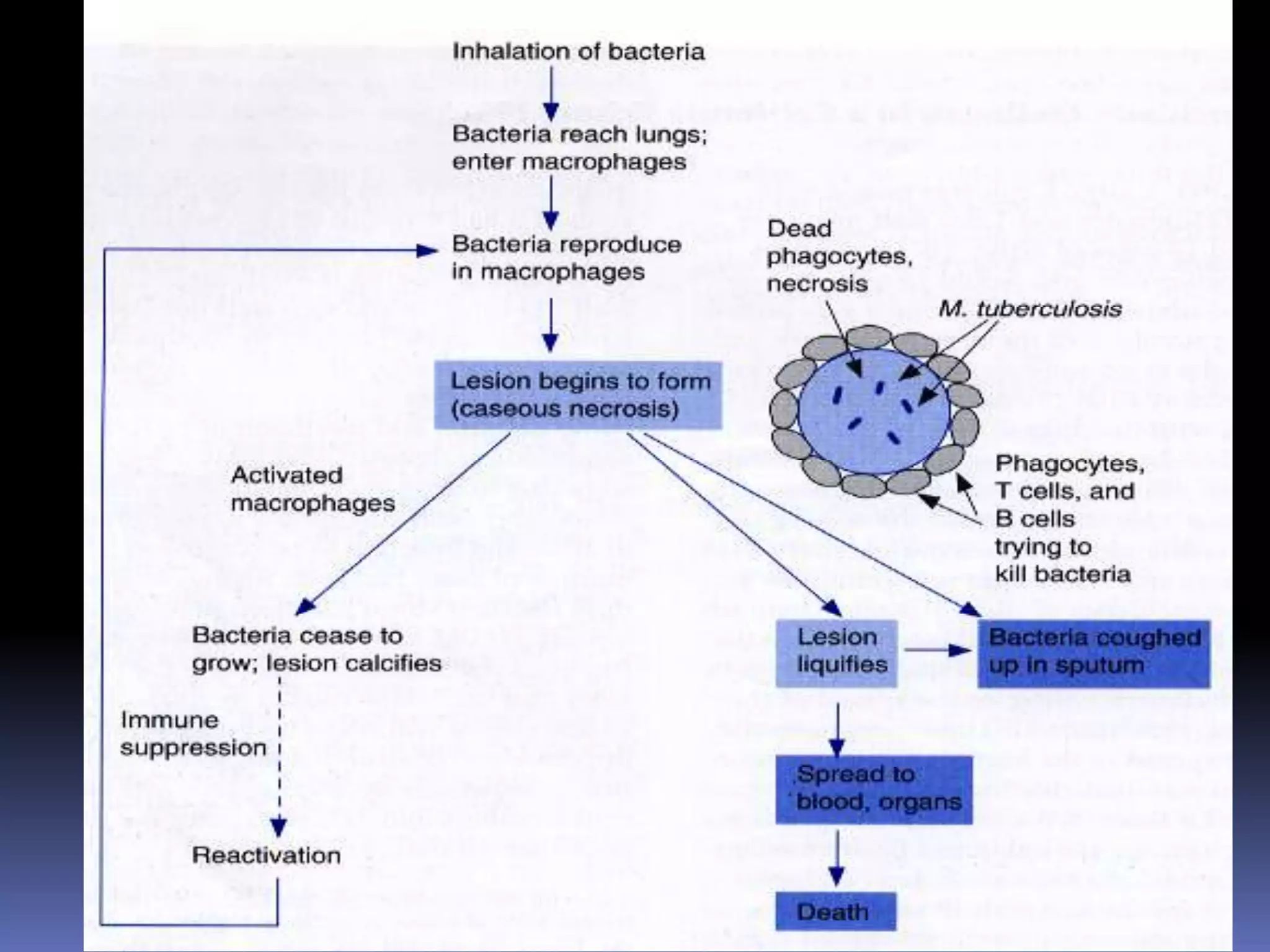
Tuberculosis M. tuberculosis may be ingested by alveolar macrophages; if not killed, the bacteria reproduce in the macrophages.MICROPARA- RESPIRATORY INFECTIONby Dr Sonnie Talavera
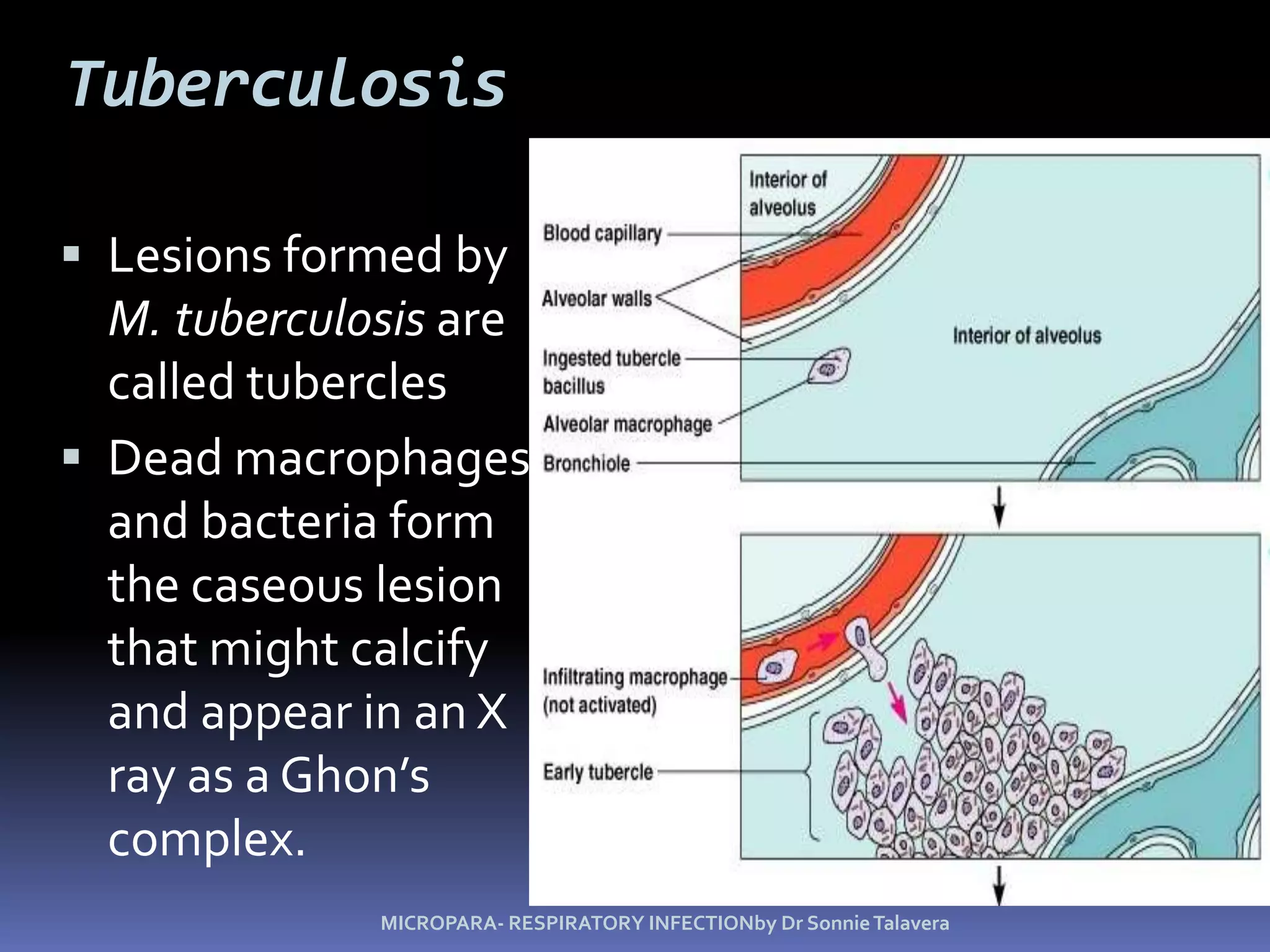
Tuberculosis Lesions formed by M. tuberculosis are called tuberclesDead macrophages and bacteria form the caseous lesion that might calcify and appear in an X ray as a Ghon’s complex.MICROPARA- RESPIRATORY INFECTIONby Dr Sonnie Talavera
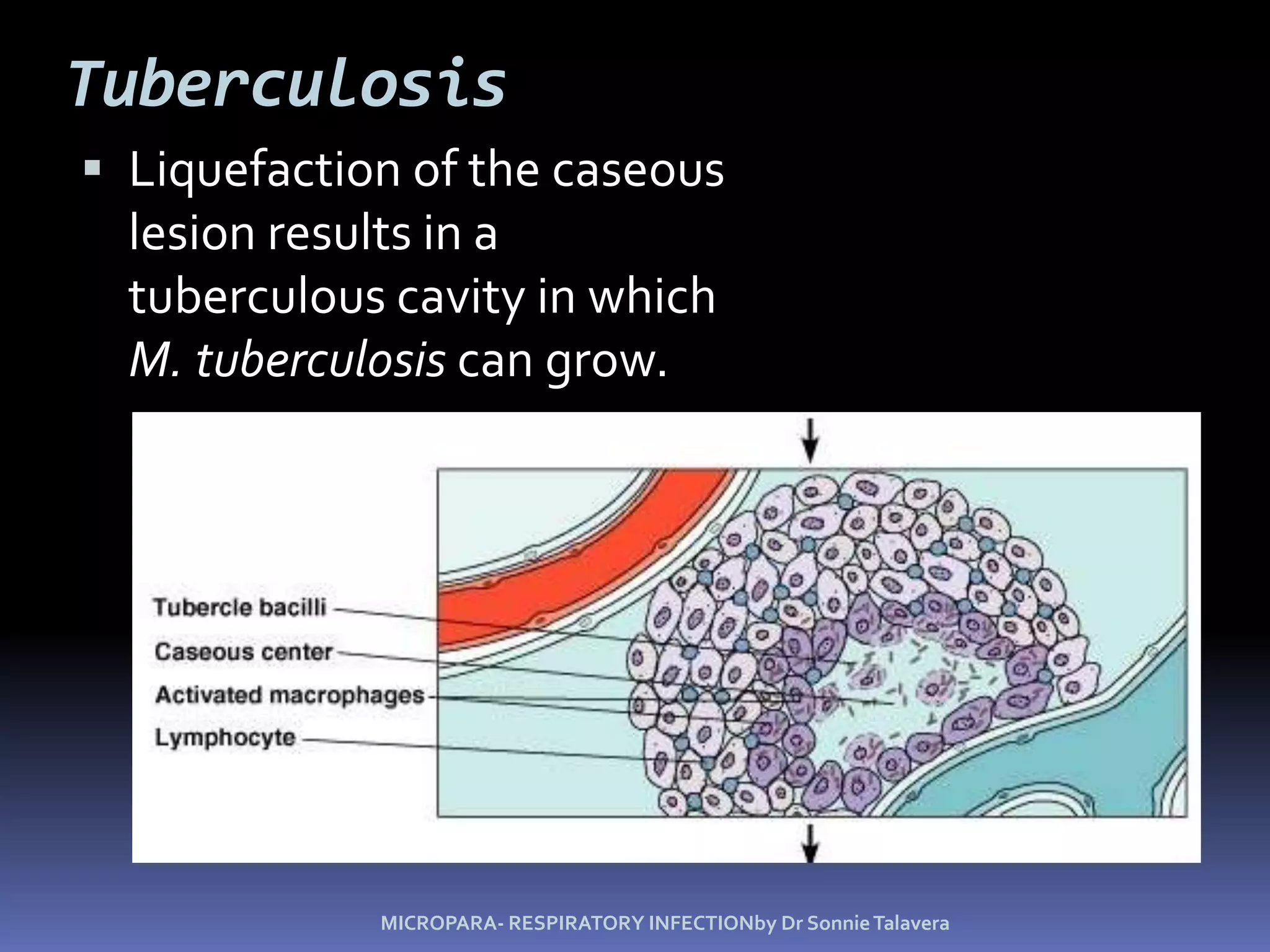
Tuberculosis Liquefaction of the caseous lesion results in a tuberculous cavity in which M. tuberculosis can grow.MICROPARA- RESPIRATORY INFECTIONby Dr Sonnie Talavera
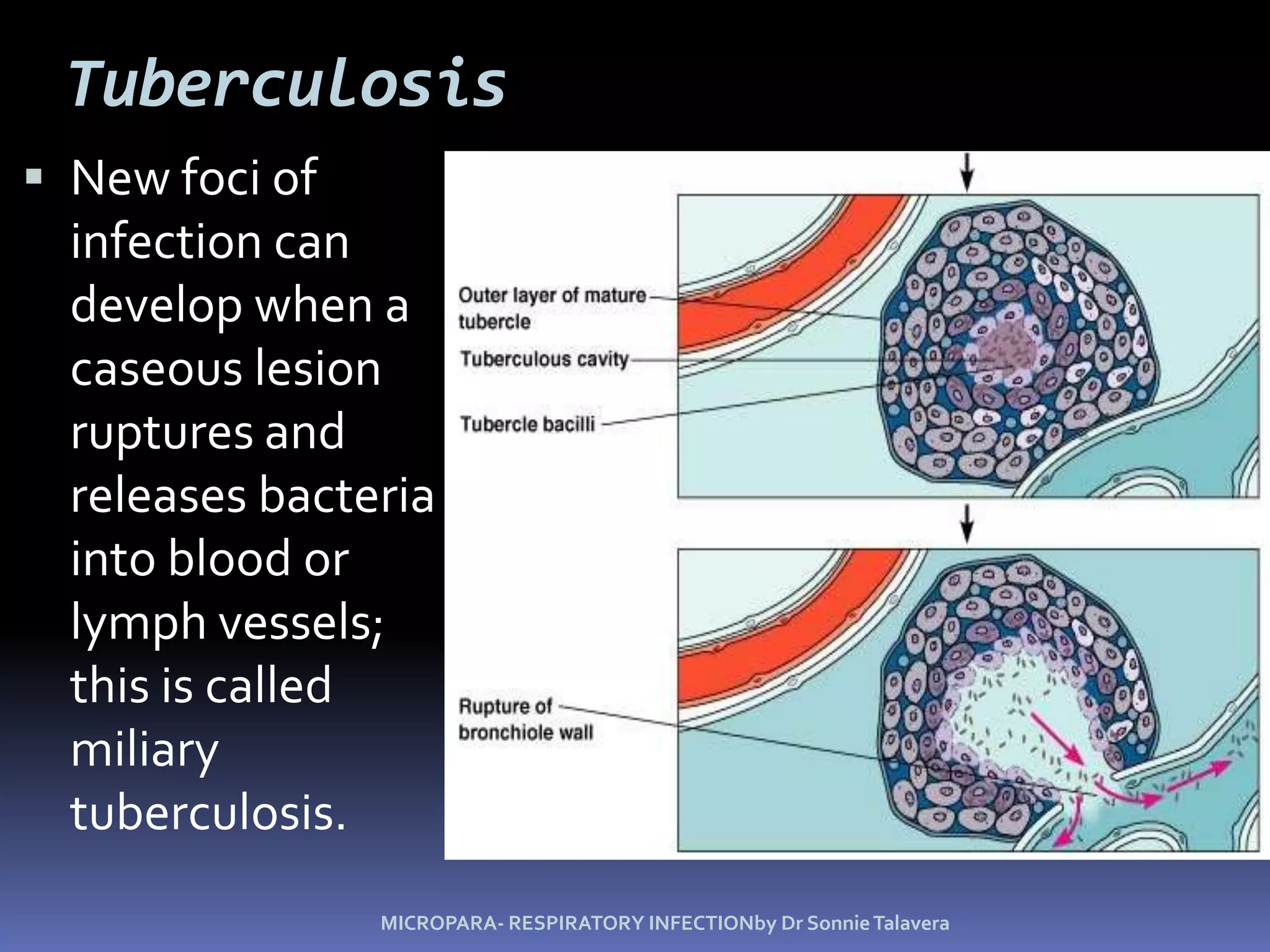
Tuberculosis New foci of infection can develop when a caseous lesion ruptures and releases bacteria into blood or lymph vessels; this is called miliary tuberculosis.MICROPARA- RESPIRATORY INFECTIONby Dr Sonnie Talavera
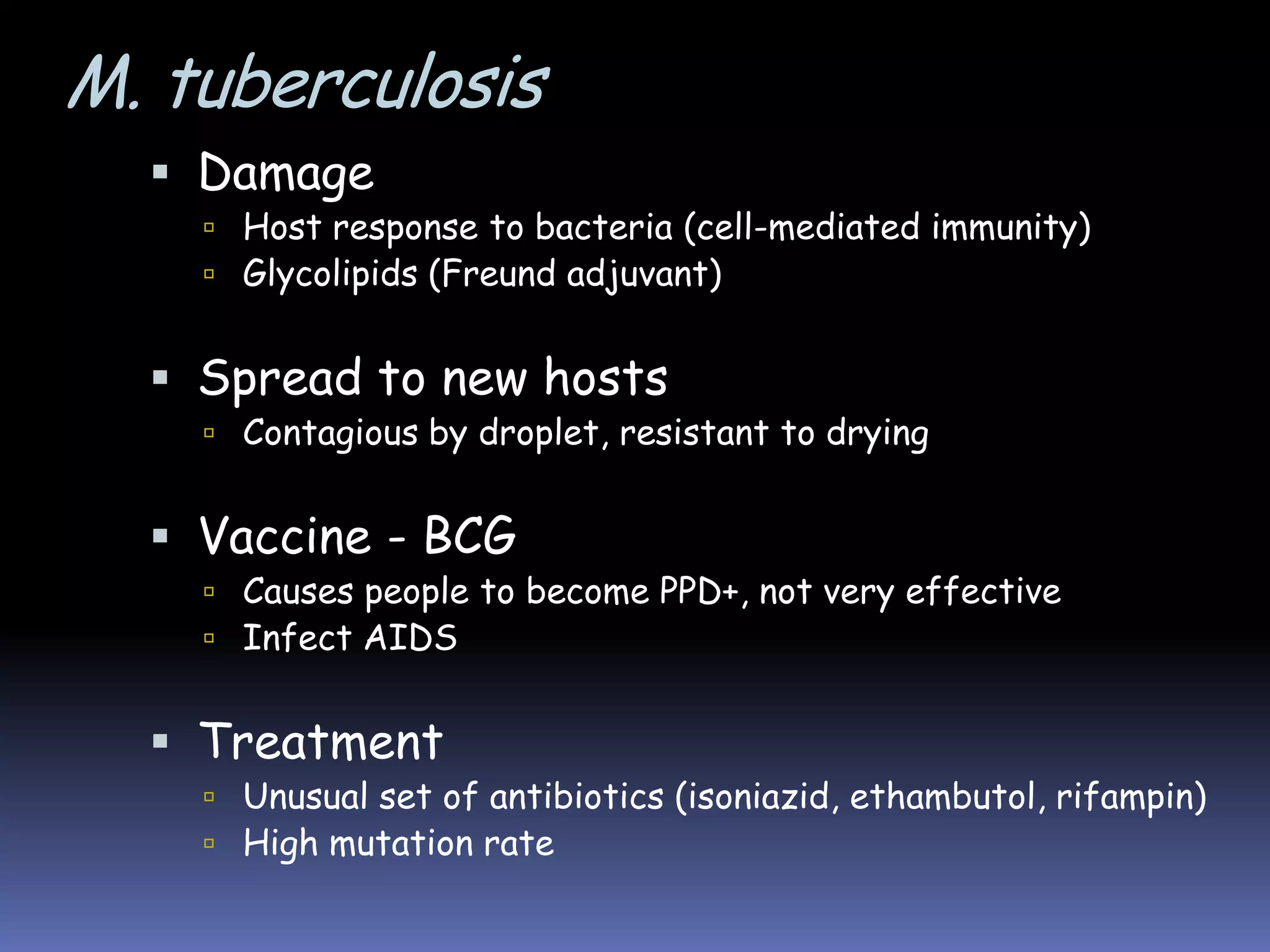
M. tuberculosisDamageHost response to bacteria (cell-mediated immunity)Glycolipids (Freund adjuvant)Spread to new hostsContagious by droplet, resistant to dryingVaccine - BCGCauses people to become PPD+, not very effectiveInfect AIDSTreatmentUnusual set of antibiotics (isoniazid, ethambutol, rifampin)High mutation rate
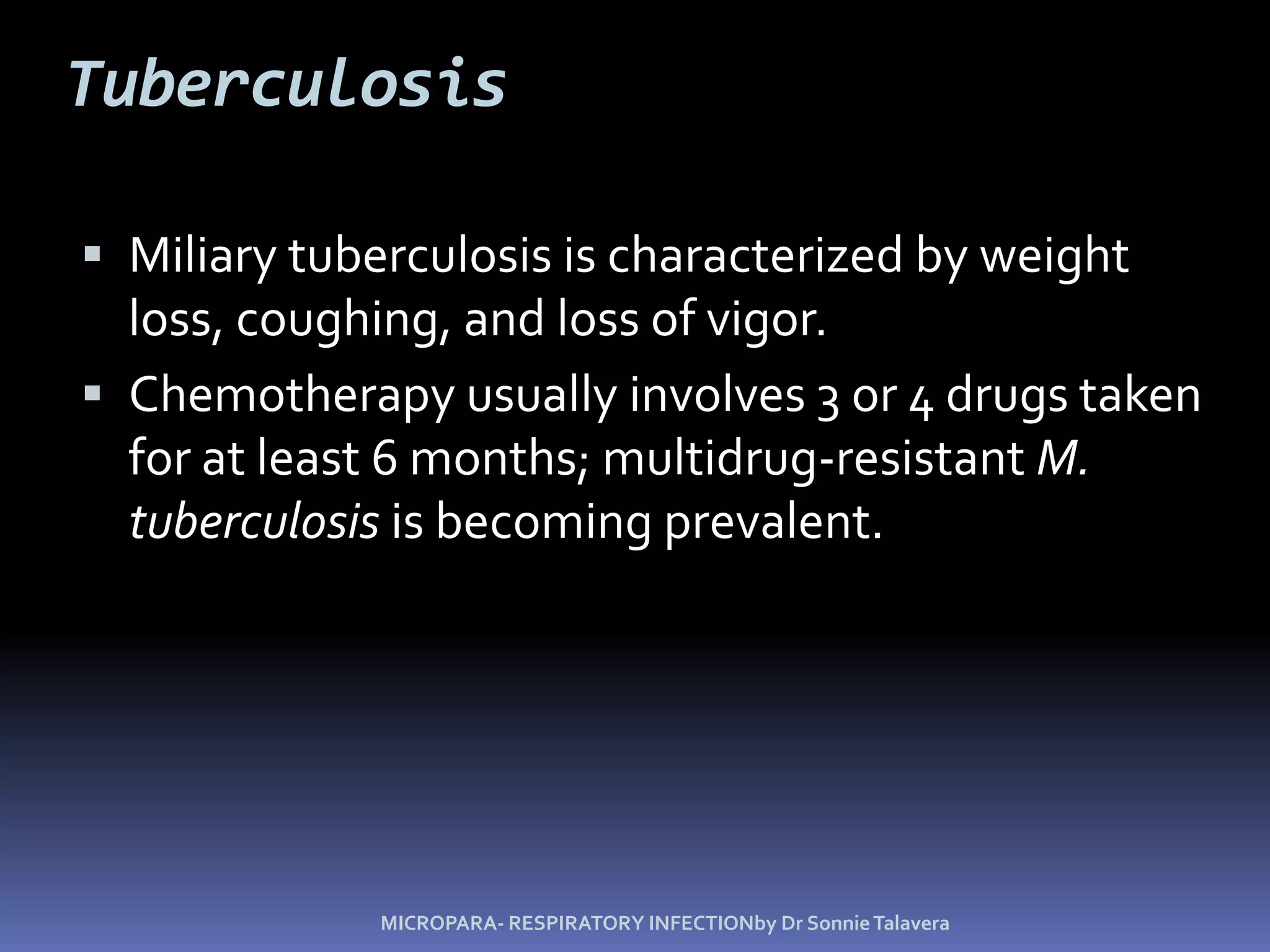
Tuberculosis Miliary tuberculosis is characterized by weight loss, coughing, and loss of vigor.Chemotherapy usually involves 3 or 4 drugs taken for at least 6 months; multidrug-resistant M. tuberculosis is becoming prevalent.MICROPARA- RESPIRATORY INFECTIONby Dr Sonnie Talavera
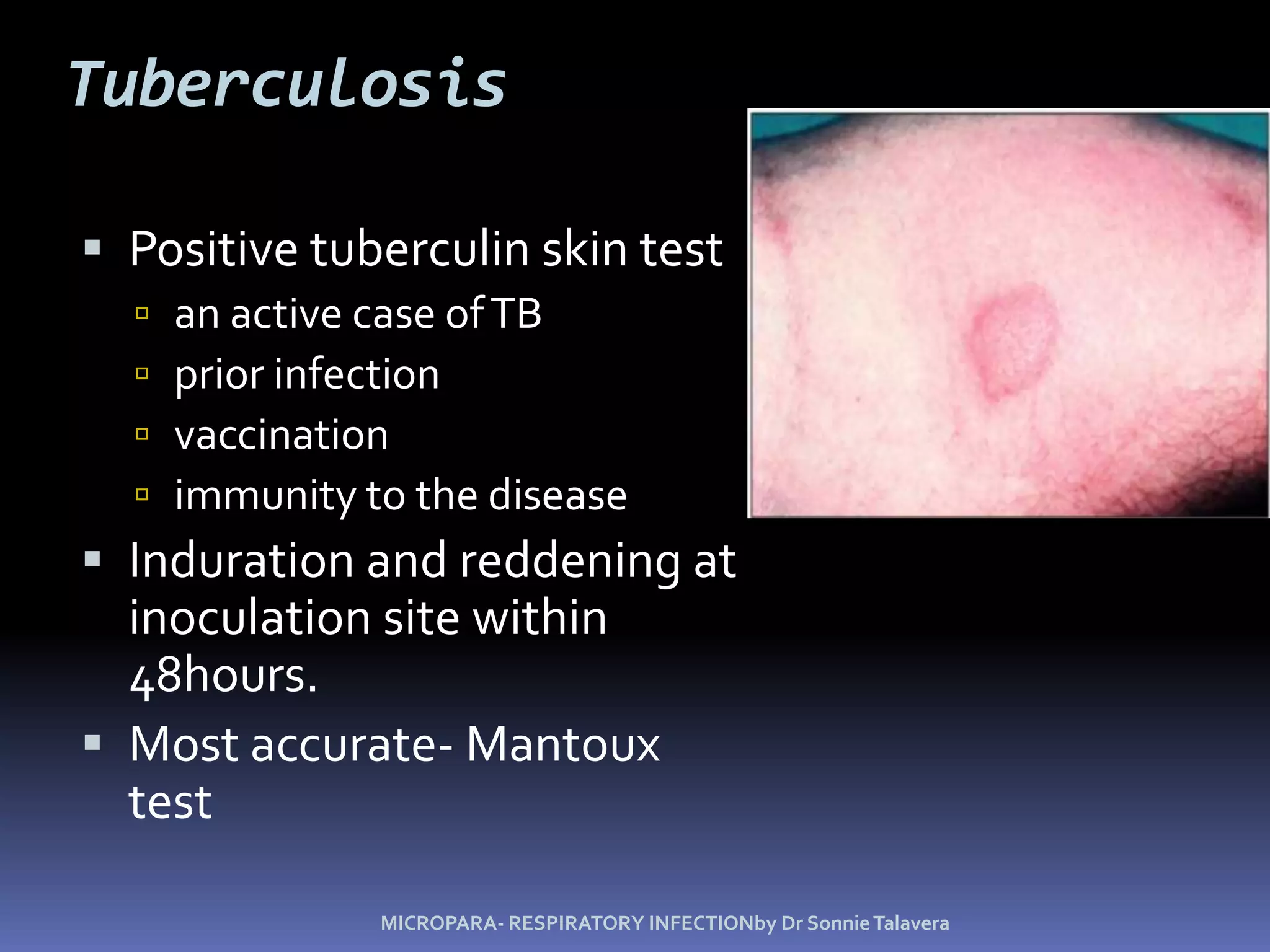
Tuberculosis Positive tuberculin skin test an active case of TBprior infectionvaccination immunity to the diseaseInduration and reddening at inoculation site within 48hours.Most accurate- Mantoux testMICROPARA- RESPIRATORY INFECTIONby Dr Sonnie Talavera
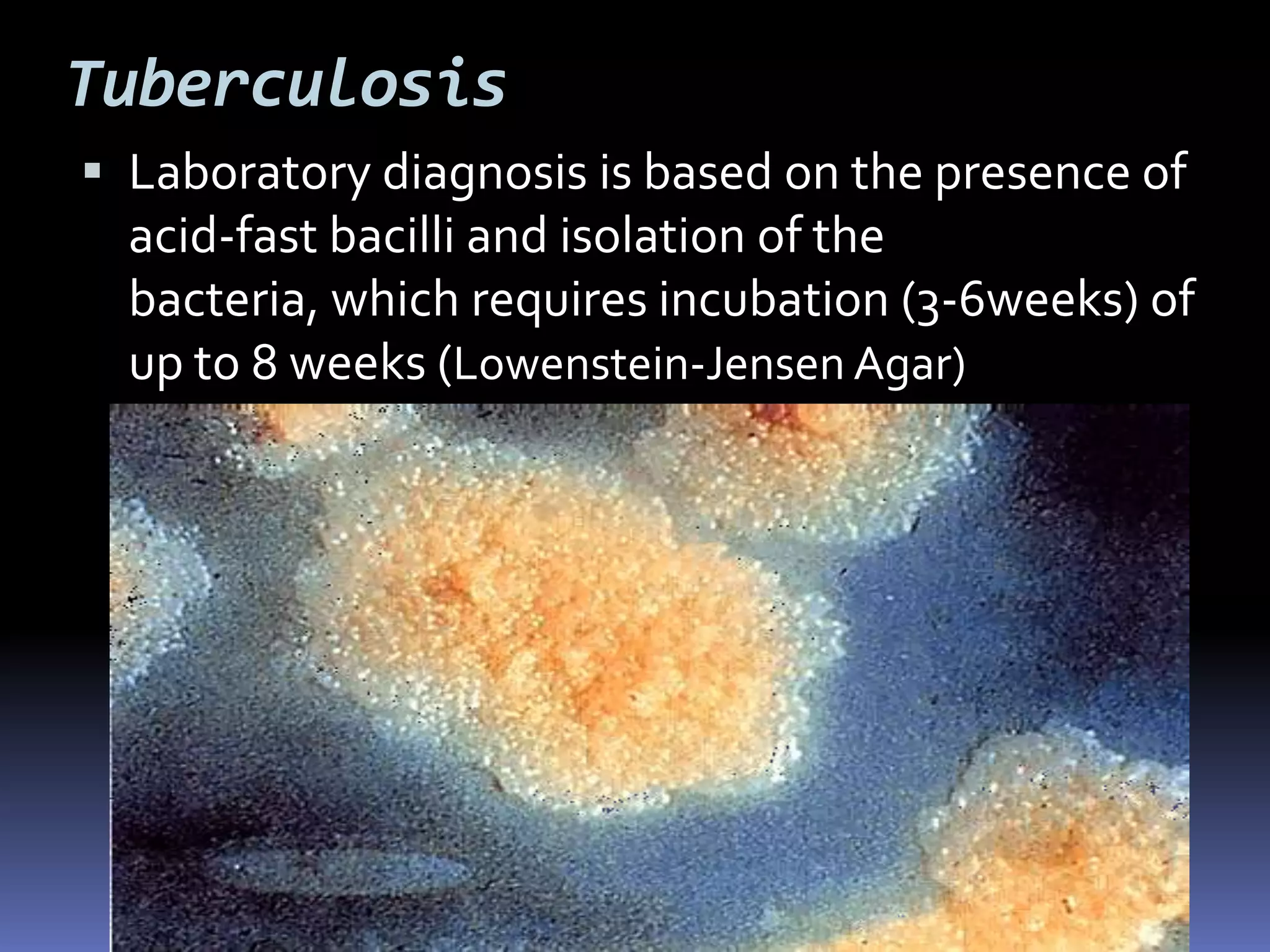
Tuberculosis Laboratory diagnosis is based on the presence of acid-fast bacilli and isolation of the bacteria, which requires incubation (3-6weeks) of up to 8 weeks (Lowenstein-Jensen Agar)MICROPARA- RESPIRATORY INFECTIONby Dr Sonnie Talavera
PPD Tuberculosis Skin Test CriteriaPPD = Purified Protein Derivative from M. tuberculosis
MICROPARA- RESPIRATORY INFECTIONby Dr Sonnie Talavera
Chest X-Ray of Patient with Active Pulmonary Tuberculosis
Tuberculosis Mycobacterium boviscauses bovine tuberculosis transmitted to humans by unpasteurized milk.affect the bones or lymphatic system.BCG vaccine -a live, avirulent culture of M. bovisM. avium-intracellulare complex infects patients in the late stages of HIVMICROPARA- RESPIRATORY INFECTIONby Dr Sonnie Talavera
TuberculosisTreatment of tuberculosis: Prolonged treatment with multiple antibiotics.Vaccines: BCG, live, avirulent M. bovis; not widely used in United States.MICROPARA- RESPIRATORY INFECTIONby Dr Sonnie Talavera
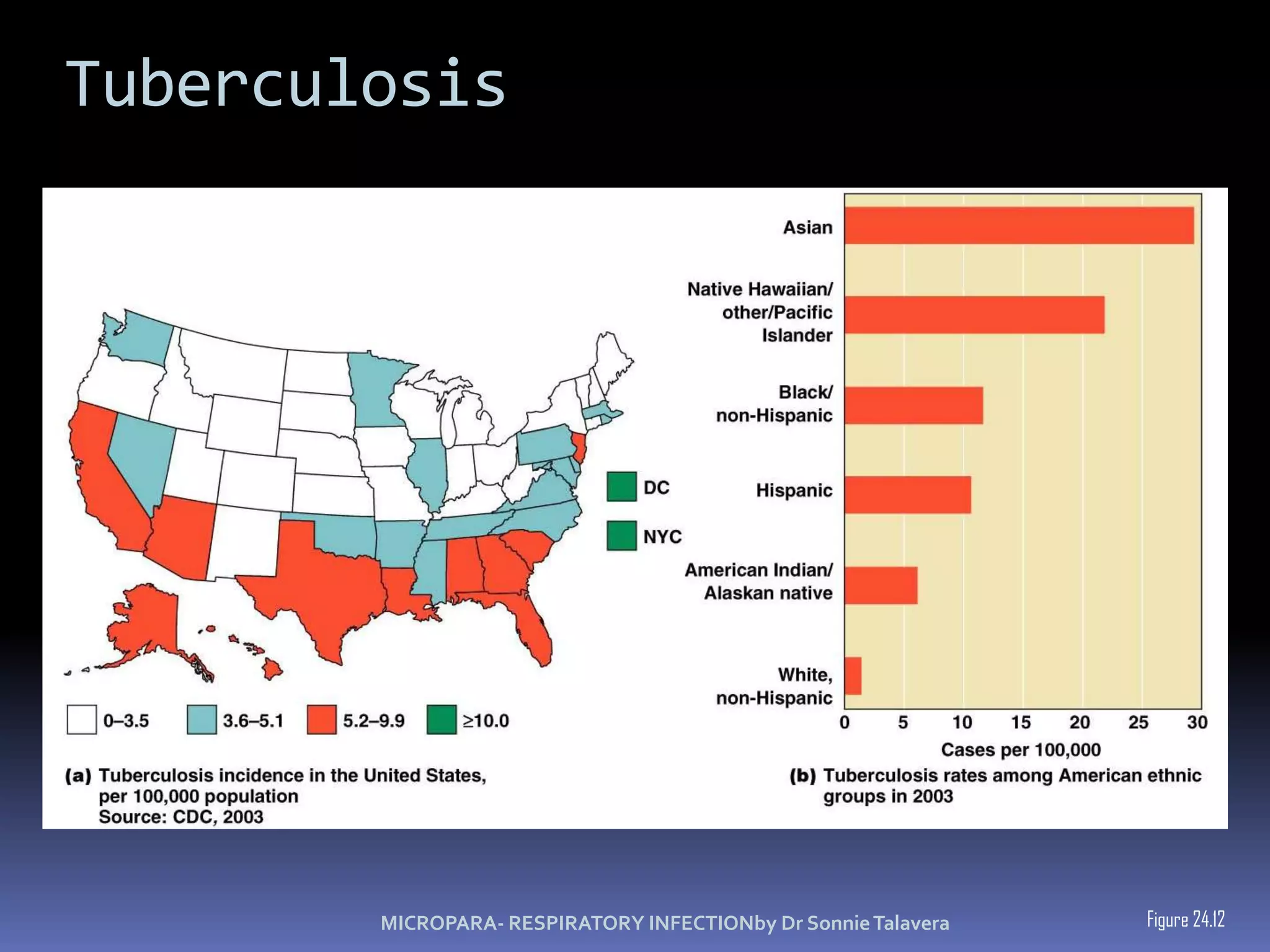
TuberculosisFigure 24.12MICROPARA- RESPIRATORY INFECTIONby Dr Sonnie Talavera
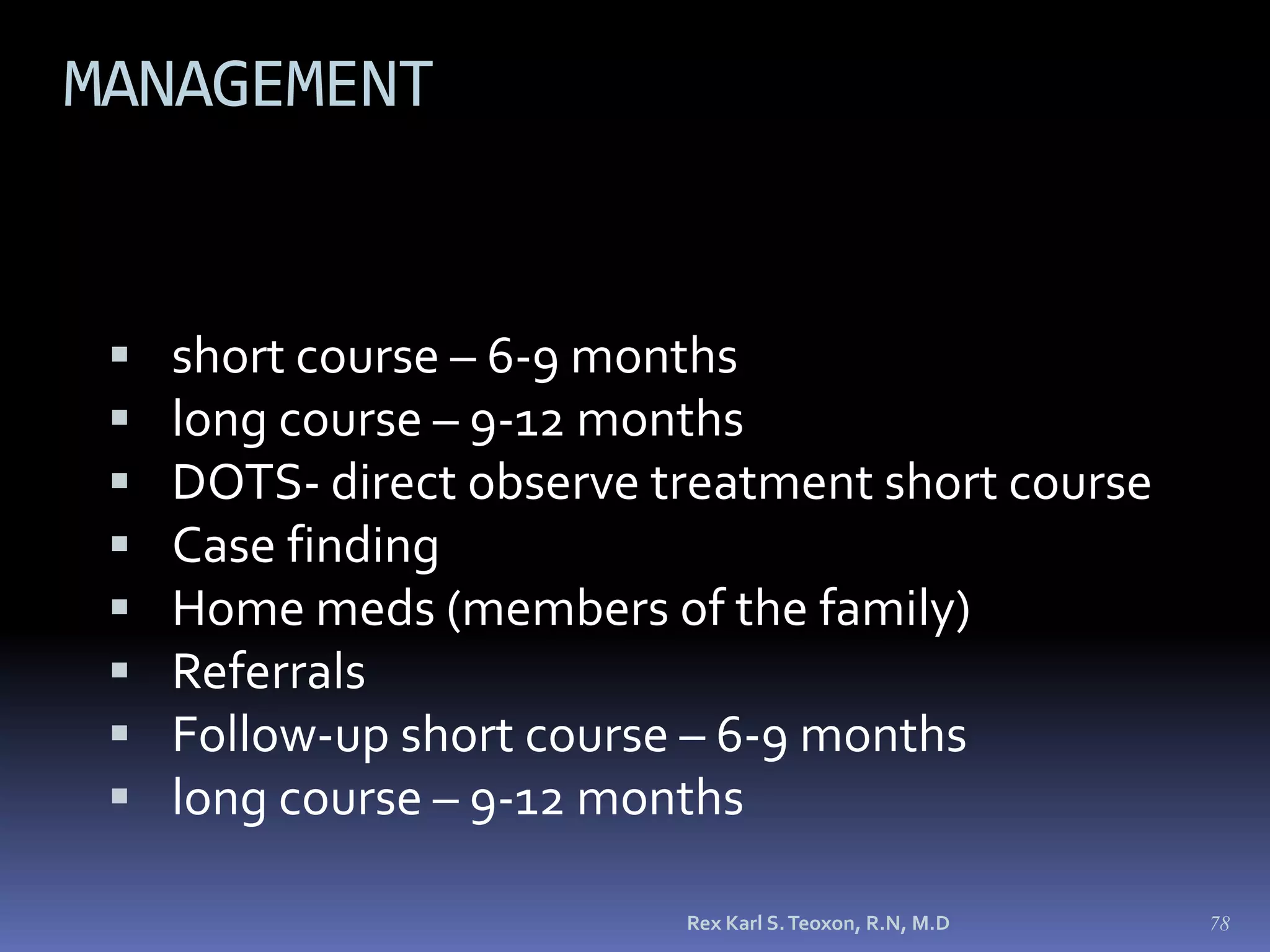
Rex Karl S. Teoxon, R.N, M.D78MANAGEMENTshort course – 6-9 months long course – 9-12 monthsDOTS- direct observe treatment short courseCase findingHome meds (members of the family)ReferralsFollow-up short course – 6-9 months long course – 9-12 months
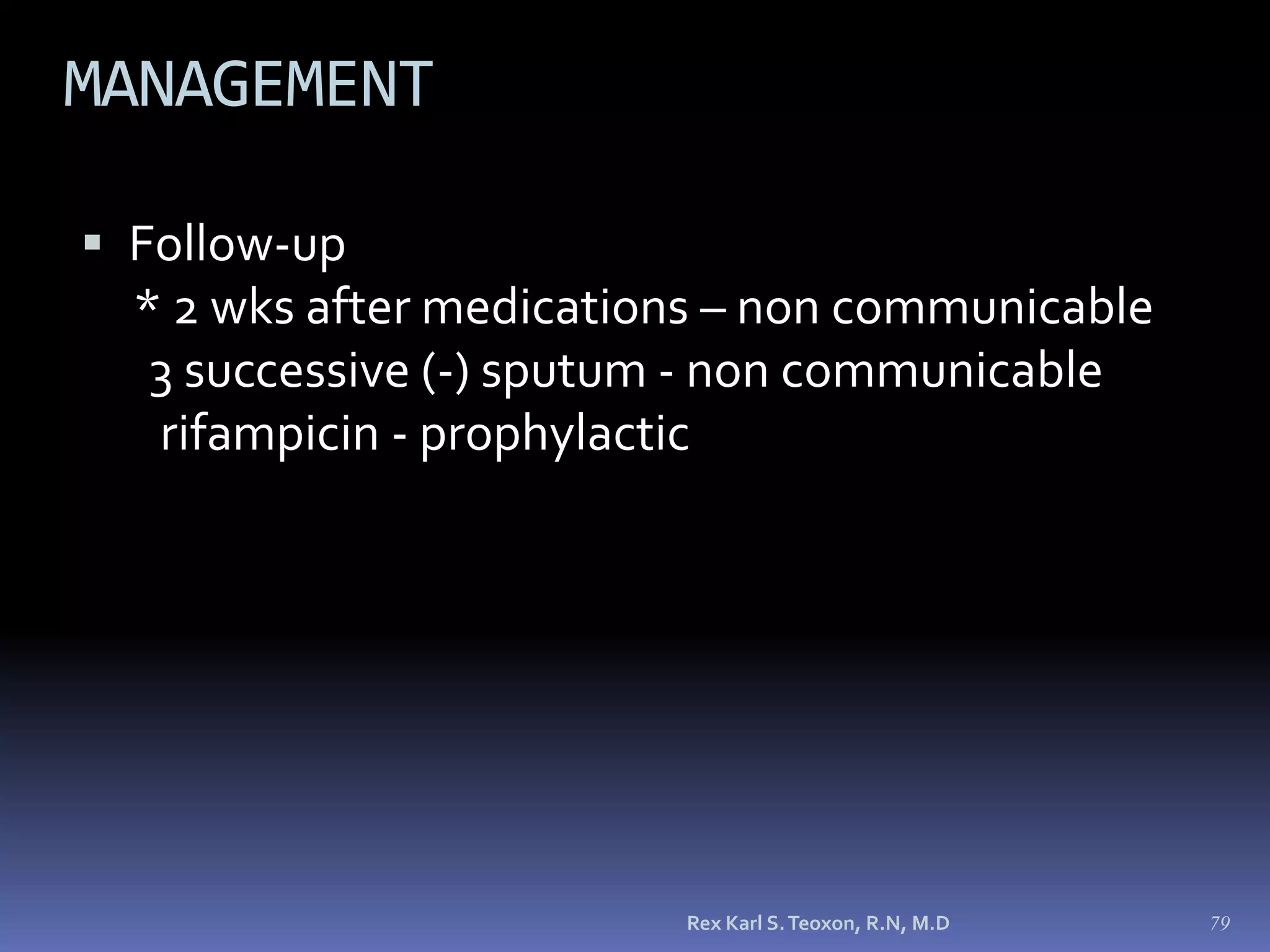
Rex Karl S. Teoxon, R.N, M.D79MANAGEMENTFollow-up     * 2 wks after medications – non communicable	  3 successive (-) sputum - non communicablerifampicin - prophylactic
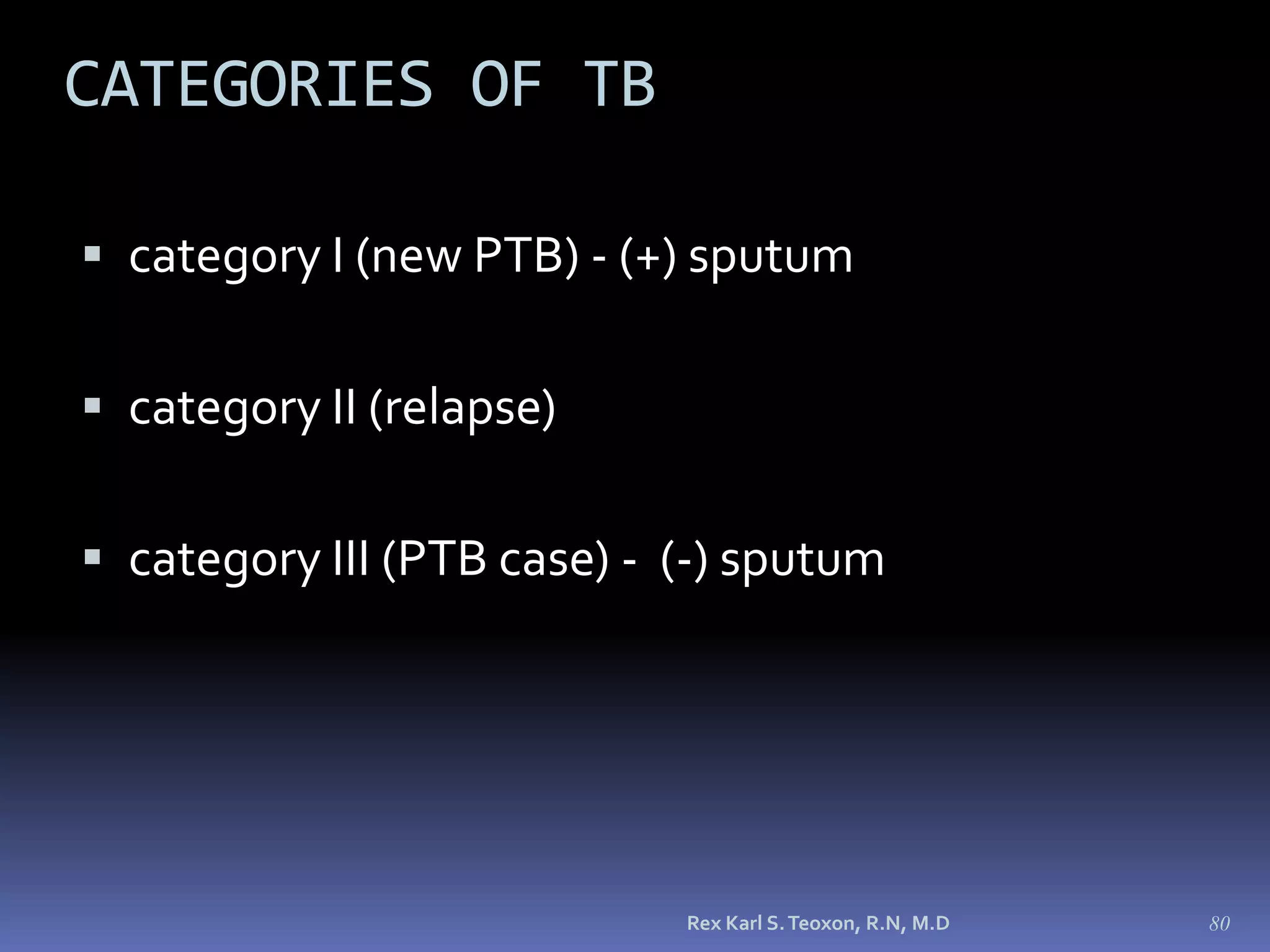
Rex Karl S. Teoxon, R.N, M.D80CATEGORIES OF TBcategory I (new PTB) - (+) sputumcategory II (relapse)category III (PTB case) -  (-) sputum
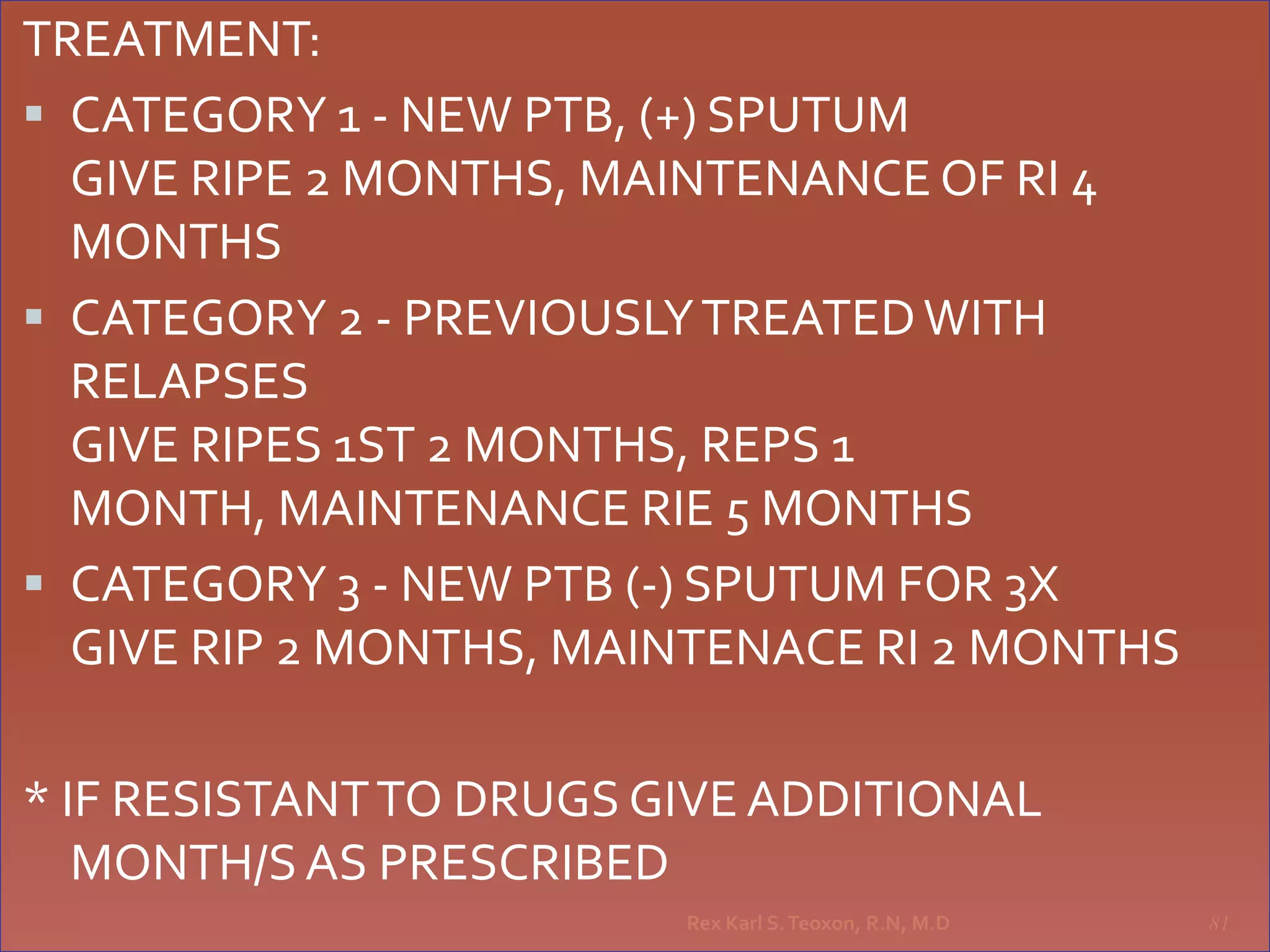
Rex Karl S. Teoxon, R.N, M.D81TREATMENT:CATEGORY 1 - NEW PTB, (+) SPUTUMGIVE RIPE 2 MONTHS, MAINTENANCE OF RI 4 MONTHSCATEGORY 2 - PREVIOUSLY TREATED WITH RELAPSESGIVE RIPES 1ST 2 MONTHS, REPS 1 MONTH, MAINTENANCE RIE 5 MONTHSCATEGORY 3 - NEW PTB (-) SPUTUM FOR 3XGIVE RIP 2 MONTHS, MAINTENACE RI 2 MONTHS* IF RESISTANT TO DRUGS GIVE ADDITIONAL MONTH/S AS PRESCRIBED
Rex Karl S. Teoxon, R.N, M.D82MDT side effectsr-orange urinei-neuritis and hepatitisp-hyperuricemiae-impairment of visions-8th cranial nerve damage
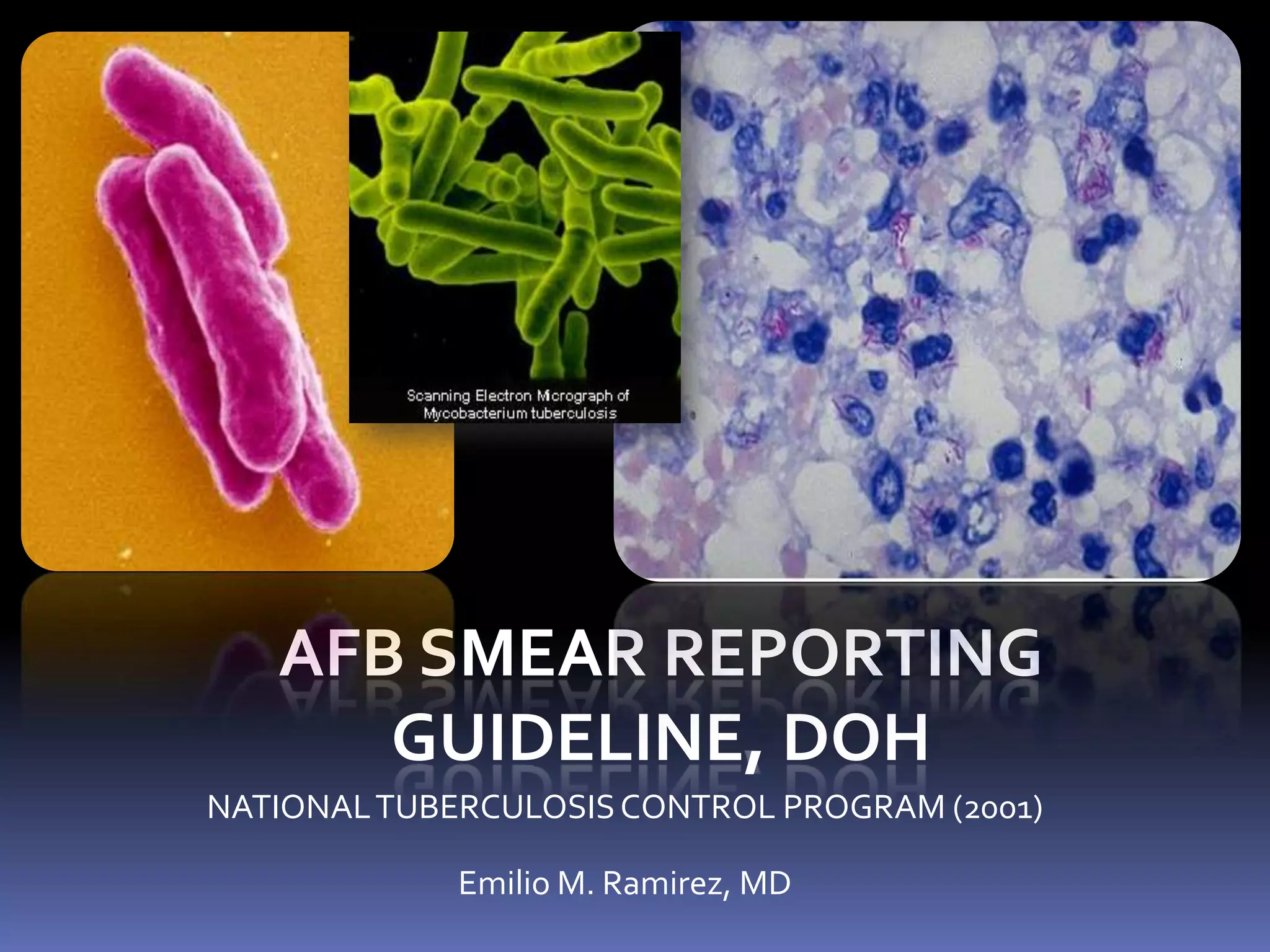
AFB SMEAR REPORTING GUIDELINE, DOHNATIONAL TUBERCULOSIS CONTROL PROGRAM (2001)Emilio M. Ramirez, MD
National Tuberculosis Control Program (2001)prevent transmission of tubercle bacilli to a healthy person
Goal:  Reduce TB mortality and prevalence through early case detection and treatmentTarget: identify at least 70% of new smear (+) cases, cure at least 85% TB patients discoveredStrategy: DOTS (directly observed treatment short course chemotheapy)
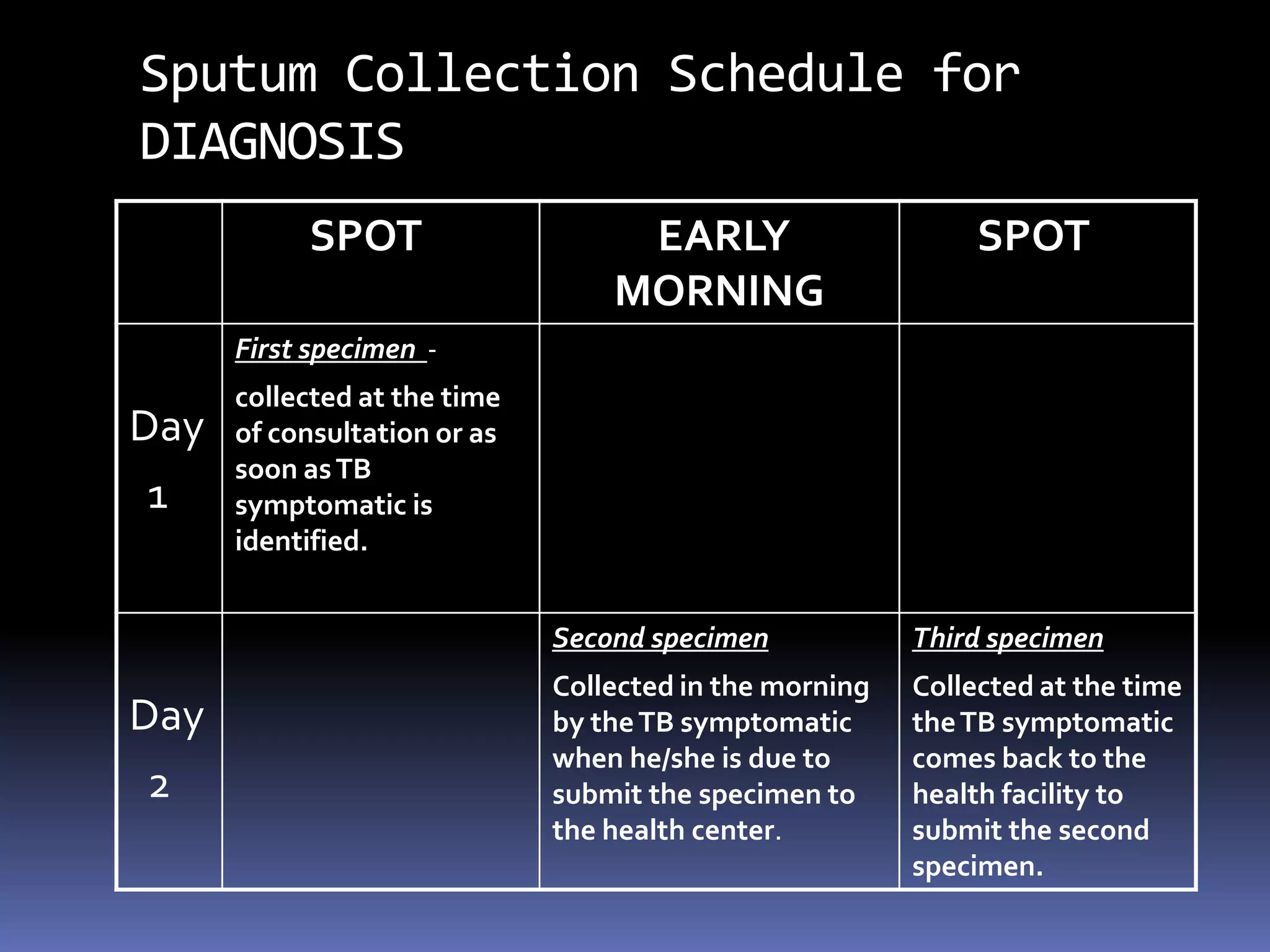
Sputum Collection Schedule forDIAGNOSIS
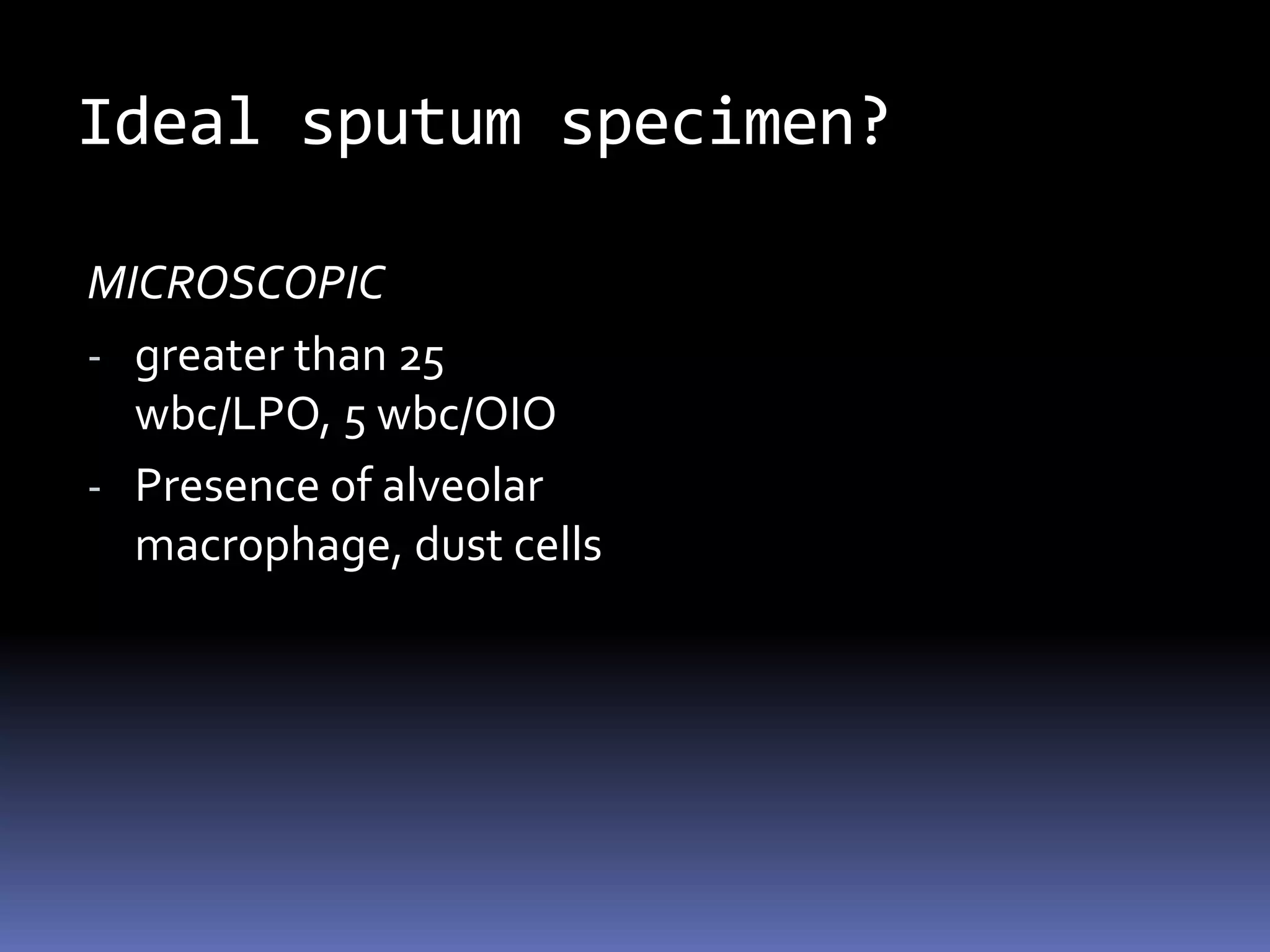
Ideal sputum specimen?MACROSCOPICYellowish
Mucopurulent
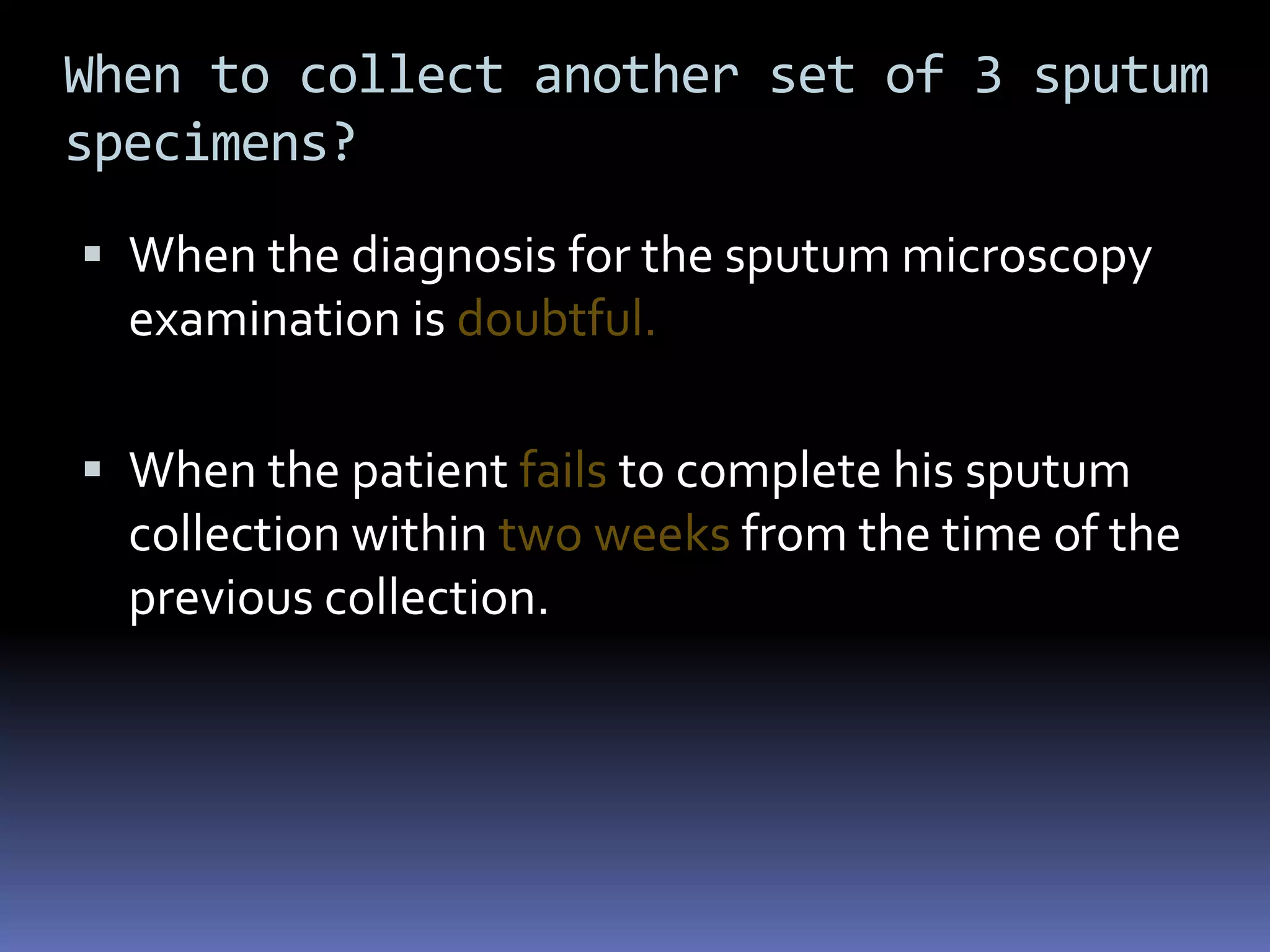
Cheesy materialWhen to collect another set of 3 sputum specimens?When the diagnosis for the sputum microscopy examination is doubtful.When the patient fails to complete his sputum collection within two weeks from the time of the previous collection.
Ideal sputum specimen?MICROSCOPICgreater than 25 wbc/LPO, 5 wbc/OIO
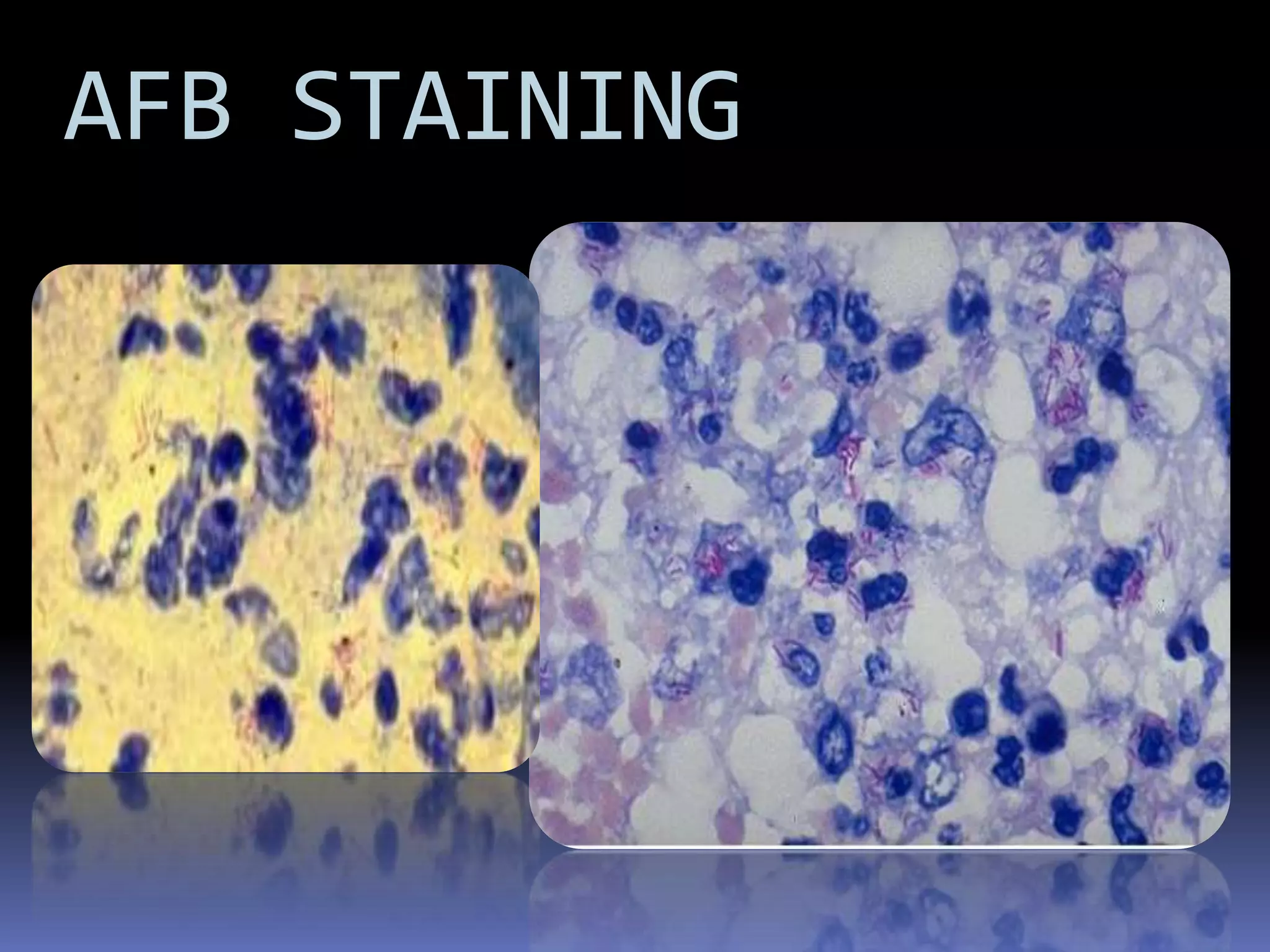
Presence of alveolar macrophage, dust cellsAFB STAINING
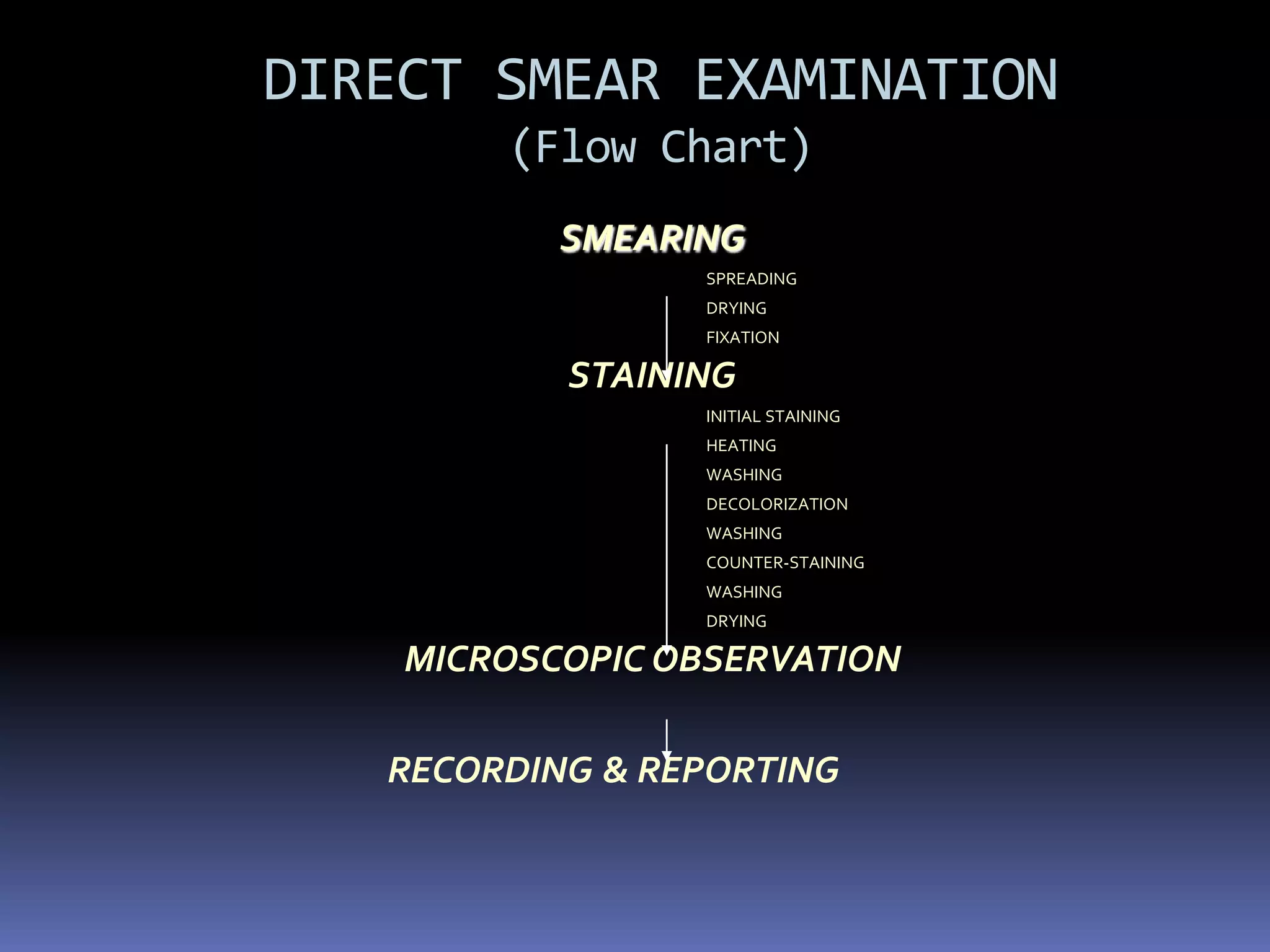
DIRECT SMEAR EXAMINATION(Flow Chart)SMEARING						SPREADING						DRYING						FIXATIONSTAINING						INITIAL STAINING						HEATING						WASHING						DECOLORIZATION						WASHING						COUNTER-STAINING						WASHING						DRYINGMICROSCOPIC OBSERVATION	RECORDING & REPORTING
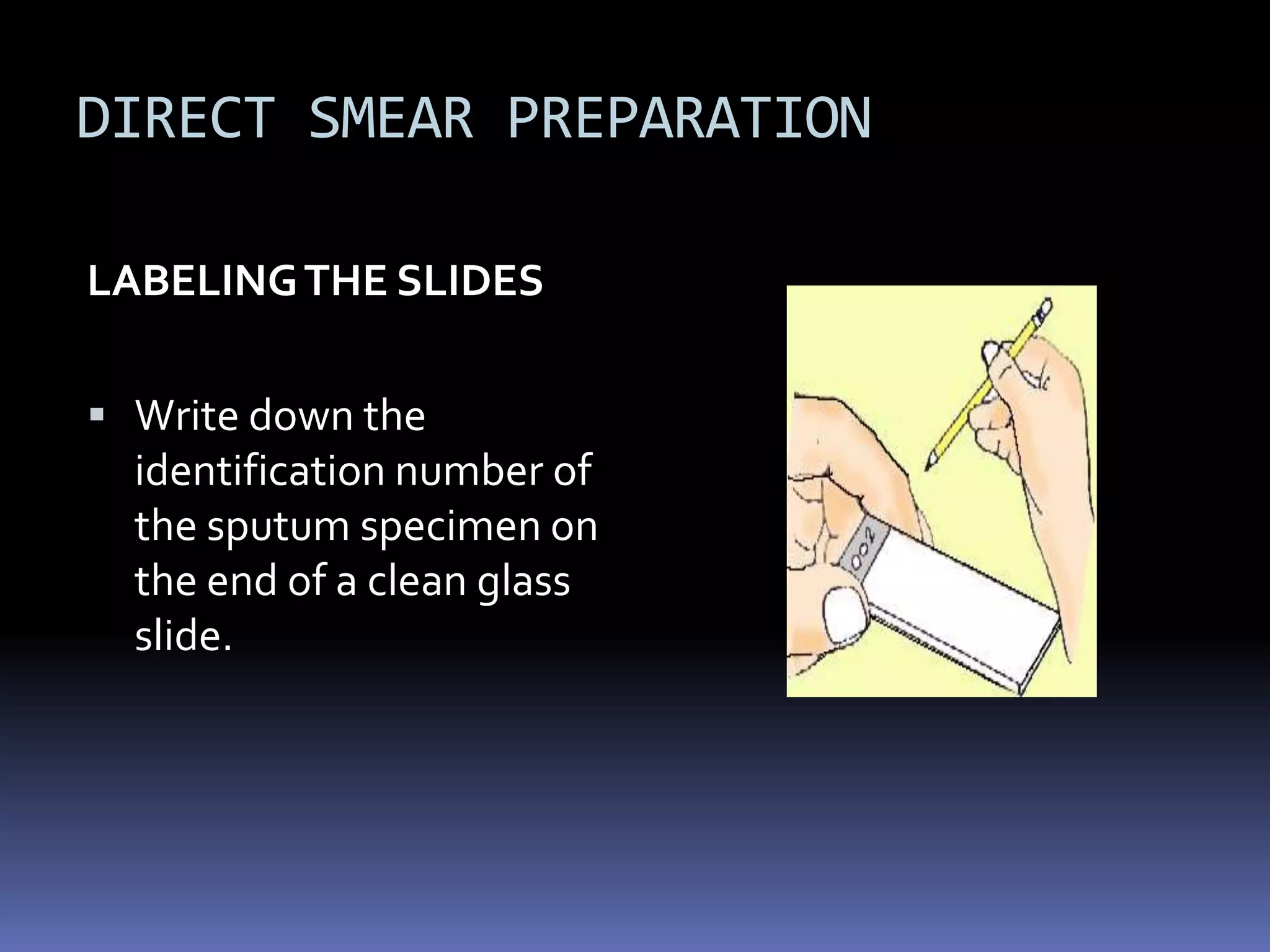
DIRECT SMEAR PREPARATIONLABELING THE SLIDESWrite down the identification number of the sputum specimen on the end of a clean glass slide.
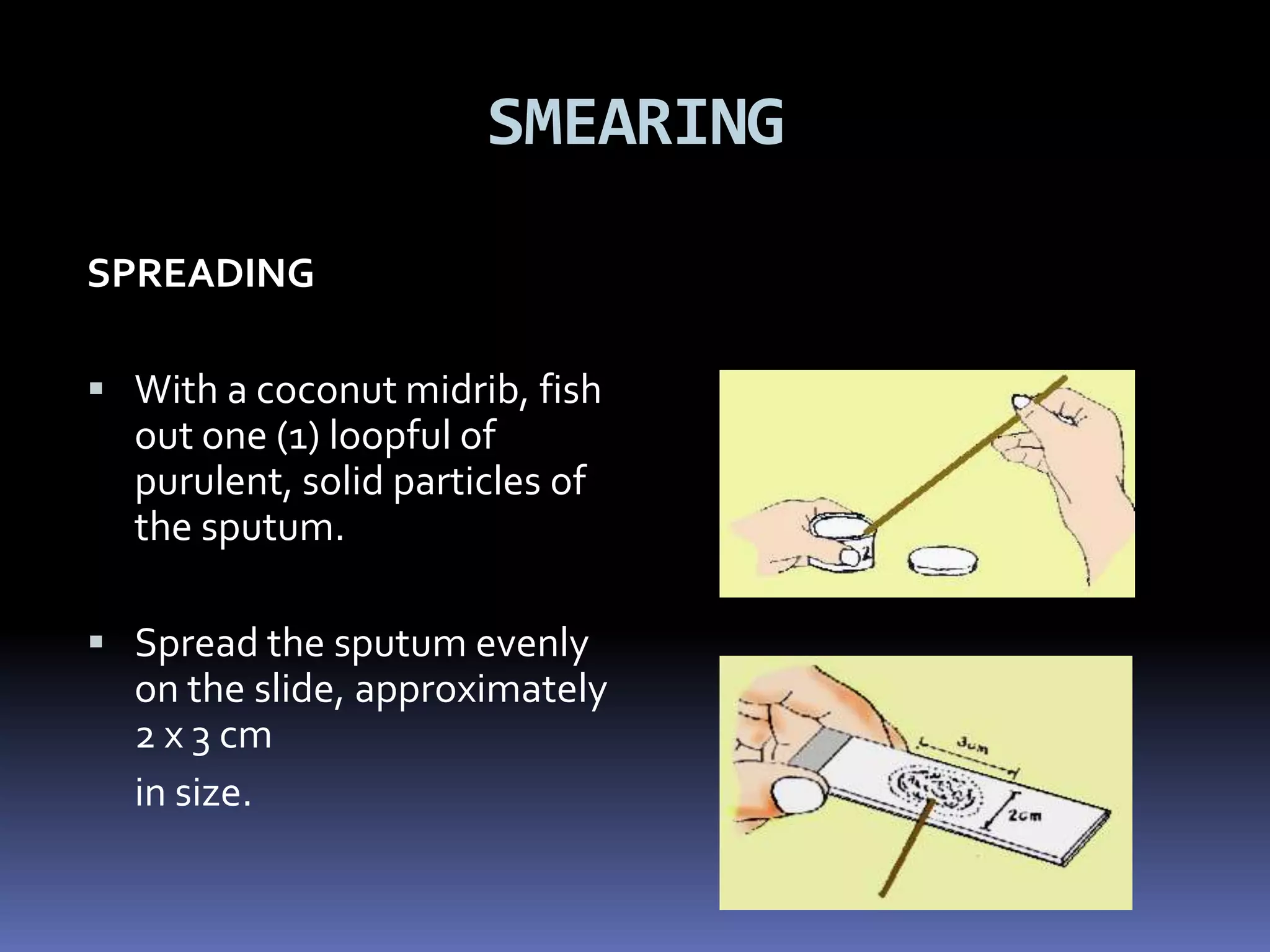
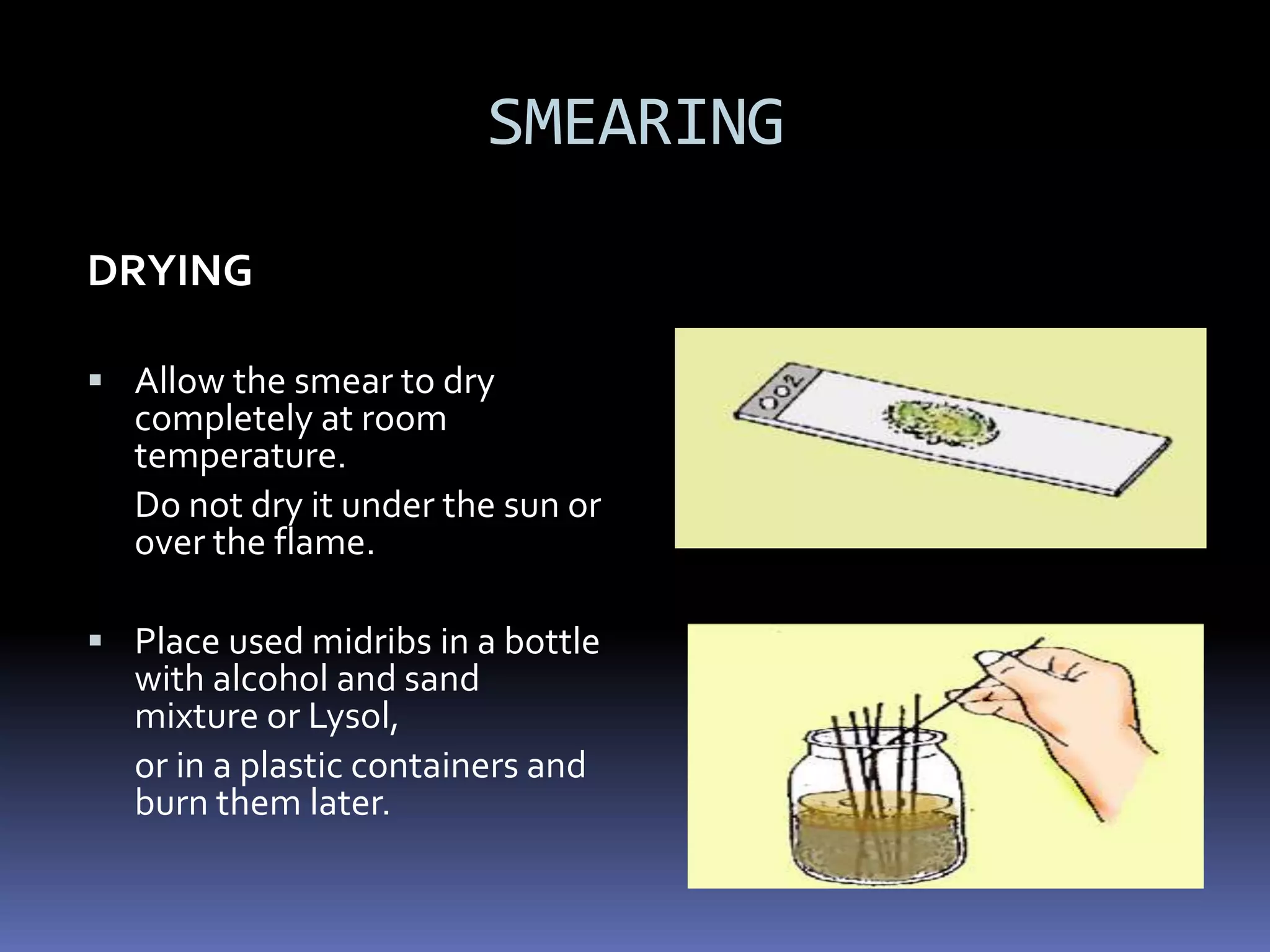
SMEARINGSPREADINGWith a coconut midrib, fish out one (1) loopful of purulent, solid particles of the sputum.Spread the sputum evenly on the slide, approximately 2 x 3 cm 	in size.
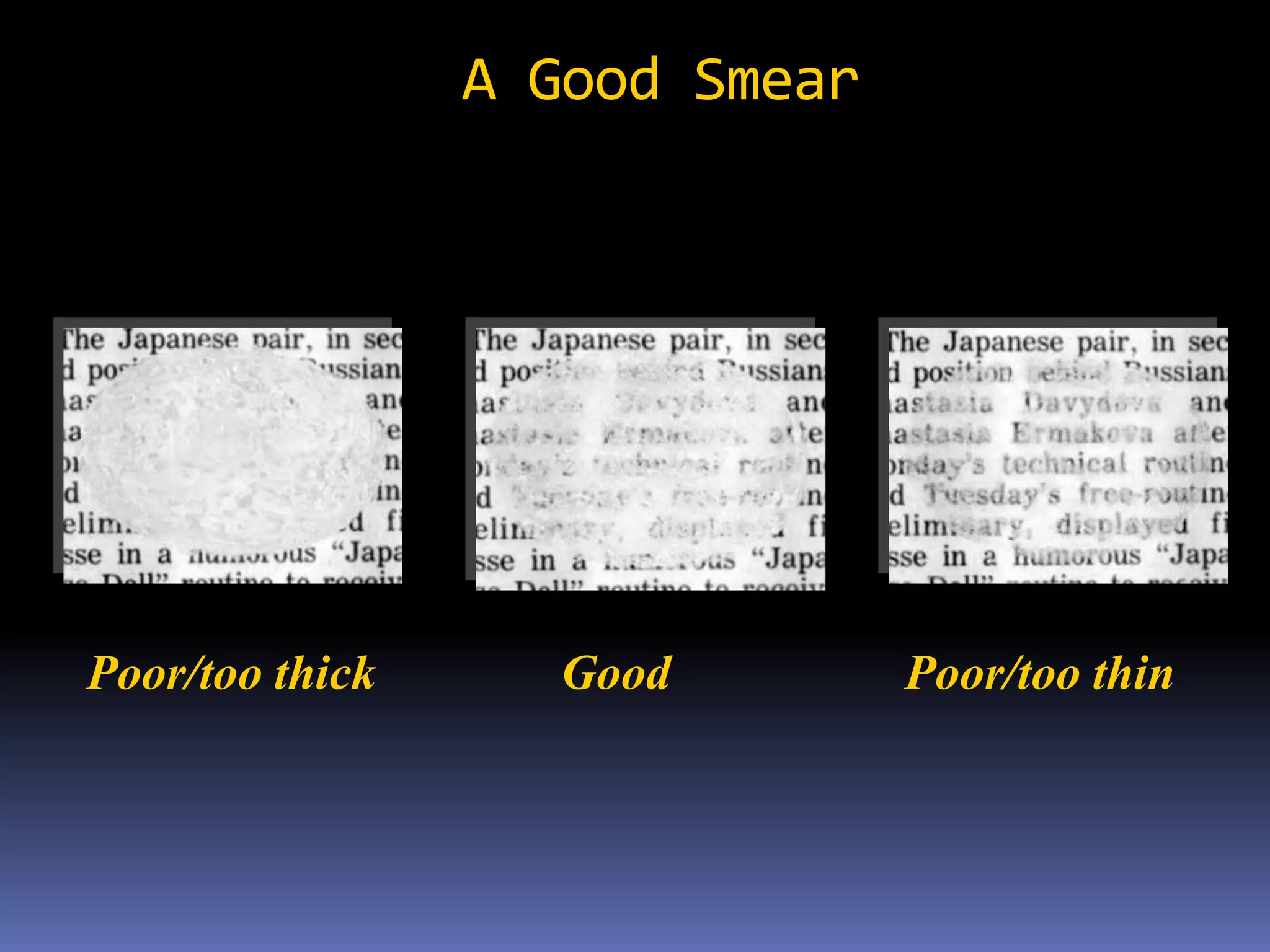
A Good SmearPoor/too thick               Good                   Poor/too thin
SMEARINGDRYINGAllow the smear to dry completely at room temperature. 	Do not dry it under the sun or over the flame.Place used midribs in a bottle with alcohol and sand mixture or Lysol, 	or in a plastic containers and burn them later.
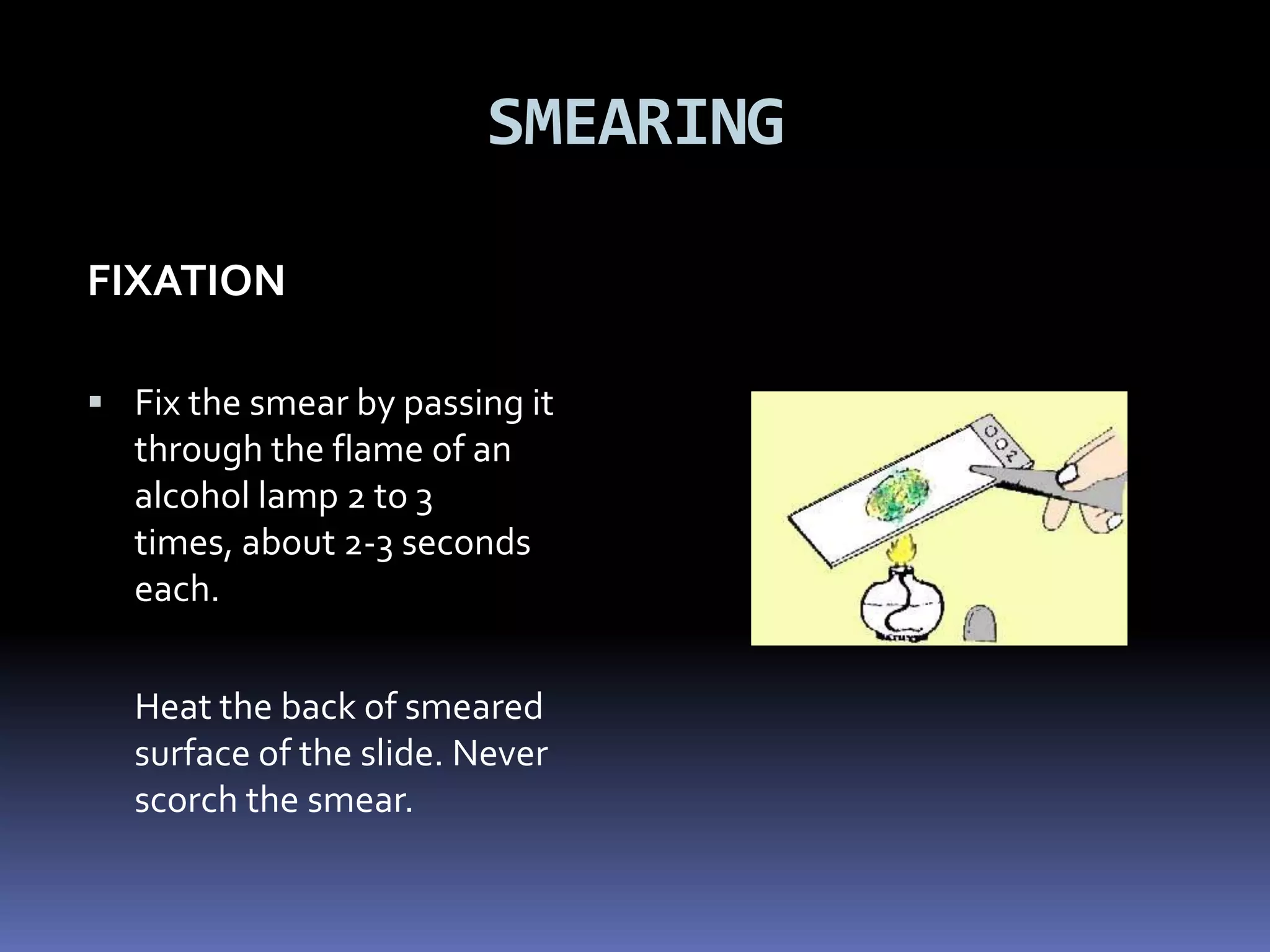
SMEARINGFIXATIONFix the smear by passing it through the flame of an alcohol lamp 2 to 3 times, about 2-3 seconds each. 	Heat the back of smeared surface of the slide. Never scorch the smear.
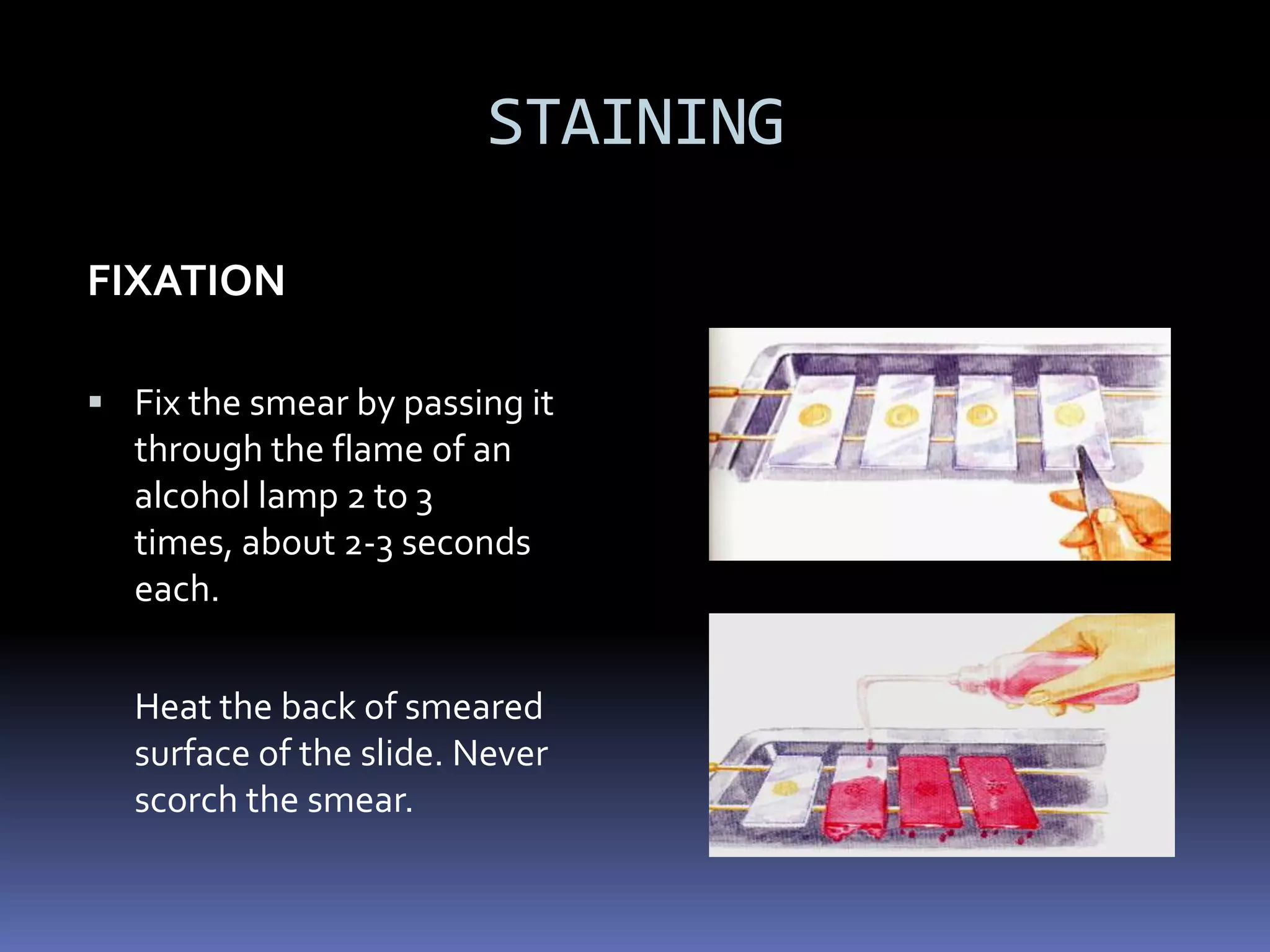
STAININGFIXATIONFix the smear by passing it through the flame of an alcohol lamp 2 to 3 times, about 2-3 seconds each. 	Heat the back of smeared surface of the slide. Never scorch the smear.
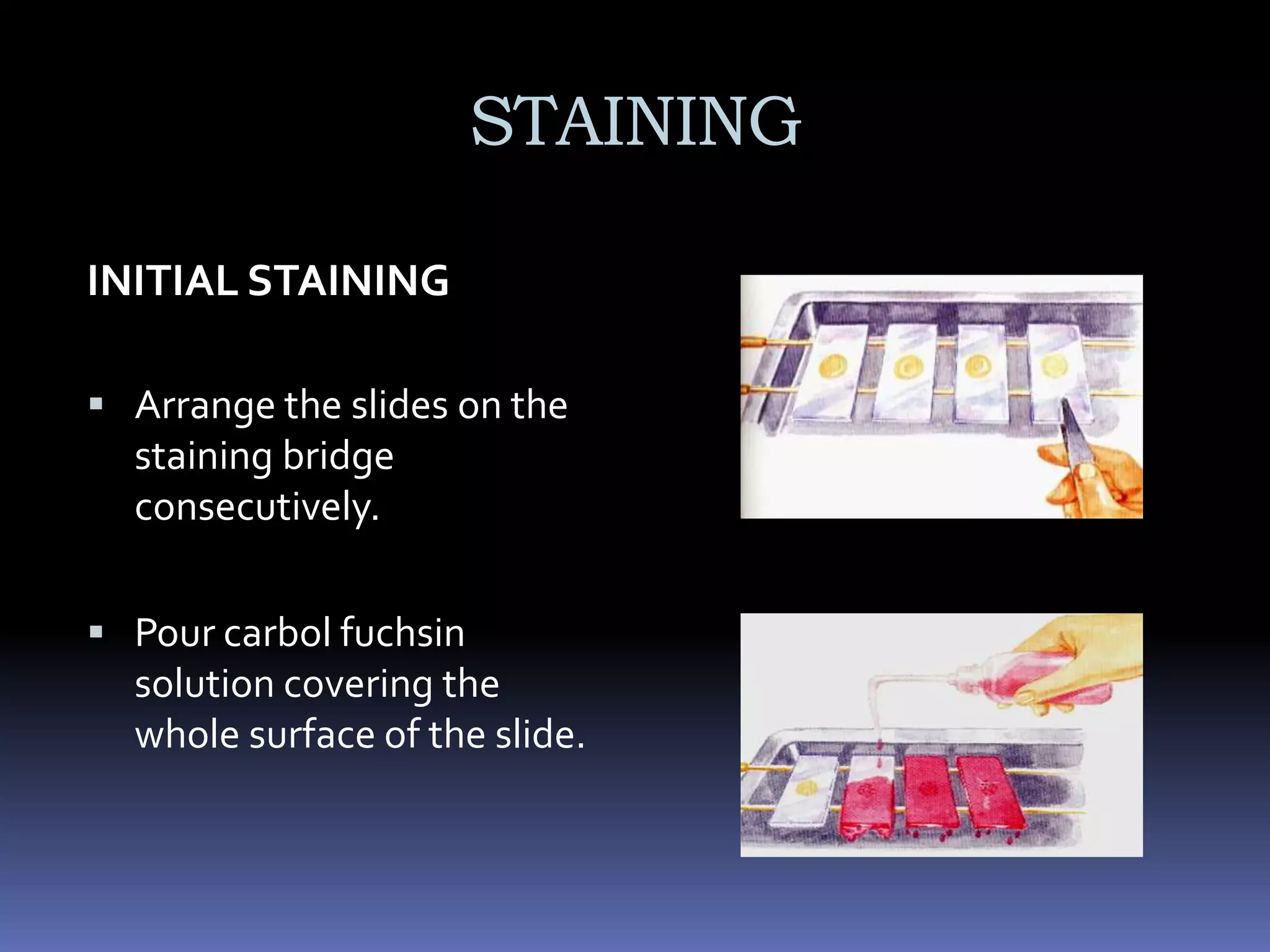
STAININGINITIAL STAININGArrange the slides on the staining bridge consecutively. Pour carbol fuchsin solution covering the whole surface of the slide.
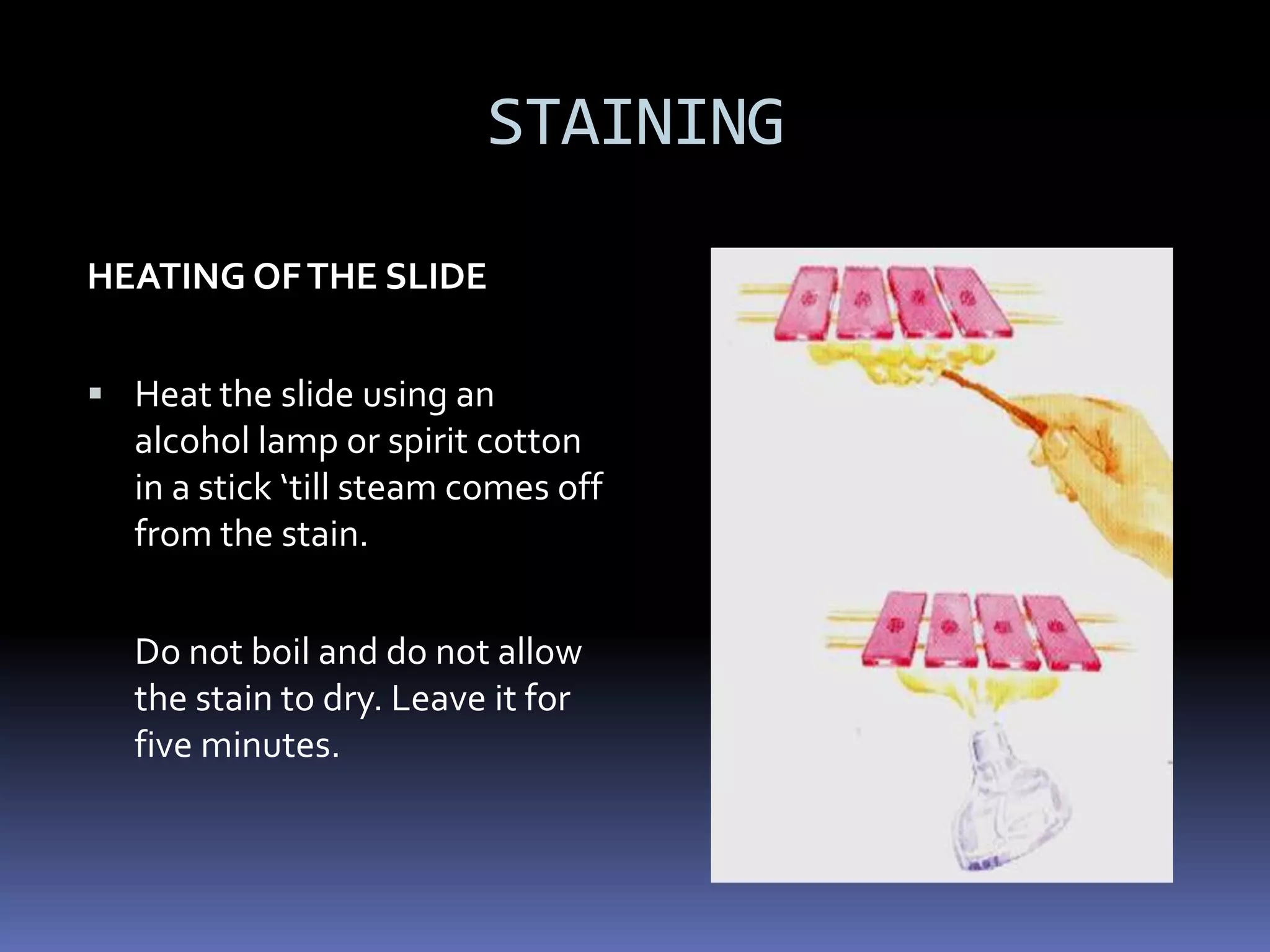
STAININGHEATING OF THE SLIDEHeat the slide using an alcohol lamp or spirit cotton in a stick ‘till steam comes off from the stain.	Do not boil and do not allow the stain to dry. Leave it for five minutes.
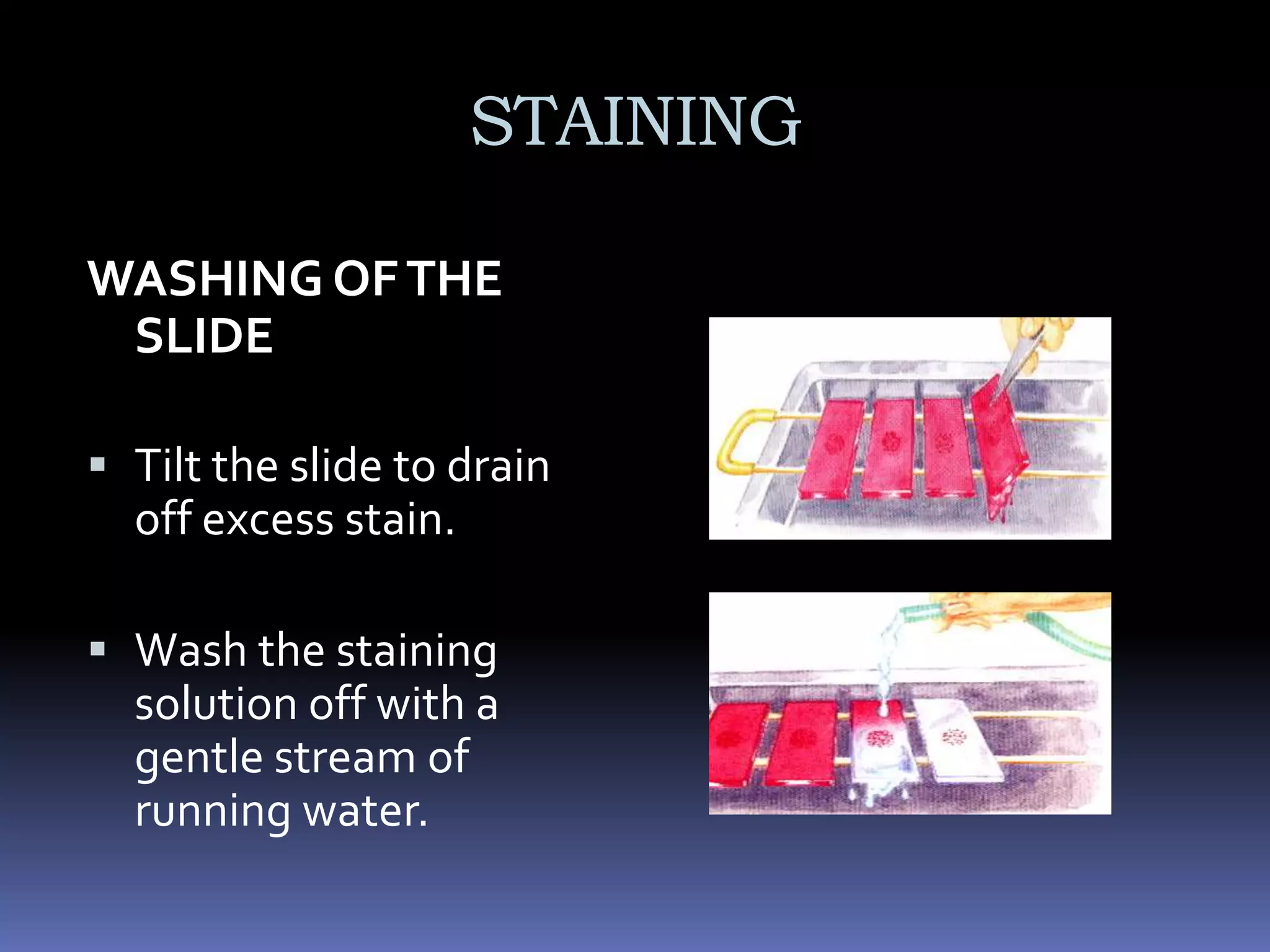
STAININGWASHING OF THE SLIDETilt the slide to drain off excess stain.Wash the staining solution off with a gentle stream of running water.
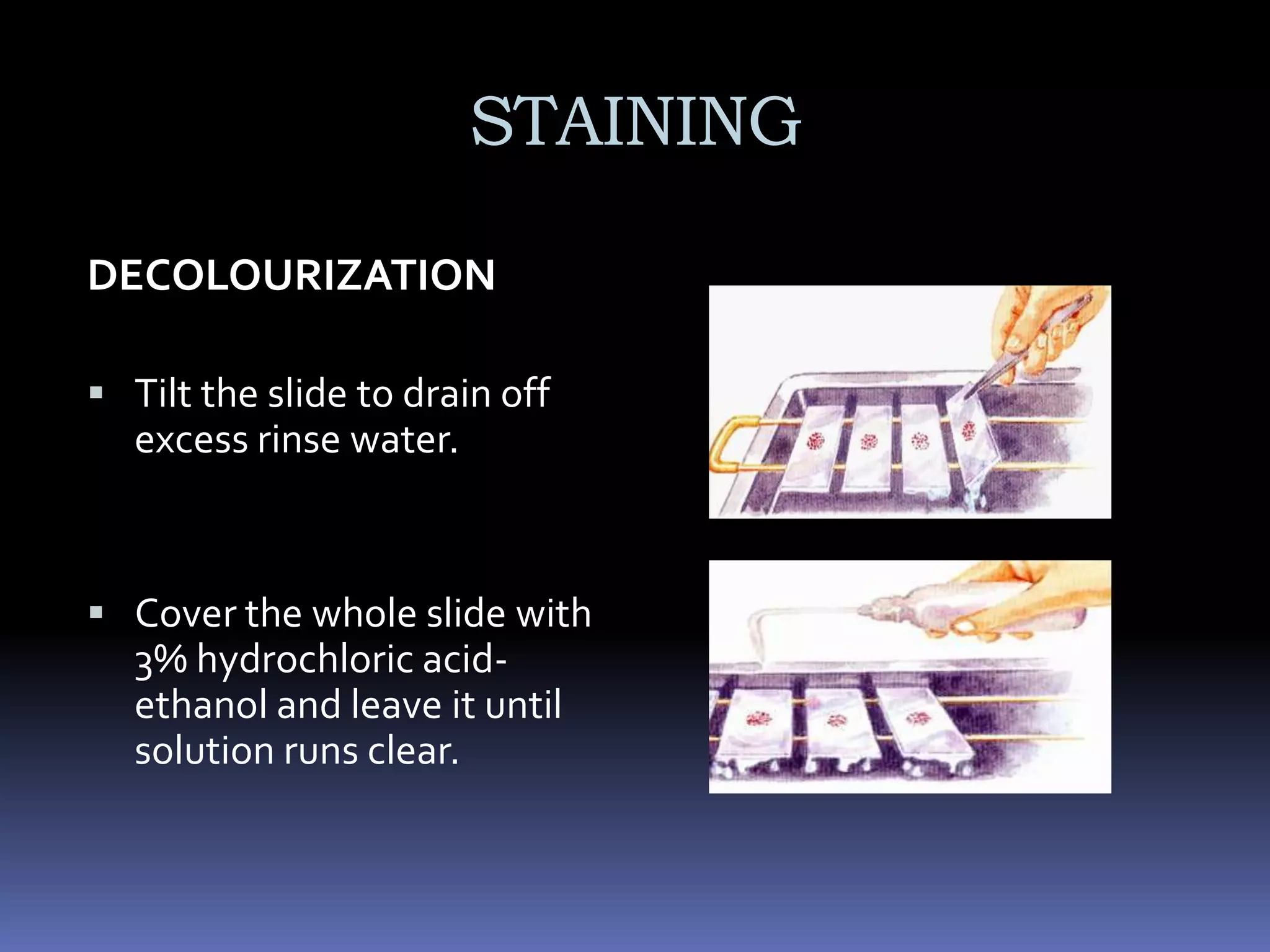
STAININGDECOLOURIZATIONTilt the slide to drain off excess rinse water.Cover the whole slide with 3% hydrochloric acid-ethanol and leave it until  solution runs clear.
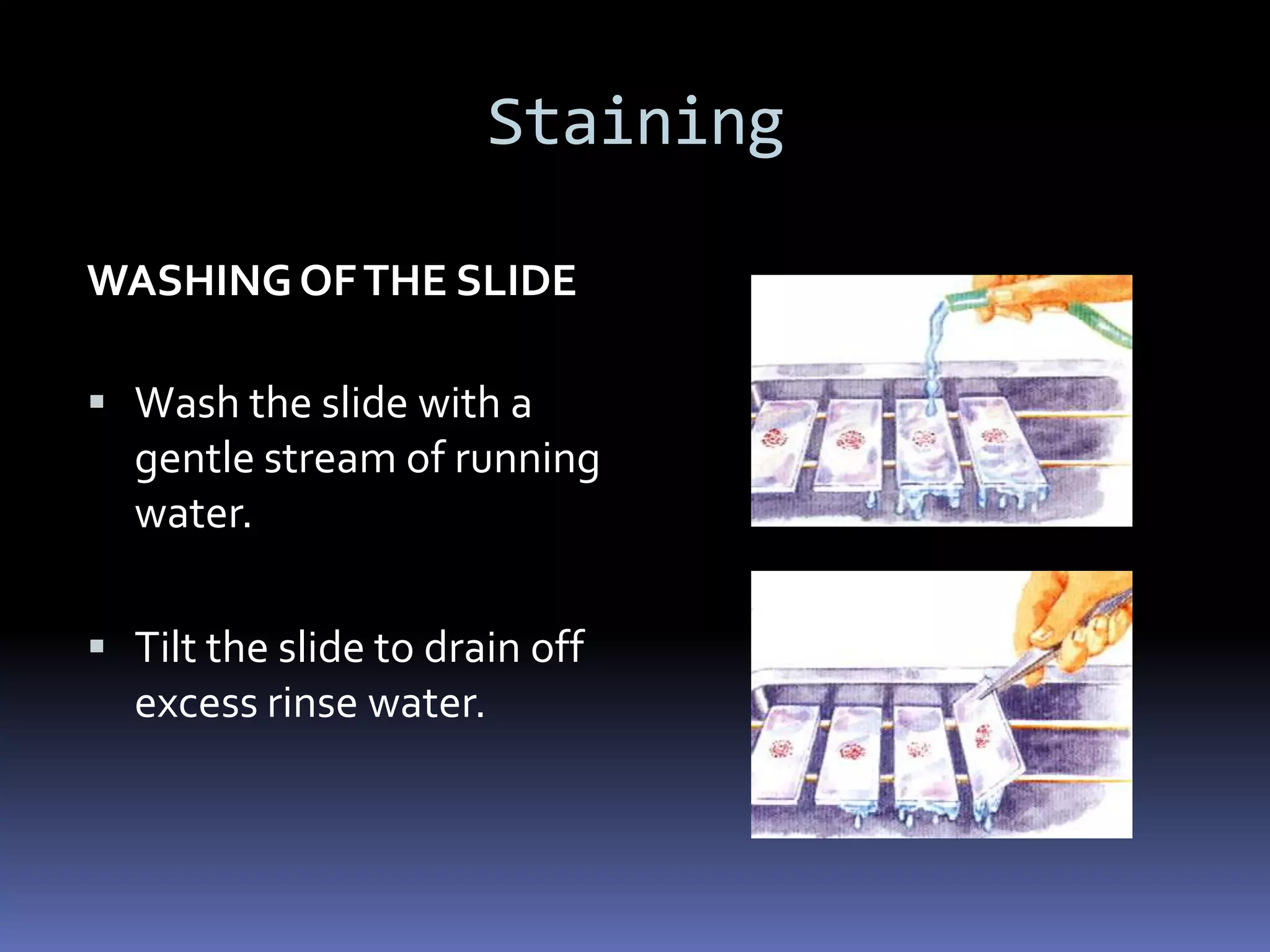
StainingWASHING OF THE SLIDEWash the slide with a gentle stream of running water.Tilt the slide to drain off excess rinse water.
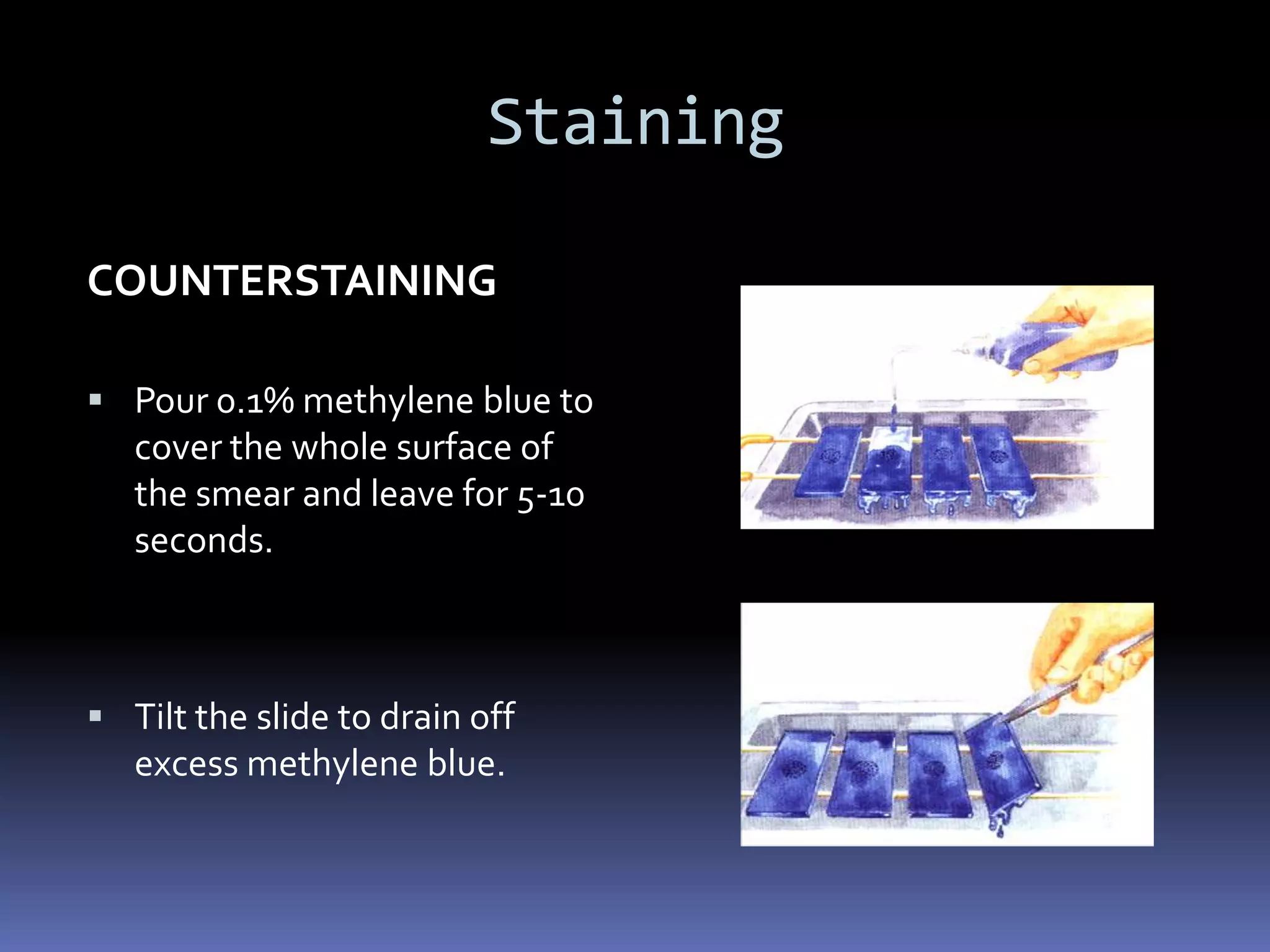
StainingCOUNTERSTAININGPour 0.1% methylene blue to cover the whole surface of the smear and leave for 5-10 seconds.Tilt the slide to drain off excess methylene blue.
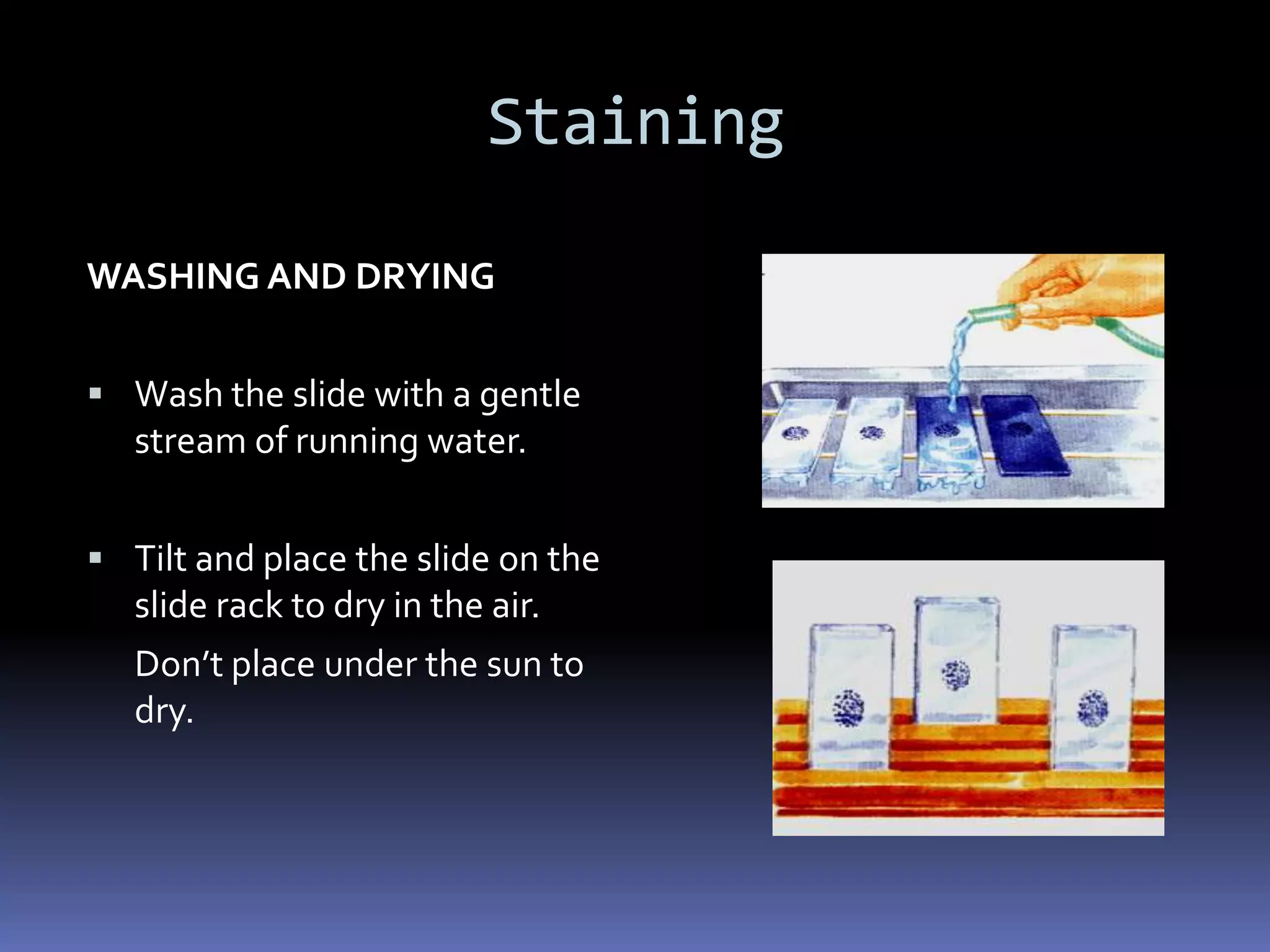
StainingWASHING AND DRYINGWash the slide with a gentle stream of running water.Tilt and place the slide on the slide rack to dry in the air.	Don’t place under the sun to dry.
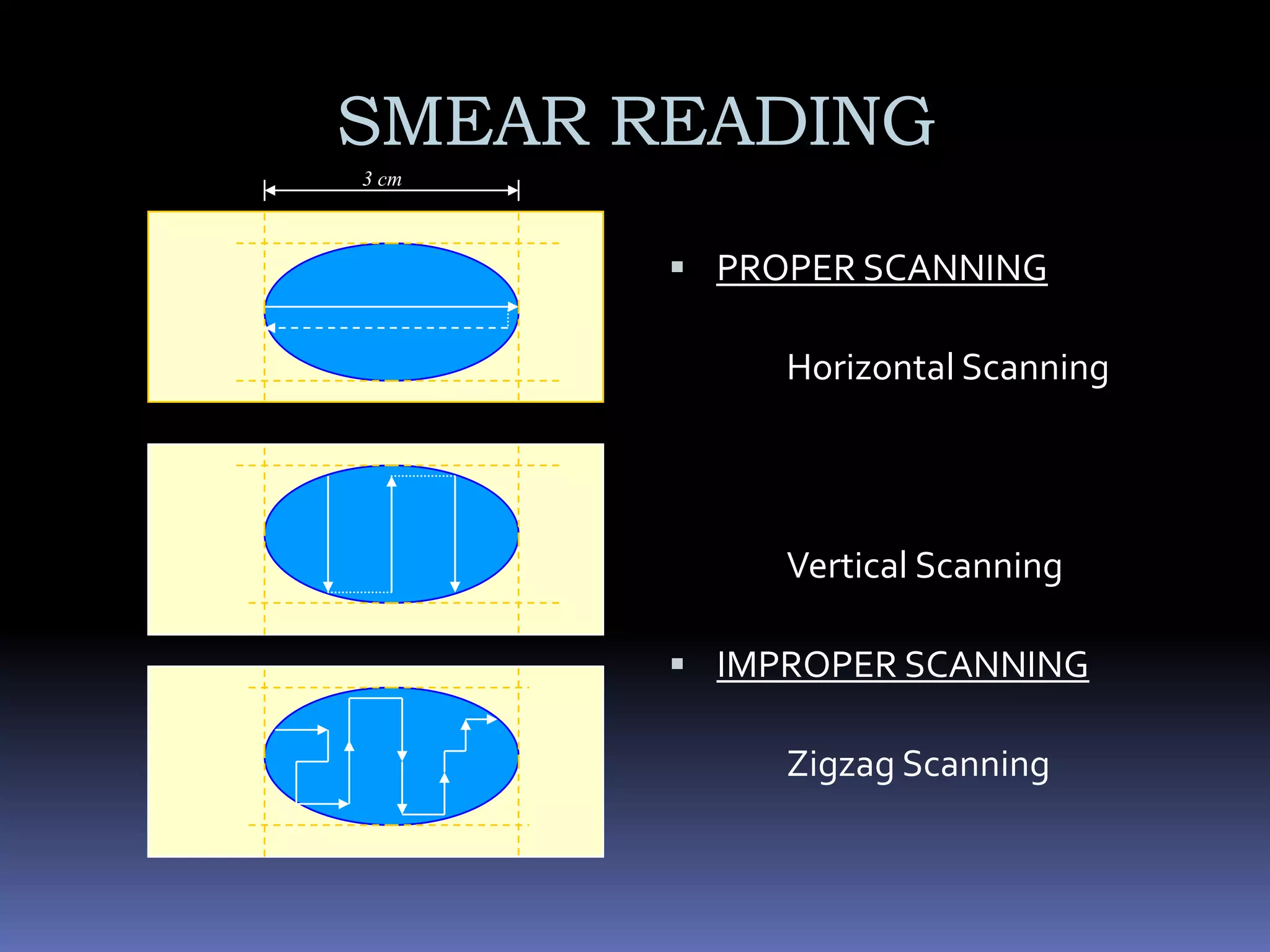
SMEAR READINGPROPER SCANNING		Horizontal Scanning		Vertical ScanningIMPROPER SCANNING		Zigzag Scanning3 cm
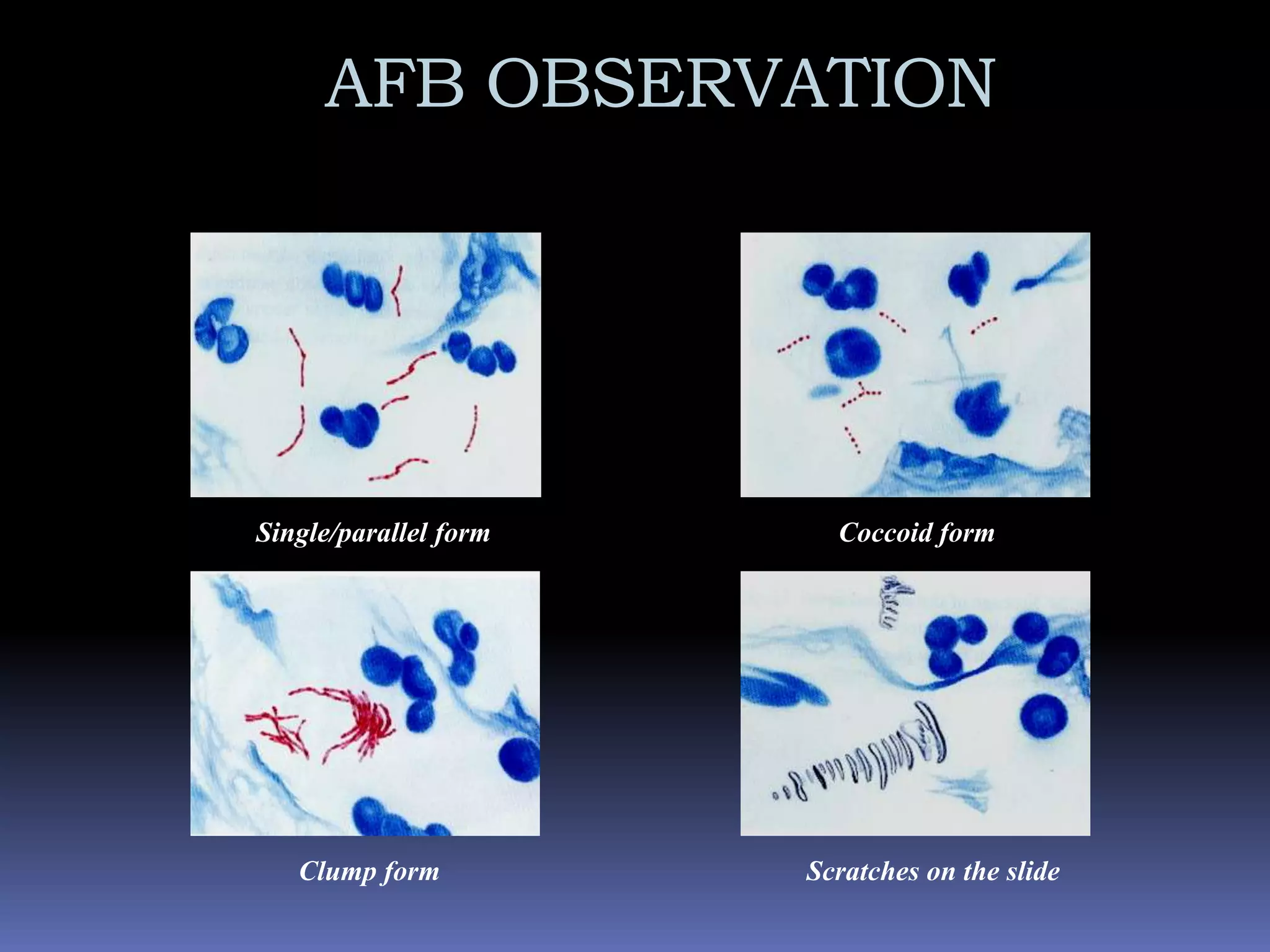
AFB OBSERVATIONSingle/parallelformCoccoid formClump formScratches on the slide
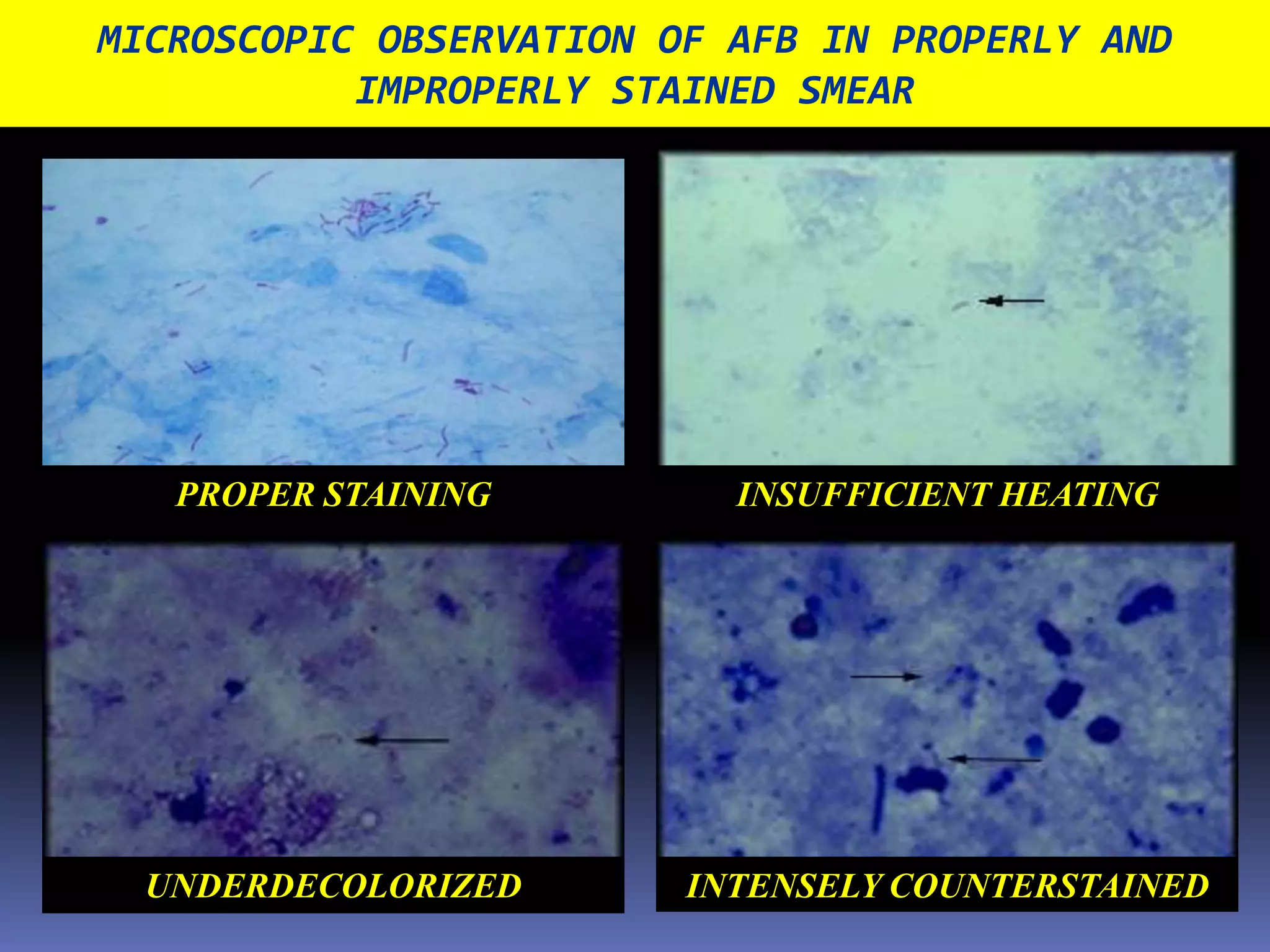
MICROSCOPIC OBSERVATION OF AFB IN PROPERLY AND IMPROPERLY STAINED SMEARPROPER STAININGINSUFFICIENT HEATINGUNDERDECOLORIZEDINTENSELY COUNTERSTAINED
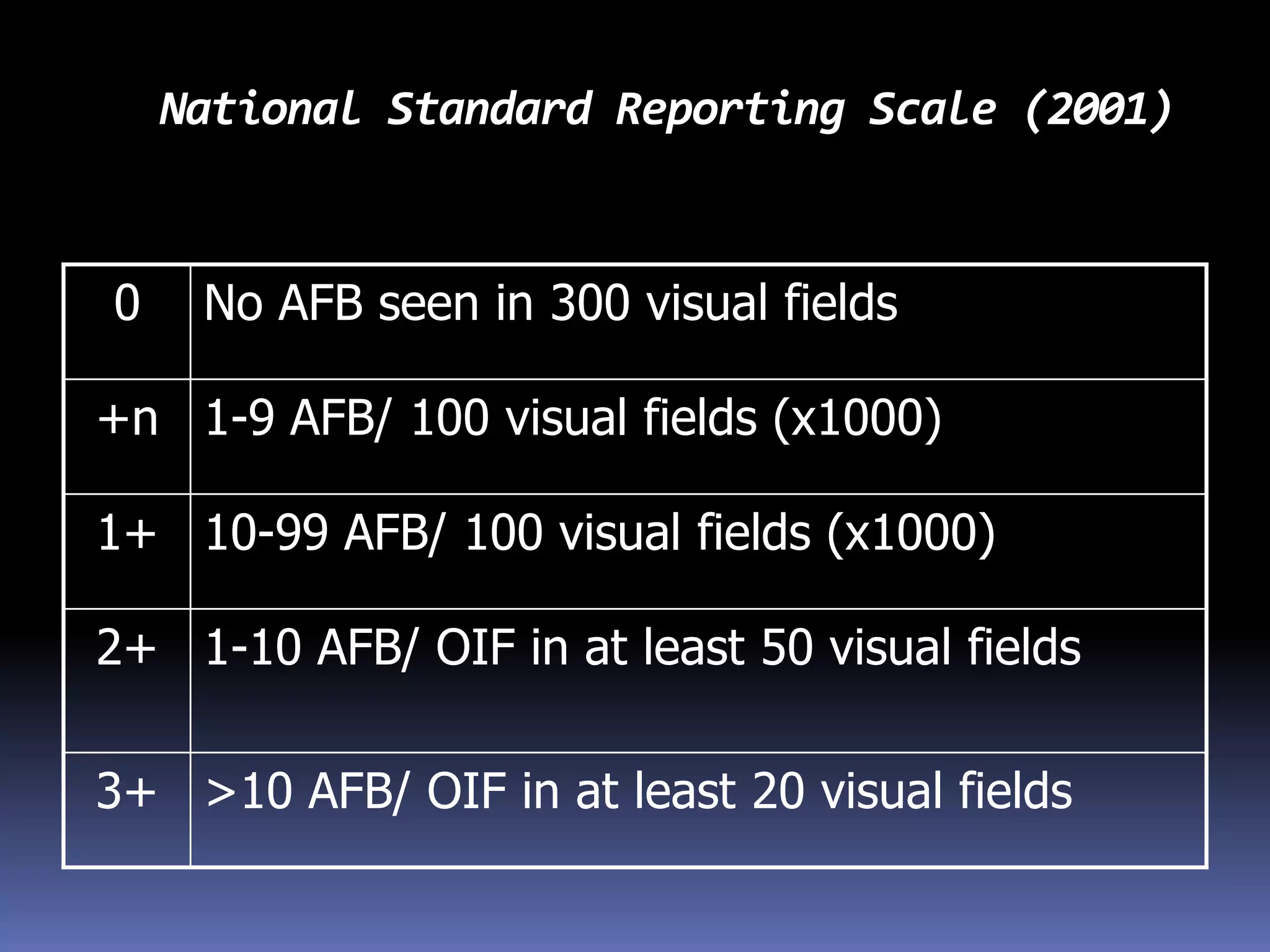
National Standard Reporting Scale (2001)
INTERPRETATION OF LAB RESULTSPOSITIVE		-	if all or at least two of 					the three specimens 					are positiveNEGATIVE		-	if all (3) specimens 					are negativeDOUBTFUL	-	if one of the three 						specimens is positive 					(sputum examination 					  should be repeated)
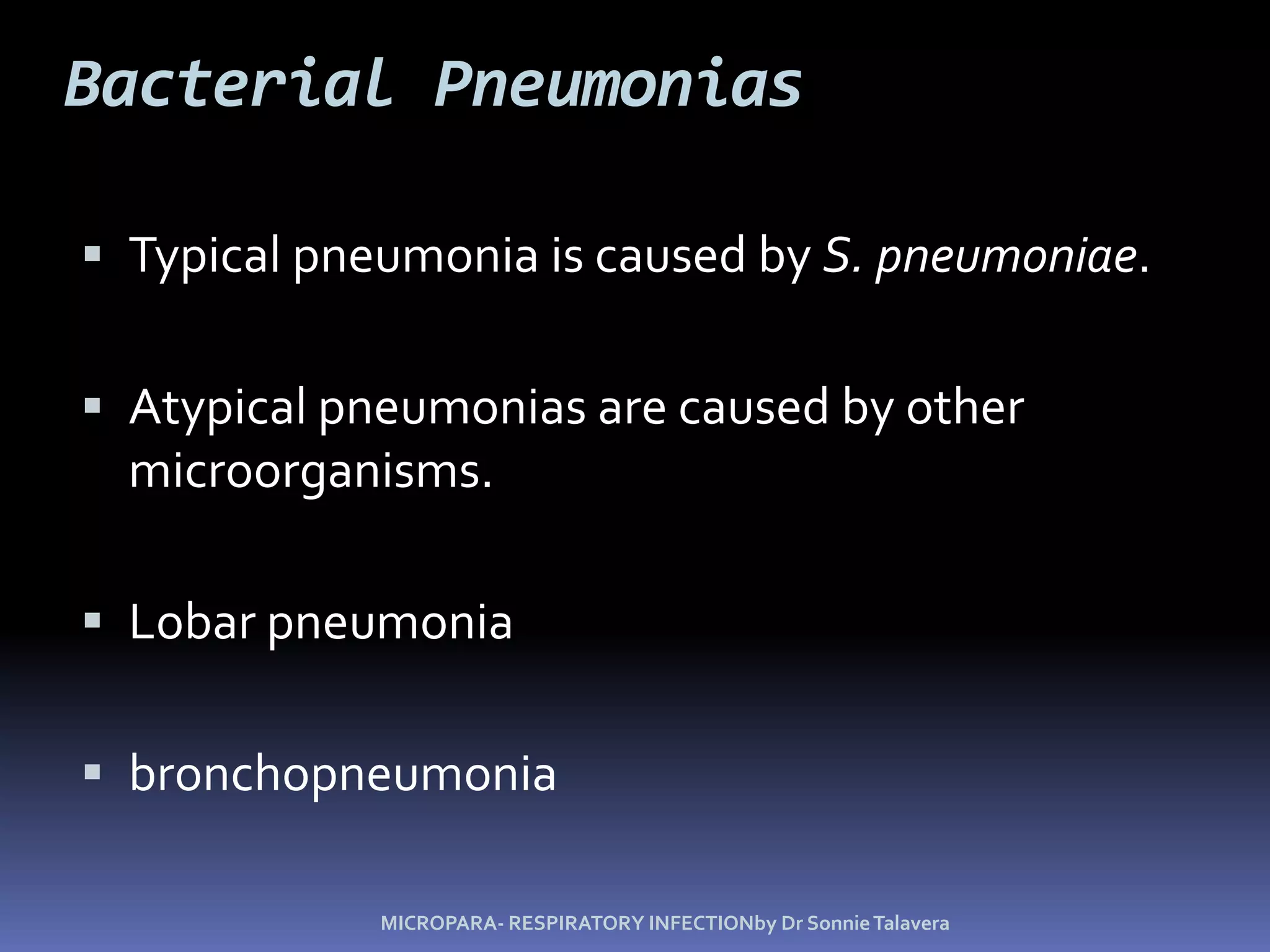
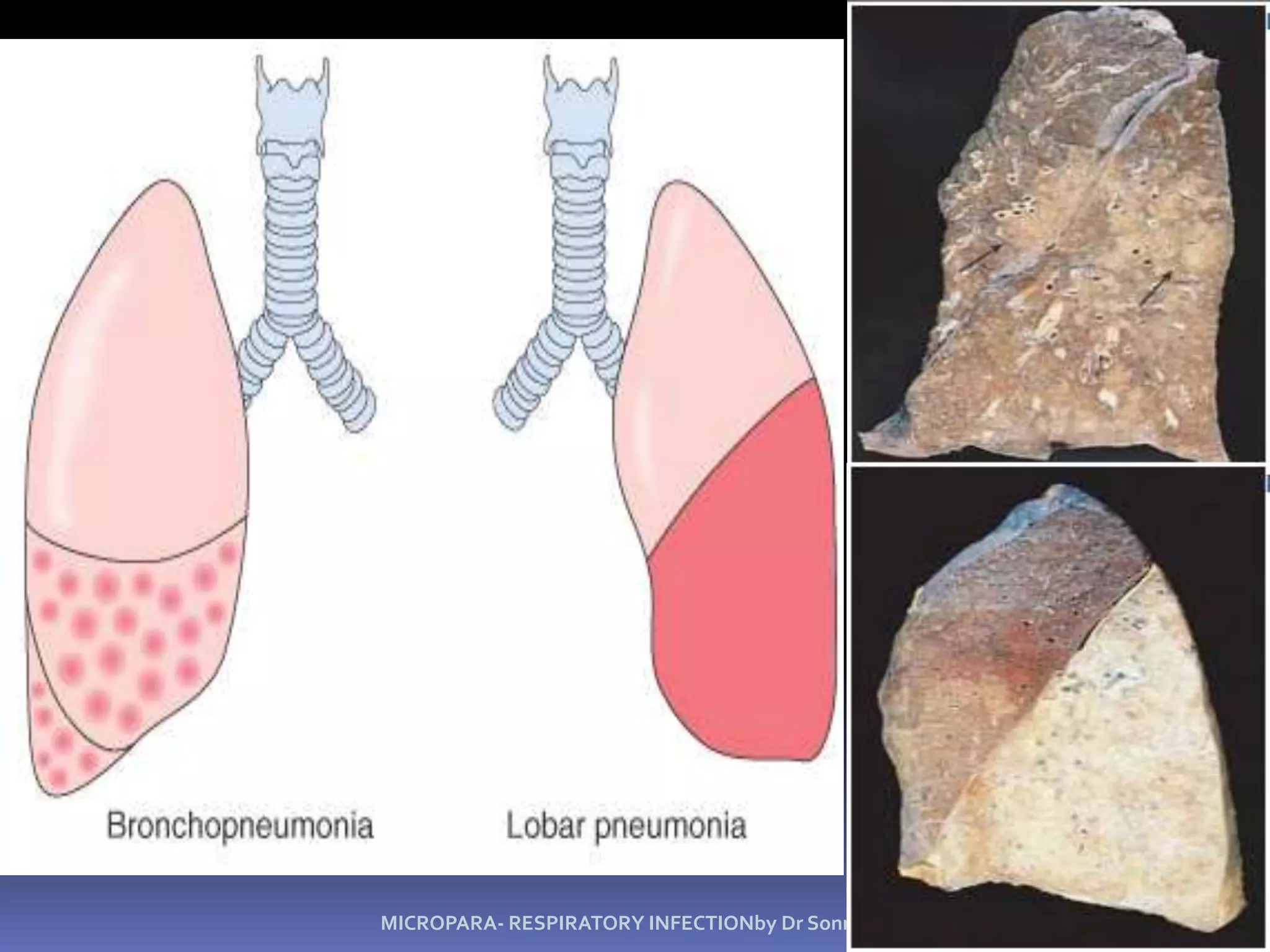
Bacterial PneumoniasTypical pneumonia is caused by S. pneumoniae.Atypical pneumonias are caused by other microorganisms.Lobar pneumoniabronchopneumoniaMICROPARA- RESPIRATORY INFECTIONby Dr Sonnie Talavera
MICROPARA- RESPIRATORY INFECTIONby Dr Sonnie Talavera
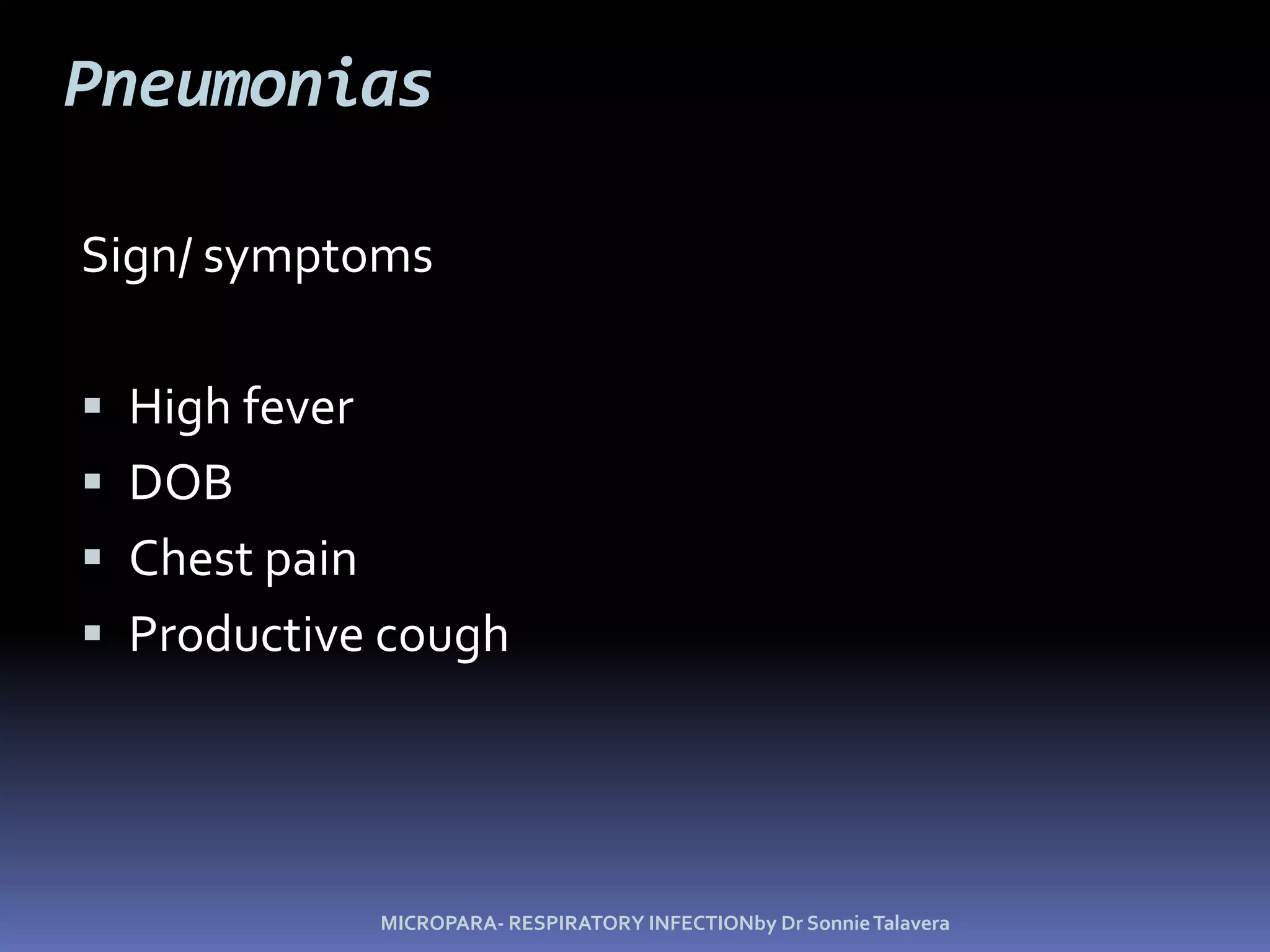
PneumoniasSign/ symptomsHigh feverDOBChest painProductive coughMICROPARA- RESPIRATORY INFECTIONby Dr Sonnie Talavera
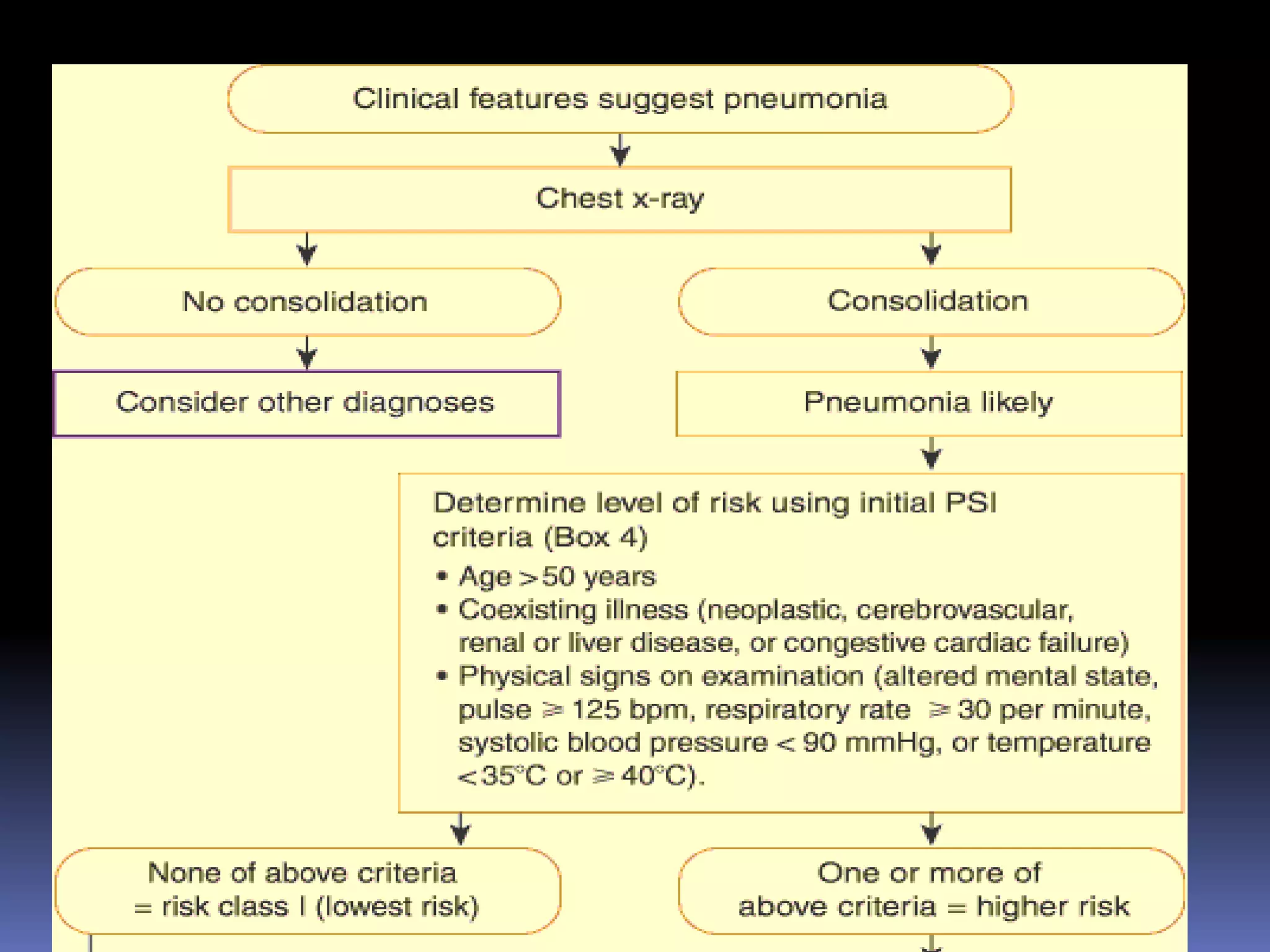
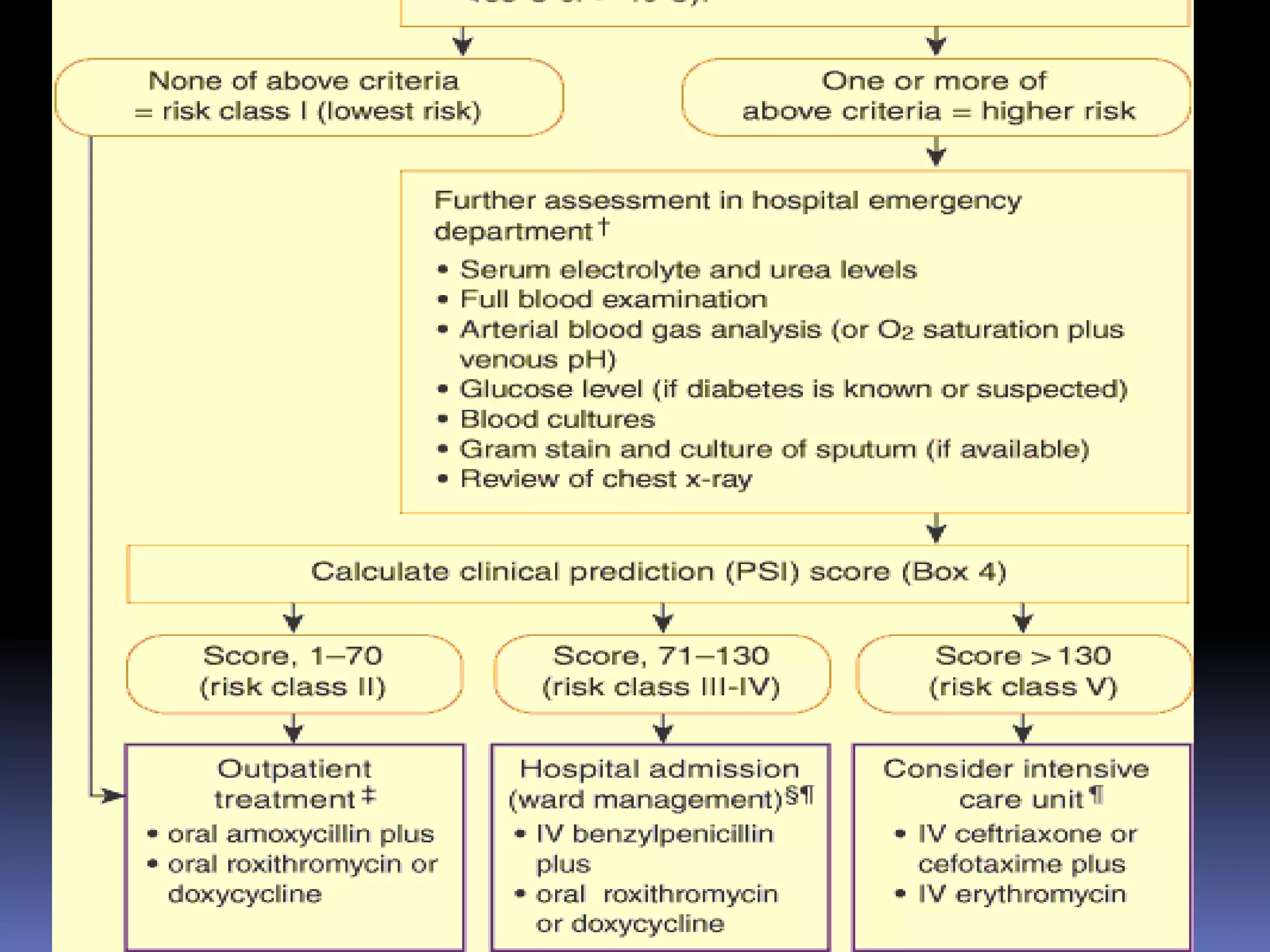
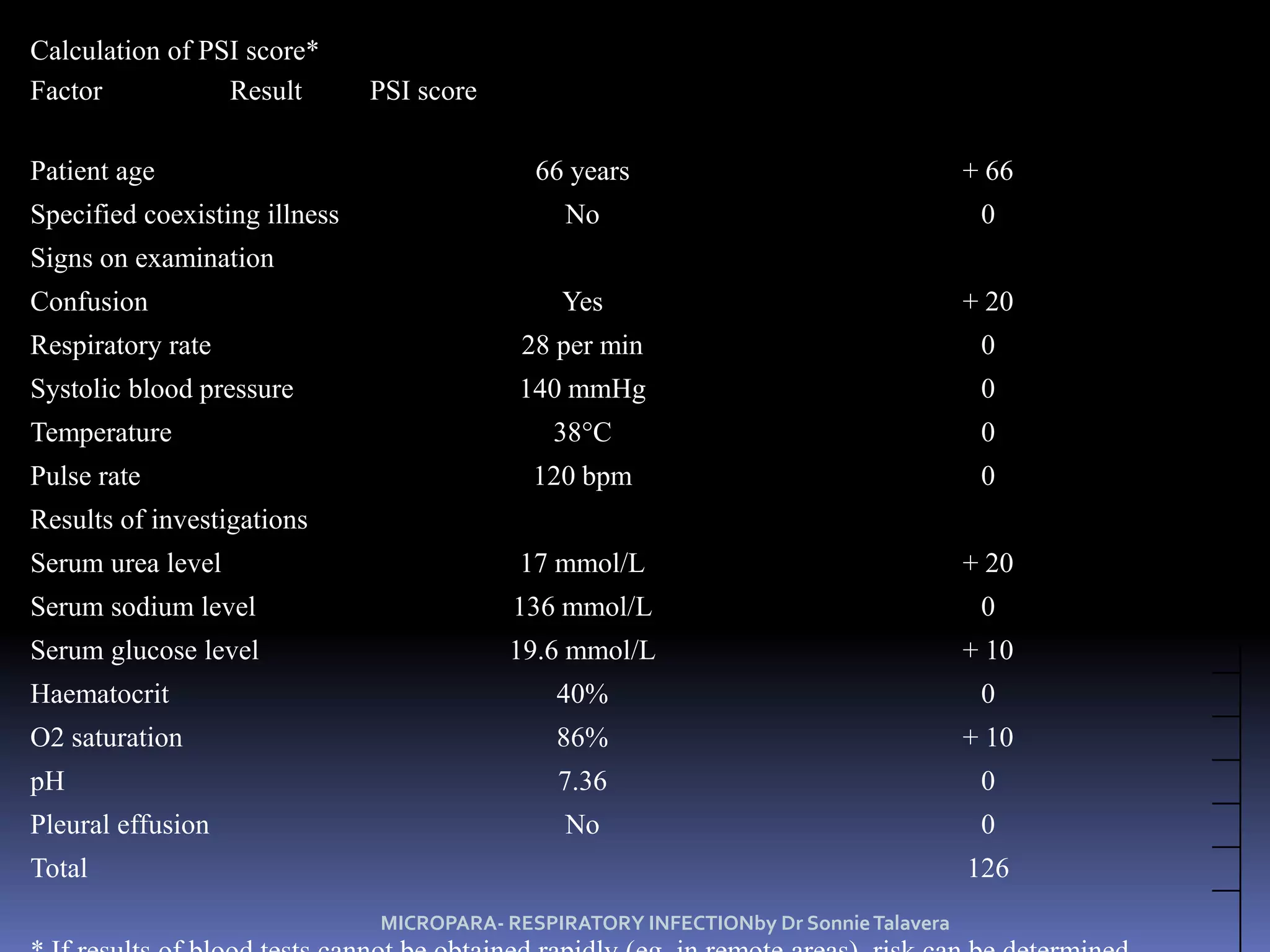
MICROPARA- RESPIRATORY INFECTIONby Dr Sonnie Talavera
MICROPARA- RESPIRATORY INFECTIONby Dr Sonnie TalaveraMortality within 30 days according to PSI risk class19
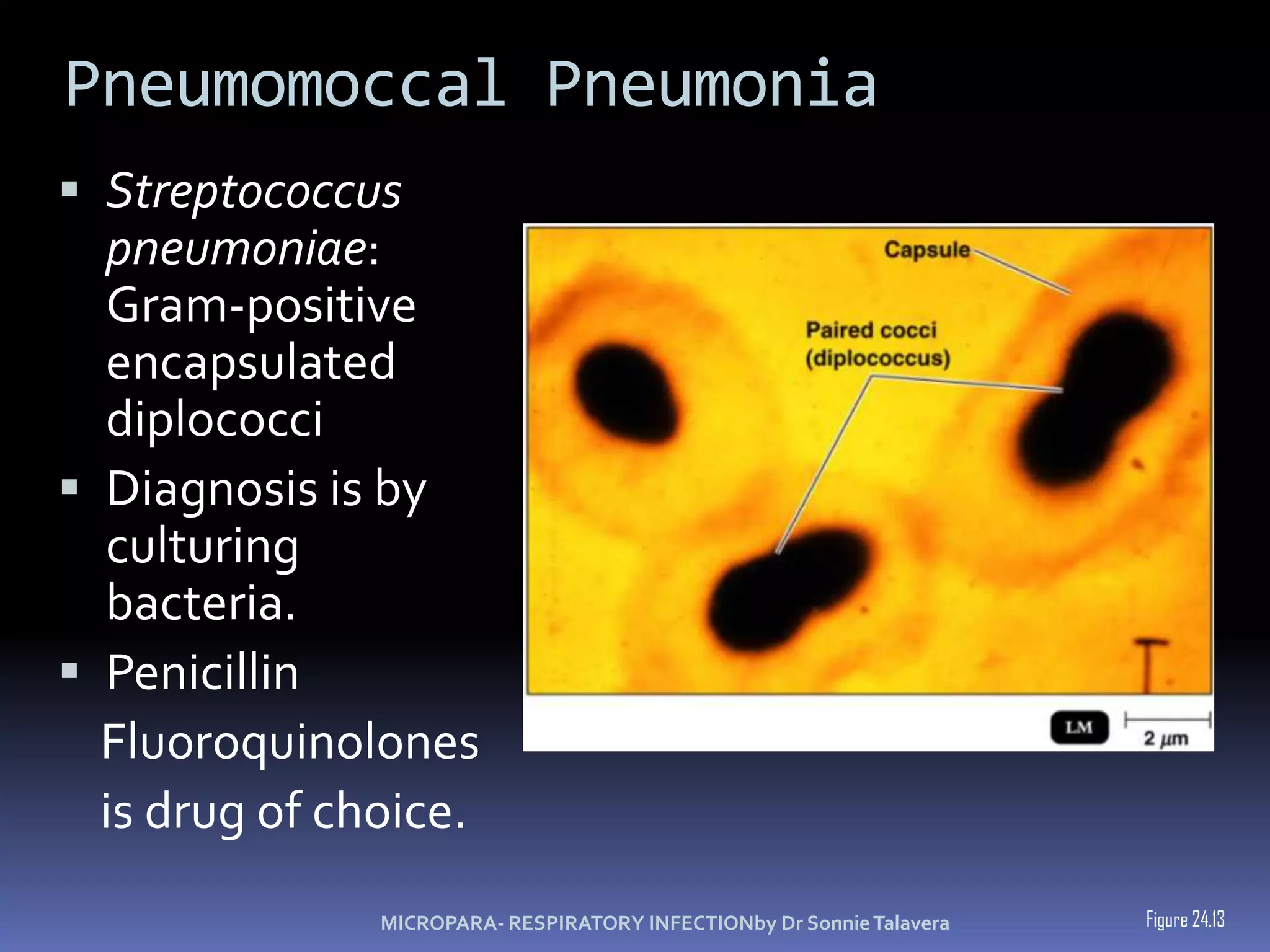
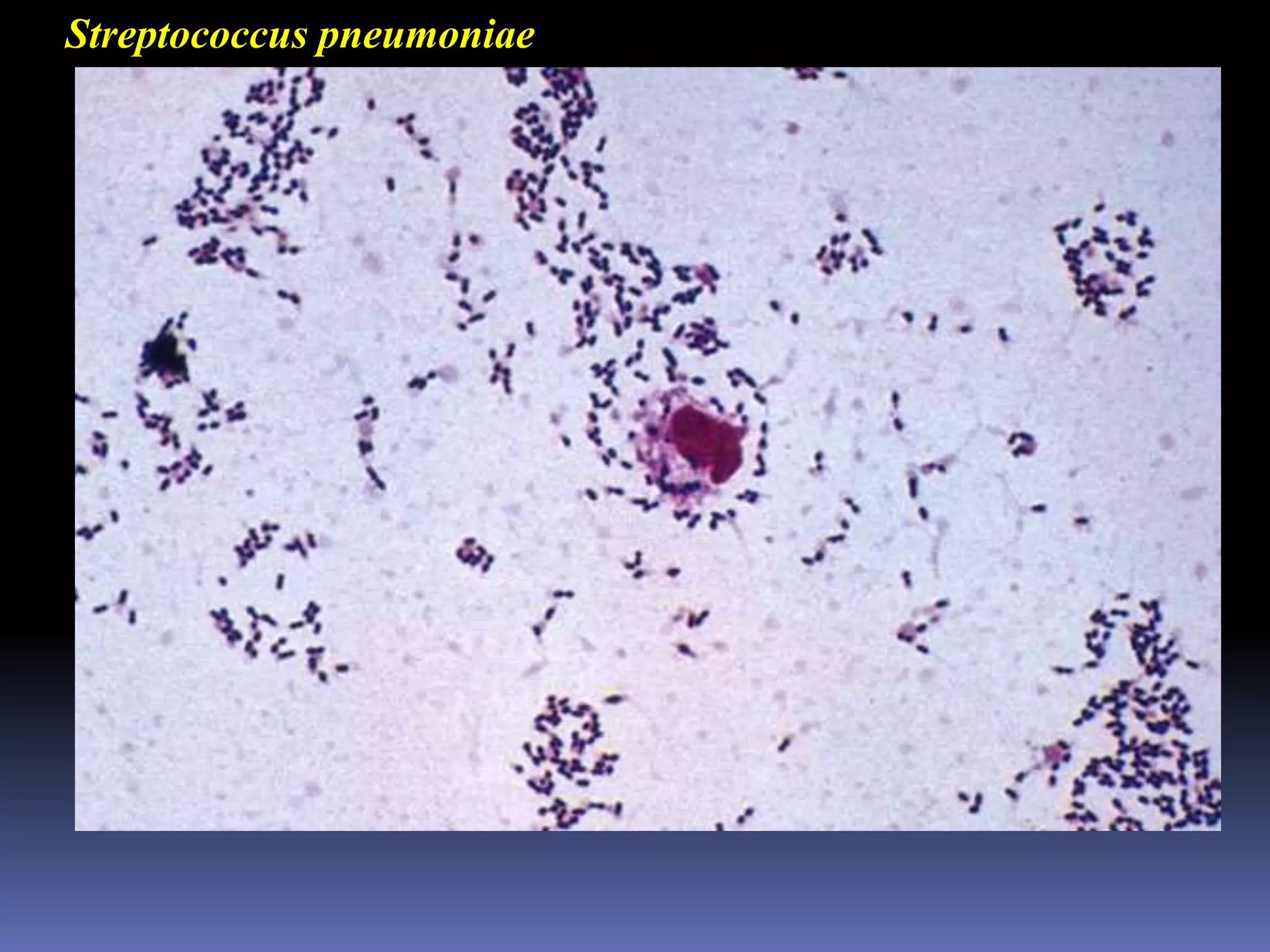
Pneumomoccal PneumoniaStreptococcus pneumoniae: Gram-positive encapsulated diplococciDiagnosis is by culturing bacteria.Penicillin Fluoroquinolones    is drug of choice.Figure 24.13MICROPARA- RESPIRATORY INFECTIONby Dr Sonnie Talavera
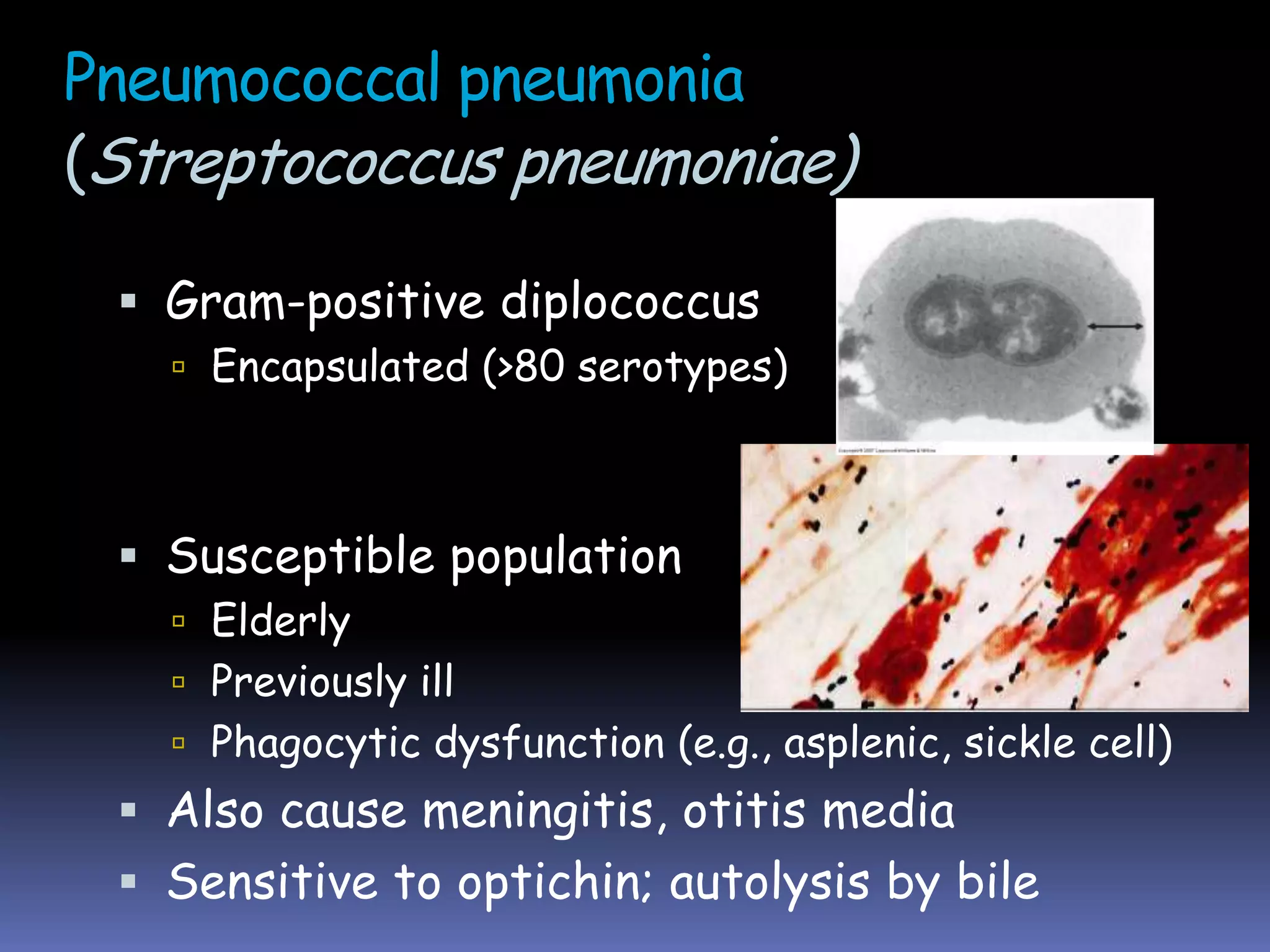
Pneumococcal pneumonia(Streptococcus pneumoniae)Gram-positive diplococcusEncapsulated (>80 serotypes)Susceptible populationElderlyPreviously illPhagocytic dysfunction (e.g., asplenic, sickle cell)Also cause meningitis, otitis mediaSensitive to optichin; autolysis by bile
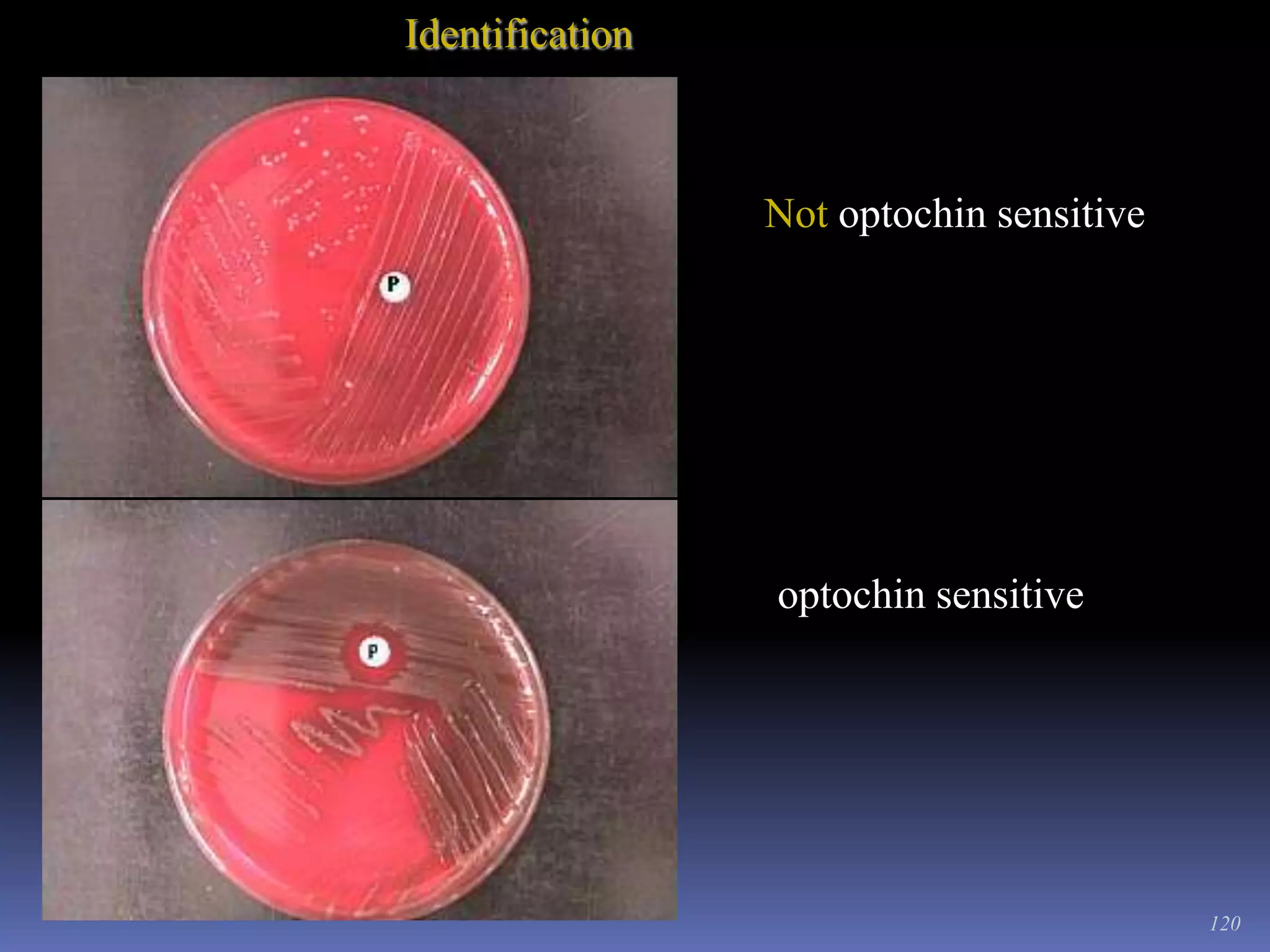
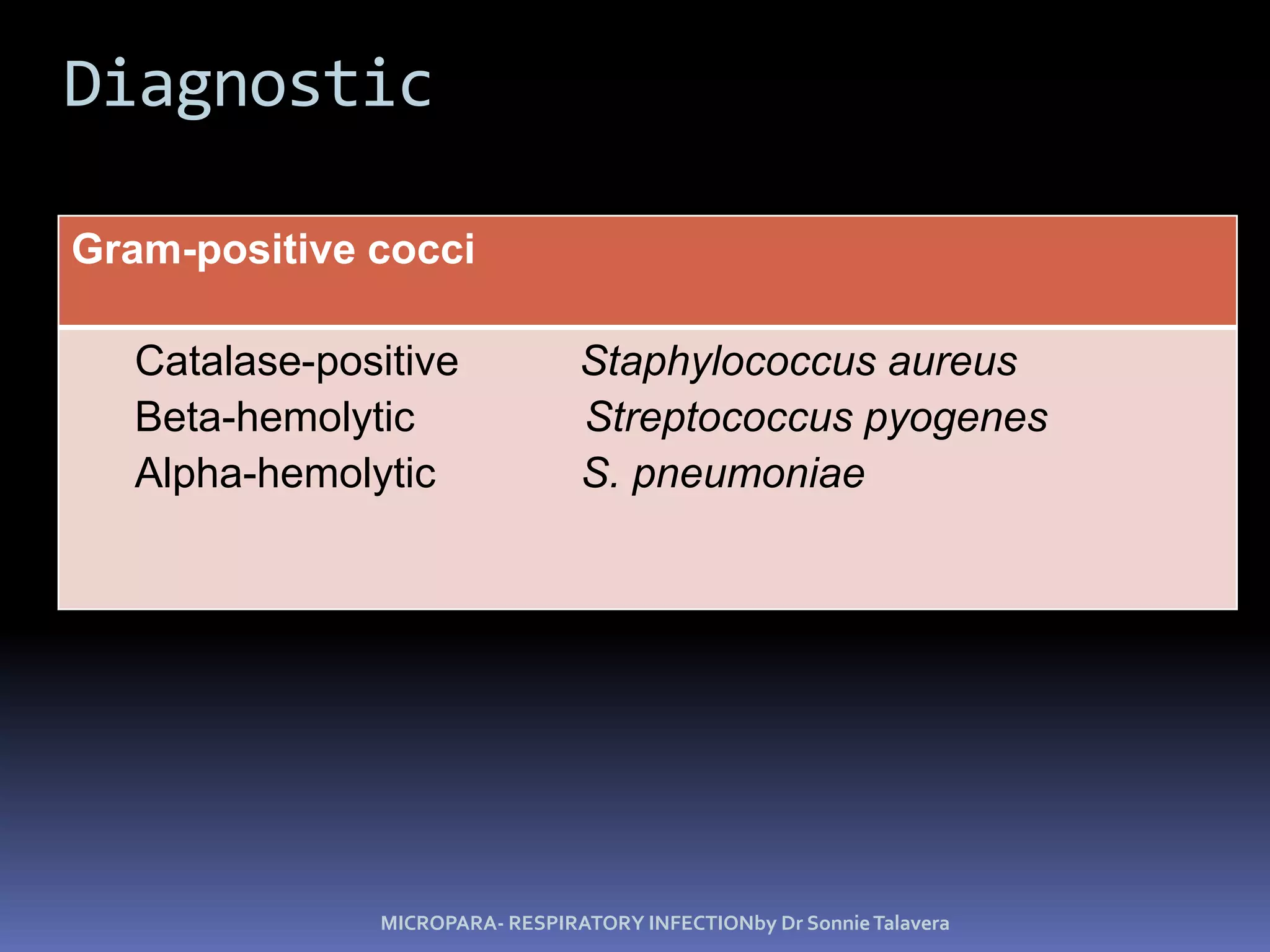
Pneumococcal PneumoniaThe bacteria can be identified alpha-hemolysins, inhibition by optochin, bile solubility serological tests.MICROPARA- RESPIRATORY INFECTIONby Dr Sonnie Talavera
120IdentificationNot optochin sensitiveoptochin sensitive
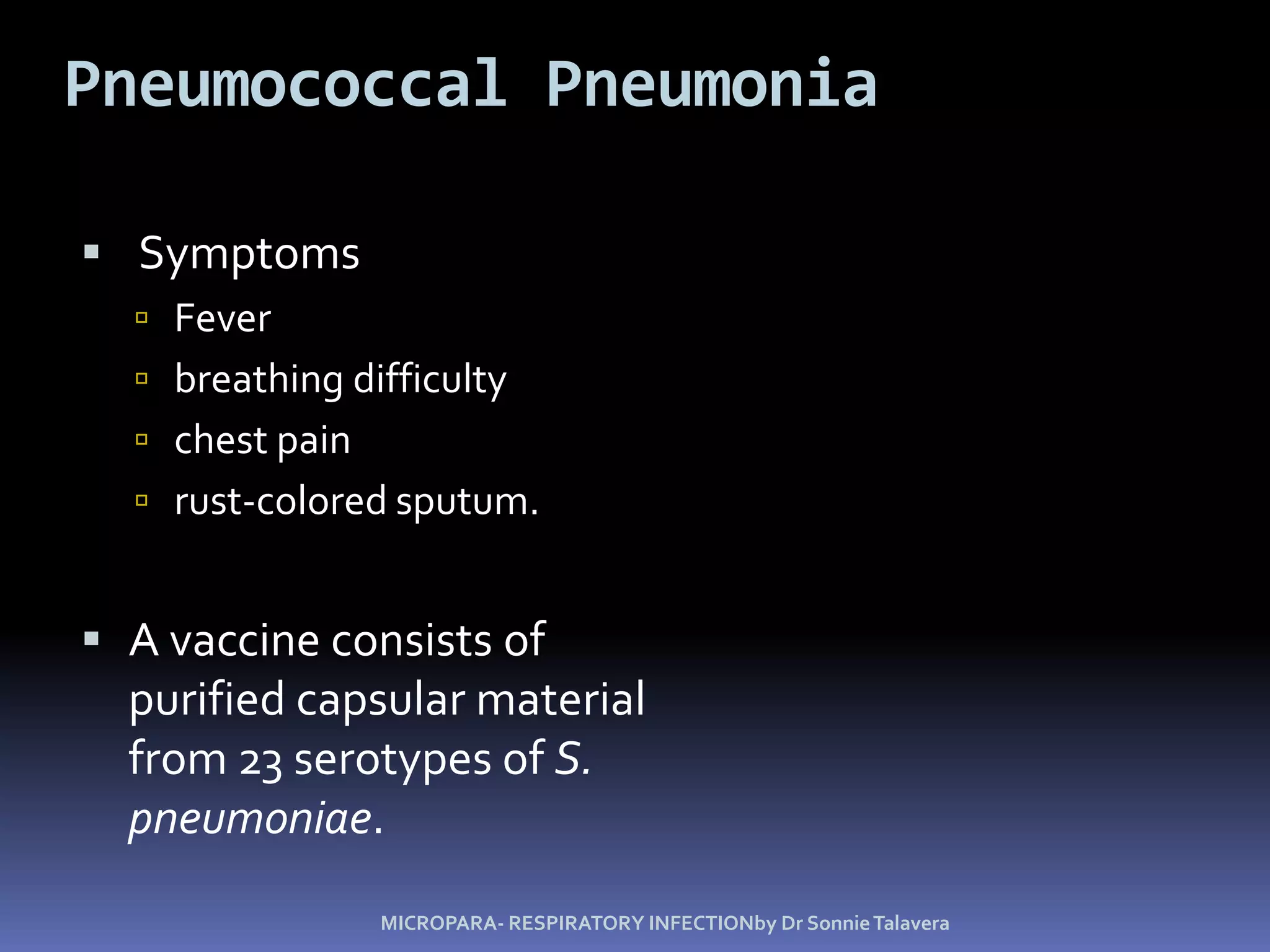
Pneumococcal Pneumonia Symptoms Feverbreathing difficultychest painrust-colored sputum.A vaccine consists of purified capsular material from 23 serotypes of S. pneumoniae.MICROPARA- RESPIRATORY INFECTIONby Dr Sonnie Talavera
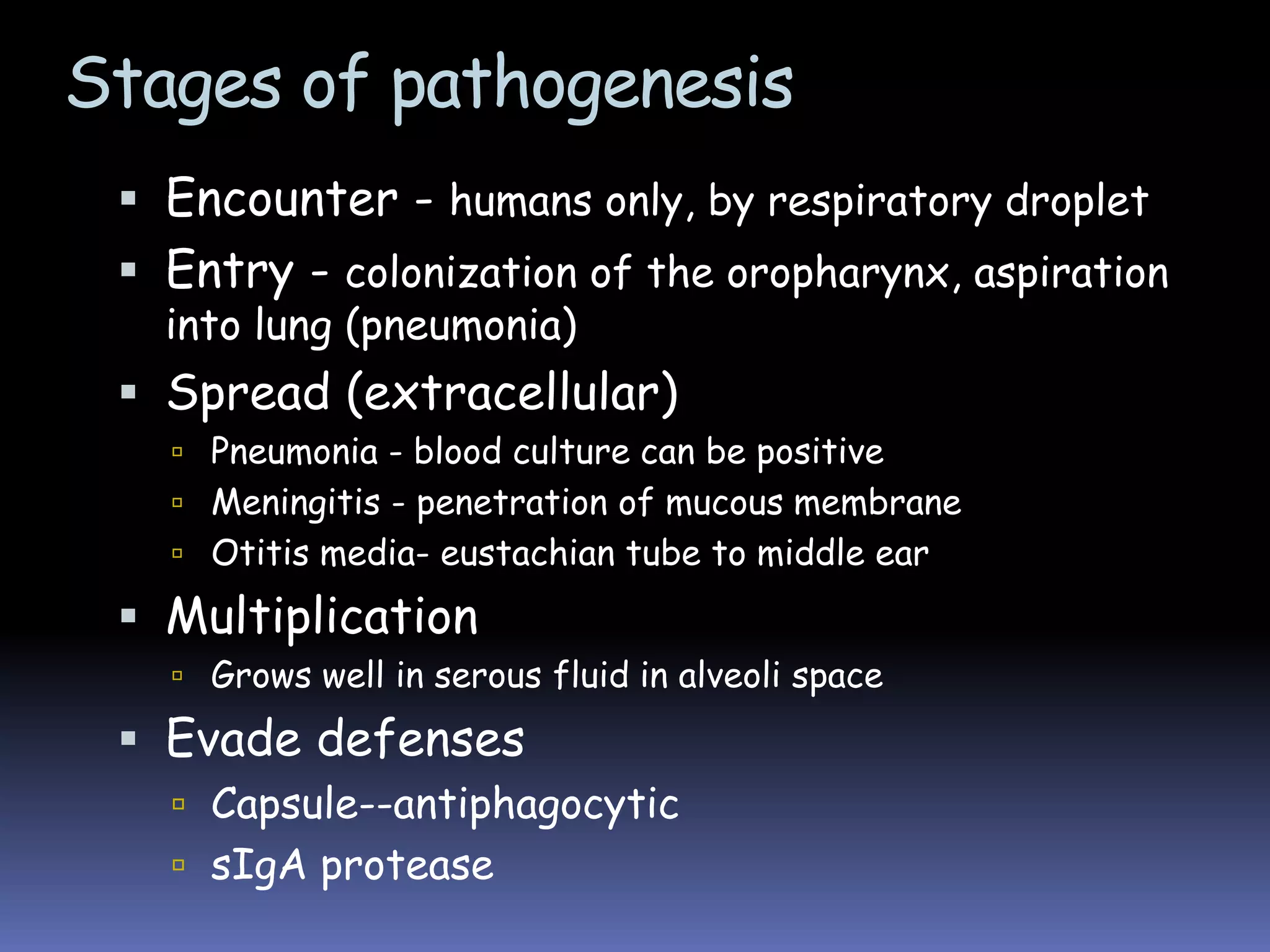
Stages of pathogenesisEncounter - humans only, by respiratory dropletEntry - colonization of the oropharynx, aspiration into lung (pneumonia)Spread (extracellular)Pneumonia - blood culture can be positiveMeningitis - penetration of mucous membraneOtitis media- eustachian tube to middle earMultiplication Grows well in serous fluid in alveoli spaceEvade defensesCapsule--antiphagocyticsIgA protease
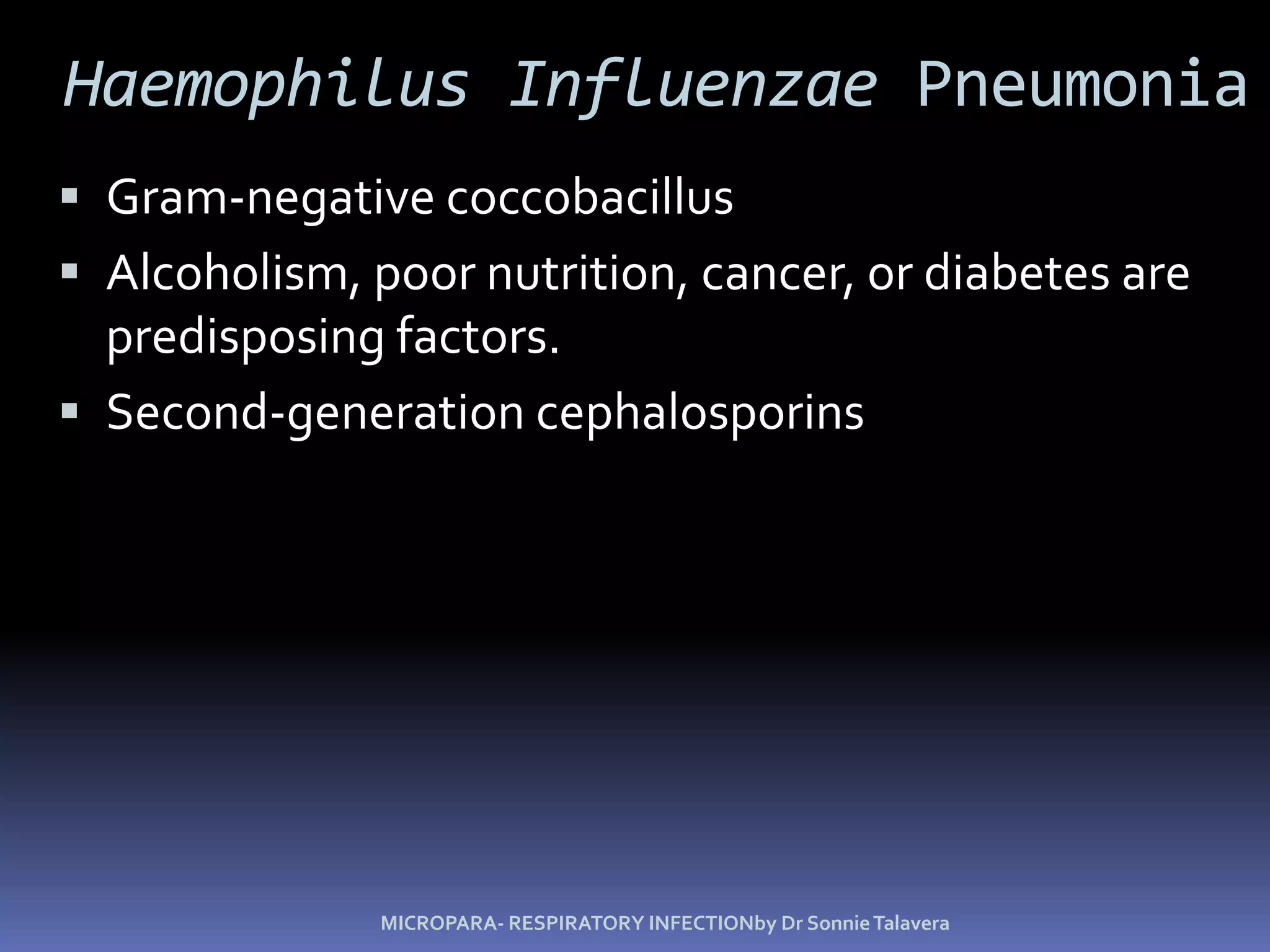
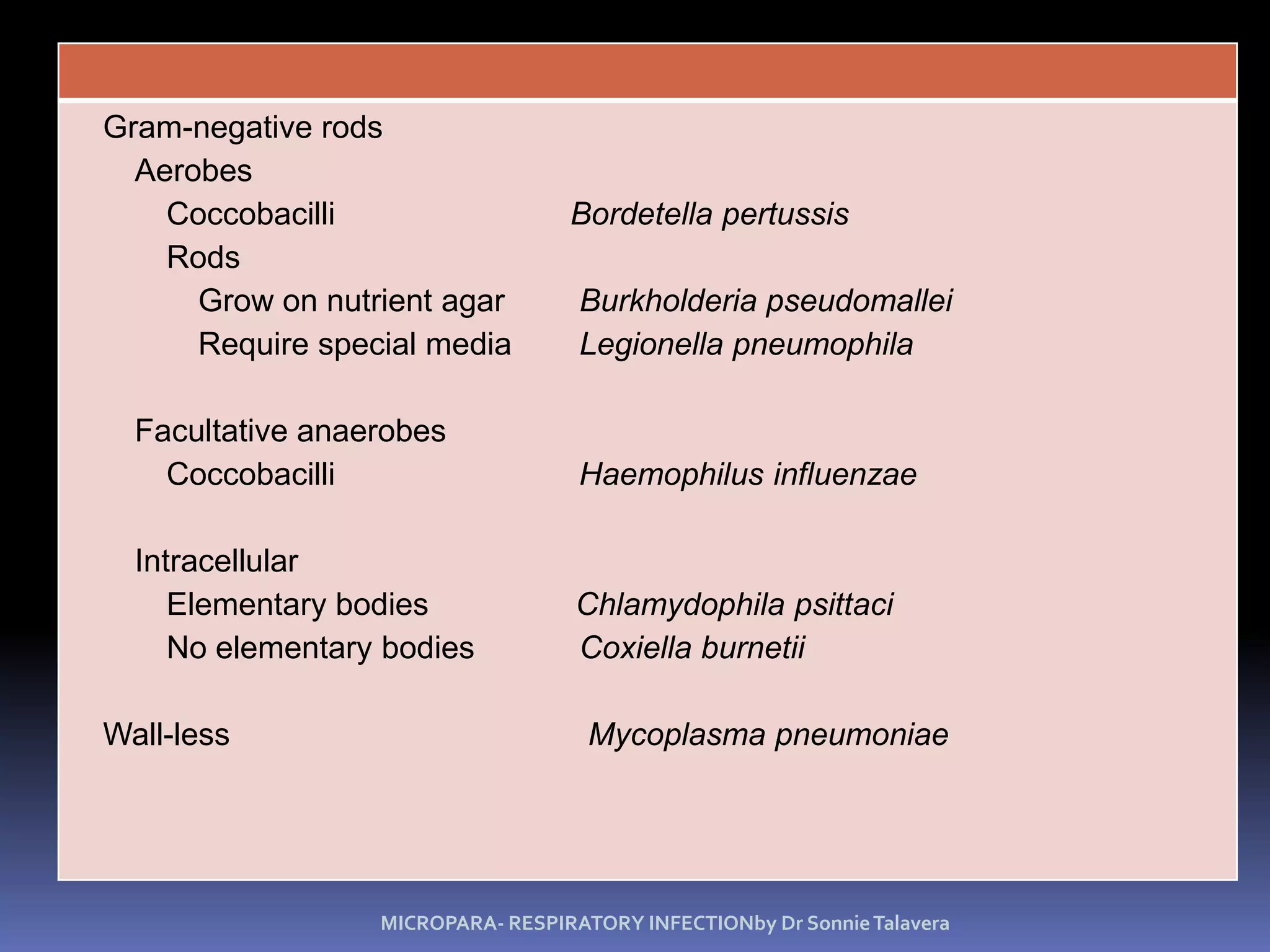
Haemophilus Influenzae PneumoniaGram-negative coccobacillusAlcoholism, poor nutrition, cancer, or diabetes are predisposing factors.Second-generation cephalosporinsMICROPARA- RESPIRATORY INFECTIONby Dr Sonnie Talavera
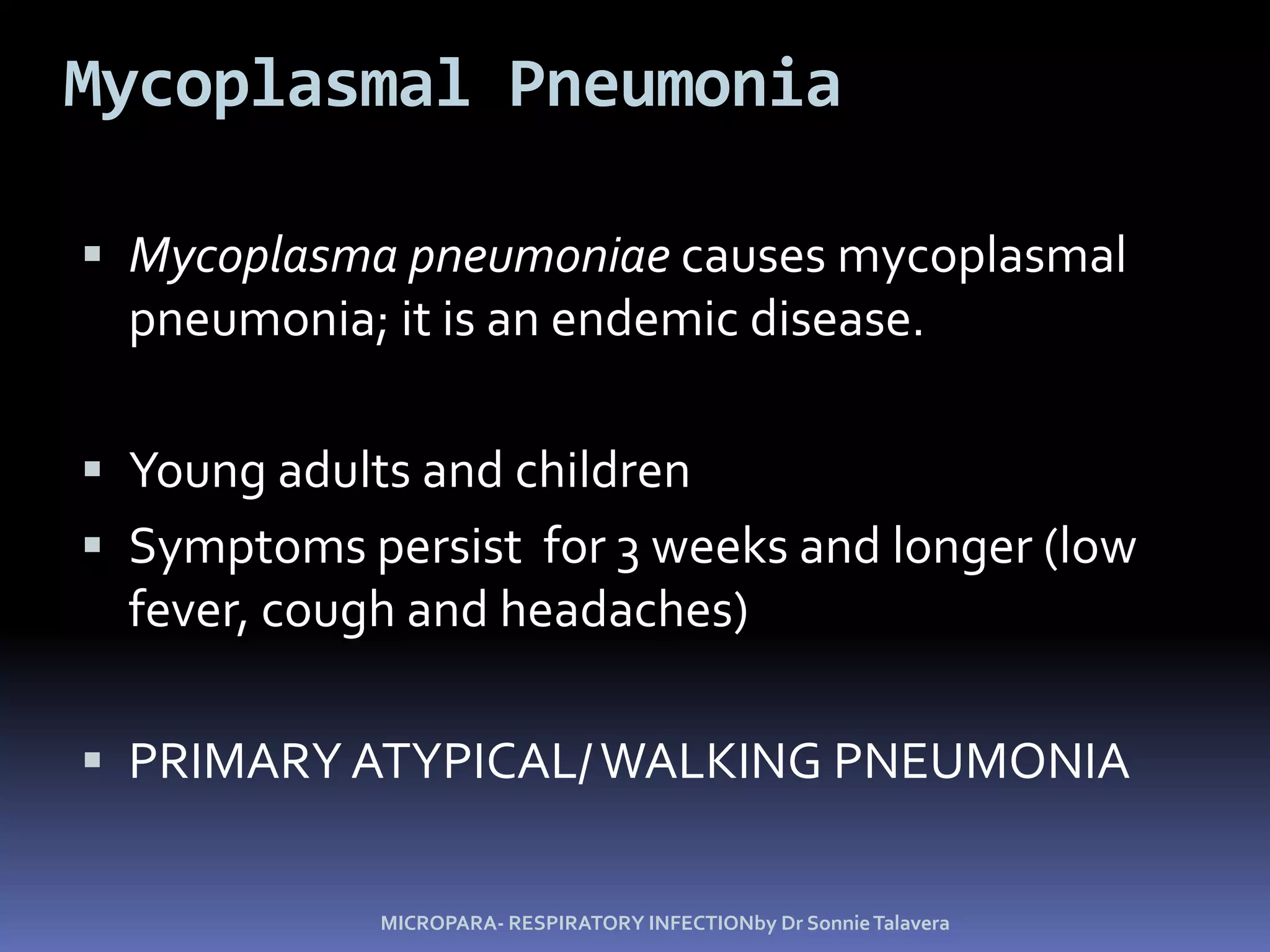
Mycoplasmal Pneumonia Mycoplasmapneumoniae causes mycoplasmal pneumonia; it is an endemic disease.Young adults and childrenSymptoms persist  for 3 weeks and longer (low fever, cough and headaches)PRIMARY ATYPICAL/ WALKING PNEUMONIAMICROPARA- RESPIRATORY INFECTIONby Dr Sonnie Talavera
Mycoplasmal Pneumonia M. pneumoniae produces small “fried-egg” colonies after two weeks’ incubation on enriched media containing horse serum and yeast extract. Diagnosis is by PCR or serological tests.MICROPARA- RESPIRATORY INFECTIONby Dr Sonnie Talavera
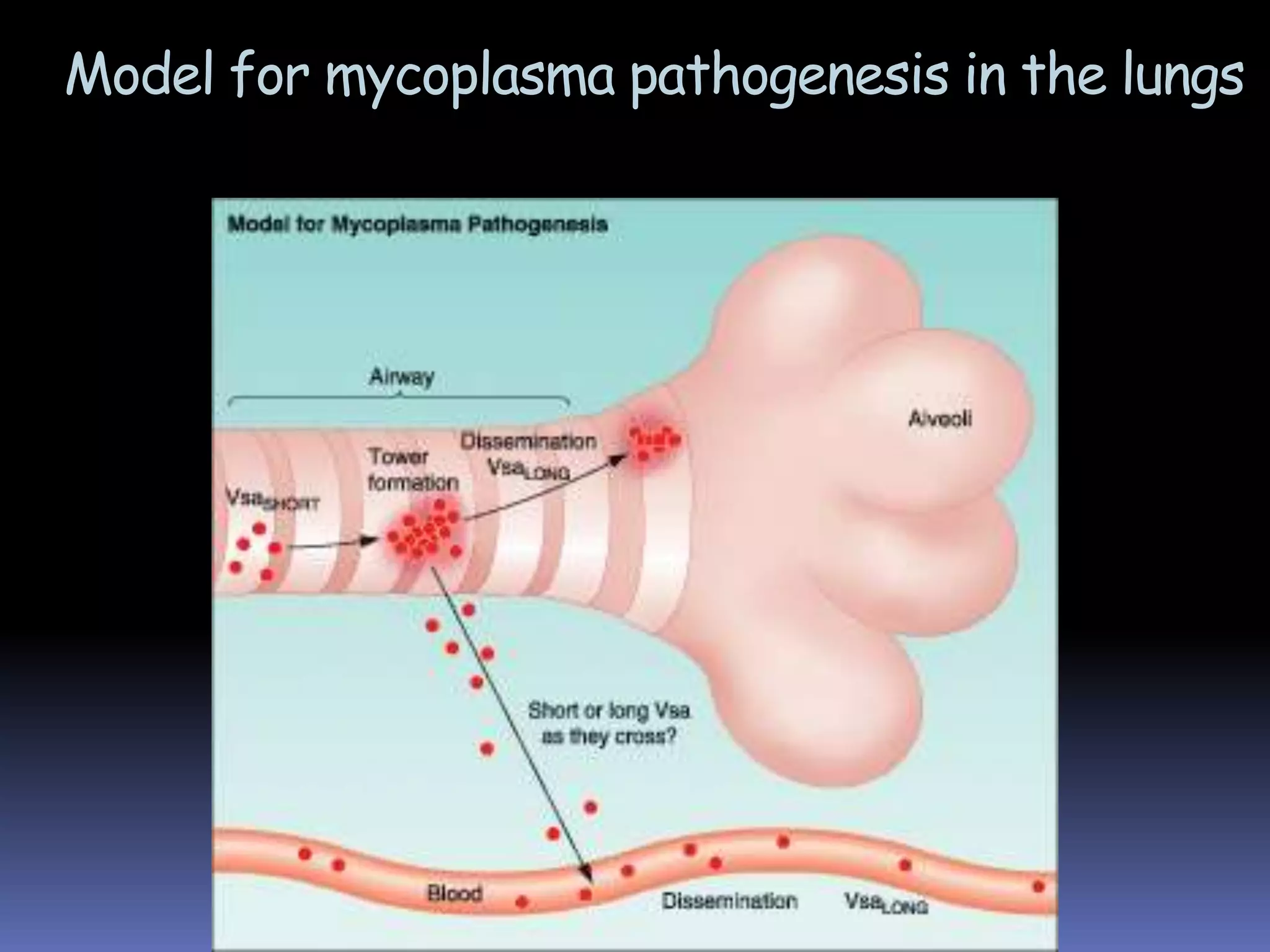
Atypical (walking) pneumoniaMycoplasma pneumoniaLacks peptidoglycan-lactam resistantDisease primarily in young adultsEncounter - inhalation from humanEntry - restricted to mucosal surfaceTerminal adhesin protein (P1)Multiplication - require sterolsDamageInflammationDamage and desquamation of ciliated epitheliumTreatmentsErythromycin, doxycycline, tetracyline
Model for mycoplasma pathogenesis in the lungs
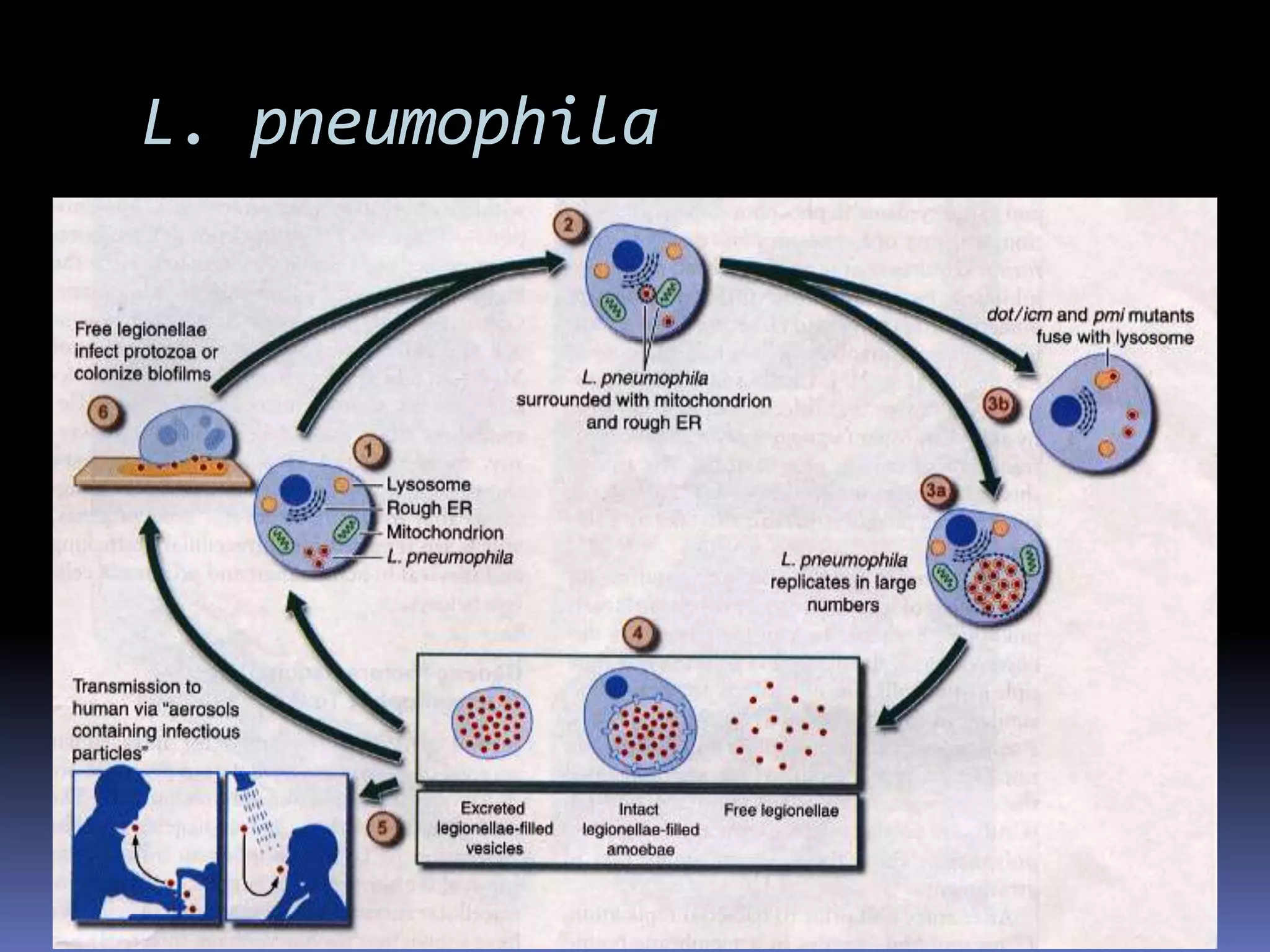
LegionellosisThe disease is caused by the aerobic gram-negative rod Legionellapneumophila.High fever 40.5C, cough  and  general pneumonia symptomsThe bacterium can grow in water, such as air-conditioning cooling towers, and then be disseminated in the air.MICROPARA- RESPIRATORY INFECTIONby Dr Sonnie Talavera
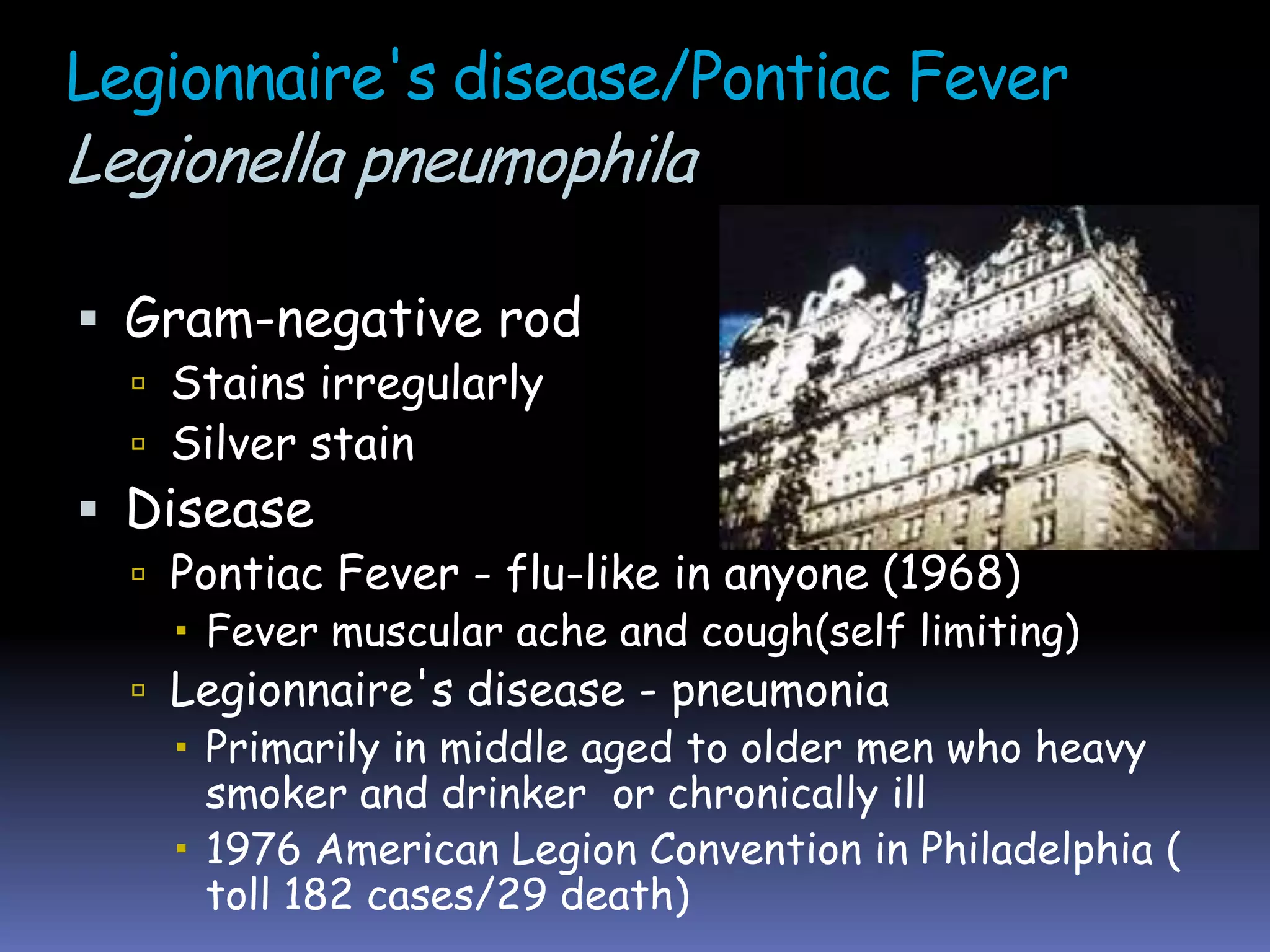
Legionnaire's disease/Pontiac FeverLegionella pneumophilaGram-negative rodStains irregularlySilver stainDiseasePontiac Fever - flu-like in anyone (1968) Fever muscular ache and cough(self limiting)Legionnaire's disease - pneumoniaPrimarily in middle aged to older men who heavy smoker and drinker  or chronically ill1976 American Legion Convention in Philadelphia ( toll 182 cases/29 death)
L. pneumophila
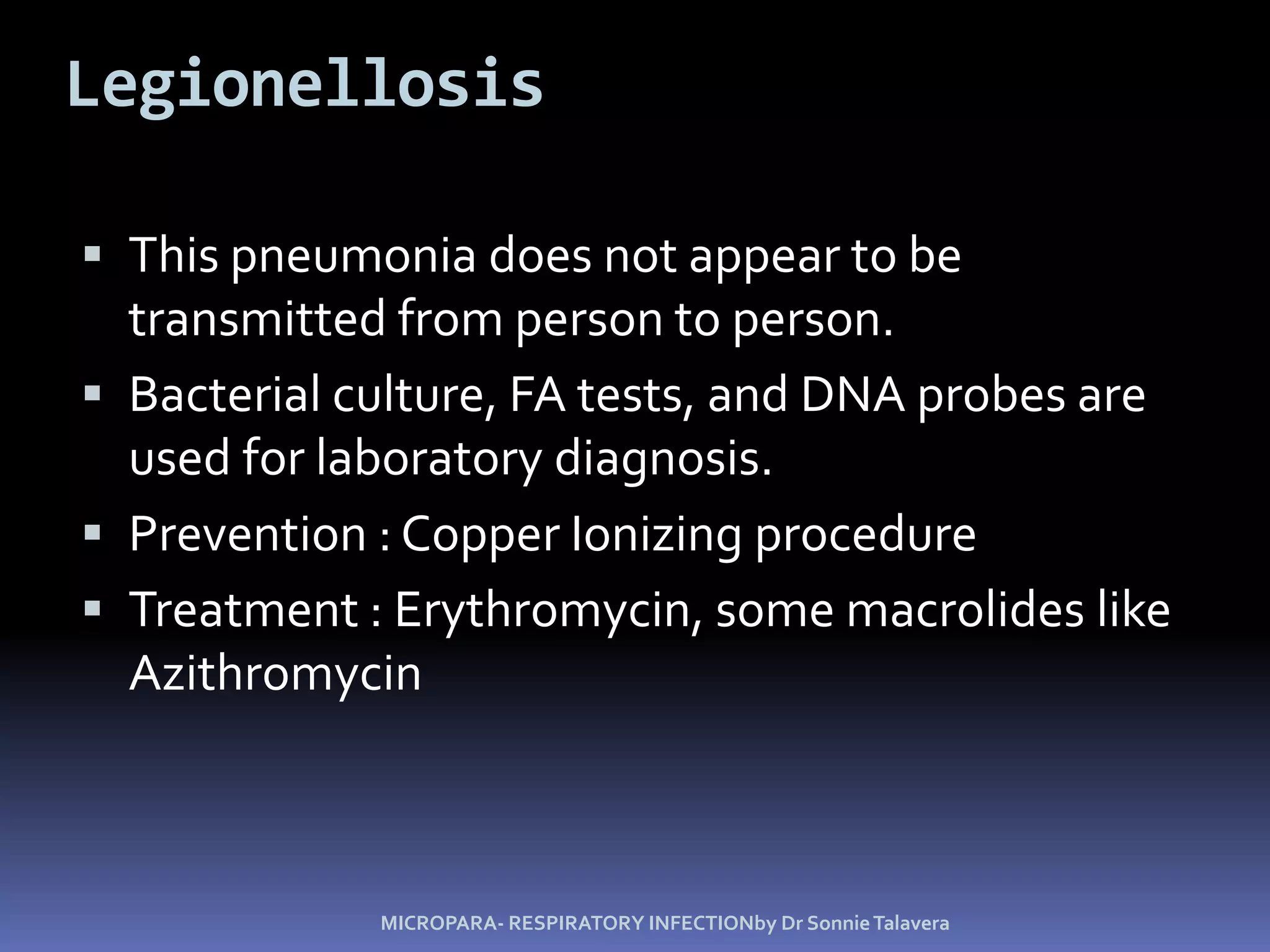
LegionellosisThis pneumonia does not appear to be transmitted from person to person.Bacterial culture, FA tests, and DNA probes are used for laboratory diagnosis. Prevention : Copper Ionizing procedureTreatment : Erythromycin, some macrolides like AzithromycinMICROPARA- RESPIRATORY INFECTIONby Dr Sonnie Talavera
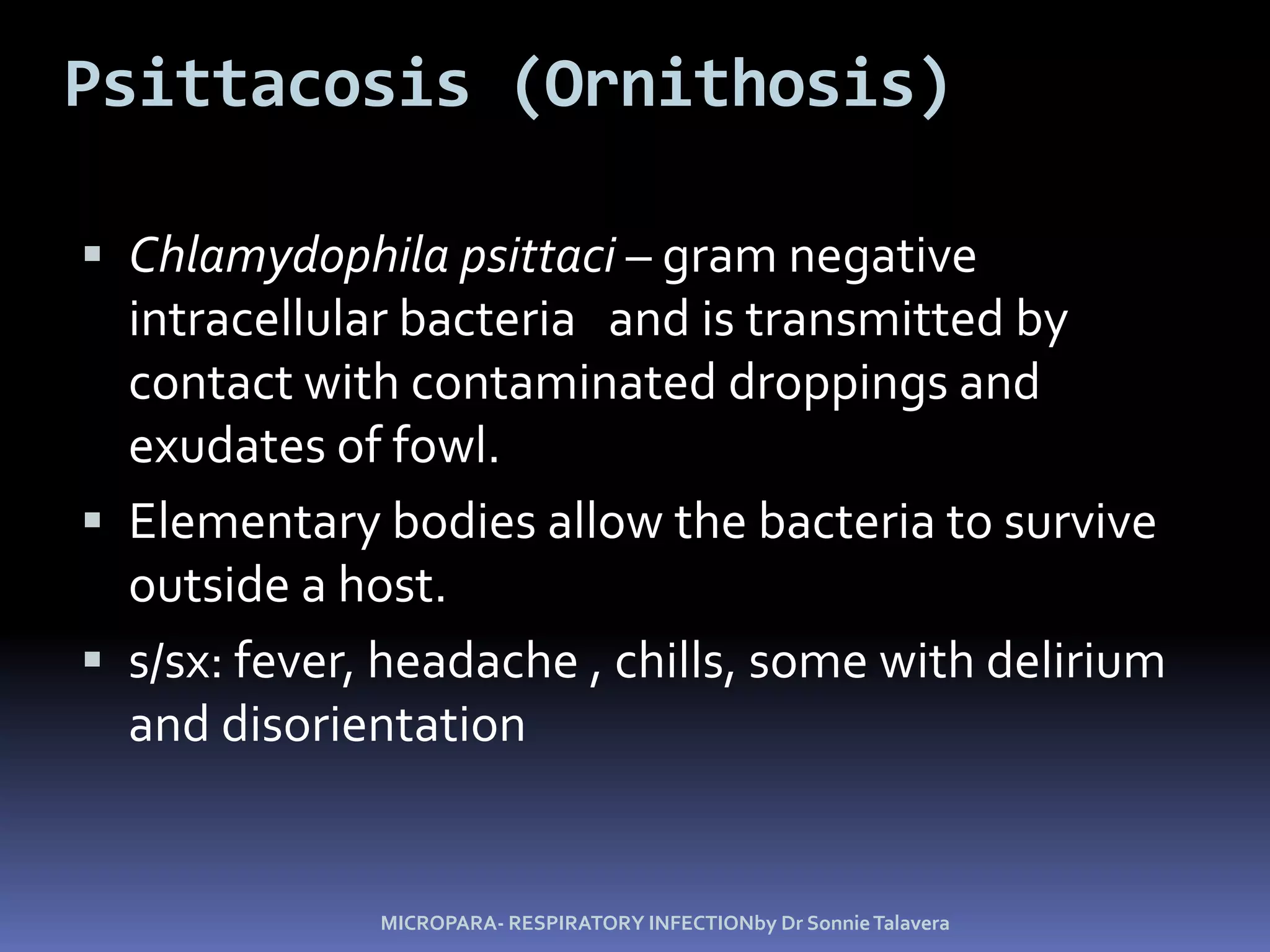
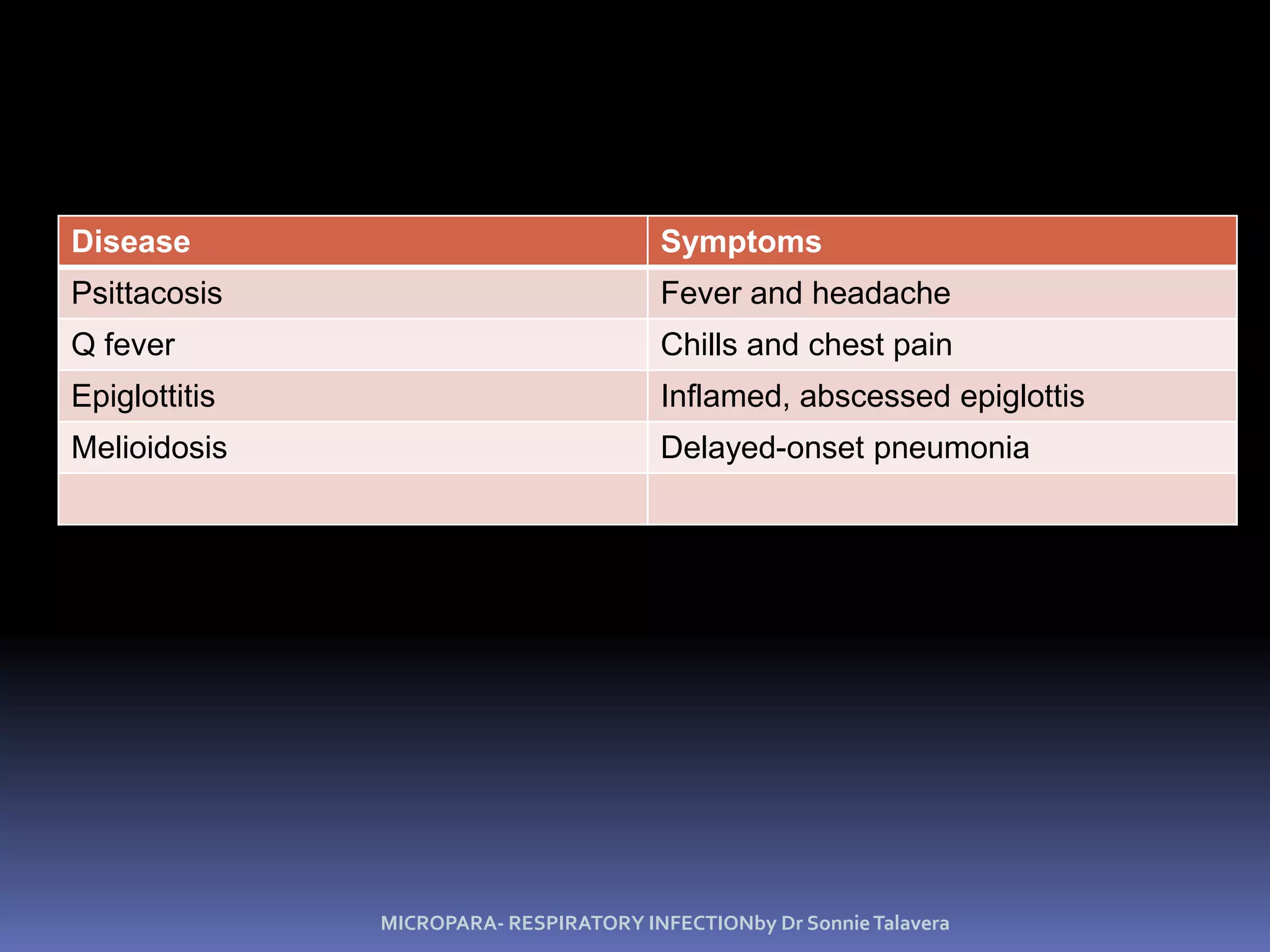
Psittacosis (Ornithosis) Chlamydophilapsittaci – gram negative intracellular bacteria   and is transmitted by contact with contaminated droppings and exudates of fowl.Elementary bodies allow the bacteria to survive outside a host.s/sx: fever, headache , chills, some with delirium and disorientationMICROPARA- RESPIRATORY INFECTIONby Dr Sonnie Talavera
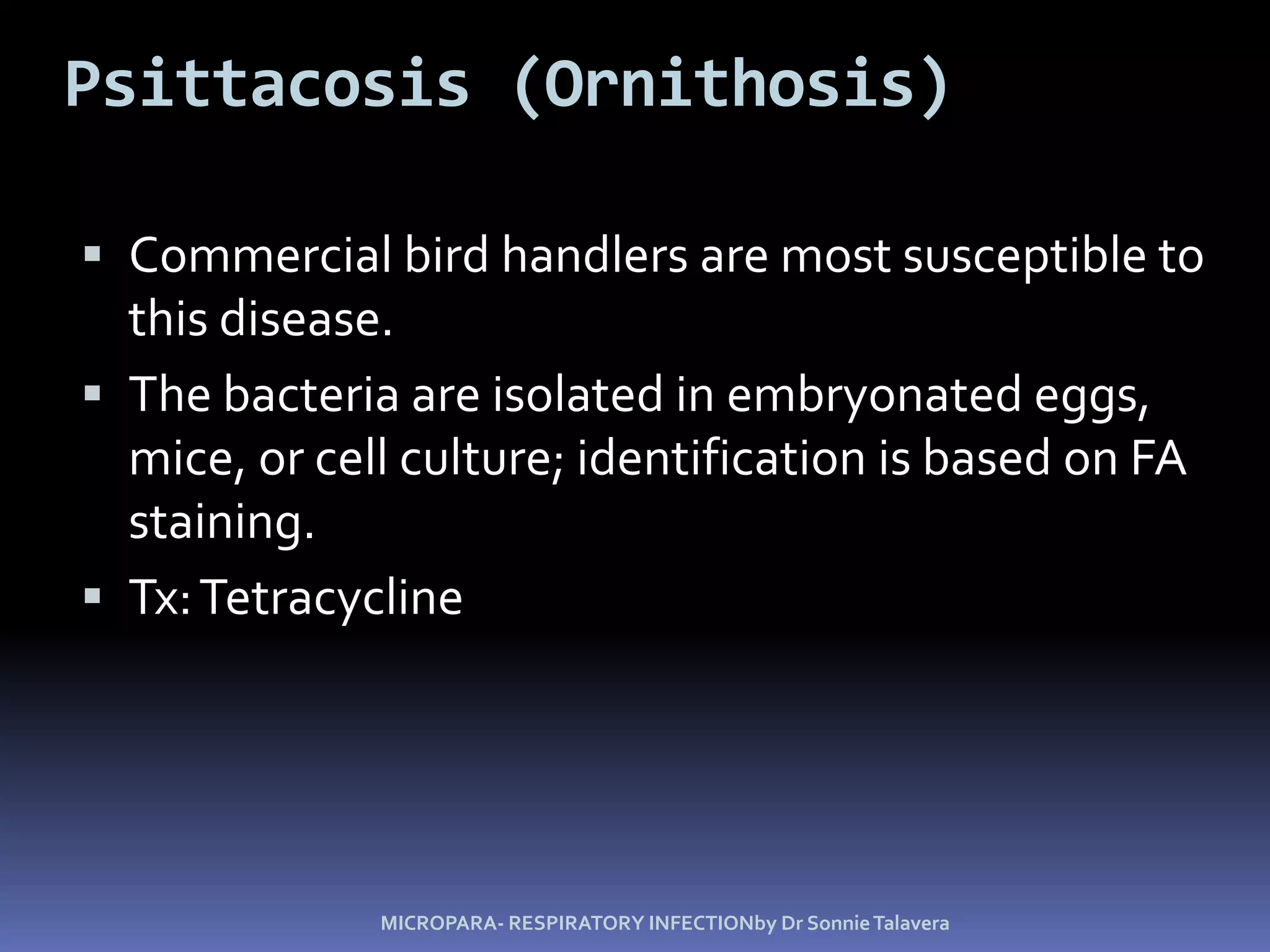
Psittacosis (Ornithosis) Commercial bird handlers are most susceptible to this disease.The bacteria are isolated in embryonated eggs, mice, or cell culture; identification is based on FA staining.Tx: TetracyclineMICROPARA- RESPIRATORY INFECTIONby Dr Sonnie Talavera
Chlamydial Pneumonia Chlamydophilapneumoniae causes pneumonia; it is transmitted from person to person.Atherosclerosis-deposition of fats on arteriess/sx resemble mycoplasma pneumoniaTetracycline is used for treatment.MICROPARA- RESPIRATORY INFECTIONby Dr Sonnie Talavera
Q Fever Obligately parasitic, intracellular Coxiellaburnetii causes Q fever or X feverThe disease is usually transmitted to humans through unpasteurized milk or inhalation of aerosols in dairy barns, cattle tick bitesLaboratory diagnosis is made with the culture of bacteria in embryonated eggs or cell culture.MICROPARA- RESPIRATORY INFECTIONby Dr Sonnie Talavera
Q Fever Wide range of clinical symptoms60% asymptomatics/sx: High fever, muscle ache, headache and coughingHepatitis and endocarditis (persist  for months)Tx: Doxycycline , ChloroquineMICROPARA- RESPIRATORY INFECTIONby Dr Sonnie Talavera
Melioidosis Melioidosis, glanders disease (horses) caused by Burkholderiapseudomalleitransmitted by inhalation, ingestion, or through puncture wounds. Symptoms include pneumonia, sepsis, and encephalitis.Tx: CeftazidimeMICROPARA- RESPIRATORY INFECTIONby Dr Sonnie Talavera
MICROPARA- RESPIRATORY INFECTIONby Dr Sonnie Talavera
Diagnostic MICROPARA- RESPIRATORY INFECTIONby Dr Sonnie Talavera
MICROPARA- RESPIRATORY INFECTIONby Dr Sonnie Talavera
	a.  Streptococcus pneumoniae
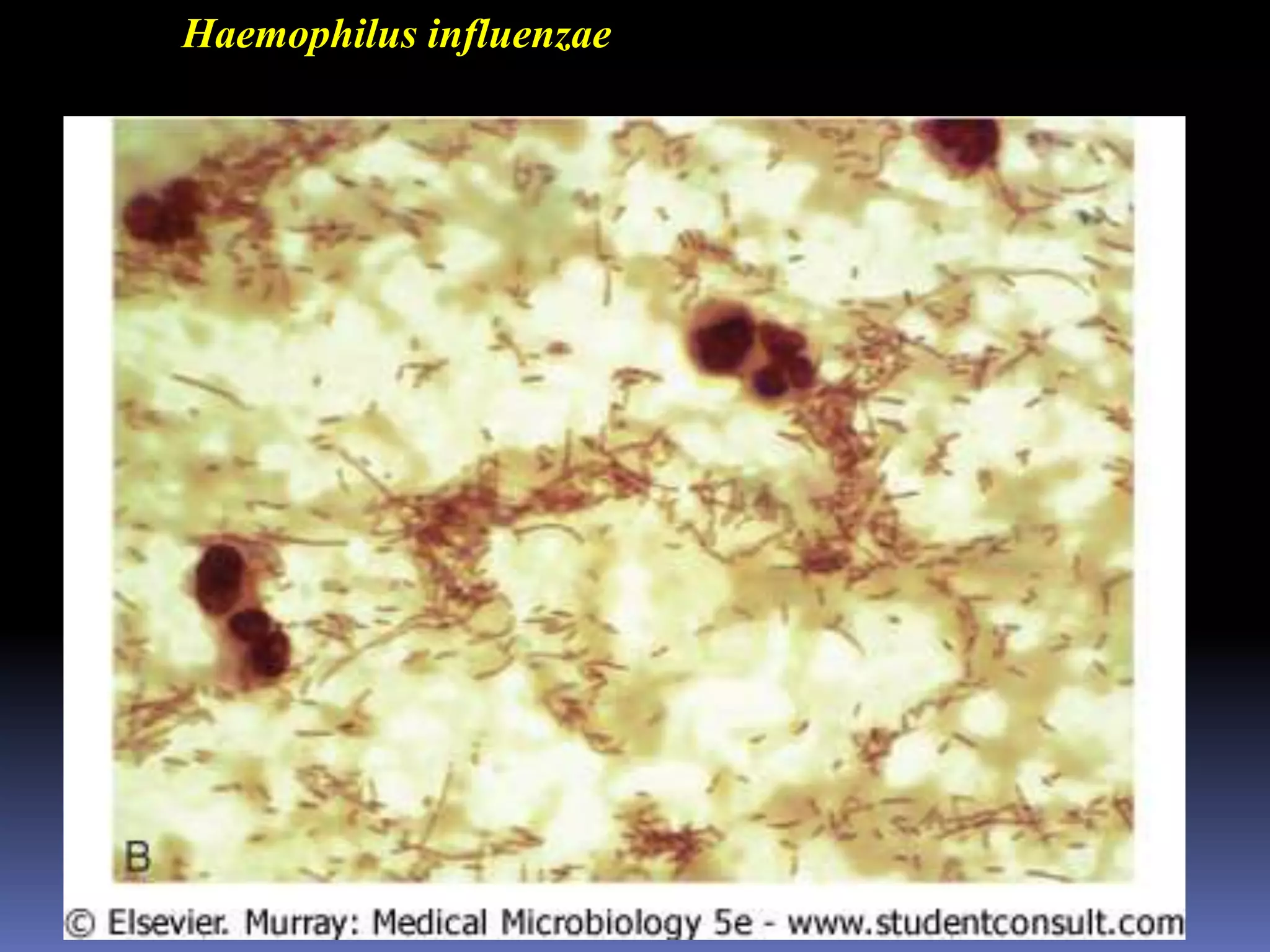
	b. Haemophilusinfluenzae-
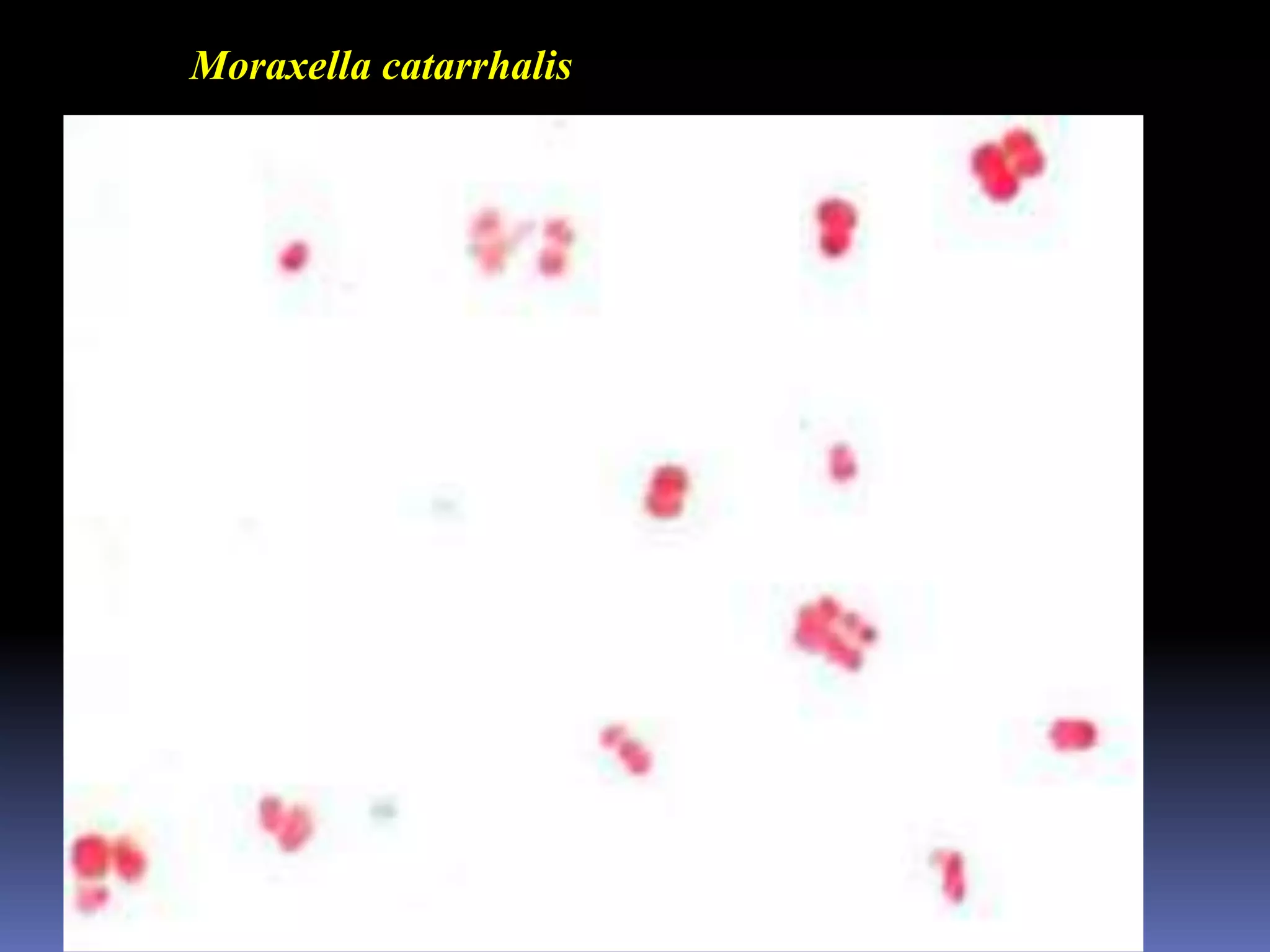
	c.  Moraxellacatarrhalis-
MICROPARA- RESPIRATORY INFECTIONby Dr Sonnie Talavera
Viral Pneumonia A number of viruses can cause pneumonia as a complication of infections such as influenza.The etiologies are not usually identified in a clinical laboratory because of the difficulty in isolating and identifying viruses.MICROPARA- RESPIRATORY INFECTIONby Dr Sonnie Talavera
Respiratory Syncytial Virus (RSV)  RSV is the most common cause of pneumonia in infants 2-6monthsLife threatening- txRibavirin and PalizumabCoughing, wheezing last more than a week, fever by bacterial infectionMICROPARA- RESPIRATORY INFECTIONby Dr Sonnie Talavera
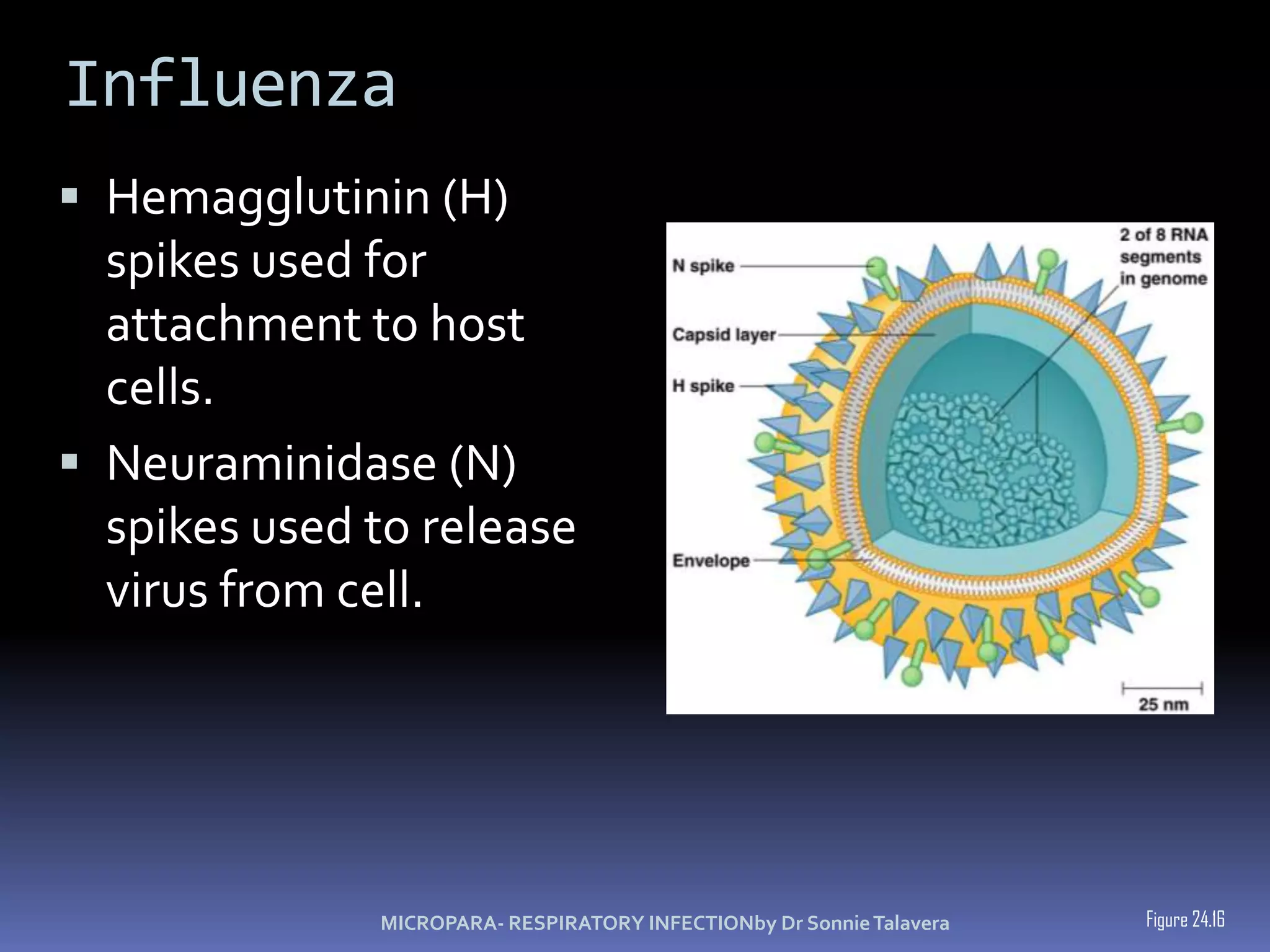
InfluenzaHemagglutinin (H) spikes used for attachment to host cells.Neuraminidase (N) spikes used to release virus from cell.Figure 24.16MICROPARA- RESPIRATORY INFECTIONby Dr Sonnie Talavera
InfluenzaAntigenic shiftChanges in H and N spikesProbably due to genetic recombination between different strains infecting the same cellAntigenic driftMutations in genes encoding H or N spikesMay involve only 1 amino acid.Allows virus to avoid mucosal IgA antibodies.MICROPARA- RESPIRATORY INFECTIONby Dr Sonnie Talavera
Influenza SerotypesA: Causes most epidemics, H3N2, H1N1, H2N2B: Moderate, local outbreaks	C: Mild diseaseMICROPARA- RESPIRATORY INFECTIONby Dr Sonnie Talavera
Influenza Deaths during epidemic - secondary bacterial infections.Multivalent vaccines for the elderly and other high-risk groups.Amantadine and rimantadine are effective prophylactic and curative drugsZanamivir  and oseltamivirMICROPARA- RESPIRATORY INFECTIONby Dr Sonnie Talavera
152SARSCoronavirusSevere acute respiratory syndrome IP: 2-7 daysMOT: respiratory droplet/person to person contact
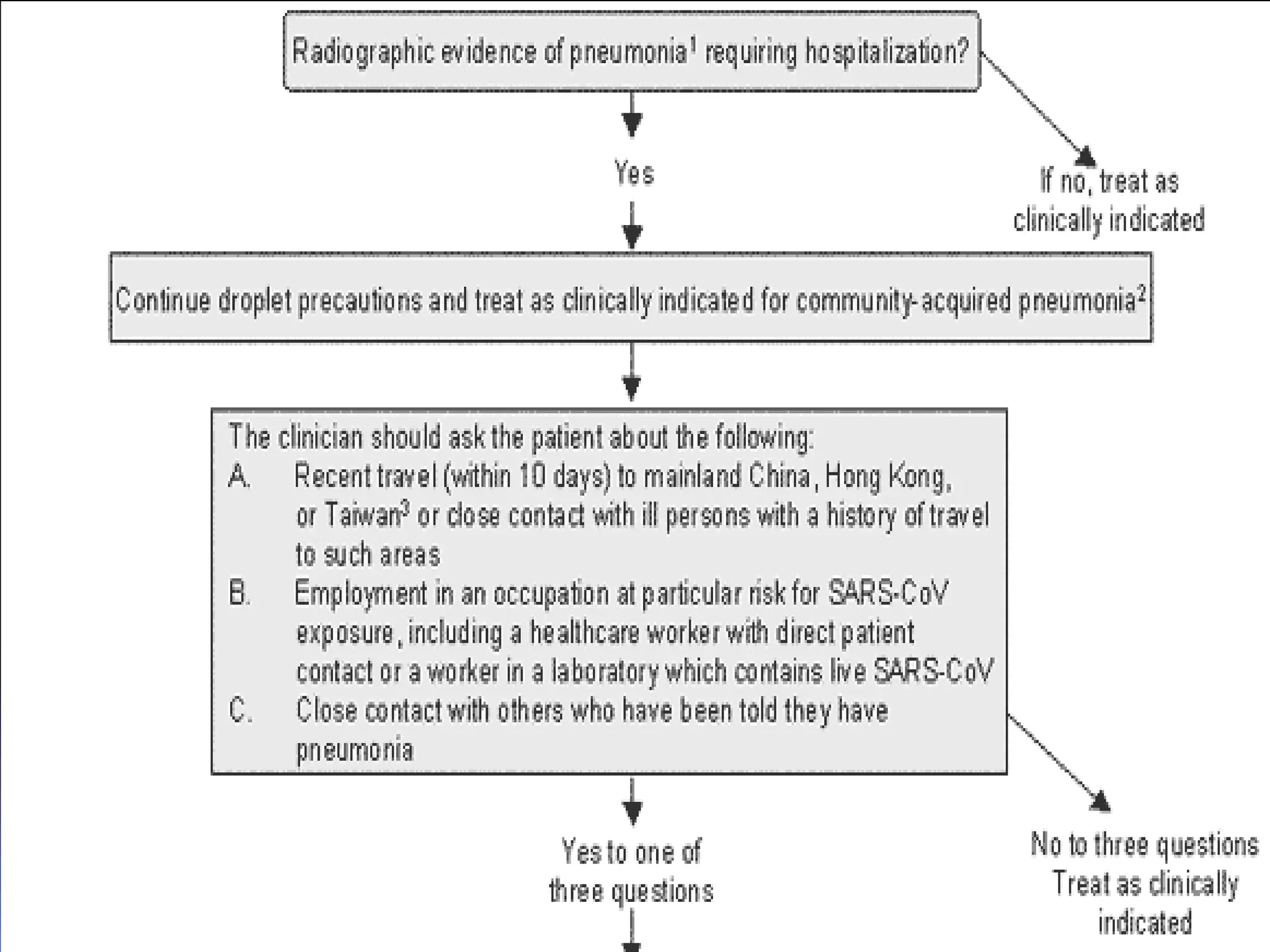
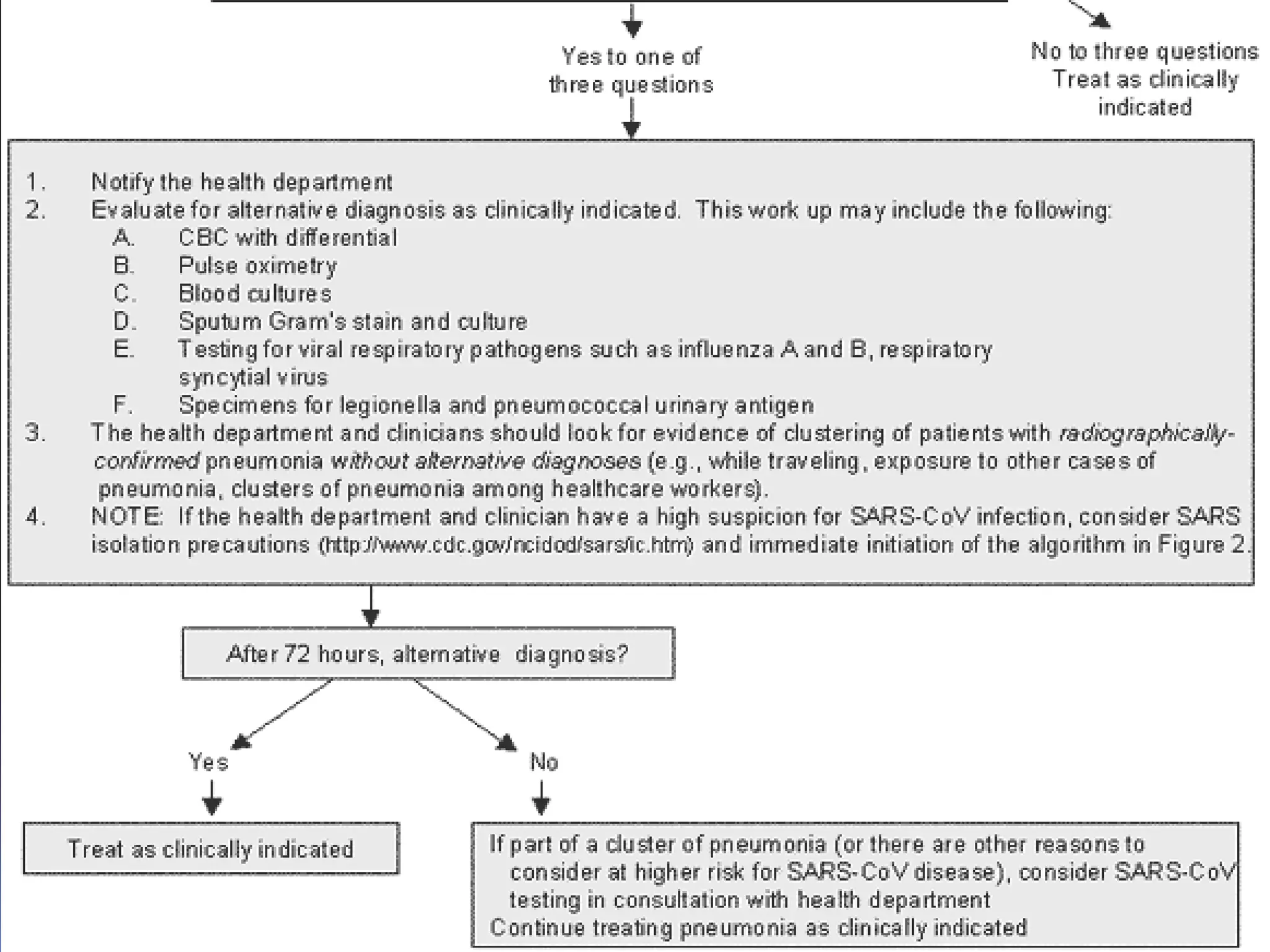
153RISK FACTORShistory of recent travel to China, Hong Kong, or Taiwan or close contact w/ ill persons with a hx of recent travel to such areas, ORIs employed in an occupation at particular risk for SARS exposure, i.e. healthcare worker with direct patient contact or a worker in a laboratory that contains live SARS, ORIs part of a cluster of cases of atypical pneumonia without an alternative diagnosis
154SIGNS AND SYMPTOMSfever, chills, rigors, myalgia, headache, diarrhea, sore throat, rhinorrhea2-7 days after onset of illness - shortness of breath and/or dry cough
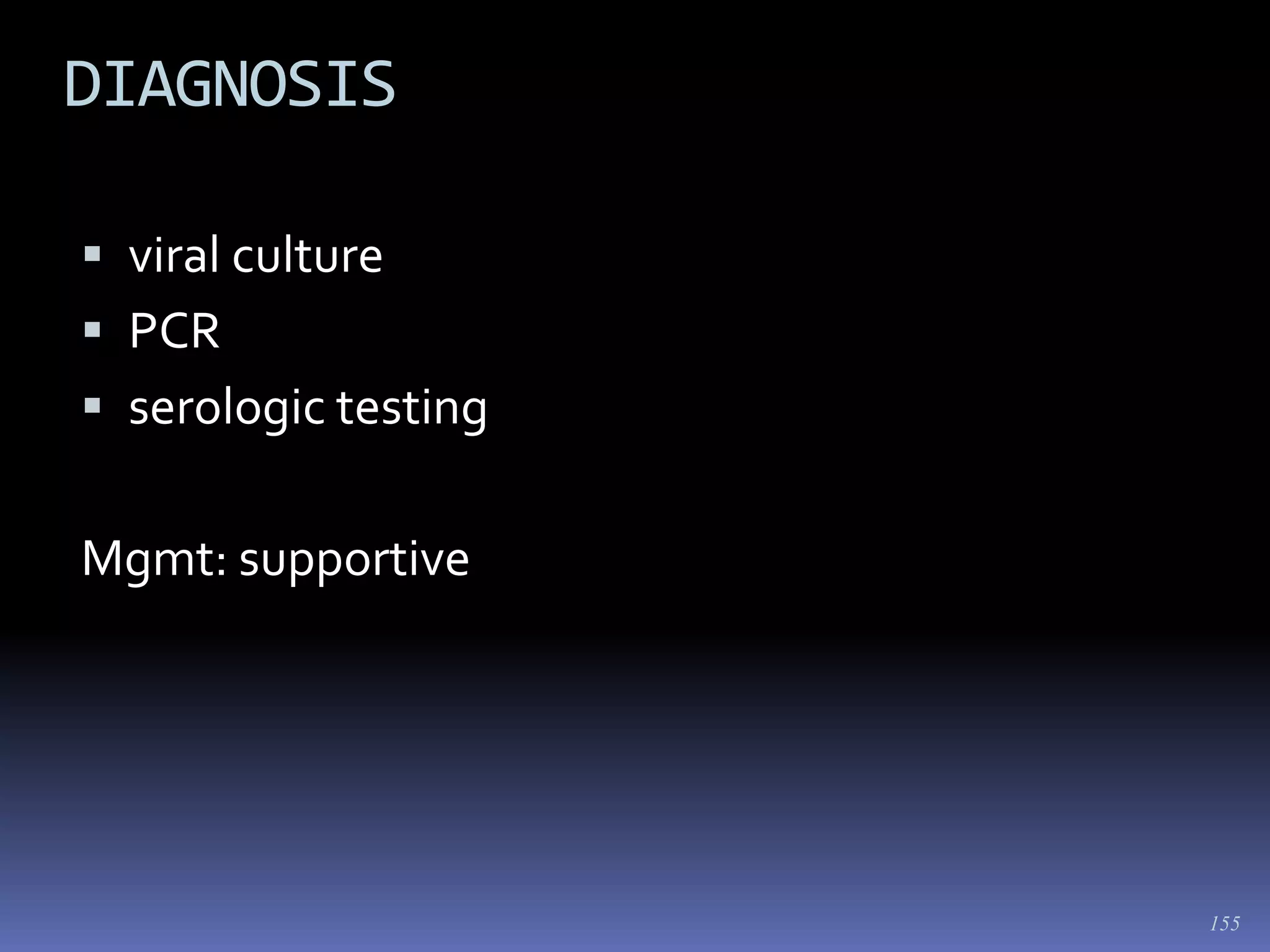
155DIAGNOSISviral culturePCRserologic testing Mgmt: supportive
Rex Karl S. Teoxon, R.N, M.D156
Rex Karl S. Teoxon, R.N, M.D157

Respimicro [recovered]

  • 1.
    24Microbial Diseases ofthe Respiratory SystemMICROPARA- RESPIRATORY INFECTIONby Dr Sonnie Talavera
  • 2.
    upper respiratory systemThe consists of the nose, pharynx, and associated structures, such as the middle ear and auditory tubes.Coarse hairs in the noseciliated mucous membranes ( nose and throat )Lymphoid tissue, tonsils, and adenoidsMICROPARA- RESPIRATORY INFECTIONby Dr Sonnie Talavera
  • 3.
    lower respiratory systemconsists of the larynx, trachea, bronchial tubes, and alveoli.ciliary escalatoralveolar macrophages.Respiratory mucus contains IgA antibodies.MICROPARA- RESPIRATORY INFECTIONby Dr Sonnie Talavera
  • 4.
    Normal Microbiota ofthe Respiratory SystemThe normal microbiota of the nasal cavity and throat can include pathogenic microorganisms.The lower respiratory system is usually sterile because of the action of the ciliary escalator.MICROPARA- RESPIRATORY INFECTIONby Dr Sonnie Talavera
  • 5.
    Upper Respiratory SystemUpperrespiratory normal microbiota may include pathogensFigure 24.1MICROPARA- RESPIRATORY INFECTIONby Dr Sonnie Talavera
  • 6.
    Microbial Diseases ofthe Upper Respiratory SystemLaryngitis: S. pneumoniae, S. pyogenes, virusesTonsillitis: S. pneumoniae, S. pyogenes, virusesSinusitis: BacteriaEpiglottitis: H. influenzaeHib vaccineMICROPARA- RESPIRATORY INFECTIONby Dr Sonnie Talavera
  • 7.
    Microbial Diseases ofthe Upper Respiratory System These infections may be caused by several bacteria and viruses, often in combination.Most respiratory tract infections are self-limiting.H. influenzae type b can cause epiglottitis.MICROPARA- RESPIRATORY INFECTIONby Dr Sonnie Talavera
  • 8.
    Streptococcal Pharyngitis (StrepThroat) GAS- Streptococcus pyogenesResistant to phagocytosisStreptokinaseslyse clotsStreptolysins are cytotoxicDiagnosis by indirect agglutination/ EIAFigure 24.3MICROPARA- RESPIRATORY INFECTIONby Dr Sonnie Talavera
  • 9.
    Streptococcal Pharyngitis (StrepThroat) group A beta-hemolytic streptococci- Streptococcus pyogenes.Symptoms of this infection are inflammation of the mucous membrane and fever; tonsillitis and otitis media may also occur.MICROPARA- RESPIRATORY INFECTIONby Dr Sonnie Talavera
  • 10.
    Streptococcal Pharyngitis (StrepThroat) Rapid diagnosis is made by enzyme immunoassays.Penicillin is used to treat streptococcal pharyngitis.Immunity to streptococcal infections is type-specific.Strep throat is usually transmitted by droplets.MICROPARA- RESPIRATORY INFECTIONby Dr Sonnie Talavera
  • 11.
    Scarlet FeverStreptococcus pyogenesPharyngitisErythrogenictoxin produced by lysogenizedS. pyogenesby a phage.Figure 24.4MICROPARA- RESPIRATORY INFECTIONby Dr Sonnie Talavera
  • 12.
    Scarlet Fever Strep throat,caused by an erythrogenic toxin-producing S. pyogenes, results in scarlet fever.starts general malaise and swelling of neckSymptoms include a red rash, high fever, and a SPOTTED STRABERRY like red, enlarged tongue.MICROPARA- RESPIRATORY INFECTIONby Dr Sonnie Talavera
  • 13.
    DiphtheriaCorynebacteriumdiphtheriae: Gram-positive rodpleomorphic club shapeMICROPARA- RESPIRATORY INFECTIONby Dr Sonnie Talavera
  • 14.
    DiphtheriaClinical Start assore throat and fever followed by general malaise and swelling of neckDiphtheria (leather) tough grayish membrane of fibrin, dead tissue, and bacteriaDiphtheria toxin produced by lysogenizedC. diphtheriae (highly virulent toxin)MICROPARA- RESPIRATORY INFECTIONby Dr Sonnie Talavera
  • 15.
    DiphtheriaFigure 24.6MICROPARA- RESPIRATORYINFECTIONby Dr Sonnie Talavera
  • 16.
    Diphtheria MICROPARA- RESPIRATORY INFECTIONbyDr Sonnie TalaveraVao day nghe bai nay di ban http://nhattruongquang.0catch.com
  • 17.
    DiphtheriaA membrane canblock the passage of air.Exotoxin inhibits protein synthesis, and heart, kidney, or nerve damage may result (fatal)minimal dissemination of the exotoxin in the bloodstream.Antitoxin - neutralize the toxinAntibiotics- Penicillin and Erythromycin can stop growth of the bacteria.MICROPARA- RESPIRATORY INFECTIONby Dr Sonnie Talavera
  • 18.
    DiphtheriaPrevented by DTaPand Td vaccine (Diphtheria toxoid)Cutaneous diphtheria: Infected skin wound leads to slow healing ulcerMICROPARA- RESPIRATORY INFECTIONby Dr Sonnie Talavera
  • 19.
  • 20.
    A 15y/o male patient have chief complaint of difficulty of breathing with associated throat pain, difficulty of swallowing and fever. Physical exam reveals inflamed pharyngeal area covered by grayish thick mucus that is adherent. Patient was noted to have an incomplete set of vaccination. Grams staining reveals gram positive bacilli with endospore.MICROPARA- RESPIRATORY INFECTIONby Dr Sonnie Talavera
  • 21.
  • 22.
    Small, pleomorphic (club-shaped),gram-positive bacilli short chains (“V” or “Y” configurations) or in clumps resembling “Chinese letters”
  • 23.
  • 24.
    Lipid-rich cell wallcontains meso -diaminopimelicacidOTITIS MEDIAinfection of the middle ear, primarily in infants and young childrenthree manifestationsacute otitis media
  • 25.
  • 26.
    otitis media witheffusionA. Symptoms - fever, pain in the ear, dulled hearing.
  • 27.
    Otitis MediaS. pneumoniae(35%)H. influenzae (20-30%)M. catarrhalis (10-15%)S. pyogenes (8-10%)S. aureus (1-2%)RSVAffects 85% of children before age 3, and estimated 8 million cases/ yearFigure 24.7MICROPARA- RESPIRATORY INFECTIONby Dr Sonnie Talavera
  • 28.
    Otitis MediaTreated withbroad-spectrum antibiotics Amoxicillin Incidence of S. pneumoniae reduced by vaccineFigure 24.7MICROPARA- RESPIRATORY INFECTIONby Dr Sonnie Talavera
  • 29.
    Otitis Media Earache, orotitis media, can occur as a complication of nose and throat infections.Pus accumulation causes pressure on the eardrum causes inflammation and pain.Often in children because of shorter and more horizontal eustachian tubeMICROPARA- RESPIRATORY INFECTIONby Dr Sonnie Talavera
  • 30.
    B. DIAGNOSIS– 1. clinical presentation of fever and pain, especially following an URT infection such as a cold 2. otoscopic examination to see inflammation and/or fluid (pus); also loss of mobility with air pressure
  • 31.
    6. swellingand blockage
  • 32.
  • 33.
    discomfort - pressureand blocked nasal passagesCommon coldRhinoviruses (50%)Coronaviruses (15-20%)MICROPARA- RESPIRATORY INFECTIONby Dr Sonnie Talavera
  • 34.
    The Common Cold Anyone of approximately 200 different viruses can cause the common cold; rhinoviruses cause about 50% of all colds.Immunity is based on the ration of Ig A antibodiesMICROPARA- RESPIRATORY INFECTIONby Dr Sonnie Talavera
  • 35.
    The Common Cold SymptomsSneezingnasal secretionscongestion.Sinus infections, lower respiratory tract infections, laryngitis, and otitis media can occur as complications of a cold.MICROPARA- RESPIRATORY INFECTIONby Dr Sonnie Talavera
  • 36.
    The Common Cold Coldsare most often transmitted by indirect contact.Rhinoviruses grow best slightly below body temperature.The incidence of colds increases during cold weatherAntibodies are produced against the specific viruses.MICROPARA- RESPIRATORY INFECTIONby Dr Sonnie Talavera
  • 37.
    Microbial Diseases ofthe Lower Respiratory SystemBacteria, viruses, and fungi causeBronchitisBronchiolitisPneumoniaMICROPARA- RESPIRATORY INFECTIONby Dr Sonnie Talavera
  • 38.
    Lower Respiratory SystemTheciliary escalator keeps the lower respiratory system sterile.Figure 24.2MICROPARA- RESPIRATORY INFECTIONby Dr Sonnie Talavera
  • 39.
    Pertussis (Whooping Cough)Bordetellapertussis:Gram-negative coccobacillusCapsuleTracheal cytotoxin of cell wall damaged ciliated cellsPertussistoxin produces systemic diseasePrevented by DTaP vaccine (acellularPertussis cell fragments)Figure 24.8MICROPARA- RESPIRATORY INFECTIONby Dr Sonnie Talavera
  • 40.
    Epidemiology of Bordetellapertussis InfectionMan is only natural host; obligate parasites of man
  • 41.
    Disease is highlycommunicable (highly infectious)
  • 42.
    Children under oneyear at highest risk, but prevalence increasing in older children and adults Whooping coughInhalation of aerosolsAdhere to ciliated epithelial cells (FHA, Pili)Toxin productionDamage to mucosal cells(TCT, Ptx, Acase, LPS?)Act on neurons(Ptx, Acase, LPS)Paroxysmal cough
  • 43.
    Whooping coughSymptomsSevere coughing,spasms, inspiratory whoop LymphocytosisStages of diseaseCatarrhal -> Paroxysmal -> ConvalescentSpread--highlycontagiousInhalation or direct contact with secretionUsually self-limitingNeurological sequelaeSecondary respiratory infectionsSecondary aspiration pneumoniaeleading cause of death
  • 44.
    Pertussis (Whooping Cough)MICROPARA-RESPIRATORY INFECTIONby Dr Sonnie Talavera
  • 45.
    Pertussis (Whooping Cough).MICROPARA-RESPIRATORY INFECTIONby Dr Sonnie Talavera
  • 46.
    Clinical Progression ofPertussis,or deathInflammation of respiratory mucosal memb.Most infectious, but generally not yet diagnosed
  • 47.
    Laboratory Culture, Prevention& Treatment of BordetellaNonmotile
  • 48.
  • 49.
    Requires nicotinamide andcharcoal, starch, blood, or albumin
  • 50.
  • 51.
    Isolated on modifiedBordet-Gengouagar
  • 52.
    Treatmentwith erythromycinPertussis(Whooping Cough) Laboratory diagnosis is based on isolation of the bacteria on enrichment and selective media, followed by serological tests.Regular immunization for children has decreased the incidence of pertussis.MICROPARA- RESPIRATORY INFECTIONby Dr Sonnie Talavera
  • 53.
  • 54.
    SituationerLeading causes ofdeath world wideUp to a half of world’s population infected, 95% in developing countries8 million people get TB every year(WHO fact sheet 2007)
  • 55.
    Philippines ranks 4thfor # of TB cases worldwide, highest # per head in SEA2/3 of Filipinos with TB(DOH, 2007)
  • 56.
    Rex Karl S.Teoxon, R.N, M.D46PTBMycobacterium tubercle, acid fast bacilliAirborne/dropletsPott’s disease – thoracolumbarMilliary TB – kidney, liver, lungs
  • 57.
    Rex Karl S.Teoxon, R.N, M.D47
  • 58.
    Rex Karl S.Teoxon, R.N, M.D48
  • 59.
    MorphologyMycobacterium tuberculosisThin straightrods, 0.4 x 3 µmAcid-fast organisms
  • 60.
    Mycobacterial cell wallcomponentsLipids (mycolic acids)ProteinsPolysaccharides
  • 61.
    TB symptomsCough withtwo weeks or moreSputum expectorationFeverSignificant weight lossHemoptysisChest and/or back pains
  • 62.
    Rex Karl S.Teoxon, R.N, M.D52SIGNS AND SYMPTOMSWt loss, night sweats, low fever, non productive to productive cough, anorexia, Pleural effusion and hypoxemia, cervical lymphadenopathy
  • 63.
    TuberculosisMycobacterium tuberculosis: Acid-fastrod; transmitted from human to human.M. bovis: <1% U.S. cases, not transmitted from human to human.M. avium-intracellulare complex infects people with late stage HIV infection.Figure 24.9MICROPARA- RESPIRATORY INFECTIONby Dr Sonnie Talavera
  • 64.
    TuberculosisMycobacterium tuberculosisAcid fast-lipid,waxSlow growth (nutrient permeability)Resist to detergent and common antibioticsA leading cause of death by infectious disease 50% population infected, 3m death/yrReemergence in 1980 (AIDS, homeless, immigrants)DiagnosePPD testChest X-raySputum smear (for acid-fast bacilli)Sputum culture
  • 65.
  • 66.
    Slow, 13 hourgeneration time, takes weeks
  • 67.
  • 68.
  • 69.
  • 70.
  • 71.
    BacteriophageRex Karl S.Teoxon, R.N, M.D56PPD – IDmacrophages in skin take up Ag and deliver it to T cells T cells move to skin site, release lymphokines activate macrophages and in 48-72 hrs, skin becomes indurated - > 10 mm is (+)
  • 72.
    Rex Karl S.Teoxon, R.N, M.D57DIAGNOSISChest x ray - cavitary lesion Sputum exam Sputum culture
  • 73.
    Stages of diseasePrimaryinfectionAsymptomatic to flu-like3-5% develop TBTubercle (granulomatous response)Reactivation (active TB) Years later, 10% experienceLRT disease (pneumonia)Disseminated miliary TBAlmost everywhereAIDS and antibiotic resistance
  • 74.
    Stages of pathogenesisEncounter- respiratory dropletEntry - direct inhalation into LRT (ID=10)SPREAD - alveoli, but can spread throughout body seeding many tissuesMultiplicationGrows in phagosome of macrophageStrict aerobeVery slow in culture (24 hr doubling time)Evade defenses Inhibits phagolysosomal fusion
  • 75.
    Tuberculosis Tuberculosis is causedby Mycobacterium tuberculosis.Large amounts of lipids in the cell wall account for the bacterium’s acid-fast characteristic as well as its resistance to dryingnd disinfectants.MICROPARA- RESPIRATORY INFECTIONby Dr Sonnie Talavera
  • 76.
    Tuberculosis M. tuberculosis maybe ingested by alveolar macrophages; if not killed, the bacteria reproduce in the macrophages.MICROPARA- RESPIRATORY INFECTIONby Dr Sonnie Talavera
  • 77.
    Tuberculosis Lesions formed byM. tuberculosis are called tuberclesDead macrophages and bacteria form the caseous lesion that might calcify and appear in an X ray as a Ghon’s complex.MICROPARA- RESPIRATORY INFECTIONby Dr Sonnie Talavera
  • 78.
    Tuberculosis Liquefaction of thecaseous lesion results in a tuberculous cavity in which M. tuberculosis can grow.MICROPARA- RESPIRATORY INFECTIONby Dr Sonnie Talavera
  • 79.
    Tuberculosis New foci ofinfection can develop when a caseous lesion ruptures and releases bacteria into blood or lymph vessels; this is called miliary tuberculosis.MICROPARA- RESPIRATORY INFECTIONby Dr Sonnie Talavera
  • 81.
    M. tuberculosisDamageHost responseto bacteria (cell-mediated immunity)Glycolipids (Freund adjuvant)Spread to new hostsContagious by droplet, resistant to dryingVaccine - BCGCauses people to become PPD+, not very effectiveInfect AIDSTreatmentUnusual set of antibiotics (isoniazid, ethambutol, rifampin)High mutation rate
  • 82.
    Tuberculosis Miliary tuberculosis ischaracterized by weight loss, coughing, and loss of vigor.Chemotherapy usually involves 3 or 4 drugs taken for at least 6 months; multidrug-resistant M. tuberculosis is becoming prevalent.MICROPARA- RESPIRATORY INFECTIONby Dr Sonnie Talavera
  • 83.
    Tuberculosis Positive tuberculin skintest an active case of TBprior infectionvaccination immunity to the diseaseInduration and reddening at inoculation site within 48hours.Most accurate- Mantoux testMICROPARA- RESPIRATORY INFECTIONby Dr Sonnie Talavera
  • 84.
    Tuberculosis Laboratory diagnosis isbased on the presence of acid-fast bacilli and isolation of the bacteria, which requires incubation (3-6weeks) of up to 8 weeks (Lowenstein-Jensen Agar)MICROPARA- RESPIRATORY INFECTIONby Dr Sonnie Talavera
  • 85.
    PPD Tuberculosis SkinTest CriteriaPPD = Purified Protein Derivative from M. tuberculosis
  • 86.
  • 87.
  • 88.
  • 89.
    Chest X-Ray ofPatient with Active Pulmonary Tuberculosis
  • 90.
    Tuberculosis Mycobacterium boviscauses bovinetuberculosis transmitted to humans by unpasteurized milk.affect the bones or lymphatic system.BCG vaccine -a live, avirulent culture of M. bovisM. avium-intracellulare complex infects patients in the late stages of HIVMICROPARA- RESPIRATORY INFECTIONby Dr Sonnie Talavera
  • 91.
    TuberculosisTreatment of tuberculosis:Prolonged treatment with multiple antibiotics.Vaccines: BCG, live, avirulent M. bovis; not widely used in United States.MICROPARA- RESPIRATORY INFECTIONby Dr Sonnie Talavera
  • 92.
  • 93.
    Rex Karl S.Teoxon, R.N, M.D78MANAGEMENTshort course – 6-9 months long course – 9-12 monthsDOTS- direct observe treatment short courseCase findingHome meds (members of the family)ReferralsFollow-up short course – 6-9 months long course – 9-12 months
  • 94.
    Rex Karl S.Teoxon, R.N, M.D79MANAGEMENTFollow-up * 2 wks after medications – non communicable 3 successive (-) sputum - non communicablerifampicin - prophylactic
  • 95.
    Rex Karl S.Teoxon, R.N, M.D80CATEGORIES OF TBcategory I (new PTB) - (+) sputumcategory II (relapse)category III (PTB case) - (-) sputum
  • 96.
    Rex Karl S.Teoxon, R.N, M.D81TREATMENT:CATEGORY 1 - NEW PTB, (+) SPUTUMGIVE RIPE 2 MONTHS, MAINTENANCE OF RI 4 MONTHSCATEGORY 2 - PREVIOUSLY TREATED WITH RELAPSESGIVE RIPES 1ST 2 MONTHS, REPS 1 MONTH, MAINTENANCE RIE 5 MONTHSCATEGORY 3 - NEW PTB (-) SPUTUM FOR 3XGIVE RIP 2 MONTHS, MAINTENACE RI 2 MONTHS* IF RESISTANT TO DRUGS GIVE ADDITIONAL MONTH/S AS PRESCRIBED
  • 97.
    Rex Karl S.Teoxon, R.N, M.D82MDT side effectsr-orange urinei-neuritis and hepatitisp-hyperuricemiae-impairment of visions-8th cranial nerve damage
  • 98.
    AFB SMEAR REPORTINGGUIDELINE, DOHNATIONAL TUBERCULOSIS CONTROL PROGRAM (2001)Emilio M. Ramirez, MD
  • 99.
    National Tuberculosis ControlProgram (2001)prevent transmission of tubercle bacilli to a healthy person
  • 100.
    Goal: ReduceTB mortality and prevalence through early case detection and treatmentTarget: identify at least 70% of new smear (+) cases, cure at least 85% TB patients discoveredStrategy: DOTS (directly observed treatment short course chemotheapy)
  • 101.
  • 102.
  • 103.
  • 104.
    Cheesy materialWhen tocollect another set of 3 sputum specimens?When the diagnosis for the sputum microscopy examination is doubtful.When the patient fails to complete his sputum collection within two weeks from the time of the previous collection.
  • 105.
  • 106.
    Presence of alveolarmacrophage, dust cellsAFB STAINING
  • 107.
    DIRECT SMEAR EXAMINATION(FlowChart)SMEARING SPREADING DRYING FIXATIONSTAINING INITIAL STAINING HEATING WASHING DECOLORIZATION WASHING COUNTER-STAINING WASHING DRYINGMICROSCOPIC OBSERVATION RECORDING & REPORTING
  • 108.
    DIRECT SMEAR PREPARATIONLABELINGTHE SLIDESWrite down the identification number of the sputum specimen on the end of a clean glass slide.
  • 109.
    SMEARINGSPREADINGWith a coconutmidrib, fish out one (1) loopful of purulent, solid particles of the sputum.Spread the sputum evenly on the slide, approximately 2 x 3 cm in size.
  • 110.
    A Good SmearPoor/toothick Good Poor/too thin
  • 111.
    SMEARINGDRYINGAllow the smearto dry completely at room temperature. Do not dry it under the sun or over the flame.Place used midribs in a bottle with alcohol and sand mixture or Lysol, or in a plastic containers and burn them later.
  • 112.
    SMEARINGFIXATIONFix the smearby passing it through the flame of an alcohol lamp 2 to 3 times, about 2-3 seconds each. Heat the back of smeared surface of the slide. Never scorch the smear.
  • 113.
    STAININGFIXATIONFix the smearby passing it through the flame of an alcohol lamp 2 to 3 times, about 2-3 seconds each. Heat the back of smeared surface of the slide. Never scorch the smear.
  • 114.
    STAININGINITIAL STAININGArrange theslides on the staining bridge consecutively. Pour carbol fuchsin solution covering the whole surface of the slide.
  • 115.
    STAININGHEATING OF THESLIDEHeat the slide using an alcohol lamp or spirit cotton in a stick ‘till steam comes off from the stain. Do not boil and do not allow the stain to dry. Leave it for five minutes.
  • 116.
    STAININGWASHING OF THESLIDETilt the slide to drain off excess stain.Wash the staining solution off with a gentle stream of running water.
  • 117.
    STAININGDECOLOURIZATIONTilt the slideto drain off excess rinse water.Cover the whole slide with 3% hydrochloric acid-ethanol and leave it until solution runs clear.
  • 118.
    StainingWASHING OF THESLIDEWash the slide with a gentle stream of running water.Tilt the slide to drain off excess rinse water.
  • 119.
    StainingCOUNTERSTAININGPour 0.1% methyleneblue to cover the whole surface of the smear and leave for 5-10 seconds.Tilt the slide to drain off excess methylene blue.
  • 120.
    StainingWASHING AND DRYINGWashthe slide with a gentle stream of running water.Tilt and place the slide on the slide rack to dry in the air. Don’t place under the sun to dry.
  • 121.
    SMEAR READINGPROPER SCANNING HorizontalScanning Vertical ScanningIMPROPER SCANNING Zigzag Scanning3 cm
  • 122.
  • 123.
    MICROSCOPIC OBSERVATION OFAFB IN PROPERLY AND IMPROPERLY STAINED SMEARPROPER STAININGINSUFFICIENT HEATINGUNDERDECOLORIZEDINTENSELY COUNTERSTAINED
  • 124.
  • 125.
    INTERPRETATION OF LABRESULTSPOSITIVE - if all or at least two of the three specimens are positiveNEGATIVE - if all (3) specimens are negativeDOUBTFUL - if one of the three specimens is positive (sputum examination should be repeated)
  • 126.
    Bacterial PneumoniasTypical pneumoniais caused by S. pneumoniae.Atypical pneumonias are caused by other microorganisms.Lobar pneumoniabronchopneumoniaMICROPARA- RESPIRATORY INFECTIONby Dr Sonnie Talavera
  • 127.
  • 128.
    PneumoniasSign/ symptomsHigh feverDOBChestpainProductive coughMICROPARA- RESPIRATORY INFECTIONby Dr Sonnie Talavera
  • 129.
  • 130.
  • 131.
  • 132.
    MICROPARA- RESPIRATORY INFECTIONbyDr Sonnie TalaveraMortality within 30 days according to PSI risk class19
  • 133.
    Pneumomoccal PneumoniaStreptococcus pneumoniae:Gram-positive encapsulated diplococciDiagnosis is by culturing bacteria.Penicillin Fluoroquinolones is drug of choice.Figure 24.13MICROPARA- RESPIRATORY INFECTIONby Dr Sonnie Talavera
  • 134.
    Pneumococcal pneumonia(Streptococcus pneumoniae)Gram-positivediplococcusEncapsulated (>80 serotypes)Susceptible populationElderlyPreviously illPhagocytic dysfunction (e.g., asplenic, sickle cell)Also cause meningitis, otitis mediaSensitive to optichin; autolysis by bile
  • 135.
    Pneumococcal PneumoniaThe bacteriacan be identified alpha-hemolysins, inhibition by optochin, bile solubility serological tests.MICROPARA- RESPIRATORY INFECTIONby Dr Sonnie Talavera
  • 136.
  • 137.
    Pneumococcal Pneumonia Symptoms Feverbreathingdifficultychest painrust-colored sputum.A vaccine consists of purified capsular material from 23 serotypes of S. pneumoniae.MICROPARA- RESPIRATORY INFECTIONby Dr Sonnie Talavera
  • 138.
    Stages of pathogenesisEncounter- humans only, by respiratory dropletEntry - colonization of the oropharynx, aspiration into lung (pneumonia)Spread (extracellular)Pneumonia - blood culture can be positiveMeningitis - penetration of mucous membraneOtitis media- eustachian tube to middle earMultiplication Grows well in serous fluid in alveoli spaceEvade defensesCapsule--antiphagocyticsIgA protease
  • 139.
    Haemophilus Influenzae PneumoniaGram-negativecoccobacillusAlcoholism, poor nutrition, cancer, or diabetes are predisposing factors.Second-generation cephalosporinsMICROPARA- RESPIRATORY INFECTIONby Dr Sonnie Talavera
  • 140.
    Mycoplasmal Pneumonia Mycoplasmapneumoniae causesmycoplasmal pneumonia; it is an endemic disease.Young adults and childrenSymptoms persist for 3 weeks and longer (low fever, cough and headaches)PRIMARY ATYPICAL/ WALKING PNEUMONIAMICROPARA- RESPIRATORY INFECTIONby Dr Sonnie Talavera
  • 141.
    Mycoplasmal Pneumonia M. pneumoniaeproduces small “fried-egg” colonies after two weeks’ incubation on enriched media containing horse serum and yeast extract. Diagnosis is by PCR or serological tests.MICROPARA- RESPIRATORY INFECTIONby Dr Sonnie Talavera
  • 142.
    Atypical (walking) pneumoniaMycoplasmapneumoniaLacks peptidoglycan-lactam resistantDisease primarily in young adultsEncounter - inhalation from humanEntry - restricted to mucosal surfaceTerminal adhesin protein (P1)Multiplication - require sterolsDamageInflammationDamage and desquamation of ciliated epitheliumTreatmentsErythromycin, doxycycline, tetracyline
  • 143.
    Model for mycoplasmapathogenesis in the lungs
  • 144.
    LegionellosisThe disease iscaused by the aerobic gram-negative rod Legionellapneumophila.High fever 40.5C, cough and general pneumonia symptomsThe bacterium can grow in water, such as air-conditioning cooling towers, and then be disseminated in the air.MICROPARA- RESPIRATORY INFECTIONby Dr Sonnie Talavera
  • 145.
    Legionnaire's disease/Pontiac FeverLegionellapneumophilaGram-negative rodStains irregularlySilver stainDiseasePontiac Fever - flu-like in anyone (1968) Fever muscular ache and cough(self limiting)Legionnaire's disease - pneumoniaPrimarily in middle aged to older men who heavy smoker and drinker or chronically ill1976 American Legion Convention in Philadelphia ( toll 182 cases/29 death)
  • 146.
  • 147.
    LegionellosisThis pneumonia doesnot appear to be transmitted from person to person.Bacterial culture, FA tests, and DNA probes are used for laboratory diagnosis. Prevention : Copper Ionizing procedureTreatment : Erythromycin, some macrolides like AzithromycinMICROPARA- RESPIRATORY INFECTIONby Dr Sonnie Talavera
  • 148.
    Psittacosis (Ornithosis) Chlamydophilapsittaci –gram negative intracellular bacteria and is transmitted by contact with contaminated droppings and exudates of fowl.Elementary bodies allow the bacteria to survive outside a host.s/sx: fever, headache , chills, some with delirium and disorientationMICROPARA- RESPIRATORY INFECTIONby Dr Sonnie Talavera
  • 149.
    Psittacosis (Ornithosis) Commercial birdhandlers are most susceptible to this disease.The bacteria are isolated in embryonated eggs, mice, or cell culture; identification is based on FA staining.Tx: TetracyclineMICROPARA- RESPIRATORY INFECTIONby Dr Sonnie Talavera
  • 150.
    Chlamydial Pneumonia Chlamydophilapneumoniae causespneumonia; it is transmitted from person to person.Atherosclerosis-deposition of fats on arteriess/sx resemble mycoplasma pneumoniaTetracycline is used for treatment.MICROPARA- RESPIRATORY INFECTIONby Dr Sonnie Talavera
  • 151.
    Q Fever Obligately parasitic,intracellular Coxiellaburnetii causes Q fever or X feverThe disease is usually transmitted to humans through unpasteurized milk or inhalation of aerosols in dairy barns, cattle tick bitesLaboratory diagnosis is made with the culture of bacteria in embryonated eggs or cell culture.MICROPARA- RESPIRATORY INFECTIONby Dr Sonnie Talavera
  • 152.
    Q Fever Wide rangeof clinical symptoms60% asymptomatics/sx: High fever, muscle ache, headache and coughingHepatitis and endocarditis (persist for months)Tx: Doxycycline , ChloroquineMICROPARA- RESPIRATORY INFECTIONby Dr Sonnie Talavera
  • 153.
    Melioidosis Melioidosis, glanders disease(horses) caused by Burkholderiapseudomalleitransmitted by inhalation, ingestion, or through puncture wounds. Symptoms include pneumonia, sepsis, and encephalitis.Tx: CeftazidimeMICROPARA- RESPIRATORY INFECTIONby Dr Sonnie Talavera
  • 154.
  • 155.
  • 156.
    Diagnostic MICROPARA- RESPIRATORYINFECTIONby Dr Sonnie Talavera
  • 157.
  • 158.
  • 159.
  • 160.
  • 161.
  • 162.
    Viral Pneumonia A numberof viruses can cause pneumonia as a complication of infections such as influenza.The etiologies are not usually identified in a clinical laboratory because of the difficulty in isolating and identifying viruses.MICROPARA- RESPIRATORY INFECTIONby Dr Sonnie Talavera
  • 163.
    Respiratory Syncytial Virus(RSV)  RSV is the most common cause of pneumonia in infants 2-6monthsLife threatening- txRibavirin and PalizumabCoughing, wheezing last more than a week, fever by bacterial infectionMICROPARA- RESPIRATORY INFECTIONby Dr Sonnie Talavera
  • 164.
    InfluenzaHemagglutinin (H) spikesused for attachment to host cells.Neuraminidase (N) spikes used to release virus from cell.Figure 24.16MICROPARA- RESPIRATORY INFECTIONby Dr Sonnie Talavera
  • 165.
    InfluenzaAntigenic shiftChanges inH and N spikesProbably due to genetic recombination between different strains infecting the same cellAntigenic driftMutations in genes encoding H or N spikesMay involve only 1 amino acid.Allows virus to avoid mucosal IgA antibodies.MICROPARA- RESPIRATORY INFECTIONby Dr Sonnie Talavera
  • 166.
    Influenza SerotypesA: Causesmost epidemics, H3N2, H1N1, H2N2B: Moderate, local outbreaks C: Mild diseaseMICROPARA- RESPIRATORY INFECTIONby Dr Sonnie Talavera
  • 167.
    Influenza Deaths duringepidemic - secondary bacterial infections.Multivalent vaccines for the elderly and other high-risk groups.Amantadine and rimantadine are effective prophylactic and curative drugsZanamivir and oseltamivirMICROPARA- RESPIRATORY INFECTIONby Dr Sonnie Talavera
  • 168.
    152SARSCoronavirusSevere acute respiratorysyndrome IP: 2-7 daysMOT: respiratory droplet/person to person contact
  • 169.
    153RISK FACTORShistory ofrecent travel to China, Hong Kong, or Taiwan or close contact w/ ill persons with a hx of recent travel to such areas, ORIs employed in an occupation at particular risk for SARS exposure, i.e. healthcare worker with direct patient contact or a worker in a laboratory that contains live SARS, ORIs part of a cluster of cases of atypical pneumonia without an alternative diagnosis
  • 170.
    154SIGNS AND SYMPTOMSfever,chills, rigors, myalgia, headache, diarrhea, sore throat, rhinorrhea2-7 days after onset of illness - shortness of breath and/or dry cough
  • 171.
  • 172.
    Rex Karl S.Teoxon, R.N, M.D156
  • 173.
    Rex Karl S.Teoxon, R.N, M.D157
  • 174.
    Rex Karl S.Teoxon, R.N, M.D158
  • 175.
  • 176.
    Fungal Diseases ofthe Lower Respiratory System Fungal spores are easily inhaled; they may germinate in the lower respiratory tract.The incidence of fungal diseases has been increasing in recent years.The mycoses in the sections below can be treated with amphotericin B.MICROPARA- RESPIRATORY INFECTIONby Dr Sonnie Talavera
  • 177.
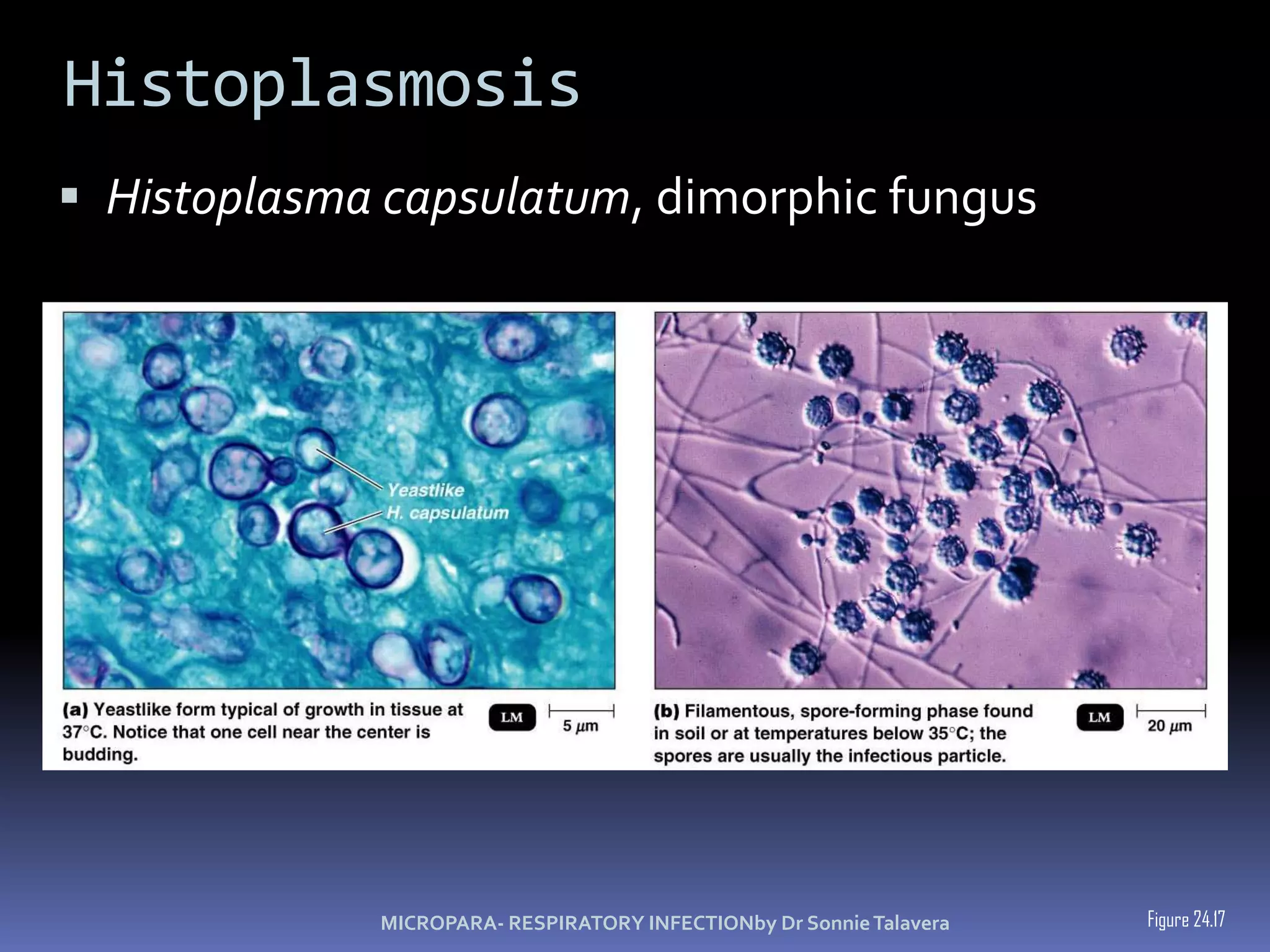
    HistoplasmosisHistoplasma capsulatum, dimorphicfungusFigure 24.17MICROPARA- RESPIRATORY INFECTIONby Dr Sonnie Talavera
  • 178.
     HistoplasmosisResembles Tuberculosis Histoplasmacapsulatumcauses a subclinical respiratory infection that only occasionally progresses to a severe, generalized disease.MICROPARA- RESPIRATORY INFECTIONby Dr Sonnie Talavera
  • 179.
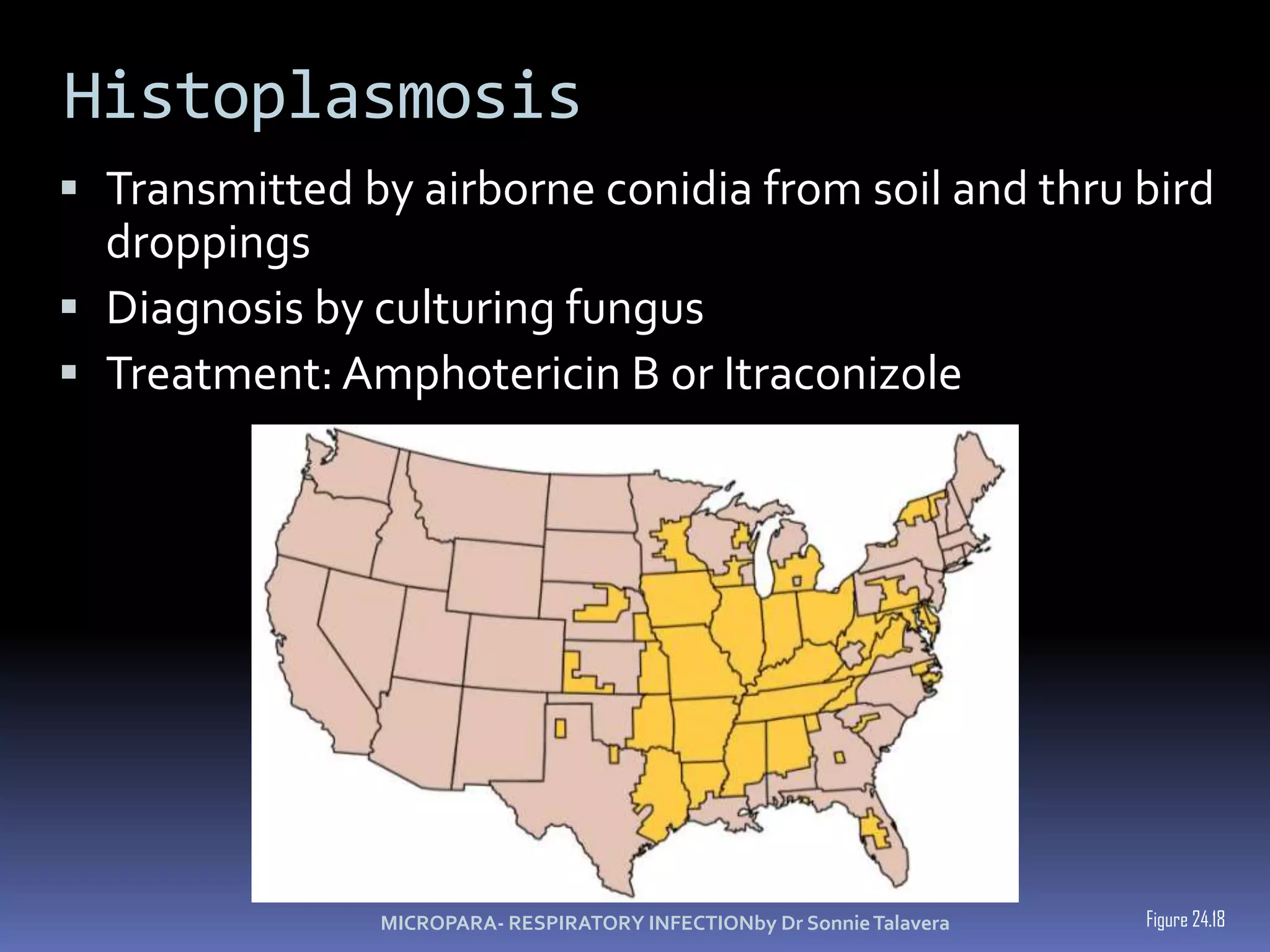
    HistoplasmosisTransmitted by airborneconidia from soil and thru bird droppingsDiagnosis by culturing fungusTreatment: AmphotericinB or ItraconizoleFigure 24.18MICROPARA- RESPIRATORY INFECTIONby Dr Sonnie Talavera
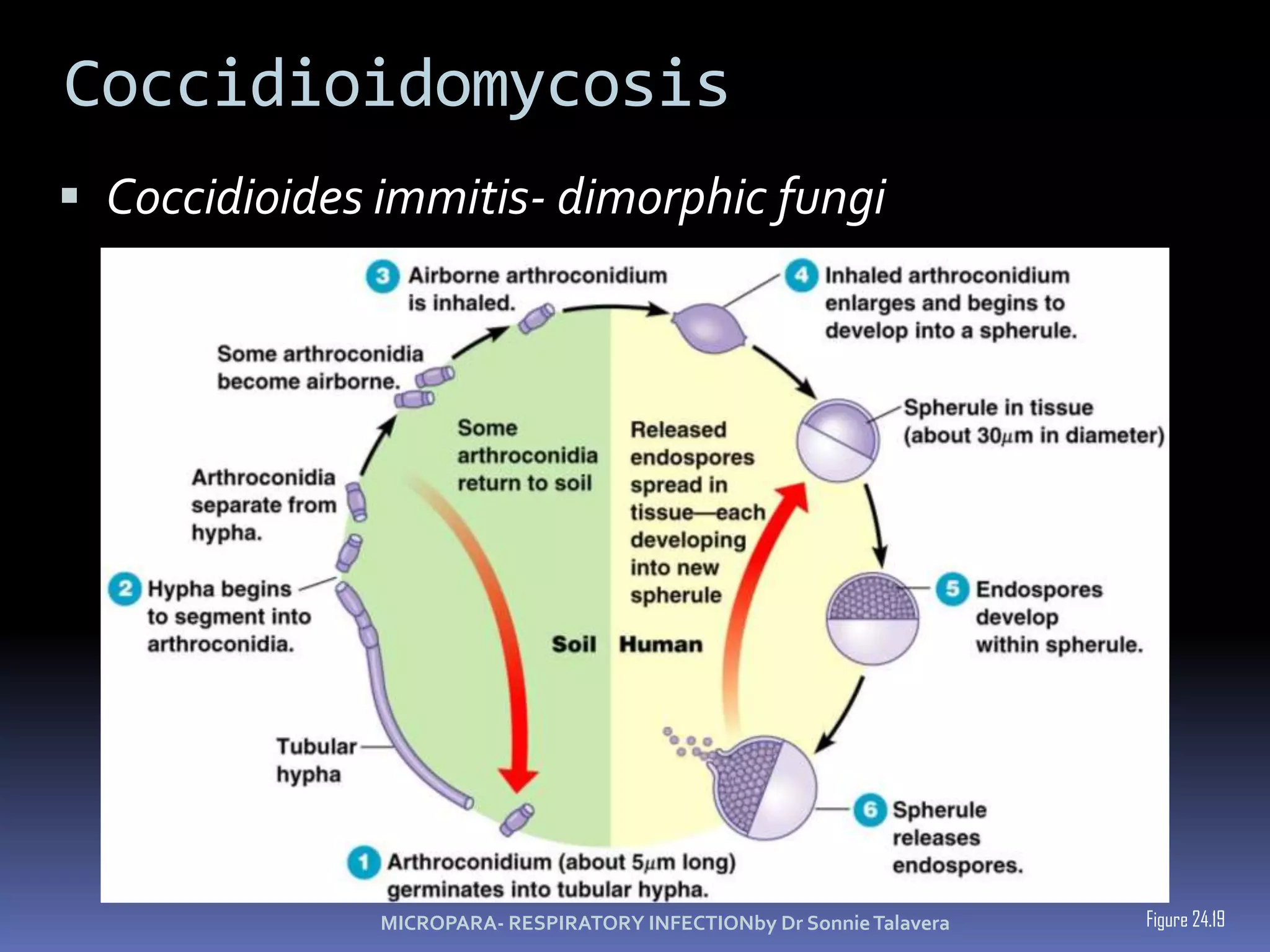
  • 180.
    CoccidioidomycosisCoccidioidesimmitis- dimorphic fungiFigure24.19MICROPARA- RESPIRATORY INFECTIONby Dr Sonnie Talavera
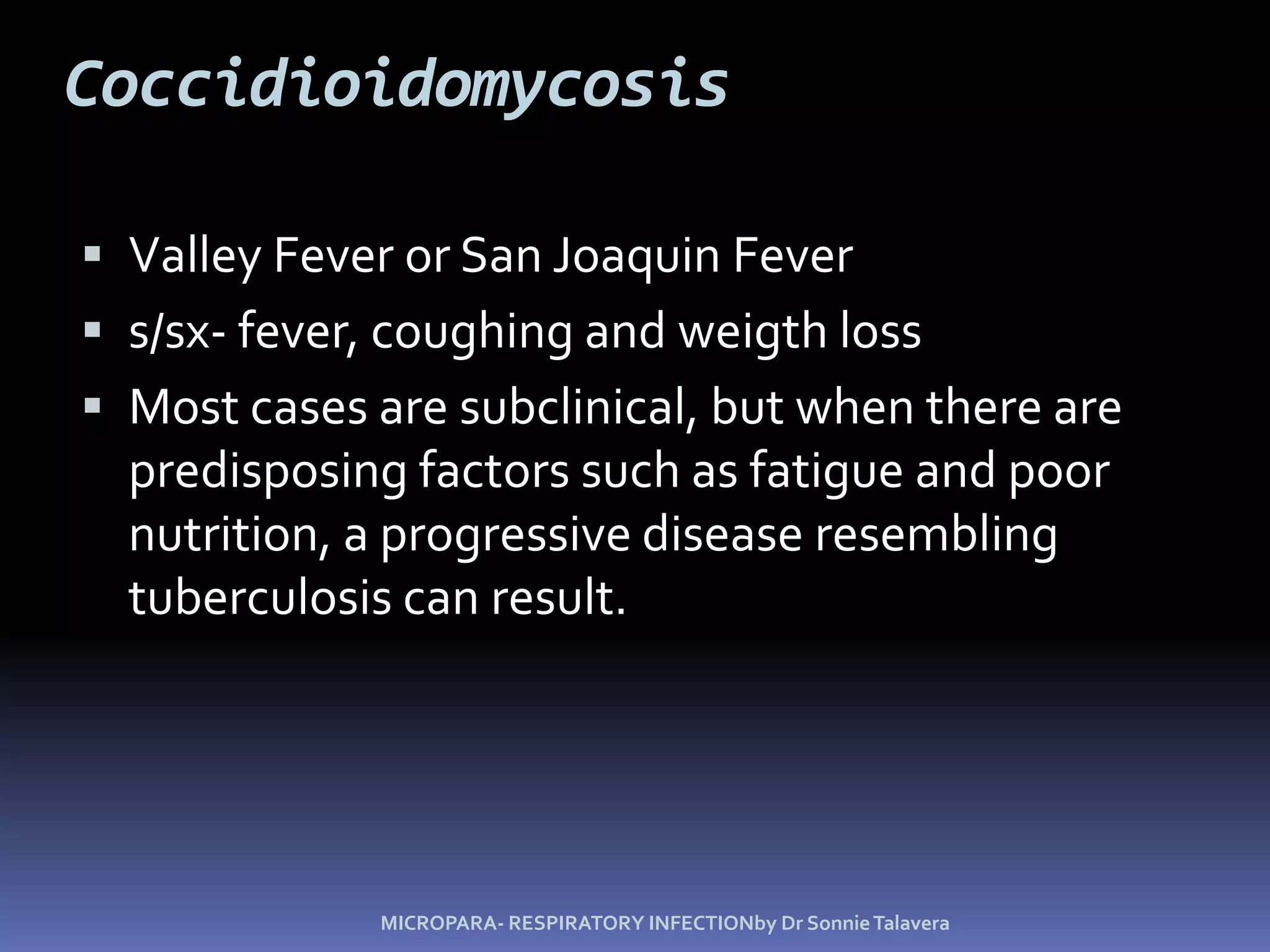
  • 181.
    Coccidioidomycosis  Valley Fever orSan Joaquin Fevers/sx- fever, coughing and weigth lossMost cases are subclinical, but when there are predisposing factors such as fatigue and poor nutrition, a progressive disease resembling tuberculosis can result.MICROPARA- RESPIRATORY INFECTIONby Dr Sonnie Talavera
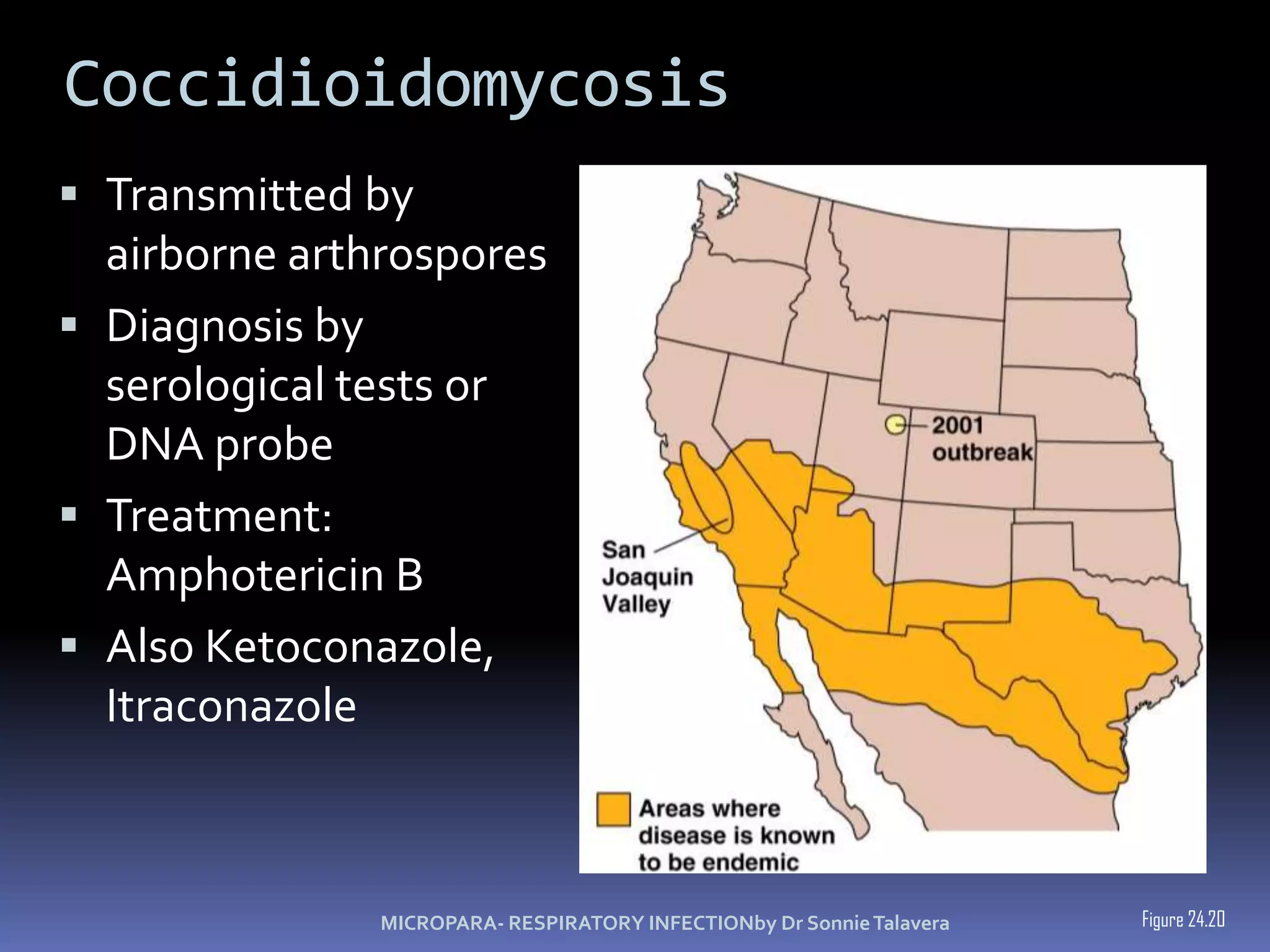
  • 182.
    CoccidioidomycosisTransmitted by airbornearthrosporesDiagnosis by serological tests or DNA probeTreatment: AmphotericinBAlso Ketoconazole, ItraconazoleFigure 24.20MICROPARA- RESPIRATORY INFECTIONby Dr Sonnie Talavera
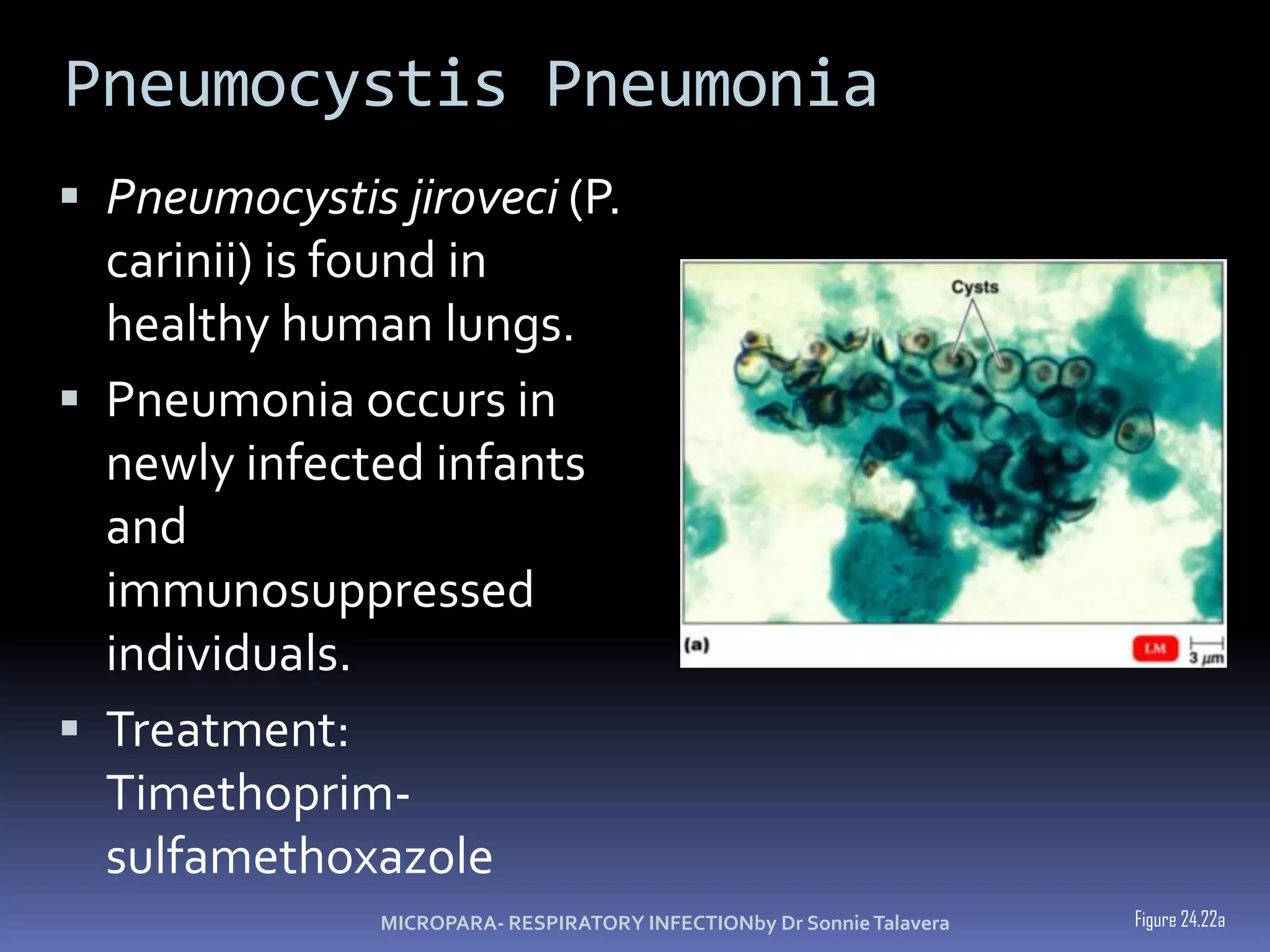
  • 183.
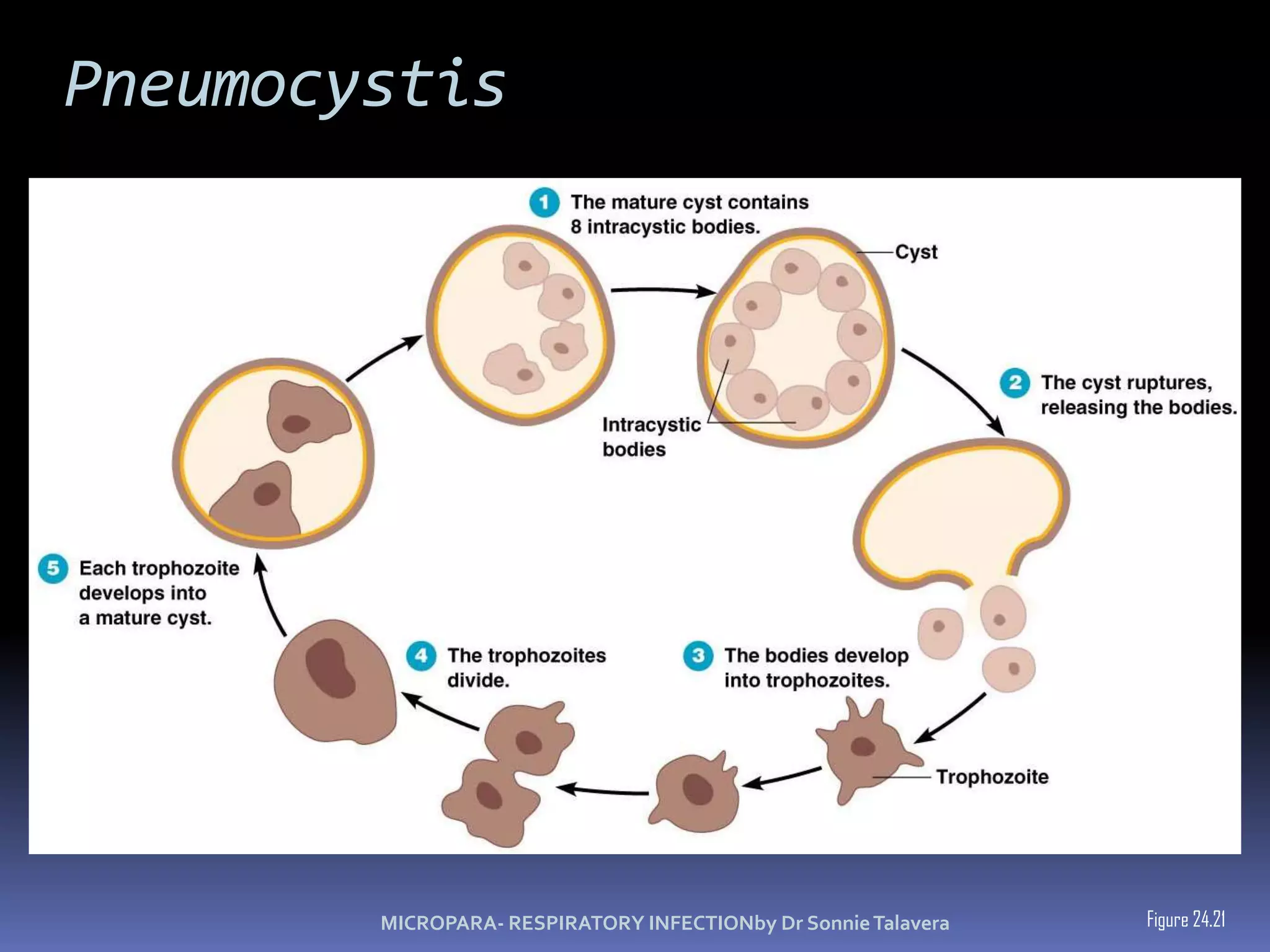
    Pneumocystis PneumoniaPneumocystis jiroveci(P. carinii) is found in healthy human lungs.Pneumonia occurs in newly infected infants and immunosuppressed individuals.Treatment: Timethoprim-sulfamethoxazoleFigure 24.22aMICROPARA- RESPIRATORY INFECTIONby Dr Sonnie Talavera
  • 184.
    Pneumocystis Pneumonia  P. jirovecicauses disease in immunosuppressed patients.Site - lining of alveoliDOC Trimetophrim -SulfamethoxazoleMICROPARA- RESPIRATORY INFECTIONby Dr Sonnie Talavera
  • 185.
  • 186.
    BlastomycosisBlastomycesdermatitidis, dimorphic fungusFoundin soilCan cause extensive tissue destruction, cutaneous lesionsTreatment: Amphotericin BMICROPARA- RESPIRATORY INFECTIONby Dr Sonnie Talavera
  • 187.
    Blastomycosis (North AmericanBlastomycosis) The infection begins in the lungs and can spread to cause extensive abscesses.MICROPARA- RESPIRATORY INFECTIONby Dr Sonnie Talavera
  • 188.
    Other Fungi Involvedin Respiratory Disease Opportunistic fungi can cause respiratory disease in immunosuppressed hosts, especially when large numbers of spores are inhaled.MICROPARA- RESPIRATORY INFECTIONby Dr Sonnie Talavera
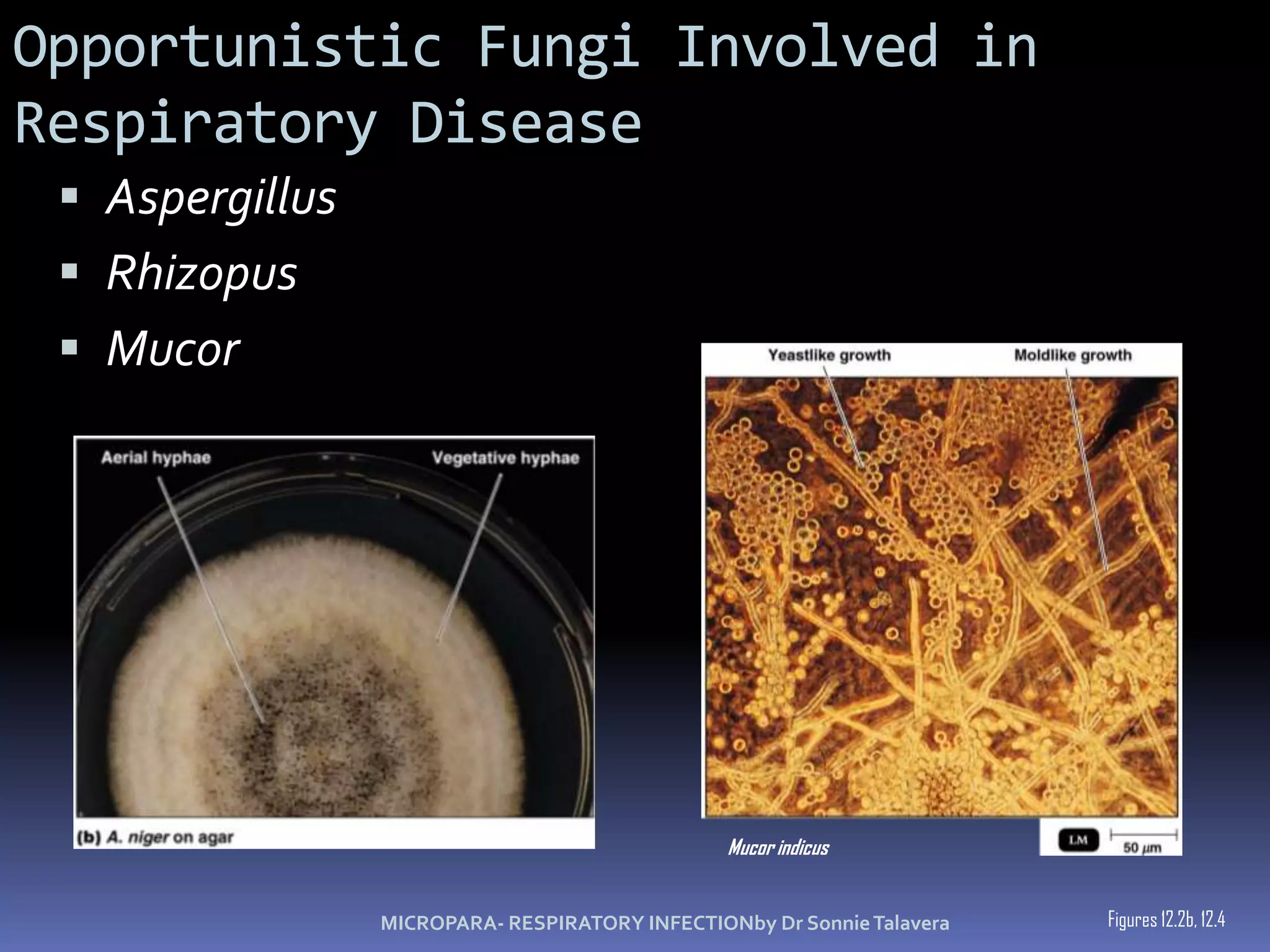
  • 189.
    Opportunistic Fungi Involvedin Respiratory DiseaseAspergillusRhizopusMucorMucorindicusFigures 12.2b, 12.4MICROPARA- RESPIRATORY INFECTIONby Dr Sonnie Talavera