Abt Associates Inc.
In collaboration with:
Broad Branch Associates | Development Alternatives Inc. (DAI) | Futures Institute | Johns Hopkins Bloomberg School of Public Health (JHSPH)
| Results for Development Institute (R4D) | RTI International | Training Resources Group, Inc. (TRG)
What do we need to know? And why?
Resource allocation and
Purchasing
Sylvester Akande
February 7, 2017
In this session
 The place of Purchasing within the UHC framework
 What is Purchasing?
 Evolution towards Strategic purchasing
 Why is Strategic purchasing important?
 How can Strategic purchasing be done?
 ICT and Purchasing
 Governance and Purchasing.
 Conclusion.
2
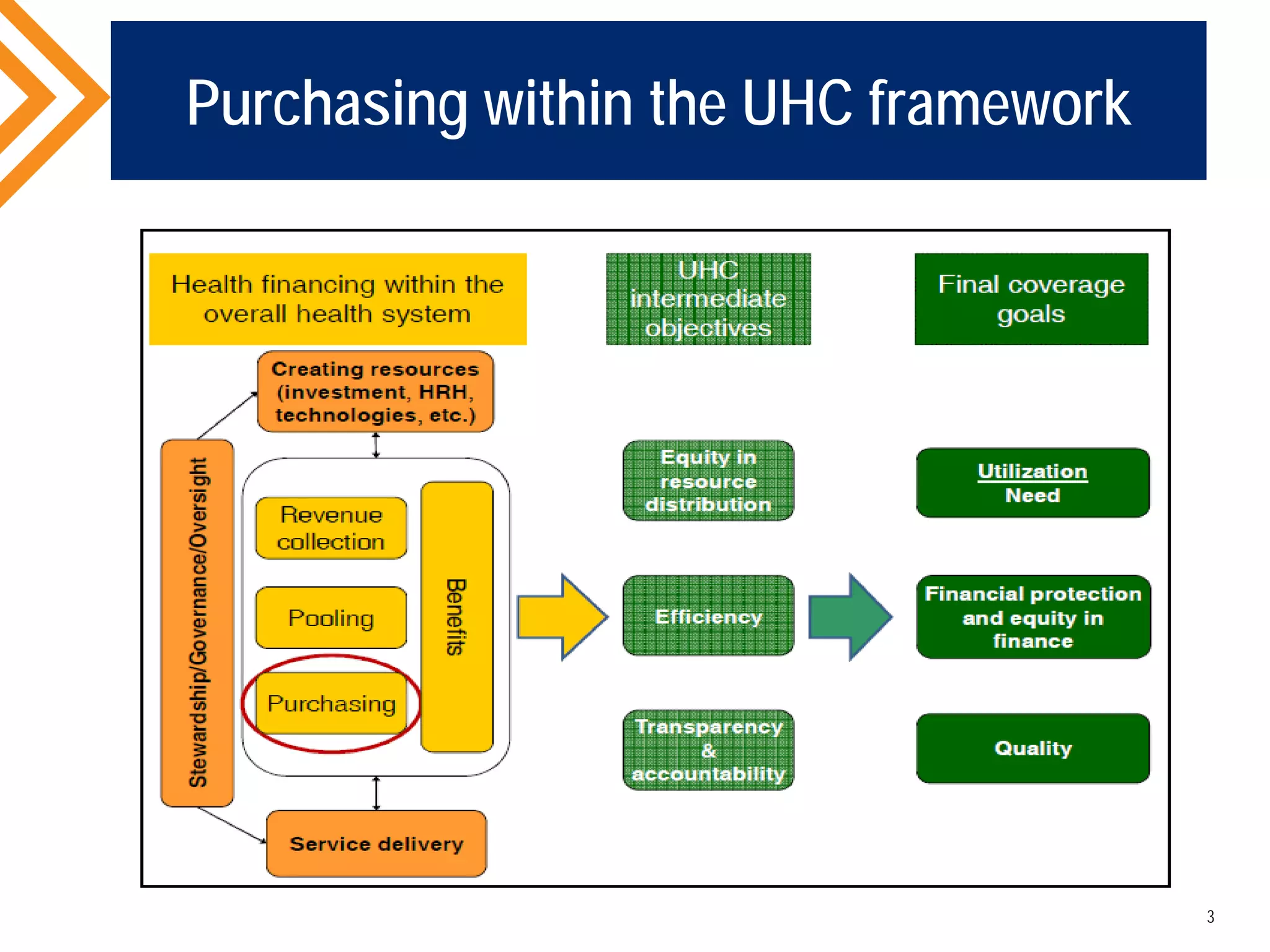
Purchasing within the UHC framework
3
What is purchasing?
 Purchasing is a core function of any health system.
 Purchasing refers to the arrangements in place,
and mechanisms used, to allocate pooled funds to
health service providers.
 To obtain services on behalf of identified groups or
the entire population.
 Embedded within purchasing is resource allocation
 Is there a difference between purchasing and
procurement?
4
The Government of Nigeria at all levels
has extensive experience in allocating
health service funds.
Purchasing or Procurement?
5
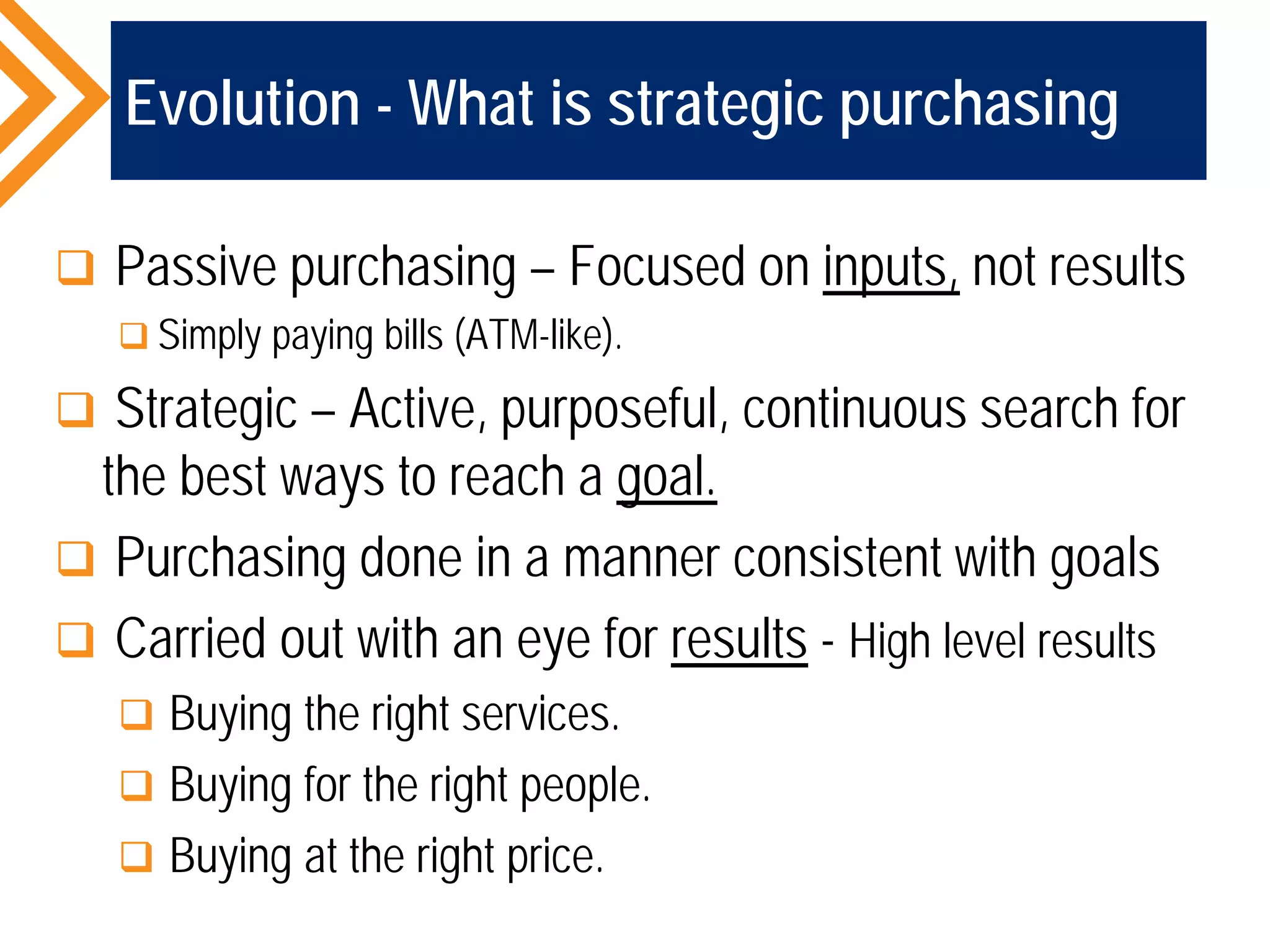
Evolution - What is strategic purchasing
 Passive purchasing – Focused on inputs, not results
 Simply paying bills (ATM-like).
 Strategic – Active, purposeful, continuous search for
the best ways to reach a goal.
 Purchasing done in a manner consistent with goals
 Carried out with an eye for results - High level results
 Buying the right services.
 Buying for the right people.
 Buying at the right price.
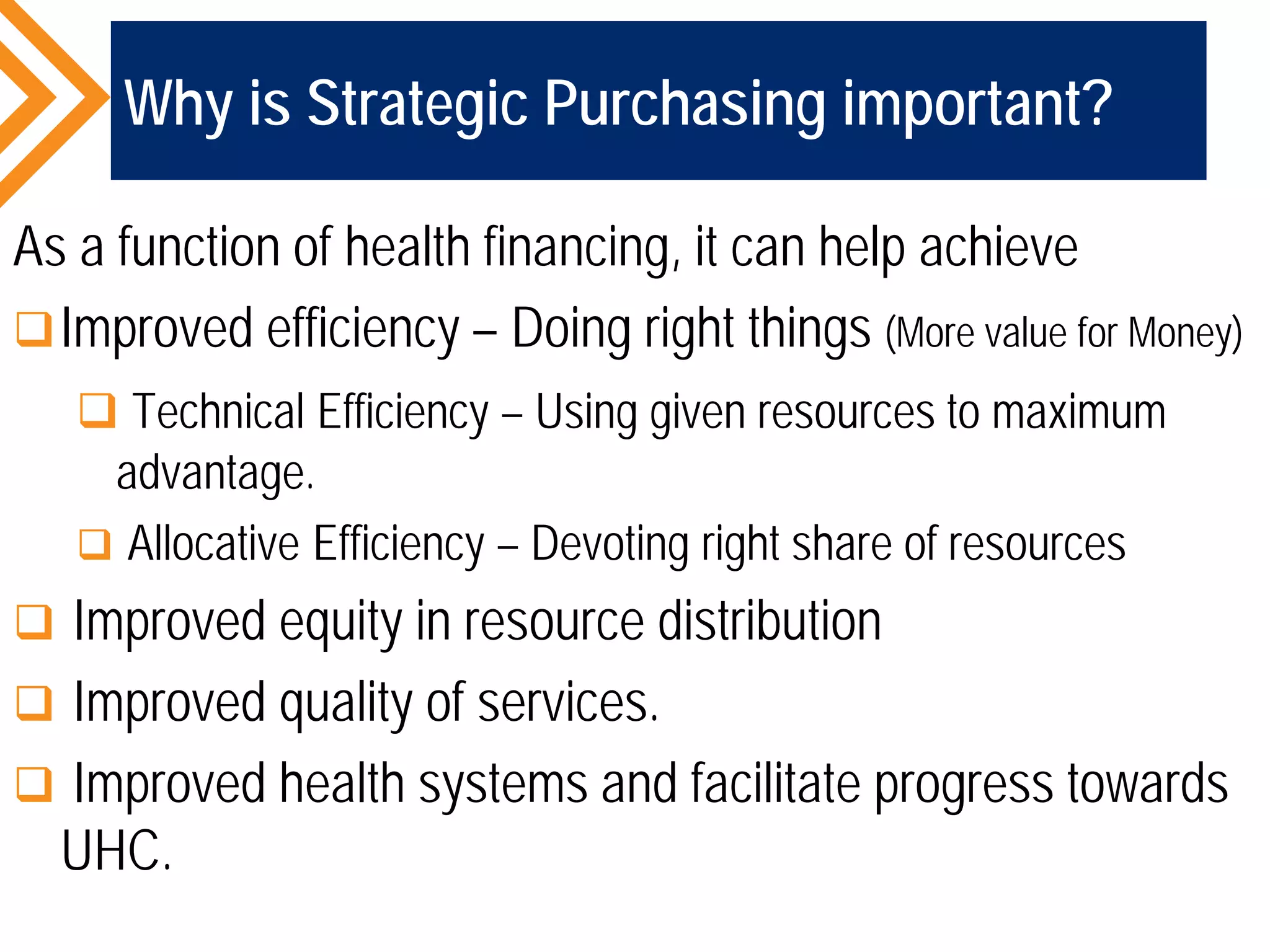
Why is Strategic Purchasing important?
As a function of health financing, it can help achieve
Improved efficiency – Doing right things (More value for Money)
 Technical Efficiency – Using given resources to maximum
advantage.
 Allocative Efficiency – Devoting right share of resources
 Improved equity in resource distribution
 Improved quality of services.
 Improved health systems and facilitate progress towards
UHC.
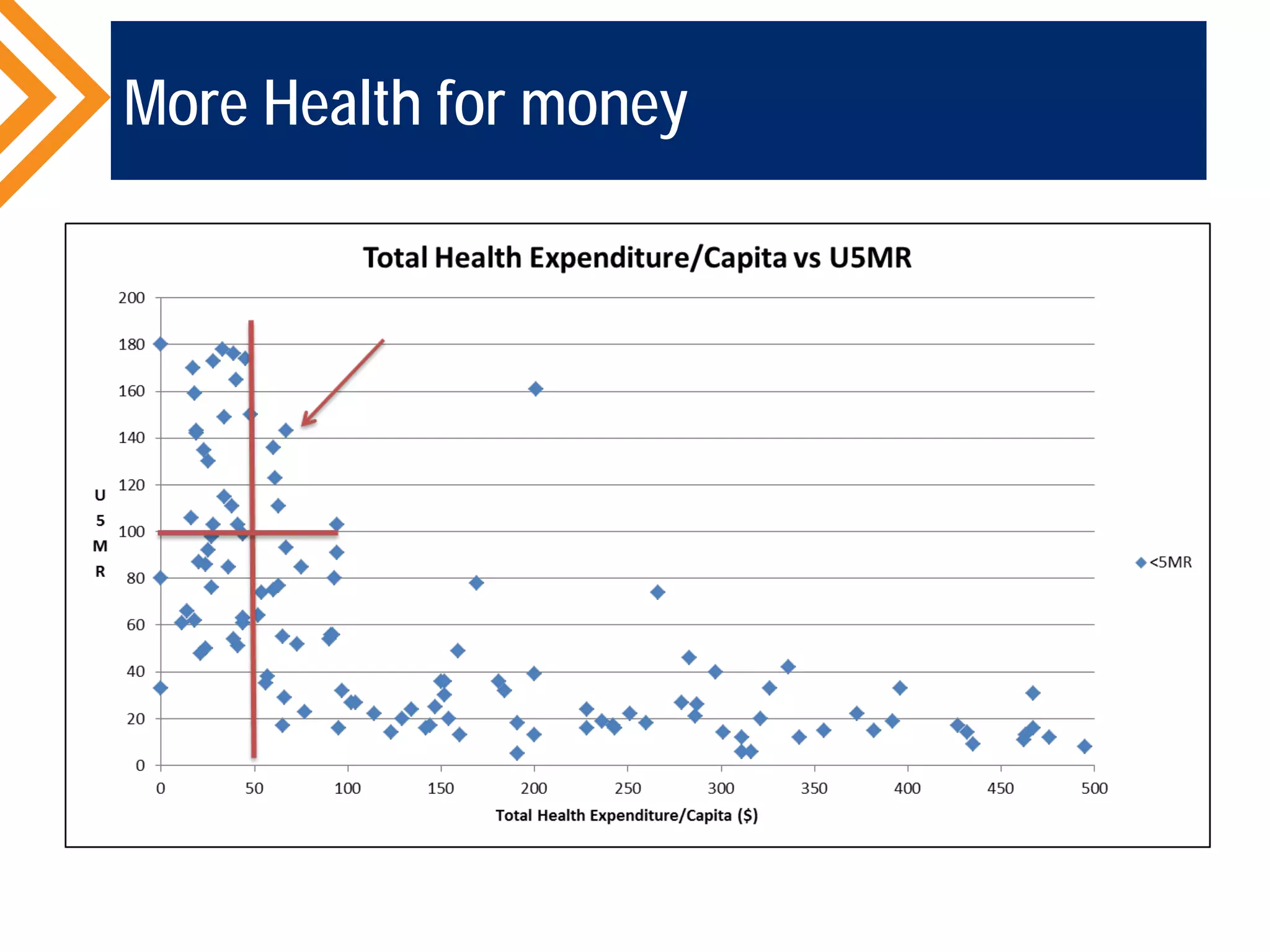
More Health for money
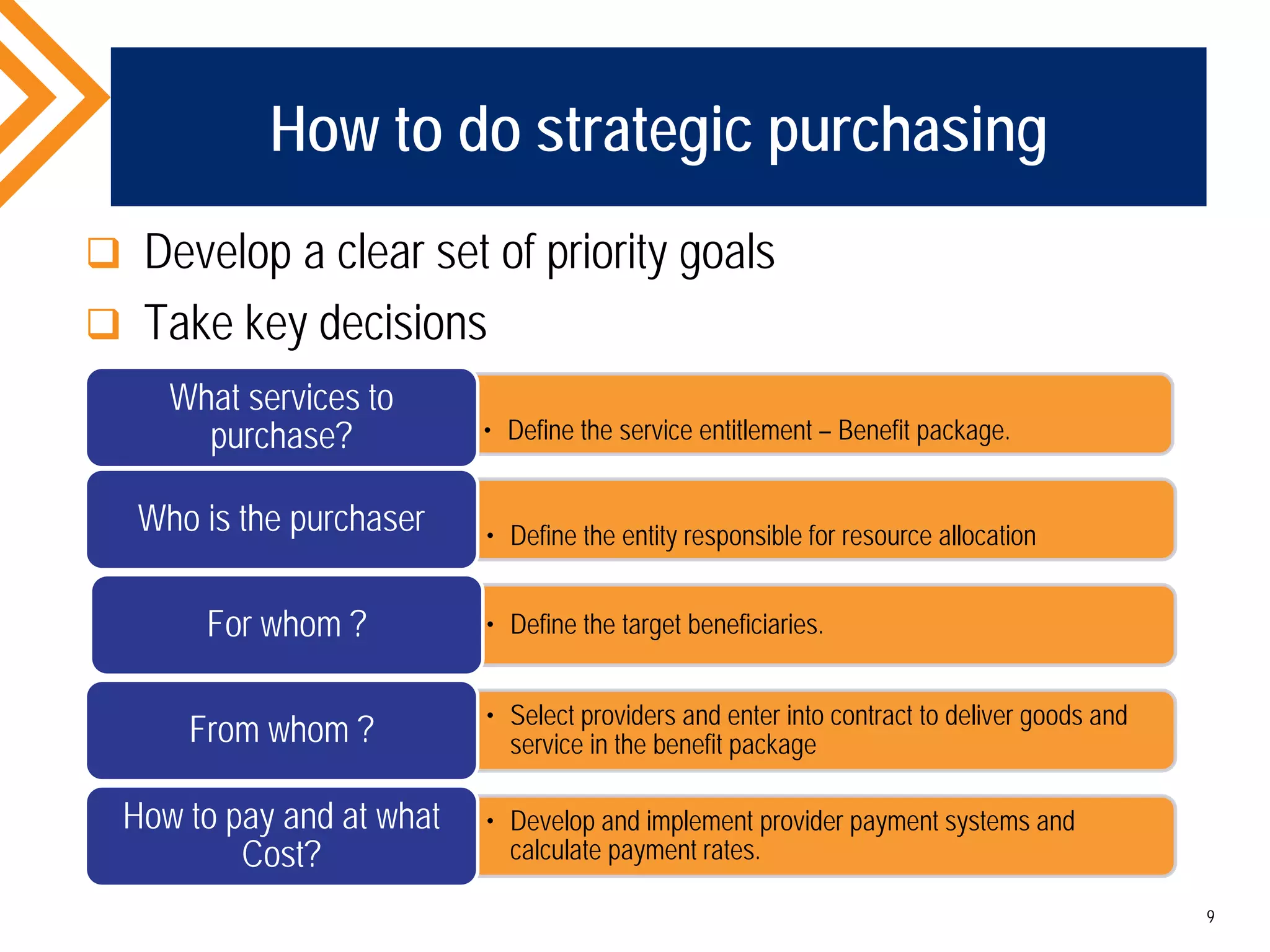
How to do strategic purchasing
 Develop a clear set of priority goals
 Take key decisions
9
• Define the service entitlement – Benefit package.
What services to
purchase?
• Define the entity responsible for resource allocation
Who is the purchaser
• Define the target beneficiaries.For whom ?
• Select providers and enter into contract to deliver goods and
service in the benefit packageFrom whom ?
• Develop and implement provider payment systems and
calculate payment rates.
How to pay and at what
Cost?
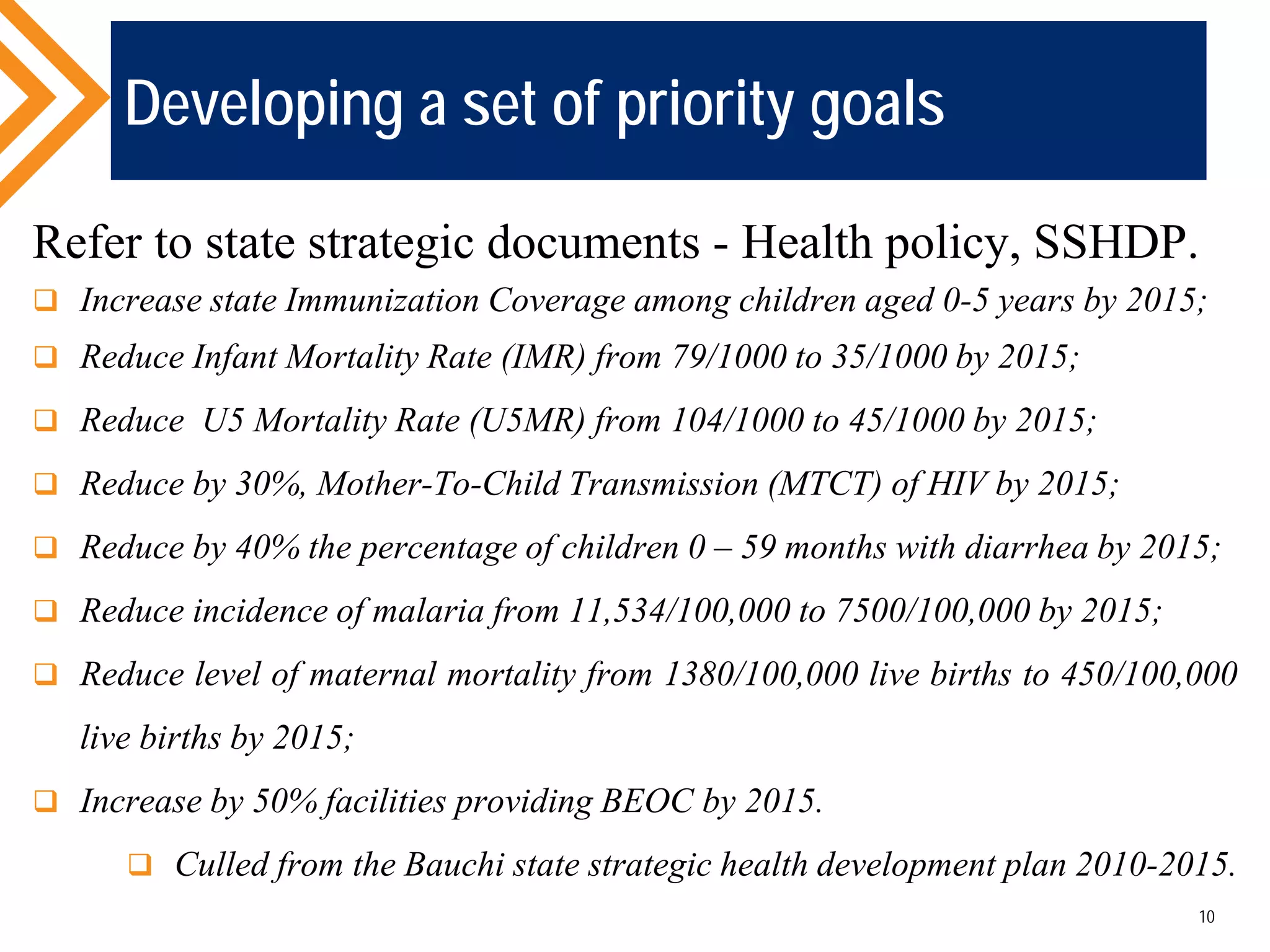
Developing a set of priority goals
Refer to state strategic documents - Health policy, SSHDP.
 Increase state Immunization Coverage among children aged 0-5 years by 2015;
 Reduce Infant Mortality Rate (IMR) from 79/1000 to 35/1000 by 2015;
 Reduce U5 Mortality Rate (U5MR) from 104/1000 to 45/1000 by 2015;
 Reduce by 30%, Mother-To-Child Transmission (MTCT) of HIV by 2015;
 Reduce by 40% the percentage of children 0 – 59 months with diarrhea by 2015;
 Reduce incidence of malaria from 11,534/100,000 to 7500/100,000 by 2015;
 Reduce level of maternal mortality from 1380/100,000 live births to 450/100,000
live births by 2015;
 Increase by 50% facilities providing BEOC by 2015.
 Culled from the Bauchi state strategic health development plan 2010-2015.
10
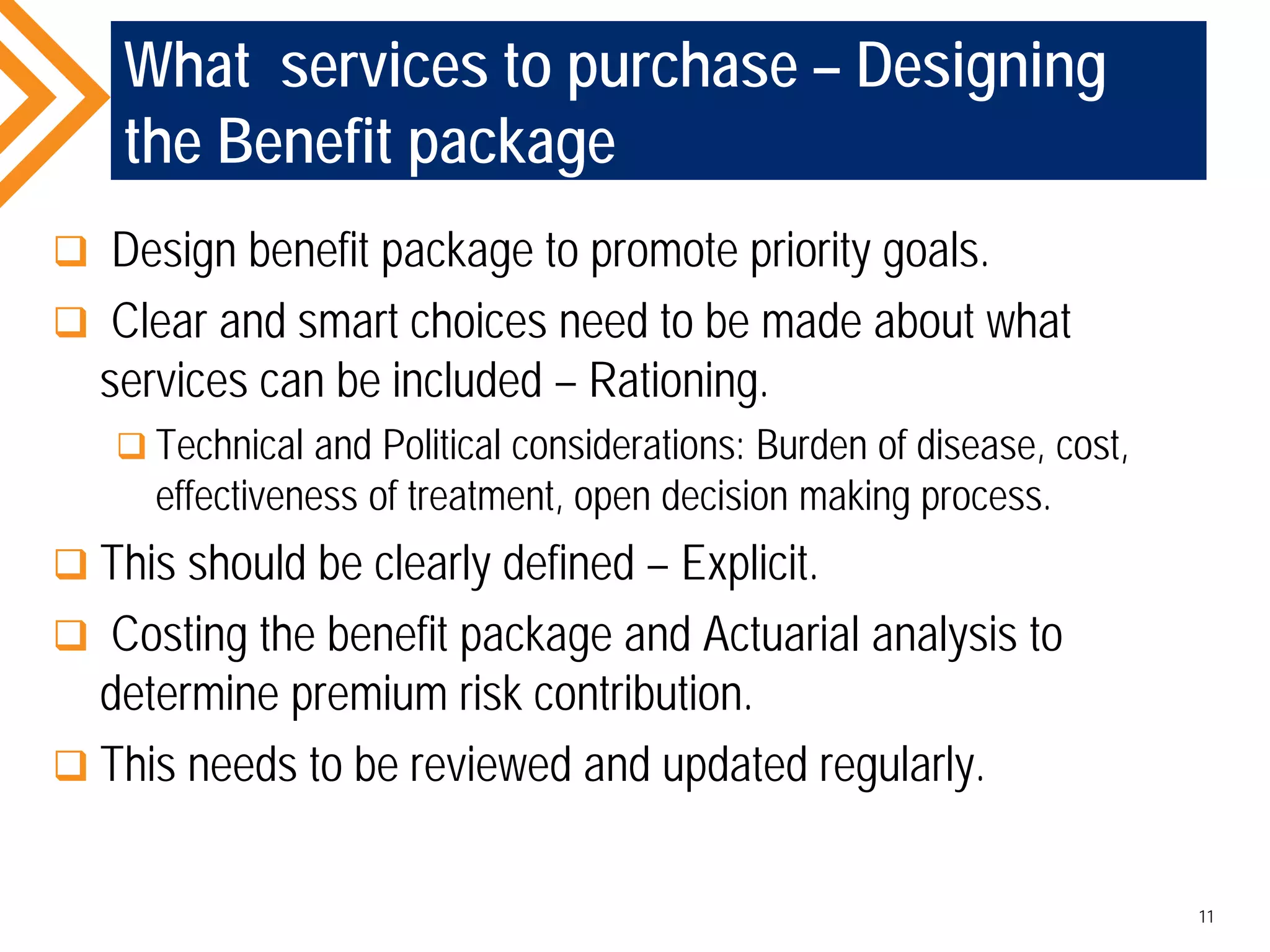
What services to purchase – Designing
the Benefit package
 Design benefit package to promote priority goals.
 Clear and smart choices need to be made about what
services can be included – Rationing.
 Technical and Political considerations: Burden of disease, cost,
effectiveness of treatment, open decision making process.
 This should be clearly defined – Explicit.
 Costing the benefit package and Actuarial analysis to
determine premium risk contribution.
 This needs to be reviewed and updated regularly.
11
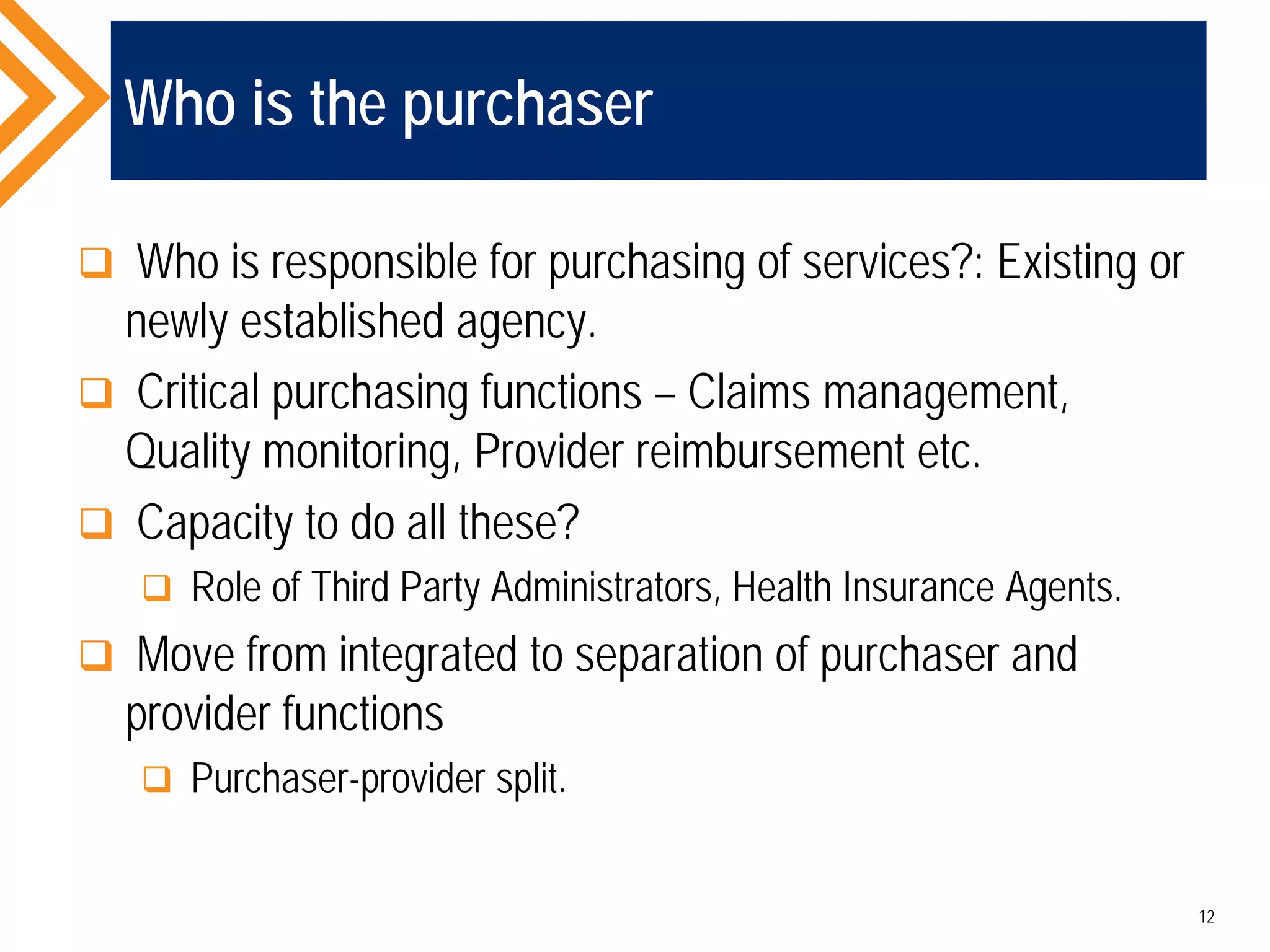
Who is the purchaser
 Who is responsible for purchasing of services?: Existing or
newly established agency.
 Critical purchasing functions – Claims management,
Quality monitoring, Provider reimbursement etc.
 Capacity to do all these?
 Role of Third Party Administrators, Health Insurance Agents.
 Move from integrated to separation of purchaser and
provider functions
 Purchaser-provider split.
12
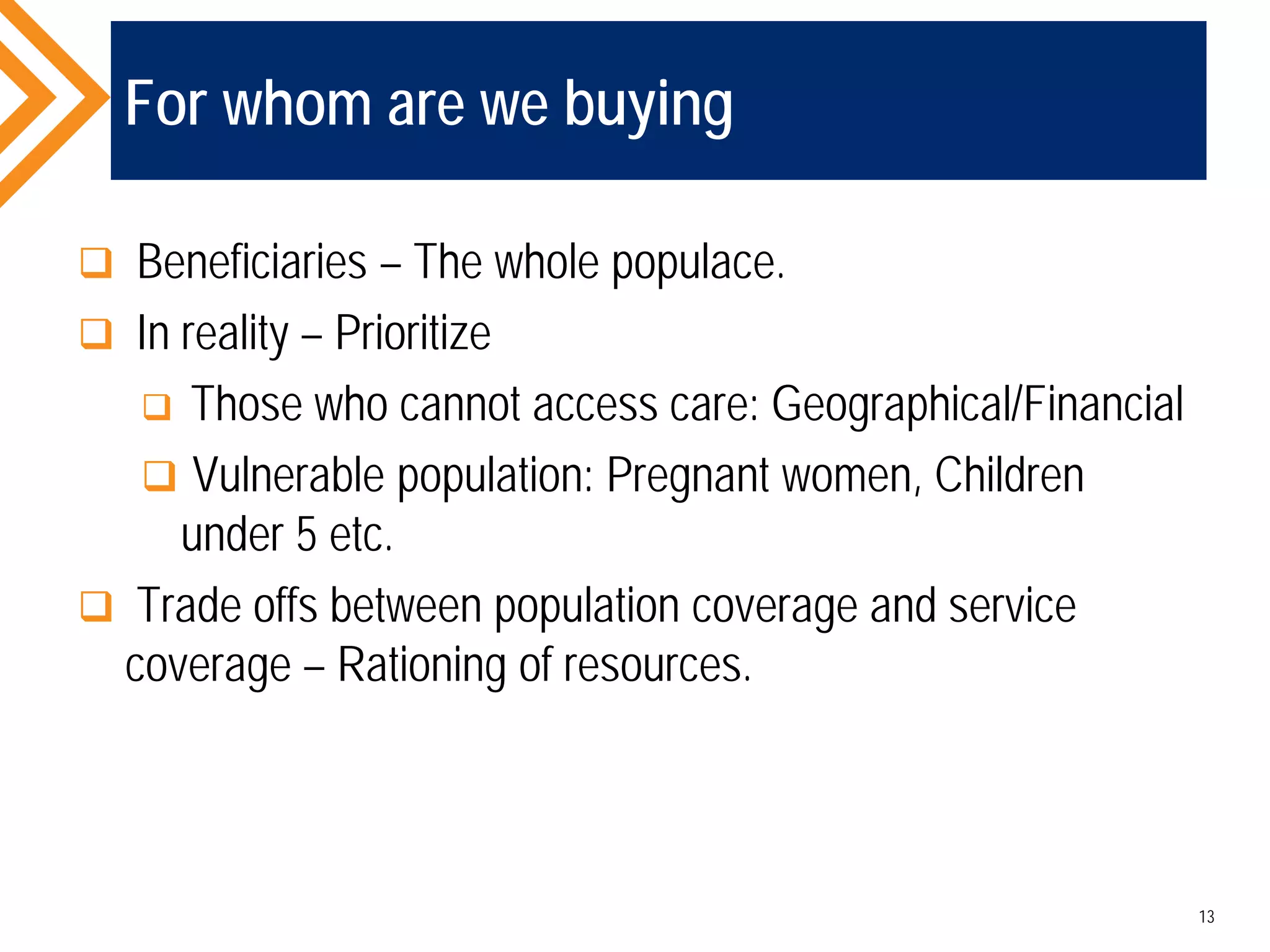
For whom are we buying
 Beneficiaries – The whole populace.
 In reality – Prioritize
 Those who cannot access care: Geographical/Financial
 Vulnerable population: Pregnant women, Children
under 5 etc.
 Trade offs between population coverage and service
coverage – Rationing of resources.
13
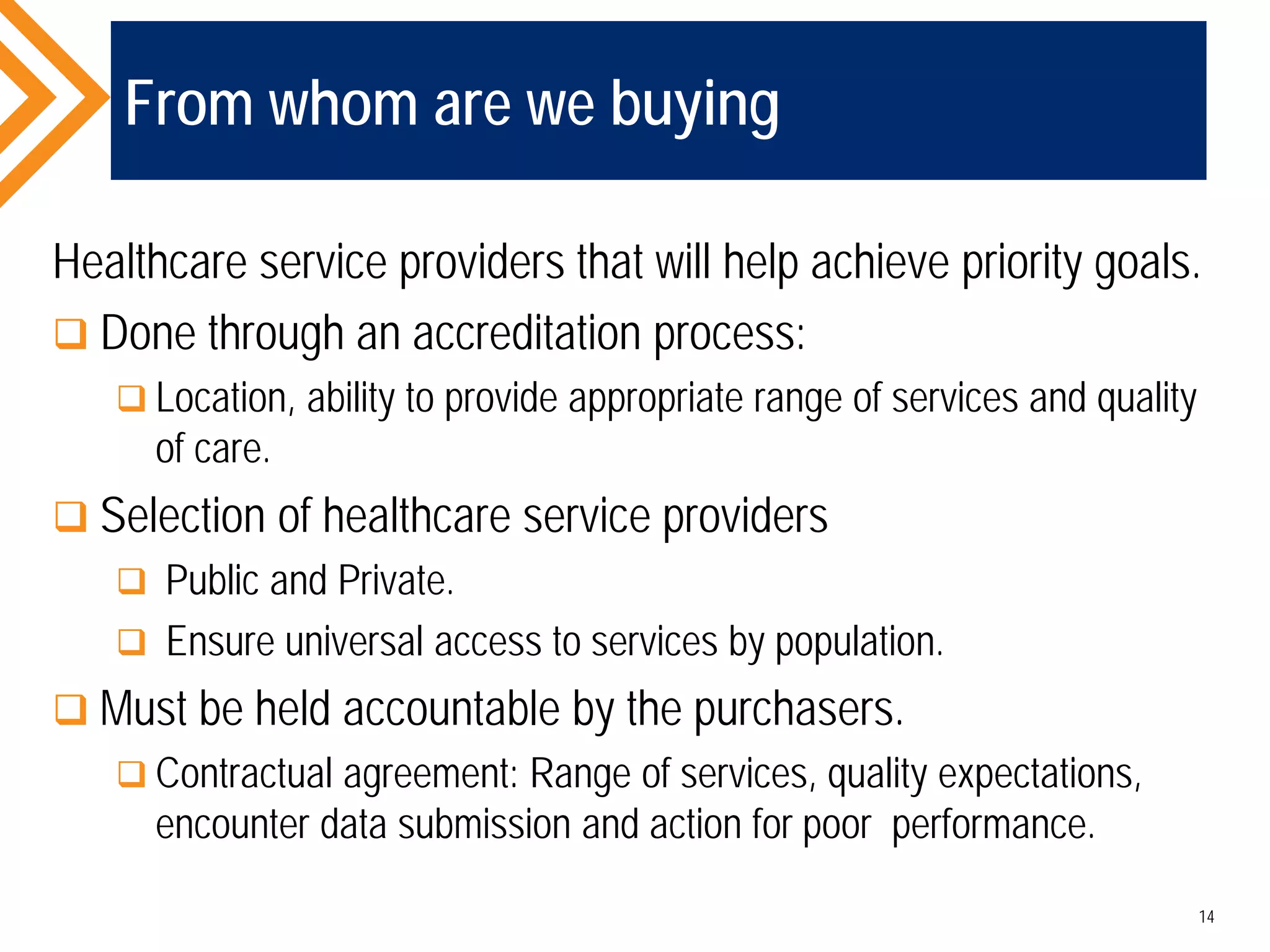
From whom are we buying
Healthcare service providers that will help achieve priority goals.
 Done through an accreditation process:
 Location, ability to provide appropriate range of services and quality
of care.
 Selection of healthcare service providers
 Public and Private.
 Ensure universal access to services by population.
 Must be held accountable by the purchasers.
 Contractual agreement: Range of services, quality expectations,
encounter data submission and action for poor performance.
14
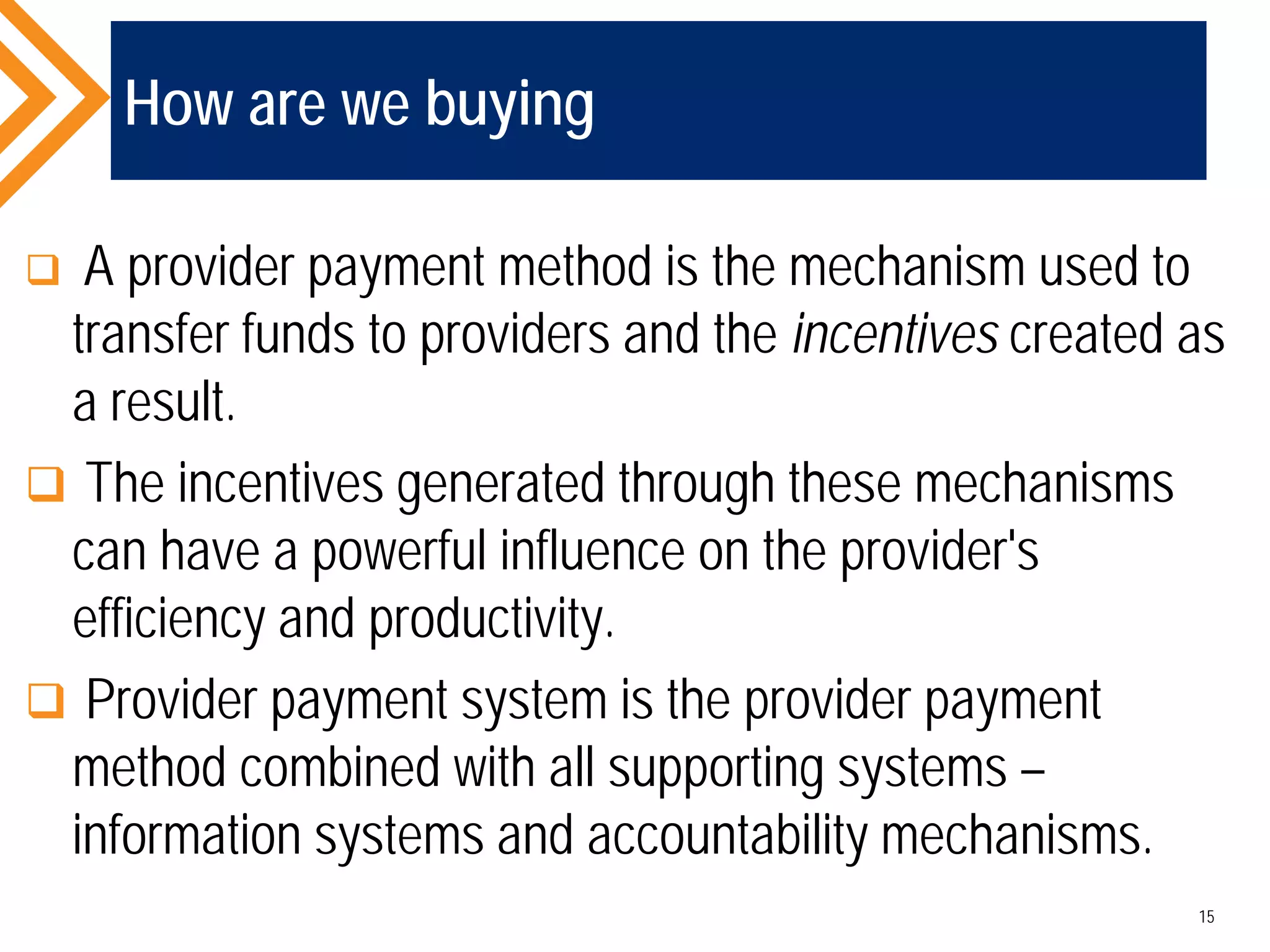
How are we buying
 A provider payment method is the mechanism used to
transfer funds to providers and the incentives created as
a result.
 The incentives generated through these mechanisms
can have a powerful influence on the provider's
efficiency and productivity.
 Provider payment system is the provider payment
method combined with all supporting systems –
information systems and accountability mechanisms.
15
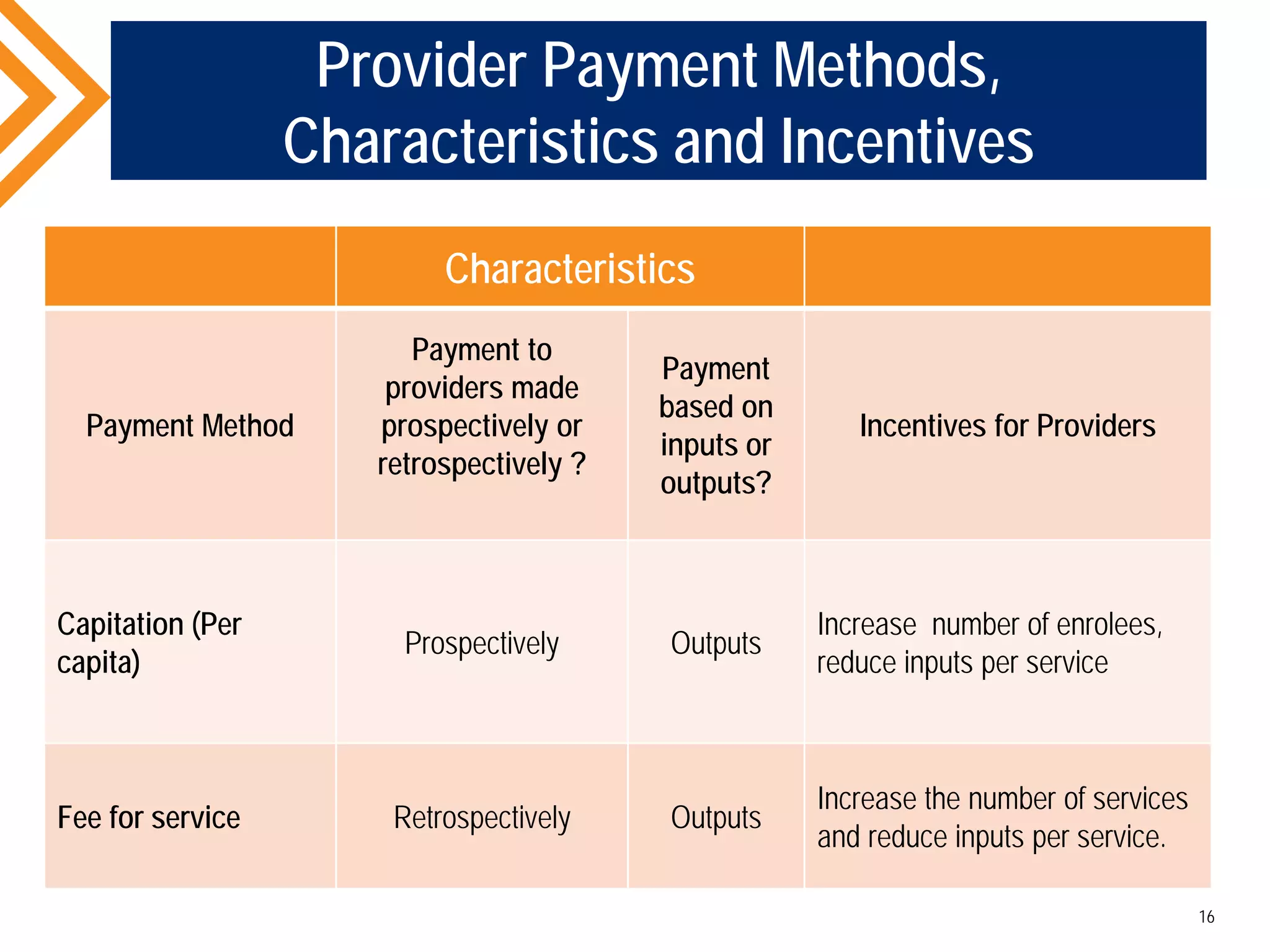
Provider Payment Methods,
Characteristics and Incentives
16
Characteristics
Payment Method
Payment to
providers made
prospectively or
retrospectively ?
Payment
based on
inputs or
outputs?
Incentives for Providers
Capitation (Per
capita)
Prospectively Outputs
Increase number of enrolees,
reduce inputs per service
Fee for service Retrospectively Outputs
Increase the number of services
and reduce inputs per service.
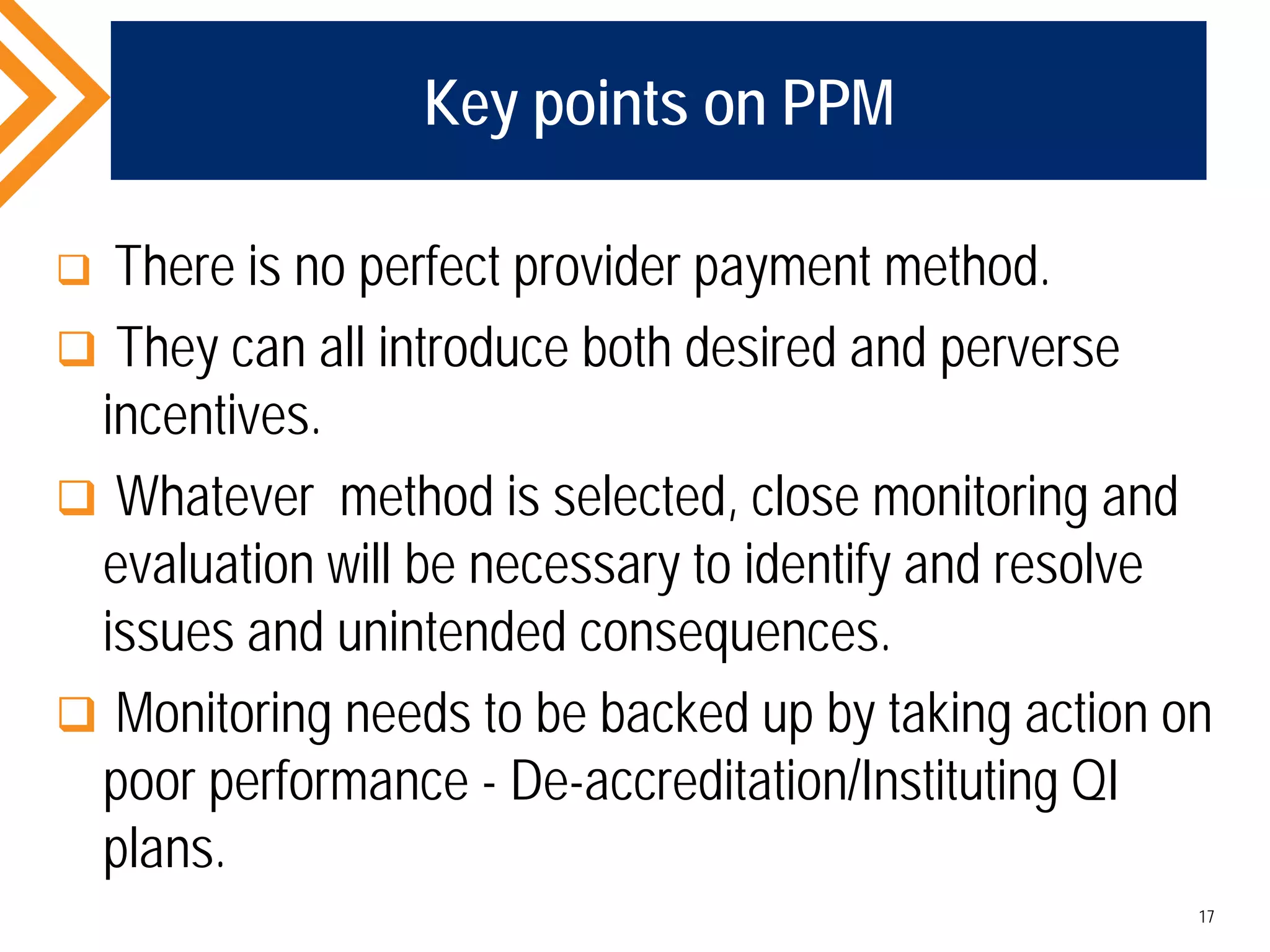
Key points on PPM
 There is no perfect provider payment method.
 They can all introduce both desired and perverse
incentives.
 Whatever method is selected, close monitoring and
evaluation will be necessary to identify and resolve
issues and unintended consequences.
 Monitoring needs to be backed up by taking action on
poor performance - De-accreditation/Instituting QI
plans.
17
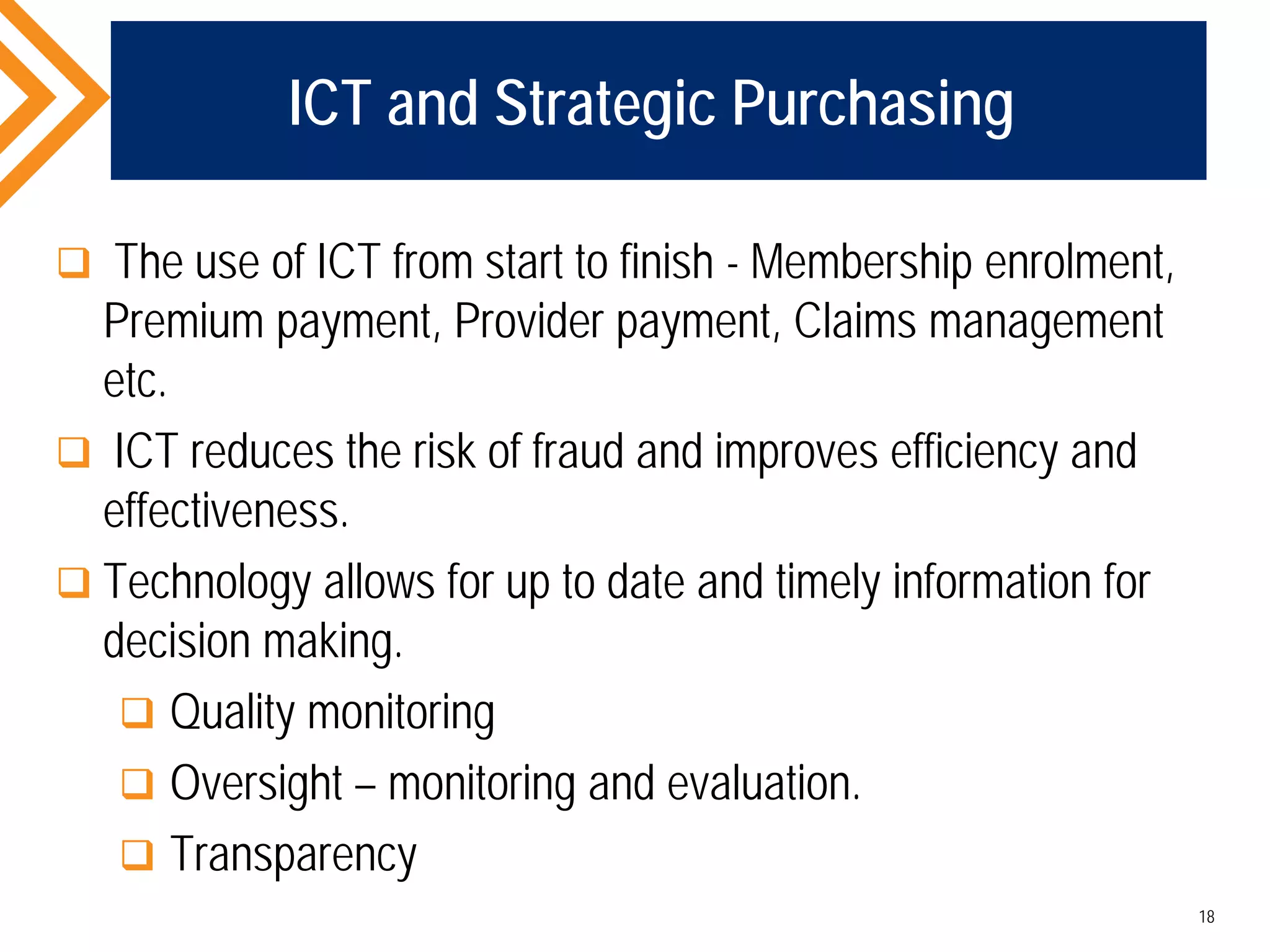
ICT and Strategic Purchasing
 The use of ICT from start to finish - Membership enrolment,
Premium payment, Provider payment, Claims management
etc.
 ICT reduces the risk of fraud and improves efficiency and
effectiveness.
 Technology allows for up to date and timely information for
decision making.
 Quality monitoring
 Oversight – monitoring and evaluation.
 Transparency
18
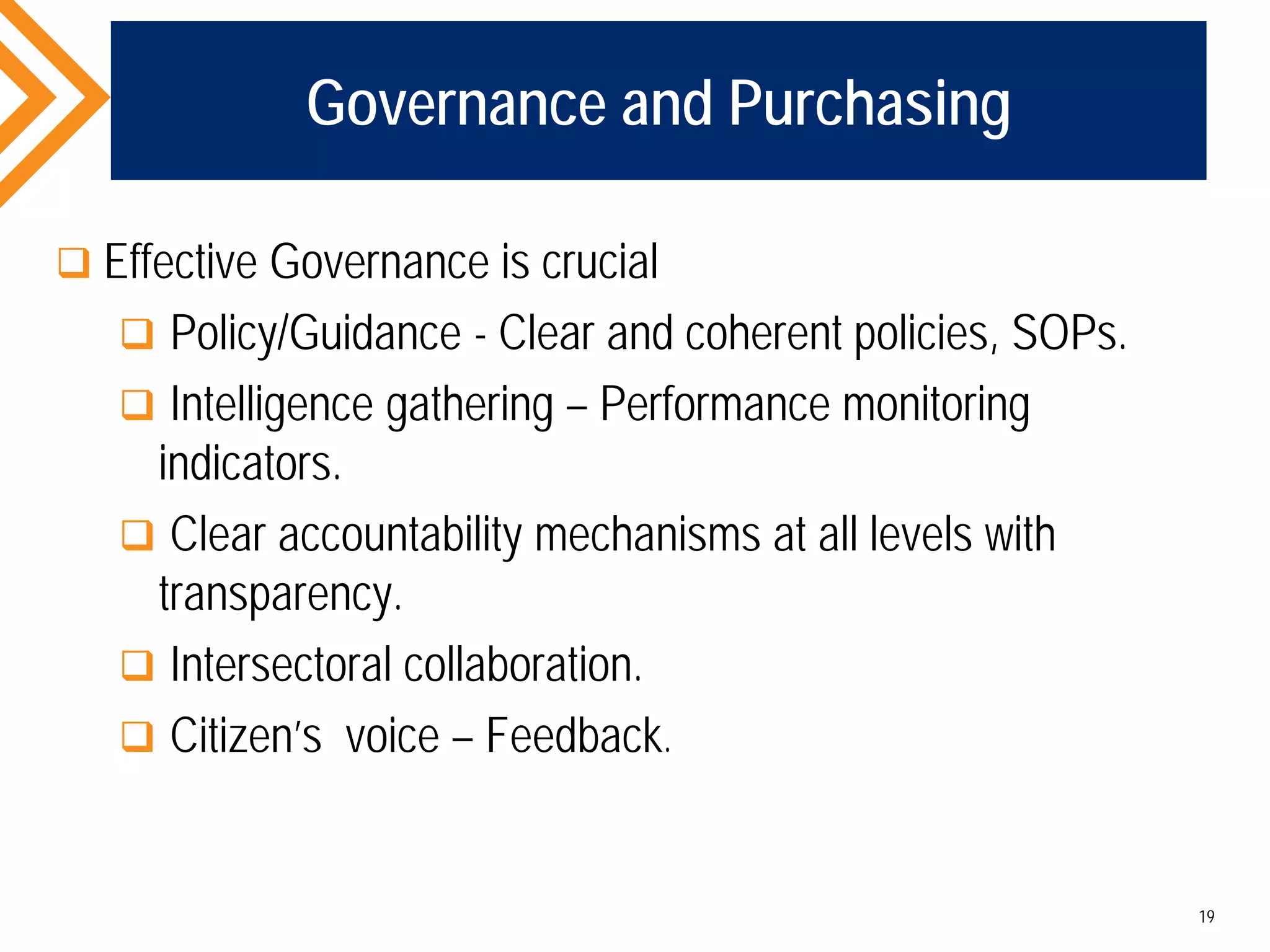
Governance and Purchasing
 Effective Governance is crucial
 Policy/Guidance - Clear and coherent policies, SOPs.
 Intelligence gathering – Performance monitoring
indicators.
 Clear accountability mechanisms at all levels with
transparency.
 Intersectoral collaboration.
 Citizen’s voice – Feedback.
19
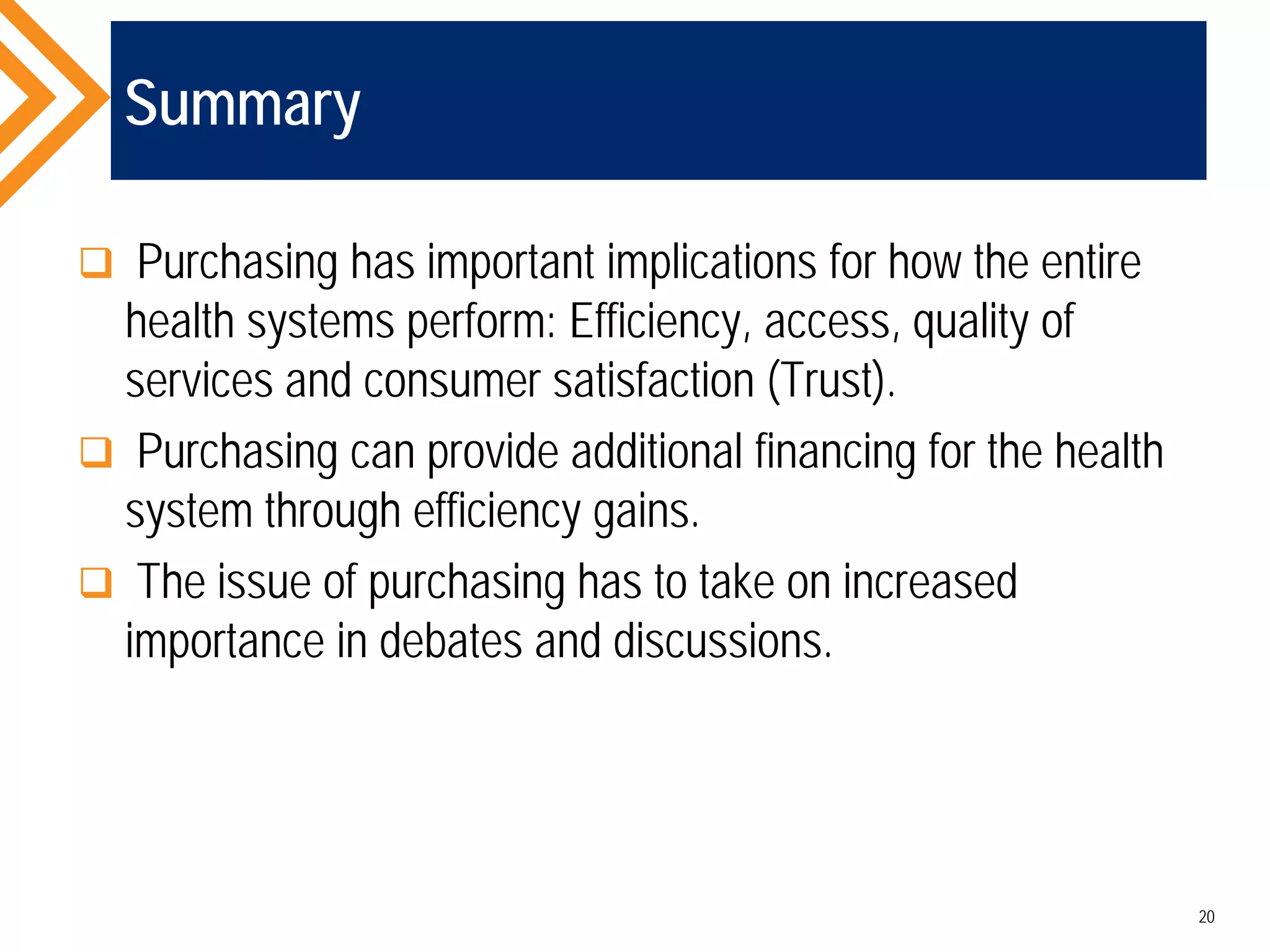
Summary
 Purchasing has important implications for how the entire
health systems perform: Efficiency, access, quality of
services and consumer satisfaction (Trust).
 Purchasing can provide additional financing for the health
system through efficiency gains.
 The issue of purchasing has to take on increased
importance in debates and discussions.
20
Abt Associates Inc.
In collaboration with:
Broad Branch Associates | Development Alternatives Inc. (DAI) | Futures Institute | Johns Hopkins Bloomberg School of Public Health (JHSPH)
| Results for Development Institute (R4D) | RTI International | Training Resources Group, Inc. (TRG)
Thank you
www.hfgproject.org

Resource Allocation and Purchasing: What do we need to know and why?

  • 1.
    Abt Associates Inc. Incollaboration with: Broad Branch Associates | Development Alternatives Inc. (DAI) | Futures Institute | Johns Hopkins Bloomberg School of Public Health (JHSPH) | Results for Development Institute (R4D) | RTI International | Training Resources Group, Inc. (TRG) What do we need to know? And why? Resource allocation and Purchasing Sylvester Akande February 7, 2017
  • 2.
    In this session The place of Purchasing within the UHC framework  What is Purchasing?  Evolution towards Strategic purchasing  Why is Strategic purchasing important?  How can Strategic purchasing be done?  ICT and Purchasing  Governance and Purchasing.  Conclusion. 2
  • 3.
    Purchasing within theUHC framework 3
  • 4.
    What is purchasing? Purchasing is a core function of any health system.  Purchasing refers to the arrangements in place, and mechanisms used, to allocate pooled funds to health service providers.  To obtain services on behalf of identified groups or the entire population.  Embedded within purchasing is resource allocation  Is there a difference between purchasing and procurement? 4
  • 5.
    The Government ofNigeria at all levels has extensive experience in allocating health service funds. Purchasing or Procurement? 5
  • 6.
    Evolution - Whatis strategic purchasing  Passive purchasing – Focused on inputs, not results  Simply paying bills (ATM-like).  Strategic – Active, purposeful, continuous search for the best ways to reach a goal.  Purchasing done in a manner consistent with goals  Carried out with an eye for results - High level results  Buying the right services.  Buying for the right people.  Buying at the right price.
  • 7.
    Why is StrategicPurchasing important? As a function of health financing, it can help achieve Improved efficiency – Doing right things (More value for Money)  Technical Efficiency – Using given resources to maximum advantage.  Allocative Efficiency – Devoting right share of resources  Improved equity in resource distribution  Improved quality of services.  Improved health systems and facilitate progress towards UHC.
  • 8.
  • 9.
    How to dostrategic purchasing  Develop a clear set of priority goals  Take key decisions 9 • Define the service entitlement – Benefit package. What services to purchase? • Define the entity responsible for resource allocation Who is the purchaser • Define the target beneficiaries.For whom ? • Select providers and enter into contract to deliver goods and service in the benefit packageFrom whom ? • Develop and implement provider payment systems and calculate payment rates. How to pay and at what Cost?
  • 10.
    Developing a setof priority goals Refer to state strategic documents - Health policy, SSHDP.  Increase state Immunization Coverage among children aged 0-5 years by 2015;  Reduce Infant Mortality Rate (IMR) from 79/1000 to 35/1000 by 2015;  Reduce U5 Mortality Rate (U5MR) from 104/1000 to 45/1000 by 2015;  Reduce by 30%, Mother-To-Child Transmission (MTCT) of HIV by 2015;  Reduce by 40% the percentage of children 0 – 59 months with diarrhea by 2015;  Reduce incidence of malaria from 11,534/100,000 to 7500/100,000 by 2015;  Reduce level of maternal mortality from 1380/100,000 live births to 450/100,000 live births by 2015;  Increase by 50% facilities providing BEOC by 2015.  Culled from the Bauchi state strategic health development plan 2010-2015. 10
  • 11.
    What services topurchase – Designing the Benefit package  Design benefit package to promote priority goals.  Clear and smart choices need to be made about what services can be included – Rationing.  Technical and Political considerations: Burden of disease, cost, effectiveness of treatment, open decision making process.  This should be clearly defined – Explicit.  Costing the benefit package and Actuarial analysis to determine premium risk contribution.  This needs to be reviewed and updated regularly. 11
  • 12.
    Who is thepurchaser  Who is responsible for purchasing of services?: Existing or newly established agency.  Critical purchasing functions – Claims management, Quality monitoring, Provider reimbursement etc.  Capacity to do all these?  Role of Third Party Administrators, Health Insurance Agents.  Move from integrated to separation of purchaser and provider functions  Purchaser-provider split. 12
  • 13.
    For whom arewe buying  Beneficiaries – The whole populace.  In reality – Prioritize  Those who cannot access care: Geographical/Financial  Vulnerable population: Pregnant women, Children under 5 etc.  Trade offs between population coverage and service coverage – Rationing of resources. 13
  • 14.
    From whom arewe buying Healthcare service providers that will help achieve priority goals.  Done through an accreditation process:  Location, ability to provide appropriate range of services and quality of care.  Selection of healthcare service providers  Public and Private.  Ensure universal access to services by population.  Must be held accountable by the purchasers.  Contractual agreement: Range of services, quality expectations, encounter data submission and action for poor performance. 14
  • 15.
    How are webuying  A provider payment method is the mechanism used to transfer funds to providers and the incentives created as a result.  The incentives generated through these mechanisms can have a powerful influence on the provider's efficiency and productivity.  Provider payment system is the provider payment method combined with all supporting systems – information systems and accountability mechanisms. 15
  • 16.
    Provider Payment Methods, Characteristicsand Incentives 16 Characteristics Payment Method Payment to providers made prospectively or retrospectively ? Payment based on inputs or outputs? Incentives for Providers Capitation (Per capita) Prospectively Outputs Increase number of enrolees, reduce inputs per service Fee for service Retrospectively Outputs Increase the number of services and reduce inputs per service.
  • 17.
    Key points onPPM  There is no perfect provider payment method.  They can all introduce both desired and perverse incentives.  Whatever method is selected, close monitoring and evaluation will be necessary to identify and resolve issues and unintended consequences.  Monitoring needs to be backed up by taking action on poor performance - De-accreditation/Instituting QI plans. 17
  • 18.
    ICT and StrategicPurchasing  The use of ICT from start to finish - Membership enrolment, Premium payment, Provider payment, Claims management etc.  ICT reduces the risk of fraud and improves efficiency and effectiveness.  Technology allows for up to date and timely information for decision making.  Quality monitoring  Oversight – monitoring and evaluation.  Transparency 18
  • 19.
    Governance and Purchasing Effective Governance is crucial  Policy/Guidance - Clear and coherent policies, SOPs.  Intelligence gathering – Performance monitoring indicators.  Clear accountability mechanisms at all levels with transparency.  Intersectoral collaboration.  Citizen’s voice – Feedback. 19
  • 20.
    Summary  Purchasing hasimportant implications for how the entire health systems perform: Efficiency, access, quality of services and consumer satisfaction (Trust).  Purchasing can provide additional financing for the health system through efficiency gains.  The issue of purchasing has to take on increased importance in debates and discussions. 20
  • 21.
    Abt Associates Inc. Incollaboration with: Broad Branch Associates | Development Alternatives Inc. (DAI) | Futures Institute | Johns Hopkins Bloomberg School of Public Health (JHSPH) | Results for Development Institute (R4D) | RTI International | Training Resources Group, Inc. (TRG) Thank you www.hfgproject.org