Specific Learning objectives
Definitions
Indications & Contraindications
Advantages & Disadvantages
Types of resin bonded FPD’s
Fabrication of Resin bonded FPD
4.
INTRODUCTION
• There areseveral treatment dilemmas where conventional fixed or
removable prosthesis do not appear completely satisfactory.
• In the adolescent, many factors influence the prosthetic therapy, tooth
development, occlusal development and esthetics.
• It should preserve tooth structure and should not limit the future
treatment options in adulthood. However, treatment with RPD has a
high “biological cost” with high caries incidence and periodontal
breakdown of abutment teeth.
5.
• Fixed prosthesisalso has a certain amount of failure rate due to insufficient
crown length, also in young teeth that possess large pulp chambers tooth
preparation becomes difficult. Therefore, a resin bonded fixed dental
prosthesis is a suitable treatment option.
• Resin bonded or resin retained bridges are minimally invasive fixed dental
prosthesis which rely on composite resin cements for retention. First
described in 1970s, the resin bonded bridges have evolved significantly.
6.
DEFINITIONS [GPT9]
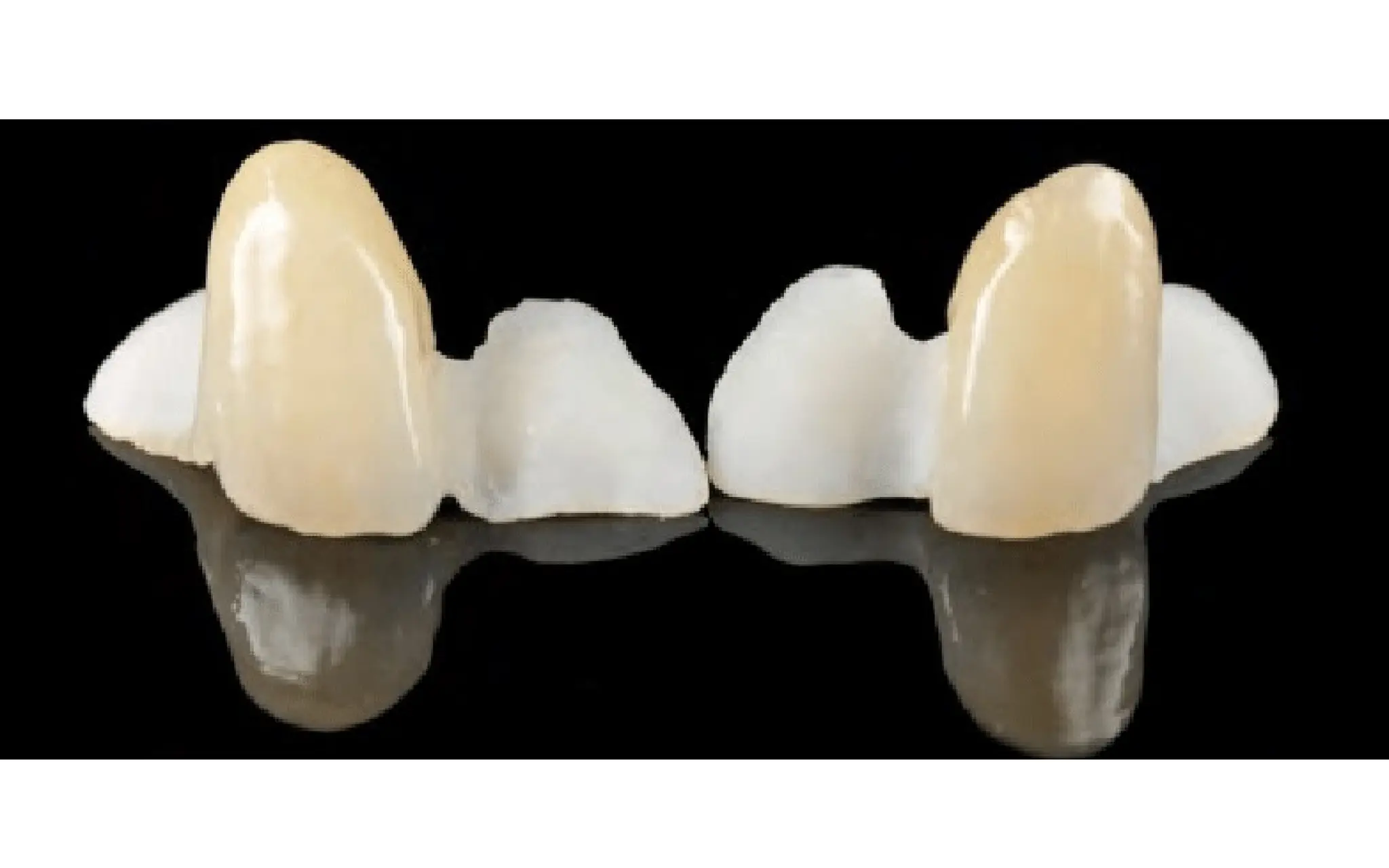
Resin retainedProsthesis:
A prosthesis that is luted to the tooth structures, primarily enamel, which has been
etched to provide mechanical retention for the resin cement.
7.
Retainer:
• Any typeof device used for the stabilization or
retention of a prosthesis.
Abutment:
• A tooth, a portion of a tooth, or that portion of a
dental implant that serves to support and / or
retain a prosthesis. GPT9
8.
• An artificialtooth on a fixed partial denture that replaces a
missing natural tooth, restores its function, and usually fills the
space previously occupied by the clinical crown. GPT9
Pontic:
9.
Etching :
The actor process of selective dissolution.
In dentistry: the selective dissolution of the surface of
tooth enamel, metal or porcelain through the use of acids
or other agents to create a retentive surface.
10.
R
B
F
P
D
Replacement of single
missingtooth using
FPD can be done
using
Convention approach
i.e with crown and
bridge
Using minimally invasive
approach i.e mainly with
resin bonded bridge. (Resin
based bridge).
11.
With improvements inthe
field of adhesive dentistry,
resin-bonded bridgework
has become a viable option
for the long-term
replacement of missing
teeth.
Functionally and
biologically superior
Preparations are
confined to enamel
Reduces the risk of
devitalization
High esthetic potential
.
11
12.
Advantages
Eliminate the needfor local
anaesthetic and provisional
restorations.
Minimal biological cost.
Good cost/ benefit ratio in
financial terms.
12
Indications
Ideal in defect
freeabutment
Suitable for
Young patient.
Short span
Favourable
occlusion
Teeth with large pulp horns
where conventional bridge
is difficult.
15.
CONTRAINDICATIONS
Abutment teethwith large carious lesions, extensive restorations, or
severely abraded teeth.
Abutment teeth where esthetics cannot be improved by bonding from
the lingual surface.
Cannot be used in areas of deep bite.
BONDED PONTICS
The earliestresin-retained prostheses were extracted natural teeth or acrylic teeth used as pontics bonded to abutment
teeth with composite resin.
The composite resin connectors were brittle and required supporting wire or a stainless steel mesh framework.
19.
These bonded
pontics were
limitedto short
anterior spans
and had a
limited lifetime
with
degradation of
the composite
resin bond to
the wire or
mesh and
subsequent
fracture.
Such
restorations
should only be
presented to
patients as
short-term
replacements.
20.
This type usessmall
perforations in the retainer
sections for mechanical
retention and is best suited
for anterior bridges.
Care must be exercised in
placing the perforations to
prevent weakening the
framework. Perforations
that are too large or too
closely spaced will invite
failure of the metal retainer
by fracture.
The perforations should be
approximately 1 mm apart
and have a maximum
diameter of 1.5mm.
CAST PERFORATED RESIN BONDED FPD (ROCHETTE BRIDGE)
21.
Each hole is
countersunk
sothat the
widest
diameter is
toward the
outside of the
retainer.
When the
bridge is
bonded with a
luting resin, it
is
mechanically
locked in
place by
microscopic
undercuts in
the etched
enamel and
the
23.
Advantages:
It is easyto see the
retentive
perforations in the
metal.
If the bridge must
be replaced, the
composite resin can
be cut away in the
perforations to aid
in the removal
process.
No metal etching is
required.
Rosenstiel SF, Land MF, Fujimoto J, Lang SC. Contemporary fixed prosthodontics.
24.
Disadvantages:
• The perforationswould weaken the retainers if improperly sized or spaced.
• The exposed resin is subjected to wear.
• It is not possible to place perforations in proximal surface or in the rest.
Rosenstiel SF, Land MF, Fujimoto J, Lang SC. Contemporary fixed prosthodontics.
25.
Etched Cast ResinBonded FPDs (Maryland Bridge):
In an attempt to retain a
solid non perforated wing
with reduced thickness and
provide an improved
retention for minimal
preparation (resin retained)
bridges Thompson and
Livaditis in 1982 described a
method of electrolytically
etching the fit surface of
non-precious alloys.
Here mechanical retention
is achieved by micro-
porosities created on the
tissue surface of retainers
through the process of
etching.
Eventhough tooth
preparation for Rochette
bridge and Maryland
bridge are similar, surface
treatment makes the later
prosthesis superior to
rochette bridges.
26.
Etching Technique
Etching techniquesused during fabrication of Maryland bridges
can be classified as:
For non- beryllium Nickel Chromium alloys:
Retainer is first immersed in 3.5% nitric acid under
250mA/cm2
for 5 minutes and then immerse in 18%
HCl in ultrasonic cleaner for 10 minutes.
27.
For Beryllium NickelChromium alloys: It is also two step technique. Retainer
is first immersed in 10% H2SO4 under 300mA/cm2
for 5 minutes and then
immerse in 18% HCL in ultrasonic cleaner for 10 minutes.
Mc Laughlin one step technique: Here alloy is etched by placing the retainer
in a beakerwith mixture of HCl and H2SO4. Then the beaker along with
retainer is placed in ultrasonic cleaner for 99 seconds.
After etching, the wax is removed, and the
framework is immersed in an 18% hydrochloric
acid solution in an ultrasonic cleaner for 15
minutes to remove the black surface layer of the
alloy formed as a result of etching.
28.
Advantages :
• Improvedbond strength.
• Instead of perforations, the tooth side of the framework is electrolytically
etched, which produces microscopic undercuts.
• The bridge is attached with a resin luting agent that locks into microscopic
undercuts of both the etched retainer and the etched enamel.
• It can be used for both anterior and posterior bridges.
Rosenstiel SF, Land MF, Fujimoto J, Lang SC. Contemporary fixed prosthodontics.
29.
Disadvantages
Although this designhas been reported to be stronger, it is more technique sensitive
because the retainers may not be properly etched or may be contaminated before
cementation.
Because the retentive features are not seen with the unaided eye the etched surface
must be examined with a microscope to verify proper etching.
Rosenstiel SF, Land MF, Fujimoto J, Lang SC. Contemporary fixed prosthodontics.
30.
Alternatives To TheElectrolytic Etching Technique.
Shen, Forbes and Morrow (1983) described a
metal bonding technique, called Cast Mesh
Bridge based on the characteristics of some
orthodontic brackets. It consisted of
incorporating a prefabricated mesh casting
pattern on the fitted surface of the metal
framework in order to create surface roughness.
31.
They compared thebond strength of cast mesh
surface with that of acid-etched surface using
bovine enamel. The bond force for the etched
surface was 84 Ibs, while for the cast mesh surface
it was 143 Ibs.
32.
The advantages advocatedfor this technique were the elimination of the
necessity of surface etching and the improvement of the retentive capabilities.
Besides, it could be used with any dental alloy and it was easily verified by the
naked eye.
The major problem with this technique is
that it resulted in bulky wings, which are
not periodontally acceptable and also
incorporation in to posterior retainer is
difficult because of their curvature.
33.
Virginia Bridge
Moon andKnap (1983) developed a
new procedure that consisted of
incorporating roughness into the
cast fitted surface using salt
particles.
Cubic crystals of sodium chloride
were embedded into the fitted
surface of the wax pattern and
dissolved in water after casting,
creating microcubic pores.
34.
Particle sizes rangingbetween 149 µm to 250 µm achieved the strongest bond when
compared to other sizes. It was sprinkled over the outlined area leaving a margin of
about 0.5 to 1mm.
But bond strength achieved by this lost salt procedure was less than that achieved
with etched-metal procedure.
However, bond failure tended to occur at the enamel-resin interface with the lost salt
specimens.
35.
• Improvement inthe retention between the sandblasted metal surface and
resin, particularly with Co-Cr and Ni-Cr alloys was reported by Bronsdijk.
Better results were achieved through sandblasting the metal with 50 µm
Al2O3 than with 280 µm AI2O3.
36.
Advantage:
Can be usedwith all presently available dental alloys.
Properly conditioned surface is recognizable with the
unaided eye.
Eliminates the need for equipment associated with
electro or chemical etching.
Rosenstiel SF, Land MF, Fujimoto J, Lang SC. Contemporary fixed prosthodontics.
37.
3. Fibre-Reinforced CompositeResin Retained Bridges
Fibre- reinforced composite (FRC)
restorations have been defined as resin-
based restorations containing fibres
aimed at enhancing their physical
properties.
38.
The fibres arebonded to
the composite at an
adhesive interface and are
designed to act as crack
stoppers, thereby
improving the physical
properties of the
composite.
Loading Fibre within the
restoration enhances
fracture resistance; Uni-
directional fibres improve
the mechanical properties
in a single direction, while
woven fibres allow
multidirectional
reinforcement of the
restoration.
Additionally, FRC is the
only existing material
which can be hardened in
the mouth to produce
sufficient strength for the
construction of direct-
placement bridges.
39.
Indications
• For theimmediate restoration of esthetics following extraction or traumatic loss
of an anterior tooth.
• Where metal display may compromise esthetics, e.g. where metal wings of
traditional RBBs may cause grey ‘shine-through’ on thin anterior abutments.
• To maintain space in the developing dentition to simplify future orthodontic or
esthetic restorative interventions.
40.
• As inexpensive,long-term temporary restorations while stabilizing oral health.
• To postpone more invasive treatments such as implants.
• As conservative transitional restorations during the healing period following
implant placement.
• Abutment of teeth has unfavourable angulations, and to minimize tooth
preparation.
• Mobile abutment teeth may lead to inaccuracies in impression taking and
cementation or limit the prognosis of more rigid restorations
41.
Contra-Indications :
There is
insufficie
ntroom
for an
adequate
volume of
supporti
ng
substruct
ure fibres
Tooth
loss/
movemen
t has
resulted
in a long
span.
Posterior
use
carries a
higher
risk of
early
failure
because
of the
higher
functiona
l loads
involved.
Cannot
be used
in areas
with
heavy
occlusal
load as
the less
rigid
framewor
k will be
subjected
to forces
of higher
magnitud
e, e.g.
severe
parafunct
ion.
(Burke FT. Resin-retained bridges: fibre-reinforced versus metal. Dental update. 2008 Oct 2;35(8):521-6.)
(Burke FT. Resin-retained bridges: fibre-reinforced versus metal. Dental update. 2008 Oct 2;35(8):521-6.)
(Burke FT. Resin-retained bridges: fibre-reinforced versus metal. Dental update. 2008 Oct 2;35(8):521-6.)
42.
Design
The fibres mustbe positioned in the areas where greatest
strength/rigidity is required.
The retainer wings must have sufficient thickness to provide
sufficient rigidity.
The thickness of the veneering composite on occlusal
surfaces should be >1.5 mm.
The framework design should provide support for the
pontics.
.
43.
Galiat AA, BergouD. Clinical evaluation of anterior all-ceramic resin-bonded fixed dental prostheses. Quintessence
International. 2014 Jan 1;45(1)
ALL-CERAMIC RBFDPS
Clinical indicators are almost similar to other RBFPDs, including intact
abutment teeth, a short edentulous span such as one missing tooth, and
minimal dynamic occlusal contacts on the abutment teeth.
44.
Contra-indications:
Despite their advantages,these bridges are contra-indicated in
clinical situations where:
• There is insufficient room for the required
connector dimensions (e.g. Class II Division II
malocclusions).
• There are heavy localized stresses on contact
areas.
• Moisture control cannot be optimized for the
entire cementation procedure
45.
Cantilever Resin-Bonded FixedDental Prostheses
In the cantilever RBFDPs, the pontic generally moves with the single
abutment tooth, which prevents shear and torque forces resulting from the
splinting of two abutments with differential movements, particularly
during protrusive and lateral movements under tooth contact.
van Dalen A, Feilzer AJ, Kleverlaan CJ. A literature review of two-unit cantilevered FPDs. International Journal of
Prosthodontics. 2004 May 1;17(3).)
46.
A recent literaturereview comparing fixed–fixed three unit resin retained
bridges with two unit cantilever designs has shown that the longevity of the
latter is betterwhen used in similar clinical situations.
47.
Indications
A single-retainer RBFDPis usually
indicated when a single anterior tooth
is missing and a vital abutment tooth
exists atleast on oneside.
Canine is a strong tooth and is used
as an abutment to replace either
missing lateral incisor or missing 1st
premolar.
van Dalen A, Feilzer AJ, Kleverlaan CJ. A literature review of two-unit cantilevered FPDs. International Journal of
Prosthodontics. 2004 May 1;17(3).)
Inlay-Retained Fixed DentalProstheses (IRFDP)
It is defined as ‘a minimally invasive treatment modality for
replacing posterior single missing teeth, which uses box-
shaped cavities as retainers and might include existing fillings
made of gold, composite, ceramic, or other materials that are
luted to the adjacent teeth’; thus preserving the dental
structure and the integrity of the periodontal tissues.
The Academy of Prosthodontics. The glossary of prosthodontic terms. J Prosthet Dent
2005;94:10–92.
50.
FABRICATION OF RESINBONDED FPD’S
The early use of resin bonded fixed partial dentures was accomplished with no
preparation of the abutment teeth.
Some authors advocate little or no tooth preparation for this type of prosthesis,
emphasizing its reversibility.
Preparation features are used by many to enhance the resistance of resin bonded FPDs.
Fundamentals of fixed prosthodontics – 3rd edi,H.T. Schillingburg.
51.
A positive seatfor restoration is provided,
which assures proper placement of the
restoration during bonding and reduces
shearing stress on the resin–to-enamel
bond during function.
Tooth preparation provides a tooth–to-
metal finishing line that is smooth and
cleansable.
Fundamentals of fixed prosthodontics – 3rd edi,H.T. Schillingburg.
52.
The partial veneercrown depends primarily on the preparation design to
provide retention and resistance form whereas the resin retained FPD
retainers are bonded to enamel and thus the preparation design features
represent auxiliary retention and resistance form.
Fundamentals of fixed prosthodontics – 3rd edi,H.T. Schillingburg.
53.
To fully exploitthe resin-to-enamel bond and protect the pulpal tissue from
exposure to the irritating effects of composite, tooth modifications must be made
only in enamel exposing little or no dentin.
This is particularly important when considering the resin-to-tooth bond because the
shear bond strengths of resin-to-dentin bonding agents are less than one third of
the shear bond strengths of resin-to-enamel bonding agents.
Fundamentals of fixed prosthodontics – 3rd edi,H.T. Schillingburg.
54.
In the fabricationof resin retained FPDs, following three phases are
necessary for predictable success.
Frame work design Preparation of the
abutment teeth Bonding
Fundamentals of fixed prosthodontics – 3rd edi,H.T. Schillingburg.
55.
FRAMEWORK DESIGN
Basic principlesof retention and resistance form must be observed that is
i) Near parallel (6 degree taper) opposing walls
ii) A single path of insertion and withdrawal
iii) Maximal coverage
iv) Vertical stops
v) Grooves
Shillingburg HT, Hobo S, Whitsett LD, Brackett SE. Fundamentals of Fixed Prosthodontics, ed, 1997. Learning. 1997;10:40.
56.
In the fabricationof resin retained FPDs, following three phases are
necessary for predictable success.
Frame work design Preparation of the
abutment teeth Bonding
Fundamentals of fixed prosthodontics – 3rd edi,H.T. Schillingburg.
57.
Anterior design principles:
•An incisogingival path of insertion is preferable to a lingual path to resist lingual
displacement.
• Miers and Meetz discussed two methods to obtain resistance form for an anterior
resin retained FPD.
• The labial wrap.
• The Proximal groove
Shillingburg HT, Hobo S, Whitsett LD, Brackett SE. Fundamentals of Fixed Prosthodontics, ed, 1997. Learning. 1997;10:40.
58.
Labial Wrap Technique:
•Requires extension of the metal frame work beyond the
proximal line angle.
• This method involves moving the proximal line angle to
the facial aspect and hiding the framework with
porcelain from the pontic.
• This design is not always possible, when appearance is a
priority.
Shillingburg HT, Hobo S, Whitsett LD, Brackett SE. Fundamentals of Fixed Prosthodontics, ed, 1997. Learning.
1997;10:40.
59.
Proximal Grooves:
Shallow verticalgrooves can be
incorporated inter proximally for
additional retention if an adequate
wrap-around design is technically
unobtainable or proximal extension
is compromised because of metal
visibility.
Shillingburg HT, Hobo S, Whitsett LD, Brackett SE. Fundamentals of Fixed Prosthodontics, ed, 1997. Learning.
1997;10:40.
60.
According to Meirsand Meetz:
Grooves should be 1 to 3mm long,
positioned lingual to the
proximal line angle, and confined
to enamel with supragingival
margins. Groove depth should be
about 0.5mm.
It has been suggested that
proximal grooves enhance
resistance and retentive
properties of resin-bonded FPDs
by providing a distinct path of
insertion and resisting lingual
displacement.
Shillingburg HT, Hobo S, Whitsett LD, Brackett SE. Fundamentals of Fixed Prosthodontics, ed, 1997. Learning.
1997;10:40.
61.
The location ofthe lingual incisal margin is determined by the
thickness and translucency of the incisal edge of the abutments and
the occulsion.
The incisal finishing should be lightly chamfered and placed as near
to the incisal edge as esthetic considerations will permit.
Rosenstiel SF, Land MF, Fujimoto J, Lang SC. Contemporary fixed
prosthodontics.
62.
Gingival margin ofthe
retainer should be either 1
mm incisal to the CEJ or no
more than 1mm incisal to the
free gingival margin.
Because available enamel
thickness at this site is
approximately 0.25 mm, no
more than a light chamfer
finishing line should be used.
63.
For an optimumperiodontal response the finishing line
should always be placed incisal to the free gingival
margins.
A cingulum rest provides a vertical stop and provides
resistance to gingival displacement.
64.
ANTERIOR TOOTH PREPARATION
Maxillaryanterior tooth present a unique problem in resin bonded FPD design.
A large percentage of the available bonding surface is also involved in centric and
excursive contacts with the lower teeth.
65.
Centric occlusal
contacts aremarked
with articulating paper
to ensure adequate
occlusal clearance in
this area .
Use a small wheel
diamond to remove 0.5
mm of tooth structure.
66.
Shillingburg HT, HoboS, Whitsett LD, Brackett SE. Fundamentals of Fixed Prosthodontics, ed, 1997.
Learning. 1997;10:40.
Proximal reduction of the surface adjacent to the edentulous space is done in two planes
with a round end tapered diamond.
67.
The thickness ofthe axial walls of the retainer will be greater than
the amount of axial tooth structure removed, leading to over
contouring of the axial walls of the cast retainer.
To minimize any deleterious effect on the periodontium, very light
chamfer finish line should remain approximately 1.0 mm
supragingival throughout its length.
68.
Light upright lingualaxial reduction is done from
the bi planar axial reduction around the cingulum
to a point just short of the proximal contact on the
opposite side of the cingulum from the edentulous
space
69.
Proximal grooves areplaced lingual to the
facial proximal line angles of the abutment
teeth.
It is desirable to place the groove entirely in
enamel. It dentine is exposed ,however, the
area involved should be noted and protected
during etching.
70.
Fundamentals of fixedprosthodontics – 3rd edi,H.T. Schillingburg.
Use a flat end tapered diamond to prepare lingual rest to provide resistance to
gingival displacement.
71.
Lingual
surfaces are not
inocclusion, the
preparation
involves removal
of enamel
surface.
However,
Lingual enamel
thickness for
mandibular
teeth is 11-50%
less than those
for maxillary
teeth.
Principles for
preparation of
mandibular
anterior teeth
are similar to
those for
maxillary
anterior teeth.
MANDIBULAR
ANTERIOR
TOOTH
Rosenstiel SF, Land MF, Fujimoto J, Lang SC. Contemporary fixed prosthodontics.
72.
Rosenstiel SF, LandMF, Fujimoto J, Lang SC. Contemporary fixed prosthodontics.
POSTERIOR DESIGN PRINCIPLES
Wrap-around
design is easier
because of the
anatomy of the
posterior teeth, and
esthetics is not
critical.
The entire lingual
surface and the inter
proximal surfaces
adjacent to the
edentulous space are
commonly covered.
more that 180 degree
coverage.
Small occlusal rest
prevents vertical
displacement.
73.
TOOTH PREPARATION
Modify theproximal surfaces by creating opposing parallel walls.
Rosenstiel SF, Land MF, Fujimoto J, Lang SC. Contemporary fixed prosthodontics.
74.
Rosenstiel SF, LandMF, Fujimoto J, Lang SC. Contemporary fixed prosthodontics.
The curved bucco-lingual configuration of the proximal surface is retained to allow
proximal wrap around of the frame work.
The proximal slices should be atleast 2.5 to 3mm in a occluso-gingival dimension.
The buccal extension is determined by esthetics and tooth morphology.
75.
Rosenstiel SF, LandMF, Fujimoto J, Lang SC. Contemporary fixed prosthodontics.
A shallow groove is placed slightly lingual
to the facial termination of the proximal
slice.
Additional proximal and terminal grooves
can be place to enhance resistance.
76.
A positive restshould be prepared in each marginal ridge adjacent to the edentulous space.
eal rest is spoon shaped with a depth of 1mm, B-L width of 2.5 to 3 mm and M-D width of 1 to 1.5 mm.
Rosenstiel SF, Land MF, Fujimoto J, Lang SC. Contemporary fixed prosthodontics.
77.
The lingual surfacesof mandibular
posterior teeth are usually prepared in a
single plane, terminating cervically with a
knife-edge or light chamfer finishing line.
This portion of the preparation should be
atleast 3 mm in an occluso-cervical
dimensions with a shallow groove on the
facial line angle opposite the edentulous
space.
Rosenstiel SF, Land MF, Fujimoto J, Lang SC. Contemporary fixed prosthodontics.v
78.
• The cervicalenamel is thin in the region 1mm from the
CEJ and the teeth generally have shorter lingual cusps.
• Hence, occlusal coverage of the lingual cup of the first
premolar is recommended to provide additional
bonding area.
Mandibular
Premolars
Rosenstiel SF, Land MF, Fujimoto J, Lang SC. Contemporary fixed prosthodontics.
79.
In the fabricationof resin retained FPDs, following three phases are
necessary for predictable success.
Frame work design Preparation of the
abutment teeth Bonding
Fundamentals of fixed prosthodontics – 3rd edi,H.T. Schillingburg.
80.
Enamel Bonding Mechanism
Acidetching
Application of bonding agents
James B. summit, J William Robbins, Thomas J. Hilton Richard S. Schwatz. Bonding to enamel and dentin In:
Fundamentals of operative dentistry-A contemporary approach 3rd Edition Quintessence publishing Co.
81.
Conditoning of Dentin
Forremoval of smear layer
ACIDS
37% Phosphoric acid removes smear
layer, exposes microporous collagen
network into which resin monomer
penetrates.
CALCIUM CHELATORS
Remove/Modify smear layer without
demineralising the surface dentin
layer.
EDTA
82.
D
E
N
T
I
N
COMPOSITE
Dentin
Bonding
Agent
HYDROPHILIC HYDROPHOBIC
•Agents thatcontain monomers having a hydrophillic end with affinity for
exposed collagen fibrils & hydrophobic end with affinity for adhesive resin.
•Used to increase diffusion of resin into moist & demineralised dentin.
Optimal micromechanical bonding.
Priming of Dentin
83.
• Improves penetrationof monomers into dentin for
better micromechanical bonding.
• Water keeps collagen fibrils from collapsing thus
helping in better penetration & bonding between
resin & dentin.
Better bonding in
moist dentin.
84.
Ideal dentin bondingagent
1. Provide high bond strength to enamel & dentin.
2. Provide immediate bond.
3. Provide a durable bond.
4. Prevent microleakage.
5. Biocompactible & non irritating.
6. Simple to Use.
7. Economical.
85.
CLASSIFICATION OF DENTINBONDING AGENTS
According to generation.
According to adhesion strategy (No of clinical applications).
According to chemical composition.
According to treatment of smear layer.
According to Ph.
According to bond strength.
According to mode of curing.
According to type of solvent.
86.
Clinical Steps inDentin Bonding Agents
Generation No: of steps Description
First 2 Etch enamel + Apply adhesive
Second 2 Etch enamel + Apply adhesive
Third 3 Etch enamel + Apply Primer + Bonding Agent
Fourth 3 Total Etch + Apply Primer+ Bonding Agent
Fifth 2 Total Etch + Bonding Agent
Sixth 1 Apply Self etch Adhesive
Seventh 1 Apply Self etch Adhesive
Eighth 1 Apply Self etch Adhesive
87.
Rosenstiel SF, LandMF, Fujimoto J, Lang SC. Contemporary fixed
prosthodontics.
Bonding procedure
Clean the teeth with
pumice and water. Isolate
them with rubber dam.
The tooth facing surfaces
of the retainers are air
abrading before inserting
the restoration.
wash the casting in
running water for 1 minute,
place in an ultrasonic unit
for 2 mins. And then rinse.
88.
Acid etch toothsurface with 37% phosphoric acid for 30 secs – Rinse and dry.
apply primer to the etched enamel surface.
Dry Primer to ensure evaporation of the solvent. (this should remain on the enamel
surface for 30 secs before drying).
Mix cement and apply on inside of retainer.
Seat the casting firmly and maintain pressure while removing the excess resin cement.
The cement will set within 60-90 secs.
Light cure the margins for 40s
Rosenstiel SF, Land MF, Fujimoto J, Lang SC. Contemporary fixed prosthodontics.
90.
POST OPERATIVE CARE
Allresin-bonded restoration
should be scrutinized at the
regular recall examination.
Since debonding or partial
debonding can occurwithout
complete loss of the
prosthesis, visual examination
and gentle pressure with an
explorer should be performed
to confirm such complication.
Rosenstiel SF, Land MF, Fujimoto J, Lang SC. Contemporary fixed prosthodontics.
91.
Because debonding ismost commonly associated with biting or chewing hard food,
patients should be warned about this danger.
If the patient perceives any changes in the restoration, he or she should seek early
attention. Early diagnosis and treatment of a partially debonded prosthesis can
prevent significant caries.
Rosenstiel SF, Land MF, Fujimoto J, Lang SC. Contemporary fixed prosthodontics.
92.
The restoration canusually be rebonded
successfully. The bonding surface should
be cleaned with air abrasion and the
enamel surface refreshed by carefully
removing the remaining resin with rotary
instruments, followed by etching.
If a prosthesis debonds more than twice,
revaluating the preparation and
remaking the prosthesis is probably
necessary.
Rosenstiel SF, Land MF, Fujimoto J, Lang SC. Contemporary fixed prosthodontics.
93.
Attention to periodontalhealth is critical,
because this retainer design has the
potential to accumulate excess plaque as a
result of lingual over contouring and the
gingival extent of the margins.
The patient should be taught appropriate
plaque control measures. Calculus removal
with hand instruments is recommended
over ultrasonic scalers to reduce the chance
of debonding.
Rosenstiel SF, Land MF, Fujimoto J, Lang SC. Contemporary fixed prosthodontics.
94.
Summary
Resin bonded fixedpartial dentures offer the following significant advantages to the
dentist and the patient in properly selected clinical situations:
1) Tooth preparation is reduced to a minimum.
2) The procedure is reversible.
3) Soft tissue management is simplified.
4) There is less problem with color matching,
5) Reduced cost and simplicity.
95.
There are twodisadvantages
1) Bonding procedures are more difficult and time consuming than conventional luting
techniques.
2) Occlusal adjustment at the try-in of the restoration is more difficult because of the lack of a
retentive crown-tooth relationship.
96.
• One ofthe basic principles of tooth preparation for fixed prosthodontics is
conservation of tooth structure. This is the primary advantage of resin retained fixed
partial dentures and a careful patient selection is an important factor in
predetermination of clinical success.
• All factors considered, it seems that the use of resin bonded fixed partial denture
should be encouraged where sound abutment teeth exist and only one or two teeth are
missing.
97.
REFERENCES
• Contemporary fixedprosthodontics 3rd
edi,Rosenstiel.
• Fundamentals of fixed prosthodontics – 3rd edi,H.T. Schillingburg.
• Phillips science of Dental materials-10 edition
• Tooth preparation designs for resin retained fixed partial dentures – J.R.Eshelman,
Janus, Jones.JPD 1988 Vol 60(1);18-22.
• Resin-bonded fixed partial dentures past and present - an overview. lournal of the
Irish Dental Association 2012; 58 (6): 294-300
98.
• Robert etal. The U-Beam bridge: An advancement in the fiber reinforced resin-
bonded fixed partial denture. Quintessence Int2009;40:e35–e40.
• Hiroyuki,Tanaka. History and current state of metal adhesion systems used in
prosthesis fabrication and placement. Journal of Oral Science, Vol. 55, No. 1, 1-7,
2013
• Birka Dimaczek. Long-term provisional rehabilitation of function and esthetics
using an extracted tooth with the immediate bonding technique.Quintessence Int
2008;39:283–288.
99.
• Lakshmi RD,Abraham A, Sekar V, Hariharan A. Influence of connector
dimensions on the stress distribution of monolithic zirconia and lithium-di-silicate
inlay retained fixed dental prostheses–A 3D finite element analysis. Tanta Dental
Journal. 2015 Mar 1;12(1):56-64.
• van Dalen A, Feilzer AJ, Kleverlaan CJ. A literature review of two-unit cantilevered
FPDs. International Journal of Prosthodontics. 2004 May 1;17(3)
• Edelhoff D, Sorensen JA. Tooth structure removal associated with various
preparation designs for anterior teeth. J Prosthet Dent 2002;87:503–509.
#22 Diagrammatic representation of a Rochette bridge. The cross-section shows the countersunk holes and retentive composite ‘rivets’.
Schematic illustration of lingual view shows occlusogingival extension of frame work and placement of perforations.
Occlusal view illustrates circumferential extension of framework and design of occlusal rest and shows facial extension of framework
#35 One of the advantages of sandblasting is that it is less technique-sensitive than electrolytic etching. Besides, it is less costly and eliminates many of the problems associated with alloy etching. It can be evaluated by naked eye (Figure) and it can be done at the chair side using special apparatus built for this purpose.
#43 All-ceramic RBFDPs are also used as a minimally invasive, tooth-tissue loss preventing alternative for replacing anterior teeth. Clinical indicators are almost similar to other RBFPDs, including intact abutment teeth, a short edentulous span such as one missing tooth, and minimal dynamic occlusal contacts on the abutment teeth. The advantages of these restorations are numerous and result from the combined advantages of composite resins (adhesion, conservation of tooth substrate), and ceramic (color stability, wear resistance, enamel-like thermal expansion, and refined esthetics). For this reason, RBFDPs have been suggested as an alternative to traditional resin-bonded restorations, which use a metal framework.
#45 When selecting a two-retainer design, both abutments should have similar mobility, otherwise the weaker abutment may detach from the enamel, thereby compromising the entire result. In the cantilever RBFDPs, the pontic generally moves with the single abutment tooth, which prevents shear and torque forces resulting from the splinting of two abutments with differential movements, particularly during protrusive and lateral movements under tooth contact. In addition, the periodontal receptors of the abutment teeth are assumed to prevent pontic overloading during mastication, therefore minimizing the risk of moving or tilting the abutment tooth. A recent literature review comparing fixed–fixed three unit resin retained bridges with two unit cantilever designs has shown that the longevity of the latter is better when used in similar clinical situations
#47 Asingle-retainerRBFDPisusually indicatedwhenasingleanteriortoothismissingandavitalabutmenttooth existsatleastononeside.In case of posteriors single retainer RBFDP are rarely used, mostly to replace single premolar. The chosen abutment teeth must satisfy Ante’s Law i.e total root surface area of all supporting teeth must be equal to or exceed the root surface area of teeth being replaced. Canine is a strong tooth and is used as an abutment to replace either missing lateral incisor or missing 1st premolar.There must be sufficient space from the abutment tooth to the opposing arch (about 0.8 mm) for the retainer, and the abutment tooth should be mostly free of caries and fillings, as well as serious abrasions of the enamel. Sufficient enamel surface suitable for resin bonding must be available on the abutment tooth. If small dental fillings are present, they should be covered completely by the RBFDP framework.
#48 Abutment tooth preparation must be conservative and only within the enamel. The incisal finish line is conventionally 2mm short of the incisal edge to avoid any aesthetic impairment of incisal edge translucency. This may vary while using metal retainer wings and should be assessed clinically by moving a metal instrument from the cervical to the incisal of the tooth and assessing visibility from the facial aspect. This ensures good aesthetics from the facial aspect. Cervical finish line should be supragingival and preparation is limited to the lingual aspect.Depth of preparation is usually0.5- 0.8 mm. In case of anteriors, cingulum is preserved.Additional retentive grooves can be prepared on proximal aspect of the abutment teeth. Usually a shallow groove (2 mm length, 1 mm width, 0.5 mm depth) is prepared at proximal aspect of the abutment tooth. This provide additional surface area as well as aids in path of insertion.
#81 ACIDS – removes smear layer, exposes microporous collagen network into which resin monomer penetrates.
#82 Hydrophobic part [M]: Methacrylate group; it reacts with restorative resin.
Hydrophilic part [X]: Reactive group; it reacts with organic and inorganic portions ( phosphate esters Or carboxylic acid groups ) capable of bonding to dentin. Displaces water & wets the surface. It permits penetration into porosities of dentin.
R-Spacer : Is responsible for flexibility of molecule after one end is bound ; keeps methacrylate groups spatially located for optimal chemical reaction with the composites.
#86 TE complete removal of smear layer by simultaneous acid etching of the enamel & dentin. Smear layer prevents proper adhesion
After etchin primer & adhesive is applied seperately or together.




![DEFINITIONS [GPT9]
Resin retained Prosthesis:
A prosthesis that is luted to the tooth structures, primarily enamel, which has been
etched to provide mechanical retention for the resin cement.](https://image.slidesharecdn.com/resinbondedfpd-250903051602-bb79800e/75/Resin-bonded-Fixed-partial-denture-treatment-option-6-2048.jpg)


