TOPIC:
Research Project Writing
Introduction to Research Project Writing:
 It is an extended essay that presents a question or statement for
analysis and evaluation.
 Developing effective research projects for academic or professional
purposes.
 During Research Projects, we present
 Own Ideas
 Research on a subject
Importance of Research Projects:
Research allows you :
 To pursue your interests
 To learn something new
 To challenge yourself in new ways
 Enhances knowledge
 Builds credibility
 Essential for Advancement
 Real-World Applications
Steps involved in Research Project:
1. Introduction
2. Literature Review
3. Methodology
4. Findings and results
5. Discussion
6. Conclusion
7. List of references
Steps For Writing Research Project:
Choosing a Research Topic:
Choosing a research topic can be exciting yet challenging. Here are some steps to
help you:
1. Identify your interest
 Start by brainstorming topics that genuinely interest you. Think about areas of
study that you are passionate about or curious to learn more about.
2. Explore existing literature
 Look into recent publications and research in your field of interest.
3.Consider feasibility
 Assess the feasibility of potential research topics. Consider factors such as
available resources, time constraints, and access to data or participants.
Steps For Writing Research Project:
4. Consult with experts
 Discuss your ideas with mentors, professors in the field.
 They can provide valuable insights and help you refine your
research topic.
5. Narrow down your focus
 Once you have a list of potential topics, narrow it down based on
your interests, feasibility, and the potential impact of the research.
Steps For Writing Research Project:
Developing a research question
It involves identifying a topic of interest which are:
1. Choose a Topic:
 Select a broad area of interest that you’re curious about or that aligns with your
field of study.
2. Narrow Down:
 Narrow down your topic based on your interests, available resources, and
feasibility.
3. Brainstorm:
 Generate several potential research questions that stem from your narrowed-
down topic.
Steps For Writing Research Project:
Introduction of Topic:
How to write an introduction chapter for a thesis
 Capture the reader's interest
 Give an overview of your research topic
 Detail how your research is going to make a contribution
 Explain what your interest is in the topic
 List your research objectives
 Give a forthcoming chapter overview
 Learn from others.
Conducting a literature Review:
Literature review:
 The literature review is where you will analyse and
evaluate existing research within your subject area.
 This section is where your secondary research will be
presented.
 A literature review is an integral part of your research
project as it brings validity to your research aims.
Conducting a literature Review:
What to include when writing your
literature review:
 A description of the publications
 A summary of the main points
 An evaluation on the contribution to the area of study
 Potential flaws and gaps in the research
Designing Research Methodology:
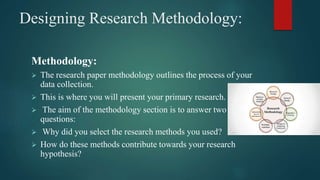
Methodology:
 The research paper methodology outlines the process of your
data collection.
 This is where you will present your primary research.
 The aim of the methodology section is to answer two
questions:
 Why did you select the research methods you used?
 How do these methods contribute towards your research
hypothesis?
Designing Research Methodology:
Methodology will be qualitative, quantitativeor mixed.
Qualitative Research:
 First hand observations such as interviews, focus groups, case studies and
questionnaires. The data collected will generally be non-numerical.
Quantitative research:
 It deals in numbers and logic. The data collected will focus on statistics and
numerical patterns.
Mixed Research:
 It includes both quantitative and qualitative research. The methodology section
should always be written in the past tense, even if you have already started your
data collection.
Collecting and Analyzing Data:
In Methodology, data is collected and analyzed in various ways.
Data Collection Methods:
 Overview of various data collection
 Surveys/questionnaires
 Interviews
 Observations
 Secondary data sources
Advantages and disadvantages of each method:
Considerations for selecting the appropriate method. Accurate, systematic, and
ethical gathering of information
Collecting and Analyzing Data:
Data Analysis:
 Outline clear objectives, hypothesis, and data
collection methods.
 Data analysis involves a systematic process of
inspecting, cleaning, transforming, and interpreting
raw data to extract meaningful insights and make
informed decisions.
Findings and Results:
 Provide a brief overview of your research question
and methodology
 Summarize the key findings and results, using bullet
points or concise sentence
 Include any significant data points, trends, or patterns
 Consider using graphs or charts to visually represent
your findings if appropriate.
Conclusion:
 Reiterate the main purpose of your study and its
significance.
 Summarize the key findings and how they relate to
your research question.
 Discuss the implications of your findings in
relation to existing literature or real-world
applications.
 Conclude with any limitations of your study or
recommendations for future research.
Future Directions:
 Discuss potential avenues for future research based on
your findings.
 Identify unanswered questions or areas for further
exploration.
 Suggest potential methodologies or approaches that could
be used in future studies.
 Highlight the broader impact or significance of pursuing
these future directions.
Research mrthods in environmental science.pptx

Research mrthods in environmental science.pptx

  • 1.
  • 2.
    Introduction to ResearchProject Writing:  It is an extended essay that presents a question or statement for analysis and evaluation.  Developing effective research projects for academic or professional purposes.  During Research Projects, we present  Own Ideas  Research on a subject
  • 3.
    Importance of ResearchProjects: Research allows you :  To pursue your interests  To learn something new  To challenge yourself in new ways  Enhances knowledge  Builds credibility  Essential for Advancement  Real-World Applications
  • 4.
    Steps involved inResearch Project: 1. Introduction 2. Literature Review 3. Methodology 4. Findings and results 5. Discussion 6. Conclusion 7. List of references
  • 5.
    Steps For WritingResearch Project: Choosing a Research Topic: Choosing a research topic can be exciting yet challenging. Here are some steps to help you: 1. Identify your interest  Start by brainstorming topics that genuinely interest you. Think about areas of study that you are passionate about or curious to learn more about. 2. Explore existing literature  Look into recent publications and research in your field of interest. 3.Consider feasibility  Assess the feasibility of potential research topics. Consider factors such as available resources, time constraints, and access to data or participants.
  • 6.
    Steps For WritingResearch Project: 4. Consult with experts  Discuss your ideas with mentors, professors in the field.  They can provide valuable insights and help you refine your research topic. 5. Narrow down your focus  Once you have a list of potential topics, narrow it down based on your interests, feasibility, and the potential impact of the research.
  • 7.
    Steps For WritingResearch Project: Developing a research question It involves identifying a topic of interest which are: 1. Choose a Topic:  Select a broad area of interest that you’re curious about or that aligns with your field of study. 2. Narrow Down:  Narrow down your topic based on your interests, available resources, and feasibility. 3. Brainstorm:  Generate several potential research questions that stem from your narrowed- down topic.
  • 8.
    Steps For WritingResearch Project: Introduction of Topic: How to write an introduction chapter for a thesis  Capture the reader's interest  Give an overview of your research topic  Detail how your research is going to make a contribution  Explain what your interest is in the topic  List your research objectives  Give a forthcoming chapter overview  Learn from others.
  • 9.
    Conducting a literatureReview: Literature review:  The literature review is where you will analyse and evaluate existing research within your subject area.  This section is where your secondary research will be presented.  A literature review is an integral part of your research project as it brings validity to your research aims.
  • 10.
    Conducting a literatureReview: What to include when writing your literature review:  A description of the publications  A summary of the main points  An evaluation on the contribution to the area of study  Potential flaws and gaps in the research
  • 11.
    Designing Research Methodology: Methodology: The research paper methodology outlines the process of your data collection.  This is where you will present your primary research.  The aim of the methodology section is to answer two questions:  Why did you select the research methods you used?  How do these methods contribute towards your research hypothesis?
  • 12.
    Designing Research Methodology: Methodologywill be qualitative, quantitativeor mixed. Qualitative Research:  First hand observations such as interviews, focus groups, case studies and questionnaires. The data collected will generally be non-numerical. Quantitative research:  It deals in numbers and logic. The data collected will focus on statistics and numerical patterns. Mixed Research:  It includes both quantitative and qualitative research. The methodology section should always be written in the past tense, even if you have already started your data collection.
  • 13.
    Collecting and AnalyzingData: In Methodology, data is collected and analyzed in various ways. Data Collection Methods:  Overview of various data collection  Surveys/questionnaires  Interviews  Observations  Secondary data sources Advantages and disadvantages of each method: Considerations for selecting the appropriate method. Accurate, systematic, and ethical gathering of information
  • 14.
    Collecting and AnalyzingData: Data Analysis:  Outline clear objectives, hypothesis, and data collection methods.  Data analysis involves a systematic process of inspecting, cleaning, transforming, and interpreting raw data to extract meaningful insights and make informed decisions.
  • 15.
    Findings and Results: Provide a brief overview of your research question and methodology  Summarize the key findings and results, using bullet points or concise sentence  Include any significant data points, trends, or patterns  Consider using graphs or charts to visually represent your findings if appropriate.
  • 16.
    Conclusion:  Reiterate themain purpose of your study and its significance.  Summarize the key findings and how they relate to your research question.  Discuss the implications of your findings in relation to existing literature or real-world applications.  Conclude with any limitations of your study or recommendations for future research.
  • 17.
    Future Directions:  Discusspotential avenues for future research based on your findings.  Identify unanswered questions or areas for further exploration.  Suggest potential methodologies or approaches that could be used in future studies.  Highlight the broader impact or significance of pursuing these future directions.