Research is a
Social Process
Kathryn S McKinley
Microsoft Research
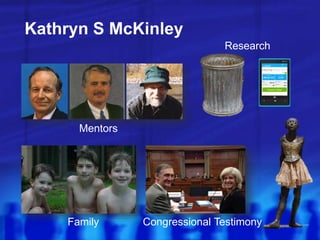
Kathryn S McKinley
Mentors
Family Congressional Testimony
Research
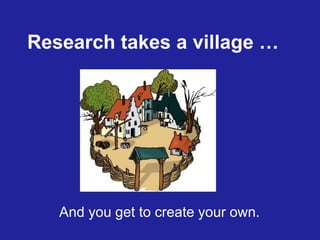
Research takes a village …
And you get to create your own.
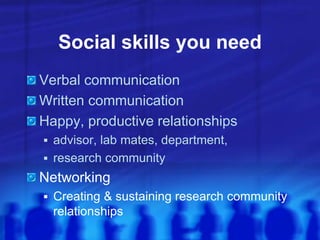
Social skills you need
Verbal communication
Written communication
Happy, productive relationships
 advisor, lab mates, department,
 research community
Networking
 Creating & sustaining research community
relationships
Networking is …
Building and sustaining professional
relationships
Participating in a research community
Networking is not …
Using people or a substitute for quality
research
But I am horrible at small talk!
You have CS in common
Networking is not genetic
It is a research skill
Practice
Meet people Learn Go places
Volunteer!
Benefits …
 Makes you known
 Makes your work known
 Source of new research ideas &
different slants on old ideas
 Feedback on your research
 New collaborations
 Letters of recommendation
 Professional opportunities
Building a research network
 Go to talks, go to conferences, …
 Introduce yourself to
 Peers
 Established Researchers
 Researchers in all areas!
 Researchers junior to you
 Connect your connections
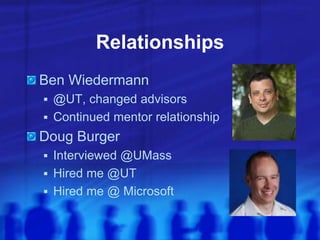
Relationships
Ben Wiedermann
 @UT, changed advisors
 Continued mentor relationship
Doug Burger
 Interviewed @UMass
 Hired me @UT
 Hired me @ Microsoft
Conference networking
Prepare a research pitch (write it down, practice)
 “Elevator talk” (1 & 3 minute versions)
 Why is it an interesting problem?
 Why is it important?
 Why is your solution unique?
 Prepare
Who will be there? Who do you want to meet?
What do you want to ask them? Read their papers.
 Take notes! Who you met, plan next steps
At the Conference
 Use your EQ
 You all have CS in common
 Reconnect
 Some, but not most time with lab mates
 Don’t interrupt private conversations
 Find the positive, ask questions
 Keep the conversation moving
 One conversation is not enough
 Find people you connect with
After the conference
 Follow up!
 Read their work! Send comments
 Send pointers to your related papers
 Share software and workloads
 Do joint work together
 Invite them to give a talk
 Ask to give a talk there (* as appropriate)
Informal networking
 Serendipity happens: Talk to people you
meet by chance. Talk to people you like.
 Convey excitement about your research
and theirs.
 Talk to people about their lives as well as
their work.
 Ask questions & listen!
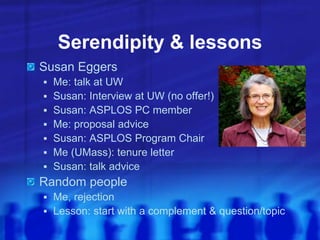
Serendipity & lessons
Susan Eggers
 Me: talk at UW
 Susan: Interview at UW (no offer!)
 Susan: ASPLOS PC member
 Me: proposal advice
 Susan: ASPLOS Program Chair
 Me (UMass): tenure letter
 Susan: talk advice
Random people
 Me, rejection
 Lesson: start with a complement & question/topic
Questions?
Social Activity: Speed Dating
What you need
 Your brain & a SMILE!
Even rows, sit tight
Odd rows, turn your chair around.
If you know the person you are facing, find someone
else.
10 Minute Speed Dating
1 minute Quick Intros
 Shake hands (cultural caveat) , eye contact, & smile
 “My name is Kathryn…Happy to meet you, Jane”
 Write down the name (phone, now put it away)
Listener: Ask a question
Respondent: Answer the question!
 Listener listens actively, eye contact, notes are OK
 Listener mirrors what she has heard & responds
directly, relating to the answer
Swap Roles. Lather, Rinse, Repeat!.
What to talk about?
Where are you in studying? Grad? undergrad?
Why are you studying CS?
What attracts you to PL?
What research problem(s) are you working on right now?
What is your greatest (professional or personal) challenge right
now?
What is your biggest concern about graduate school?
What kind of career path do you want to pursue?
What do you hope to get out of this meeting?
What do you enjoy doing when you’re not doing CS?
What are you passionate about?
Thank you!
Activities & Resources
Arrange events at your home
institution!
Homework
Practice this week with your peers & beyond
Meet at least 10 people in your institution this
month --- keep a record!
Introduce yourself with handshake (caveat), smile,
and your name
Write down their names
Network Forward – network your network
Follow-up with email, Linked-In, or Facebook
Network Forward Make connections “You should meet
Hermione Granger from Hogworts…”
Resources
www.cra-w.org
CRA-W Career Mentoring Workshops, Workshop reports and
transcripts,
From a summer internship to a permanent position by Keith
Farkus, DEC WRL
Finding real world problems by Dirk Grunwald, U Colorado
Networking for your students by Ken Kennedy, Rice
Go outside your department by Jan Cuny, U Oregon
Developing business contacts by Maria Klawe, UBC
Networking at NSF by Caroline Wardle, NSF
Populating a start-up by Dave Ditzel, Transmeta
The ONR program director by Susan Eggers, UW
Acknowledgements
Thanks for sharing their presentations
Jan Cuny, NSF
Susan Eggers, University of Washington
John Davis, IBM
Mary Jean Harrold, Georgia Tech
Valerie Taylor, Texas A&M
Who did they thank?
Susan Owicki, Joan Feigenbaum, Judy Goldsmith,
Naomi Nishimura, David Johnson, Peter Shor,
David Applegate, Richard Beigel

Research is a Social Process

  • 1.
    Research is a SocialProcess Kathryn S McKinley Microsoft Research
  • 2.
    Kathryn S McKinley Mentors FamilyCongressional Testimony Research
  • 3.
    Research takes avillage … And you get to create your own.
  • 4.
    Social skills youneed Verbal communication Written communication Happy, productive relationships  advisor, lab mates, department,  research community Networking  Creating & sustaining research community relationships
  • 5.
    Networking is … Buildingand sustaining professional relationships Participating in a research community
  • 6.
    Networking is not… Using people or a substitute for quality research
  • 7.
    But I amhorrible at small talk! You have CS in common Networking is not genetic It is a research skill Practice Meet people Learn Go places Volunteer!
  • 8.
    Benefits …  Makesyou known  Makes your work known  Source of new research ideas & different slants on old ideas  Feedback on your research  New collaborations  Letters of recommendation  Professional opportunities
  • 9.
    Building a researchnetwork  Go to talks, go to conferences, …  Introduce yourself to  Peers  Established Researchers  Researchers in all areas!  Researchers junior to you  Connect your connections
  • 10.
    Relationships Ben Wiedermann  @UT,changed advisors  Continued mentor relationship Doug Burger  Interviewed @UMass  Hired me @UT  Hired me @ Microsoft
  • 11.
    Conference networking Prepare aresearch pitch (write it down, practice)  “Elevator talk” (1 & 3 minute versions)  Why is it an interesting problem?  Why is it important?  Why is your solution unique?  Prepare Who will be there? Who do you want to meet? What do you want to ask them? Read their papers.  Take notes! Who you met, plan next steps
  • 12.
    At the Conference Use your EQ  You all have CS in common  Reconnect  Some, but not most time with lab mates  Don’t interrupt private conversations  Find the positive, ask questions  Keep the conversation moving  One conversation is not enough  Find people you connect with
  • 13.
    After the conference Follow up!  Read their work! Send comments  Send pointers to your related papers  Share software and workloads  Do joint work together  Invite them to give a talk  Ask to give a talk there (* as appropriate)
  • 14.
    Informal networking  Serendipityhappens: Talk to people you meet by chance. Talk to people you like.  Convey excitement about your research and theirs.  Talk to people about their lives as well as their work.  Ask questions & listen!
  • 15.
    Serendipity & lessons SusanEggers  Me: talk at UW  Susan: Interview at UW (no offer!)  Susan: ASPLOS PC member  Me: proposal advice  Susan: ASPLOS Program Chair  Me (UMass): tenure letter  Susan: talk advice Random people  Me, rejection  Lesson: start with a complement & question/topic
  • 16.
  • 17.
    Social Activity: SpeedDating What you need  Your brain & a SMILE! Even rows, sit tight Odd rows, turn your chair around. If you know the person you are facing, find someone else.
  • 18.
    10 Minute SpeedDating 1 minute Quick Intros  Shake hands (cultural caveat) , eye contact, & smile  “My name is Kathryn…Happy to meet you, Jane”  Write down the name (phone, now put it away) Listener: Ask a question Respondent: Answer the question!  Listener listens actively, eye contact, notes are OK  Listener mirrors what she has heard & responds directly, relating to the answer Swap Roles. Lather, Rinse, Repeat!.
  • 19.
    What to talkabout? Where are you in studying? Grad? undergrad? Why are you studying CS? What attracts you to PL? What research problem(s) are you working on right now? What is your greatest (professional or personal) challenge right now? What is your biggest concern about graduate school? What kind of career path do you want to pursue? What do you hope to get out of this meeting? What do you enjoy doing when you’re not doing CS? What are you passionate about?
  • 20.
  • 21.
    Activities & Resources Arrangeevents at your home institution!
  • 22.
    Homework Practice this weekwith your peers & beyond Meet at least 10 people in your institution this month --- keep a record! Introduce yourself with handshake (caveat), smile, and your name Write down their names Network Forward – network your network Follow-up with email, Linked-In, or Facebook Network Forward Make connections “You should meet Hermione Granger from Hogworts…”
  • 23.
    Resources www.cra-w.org CRA-W Career MentoringWorkshops, Workshop reports and transcripts, From a summer internship to a permanent position by Keith Farkus, DEC WRL Finding real world problems by Dirk Grunwald, U Colorado Networking for your students by Ken Kennedy, Rice Go outside your department by Jan Cuny, U Oregon Developing business contacts by Maria Klawe, UBC Networking at NSF by Caroline Wardle, NSF Populating a start-up by Dave Ditzel, Transmeta The ONR program director by Susan Eggers, UW
  • 24.
    Acknowledgements Thanks for sharingtheir presentations Jan Cuny, NSF Susan Eggers, University of Washington John Davis, IBM Mary Jean Harrold, Georgia Tech Valerie Taylor, Texas A&M Who did they thank? Susan Owicki, Joan Feigenbaum, Judy Goldsmith, Naomi Nishimura, David Johnson, Peter Shor, David Applegate, Richard Beigel