MEANING OF RESEARCH DESIGN
• Research design is a logical & systematic outline of research project prepares for directing,
guiding and controlling a research work.
• It acts as an broad outline of the research work.
• It is like road map which enables the researcher to conduct various research activities for
orderly completion of research project.
• In short it is a systematic planning, organising and executing a research project within
specified time limit and resource allocation.
FEATURES OF RESEARCH DESIGN
Similar to Blue Print
Orderly Execution
Reference Document
Plan, structure & strategy
Act as outline of research work
Offers guidance at all levels
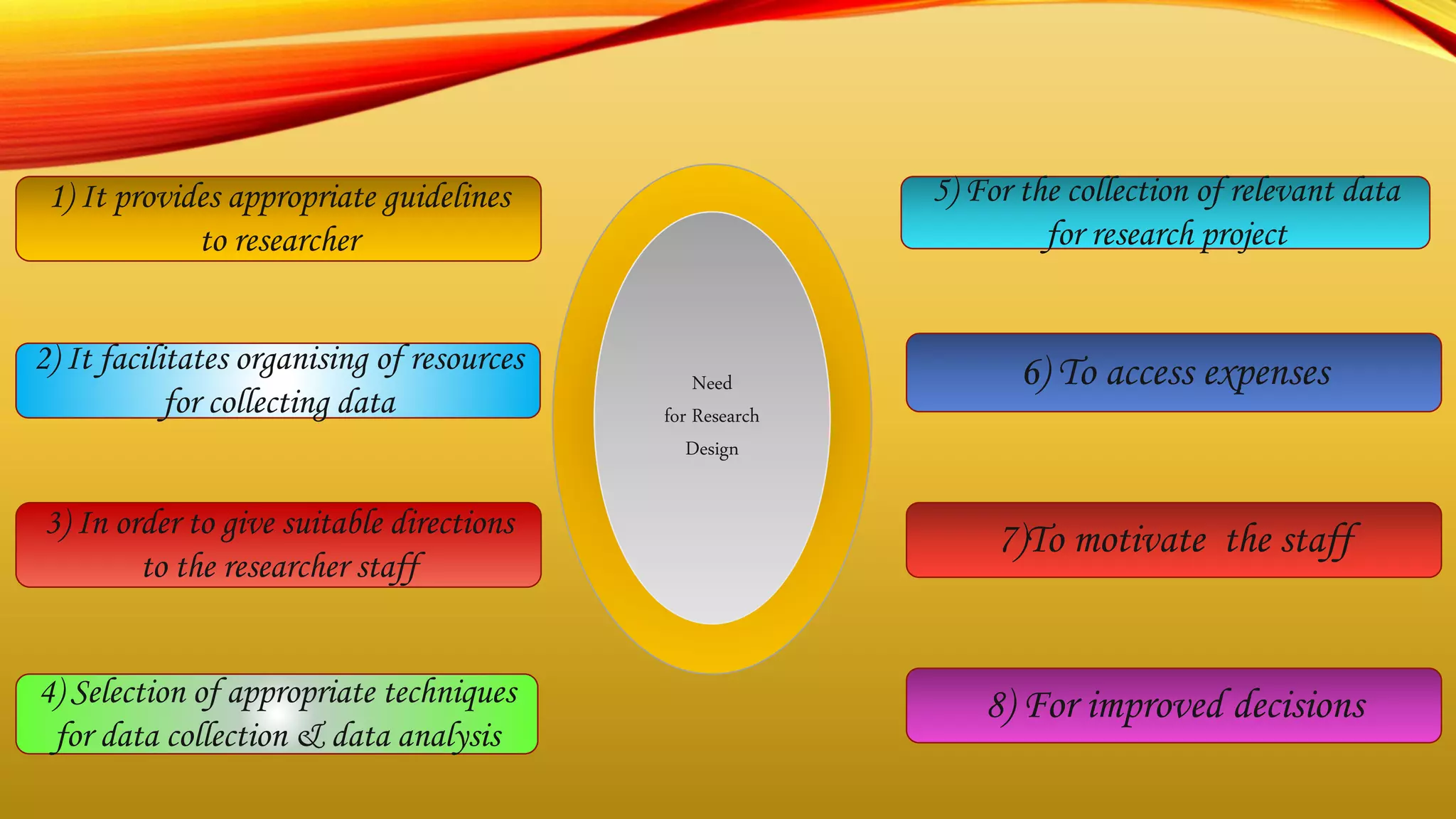
Need
for Research
Design
5) For the collection of relevant data
for research project
6) To access expenses
7)To motivate the staff
8) For improved decisions
1) It provides appropriate guidelines
to researcher
2) It facilitates organising of resources
for collecting data
3) In order to give suitable directions
to the researcher staff
4) Selection of appropriate techniques
for data collection & data analysis
Importance of Research Design
 Blueprint
 Right track
 Avoid errors
 Proper Planning
 Higher efficiency
 Right use of resources
 Defines relationship
 Successful journey
 Time schedule Removes uncertainty
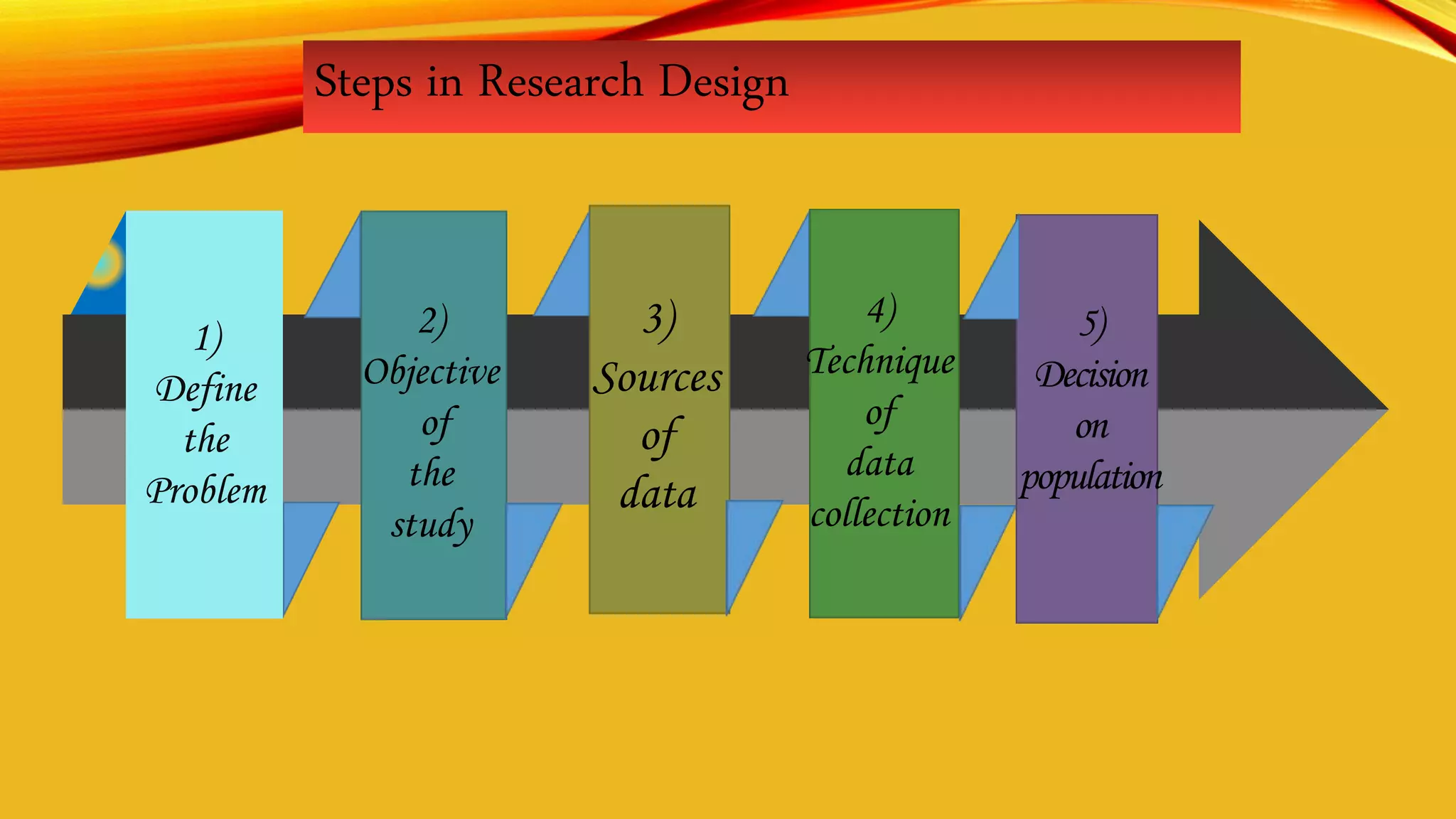
1)
Define
the
Problem
2)
Objective
of
the
study
3)
Sources
of
data
4)
Technique
of
data
collection
5)
Decision
on
population
Steps in Research Design
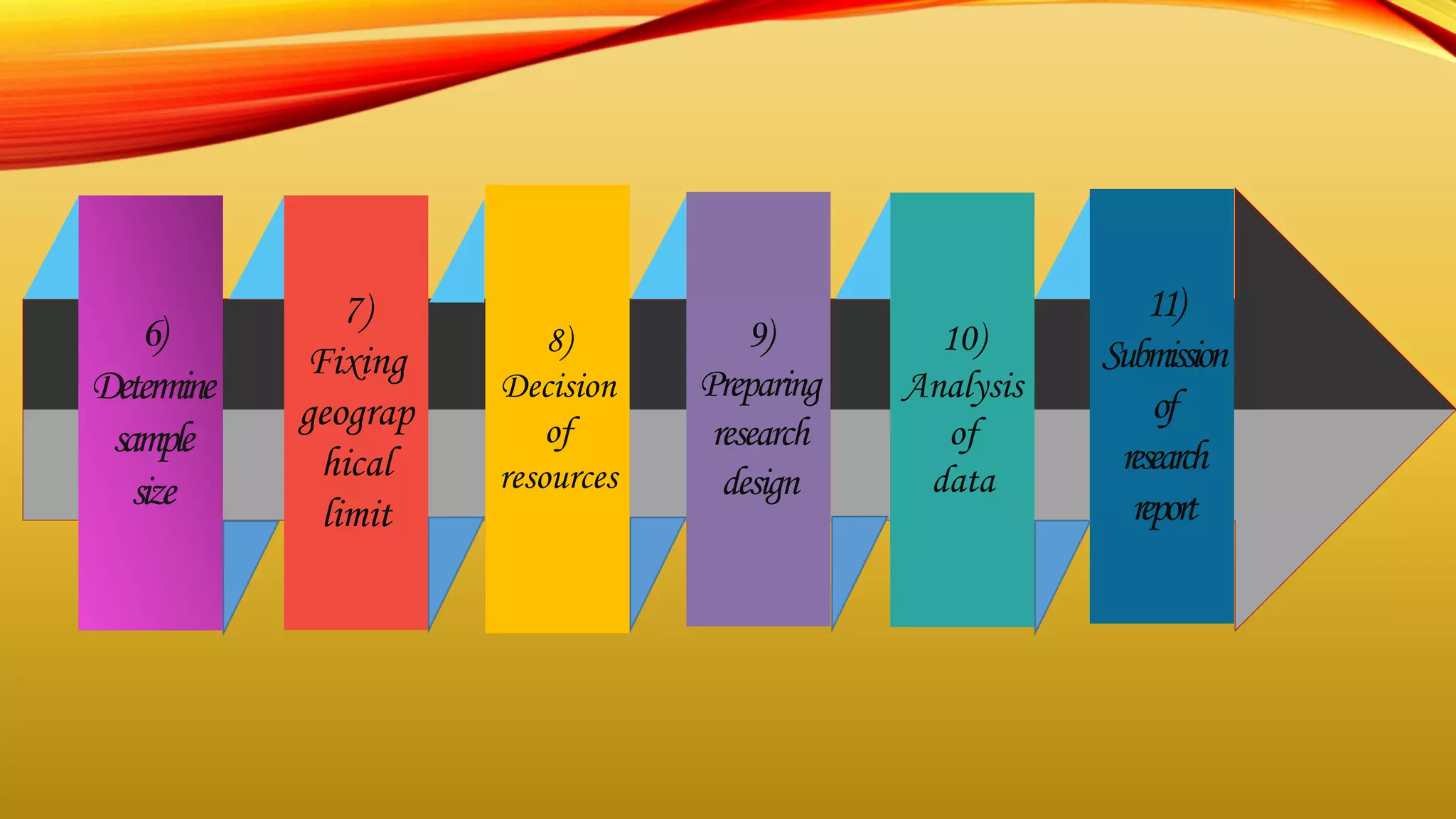
6)
Determine
sample
size
7)
Fixing
geograp
hical
limit
8)
Decision
of
resources
9)
Preparing
research
design
10)
Analysis
of
data
11)
Submission
of
research
report
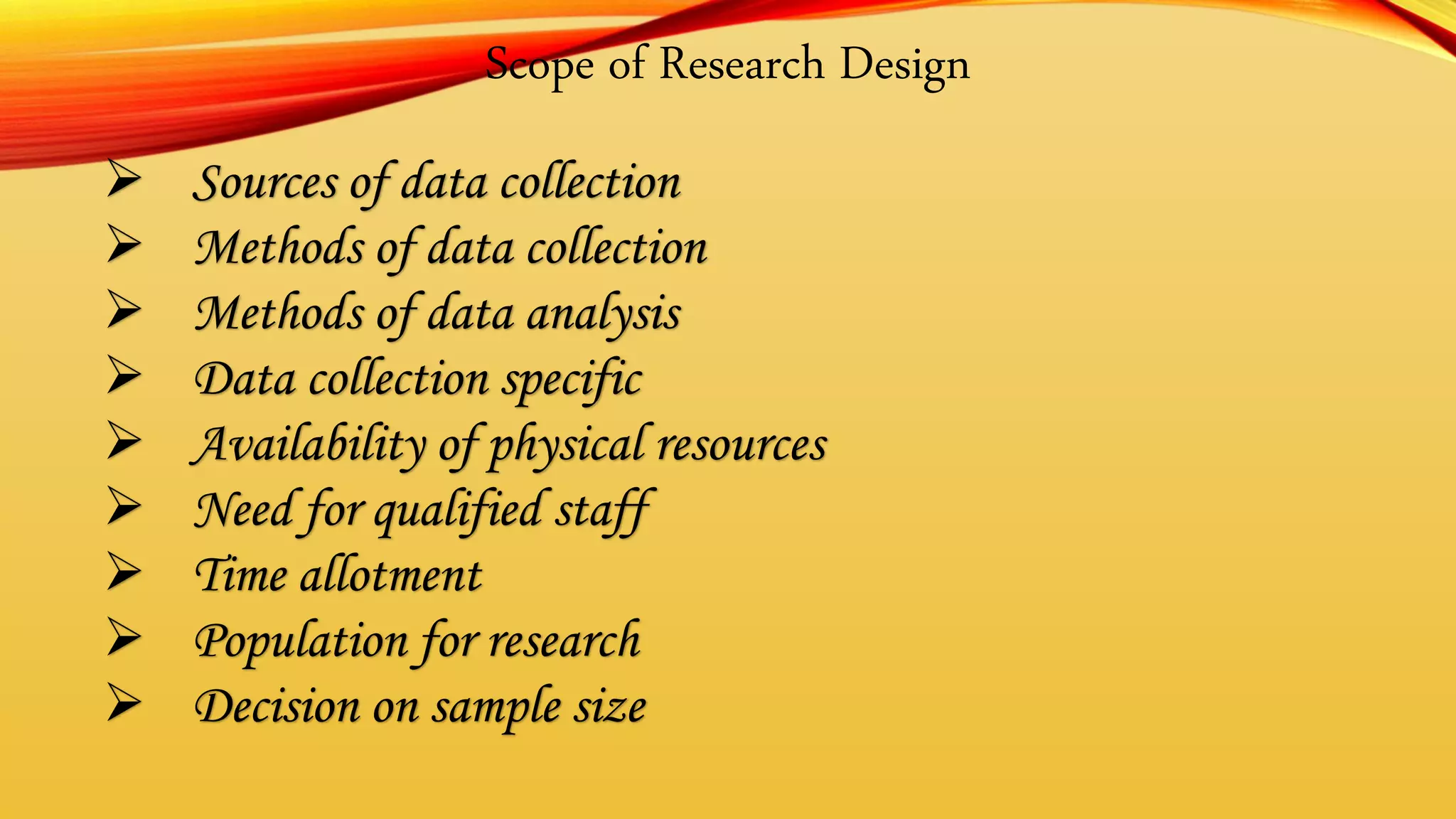
Scope of Research Design
 Sources of data collection
 Methods of data collection
 Methods of data analysis
 Data collection specific
 Availability of physical resources
 Need for qualified staff
 Time allotment
 Population for research
 Decision on sample size
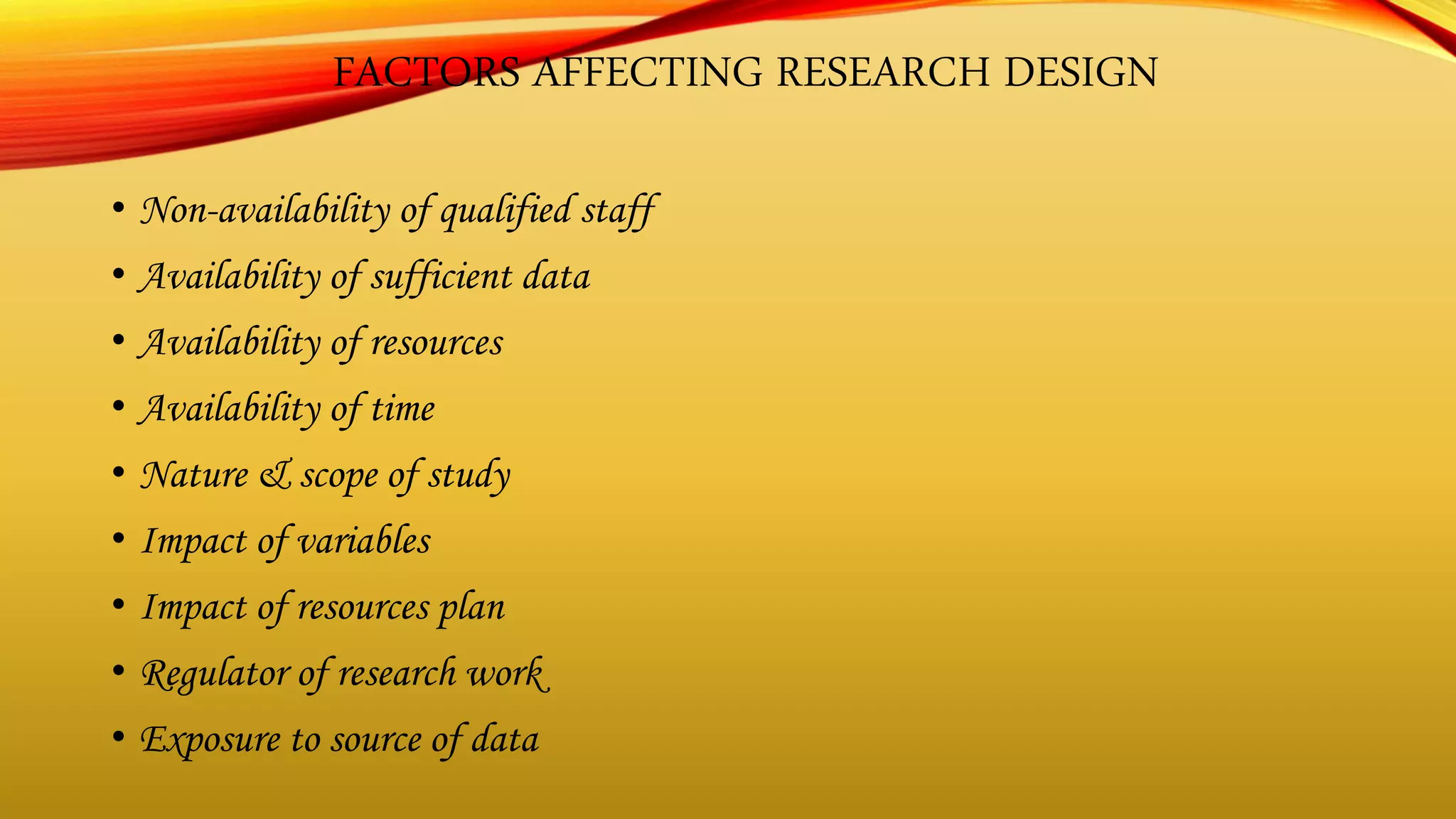
FACTORS AFFECTING RESEARCH DESIGN
• Non-availability of qualified staff
• Availability of sufficient data
• Availability of resources
• Availability of time
• Nature & scope of study
• Impact of variables
• Impact of resources plan
• Regulator of research work
• Exposure to source of data
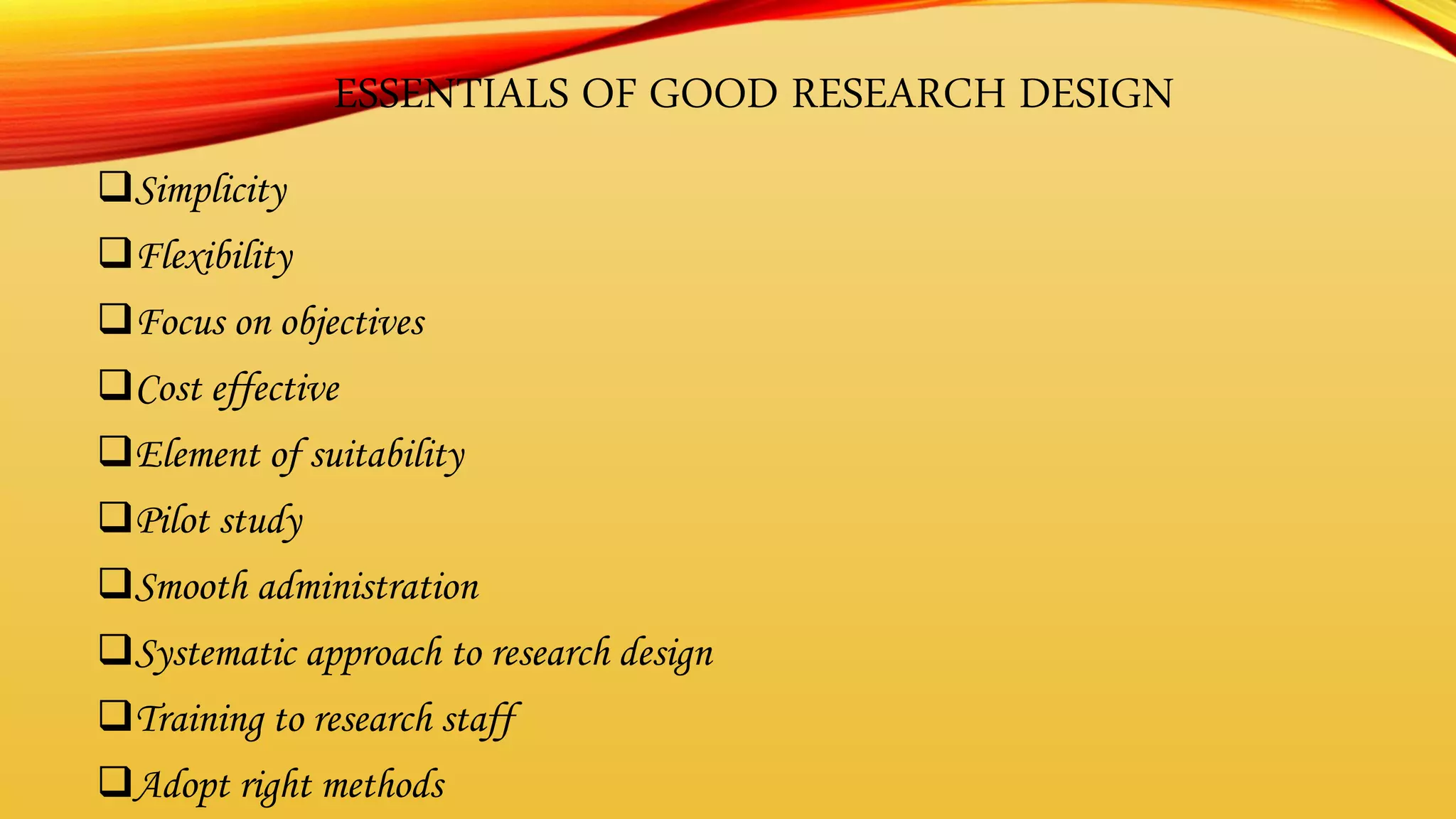
ESSENTIALS OF GOOD RESEARCH DESIGN
Simplicity
Flexibility
Focus on objectives
Cost effective
Element of suitability
Pilot study
Smooth administration
Systematic approach to research design
Training to research staff
Adopt right methods
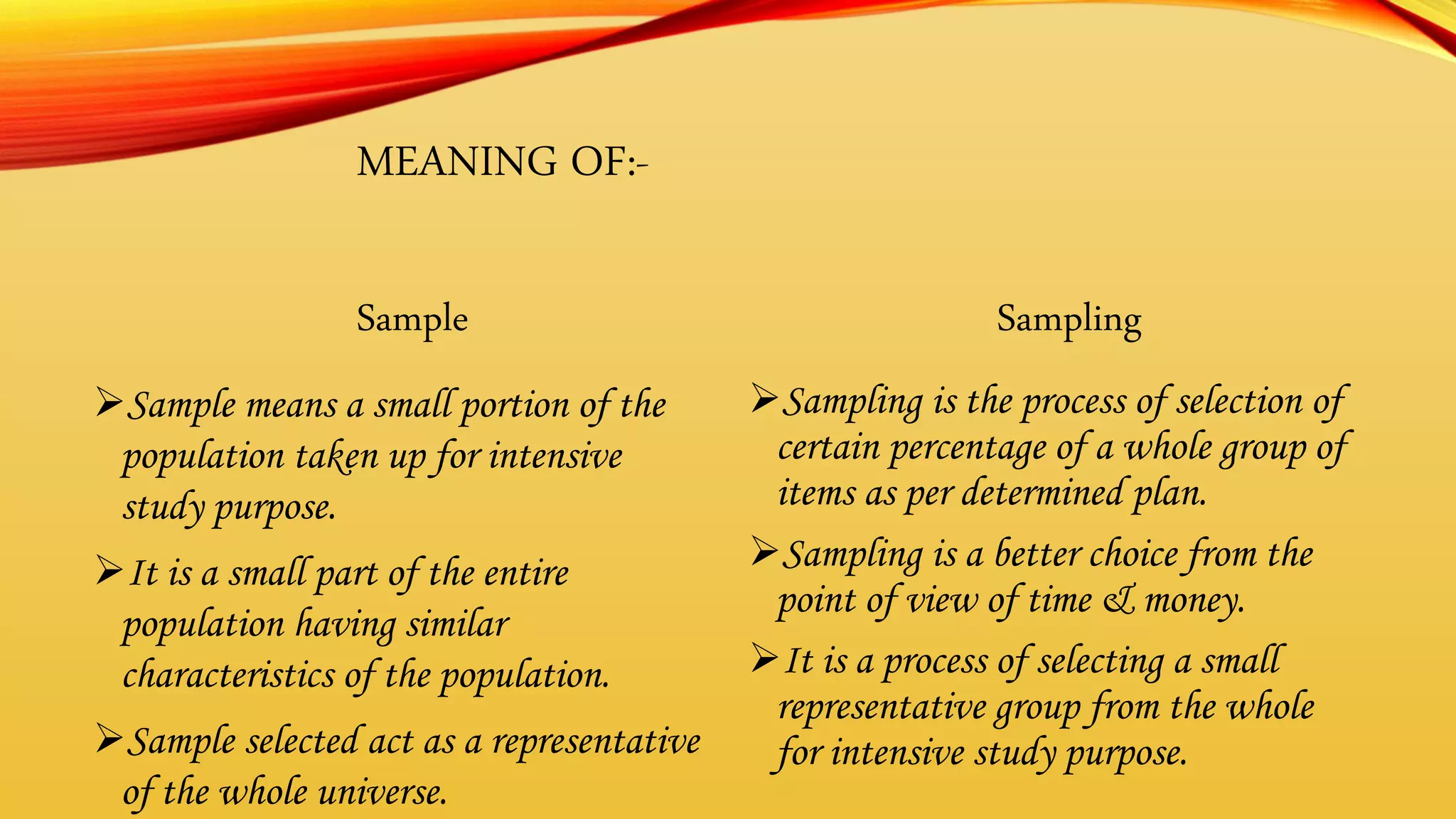
MEANING OF:-
Sample
Sample means a small portion of the
population taken up for intensive
study purpose.
It is a small part of the entire
population having similar
characteristics of the population.
Sample selected act as a representative
of the whole universe.
Sampling
Sampling is the process of selection of
certain percentage of a whole group of
items as per determined plan.
Sampling is a better choice from the
point of view of time & money.
It is a process of selecting a small
representative group from the whole
for intensive study purpose.
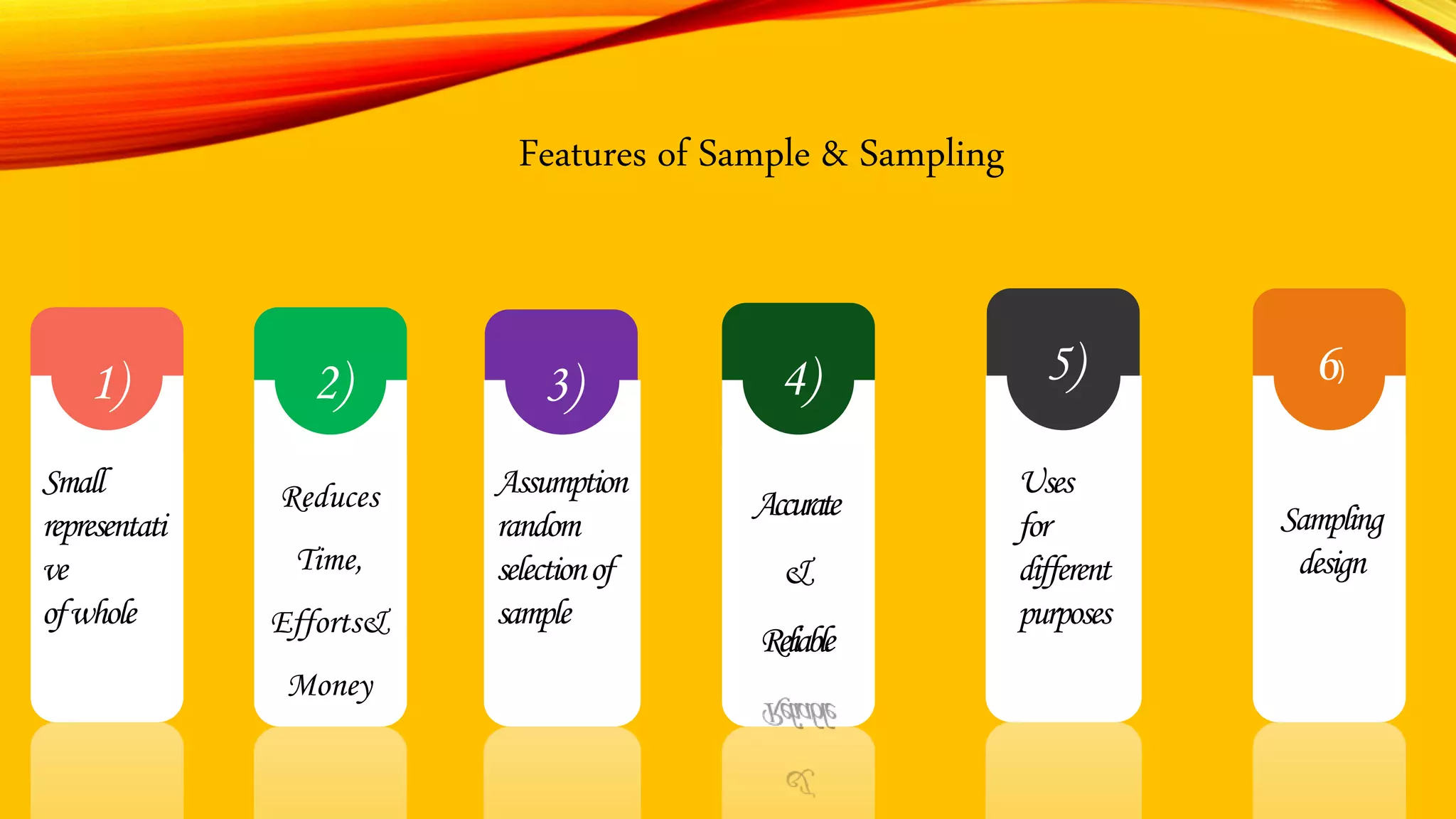
6)
5)
4)
3)
1) 2)
Sampling
Small
representati
ve
ofwhole
Reduces
Time,
Efforts&
Money
Assumption
random
selectionof
sample
Accurate
&
Reliable
Uses
for
different
purposes
Sampling
design
Features of Sample & Sampling
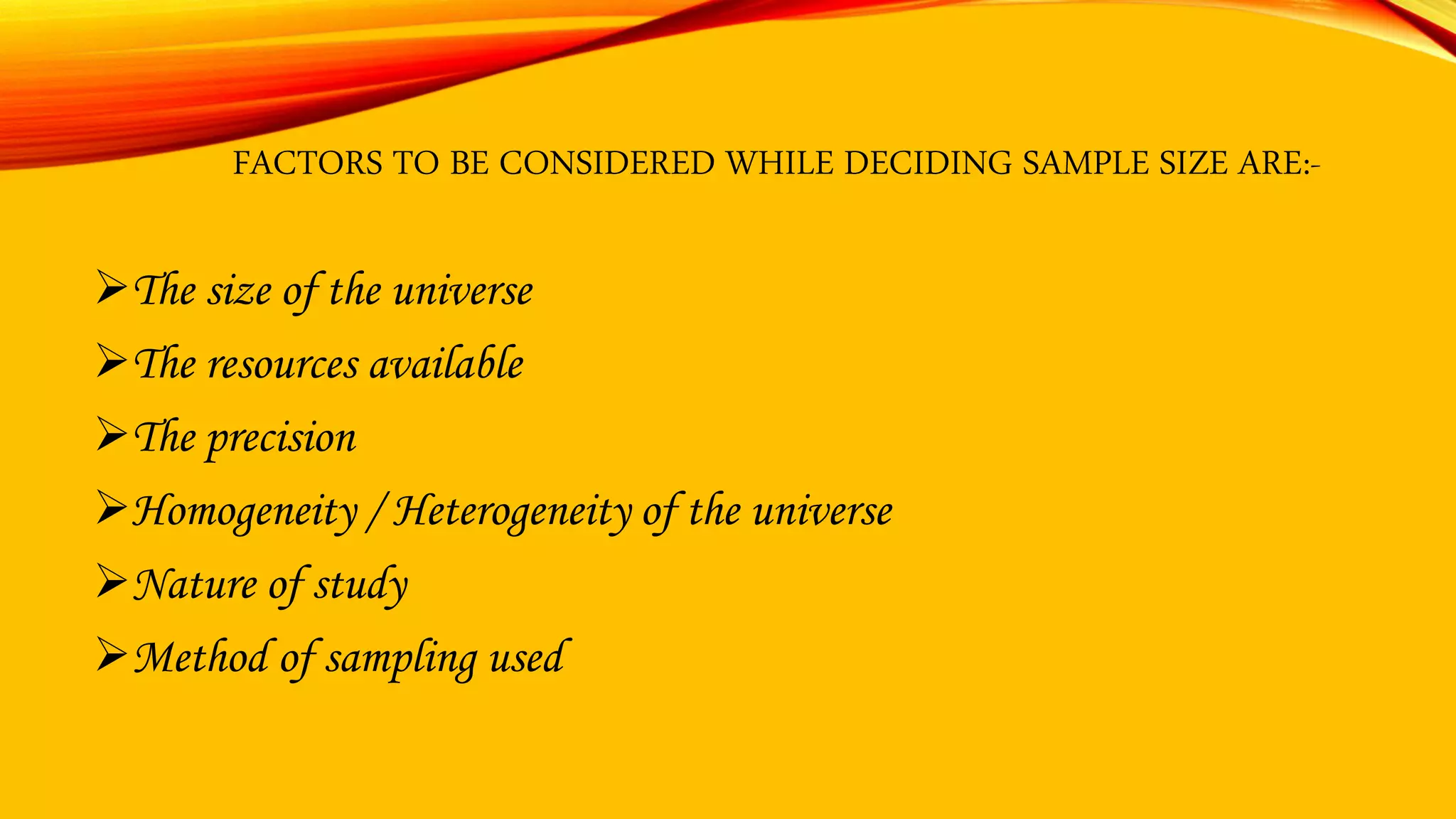
FACTORS TO BE CONSIDERED WHILE DECIDING SAMPLE SIZE ARE:-
The size of the universe
The resources available
The precision
Homogeneity / Heterogeneity of the universe
Nature of study
Method of sampling used
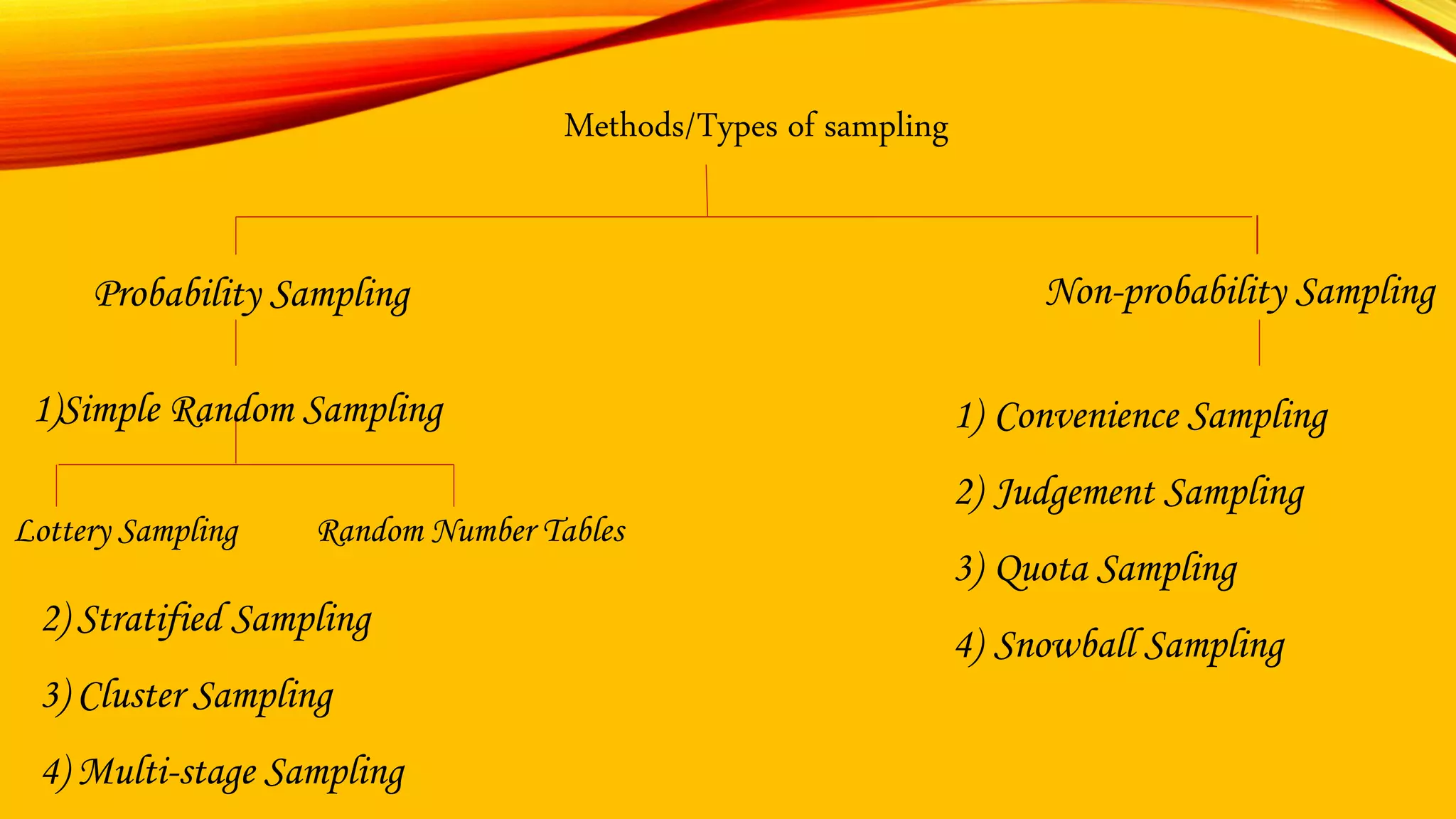
Methods/Types of sampling
Probability Sampling Non-probability Sampling
1)Simple Random Sampling 1) Convenience Sampling
2) Judgement Sampling
3) Quota Sampling
4) Snowball Sampling
Lottery Sampling Random Number Tables
2) Stratified Sampling
3) Cluster Sampling
4) Multi-stage Sampling

Research design and sampling.pptx

  • 1.
    MEANING OF RESEARCHDESIGN • Research design is a logical & systematic outline of research project prepares for directing, guiding and controlling a research work. • It acts as an broad outline of the research work. • It is like road map which enables the researcher to conduct various research activities for orderly completion of research project. • In short it is a systematic planning, organising and executing a research project within specified time limit and resource allocation.
  • 2.
    FEATURES OF RESEARCHDESIGN Similar to Blue Print Orderly Execution Reference Document Plan, structure & strategy Act as outline of research work Offers guidance at all levels
  • 3.
    Need for Research Design 5) Forthe collection of relevant data for research project 6) To access expenses 7)To motivate the staff 8) For improved decisions 1) It provides appropriate guidelines to researcher 2) It facilitates organising of resources for collecting data 3) In order to give suitable directions to the researcher staff 4) Selection of appropriate techniques for data collection & data analysis
  • 4.
    Importance of ResearchDesign  Blueprint  Right track  Avoid errors  Proper Planning  Higher efficiency  Right use of resources  Defines relationship  Successful journey  Time schedule Removes uncertainty
  • 5.
  • 6.
  • 7.
    Scope of ResearchDesign  Sources of data collection  Methods of data collection  Methods of data analysis  Data collection specific  Availability of physical resources  Need for qualified staff  Time allotment  Population for research  Decision on sample size
  • 8.
    FACTORS AFFECTING RESEARCHDESIGN • Non-availability of qualified staff • Availability of sufficient data • Availability of resources • Availability of time • Nature & scope of study • Impact of variables • Impact of resources plan • Regulator of research work • Exposure to source of data
  • 9.
    ESSENTIALS OF GOODRESEARCH DESIGN Simplicity Flexibility Focus on objectives Cost effective Element of suitability Pilot study Smooth administration Systematic approach to research design Training to research staff Adopt right methods
  • 10.
    MEANING OF:- Sample Sample meansa small portion of the population taken up for intensive study purpose. It is a small part of the entire population having similar characteristics of the population. Sample selected act as a representative of the whole universe. Sampling Sampling is the process of selection of certain percentage of a whole group of items as per determined plan. Sampling is a better choice from the point of view of time & money. It is a process of selecting a small representative group from the whole for intensive study purpose.
  • 11.
  • 12.
    FACTORS TO BECONSIDERED WHILE DECIDING SAMPLE SIZE ARE:- The size of the universe The resources available The precision Homogeneity / Heterogeneity of the universe Nature of study Method of sampling used
  • 13.
    Methods/Types of sampling ProbabilitySampling Non-probability Sampling 1)Simple Random Sampling 1) Convenience Sampling 2) Judgement Sampling 3) Quota Sampling 4) Snowball Sampling Lottery Sampling Random Number Tables 2) Stratified Sampling 3) Cluster Sampling 4) Multi-stage Sampling