Research Ethics
A guide to principles and
procedures
Dr Saira Abbas
Why is Research Ethics Important?
 It is a reflection of respect for those who ‘take
part’ in research
 It ensures no unreasonable, unsafe or
thoughtless demands are made by
researchers
 It ensures sufficient knowledge is shared by
all concerned
 It imposes a common standard in all the
above respects
Why is Research Ethics Important
 It has become the norm as an expectation for
research activity
 …. a professional requirement for
practitioners in some disciplines e.g.
psychology
 … a requirement for access to participants in
others e.g. health
 … and a requirement to comply with external
REF’s to obtain funding e.g. ESRC
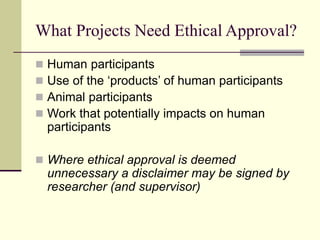
What Projects Need Ethical Approval?
 Human participants
 Use of the ‘products’ of human participants
 Animal participants
 Work that potentially impacts on human
participants
 Where ethical approval is deemed
unnecessary a disclaimer may be signed by
researcher (and supervisor)
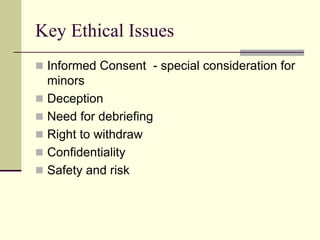
Key Ethical Issues
 Informed Consent - special consideration for
minors
 Deception
 Need for debriefing
 Right to withdraw
 Confidentiality
 Safety and risk
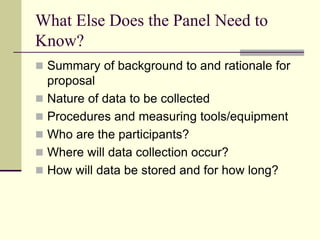
What Else Does the Panel Need to
Know?
 Summary of background to and rationale for
proposal
 Nature of data to be collected
 Procedures and measuring tools/equipment
 Who are the participants?
 Where will data collection occur?
 How will data be stored and for how long?
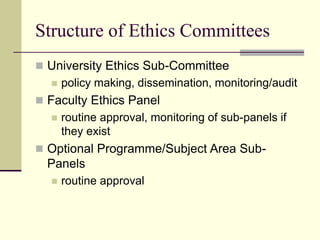
Structure of Ethics Committees
 University Ethics Sub-Committee
 policy making, dissemination, monitoring/audit
 Faculty Ethics Panel
 routine approval, monitoring of sub-panels if
they exist
 Optional Programme/Subject Area Sub-
Panels
 routine approval
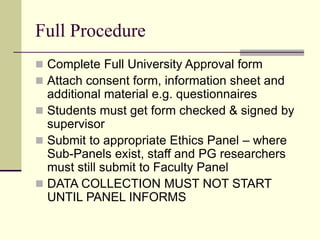
Full Procedure
 Complete Full University Approval form
 Attach consent form, information sheet and
additional material e.g. questionnaires
 Students must get form checked & signed by
supervisor
 Submit to appropriate Ethics Panel – where
Sub-Panels exist, staff and PG researchers
must still submit to Faculty Panel
 DATA COLLECTION MUST NOT START
UNTIL PANEL INFORMS
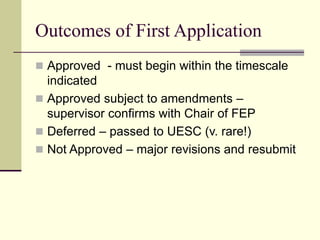
Outcomes of First Application
 Approved - must begin within the timescale
indicated
 Approved subject to amendments –
supervisor confirms with Chair of FEP
 Deferred – passed to UESC (v. rare!)
 Not Approved – major revisions and resubmit
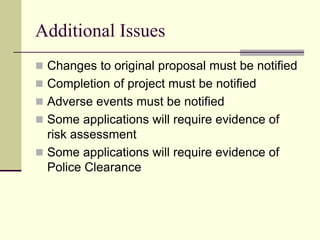
Additional Issues
 Changes to original proposal must be notified
 Completion of project must be notified
 Adverse events must be notified
 Some applications will require evidence of
risk assessment
 Some applications will require evidence of
Police Clearance
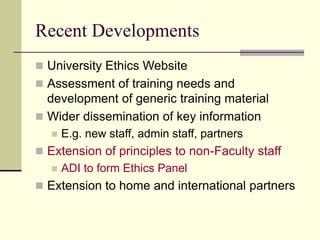
Recent Developments
 University Ethics Website
 Assessment of training needs and
development of generic training material
 Wider dissemination of key information
 E.g. new staff, admin staff, partners
 Extension of principles to non-Faculty staff
 ADI to form Ethics Panel
 Extension to home and international partners
Recent Developments
 Extension of remit to enterprise and
knowledge transfer activities
 Auditing of Faculty activities
 Publication of new Code of Conduct for
Research
 Appointment of lay members
 Development of Fast-Track Approval
Procedures
Fast Track Approval Procedures
 Accepts principle that much routine research
conforms to accepted ethical principles
 Form requires checking off a series of
questions; if OK add 150 word summary
 Student form to be signed by supervisor +
one other
 All ft forms sent to Chair of FEP for
information
 Option in student forms for signing in 2 stages

Research Bioethics - Principles and Procedure.ppt

  • 1.
    Research Ethics A guideto principles and procedures Dr Saira Abbas
  • 2.
    Why is ResearchEthics Important?  It is a reflection of respect for those who ‘take part’ in research  It ensures no unreasonable, unsafe or thoughtless demands are made by researchers  It ensures sufficient knowledge is shared by all concerned  It imposes a common standard in all the above respects
  • 3.
    Why is ResearchEthics Important  It has become the norm as an expectation for research activity  …. a professional requirement for practitioners in some disciplines e.g. psychology  … a requirement for access to participants in others e.g. health  … and a requirement to comply with external REF’s to obtain funding e.g. ESRC
  • 4.
    What Projects NeedEthical Approval?  Human participants  Use of the ‘products’ of human participants  Animal participants  Work that potentially impacts on human participants  Where ethical approval is deemed unnecessary a disclaimer may be signed by researcher (and supervisor)
  • 5.
    Key Ethical Issues Informed Consent - special consideration for minors  Deception  Need for debriefing  Right to withdraw  Confidentiality  Safety and risk
  • 6.
    What Else Doesthe Panel Need to Know?  Summary of background to and rationale for proposal  Nature of data to be collected  Procedures and measuring tools/equipment  Who are the participants?  Where will data collection occur?  How will data be stored and for how long?
  • 7.
    Structure of EthicsCommittees  University Ethics Sub-Committee  policy making, dissemination, monitoring/audit  Faculty Ethics Panel  routine approval, monitoring of sub-panels if they exist  Optional Programme/Subject Area Sub- Panels  routine approval
  • 8.
    Full Procedure  CompleteFull University Approval form  Attach consent form, information sheet and additional material e.g. questionnaires  Students must get form checked & signed by supervisor  Submit to appropriate Ethics Panel – where Sub-Panels exist, staff and PG researchers must still submit to Faculty Panel  DATA COLLECTION MUST NOT START UNTIL PANEL INFORMS
  • 9.
    Outcomes of FirstApplication  Approved - must begin within the timescale indicated  Approved subject to amendments – supervisor confirms with Chair of FEP  Deferred – passed to UESC (v. rare!)  Not Approved – major revisions and resubmit
  • 10.
    Additional Issues  Changesto original proposal must be notified  Completion of project must be notified  Adverse events must be notified  Some applications will require evidence of risk assessment  Some applications will require evidence of Police Clearance
  • 11.
    Recent Developments  UniversityEthics Website  Assessment of training needs and development of generic training material  Wider dissemination of key information  E.g. new staff, admin staff, partners  Extension of principles to non-Faculty staff  ADI to form Ethics Panel  Extension to home and international partners
  • 12.
    Recent Developments  Extensionof remit to enterprise and knowledge transfer activities  Auditing of Faculty activities  Publication of new Code of Conduct for Research  Appointment of lay members  Development of Fast-Track Approval Procedures
  • 13.
    Fast Track ApprovalProcedures  Accepts principle that much routine research conforms to accepted ethical principles  Form requires checking off a series of questions; if OK add 150 word summary  Student form to be signed by supervisor + one other  All ft forms sent to Chair of FEP for information  Option in student forms for signing in 2 stages