Trust through Reputation Mechanisms Boi Faltings IIF - EPFL
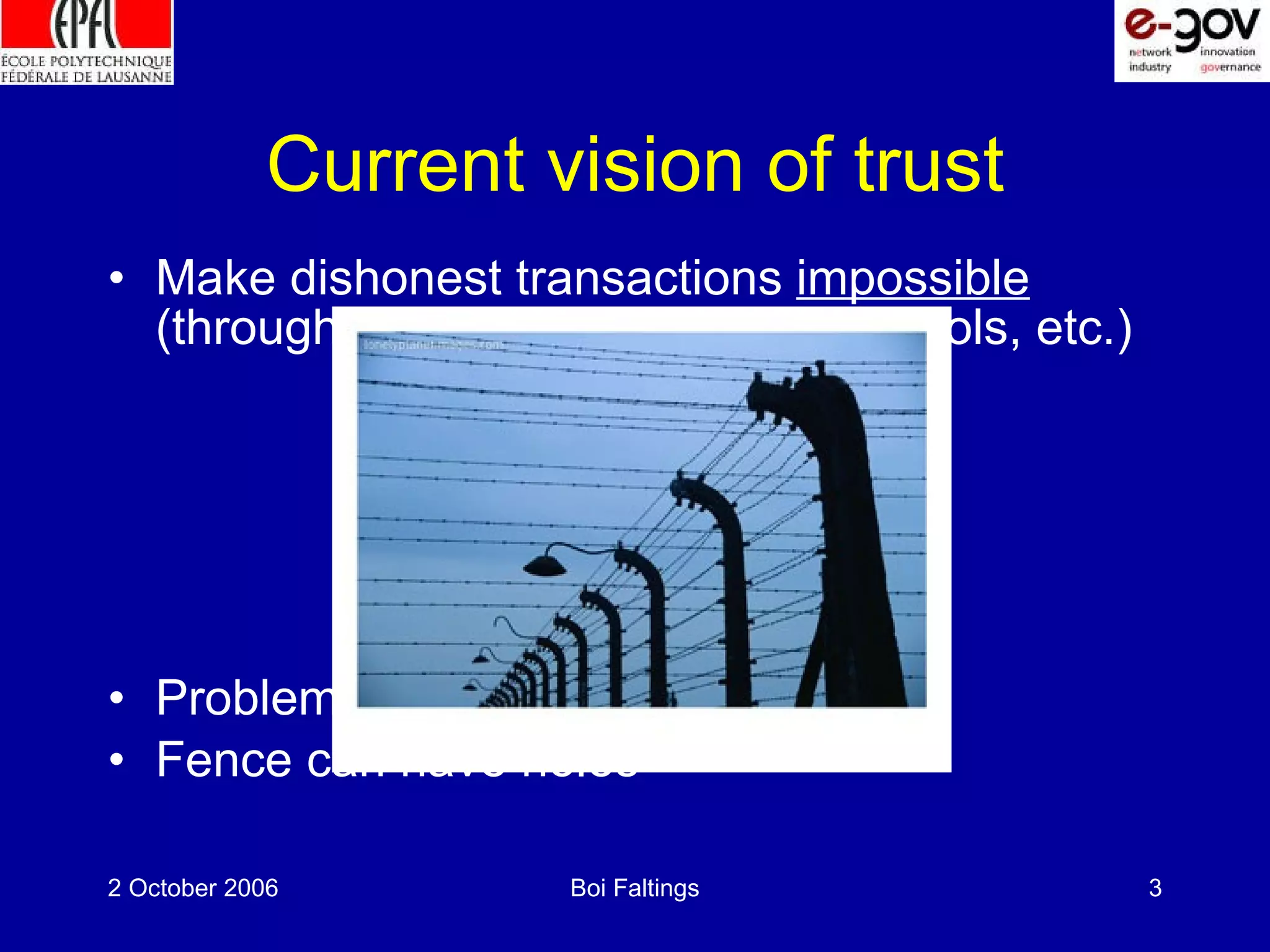
Trust in the Internet No physical contact  Adverse selection: inappropriate partners Moral hazard:  lack of incentive to deliver quality Trust is essential!
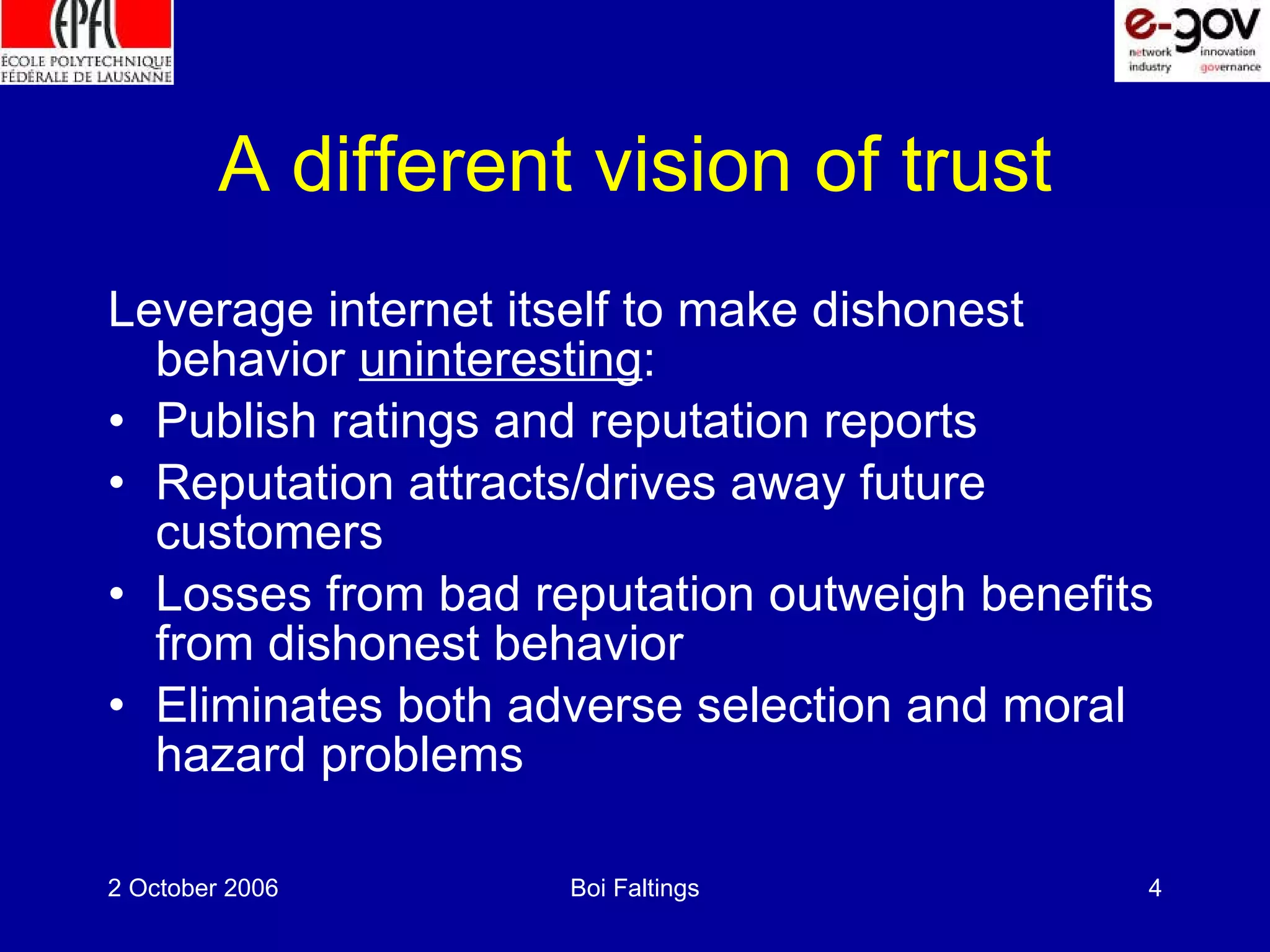
Current vision of trust Make dishonest transactions  impossible  (through cryptography, access controls, etc.) Problem: heavy and impractical Fence can have holes
A different vision of trust Leverage internet itself to make dishonest behavior  uninteresting : Publish ratings and reputation reports Reputation attracts/drives away future customers Losses from bad reputation outweigh benefits from dishonest behavior Eliminates both adverse selection and moral hazard problems
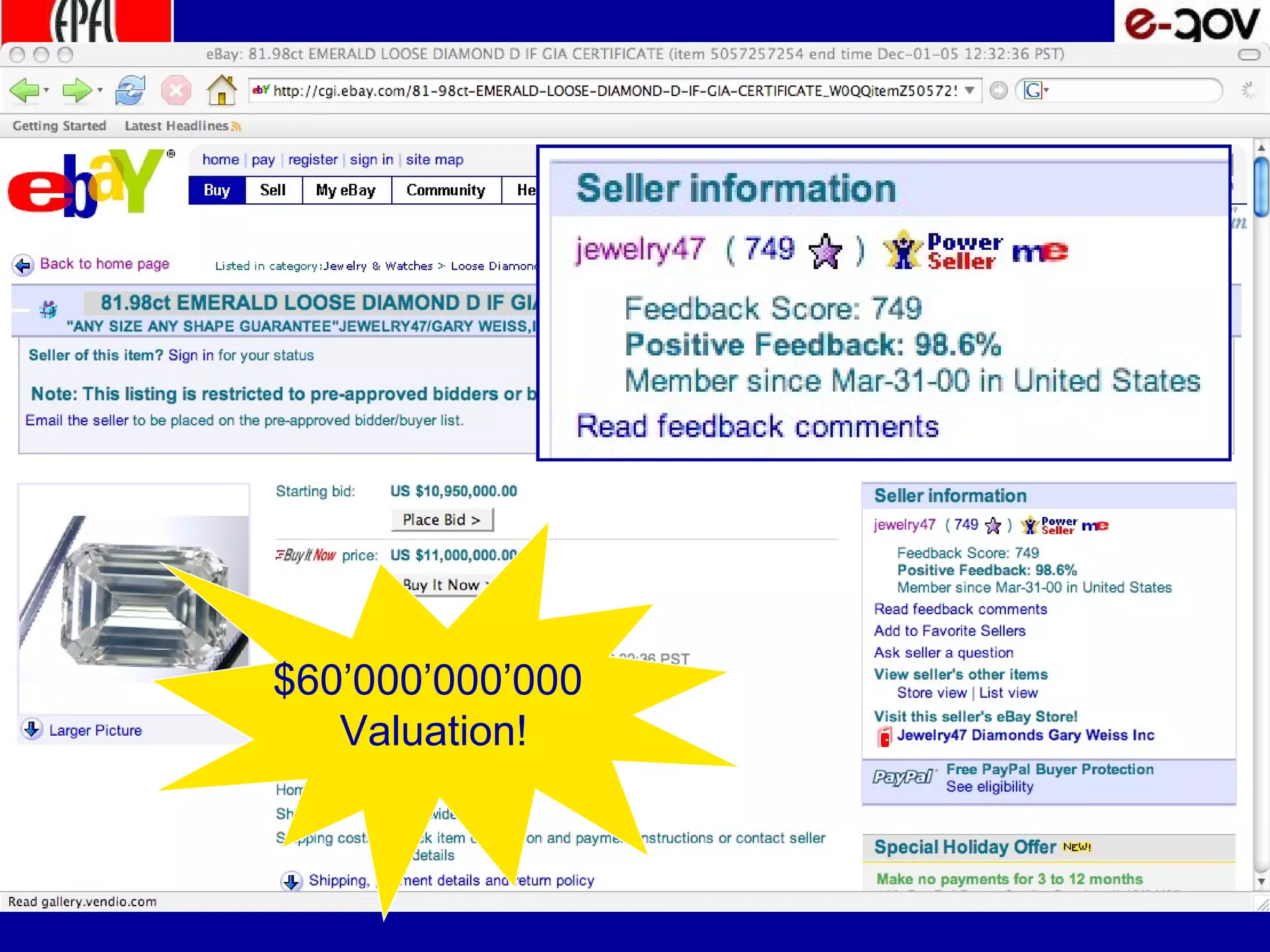
$60’000’000’000  Valuation!
First-generation reputation systems Existing reputation systems (eBay, Amazon, epinions, tripadvisor): No systematic reports No incentives to report honestly => reputation is very inaccurate!
Second-generation reputation systems Control who can leave reports Pay for reports to obtain unbiased statistics Make truthful reporting the most profitable strategy (using game theory) => a reliable basis for trust
Applications… E-commerce: rating products and services Monitoring service-level agreements, e.g. for internet service providers Inspection: by automated systems controlled by multiple entities

Reputation Faltings Roundtable 06

  • 1.
    Trust through ReputationMechanisms Boi Faltings IIF - EPFL
  • 2.
    Trust in theInternet No physical contact Adverse selection: inappropriate partners Moral hazard: lack of incentive to deliver quality Trust is essential!
  • 3.
    Current vision oftrust Make dishonest transactions impossible (through cryptography, access controls, etc.) Problem: heavy and impractical Fence can have holes
  • 4.
    A different visionof trust Leverage internet itself to make dishonest behavior uninteresting : Publish ratings and reputation reports Reputation attracts/drives away future customers Losses from bad reputation outweigh benefits from dishonest behavior Eliminates both adverse selection and moral hazard problems
  • 5.
  • 6.
    First-generation reputation systemsExisting reputation systems (eBay, Amazon, epinions, tripadvisor): No systematic reports No incentives to report honestly => reputation is very inaccurate!
  • 7.
    Second-generation reputation systemsControl who can leave reports Pay for reports to obtain unbiased statistics Make truthful reporting the most profitable strategy (using game theory) => a reliable basis for trust
  • 8.
    Applications… E-commerce: ratingproducts and services Monitoring service-level agreements, e.g. for internet service providers Inspection: by automated systems controlled by multiple entities