z
HORMONES IN HUMAN
REPRODUCTION
SCIENCE 10
Quarter 3 Module 1
MELCS: Explain the role of hormones involved in the female
and male reproductive systems ( S10LT-IIIb-34)
z
OBJECTIVES:
 Describe the anatomy of the male and female
reproductive systems
 Explain the roles of hormones involved in the
male and female reproductive systems
z
z
HUMAN SEXUAL REPRODUCTION
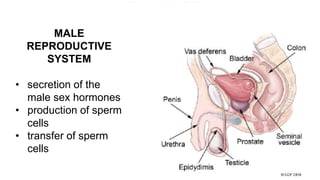
MALE
REPRODUCTIVE
SYSTEM
• secretion of the
male sex hormones
• production of sperm
cells
• transfer of sperm
cells
z
PARTS
AND
FUNCTION
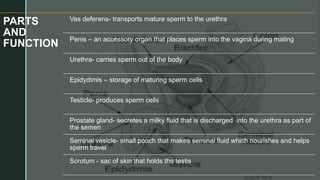
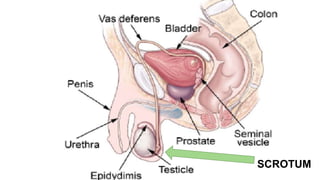
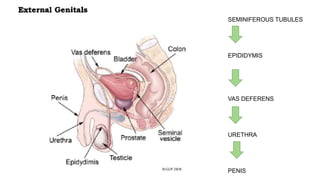
Vas deferens- transports mature sperm to the urethra
Penis – an accessory organ that places sperm into the vagina during mating
Urethra- carries sperm out of the body
Epidydimis – storage of maturing sperm cells
Testicle- produces sperm cells
Prostate gland- secretes a milky fluid that is discharged into the urethra as part of
the semen
Seminal vesicle- small pouch that makes seminal fluid which nourishes and helps
sperm travel
Scrotum - sac of skin that holds the testis
SCROTUM
z
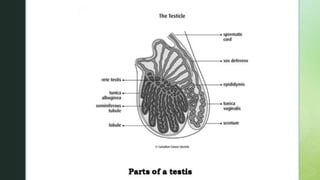
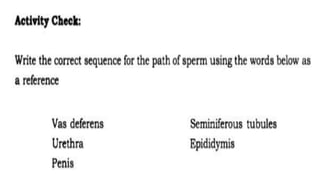
SEMINIFEROUS TUBULES
EPIDIDYMIS
VAS DEFERENS
URETHRA
PENIS
z
z
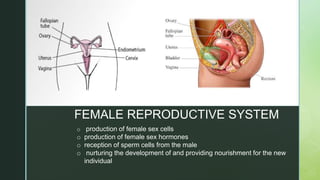
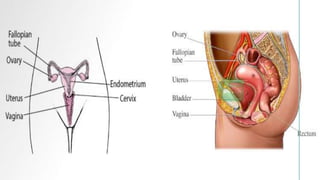
FEMALE REPRODUCTIVE SYSTEM
o production of female sex cells
o production of female sex hormones
o reception of sperm cells from the male
o nurturing the development of and providing nourishment for the new
individual
z
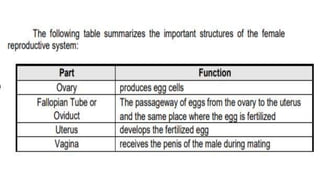
1. production of female sex cells
2. production of female sex hormones
3. reception of sperm cells from the male
4. nurturing the development of and providing
nourishment for the new individual
The female reproductive system performs the
following functions:
z
z
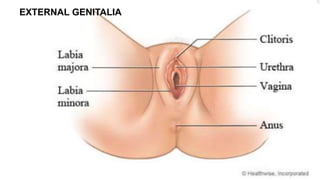
EXTERNAL GENITALIA
z
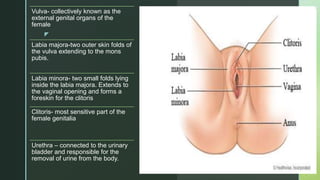
Vulva- collectively known as the
external genital organs of the
female
Labia majora-two outer skin folds of
the vulva extending to the mons
pubis.
Labia minora- two small folds lying
inside the labia majora. Extends to
the vaginal opening and forms a
foreskin for the clitoris
Clitoris- most sensitive part of the
female genitalia
Urethra – connected to the urinary
bladder and responsible for the
removal of urine from the body.
z
ENDOCRINE SYSTEM
 Composed of glands that secrete
different types of hormones that affect
almost every cell organ and function of
our body. It is essential in regulating
growth and development, metabolism
as well as reproductive processes and
mood.
z
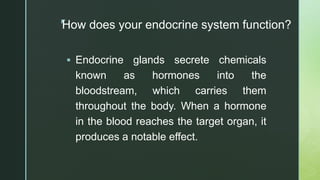
How does your endocrine system function?
 Endocrine glands secrete chemicals
known as hormones into the
bloodstream, which carries them
throughout the body. When a hormone
in the blood reaches the target organ, it
produces a notable effect.
z
z
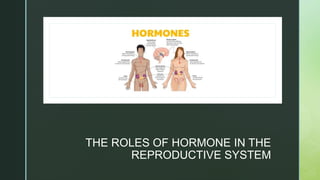
THE ROLES OF HORMONE IN THE
REPRODUCTIVE SYSTEM
z
ENDOCRINE SYSTEM
 One function of this system is to regulate reproduction and other
closely associated phenomena.
 This system also helps you to cope with the changes in the
environment. In addition, the endocrine system is responsible for
many reactions such as influencing how your heart beats, how your
bones and tissues develop, and even your capacity to have a baby.
 It plays an essential role in the occurrence of disorders such as
diabetes, thyroid disease, growth disorders, and/or sexual
dysfunction.
z
 Your endocrine glands also secrete chemicals, called
hormones, into the bloodstream which carries them
throughout the body.
When a hormone in the blood reaches the target organ, it
produces a significant effect. Moreover, the endocrine system
sends signals all over the body, much like the nervous
system. However, unlike the instant responses activated by
the nervous system, the effects can take a few hours or even
weeks
z
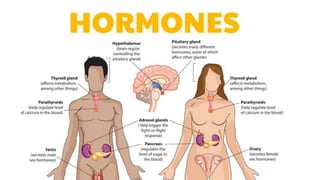
HORMONES
 Help regulate body processes such as growth,
development, metabolism, and response to stimuli.
 They are like chemical messengers that transport a
signal from one cell to another.
 Both men and women produce hormones in the
same areas with one exception, the reproductive
glands. Extra male hormones are produced in the
testes while female hormones are produced in the
ovaries
z
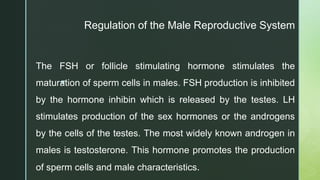
The FSH or follicle stimulating hormone stimulates the
maturation of sperm cells in males. FSH production is inhibited
by the hormone inhibin which is released by the testes. LH
stimulates production of the sex hormones or the androgens
by the cells of the testes. The most widely known androgen in
males is testosterone. This hormone promotes the production
of sperm cells and male characteristics.
Regulation of the Male Reproductive System
z
Regulation of the Female Reproductive System
The FSH or follicle stimulating hormone also stimulates the development of egg
cells or ova in females which develop in structures called follicles. Follicle cells produce
the hormone inhibin, which inhibits FSH production. LH or luteinizing hormone plays a role
in the development of ova, ovulation and stimulation of estradiol and progesterone
production by the ovaries.
Moreover, the anterior portion of the pituitary gland produces
the hormone prolactin in females which stimulates the production of milk by the mammary
glands following childbirth. The posterior pituitary releases the hormone oxytocin, which
stimulates uterine contractions during childbirth.
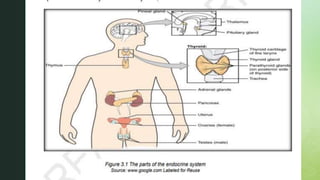
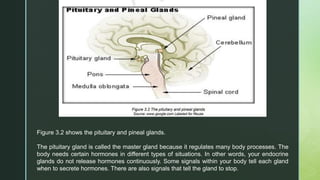
Figure 3.2 shows the pituitary and pineal glands.
The pituitary gland is called the master gland because it regulates many body processes. The
body needs certain hormones in different types of situations. In other words, your endocrine
glands do not release hormones continuously. Some signals within your body tell each gland
when to secrete hormones. There are also signals that tell the gland to stop.
REPRODUCTIVE AND ENDOCRINE SYSTEMS.pptx

REPRODUCTIVE AND ENDOCRINE SYSTEMS.pptx

  • 1.
    z HORMONES IN HUMAN REPRODUCTION SCIENCE10 Quarter 3 Module 1 MELCS: Explain the role of hormones involved in the female and male reproductive systems ( S10LT-IIIb-34)
  • 2.
    z OBJECTIVES:  Describe theanatomy of the male and female reproductive systems  Explain the roles of hormones involved in the male and female reproductive systems
  • 7.
  • 8.
    MALE REPRODUCTIVE SYSTEM • secretion ofthe male sex hormones • production of sperm cells • transfer of sperm cells
  • 9.
    z PARTS AND FUNCTION Vas deferens- transportsmature sperm to the urethra Penis – an accessory organ that places sperm into the vagina during mating Urethra- carries sperm out of the body Epidydimis – storage of maturing sperm cells Testicle- produces sperm cells Prostate gland- secretes a milky fluid that is discharged into the urethra as part of the semen Seminal vesicle- small pouch that makes seminal fluid which nourishes and helps sperm travel Scrotum - sac of skin that holds the testis
  • 10.
  • 13.
  • 14.
  • 19.
    z z FEMALE REPRODUCTIVE SYSTEM oproduction of female sex cells o production of female sex hormones o reception of sperm cells from the male o nurturing the development of and providing nourishment for the new individual
  • 20.
    z 1. production offemale sex cells 2. production of female sex hormones 3. reception of sperm cells from the male 4. nurturing the development of and providing nourishment for the new individual The female reproductive system performs the following functions:
  • 21.
  • 23.
  • 24.
    z Vulva- collectively knownas the external genital organs of the female Labia majora-two outer skin folds of the vulva extending to the mons pubis. Labia minora- two small folds lying inside the labia majora. Extends to the vaginal opening and forms a foreskin for the clitoris Clitoris- most sensitive part of the female genitalia Urethra – connected to the urinary bladder and responsible for the removal of urine from the body.
  • 27.
    z ENDOCRINE SYSTEM  Composedof glands that secrete different types of hormones that affect almost every cell organ and function of our body. It is essential in regulating growth and development, metabolism as well as reproductive processes and mood.
  • 28.
    z How does yourendocrine system function?  Endocrine glands secrete chemicals known as hormones into the bloodstream, which carries them throughout the body. When a hormone in the blood reaches the target organ, it produces a notable effect.
  • 30.
    z z THE ROLES OFHORMONE IN THE REPRODUCTIVE SYSTEM
  • 31.
    z ENDOCRINE SYSTEM  Onefunction of this system is to regulate reproduction and other closely associated phenomena.  This system also helps you to cope with the changes in the environment. In addition, the endocrine system is responsible for many reactions such as influencing how your heart beats, how your bones and tissues develop, and even your capacity to have a baby.  It plays an essential role in the occurrence of disorders such as diabetes, thyroid disease, growth disorders, and/or sexual dysfunction.
  • 32.
    z  Your endocrineglands also secrete chemicals, called hormones, into the bloodstream which carries them throughout the body. When a hormone in the blood reaches the target organ, it produces a significant effect. Moreover, the endocrine system sends signals all over the body, much like the nervous system. However, unlike the instant responses activated by the nervous system, the effects can take a few hours or even weeks
  • 34.
    z HORMONES  Help regulatebody processes such as growth, development, metabolism, and response to stimuli.  They are like chemical messengers that transport a signal from one cell to another.  Both men and women produce hormones in the same areas with one exception, the reproductive glands. Extra male hormones are produced in the testes while female hormones are produced in the ovaries
  • 35.
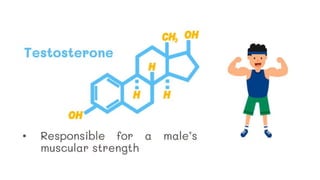
    z The FSH orfollicle stimulating hormone stimulates the maturation of sperm cells in males. FSH production is inhibited by the hormone inhibin which is released by the testes. LH stimulates production of the sex hormones or the androgens by the cells of the testes. The most widely known androgen in males is testosterone. This hormone promotes the production of sperm cells and male characteristics. Regulation of the Male Reproductive System
  • 36.
    z Regulation of theFemale Reproductive System The FSH or follicle stimulating hormone also stimulates the development of egg cells or ova in females which develop in structures called follicles. Follicle cells produce the hormone inhibin, which inhibits FSH production. LH or luteinizing hormone plays a role in the development of ova, ovulation and stimulation of estradiol and progesterone production by the ovaries. Moreover, the anterior portion of the pituitary gland produces the hormone prolactin in females which stimulates the production of milk by the mammary glands following childbirth. The posterior pituitary releases the hormone oxytocin, which stimulates uterine contractions during childbirth.
  • 37.
    Figure 3.2 showsthe pituitary and pineal glands. The pituitary gland is called the master gland because it regulates many body processes. The body needs certain hormones in different types of situations. In other words, your endocrine glands do not release hormones continuously. Some signals within your body tell each gland when to secrete hormones. There are also signals that tell the gland to stop.

Editor's Notes

  • #35 Since they circulate all throughout the body, they can affect many body parts even those situated distance away from the cells that secrete them. Some processes in the body are coordinated by hormones which regulate and balance the working of organs, tissues, and cells