Reproduction in Flowering Plants
Emphasis on Pollinators
Mrs. Zemcik
Living Environment
Expanded by
Joe Naumann, UMSL
Flower
• Sexual reproductive structure
• Produces egg and sperm
• Fertilization takes place inside
the flower
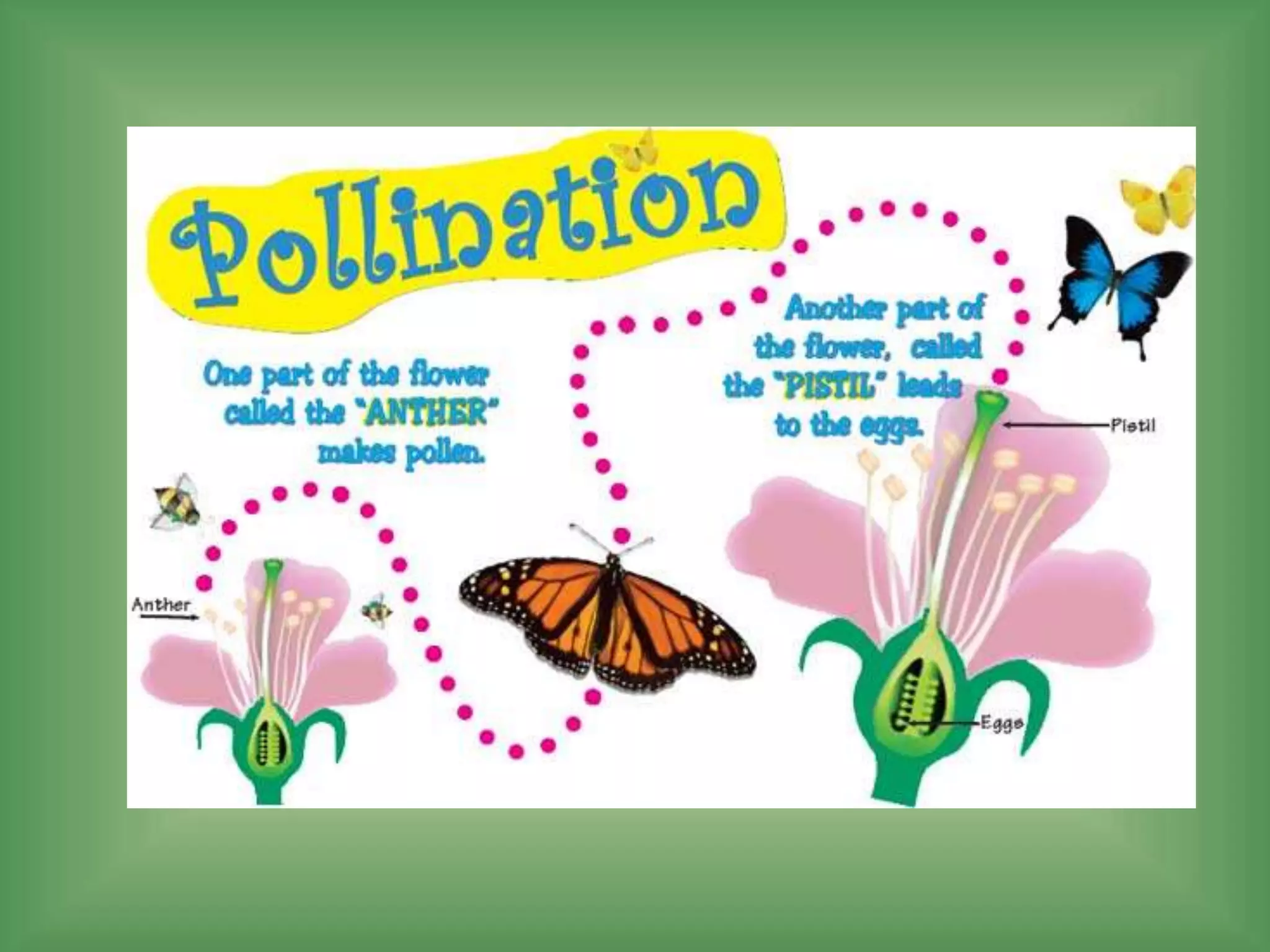
Pistil
*Stigma –top of the pistil,
Sticky surface for pollen to
stick to
*Style – connects the stigma
to the ovary
*Ovary –contains ovules
( eggs)
Stamen
*Anther – produces sperm
nuclei by meiosis. Sperm
nuclei are enclosed by
pollen grains.
*Filament – holds the anther
up
Female
reproductive
organ
Male
reproductive
organ
Pollination
• Transfer of mature pollen grains from the
anther to the stigma
-wind
-insects
-birds & other animals
Important (endangered?) Pollinators
• Bees
• Butterflies
• Moths
• Wasps
• Bombyliid flies
• syrphid flies
• Beetles
• Midges
• Thrips
• Ants
• Green bottle flies
• Bactrocera fruit flies
• Bats
• Birds
– Hummingbirds
– Honeyeaters
– Sunbirds
• monkeys, lemurs,
possums, rodents and
lizards
Scopa (pollen holder) of a
Megachilid bee
Halictid bee, showing adhering
pollen
Syrphid fly,
showing
some
adhering
pollen
Halictid bee
Pollinator population declines
and conservation
• In 1999 the Convention on Biological Diversity
issued the São Paulo Declaration on
Pollinators, recognizing the critical role that
these species play in supporting and
maintaining terrestrial productivity as well as the
survival challenges they face due to
anthropogenic change. Today pollinators are
considered to be in a state of decline; some
species, such as Franklin’s bumble bee
(Bombus franklini) have been red-listed and are
in danger of extinction.
Serious Problem
• Declines in the health and population of
pollinators pose what could be a
significant threat to the integrity of
biodiversity, to global food webs, and to
human health. At least 80% of our world's
crop species require pollination to set
seed. An estimated one out of every three
bites of food comes to us through the work
of animal pollinators.
• When a pollen grain lands on the
stigma, it germinates and a pollen tube
grows down through the style to an
ovule (egg)
Fertilization
• The sperm travels through the pollen tube to the
ovule. The sperm & egg fuse forming the zygote
(fertilized egg) –this grows into the plant embryo
(cells grow by mitosis)
*Self pollination –pollen from same flower
*Cross pollination – pollen from a different flower
- more variation
• The ovary and zygote (fertilized ovule)
develop and ripen.
*The ovule forms the seed and the ovary
forms the fruit.
• A fruit is a ripened ovary
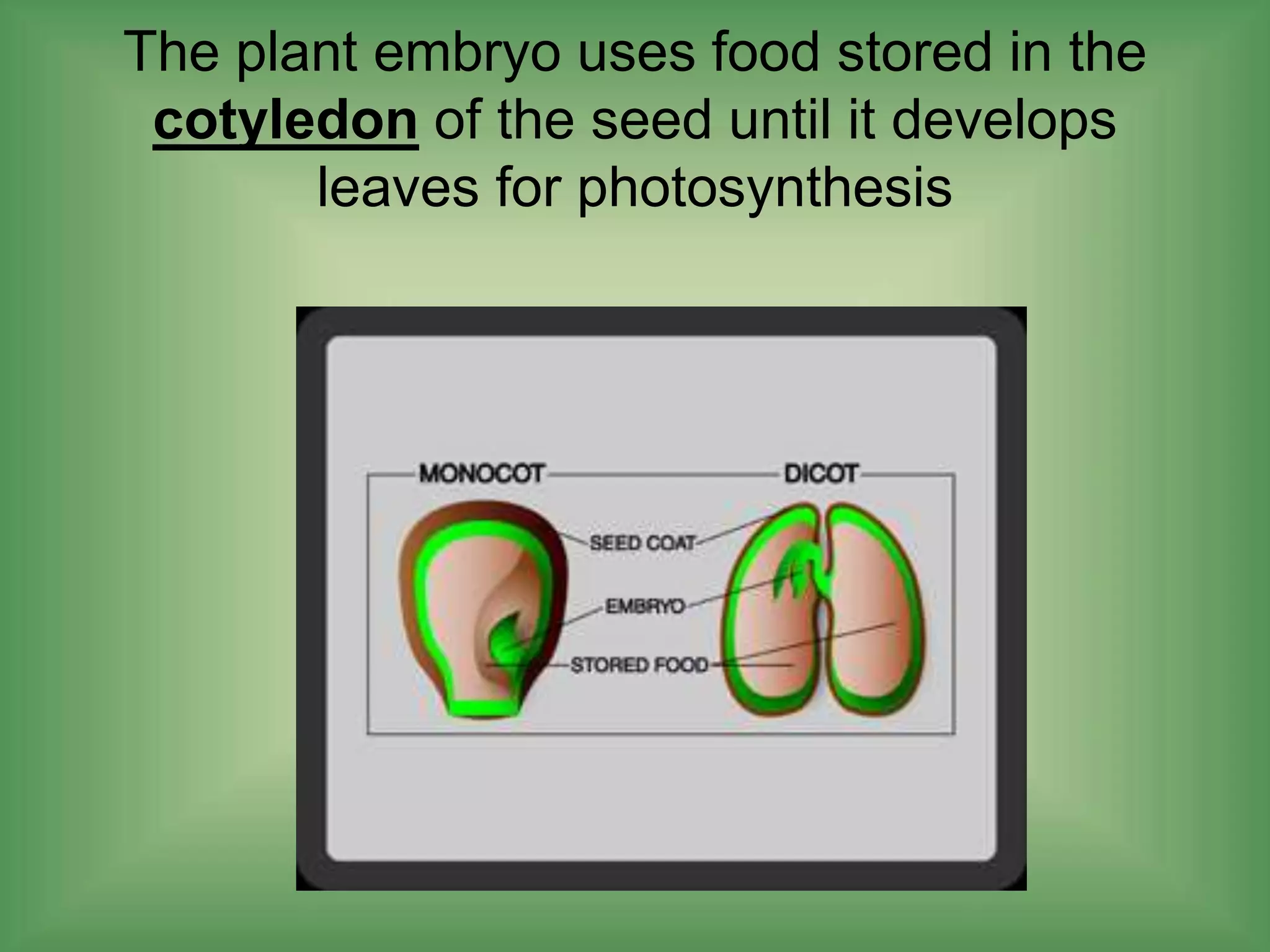
The plant embryo uses food stored in the
cotyledon of the seed until it develops
leaves for photosynthesis
micropyle –opening in ovule where pollen tube attached,
sperm entered
hilum –scar where ovule attached to ovary
radicle –embryonic root
Seedling
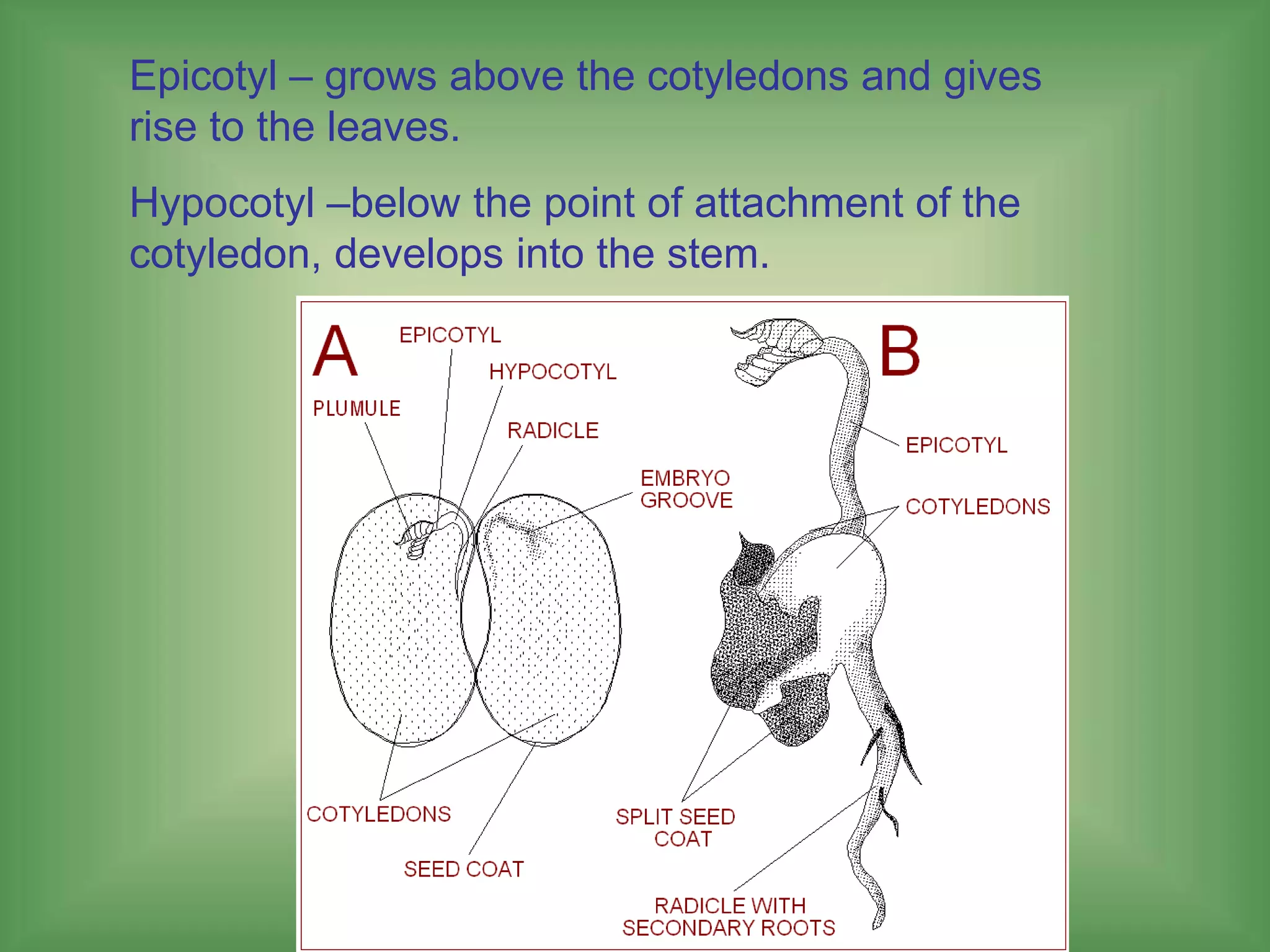
Epicotyl – grows above the cotyledons and gives
rise to the leaves.
Hypocotyl –below the point of attachment of the
cotyledon, develops into the stem.
Parts of a seed
• Dicot
• Monocot
Seed coat
Epicotyl
Cotyledons
Hypocotyl
Seed coat
Endosperm
Epicotyl
Hypocotyl
Radicle
Cotyledon
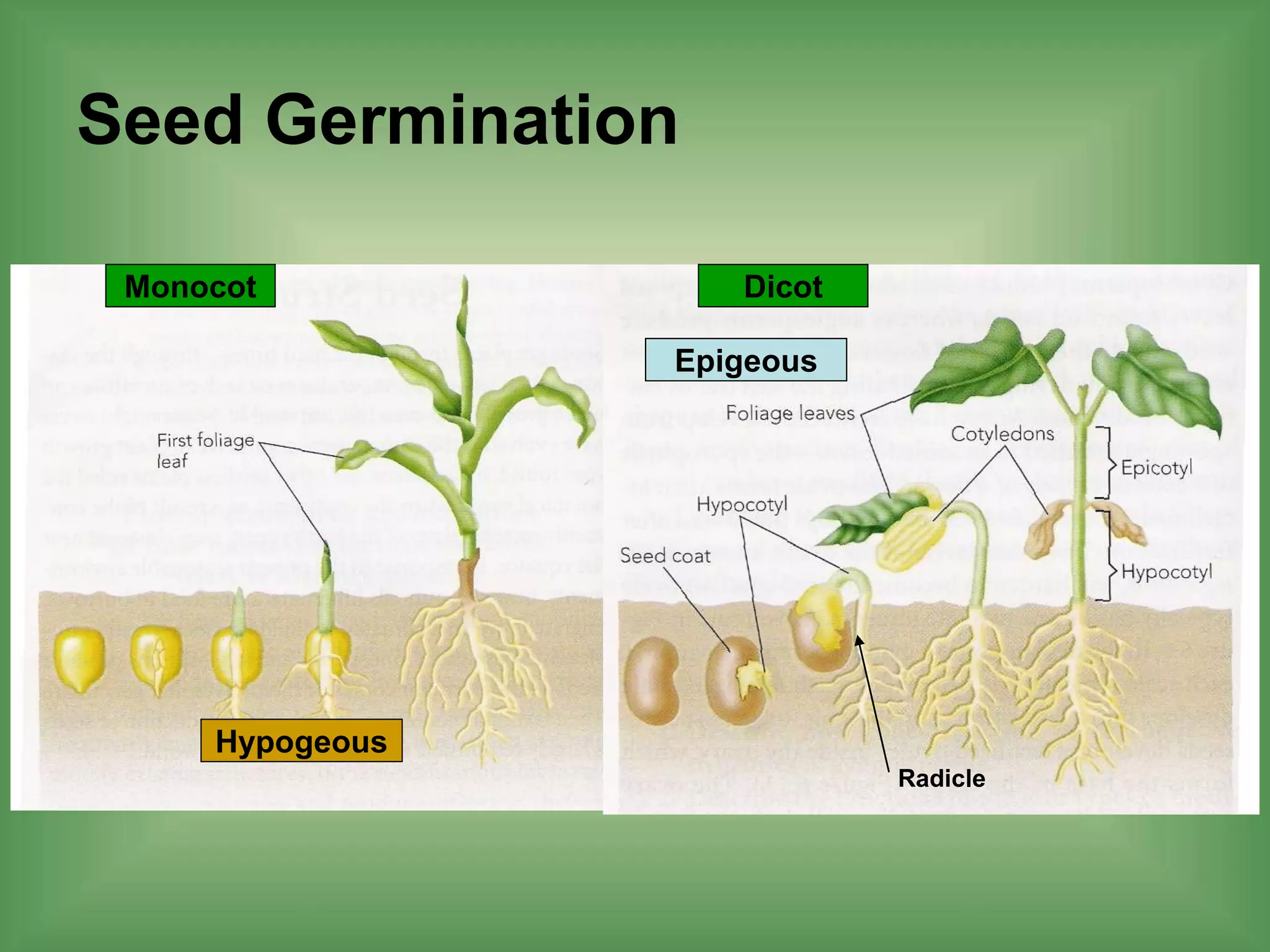
Seed Germination
Monocot Dicot
Hypogeous
Epigeous
Radicle
This powerpoint was kindly donated to
www.worldofteaching.com
http://www.worldofteaching.com
Is home to well over a thousand powerpoints
submitted by teachers. This a free site. Please visit
and I hope it will help in your teaching

Reproduction in Flowering Plants (1).ppt

  • 1.
    Reproduction in FloweringPlants Emphasis on Pollinators Mrs. Zemcik Living Environment Expanded by Joe Naumann, UMSL
  • 2.
    Flower • Sexual reproductivestructure • Produces egg and sperm • Fertilization takes place inside the flower
  • 3.
    Pistil *Stigma –top ofthe pistil, Sticky surface for pollen to stick to *Style – connects the stigma to the ovary *Ovary –contains ovules ( eggs) Stamen *Anther – produces sperm nuclei by meiosis. Sperm nuclei are enclosed by pollen grains. *Filament – holds the anther up Female reproductive organ Male reproductive organ
  • 4.
    Pollination • Transfer ofmature pollen grains from the anther to the stigma -wind -insects -birds & other animals
  • 6.
    Important (endangered?) Pollinators •Bees • Butterflies • Moths • Wasps • Bombyliid flies • syrphid flies • Beetles • Midges • Thrips • Ants • Green bottle flies • Bactrocera fruit flies • Bats • Birds – Hummingbirds – Honeyeaters – Sunbirds • monkeys, lemurs, possums, rodents and lizards
  • 9.
    Scopa (pollen holder)of a Megachilid bee
  • 10.
    Halictid bee, showingadhering pollen
  • 11.
  • 12.
  • 17.
    Pollinator population declines andconservation • In 1999 the Convention on Biological Diversity issued the São Paulo Declaration on Pollinators, recognizing the critical role that these species play in supporting and maintaining terrestrial productivity as well as the survival challenges they face due to anthropogenic change. Today pollinators are considered to be in a state of decline; some species, such as Franklin’s bumble bee (Bombus franklini) have been red-listed and are in danger of extinction.
  • 18.
    Serious Problem • Declinesin the health and population of pollinators pose what could be a significant threat to the integrity of biodiversity, to global food webs, and to human health. At least 80% of our world's crop species require pollination to set seed. An estimated one out of every three bites of food comes to us through the work of animal pollinators.
  • 19.
    • When apollen grain lands on the stigma, it germinates and a pollen tube grows down through the style to an ovule (egg)
  • 20.
    Fertilization • The spermtravels through the pollen tube to the ovule. The sperm & egg fuse forming the zygote (fertilized egg) –this grows into the plant embryo (cells grow by mitosis)
  • 21.
    *Self pollination –pollenfrom same flower *Cross pollination – pollen from a different flower - more variation
  • 22.
    • The ovaryand zygote (fertilized ovule) develop and ripen. *The ovule forms the seed and the ovary forms the fruit. • A fruit is a ripened ovary
  • 23.
    The plant embryouses food stored in the cotyledon of the seed until it develops leaves for photosynthesis
  • 24.
    micropyle –opening inovule where pollen tube attached, sperm entered hilum –scar where ovule attached to ovary radicle –embryonic root Seedling
  • 25.
    Epicotyl – growsabove the cotyledons and gives rise to the leaves. Hypocotyl –below the point of attachment of the cotyledon, develops into the stem.
  • 26.
    Parts of aseed • Dicot • Monocot Seed coat Epicotyl Cotyledons Hypocotyl Seed coat Endosperm Epicotyl Hypocotyl Radicle Cotyledon
  • 27.
  • 29.
    This powerpoint waskindly donated to www.worldofteaching.com http://www.worldofteaching.com Is home to well over a thousand powerpoints submitted by teachers. This a free site. Please visit and I hope it will help in your teaching