LO: To introduce more complex ideas about
representation, status and stereotypes and then
go back to the simple grid which gives us a
structure to analyse the clip.
So all of you can analyse the clip but
most/some of you will go beyond the simple or
obvious.
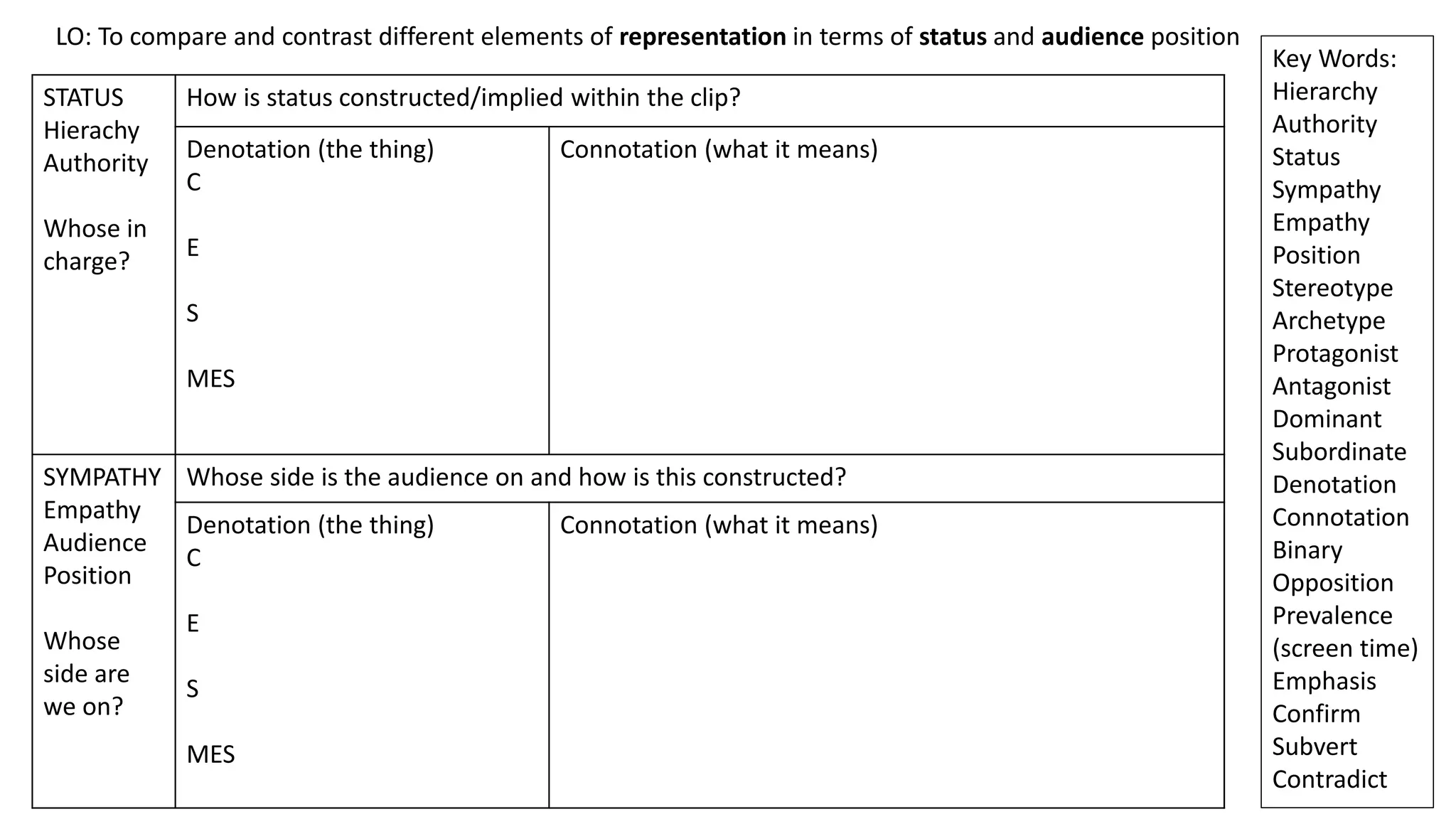
LO: To compare and contrast different elements of representation in terms of status and audience position

STATUS
Hierachy
Authority
Whose in
charge?

How is status constructed/implied within the clip?
Denotation (the thing)
C

Connotation (what it means)

E
S
MES

SYMPATHY Whose side is the audience on and how is this constructed?
Empathy
Denotation (the thing)
Connotation (what it means)
Audience
C
Position
Whose
side are
we on?

E

S
MES

Key Words:
Hierarchy
Authority
Status
Sympathy
Empathy
Position
Stereotype
Archetype
Protagonist
Antagonist
Dominant
Subordinate
Denotation
Connotation
Binary
Opposition
Prevalence
(screen time)
Emphasis
Confirm
Subvert
Contradict
Representation (examiners report 2010)

Most candidates were able to discuss differences in the status of various
ethnicities within the sequence.

Candidates were able to develop their answer further by showing how the
audience were positioned in relation to these representations.

More able candidates went further by … commenting on the way that the extract
challenged typical representations …
Stereotype vs Archetype
Many people consider "archetype" and "stereotype" interchangeable, but there are distinct differences in scope
and meaning that should influence their use depending on context. An archetype has to do with the function or role
that a character plays; whereas, a stereotype is an evaluation of that character's depth and originality.

For instance, an example of an archetype is the type of character found in a given story. A "wise older mentor" is a
typical archetype because that type of character plays a familiar role in many stories. Examples include Mickey from
the "Rocky" movies and Obi Wan Kenobi from the "Star Wars" franchise.
Give 2 more examples: (check your notes on Propp’s characters)

An example of a stereotype is character that has little depth or originality. For instance, a moustache-twirling villain
or a nameless damsel-in-distress could both fit the mold of a literary stereotype.
Give 2 more examples:
What is the Binary Opposition and how is it set up?

How does Camerawork, Editing, Sound, Mise en Scene confirm or subvert stereotypes of ………………?

How does C,E, S, MES cause the Opposition/Status to shift?

How is status, and the shifting status/hierarchy, represented in this clip – who are we most sympathetic to?

Does the audience identify with the highest status individual in the clip? If not, why not?

Representation status v sympathy

  • 1.
    LO: To introducemore complex ideas about representation, status and stereotypes and then go back to the simple grid which gives us a structure to analyse the clip. So all of you can analyse the clip but most/some of you will go beyond the simple or obvious.
  • 2.
    LO: To compareand contrast different elements of representation in terms of status and audience position STATUS Hierachy Authority Whose in charge? How is status constructed/implied within the clip? Denotation (the thing) C Connotation (what it means) E S MES SYMPATHY Whose side is the audience on and how is this constructed? Empathy Denotation (the thing) Connotation (what it means) Audience C Position Whose side are we on? E S MES Key Words: Hierarchy Authority Status Sympathy Empathy Position Stereotype Archetype Protagonist Antagonist Dominant Subordinate Denotation Connotation Binary Opposition Prevalence (screen time) Emphasis Confirm Subvert Contradict
  • 3.
    Representation (examiners report2010) Most candidates were able to discuss differences in the status of various ethnicities within the sequence. Candidates were able to develop their answer further by showing how the audience were positioned in relation to these representations. More able candidates went further by … commenting on the way that the extract challenged typical representations …
  • 4.
    Stereotype vs Archetype Manypeople consider "archetype" and "stereotype" interchangeable, but there are distinct differences in scope and meaning that should influence their use depending on context. An archetype has to do with the function or role that a character plays; whereas, a stereotype is an evaluation of that character's depth and originality. For instance, an example of an archetype is the type of character found in a given story. A "wise older mentor" is a typical archetype because that type of character plays a familiar role in many stories. Examples include Mickey from the "Rocky" movies and Obi Wan Kenobi from the "Star Wars" franchise. Give 2 more examples: (check your notes on Propp’s characters) An example of a stereotype is character that has little depth or originality. For instance, a moustache-twirling villain or a nameless damsel-in-distress could both fit the mold of a literary stereotype. Give 2 more examples:
  • 5.
    What is theBinary Opposition and how is it set up? How does Camerawork, Editing, Sound, Mise en Scene confirm or subvert stereotypes of ………………? How does C,E, S, MES cause the Opposition/Status to shift? How is status, and the shifting status/hierarchy, represented in this clip – who are we most sympathetic to? Does the audience identify with the highest status individual in the clip? If not, why not?