The Structure of Technical Reports
Overview
Overview
• Report: Definition & Types
• Parts of Structure
• Front Matters
• Main Body
• Back Matters
• Planning and Preparation
• Report Style
Report: Definition
Report: Definition
• “A technical report is a written statement of the
facts of a situation, project, process or test; how
these facts were ascertained; their significance;
the conclusions that have been drawn from
them; the recommendations that are being
made” (John Mitchell)
• “A report is a communication from someone who
has information, to someone who wants to use
that information” (C.A. Brown)
The Essential Contents of a Report
• A report is a formal statement of facts or
information or an account of something.
• It has a conventional form.
• It is written for a specific audience.
• It throws light on the procedure of collecting
data and significance of such data.
• It contains the conclusions drawn by the writer.
• It includes recommendations. (Optional)
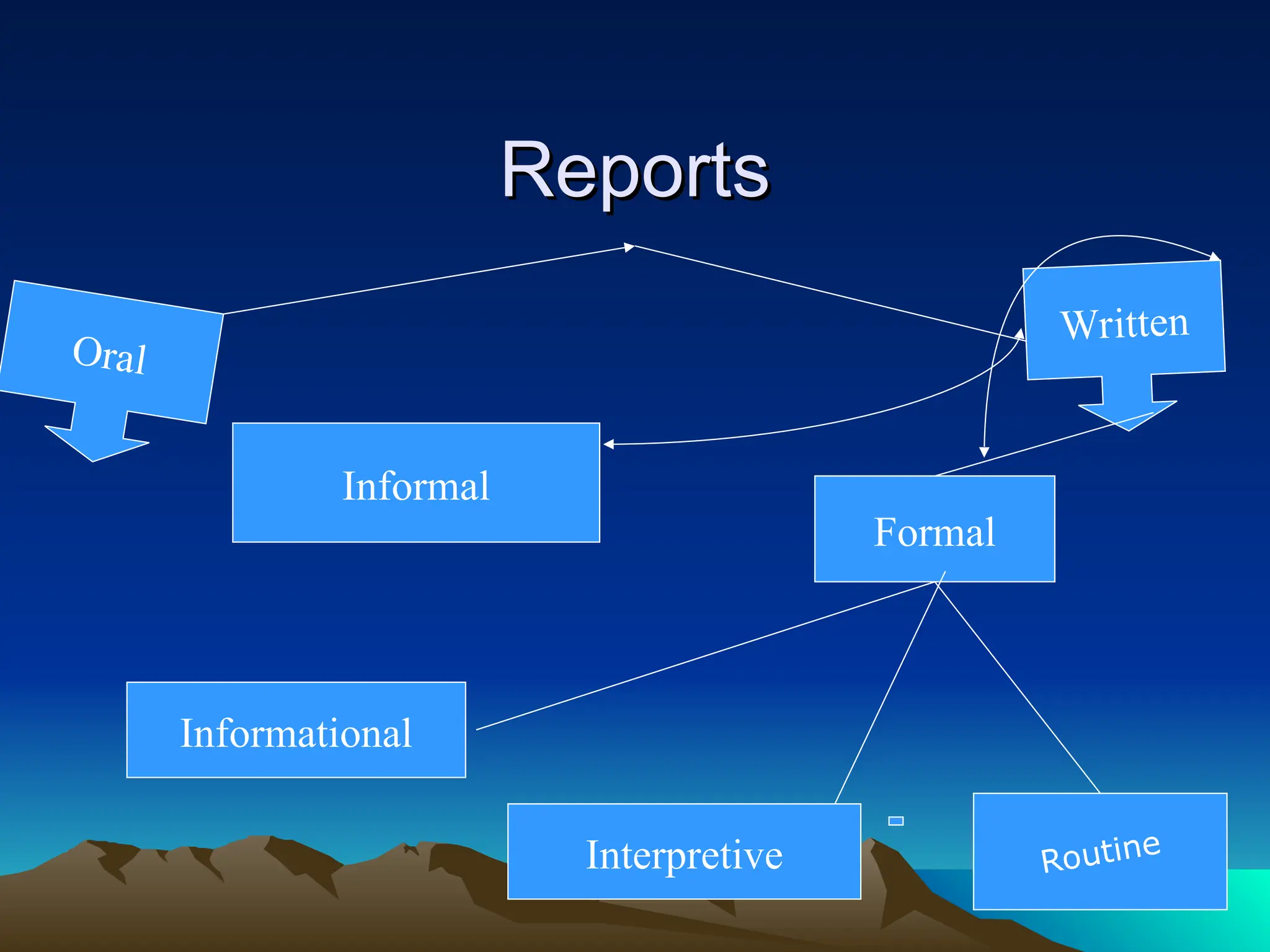
Reports
Reports
Oral
Written
Informal
Formal
Informational
Interpretive Routine
Types of Reports
Types of Reports
• The Most Common Types:
• 1.Accident/Incident Reports—What happened,
how did it happen, when did it happen, why did it
happen, who was involved?
• 2.Feasibility Reports—Can we do it, should we
do it?
• 3.Inventory Reports—What’s in storage, what’s
been sold, what needs to be ordered?
• 4. Staff Utilization Reports—Is labour sufficient
and efficiently used?
Contd…
Contd…
• 5.Progress/Activity Reports--(weekly, monthly, quarterly) What’s
our status?
6. Travel Reports—Where did I go, what did I learn, whom did I
meet, and so on?
• 7.Lab Reports—How did we do it?
• 8. Performance Appraisal Reports—How’s an employee doing
on the job?
• 9.Study Reports—What’s wrong?
• 10.Justification Reports Here’s why we need material(or will
pursue this action) on this date.
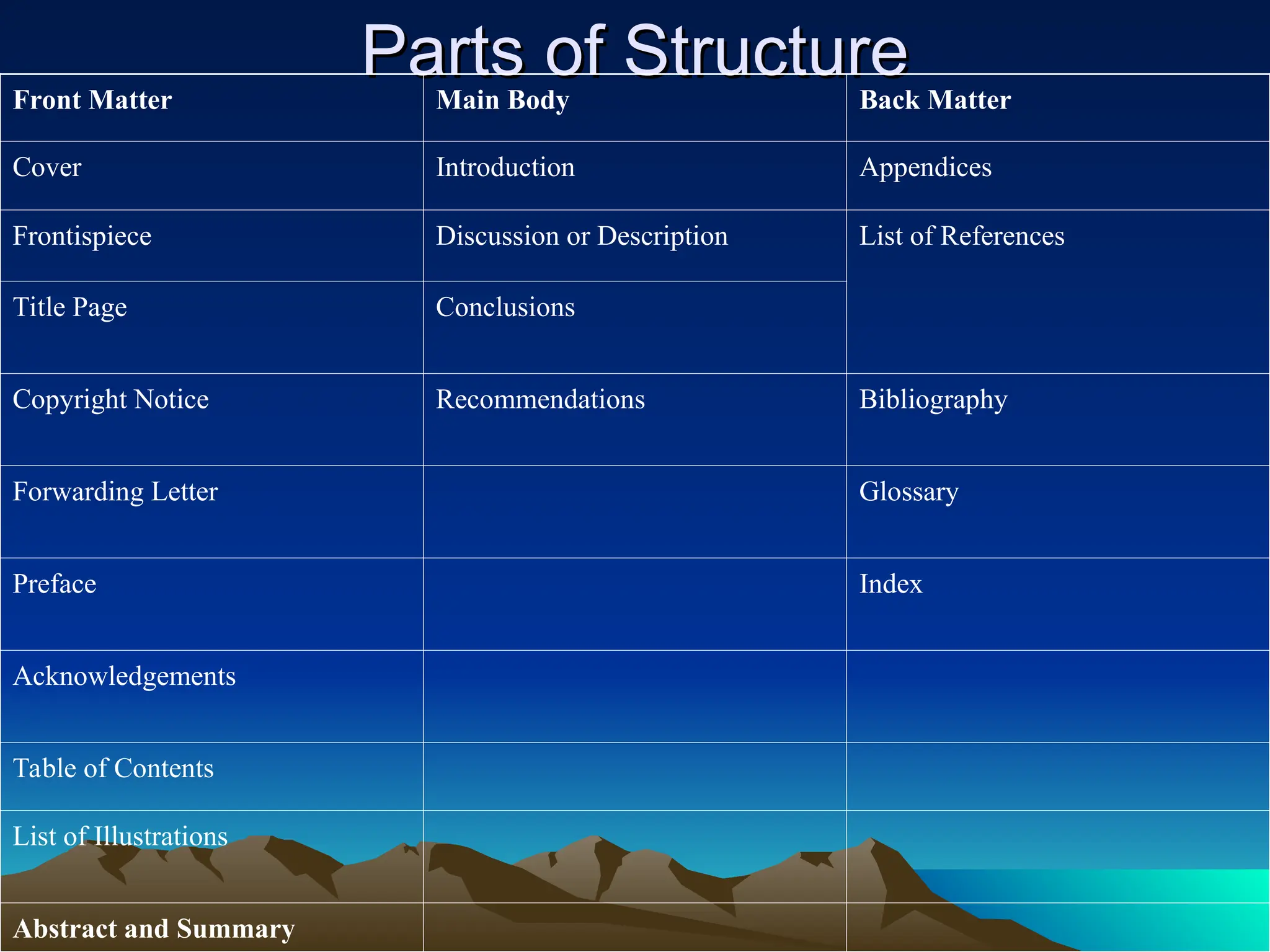
Parts of Structure
Parts of Structure
Front Matter Main Body Back Matter
Cover Introduction Appendices
Frontispiece Discussion or Description List of References
Title Page Conclusions
Copyright Notice Recommendations Bibliography
Forwarding Letter Glossary
Preface Index
Acknowledgements
Table of Contents
List of Illustrations
Abstract and Summary
Front Matters of Report: Cover
• Protects the manuscript from damage &
gives it a neat appearance.
• It contains:
• The title of the report
• Report Number, if any.
• The Date of submission
• The classification of report(Secret,Top
Secret etc.)
Frontispiece
Frontispiece
• Generally appears in bound reports
• It’s a sort of window-display.
• Mostly photographs, maps or artistic
drawings.
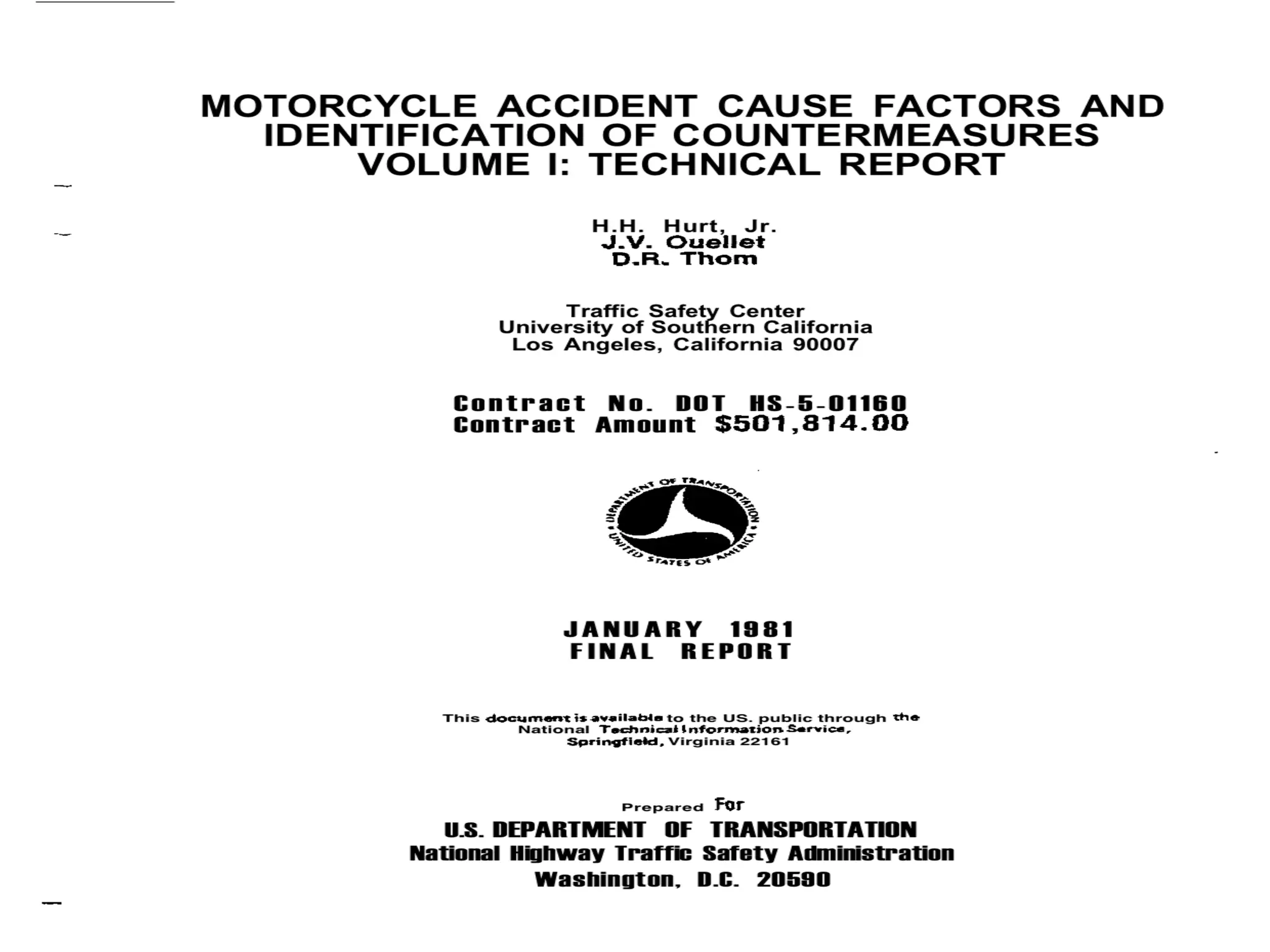
Title Page
Title Page
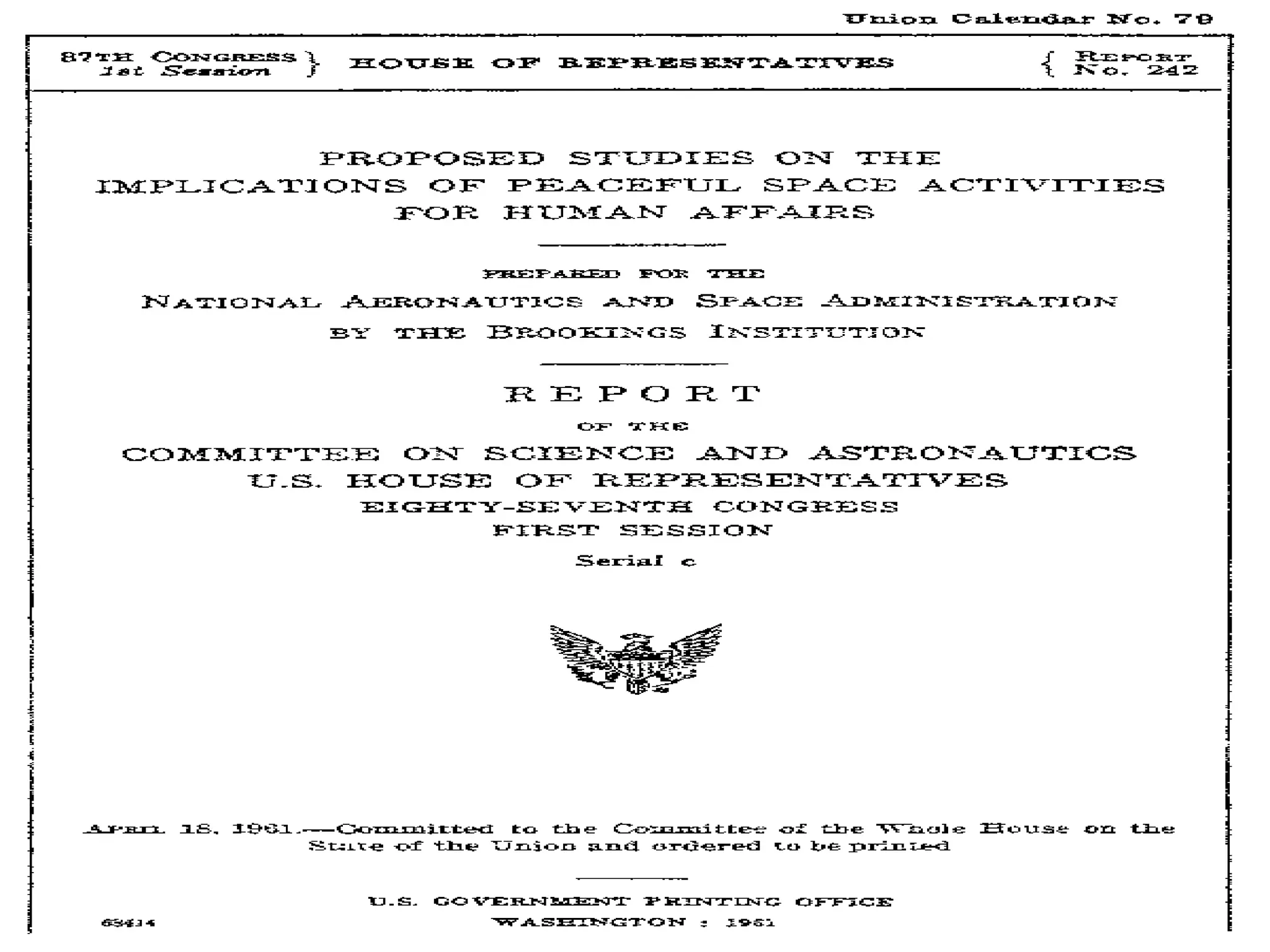
• The First right-hand Page that contains the
following in addition to the info given on the
cover page:
• Sub-title
• Name of the Author(s)
• Name of the Authority
• Contract, Project or Job N.
• Approvals
Other Elements
Other Elements
• Copyright Notice
• Forwarding Letter—(1) Introductory
(2) Covering
Preface
Acknowledgements
Table of Contents
List of Illustrations
Abstract and Summary
MAIN BODY : Introduction
• Provides a better starting point
• Tells what the report is about
• What works have been done already
• What grounds are covered under the present study
It includes:
• Historical & Technical Background
• Method of Collecting Data and Their Source
• Authorization and Terms of Reference
• Organisation of Material
• Definition of Special/ Technical Terms/ Symbols
MAIN BODY
MAIN BODY :Discussion or Description
:Discussion or Description
• Presents the data in organised form
• Discusses their significance
• Analyses them
• Arrives at results
CONCLUSIONS:
• The body of the logical inferences drawn
• Presents the findings of the investigations
RECOMMENDATIONS:
• It refers to the future course of action
• Included only when asked by the authority
BACK MATTERS: Appendices
(Materials needed to support the main body)
Generally includes:
• Questionnaires
• Statistical Data
• Detailed Calculations
• Correspondences
• Specimens
• Sample Documents etc.
BACK MATTERS: List of References
• Publication Details of works cited/quoted in the report with
exact location—editions/ page nos.
• Ex: Jha, Pashupati, Cross and Creation, Prestige, New Delhi,
First Edition,2003, pp. 34-38.
BIBLIOGRAPHY:
• Serially numbered books, journals,
published/unpublished works arranged
alphabetically.
• Ex. Book with one author:
Ghosh, Amitav. 1996. The Calcutta
Chromosome. Picador, N. Delhi.
• Book with more than 2 authors: Kaushik, V. et.
al.1978. Value-Based Education, OUP, London.
BACK MATTERS:
BACK MATTERS:
Glossary
Glossary
• An alphabetical list of Technical words and
their explanations
INDEX
• A quick guide to the material in the report
• Enables readers to locate Topics/ Sub-
topics easily
• Arranged alphabetically and cross-
referenced.
Report Writing: Planning &
Preparation
Preparation
• Define the Purpose and Scope
• Determine the Audience
• Collect the Data
• Organize the Material
• Making an Outline
• Rough-Draft Typing
Report Style
Report Style
• Clarity
• Concisenesss
• Continuity
• Objectivity
Writing Naturally
Writing Naturally
• Natural, and not an "Official Style”
• Not to “impress” the readers with your
vocabulary
• Use words to convey your exact meaning
…
…
• Avoid long, complicated terms if shorter
and more familiar ones are available
• Your readers will be interested in what you
have to say and not in how eloquently you
say it
Guiding the Reader
Guiding the Reader
• Tell readers what you plan to tell them in
Introduction
• about the main text
• Summary of Results or Conclusions
Get to the point directly
• Technical reports are not mystery novels
• Omit information that does not directly
relate to the conclusions
• Emphasizing Major Ideas
• Separating Fact from Opinion
• Data Presentation
• Figures
• Numerals
• Spellings
• Avoid trade names, use generic names
Report structure showing accurate method of forming report

  • 1.
    The Structure ofTechnical Reports The Structure of Technical Reports
  • 2.
    Overview Overview • Report: Definition& Types • Parts of Structure • Front Matters • Main Body • Back Matters • Planning and Preparation • Report Style
  • 3.
    Report: Definition Report: Definition •“A technical report is a written statement of the facts of a situation, project, process or test; how these facts were ascertained; their significance; the conclusions that have been drawn from them; the recommendations that are being made” (John Mitchell) • “A report is a communication from someone who has information, to someone who wants to use that information” (C.A. Brown)
  • 4.
    The Essential Contentsof a Report The Essential Contents of a Report • A report is a formal statement of facts or information or an account of something. • It has a conventional form. • It is written for a specific audience. • It throws light on the procedure of collecting data and significance of such data. • It contains the conclusions drawn by the writer. • It includes recommendations. (Optional)
  • 5.
  • 6.
    Types of Reports Typesof Reports • The Most Common Types: • 1.Accident/Incident Reports—What happened, how did it happen, when did it happen, why did it happen, who was involved? • 2.Feasibility Reports—Can we do it, should we do it? • 3.Inventory Reports—What’s in storage, what’s been sold, what needs to be ordered? • 4. Staff Utilization Reports—Is labour sufficient and efficiently used?
  • 7.
    Contd… Contd… • 5.Progress/Activity Reports--(weekly,monthly, quarterly) What’s our status? 6. Travel Reports—Where did I go, what did I learn, whom did I meet, and so on? • 7.Lab Reports—How did we do it? • 8. Performance Appraisal Reports—How’s an employee doing on the job? • 9.Study Reports—What’s wrong? • 10.Justification Reports Here’s why we need material(or will pursue this action) on this date.
  • 8.
    Parts of Structure Partsof Structure Front Matter Main Body Back Matter Cover Introduction Appendices Frontispiece Discussion or Description List of References Title Page Conclusions Copyright Notice Recommendations Bibliography Forwarding Letter Glossary Preface Index Acknowledgements Table of Contents List of Illustrations Abstract and Summary
  • 9.
    Front Matters ofReport: Cover Front Matters of Report: Cover • Protects the manuscript from damage & gives it a neat appearance. • It contains: • The title of the report • Report Number, if any. • The Date of submission • The classification of report(Secret,Top Secret etc.)
  • 11.
    Frontispiece Frontispiece • Generally appearsin bound reports • It’s a sort of window-display. • Mostly photographs, maps or artistic drawings.
  • 12.
    Title Page Title Page •The First right-hand Page that contains the following in addition to the info given on the cover page: • Sub-title • Name of the Author(s) • Name of the Authority • Contract, Project or Job N. • Approvals
  • 14.
    Other Elements Other Elements •Copyright Notice • Forwarding Letter—(1) Introductory (2) Covering Preface Acknowledgements Table of Contents List of Illustrations Abstract and Summary
  • 15.
    MAIN BODY :Introduction MAIN BODY : Introduction • Provides a better starting point • Tells what the report is about • What works have been done already • What grounds are covered under the present study It includes: • Historical & Technical Background • Method of Collecting Data and Their Source • Authorization and Terms of Reference • Organisation of Material • Definition of Special/ Technical Terms/ Symbols
  • 16.
    MAIN BODY MAIN BODY:Discussion or Description :Discussion or Description • Presents the data in organised form • Discusses their significance • Analyses them • Arrives at results
  • 17.
    CONCLUSIONS: • The bodyof the logical inferences drawn • Presents the findings of the investigations
  • 18.
    RECOMMENDATIONS: • It refersto the future course of action • Included only when asked by the authority
  • 19.
    BACK MATTERS: Appendices BACKMATTERS: Appendices (Materials needed to support the main body) Generally includes: • Questionnaires • Statistical Data • Detailed Calculations • Correspondences • Specimens • Sample Documents etc.
  • 20.
    BACK MATTERS: Listof References BACK MATTERS: List of References • Publication Details of works cited/quoted in the report with exact location—editions/ page nos. • Ex: Jha, Pashupati, Cross and Creation, Prestige, New Delhi, First Edition,2003, pp. 34-38.
  • 21.
    BIBLIOGRAPHY: • Serially numberedbooks, journals, published/unpublished works arranged alphabetically. • Ex. Book with one author: Ghosh, Amitav. 1996. The Calcutta Chromosome. Picador, N. Delhi. • Book with more than 2 authors: Kaushik, V. et. al.1978. Value-Based Education, OUP, London.
  • 22.
    BACK MATTERS: BACK MATTERS: Glossary Glossary •An alphabetical list of Technical words and their explanations INDEX • A quick guide to the material in the report • Enables readers to locate Topics/ Sub- topics easily • Arranged alphabetically and cross- referenced.
  • 23.
    Report Writing: Planning& Report Writing: Planning & Preparation Preparation • Define the Purpose and Scope • Determine the Audience • Collect the Data • Organize the Material • Making an Outline • Rough-Draft Typing
  • 24.
    Report Style Report Style •Clarity • Concisenesss • Continuity • Objectivity
  • 25.
    Writing Naturally Writing Naturally •Natural, and not an "Official Style” • Not to “impress” the readers with your vocabulary • Use words to convey your exact meaning
  • 26.
    … … • Avoid long,complicated terms if shorter and more familiar ones are available • Your readers will be interested in what you have to say and not in how eloquently you say it
  • 27.
    Guiding the Reader Guidingthe Reader • Tell readers what you plan to tell them in Introduction • about the main text • Summary of Results or Conclusions
  • 28.
    Get to thepoint directly Get to the point directly • Technical reports are not mystery novels • Omit information that does not directly relate to the conclusions
  • 29.
    • Emphasizing MajorIdeas • Separating Fact from Opinion • Data Presentation • Figures • Numerals • Spellings • Avoid trade names, use generic names