The Challenge of Sustaining Strategic
              Change
Criticism All Around


“….marriage of desperation for both parties…”
                                    -Business Week


“….two mules don’t make a race horse…”
                                   -CEO , Chrysler
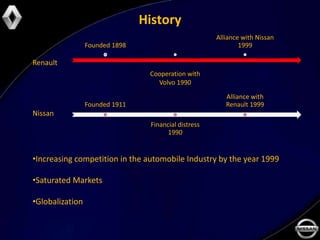
History
                                                      Alliance with Nissan
                 Founded 1898                                 1999

Renault
                                 Cooperation with
                                   Volvo 1990

                                                         Alliance with
                 Founded 1911                            Renault 1999
Nissan
                                 Financial distress
                                       1990


•Increasing competition in the automobile Industry by the year 1999

•Saturated Markets

•Globalization
Nissan Before Alliance

 $ 20 billion in debt

 Recession in early 90’s in Japan

 There was complacency and a lack of urgency in the culture

 The design of the cars was out of touch with the market

 A high degree of bureaucracy

 There was an emphasis on engineering culture rather than

  managerial culture and promotions
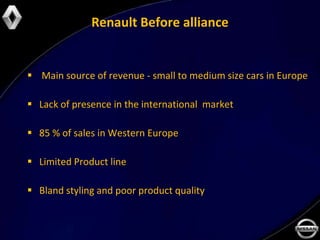
Renault Before alliance


 Main source of revenue - small to medium size cars in Europe

 Lack of presence in the international market

 85 % of sales in Western Europe

 Limited Product line

 Bland styling and poor product quality
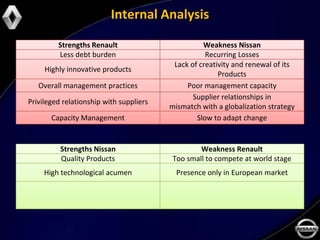
Internal Analysis

         Strengths Renault                         Weakness Nissan
         Less debt burden                           Recurring Losses
                                          Lack of creativity and renewal of its
     Highly innovative products
                                                        Products
   Overall management practices               Poor management capacity
                                                Supplier relationships in
Privileged relationship with suppliers
                                         mismatch with a globalization strategy
       Capacity Management                       Slow to adapt change


          Strengths Nissan                        Weakness Renault
          Quality Products                Too small to compete at world stage
     High technological acumen             Presence only in European market
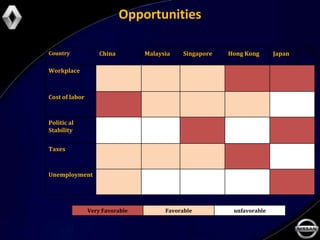
Opportunities

Country             China        Malaysia    Singapore   Hong Kong      Japan

Workplace


Cost of labor


Politic al
Stability


Taxes


Unemployment


                Very Favorable         Favorable          unfavorable
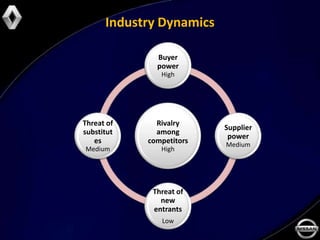
Industry Dynamics

              Buyer
              power
               High


Threat of     Rivalry
                          Supplier
substitut     among
                           power
   es       competitors   Medium
Medium         High


             Threat of
               new
             entrants
               Low
Strategic Alliance

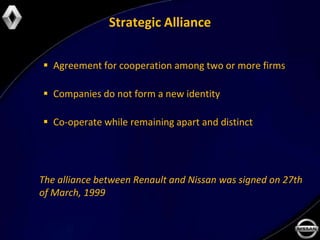
 Agreement for cooperation among two or more firms

 Companies do not form a new identity

 Co-operate while remaining apart and distinct


The alliance between Renault and Nissan was signed on 27th
of March, 1999
Objectives of the Alliance


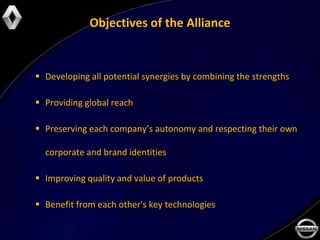
 Developing all potential synergies by combining the strengths

 Providing global reach

 Preserving each company’s autonomy and respecting their own

  corporate and brand identities

 Improving quality and value of products

 Benefit from each other's key technologies
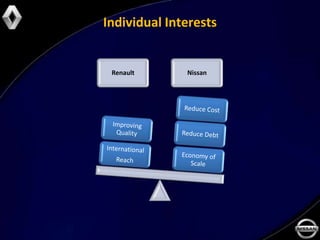
Individual Interests


 Renault      Nissan
Current Business Model

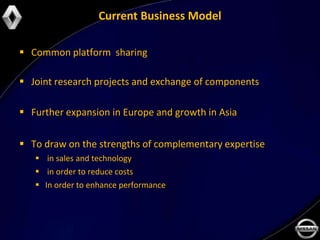
 Common platform sharing

 Joint research projects and exchange of components

 Further expansion in Europe and growth in Asia

 To draw on the strengths of complementary expertise
    in sales and technology
    in order to reduce costs
    In order to enhance performance
Goals Achieved by the Alliance


 Third largest global automaker

 Global market share of 9% (by volume)

 Significant presence in major world markets (United States,
  Europe, Japan, China, India, Russia)

Renault nissan

  • 1.
    The Challenge ofSustaining Strategic Change
  • 2.
    Criticism All Around “….marriageof desperation for both parties…” -Business Week “….two mules don’t make a race horse…” -CEO , Chrysler
  • 3.
    History Alliance with Nissan Founded 1898 1999 Renault Cooperation with Volvo 1990 Alliance with Founded 1911 Renault 1999 Nissan Financial distress 1990 •Increasing competition in the automobile Industry by the year 1999 •Saturated Markets •Globalization
  • 4.
    Nissan Before Alliance $ 20 billion in debt  Recession in early 90’s in Japan  There was complacency and a lack of urgency in the culture  The design of the cars was out of touch with the market  A high degree of bureaucracy  There was an emphasis on engineering culture rather than managerial culture and promotions
  • 5.
    Renault Before alliance Main source of revenue - small to medium size cars in Europe  Lack of presence in the international market  85 % of sales in Western Europe  Limited Product line  Bland styling and poor product quality
  • 6.
    Internal Analysis Strengths Renault Weakness Nissan Less debt burden Recurring Losses Lack of creativity and renewal of its Highly innovative products Products Overall management practices Poor management capacity Supplier relationships in Privileged relationship with suppliers mismatch with a globalization strategy Capacity Management Slow to adapt change Strengths Nissan Weakness Renault Quality Products Too small to compete at world stage High technological acumen Presence only in European market
  • 7.
    Opportunities Country China Malaysia Singapore Hong Kong Japan Workplace Cost of labor Politic al Stability Taxes Unemployment Very Favorable Favorable unfavorable
  • 8.
    Industry Dynamics Buyer power High Threat of Rivalry Supplier substitut among power es competitors Medium Medium High Threat of new entrants Low
  • 9.
    Strategic Alliance  Agreementfor cooperation among two or more firms  Companies do not form a new identity  Co-operate while remaining apart and distinct The alliance between Renault and Nissan was signed on 27th of March, 1999
  • 10.
    Objectives of theAlliance  Developing all potential synergies by combining the strengths  Providing global reach  Preserving each company’s autonomy and respecting their own corporate and brand identities  Improving quality and value of products  Benefit from each other's key technologies
  • 11.
  • 12.
    Current Business Model Common platform sharing  Joint research projects and exchange of components  Further expansion in Europe and growth in Asia  To draw on the strengths of complementary expertise  in sales and technology  in order to reduce costs  In order to enhance performance
  • 13.
    Goals Achieved bythe Alliance  Third largest global automaker  Global market share of 9% (by volume)  Significant presence in major world markets (United States, Europe, Japan, China, India, Russia)