z
ROLE OF KIDNEY IN REGULATING INTERNAL
ENVIROMENT
z
HOMEOS
 Homeostasis is the ability of a biological system to m
stable internal environment despite external changes
optimal conditions for cellular function by regulating v
such as temperature, pH, electrolyte balance, and flu
z
an
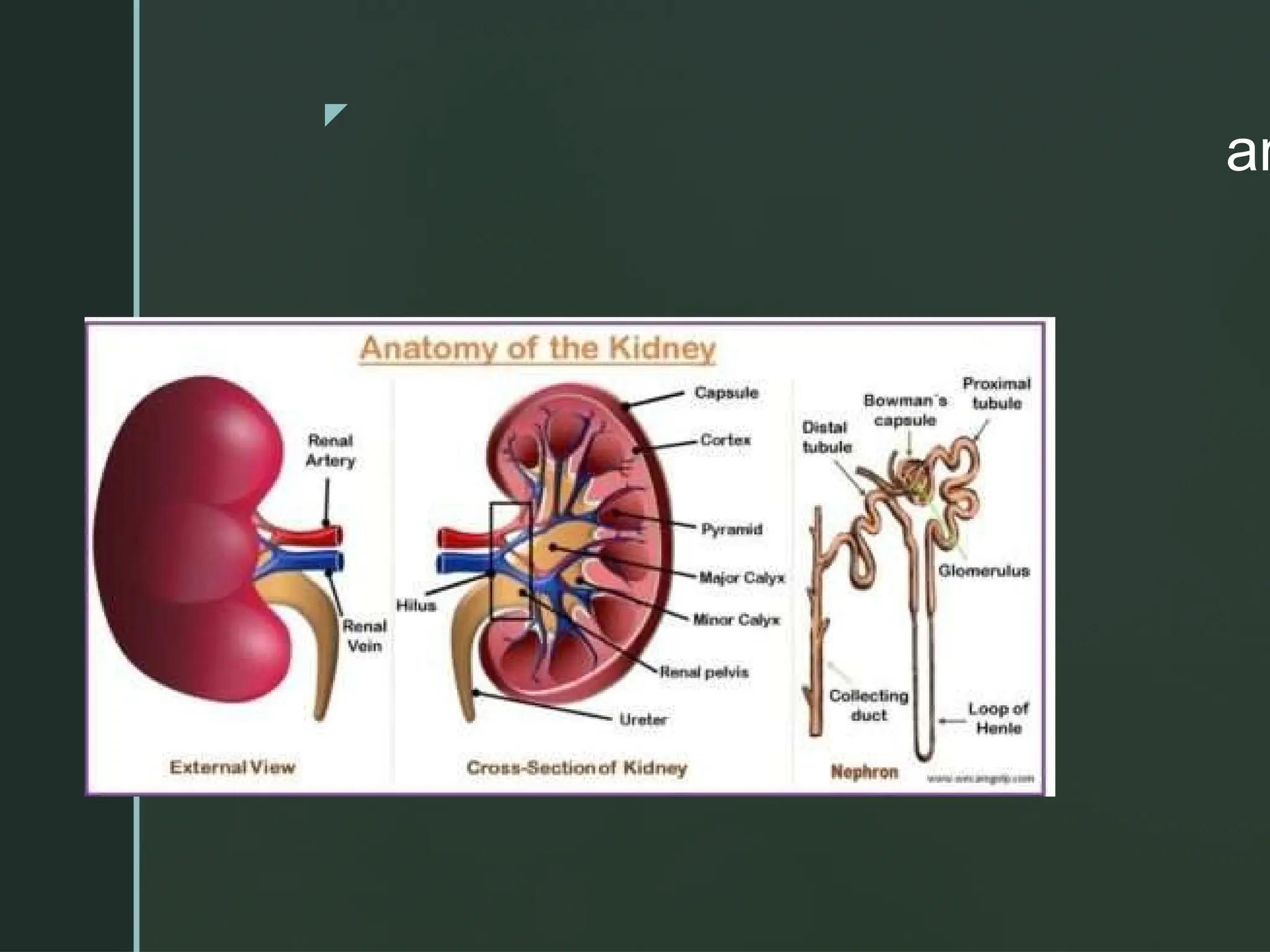
 Anatomy of kidney
z
ROLE OF K
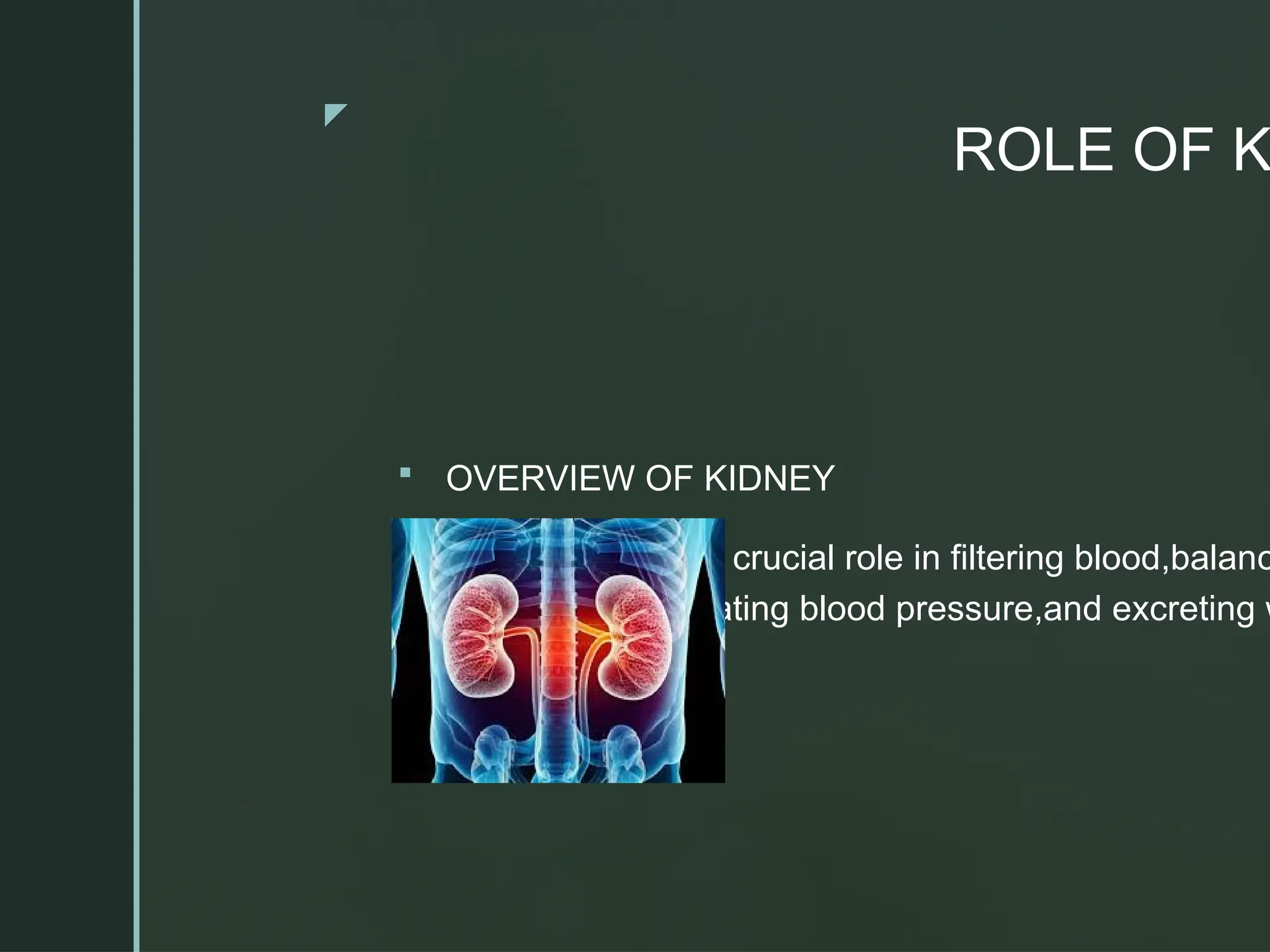
 OVERVIEW OF KIDNEY
 The kidney play a crucial role in filtering blood,balanc
electrolytes,regulating blood pressure,and excreting w
products
z
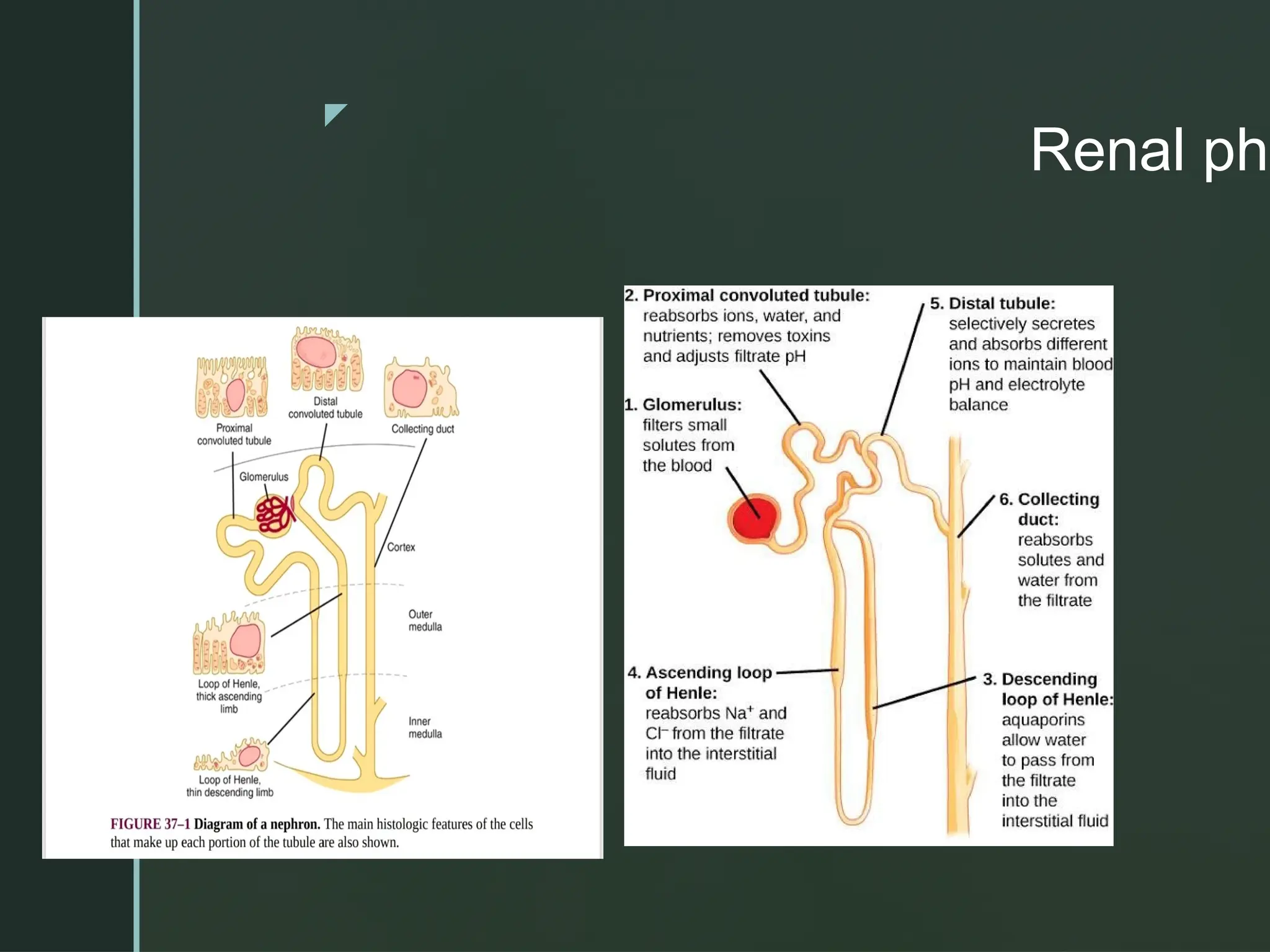
Renal phi
 Nephron
z
Renal phys
 Fluid and Electrolyte Balance – Regulating water, sodium, potassium
electrolytes.
 Acid-Base Balance – Maintaining blood pH.
 Waste Removal – Excreting metabolic waste and toxins.
 Blood Pressure Regulation – Modulating blood volume and pressure
 Erythropoiesis – Stimulating red blood cell production in response to
 Bone Health – Managing calcium and phosphate levels.
 Detoxification – Eliminating harmful substances from the body. The k
vital organs that maintain internal stability through their regulatory fun
z
Acid-base b
 Maintaining pH
 Kidney plays an important role in maintenance of acid-
 base balance by excreting hydrogen ions and retainingbicarbonate ions.
 Normally, urine is acidic in nature with a pH of 4.5 to6.
 Metabolic activities in the body produce large quantity of acids (with lot o
ions), which threatento push the body towards acidosis.
 However, kidneys prevent this.
 Kidneys prevent acidosis by two ways:
 1. Reabsorption of bicarbonate ions (HCO3)
 2. Secretion of hydrogen ions (H+).
z
Role of kidney in homeo
 The kidneys are crucial in maintaining homeostasis, w
body's ability to maintain stable internal conditions de
external changes. The kidneys regulate several phys
parameters to ensure the internal environment remain
for cell function.
z
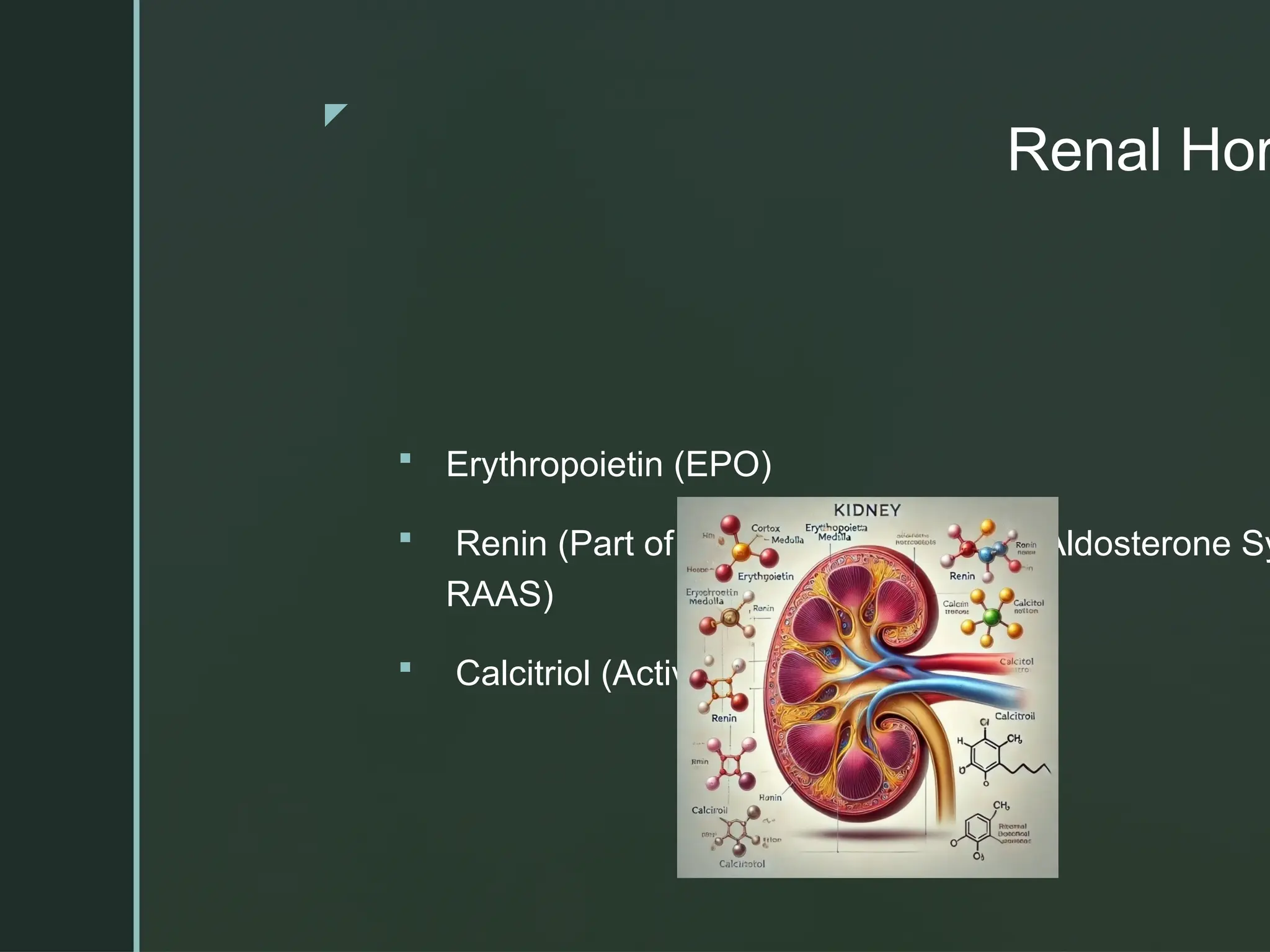
Renal Hor
 Erythropoietin (EPO)
 Renin (Part of the Renin-Angiotensin-Aldosterone Sy
RAAS)
 Calcitriol (Active Vitamin D)
z
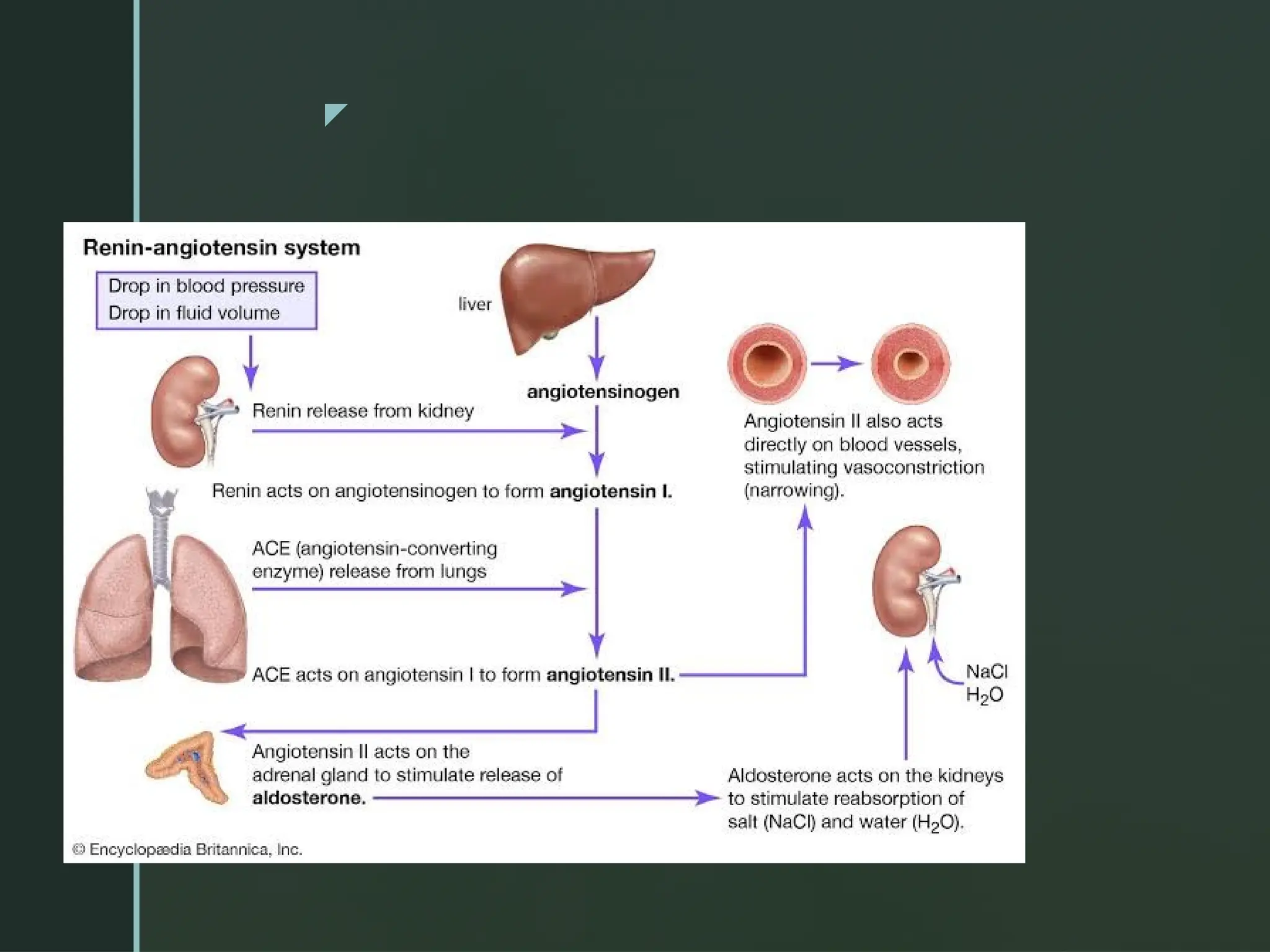
 Renin (Part of the Renin-Angiotensin-Aldosterone System, RAAS).
 Drop in blood pressure and fluid induce this mechanism.
 THE JUXTAGLOMERULAR APPARATUS
 The renin in kidney extracts and the bloodstream is produced by the
juxtaglomerular cells (JG cells)
 Renin converts angiotensinogen (produced by the liver) into angioten
then converted to angiotensin II (a potent vasoconstrictor) by the ang
converting enzyme (ACE). Angiotensin II stimulates aldosterone relea
adrenal glands, promoting sodium and water retention. Homeostasis:
blood pressure stability and proper blood volume.
z
z
Clinical cor
 1. Hypertension
 High Renin Hypertension: Conditions with elevated renin levels often lead to secondary hype
 Renovascular hypertension (e.g., renal artery stenosis)
 Malignant hypertension
 Certain forms of essential hypertension
 Low Renin Hypertension: Often associated with:
 Primary hyperaldosteronism (e.g., Conn's syndrome)
 Liddle syndrome
 Cushing’s syndrome
 Chronic kidney disease
 Clinical Use: Measuring renin and aldosterone levels helps distinguish between primary and
of hypertension
z
 Renal artery stenosis lead to reduced renal perfusion
stimulating renin release. This results in secondary
hyperaldosteronism, causing hypertension and hypok
 Renin levels are often elevated.
 In heart failure, reduced cardiac output leads to decre
perfusion, stimulating renin release. This can exacerb
retention and worsen symptoms.
 Renin inhibitors (e.g., aliskiren) or RAAS blockers (AC
inhibitors, ARBs) are used therapeutically.
z
C
Laboratory Assessment
Plasma Renin Activity (PRA): Reflects the enzymatic act
renin converting angiotensinogen to angiotensin I.
Direct Renin Concentration (DRC): Measures the amoun
in the blood.
Testing often includes aldosterone measurements to cal
aldosterone-to-renin ratio (ARR).
z
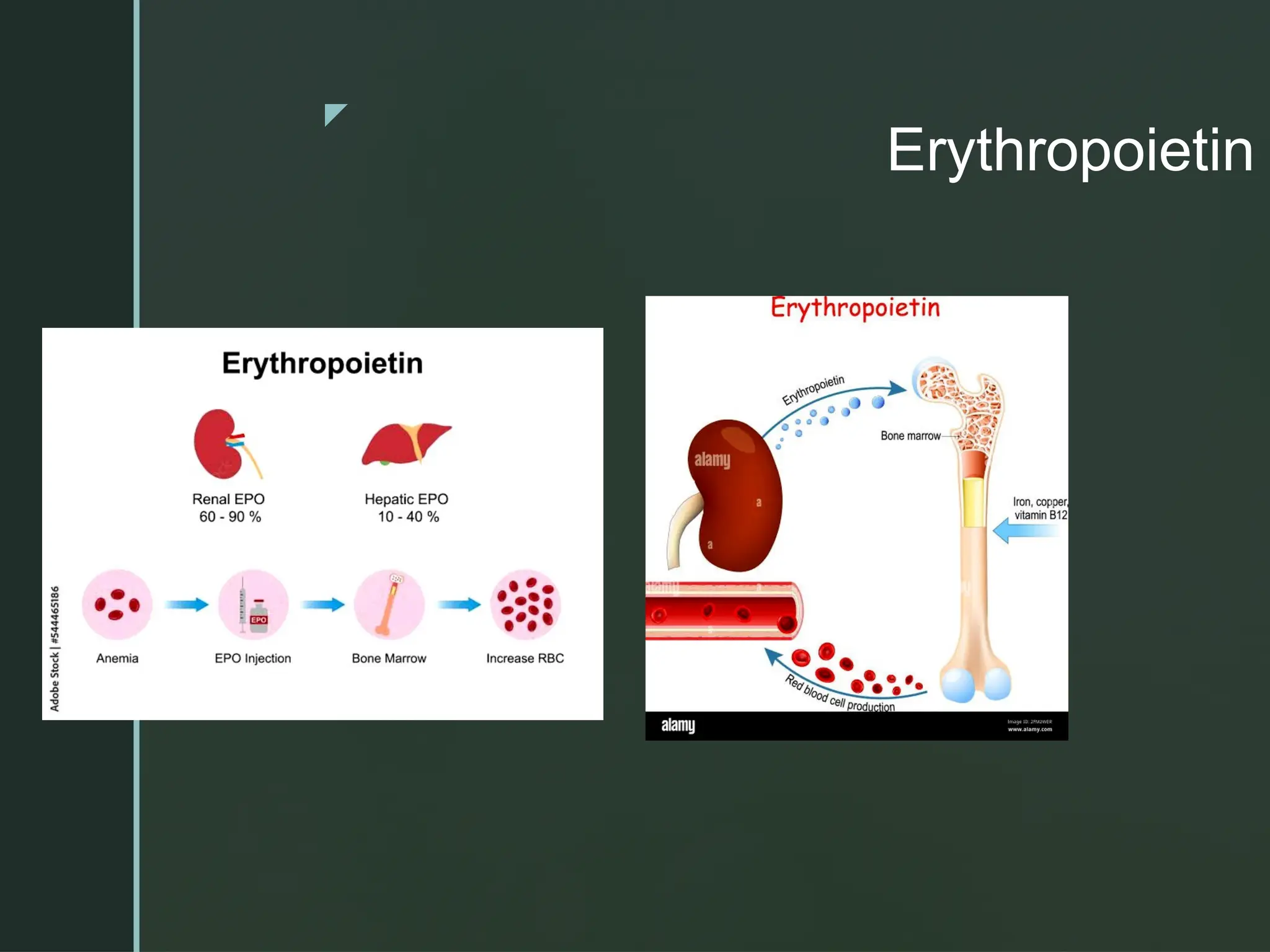
Erythropoietin
 Role: Stimulates red blood cell production in the bone marrow in response to
levels (hypoxia).
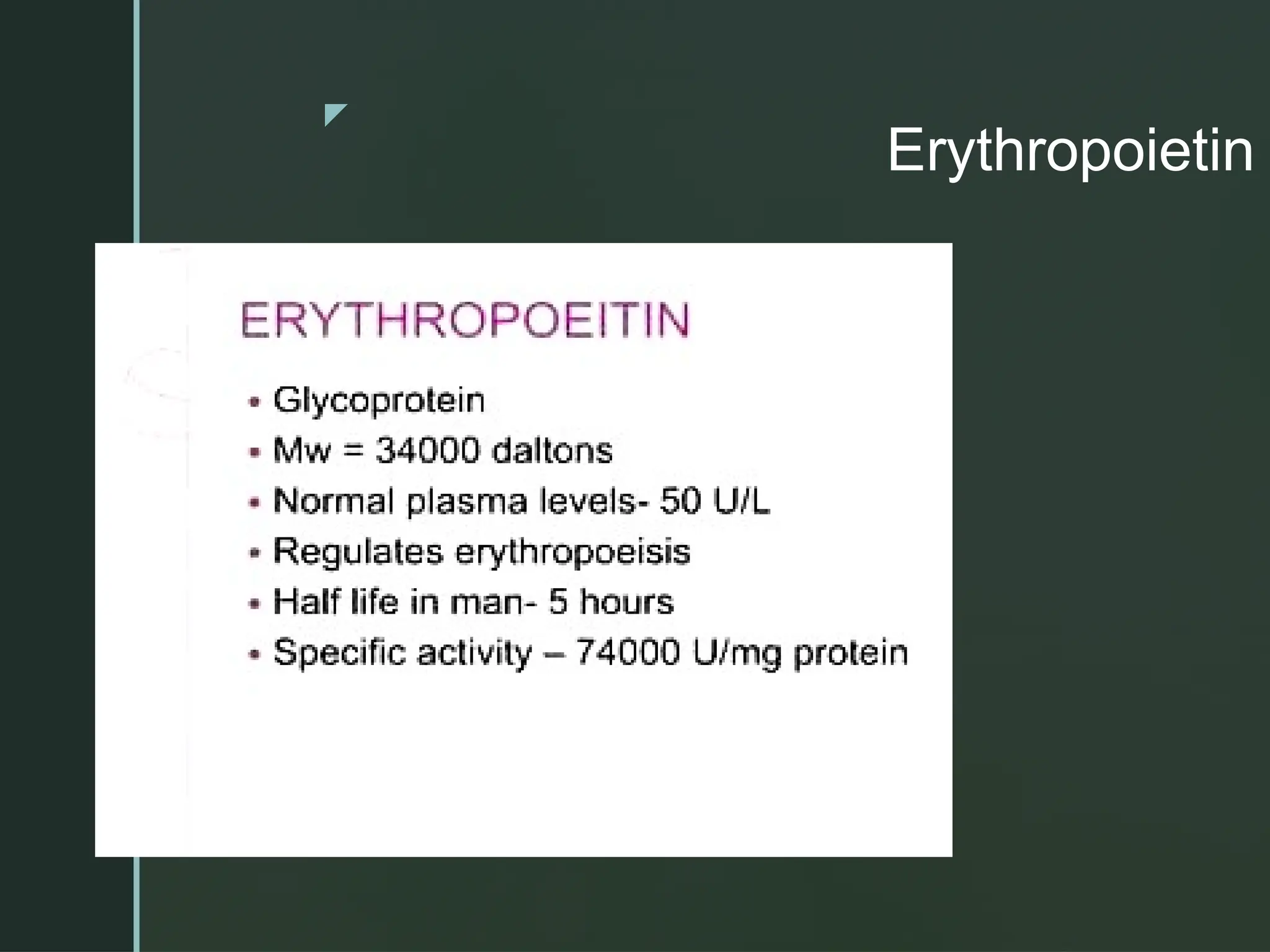
 Erythropoitin is a peptide hormone which regulates Erythropoiesis
 Homeostasis: Helps maintain adequate oxygen delivery to tissues by regula
cell levels.
 In adults, about 85% of the erythropoietin comes from the kidneys and 15%
 Both these organs contain the mRNA for erythropoietin.
 Erythropoietin can also be extracted from the spleen and salivary glands, bu
do not contain its mRNA and consequently do not appear to manufacture the
 Erythropoietin is produced by interstitial cells in the peritubular capillary bed
and by perivenous hepatocytes in the liver.
z
Erythropoietin
z
Erythropoietin
z
Erythropoietin
 Clinical correlations
 For most people in end stage renal failure,anaemia w
erythropoietin deficiency occurs.
 Can administer Recombinant erythropoietin to these
z
 Anemia
 Anemia of Chronic Disease or Preoperative Anemia: Ma
patients present with anemia, which increases the risk o
perioperative complications. Administering recombinant
erythropoietin (rHuEPO) preoperatively, often alongside
supplementation, can boost hemoglobin levels and redu
need for blood transfusions during surgery.
 Orthopedic or Cardiac Surgery: EPO is particularly bene
major surgeries, such as joint replacements or cardiac p
where blood loss is anticipated.
z
 Reduction in Allogeneic Blood Transfusions
 Allogeneic blood transfusions are associated with risks such as infections,
reactions, and fluid overload.
 Using EPO reduces the dependency on transfusions by enhancing the pa
erythropoietic response.
 Chronic Kidney Disease (CKD): CKD patients often have low baseline EPO
to anemia. Recombinant EPO is critical for managing their anemia before a
surgery.
 Cancer Surgery: EPO may be used cautiously in cancer patients undergoin
anemia is common in this population, though concerns about tumor progre
thrombosis exist
z
 Risks and Limitations
 Thromboembolic Events: EPO increases the risk of v
thromboembolism, especially in patients with high he
targets.
 Hypertension: EPO can exacerbate hypertension, wh
requires careful monitoring perioperatively.
 Optimal Timing: The administration of EPO typically r
weeks to elevate hemoglobin levels effectively, so it m
suitable for urgent surgeries
z
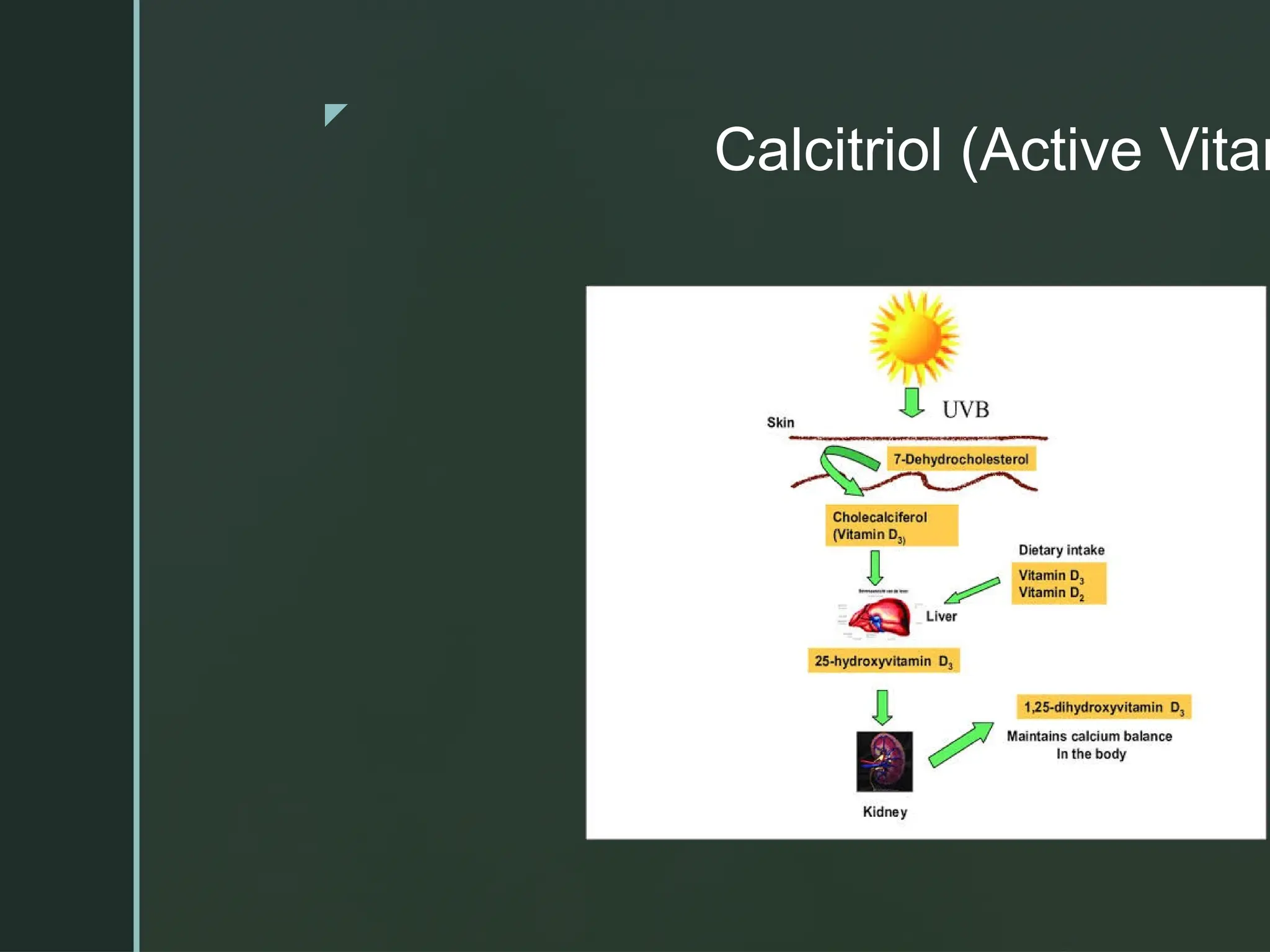
Calcitriol (Active Vitam
 Calcitriol (Active Vitamin D): Role: Promotes calcium and
phosphate absorption in the intestines, regulates bone
mineralization, and modulates parathyroid hormone (PTH)
levels.
 Homeostasis: Maintains calcium and phosphate balance,
crucial for bone health and neuromuscular function
z
Calcitriol (Active Vitam
z
CLNICAL CORREL
 After parathyroidectomy; hypocalcemia (hungry bone syndrome) may devel
rapidly uptake calcium. Calcitriol is often administered postoperatively to en
calcium absorption and mitigate hypocalcemia.
 Renal Transplantation
 Post-Transplant Hypocalcemia:
 Patients with chronic kidney disease (CKD) often have suppressed calcitriol
reduced renal conversion of 25-hydroxyvitamin D to calcitriol.
 Post-surgery, calcitriol supplementation is crucial for restoring calcium-phos
 Bone Health:
 Calcitriol is used to manage secondary hyperparathyroidism and prevent ren
osteodystrophy.
z
 Bone Healing:
 Calcitriol promotes bone healing by enhancing calciu
phosphate deposition in bone matrix. In patients with
deficiency or osteoporosis, calcitriol supplementation
improve surgical outcomes.
 Fracture Repair:
 Adequate calcitriol levels are essential for proper min
and repair of fractures
z
 Monitoring: Regular monitoring of calcium, phosphoru
PTH levels is critical when using calcitriol in periopera
settings.
 Dose Adjustment: Overuse of calcitriol can lead to
hypercalcemia and hyperphosphatemia, potentially ca
nephrocalcinosis or vascular calcifications.
 Vitamin D Deficiency: Surgeons should assess and c
vitamin D deficiency preoperatively to optimize surgic
outcomes.
z
SUM
 Recap:
 Kidneys are essential for homeostasis.
 Renal hormones regulate Blood pressure
 red blood cell production.
 Mineral balance.
 Dysregulation can lead to serious health issues.
 Hypertension
 Anemia
 Vitamin D deficiency.
z
refe
 Indu Khurana
 Ganong’s Medical Physiology
Renal to upload.pptxbsbbbekkishbnenjhhsbbb

Renal to upload.pptxbsbbbekkishbnenjhhsbbb

  • 1.
    z ROLE OF KIDNEYIN REGULATING INTERNAL ENVIROMENT
  • 2.
    z HOMEOS  Homeostasis isthe ability of a biological system to m stable internal environment despite external changes optimal conditions for cellular function by regulating v such as temperature, pH, electrolyte balance, and flu
  • 3.
  • 4.
    z ROLE OF K OVERVIEW OF KIDNEY  The kidney play a crucial role in filtering blood,balanc electrolytes,regulating blood pressure,and excreting w products
  • 5.
  • 6.
    z Renal phys  Fluidand Electrolyte Balance – Regulating water, sodium, potassium electrolytes.  Acid-Base Balance – Maintaining blood pH.  Waste Removal – Excreting metabolic waste and toxins.  Blood Pressure Regulation – Modulating blood volume and pressure  Erythropoiesis – Stimulating red blood cell production in response to  Bone Health – Managing calcium and phosphate levels.  Detoxification – Eliminating harmful substances from the body. The k vital organs that maintain internal stability through their regulatory fun
  • 7.
    z Acid-base b  MaintainingpH  Kidney plays an important role in maintenance of acid-  base balance by excreting hydrogen ions and retainingbicarbonate ions.  Normally, urine is acidic in nature with a pH of 4.5 to6.  Metabolic activities in the body produce large quantity of acids (with lot o ions), which threatento push the body towards acidosis.  However, kidneys prevent this.  Kidneys prevent acidosis by two ways:  1. Reabsorption of bicarbonate ions (HCO3)  2. Secretion of hydrogen ions (H+).
  • 8.
    z Role of kidneyin homeo  The kidneys are crucial in maintaining homeostasis, w body's ability to maintain stable internal conditions de external changes. The kidneys regulate several phys parameters to ensure the internal environment remain for cell function.
  • 9.
    z Renal Hor  Erythropoietin(EPO)  Renin (Part of the Renin-Angiotensin-Aldosterone Sy RAAS)  Calcitriol (Active Vitamin D)
  • 10.
    z  Renin (Partof the Renin-Angiotensin-Aldosterone System, RAAS).  Drop in blood pressure and fluid induce this mechanism.  THE JUXTAGLOMERULAR APPARATUS  The renin in kidney extracts and the bloodstream is produced by the juxtaglomerular cells (JG cells)  Renin converts angiotensinogen (produced by the liver) into angioten then converted to angiotensin II (a potent vasoconstrictor) by the ang converting enzyme (ACE). Angiotensin II stimulates aldosterone relea adrenal glands, promoting sodium and water retention. Homeostasis: blood pressure stability and proper blood volume.
  • 11.
  • 12.
    z Clinical cor  1.Hypertension  High Renin Hypertension: Conditions with elevated renin levels often lead to secondary hype  Renovascular hypertension (e.g., renal artery stenosis)  Malignant hypertension  Certain forms of essential hypertension  Low Renin Hypertension: Often associated with:  Primary hyperaldosteronism (e.g., Conn's syndrome)  Liddle syndrome  Cushing’s syndrome  Chronic kidney disease  Clinical Use: Measuring renin and aldosterone levels helps distinguish between primary and of hypertension
  • 13.
    z  Renal arterystenosis lead to reduced renal perfusion stimulating renin release. This results in secondary hyperaldosteronism, causing hypertension and hypok  Renin levels are often elevated.  In heart failure, reduced cardiac output leads to decre perfusion, stimulating renin release. This can exacerb retention and worsen symptoms.  Renin inhibitors (e.g., aliskiren) or RAAS blockers (AC inhibitors, ARBs) are used therapeutically.
  • 14.
    z C Laboratory Assessment Plasma ReninActivity (PRA): Reflects the enzymatic act renin converting angiotensinogen to angiotensin I. Direct Renin Concentration (DRC): Measures the amoun in the blood. Testing often includes aldosterone measurements to cal aldosterone-to-renin ratio (ARR).
  • 15.
    z Erythropoietin  Role: Stimulatesred blood cell production in the bone marrow in response to levels (hypoxia).  Erythropoitin is a peptide hormone which regulates Erythropoiesis  Homeostasis: Helps maintain adequate oxygen delivery to tissues by regula cell levels.  In adults, about 85% of the erythropoietin comes from the kidneys and 15%  Both these organs contain the mRNA for erythropoietin.  Erythropoietin can also be extracted from the spleen and salivary glands, bu do not contain its mRNA and consequently do not appear to manufacture the  Erythropoietin is produced by interstitial cells in the peritubular capillary bed and by perivenous hepatocytes in the liver.
  • 16.
  • 17.
  • 18.
    z Erythropoietin  Clinical correlations For most people in end stage renal failure,anaemia w erythropoietin deficiency occurs.  Can administer Recombinant erythropoietin to these
  • 19.
    z  Anemia  Anemiaof Chronic Disease or Preoperative Anemia: Ma patients present with anemia, which increases the risk o perioperative complications. Administering recombinant erythropoietin (rHuEPO) preoperatively, often alongside supplementation, can boost hemoglobin levels and redu need for blood transfusions during surgery.  Orthopedic or Cardiac Surgery: EPO is particularly bene major surgeries, such as joint replacements or cardiac p where blood loss is anticipated.
  • 20.
    z  Reduction inAllogeneic Blood Transfusions  Allogeneic blood transfusions are associated with risks such as infections, reactions, and fluid overload.  Using EPO reduces the dependency on transfusions by enhancing the pa erythropoietic response.  Chronic Kidney Disease (CKD): CKD patients often have low baseline EPO to anemia. Recombinant EPO is critical for managing their anemia before a surgery.  Cancer Surgery: EPO may be used cautiously in cancer patients undergoin anemia is common in this population, though concerns about tumor progre thrombosis exist
  • 21.
    z  Risks andLimitations  Thromboembolic Events: EPO increases the risk of v thromboembolism, especially in patients with high he targets.  Hypertension: EPO can exacerbate hypertension, wh requires careful monitoring perioperatively.  Optimal Timing: The administration of EPO typically r weeks to elevate hemoglobin levels effectively, so it m suitable for urgent surgeries
  • 22.
    z Calcitriol (Active Vitam Calcitriol (Active Vitamin D): Role: Promotes calcium and phosphate absorption in the intestines, regulates bone mineralization, and modulates parathyroid hormone (PTH) levels.  Homeostasis: Maintains calcium and phosphate balance, crucial for bone health and neuromuscular function
  • 23.
  • 24.
    z CLNICAL CORREL  Afterparathyroidectomy; hypocalcemia (hungry bone syndrome) may devel rapidly uptake calcium. Calcitriol is often administered postoperatively to en calcium absorption and mitigate hypocalcemia.  Renal Transplantation  Post-Transplant Hypocalcemia:  Patients with chronic kidney disease (CKD) often have suppressed calcitriol reduced renal conversion of 25-hydroxyvitamin D to calcitriol.  Post-surgery, calcitriol supplementation is crucial for restoring calcium-phos  Bone Health:  Calcitriol is used to manage secondary hyperparathyroidism and prevent ren osteodystrophy.
  • 25.
    z  Bone Healing: Calcitriol promotes bone healing by enhancing calciu phosphate deposition in bone matrix. In patients with deficiency or osteoporosis, calcitriol supplementation improve surgical outcomes.  Fracture Repair:  Adequate calcitriol levels are essential for proper min and repair of fractures
  • 26.
    z  Monitoring: Regularmonitoring of calcium, phosphoru PTH levels is critical when using calcitriol in periopera settings.  Dose Adjustment: Overuse of calcitriol can lead to hypercalcemia and hyperphosphatemia, potentially ca nephrocalcinosis or vascular calcifications.  Vitamin D Deficiency: Surgeons should assess and c vitamin D deficiency preoperatively to optimize surgic outcomes.
  • 27.
    z SUM  Recap:  Kidneysare essential for homeostasis.  Renal hormones regulate Blood pressure  red blood cell production.  Mineral balance.  Dysregulation can lead to serious health issues.  Hypertension  Anemia  Vitamin D deficiency.
  • 28.
    z refe  Indu Khurana Ganong’s Medical Physiology