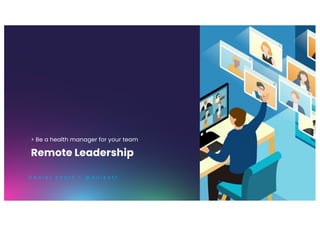
> Be a health manager for your team
Remote Leadership
D a n i e l K n o t t - @ d n l k n t t
Hi, I’m
Daniel Knott
👷 Head of Product Quality Engineering
📚 Author of the books:
• Hands-On Mobile App Testing (EN)
• Mobile App Testing (DE)
• Smartwatch App Testing (EN)
📺 youtube.com/@danielknott
🐦 @dnlkntt
🌎 www.adventuresinqa.com
Do you remember March 2020?
https://edition.cnn.com/2020/04/05/us/san-francisco-coronavirus-diary-simon/index.html
”Remote work is becoming the new norm,
but it also brings challenges to our health.
Let's explore how we can be leaders who
prioritize the well-being of our teams or
colleagues.”
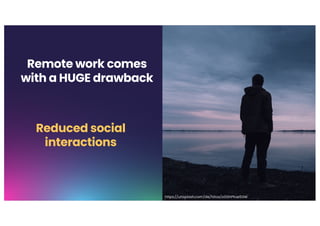
Remote work comes
with a HUGE drawback
Reduced social
interactions
https://unsplash.com/de/fotos/o0GhPKxe5GM
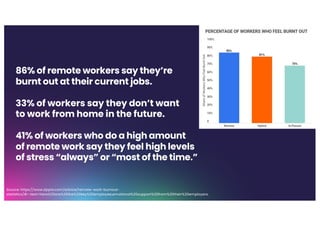
86% of remote workers say they’re
burnt out at their current jobs.
33% of workers say they don’t want
to work from home in the future.
41% of workers who do a high amount
of remote work say they feel high levels
of stress “always” or “most of the time.”
Source: https://www.zippia.com/advice/remote-work-burnout-
statistics/#:~:text=Here%20are%20the%20key%20employee,emotional%20support%20from%20their%20employers.
https://unsplash.com/de/fotos/SIU1Glk6v5k
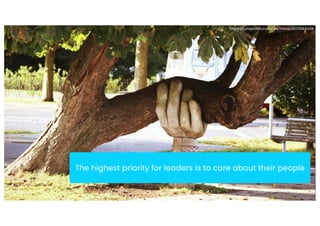
The highest priority for leaders is to care about their people
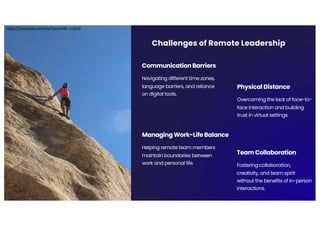
Challenges of Remote Leadership
Physical Distance
Overcoming the lack of face-to-
face interaction and building
trust in virtual settings.
Communication Barriers
Navigating different time zones,
language barriers, and reliance
on digital tools.
Team Collaboration
Fostering collaboration,
creativity, and team spirit
without the benefits of in-person
interactions.
Managing Work-Life Balance
Helping remote team members
maintain boundaries between
work and personal life.
https://unsplash.com/de/fotos/l4RL-cUDrdI
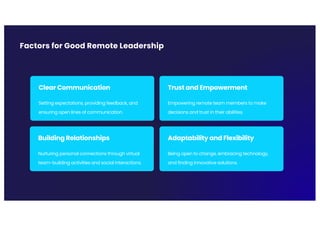
Clear Communication
Setting expectations, providing feedback, and
ensuring open lines of communication.
Trust and Empowerment
Empowering remote team members to make
decisions and trust in their abilities.
Building Relationships
Nurturing personal connections through virtual
team-building activities and social interactions.
Adaptability and Flexibility
Being open to change, embracing technology,
and finding innovative solutions.
Factors for Good Remote Leadership
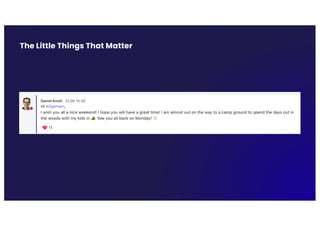
The Little Things That Matter
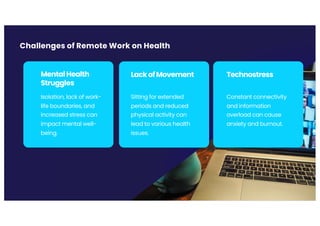
Challenges of Remote Work on Health
MentalHealth
Struggles
Isolation, lack of work-
life boundaries, and
increased stress can
impact mental well-
being.
LackofMovement
Sitting for extended
periods and reduced
physical activity can
lead to various health
issues.
Technostress
Constant connectivity
and information
overload can cause
anxiety and burnout.
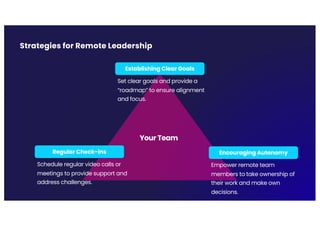
Strategies for Remote Leadership
Your Team
Set clear goals and provide a
“roadmap” to ensure alignment
and focus.
Establishing Clear Goals
Schedule regular video calls or
meetings to provide support and
address challenges.
Regular Check-ins
Empower remote team
members to take ownership of
their work and make own
decisions.
Encouraging Autonomy
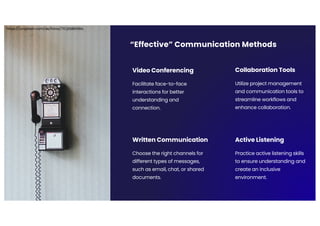
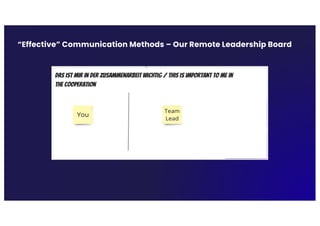
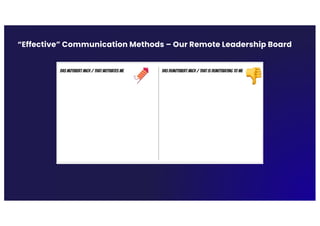
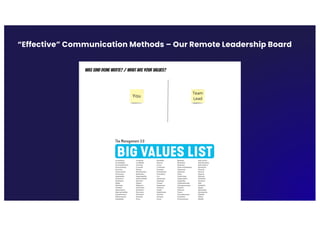
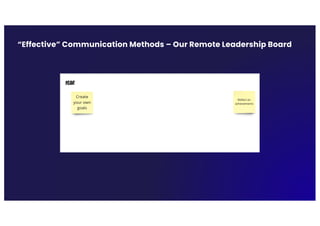
“Effective” Communication Methods
Video Conferencing
Facilitate face-to-face
interactions for better
understanding and
connection.
Collaboration Tools
Utilize project management
and communication tools to
streamline workflows and
enhance collaboration.
Written Communication
Choose the right channels for
different types of messages,
such as email, chat, or shared
documents.
Active Listening
Practice active listening skills
to ensure understanding and
create an inclusive
environment.
https://unsplash.com/de/fotos/71CjSSB83Wo
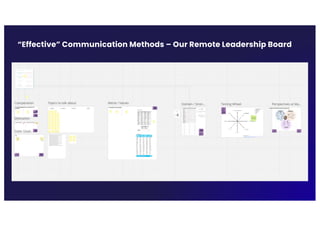
“Effective” Communication Methods – Our Remote Leadership Board
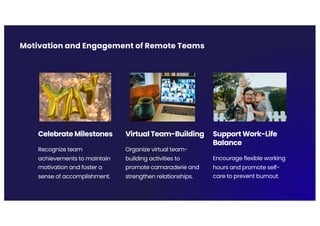
Celebrate Milestones
Recognize team
achievements to maintain
motivation and foster a
sense of accomplishment.
Virtual Team-Building
Organize virtual team-
building activities to
promote camaraderie and
strengthen relationships.
Support Work-Life
Balance
Encourage flexible working
hours and promote self-
care to prevent burnout.
Motivation and Engagement of Remote Teams
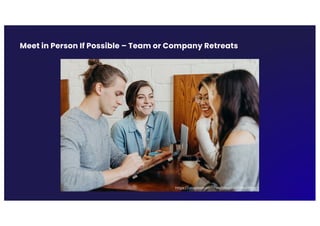
Meet in Person If Possible – Team or Company Retreats
https://unsplash.com/de/fotos/-uHVRvDr7pg
Tips for Remote Collaboration and Teamwork
Establish Team
Norms
• Define expected
behaviors and
guidelines for
remote
collaboration.
• Talk about your
and team values.
Promote Virtual
Collaboration
• Encourage virtual
brainstorming
sessions and idea-
sharing platforms.
• Use shared project
management
tools for increased
transparency.
Create Virtual
Watercoolers
• Establish virtual
spaces for casual
conversations and
non-work
interactions.
• Encourage team
members to share
interests and
hobbies.
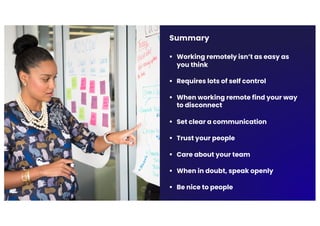
Summary
§ Working remotely isn’t as easy as
you think
§ Requires lots of self control
§ When working remote find your way
to disconnect
§ Set clear a communication
§ Trust your people
§ Care about your team
§ When in doubt, speak openly
§ Be nice to people
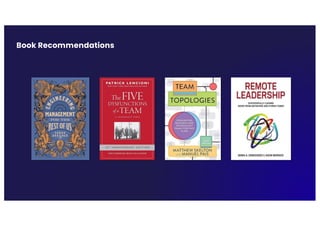
Book Recommendations
people. code. commitment.
Thanks for your
attention!
Time for questions
www.adventuresinqa.com

Remote Leadership

  • 1.
    > Be ahealth manager for your team Remote Leadership D a n i e l K n o t t - @ d n l k n t t
  • 2.
    Hi, I’m Daniel Knott 👷Head of Product Quality Engineering 📚 Author of the books: • Hands-On Mobile App Testing (EN) • Mobile App Testing (DE) • Smartwatch App Testing (EN) 📺 youtube.com/@danielknott 🐦 @dnlkntt 🌎 www.adventuresinqa.com
  • 3.
    Do you rememberMarch 2020?
  • 4.
  • 5.
    ”Remote work isbecoming the new norm, but it also brings challenges to our health. Let's explore how we can be leaders who prioritize the well-being of our teams or colleagues.”
  • 6.
    Remote work comes witha HUGE drawback Reduced social interactions https://unsplash.com/de/fotos/o0GhPKxe5GM
  • 7.
    86% of remoteworkers say they’re burnt out at their current jobs. 33% of workers say they don’t want to work from home in the future. 41% of workers who do a high amount of remote work say they feel high levels of stress “always” or “most of the time.” Source: https://www.zippia.com/advice/remote-work-burnout- statistics/#:~:text=Here%20are%20the%20key%20employee,emotional%20support%20from%20their%20employers.
  • 8.
    https://unsplash.com/de/fotos/SIU1Glk6v5k The highest priorityfor leaders is to care about their people
  • 9.
    Challenges of RemoteLeadership Physical Distance Overcoming the lack of face-to- face interaction and building trust in virtual settings. Communication Barriers Navigating different time zones, language barriers, and reliance on digital tools. Team Collaboration Fostering collaboration, creativity, and team spirit without the benefits of in-person interactions. Managing Work-Life Balance Helping remote team members maintain boundaries between work and personal life. https://unsplash.com/de/fotos/l4RL-cUDrdI
  • 10.
    Clear Communication Setting expectations,providing feedback, and ensuring open lines of communication. Trust and Empowerment Empowering remote team members to make decisions and trust in their abilities. Building Relationships Nurturing personal connections through virtual team-building activities and social interactions. Adaptability and Flexibility Being open to change, embracing technology, and finding innovative solutions. Factors for Good Remote Leadership
  • 11.
    The Little ThingsThat Matter
  • 12.
    Challenges of RemoteWork on Health MentalHealth Struggles Isolation, lack of work- life boundaries, and increased stress can impact mental well- being. LackofMovement Sitting for extended periods and reduced physical activity can lead to various health issues. Technostress Constant connectivity and information overload can cause anxiety and burnout.
  • 13.
    Strategies for RemoteLeadership Your Team Set clear goals and provide a “roadmap” to ensure alignment and focus. Establishing Clear Goals Schedule regular video calls or meetings to provide support and address challenges. Regular Check-ins Empower remote team members to take ownership of their work and make own decisions. Encouraging Autonomy
  • 14.
    “Effective” Communication Methods VideoConferencing Facilitate face-to-face interactions for better understanding and connection. Collaboration Tools Utilize project management and communication tools to streamline workflows and enhance collaboration. Written Communication Choose the right channels for different types of messages, such as email, chat, or shared documents. Active Listening Practice active listening skills to ensure understanding and create an inclusive environment. https://unsplash.com/de/fotos/71CjSSB83Wo
  • 15.
    “Effective” Communication Methods– Our Remote Leadership Board
  • 16.
    “Effective” Communication Methods– Our Remote Leadership Board
  • 17.
    “Effective” Communication Methods– Our Remote Leadership Board
  • 18.
    “Effective” Communication Methods– Our Remote Leadership Board
  • 19.
    “Effective” Communication Methods– Our Remote Leadership Board
  • 20.
    Celebrate Milestones Recognize team achievementsto maintain motivation and foster a sense of accomplishment. Virtual Team-Building Organize virtual team- building activities to promote camaraderie and strengthen relationships. Support Work-Life Balance Encourage flexible working hours and promote self- care to prevent burnout. Motivation and Engagement of Remote Teams
  • 21.
    Meet in PersonIf Possible – Team or Company Retreats https://unsplash.com/de/fotos/-uHVRvDr7pg
  • 22.
    Tips for RemoteCollaboration and Teamwork Establish Team Norms • Define expected behaviors and guidelines for remote collaboration. • Talk about your and team values. Promote Virtual Collaboration • Encourage virtual brainstorming sessions and idea- sharing platforms. • Use shared project management tools for increased transparency. Create Virtual Watercoolers • Establish virtual spaces for casual conversations and non-work interactions. • Encourage team members to share interests and hobbies.
  • 23.
    Summary § Working remotelyisn’t as easy as you think § Requires lots of self control § When working remote find your way to disconnect § Set clear a communication § Trust your people § Care about your team § When in doubt, speak openly § Be nice to people
  • 24.
  • 25.
    people. code. commitment. Thanksfor your attention! Time for questions www.adventuresinqa.com