Relative income poverty
ethnicity and disability
Relative income poverty
Ethnicity and disability
Financial year ending 2018
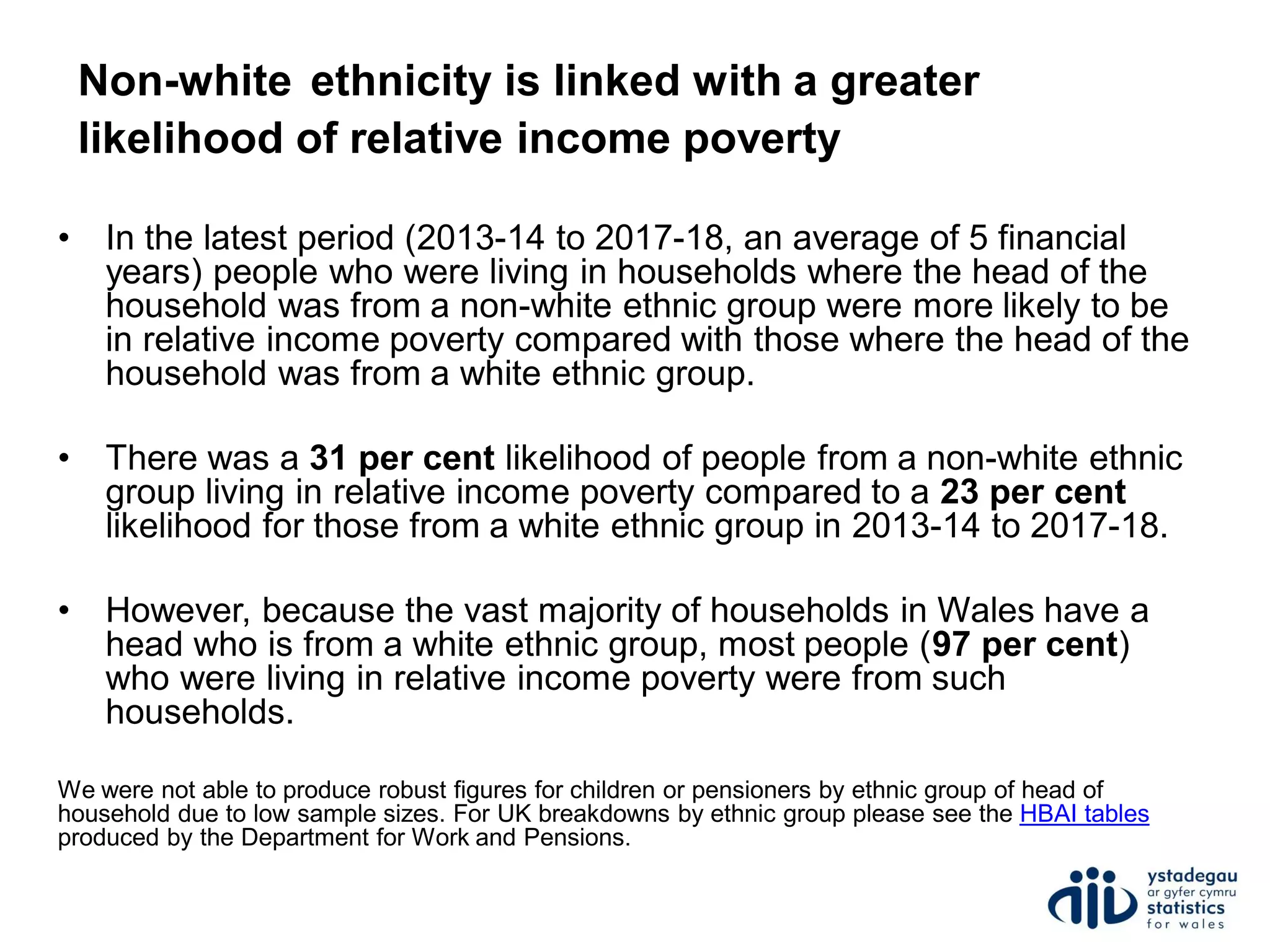
Non-white ethnicity is linked with a greater
likelihood of relative income poverty
• In the latest period (2013-14 to 2017-18, an average of 5 financial
years) people who were living in households where the head of the
household was from a non-white ethnic group were more likely to be
in relative income poverty compared with those where the head of the
household was from a white ethnic group.
• There was a 31 per cent likelihood of people from a non-white ethnic
group living in relative income poverty compared to a 23 per cent
likelihood for those from a white ethnic group in 2013-14 to 2017-18.
• However, because the vast majority of households in Wales have a
head who is from a white ethnic group, most people (97 per cent)
who were living in relative income poverty were from such
households.
We were not able to produce robust figures for children or pensioners by ethnic group of head of
household due to low sample sizes. For UK breakdowns by ethnic group please see the HBAI tables
produced by the Department for Work and Pensions.
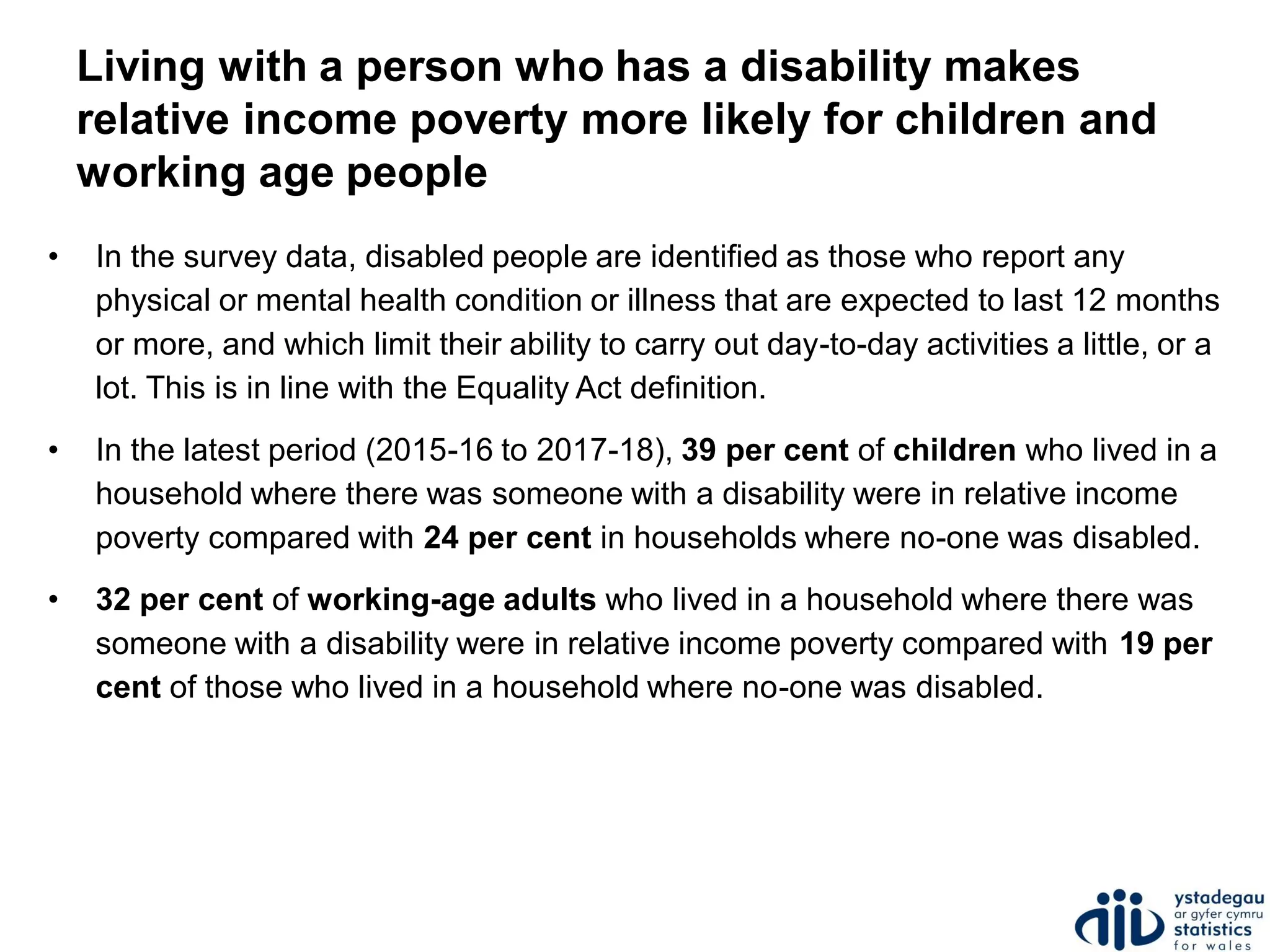
Living with a person who has a disability makes
relative income poverty more likely for children and
working age people
• In the survey data, disabled people are identified as those who report any
physical or mental health condition or illness that are expected to last 12 months
or more, and which limit their ability to carry out day-to-day activities a little, or a
lot. This is in line with the Equality Act definition.
• In the latest period (2015-16 to 2017-18), 39 per cent of children who lived in a
household where there was someone with a disability were in relative income
poverty compared with 24 per cent in households where no-one was disabled.
• 32 per cent of working-age adults who lived in a household where there was
someone with a disability were in relative income poverty compared with 19 per
cent of those who lived in a household where no-one was disabled.

Relative income poverty: Ethnicity and disability, financial year ending 2018

  • 1.
    Relative income poverty ethnicityand disability Relative income poverty Ethnicity and disability Financial year ending 2018
  • 2.
    Non-white ethnicity islinked with a greater likelihood of relative income poverty • In the latest period (2013-14 to 2017-18, an average of 5 financial years) people who were living in households where the head of the household was from a non-white ethnic group were more likely to be in relative income poverty compared with those where the head of the household was from a white ethnic group. • There was a 31 per cent likelihood of people from a non-white ethnic group living in relative income poverty compared to a 23 per cent likelihood for those from a white ethnic group in 2013-14 to 2017-18. • However, because the vast majority of households in Wales have a head who is from a white ethnic group, most people (97 per cent) who were living in relative income poverty were from such households. We were not able to produce robust figures for children or pensioners by ethnic group of head of household due to low sample sizes. For UK breakdowns by ethnic group please see the HBAI tables produced by the Department for Work and Pensions.
  • 3.
    Living with aperson who has a disability makes relative income poverty more likely for children and working age people • In the survey data, disabled people are identified as those who report any physical or mental health condition or illness that are expected to last 12 months or more, and which limit their ability to carry out day-to-day activities a little, or a lot. This is in line with the Equality Act definition. • In the latest period (2015-16 to 2017-18), 39 per cent of children who lived in a household where there was someone with a disability were in relative income poverty compared with 24 per cent in households where no-one was disabled. • 32 per cent of working-age adults who lived in a household where there was someone with a disability were in relative income poverty compared with 19 per cent of those who lived in a household where no-one was disabled.