Downloaded 11 times


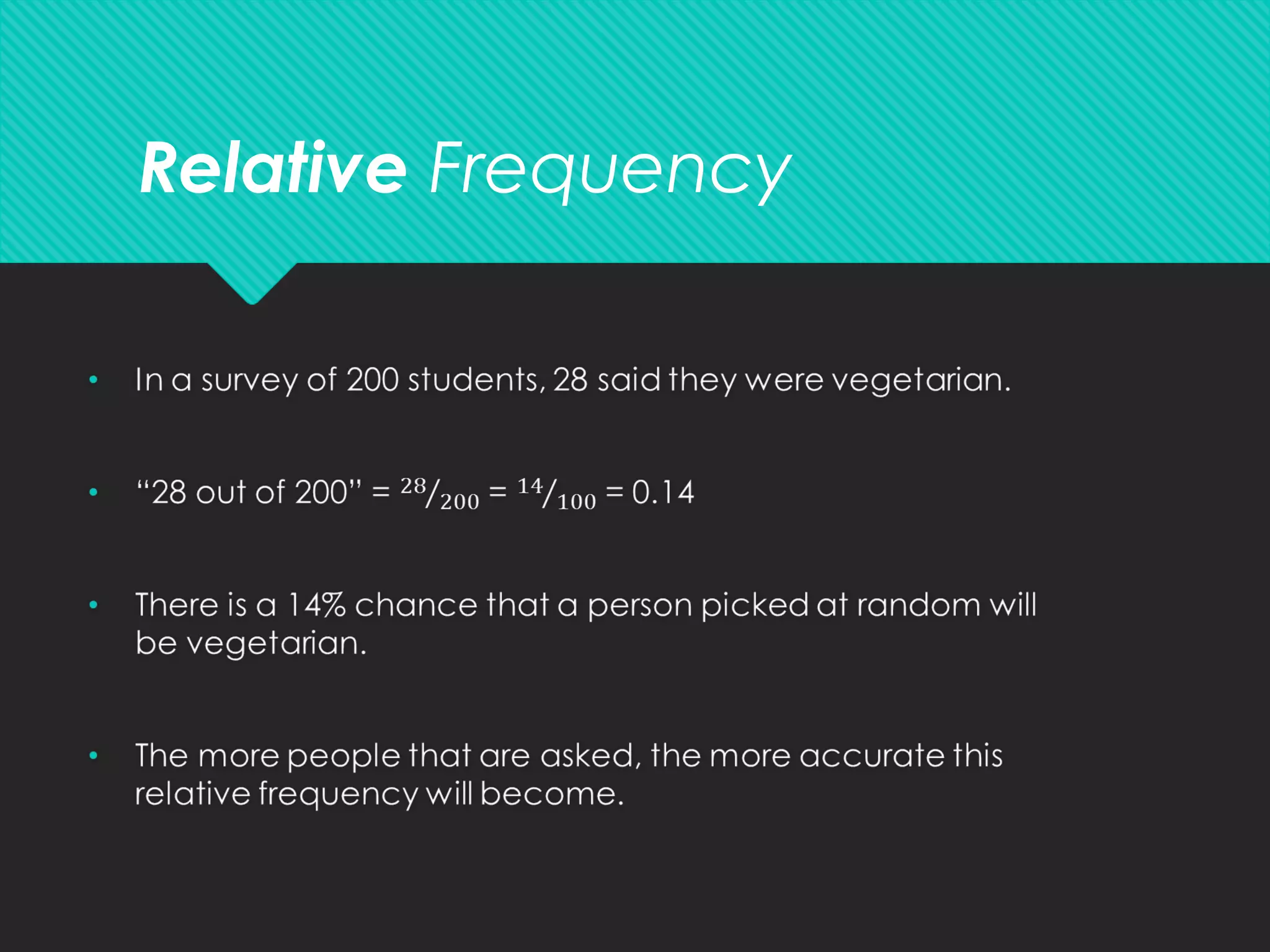


Relative frequency is defined as the number of times an event occurs during experiments and is used to calculate probabilities when theoretical predictions are difficult. It is often referred to as experimental probability, particularly useful in scenarios without a predetermined theory. An example includes calculating the probability of selecting a vegetarian from a group by conducting an experiment.


