Regenerative Type Load- Lift & Elevator applications.
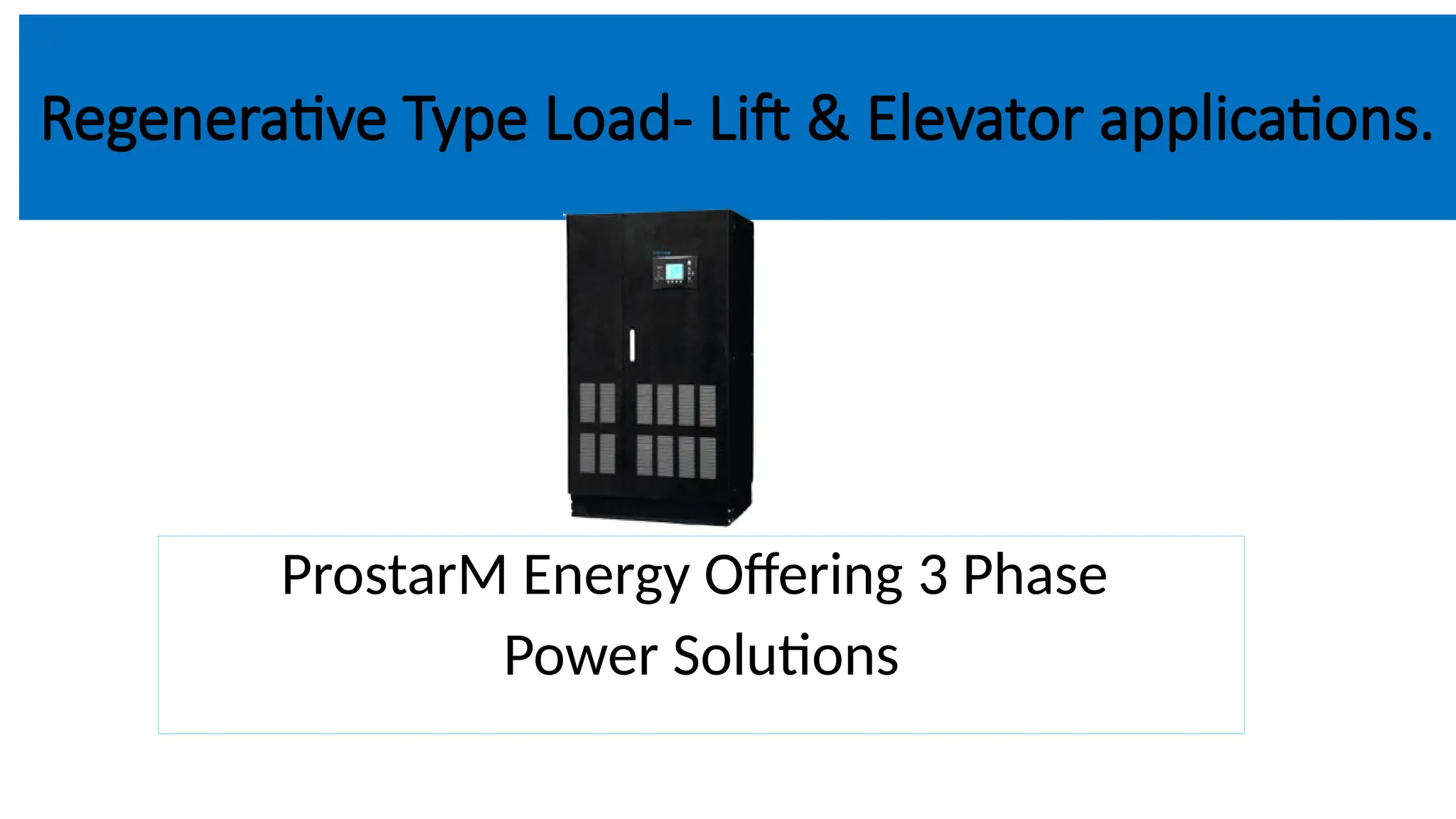
ProstarM Energy Offering 3 Phase
Power Solutions
Regenerative Loads- Introduction
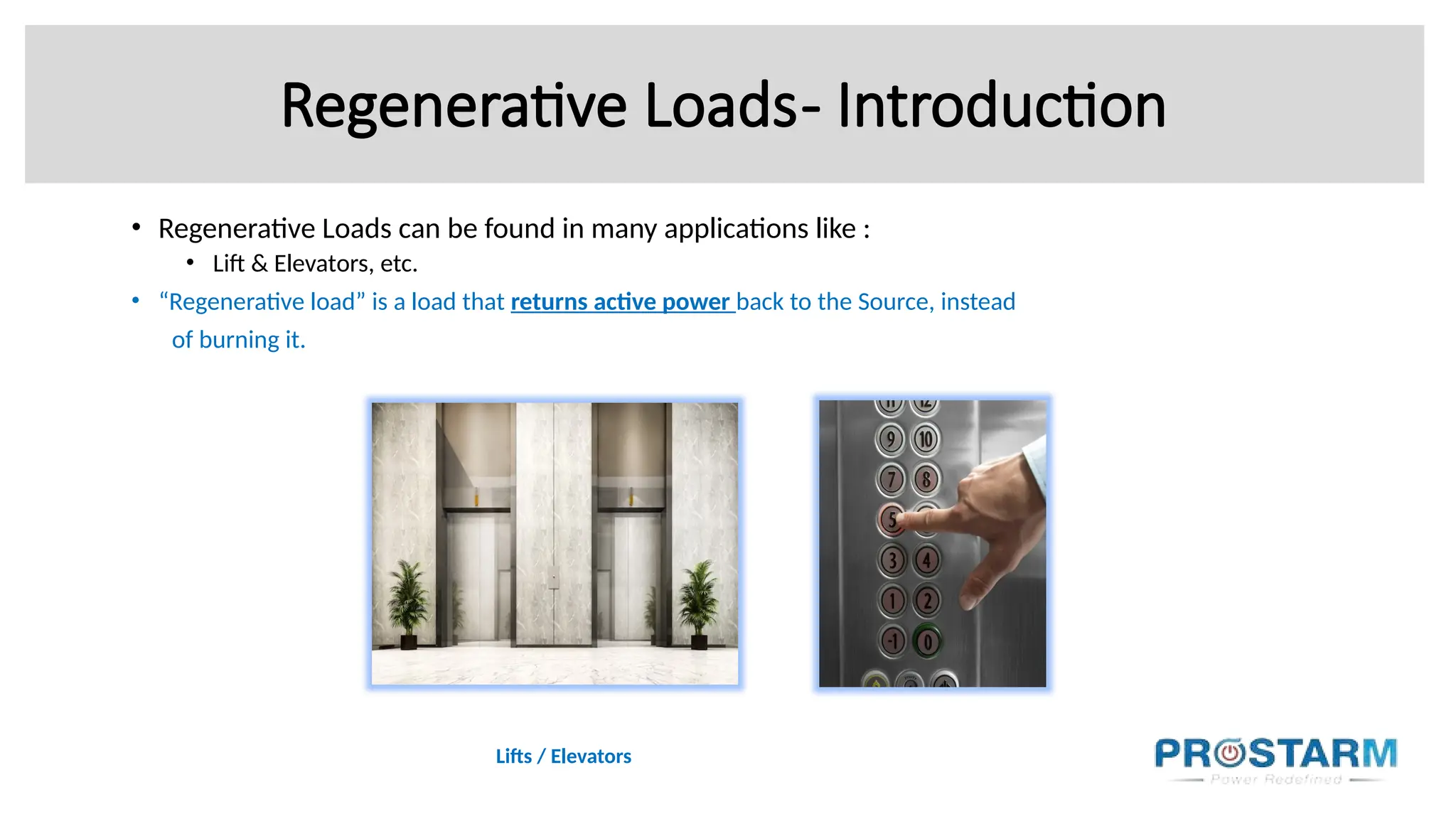
• Regenerative Loads can be found in many applications like :
• Lift & Elevators, etc.
• “Regenerative load” is a load that returns active power back to the Source, instead
of burning it.
Lifts / Elevators
Regenerative Loads- Introduction
• Major Brands with larger market share.
• Regenerative power can be a benefit when used effectively for energy saving and
efficiency.
Regenerative Loads- Introduction
•Principle
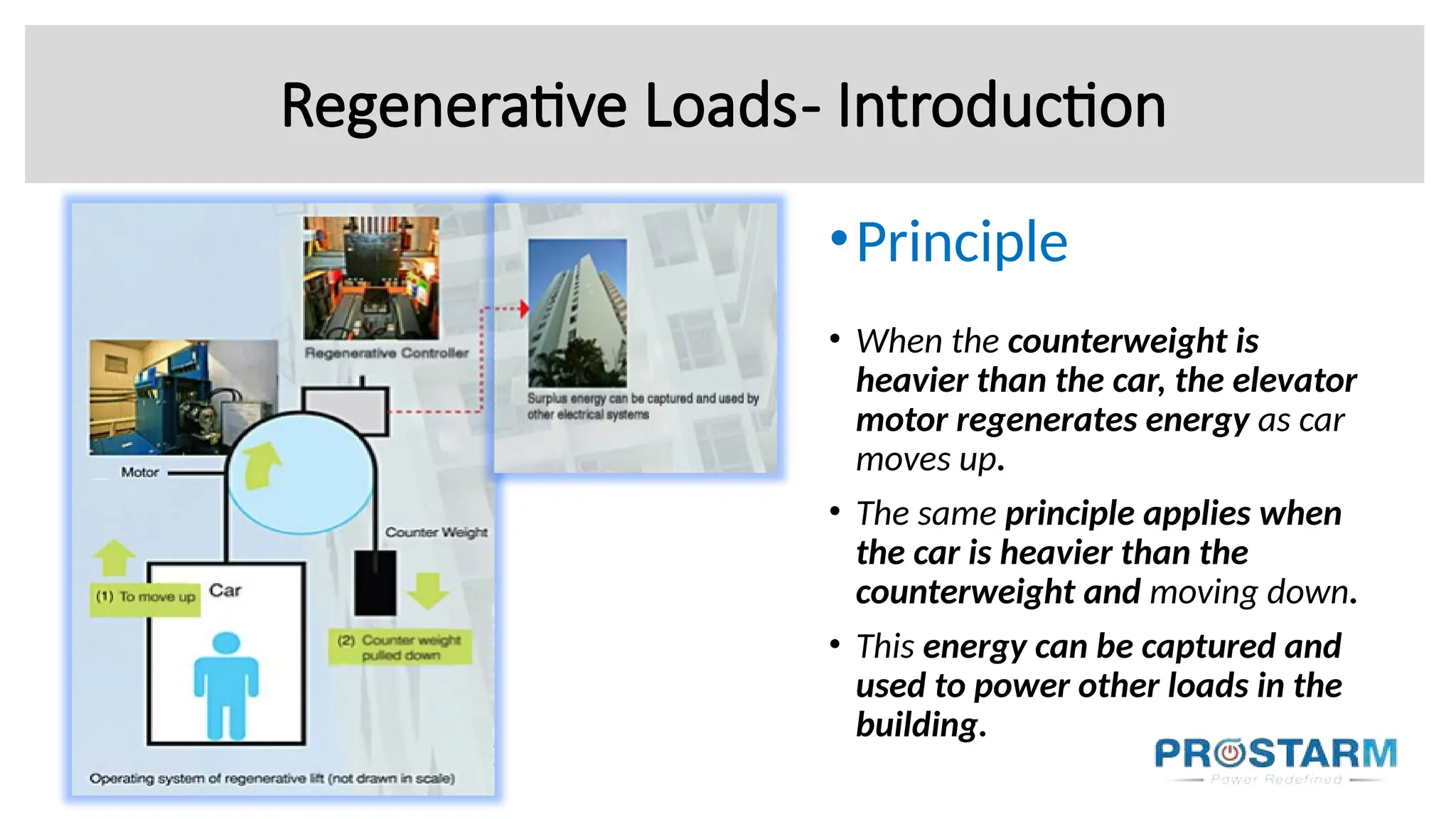
• When the counterweight is
heavier than the car, the elevator
motor regenerates energy as car
moves up.
• The same principle applies when
the car is heavier than the
counterweight and moving down.
• This energy can be captured and
used to power other loads in the
building.
Regenerative Loads- Elevators
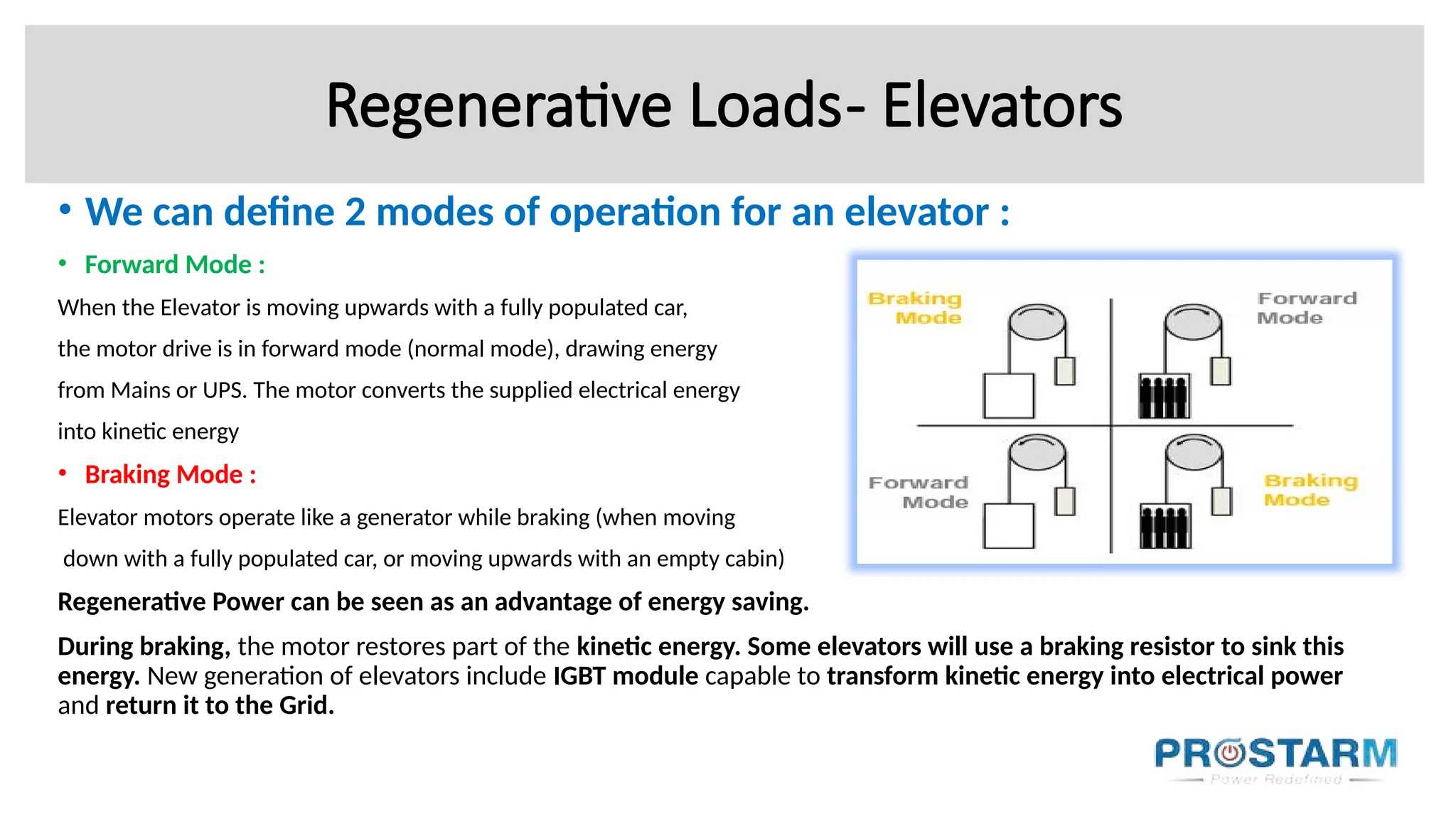
• We can define 2 modes of operation for an elevator :
• Forward Mode :
When the Elevator is moving upwards with a fully populated car,
the motor drive is in forward mode (normal mode), drawing energy
from Mains or UPS. The motor converts the supplied electrical energy
into kinetic energy
• Braking Mode :
Elevator motors operate like a generator while braking (when moving
down with a fully populated car, or moving upwards with an empty cabin)
Regenerative Power can be seen as an advantage of energy saving.
During braking, the motor restores part of the kinetic energy. Some elevators will use a braking resistor to sink this
energy. New generation of elevators include IGBT module capable to transform kinetic energy into electrical power
and return it to the Grid.
Regenerative Loads – UPS/ DG Set – Problems?
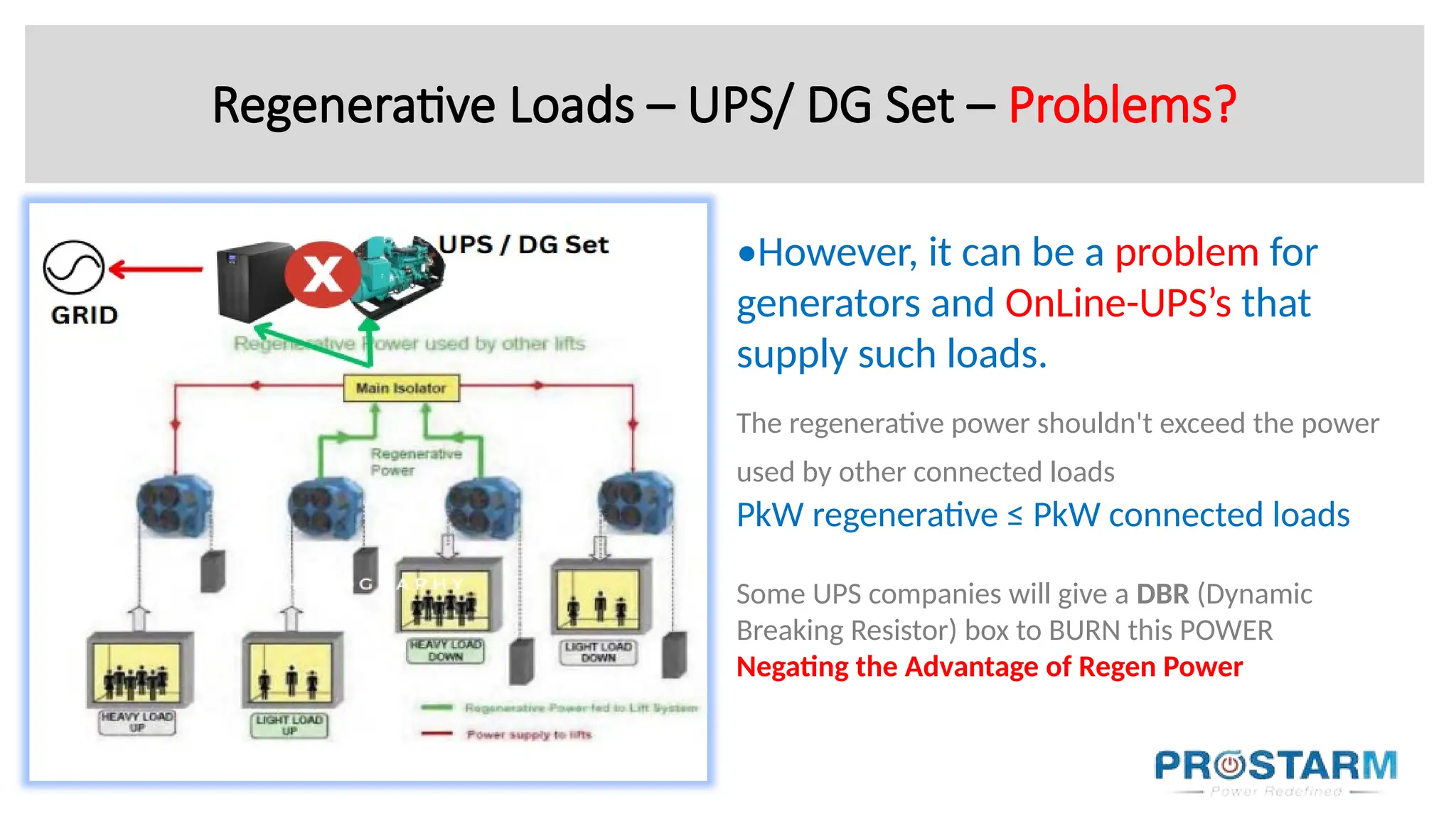
•However, it can be a problem for
generators and OnLine-UPS’s that
supply such loads.
The regenerative power shouldn't exceed the power
used by other connected loads
PkW regenerative ≤ PkW connected loads
Some UPS companies will give a DBR (Dynamic
Breaking Resistor) box to BURN this POWER
Negating the Advantage of Regen Power
Power Flow- Regenerative Load with UPS
«BRAKING MODE »
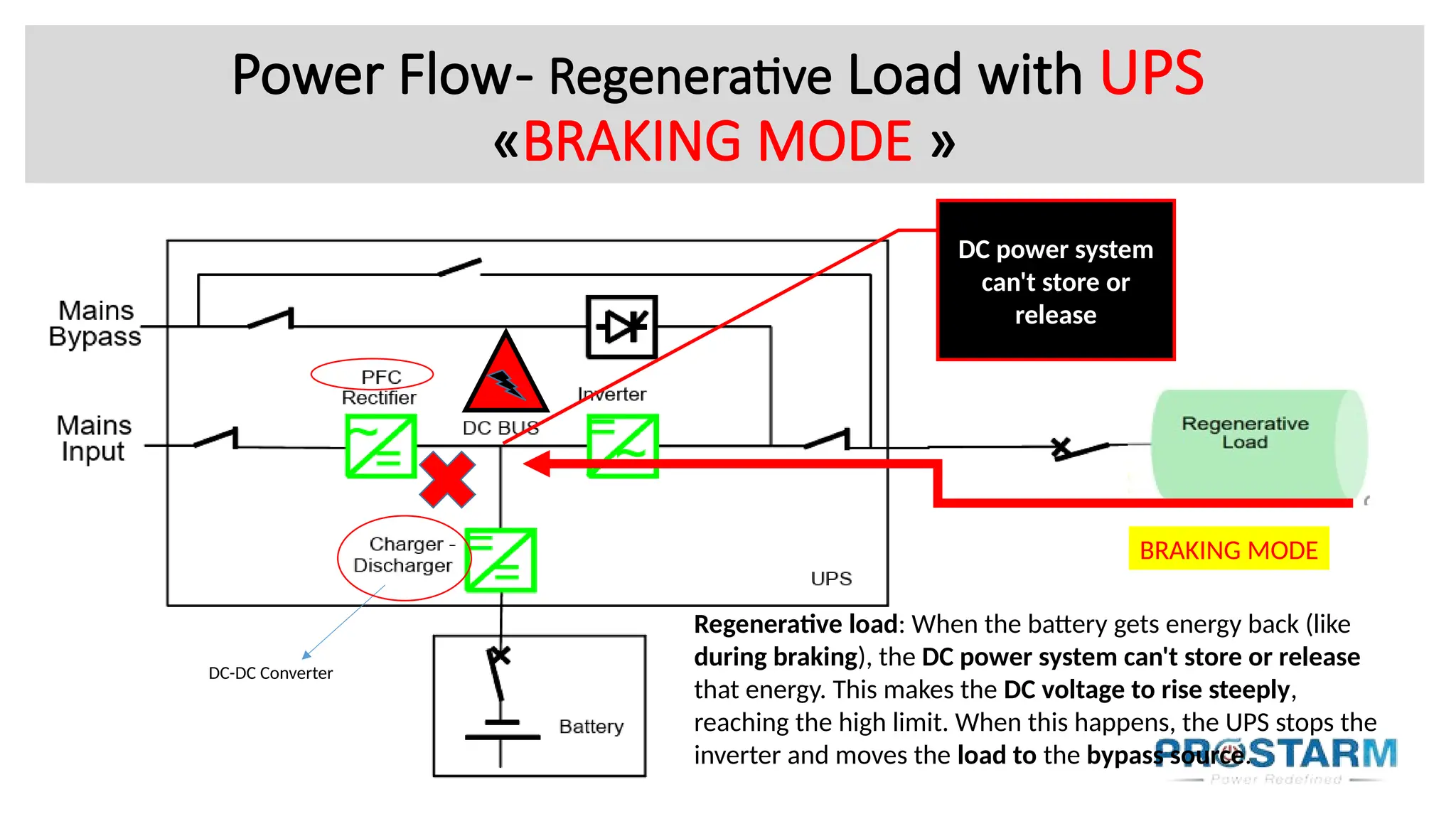
Regenerative load: When the battery gets energy back (like
during braking), the DC power system can't store or release
that energy. This makes the DC voltage to rise steeply,
reaching the high limit. When this happens, the UPS stops the
inverter and moves the load to the bypass source.
BRAKING MODE
DC power system
can't store or
release
DC-DC Converter
Regenerative Loads – Smart Inverter– Solutions!
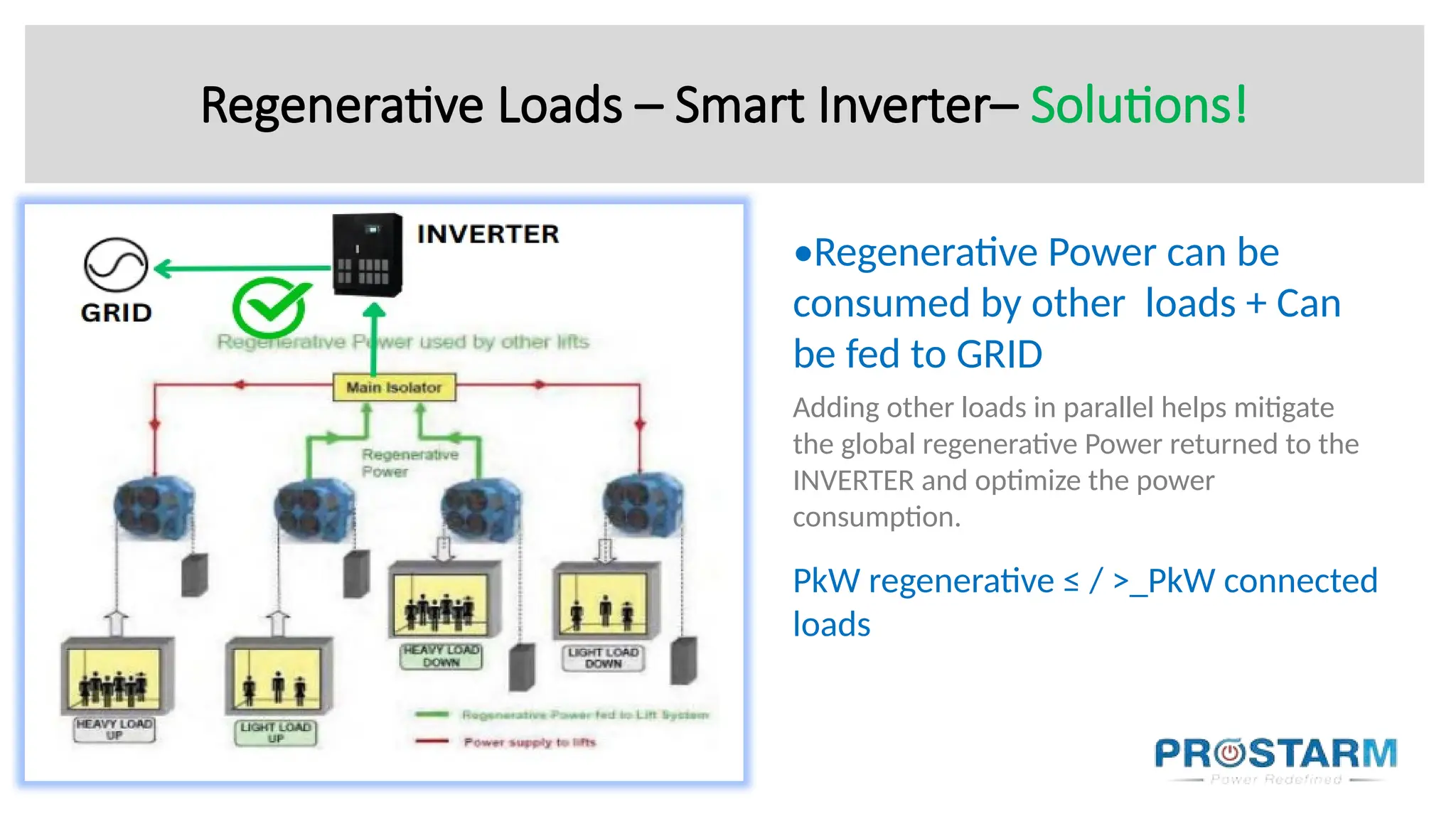
•Regenerative Power can be
consumed by other loads + Can
be fed to GRID
Adding other loads in parallel helps mitigate
the global regenerative Power returned to the
INVERTER and optimize the power
consumption.
PkW regenerative ≤ / >_PkW connected
loads
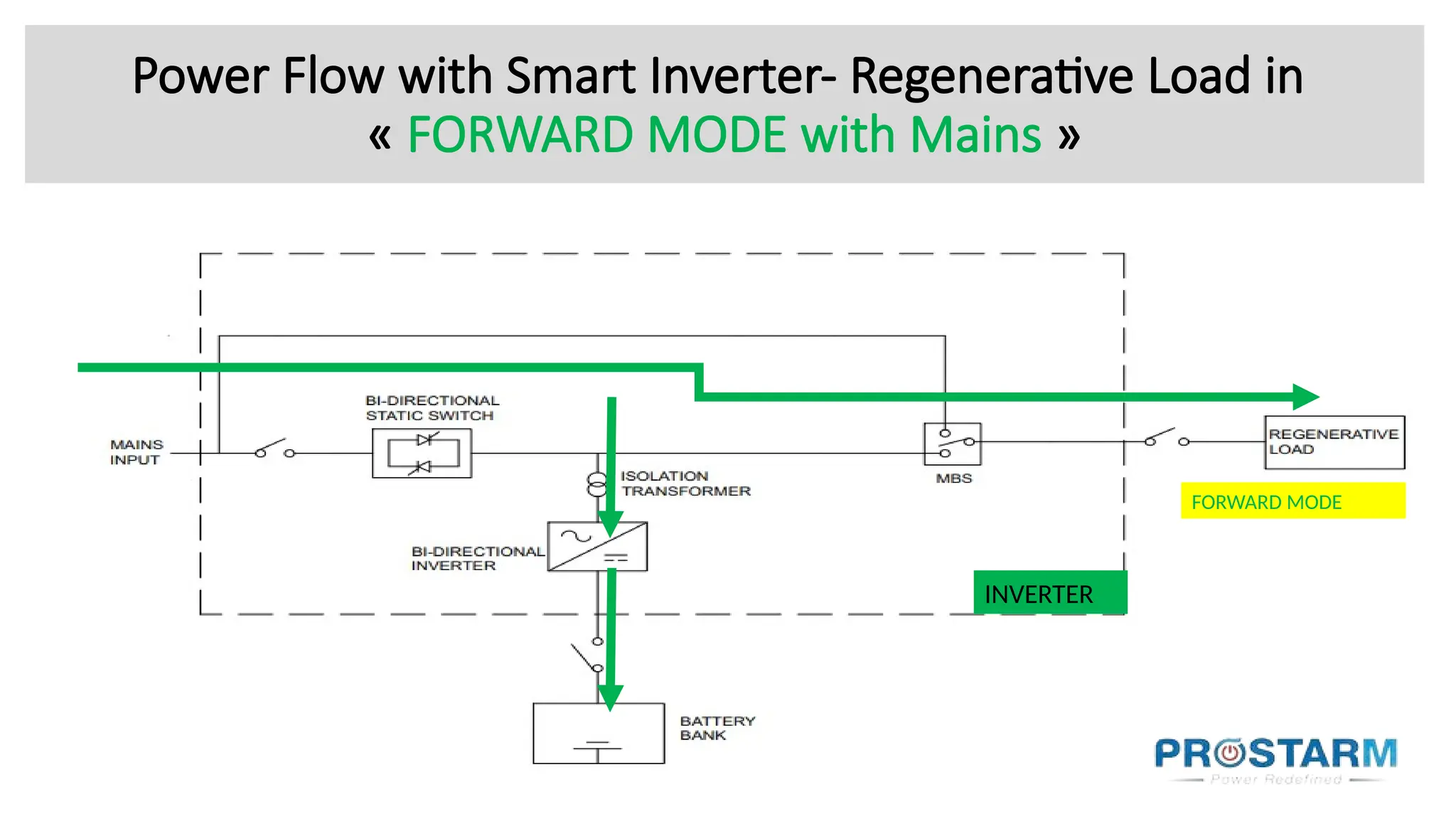
Power Flow with Smart Inverter- Regenerative Load in
« FORWARD MODE with Mains »
FORWARD MODE
INVERTER
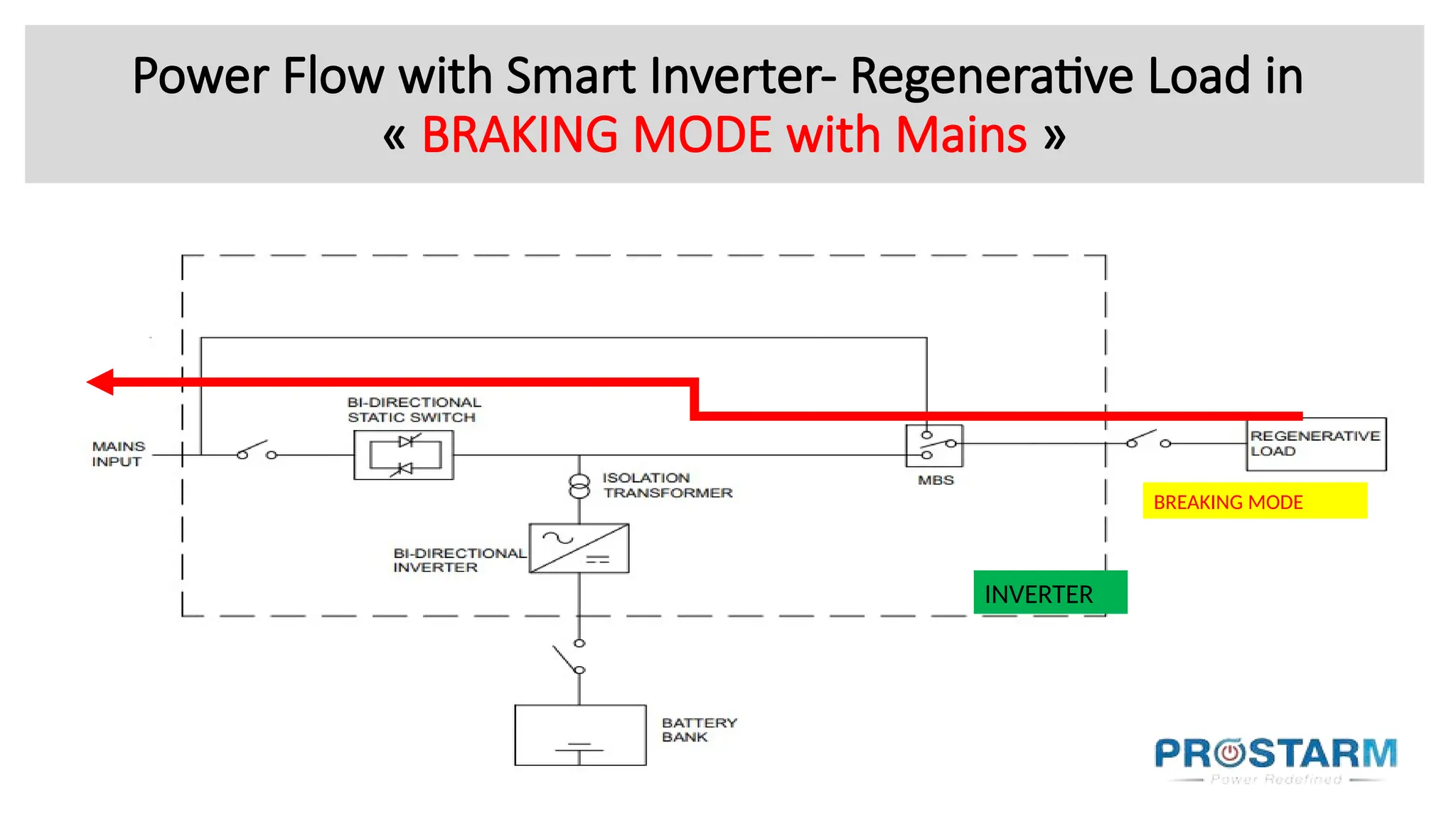
Power Flow with Smart Inverter- Regenerative Load in
« BRAKING MODE with Mains »
BREAKING MODE
INVERTER
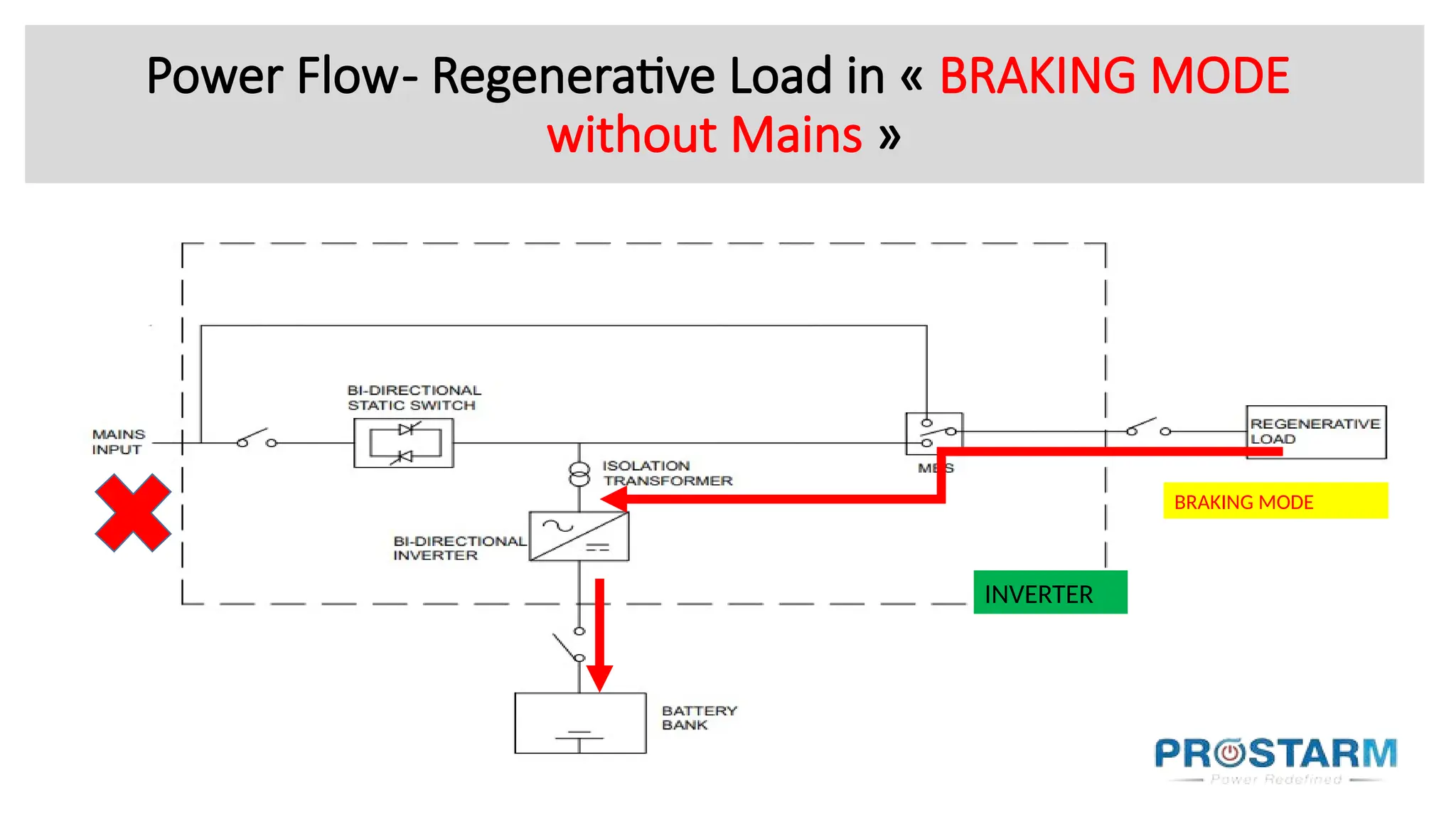
Power Flow- Regenerative Load in « BRAKING MODE
without Mains »
BRAKING MODE
INVERTER
Regenerative effect in Elevators and benefits

Regenerative effect in Elevators and benefits

  • 1.
    Regenerative Type Load-Lift & Elevator applications. ProstarM Energy Offering 3 Phase Power Solutions
  • 2.
    Regenerative Loads- Introduction •Regenerative Loads can be found in many applications like : • Lift & Elevators, etc. • “Regenerative load” is a load that returns active power back to the Source, instead of burning it. Lifts / Elevators
  • 3.
    Regenerative Loads- Introduction •Major Brands with larger market share. • Regenerative power can be a benefit when used effectively for energy saving and efficiency.
  • 4.
    Regenerative Loads- Introduction •Principle •When the counterweight is heavier than the car, the elevator motor regenerates energy as car moves up. • The same principle applies when the car is heavier than the counterweight and moving down. • This energy can be captured and used to power other loads in the building.
  • 5.
    Regenerative Loads- Elevators •We can define 2 modes of operation for an elevator : • Forward Mode : When the Elevator is moving upwards with a fully populated car, the motor drive is in forward mode (normal mode), drawing energy from Mains or UPS. The motor converts the supplied electrical energy into kinetic energy • Braking Mode : Elevator motors operate like a generator while braking (when moving down with a fully populated car, or moving upwards with an empty cabin) Regenerative Power can be seen as an advantage of energy saving. During braking, the motor restores part of the kinetic energy. Some elevators will use a braking resistor to sink this energy. New generation of elevators include IGBT module capable to transform kinetic energy into electrical power and return it to the Grid.
  • 6.
    Regenerative Loads –UPS/ DG Set – Problems? •However, it can be a problem for generators and OnLine-UPS’s that supply such loads. The regenerative power shouldn't exceed the power used by other connected loads PkW regenerative ≤ PkW connected loads Some UPS companies will give a DBR (Dynamic Breaking Resistor) box to BURN this POWER Negating the Advantage of Regen Power
  • 7.
    Power Flow- RegenerativeLoad with UPS «BRAKING MODE » Regenerative load: When the battery gets energy back (like during braking), the DC power system can't store or release that energy. This makes the DC voltage to rise steeply, reaching the high limit. When this happens, the UPS stops the inverter and moves the load to the bypass source. BRAKING MODE DC power system can't store or release DC-DC Converter
  • 8.
    Regenerative Loads –Smart Inverter– Solutions! •Regenerative Power can be consumed by other loads + Can be fed to GRID Adding other loads in parallel helps mitigate the global regenerative Power returned to the INVERTER and optimize the power consumption. PkW regenerative ≤ / >_PkW connected loads
  • 9.
    Power Flow withSmart Inverter- Regenerative Load in « FORWARD MODE with Mains » FORWARD MODE INVERTER
  • 10.
    Power Flow withSmart Inverter- Regenerative Load in « BRAKING MODE with Mains » BREAKING MODE INVERTER
  • 11.
    Power Flow- RegenerativeLoad in « BRAKING MODE without Mains » BRAKING MODE INVERTER