N I C H O L A S H U G H E S
E N G L I S H 2 3 1 1 S E C . 0 7
Reflection of Technical Writing
Unit 1- Communicating With Employers
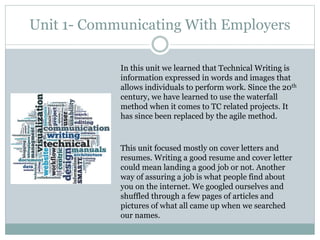
In this unit we learned that Technical Writing is
information expressed in words and images that
allows individuals to perform work. Since the 20th
century, we have learned to use the waterfall
method when it comes to TC related projects. It
has since been replaced by the agile method.
This unit focused mostly on cover letters and
resumes. Writing a good resume and cover letter
could mean landing a good job or not. Another
way of assuring a job is what people find about
you on the internet. We googled ourselves and
shuffled through a few pages of articles and
pictures of what all came up when we searched
our names.
Unit 1 Reflection
Unit 1 taught us the very basics of technical writing and what it means to be a
technical writer. I had no idea what technical writing was or how to be a technical
writer for that matter. As we began with the course I started to get an understanding
of what this class was and how it could affect or even benefit me through school and
even after that. This unit focused mainly on resumes, cover letters, and thank you
letters. I absolutely benefitted from learning how to create a well structured resume
and a cover letter that told a short story of my life. Throughout high school I worked
for my dad so I never had the need to make a resume and send it out to employers.
Once I came to college there was suddenly a demand for one. Luckily this unit and
class helped and prepared me to type up that resume and cover letter and send it to
local employers for a job to last throughout my school career. That resume actually
got me a job at a local restaurant. I have even begun to send this resume and cover
letter to employers after I graduate from college. The making of the resume also
gave me confidence in myself in a way I never thought of before. Looking at my
accomplishments and skills on a piece of paper really gives confidence.
Unit 2- Formal Proposals
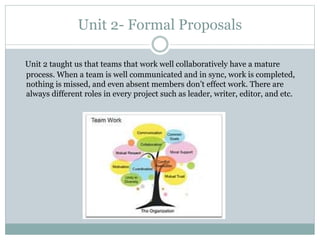
Unit 2 taught us that teams that work well collaboratively have a mature
process. When a team is well communicated and in sync, work is completed,
nothing is missed, and even absent members don’t effect work. There are
always different roles in every project such as leader, writer, editor, and etc.
Unit 2 Reflection
Unit 2 actually helped me learn what my personality was and how it reflected
my character. We took a personality test where I learned my personality was
more of a teacher. I give what I can to help others learn while also having no
problem with people teaching me as well. This helped in grouping two other
classmates to start our project. I became friends with my teammates as we
worked and collaborated together with ease. We began our professional
proposal together where we learned about each other and how we would work
together. I knew from the start of the proposal that we would work together
smoothly.
Unit 3- Usability
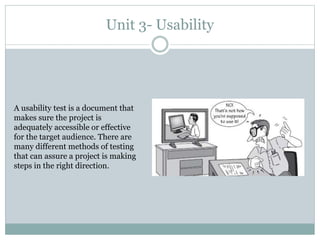
A usability test is a document that
makes sure the project is
adequately accessible or effective
for the target audience. There are
many different methods of testing
that can assure a project is making
steps in the right direction.
Unit 3 Reflection
This unit was quite stressful for myself and I’m sure for most students.
Following certain instructions can be quite difficult sometimes. When we were
assigned to follow instructions on how to make a paper airplane I thought I
would master it. Turns out making different paper planes with obscure
instructions is hard. It took me a few pieces of paper until I finally constructed
one that could take flight. The instructions were very complicated to follow
along and the video was just the same. To my amazement though, my group’s
plane did fly the furthest.
Performing a usability test with my actual team was different in that it was
interesting and helpful. We used a card sorting method on a group of peers
and received very positive feedback on our TechAnnounce webpage. It was
assuring that we had done so well together and were that much closer to
reaching our goal together.
Unit 4- Instructional Documents
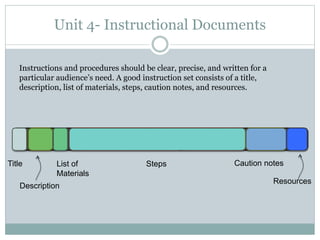
Instructions and procedures should be clear, precise, and written for a
particular audience’s need. A good instruction set consists of a title,
description, list of materials, steps, caution notes, and resources.
Title
Description
List of
Materials
Steps Caution notes
Resources
Unit 4 Reflection
Wordless instructions helped me learn about poor instructions and how to deal
with them. When we circled the room and completed tasks such as folding a
shirt and tying a tie with wordless instructions, it became tough to accomplish.
Folding the shirt made me totally frustrated. Without words, it requires more
observation and critical thinking to interpret what the poorly drawn pictures
want you to accomplish.
The instruction set my team and I were tasked to create taught me how to be
clear, thorough, and precise not just with the project but with any task in life.
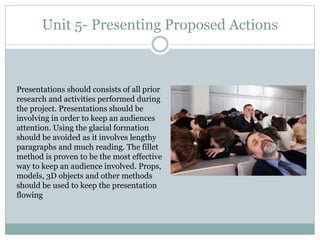
Unit 5- Presenting Proposed Actions
Presentations should consists of all prior
research and activities performed during
the project. Presentations should be
involving in order to keep an audiences
attention. Using the glacial formation
should be avoided as it involves lengthy
paragraphs and much reading. The fillet
method is proven to be the most effective
way to keep an audience involved. Props,
models, 3D objects and other methods
should be used to keep the presentation
flowing
Unit 5 Reflection
Unit 5 was finally a sigh of relief that our work was finally finished but also a
deep breath as we were ready to present. My team and I were so happy that we
finished and that we had done an excellent job thus far. We looked back at our
work and complimented each other and the team for our hard work. It was a
little nerve racking to get up and present but once we kicked it off we ran
smoothly. We practiced a few times and did better than we thought during the
final presentation. It was a little sad afterwards knowing that we wouldn’t be
meeting late at night to work or constantly group text each other. I learned how
to calm my nerves and successfully present a real project and idea to an
audience and that will be one of my most memorable things I learned here at
Texas Tech.
Reflection of technical writing

Reflection of technical writing

  • 1.
    N I CH O L A S H U G H E S E N G L I S H 2 3 1 1 S E C . 0 7 Reflection of Technical Writing
  • 2.
    Unit 1- CommunicatingWith Employers In this unit we learned that Technical Writing is information expressed in words and images that allows individuals to perform work. Since the 20th century, we have learned to use the waterfall method when it comes to TC related projects. It has since been replaced by the agile method. This unit focused mostly on cover letters and resumes. Writing a good resume and cover letter could mean landing a good job or not. Another way of assuring a job is what people find about you on the internet. We googled ourselves and shuffled through a few pages of articles and pictures of what all came up when we searched our names.
  • 3.
    Unit 1 Reflection Unit1 taught us the very basics of technical writing and what it means to be a technical writer. I had no idea what technical writing was or how to be a technical writer for that matter. As we began with the course I started to get an understanding of what this class was and how it could affect or even benefit me through school and even after that. This unit focused mainly on resumes, cover letters, and thank you letters. I absolutely benefitted from learning how to create a well structured resume and a cover letter that told a short story of my life. Throughout high school I worked for my dad so I never had the need to make a resume and send it out to employers. Once I came to college there was suddenly a demand for one. Luckily this unit and class helped and prepared me to type up that resume and cover letter and send it to local employers for a job to last throughout my school career. That resume actually got me a job at a local restaurant. I have even begun to send this resume and cover letter to employers after I graduate from college. The making of the resume also gave me confidence in myself in a way I never thought of before. Looking at my accomplishments and skills on a piece of paper really gives confidence.
  • 4.
    Unit 2- FormalProposals Unit 2 taught us that teams that work well collaboratively have a mature process. When a team is well communicated and in sync, work is completed, nothing is missed, and even absent members don’t effect work. There are always different roles in every project such as leader, writer, editor, and etc.
  • 5.
    Unit 2 Reflection Unit2 actually helped me learn what my personality was and how it reflected my character. We took a personality test where I learned my personality was more of a teacher. I give what I can to help others learn while also having no problem with people teaching me as well. This helped in grouping two other classmates to start our project. I became friends with my teammates as we worked and collaborated together with ease. We began our professional proposal together where we learned about each other and how we would work together. I knew from the start of the proposal that we would work together smoothly.
  • 6.
    Unit 3- Usability Ausability test is a document that makes sure the project is adequately accessible or effective for the target audience. There are many different methods of testing that can assure a project is making steps in the right direction.
  • 7.
    Unit 3 Reflection Thisunit was quite stressful for myself and I’m sure for most students. Following certain instructions can be quite difficult sometimes. When we were assigned to follow instructions on how to make a paper airplane I thought I would master it. Turns out making different paper planes with obscure instructions is hard. It took me a few pieces of paper until I finally constructed one that could take flight. The instructions were very complicated to follow along and the video was just the same. To my amazement though, my group’s plane did fly the furthest. Performing a usability test with my actual team was different in that it was interesting and helpful. We used a card sorting method on a group of peers and received very positive feedback on our TechAnnounce webpage. It was assuring that we had done so well together and were that much closer to reaching our goal together.
  • 8.
    Unit 4- InstructionalDocuments Instructions and procedures should be clear, precise, and written for a particular audience’s need. A good instruction set consists of a title, description, list of materials, steps, caution notes, and resources. Title Description List of Materials Steps Caution notes Resources
  • 9.
    Unit 4 Reflection Wordlessinstructions helped me learn about poor instructions and how to deal with them. When we circled the room and completed tasks such as folding a shirt and tying a tie with wordless instructions, it became tough to accomplish. Folding the shirt made me totally frustrated. Without words, it requires more observation and critical thinking to interpret what the poorly drawn pictures want you to accomplish. The instruction set my team and I were tasked to create taught me how to be clear, thorough, and precise not just with the project but with any task in life.
  • 10.
    Unit 5- PresentingProposed Actions Presentations should consists of all prior research and activities performed during the project. Presentations should be involving in order to keep an audiences attention. Using the glacial formation should be avoided as it involves lengthy paragraphs and much reading. The fillet method is proven to be the most effective way to keep an audience involved. Props, models, 3D objects and other methods should be used to keep the presentation flowing
  • 11.
    Unit 5 Reflection Unit5 was finally a sigh of relief that our work was finally finished but also a deep breath as we were ready to present. My team and I were so happy that we finished and that we had done an excellent job thus far. We looked back at our work and complimented each other and the team for our hard work. It was a little nerve racking to get up and present but once we kicked it off we ran smoothly. We practiced a few times and did better than we thought during the final presentation. It was a little sad afterwards knowing that we wouldn’t be meeting late at night to work or constantly group text each other. I learned how to calm my nerves and successfully present a real project and idea to an audience and that will be one of my most memorable things I learned here at Texas Tech.