RECEPTORS
Definition
It is a specialized/modified sensory nerve
epithelial ending which undergoes depolarisation
in response to a specific stimulus.
It acts as a ‘biological transducer’.
Classification
I. Based on type of stimulus
II. Based on anatomical location
III. Based on location of stimulus
IV. Based on rapidity of adaptation
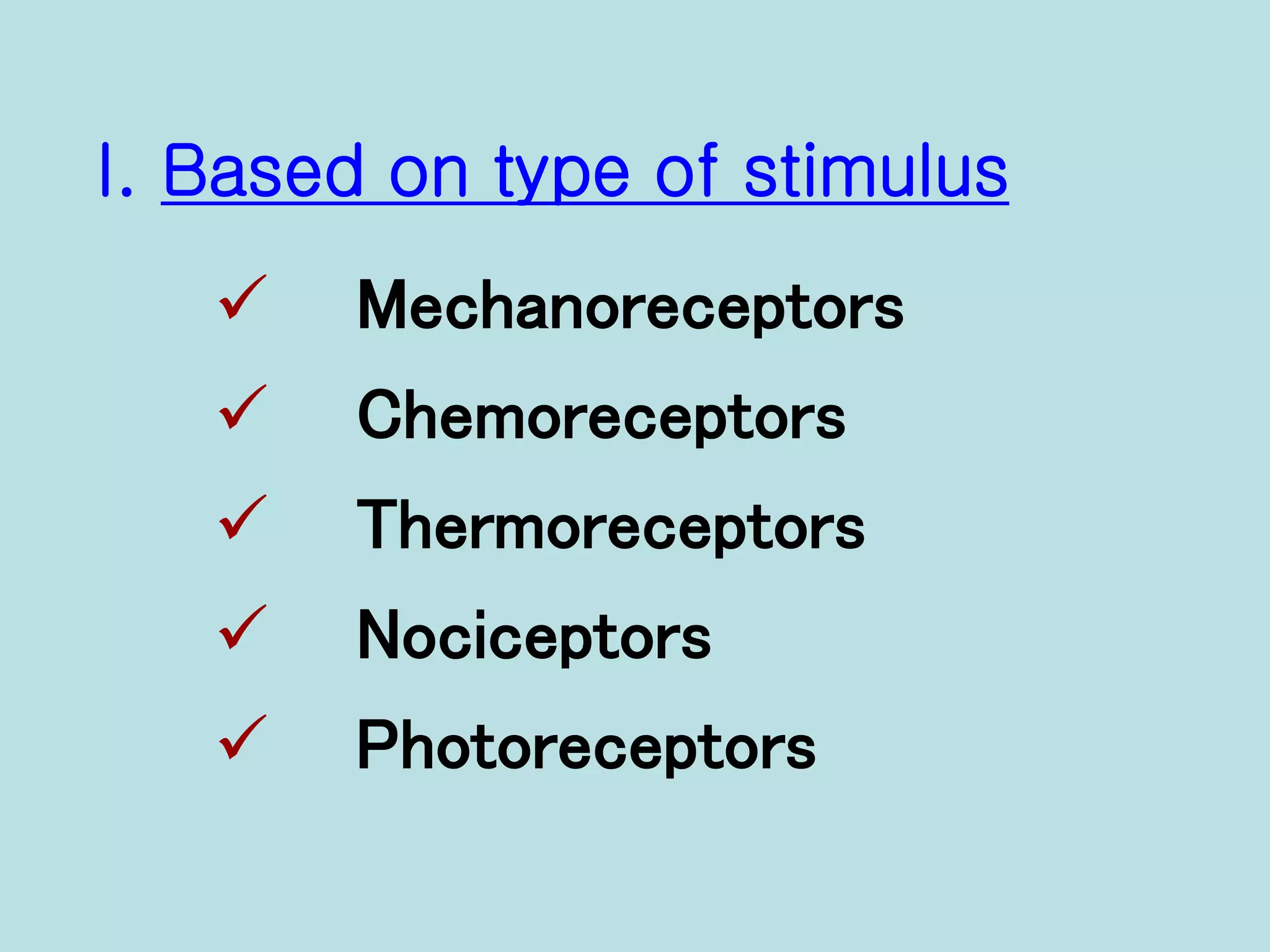
I. Based on type of stimulus
 Mechanoreceptors
 Chemoreceptors
 Thermoreceptors
 Nociceptors
 Photoreceptors
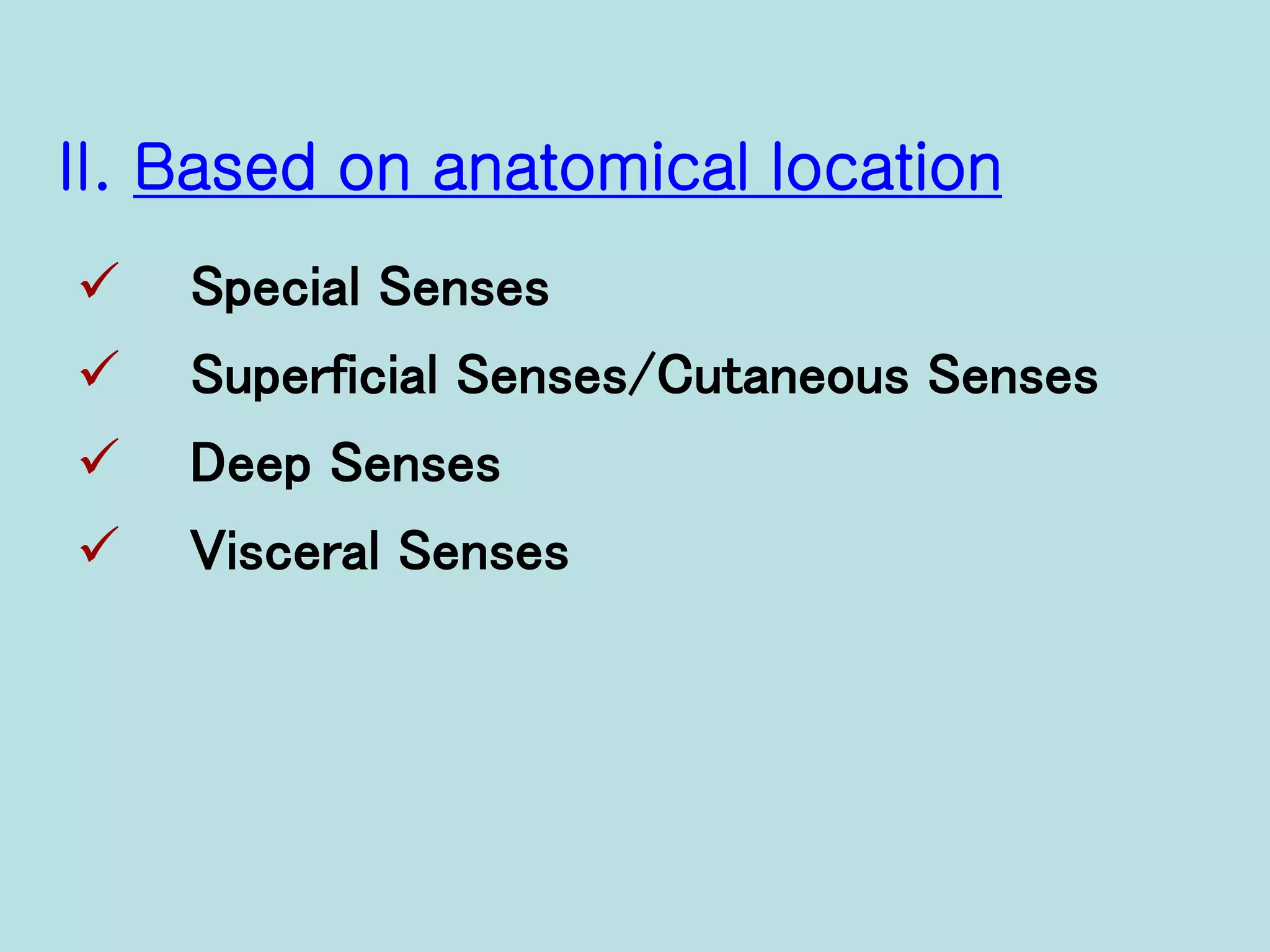
II. Based on anatomical location
 Special Senses
 Superficial Senses/Cutaneous Senses
 Deep Senses
 Visceral Senses
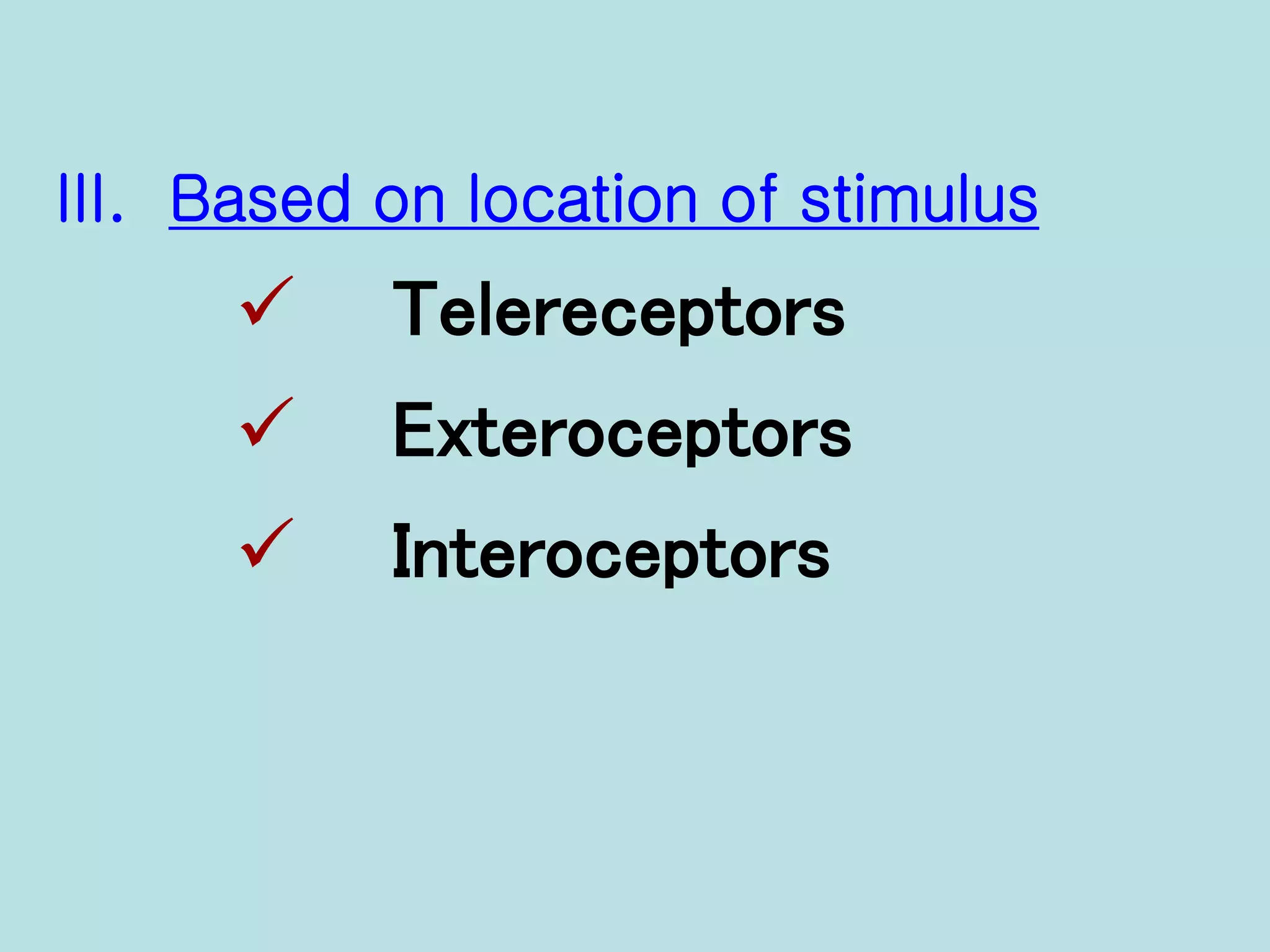
III. Based on location of stimulus
 Telereceptors
 Exteroceptors
 Interoceptors
IV. Based on rapidity of adaptation
 Tonic Receptors
 Phasic Receptors
Cutaneous Senstaions
 Tactile Sensations
 Thermal Sensations
 Pain Sensations
Tactile Sensations
 Merkel’s discs & Meissner’s corpuscle
 Pacinian corpuscle
 Ruffini’s end organs
 Krause’s end bulbs
 Free nerve endings
Thermal Sensations
 Cold Receptors
 Warm Receptors
Pain Sensations
 Nociceptors
 Free Nerve Endings
Properties :
 Specificity of Response
(or) Law of Adequate
Stimulus
 Weber and Fechner’s Law
 Adaptation
 Generator Potential
Specificity of Response (or)
Law of Adequate Stimulus
The form of energy to which a
receptor is most sensitive is called its
‘adequate stimulus’.
Weber Fechner’s Law
The magnitude of the sensation felt is
proportionate to the
log of intensity of stimulus.
Adaptation (or) Desensitization
Generator Potential
Coding of Sensory Information
Muller’s Doctrine of Specific Nerve
Energies
Law of Projection
Law of Intensity Discrimination
Muller’s Doctrine of
Specific Nerve Energies
When the nerve pathways from a particular
sense organ are stimulated, the sensation produced
is that for which the receptor is specialized no matter
how or where along the pathway the activity is
originated.
Stimulation of the receptors or the sensory
pathway anywhere along its course will produce same
sensation as normally perceived by stimulation of the
receptor.
Law of Projection
No matter where a particular sensory
pathway is stimulated along its course to the
cortex, the conscious sensation produced is
referred to the location of the receptor. This
principle is called the ‘law of projection’.
Phantom Limb
Law of
Intensity Discrimination
 No. of action potentials
 Recruitment of sensory units

Receptors.ppt

  • 1.
  • 2.
    Definition It is aspecialized/modified sensory nerve epithelial ending which undergoes depolarisation in response to a specific stimulus. It acts as a ‘biological transducer’.
  • 3.
    Classification I. Based ontype of stimulus II. Based on anatomical location III. Based on location of stimulus IV. Based on rapidity of adaptation
  • 4.
    I. Based ontype of stimulus  Mechanoreceptors  Chemoreceptors  Thermoreceptors  Nociceptors  Photoreceptors
  • 5.
    II. Based onanatomical location  Special Senses  Superficial Senses/Cutaneous Senses  Deep Senses  Visceral Senses
  • 6.
    III. Based onlocation of stimulus  Telereceptors  Exteroceptors  Interoceptors
  • 7.
    IV. Based onrapidity of adaptation  Tonic Receptors  Phasic Receptors
  • 8.
    Cutaneous Senstaions  TactileSensations  Thermal Sensations  Pain Sensations
  • 10.
    Tactile Sensations  Merkel’sdiscs & Meissner’s corpuscle  Pacinian corpuscle  Ruffini’s end organs  Krause’s end bulbs  Free nerve endings
  • 11.
    Thermal Sensations  ColdReceptors  Warm Receptors
  • 12.
  • 13.
    Properties :  Specificityof Response (or) Law of Adequate Stimulus  Weber and Fechner’s Law  Adaptation  Generator Potential
  • 14.
    Specificity of Response(or) Law of Adequate Stimulus The form of energy to which a receptor is most sensitive is called its ‘adequate stimulus’.
  • 15.
    Weber Fechner’s Law Themagnitude of the sensation felt is proportionate to the log of intensity of stimulus.
  • 16.
  • 17.
  • 18.
    Coding of SensoryInformation Muller’s Doctrine of Specific Nerve Energies Law of Projection Law of Intensity Discrimination
  • 19.
    Muller’s Doctrine of SpecificNerve Energies When the nerve pathways from a particular sense organ are stimulated, the sensation produced is that for which the receptor is specialized no matter how or where along the pathway the activity is originated. Stimulation of the receptors or the sensory pathway anywhere along its course will produce same sensation as normally perceived by stimulation of the receptor.
  • 20.
    Law of Projection Nomatter where a particular sensory pathway is stimulated along its course to the cortex, the conscious sensation produced is referred to the location of the receptor. This principle is called the ‘law of projection’. Phantom Limb
  • 21.
    Law of Intensity Discrimination No. of action potentials  Recruitment of sensory units