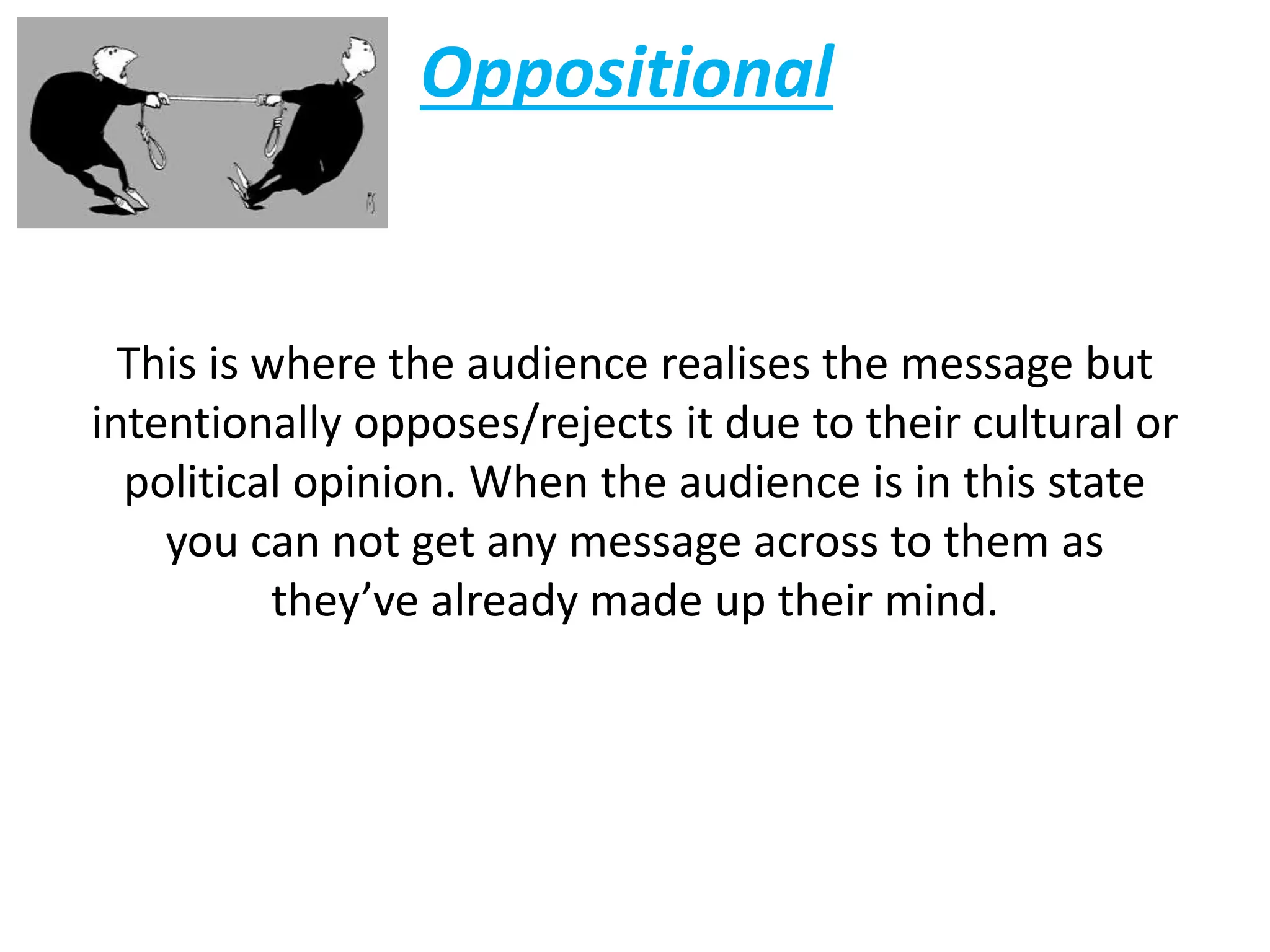
This document discusses reception theory, which was proposed by Stuart Hall in the 1970s as an improvement over uses and gratifications theory and effects theory. Reception theory suggests that media producers encode hidden meanings into texts that they want audiences to receive. Audiences can be dominant, negotiated, or oppositional in how they receive these messages. Dominant audiences agree with what they hear. Negotiated audiences both agree and disagree, or have questions. Oppositional audiences realize the message but reject it due to their own views.