Presentation prepared for
AHLA Annual Meeting
June 26-29, 2017
Ready or Not?
Compliance in a World of New Models
Page 1
OBJECTIVES
• Review core program integrity principles
• Consider compliance risks presented by new models of
payment and delivery
• Examine the role of quality and data analytics in improving
compliance under new models of payment and delivery
• Explore new regulatory flexibility for increasing access to care
and reducing costs
• Discuss how human resources can drive a compliance culture
• Educate start-ups and non-traditional players on program
integrity principles
Core Program Integrity Principles
Page 3
Road
100 m
Menu
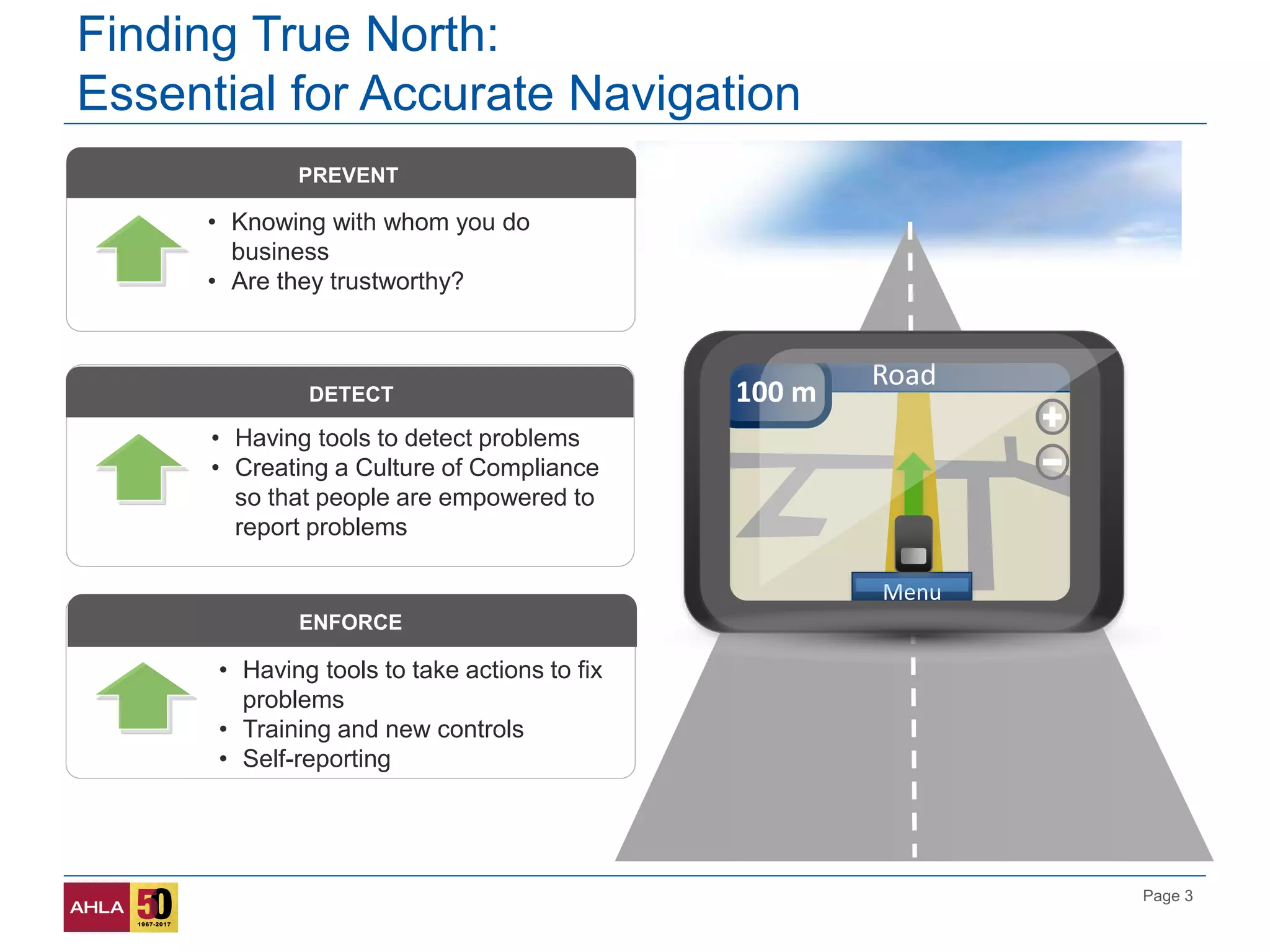
PREVENT
• Knowing with whom you do
business
• Are they trustworthy?
DETECT
• Having tools to detect problems
• Creating a Culture of Compliance
so that people are empowered to
report problems
ENFORCE
• Having tools to take actions to fix
problems
• Training and new controls
• Self-reporting
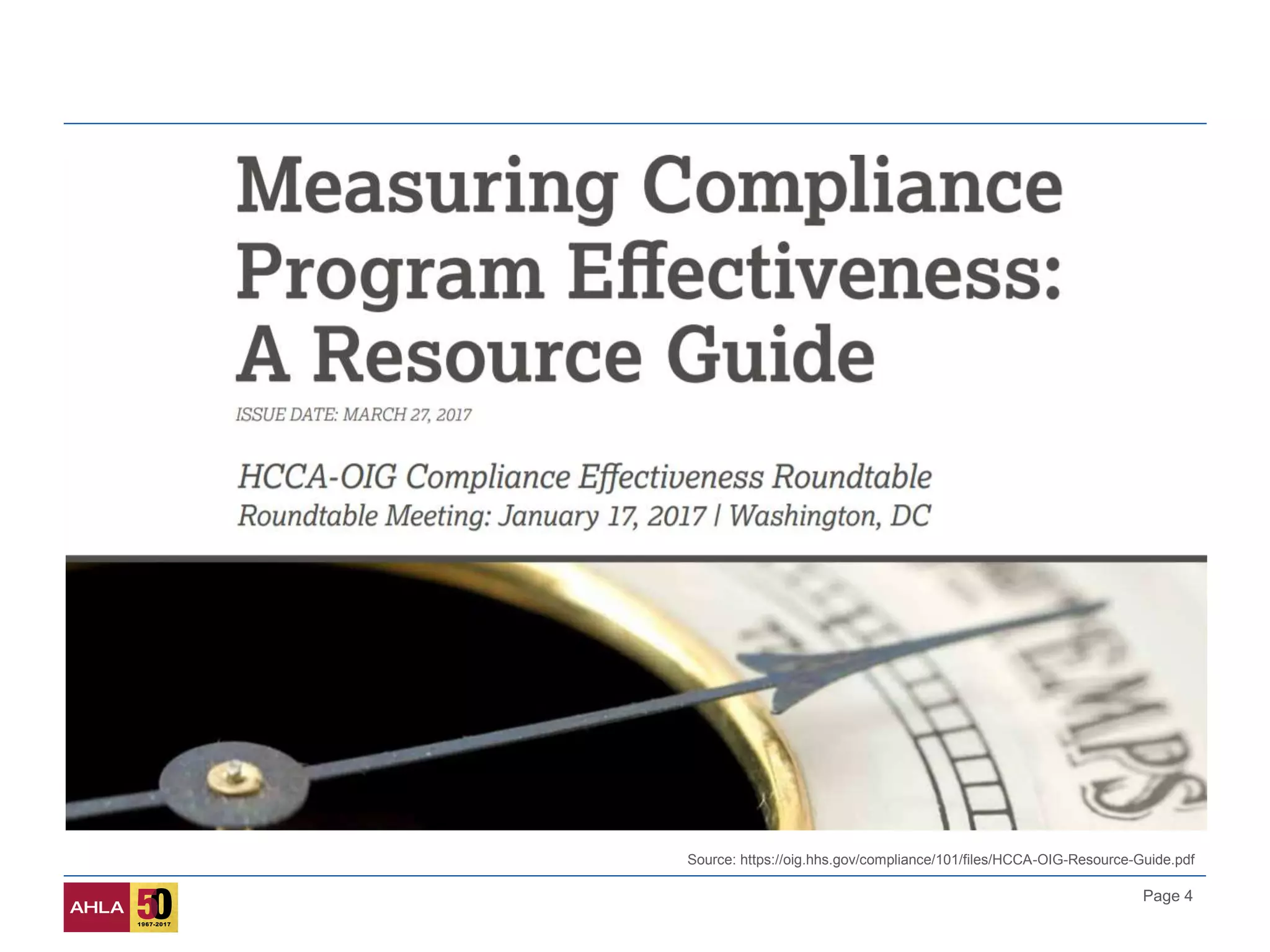
Finding True North:
Essential for Accurate Navigation
Page 4
Source: https://oig.hhs.gov/compliance/101/files/HCCA-OIG-Resource-Guide.pdf
Compliance Considerations for New
Models of Payment and Delivery
Page 6
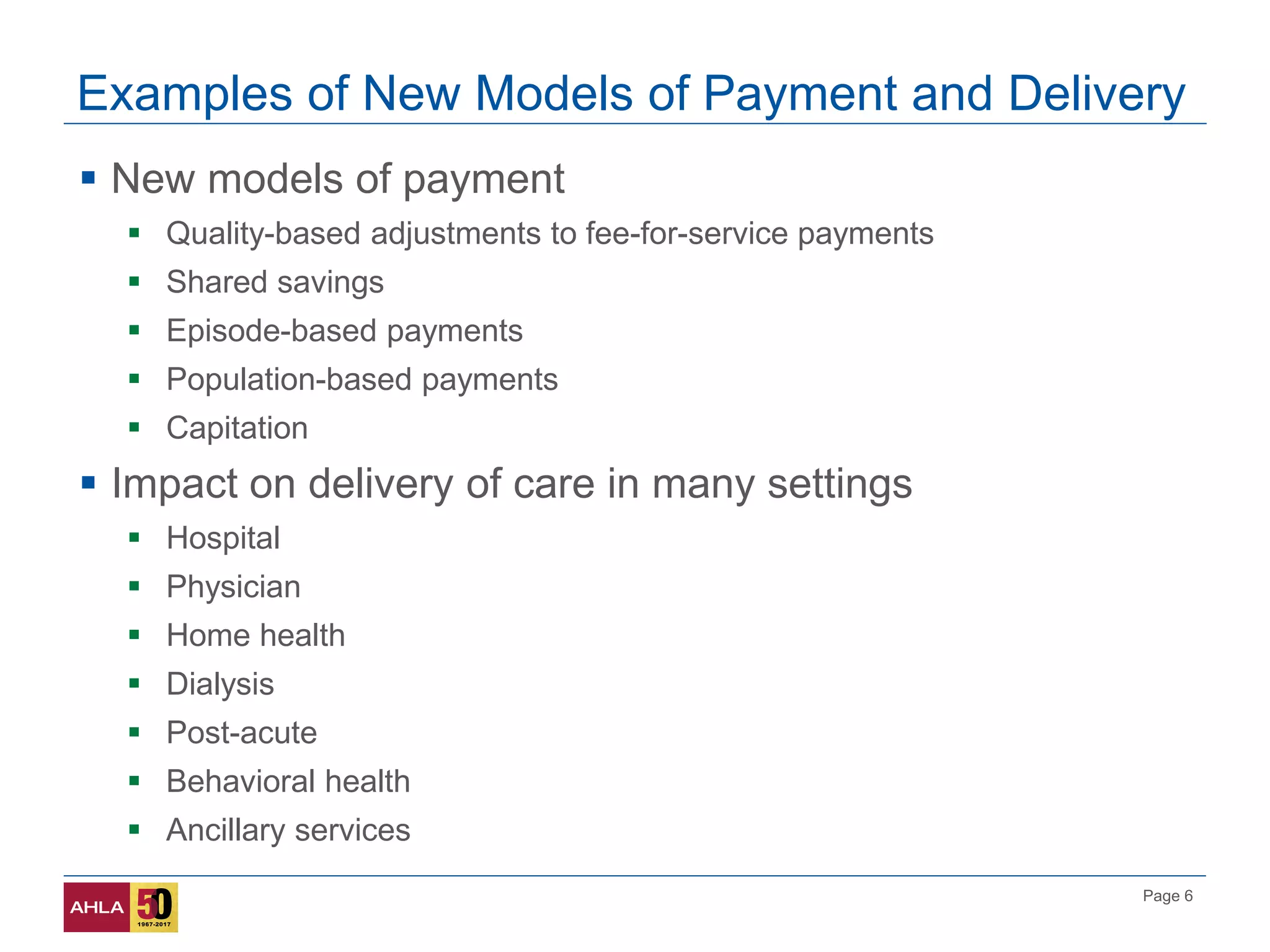
Examples of New Models of Payment and Delivery
 New models of payment
 Quality-based adjustments to fee-for-service payments
 Shared savings
 Episode-based payments
 Population-based payments
 Capitation
 Impact on delivery of care in many settings
 Hospital
 Physician
 Home health
 Dialysis
 Post-acute
 Behavioral health
 Ancillary services
Page 7
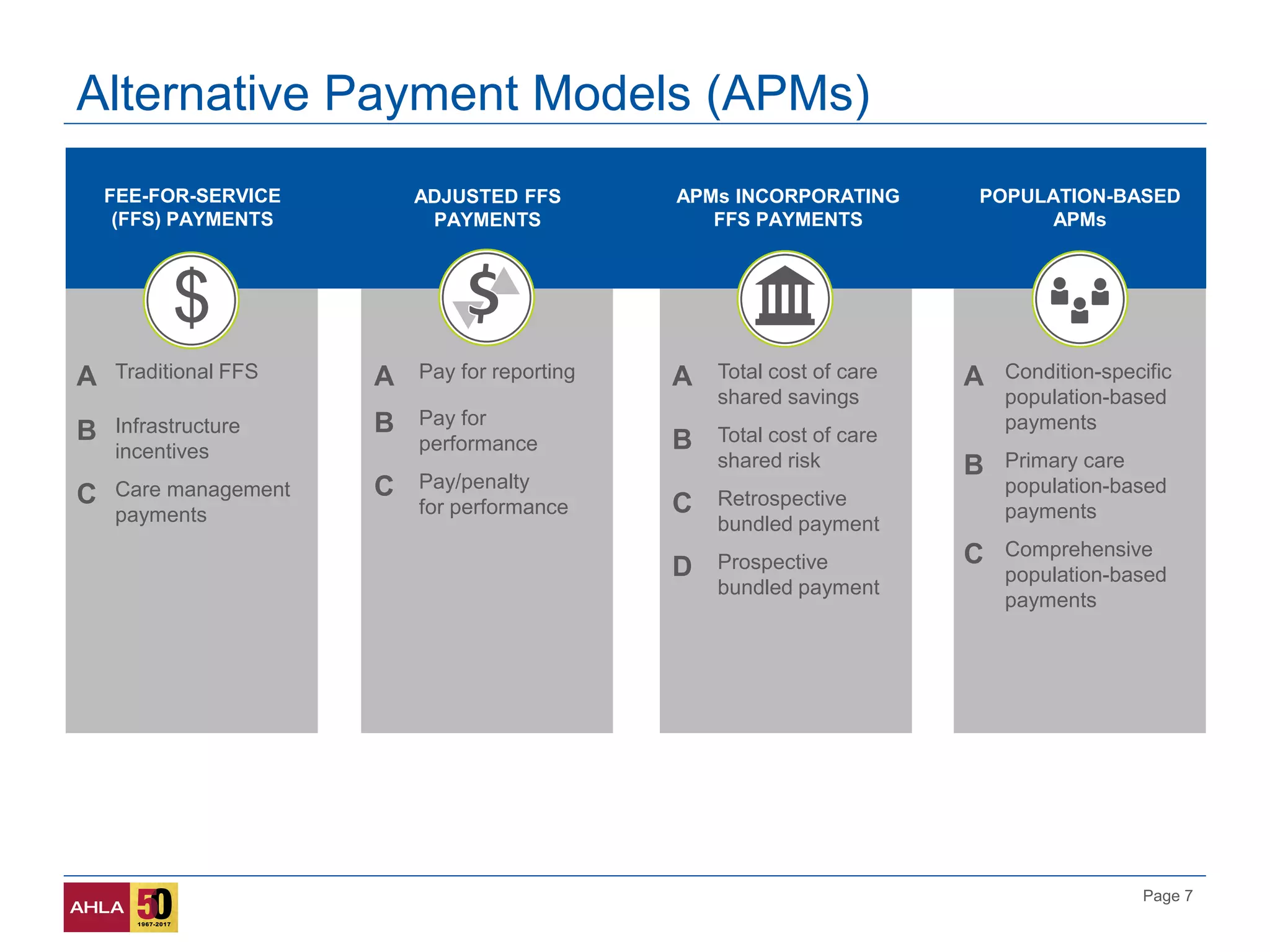
Alternative Payment Models (APMs)
FEE-FOR-SERVICE
(FFS) PAYMENTS
POPULATION-BASED
APMs
ADJUSTED FFS
PAYMENTS
APMs INCORPORATING
FFS PAYMENTS
$
$
Bank
A Pay for reporting
B Pay for
performance
C Pay/penalty
for performance
A Total cost of care
shared savings
B Total cost of care
shared risk
C Retrospective
bundled payment
D Prospective
bundled payment
A Condition-specific
population-based
payments
B Primary care
population-based
payments
C Comprehensive
population-based
payments
A Traditional FFS
B Infrastructure
incentives
C Care management
payments
Page 8
Compliance Considerations for
New Models of Payment and Delivery
OIG work plans in this area
Changed incentives under new models
Program integrity risk areas (e.g., stinting
on care)
Role of Quality and Data Analytics in
Compliance
Page 10
Data Issues & Quality Outcomes
 New models rely significantly on data, EHRs, and
technology
 Complete, Accurate, Timely, Secure (CATS)
 How data is used for program integrity by the government
 e.g., Merit-Based Incentive Payment System (MIPS)
 Quality driving compliance
 Insight into what’s actually happening in your organization
 The rise of Patient Safety Organizations (PSOs)
Page 11
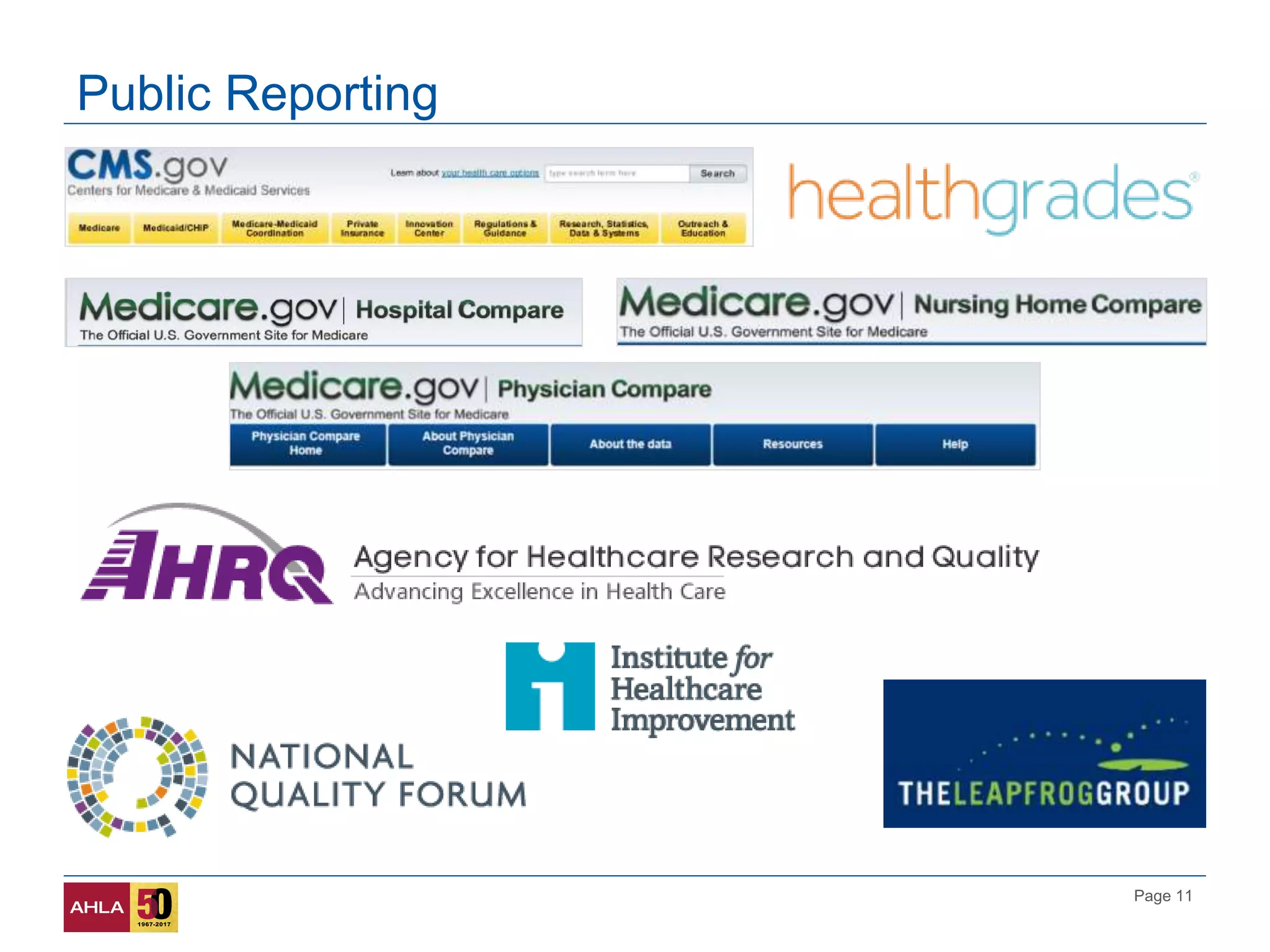
Public Reporting
New Regulatory Flexibility for Increasing
Access to Care and Reducing Costs
Page 13
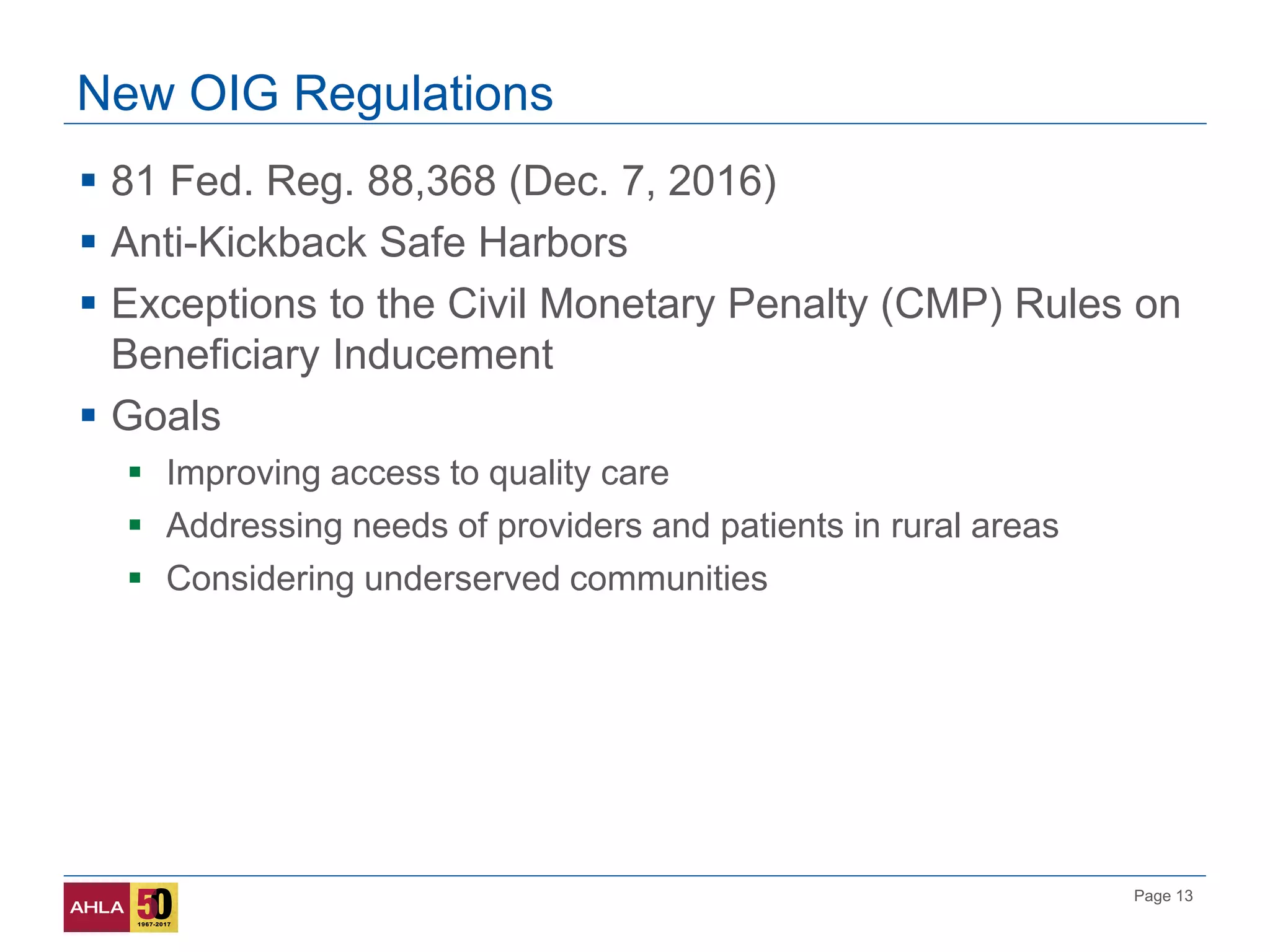
New OIG Regulations
 81 Fed. Reg. 88,368 (Dec. 7, 2016)
 Anti-Kickback Safe Harbors
 Exceptions to the Civil Monetary Penalty (CMP) Rules on
Beneficiary Inducement
 Goals
 Improving access to quality care
 Addressing needs of providers and patients in rural areas
 Considering underserved communities
Human Resources Role
in Creating a Culture of Compliance
Page 15
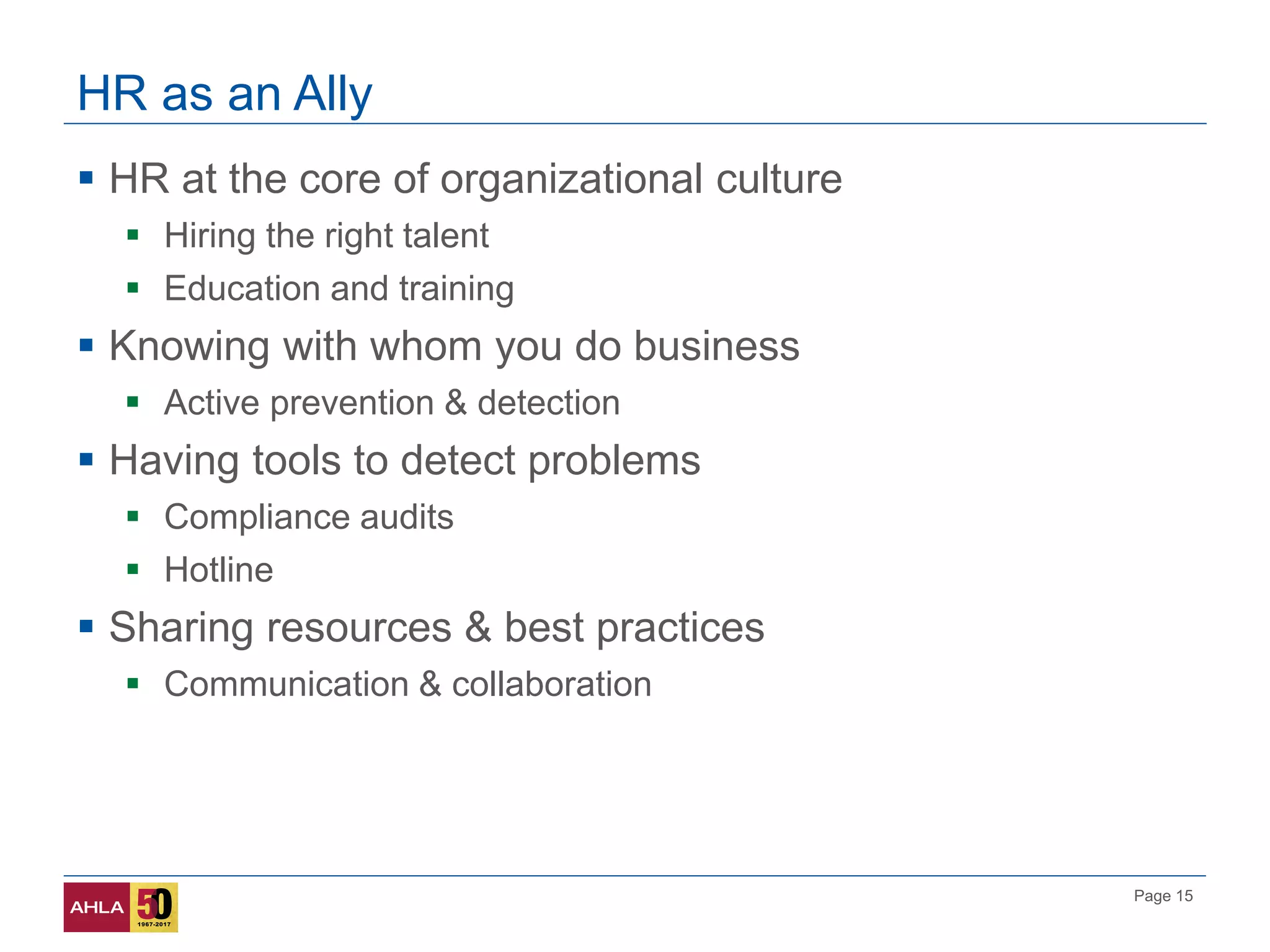
HR as an Ally
 HR at the core of organizational culture
 Hiring the right talent
 Education and training
 Knowing with whom you do business
 Active prevention & detection
 Having tools to detect problems
 Compliance audits
 Hotline
 Sharing resources & best practices
 Communication & collaboration
Compliance in the Healthcare Industry
for Start-Ups & Non-Traditional Players
Page 17
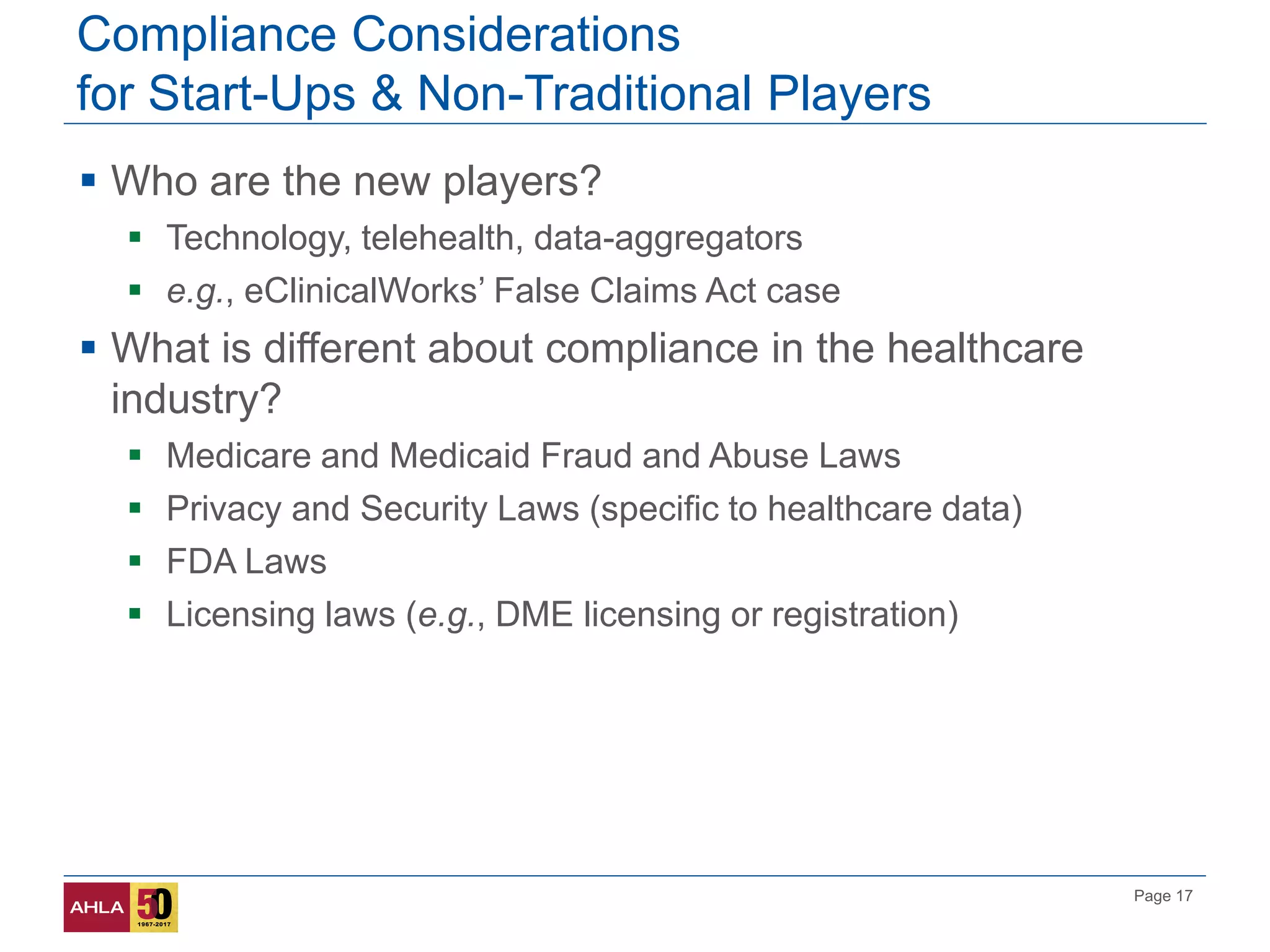
Compliance Considerations
for Start-Ups & Non-Traditional Players
 Who are the new players?
 Technology, telehealth, data-aggregators
 e.g., eClinicalWorks’ False Claims Act case
 What is different about compliance in the healthcare
industry?
 Medicare and Medicaid Fraud and Abuse Laws
 Privacy and Security Laws (specific to healthcare data)
 FDA Laws
 Licensing laws (e.g., DME licensing or registration)
Page 18
Questions
Page 19
Contact Information
Kristen M. Lilly,
MHA, CHC, CPHQ, RHIA
PYA
klilly@pyapc.com
Fatema Zanzi, Esq.
Drinker Biddle & Reath LLP
Fatema.Zanzi@dbr.com
Vicki L. Robinson, Esq.
Office of Inspector General
U.S. Department of Health
and Human Services
Vicki.Robinson@oig.hhs.gov
Page 20
Disclaimer
This presentation contains slides that have been combined
for purposes of presentation continuity. The speakers do
not necessarily endorse the content of each other’s slides.
Moreover, the views expressed in this presentation belong
to the speakers and do not necessarily represent the views
of their organizations or other organizations.

Ready or Not? Compliance in a World of New Models

  • 1.
    Presentation prepared for AHLAAnnual Meeting June 26-29, 2017 Ready or Not? Compliance in a World of New Models
  • 2.
    Page 1 OBJECTIVES • Reviewcore program integrity principles • Consider compliance risks presented by new models of payment and delivery • Examine the role of quality and data analytics in improving compliance under new models of payment and delivery • Explore new regulatory flexibility for increasing access to care and reducing costs • Discuss how human resources can drive a compliance culture • Educate start-ups and non-traditional players on program integrity principles
  • 3.
  • 4.
    Page 3 Road 100 m Menu PREVENT •Knowing with whom you do business • Are they trustworthy? DETECT • Having tools to detect problems • Creating a Culture of Compliance so that people are empowered to report problems ENFORCE • Having tools to take actions to fix problems • Training and new controls • Self-reporting Finding True North: Essential for Accurate Navigation
  • 5.
  • 6.
    Compliance Considerations forNew Models of Payment and Delivery
  • 7.
    Page 6 Examples ofNew Models of Payment and Delivery  New models of payment  Quality-based adjustments to fee-for-service payments  Shared savings  Episode-based payments  Population-based payments  Capitation  Impact on delivery of care in many settings  Hospital  Physician  Home health  Dialysis  Post-acute  Behavioral health  Ancillary services
  • 8.
    Page 7 Alternative PaymentModels (APMs) FEE-FOR-SERVICE (FFS) PAYMENTS POPULATION-BASED APMs ADJUSTED FFS PAYMENTS APMs INCORPORATING FFS PAYMENTS $ $ Bank A Pay for reporting B Pay for performance C Pay/penalty for performance A Total cost of care shared savings B Total cost of care shared risk C Retrospective bundled payment D Prospective bundled payment A Condition-specific population-based payments B Primary care population-based payments C Comprehensive population-based payments A Traditional FFS B Infrastructure incentives C Care management payments
  • 9.
    Page 8 Compliance Considerationsfor New Models of Payment and Delivery OIG work plans in this area Changed incentives under new models Program integrity risk areas (e.g., stinting on care)
  • 10.
    Role of Qualityand Data Analytics in Compliance
  • 11.
    Page 10 Data Issues& Quality Outcomes  New models rely significantly on data, EHRs, and technology  Complete, Accurate, Timely, Secure (CATS)  How data is used for program integrity by the government  e.g., Merit-Based Incentive Payment System (MIPS)  Quality driving compliance  Insight into what’s actually happening in your organization  The rise of Patient Safety Organizations (PSOs)
  • 12.
  • 13.
    New Regulatory Flexibilityfor Increasing Access to Care and Reducing Costs
  • 14.
    Page 13 New OIGRegulations  81 Fed. Reg. 88,368 (Dec. 7, 2016)  Anti-Kickback Safe Harbors  Exceptions to the Civil Monetary Penalty (CMP) Rules on Beneficiary Inducement  Goals  Improving access to quality care  Addressing needs of providers and patients in rural areas  Considering underserved communities
  • 15.
    Human Resources Role inCreating a Culture of Compliance
  • 16.
    Page 15 HR asan Ally  HR at the core of organizational culture  Hiring the right talent  Education and training  Knowing with whom you do business  Active prevention & detection  Having tools to detect problems  Compliance audits  Hotline  Sharing resources & best practices  Communication & collaboration
  • 17.
    Compliance in theHealthcare Industry for Start-Ups & Non-Traditional Players
  • 18.
    Page 17 Compliance Considerations forStart-Ups & Non-Traditional Players  Who are the new players?  Technology, telehealth, data-aggregators  e.g., eClinicalWorks’ False Claims Act case  What is different about compliance in the healthcare industry?  Medicare and Medicaid Fraud and Abuse Laws  Privacy and Security Laws (specific to healthcare data)  FDA Laws  Licensing laws (e.g., DME licensing or registration)
  • 19.
  • 20.
    Page 19 Contact Information KristenM. Lilly, MHA, CHC, CPHQ, RHIA PYA klilly@pyapc.com Fatema Zanzi, Esq. Drinker Biddle & Reath LLP Fatema.Zanzi@dbr.com Vicki L. Robinson, Esq. Office of Inspector General U.S. Department of Health and Human Services Vicki.Robinson@oig.hhs.gov
  • 21.
    Page 20 Disclaimer This presentationcontains slides that have been combined for purposes of presentation continuity. The speakers do not necessarily endorse the content of each other’s slides. Moreover, the views expressed in this presentation belong to the speakers and do not necessarily represent the views of their organizations or other organizations.