RDM training
part one: basic principles


         Anne Spalding
          16.01.2013
Session outline


• Overview of the first hour

• Learning outcomes

• Kaptur project at UCA
Learning outcomes


• Understand the nature of research data in the visual arts.

• Appreciate the importance of research data and funder
  requirements.

• Recognise the basic principles of appropriate curation and
  preservation of research data.
Kaptur project at UCA


• Interviews

• Environmental Assessment Report

• RDM policy at UCA
What is research data?


• Introduction

• Discussion in pairs/groups

• Feedback
Why?
The importance of research data

• Drivers

• AHRC

• Good research practice
Definitions of research data


• "Anything which is used or created to generate new knowledge and
  interpretations. ‘Anything’ may be objective or subjective; physical or
  emotional; persistent or ephemeral; personal or public; explicit or
  tacit; and is consciously or unconsciously referenced by the
  researcher at some point during the course of their research.
  Research data may or may not lead to a research output, which
  regardless of method of presentation, is a planned public statement
  of new knowledge or interpretation.“
         Leigh Garrett
Principles of data curation
and preservation, 1 – overview

Why curate

What is it?

Preservation
Principles of data curation
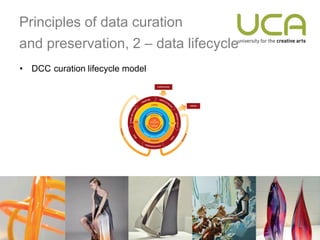
and preservation, 2 – data lifecycle
• DCC curation lifecycle model
Principles of data curation
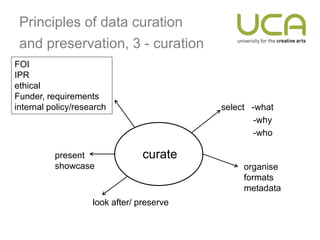
 and preservation, 3 - curation
FOI
IPR
ethical
Funder, requirements
internal policy/research                   select -what
                                                   -why
                                                   -who

          present                curate
          showcase                              organise
                                                formats
                                                metadata
                    look after/ preserve
Principles of data curation
and preservation, 4 - preservation

• Longevity

• Integrity

• Accessibility
Assessment


• One thing you know now that you didn’t know before today
   – Pink post it note


• What more would you like to know
   – Yellow post it note


• What are you expecting from session two
   – Green post it note
Learning outcomes met?

• Understand the nature of research data in the visual arts.

• Appreciate the importance of research data and funder
  requirements.

• Recognise the basic principles of appropriate curation and
  preservation of research data.
Selected further sources

•   Pryor, Graham ed. (2012). Managing Research Data. London: Facet
    Publishing
•   http://datalib.edina.ac.uk/mantra/
•   http://www.dcc.ac.uk/
•   http://www.dcc.ac.uk/resources/curation-lifecycle-model
•   http://kapturmrd01.eventbrite.co.uk/
•   http://www.projectcairo.org/
•   http://www.research.ucreative.ac.uk/1054/
•   http://www.vads.ac.uk/kaptur/
•   http://vocab.bris.ac.uk/data/glossary
•   Online sources accessed January 2013
Questions?

Rdm training presentation 16.01.2013

  • 1.
    RDM training part one:basic principles Anne Spalding 16.01.2013
  • 2.
    Session outline • Overviewof the first hour • Learning outcomes • Kaptur project at UCA
  • 3.
    Learning outcomes • Understandthe nature of research data in the visual arts. • Appreciate the importance of research data and funder requirements. • Recognise the basic principles of appropriate curation and preservation of research data.
  • 4.
    Kaptur project atUCA • Interviews • Environmental Assessment Report • RDM policy at UCA
  • 5.
    What is researchdata? • Introduction • Discussion in pairs/groups • Feedback
  • 6.
    Why? The importance ofresearch data • Drivers • AHRC • Good research practice
  • 7.
    Definitions of researchdata • "Anything which is used or created to generate new knowledge and interpretations. ‘Anything’ may be objective or subjective; physical or emotional; persistent or ephemeral; personal or public; explicit or tacit; and is consciously or unconsciously referenced by the researcher at some point during the course of their research. Research data may or may not lead to a research output, which regardless of method of presentation, is a planned public statement of new knowledge or interpretation.“ Leigh Garrett
  • 8.
    Principles of datacuration and preservation, 1 – overview Why curate What is it? Preservation
  • 9.
    Principles of datacuration and preservation, 2 – data lifecycle • DCC curation lifecycle model
  • 10.
    Principles of datacuration and preservation, 3 - curation FOI IPR ethical Funder, requirements internal policy/research select -what -why -who present curate showcase organise formats metadata look after/ preserve
  • 11.
    Principles of datacuration and preservation, 4 - preservation • Longevity • Integrity • Accessibility
  • 12.
    Assessment • One thingyou know now that you didn’t know before today – Pink post it note • What more would you like to know – Yellow post it note • What are you expecting from session two – Green post it note
  • 13.
    Learning outcomes met? •Understand the nature of research data in the visual arts. • Appreciate the importance of research data and funder requirements. • Recognise the basic principles of appropriate curation and preservation of research data.
  • 14.
    Selected further sources • Pryor, Graham ed. (2012). Managing Research Data. London: Facet Publishing • http://datalib.edina.ac.uk/mantra/ • http://www.dcc.ac.uk/ • http://www.dcc.ac.uk/resources/curation-lifecycle-model • http://kapturmrd01.eventbrite.co.uk/ • http://www.projectcairo.org/ • http://www.research.ucreative.ac.uk/1054/ • http://www.vads.ac.uk/kaptur/ • http://vocab.bris.ac.uk/data/glossary • Online sources accessed January 2013
  • 15.