Presenter :
Dr.Mrinal.N.Rudragoudar
1st year PG SCHLOAR
Dept of Kriya Shareera
SDMCA&H HASSAN
1RASADHATU
UTHPATTHI
• QÒû – kÉÉiÉÑ (ÍxÉ®liÉMüÉæqÉÑÌS)
To support(Dharana) and nourish(Poshana)
NIRUKTHI
• SkÉÉÌiÉ, kɨÉåuÉÉ zÉUÏU – qÉlÉ – mÉëÉhÉÉlÉç CÌiÉ
kÉÉiÉÑÈ |
(ÍxÉ®ÉliÉMüÉæqÉÑÌS)
Supports body, mind and life.
They are seven in number(Rasa, Rakta etc.)
2RASADHATU
Nirukti of rasadhatu
पूर्वस्याहारपररणामधात ोः, यं ‘रस’ इत्याचक्षतते.
Ch.sh.8/15
Rasadhatu is the product of previously digested food .
3RASADHATU
iÉ§É UxÉaÉiÉÉæ kÉÉiÉÑÈAWûÈ aÉcNûÌiÉCÌiÉ AiÉÉå
UxÉÉÈ|
Rasa Dhatu is the First in the body being
nourished from ahara –Rasa,which
circulates throughout the body.
(xÉÑ.xÉÔ.14/13)
UxÉ kÉÉiÉÑ
4RASADHATU
SYNONYMS
Soumya dhatu
Ahara prasada
Dhatu sara
Ahara teja
Agnisambava
6RASADHATU
SITE OF RASA DHATU
• तस्य हृदयं स्थानं, स
हृदयाच्चक्षतुर्र्िंशततधमनीरनुप्रर्र्श्य र्धर्वगादश
दशाध गाममन्यश्चक्षतस्रश्चक्ष ततयवगगाोः कृ त्स्नं
शरीरमहरहस्तपवयतत र्धवयतत धारयतत
su.su.14/3
Heart and twenty four dhamanis emerging from
heart is the site of rasa dhatu. Which circulates
entire body and nourishes all tissues.
7RASADHATU
iɳÉç mÉÉgcÉpÉÉæÌiÉMüxrÉ, cÉiÉÑÌuÉïkÉxrÉ, wÉQèUxÉxrÉ
ÌSÌuÉkÉuÉÏrÉïxrÉɹè
ÌuÉkÉuÉÏrÉïxrÉ uÉÉÅlÉåMüaÉÑhxrÉÉæmÉrÉÑMüiÉxrÉÉWûÉUxrÉ
xqrÉMç mÉËUhÉiÉxrÉ
rÉxiÉåeÉÉåpÉÑiÉ: xÉÉU: mÉUqÉxÉÔfqÉ: xÉ UxÉ CirÉÑcrÉiÉå ||
xÉÑ. xÉÔ.(14/3)
UTHPATTHI
8RASADHATU
AHARA
4
5
6
2/8
∞
9RASADHATU
panchmahabhuticconcept
Jala Mahabhuta is predominantly present in Rasa
Dhatu
AmÉÉiqÉMÇüUxÉÉåUxÉlÉqÉç.. . . |
(cÉ.zÉÉ.4/12)
10RASADHATU
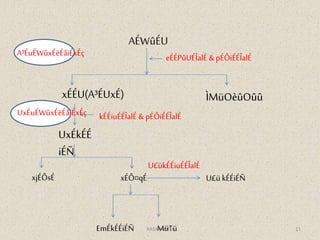
AÉWûÉU
eÉÉPûUÉÎalÉ &pÉÔiÉÉÎalÉ
xÉÉU(A³ÉUxÉ) ÌMüOèûOûû
xjÉÔsÉ xÉÔ¤qÉ U£ü kÉÉiÉÑ
EmÉkÉÉiÉÑ MüTü
kÉÉiuÉÉÎalÉ & pÉÔiÉÉÎalÉ
UxÉkÉÉ
iÉÑ
UxÉuÉWûxÉëÉåiÉxÉç
A³ÉuÉWûxÉëÉåiÉxÉç
U£ükÉÉiuÉÉÎalÉ
11RASADHATU
TypesofRasaDhatuaccordingto chakrapani
xjÉÉrÉÏ It is the one which does not circulate
through Dhamanis. Ex- Tissue
fluid,Intacellular fluid.
mÉÉåwÉMü This Ras Dhatu circulates through the
Dhamanis and nourishes the muscles and
organs of the body. Ex- Plasma, Lymph.
12RASADHATU
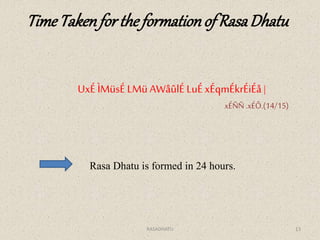
TimeTakenfor the formationof RasaDhatu
UxÉ ÌMüsÉ LMü AWåûlÉ LuÉxÉqmÉkrÉiÉå |
xÉÑÑ .xÉÔ.(14/15)
Rasa Dhatu is formed in 24 hours.
13RASADHATU
Functions of rasadhatu
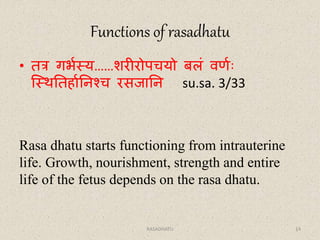
• तत्र गर्वस्य……शरीर पचक्षय बलं र्णवोः
स्स्थततहावतनश्चक्ष रसजातन su.sa. 3/33
Rasa dhatu starts functioning from intrauterine
life. Growth, nourishment, strength and entire
life of the fetus depends on the rasa dhatu.
14RASADHATU
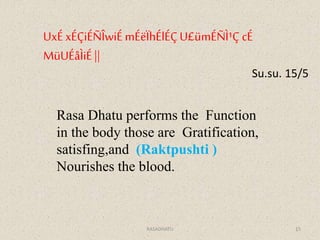
UxÉ xÉÇiÉÑÎwiÉ mÉëÏhÉlÉÇU£ümÉÑÌ¹Ç cÉ
MüUÉåÌiÉ||
Rasa Dhatu performs the Function
in the body those are Gratification,
satisfing,and (Raktpushti )
Nourishes the blood.
Su.su. 15/5
15RASADHATU
रसतनममत्तमेर् स्थौल्यं काश्यिं चक्ष |
Su.su. 15/32
Rasadhatu is responsible for nutritional status
of the living body Whether a person is thin or
obese. This condition is applied only In the
adult life.
16RASADHATU
As rasadhatu is fluid and works for Snehana of
the body, for sustenance of life, for refreshing
the body entities.
Rasadhatu carries the Ahahararasa to every
body entity and keeps them fresh.
 It supplies nutrients to all the tissues and
organs of the body.
 Rasadhatu is responsible for zeal, health, ideal
state, and complexion. 17RASADHATU
KARMA
TARPAYATI
VARDHAYATI
DHARAYATI
& JIVAYATI
YAPAYATI
(xÉÑ.xÉÑ.14/3)
18RASADHATU
pramana
lÉuÉÉgeÉsÉrÉÈmÉÔuÉïxrÉÉWûÉUmÉËUhÉÉqÉkÉÉiÉÉårÉÇ UxÉ ||
9AÇeÉsÉÏ
cÉ.vÉÉ.7/15
9
19RASADHATU
UxÉÉåÅÌmÉ
vsÉåwqÉuÉiÉçvsÉåwqÉÉÎalÉxÉSlÉ mÉëxÉåMüÉsÉxrÉ
aÉÉæUuÉqɵɿsrÉ vÉæsrÉ vsÉurÉÉÇaÉiuÉÇ µÉÉxÉMüÉxÉÉÌiÉ
ÌuÉSìiÉÉ ( xÉÑ. xÉÔ11/7)
The sign & symptoms of increase of Rasa Dhatu are
Agnisadna , Praseka (increased salivation) Alasya(lazyness),
Gaurava (Heaviness), Svaitya(Pallorness), Saitya( coldness) ,
Slathangata (laxity of organs) , Svasa (Dysponea) , Kasa
(cough),& Atinidrata (Excessive sleep)
A.¾û.xÉÔ .(11/7-8)
Rasavrudhi
20RASADHATU
Rasakshaya
UxÉå UÉæ¤rÉÇ vÉÉæwÉÉå asÉÉÌlÉ
vÉoSÉxÉÌWûwhÉÑiÉÉ||
pÉëqÉÈ
Rasa Dhatu in its decreased state produces Rauksya
(dryness) , Bhrama (giddiness), Sosa (emaciation),Glani
( weakness) and intolerability towards sound.
A.Wû.xÉÔ(11/17)
21RASADHATU
RASA SARA PURUSHA LAKSHANA
iÉ§É ÎxlÉakÉzsɤhÉ qÉëÑSÒmÉëxɳÉxÉÔ¤qÉÉsmÉaÉqpÉ
xÉÑMÑüqÉÉUsÉÉåqÉÉ xÉmÉëpÉåuÉ cÉ iuÉMçü
iuÉYxÉÉUÉhÉÉqÉç |
xÉÉ xÉÉUiÉÉ xÉÑZÉ xÉÉæpÉÉarÉæµÉrÉÉåïmÉpÉÉåaÉoÉÑ
ÌuɱÉUÉåarÉmÉëWûwÉïhÉÉlrÉÉrÉÑwrÉiuÉÇ cÉÉcɹå ||
(cÉ.ÌuÉ.8/103)
22RASADHATU
mala
uÉëhÉaÉiÉÇESMüÇ sÉÍxÉMüÉ |
UxÉxrÉ xÉÉUÉå U£üÇqÉsÉÈ MüTüÉåsÉÍxÉMüÉ
cÉ | xÉ.xÉ.vÉ.(6/29)
A.¾û.xÉÔ.(30/45)
• Kapha and
• Lasika are the malas of Rasa Dhatu. Unctous
fluid which oozes from the wound is called
as lasika.
23RASADHATU
upadhatu
xiÉlrÉ
AÉiÉïuÉ
Stnya (Breast milk) & Arthav (menstrual fluid) are the
upadhatus (secondary tissues) of Rasa Dhatu
24RASADHATU
STANYA
 रसात् स्तन्यं
C CI 15/17
Upadathu of rasadhatu is stanya .
 रसप्रसाद मधुरोः पक्र्ाहारतनममत्तजोः |
कृ त्स्नदेहात ् स्तनौ प्राप्तोः स्तन्यममत्यमर्धीयते ||
Stanya is prasada baga of rasadhatu, madhura rasa and
generated from digested food .
25RASADHATU
Why stanya is considered Upadathu of Rasa ?
 As rasadathu functions for prinana for all
seven dathus and other body antities, similarly
stanya does nourishment of baby.
 As rasadhatu conveys all nutritive for entire
body, stanya does the same way for baby.
26RASADHATU
ARTAVA
रसादेर् स्स्त्रया रक्तं रजोःसञ्ज्ञं प्रर्तवते |
तद्र्र्ावद्द्र्ादशादूर्धर्िं यातत पञ्ज्चक्षाशतोः तयम ् ||
SU NI14/6
The cyclic discharge through garbhashya which
is upadathu of rasadhatu, it starts at age of 12
and ceases at 50
27RASADHATU
Why artava is considered upadathu of rasadathu ?
 Clinically when rasadhatu wanes, menstrual flow is
served observed to be either irregular or less.
 When baby is feed on breast milk and when breast
secretion is newly started, entire concentration of
rasadathu remains on breast milk and menstrual flow
generally ceases till breast secretion is settled.
28RASADHATU
Rasavaha srothodushti karana
• aÉÑÂzÉÏiÉqÉÌiÉÎxlÉakÉqÉÌiÉqÉɧÉÇ
xÉqÉzlÉiÉÉqÉç |
UxÉuÉÉWûÏÌlÉ SÒwrÉÎliÉÍcÉlirÉÉlÉÉÇ
cÉÉÌiÉÍcÉliÉlÉÉiÉç ||
(cÉ.ÌuÉ.5/13)
Rasavaha Srotas get vitiated due to excessive
intake of heavy, cold, excessive unctuous food and
over worry. 29RASADHATU
Rasapradoshaja vikaras
A´É®É cÉÉÂÍcÉ¶É AÉxrÉuÉæUxrÉqÉUxÉ¥ÉiÉÉ |
¾ssÉÉxÉÉã aÉÉæUuÉÇ iÉlSìÉ xÉ A…¡ûqÉSÉåï
euÉUxiÉqÉ: ||
mÉÉhQÒûiuÉÇ xÉëÉãiÉxÉÉÇUÉãkÉ: YsÉæorÉÇ xÉÉS:
M×üzÉÉ…¡ûiÉÉ |
lÉÉzÉÉåÅalÉåUrÉjÉÉMüÉsÉÇ uÉsÉrÉÈ mÉÍsÉiÉÉÌlÉ cÉ||
(cÉ.xÉÔ.28/9-10)
30RASADHATU
31
Injury to
Rasavaha Srotas
& its Moola
Depletion of
Rasadhatu
ShoshaVata Dushti
Akroshana,
Vinamana,
Vepana,Bhrama,
Moha
MARANA
RASADHATU
Body fluid
Extracellular Fluid Intracellular Fluid
Interstitial fluid Transcellular Fluid Plasma
Body fluid
32RASADHATU
Body Fluids
• Total amount of fluid in the human body is
approximately 70% of body weight
• Body fluid has been divided into two
compartments –
– Intracellular fluid (ICF)
• Inside the cells
• 55% of total body water
– Extracellular fluid
• Outside the cells
• 45% of total body water 33RASADHATU
Body Fluid Compartments
Extracellular fluid includes
• Interstitial fluid
» Present between the cells
» Approximately 80% of ECF
• Plasma
» Present in blood
» Approximately 20% of ECF
• Also includes
• Lymph
• synovial fluid
• aqueous humor
• cerebrospinal fluid
 vitreous body,
 endolymph,
 perilymph,
 pleural, pericardial and
peritoneal fluids
34RASADHATU
conclusion
• Rasadhatu is the first Dhatu among Saptadhatu.
• It is having prime importance as it is the precursor material
for all other Dhatu formation.
• Its Vriddi and Kshaya will reflect its effect on all the Dhatu.
• It is the Dhatu initiates, develops, maintains and sustains the
life of the individual from intra-uterine life to till death.
• It is the Dhatu involved in the production of many diseases.
So its understanding and reviewing have its own importance35RASADHATU
REFERENCES
• Charaka Samhita- Dr. R.K. Sharma and Dr. Bhagavandas
• Susruta Samhita with Dalhana Commentry
• Astanga Hridaya- Dr.T.Sreekumar
• Vachaspatyam
• Vaidyasabdaka Sindhu
• Shareera Kriya Vijnana- Dr.Nandini Dilip Dhargalkar 36RASADHATU
37
RESPECTED GUIDE,
LECTURERS, SENIORS
AND MY DEAR
FRIENDS…..RASADHATU

Rasa dhatu

  • 1.
    Presenter : Dr.Mrinal.N.Rudragoudar 1st yearPG SCHLOAR Dept of Kriya Shareera SDMCA&H HASSAN 1RASADHATU
  • 2.
    UTHPATTHI • QÒû –kÉÉiÉÑ (ÍxÉ®liÉMüÉæqÉÑÌS) To support(Dharana) and nourish(Poshana) NIRUKTHI • SkÉÉÌiÉ, kɨÉåuÉÉ zÉUÏU – qÉlÉ – mÉëÉhÉÉlÉç CÌiÉ kÉÉiÉÑÈ | (ÍxÉ®ÉliÉMüÉæqÉÑÌS) Supports body, mind and life. They are seven in number(Rasa, Rakta etc.) 2RASADHATU
  • 3.
    Nirukti of rasadhatu पूर्वस्याहारपररणामधातोः, यं ‘रस’ इत्याचक्षतते. Ch.sh.8/15 Rasadhatu is the product of previously digested food . 3RASADHATU
  • 4.
    iÉ§É UxÉaÉiÉÉæ kÉÉiÉÑÈAWûÈaÉcNûÌiÉCÌiÉ AiÉÉå UxÉÉÈ| Rasa Dhatu is the First in the body being nourished from ahara –Rasa,which circulates throughout the body. (xÉÑ.xÉÔ.14/13) UxÉ kÉÉiÉÑ 4RASADHATU
  • 5.
    SYNONYMS Soumya dhatu Ahara prasada Dhatusara Ahara teja Agnisambava 6RASADHATU
  • 6.
    SITE OF RASADHATU • तस्य हृदयं स्थानं, स हृदयाच्चक्षतुर्र्िंशततधमनीरनुप्रर्र्श्य र्धर्वगादश दशाध गाममन्यश्चक्षतस्रश्चक्ष ततयवगगाोः कृ त्स्नं शरीरमहरहस्तपवयतत र्धवयतत धारयतत su.su.14/3 Heart and twenty four dhamanis emerging from heart is the site of rasa dhatu. Which circulates entire body and nourishes all tissues. 7RASADHATU
  • 7.
    iɳÉç mÉÉgcÉpÉÉæÌiÉMüxrÉ, cÉiÉÑÌuÉïkÉxrÉ,wÉQèUxÉxrÉ ÌSÌuÉkÉuÉÏrÉïxrÉɹè ÌuÉkÉuÉÏrÉïxrÉ uÉÉÅlÉåMüaÉÑhxrÉÉæmÉrÉÑMüiÉxrÉÉWûÉUxrÉ xqrÉMç mÉËUhÉiÉxrÉ rÉxiÉåeÉÉåpÉÑiÉ: xÉÉU: mÉUqÉxÉÔfqÉ: xÉ UxÉ CirÉÑcrÉiÉå || xÉÑ. xÉÔ.(14/3) UTHPATTHI 8RASADHATU
  • 8.
  • 9.
    panchmahabhuticconcept Jala Mahabhuta ispredominantly present in Rasa Dhatu AmÉÉiqÉMÇüUxÉÉåUxÉlÉqÉç.. . . | (cÉ.zÉÉ.4/12) 10RASADHATU
  • 10.
    AÉWûÉU eÉÉPûUÉÎalÉ &pÉÔiÉÉÎalÉ xÉÉU(A³ÉUxÉ) ÌMüOèûOûû xjÉÔsÉxÉÔ¤qÉ U£ü kÉÉiÉÑ EmÉkÉÉiÉÑ MüTü kÉÉiuÉÉÎalÉ & pÉÔiÉÉÎalÉ UxÉkÉÉ iÉÑ UxÉuÉWûxÉëÉåiÉxÉç A³ÉuÉWûxÉëÉåiÉxÉç U£ükÉÉiuÉÉÎalÉ 11RASADHATU
  • 11.
    TypesofRasaDhatuaccordingto chakrapani xjÉÉrÉÏ Itis the one which does not circulate through Dhamanis. Ex- Tissue fluid,Intacellular fluid. mÉÉåwÉMü This Ras Dhatu circulates through the Dhamanis and nourishes the muscles and organs of the body. Ex- Plasma, Lymph. 12RASADHATU
  • 12.
    TimeTakenfor the formationofRasaDhatu UxÉ ÌMüsÉ LMü AWåûlÉ LuÉxÉqmÉkrÉiÉå | xÉÑÑ .xÉÔ.(14/15) Rasa Dhatu is formed in 24 hours. 13RASADHATU
  • 13.
    Functions of rasadhatu •तत्र गर्वस्य……शरीर पचक्षय बलं र्णवोः स्स्थततहावतनश्चक्ष रसजातन su.sa. 3/33 Rasa dhatu starts functioning from intrauterine life. Growth, nourishment, strength and entire life of the fetus depends on the rasa dhatu. 14RASADHATU
  • 14.
    UxÉ xÉÇiÉÑÎwiÉ mÉëÏhÉlÉÇU£ümÉÑ̹ÇcÉ MüUÉåÌiÉ|| Rasa Dhatu performs the Function in the body those are Gratification, satisfing,and (Raktpushti ) Nourishes the blood. Su.su. 15/5 15RASADHATU
  • 15.
    रसतनममत्तमेर् स्थौल्यं काश्यिंचक्ष | Su.su. 15/32 Rasadhatu is responsible for nutritional status of the living body Whether a person is thin or obese. This condition is applied only In the adult life. 16RASADHATU
  • 16.
    As rasadhatu isfluid and works for Snehana of the body, for sustenance of life, for refreshing the body entities. Rasadhatu carries the Ahahararasa to every body entity and keeps them fresh.  It supplies nutrients to all the tissues and organs of the body.  Rasadhatu is responsible for zeal, health, ideal state, and complexion. 17RASADHATU
  • 17.
  • 18.
  • 19.
    UxÉÉåÅÌmÉ vsÉåwqÉuÉiÉçvsÉåwqÉÉÎalÉxÉSlÉ mÉëxÉåMüÉsÉxrÉ aÉÉæUuÉqɵɿsrÉ vÉæsrÉvsÉurÉÉÇaÉiuÉÇ µÉÉxÉMüÉxÉÉÌiÉ ÌuÉSìiÉÉ ( xÉÑ. xÉÔ11/7) The sign & symptoms of increase of Rasa Dhatu are Agnisadna , Praseka (increased salivation) Alasya(lazyness), Gaurava (Heaviness), Svaitya(Pallorness), Saitya( coldness) , Slathangata (laxity of organs) , Svasa (Dysponea) , Kasa (cough),& Atinidrata (Excessive sleep) A.¾û.xÉÔ .(11/7-8) Rasavrudhi 20RASADHATU
  • 20.
    Rasakshaya UxÉå UÉæ¤rÉÇ vÉÉæwÉÉåasÉÉÌlÉ vÉoSÉxÉÌWûwhÉÑiÉÉ|| pÉëqÉÈ Rasa Dhatu in its decreased state produces Rauksya (dryness) , Bhrama (giddiness), Sosa (emaciation),Glani ( weakness) and intolerability towards sound. A.Wû.xÉÔ(11/17) 21RASADHATU
  • 21.
    RASA SARA PURUSHALAKSHANA iÉ§É ÎxlÉakÉzsɤhÉ qÉëÑSÒmÉëxɳÉxÉÔ¤qÉÉsmÉaÉqpÉ xÉÑMÑüqÉÉUsÉÉåqÉÉ xÉmÉëpÉåuÉ cÉ iuÉMçü iuÉYxÉÉUÉhÉÉqÉç | xÉÉ xÉÉUiÉÉ xÉÑZÉ xÉÉæpÉÉarÉæµÉrÉÉåïmÉpÉÉåaÉoÉÑ ÌuɱÉUÉåarÉmÉëWûwÉïhÉÉlrÉÉrÉÑwrÉiuÉÇ cÉÉcɹå || (cÉ.ÌuÉ.8/103) 22RASADHATU
  • 22.
    mala uÉëhÉaÉiÉÇESMüÇ sÉÍxÉMüÉ | UxÉxrÉxÉÉUÉå U£üÇqÉsÉÈ MüTüÉåsÉÍxÉMüÉ cÉ | xÉ.xÉ.vÉ.(6/29) A.¾û.xÉÔ.(30/45) • Kapha and • Lasika are the malas of Rasa Dhatu. Unctous fluid which oozes from the wound is called as lasika. 23RASADHATU
  • 23.
    upadhatu xiÉlrÉ AÉiÉïuÉ Stnya (Breast milk)& Arthav (menstrual fluid) are the upadhatus (secondary tissues) of Rasa Dhatu 24RASADHATU
  • 24.
    STANYA  रसात् स्तन्यं CCI 15/17 Upadathu of rasadhatu is stanya .  रसप्रसाद मधुरोः पक्र्ाहारतनममत्तजोः | कृ त्स्नदेहात ् स्तनौ प्राप्तोः स्तन्यममत्यमर्धीयते || Stanya is prasada baga of rasadhatu, madhura rasa and generated from digested food . 25RASADHATU
  • 25.
    Why stanya isconsidered Upadathu of Rasa ?  As rasadathu functions for prinana for all seven dathus and other body antities, similarly stanya does nourishment of baby.  As rasadhatu conveys all nutritive for entire body, stanya does the same way for baby. 26RASADHATU
  • 26.
    ARTAVA रसादेर् स्स्त्रया रक्तंरजोःसञ्ज्ञं प्रर्तवते | तद्र्र्ावद्द्र्ादशादूर्धर्िं यातत पञ्ज्चक्षाशतोः तयम ् || SU NI14/6 The cyclic discharge through garbhashya which is upadathu of rasadhatu, it starts at age of 12 and ceases at 50 27RASADHATU
  • 27.
    Why artava isconsidered upadathu of rasadathu ?  Clinically when rasadhatu wanes, menstrual flow is served observed to be either irregular or less.  When baby is feed on breast milk and when breast secretion is newly started, entire concentration of rasadathu remains on breast milk and menstrual flow generally ceases till breast secretion is settled. 28RASADHATU
  • 28.
    Rasavaha srothodushti karana •aÉÑÂzÉÏiÉqÉÌiÉÎxlÉakÉqÉÌiÉqÉɧÉÇ xÉqÉzlÉiÉÉqÉç | UxÉuÉÉWûÏÌlÉ SÒwrÉÎliÉÍcÉlirÉÉlÉÉÇ cÉÉÌiÉÍcÉliÉlÉÉiÉç || (cÉ.ÌuÉ.5/13) Rasavaha Srotas get vitiated due to excessive intake of heavy, cold, excessive unctuous food and over worry. 29RASADHATU
  • 29.
    Rasapradoshaja vikaras A´É®É cÉÉÂÍcɶÉAÉxrÉuÉæUxrÉqÉUxÉ¥ÉiÉÉ | ¾ssÉÉxÉÉã aÉÉæUuÉÇ iÉlSìÉ xÉ A…¡ûqÉSÉåï euÉUxiÉqÉ: || mÉÉhQÒûiuÉÇ xÉëÉãiÉxÉÉÇUÉãkÉ: YsÉæorÉÇ xÉÉS: M×üzÉÉ…¡ûiÉÉ | lÉÉzÉÉåÅalÉåUrÉjÉÉMüÉsÉÇ uÉsÉrÉÈ mÉÍsÉiÉÉÌlÉ cÉ|| (cÉ.xÉÔ.28/9-10) 30RASADHATU
  • 30.
    31 Injury to Rasavaha Srotas &its Moola Depletion of Rasadhatu ShoshaVata Dushti Akroshana, Vinamana, Vepana,Bhrama, Moha MARANA RASADHATU
  • 31.
    Body fluid Extracellular FluidIntracellular Fluid Interstitial fluid Transcellular Fluid Plasma Body fluid 32RASADHATU
  • 32.
    Body Fluids • Totalamount of fluid in the human body is approximately 70% of body weight • Body fluid has been divided into two compartments – – Intracellular fluid (ICF) • Inside the cells • 55% of total body water – Extracellular fluid • Outside the cells • 45% of total body water 33RASADHATU
  • 33.
    Body Fluid Compartments Extracellularfluid includes • Interstitial fluid » Present between the cells » Approximately 80% of ECF • Plasma » Present in blood » Approximately 20% of ECF • Also includes • Lymph • synovial fluid • aqueous humor • cerebrospinal fluid  vitreous body,  endolymph,  perilymph,  pleural, pericardial and peritoneal fluids 34RASADHATU
  • 34.
    conclusion • Rasadhatu isthe first Dhatu among Saptadhatu. • It is having prime importance as it is the precursor material for all other Dhatu formation. • Its Vriddi and Kshaya will reflect its effect on all the Dhatu. • It is the Dhatu initiates, develops, maintains and sustains the life of the individual from intra-uterine life to till death. • It is the Dhatu involved in the production of many diseases. So its understanding and reviewing have its own importance35RASADHATU
  • 35.
    REFERENCES • Charaka Samhita-Dr. R.K. Sharma and Dr. Bhagavandas • Susruta Samhita with Dalhana Commentry • Astanga Hridaya- Dr.T.Sreekumar • Vachaspatyam • Vaidyasabdaka Sindhu • Shareera Kriya Vijnana- Dr.Nandini Dilip Dhargalkar 36RASADHATU
  • 36.
    37 RESPECTED GUIDE, LECTURERS, SENIORS ANDMY DEAR FRIENDS…..RASADHATU

Editor's Notes

  • #10 Rasa- Pure, minute essence of well digested ingested food. Formed from 4 types of food composed of Five Mahabhutas, 6 tastes, 2/8 Viryas(Sheeta- Ushna; Snigdha- Ruksha; Vishada- Pichhila; Mridu- Teekshna) and many properties.
  • #19 TARPAYATI- Saturates persons of all ages VARDHAYATI- Promotes development of child DHARAYATI & JIVAYATI- Sustains adult with fully developed Dhatu YAPAYATI- Maintains Old with deteriorating physique
  • #23 Individuals with excellence of twak characterised by unctuous, smooth, soft, clear, fine, less numerous, deep rooted and tender hair and lustrous skin. Endowed with happiness, good fortunes, power, enjoyment, intellect, knowledge, health, excitement and longevity.
  • #31 Asradda- Loss of desire for food, no difficulty in taking food Aruchi- disapproval of food even after it has been taken in Asyavairasya- manifestation of abnormal taste in mouth Arasajnata- Absence of perception of food Disinclination for food, anorexia, disgeusia, ageusia, nausea, heaviness, drowsiness, fever with malaise, fainting, anaemia, obstruction of channels of circulation, impotency, asthenia, emaciation, loss of power of digestion and premature appearance of wrinkles and grey hairs.