URS BINANGONAN -
MBA - BA 213
Presented by:
Arthur Jarold Ranola
INTER-RELATIONSHIP
BETWEEN STRATEGIC
FORMULATION AND
IMPLEMENTATION
FORMULATION
STRATEGY
Strategy formulation refers
to the process of choosing
the most appropriate course
of action for the realization
of organizational goals and
objectives and thereby
achieving the organizational
vision.
FORMULATION
STRATEGY
The process of strategy formulation basically involves six
main steps. Though these steps do not follow a rigid
chronological order, however they are very rational and
can be easily followed in this order.
SETTING
ORGANIZATIONS’
OBJECTIVES
1. Long-term
The key component of any strategy
statement is to set the long-term objectives
of the organization.
Objectives
It is known that strategy is generally a
medium for realization of organizational
objectives.
All about the process
Objectives stress the state of being there
whereas Strategy stresses upon the process
of reaching there.
SETTING
ORGANIZATIONS’
OBJECTIVES
1. Strategy includes both the fixation of objectives as
well the medium to be used to realize those
objectives. Thus, strategy is a wider term which
believes in the manner of deployment of resources
so as to achieve the objectives.
While fixing the organizational objectives, it is
essential that the factors which influence the
selection of objectives must be analyzed before the
selection of objectives. Once the objectives and the
factors influencing strategic decisions have been
determined, it is easy to take strategic decisions.
EVALUATING THE
ORGANIZATIONAL
ENVIRONMENT
2. Environment
The next step is to evaluate the general
economic and industrial environment in
which the organization operates.
Competitive Position
This includes a review of the organizations
competitive position.
Review
It is essential to conduct a qualitative and
quantitative review of an organizations
existing product line.
EVALUATING THE
ORGANIZATIONAL
ENVIRONMENT
2. The purpose of such a review is to make sure that
the factors important for competitive success in the
market can be discovered so that the management
can identify their own strengths and weaknesses as
well as their competitors’ strengths and weaknesses.
After identifying its strengths and weaknesses, an
organization must keep a track of competitors’
moves and actions so as to discover probable
opportunities of threats to its market or supply
sources.
SETTING
QUANTITATIVE
TARGETS
3. SMART
In this step, an organization must practically
fix the quantitative target values for some of
the organizational objectives.
Compare
The idea behind this is to compare with long
term customers, so as to evaluate the
contribution that might be made by various
product zones or operating departments.
AIMING IN
CONTEXT WITH
THE DIVISIONAL
PLANS
4. Grassroot Levels
In this step, the contributions made by each
department or division or product category
within the organization is identified and
accordingly strategic planning is done for
each sub-unit.
Macroeconomics
This requires a careful analysis of
macroeconomic trends.
PERFORMANCE
ANALYSIS
5. Expectation vs Reality
Performance analysis includes discovering
and analyzing the gap between the planned
or desired performance.
Overseeing
A critical evaluation of the organizations past
performance, present condition and the
desired future conditions must be done by
the organization.
Aspirations
This critical evaluation identifies the degree
of gap that persists between the actual
reality and the long-term aspirations of the
organization.
CHOICE OF
STRATEGY
6. Choose
This is the ultimate step in Strategy
Formulation.
Decision-making
The best course of action is actually chosen
after considering organizational goals,
organizational strengths, potential and
limitations as well as the external
opportunities.
IMPLEMENTATION
STRATEGY
Strategy implementation is the
translation of chosen strategy into
organizational action so as to
achieve strategic goals and
objectives.
Strategy implementation is also defined as
the manner in which an organization should
develop, utilize, and amalgamate
organizational structure, control systems,
and culture to follow strategies that lead to
competitive advantage and a better
performance.
STRUCTURE
ORGANIZATIONAL
allocates special value developing tasks and
roles to the employees and states how these
tasks and roles can be correlated so as
maximize efficiency, quality, and customer
satisfaction-the pillars of competitive
advantage. But, organizational structure is
not sufficient in itself to motivate the
employees.
An organizational control system is also
required. This control system equips
managers with motivational incentives for
employees as well as feedback on employees
and organizational performance.
Organizational culture refers to the
specialized collection of values, attitudes,
norms and beliefs shared by organizational
members and groups.
IMPLEMENTING A
STRATEGY
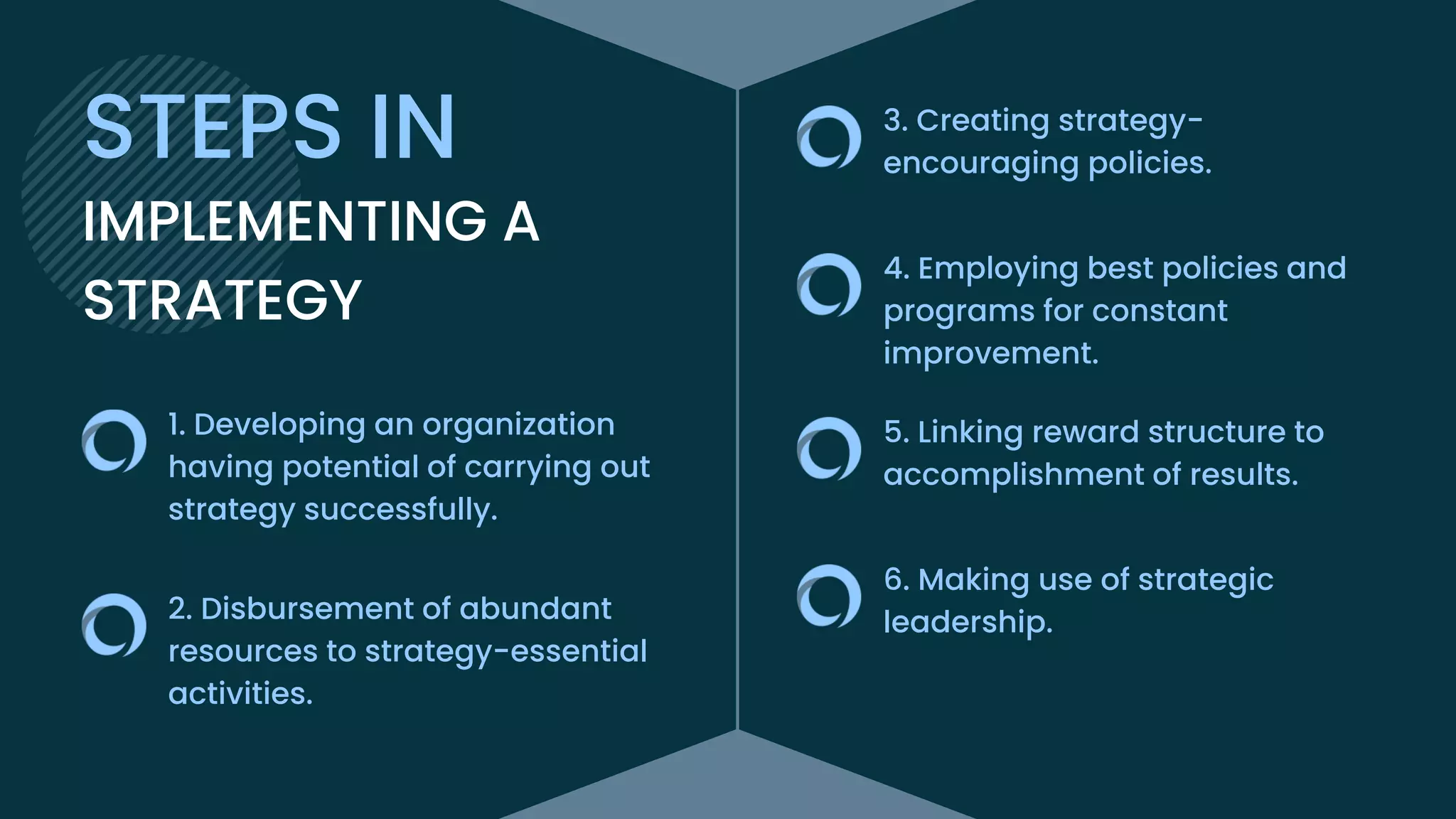
STEPS IN
1. Developing an organization
having potential of carrying out
strategy successfully.
2. Disbursement of abundant
resources to strategy-essential
activities.
3. Creating strategy-
encouraging policies.
4. Employing best policies and
programs for constant
improvement.
5. Linking reward structure to
accomplishment of results.
6. Making use of strategic
leadership.
Excellently formulated strategies will fail if they are not properly implemented. Also, it
is essential to note that strategy implementation is not possible unless there is stability
between strategy and each organizational dimension such as organizational structure,
reward structure, resource-allocation process, etc.
Strategy implementation poses a threat to many managers and employees in an
organization. New power relationships are predicted and achieved. New groups
(formal as well as informal) are formed whose values, attitudes, beliefs and concerns
may not be known. With the change in power and status roles, the managers and
employees may employ confrontation behaviour.
EXECUTION
IT'S ALL IN
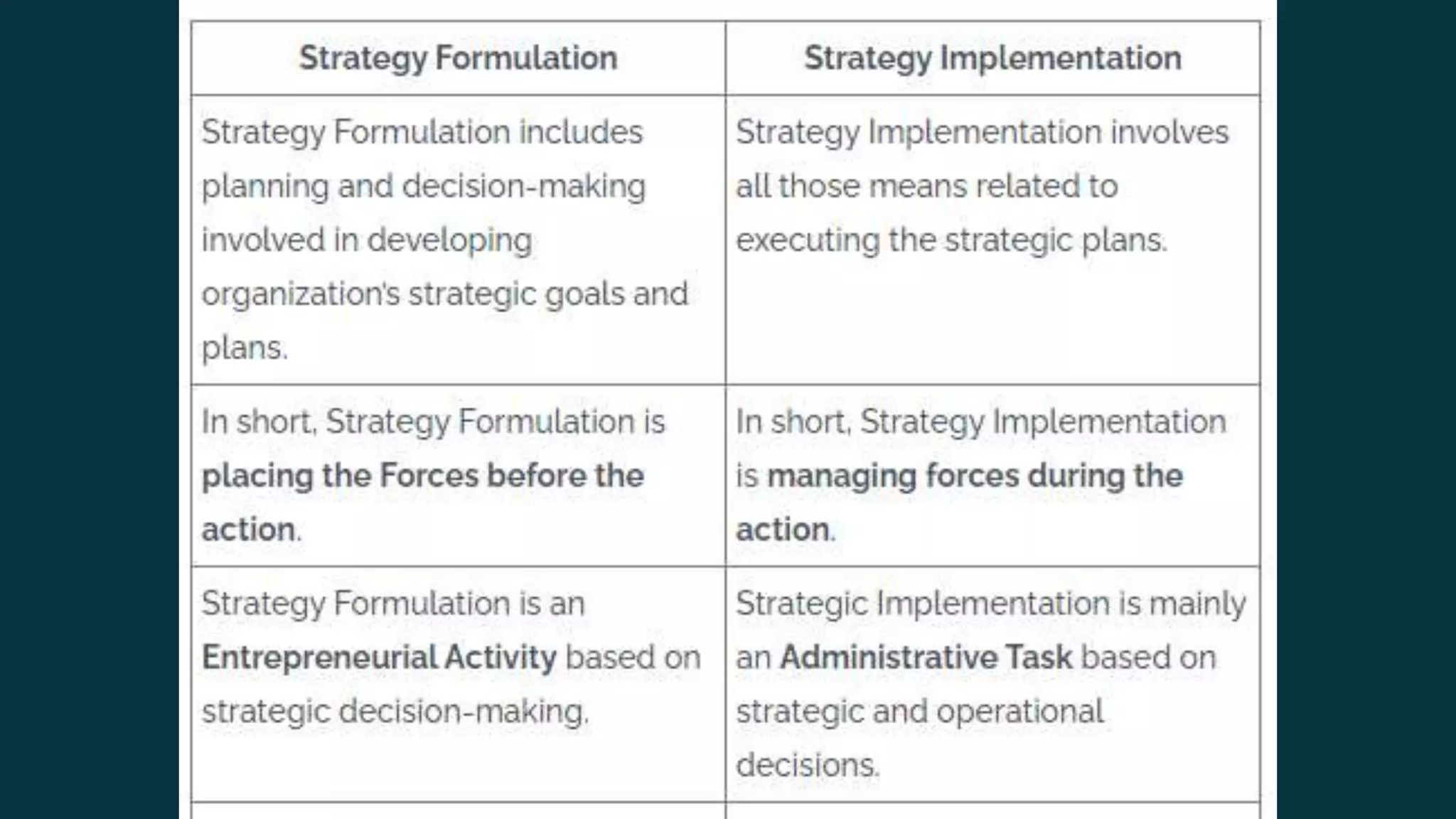
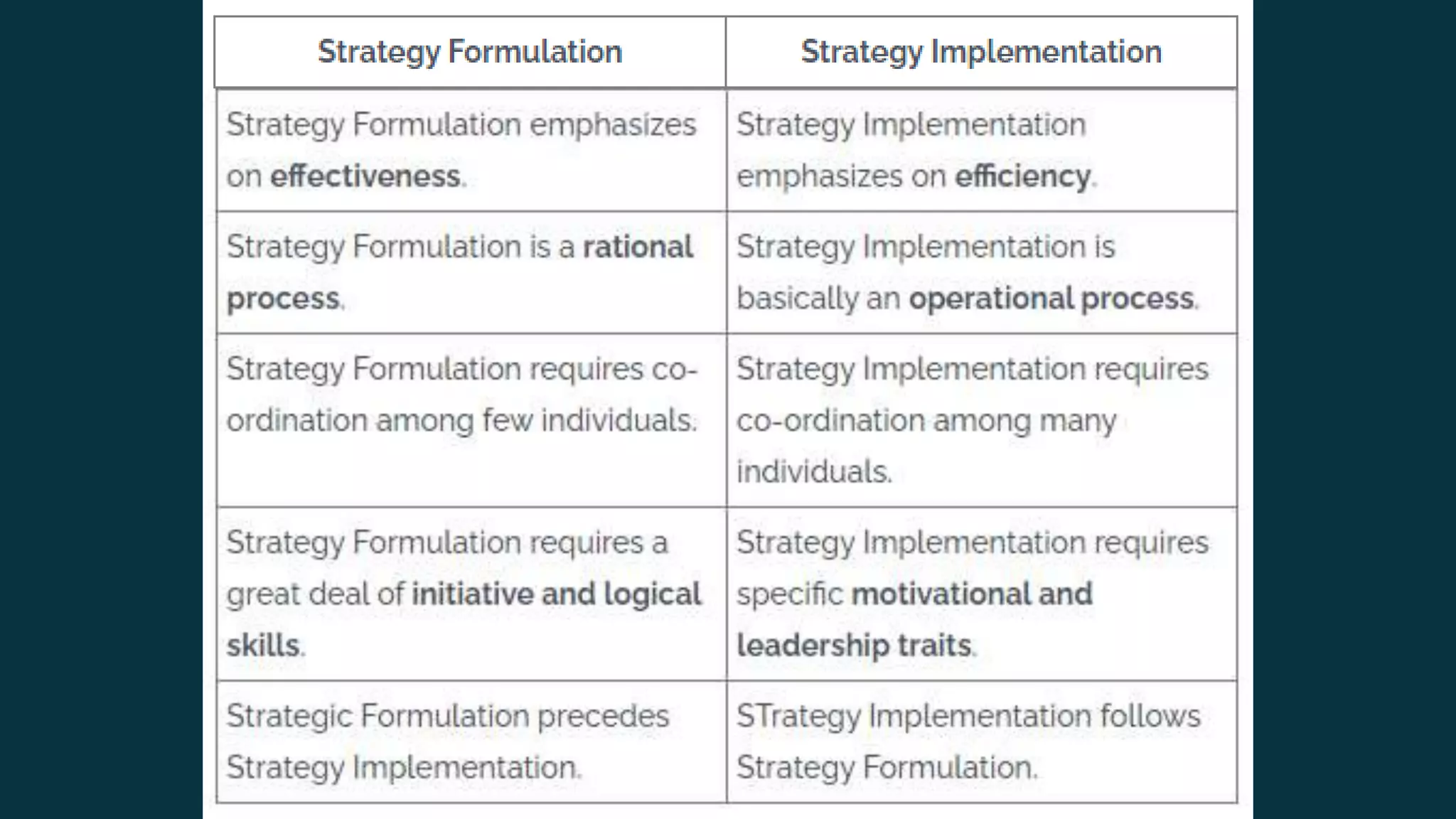
Effectiveness vs Efficiency
Administrative Task vs Entrepreneurial Activity
Placing the forces before the action vs during
STRATEGY IMPLEMENTATION
STRATEGY FORMULATION VS
• https://www.managementstudyguide.com/strategy-
formulation-process.htm
• https://www.managementstudyguide.com/strategy-
implementation.htm
• https://www.managementstudyguide.com/strategy-
formulation-vs-implementation.htm
YOU!
THANK
Sources:
Thank you for listening!

Ranola Report - Strategy Formulation and Strategy Implementation.pptx

  • 1.
    URS BINANGONAN - MBA- BA 213 Presented by: Arthur Jarold Ranola INTER-RELATIONSHIP BETWEEN STRATEGIC FORMULATION AND IMPLEMENTATION
  • 2.
    FORMULATION STRATEGY Strategy formulation refers tothe process of choosing the most appropriate course of action for the realization of organizational goals and objectives and thereby achieving the organizational vision.
  • 3.
    FORMULATION STRATEGY The process ofstrategy formulation basically involves six main steps. Though these steps do not follow a rigid chronological order, however they are very rational and can be easily followed in this order.
  • 4.
    SETTING ORGANIZATIONS’ OBJECTIVES 1. Long-term The keycomponent of any strategy statement is to set the long-term objectives of the organization. Objectives It is known that strategy is generally a medium for realization of organizational objectives. All about the process Objectives stress the state of being there whereas Strategy stresses upon the process of reaching there.
  • 5.
    SETTING ORGANIZATIONS’ OBJECTIVES 1. Strategy includesboth the fixation of objectives as well the medium to be used to realize those objectives. Thus, strategy is a wider term which believes in the manner of deployment of resources so as to achieve the objectives. While fixing the organizational objectives, it is essential that the factors which influence the selection of objectives must be analyzed before the selection of objectives. Once the objectives and the factors influencing strategic decisions have been determined, it is easy to take strategic decisions.
  • 6.
    EVALUATING THE ORGANIZATIONAL ENVIRONMENT 2. Environment Thenext step is to evaluate the general economic and industrial environment in which the organization operates. Competitive Position This includes a review of the organizations competitive position. Review It is essential to conduct a qualitative and quantitative review of an organizations existing product line.
  • 7.
    EVALUATING THE ORGANIZATIONAL ENVIRONMENT 2. Thepurpose of such a review is to make sure that the factors important for competitive success in the market can be discovered so that the management can identify their own strengths and weaknesses as well as their competitors’ strengths and weaknesses. After identifying its strengths and weaknesses, an organization must keep a track of competitors’ moves and actions so as to discover probable opportunities of threats to its market or supply sources.
  • 8.
    SETTING QUANTITATIVE TARGETS 3. SMART In thisstep, an organization must practically fix the quantitative target values for some of the organizational objectives. Compare The idea behind this is to compare with long term customers, so as to evaluate the contribution that might be made by various product zones or operating departments.
  • 9.
    AIMING IN CONTEXT WITH THEDIVISIONAL PLANS 4. Grassroot Levels In this step, the contributions made by each department or division or product category within the organization is identified and accordingly strategic planning is done for each sub-unit. Macroeconomics This requires a careful analysis of macroeconomic trends.
  • 10.
    PERFORMANCE ANALYSIS 5. Expectation vsReality Performance analysis includes discovering and analyzing the gap between the planned or desired performance. Overseeing A critical evaluation of the organizations past performance, present condition and the desired future conditions must be done by the organization. Aspirations This critical evaluation identifies the degree of gap that persists between the actual reality and the long-term aspirations of the organization.
  • 11.
    CHOICE OF STRATEGY 6. Choose Thisis the ultimate step in Strategy Formulation. Decision-making The best course of action is actually chosen after considering organizational goals, organizational strengths, potential and limitations as well as the external opportunities.
  • 12.
    IMPLEMENTATION STRATEGY Strategy implementation isthe translation of chosen strategy into organizational action so as to achieve strategic goals and objectives. Strategy implementation is also defined as the manner in which an organization should develop, utilize, and amalgamate organizational structure, control systems, and culture to follow strategies that lead to competitive advantage and a better performance.
  • 13.
    STRUCTURE ORGANIZATIONAL allocates special valuedeveloping tasks and roles to the employees and states how these tasks and roles can be correlated so as maximize efficiency, quality, and customer satisfaction-the pillars of competitive advantage. But, organizational structure is not sufficient in itself to motivate the employees. An organizational control system is also required. This control system equips managers with motivational incentives for employees as well as feedback on employees and organizational performance. Organizational culture refers to the specialized collection of values, attitudes, norms and beliefs shared by organizational members and groups.
  • 14.
    IMPLEMENTING A STRATEGY STEPS IN 1.Developing an organization having potential of carrying out strategy successfully. 2. Disbursement of abundant resources to strategy-essential activities. 3. Creating strategy- encouraging policies. 4. Employing best policies and programs for constant improvement. 5. Linking reward structure to accomplishment of results. 6. Making use of strategic leadership.
  • 15.
    Excellently formulated strategieswill fail if they are not properly implemented. Also, it is essential to note that strategy implementation is not possible unless there is stability between strategy and each organizational dimension such as organizational structure, reward structure, resource-allocation process, etc. Strategy implementation poses a threat to many managers and employees in an organization. New power relationships are predicted and achieved. New groups (formal as well as informal) are formed whose values, attitudes, beliefs and concerns may not be known. With the change in power and status roles, the managers and employees may employ confrontation behaviour. EXECUTION IT'S ALL IN
  • 16.
    Effectiveness vs Efficiency AdministrativeTask vs Entrepreneurial Activity Placing the forces before the action vs during STRATEGY IMPLEMENTATION STRATEGY FORMULATION VS
  • 19.
    • https://www.managementstudyguide.com/strategy- formulation-process.htm • https://www.managementstudyguide.com/strategy- implementation.htm •https://www.managementstudyguide.com/strategy- formulation-vs-implementation.htm YOU! THANK Sources: Thank you for listening!